

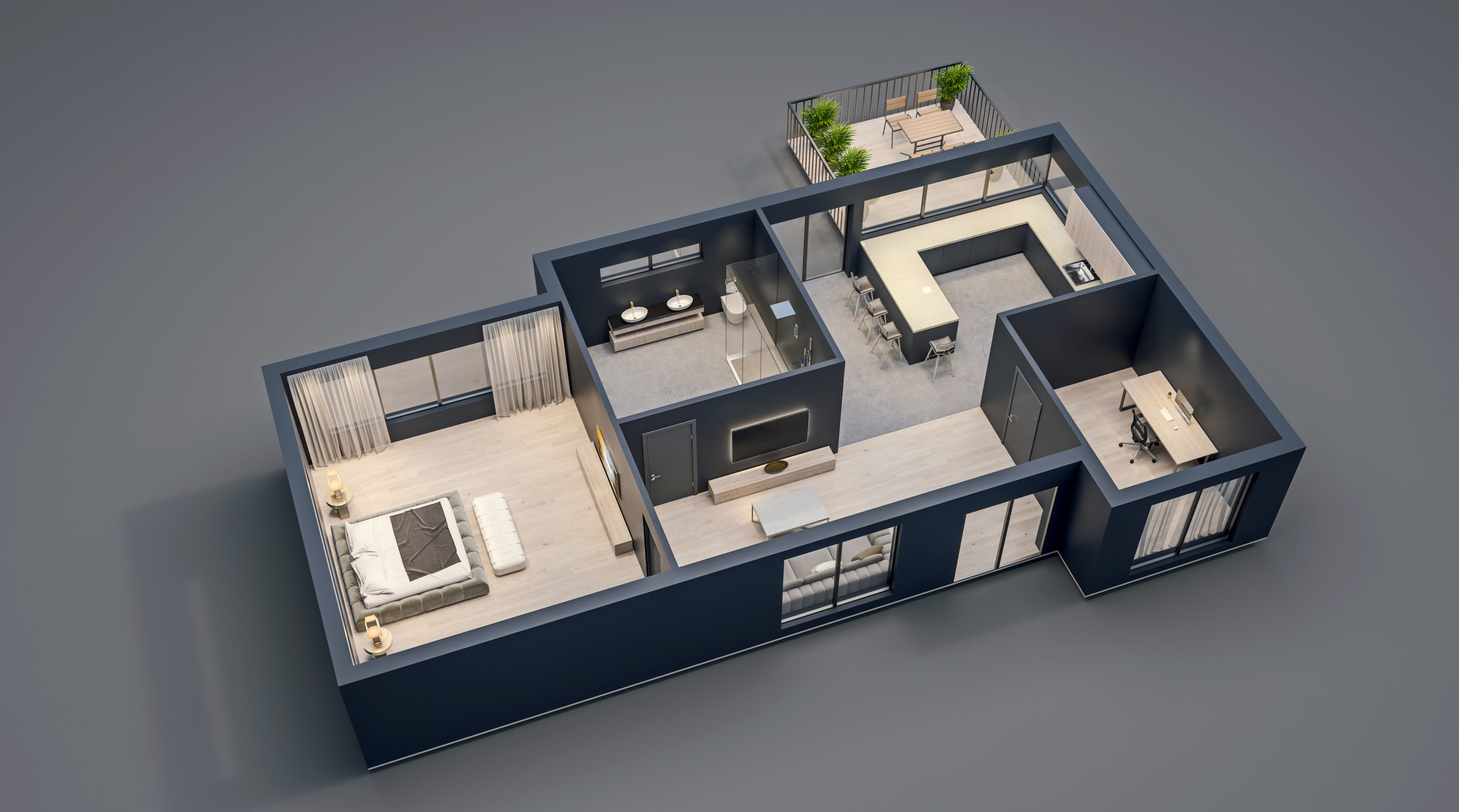
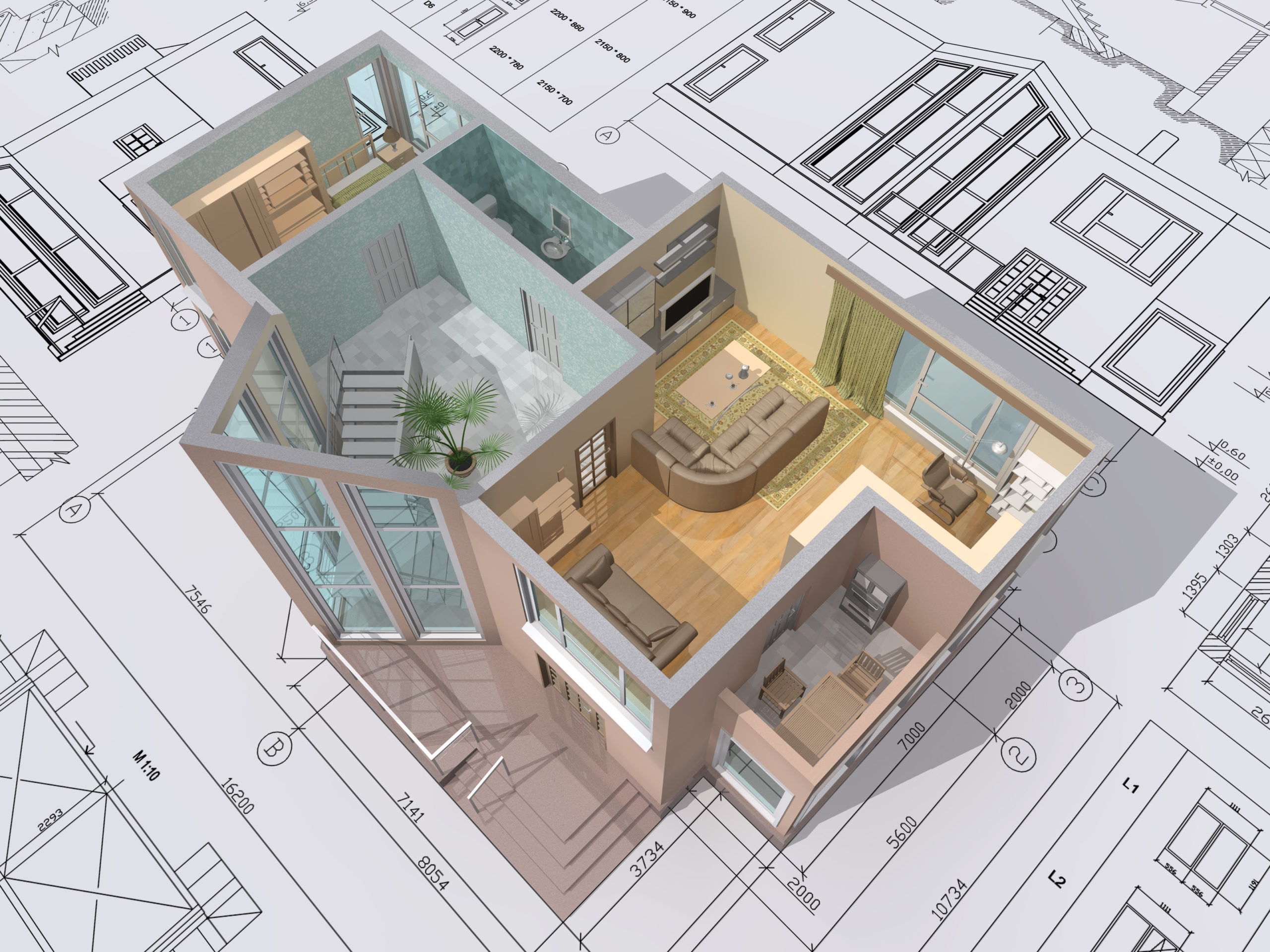
A 3D floor plan is a three-dimensional view of a home’s layout, usually rendered from a digital model with the roof and upper walls cut away, so you can see rooms, walls, doors, windows and furniture together in one picture. A conventional 2D plan is a flat, measured drawing; a 3D floor plan trades some of that precision for a view that non-specialists understand at a glance. This guide is for homeowners, buyers and design students: it explains the main types of 3D floor plan, the seven practical benefits, and the limits to check before you rely on one.
Arch2O 7 benefits of 3d home floor plans 1
What a 3D floor plan shows, compared with a 2D plan
A standard floor plan is an orthographic drawing: an imaginary horizontal cut is taken through the building, conventionally at about 1.2 m (4 ft) above the finished floor, and everything below the cut is drawn to scale from directly above. Walls cut by that plane are shown solid, lower objects are drawn in outline, and the drawing can be measured with a scale rule. The floor plan article on Wikipedia summarises these conventions.
A 3D floor plan keeps the same layout but shows it as a pictorial view, normally from above and at an angle. Because walls now have height, and because furniture, flooring and colours are modelled, the reader can judge proportions, circulation and how rooms connect without having learned to read plan symbols. The trade-off is that a perspective view cannot be measured directly: things further away look smaller, so a 3D floor plan explains space but does not replace the dimensioned 2D drawing.
Types of 3D floor plan
“3D floor plan” covers several different kinds of image. The table compares the common types by what they are made from and what each is good for.
| Type | Made from | Can you measure from it? | Best for |
|---|---|---|---|
| 2D floor plan (for comparison) | Orthographic drawing cut at about 1.2 m | Yes, to scale | Design checks, approvals, construction |
| Cutaway / dollhouse 3D floor plan | Rendered 3D model, roof removed, walls cut | No (perspective) | Listings, client presentations |
| Isometric / axonometric plan | 3D model or drawing, parallel projection | Approximately, along the axes | Explaining proportions and how floors stack |
| Physical scale model | Card, timber or 3D print | Roughly, at model scale | Design reviews, exhibitions |
| 3D scan / virtual tour | Scanning camera or laser scanner | Depends on the device; check the stated accuracy | Recording existing homes, remote viewing |
| BIM model view | Object-based building model | Yes, via the drawings and schedules it generates | Coordinated professional projects |
Source: Arch2O summary of drawing conventions (Wikipedia: Floor plan; Axonometric projection; Building information modeling) (as of 2026-11-01).
Cutaway or “dollhouse” view
The most common type in property listings is the cutaway, often called a dollhouse view: the model is shown from above at an angle with the roof removed and the walls cut at a uniform height. The name comes from open-fronted doll’s houses, which have shown complete furnished interiors in a single view for centuries.
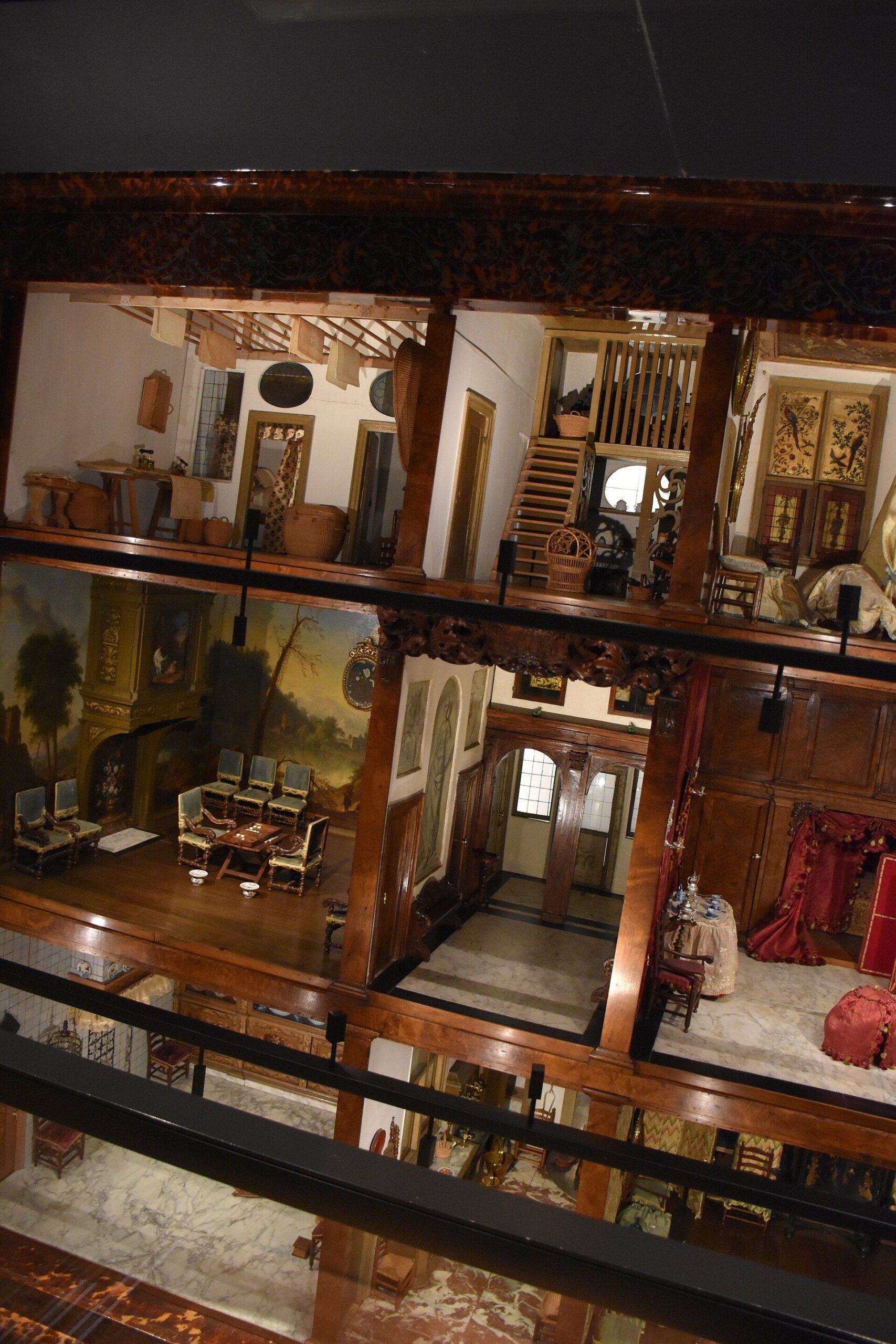
Petronella Oortman's doll's house (about 1686-1710), Rijksmuseum, Amsterdam: every furnished room visible at once, the view that gives the dollhouse 3D floor plan its name. Photo: Vasyatka1, CC BY-SA 4.0, via Wikimedia Commons. Vasyatka1, source, CC BY-SA 4.0
Axonometric and isometric plans
An axonometric drawing is a pictorial view in which parallel lines stay parallel and nothing shrinks with distance. In an isometric view the three axes are equally foreshortened, so lengths along them can be measured to one scale. The French engineer Auguste Choisy used “worm’s-eye” axonometric drawings throughout his Histoire de l’architecture (1899), showing plan, walls and vaults in one image, and modernist architects of the 1920s adopted axonometry widely (axonometric projection). A modern isometric 3D floor plan is the same idea produced by software, which is why it is the most “measurable” of the 3D types.
Physical models
Before rendering software, architects explained layouts with scale models with removable roofs. They remain useful because a client can look into a room from any angle and see real daylight on the model, and many practices still make quick card or timber models alongside digital ones.
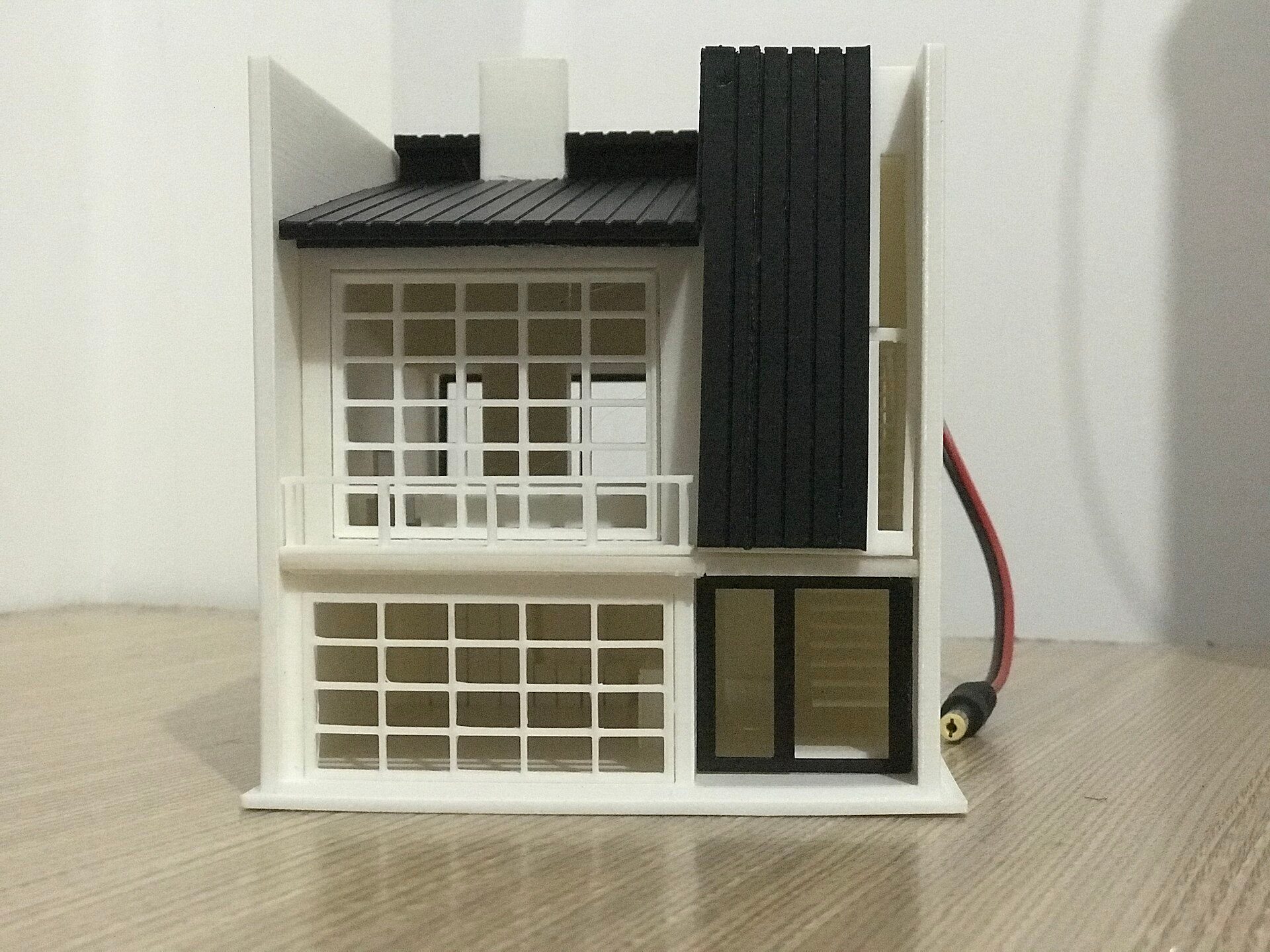
A physical scale model of a small two-storey house, the pre-digital way of showing a design in three dimensions. Photo: Shanaka21695, CC BY-SA 4.0, via Wikimedia Commons. Shanaka21695, source, CC BY-SA 4.0
3D scans and virtual tours
For existing homes, a 3D floor plan is often produced by scanning rather than modelling. A scanning camera or laser scanner captures many positions in each room; software stitches them into a navigable tour and a “dollhouse” model, and some services also export a 2D plan. The result shows the home as it is, including clutter and lighting, so it is a record of an existing property rather than a design proposal.
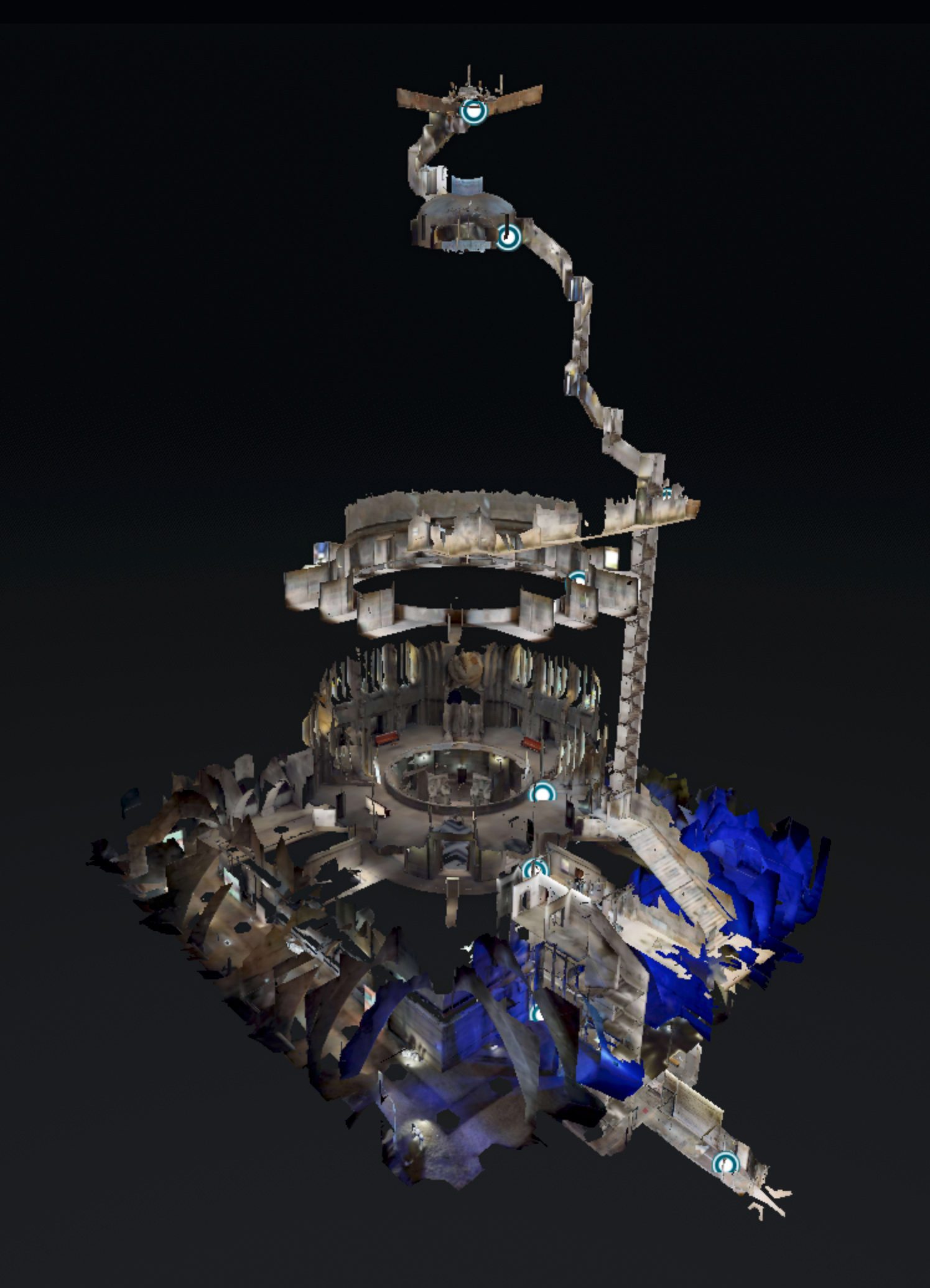
A dollhouse view generated from a 3D scan of the Völkerschlachtdenkmal, Leipzig (architect Bruno Schmitz, d. 1916): scans from many camera positions are stitched into one navigable model. Image: Tom-Oliver Schneider, CC BY 4.0, via Wikimedia Commons. Tom-Oliver Schneider, source, CC BY 4.0
BIM models
In professional practice, the 3D floor plan is often only one view of a building information model (BIM). Building information modelling stores walls, doors and fittings as objects with properties and quantities, not just geometry, and the international information-management standard for it is ISO 19650 (first parts published in 2018-2019). The same model can generate the measured 2D plans, sections, schedules and the 3D views a client sees.
7 benefits of 3D home floor plans
1. A clearer picture of the finished home
A 3D floor plan shows rooms, openings, finishes and furniture together, so you get an impression of how the layout will look and feel that a 2D plan or a set of photographs cannot give. If you have not settled on a design yet, published plan collections such as Boutique Home Plans and other plan designers present their designs in 3D so that buyers can compare them.
2. Easier judgement of space and lifestyle fit
Seeing walls with height helps readers judge whether a layout suits the household. A family with an older or disabled member can check whether the main living rooms and a bedroom sit on one level; parents of young children can see whether the main bedroom is close to the children’s rooms; people who entertain can see whether the kitchen opens to the living area and terrace.
3. Testing a design before it is built
A 3D model makes it easier to spot problems while they are still cheap to change: a door that swings into a bed, a kitchen island that blocks the route to the garden, a window that faces a neighbour’s wall. Catching these early avoids many common house floor plan mistakes. A design check still needs the dimensioned drawings; the 3D view tells you where to look.
4. Better marketing material
Agents and developers use 3D floor plans in listings and brochures because they are easy to share by email or messaging apps and easy to understand. Interactive versions let viewers switch finishes or furniture, which helps buyers picture themselves in the space. Whether a 3D plan actually raises sales depends on the market; we have not found independent data that quantifies the effect, so treat sales claims from vendors with care.
5. Showing key features in context
Photographs show individual rooms; a 3D floor plan shows how they connect. Features such as a pool, an outdoor kitchen, a courtyard or a double-height living room are easier to understand when the viewer can see where they sit in the whole plan.
6. Understanding floor area remotely
Buyers who cannot visit a property can use a 3D floor plan or scanned tour to understand the size and arrangement of the rooms. Many plan and room-design apps (for example those reviewed by The Spruce) let users move through the model room by room. For the actual area, rely on a stated measurement, not on the image (see the checks below).
7. Keeping clients engaged
A house takes months to design and build. A 3D floor plan gives the future occupants something concrete to discuss and refer back to, which keeps decisions moving and helps everyone, from client to contractor, share the same picture of the finished home.
Arch2O 7 benefits of 3d home floor plans
Limits: what to check before you rely on a 3D floor plan
A 3D floor plan is an illustration. Use this short checklist when you are given one, whether as a buyer, a client or a student reviewing your own work:
- Is there a dimensioned 2D plan as well? Measurements, wall thicknesses and door widths should come from a scaled plan, not from a perspective view.
- How was the floor area measured? Area figures should name the method. In the United States, single-family homes are commonly measured to ANSI Z765-2021 (Square Footage – Method for Calculating), which Fannie Mae has required for most appraisals since April 2022 (Fannie Mae guidance). Other countries use their own codes, so ask which one applies.
- Is the furniture to scale? Undersized beds and sofas make rooms look larger. Compare a bed with its real size (a UK double is 135 x 190 cm; a US queen is about 152 x 203 cm).
- Is it a design or a record? A rendered plan shows a proposal; a scan shows what exists. Planning approval, structure and services are not shown by either.
- What is missing? The cut removes ceilings, so beams, low headroom and ceiling heights are easy to miss. Ask for a section.
The bottom line
Use a 3D floor plan to understand and communicate a layout, and a dimensioned 2D plan to check and build it. A cutaway view suits listings and client presentations, an isometric view is best when proportions matter, a scan records an existing home, and a BIM model ties all of them to the construction drawings. For more examples of how plans communicate a home, see our collection of floor plans of homes from popular TV shows.
Sources and further reading
- Wikipedia, Floor plan (conventions, 3D floor plans).
- Wikipedia, Axonometric projection (isometric, dimetric, trimetric; history).
- Wikipedia, Building information modeling (BIM, ISO 19650).
- Fannie Mae, ANSI standard guidance for appraisers.
This article is part of our guide to architectural dimensions and space planning.

Yosra is an architect, writer, and teacher. She is always into learning something new. Her life motto is: "A jack of all trades is a master of none, but oftentimes better than a master of one.” One day she will travel the world and visit its architectural wonders. In the meanwhile, she contends herself with reading and writing about them.