

The most iconic modern buildings include Fallingwater, Villa Savoye, the Barcelona Pavilion, the Guggenheim Museum in New York and Le Corbusier’s Unité d’Habitation in Marseille: each introduced an idea, from the free plan to the spiral gallery, that architects still use. This guide is for students and design-minded readers. It explains what modern architecture is, sets out how the ten buildings were chosen, checks each one’s architect, date and current status against official or heritage sources, and summarises them in a dated table.
What makes modern architecture so revolutionary?
Modern architecture grew out of the early 20th century, when new materials, industrial production and the upheaval of the First World War pushed architects to abandon historical styles. After the Second World War it became the default for rebuilding cities, housing and public institutions. Instead of ornament borrowed from the past, it aimed for buildings shaped by their use, structure and materials.
In short, modern architecture favours clean lines, open interiors and honest materials, with form following function. Reinforced concrete, steel frames and large areas of glass made new spatial ideas possible, and the line between inside and outside became thinner. If you are comparing movements, see how modern architecture compares to postmodernism or explore some mind-bending surrealist architecture.
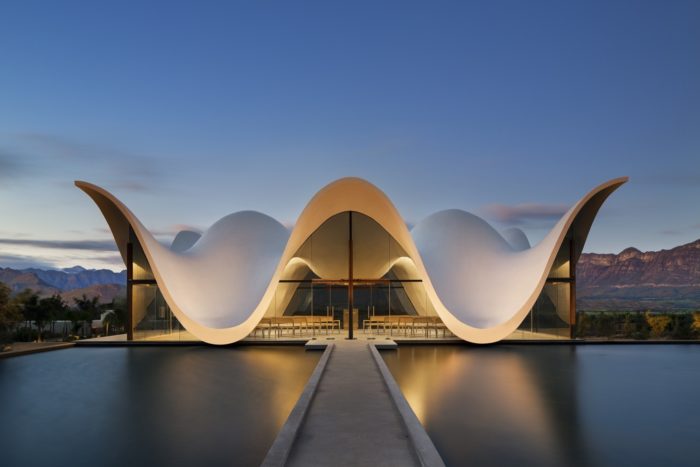
Bosjes Chapel, ©Adam Letch
What makes modern architecture tick?
Before the buildings, here are the features that make the style distinctive:
- Clean, abstract shapes and lines: geometry replaces columns, mouldings and decorative detail.
- Open floor plans: a structural frame frees the plan from load-bearing walls, so spaces can flow into each other.
- Large areas of glass: floor-to-ceiling glazing brings daylight and landscape into the interior.
- Connection with the setting: many modern houses are designed around a specific view, slope or landscape.
- New materials: reinforced concrete, steel and glass made new structural forms possible.
The style shaped public buildings, universities and housing from the 1920s into the 1970s, before postmodernism challenged it. Its influence on how we build has never really disappeared.
How we chose these iconic modern buildings
Every building on the list meets four criteria: it was completed between 1929 and 1968; it still stands or has been faithfully rebuilt; it introduced or crystallised an idea that later architects adopted; and its architect, date and status can be confirmed from an official, owner or heritage source. Most are protected as World Heritage sites or national landmarks. The list mixes very famous houses with a few less familiar buildings, such as Villa Dirickx, that show how the same ideas spread.
The 10 most eye-opening iconic modern buildings
1) Fallingwater | Frank Lloyd Wright, Mill Run, Pennsylvania, USA, 1937
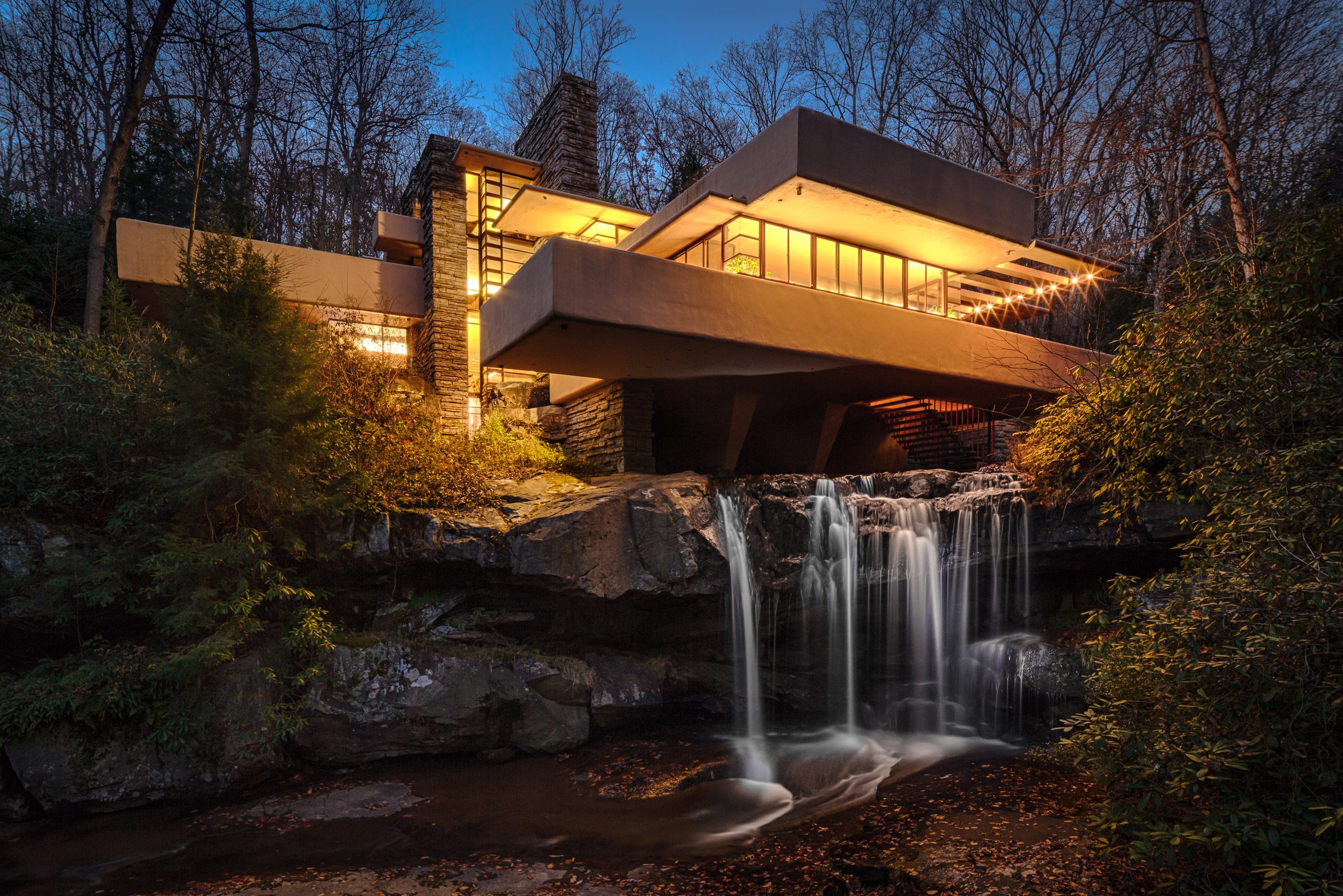
©Western Pennsylvania Conservancy
Fallingwater, the weekend house Frank Lloyd Wright designed for the Kaufmann family, sits directly over a waterfall on Bear Run, its concrete terraces cantilevered over the stream. Designed in 1935, the main house was completed in 1937 and a guest house in 1939.
The cantilevers were Wright’s boldest move and its biggest problem: they deflected for decades. In 2001 to 2002 engineers stabilised them by post-tensioning steel cables through the concrete beams. The house belongs to the Western Pennsylvania Conservancy, opens as a museum, and was inscribed in 2019 as one of eight buildings in UNESCO’s “The 20th-Century Architecture of Frank Lloyd Wright”. For more structural ambition, see these 5 long span structures with awesome roofs.
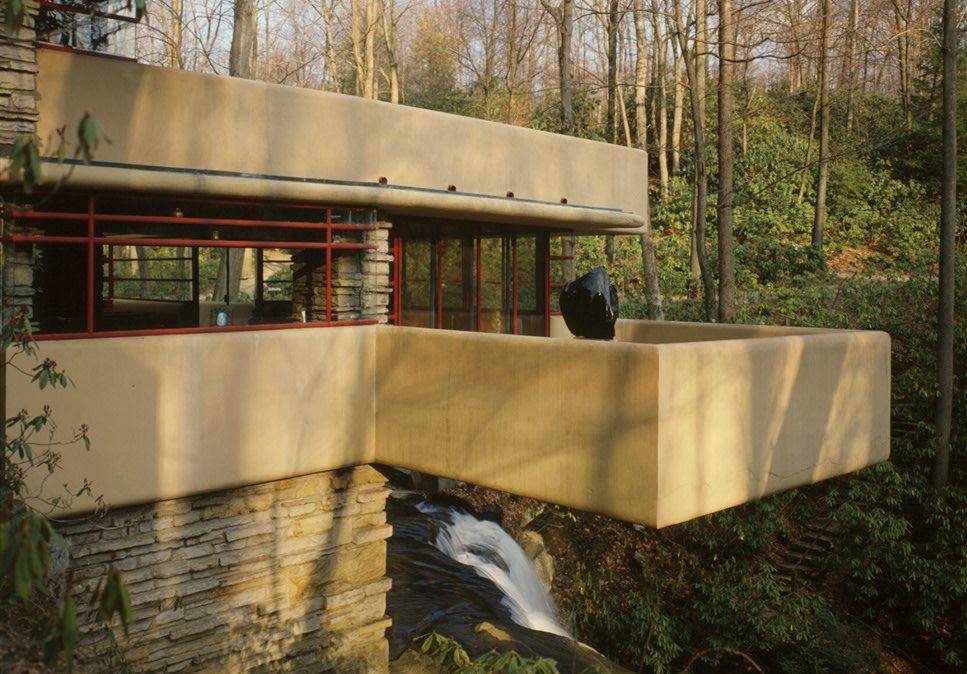
One of Fallingwater's concrete terraces cantilevers over the falls of Bear Run; these cantilevers deflected for decades until they were post-tensioned in 2001-2002. Photo: Jack E. Boucher, Historic American Buildings Survey, public domain. Image: Jack E Boucher, HABS staff photographer (Public domain (verified))
2) Glass House | Philip Johnson, New Canaan, Connecticut, USA, 1949
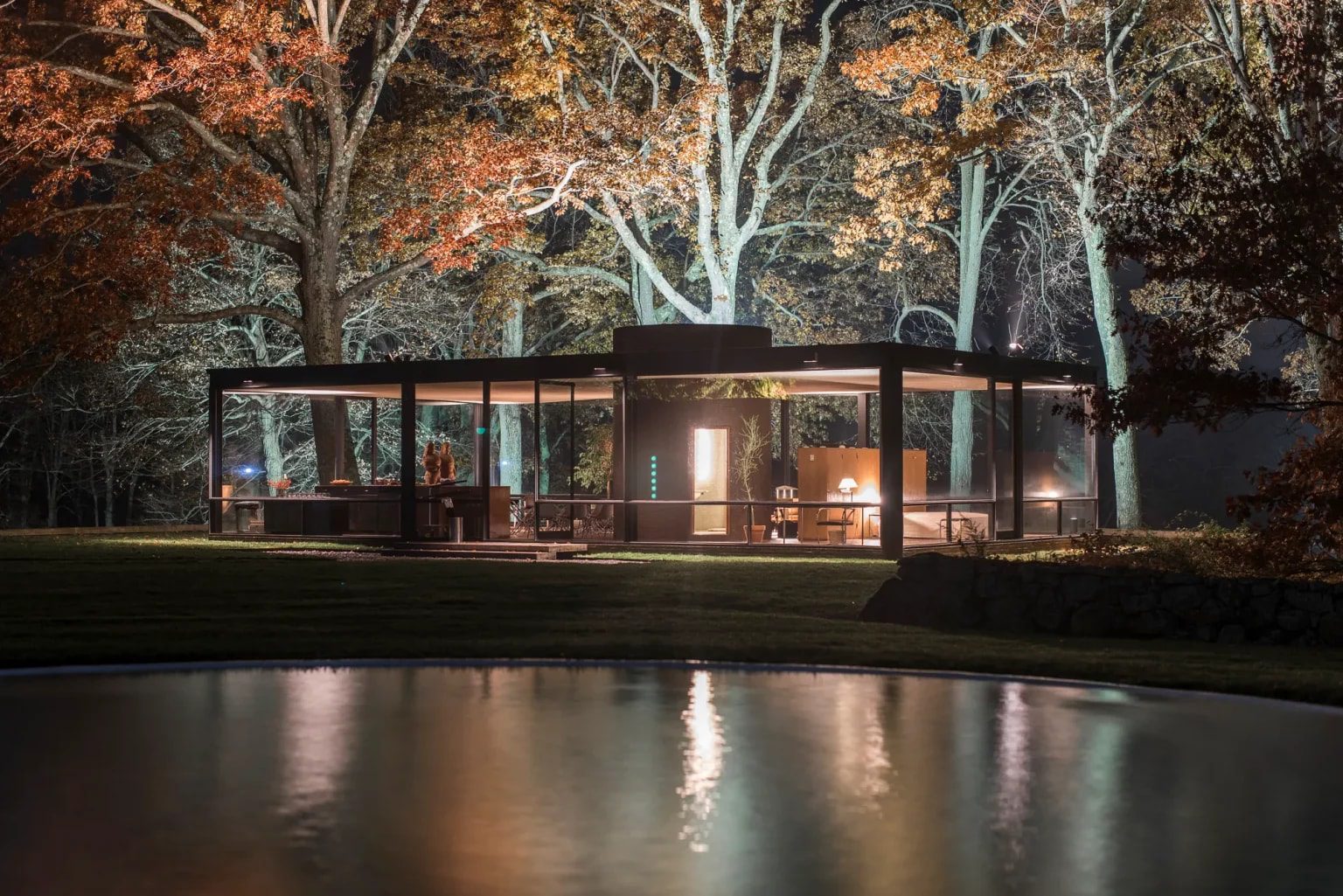
©mavink.com
Philip Johnson built the Glass House as his own home: a single rectangular room enclosed entirely in glass on a steel frame, with only a brick cylinder containing the bathroom breaking the open plan. Transparency and reflection, rather than walls, define the space, and the landscape becomes the wallpaper. Johnson lived there until his death in 2005, and the site is now owned by the National Trust for Historic Preservation and open for tours. At one room, it is the smallest of these iconic modern buildings.
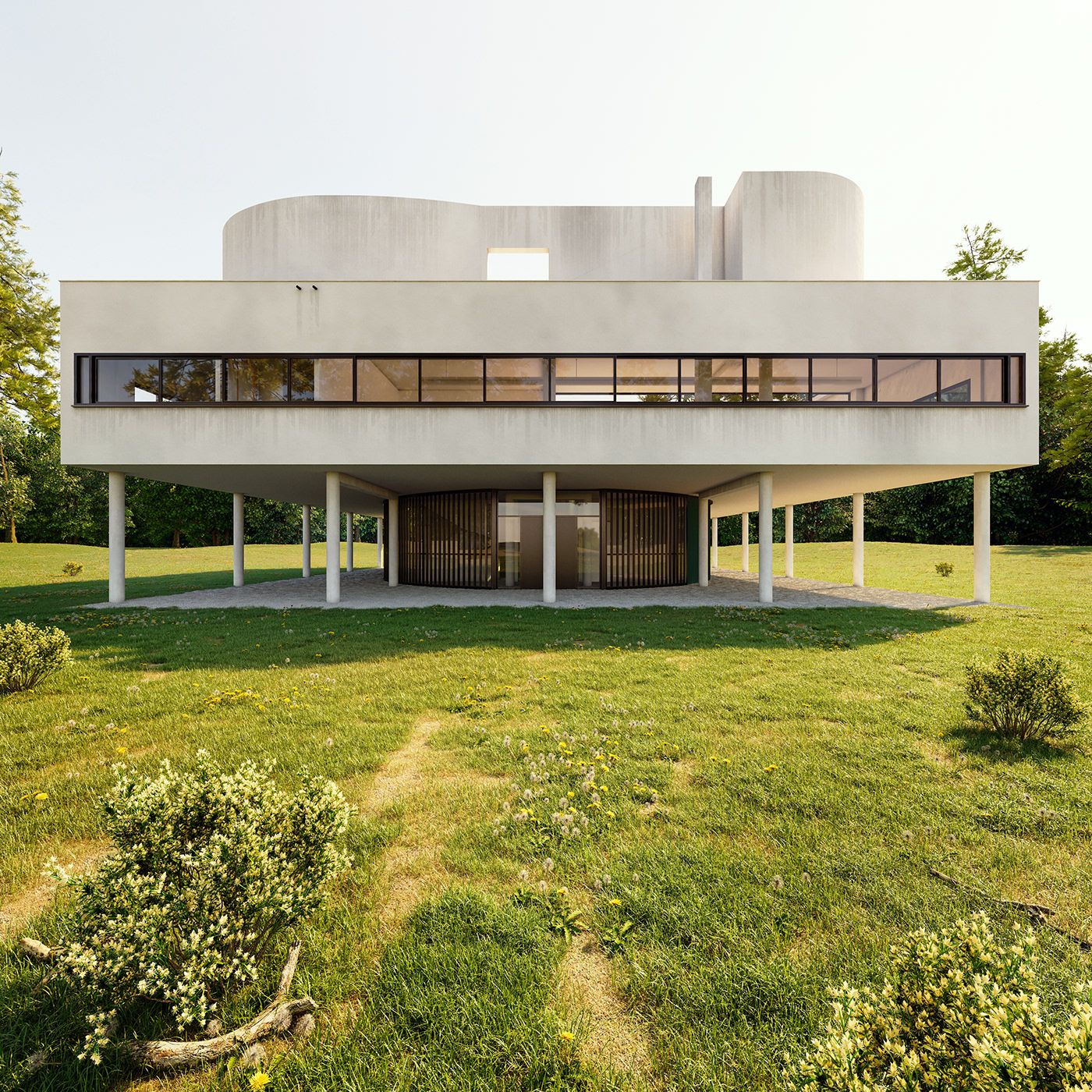
3) Villa Savoye | Le Corbusier, Poissy, France, 1931
©Behance
Le Corbusier’s Villa Savoye, in Poissy outside Paris, is his “five points of a new architecture” made real: pilotis (slender columns) lifting the house, a free plan, a free façade, horizontal ribbon windows and a roof garden. It reads as a white box hovering over the meadow.
The Savoye family suffered from leaks and heating problems, and the house was damaged during the Second World War. Restored by the French state, it is now run as a museum by the Centre des monuments nationaux, and since 2016 it has been part of UNESCO’s serial World Heritage site “The Architectural Work of Le Corbusier”.
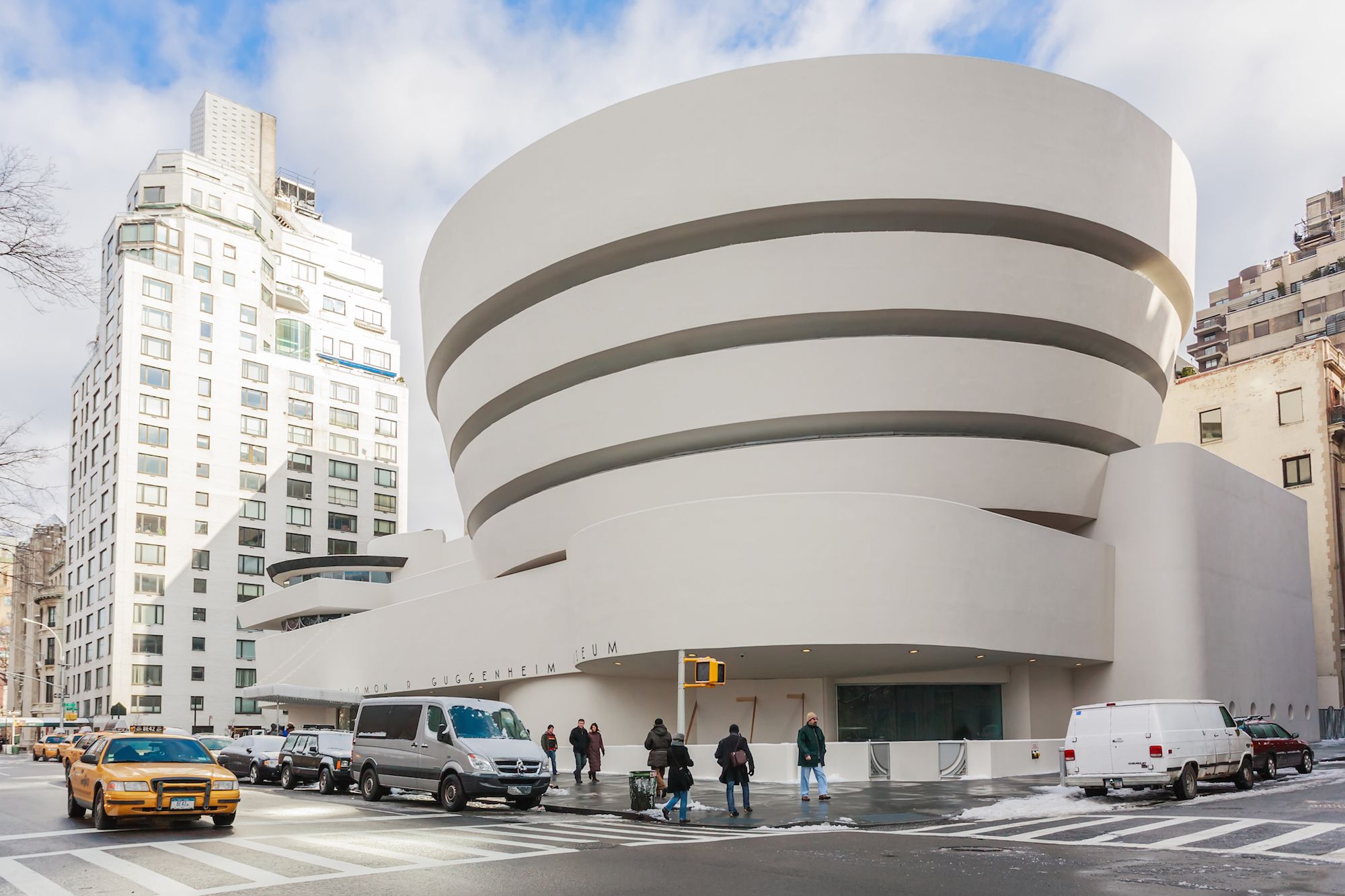
4) Solomon R. Guggenheim Museum | Frank Lloyd Wright, New York, USA, 1959
©Arnout Fonck
Wright’s Guggenheim answers a brief from the museum’s director Hilla Rebay, who in 1943 asked for “a temple of spirit, a monument”. His response is a continuous spiral ramp around a skylit atrium, so visitors see the collection as one unbroken journey. The building opened in 1959, six months after Wright’s death, and joined Fallingwater on UNESCO’s World Heritage List in 2019. Do not confuse it with its sister museum in Spain, Frank Gehry’s Guggenheim Museum Bilbao, which opened in 1997.
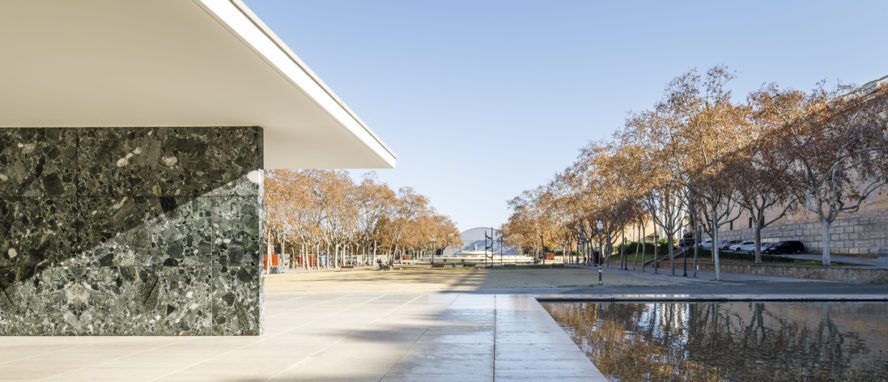
5) Barcelona Pavilion | Ludwig Mies van der Rohe, Barcelona, Spain, 1929
©Fundació Mies van der Rohe
Mies van der Rohe designed the German Pavilion for the 1929 International Exposition in Barcelona with Lilly Reich. Freestanding walls of onyx, green marble and glass slide past each other under a thin flat roof carried on slender cruciform steel columns, so space flows continuously between inside and outside.
Mies and Reich also designed the Barcelona Chair for the pavilion. The building was dismantled in 1930 and rebuilt on the same site between 1983 and 1986, and is now cared for by the Fundació Mies van der Rohe.
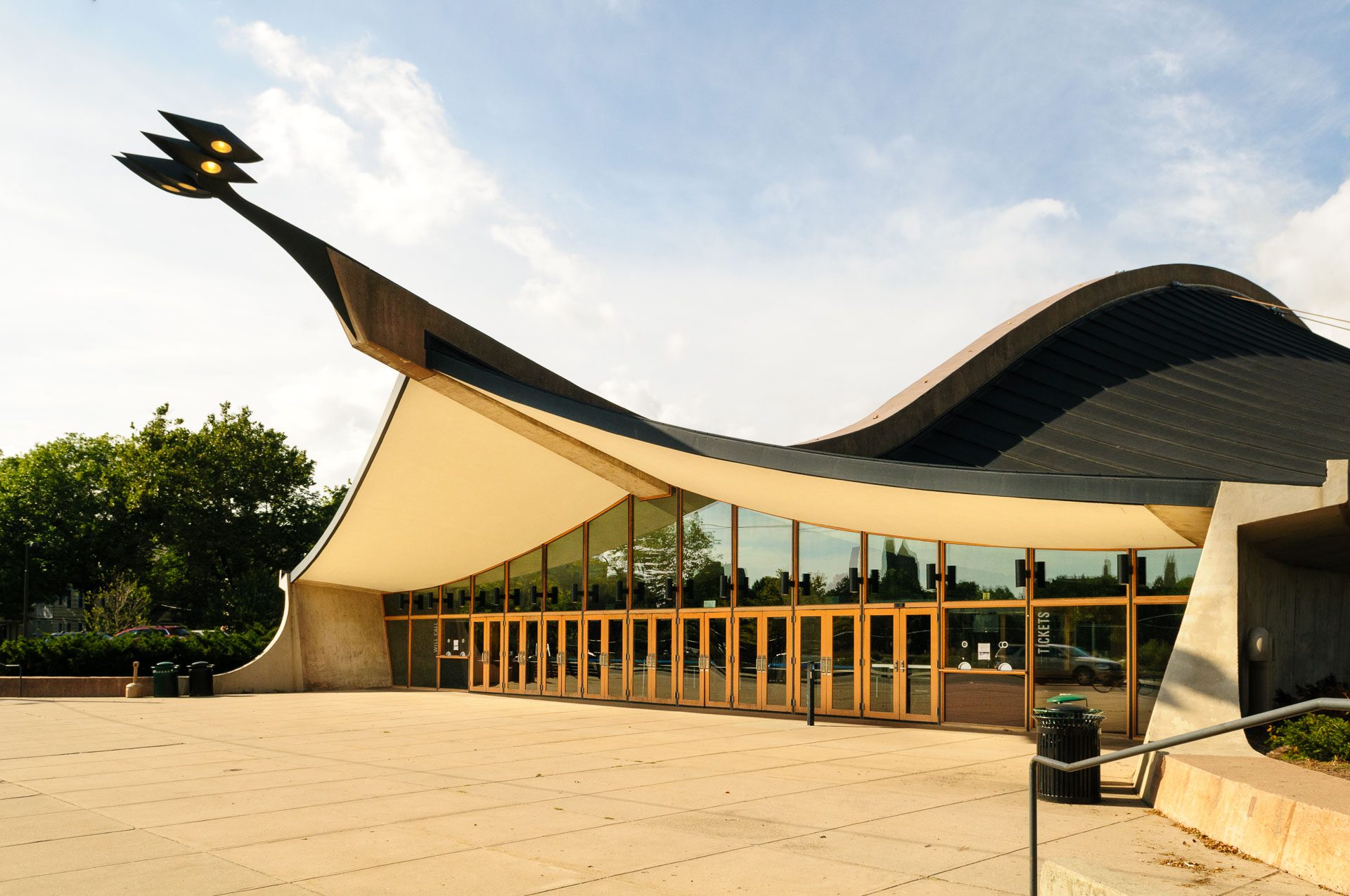
6) David S. Ingalls Rink (the “Yale Whale”) | Eero Saarinen, New Haven, Connecticut, USA, 1958
Eero Saarinen
Eero Saarinen, a Yale graduate, designed this ice hockey rink for his alma mater. A central reinforced concrete arch about 300 ft (91 m) long forms the building’s spine; a cable net hung between the arch and the outer walls carries a timber roof, creating the double-curved shape that earned it the nickname “the Whale”. It opened in December 1958 and is still Yale’s hockey arena. Its expressive roof has much in common with the Googie style buildings in Los Angeles of the same decade.
7) Villa Dirickx | Marcel Leborgne, Sint-Genesius-Rode, Belgium, 1933
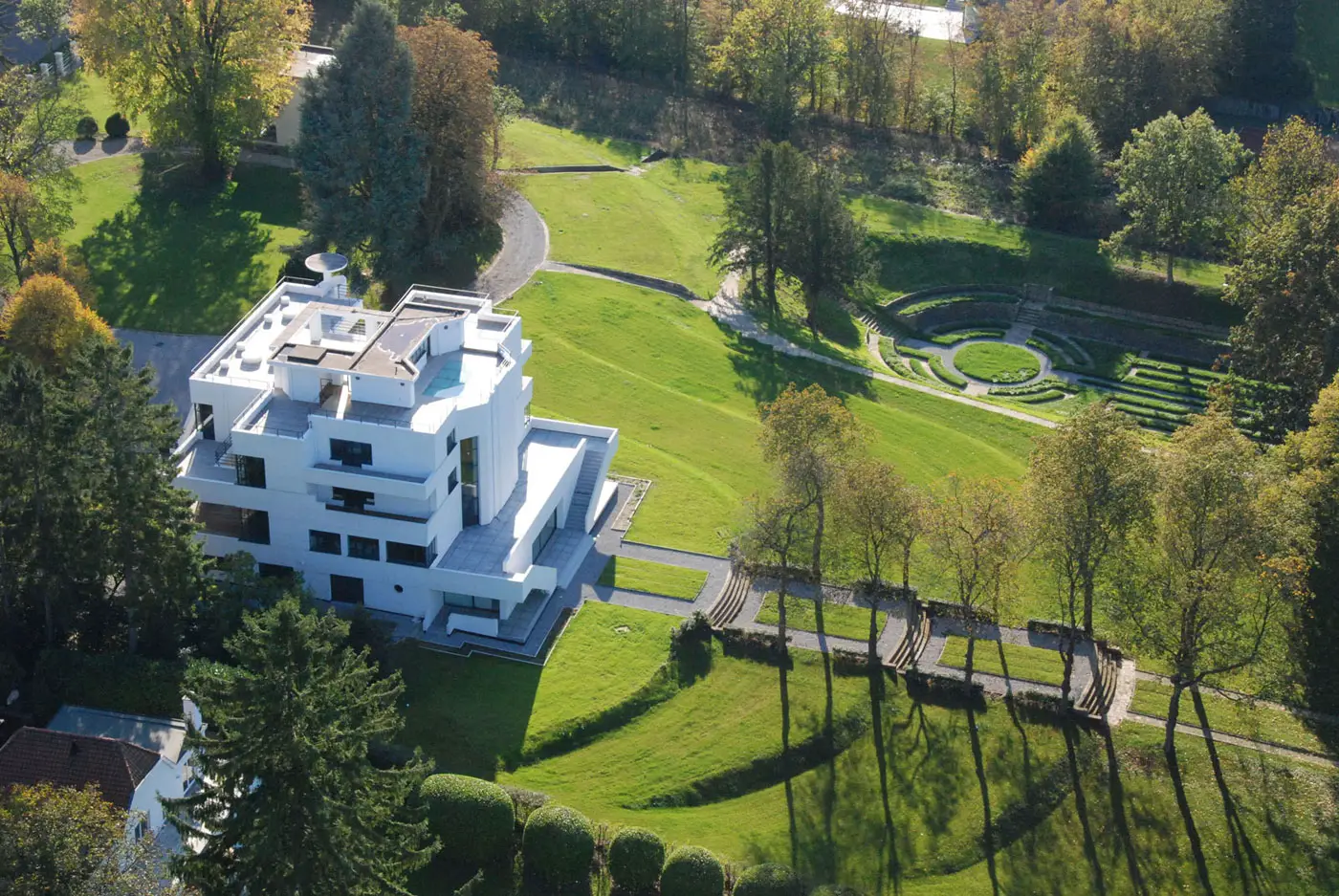
©Myfancyhouse.com
Marcel Leborgne, one of Belgium’s leading modernists, designed this four-storey villa outside Brussels for Mr Dirickx, director of the Forges de Clabecq steelworks, between 1929 and 1933. Stacked white volumes, long bands of glazing and terraces open to the surrounding greenery show how quickly the language of the modern movement spread across Europe.
After decades of decline, the villa was bought by the developer Alexander Cambron in 2007 and renovated, as The Modern House describes. It remains a private house, which is why it is less widely known than the others on this list.
8) Isokon Building | Wells Coates, London, UK, 1934
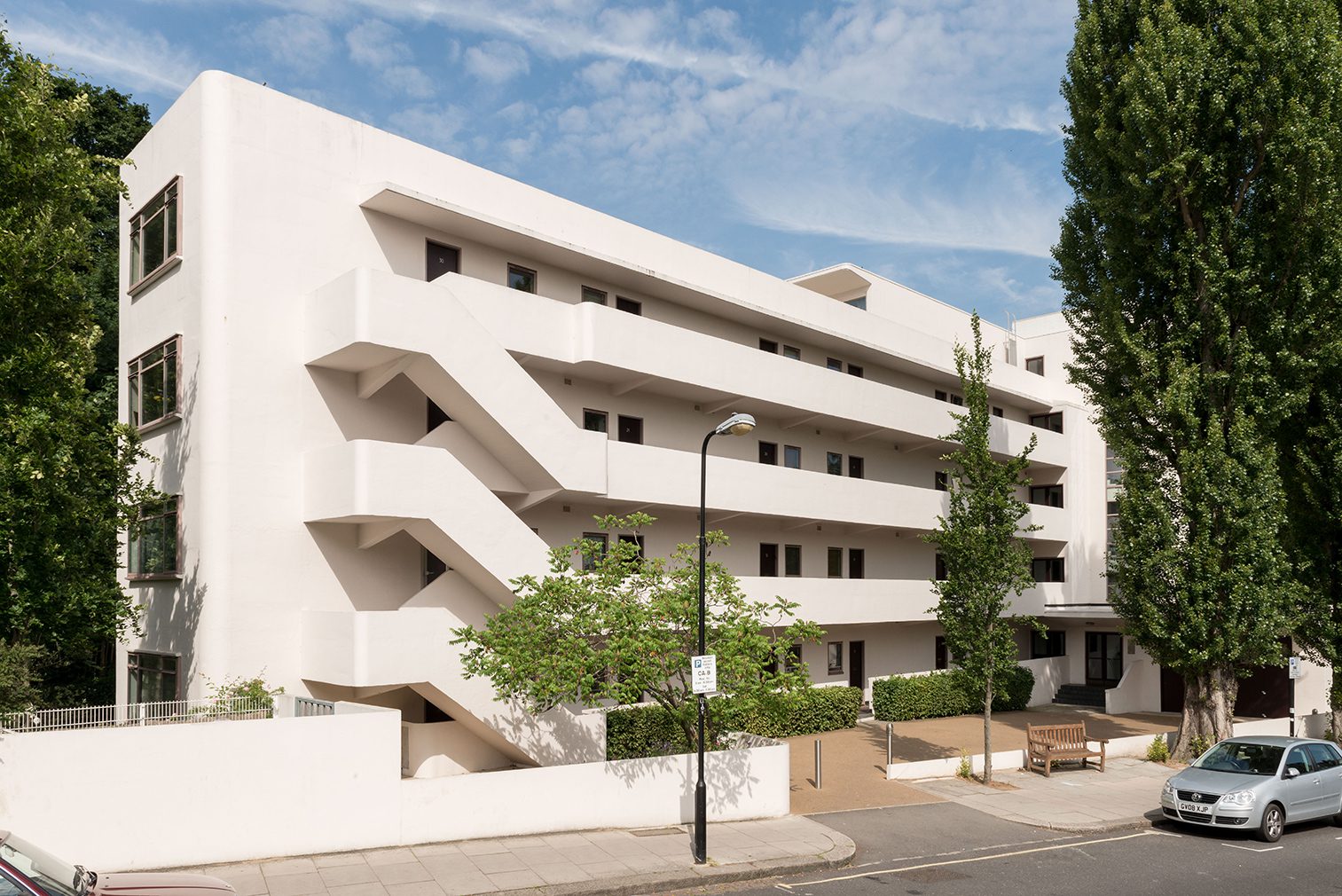
©The Modern House
The Isokon Building (Lawn Road Flats) in Hampstead, designed by Wells Coates for Jack and Molly Pritchard, was an experiment in minimal urban living. Its small flats had compact kitchens because residents could use shared services, including a communal kitchen and laundry. Sources differ on the original number of flats, so we do not repeat a figure here.
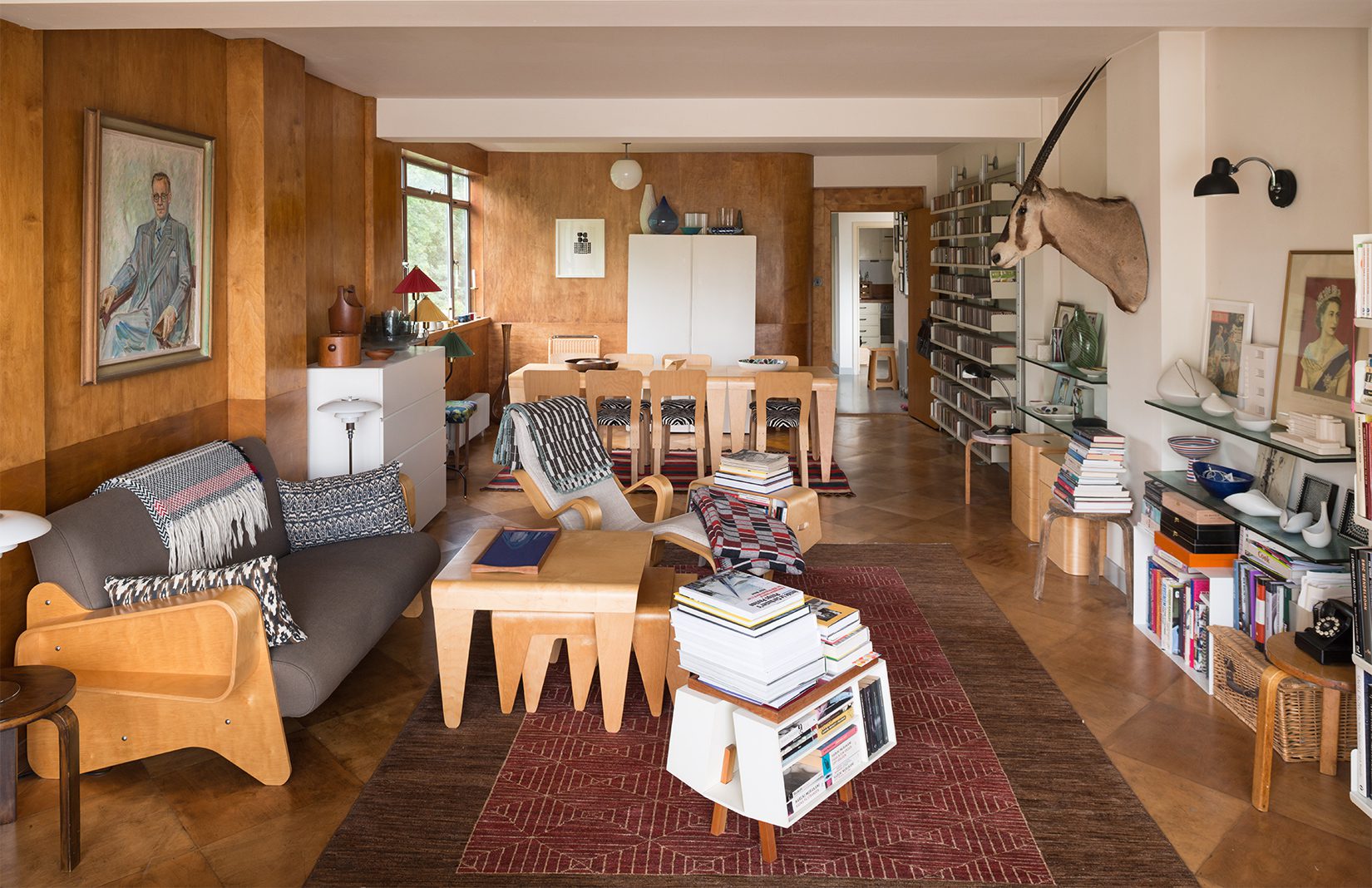
Inside London’s Isokon Building. ©The Modern House
Avanti Architects refurbished the building in 2003 for a shared-ownership housing scheme run by Notting Hill Housing, and the former garage now houses a small gallery on the building’s history. The concrete block is listed Grade I, the highest category of protection in England, and is one of London’s key modernist landmarks.
9) Neue Nationalgalerie | Ludwig Mies van der Rohe, Berlin, Germany, 1968
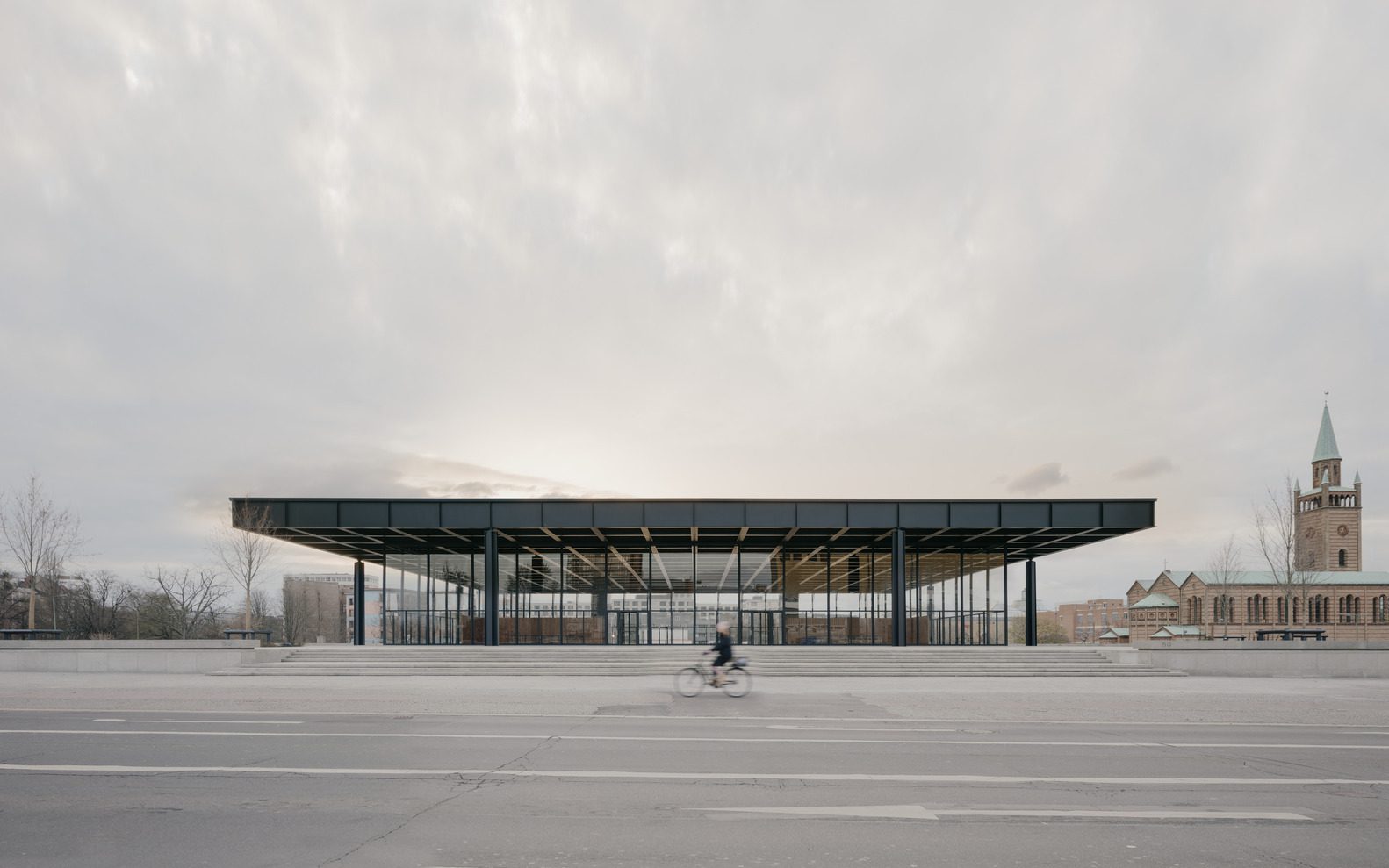
©Simon Menges
Mies’s last major building, the Neue Nationalgalerie houses 20th-century art beneath a vast, nearly square steel roof resting on just eight columns, with the main hall enclosed only by glass. The galleries for the permanent collection sit in the podium below. After a restoration led by David Chipperfield Architects, it reopened in 2021, and it remains one of the clearest examples of Mies’s idea of one universal space.
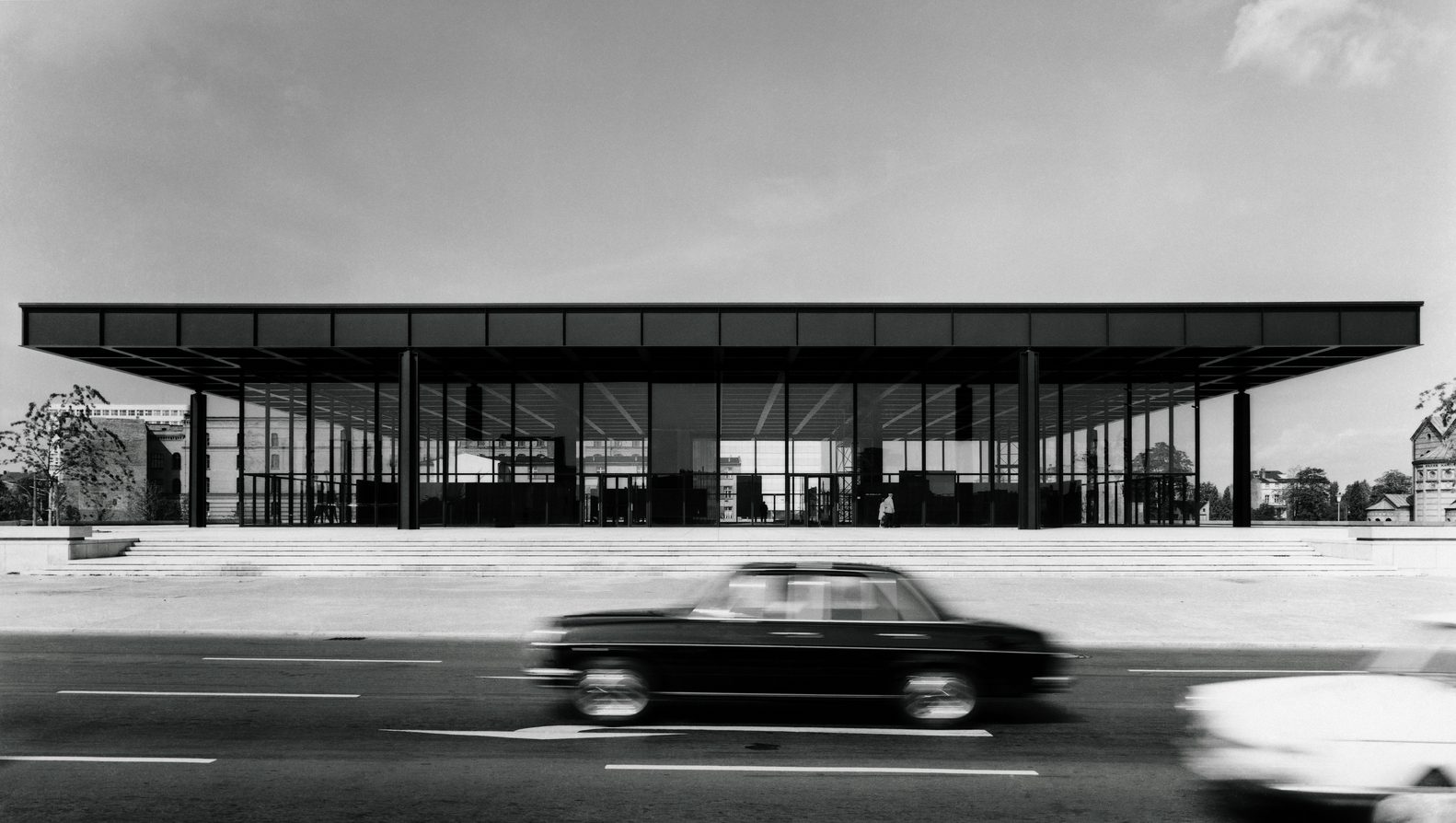
©Archiv Neue Nationalgalerie, Nationalgalerie, Staatliche Museen zu Berlin, Reinhard Friedrich
Seen in the archive photograph from its early years and today, the glass hall shows why iconic modern buildings can still feel radical: the structure is the architecture.
10) Unité d’Habitation (Cité Radieuse) | Le Corbusier, Marseille, France, 1952
Le Corbusier’s Unité d’Habitation in Marseille, known locally as the Cité Radieuse, is a vertical neighbourhood: 337 apartments in 23 types, mostly two-storey units interlocking around internal “streets”, with shops, a hotel and a rooftop terrace with a paddling pool and running track. Painted loggias in strong primary colours enliven the rough board-marked concrete structure.
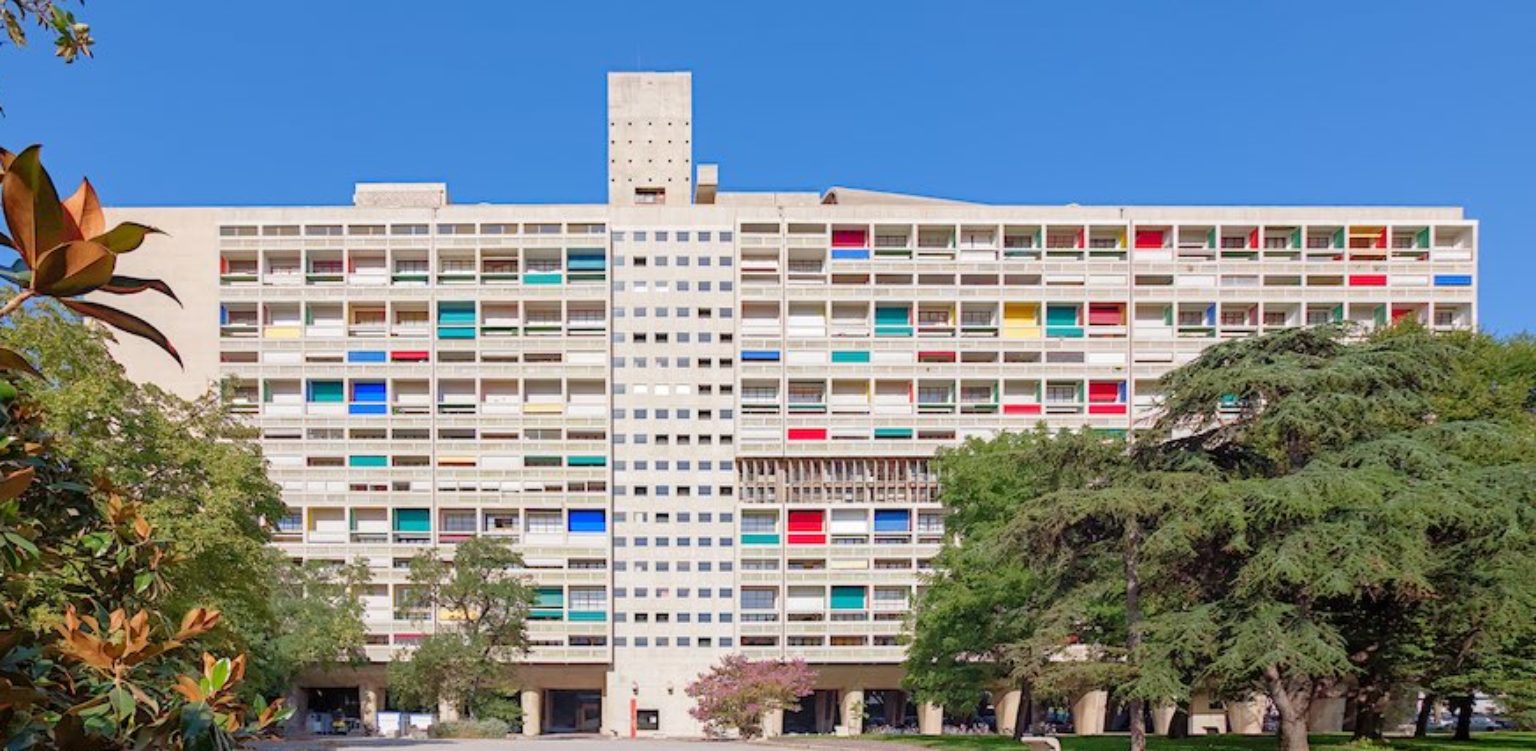
©Thal.art
It was completed in 1952. Of all the iconic modern buildings here, it had the widest influence on housing, becoming a model for post-war housing blocks around the world, for better and worse. Since 2016 it has been part of UNESCO’s Le Corbusier serial World Heritage site, along with other modernist UNESCO World Heritage sites.
Iconic modern buildings at a glance
The table lists each building with its verified architect, completion date and current status, checked on 24 October 2026.
| Building | Architect | Location | Completed | Status today |
|---|---|---|---|---|
| Fallingwater | Frank Lloyd Wright | Mill Run, Pennsylvania, USA | 1937 (guest house 1939) | Museum (Western Pennsylvania Conservancy); UNESCO 2019 |
| Glass House | Philip Johnson | New Canaan, Connecticut, USA | 1949 | National Trust for Historic Preservation site, open for tours |
| Villa Savoye | Le Corbusier (with Pierre Jeanneret) | Poissy, France | 1931 | Museum (Centre des monuments nationaux); UNESCO 2016 |
| Solomon R. Guggenheim Museum | Frank Lloyd Wright | New York, USA | 1959 | Museum; UNESCO 2019 |
| Barcelona Pavilion | Ludwig Mies van der Rohe with Lilly Reich | Barcelona, Spain | 1929 (rebuilt 1983-86) | Reconstruction run by Fundació Mies van der Rohe |
| David S. Ingalls Rink | Eero Saarinen | New Haven, Connecticut, USA | 1958 | Yale ice hockey arena, in use |
| Villa Dirickx | Marcel Leborgne | Sint-Genesius-Rode, Belgium | 1929-1933 | Private house, renovated after 2007 sale |
| Isokon Building (Lawn Road Flats) | Wells Coates | London, UK | 1934 | Grade I listed; refurbished 2003 (Avanti Architects); gallery in former garage |
| Neue Nationalgalerie | Ludwig Mies van der Rohe | Berlin, Germany | 1968 | Museum; reopened 2021 after restoration by David Chipperfield Architects |
| Unité d'Habitation (Cité Radieuse) | Le Corbusier | Marseille, France | 1952 | Housing, hotel and shops in use; UNESCO 2016 |
Source: UNESCO World Heritage entries 1496 and 1321; owners and operators; Wikipedia articles citing Historic England and Yale; The Modern House (as of 24 October 2026).
Modern versus contemporary architecture
The two terms are often confused. Modern architecture is a historical movement with clear principles, roughly from the 1920s to the 1970s: functional planning, little or no ornament and industrial materials such as steel structure architecture and concrete. Contemporary architecture simply means the architecture of today. It borrows freely from modernism, but also from postmodernism and from regional and traditional building, so it is more varied. Today’s contemporary building may look dated, or “historical”, in a few decades; the iconic modern buildings above were all contemporary once.
Modern buildings are found worldwide, from American cities to the capitals of Europe, Latin America and Asia, because the movement was international from the start. Some people find modern architecture bland: its architects saw ornament as a distraction from a building’s purpose and expressed meaning through form, space and light instead. Look at the ten buildings above, though, and “bland” is hard to defend; they are simply different from what many people expect.
The bottom line: why modern architecture still matters
Nearly a century later, these ideas are everywhere: open-plan living, large windows that fill homes with daylight, structures expressed rather than hidden. These iconic modern buildings changed how architects think about space, light, materials and what buildings can be. Whether you love them or find them challenging, they remain the foundation much of today’s architecture is built on.
Sources and further reading
- UNESCO World Heritage: The 20th-Century Architecture of Frank Lloyd Wright (2019) and The Architectural Work of Le Corbusier (2016)
- Ingalls Rink and Isokon Flats (Wikipedia, with Historic England listing reference)
- The Modern House: Villa Dirickz by Marcel Leborgne
- Unité d’habitation (Wikipedia)

Daniel Mercer is a Coffee Break section editor at Arch2O, currently based in Berlin, Germany. With a background in architectural history and design journalism, Daniel holds a Master’s degree from the University of Edinburgh, where he focused on modern architecture and urban theory. His editorial work blends academic depth with a strong grasp of contemporary design culture. Daniel has contributed to several respected architecture publications and is known for his sharp critique and narrative-driven features. At Arch2O, he highlights innovative architectural projects from Europe and around the world, with particular interest in adaptive reuse, public infrastructure, and the evolving role of technology in the built environment.