

Two landscape architecture students at the Harvard Graduate School of Design have drawn up Memorial Circle alternative designs for Washington, D.C., responding to President Trump’s proposed 250-foot-tall Triumphal Arch. The students, Jeremy Dvorak and Jake Geitner, worked with The Cultural Landscape Foundation to test how the site could hold a commemorative landscape instead of a monumental building. Their two conceptual schemes appear while the arch itself is stalled in court.
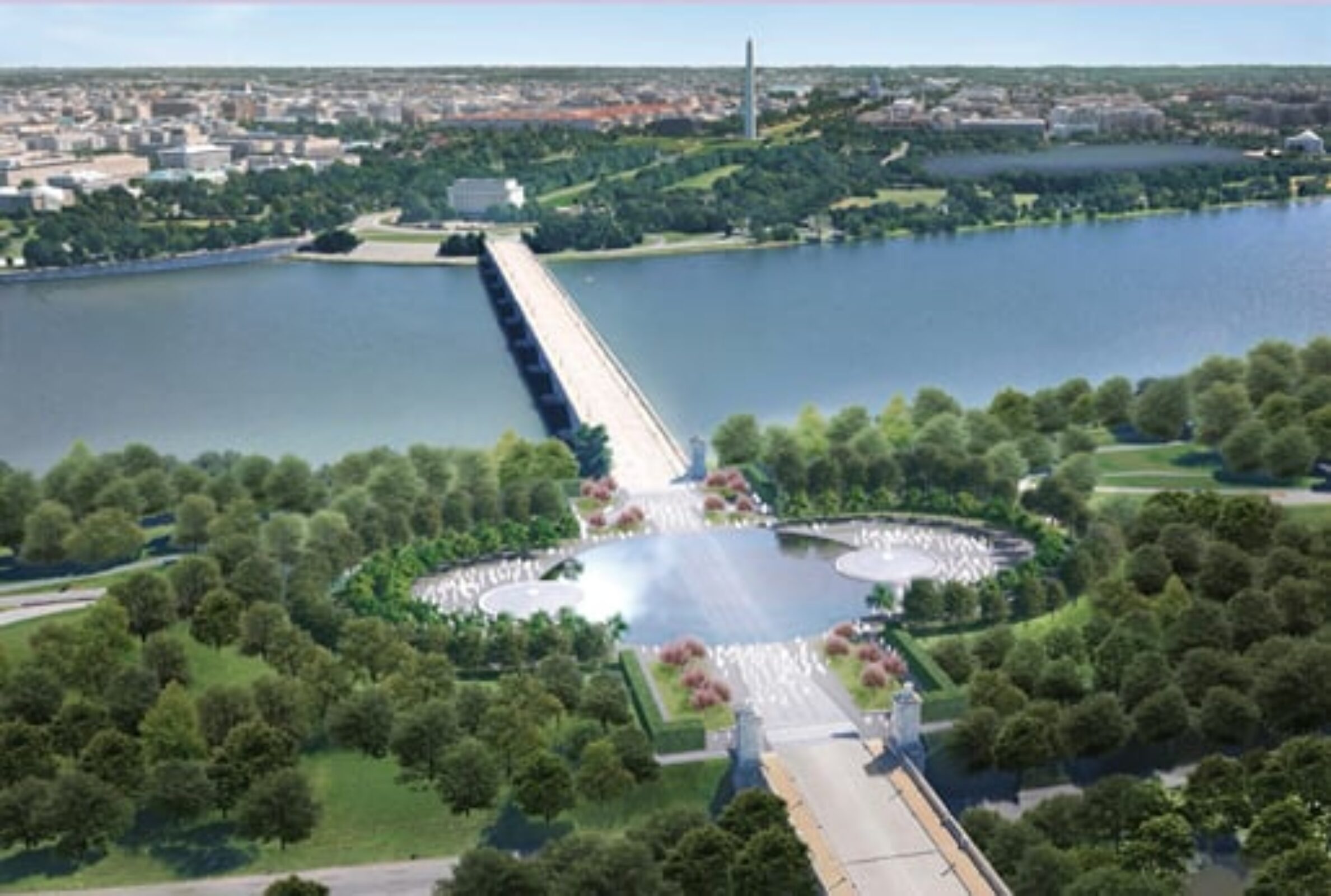
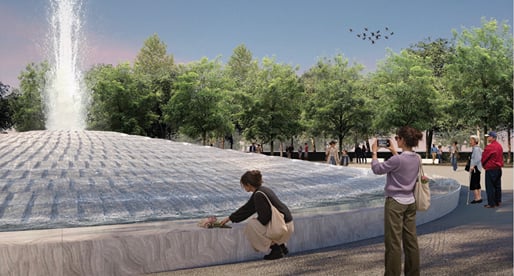
Proposal Two. Image © Jeremy Dvorak and Jake Geitner, courtesy The Cultural Landscape Foundation
That legal pause shapes the context for the proposals. The arch plan was first reported last October, when it was informally nicknamed the ‘Arc de Trump’, and earlier this month a federal judge blocked the development. The same judge extended the order for another two weeks this morning, which leaves the future of the site open while the students’ work circulates.
Both proposals share one goal, which is to protect the historic significance of Memorial Circle and the views that connect the Lincoln Memorial, Arlington National Cemetery, and Arlington House. The designers treat that sightline as a fixed constraint, so every move in the circle is judged by whether it keeps those three landmarks visible to one another. This kind of reading of a site’s history and views is the foundation of any site analysis.
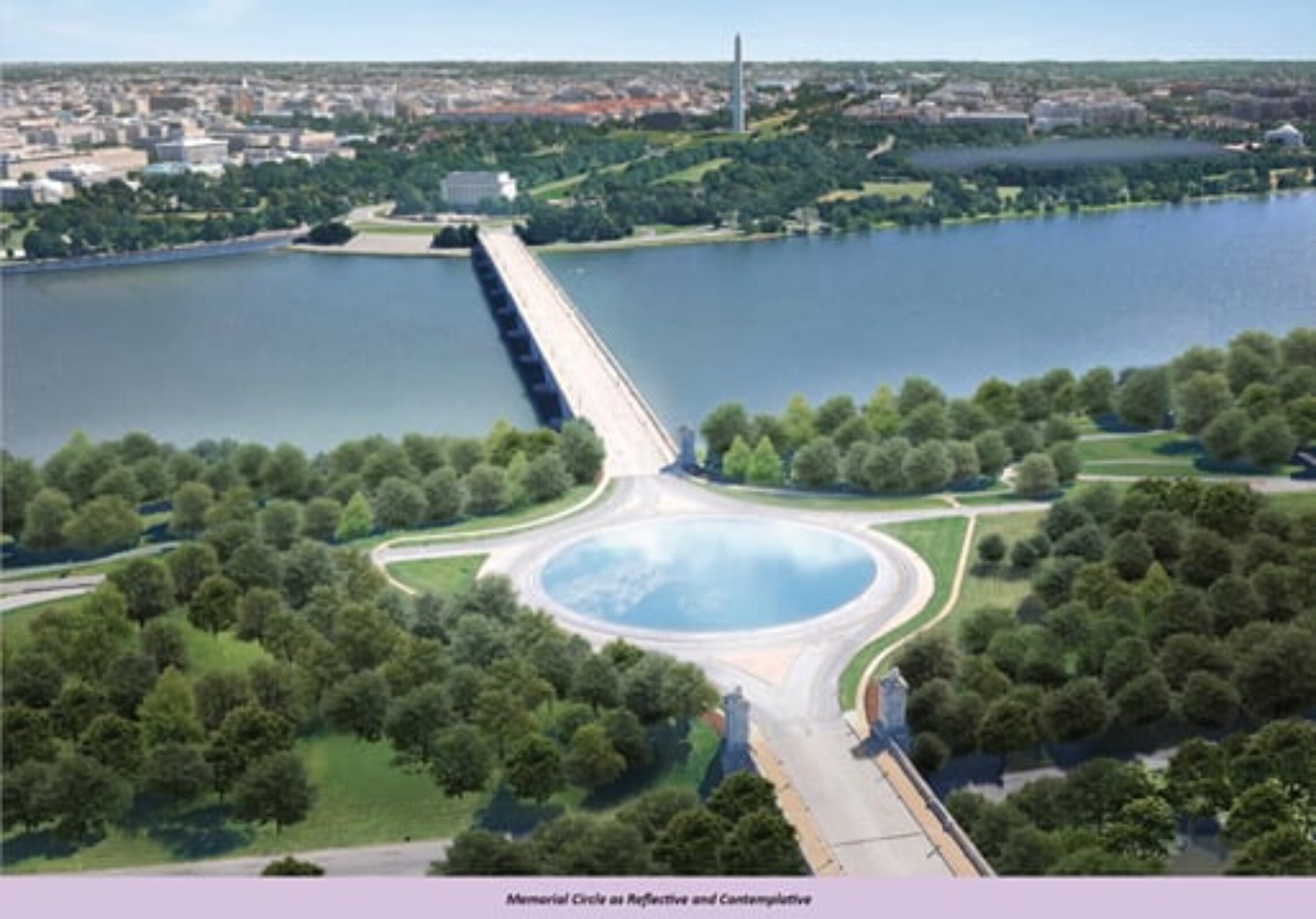
Proposal One. Image © Jeremy Dvorak and Jake Geitner, courtesy The Cultural Landscape Foundation
The first proposal keeps the existing traffic arrangement but adds a large, shallow reflective pool inside the circle. A curved granite edge encloses the water and carries inscribed words relating to belonging and unity. The pool is meant to mirror the surrounding monuments and landscape, so the historic viewshed stays intact while the circle gains a quiet place for reflection.
Read more:
- Stefano Boeri Architetti Wins Loco Park Masterplan for Tbilisi Locomotive Factory
- BIG’s Dubai Masterplan Turns Iconic Racecourse into a Pedestrian Paradise
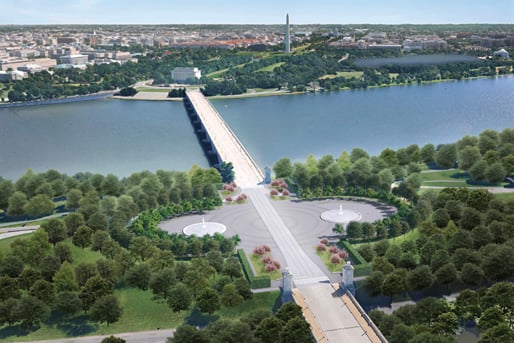
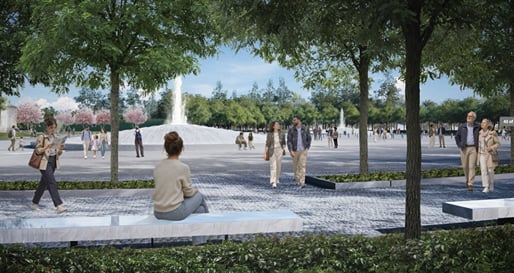
The second scheme goes further by removing the existing roundabout and moving vehicle circulation to the perimeter of the site. That change would restore the east-west ceremonial axis and create a continuous pedestrian landscape between Arlington Memorial Bridge and Memorial Avenue. Two large fountain landscapes, with formal planting and geometries drawn from historic site plans, would frame the central route, and an additional fountain could be activated for commemorative events.
The team is careful to describe the work as exploratory rather than prescriptive. “Ultimately, these design provocations are not intended as definitive directions for Memorial Circle,” the team says. “Instead, these alternate futures provide an opportunity to think differently about landscape architecture, cultural history, and memory alongside national representation.”
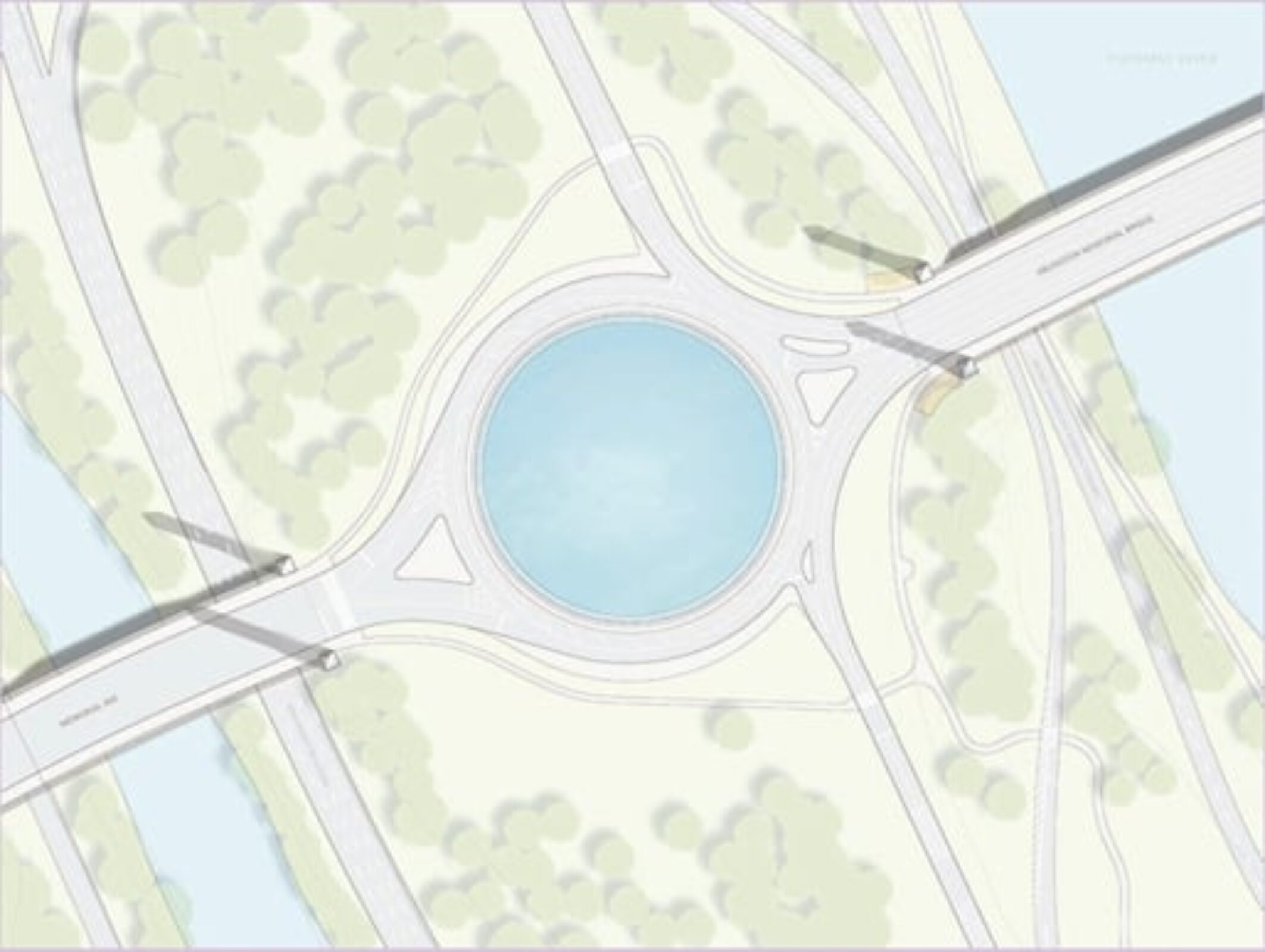
Image © Jeremy Dvorak and Jake Geitner, courtesy The Cultural Landscape Foundation
The students close by questioning the premise of the arch itself. “Simply on the basis of its presentation as open space, must it be inevitable that the existing roundabout is occupied by a monumental work of architecture? Or might smaller, but no less significant, acts of procession, or even the simple placement of flowers, meaningfully express national remembrance? Perhaps monumentality does not reside in an object at all but in the landscape that makes these acts possible.”
For more background, see our guide to landscape architecture as a profession.

Olivia Bennett is a seasoned American news editor at Arch2O, born in the UK and a proud alumna of UCLA, where she studied Architecture and Media Studies. With a strong editorial background and a passion for design storytelling, she excels in translating complex architectural ideas into engaging narratives. Olivia focuses on contemporary trends, sustainability, and emerging talents in the field, offering readers a fresh, global perspective on the built environment.