

Interior design styles are recognisable sets of choices about layout, materials, colour, furniture and ornament that share a common idea, usually rooted in a particular time and place. Seven styles have proved especially lasting: classical, minimalist, Scandinavian, English country, mid-century modern, Art Deco and contemporary. This guide explains how to recognise each one, with a style-identification table, a historic example for each style where a licensed photo exists, and practical notes on applying it. It is for interior design enthusiasts, students and anyone planning a room.
Some styles come and go like fashion trends. Others last for decades because they suit how people actually live. Understanding these foundations helps you make better choices, whether you are working within the constraints of tiny house interiors or trying to avoid common design mistakes that cramp a living space.
Style identification table
Use the table to identify a room or choose a direction. Each row lists the cues that most reliably separate one style from another; the sections below explain them with examples.
| Style | Origin and period | Key features | Typical materials | Palette | Example |
|---|---|---|---|---|---|
| Classical | Greek and Roman architecture, revived from the Renaissance; Neoclassical 18th century | Symmetry, columns and pilasters, cornices, panelled walls, decorated ceilings | Stone, marble, plaster, fine timber | Soft neutrals, stone colours, muted pastels with gilding | Kedleston Hall, Derbyshire (Robert Adam, 1760s) |
| Minimalist | 20th-century modernism and Japanese influence | Few objects, clean lines, built-in storage, open space | Plaster, concrete, pale wood, stone | White, greys, natural tones | – |
| Scandinavian | Nordic countries; Larsson home at Sundborn c. 1900, wider spread mid-20th century | Light, simple, comfortable, informal furniture | Birch, ash, pine, wool, linen | White and pale colours with soft accents | Carl and Karin Larsson's home, Sundborn (Ett hem, 1899) |
| English country | English country houses, furnished over generations | Layered antiques, upholstered furniture, collected look | Painted timber, chintz and floral fabrics, rugs | Warm, faded colours and patterns | – |
| Mid-century modern | c. 1940s-1960s, mainly US and Scandinavia | Tapered legs, organic curves, open plans, big windows | Moulded plywood, teak, fibreglass, aluminium | Warm woods with mustard, teal, orange accents | Eames chairs (see linked guide) |
| Art Deco | 1920s-1930s, France and internationally | Geometric, stepped and sunburst motifs, glamour | Veneers, lacquer, chrome, glass, mirror, marble | Black, gold, jewel tones | Eltham Palace, London (1933-36) |
| Contemporary | Current design; changes over time | Mix of influences held together by shared colour or material | Any, often mixed | Varies; often neutral base with accents | – |
Source: Arch2O summary; examples from National Trust (Kedleston), V&A (Larsson), English Heritage (Eltham Palace) (as of 24 October 2026).
The timeline below shows when each style took shape and how long it has stayed in use.
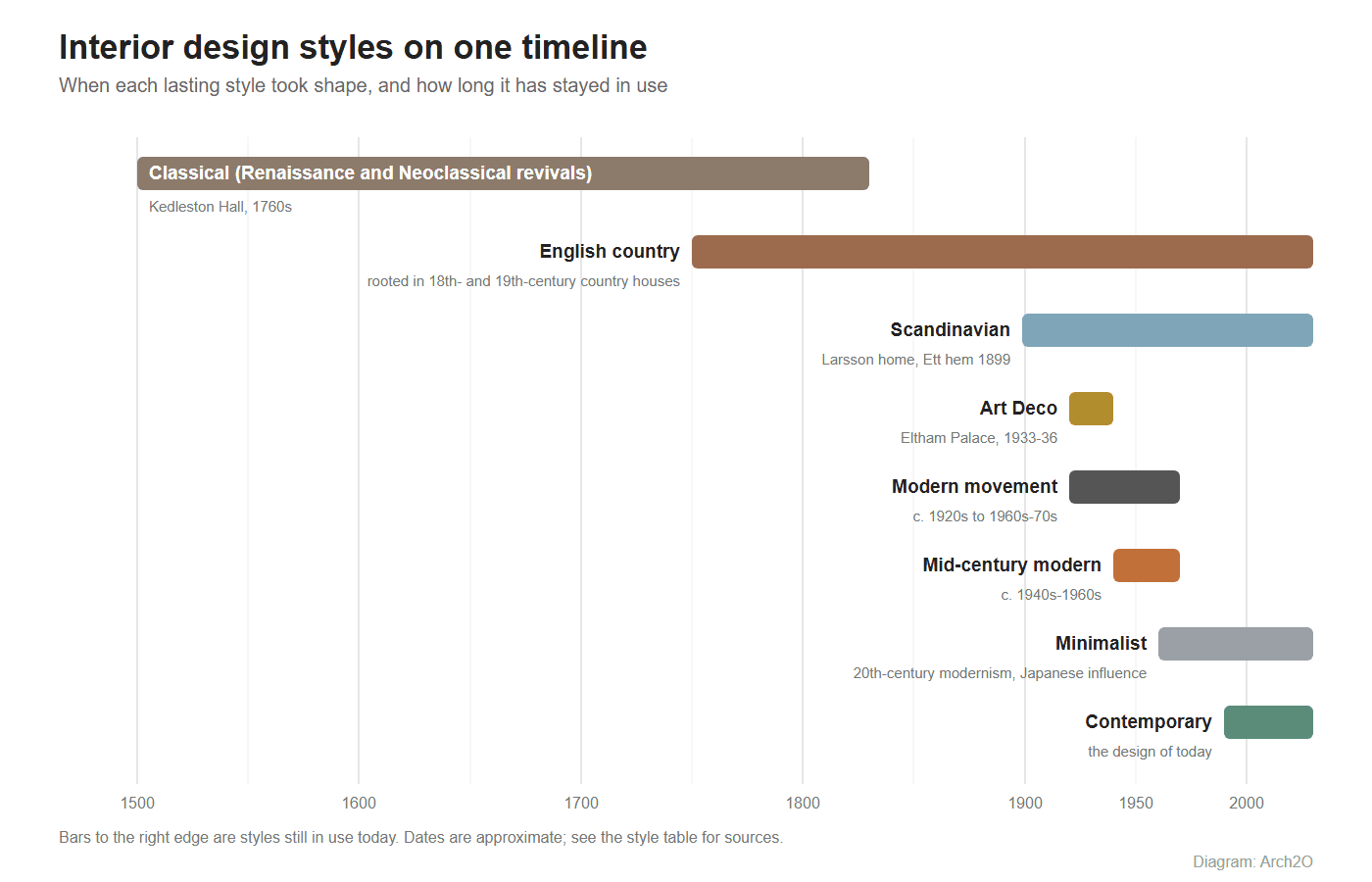
The seven lasting interior design styles, plus the modern movement, on one timeline: when each took shape and whether it is still in use. Diagram: Arch2O
The 7 interior design styles that have lasted
Each of these interior design styles is a complete approach to organising space, choosing materials and setting atmosphere, not just a look. You can follow one closely or blend elements from several, as long as the result has a clear idea behind it.
1. Classical: proportion and symmetry
Classical interiors draw on the architecture of ancient Greece and Rome, as revived from the Renaissance onwards. Their hallmarks are symmetry, ordered proportions and architectural details borrowed from temples: columns and pilasters, cornices and crown mouldings, coffered or decorated ceilings, and panelled walls. Materials are chosen for permanence: stone, marble, plaster and fine timber.
Kedleston Hall in Derbyshire, England, is a textbook example. Robert Adam’s interiors there, made in the 1760s for Nathaniel Curzon, were designed to recall the grandeur of ancient Rome, according to the National Trust’s history of Kedleston Hall. The top-lit Marble Hall is lined with fluted alabaster columns.
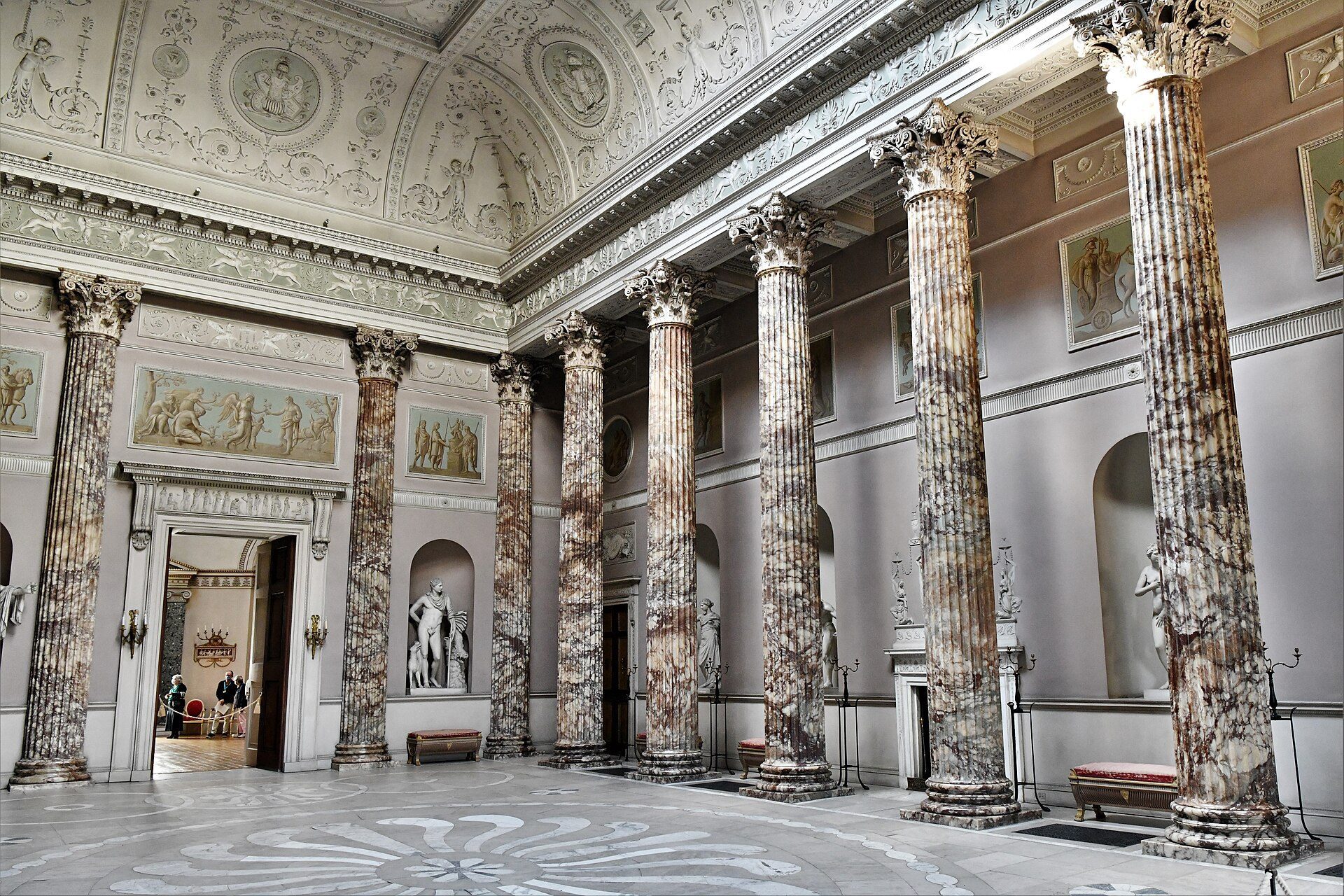
The Marble Hall at Kedleston Hall, Derbyshire (Robert Adam, 1760s): symmetry, Corinthian columns and a decorated ceiling define the classical style. Photo: Michael Garlick, CC BY-SA 2.0. Michael Garlick, source, CC BY-SA 2.0
The key to a successful classical room is getting the proportions right: elements should relate to each other in consistent ratios, and symmetry around a fireplace, door or window gives balance. The style suits formal rooms where you want a sense of permanence.
Via: A+ studio
2. Minimalist: less, but better
Explore the fundamentals of minimalist interior design for a more focused guide to this approach.
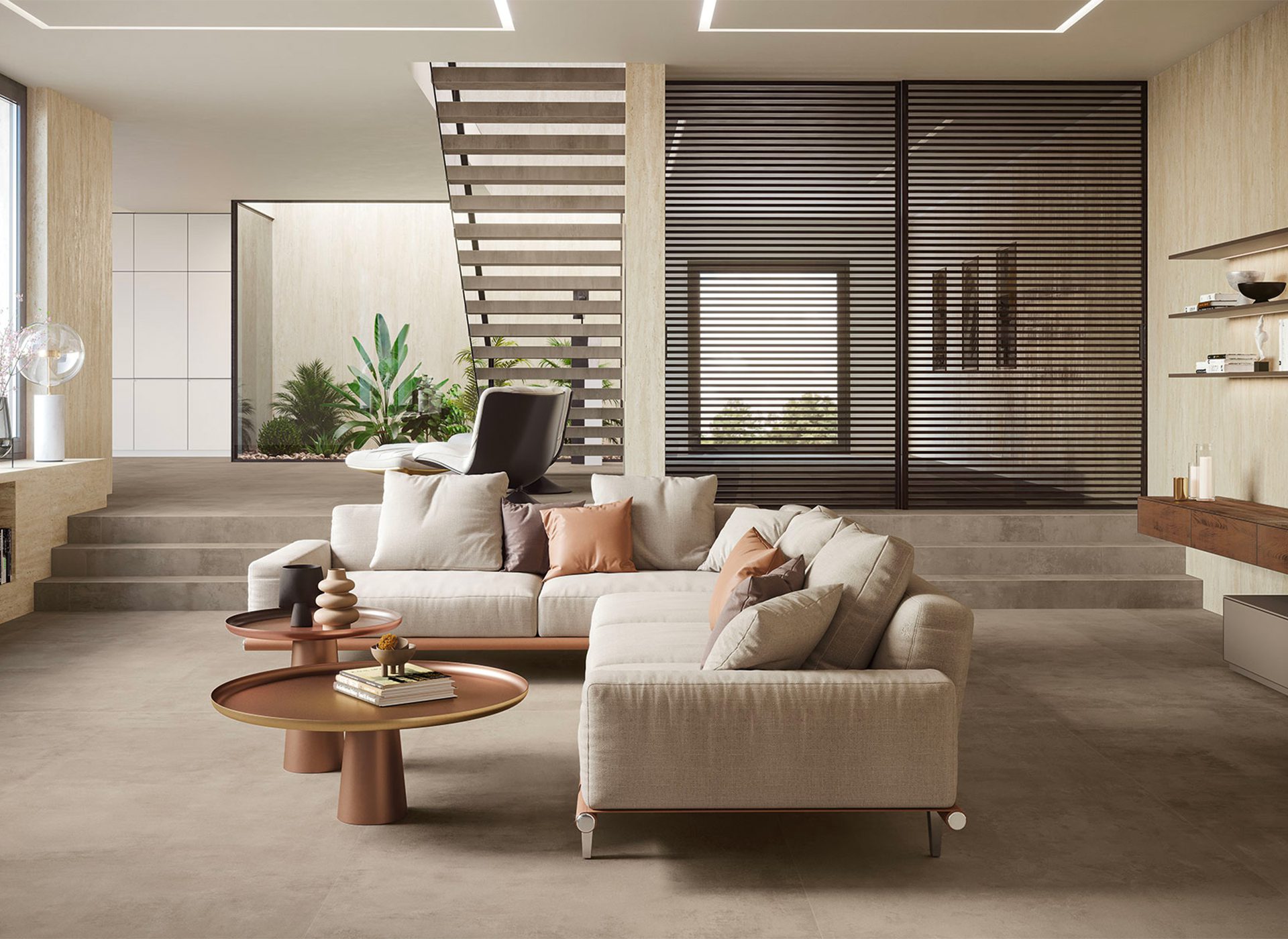
Minimalist interiors remove everything that is not essential. Clean lines, open space, a restrained palette and a few carefully chosen pieces of furniture define the style, and storage is usually built in so surfaces stay clear.
Minimalism demands precision, because there is nowhere to hide mistakes: flush cabinets, crisp junctions between materials and good wall finishes matter. Lighting that sets the mood without cluttering the space is equally important. The style works well in small spaces, where visual clutter makes rooms feel cramped.
3. Scandinavian: light, simple and comfortable
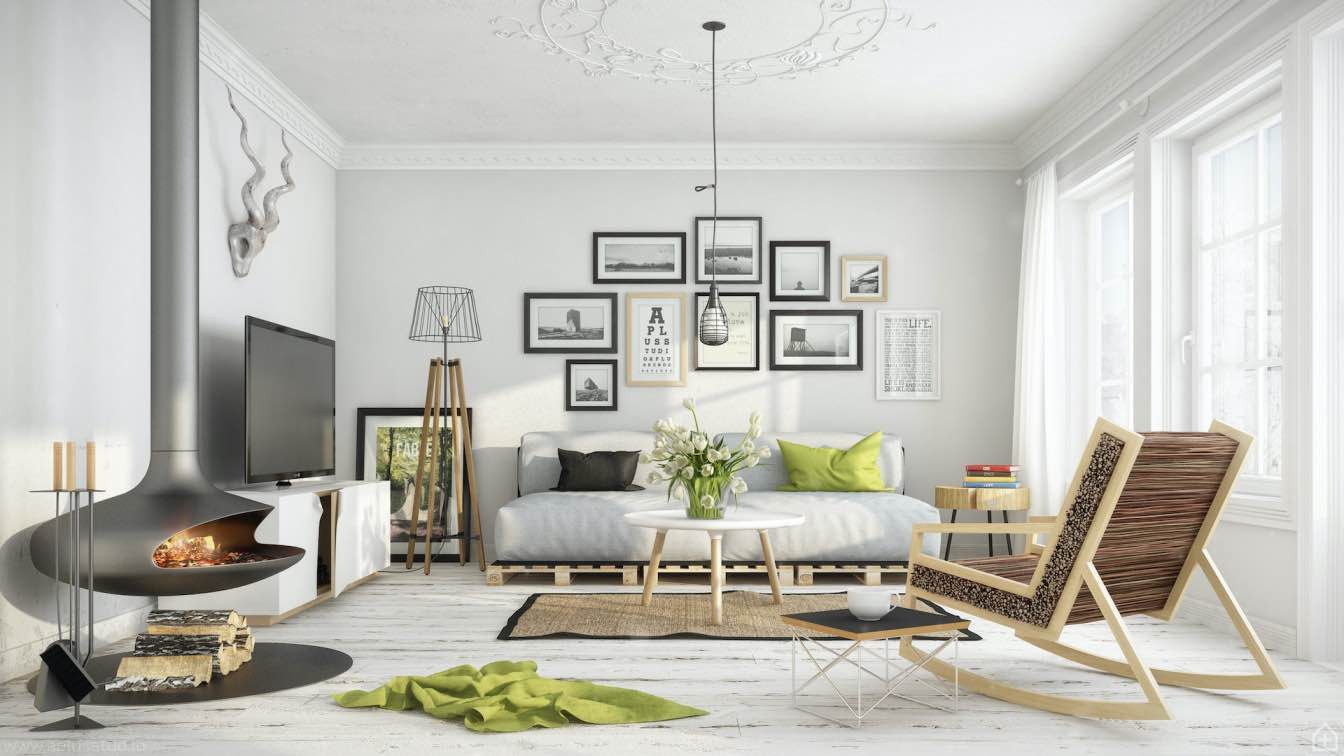
Scandinavian interiors combine practical, simple furniture with comfort, in pale colours that make the most of limited winter daylight. Light wood such as birch, ash and pine, white or soft-coloured walls, natural textiles and uncluttered rooms are typical.
The style’s roots are often traced to the home that artists Carl and Karin Larsson created at Sundborn in Sweden around 1900, which Carl painted in the watercolour series published as Ett hem (A Home) in 1899. The Victoria and Albert Museum describes the house’s extraordinary impact on interior design worldwide; many of the interiors were Karin Larsson’s work.
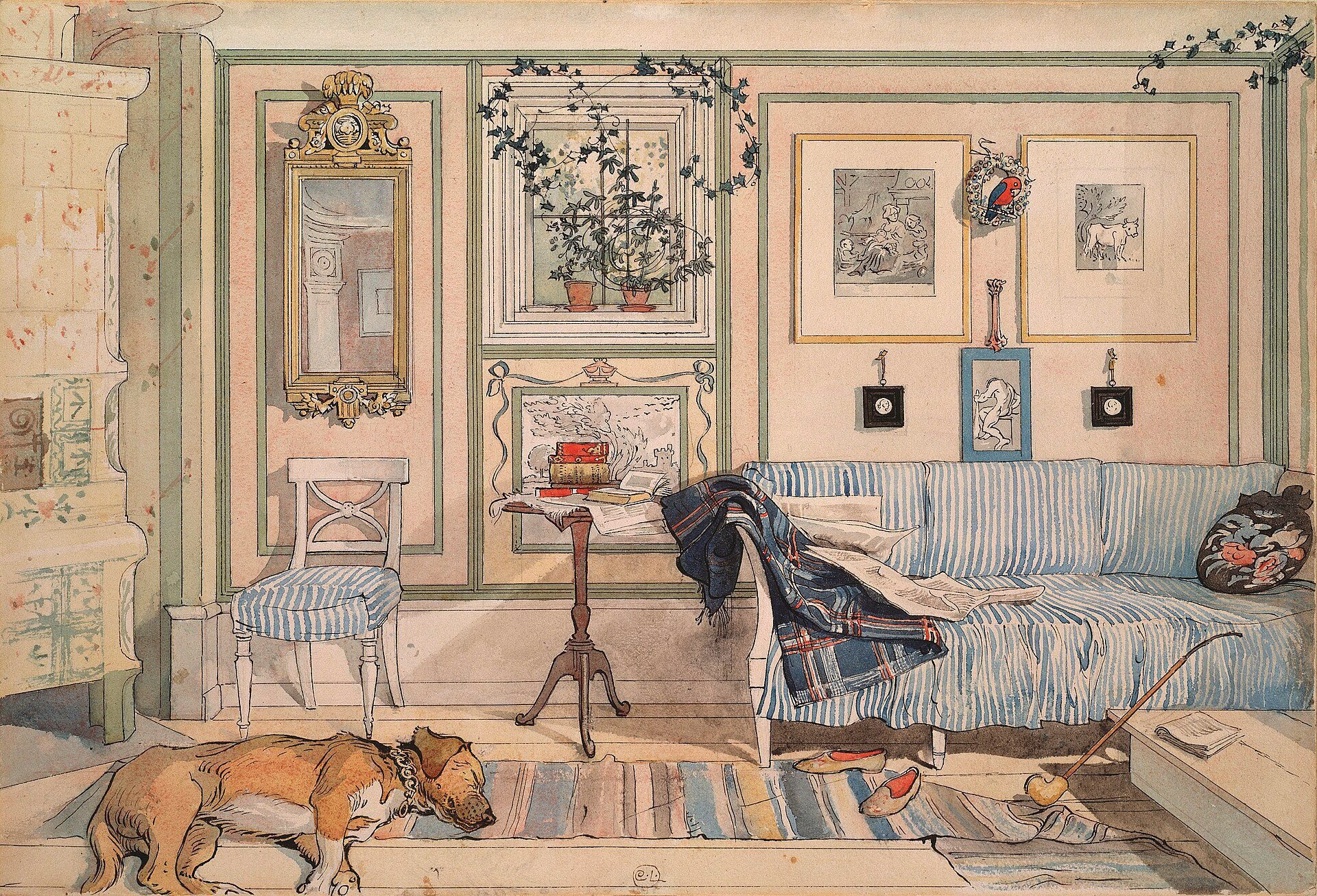
Carl Larsson, 'Lathörnet' (The Idle Corner), from the series published as Ett hem (1899): pale walls, simple painted furniture and striped textiles at the Larssons' home in Sundborn. Public domain. Image: Carl Larsson (Public domain (verified))
Today’s Scandinavian rooms add energy-efficient windows and modern heating without losing the light, informal character.
4. English country: layered over time
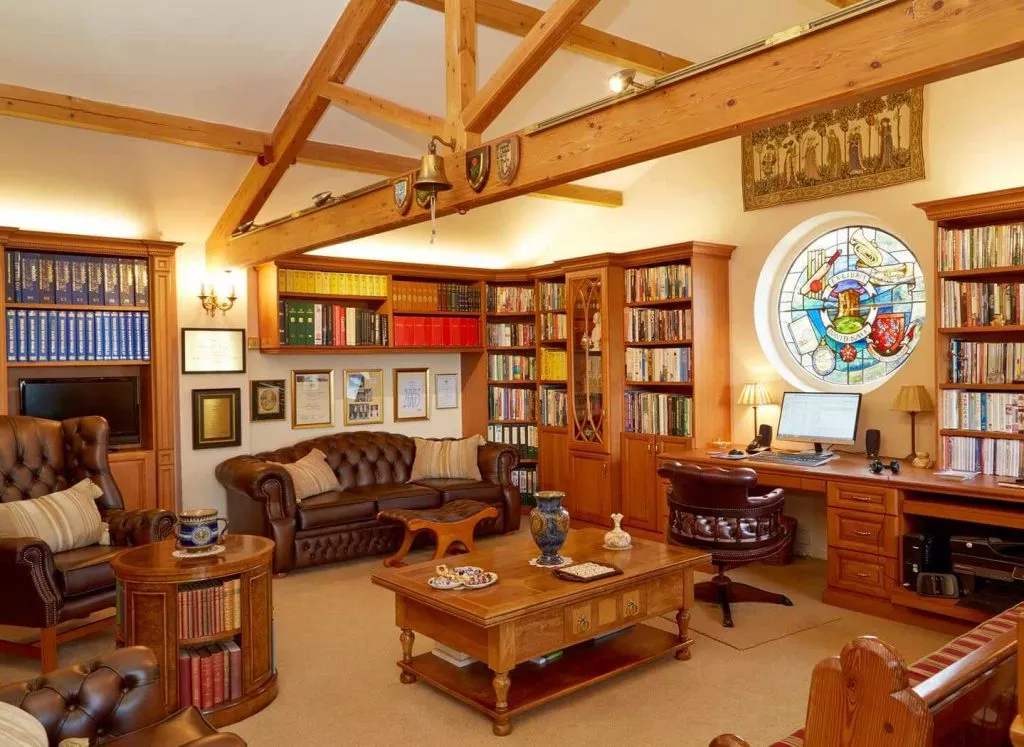
English country style looks collected rather than designed: pieces from different periods, patterned fabrics such as florals and checks, comfortable upholstered furniture, painted timber, books and pictures. It grew from the way country houses were furnished and altered over generations.
Its strength is flexibility. You can add new pieces, change colours or swap accessories without starting again, and it is forgiving of wear. The challenge is fitting modern services, such as new wiring and efficient heating, without spoiling the character.
Calke Abbey in Derbyshire shows the collected look at its most extreme. When the house passed to the National Trust in 1985, the Trust decided to preserve its rooms as they were found rather than restore them, so generations of furniture, paintings and collections remain in place.
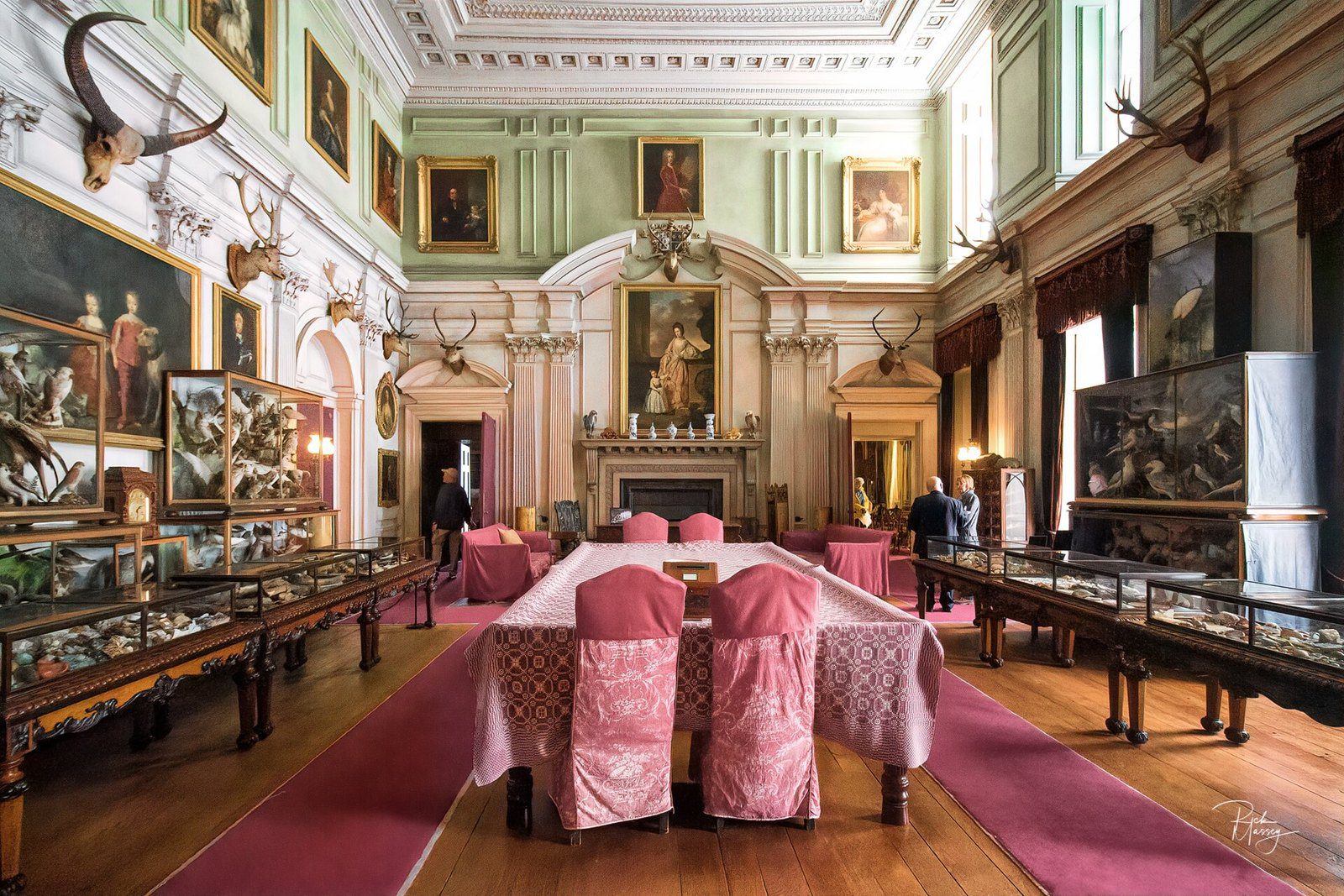
The Saloon at Calke Abbey, Derbyshire: furniture, paintings and collections layered over generations and kept as found. Rick Massey, source, CC BY 2.0
5. Mid-century modern: good design for everyday life
Compare individual pieces in the collection of furniture designed by architects.
Mid-century modern refers to design from roughly the 1940s to the 1960s, when new materials and manufacturing methods made well-designed furniture available to more households. Moulded plywood and other engineered wood products, aluminium, fibreglass and new plastics allowed light, curved forms that still look fresh.
The chairs of Charles and Ray Eames illustrate this approach; read the story of the Eames chair. Clean lines, tapered legs, warm woods with bold accent colours, open plans and large windows connecting inside and out are typical. Updating an original mid-century house usually means improving insulation and glazing; modern curtain wall systems and high-performance glazing can keep the transparency while meeting current energy standards.
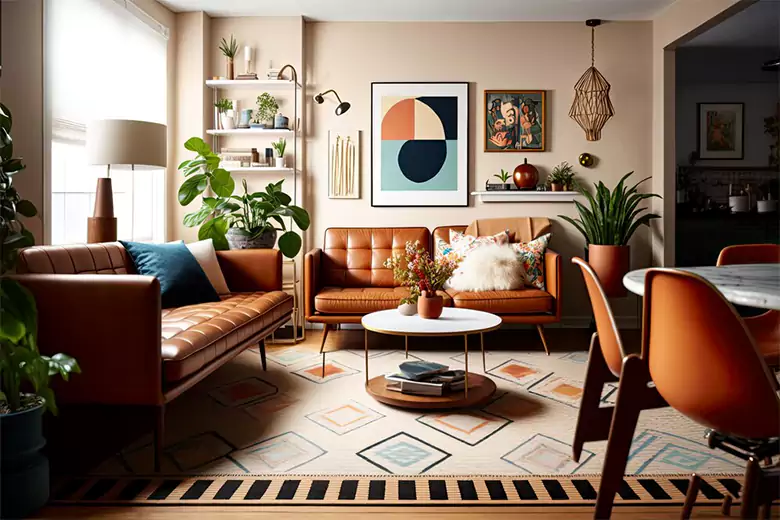
Charles and Ray Eames’s own home in Pacific Palisades, California, built as Case Study House No. 8 and completed in 1949, shows the style lived in: a steel-and-glass frame, a double-height living room and a collection of furniture, plants and objects.
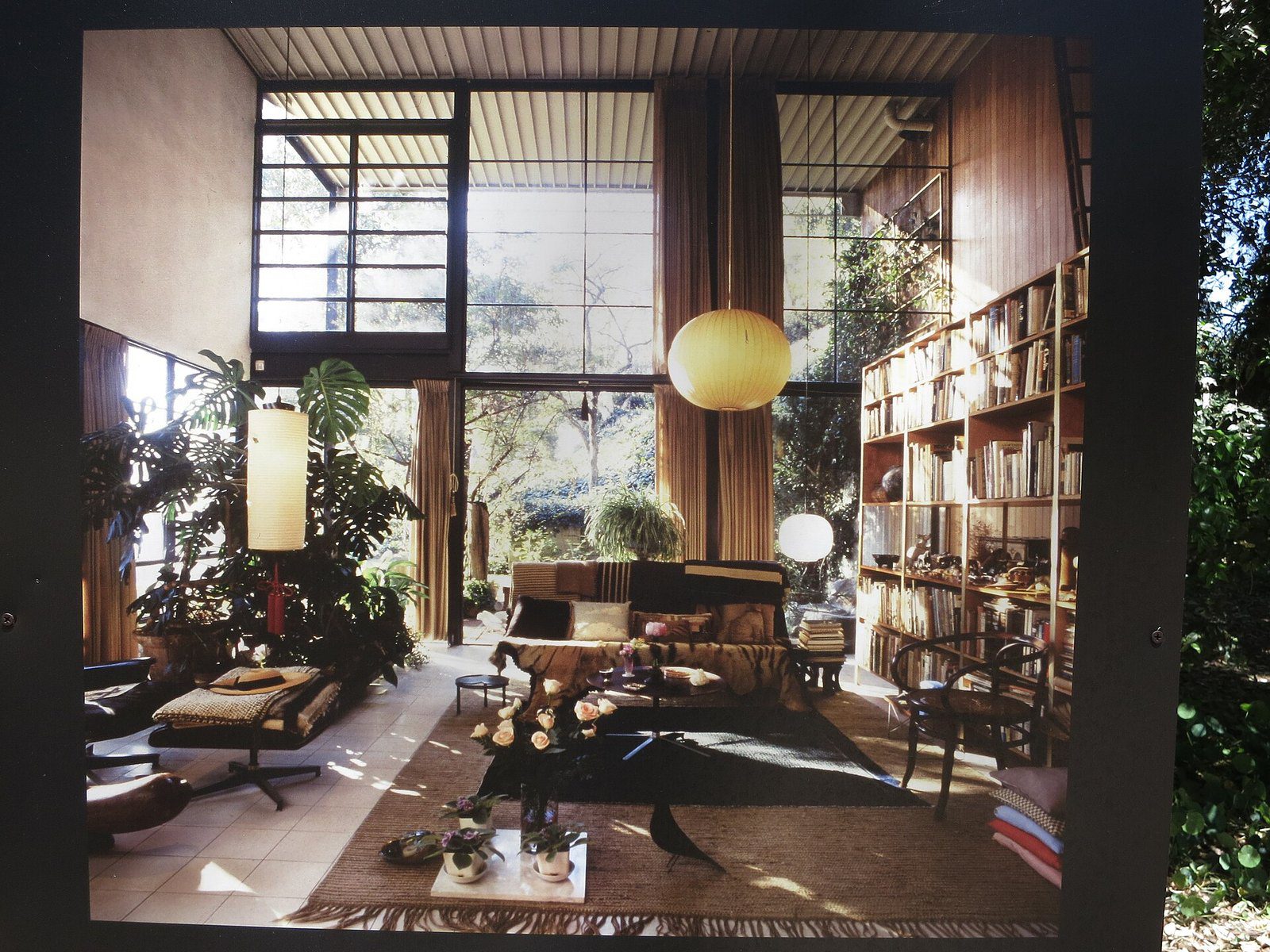
The living room of the Eames House (Case Study House No. 8), Pacific Palisades, California, completed in 1949. edward stojakovic, source, CC BY 2.0
6. Art Deco: geometry and glamour
For ideas on applying this style to a room, explore these Art Deco interior ideas.
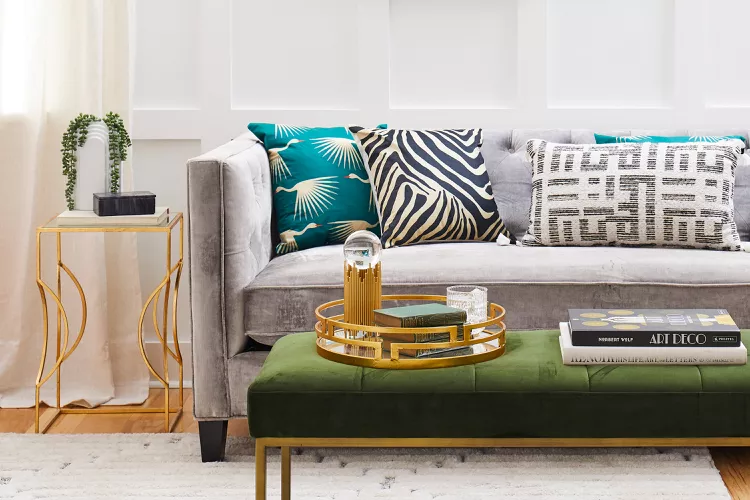
Art Deco emerged in the 1920s and 1930s and celebrated the machine age through bold geometry and luxurious materials: polished wood veneers, lacquer, chrome, glass, mirrors and marble, often with stepped, sunburst and zigzag motifs.
Eltham Palace in south-east London is one of England’s finest examples. Architects Seely and Paget built a new house there for Stephen and Virginia Courtauld in 1933-36, and its domed entrance hall, by the Swedish designer Rolf Engströmer, is described by English Heritage as perhaps the most dramatic interior in its description of Eltham Palace.
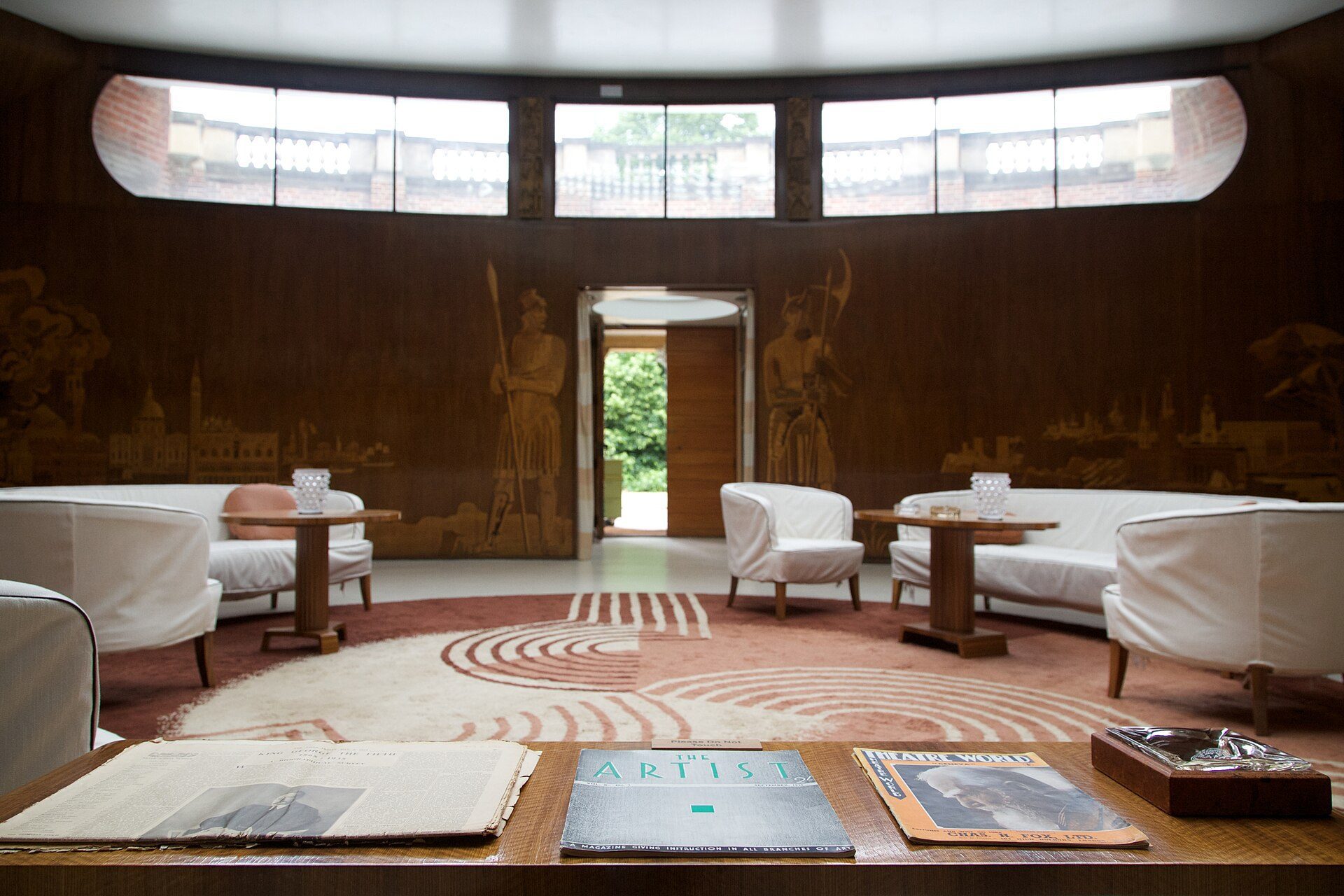
The entrance hall at Eltham Palace, London (Seely and Paget, with Rolf Engströmer, 1930s): veneered walls, curved geometry and a bold circular rug. Photo: Tom Parnell, CC BY-SA 4.0. Tom Parnell, source, CC BY-SA 4.0
The style suits rooms where you want drama: a hallway, dining room or bar. Digital fabrication now makes its complex patterns easier to produce.
Credit: The Spruce / Marty Baldwin
7. Contemporary: design of the present
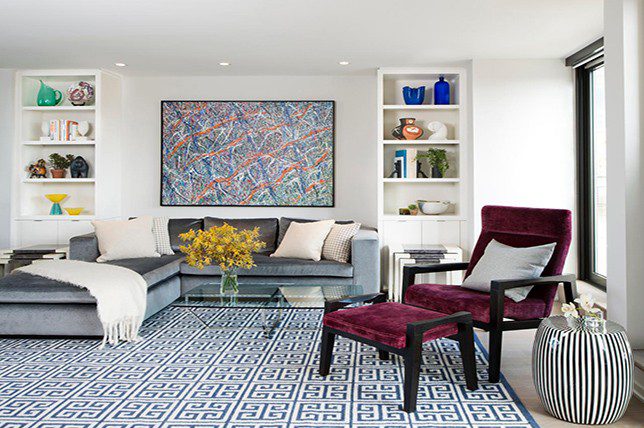
Contemporary design means the design of today, so it keeps changing. It can combine elements from different periods while staying visually coherent, often through shared colours, similar proportions or complementary materials.
This approach lets you keep pieces you already own while creating a space that feels intentional. Because it is not tied to a historical rulebook, it adapts easily to new technology and ways of living.
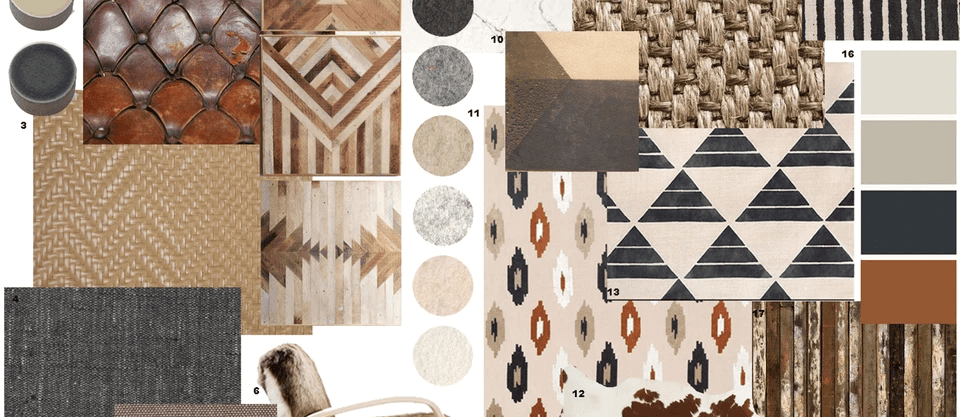
Use the colour and material cues below as a quick check when you are trying to identify a room.
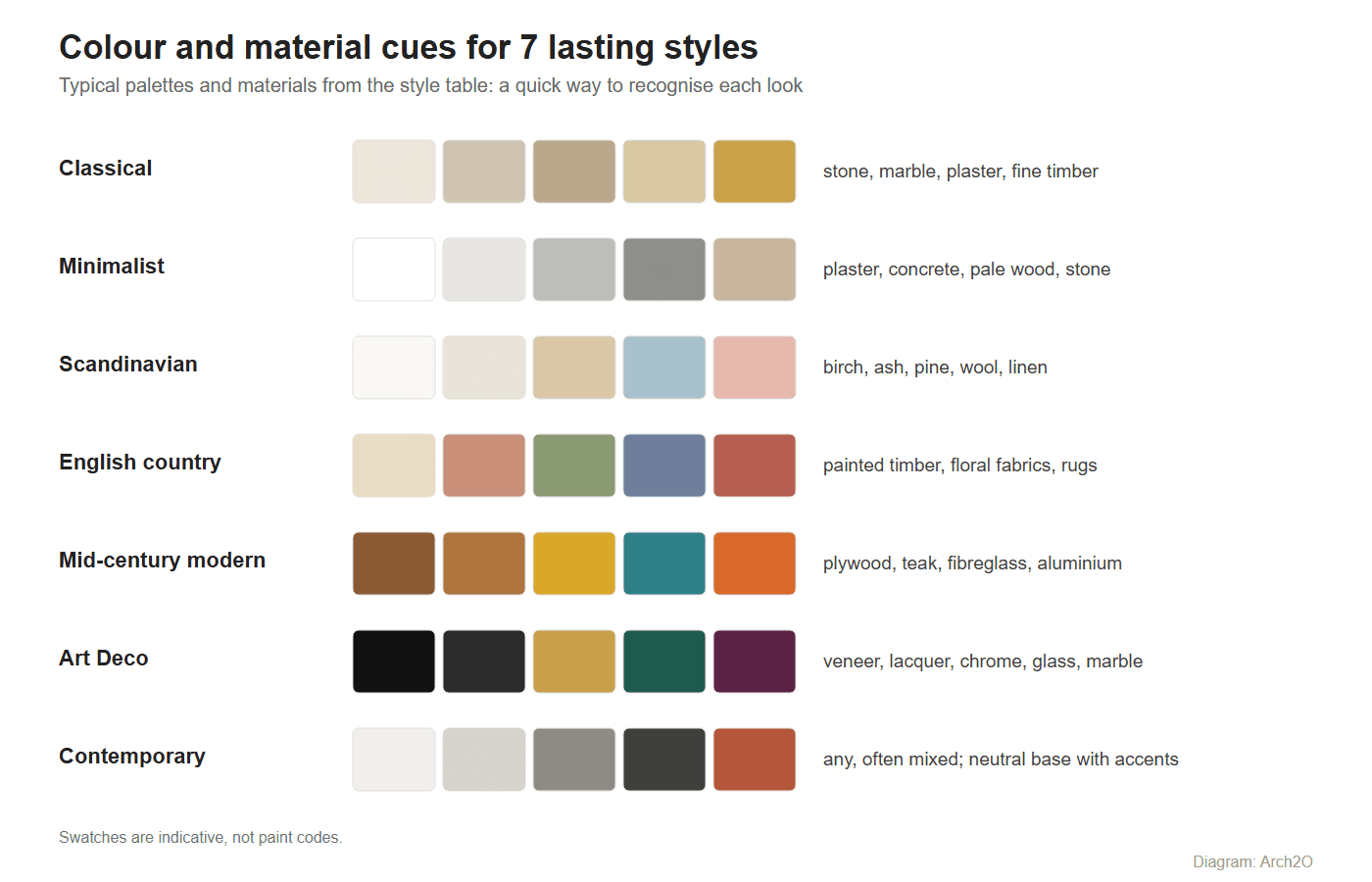
Typical colours and materials for each of the seven styles, from the style table. Swatches are indicative. Diagram: Arch2O
Three more interior styles you will meet
Beyond the seven lasting styles, these three appear in many homes and are easy to recognise once you know their cues.
Art Nouveau: lines from nature
Art Nouveau, at its peak around 1890-1910, replaced historical ornament with curving lines drawn from plants, and used iron and glass openly. Victor Horta’s own house and studio in Brussels, built in 1898-1901 and now the Horta Museum, is one of four Horta town houses on the UNESCO World Heritage List, inscribed in 2000.
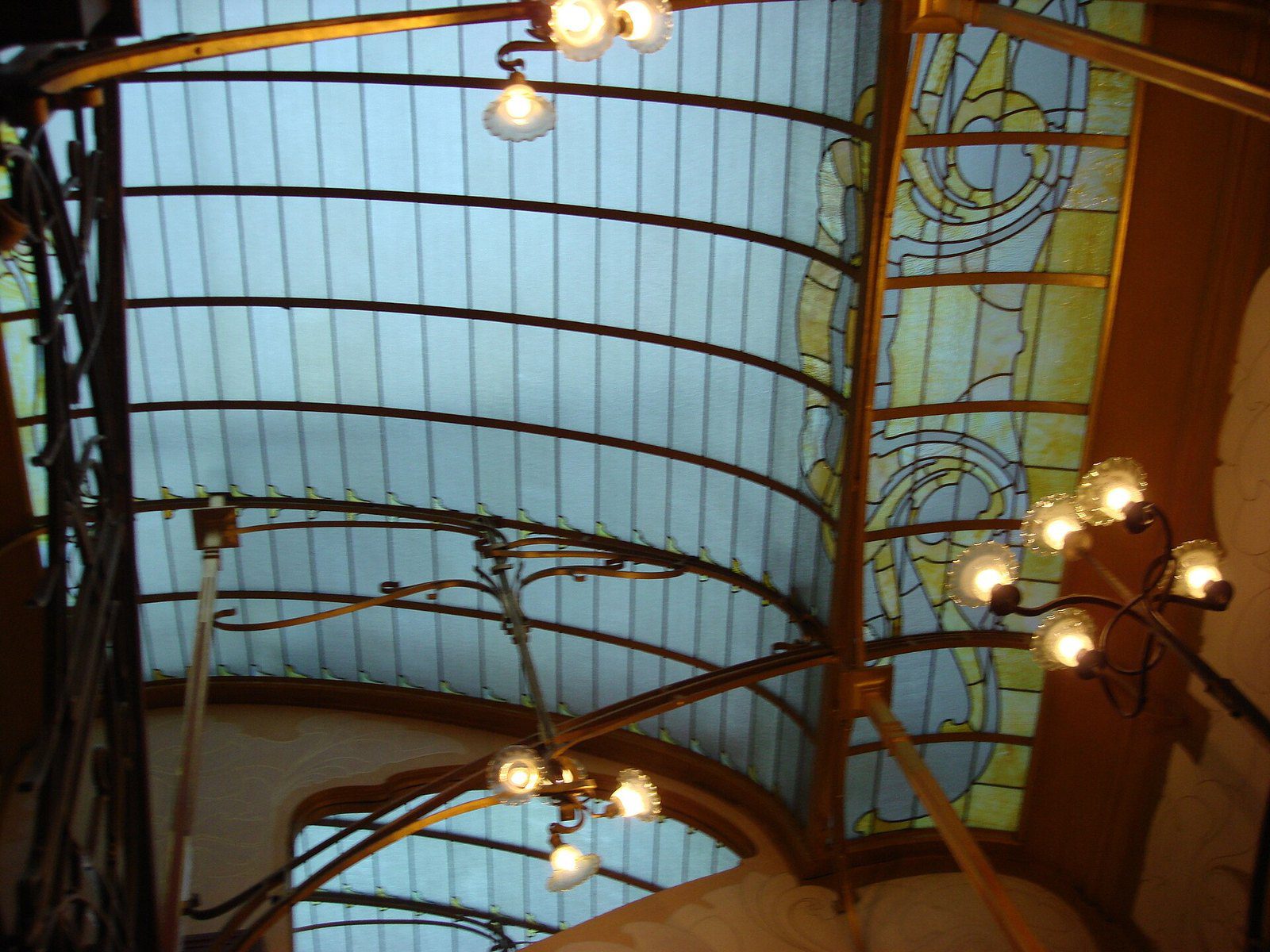
The staircase skylight in Victor Horta's own house and studio in Brussels (1898-1901), now the Horta Museum. Photo: Oxyman, CC BY 2.5, via Wikimedia Commons
Japanese: the washitsu
A traditional Japanese room, the washitsu, is floored with tatami mats, divided by sliding shoji and fusuma panels and kept almost empty, so one room can serve for sitting, eating or sleeping. Its restraint fed into minimalism, and today’s Japandi style blends it with Scandinavian warmth.
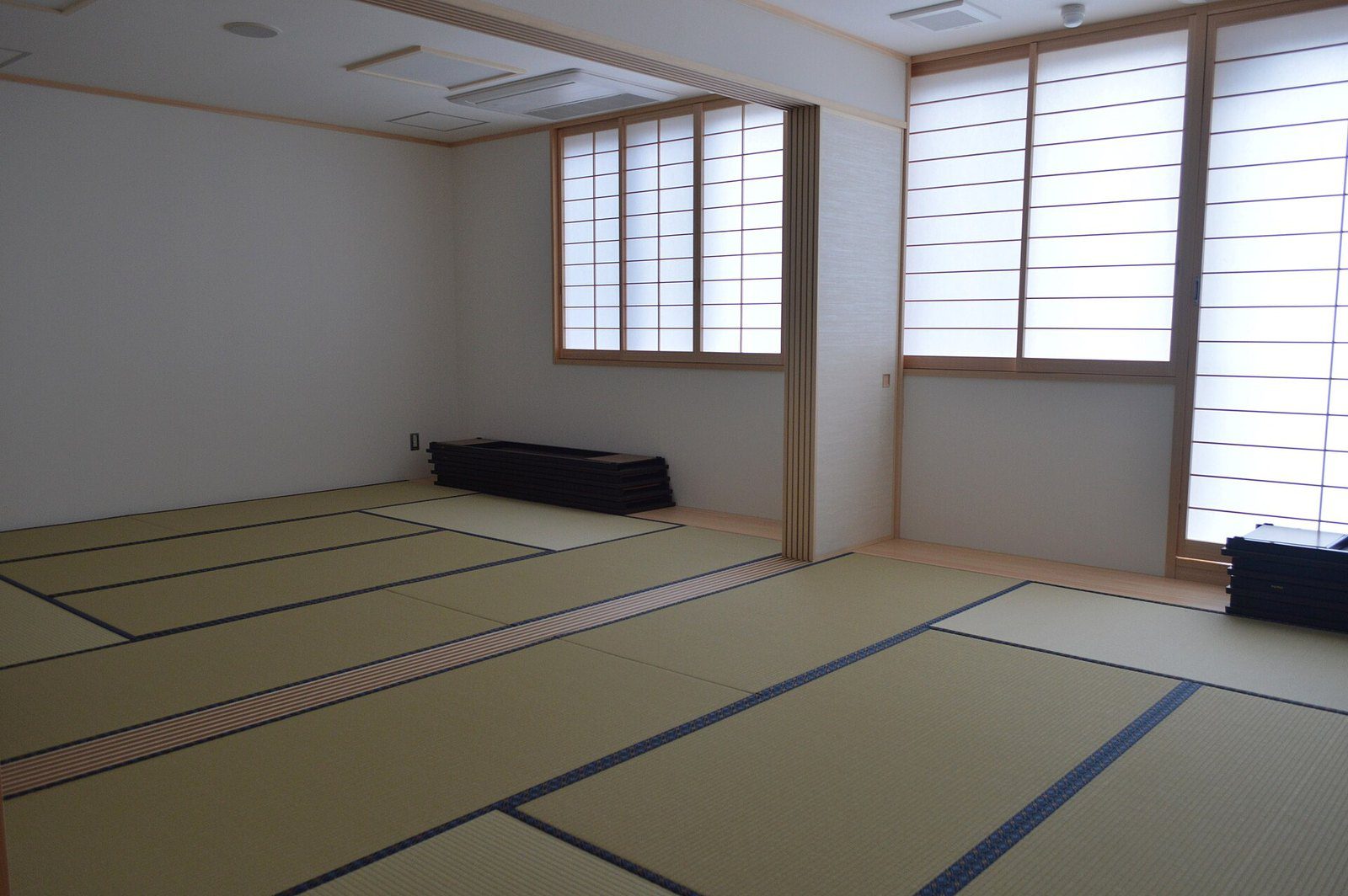
A Japanese-style room (washitsu): tatami floor and sliding shoji screens, almost empty of furniture. Asturio Cantabrio, source, CC BY-SA 4.0
Moroccan: around a courtyard
Moroccan interiors turn inward to a courtyard, with zellige tilework, carved plaster and cedar, arches and a fountain. Dar Mnebhi in Marrakech, a palace built for the minister Mehdi Mnebhi around the turn of the 20th century, has housed the Musée de Marrakech since 1997.
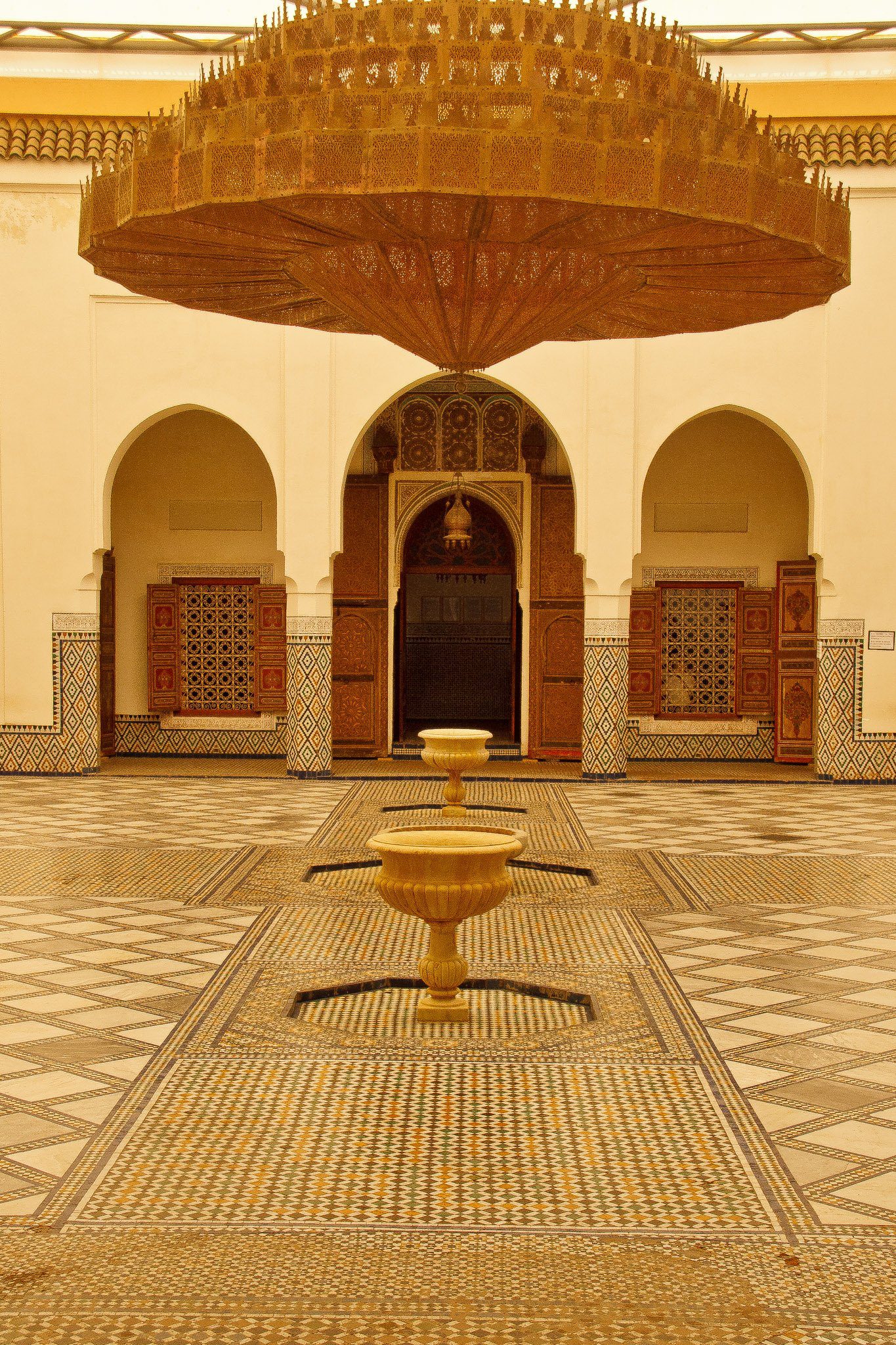
The courtyard of Dar Mnebhi, now the Musée de Marrakech: zellige floor, arches, a fountain and a large brass chandelier. Mike Prince, source, CC BY 2.0
Modern versus contemporary design
The two words are often confused. Modern design refers to a historical movement, commonly dated from about the 1920s to the 1960s or 1970s, that followed clear principles: little or no ornament, honest use of materials, open plans and function first. Contemporary design describes whatever is current and borrows freely from any period.
Modern design: a historical style
Modern interiors are characterised by large windows, open spaces, built-in furniture and materials shown in their natural state. The challenge today is meeting current energy standards: large areas of glass need high-performance glazing and thermally broken frames to keep the look without the heat loss.
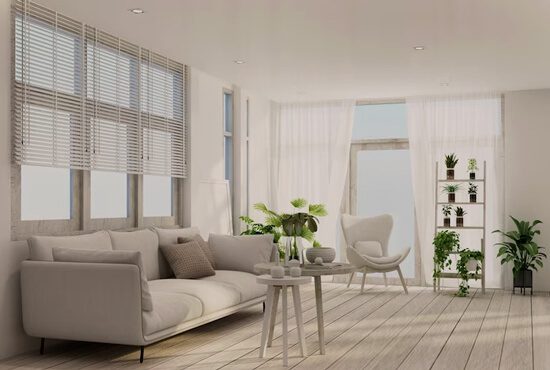
Contemporary design: current practice
Contemporary design can draw on any period or style, depending on what works for the project and client. The trade-off is that it requires more decisions: without a historical precedent to follow, you need to set your own criteria for what works.
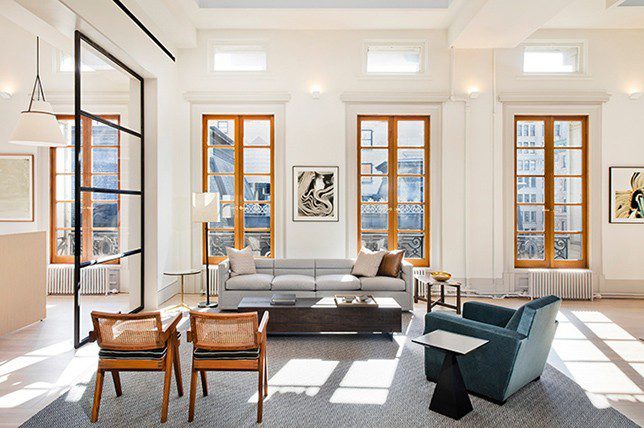
Which interior design styles last best?
No style guarantees value, but some choices age better than others. Durable natural materials, such as solid wood, stone and good-quality tiles, usually wear well and can be repaired, while cheaper finishes may need replacing sooner. Simple backgrounds (walls, floors and built-in joinery) are easier to restyle later than strongly themed ones.
Materials and long-term value
High-quality materials cost more at the start but often last longer. Some traditional materials need specialist maintenance, so factor that into the choice. Minimalist and contemporary interiors often use durable, readily available materials and simple details that are easy to maintain.
Credit: Knox Design
Technology and adaptability
Homes need to accommodate changing technology, from data cabling to smart controls. Plan service routes and access early, especially in period styles, so systems can be upgraded without damaging finishes.
Local taste
Preferences vary by region and buyer, so if resale matters, look at what sells locally. Specialised rooms show how the principles adapt: a well-designed home library, the role of wall art in interior design, or even brutalist interiors.
Applying a style well
Each style has its own demands for precision and craftsmanship. Classical rooms need accurate proportions, because small errors are obvious. Minimalist rooms need perfect execution. Layered styles such as English country need editing so that a collection does not become clutter.
Balancing authenticity and performance
Authentic finishes and modern performance sometimes pull in different directions. Traditional lime plaster, for instance, behaves differently from modern gypsum plaster, and old single-glazed windows lose much more heat than modern glazing. Choose materials and details that respect the style while meeting today’s comfort and energy needs, and take specialist advice for listed or historic buildings.
Learning the styles
For anyone considering a career in interior design, understanding why these styles work is a foundation for new ideas, and an online interior design course can be a practical first step. Many of the best contemporary interiors combine elements from several styles, which requires knowing each style’s principles well.
Designing for the future
Spaces that stay relevant balance current needs with flexibility. Building codes, technology and ways of living will keep changing; a clear idea, good materials and adaptable layouts are what let a room last.

Where to read more
- Minimalism: the minimalist fundamentals guide linked above.
- Art Deco: the Art Deco interior ideas linked above.
- Mid-century modern: the Eames chair story and furniture by architects, linked above.
- Industrial-leaning contemporary interiors: Adobe’s London office with an industrial yet colourful interior.
Sources and further reading
- National Trust: the history of Kedleston Hall
- V&A Conservation Journal: Carl and Karin Larsson, creators of the Swedish style
- English Heritage: description of Eltham Palace
Next step: use the identification table to name the style you are drawn to, study one real example of it, and choose three cues (a material, a colour and a furniture type) to build your room around. Knowing the interior design styles well is what lets you mix them with confidence.
More in this guide
- 10 Captivating Opera House Interiors from Around the World
- 10 Most Unique Bedroom Design Ideas for Low Space
- 10 Must-Have Interior Design Apps for Decorating Your Dream Space “Part 2”
- 14 Inspiring Mudroom Ideas to Upgrade Your Entryway
- 20 Brilliant Ways To Include Hammocks In Interiors And Exteriors
- 22 Inspirational Modern Japanese House Designs Crafting Calm Interiors
- Boho Interior Design: Materials, Textiles and How to Avoid Clutter
- Color Psychology in Architecture: What Research Really Says About Buildings and Mood
- How Color Therapy Can Emotionally Uplift Your Home
- Nature-Inspired Furniture: Origins, Principles and Examples
- Suspended Ceilings: The Modern Solution for Dazzling Interiors

Daniel Mercer is a Coffee Break section editor at Arch2O, currently based in Berlin, Germany. With a background in architectural history and design journalism, Daniel holds a Master’s degree from the University of Edinburgh, where he focused on modern architecture and urban theory. His editorial work blends academic depth with a strong grasp of contemporary design culture. Daniel has contributed to several respected architecture publications and is known for his sharp critique and narrative-driven features. At Arch2O, he highlights innovative architectural projects from Europe and around the world, with particular interest in adaptive reuse, public infrastructure, and the evolving role of technology in the built environment.