

Apollo mission photographs offer more than iconic views of astronauts and the Moon. They record equipment, movement, terrain and the practical work of operating in an unfamiliar environment. For architects and designers, the archive is useful when images are read as sequences with documented context rather than as an anonymous collection of dramatic pictures.
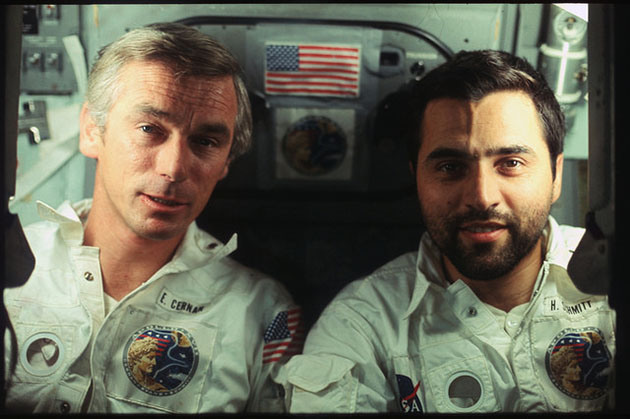
Apollo mission photographs as a spatial record
Start with the mission and image identifier. A caption should establish who or what is shown, where the photograph was made and which archive supplies it. Closely related frames can reveal how an activity unfolded, while a single crop may conceal the equipment or spatial relationships needed to understand it.
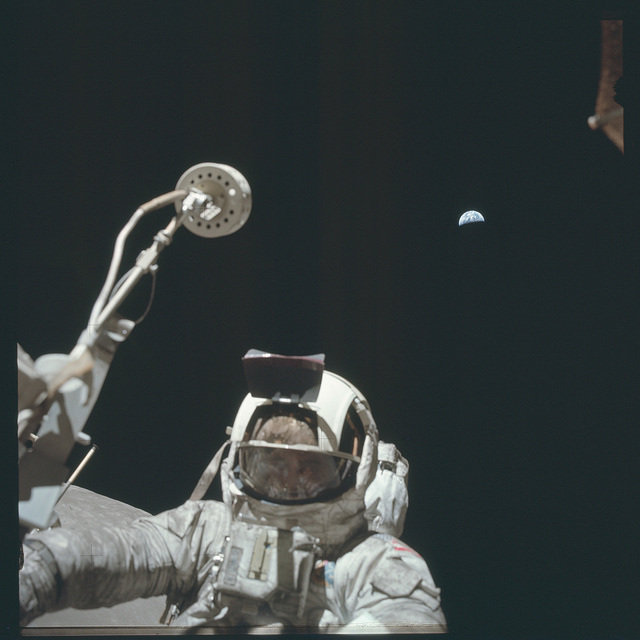
Looking beyond the iconic single image
The architectural reading concerns scale and occupation. Examine how a person reaches, carries, rests or moves around equipment; compare the human figure with the designed enclosure or work area. These observations can inform questions about ergonomics and constrained environments. They should not be presented as proof that terrestrial building details would work on the Moon.
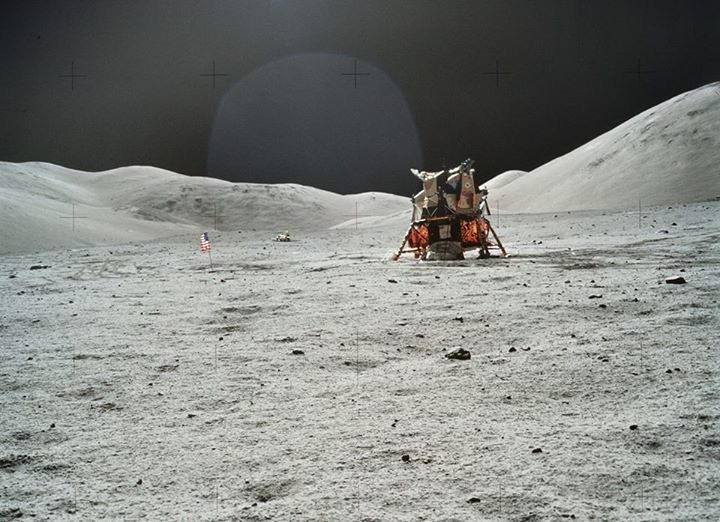
Use the archive responsibly. Preserve the identifier and original caption alongside any new interpretation, and check the rights statement for each asset. NASA material often has broad reuse provisions, but third-party material, logos and identifiable people can involve additional conditions. Avoid treating a headline image count as a permanent measure of the archive. The most useful collection is one whose images remain traceable and accurately described.
Turn a focused precedent study into a clear portfolio explanation with our architecture portfolio guide: building an architecture portfolio.
Key takeaways
- Keep mission and image identifiers in the media records.
- Use sequences to understand activity and scale.
- Separate your design interpretation from the archive’s factual caption.
Related reading on Arch2O
- 2040: Lunar Outpost [A] | [n]igma
- BIG and ICON 3D Prints Structure for NASA: A ‘Faithful Analog’ for Life on Mars
- Foster and Partners Shortlisted for NASA's Martian Base Competition
Sources and further reading

Ruba Ahmed, a senior project editor at Arch2O and an Alexandria University graduate, has reviewed hundreds of architectural projects with precision and insight. Specializing in architecture and urban design, she excels in project curation, topic selection, and interdepartmental collaboration. Her dedication and expertise make her a pivotal asset to Arch2O.