


Why These Modernist Masterpieces Matter to All of Us
Ever wonder what makes a building so special that the entire world agrees it must be protected forever? That’s exactly what UNESCO World Heritage Sites are—landmarks so valuable to humanity that they’re preserved for future generations. While most people think of ancient wonders like the Pyramids or Stonehenge, some of the most groundbreaking World Heritage Sites were built in the 20th century by architects who completely rewrote the rules of design.
These modernist masterpieces aren’t just old buildings with historical value—they’re revolutionary statements that changed how we live, work, and see the world. The United Nations doesn’t hand out World Heritage status lightly. Buildings must meet strict criteria, like representing “a masterpiece of human creative genius” or being an “outstanding example that illustrates significant stages in human history.”
What makes these modernist sites special is that you can still walk through them, use them, and feel the revolutionary spirit that created them. They’re not ancient ruins—they’re living proof that the 20th century produced some of humanity’s most brilliant architectural thinking.
Understanding UNESCO World Heritage: Why These Sites Are “Universal”
Before we dive into the buildings, let’s talk about what makes UNESCO World Heritage status so meaningful. The UNESCO agency, based in Paris, selects sites based on ten strict criteria divided into cultural and natural categories. For cultural sites, they look for things like:
-
Masterpieces of human creative genius
-
Outstanding examples of architectural styles
-
Structures that illustrate significant stages in human history
Natural criteria focus on exceptional beauty and superlative natural phenomena. But here’s what makes modernist architecture so special: these buildings from the 1920s-1960s are now old enough to qualify as “heritage,” yet modern enough that you can still experience them exactly as their creators intended.
As UNESCO puts it: “Heritage is our legacy from the past, what we live with today, and what we pass on to future generations. Our cultural and natural heritage are both irreplaceable sources of life and inspiration.”
While ancient sites get most of the attention, these modernist masterpieces are just as irreplaceable. They represent the moment when humanity decided to break free from historical styles and invent something entirely new. If you’re curious about how ancient sites are preserved, you can watch similar ancient sites magically get restored.
The Modernist Architects Who Dominate UNESCO’s List
If there’s one architect who absolutely dominates the UNESCO World Heritage list, it’s Le Corbusier. In 2016, UNESCO added 17 of his works under the collective title “The Architectural Work of Le Corbusier, an Outstanding Contribution to the Modern Movement.” That’s more than any other modernist architect, and it speaks to how profoundly he influenced 20th-century design.
But Le Corbusier isn’t alone. Walter Gropius, Mies van der Rohe, Oscar Niemeyer, and other pioneers also have works recognized for their universal value. Let’s explore these masterpieces that changed architecture forever.
What makes a modern building worthy of UNESCO World Heritage status?
It’s not just about age or beauty. UNESCO looks for “outstanding universal value”—buildings that changed how humanity thinks about architecture, that represent a significant stage in history, or that embody revolutionary ideas. All the buildings on this list didn’t just follow trends—they created them.
Why does Le Corbusier have so many UNESCO sites?
Le Corbusier’s 17 UNESCO sites reflect his unparalleled influence on 20th-century architecture. His ideas about functionalism, mass production, and urban planning shaped entire cities. UNESCO recognized his work as a complete philosophical system, not just individual buildings. It’s like recognizing Beethoven’s symphonies—you can’t just pick one.
10 UNESCO World Heritage Sites by Famous Modernist Architects
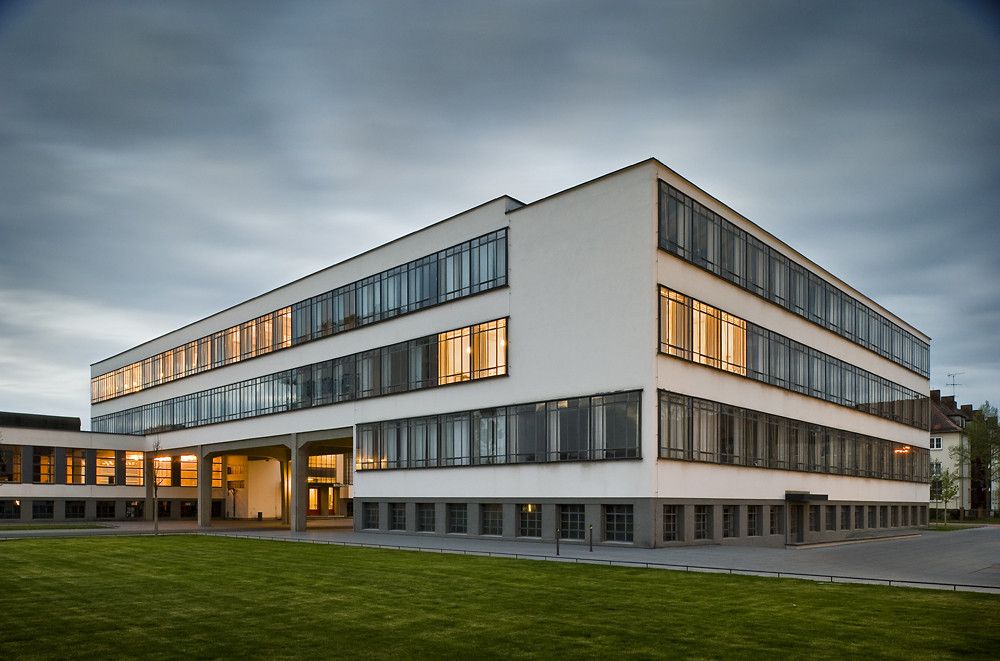
1) Dessau Bauhaus | Walter Gropius, Dessau, Germany, 1926
photography by © Thomas Lewandovski
The Bauhaus wasn’t just a school—it was a revolution. Founded by Walter Gropius, this German art school started in Weimar before moving to Dessau, where Gropius designed the building that would become the ultimate symbol of the International Style. Completed in 1926, it embodied the Bauhaus philosophy that design should be functional, affordable, and beautiful.
Despite facing persecution under Nazi rule (they famously called it “un-German”), the school produced generations of architects and designers who shaped the modern world. Today, it’s a pilgrimage site for architecture students from around the globe. UNESCO recognized it in 1996, not just as a building, but as the physical embodiment of an idea that changed design forever.
For more on how Gropius’s ideas influenced modern design, explore how architectural styles changed with transportation.
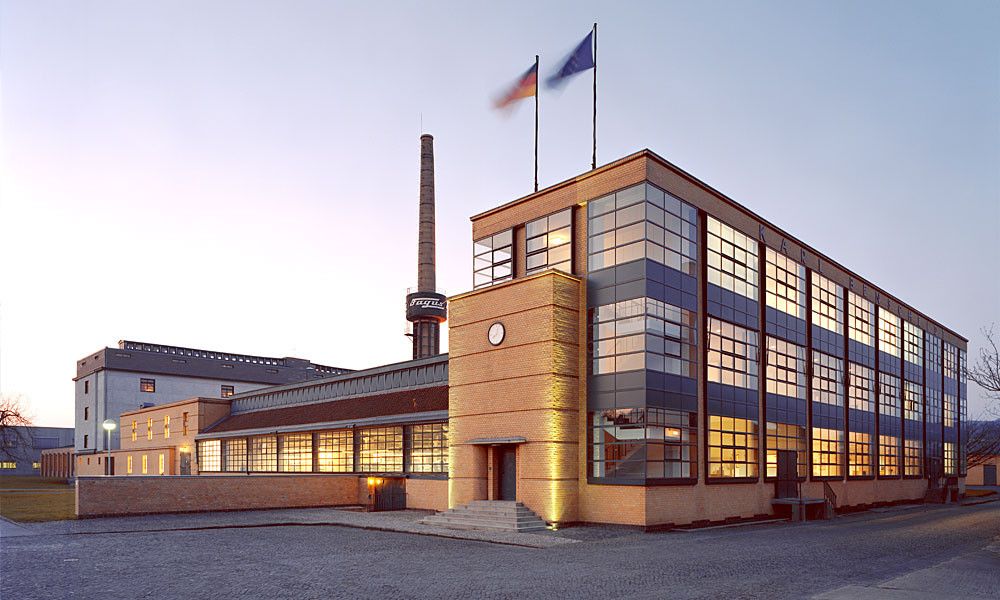
2) Fagus Factory | Walter Gropius & Adolf Meyer, Alfeld, Germany, 1925
via Wikipedia Commons
Before the Bauhaus building, there was the Fagus Factory. This shoe-last factory, co-designed by Walter Gropius and Adolf Meyer, is one of the earliest and most important examples of the International Style. Construction started in 1911 and finished in 1925, making it a direct predecessor to everything we now call modernist architecture.
What makes it revolutionary? The transparent glass curtain wall, the absence of ornamentation, and the honest expression of structure. It’s a factory that looks like a temple to industry—a building that says work can be beautiful. UNESCO recognized its importance in 2011, adding it to the list alongside the Bauhaus building as a testament to Gropius’s enduring influence.
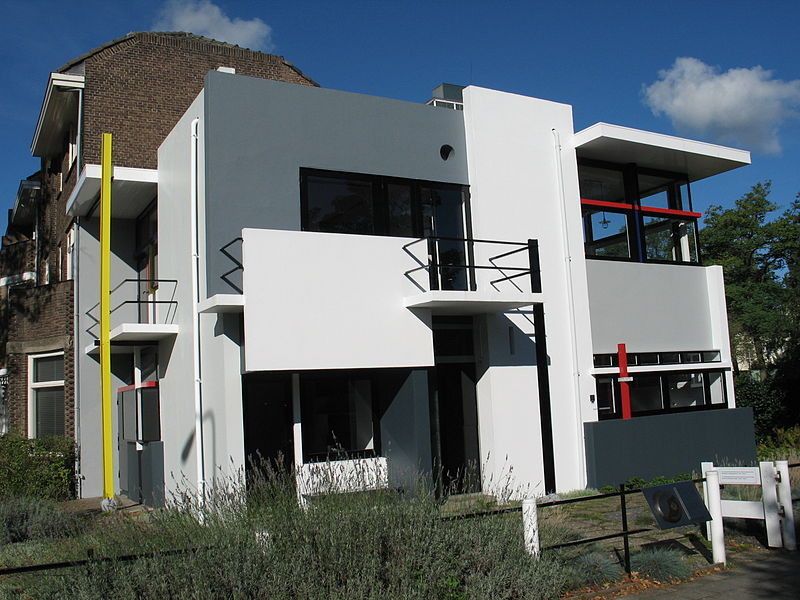
3) Rietveld Schröder House | Gerrit Rietveld, Utrecht, Netherlands, 1924
photography by© Wikimedia commons
While Le Corbusier and Gropius were thinking about mass production, Gerrit Rietveld was creating something completely different. The Schröder House is a three-dimensional painting you can live in. Designed for Truus Schröder-Schräder, this 1924 masterpiece embodies the Dutch “De Stijl” movement—think Piet Mondrian’s paintings turned into architecture.
The house features sliding walls that let the interior transform, primary colors against white planes, and horizontal windows that blur the line between inside and outside. It’s not just a building; it’s a manifesto for how abstract art can become habitable space. UNESCO recognized it in 2000, making it one of the earliest modernist sites on the World Heritage List.
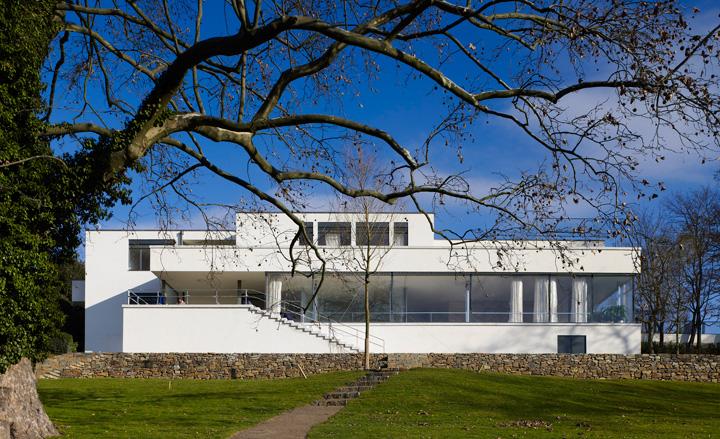
4) Villa Tugendhat | Mies Van Der Rohe, Brno, Czech Republic, 1930
Photography: David Zidlický
Mies van der Rohe believed “less is more,” and the Villa Tugendhat proves it. Built between 1928 and 1930 for Fritz and Greta Tugendhat in the wealthy Černá Pole neighborhood of Brno, this house redefined luxury through simplicity. It’s an icon of Modernism in Europe, featuring Mies’s signature open plan, floor-to-ceiling windows, and exquisite materials like onyx and rare woods.
The house includes a revolutionary steel frame that allows the main living space to be completely column-free, creating a floating sensation. Mies designed every detail, from the furniture to the door handles, making it a total work of art. UNESCO included it in the World Heritage List in 2001, recognizing it as a pinnacle of modern residential architecture.
For a deeper dive into Mies’s approach, explore how architectural structures shape elegance.
5) Villa Savoye | Le Corbusier, Poissy, France, 1931
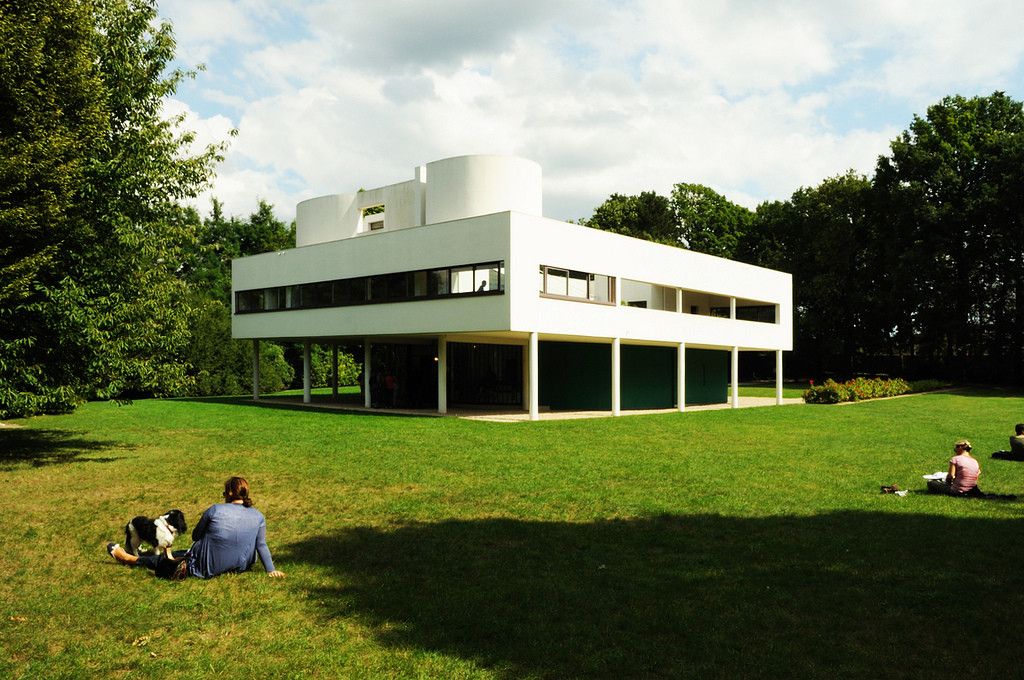
Villa Savoye,Le Corbusier, 1931
If there’s one building that encapsulates Le Corbusier‘s philosophy, it’s Villa Savoye. Built in 1931 for the Savoye family in Poissy, France, this villa is the physical embodiment of his “Five Points of Architecture”: pilotis (columns), free facade, open floor plan, horizontal windows, and roof garden.
Le Corbusier famously said, “A house is a machine for living,” and Villa Savoye proves that machines can be beautiful. The building appears to float above the landscape on its pilotis, creating a carport underneath and a garden on top. It’s a masterpiece of the International Style that influenced generations of architects. UNESCO recognized it as World Heritage, cementing its status as one of the most important buildings of the 20th century.
6) Unité d’habitation | Le Corbusier, Marseille, France, 1952
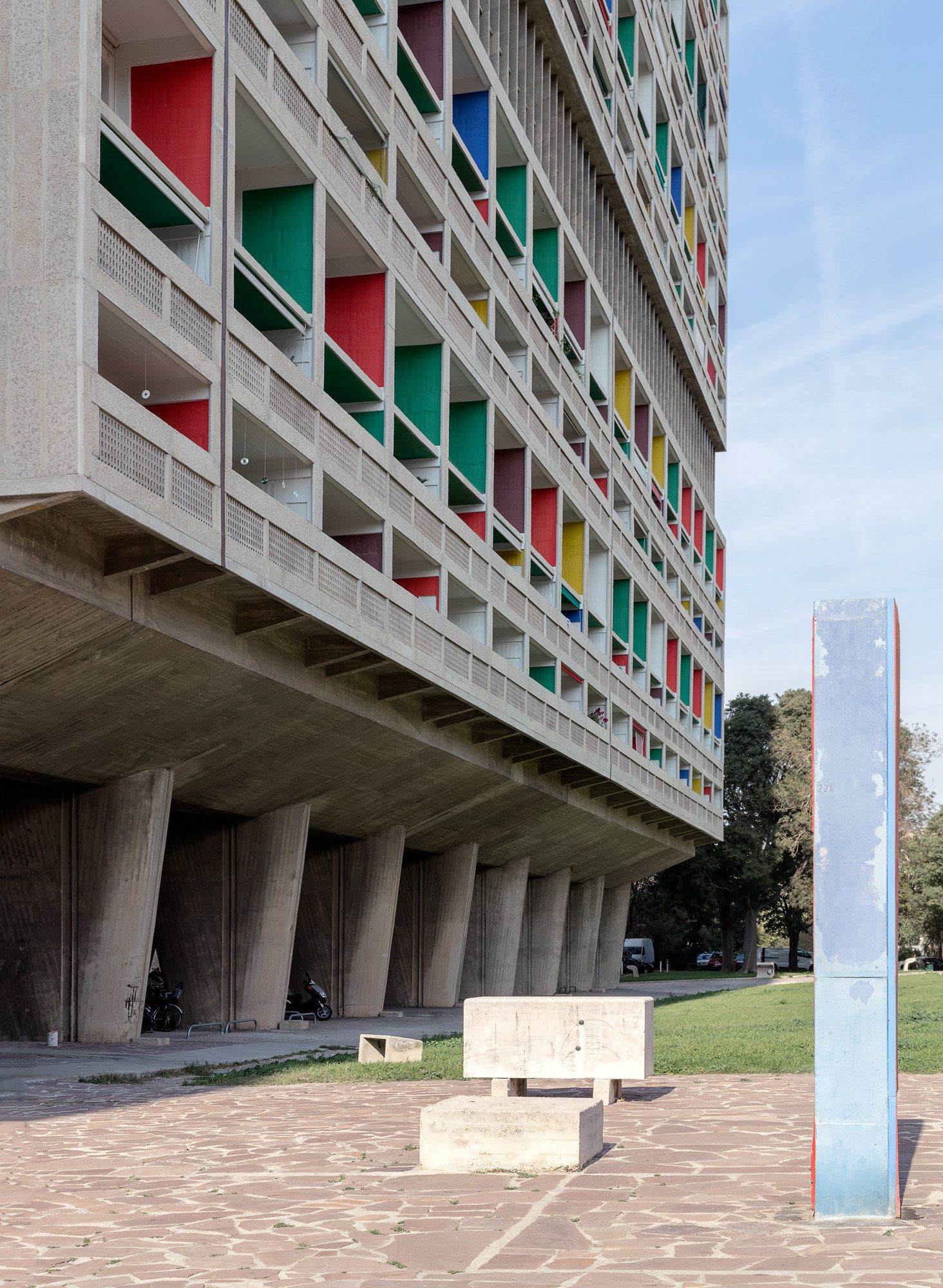
photography by© Steve de Vriendt
Le Corbusier didn’t just design houses—he reinvented how entire communities could live. The Unité d’habitation in Marseille, built between 1947 and 1952, is the most famous of his “housing units” and arguably the most influential Brutalist building ever constructed. It’s a vertical city containing 337 apartments, shops, a school, a rooftop terrace, and even a swimming pool.
This project introduced the concept of collective housing as a self-contained community, influencing public housing projects worldwide for decades. The rough-cast concrete (béton brut) became the signature of Brutalism, and the building’s modular system showed how mass production could create dignified living spaces. UNESCO included it in the World Heritage List as part of the 17 Le Corbusier works recognized in 2016.
7) Notre-Dame du Haut | Le Corbusier, Ronchamp, France, 1955
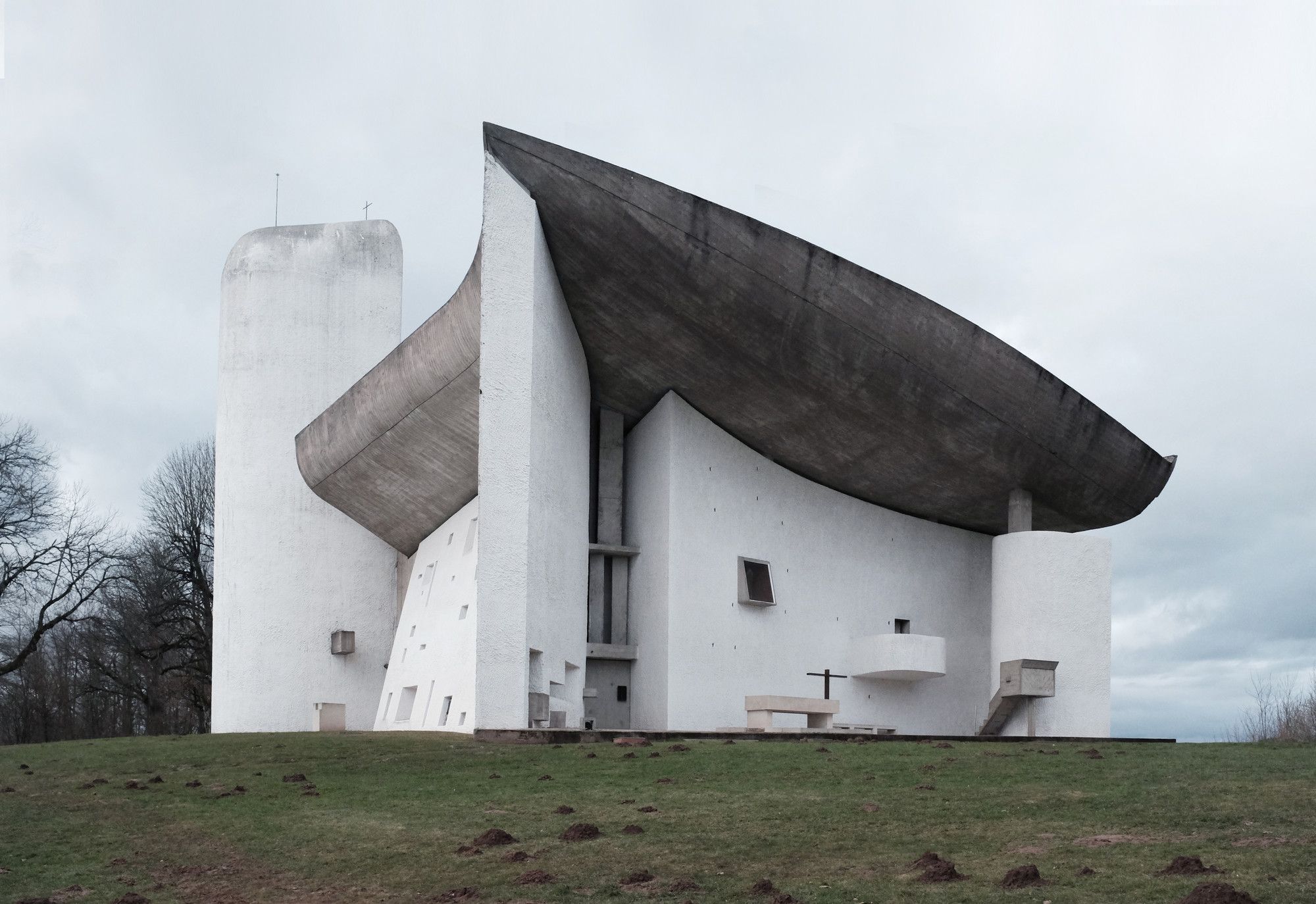
photography by © Gili Merin
Le Corbusier shocked the world when he designed this small chapel in Ronchamp. After decades of rational, machine-like buildings, Notre-Dame du Haut (built 1953-1955) revealed a completely different side of his genius. The thick, curved walls, the dramatic roof that looks like a nun’s hat, and the irregular windows create a space that’s deeply spiritual and profoundly sculptural.
This is Le Corbusier’s late Brutalism at its most poetic—a building that seems to grow from the hilltop rather than sit on it. The play of light through the stained glass creates an ever-changing interior atmosphere. Sadly, the chapel was vandalized in 2014, with some stained glass broken, but it remains a powerful testament to modern religious architecture. UNESCO recognized it as World Heritage in 2016 as part of the Le Corbusier collection.
8) National Museum of Western Art | Le Corbusier, Tokyo, Japan, 1959
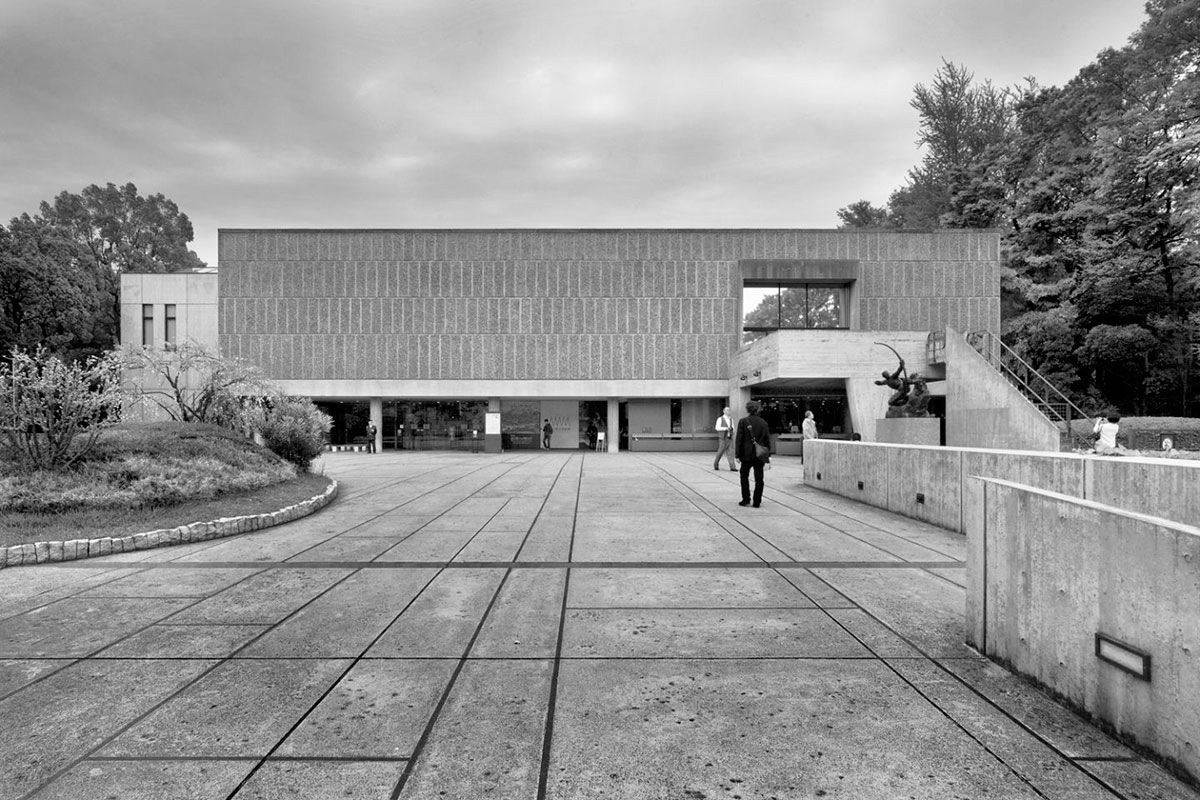
photography by © Xia Zhi
Le Corbusier’s influence wasn’t limited to Europe. The National Museum of Western Art in Tokyo (NMWA), built in 1959, is Japan’s most distinguished public art gallery specializing in Western art—and it’s pure Corbusian modernism. The multistorey reinforced concrete building demonstrates how his principles could adapt to different cultures and climates.
The museum features a system of spiral ramps, modular construction, and the characteristic pilotis that create a public space underneath. It’s one of Le Corbusier’s 17 works included in the UNESCO World Heritage List in 2016, recognized for its role in spreading modernist ideas to Asia. For architecture tourists visiting Tokyo, it’s a must-see destination that shows how modernism went global.
For more on planning architecture pilgrimages, check out the architecture tourist’s manifesto.
9) Sainte Marie de La Tourette | Le Corbusier, Lyon, France, 1960
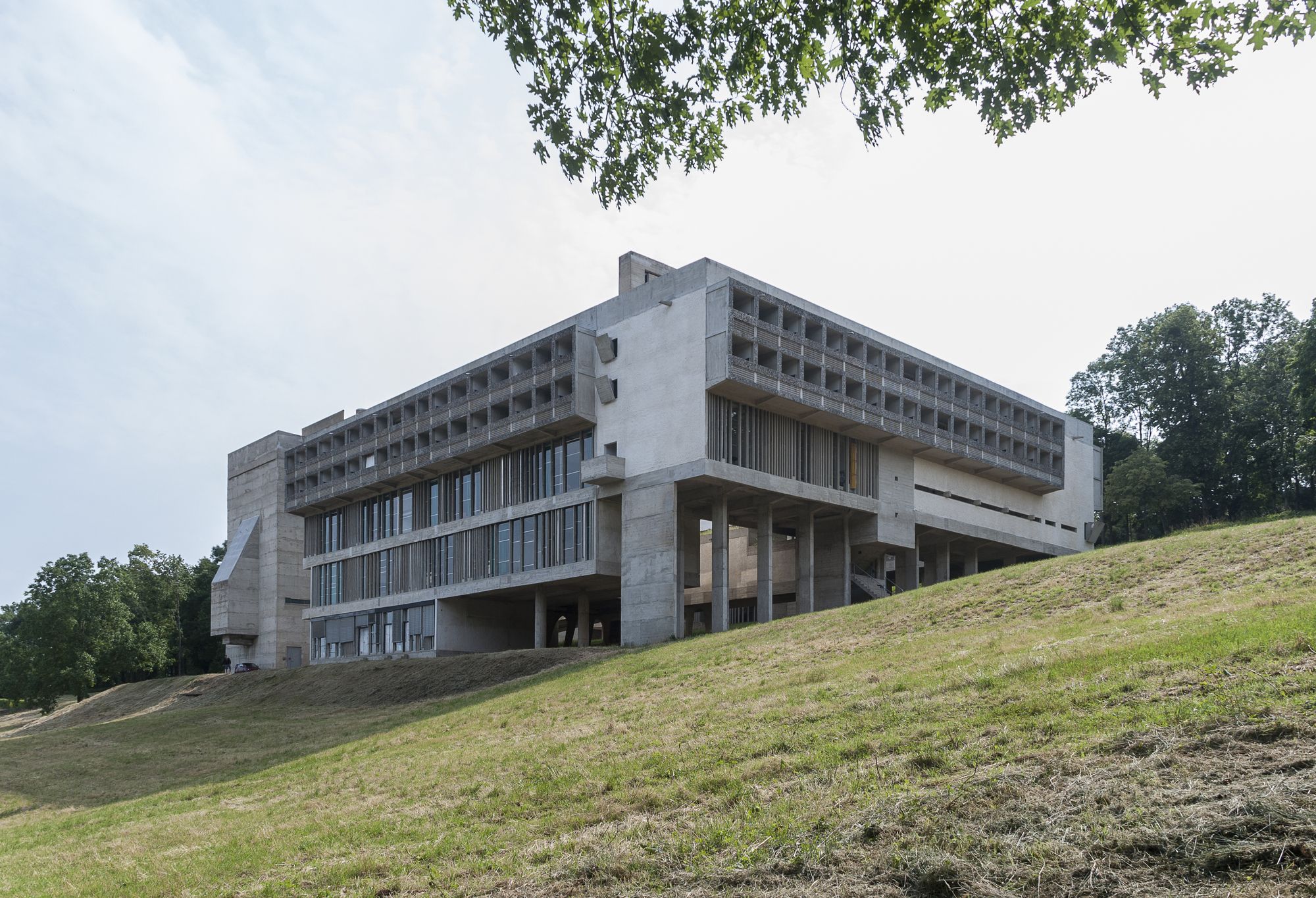
photography by © Fernando Schapochnik
The Dominican Order Monastery, built between 1956 and 1960 near Lyon, represents Le Corbusier’s vision for communal living. This is late modern architecture at its most rigorous—a building that functions as both a spiritual retreat and a self-contained community.
The monastery features individual cells for monks, communal spaces, a church, and a library, all organized according to Corbusier’s principles of efficiency and light. The rough concrete forms create a powerful sense of sanctuary, while the careful orchestration of light and space supports contemplation. UNESCO included it in the 2016 World Heritage designation as part of Le Corbusier’s architectural work.
10) Brasília | Oscar Niemeyer & Lucio Costa, Brazil, 1960
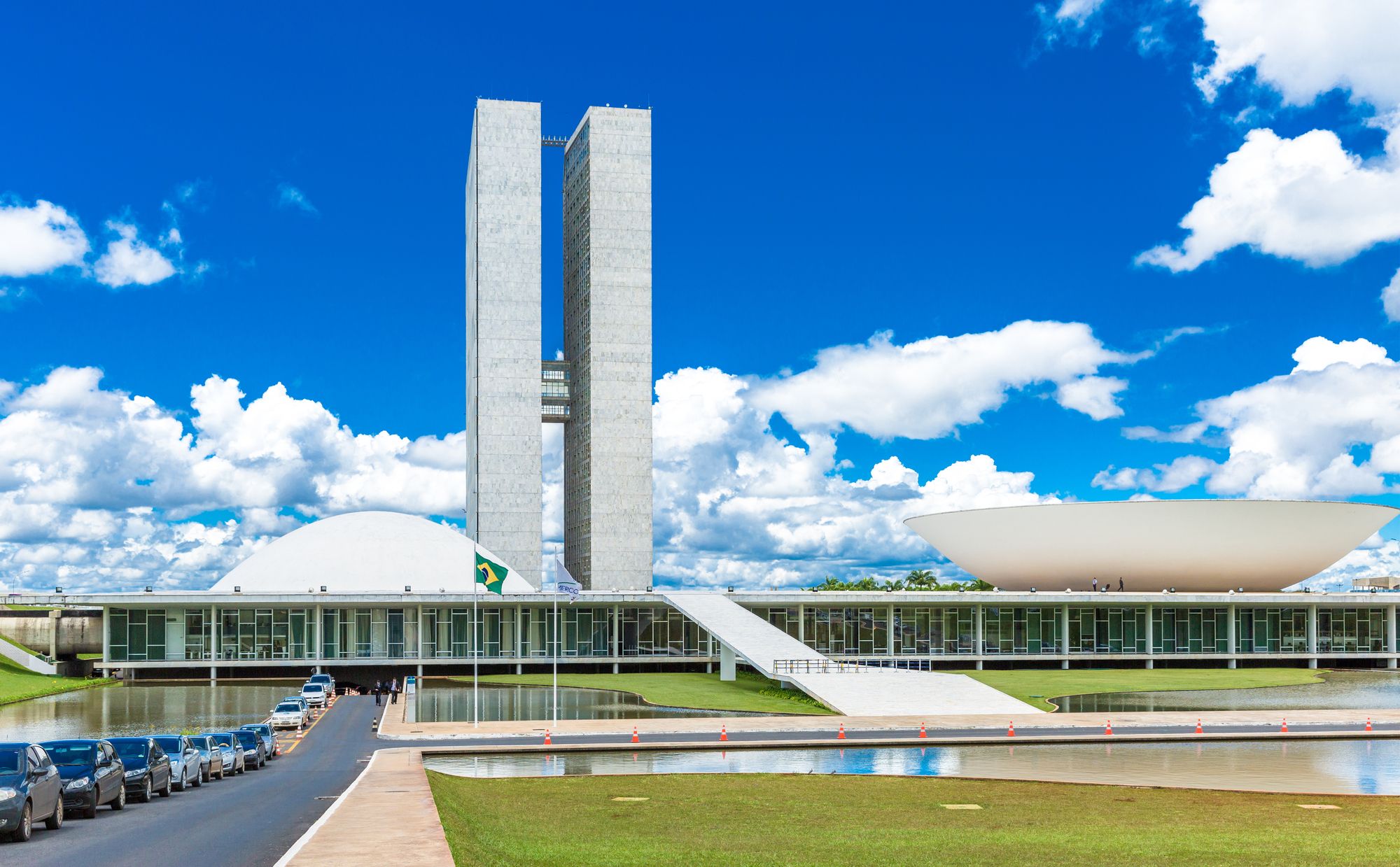
photography by© Filipe Frazao / Shutterstock.com
We end not with a building, but with an entire city. Brasília, planned and developed by Lucio Costa and Oscar Niemeyer as Brazil’s new capital in 1960, is modernism at its most ambitious scale. The city’s layout applies Le Corbusier’s urban planning principles—the “Pilot Plan”—to create a city that looks like an airplane from above, with distinct zones for government, commerce, and housing.
Niemeyer’s civic buildings—the Cathedral, the National Congress, the Supreme Court—are pure modernist poetry in concrete. UNESCO recognized Brasília as a World Heritage Site in 1987, not just for individual buildings, but for the vision of creating a modern capital from scratch. It’s proof that modernism wasn’t just about style—it was about reimagining how entire societies could function.
For those interested in how modernist principles shaped urban planning, explore how architectural styles changed with transportation.
Can I visit these UNESCO modernist sites?
Absolutely! Most are open to the public, though some require advance booking. Villa Savoye, the Bauhaus building, and the National Museum of Western Art are popular tourist destinations. For planning tips, check out the architecture tourist’s manifesto.
How do modernist UNESCO sites compare to ancient ones?
While ancient sites show us where we came from, modernist sites show us how we reinvented ourselves. The Pyramids demonstrate mastery of stone; these buildings demonstrate mastery of steel, concrete, and glass. Both represent humanity pushing boundaries, just with different materials and ideas.
Are there other modernist buildings trying to get UNESCO status?
Yes! Many important modernist buildings are on UNESCO’s “tentative lists.” The Frank Lloyd Wright Foundation is working to get Wright’s buildings recognized as a group. Other architects like Alvar Aalto, Richard Neutra, and Oscar Niemeyer have individual buildings under consideration. The process takes years and requires proving “outstanding universal value.”
Why These Modernist Masterpieces Deserve Protection
These aren’t just old buildings—they’re time capsules of revolutionary thinking. They represent the moment when humanity decided that architecture could solve social problems, that good design should be available to everyone, and that the future could be better than the past.
In an age when so much new construction prioritizes profit over vision, these UNESCO sites remind us what’s possible when architects dream big. They prove that modernism wasn’t just a style, but a moral imperative: to create a more rational, more beautiful, more just world through design.
Whether you’re an architecture student, a design professional, or simply someone who appreciates bold ideas made real, visiting these sites is like meeting the giants whose shoulders we all stand on. They changed what buildings could be—and in doing so, they changed us.
For those planning architectural pilgrimages, don’t miss Villa Savoye: Le Corbusier’s Revolutionary Masterpiece and check out how British photographers reimagine famous architecture for fresh perspectives on these icons.

Hadeer Shahin is the Built Projects Editor at Arch2O, where she curates innovative architectural works from around the globe. With a background in architecture from Alexandria University and hands-on experience in design and digital content, she bridges the gap between technical precision and editorial vision. Hadeer’s keen eye for spatial storytelling and her passion for contemporary design trends make her a vital contributor to Arch2O’s mission of highlighting excellence in the built environment.