

When Buildings Dream: The Strange World of Surrealist Architecture
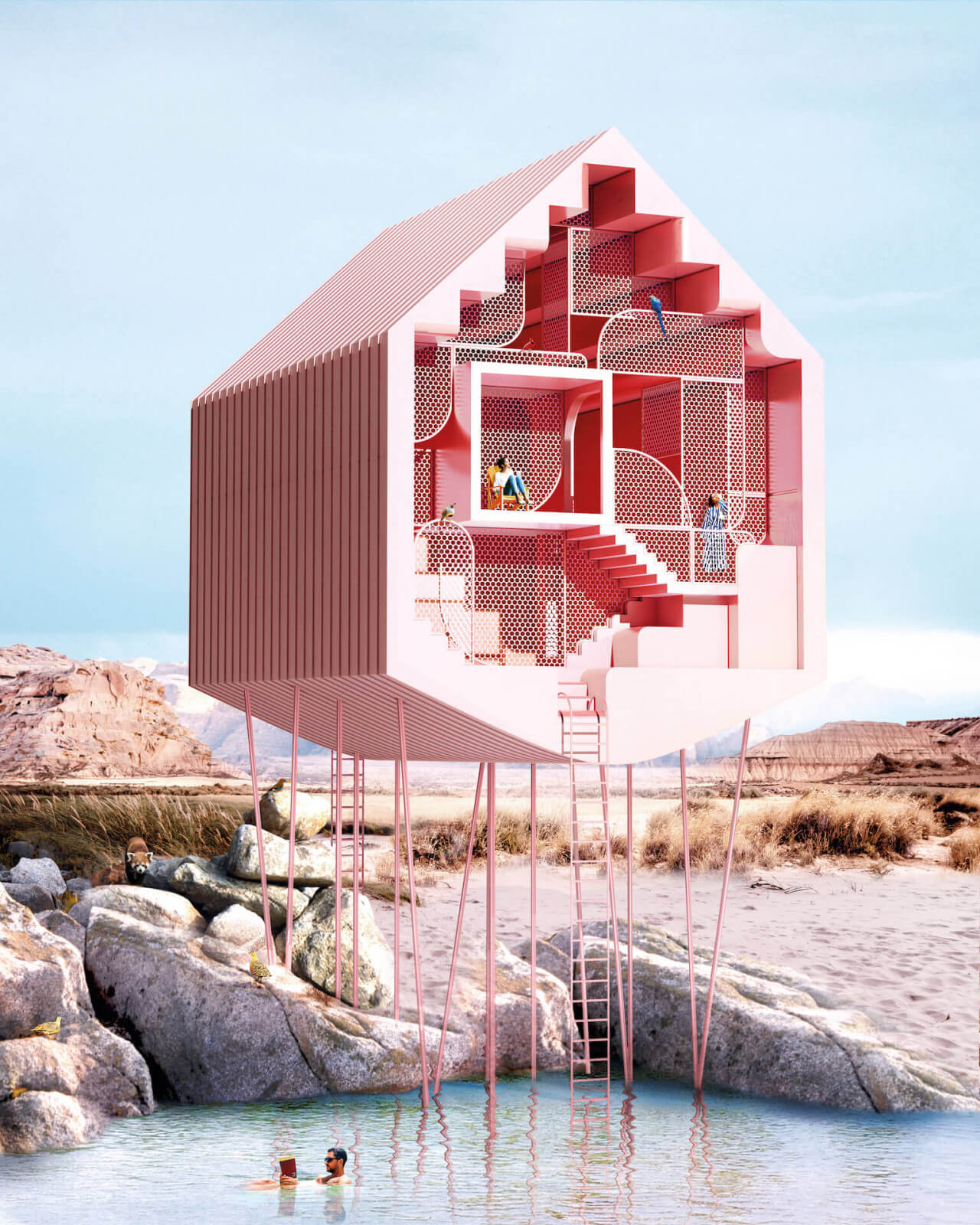
Ever walked past a building that made you do a double-take? Not because it’s ugly, but because it feels like it stepped out of a dream? That’s surrealist architecture—the design movement that treats buildings like sculptures from your subconscious, where walls melt, stairs lead nowhere, and a house can look like a giant seashell.
Surrealist architecture isn’t just about being weird for the sake of it. It’s a deliberate rebellion against boring, boxy buildings that treat people like robots. Born from André Breton’s 1924 Surrealist Manifesto, this style asks: “What if buildings could capture that floating feeling between asleep and awake?” What if, instead of fighting gravity and logic, we invited them to the party?
The result? Structures that make you feel something first, and think about function second. A museum that looks like it’s breathing. A church you can see through. A garage that looks like five architects had a fever dream and built it anyway. While you’re exploring architectural movements, you might also enjoy checking out how modern architecture compares to postmodernism or diving into mind-bending surrealist architecture examples that push the boundaries even further.
©DesignWanted
What Is Surrealist Architecture? It’s Not Just Weird Buildings
The Dream Logic Behind the Movement
In 1924, André Breton dropped The Surrealist Manifesto and basically said: “Hey, what if we stop pretending dreams and reality are separate?” He called this merged state “surreality”—a place where your weird recurring dream about a melting clock could hang out with your grocery list, and both would be equally valid.
For architects, this was revolutionary. Instead of asking “How should a building function?” they started asking “How should a building feel?” They treated concrete like clay, steel like spaghetti, and let intuition run wild. The results look impossible because they kind of are—buildings that seem to grow from the ground like plants, staircases that spiral into the sky for no reason, walls that disappear.
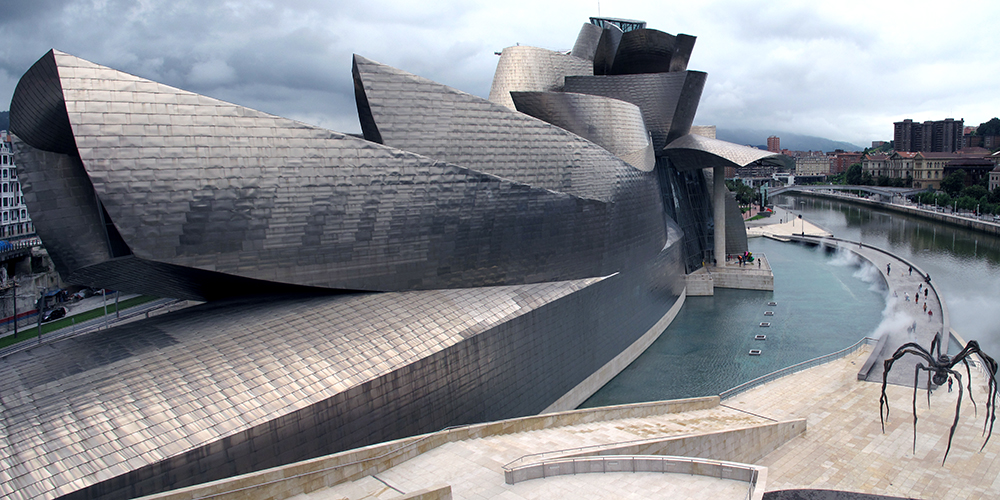
This wasn’t just art for art’s sake. Surrealist architecture emphasized content over shape, making it the rebellious cousin of formal Cubism. Legends like Salvador Dalí, Frederick Kiesler, and Frank Gehry saw it as permission to build dreams. Even Le Corbusier and Aldo Rossi found inspiration in these dreamlike forms. And the momentum? It’s only getting stronger as parametric design and advanced technology let young architects build things that would make Dalí weep with joy.
Also Read: 6 Architecture Icons That Define Postmodernism from the 20th Century
Frank Gehry, Guggenheim Museum Bilbao, ©Emilio I. Panizo
What Makes a Building Truly Surrealist?
Surrealist architecture isn’t just “weird-looking.” It has specific DNA:
Dreamlike forms that defy logic – Buildings that look like they’re melting, floating, or mid-transformation. Think biomorphic shapes, impossible angles, and structures that seem to breathe.
Unexpected material combinations – Glass that looks like fabric, concrete that flows like water, steel that dances. The material itself becomes part of the dream.
Questioning reality – Every element asks: “What if?” What if a wall wasn’t solid? What if a roof could fly? What if a building remembered its dreams?
Emotional impact over function – Sure, it works as a building, but first it makes you feel something—wonder, confusion, delight, awe.
The “Did I Just See That?” factor – You have to look twice. Maybe three times. It challenges your brain’s pattern recognition.
What makes architecture “surrealist”?
Surrealist architecture goes beyond unusual shapes. It deliberately merges dreamlike, irrational elements with functional spaces, creating buildings that feel like they’ve stepped out of the subconscious. Key characteristics include organic/biomorphic forms, impossible geometries, unexpected material combinations, and designs that prioritize emotional impact over conventional logic. It’s not just weird—it’s weird with purpose.
How is surrealist architecture different from modern or postmodern architecture?
Modern architecture is minimalist and rational (“form follows function”). Postmodern architecture is playful and references history. Surrealist architecture is dreamlike and references the subconscious. While postmodernism might put a Chippendale top on a skyscraper (a cultural joke), surrealism might make the entire building look like it’s melting (a dream made real). Surrealism is less concerned with historical references and more focused on capturing that floating feeling between asleep and awake.
10 Surrealist Architecture Examples That Feel Like Dreams Made Real
1) The Imprint | MVRDV, Seoul, South Korea
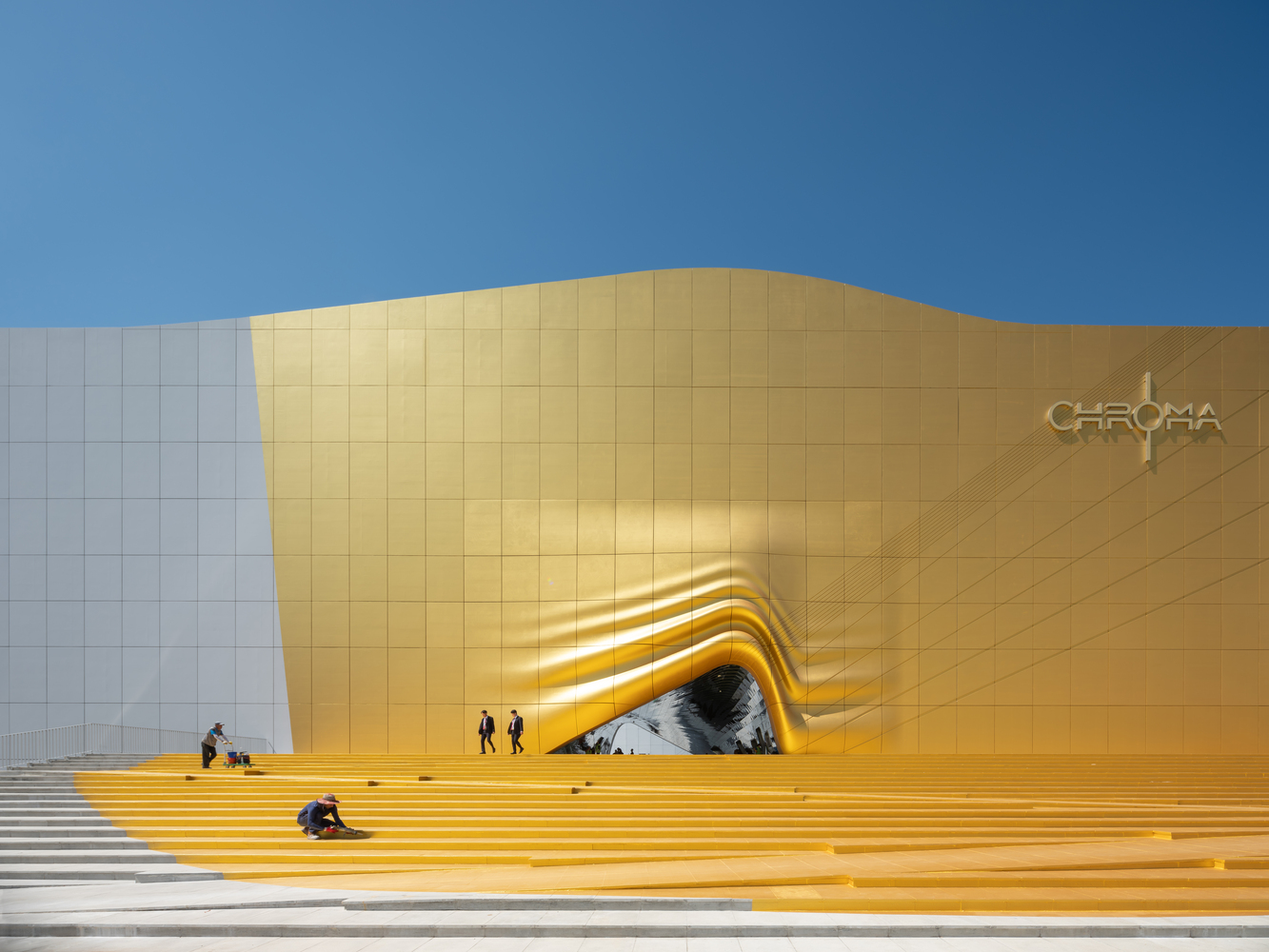
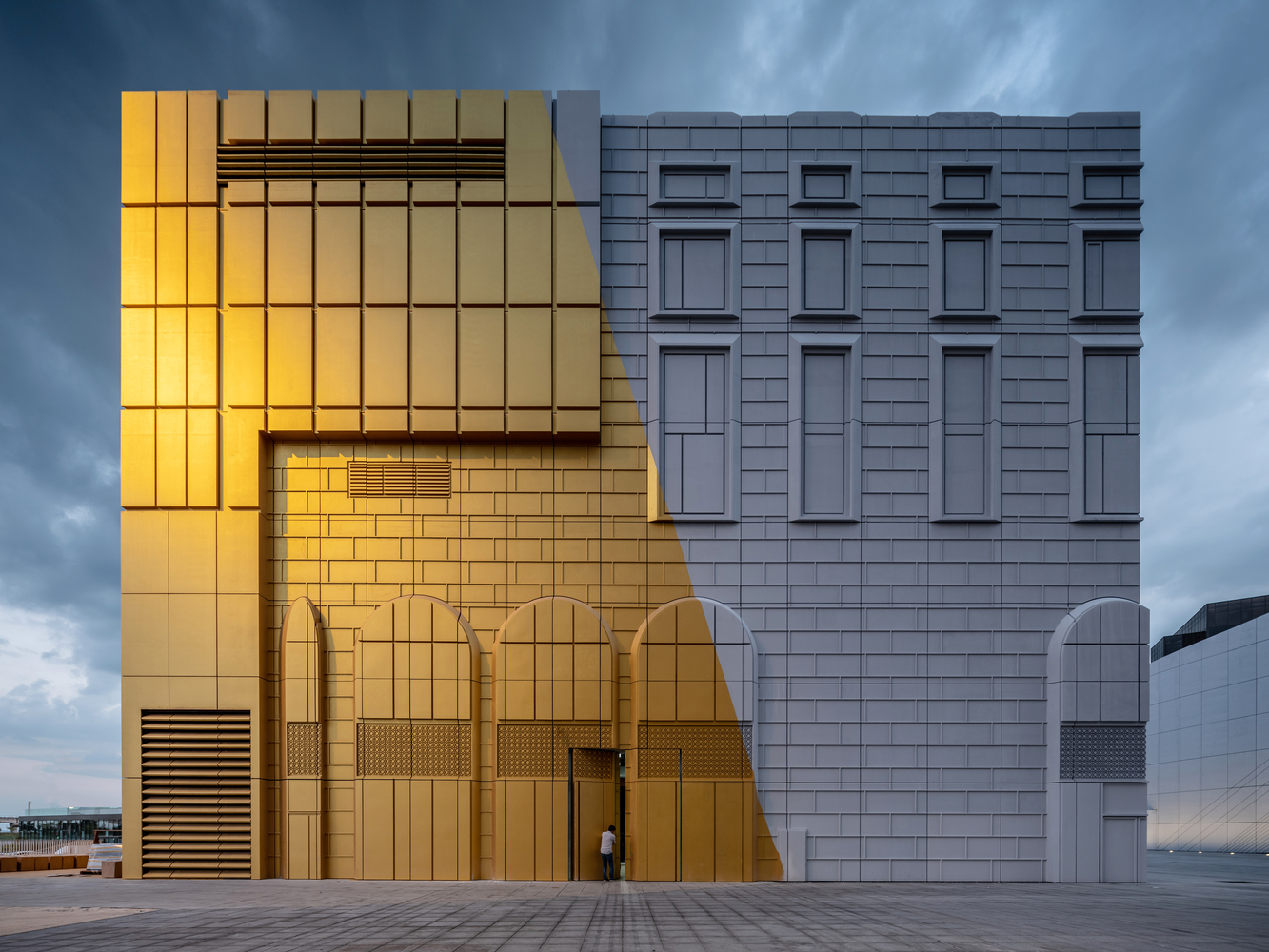
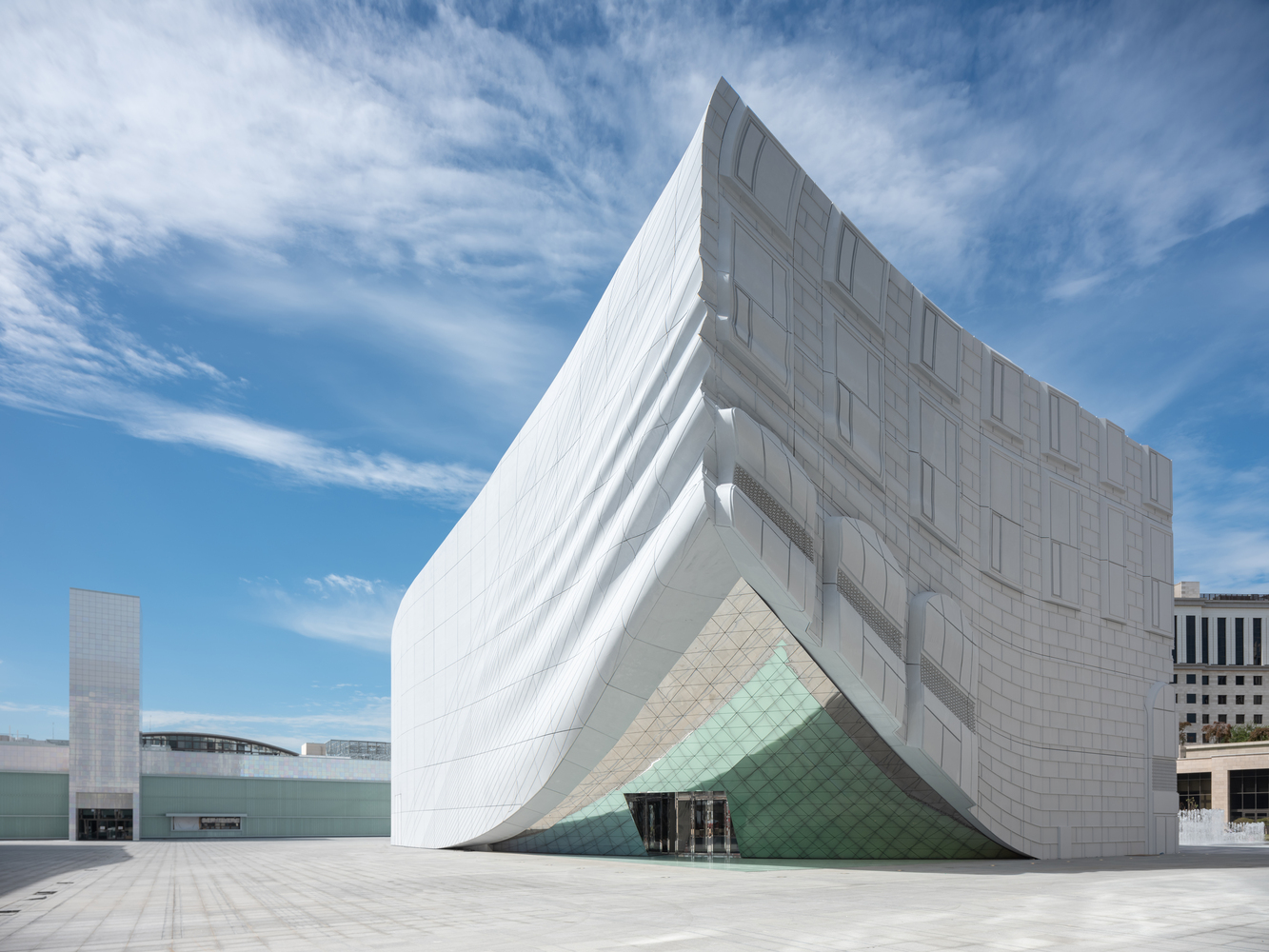
MVRDV had a problem: how do you build something new in a neighborhood of buildings that already look perfect? Their surrealist solution: copy them. But not literally—instead, they “imprinted” the neighboring facades as a relief pattern onto their new art-entertainment complex.
The result is a building that looks like a ghost of its neighbors, draped in white concrete that ripples like fabric. Made from 3,869 unique glass-fiber-reinforced concrete panels, the façade creates a dreamlike echo of the surrounding architecture. Gold leaf accents catch the light, making the building seem alive, breathing, shifting. It’s a building that doesn’t compete with its context—it remembers it, dreamily.
©Ossip van Duivenbode
For more on how architects play with facades, explore the beauty of colorful facades in contemporary architecture.
©Ossip van Duivenbode
©Ossip van Duivenbode
2) Miami Museum Garage | WORKac + Nicolas Buffe + Clavel Arquitectos + K/R and J. MAYER. H, Miami, USA
©Imagen Subliminal
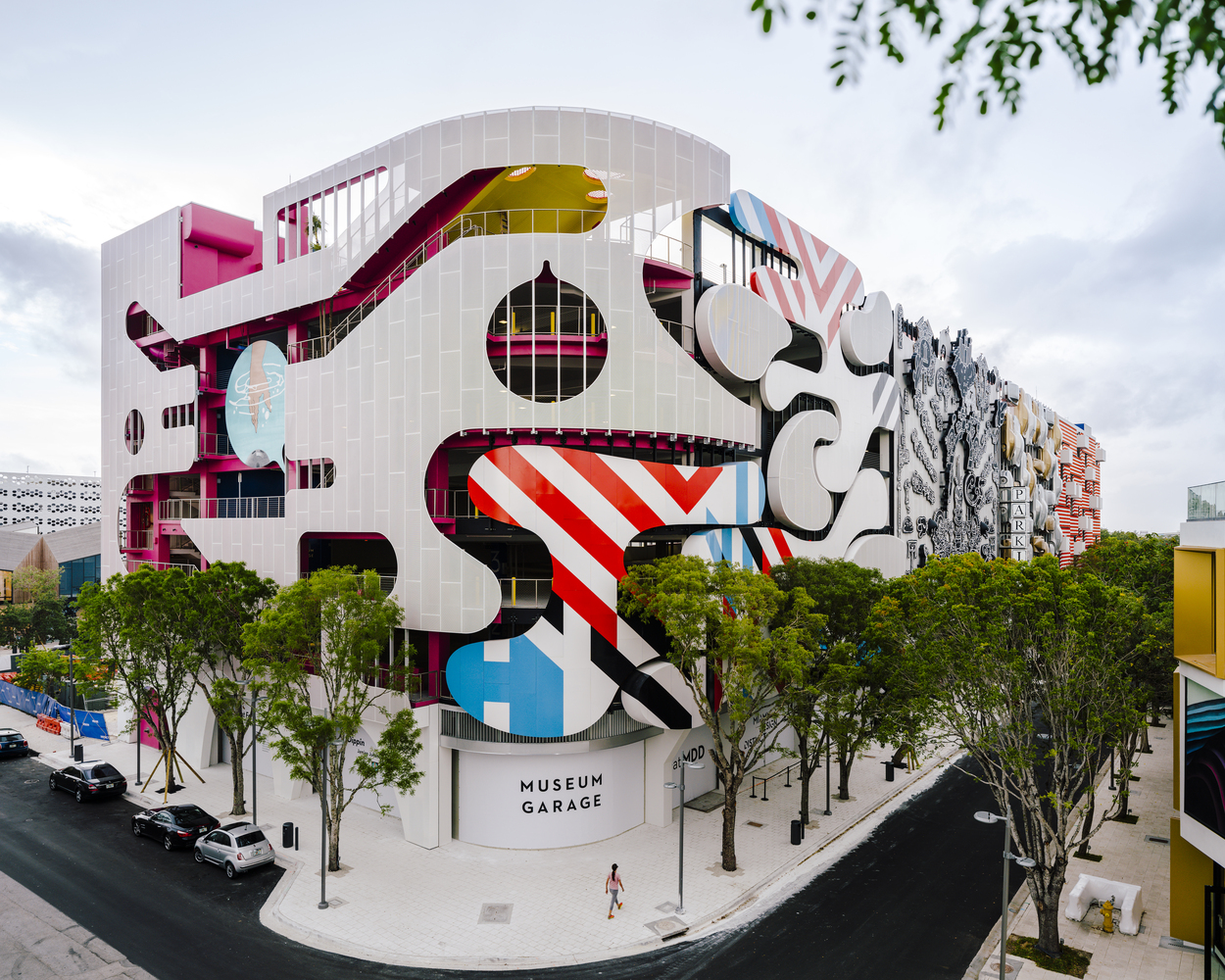
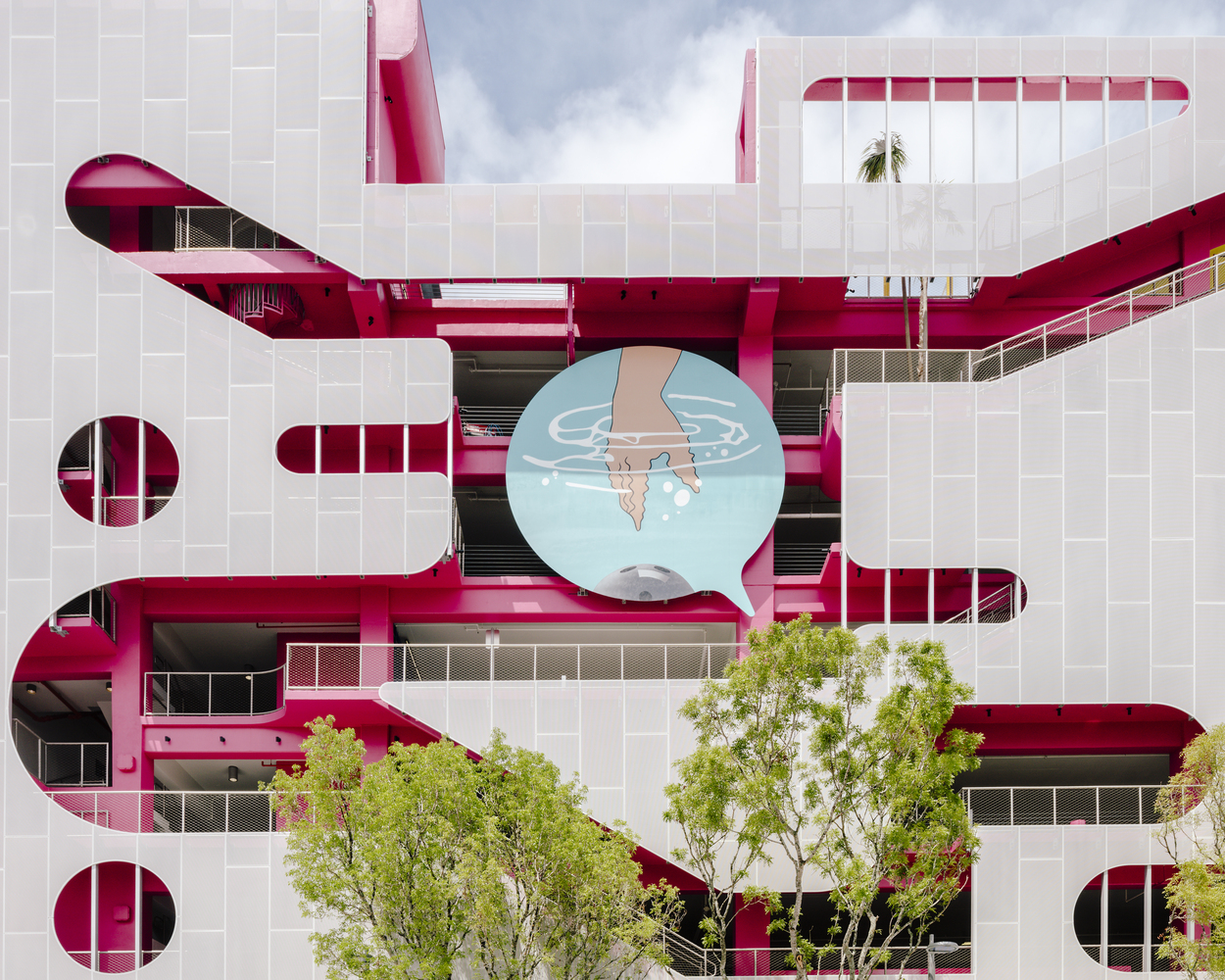
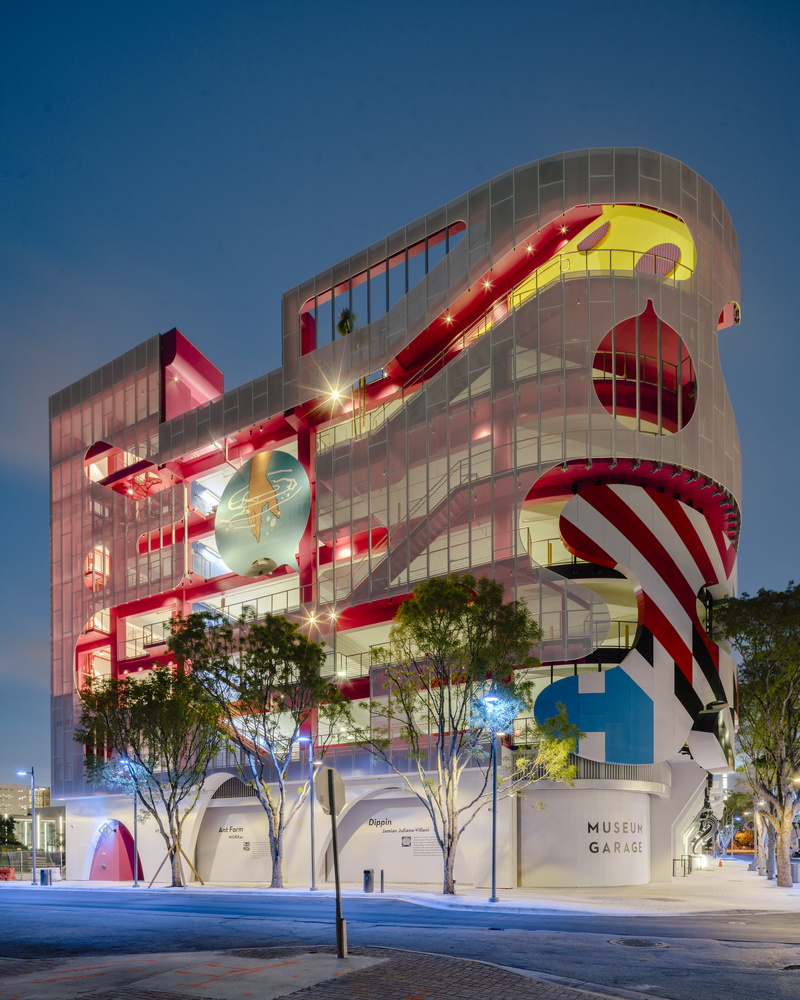
This is what happens when you let five architecture firms play a surrealist party game called Exquisite Corpse—where each player adds to a drawing without seeing what others have done. Curator Terence Riley gave each firm a section of this parking garage and said: “Go wild, but don’t look at each other’s work.”
The result? A fever dream in concrete and color. One section looks like a Victorian mansion on acid. Another features cartoonish characters straight from a child’s imagination. Another is pure geometric abstraction. Each façade is a surprise, a non-sequitur, a visual punchline. The building doesn’t make sense—and that’s exactly the point. It’s a parking garage that forgot it’s supposed to be boring.
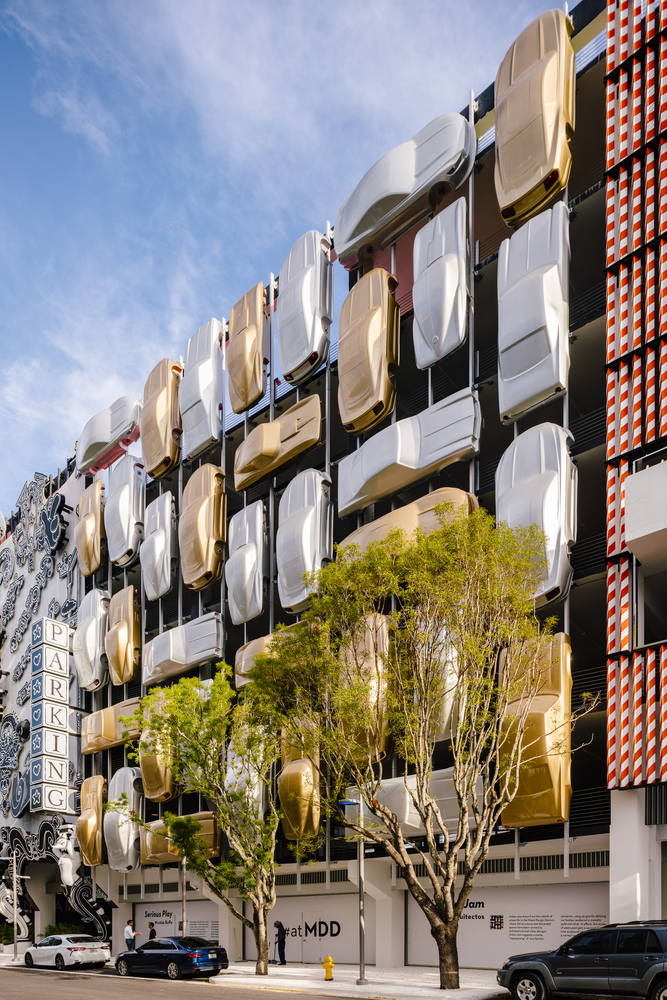
While you’re in Miami, check out must-see Miami architecture for more surrealist inspiration.
3) Ordos Art & City Museum | MAD Architects, Ordos, China
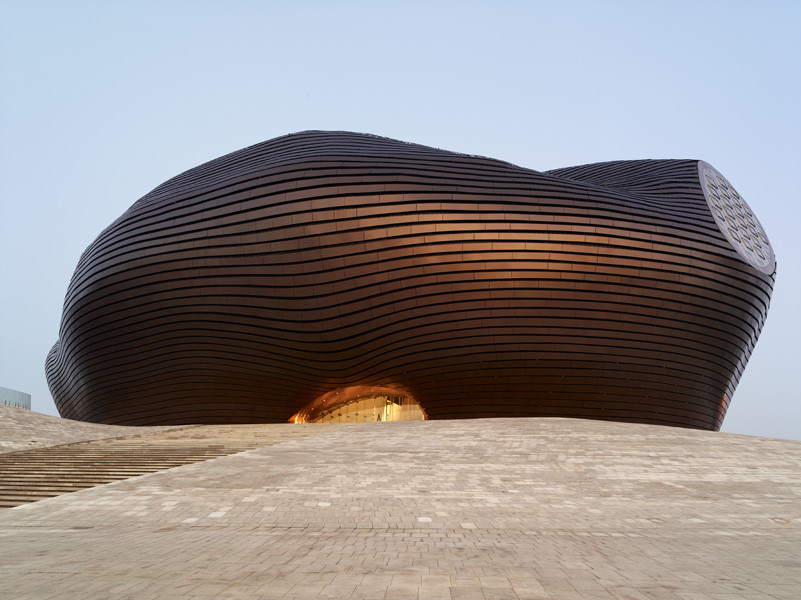
©ShuHe
MAD Architects looked at the Gobi Desert and saw potential for a building that looked like it landed from space. The Ordos Art & City Museum is designed to respond to the master plan’s rigid geometry while looking completely organic—like a metallic dune that grew overnight.
In a landscape that was empty desert just years ago, this building creates its own reality. It features towering dunes, imposing staircases that lead to nowhere, and breathtaking vistas that make you question which way is up. The metal cladding reflects the sky, the sand, the nothingness around it, making the building seem to dematerialize and rematerialize as you walk around it. It’s not a building in the desert—it’s a dream about a building in the desert.
For more on how architects create organic forms, see Zaha Hadid’s revolutionary masterpiece.
4) See-through Church | Gijs Van Vaerenbergh, Limburg, Belgium
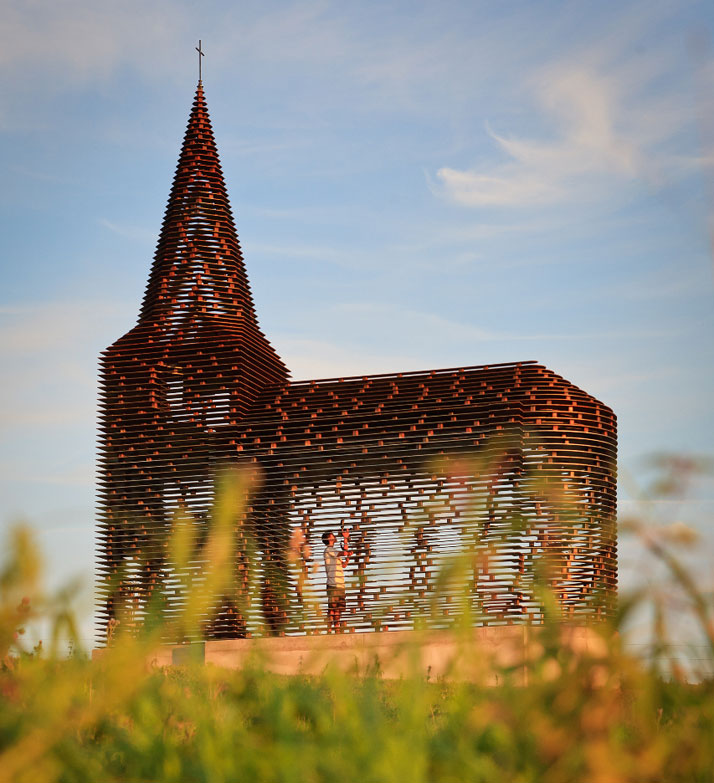
©Kristof Vrancken
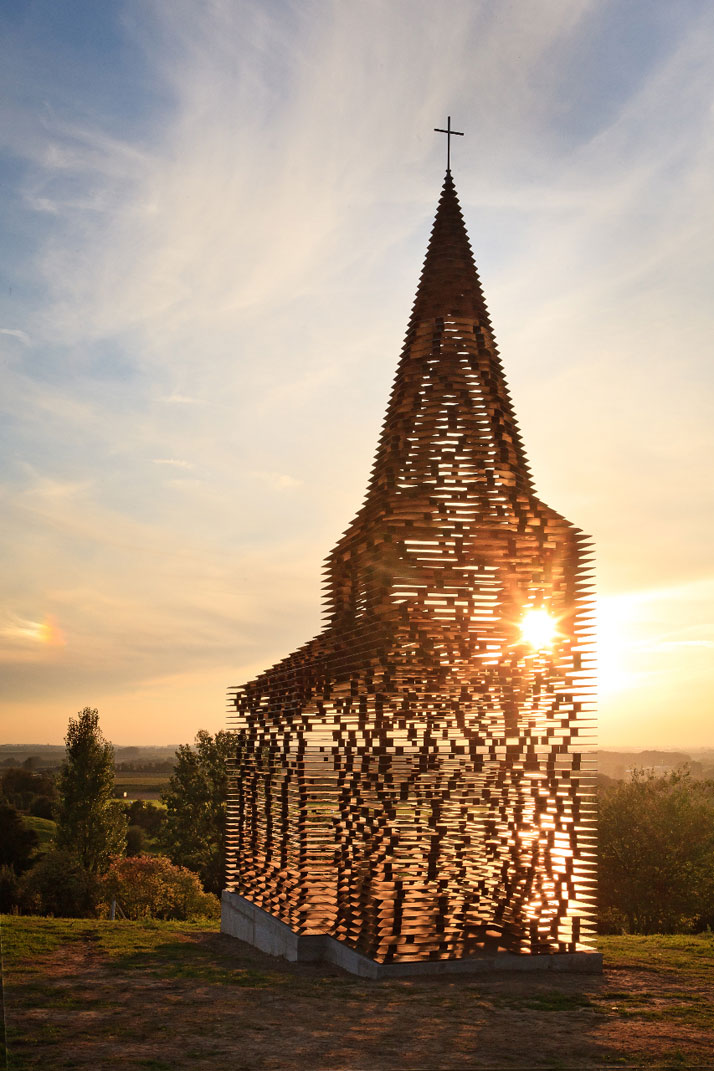
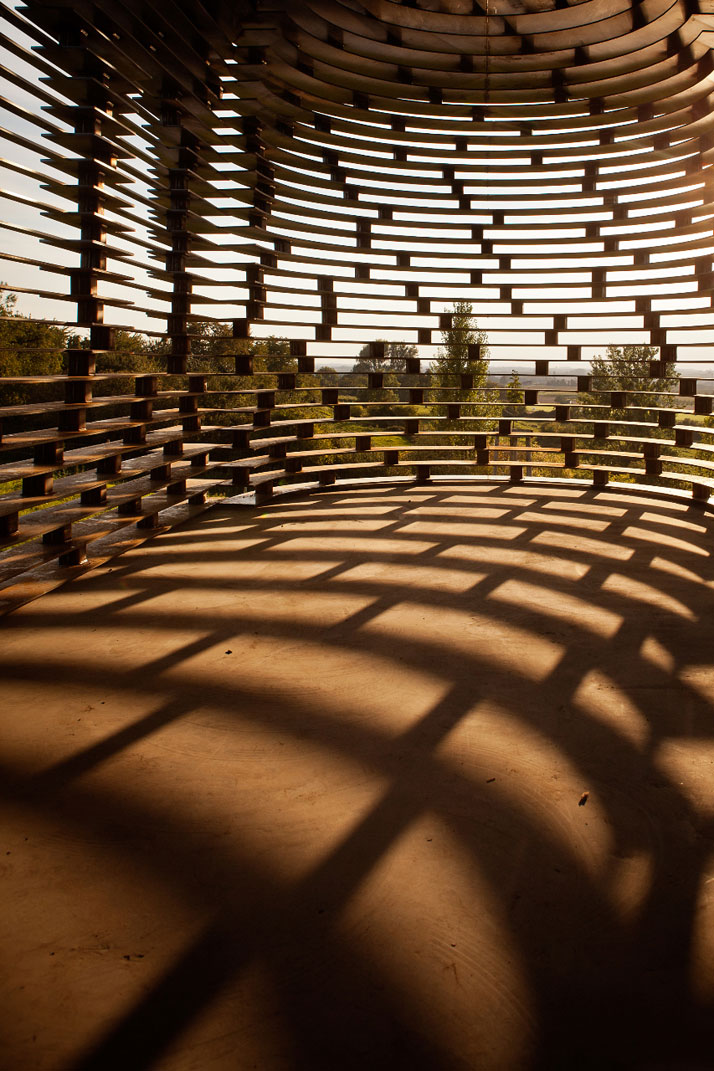
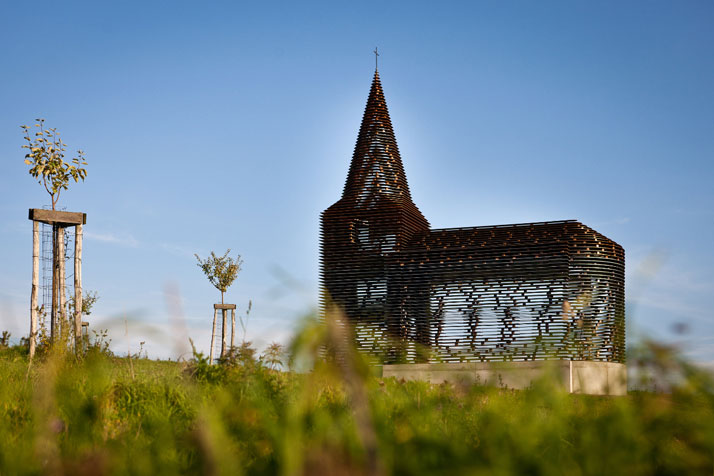
This is a church that isn’t quite there. Gijs Van Vaerenbergh built a chapel from 100 layers of stacked steel plates, creating a structure that dissolves into the landscape. From some angles, it’s a solid building. From others, it’s a ghostly outline, a suggestion of sacred space.
The transparent effect creates harmony between interior and exterior, between artwork and architecture. You can “see through the walls”—literally. Light filters through the slats, creating patterns that shift throughout the day. It’s a permanent public artwork that asks: What makes a church a church? The walls, or the space they define? What if those walls could disappear?
5) Sharp Centre for Design | Will Alsop, Toronto, Canada
©Richard Johnson
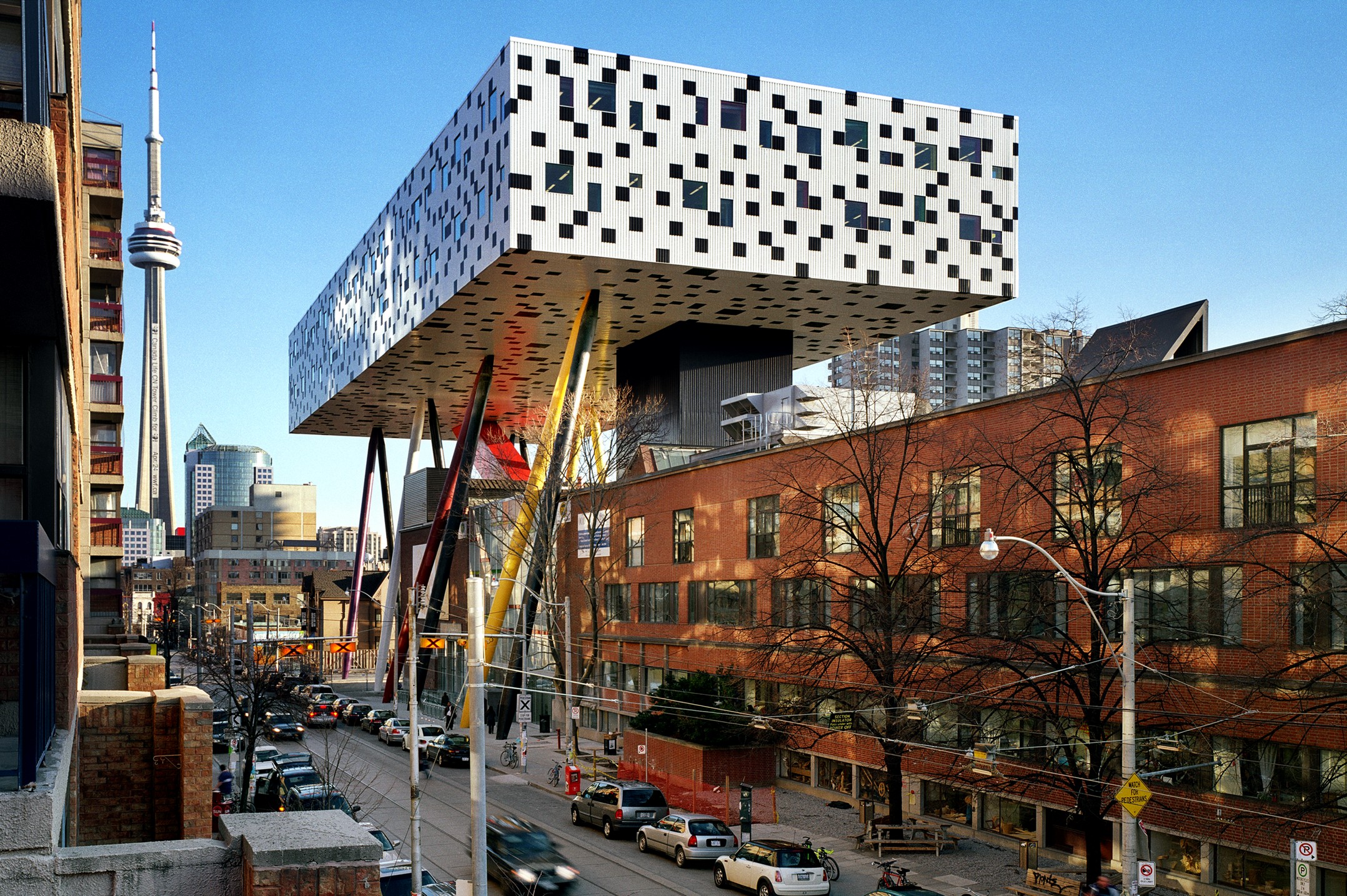
Will Alsop took a Victorian building and dropped a massive, pixelated tabletop on top of it. The Sharp Centre for Design at OCAD University floats 26 meters above the street, supported by 12 colorful legs that look like they belong in a cartoon.
The black-and-white pixel skin creates a striking contrast with the historic neighborhood, while the elevated “table” creates public space underneath. It’s surrealism with a purpose: the raise funded additional public open areas and improved foot traffic flow. The building achieves that classic surrealist trick of fusing incompatible beliefs—it manages to be both a serious academic building and a whimsical sculpture that bewilders onlookers. It’s a building that shouldn’t exist, but somehow perfectly balances in mid-air.
For more on how architects challenge gravity, explore 5 long span structures with awesome roofs.
6) Heydar Aliyev Center | Zaha Hadid Architects, Baku, Azerbaijan
©Hufton+Crow
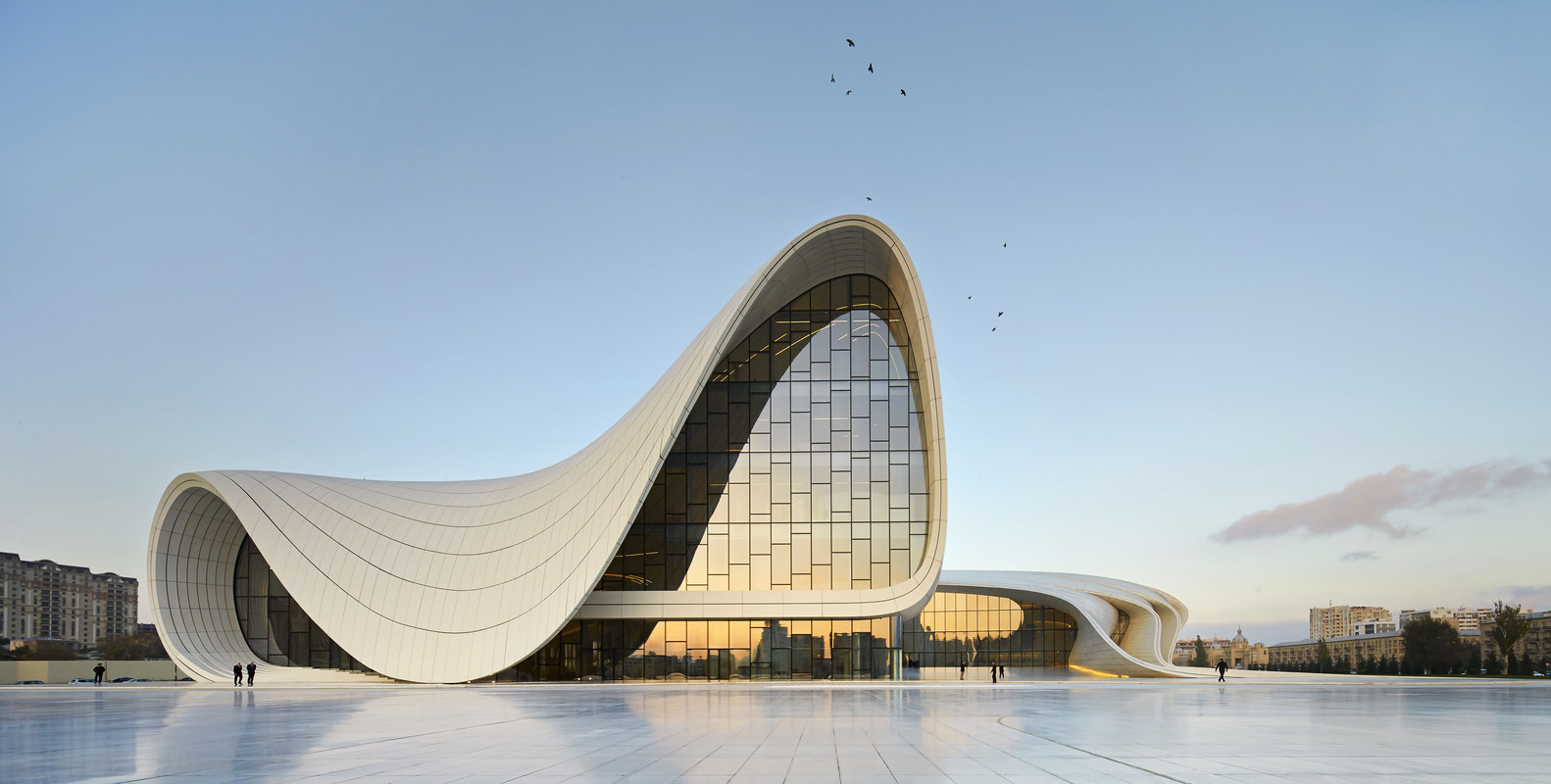
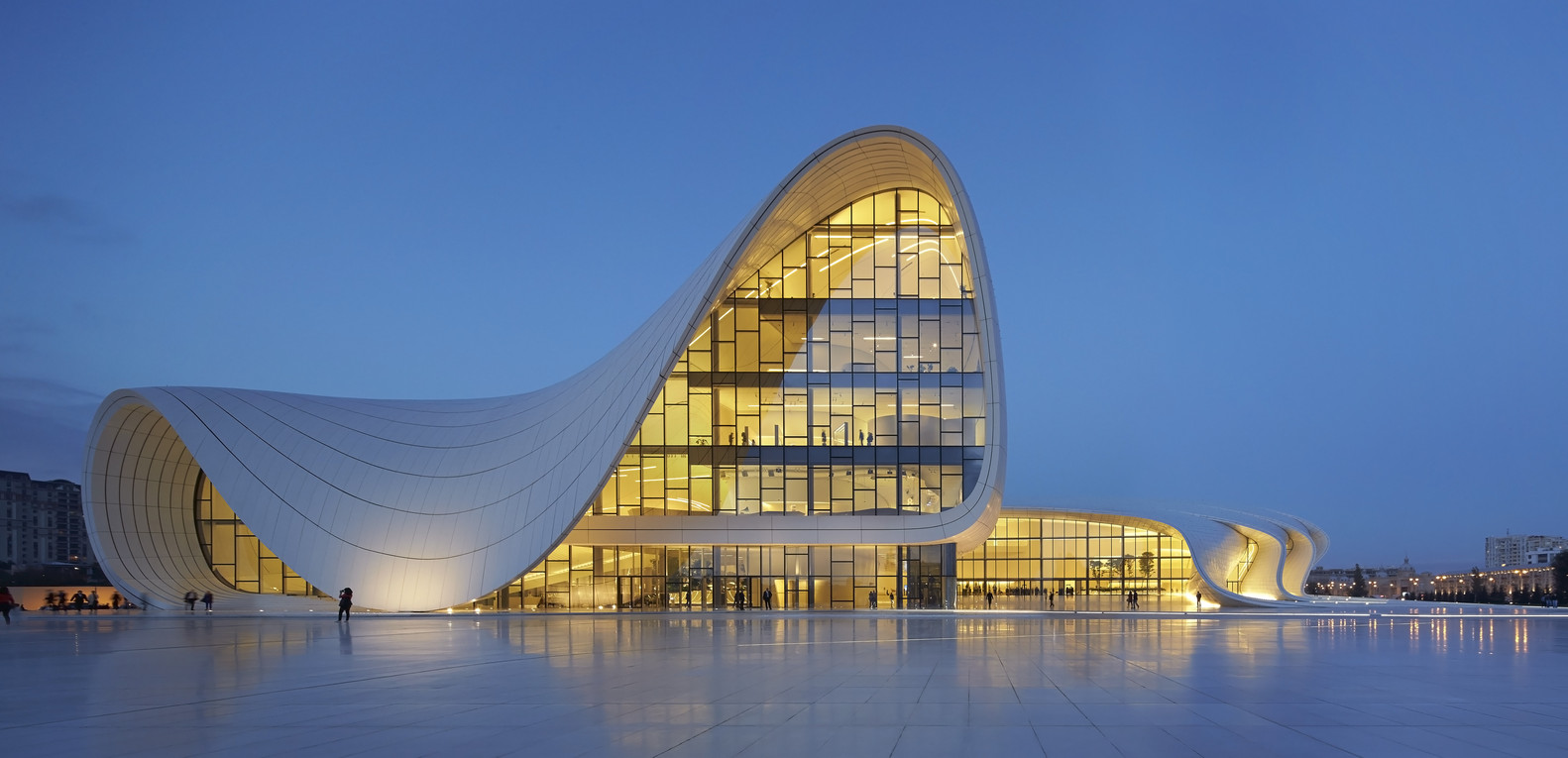
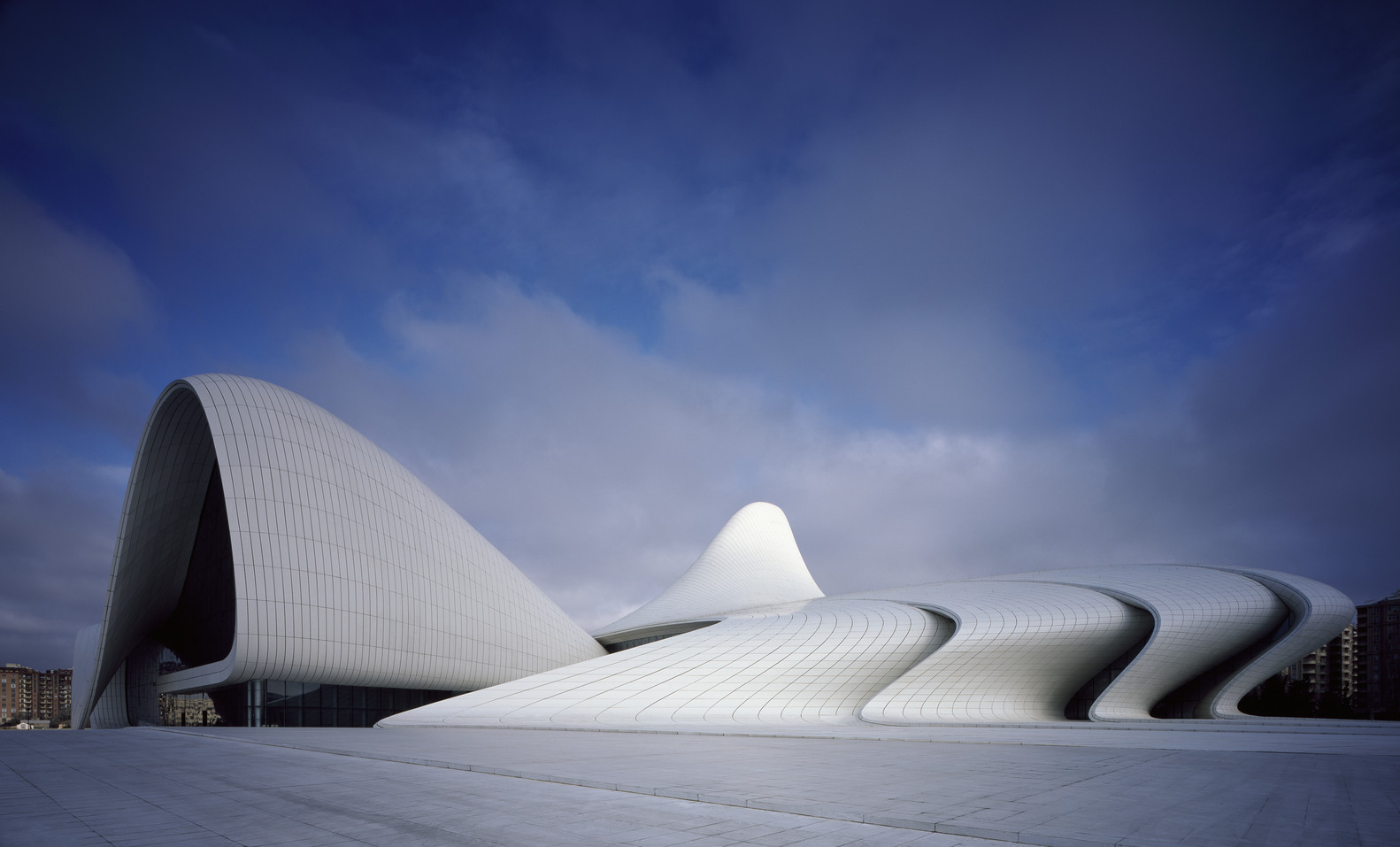
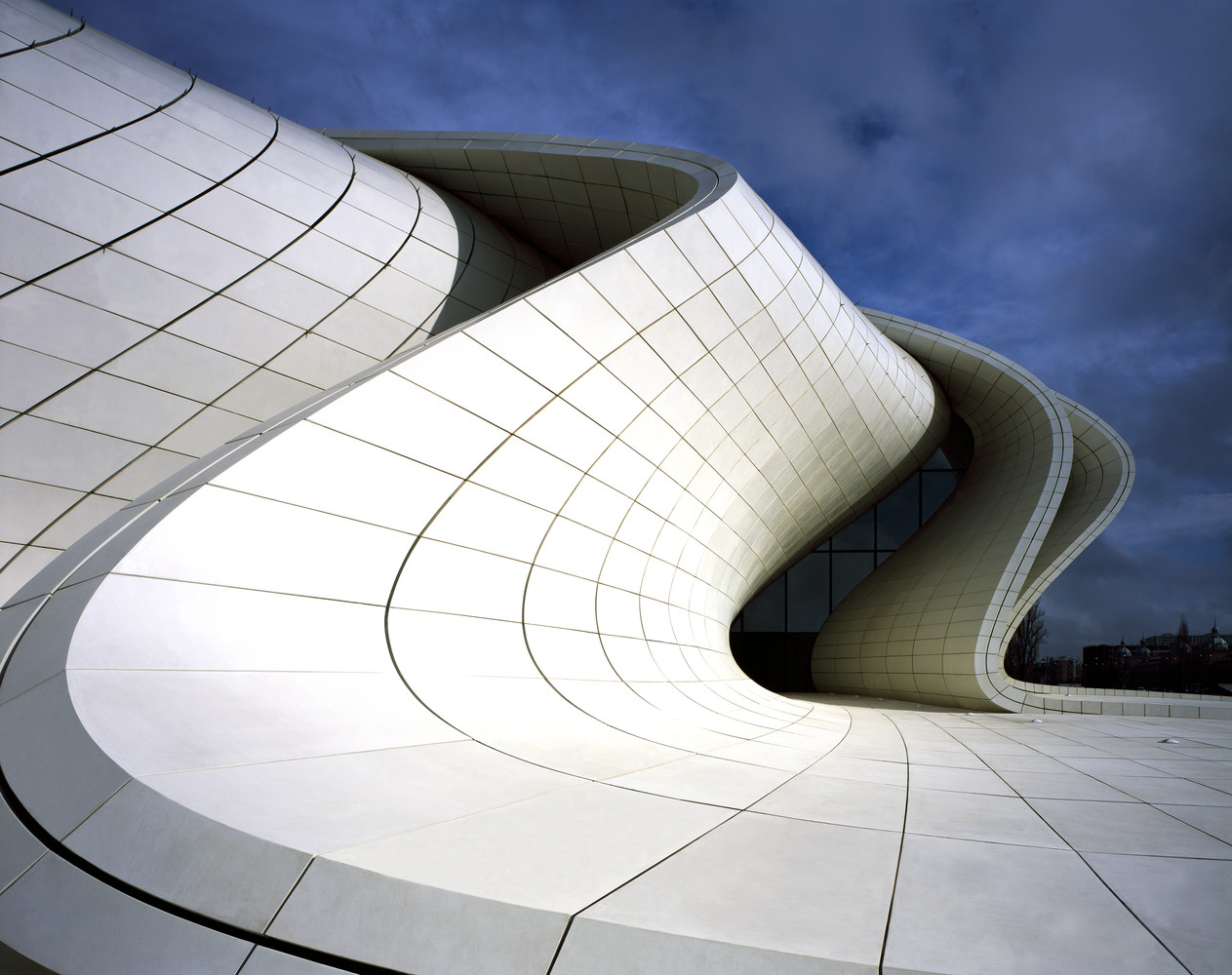
Zaha Hadid didn’t just design a building—she designed a manifesto in concrete. The Heydar Aliyev Center looks like it’s rising organically from the ground, a continuous wave that refuses to have any sharp corners. It’s a symbol of Azerbaijan’s optimism about the future, and honestly? It succeeds admirably.
The structure flows like liquid, with walls that become ceilings that become floors without any visible transition. White concrete curves guide you through spaces that feel both intimate and infinite. It’s a building that doesn’t just sit on the landscape—it is the landscape, reimagined in architectural form. Hadid took Breton’s idea of merging dream and reality and built it at city scale.
7) Dream Within Dream | Wutopia Lab, Shenzhen, China
©CreatAR Images
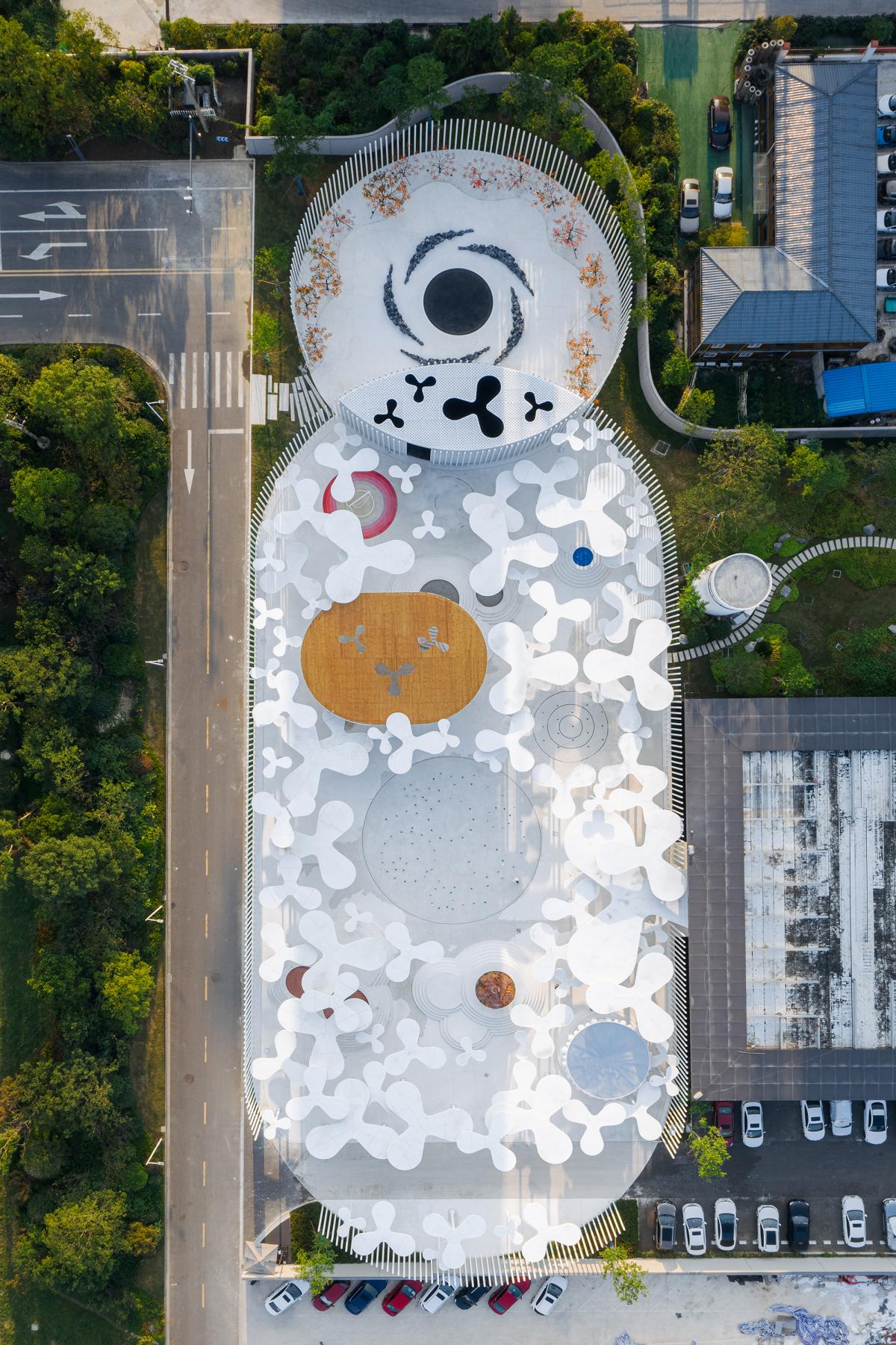
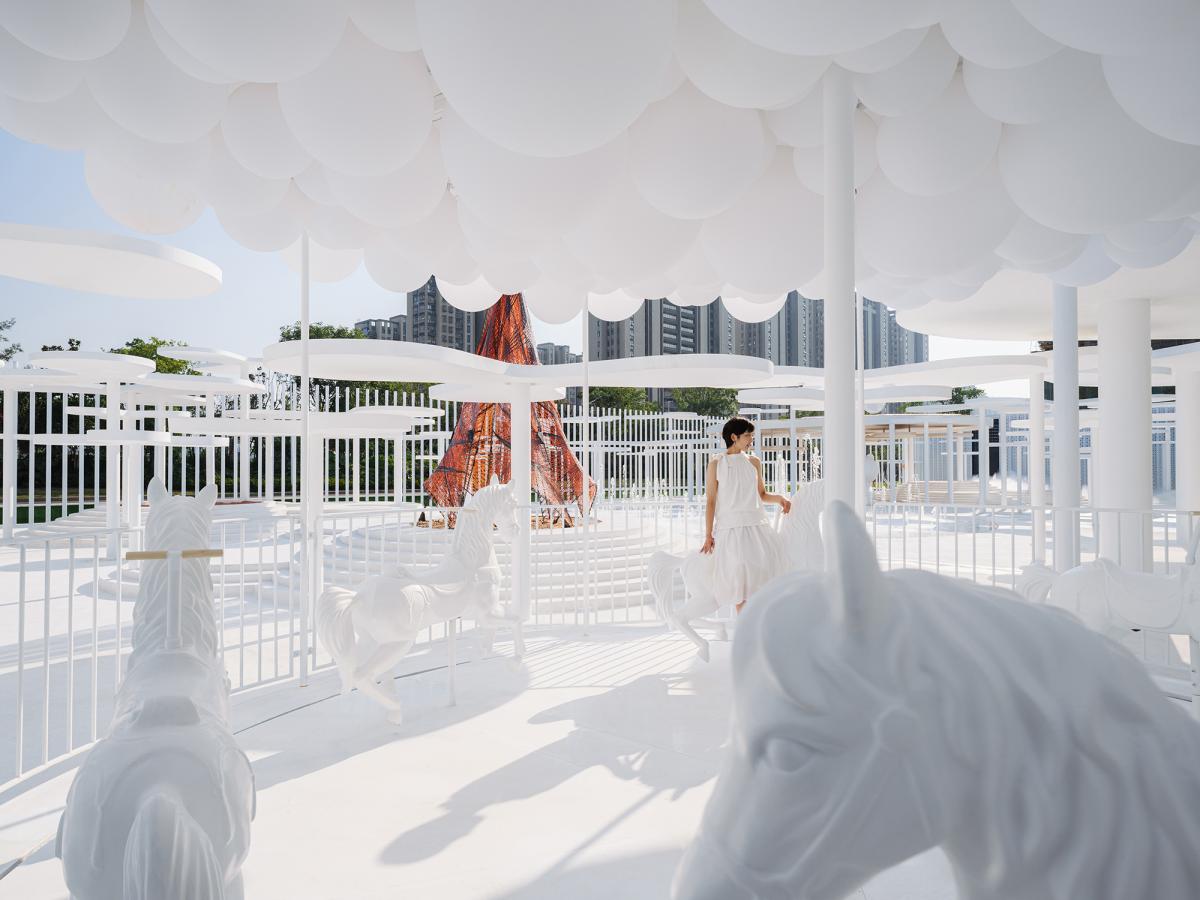
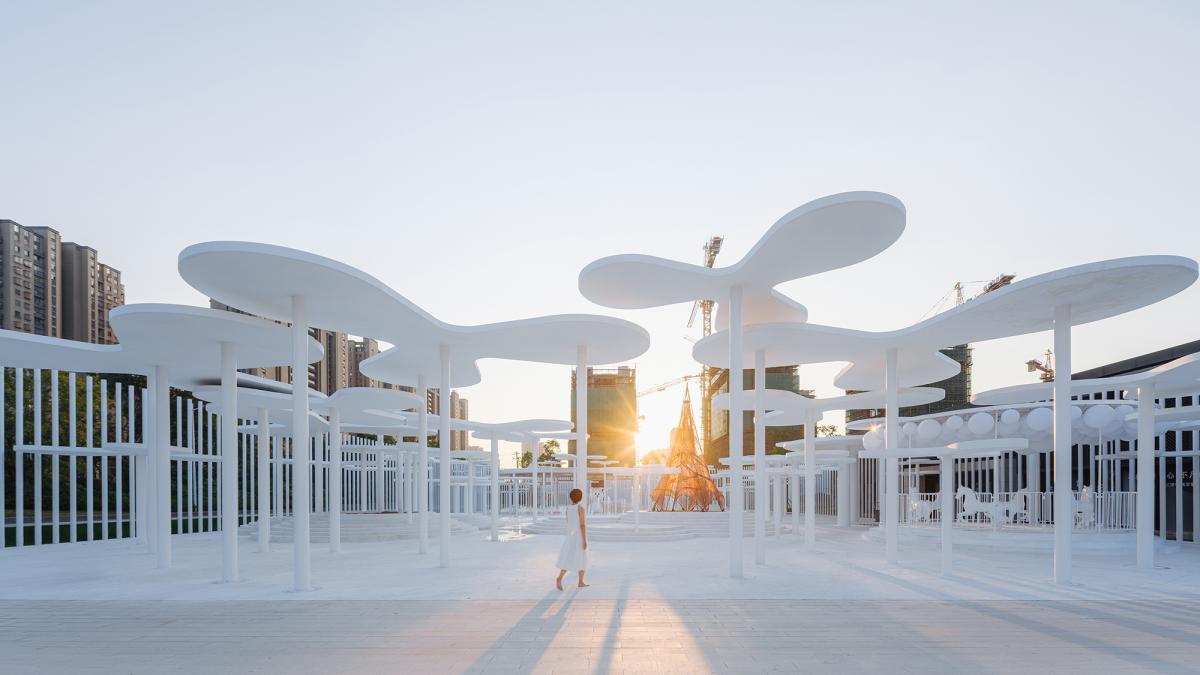
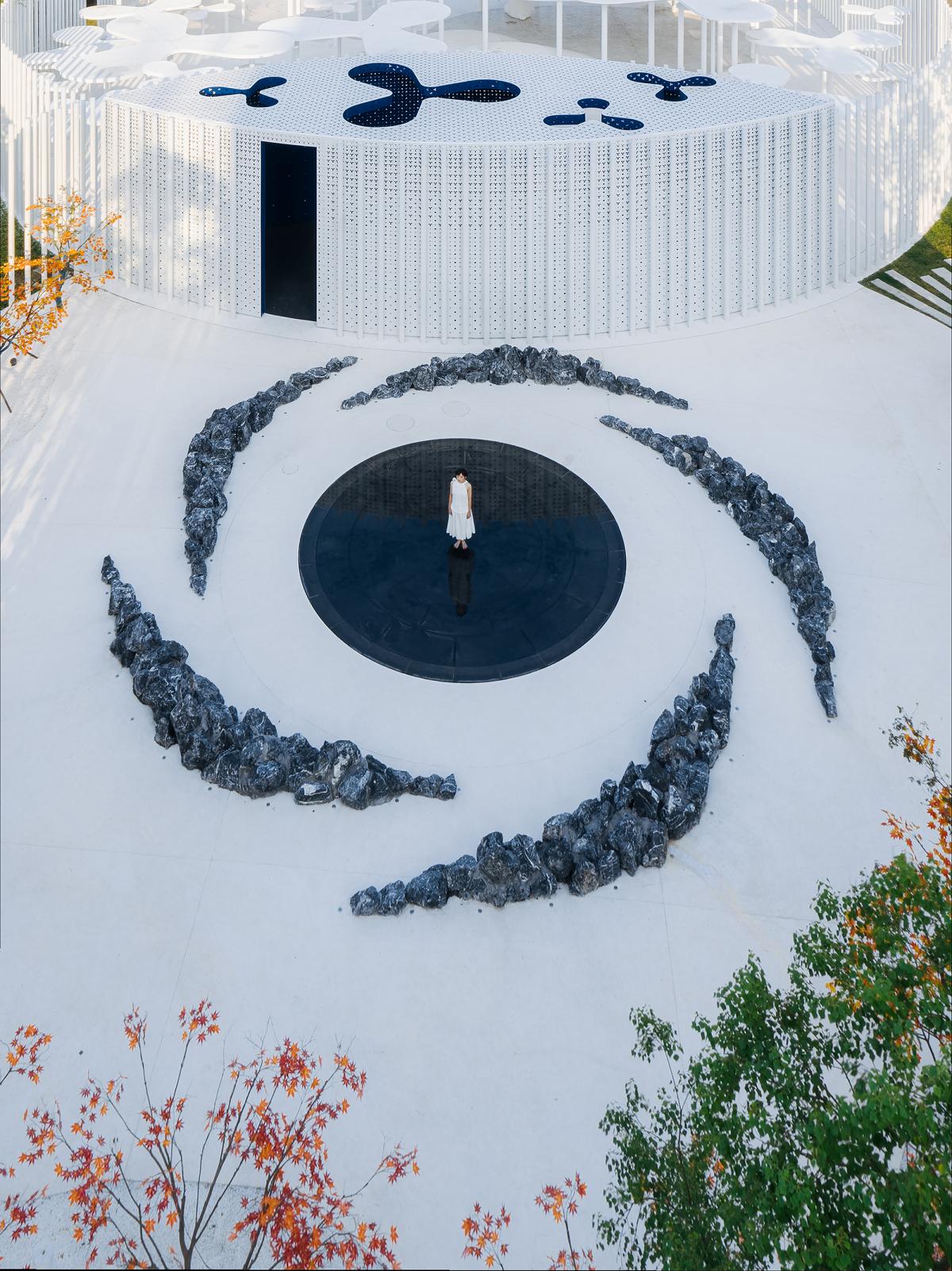
Wutopia Lab‘s founder Yu Ting was inspired by his daughter’s recurring dream about a forest. His solution? Build the dream. He created an abstract forest using 108 white steel structures of varying heights, then crafted a complete landscape inside it—cave complexes, hillsides, waterways, rocks, peaks, waterfalls, and even theaters.
It’s a building that exists entirely within a dreamscape. Visitors wander through spaces that feel like they’ve been plucked from a child’s imagination. The white steel “trees” create dappled light, shadows that move, spaces that appear and disappear. It’s surrealist architecture at its most personal: a father building his daughter’s dream so she (and everyone else) can walk through it.
8) Las Pozas | Edward James, Xilitla, Mexico
©Victor Delaqua
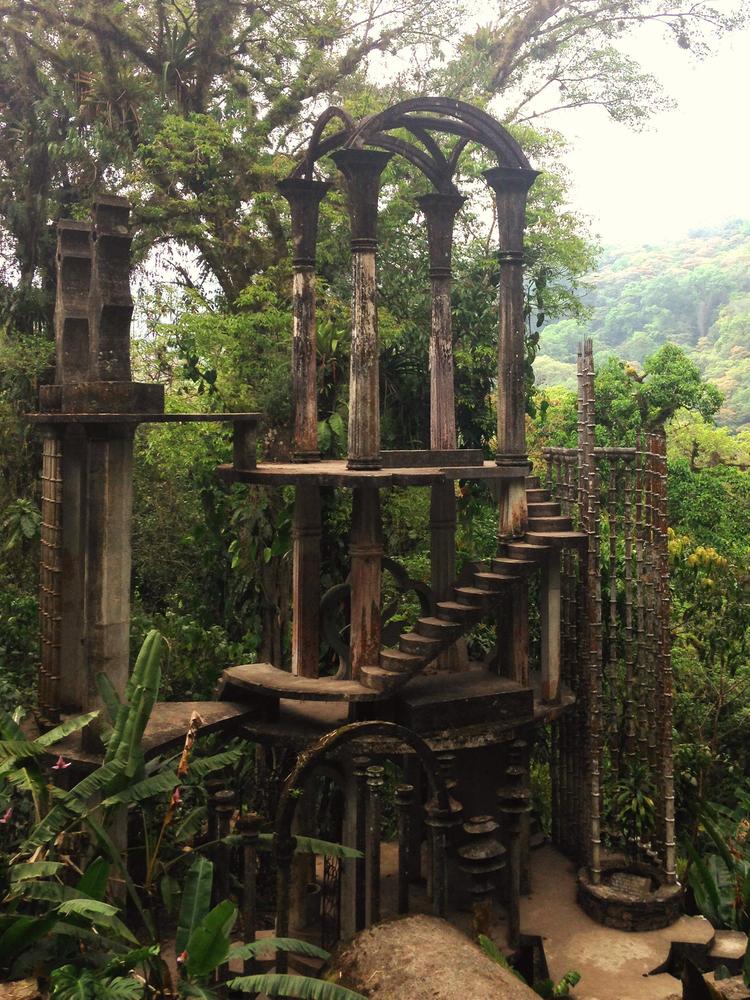
Edward James, a Surrealist poet, didn’t just write about dreams—he built them in concrete. In the middle of the Mexican jungle, on an abandoned coffee plantation, he created Las Pozas: a sculpture garden that looks like the ruins of a civilization that never existed.
Unfinished bridges hover over nothing. Staircases spiral into the sky and stop. Pavilions have floors at different heights for no reason. It’s pure surrealist philosophy in three dimensions: “the space is not motivated by rational, artistic, or ethical concerns but encourages exploration.” It’s a place where you can get lost, both physically and mentally, and that’s exactly the point.
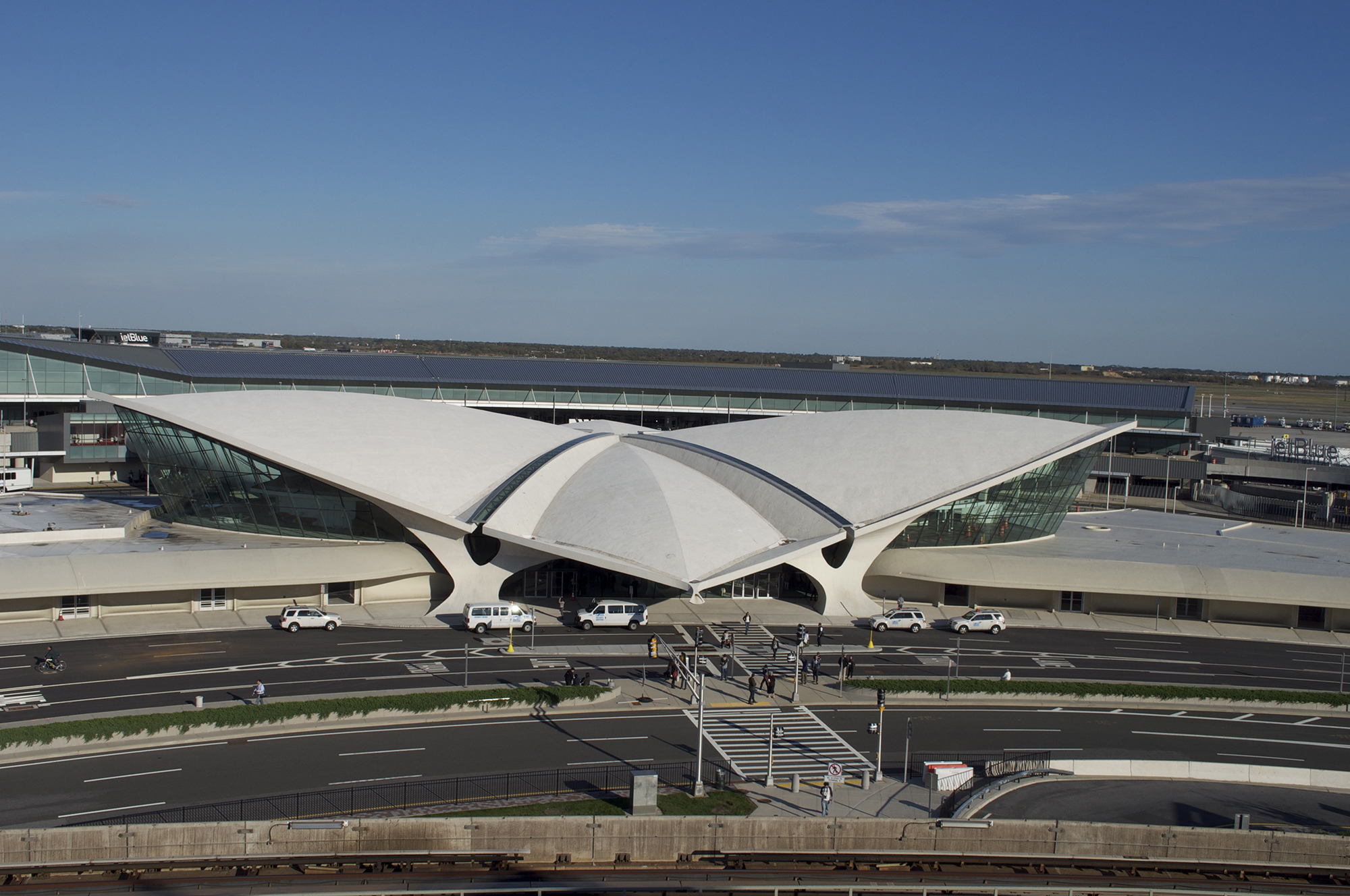
9) TWA Flight Center | Eero Saarinen, New York, USA
©Kai Brinker
Eero Saarinen’s TWA Terminal proves that surrealism can hide in plain sight. On the surface, it’s a functional airport terminal. But look closer: the flowing, open interiors seem to breathe. The soaring canopies challenge physics. The entire structure feels like it’s about to take flight itself.
There’s a touch of surrealism in every curve, every space that embraces “the nuances of art.” It’s a building that understands it’s not just a place to catch a plane—it’s the beginning of a journey, a transition between ground and sky, reality and possibility. Saarinen captured that liminal space and built it in concrete and glass.
For more on Saarinen’s revolutionary approach, check out A Deep Dive Into Googie Style: 7 Recognizable Googie Buildings in Los Angeles.
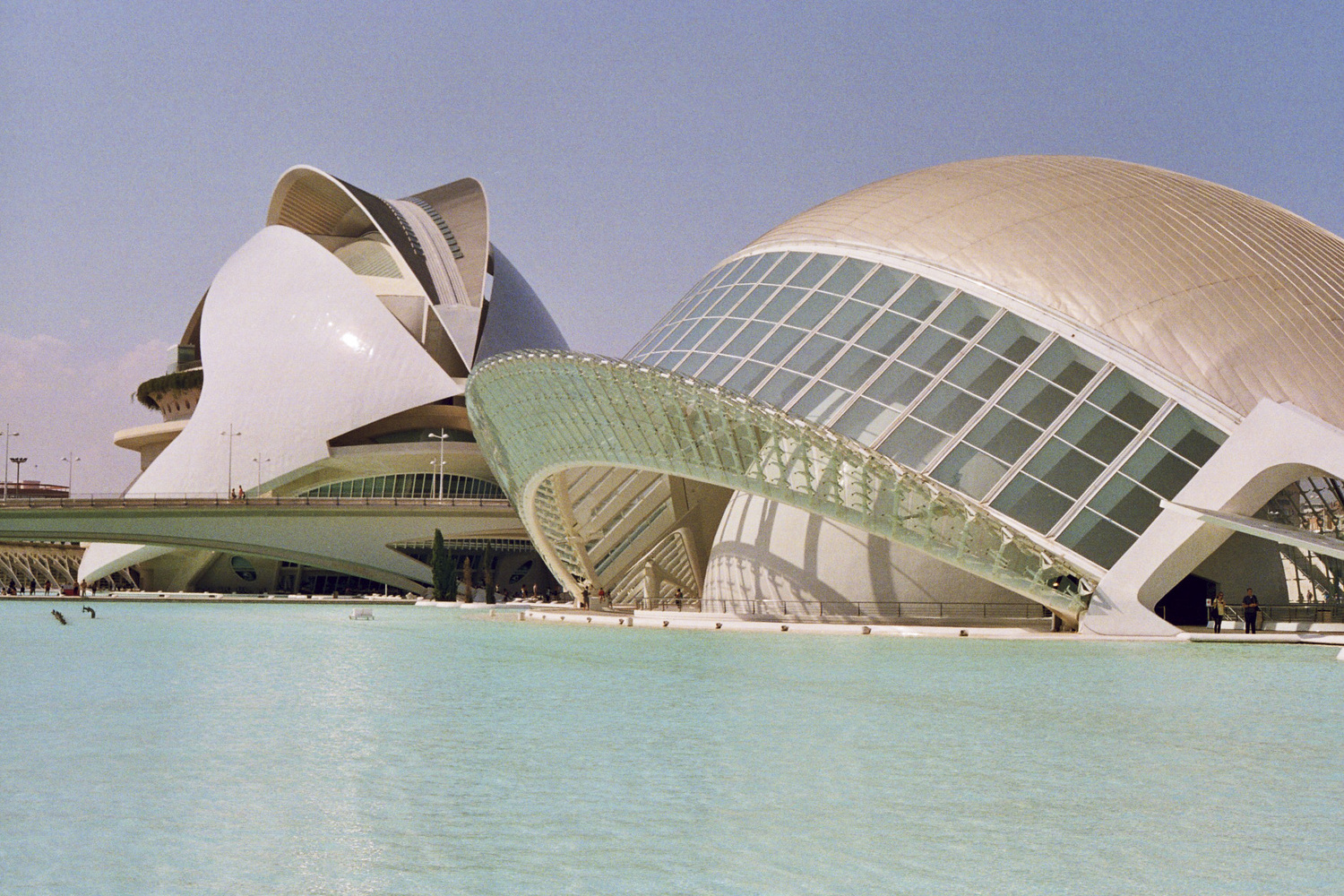
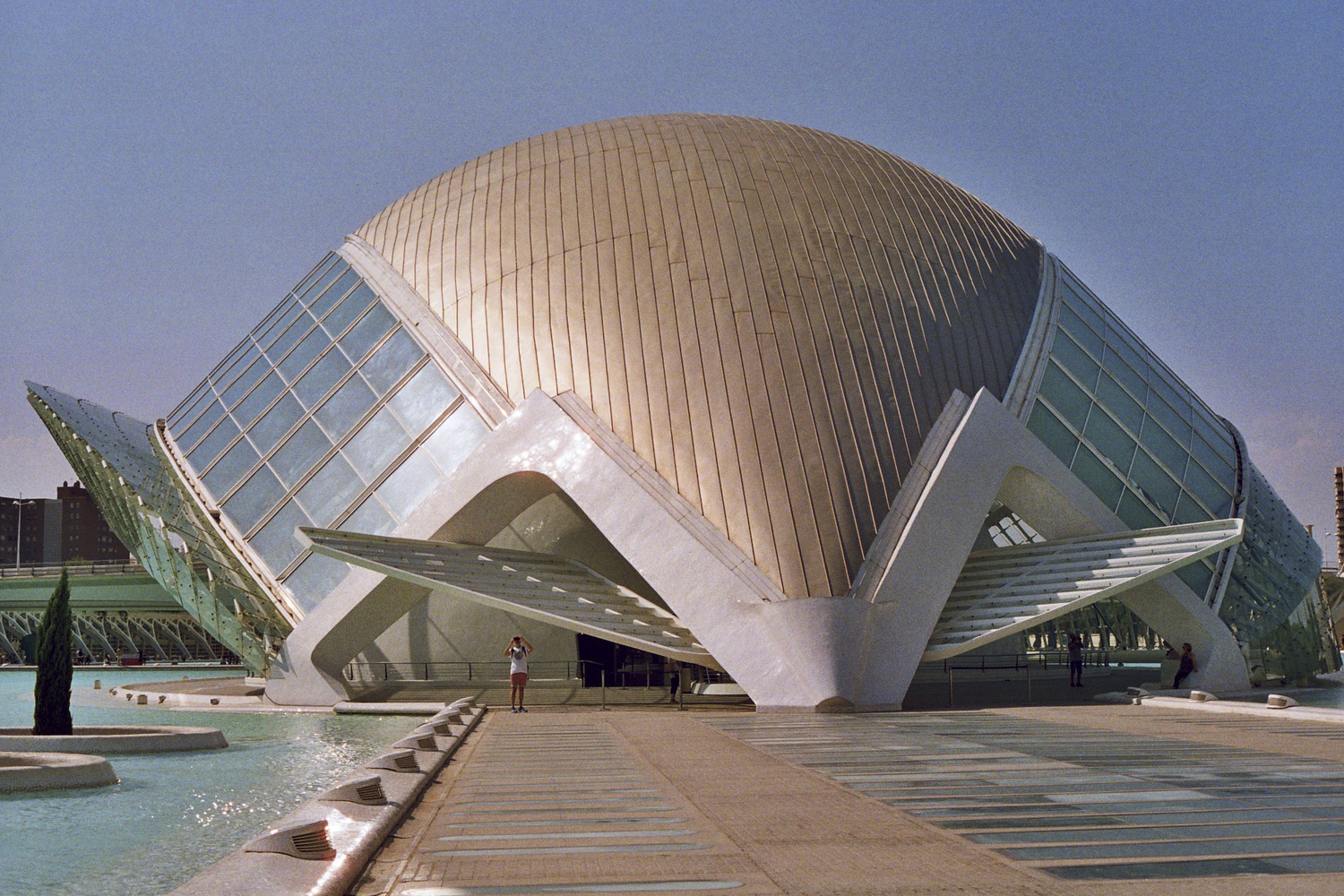
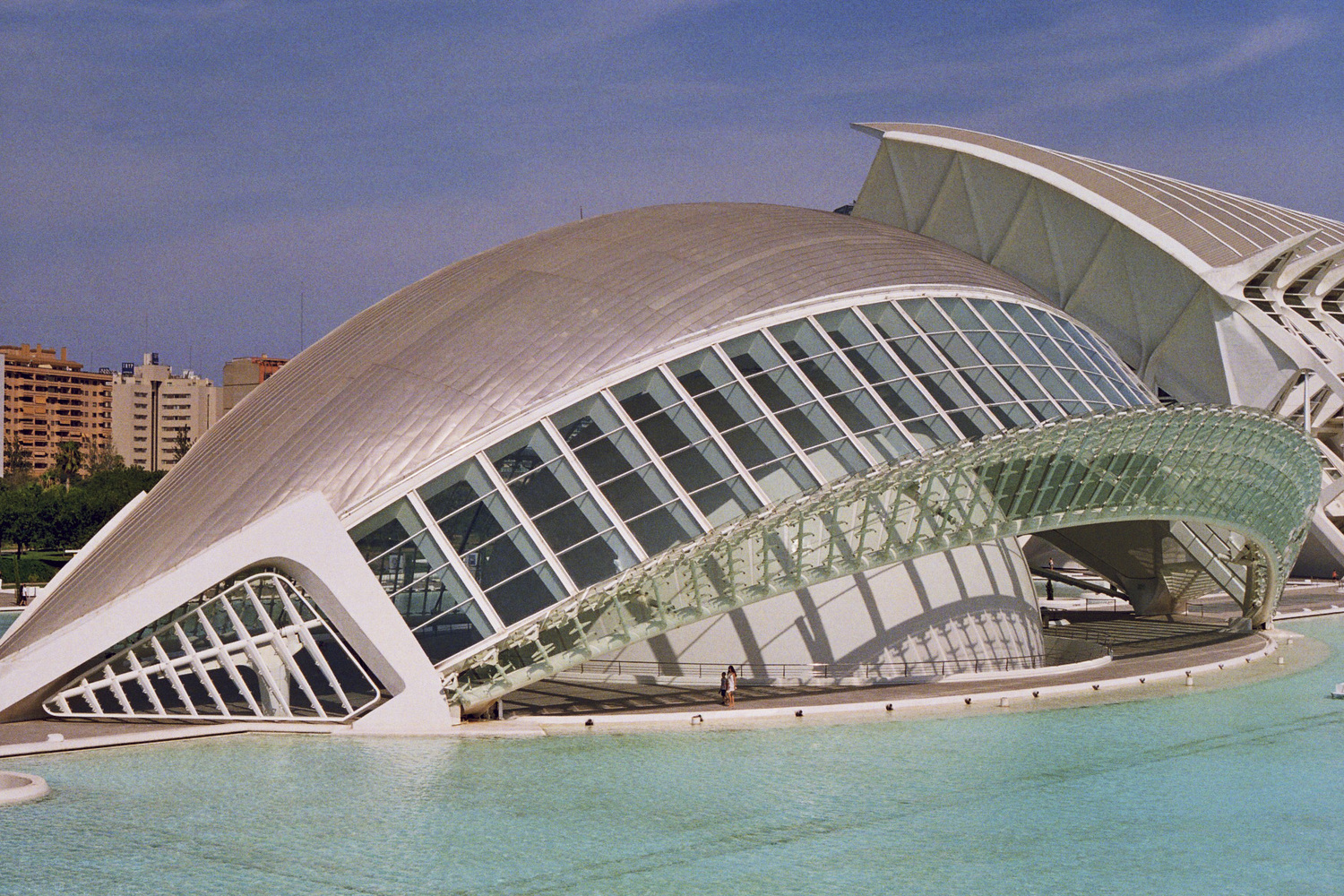
10) City of Arts and Sciences | Santiago Calatrava, Valencia, Spain
©Anthony Saroufim
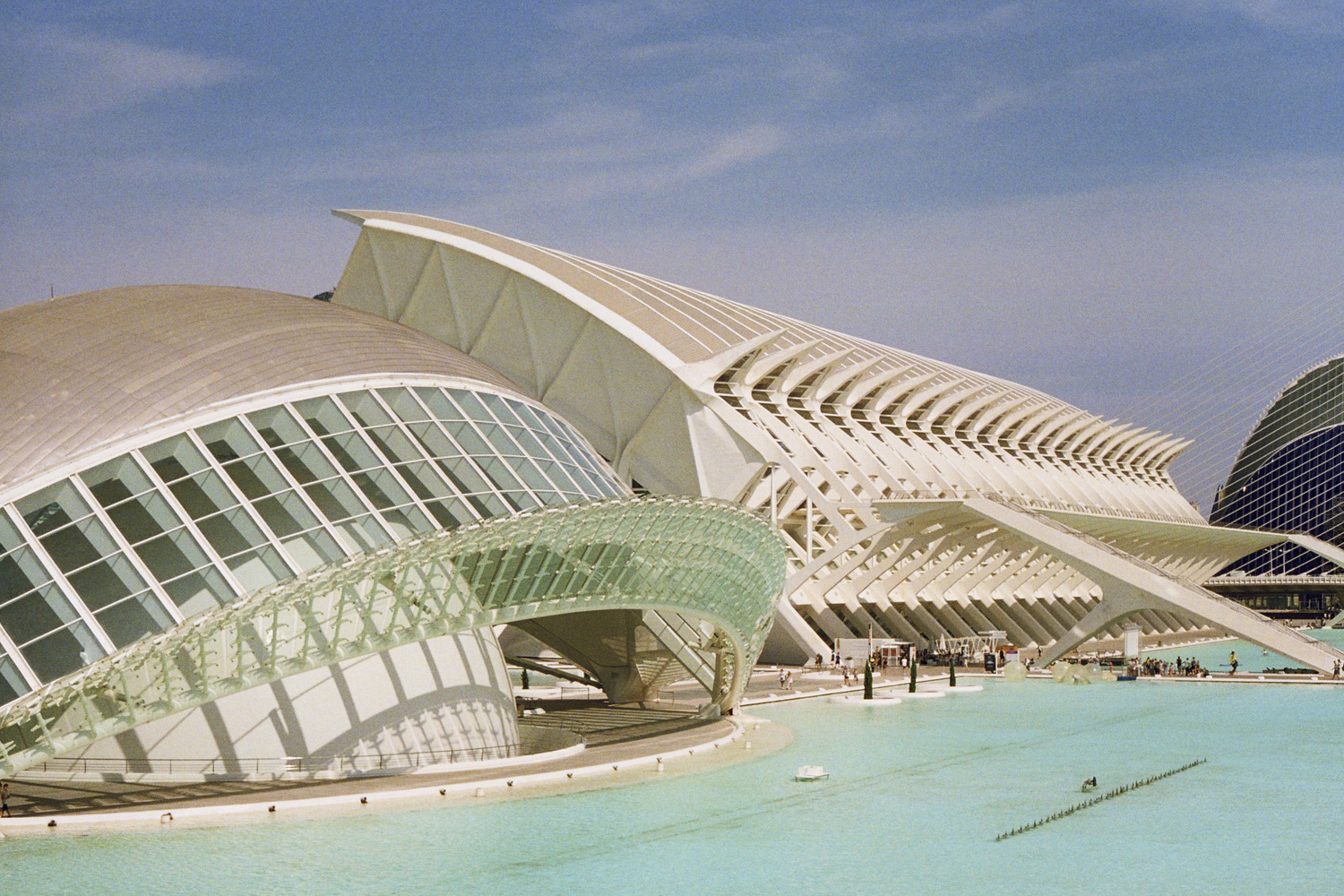
Santiago Calatrava took 350,000 square meters of Valencia and turned it into a sci-fi movie set. The City of Arts and Sciences is a cultural complex that looks like a starship fleet landed in the middle of the historic city. Using his signature white concrete and broken tiles (a nod to Gaudí), Calatrava created buildings that seem to be in constant motion.
The uniform appearance comes from two identical concrete casings cut together, creating smooth, organic surfaces that reflect the Mediterranean light. It’s a facility that complements its environment while serving as an artistic centerpiece—a surrealist dream that became one of Europe’s most visited destinations. Calatrava proves that surrealism can operate at massive urban scale and still feel intimate and magical.
While exploring Valencia, don’t miss the architecture tourist’s manifesto for more must-see destinations.
Who are the key figures in surrealist architecture?
The godfathers are Salvador Dalí (who drew impossible buildings), Frederick Kiesler (who built Correalist tools), and Frank Gehry (who made metal flow like fabric). Contemporary masters include Zaha Hadid (organic futurism), MVRDV (conceptual surrealism), Wutopia Lab (dreamscaping), and Santiago Calatrava (biomorphic engineering). Even Le Corbusier dabbled in surrealist forms late in his career.
Can surrealist architecture be functional?
Absolutely! The TWA Terminal is a fully functional airport. The Heydar Aliyev Center hosts concerts and exhibitions. The Sharp Centre is a working design school. Surrealist architecture doesn’t sacrifice function—it enhances it by making the experience memorable. The function becomes part of the dream.
Why Surrealist Architecture Matters More Than Ever
In a world of copy-paste developments and sterile glass towers, surrealist architecture reminds us that buildings can be magical. It challenges the notion that architecture must be serious, rational, and boring to be taken seriously. Instead, it proves that the most memorable spaces are often the ones that make us feel like we’ve stepped into another world.
Surrealist architecture isn’t just about creating weird shapes—it’s about creating experiences. It’s about remembering that architecture, at its best, should make us feel alive, curious, and slightly off-balance. It should make children point and adults smile. It should make us question what’s possible.
As technology continues to erase the line between digital dreams and physical reality, surrealist architecture’s potential is exploding. Parametric design, 3D printing, and advanced materials mean that yesterday’s impossible sketches are tomorrow’s buildings. For a generation raised on video games and CGI, surrealism isn’t weird—it’s normal.
The value of surrealist architecture grows yearly because it offers something increasingly rare: genuine surprise. In a world where you can see every building on Instagram before you visit, surrealist architecture delivers moments that can’t be captured in a photo—moments of wonder, confusion, and delight that have to be experienced in person.
And maybe that’s the ultimate surrealist trick: making us remember that the best architecture, like the best dreams, can’t be explained—only felt.

Aly Bayoumi is an editor with a sharp eye for detail and a deep commitment to clarity and precision. Passionate about architecture and design, he sees every project as an opportunity to shape compelling narratives that bring creative visions to life. With a focus on accuracy and engaging storytelling, Aly combines editorial expertise with a dedication to elevating the voices and ideas that shape the built environment.