

What if preserving history didn’t mean rebuilding the past?
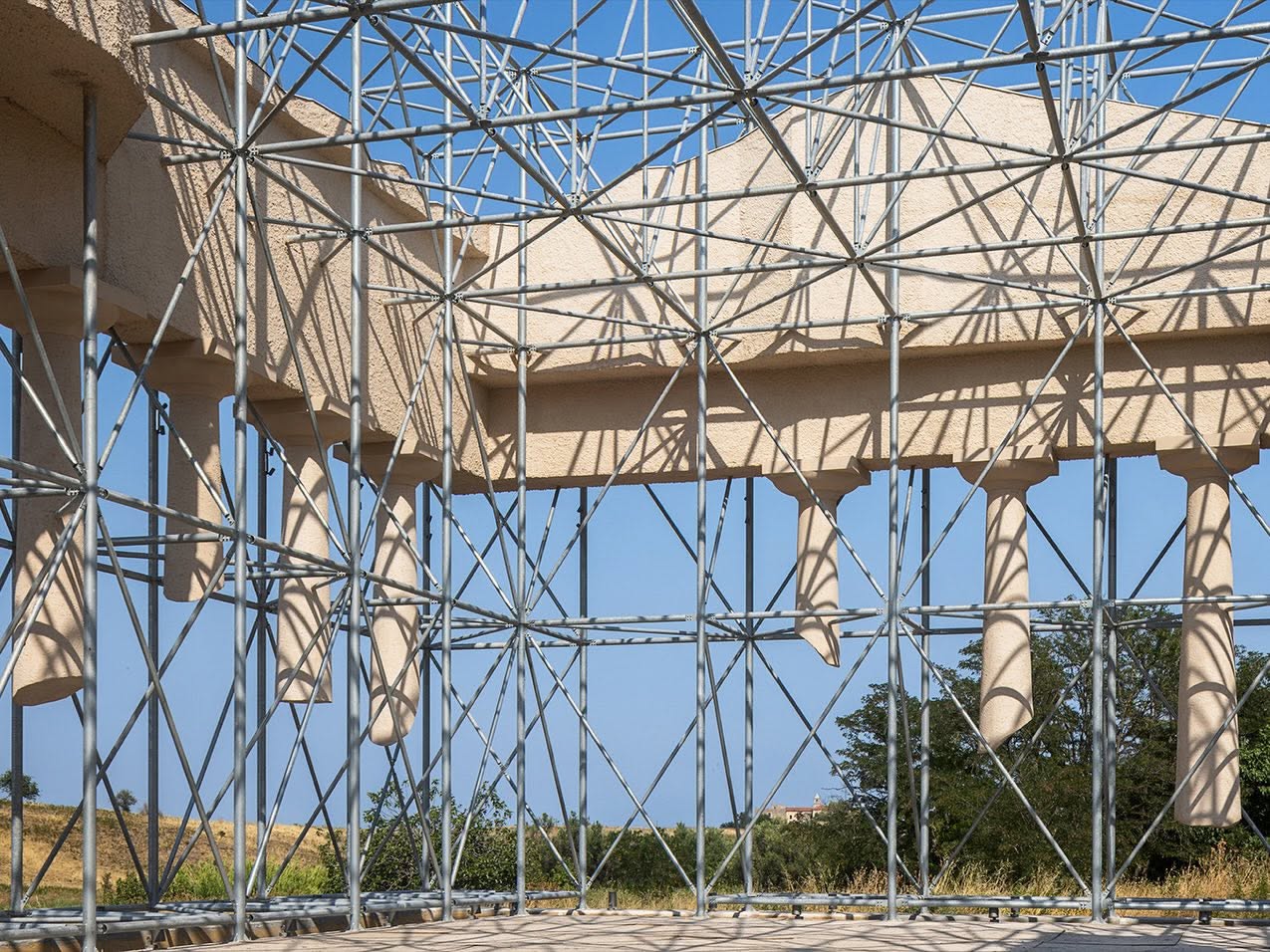
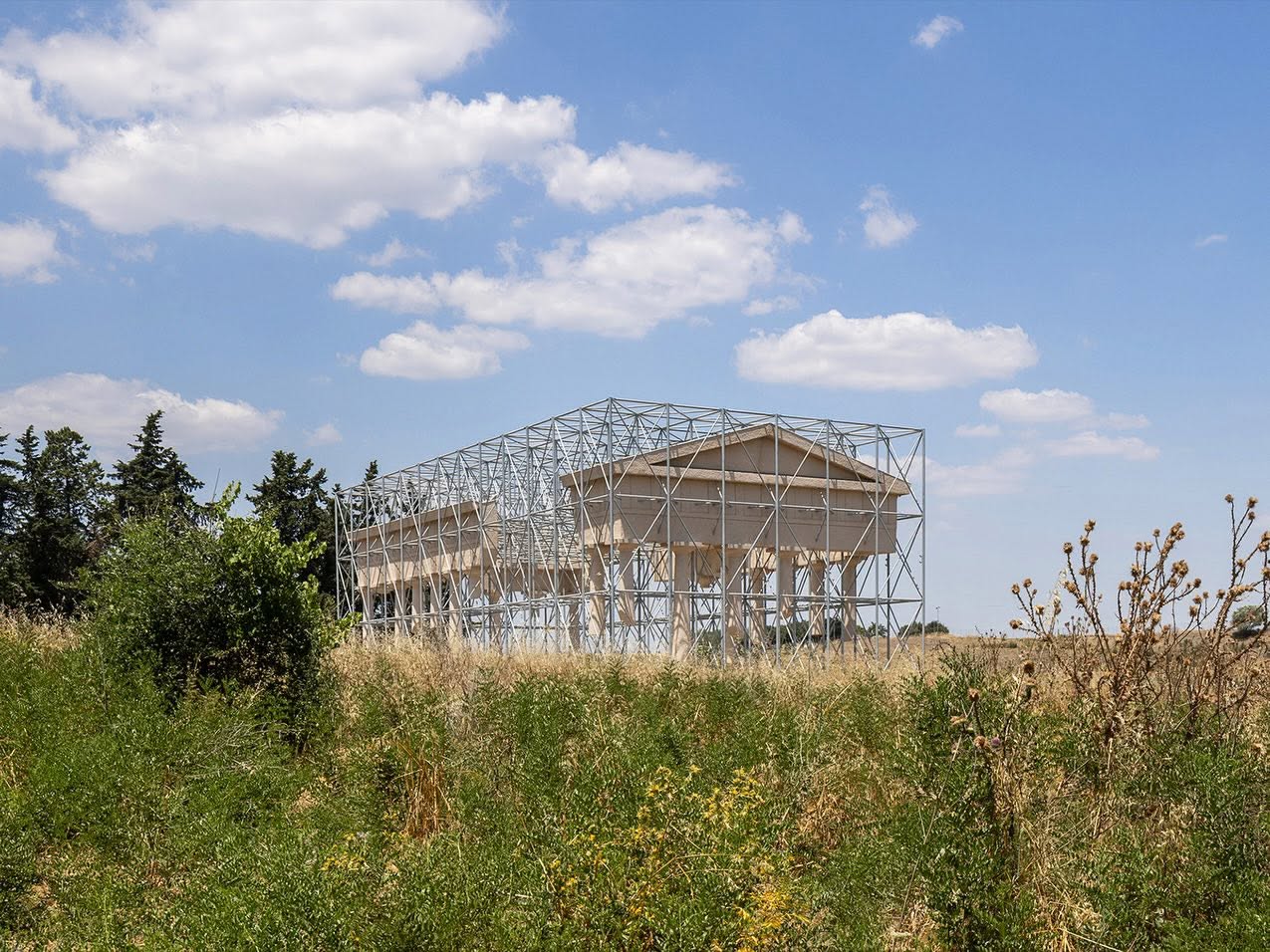
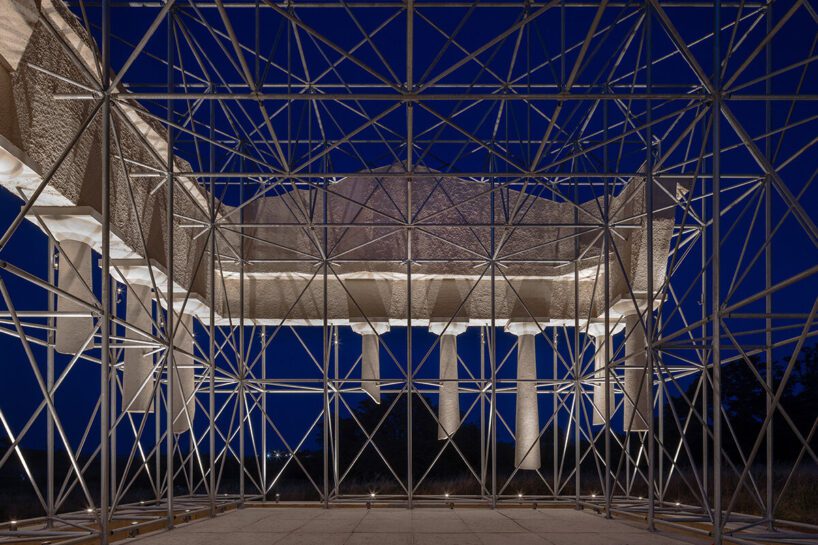
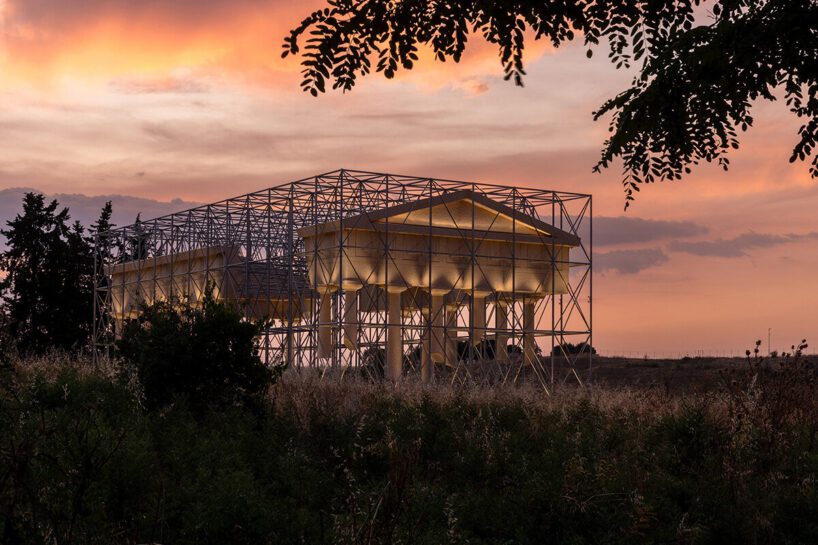
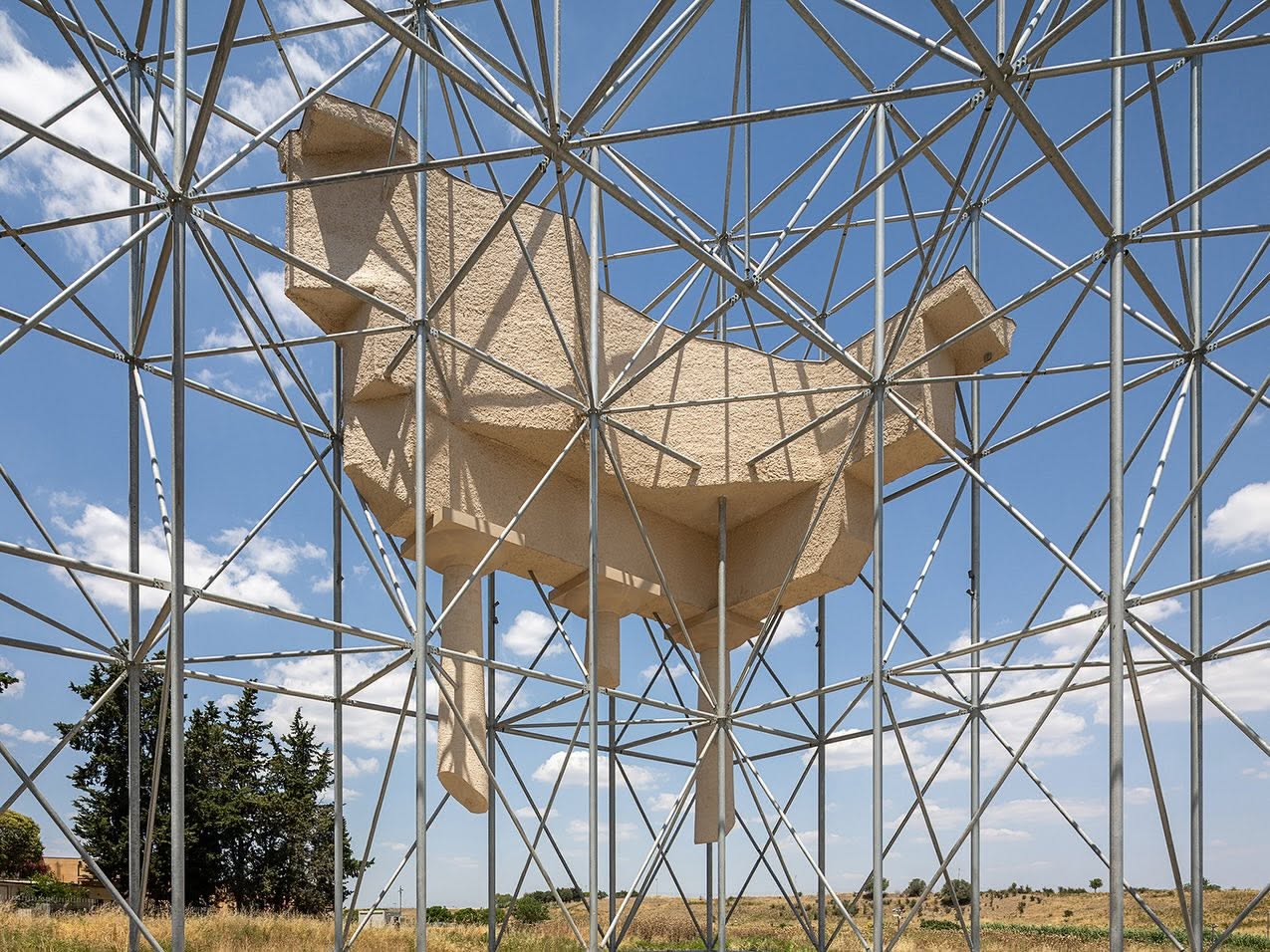
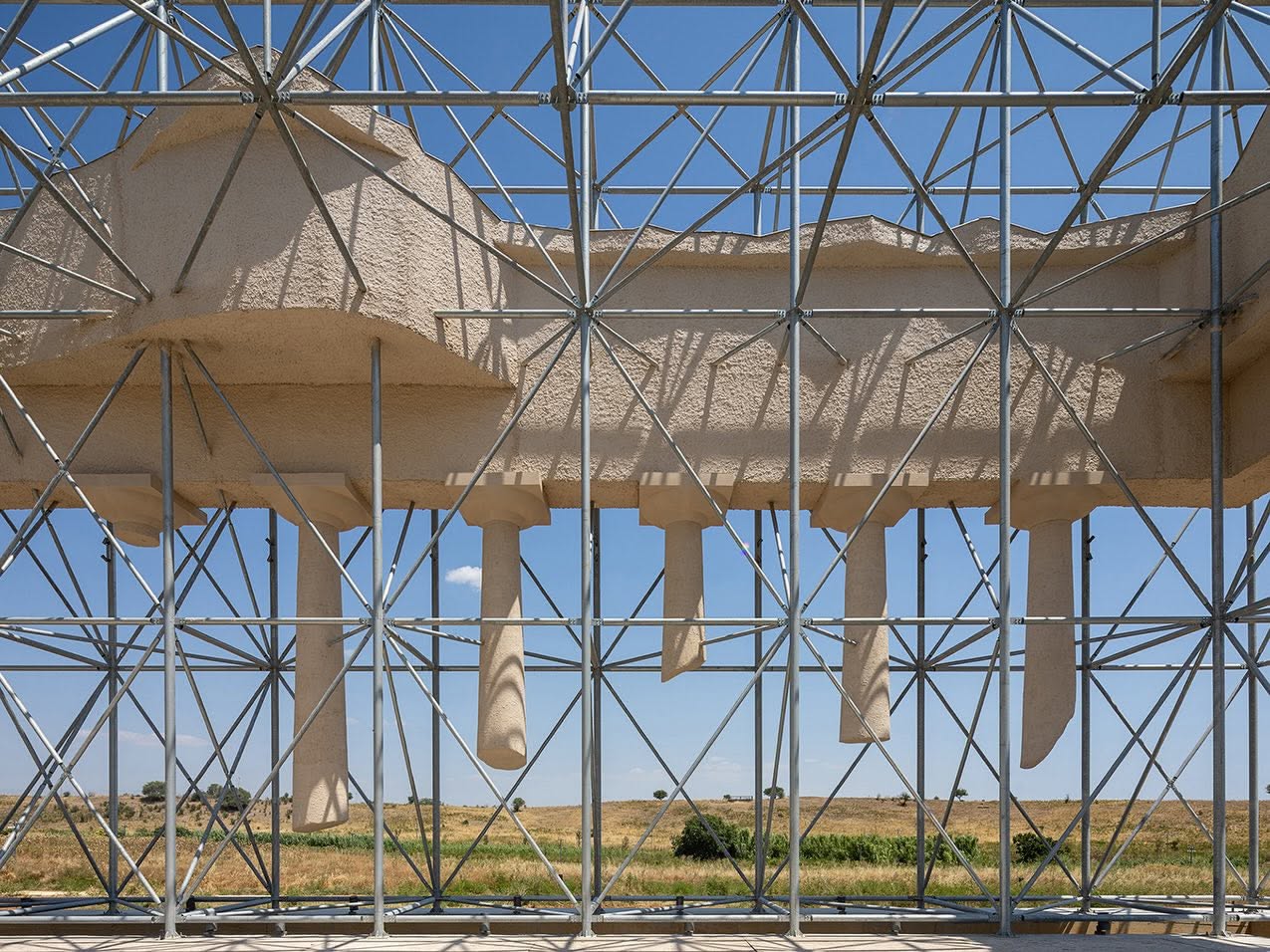
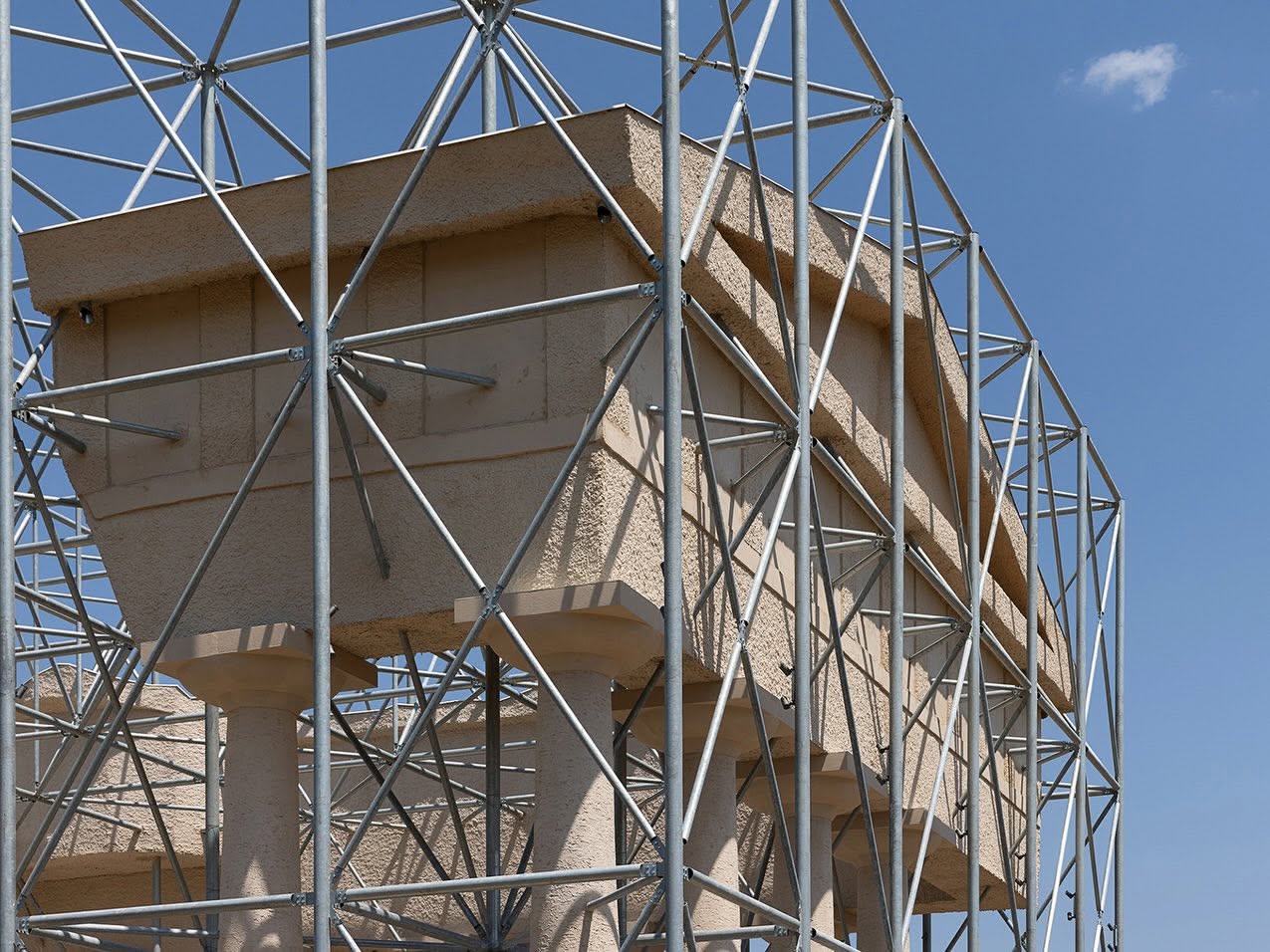
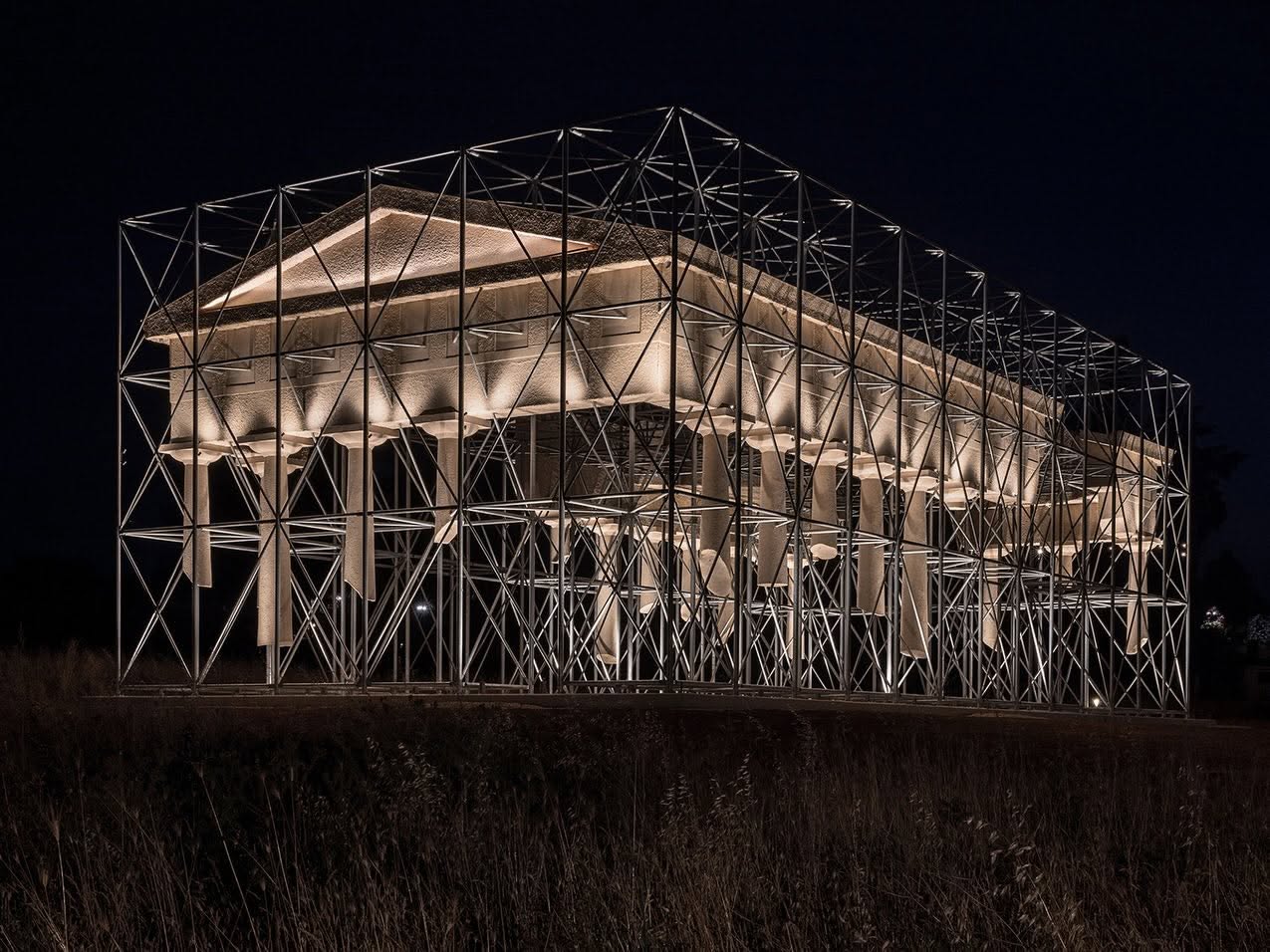
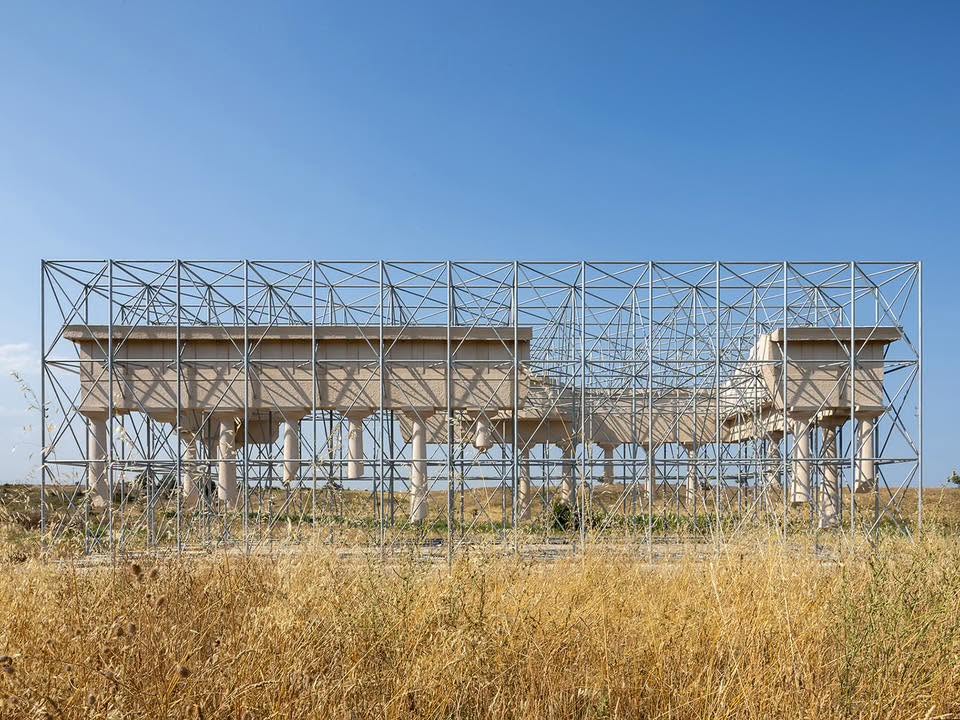
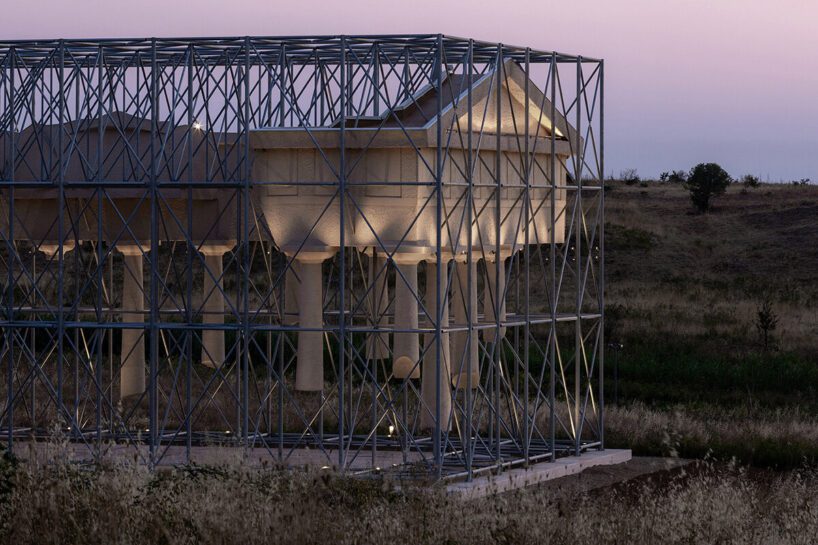
Inverse Ruin, At Heraclea Archaeological Park in southern Italy, the Belgian artist-architect duo Gijs Van Vaerenbergh challenges conventional restoration through an installation that transforms archaeological reconstruction into a powerful spatial experience. Instead of recreating the ancient Greek temple as it once stood, the project presents an unexpected inversion—suspending an interpretation of the temple’s roof, entablature, and columns upside down within a monumental steel framework.
© Roberto Conte
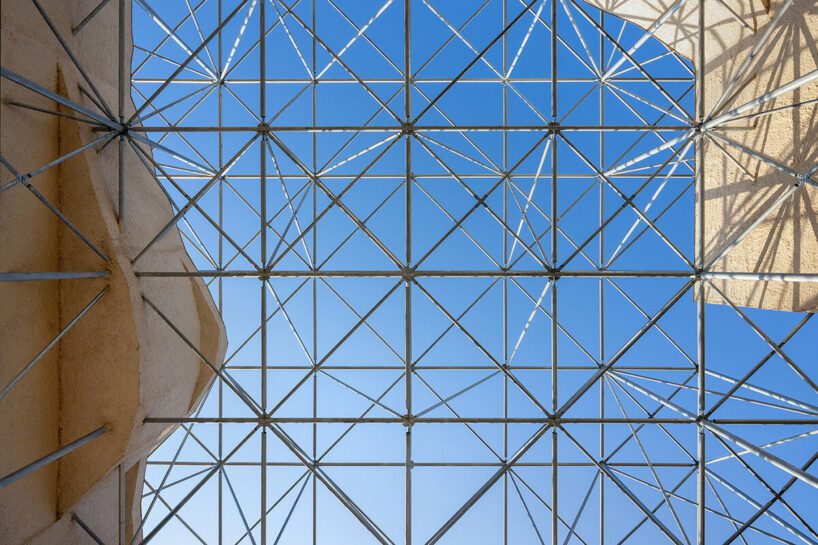
The result is both familiar and unsettling. Visitors no longer look up at a classical monument; instead, they walk beneath an inverted architectural composition that appears to float overhead. This shift in perspective redefines the relationship between people and the ruins, inviting visitors to experience history not as a static artifact but as an immersive architectural encounter.
© Roberto Conte
Rather than attempting to replace what has been lost, the installation embraces absence as part of the site’s identity. The inverted fragments acknowledge that the original temple can never truly be recovered. Instead of offering certainty, the project encourages interpretation, imagination, and reflection—turning preservation into a conversation rather than a reconstruction.
© Roberto Conte
The contrast between the delicate steel grid and the monumental classical forms reinforces this dialogue. The contemporary framework is intentionally honest about its time, avoiding historical imitation while supporting the memory of the ancient structure. Old and new coexist without competing, demonstrating that modern interventions can enhance archaeological sites without diminishing their authenticity.
© Roberto Conte
Beyond its striking visual impact, the installation raises broader questions about the future of heritage conservation. Should restoration seek to recreate monuments exactly as they once appeared, or should it reveal the passage of time while introducing new ways to engage with history? Here, architecture becomes a medium for storytelling rather than replication, allowing visitors to experience the ruins through curiosity instead of nostalgia.
© Roberto Conte
The project also challenges the traditional notion of ruins as incomplete remnants. By reversing the temple and suspending it above the visitor, the designers create an entirely new architectural sequence—one where movement, perception, gravity, and memory become integral parts of the experience. The monument is no longer simply observed; it is inhabited from an impossible perspective.
© Roberto Conte
In an era when preservation often balances authenticity with innovation, Gijs Van Vaerenbergh demonstrate that the most meaningful interventions may not reconstruct the past at all. Instead, they reinterpret it, creating architecture that bridges centuries while encouraging us to see history from an entirely new point of view.
And now the question is “Should historic monuments be faithfully reconstructed, or can contemporary architecture offer more meaningful ways to preserve and interpret the past?”
Project info:
Architects: Gijs Van Vaerenbergh
Country: Policoro, Italy
Photographs: Roberto Conte

Sophie Tremblay is a Montreal-based architectural editor and designer with a focus on sustainable urban development. A McGill University architecture graduate, she began her career in adaptive reuse, blending modern design with historical structures. As a Project Editor at Arch2O, she curates stories that connect traditional practice with forward-thinking design. Her writing highlights architecture's role in community engagement and social impact. Sophie has contributed to Canadian Architect and continues to collaborate with local studios on community-driven projects throughout Quebec, maintaining a hands-on approach that informs both her design sensibility and editorial perspective.