

The main Game of Thrones Winterfell location was Castle Ward, a National Trust estate in County Down, Northern Ireland, whose farmyard and old tower house were dressed as the Starks’ home in season one; Doune Castle in Scotland stood in for Winterfell in the pilot, and later seasons used a large purpose-built set in County Antrim. This guide, for fans and architecture lovers planning a trip, explains where Winterfell and six other places from the series were filmed, what the real buildings and landscapes are, and why they worked on screen.
Game of Thrones, based on George R. R. Martin’s novels, ran on HBO from 2011 to 2019. Its imaginary continents of Westeros and Essos were built from real castles, walled cities, palaces and landscapes across Europe and North Africa, and many of them can be visited.
See also: Game of Thrones Opening Sequence Recreated Using Paper Model Architecture by Moleskine and 3D print over Game of Thrones actress in Quaquaversal collection | Iris Van Herpen.
Game of Thrones Filming Locations:
Where Do They Film Game of Thrones?
The production was based in Northern Ireland, with studios in Belfast and many locations across the region, and travelled to Croatia, Spain, Iceland, Malta and Morocco for other parts of the story. Special effects extended many sites, but the buildings and landscapes underneath are real, and several are World Heritage Sites. The table below summarises the seven places in this guide; the sections that follow explain each one.
| In the series | Real place | Country | Season(s) | What it is |
|---|---|---|---|---|
| Winterfell | Castle Ward (farmyard, tower house); Doune Castle (pilot) | Northern Ireland; Scotland | 1 (pilot at Doune) | National Trust estate; 14th-century courtyard castle |
| Dragonstone beach | Downhill Strand, below Mussenden Temple | Northern Ireland | 2 | Protected beach; 18th-century rotunda |
| King's Landing | Dubrovnik old town; Trsteno Arboretum | Croatia | From 2 | Walled medieval city (UNESCO); Renaissance garden |
| Water Gardens of Dorne | Real Alcázar, Seville | Spain | 5-6 | Royal palace; 14th-century Mudéjar palace of Pedro I (UNESCO) |
| Beyond the Wall (cave) | Grjótagjá, Mývatn | Iceland | 3 | Lava cave with geothermal pool; no bathing |
| Meereen | Klis Fortress, near Split | Croatia | 4 | Hilltop fortress with Illyrian origins |
| Yunkai | Aït Benhaddou, near Ouarzazate | Morocco | 3 | Earthen fortified village (ksar), UNESCO |
Source: National Trust, Historic Environment Scotland and location sources linked in the article (as of 25 October 2026).
Where is Winterfell Castle Filmed? The Game of Thrones Winterfell location
If you want to visit only one Game of Thrones Winterfell location, choose Castle Ward: it is open to the public and offers dedicated tours.
1- Winterfell – Castle Ward, Northern Ireland

castle ward game of thrones winterfell 16558
The Game of Thrones Winterfell location best known to fans is Castle Ward, on the shores of Strangford Lough. The estate, about 820 acres, has been home to the Ward family since the 16th century; its main house was built in the 1760s for Bernard Ward, 1st Viscount Bangor, and is famous for having one classical and one Gothic facade. The Winterfell scenes, however, were shot in the estate’s old castle tower house and farmyard. According to the National Trust, the farmyard stood in for parts of Winterfell, including the archery range, in season one, with extensive digital work added afterwards. Visitors can tour the locations and, through the estate’s partners, try archery in costume.
The Game of Thrones Winterfell location changed over the course of the series. Doune Castle near Stirling, a 14th-century courtyard castle, was used for Winterfell in the pilot episode, as Historic Environment Scotland notes; later seasons were filmed on a large custom-built set in County Antrim. Architecturally, all three share what made Winterfell convincing: thick stone walls, a closed courtyard and simple, defensive massing suited to a northern climate.
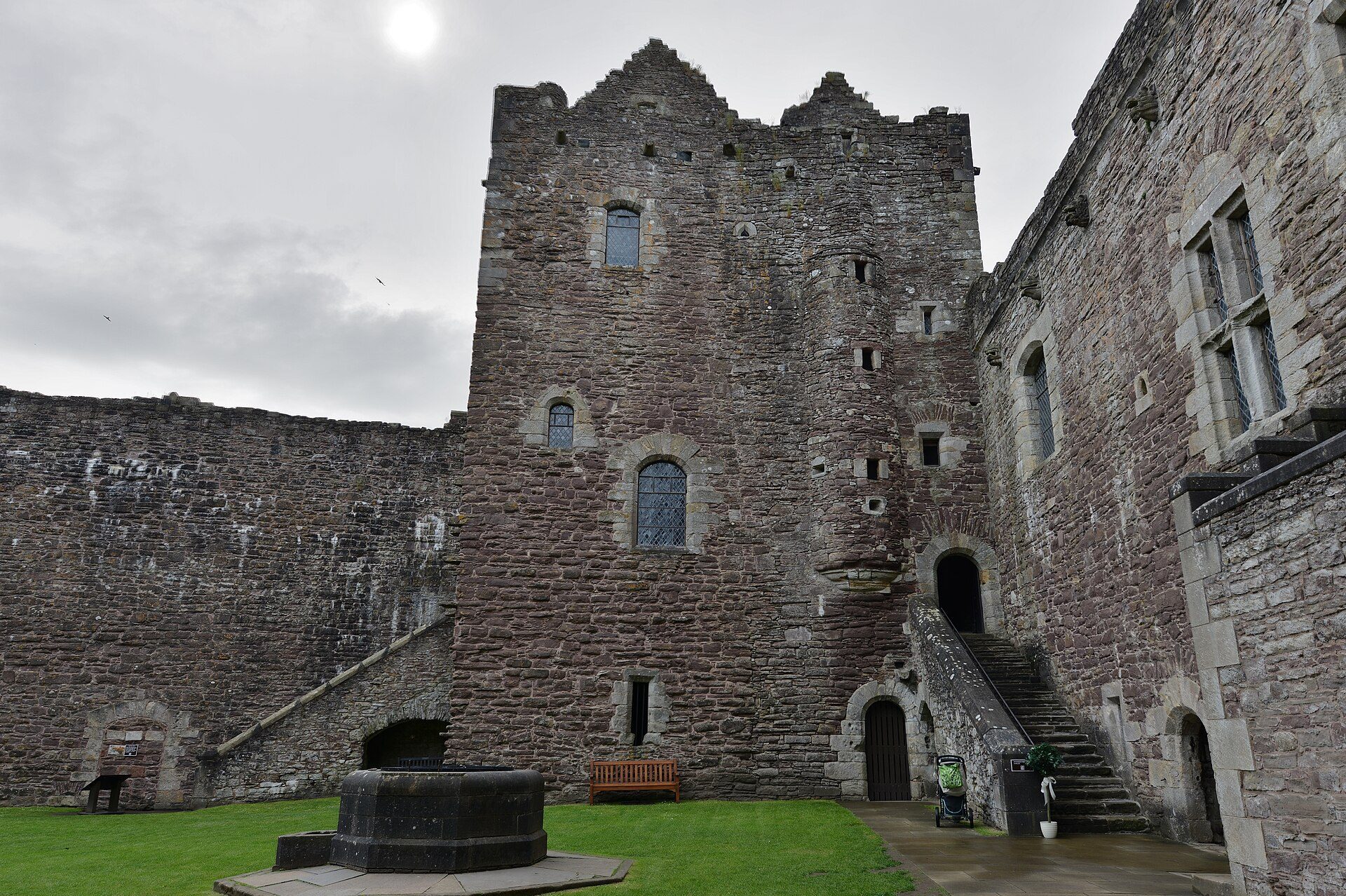
The courtyard and kitchen tower of Doune Castle near Stirling, used for Winterfell in the pilot episode. Photo: Michael Garlick, CC BY-SA 4.0, via Wikimedia Commons. HARTLEPOOLMARINA2014, source, CC BY-SA 4.0
2- Dragonstone – Downhill Strand, Northern Ireland

©NITB Photographic Library
Downhill Strand, part of a long beach on the County Londonderry coast below steep basalt cliffs, is where Melisandre burned the statues of the old gods in season two. Above it stands Mussenden Temple, a small domed rotunda built in the 1780s as a library for the Earl Bishop of Derry on his Downhill estate. The temple itself is intact; it is the nearby Downhill House that is a ruin. The beach is protected for its nature value, so visitors should keep to paths on the dunes.
3- Kings Landing – Dubrovnik, Croatia

Old Town Kings Landing Dubrovnik Hero Image
The walled old town of Dubrovnik, a UNESCO World Heritage site, became King’s Landing from season two. Its almost complete medieval walls, Minčeta tower, steep stone streets and red roofs gave the capital its sense of density and defence, and the city has become one of the best-known filming destinations in Europe. Its architecture spans Gothic, Renaissance and Baroque periods, much of the centre rebuilt after the 1667 earthquake. Fans walk the walls where Cersei looked over the city. Nearby, the Trsteno Arboretum, a Renaissance garden north of the city, provided the gardens of the Red Keep where Tyrion, Varys and Cersei plotted. Dubrovnik limits visitor numbers at busy times, so check before you go.
4- Dorne’s Royal Palace – Real Alcázar Palace, Seville, Spain

filming locations of Game of Thrones Seville
The Real Alcázar of Seville, part of a UNESCO World Heritage site since 1987, played the Water Gardens of Dorne in seasons five and six. The site began as a 10th-century Islamic governor’s palace; its most famous part, the Palace of Pedro I, was built in the 14th century in the Mudéjar style, Islamic-inspired architecture made for Christian patrons, with carved plaster, wooden ceilings and azulejo tiles around courtyards such as the Patio de las Doncellas. Its upper rooms are still used by the Spanish royal family when in Seville. The courtyards, water channels and gardens are a lesson in climate design: shade, water and planting cool the air in one of Europe’s hottest cities.
5- Beyond the Wall – Grjótagjá Cave, Iceland

Grjótagjá, a small lava cave with a geothermal pool near Lake Mývatn, is where Jon Snow and Ygritte shared their scene in season three. Iceland’s glaciers and lava fields provided most of the scenes beyond the Wall. The cave has a long history: in the 18th century the outlaw Jón Markússon is said to have lived and bathed there, and it was a popular bathing spot until volcanic activity at Krafla in 1975-84 heated the water to far above safe temperatures. Although the water has cooled since, the cave is on private land and bathing is not allowed, as the Guide to Iceland explains; visitors can look but should not enter the water.
6- Meereen – Klis Fortress, Split, Croatia

Klis Fortress, on a rocky ridge above Split, provided the setting for Meereen scenes in season four, with the city itself largely created digitally. The fortress has origins in an Illyrian stronghold and was rebuilt many times by Romans, Croatian rulers, Venetians and Ottomans; it controlled the pass between the coast and the hinterland for centuries. Its stepped walls following the rock show how fortification adapts to terrain.
7- Yunkai – Aït Benhaddou, near Ouarzazate, Morocco

The fortified village of Aït Benhaddou, near Ouarzazate, played the slave city of Yunkai in season three. (The earlier version of this page called it Pentos; Pentos scenes in season one were filmed in Malta, where Verdala Palace served as the mansion of Illyrio.) Aït Benhaddou is a ksar, a group of earthen buildings inside defensive walls on a former caravan route, and a UNESCO World Heritage site. Its rammed-earth and mud-brick architecture, which needs regular repair after rain, has appeared in many films, including Lawrence of Arabia, Gladiator and Kingdom of Heaven. Ouarzazate, known as the “door of the desert”, is the usual base for visits.
What these filming locations teach about architecture
Seen together, these places show how much the series relied on architecture that already told a story. Winterfell’s closed courtyards and thick walls suit a cold climate; Dubrovnik’s walls and dense streets express power and siege; the Alcázar’s courtyards and water express wealth and heat; Aït Benhaddou’s earthen walls express the desert. Set designers chose real buildings whose form already matched the culture they were meant to represent, then extended them digitally. For more architecture on screen, see where you can visit a genuine hobbit house; fans travelling north can also look at the Game of Thrones-themed ice rooms that Arch2O covered at the Lapland Hotels SnowVillage in Finland (check whether the theme is still running). For a fuller map of every location, see The Telegraph’s guide.

Alia El Saady is a graduate of the American University in Cairo (AUC Egypt) and currently works in Venice. She is a contributing writer for Arch2O, where she shares her insights on architecture, design, and culture. Since joining in 2018, she has authored 26 articles exploring topics such as sustainable living, architectural visualization, and the cultural significance of design. Her work reflects a passion for understanding the intersection of design and the built environment, offering readers a diverse and thoughtful perspective on contemporary architectural trends.