

The best-known female architect is Dame Zaha Hadid, the first woman to win the Pritzker Architecture Prize, in 2004. She is one of many women who have shaped modern architecture, from Lina Bo Bardi in Brazil to Kazuyo Sejima of SANAA, the second woman to win the Pritzker. This guide is for students and anyone interested in women in architecture. It profiles ten architects, corrects the dates and works given in earlier versions of this article, and ends with a dated table of key buildings, each with its architect, place, year and current use.
For a century and a half, women have proved their talent in a male-dominated profession, and some female architects’ contributions have shaped the history of architecture. Gender inequality in pay, leadership and recognition is still a concern in the profession today, which is why these careers matter as examples.
Who is the most famous female architect?

Zaha Hadid at the Serpentine Sackler Gallery (later the Serpentine North Gallery) in Kensington Gardens, London, 2013; the building was redesigned by Hadid.
Dame Zaha Hadid (born in Baghdad on 31 October 1950, died 31 March 2016) is the most widely known female architect. In 2004 she became the first woman to receive the Pritzker Prize, and in 2016 she was the first woman awarded the RIBA Royal Gold Medal in her own right. Her best-known buildings include the Riverside Museum in Glasgow (2011), the Guangzhou Opera House (2010) and the Generali Tower in Milan.

Vitra Fire Station – Germany
Her Riverside Museum in Glasgow, home of the city’s transport collection, has a zigzag roof that runs between the city and the River Clyde. For more about her life and work, read 10 Unpredictable Facts You Never Knew About Zaha Hadid.
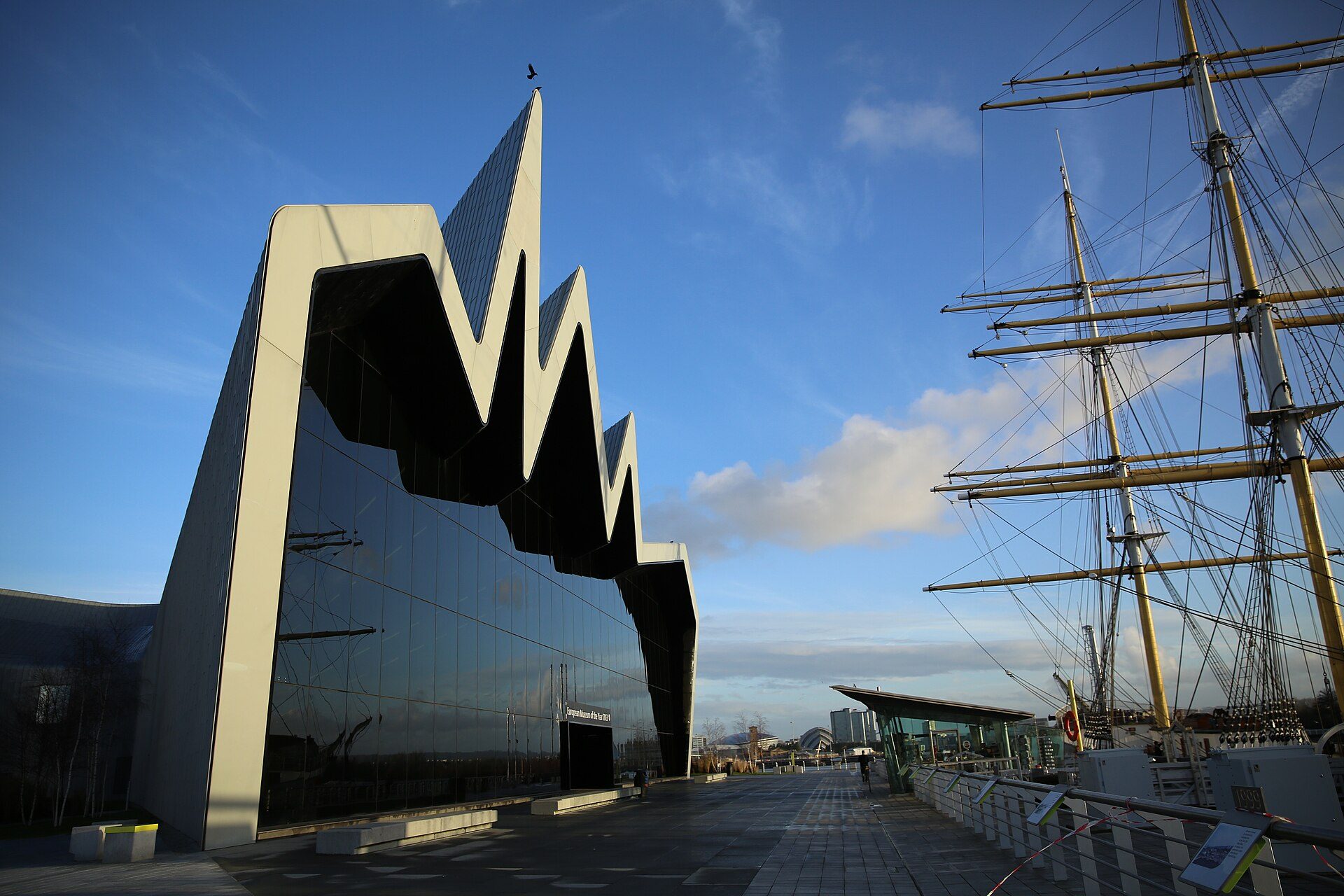
Zaha Hadid's Riverside Museum, Glasgow (2011): the zigzag roof ends in a glazed gable facing the River Clyde, where the tall ship Glenlee is moored. Photo: Ronnie Macdonald, CC BY 2.0, via Wikimedia Commons. Ronnie Macdonald from Chelmsford and Largs, United Kingdom, source, CC BY 2.0
Ten remarkable women in architecture
Any list of ten is short and leaves out many important names, but each architect below changed how buildings are designed, built or taught. Recognition through architecture awards is noted where it applies.
1) Lina Bo Bardi
Born in Rome on 5 December 1914, Lina Bo Bardi moved to Brazil in 1946 and died in São Paulo on 20 March 1992. Her Bowl Chair (1951) is a design classic, but her architecture is her lasting legacy.

Bo Bardi explored the social possibilities of design, using a simple formal vocabulary with expressive materials. Her São Paulo Museum of Art (MASP, 1968) lifts its galleries over a public belvedere on Avenida Paulista.

photography © Maria Gonzalez
Her SESC Pompéia leisure centre in São Paulo converted a former factory and added concrete towers linked by aerial walkways, with irregular “hole” windows instead of conventional ones. Built in stages from 1977 and opened in the early 1980s, it remains one of the most influential examples of adaptive reuse.
2) Maya Lin
Maya Lin, born in Athens, Ohio, on 5 October 1959, works across architecture, sculpture and land art. Her work focuses on nature and sustainability, with minimal forms that make a place for individuals in the landscape.

Maya Lin
While still an undergraduate at Yale, at 21, she won the 1981 competition for the Vietnam Veterans Memorial in Washington, DC: a polished black granite wall cut into the ground and inscribed with the names of the Americans who died or went missing in the war. The design was fiercely criticised at first, but since its dedication in 1982 it has become one of the most visited memorials in the United States. Her other works include the Women’s Table at Yale (1993), and in 2016 she received the Presidential Medal of Freedom.
3) Odile Decq
Odile Decq, born in Laval, France, on 18 July 1955, leads Studio Odile Decq in Paris, whose work ranges from museums and galleries to housing and infrastructure. She received the 2016 Jane Drew Prize and founded her own architecture school in Lyon, the Confluence Institute.

Odile Decq © Piero Martinello
Her architecture is known for a high-tech language and her signature deep red. Other projects include the Fangshan Tangshan National Geopark Museum near Nanjing and the Cargo incubator building in Paris.

Phantom Restaurant in Paris – Photo credits © Roland Halbe-Odile Decq
Her Phantom restaurant inside the Palais Garnier opera house in Paris (2011) uses red and white undulating forms as a removable insertion that respects the historic monument around it.
4) Amale Andraos
Amale Andraos, born in Beirut, co-founded the New York practice WORKac with Dan Wood and was dean of Columbia University’s Graduate School of Architecture, Planning and Preservation (GSAPP) from 2014 to 2021, as Architectural Record notes.

Amale Andraos
WORKac’s work explores the meeting of urban, rural and natural systems. Its projects include the Jan Shrem and Maria Manetti Shrem Museum of Art at UC Davis (with SO-IL) and the master plan for New Holland Island in St Petersburg. Andraos’s research has also re-examined how the “Arab city” is represented.

Smart School, Irkutsk. Courtesy of Workac
In WORKac’s Edible Schoolyard projects and its school proposals, landscape and programme are intertwined: gardens produce food, waste is recycled and children learn through the landscape around them.
5) Momoyo Kaijima
Momoyo Kaijima, born in Tokyo in 1969, co-founded Atelier Bow-Wow with Yoshiharu Tsukamoto in 1992. She curated the Japan Pavilion, “Architectural Ethnography”, at the 2018 Venice Architecture Biennale, according to the Japan Foundation, and teaches architectural behaviourology at ETH Zurich.

Momoyo Kaijima – Photo via: rice.edu
Atelier Bow-Wow is known for research into the small, ad hoc buildings of Tokyo and for concepts such as “behaviorology” and micro-public space. Their projects range from houses to public buildings and installations in Japan, Europe and the USA.
Their Split Machiya house in Tokyo is two narrow buildings separated by a small courtyard, inspired by the machiya townhouses of the Edo period and showing how a full home can fit on a very small plot.
6) Sharon Davis
Sharon Davis founded the New York practice Sharon Davis Design. Her work is driven by the idea that architecture can widen access to social justice, economic opportunity and a healthy environment.

Sharon Davis – Photo : Portrait by Elena Seiber
Her Women’s Opportunity Center in Kayonza, Rwanda, built for the charity Women for Women International, uses the pattern of a vernacular Rwandan village as its organising principle: a cluster of human-scaled pavilions for training and community, with a demonstration farm where women can learn to produce and sell goods.

Women’s Opportunity Center, Rwanda. ©Elizabeth Felicella
7) Neri Oxman
Neri Oxman, born in Haifa in 1976, founded the Mediated Matter group at the MIT Media Lab. She left MIT in 2020 and now runs her own design company, OXMAN, in New York.

Neri Oxman Photo Noah Kalina
She coined the term “material ecology” for work that combines biology, computation and digital fabrication, producing forms and materials that respond to their environment.

Silk Pavillion. Courtesy of Mediated Matter Group. Photo© Steven Keating
For the Silk Pavilion (2013), a robotic arm laid down a silk scaffold across 26 polygonal panels, after which thousands of silkworms completed the dome, a study of how biological and digital fabrication can work together at architectural scale.
8) Amanda Levete
Amanda Levete, born in Bridgend, Wales, on 17 November 1955, won the RIBA Stirling Prize in 1999 for the Lord’s Media Centre with Future Systems, the practice she led with Jan Kaplický, which also designed the Selfridges building in Birmingham (2003). She founded AL_A in 2009.

Amanda Levete. photography by © peter guenzel
AL_A’s work explores new materials and techniques, and its projects include the V&A Exhibition Road Quarter in London (2017). Earlier versions of this article listed an “Albert Museum MAAT”; these are two different projects.

EDP Cultural Centre, Lisbon. Courtesy of AL_A
AL_A’s MAAT, the EDP Foundation’s Museum of Art, Architecture and Technology in Lisbon (2016), has a walkable roof that turns the building into a landscape on the bank of the Tagus, blurring the line between public space and building.
9) Kazuyo Sejima
Kazuyo Sejima, born in Hitachi, Ibaraki, Japan, on 29 October 1956, founded SANAA with Ryue Nishizawa in 1995. In 2010 the two shared the Pritzker Prize, making Sejima the second woman to receive it, and in 2023 she received the Jane Drew Prize.

Kazuyo Sejima
Sejima’s work with SANAA is known for thin structures, glass, white surfaces and a delicate relationship between inside and outside. The 21st Century Museum of Contemporary Art in Kanazawa (2004) places separate galleries inside a single round glass building with no front or back.

In New York, SANAA’s New Museum of Contemporary Art (2007) stacks offset boxes clad in aluminium mesh, giving a small site a strong and changing silhouette that still fits the scale of the Bowery.
Key buildings by female architects: a dated table
The table lists one or two key buildings for each female architect in this guide, with the place, completion year and current use. For more on how design and technology are changing, see our guide to innovative architecture.
| Architect | Building | Place | Completed | Current use |
|---|---|---|---|---|
| Zaha Hadid | Riverside Museum | Glasgow, UK | 2011 | Transport museum |
| Zaha Hadid | Guangzhou Opera House | Guangzhou, China | 2010 | Opera house |
| Lina Bo Bardi | São Paulo Museum of Art (MASP) | São Paulo, Brazil | 1968 | Art museum |
| Lina Bo Bardi | SESC Pompéia | São Paulo, Brazil | Early 1980s (built from 1977) | Leisure and cultural centre |
| Maya Lin | Vietnam Veterans Memorial | Washington, DC, USA | 1982 | Memorial |
| Odile Decq | Phantom restaurant, Palais Garnier | Paris, France | 2011 | Restaurant |
| Amale Andraos (WORKac, with SO-IL) | Manetti Shrem Museum of Art, UC Davis | Davis, California, USA | 2016 | University art museum |
| Momoyo Kaijima (Atelier Bow-Wow) | Split Machiya | Tokyo, Japan | c. 2010 | Private house |
| Sharon Davis | Women's Opportunity Center | Kayonza, Rwanda | 2013 | Training and community centre |
| Neri Oxman (MIT Mediated Matter) | Silk Pavilion | MIT Media Lab, Cambridge, MA, USA | 2013 | Research installation |
| Amanda Levete (Future Systems) | Lord's Media Centre | London, UK | 1999 | Cricket media centre |
| Amanda Levete (AL_A) | MAAT | Lisbon, Portugal | 2016 | Museum |
| Kazuyo Sejima (SANAA) | 21st Century Museum of Contemporary Art | Kanazawa, Japan | 2004 | Art museum |
| Kazuyo Sejima (SANAA) | New Museum | New York, USA | 2007 | Art museum |
Source: Architects' and institutions' records; Pritzker Prize; Japan Foundation; Architectural Record (see review_flags for items to spot-check) (as of 24 October 2026).
Recognising the work of women in architecture today
There is no single “female architect” style; the ten careers above range from Hadid’s fluid forms to Sejima’s light pavilions and Davis’s social architecture. What they share is persistence in a profession that still under-recognises women. Prizes such as the Jane Drew Prize, launched in 1998 to honour contributions to the status of women in architecture, help make that work visible.
Sources and further reading
- Architectural Record: Columbia appoints Andrés Jaque as dean of GSAPP
- Japan Foundation: Japan Pavilion, Venice Architecture Biennale 2018
- The Pritzker Architecture Prize: laureates

Pany Kalk is a seasoned editor and writer at Arch2O, with a passion for architecture and design. With extensive experience in curating content that explores innovative architectural solutions, Pany highlights the intersection of creativity and functionality. Their editorial work emphasizes groundbreaking designs, sustainable practices, and the evolving role of women in architecture, contributing to Arch2O’s mission of fostering professional collaboration and inspiring better buildings for a sustainable future.