


Famous women architects in history include Lina Bo Bardi, Sophia Hayden Bennett, Marion Mahony Griffin, Eileen Gray and Norma Merrick Sklarek. Between them they designed the São Paulo Museum of Art, the Woman’s Building at the 1893 Chicago fair, Prairie School houses and the drawings that won the Canberra plan, the villa E-1027 in France and the US Embassy in Tokyo. This guide is for students and readers of architectural history. It gives each architect’s verified dates and key buildings, a dated table of those buildings with their present status, and pointers for recognising each architect’s work.
The five were chosen by the original author to show different routes into the profession across a century, from a 21-year-old competition winner in 1891 to a project director of major airport and embassy buildings in the 1970s and 1980s. For a wider survey, see our guide to the most influential architects in history.
Are there any female architects?
Yes. Women have practised architecture since at least the late nineteenth century, although for decades they were excluded from many schools, licences and offices. Sophia Hayden Bennett completed MIT’s four-year architecture programme in 1890; Marion Mahony Griffin became the first woman licensed as an architect in Illinois in 1898; and Norma Merrick Sklarek was the first Black woman licensed as an architect in New York (1954) and California (1962). Today women lead practices of every size, and the profession’s highest prizes have been awarded to women architects.

Photo via Gruen Associates
List of 5 female architects
1. Lina Bo Bardi (1914–1992)
Achillina Bo was born in Rome in 1914 and graduated from the Rome school of architecture in 1939. She moved to Brazil in 1946 with her husband, the critic Pietro Maria Bardi, and spent the rest of her working life there; she died at her own house, the Casa de Vidro in São Paulo, in 1992. Her work combines modern structure with Brazilian popular culture and an unusual readiness to keep what people were already doing in a place.
“Linear time is a Western invention; time is not linear, it is a marvellous entanglement where, at any moment, points can be chosen and solutions invented, without beginning or end.” Lina Bo Bardi, as translated in exhibition texts citing Marcelo Ferraz (ed.), Lina Bo Bardi (1993).

Lina Bo Bardi. Image © The Venice Biennale
Her best-known conversion is SESC Pompéia in São Paulo (1977–1986), a former steel-drum and refrigerator factory. Rather than clearing the site, she kept the brick sheds, where local people were already gathering, and added three concrete towers joined by bridges for sports halls, changing rooms and a water tank.

Sesc Pompéia, Lina Bo Bardi. Image © Pedro Kok
The São Paulo Museum of Art (MASP, 1957–1968) is her most famous new building: a glass gallery box lifted on two pairs of red concrete frames so that the space beneath stays an open public square on Avenida Paulista.
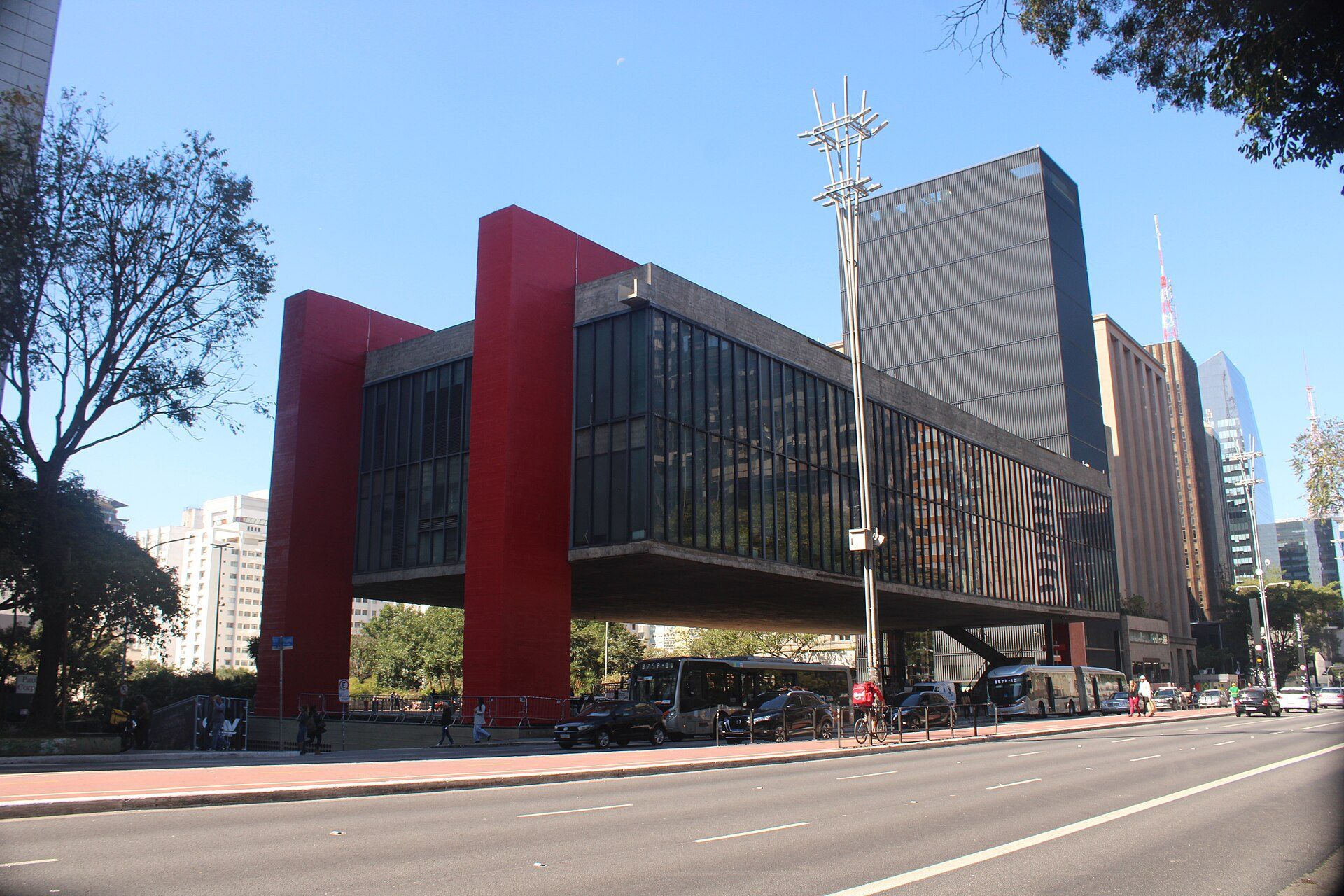
São Paulo Museum of Art (MASP) by Lina Bo Bardi (1957–1968) on Avenida Paulista; the open square runs beneath the raised gallery. Photo: Boaventuravinicius, CC BY-SA 4.0, via Wikimedia Commons. Boaventuravinicius, source, CC BY-SA 4.0
Earlier, the Casa de Vidro (Glass House, 1951) in Morumbi set a glazed living floor on slender columns above a sloping, wooded site. She also converted the Solar do Unhão sugar mill in Salvador into a museum (1959–1963) and designed the Teatro Oficina in São Paulo for the director José Celso Martinez Corrêa; dates for all of these are in the table below.
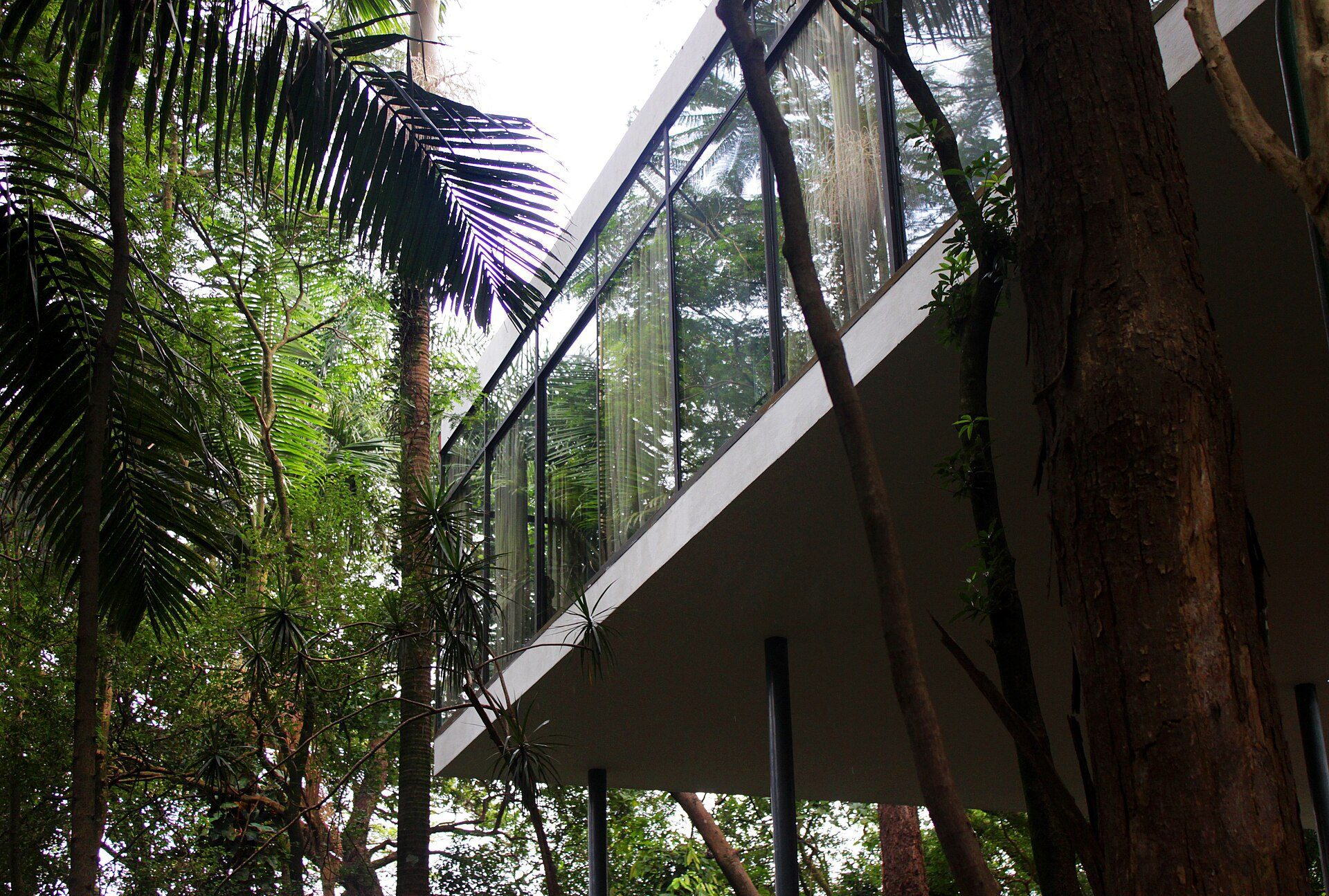
Casa de Vidro (Glass House), Morumbi, São Paulo (1951), now home of the Instituto Bardi. Photo: JessNantes, CC BY-SA 4.0, via Wikimedia Commons. JessNantes, source, CC BY-SA 4.0
2. Sophia Hayden Bennett (1868–1953)
Sophia Hayden was born in Santiago, Chile, in 1868 and grew up in the United States. In 1890 she became the first woman to complete the four-year architecture programme at the Massachusetts Institute of Technology (MIT), graduating with honours. Her designs used Italian Renaissance detailing, clear massing, projecting pavilions and skylights. At 21 she won the competition for the Woman’s Building at Daniel Burnham’s World’s Columbian Exposition in Chicago, ahead of thirteen other entries by women.

Sophia Hayden Bennett, 1868-1953
The prize was $1,000, while male architects of comparable fair buildings received up to $10,000. During construction the Board of Lady Managers, led by Bertha Palmer, made repeated changes to the design and Hayden was removed from the project; her distress was later used by critics as supposed evidence that women were unfit to supervise building work. The completed building nevertheless won an award for “delicacy of style, artistic taste, and geniality and elegance of the interior”. Like almost all of the fair’s buildings it was demolished soon after 1893, and Hayden never practised architecture again.

Woman’s Building at the World’s Columbian Exposition Chicago 1893
3. Marion Mahony Griffin (1871–1961)
Marion Mahony graduated in architecture from MIT in 1894, the second woman to do so after Sophia Hayden, and in 1898 became the first woman licensed as an architect in Illinois, in the USA. She is counted among the original members of the Prairie School.

Walter Burleigh Griffin and Marion Mahony Griffith, Castlecrag. Photographer Jorma Pohjanpalo, 1930
The critic Reyner Banham later called her the “greatest architectural delineator of her generation”. In 1895 she became the first employee of Frank Lloyd Wright‘s Oak Park studio and worked for him until 1909, when Wright left for Europe. She declined his offer to take over the studio’s work, but agreed to work for Hermann von Holst, who took over Wright’s commissions, on condition that she controlled the design. With von Holst she completed the David M. Amberg House in Grand Rapids, Michigan (1909–1910), a house that Wright had begun; historians still debate how much of its final design is hers.
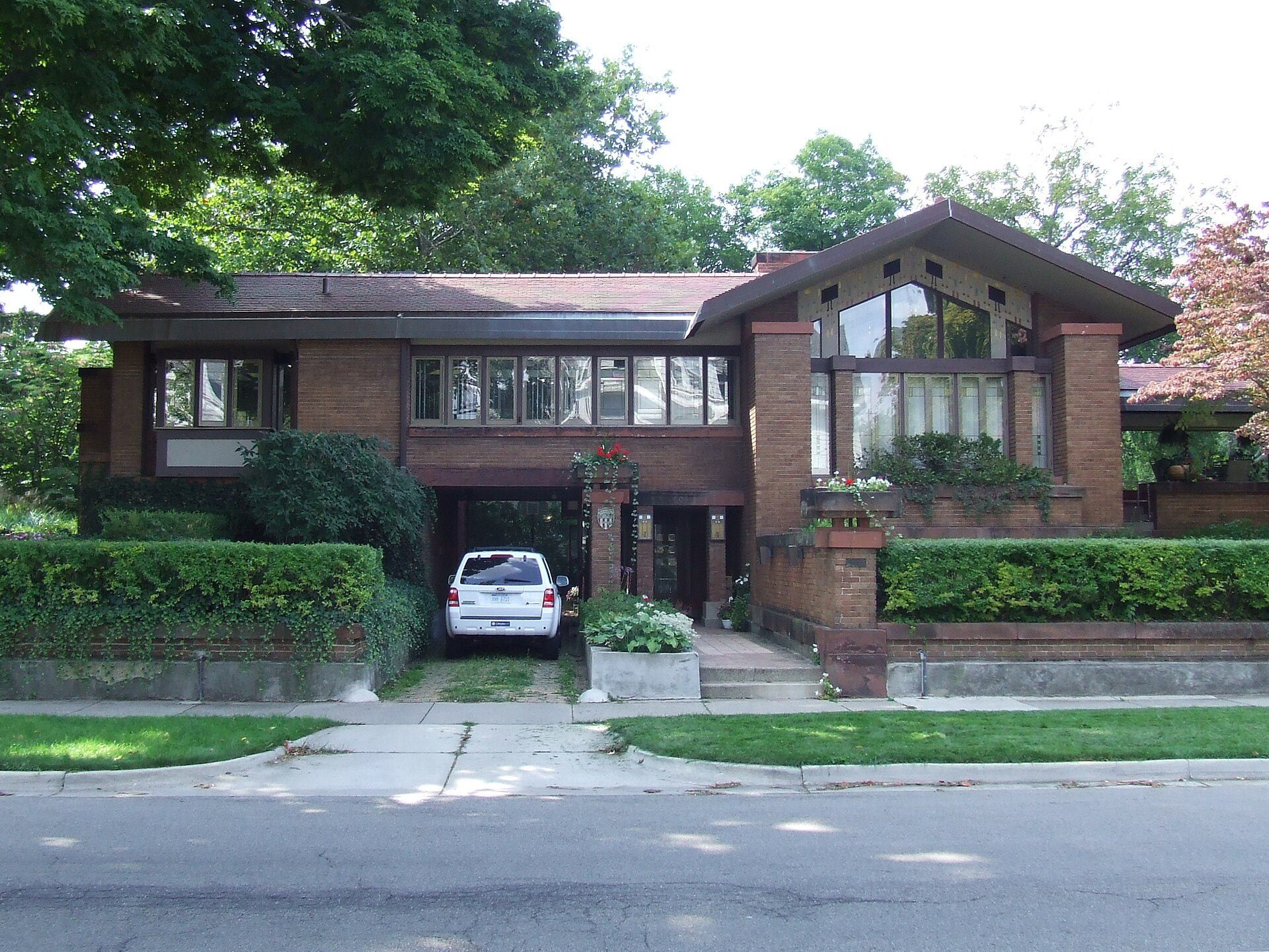
David M. Amberg House, Grand Rapids, Michigan (1909–1910), begun by Frank Lloyd Wright and completed by Marion Mahony with Hermann von Holst. Photo: Jaydec, CC BY-SA 3.0, via Wikimedia Commons. User:Jaydec, source, CC BY-SA 3.0
In 1911 she married Walter Burley Griffin. Her watercolour renderings illustrated his entry for the Australian federal capital competition, which was declared the winner on 23 May 1912; the drawings, now held by the National Archives of Australia, are on UNESCO’s Australian Memory of the World Register. In 1913 she prepared a design for Henry Ford’s Dearborn mansion, Fair Lane, but it was not built; the house that stands today was completed to other architects’ designs. In her memoir she wrote that the Chicago school “died not only because of the cancer sore in it”, a line often read as a criticism of Wright.

Fair Lane, Henry Ford’s Dearborn mansion, 1913-1915
4. Eileen Gray (1878–1976)
Eileen Gray was born near Enniscorthy, County Wexford, Ireland, in 1878. She studied fine art at the Slade School in London (1900–1902), learned lacquer work from the furniture restorer Dean Charles in Soho and later worked in Paris with the Japanese lacquer artist Seizo Sugawara. Her lacquer screens and furniture made her name, and in 1922 she opened her own shop, Jean Désert, in Paris.

Eileen Gray, 1878-1976
Gray never trained formally as an architect; she taught herself in the early 1920s. Her best-known building is E-1027 at Roquebrune-Cap-Martin in the south of France (1926–1929), designed and built with her partner Jean Badovici, a friend of the Swiss-born French modernist Le Corbusier. The house joins architecture and built-in furniture: storage, tables and screens are part of the plan rather than objects placed in it.

Villa E-1027 / Eileen Gray and Jean Badovici. Image © Manuel Bougot
While staying with Badovici in 1938 and 1939, Le Corbusier painted murals on the house’s white walls. Gray, who had left the house by then, regarded them as vandalism. The house was bought by the French state and the commune in 1999 and, after a long restoration, opened for small guided visits in July 2021 (see the E-1027 history).
5. Norma Merrick Sklarek (1926–2012)
Norma Merrick was born in Harlem, New York, in 1926 and earned a Bachelor of Architecture from Columbia University in 1950. She was the first Black woman licensed as an architect in New York (1954) and in California (1962), became the first African American woman member of the American Institute of Architects (AIA) in 1959, and in 1980 the first African American woman elevated to the AIA College of Fellows.

© Gruen Associates
After graduating she was turned down by nineteen firms. “They weren’t hiring women or African Americans, and I didn’t know which it was,” she recalled in a 2004 interview. At Gruen Associates in Los Angeles, which hired her in 1960, she became a director in 1966 and led the production of large projects, among them the US Embassy in Tokyo (1976), designed with César Pelli, and Fox Plaza in San Francisco.
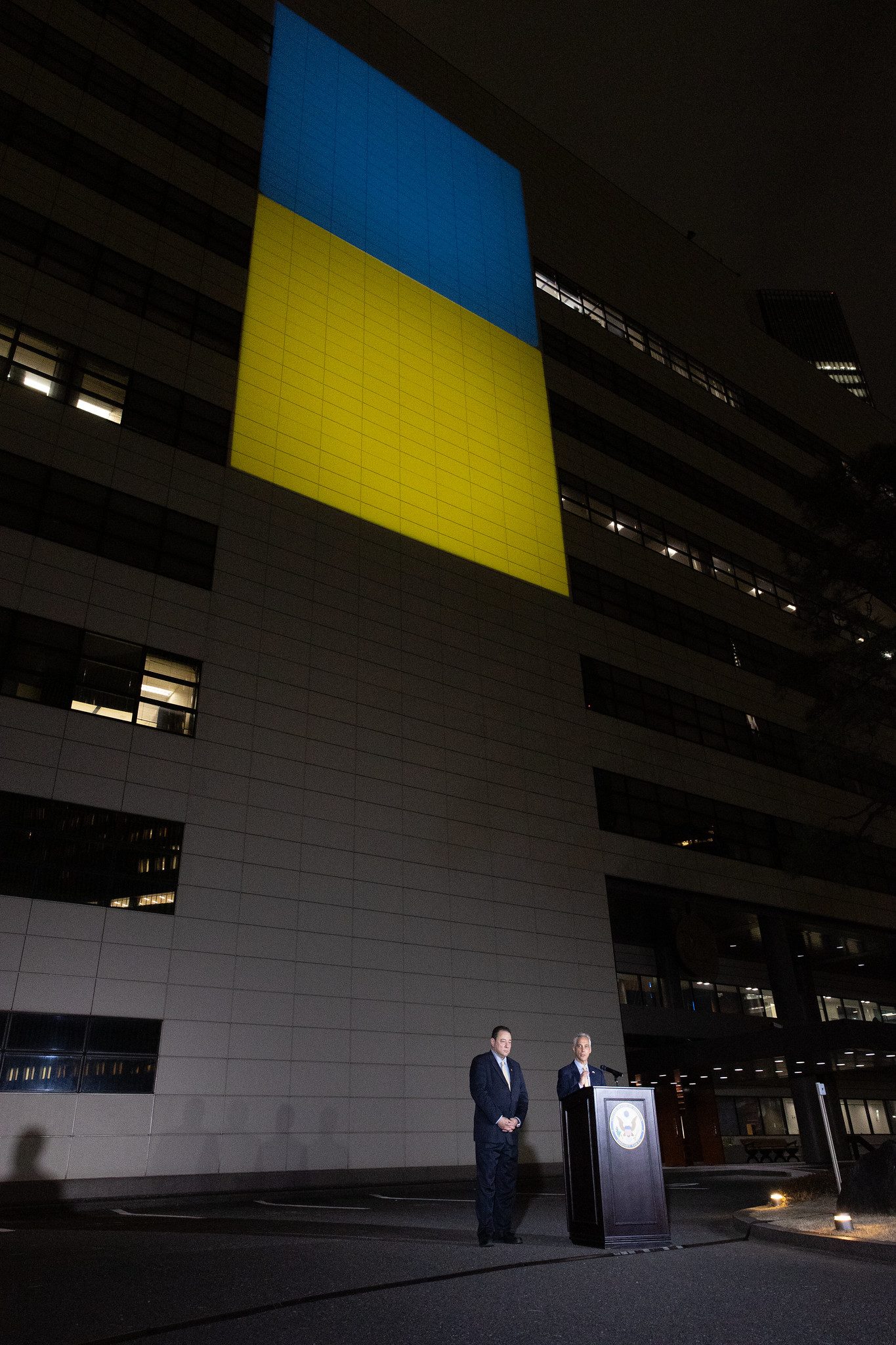
The US Embassy chancery in Tokyo (1976, Gruen Associates with César Pelli), lit in Ukraine's colours in 2022. Photo: Office of the US Ambassador to Japan, public domain (US government work), via Wikimedia Commons. Image: Office of U.S. Ambassador to Japan (Public domain (verified))
Her Gruen projects also included the Pacific Design Center in Los Angeles (1975), the blue-glass building shown below. Later, as project director at Welton Becket Associates, she oversaw Terminal One at Los Angeles International Airport (1984). In 1985 she co-founded Siegel Sklarek Diamond with Margot Siegel and Katherine Diamond, at the time the largest woman-owned architecture firm in the United States (Beverly Willis Architecture Foundation profile).

photography by via Gruen Associates
Key buildings at a glance
The table lists the main buildings by these famous women architects in history, with the dates and present status checked against the sources listed at the end. Where a building was a collaboration, the role of the architect named is given.
| Architect | Building | Place | Years | Role | Status |
|---|---|---|---|---|---|
| Lina Bo Bardi | Casa de Vidro (Glass House) | São Paulo, Brazil | 1951 | Architect (her own house) | Standing |
| Lina Bo Bardi | São Paulo Museum of Art (MASP) | São Paulo, Brazil | 1957–1968 | Architect | In use as a museum |
| Lina Bo Bardi | Solar do Unhão (sugar mill converted to a museum) | Salvador, Brazil | 1959–1963 | Architect of the conversion | In use as a museum |
| Lina Bo Bardi | SESC Pompéia (factory conversion) | São Paulo, Brazil | 1977–1986 | Architect | In use as a leisure centre |
| Lina Bo Bardi | Teatro Oficina | São Paulo, Brazil | 1984–1991 (sources differ) | Architect | In use as a theatre |
| Sophia Hayden Bennett | Woman's Building, World's Columbian Exposition | Chicago, USA | 1891–1893 | Architect (competition winner); removed during construction | Demolished after the 1893 fair |
| Marion Mahony Griffin | David M. Amberg House | Grand Rapids, Michigan, USA | 1909–1910 | Completed with Hermann von Holst after Wright left | Standing |
| Marion Mahony Griffin | Federal capital competition entry (renderings) | Canberra, Australia | 1911–1912 | Renderer of Walter Burley Griffin's winning entry | City built; plan later modified |
| Marion Mahony Griffin | Fair Lane design for Henry Ford | Dearborn, Michigan, USA | 1913 | Architect of an early design | Not built to her design |
| Eileen Gray | E-1027 | Roquebrune-Cap-Martin, France | 1926–1929 | Co-designer with Jean Badovici | Restored; guided visits since 2021 |
| Norma Merrick Sklarek | Fox Plaza | San Francisco, USA | 1961–1966 | Gruen Associates project team | Standing |
| Norma Merrick Sklarek | Pacific Design Center | Los Angeles, USA | 1972–1975 | Gruen Associates project team | In use |
| Norma Merrick Sklarek | US Embassy | Tokyo, Japan | 1976 | Gruen Associates; co-credited with César Pelli | In use |
| Norma Merrick Sklarek | Terminal One, Los Angeles International Airport | Los Angeles, USA | 1984 | Project director, Welton Becket Associates | In use |
Source: Wikipedia biographies of each architect and the E-1027 article; Library of Congress HABS (Amberg House); National Archives of Australia (Canberra); accessed 30 October 2026 (as of 30 October 2026).
Origins and context
The five careers span the period in which architecture became a licensed, school-trained profession. Hayden and Mahony studied at MIT in the 1880s and 1890s, when a handful of American schools first admitted women; Mahony’s 1898 Illinois licence came only one year after the state introduced licensing for architects. Gray, by contrast, entered architecture from the decorative arts in Paris without any formal training, while Bo Bardi trained in Fascist-era Rome and built her career in post-war Brazil. Sklarek’s firsts in the 1950s and 1960s show how slowly licensing and professional bodies opened to Black women: her FAIA came almost ninety years after Hayden’s degree.
How to recognise their work
There is no single “women’s style”: each architect belongs to a different movement. These cues help identify the work of each of these famous women architects in history:
- Lina Bo Bardi: raw concrete and reused industrial buildings, bold primary colours (MASP’s red frames, SESC Pompéia’s red window frames), and open public ground floors that keep everyday uses.
- Sophia Hayden Bennett: Beaux-Arts and Italian Renaissance composition: a symmetrical façade, central and end pavilions, arcades and a top-lit central hall.
- Marion Mahony Griffin: Prairie School horizontals, broad eaves and banded windows, and in her drawings a distinctive Japanese-influenced rendering style with tall, layered vegetation.
- Eileen Gray: white modernist volumes with strip windows, decks and canvas awnings, and interiors where furniture, storage and partitions are built into the plan.
- Norma Merrick Sklarek: large late-modern commercial and civic buildings in glass and metal cladding, delivered by big offices in which she ran the production and construction phases.
Conclusion
These five architects show how women entered the profession by competition, by licence, through the decorative arts and through large corporate practice, often against open discrimination. To continue, read Santiago Calatrava’s remarks on supporting female architects, then visit the buildings in the table that are open to the public, such as MASP, SESC Pompéia and E-1027.
Sources and further reading
- Sophia Hayden Bennett: biography and Woman’s Building history.
- Marion Mahony Griffin: Australian Dictionary of Biography; David M. Amberg House: Historic American Buildings Survey record, Library of Congress.
- Norma Merrick Sklarek: Docomomo US designer profile.
By Yosra Abdel-Rahman


This article is part of our guide to architectural styles.

Junior architect from Sudan, Africa. I love Sketching, Music, Dancing, Writing and most importantly Food the greatest pleasure in life. An easily bored human being, thus my passion is finding new challenges, and trying out new things! Graduated in 2012, to find my self occupying five jobs at the same time, one full time plus four part time jobs. Note: I am just getting started here!