

The best-known architecture awards are the Pritzker Architecture Prize, the Aga Khan Award for Architecture, the AIA Gold Medal, the RIBA International Prize and the UIA Gold Medal. None of these can be entered by students: they honour established architects or completed buildings, usually through nomination. Students can instead enter school-nominated prizes such as the RIBA President’s Medals and Archiprix International, plus open design competitions. This guide is for students and early-career architects. It sets out who each award is for, how candidates are chosen and what it brings, with a comparison table and a checklist, all checked against the organisers’ own pages in October 2026.
Friendly competition pushes designers to sharpen their ideas and share their best work with a wider audience. Every year, firms and individuals pursue the prestige of an award, knowing that a win can carry a project or a career much further, and even taking part has real benefits. If you plan to enter a competition, our guide on how to win architecture competitions covers choosing one and answering the brief.
Five major architecture awards you should know
The five awards below differ in what they reward, from a lifetime’s body of work to a single building, and in how candidates reach the jury.
1. Pritzker Architecture Prize

Established in 1979 by Jay and Cindy Pritzker through the Hyatt Foundation, the Pritzker Architecture Prize honours a living architect or architects whose built work has made a consistent and significant contribution to humanity and the built environment. The laureate receives US$100,000 and a bronze medallion. The 2026 prize went to the Chilean architect Smiljan Radić, as the UIA reported in March 2026; among his best-known works is the Regional Theatre of Biobío in Concepción, Chile, wrapped in a translucent skin that glows at night.
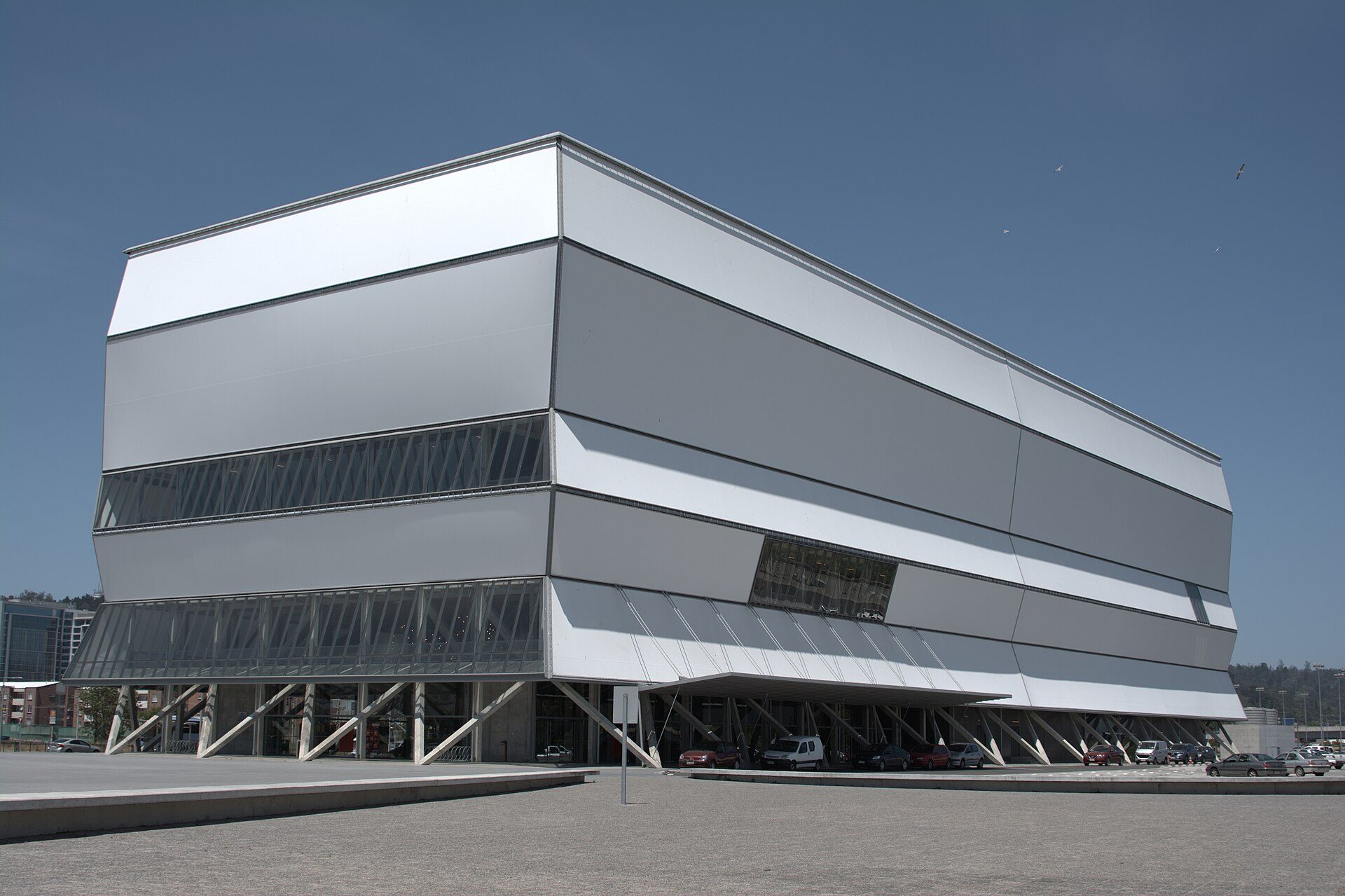
The Regional Theatre of Biobío, Concepción, Chile, by Smiljan Radić, laureate of the 2026 Pritzker Architecture Prize. Photo: LuisCG11, CC BY-SA 4.0, via Wikimedia Commons. LuisCG11, source, CC BY-SA 4.0
Earlier laureates include Yvonne Farrell and Shelley McNamara of Grafton Architects (2020), who also won the first RIBA International Prize in 2016, and Alejandro Aravena (2016). Herzog & de Meuron, laureates in 2001, have since added further honours, such as the Louis I. Kahn Award.
Candidates cannot apply for themselves. According to the prize’s nomination page, any licensed architect may nominate someone to the Executive Director, who also invites nominations from past laureates, academics, critics and others; an independent jury of about eight members chooses the laureate.
2. Aga Khan Award for Architecture

Established in 1977, the Aga Khan Award for Architecture is given every three years to projects that meet the needs and aspirations of societies in which Muslims have a significant presence. Beyond showcasing architecture from these regions, it has long highlighted issues such as sustainability, climate adaptation, social housing and quality of life. Winners share a prize fund of up to US$1 million. The 16th cycle (2023–2025) produced seven winners, two in Iran and one each in Bangladesh, China, Egypt, Pakistan and Palestine, as Dezeen reported. Examples from the 2019 cycle show its range: the Palestinian Museum in Birzeit, a teaching and research unit at Alioune Diop University in Bambey, Senegal, and the Wasit Wetland Centre in Sharjah.
3. AIA Gold Medal

The American Institute of Architects runs a range of award programmes; its highest individual honour is the Gold Medal, given to an architect or partnership whose work has had a lasting influence on the theory and practice of architecture. Past recipients include Frank Lloyd Wright, Le Corbusier, Norman Foster and Frank Gehry. Recent medallists are Carol Ross Barney (2023), Lake|Flato (2024), Deborah Berke (2025) and Shigeru Ban (2026), whose award Architectural Record reported in December 2025.
4. RIBA International Prize and RIBA awards

Like the AIA, the Royal Institute of British Architects runs several award programmes, including the RIBA International Awards for Excellence, the RIBA International Prize for the world’s most transformative building, and the RIBA International Emerging Architect prize. Earlier winners of the International Prize include Children Village by Aleph Zero and Rosenbaum in Brazil (2018). The 2024 prize went to Modulus Matrix, 85 social housing units in Cornellà de Llobregat by Peris + Toral Arquitectes, chosen from 22 award-winning projects, according to e-architect’s report of the 2024 results.
What these awards share is a commitment to showing the public why architecture matters. Whether they celebrate a single building or a whole career, they put work in front of people who would otherwise never see it.
5. UIA Gold Medal

The International Union of Architects (UIA) established its Gold Medal in 1984. Awarded every three years at the UIA World Congress, it recognises an architect or group of architects for the full scope of their work over an extended period, and the UIA describes it as the highest honour given to an architect by fellow architects. The 2026 medal went to the Portuguese architect Eduardo Souto de Moura, announced in April 2026 and presented at the World Congress of Architects in Barcelona, according to the UIA’s announcement.
Architecture awards compared
The table below compares the five major architecture awards by who they honour, how candidates are chosen and whether students can take part.
| Award | Organiser | Since | Frequency | Honours | How candidates are chosen | Prize | Open to students? |
|---|---|---|---|---|---|---|---|
| Pritzker Architecture Prize | Hyatt Foundation / Pritzker family | 1979 | Annual | Living architect(s), body of built work | Nomination (any licensed architect, plus invited nominators); jury of about eight | US$100,000 + bronze medallion | No |
| Aga Khan Award for Architecture | Aga Khan Development Network | 1977 | Every 3 years | Built projects serving Muslim communities | Nominated projects reviewed by a Master Jury, with on-site reviews | Up to US$1 million shared | No |
| AIA Gold Medal | American Institute of Architects | 1907 | Annual (usually) | Architect or partnership, lasting influence | Nomination; AIA Board | Medal | No |
| RIBA International Prize | Royal Institute of British Architects | 2016 | Every 2 years | A single transformative building | Chosen from RIBA International Award winners | Prize and trophy | No |
| UIA Gold Medal | International Union of Architects | 1984 | Every 3 years (World Congress) | Architect or group, full body of work | Nominations by UIA member sections; jury | Medal | No |
Source: Pritzker Prize nomination page; Dezeen (Aga Khan 2025); AIA Gold Medal reporting (Architectural Record); e-architect (RIBA International Prize 2024); UIA 2026 announcement (as of 24 October 2026).
Architecture awards that students can enter
The major prizes above reward careers or completed buildings, so students cannot enter them. Student work reaches juries through school-nominated awards and open competitions:
- RIBA President’s Medals. Entry is by invitation to schools, not by individual application. According to the President’s Medals eligibility page, each invited school may nominate one dissertation for the Dissertation Medal, up to two design projects for the Bronze Medal (RIBA Part 1 level) and up to two for the Silver Medal (RIBA Part 2 level), all from the most recently concluded academic year. If you want to be considered, ask your school how it selects its nominations.
- Archiprix International. A biennial showcase of graduation projects in architecture, urban design and landscape architecture. Participating schools each submit their best graduation project; see Archiprix for the current edition’s dates.
- Regional and professional-body awards. Many institutes include student categories, for example the AIA California chapter, whose 2023 urban design awards recognised both firms and students.
- Open ideas competitions. Many competitions accept students directly, often for an entry fee. Check who owns the copyright of entries, whether the brief is realistic and who sits on the jury before paying.
Checklist before you enter
- Eligibility: confirm on the organiser’s own page that your stage of study (or the project’s completion date) qualifies for this year’s edition.
- Route: find out whether you apply yourself or need your school or another person to nominate you.
- Deadline and fee: note the closing date, time zone and any fee; do not rely on last year’s dates.
- Rights: read what the organiser may do with your drawings and images.
- Presentation: prepare boards and text to the stated format; a clear architecture portfolio makes it easy to adapt work for different submissions.
- Value: weigh the cost and time against what you gain, such as publication, a jury’s feedback or prize money.
Conclusion
Major architecture awards such as the Pritzker, the Aga Khan Award and the AIA, RIBA and UIA honours show what the profession values most, but they come through nomination after years of built work. As a student, focus on school-nominated prizes such as the RIBA President’s Medals and Archiprix, on regional awards with student categories and on well-run open competitions, and check each organiser’s current rules before you start.
Sources and further reading
- Pritzker Architecture Prize, nomination process.
- UIA, 2026 Gold Medal and Triennial Prize laureates.
- RIBA President’s Medals, eligibility.
- Dezeen, Aga Khan Award for Architecture 2025 winners.

Daniel Mercer is a Coffee Break section editor at Arch2O, currently based in Berlin, Germany. With a background in architectural history and design journalism, Daniel holds a Master’s degree from the University of Edinburgh, where he focused on modern architecture and urban theory. His editorial work blends academic depth with a strong grasp of contemporary design culture. Daniel has contributed to several respected architecture publications and is known for his sharp critique and narrative-driven features. At Arch2O, he highlights innovative architectural projects from Europe and around the world, with particular interest in adaptive reuse, public infrastructure, and the evolving role of technology in the built environment.