

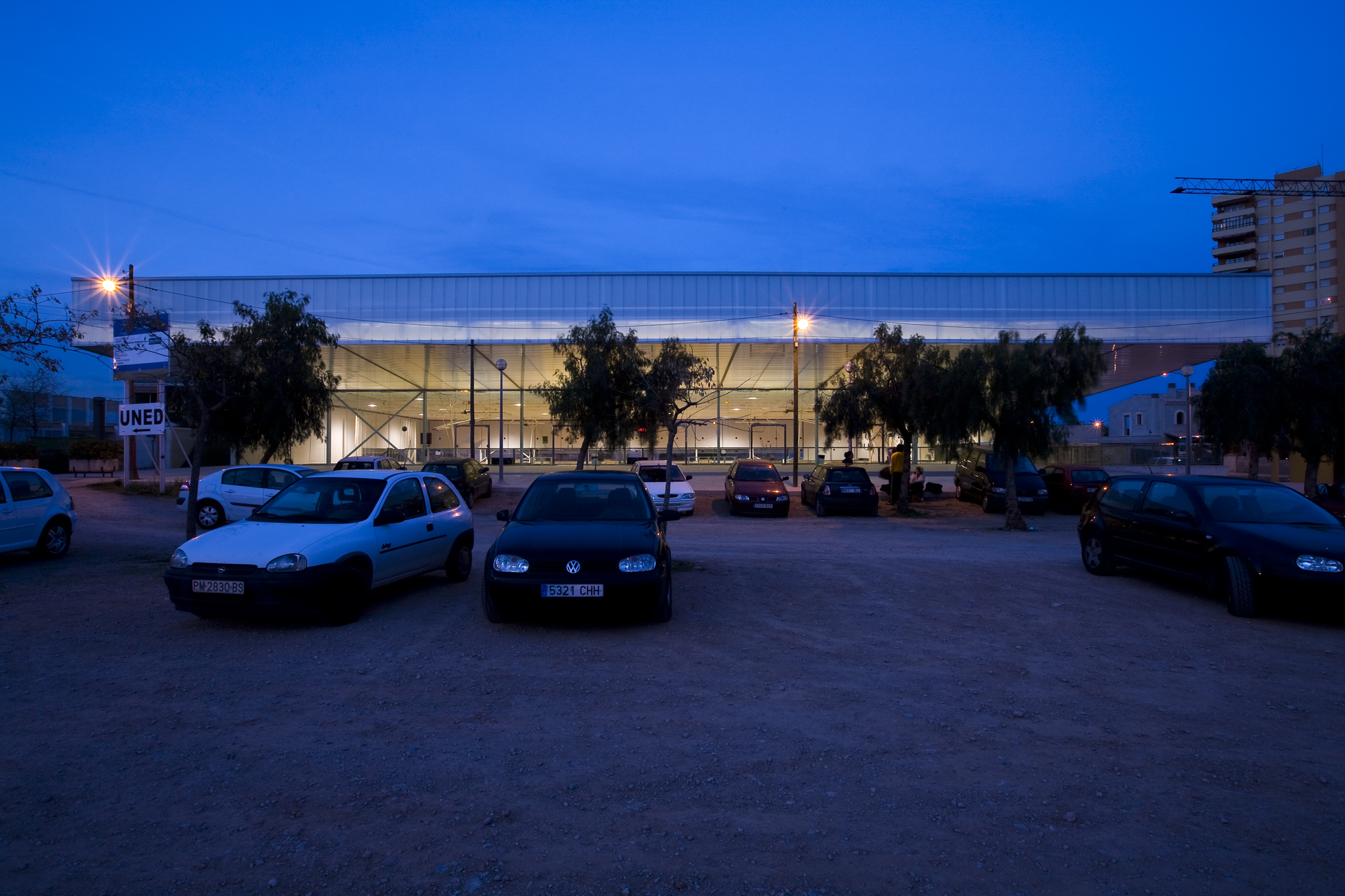
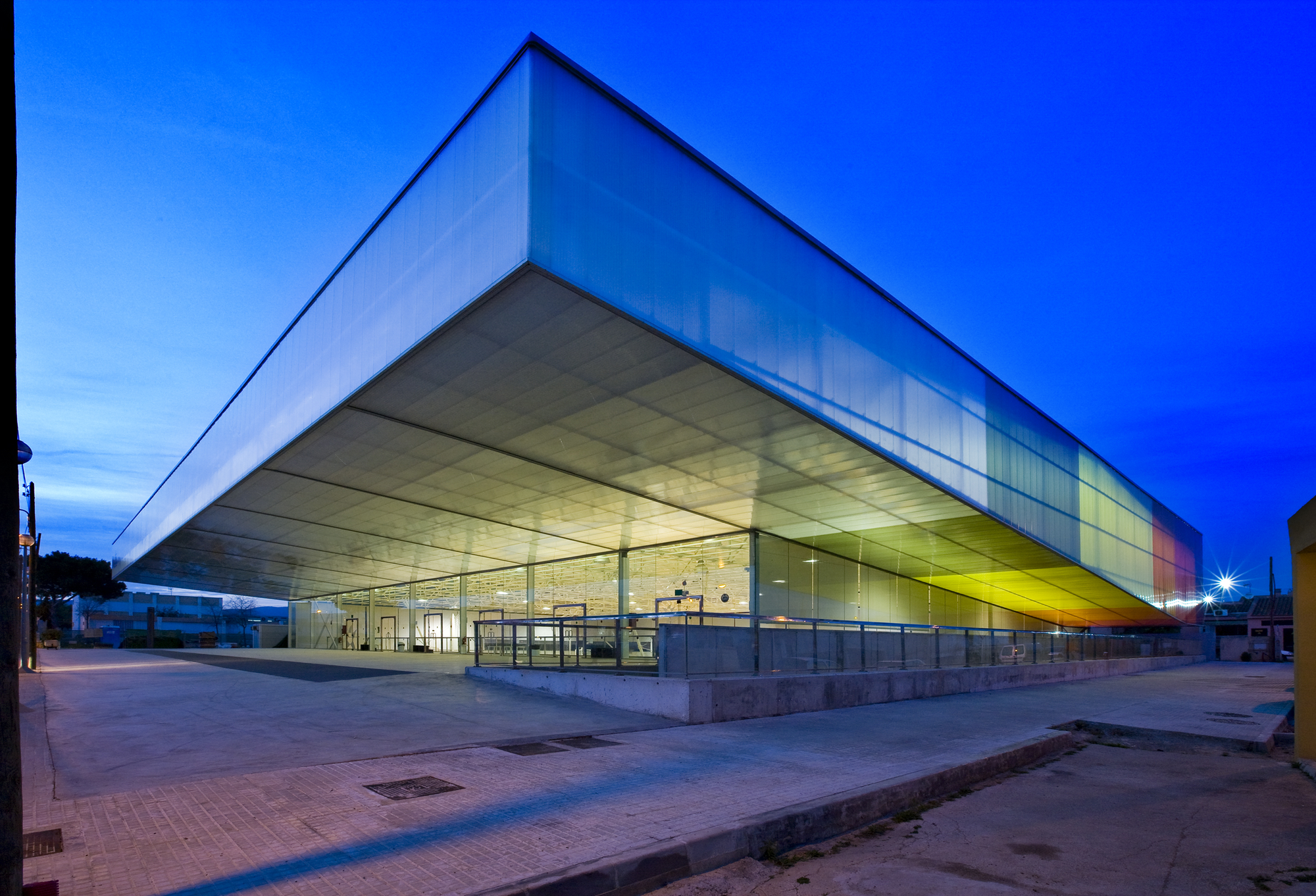
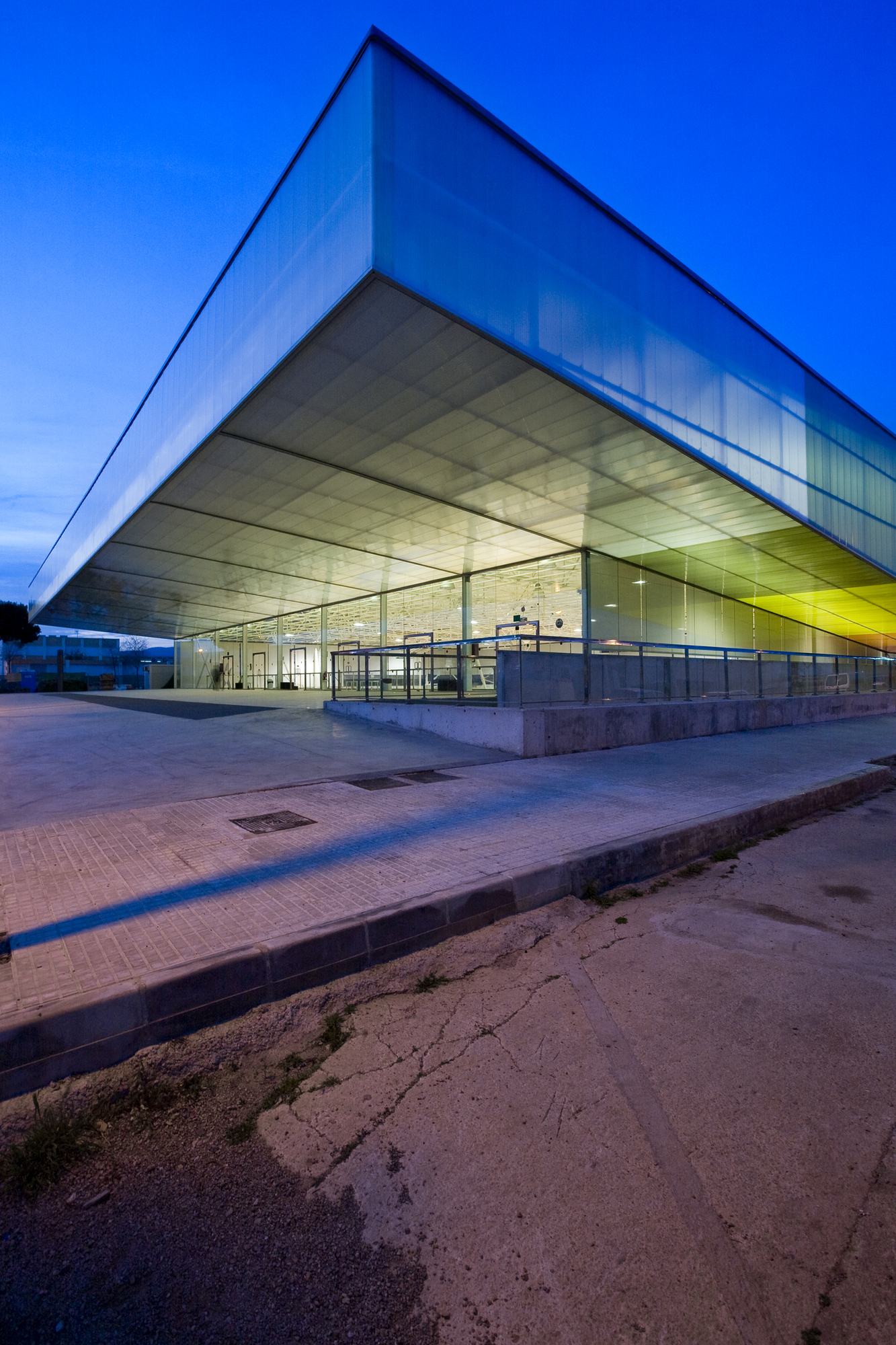
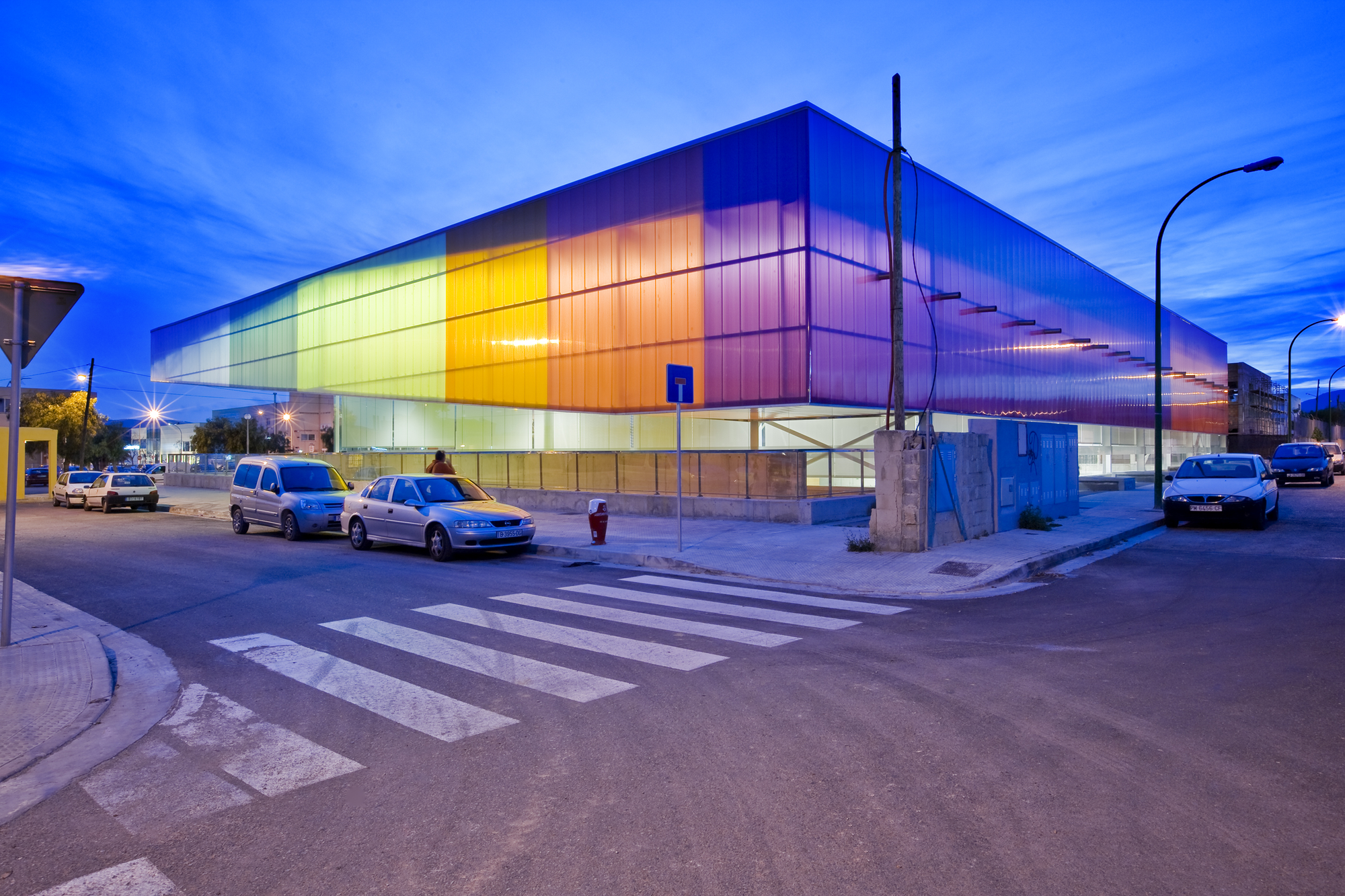
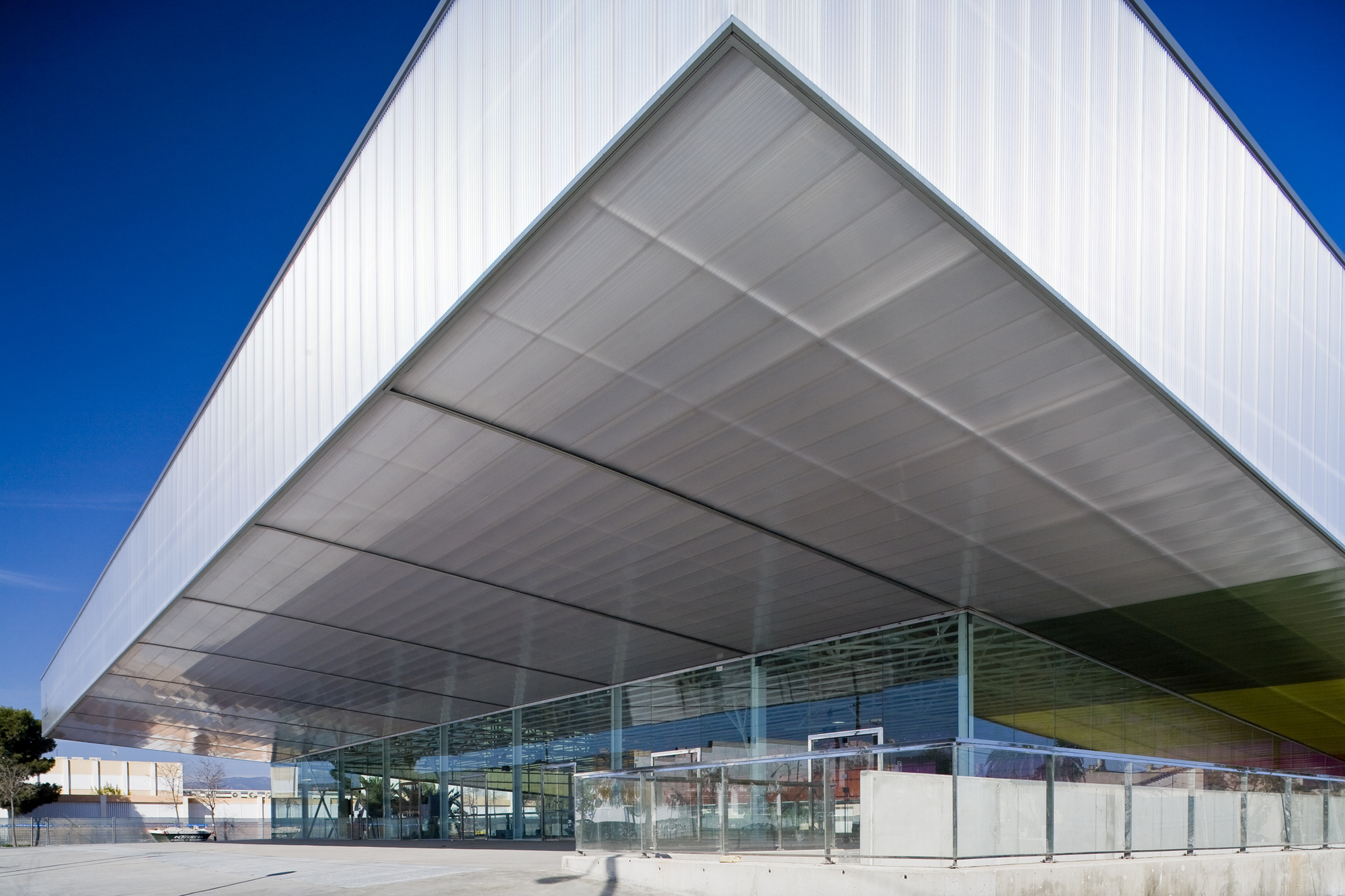
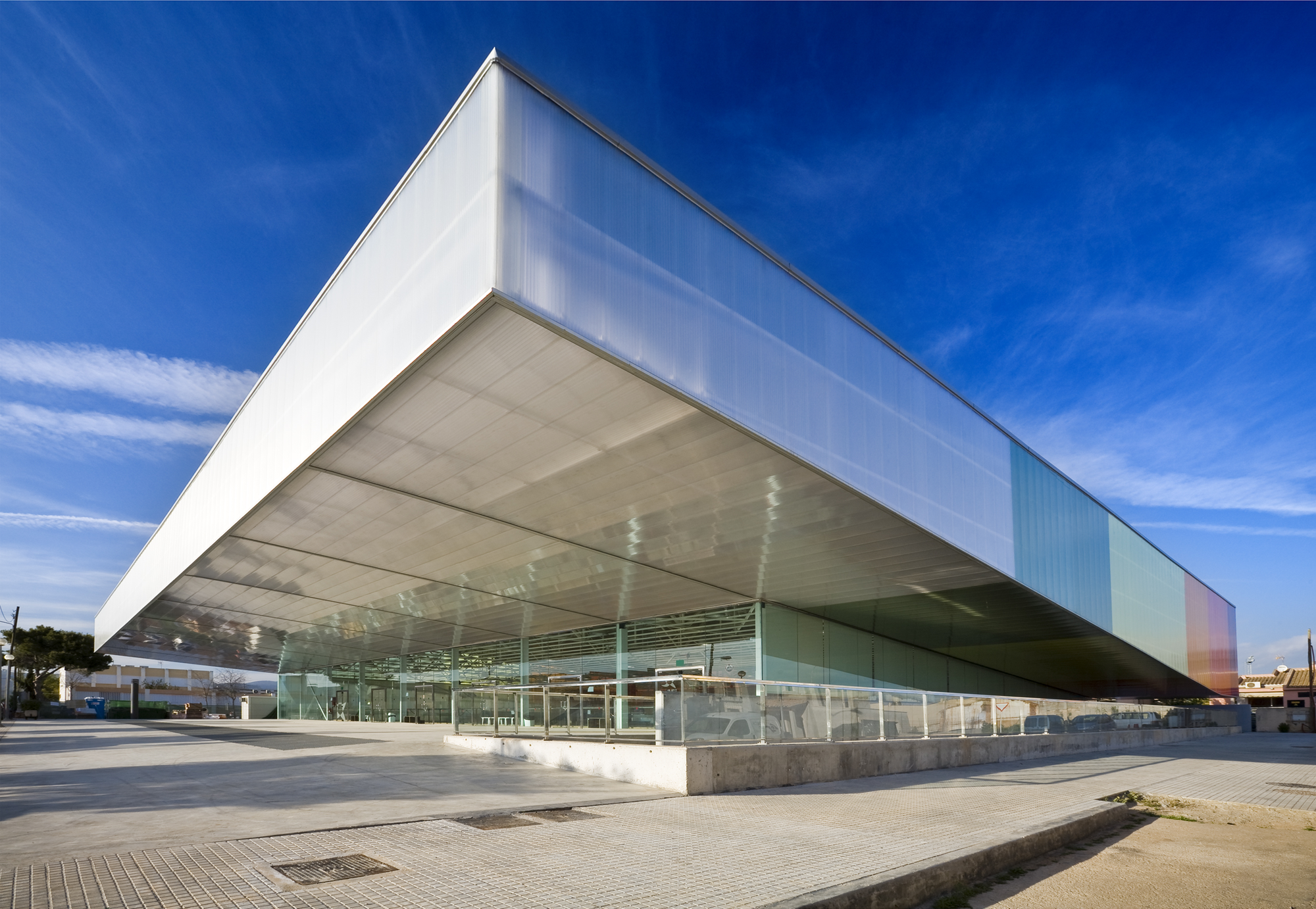
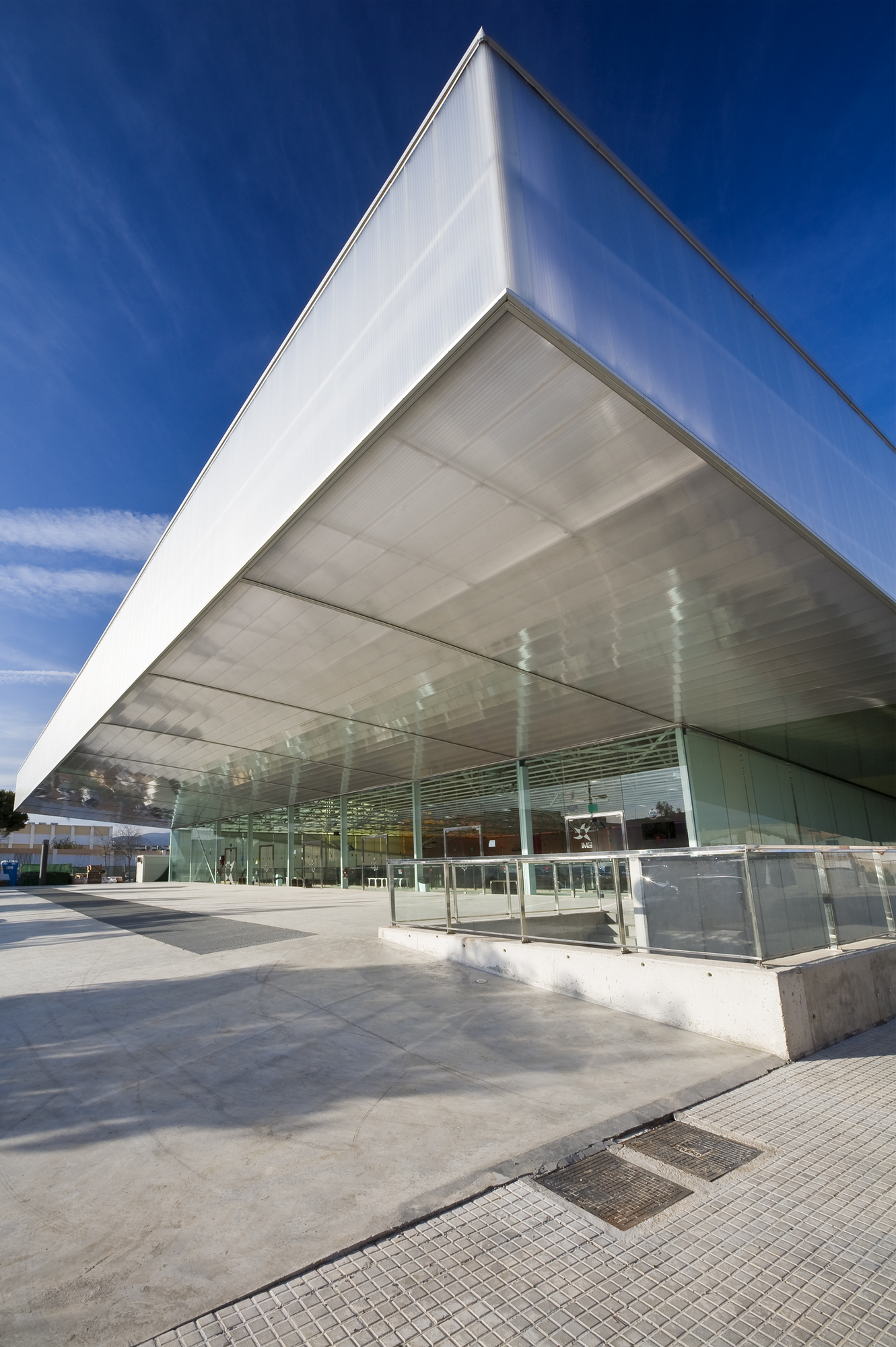
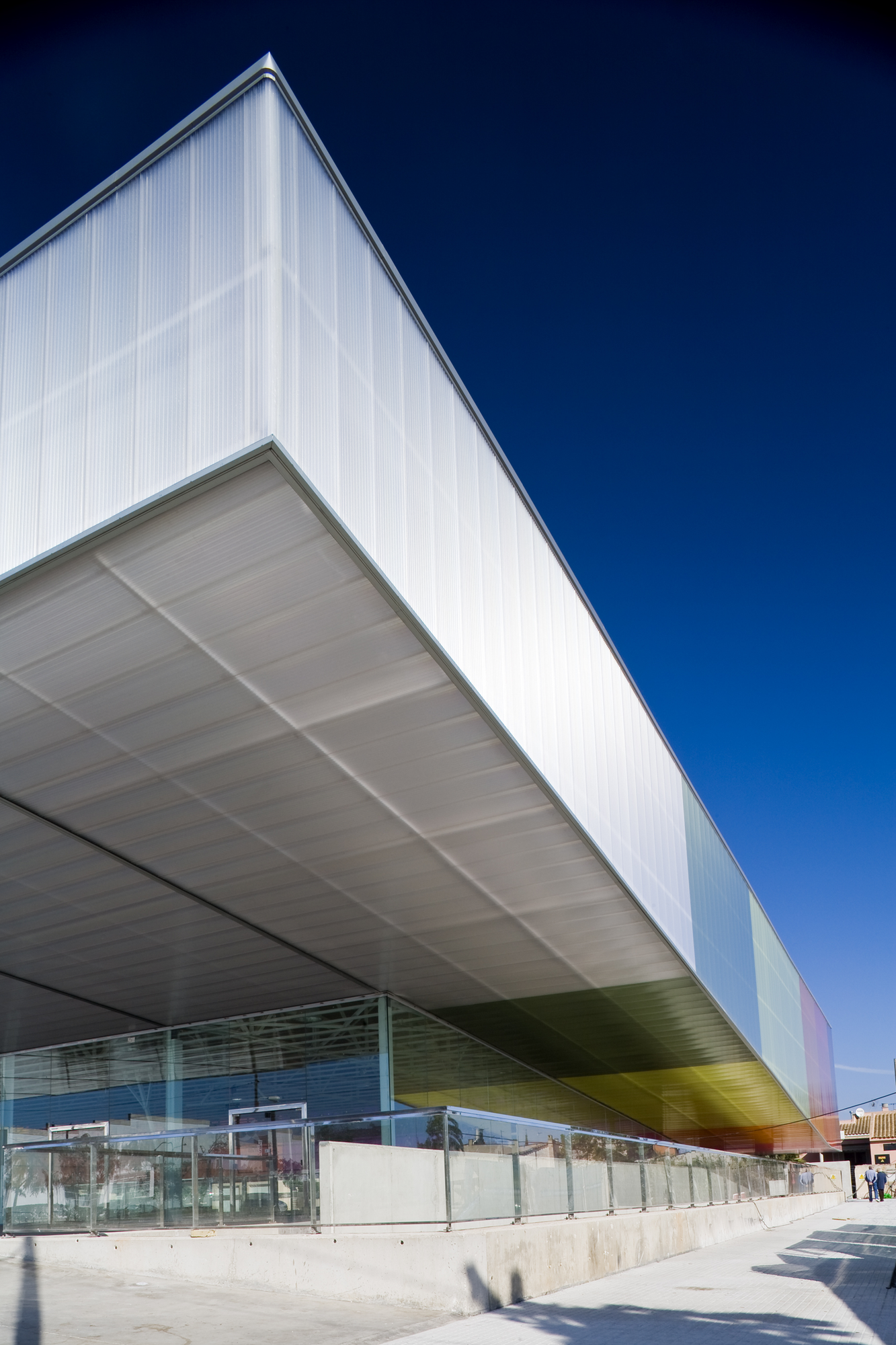
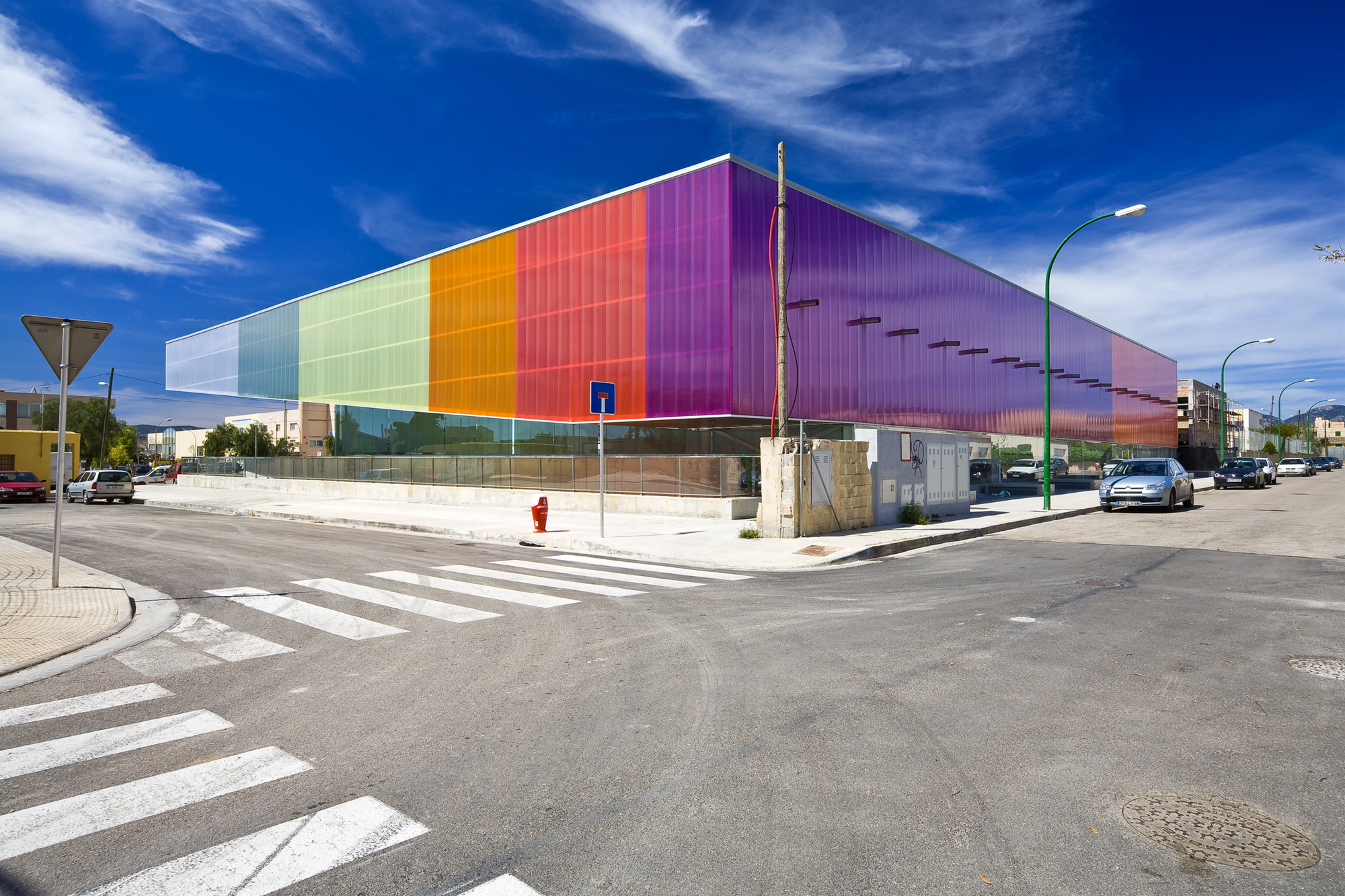
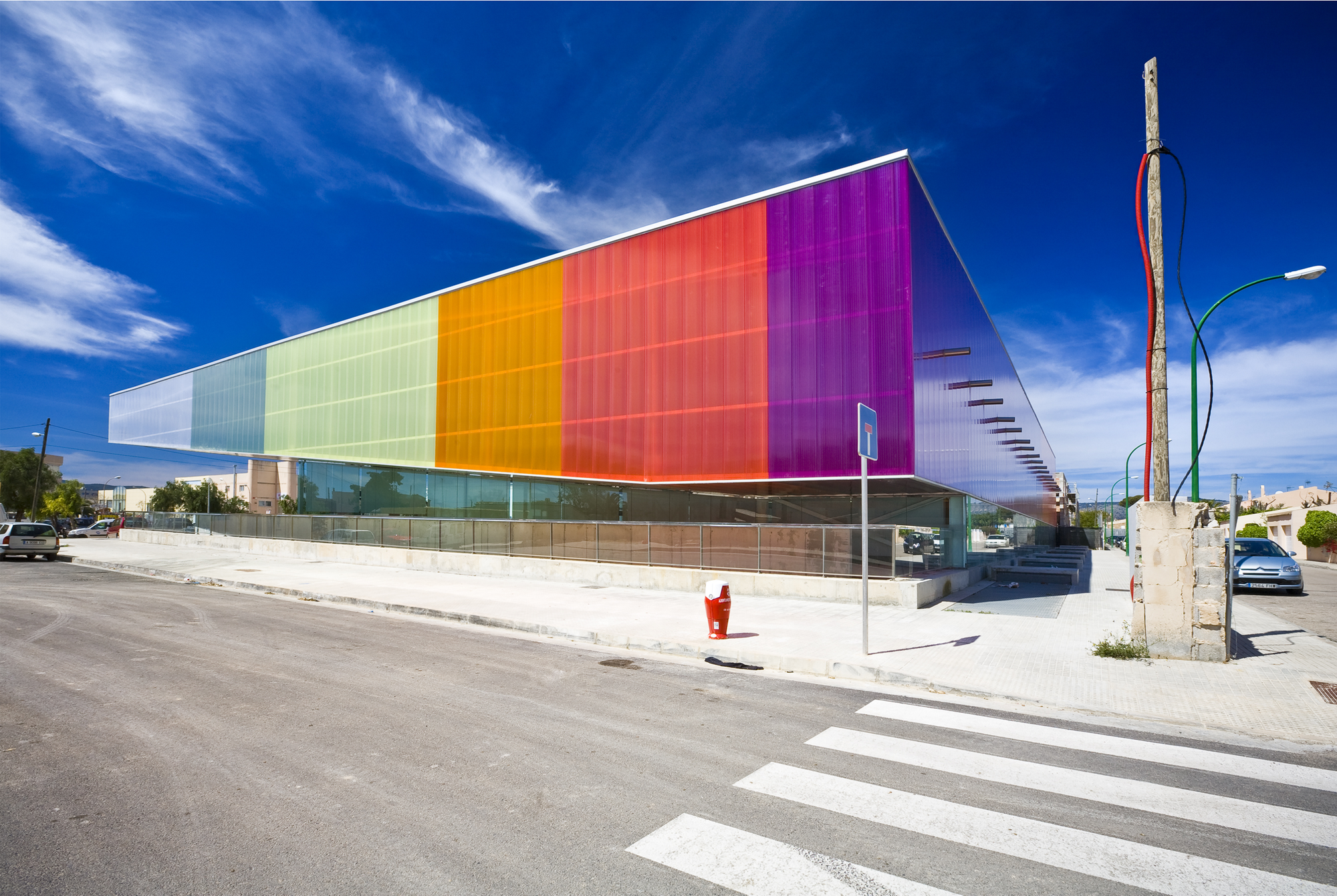
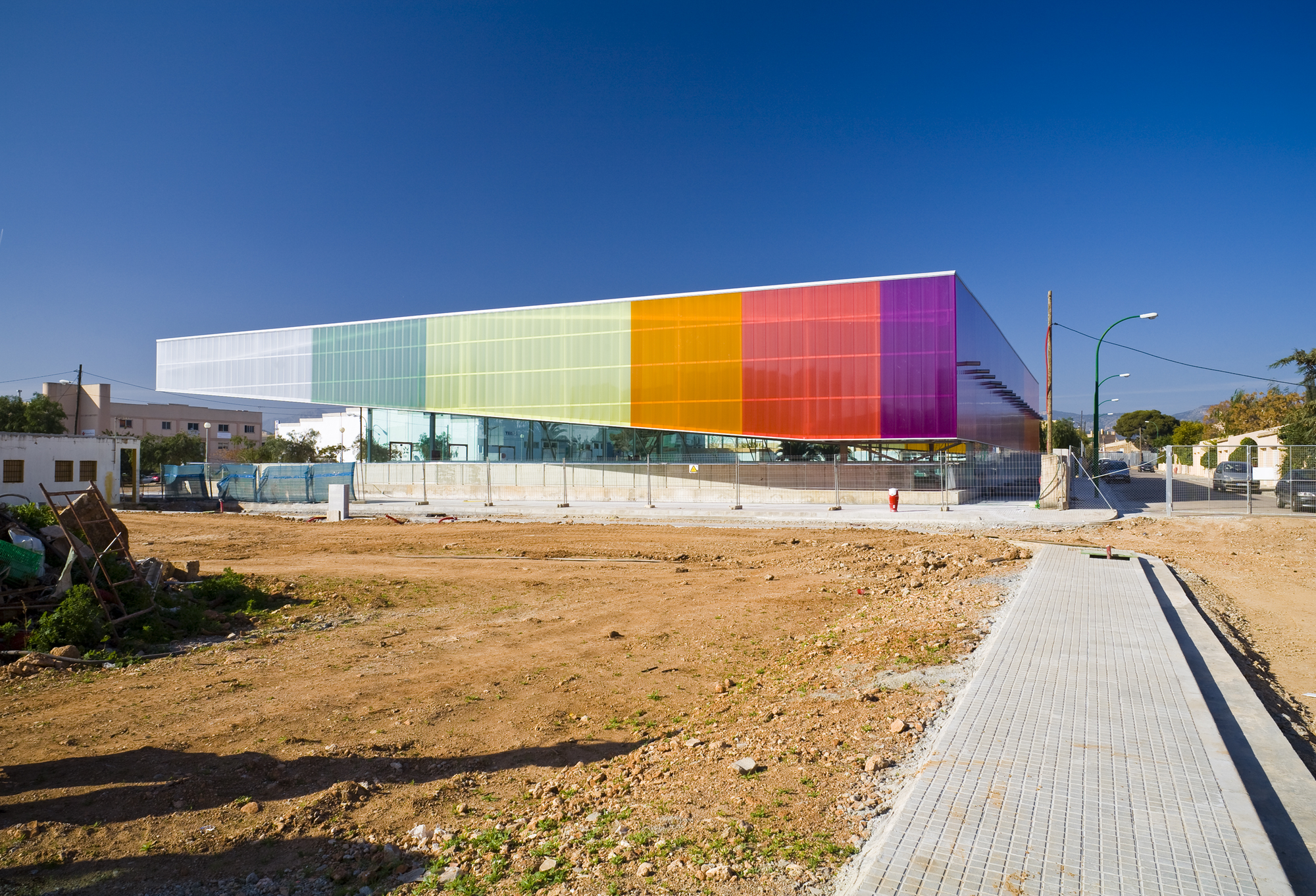
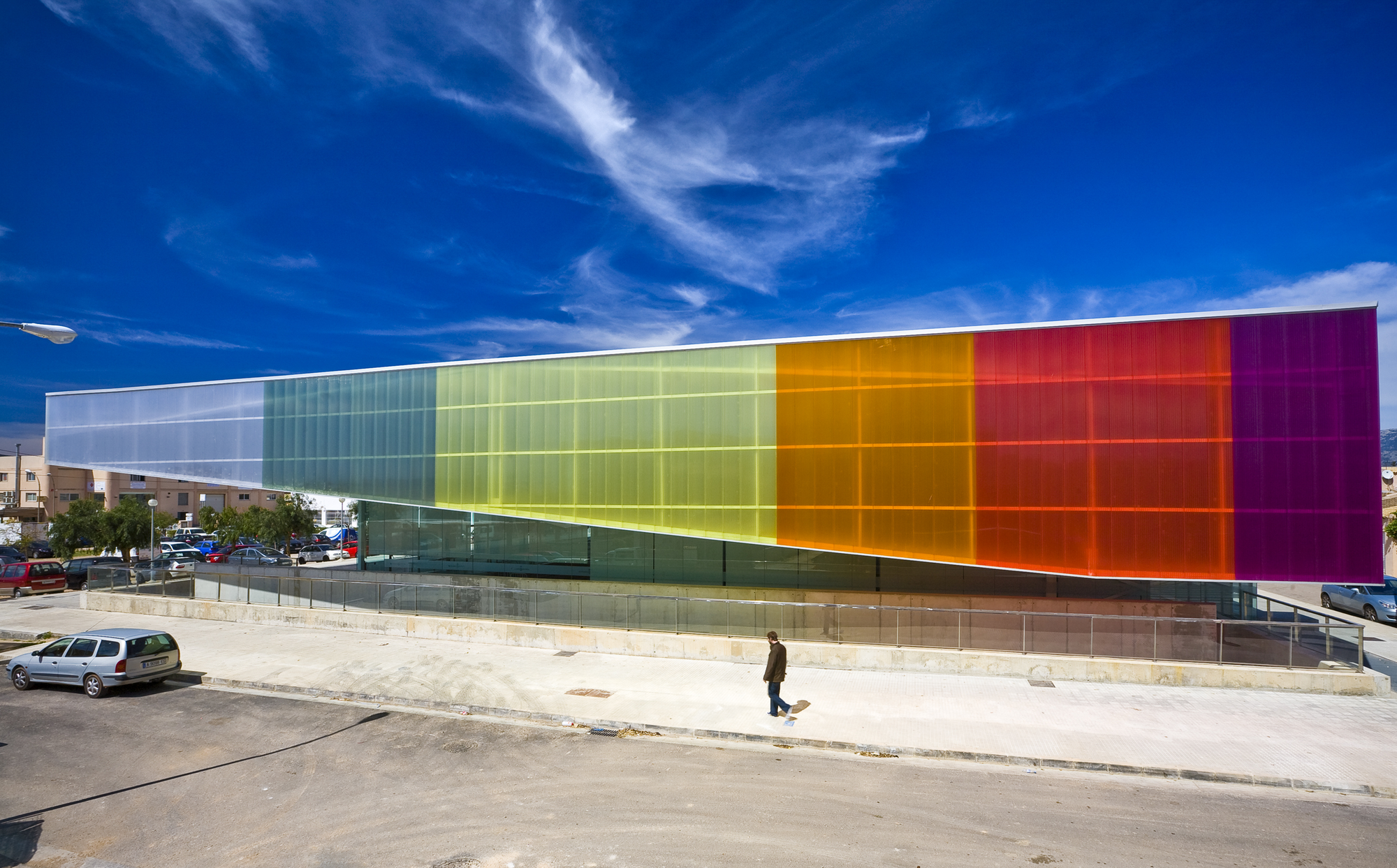
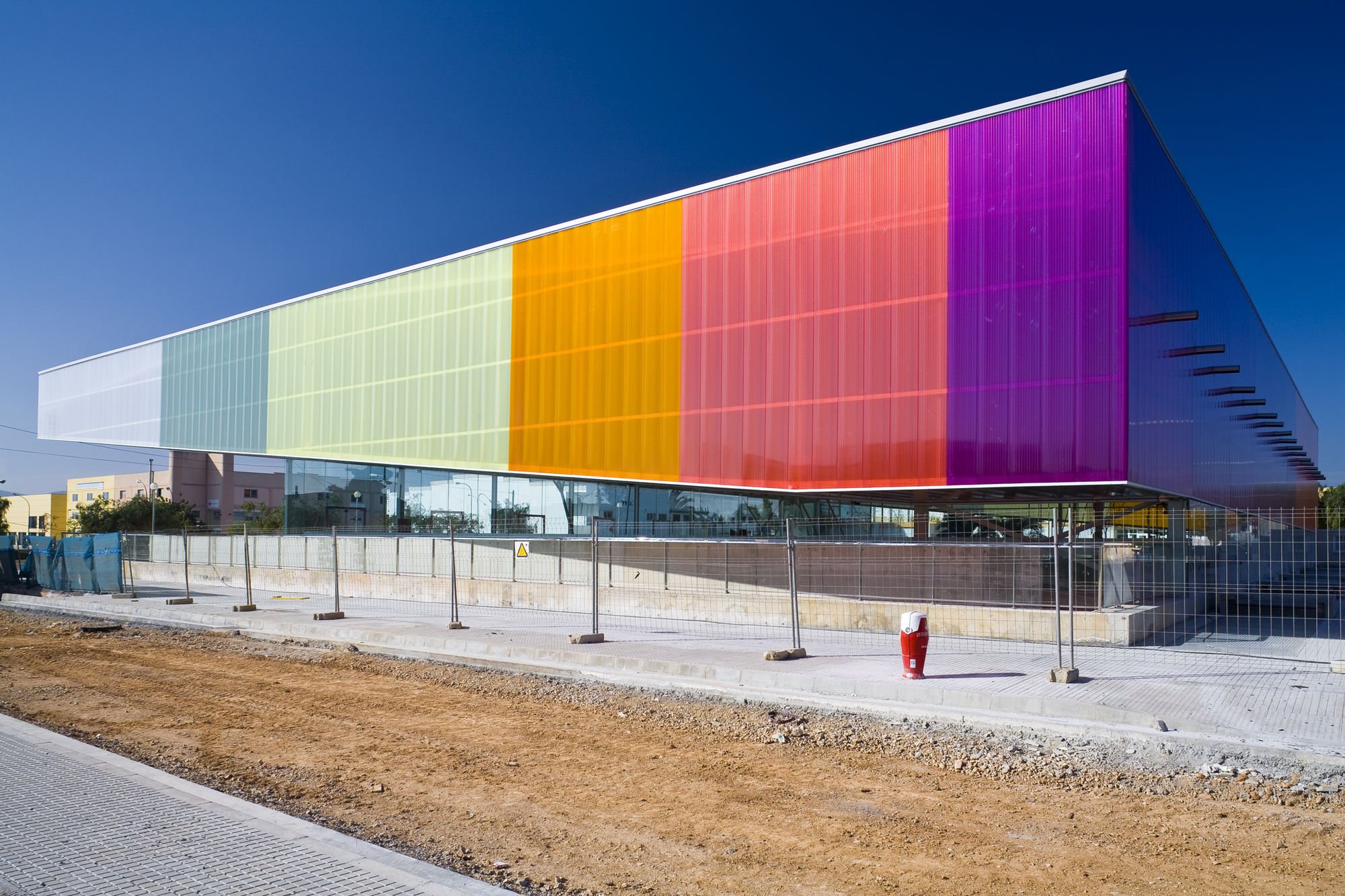
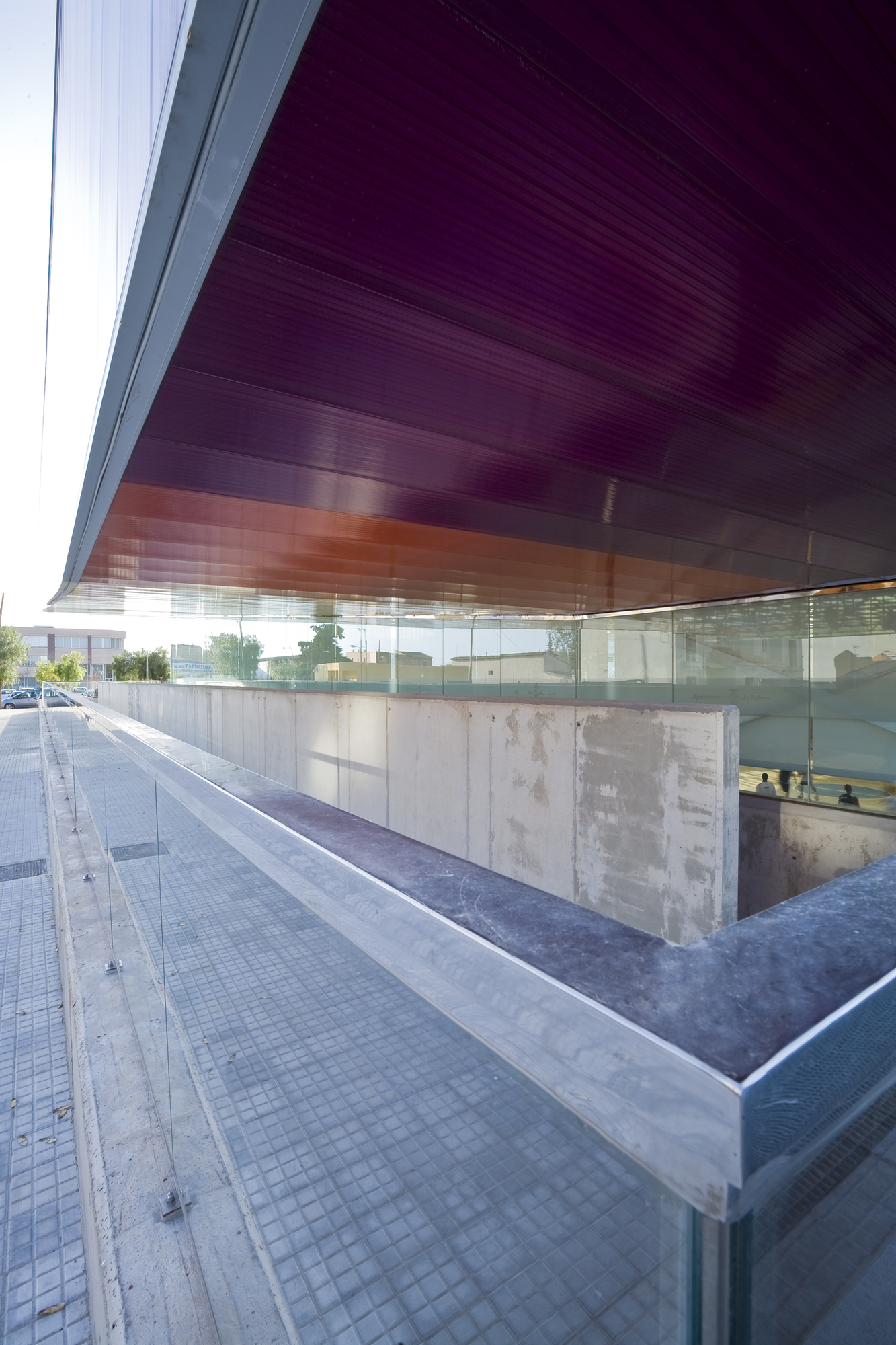
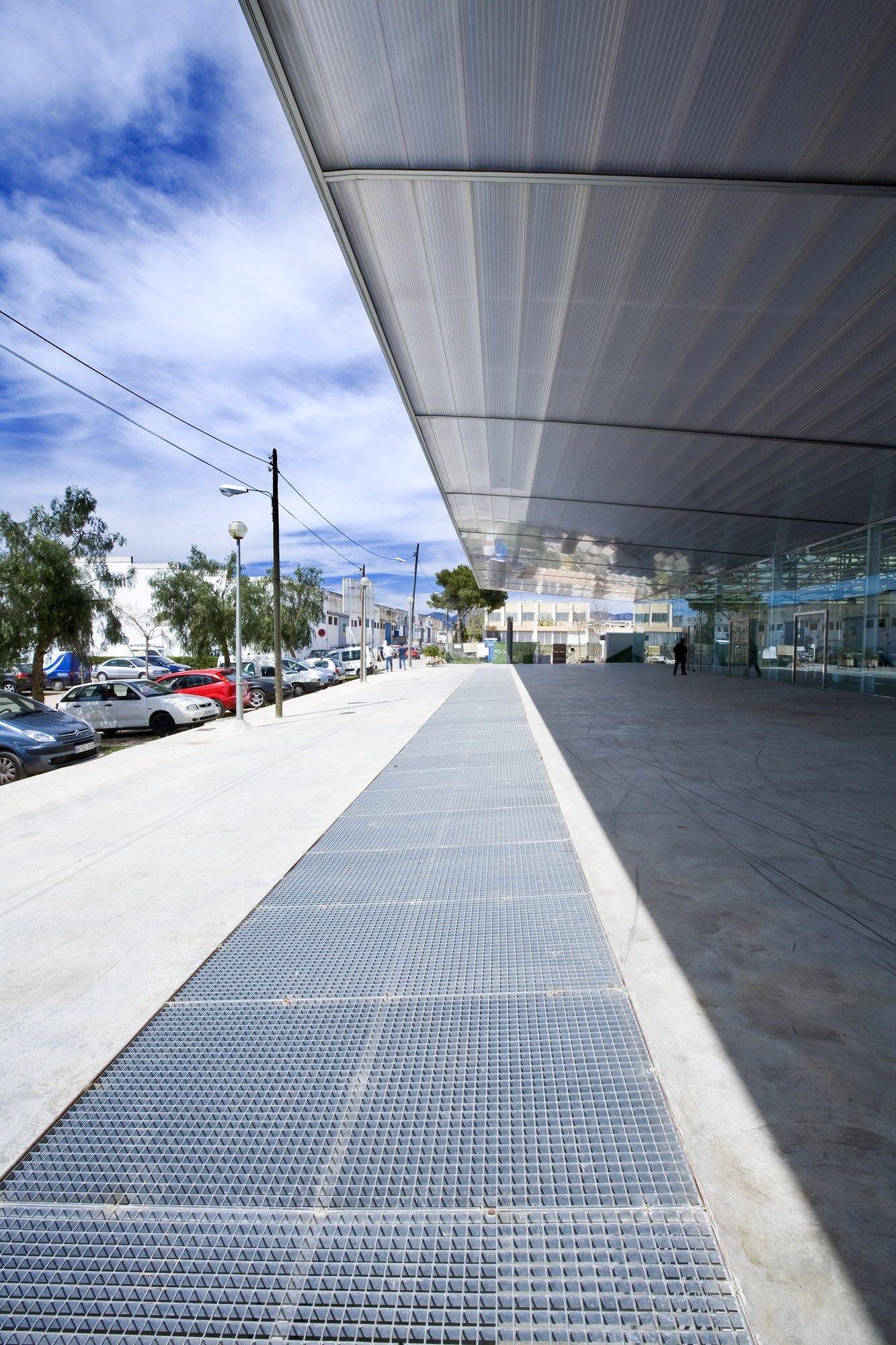
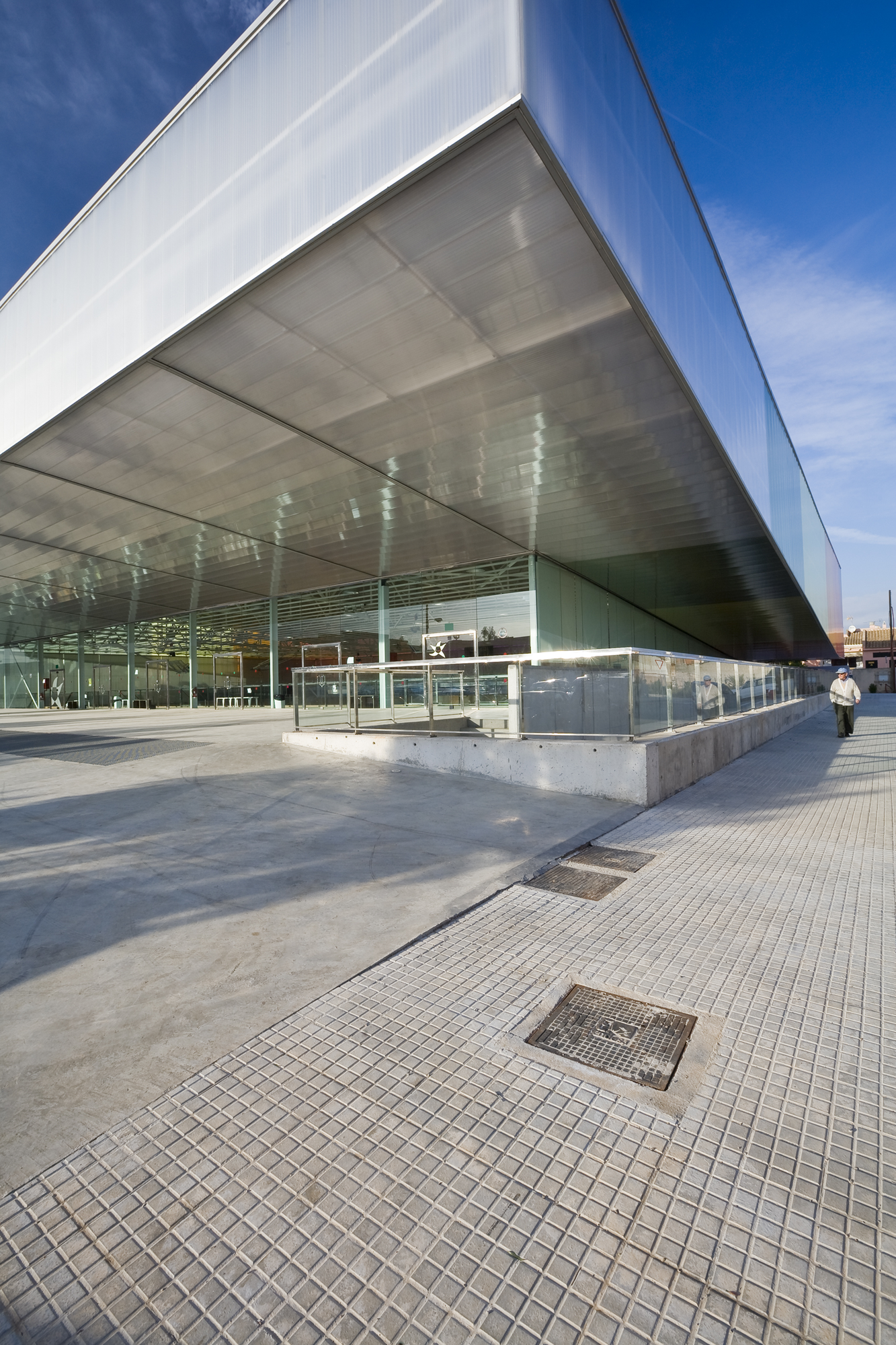
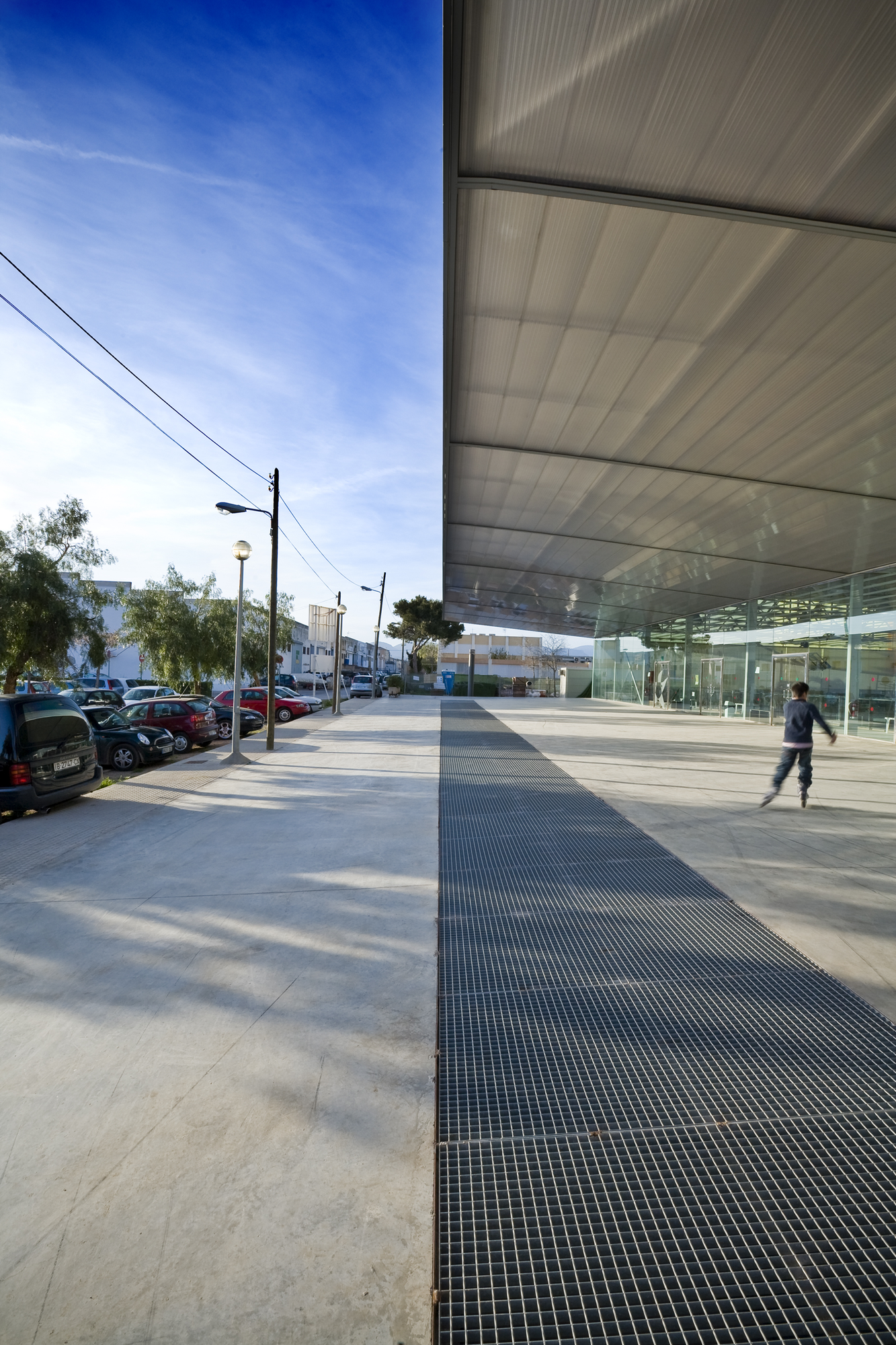
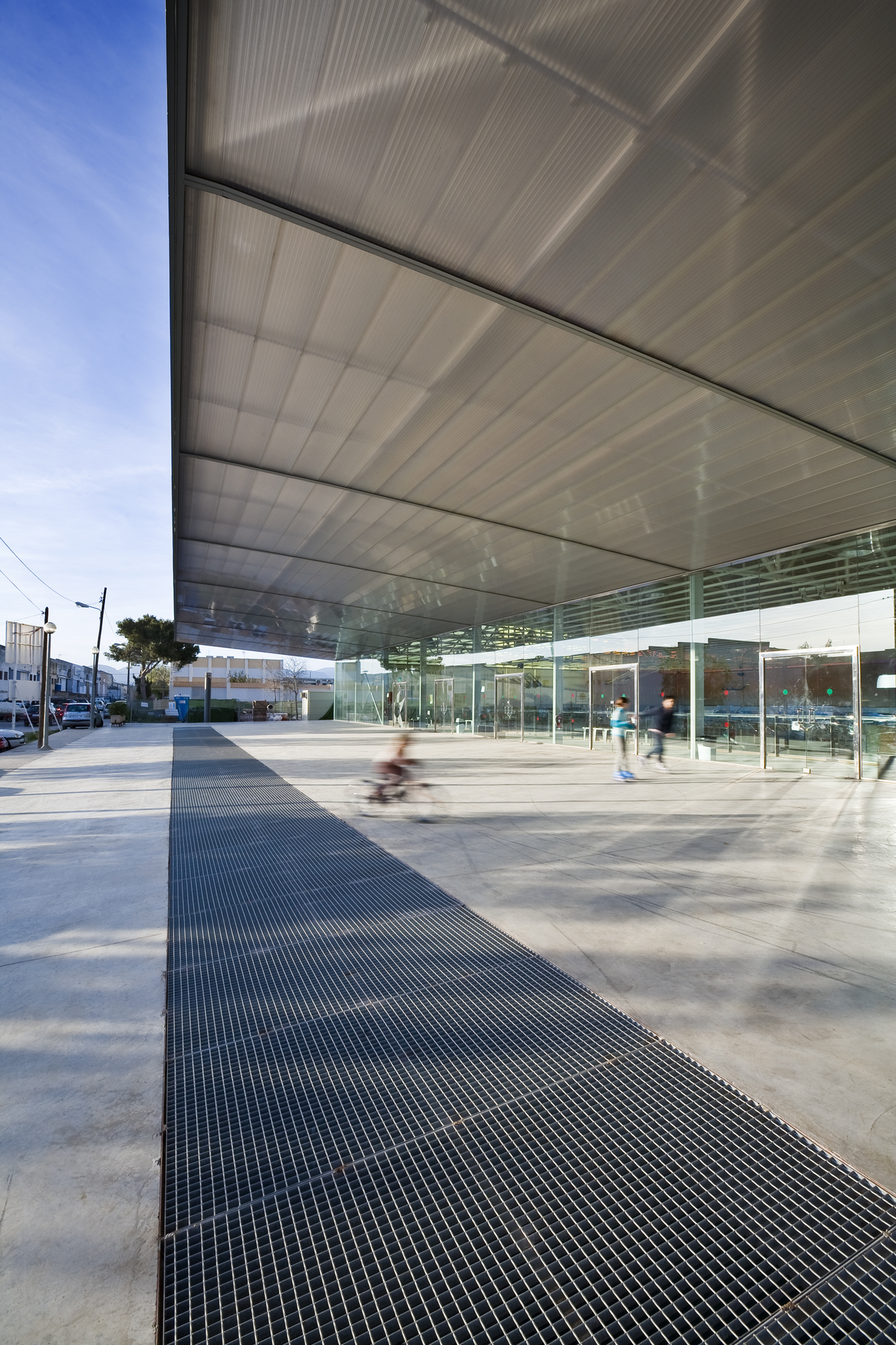
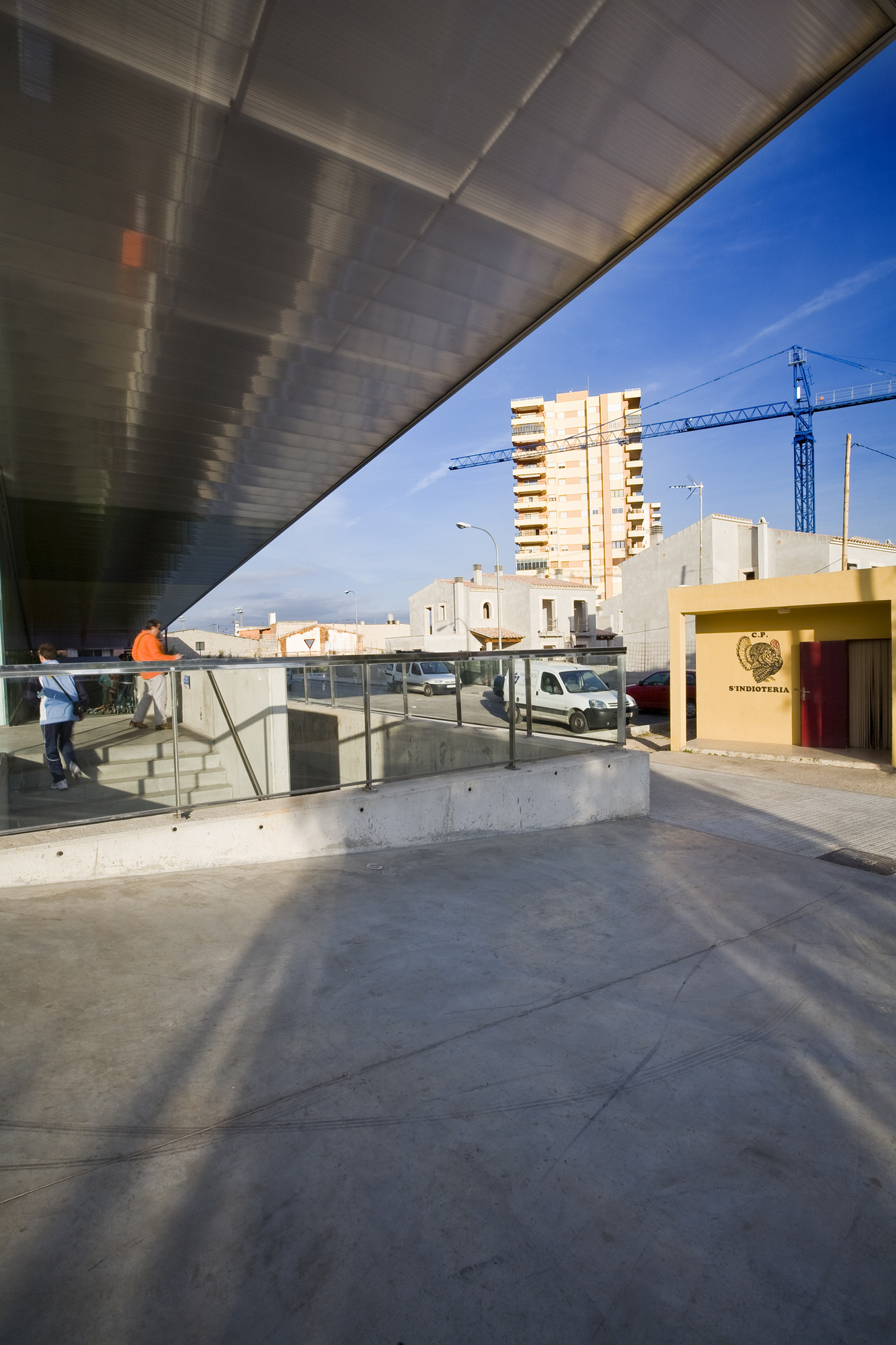
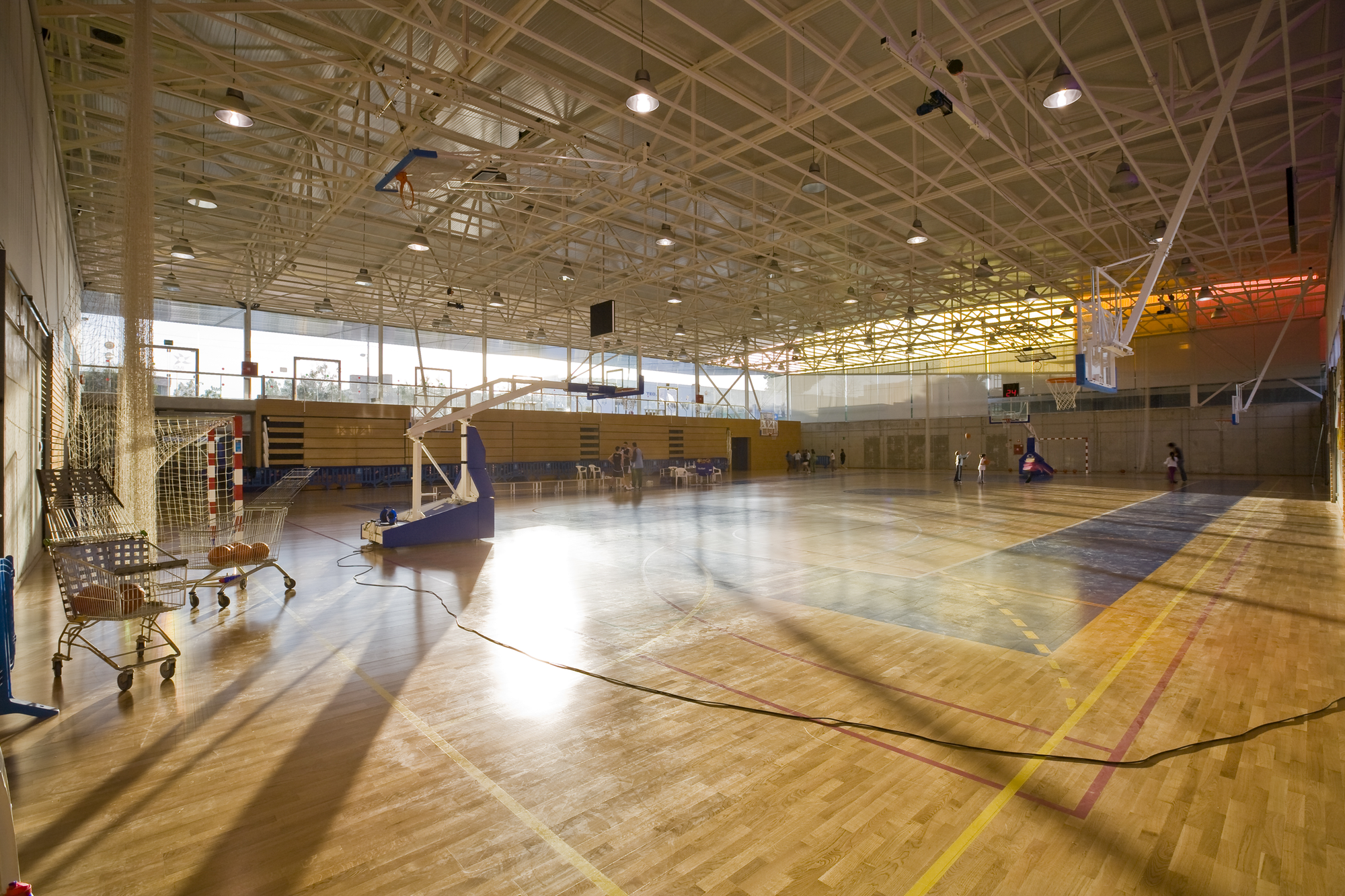
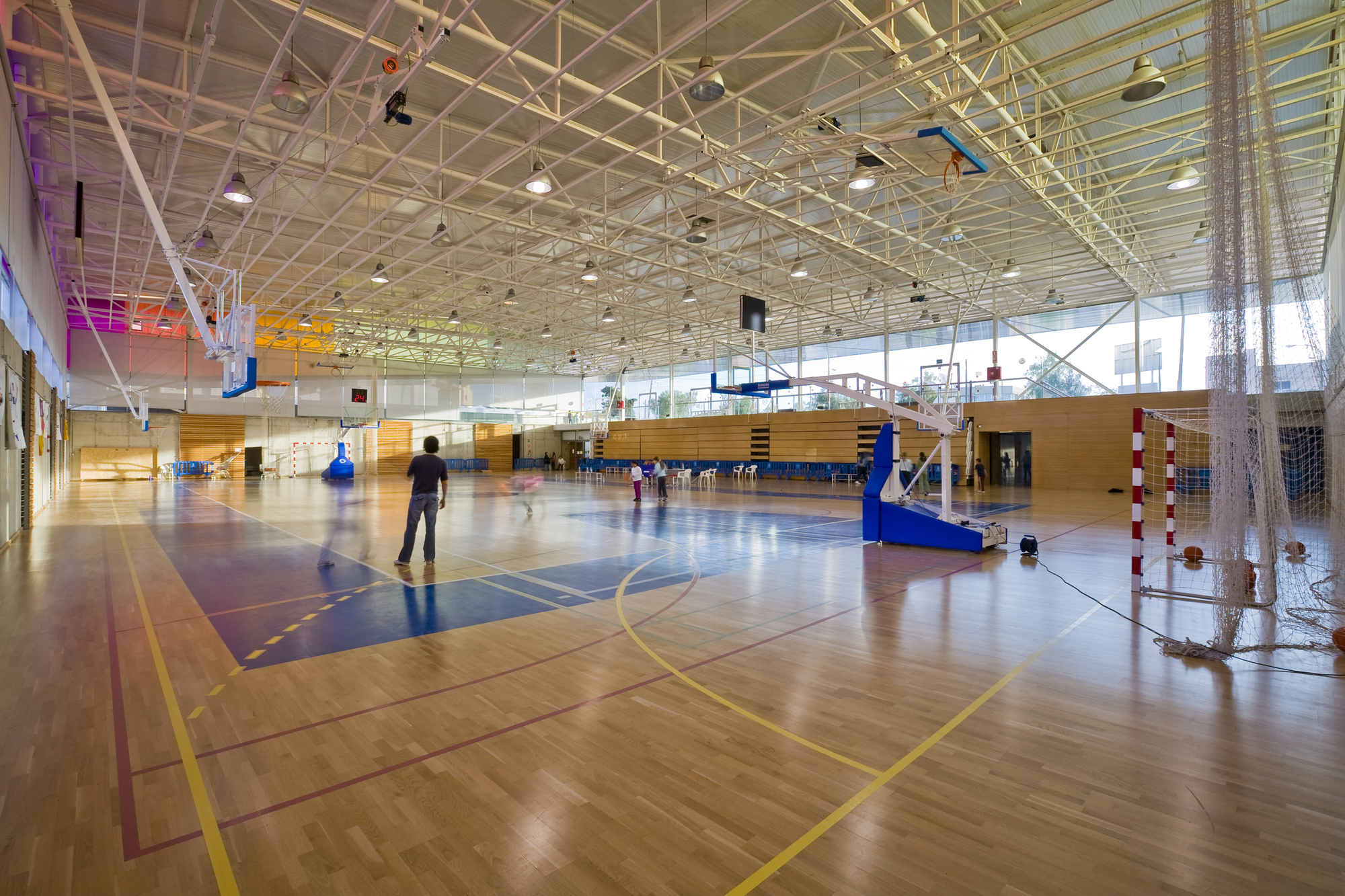
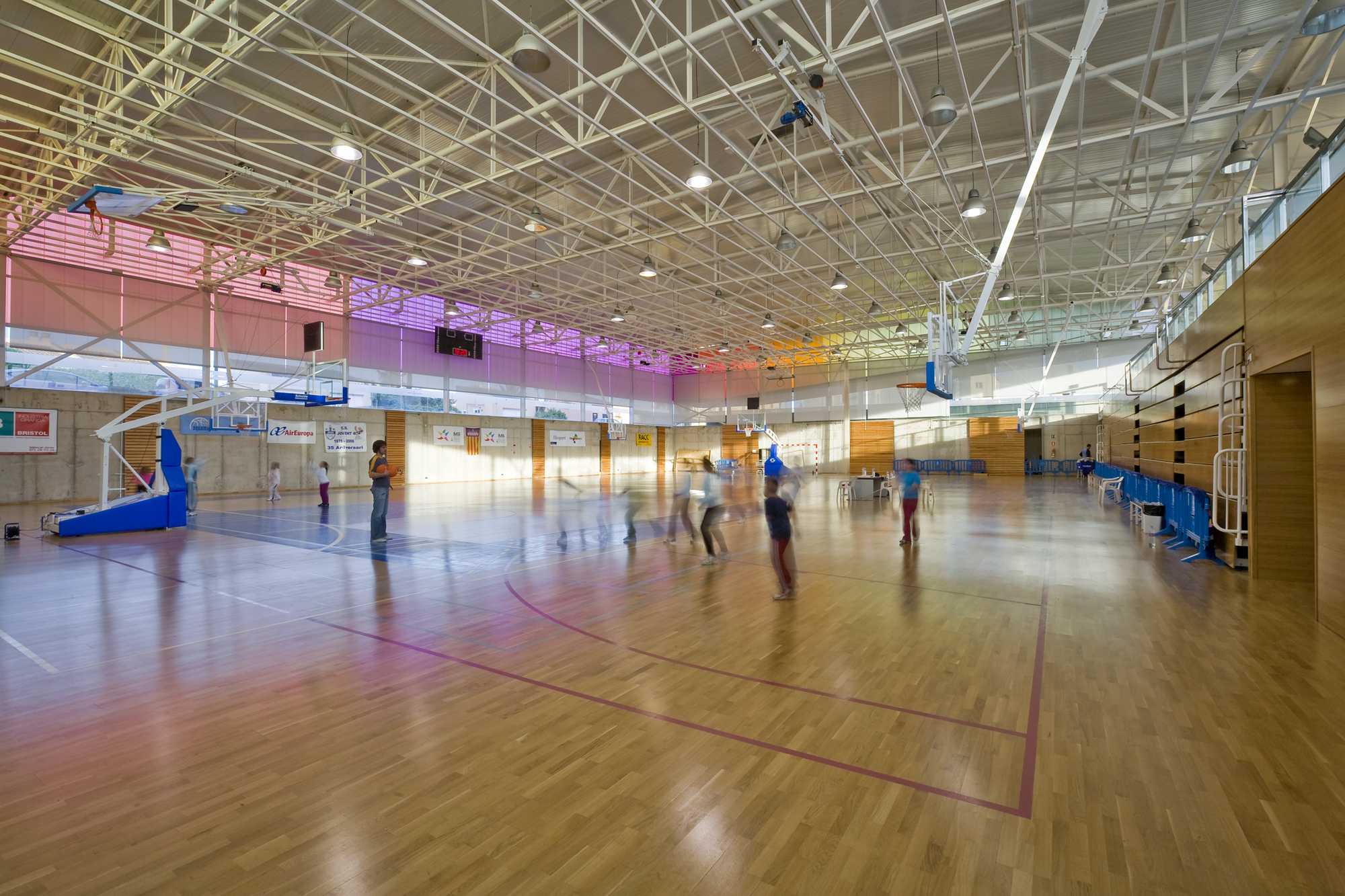
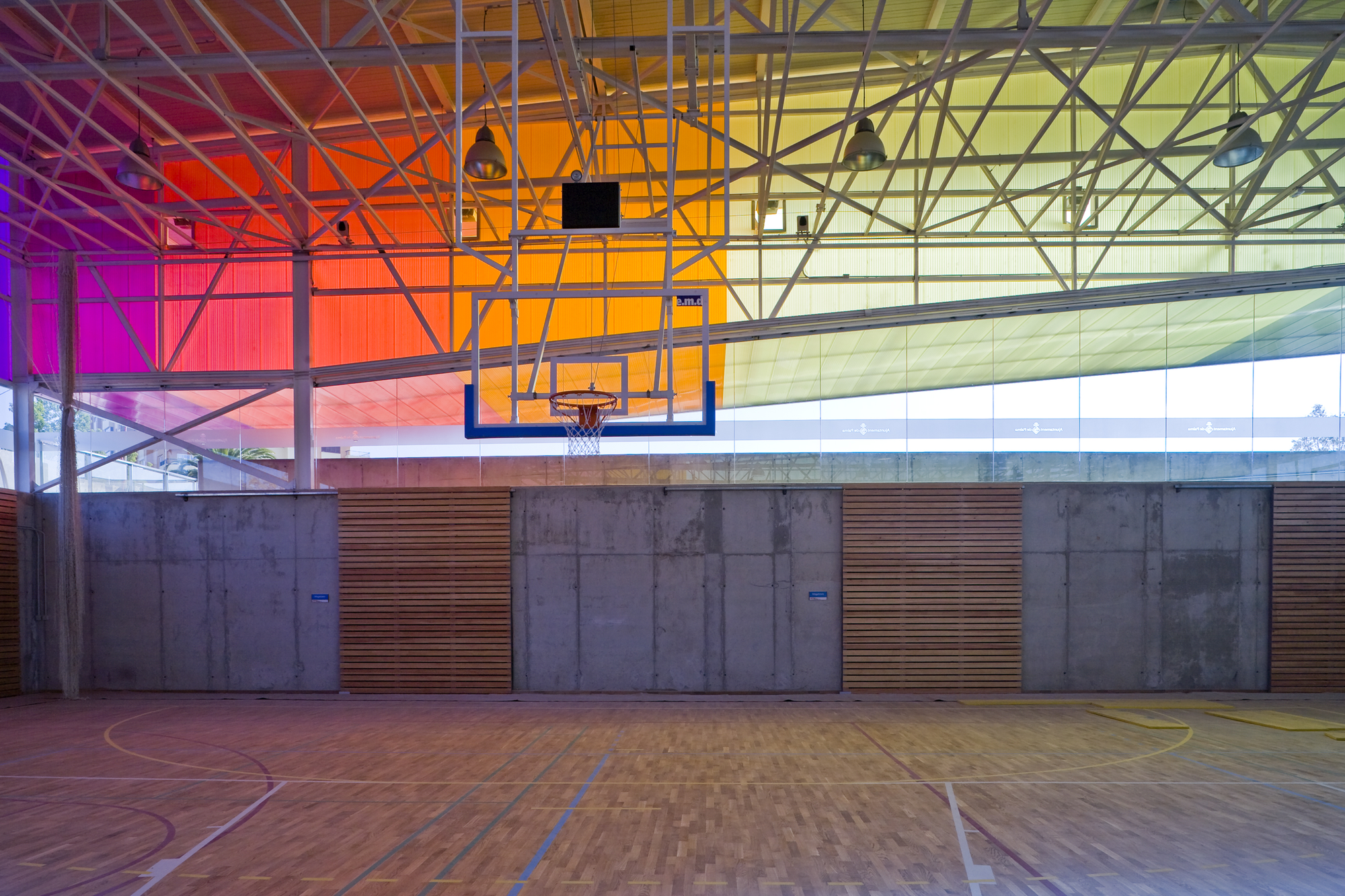
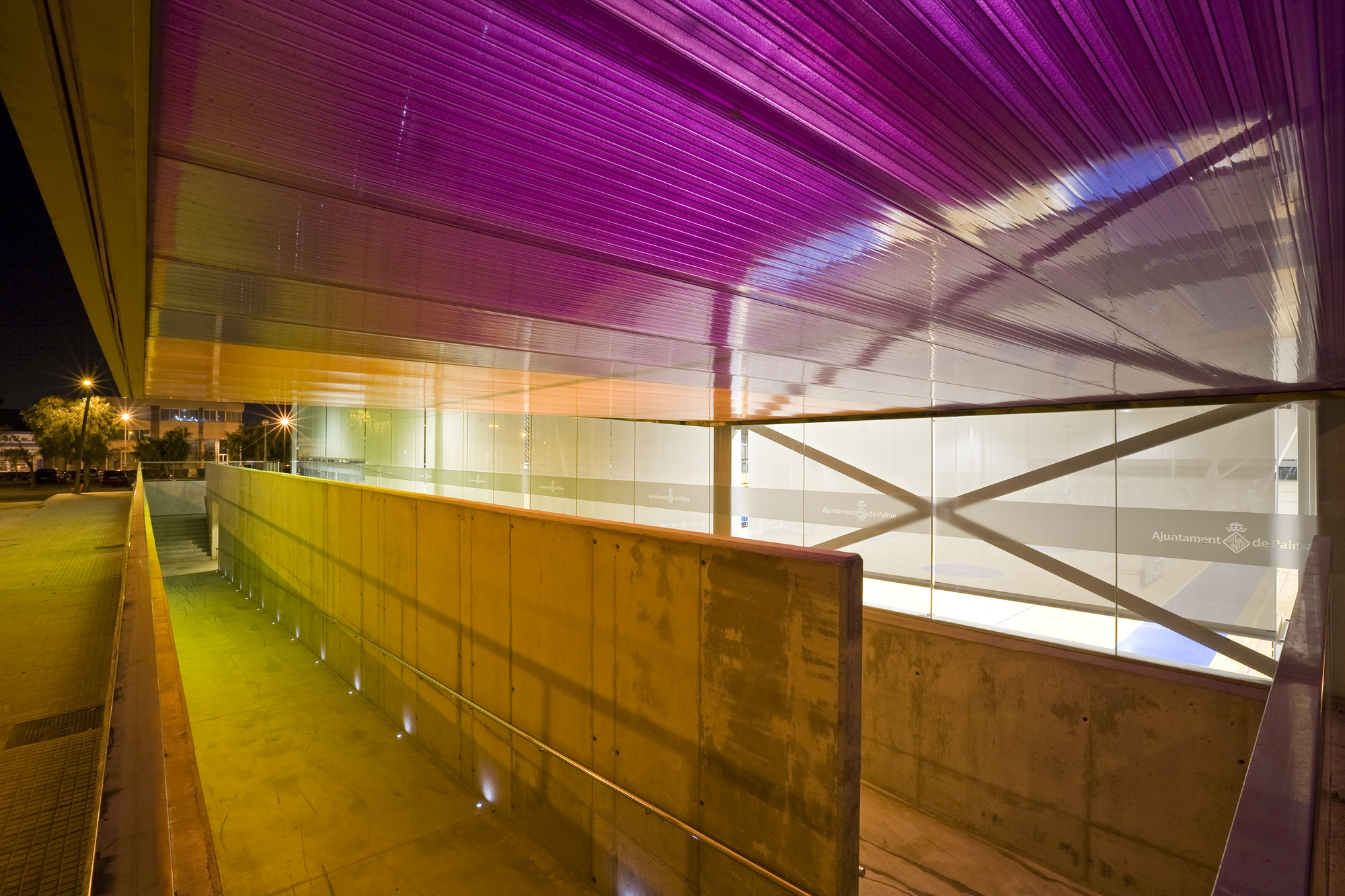
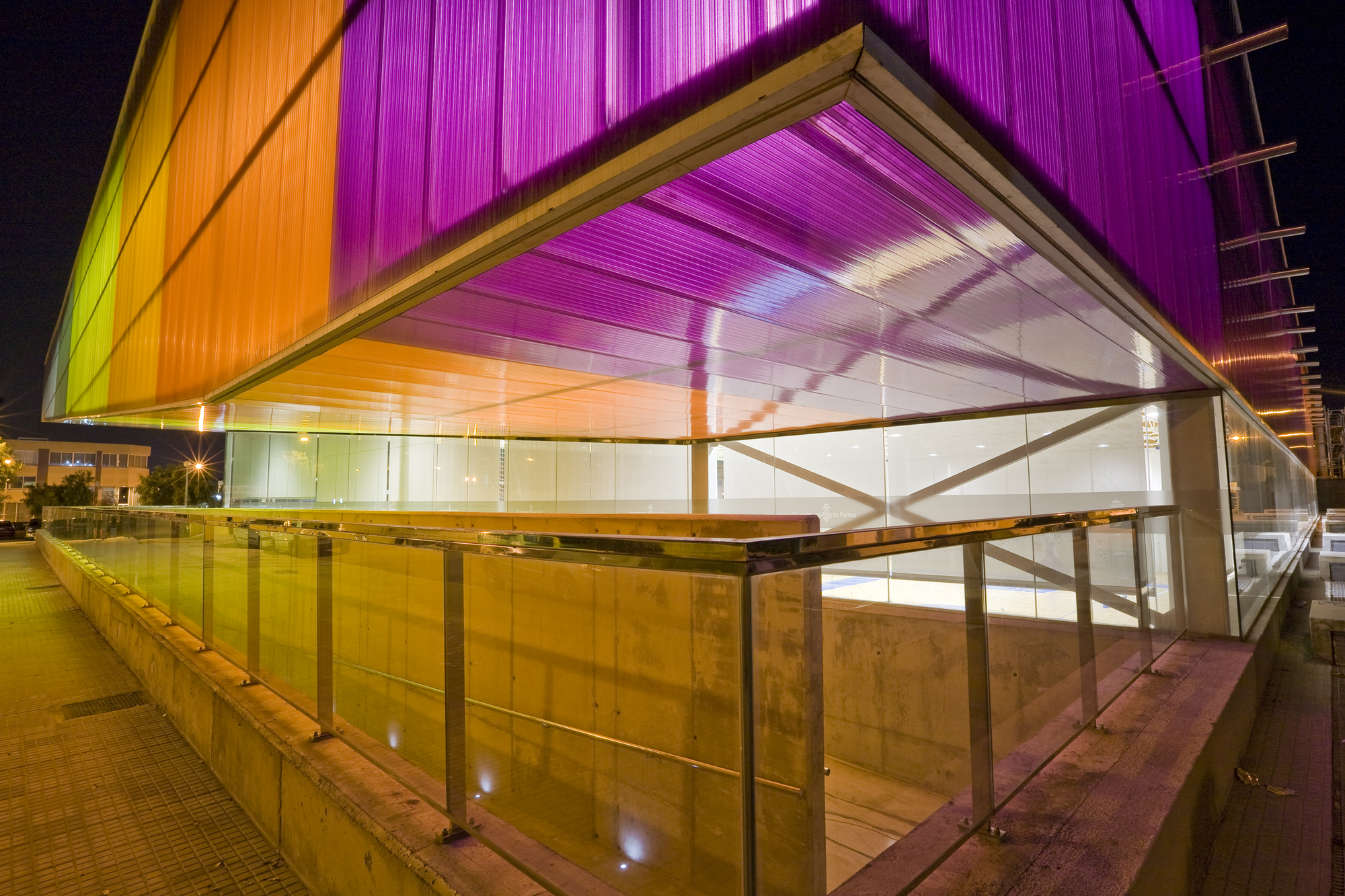
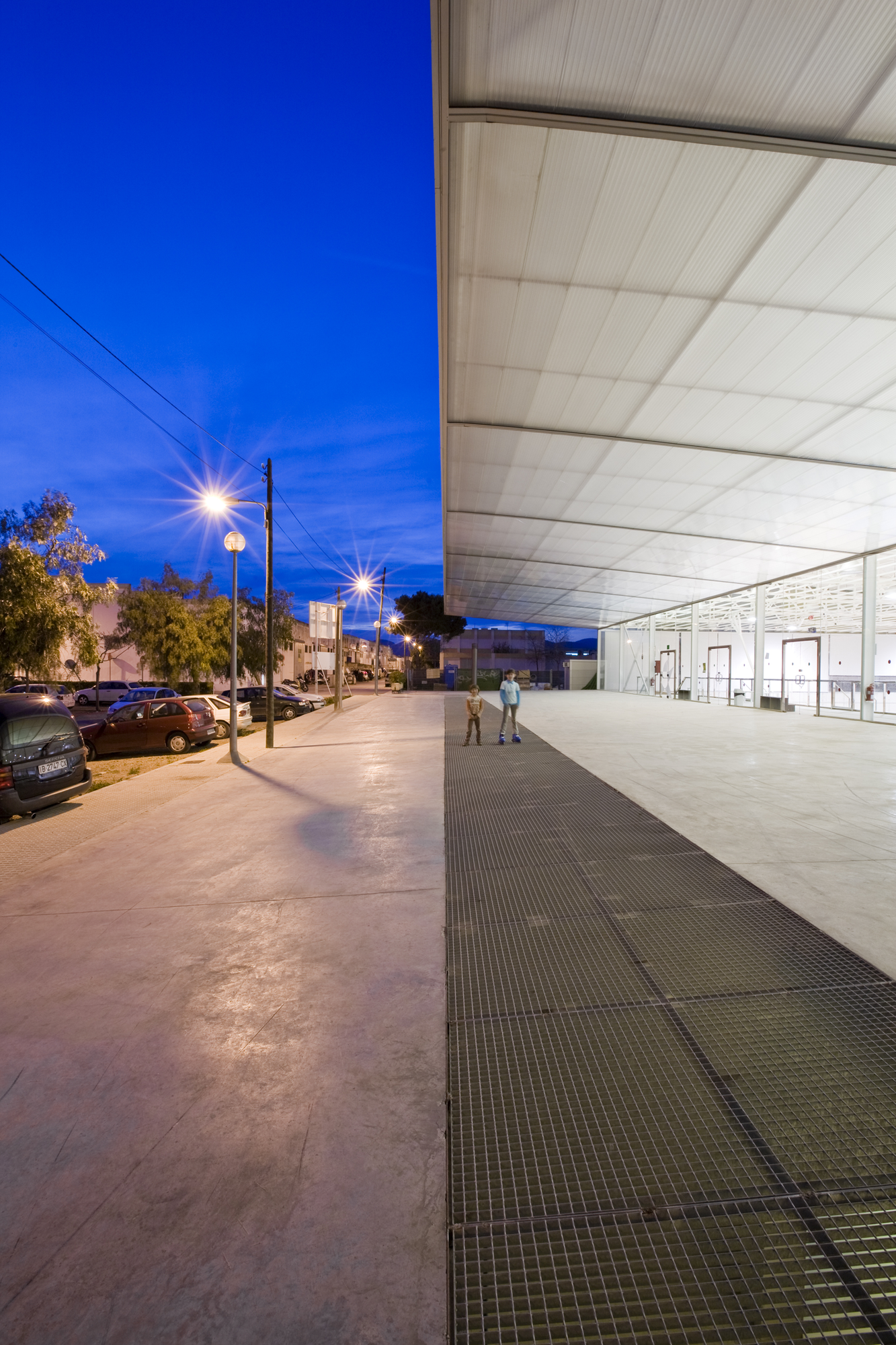
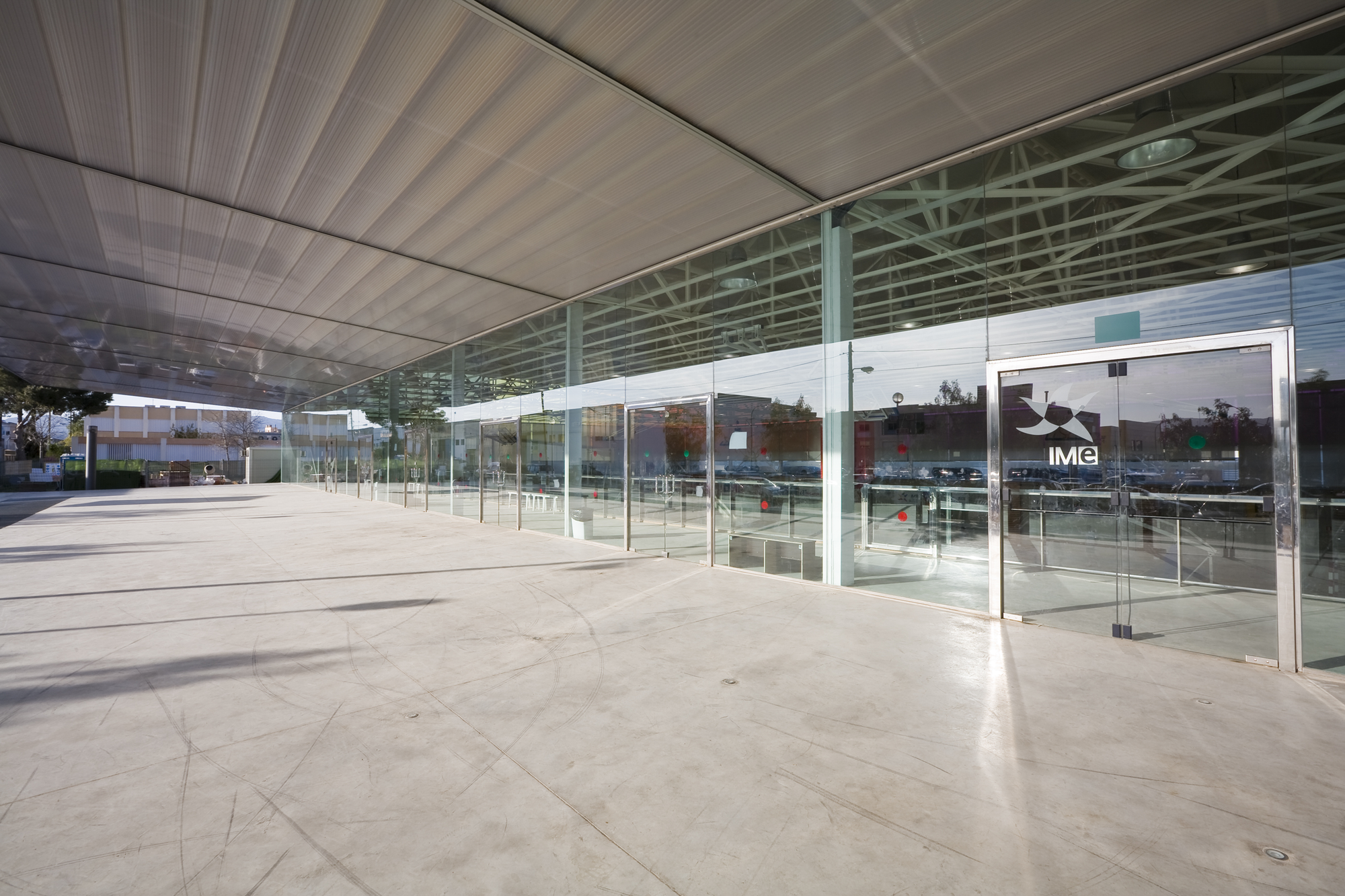
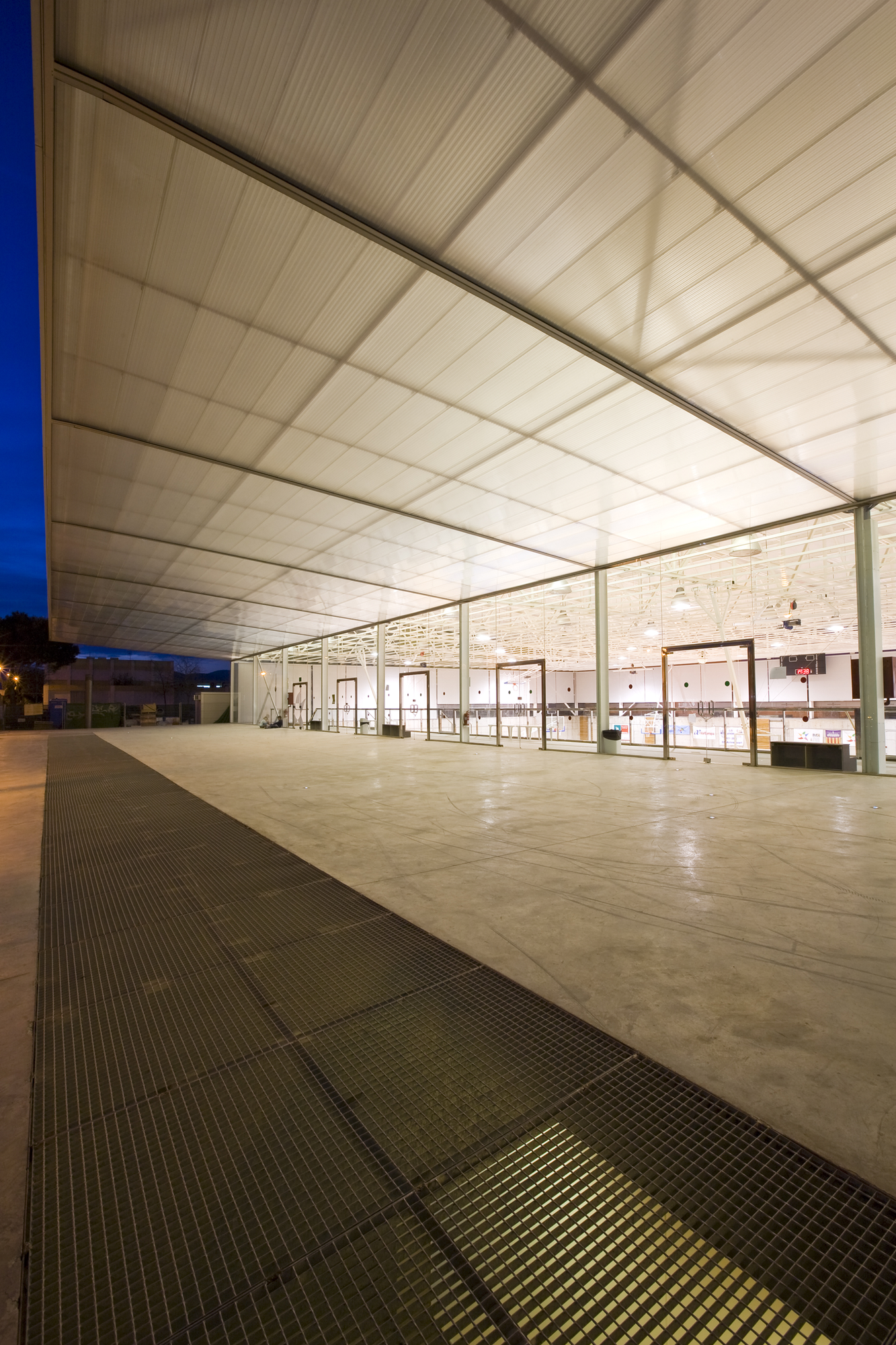
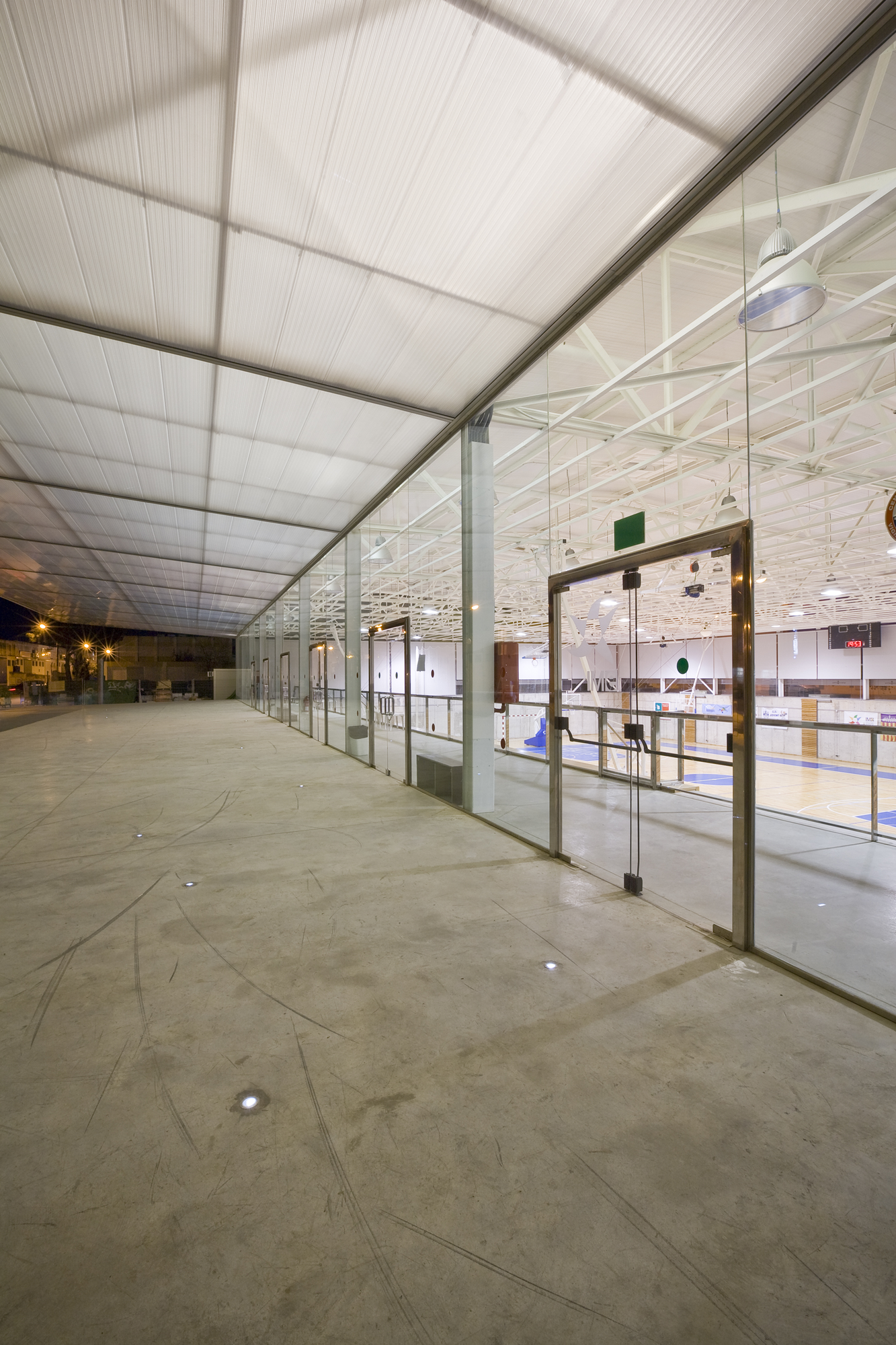
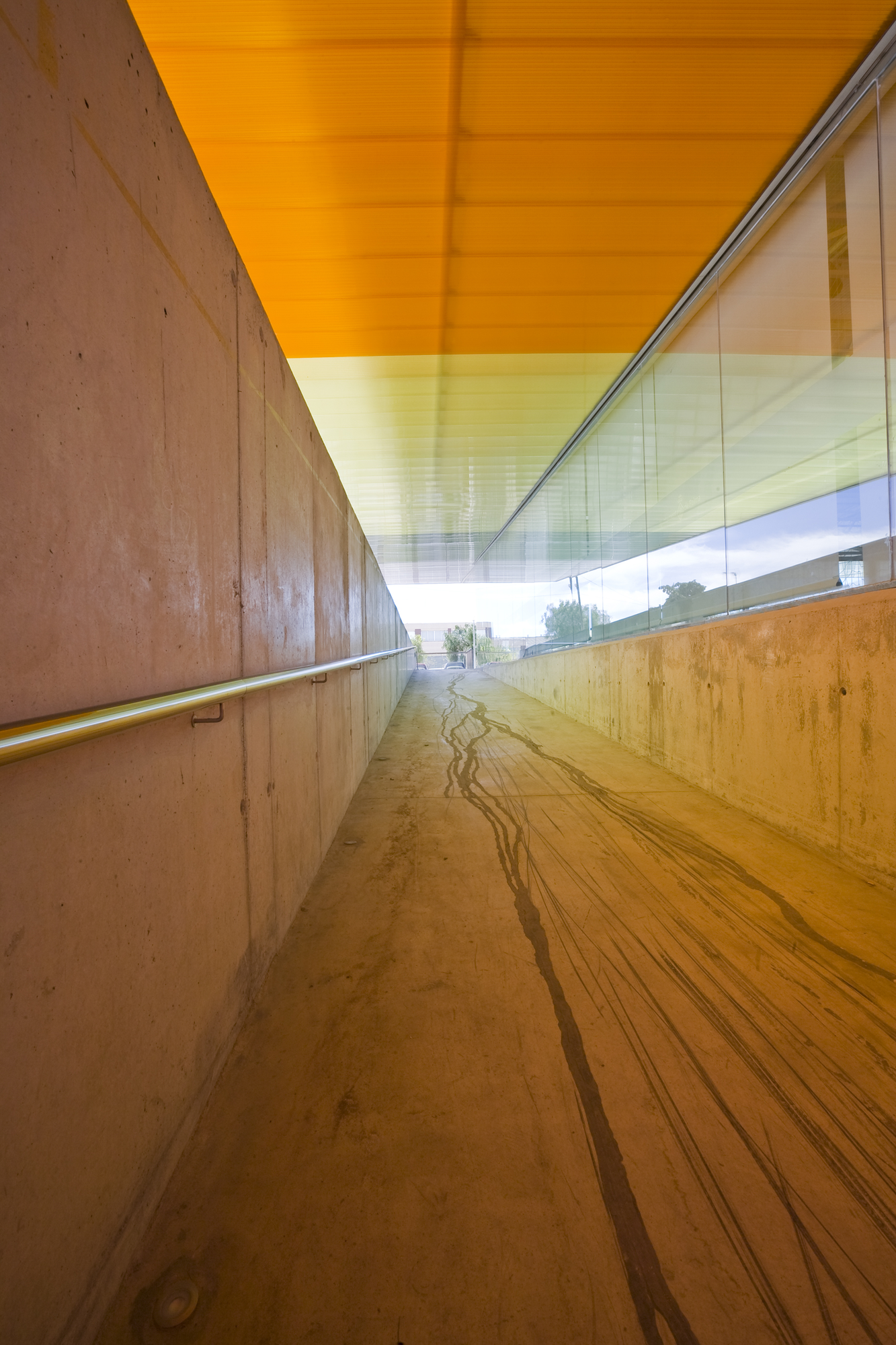
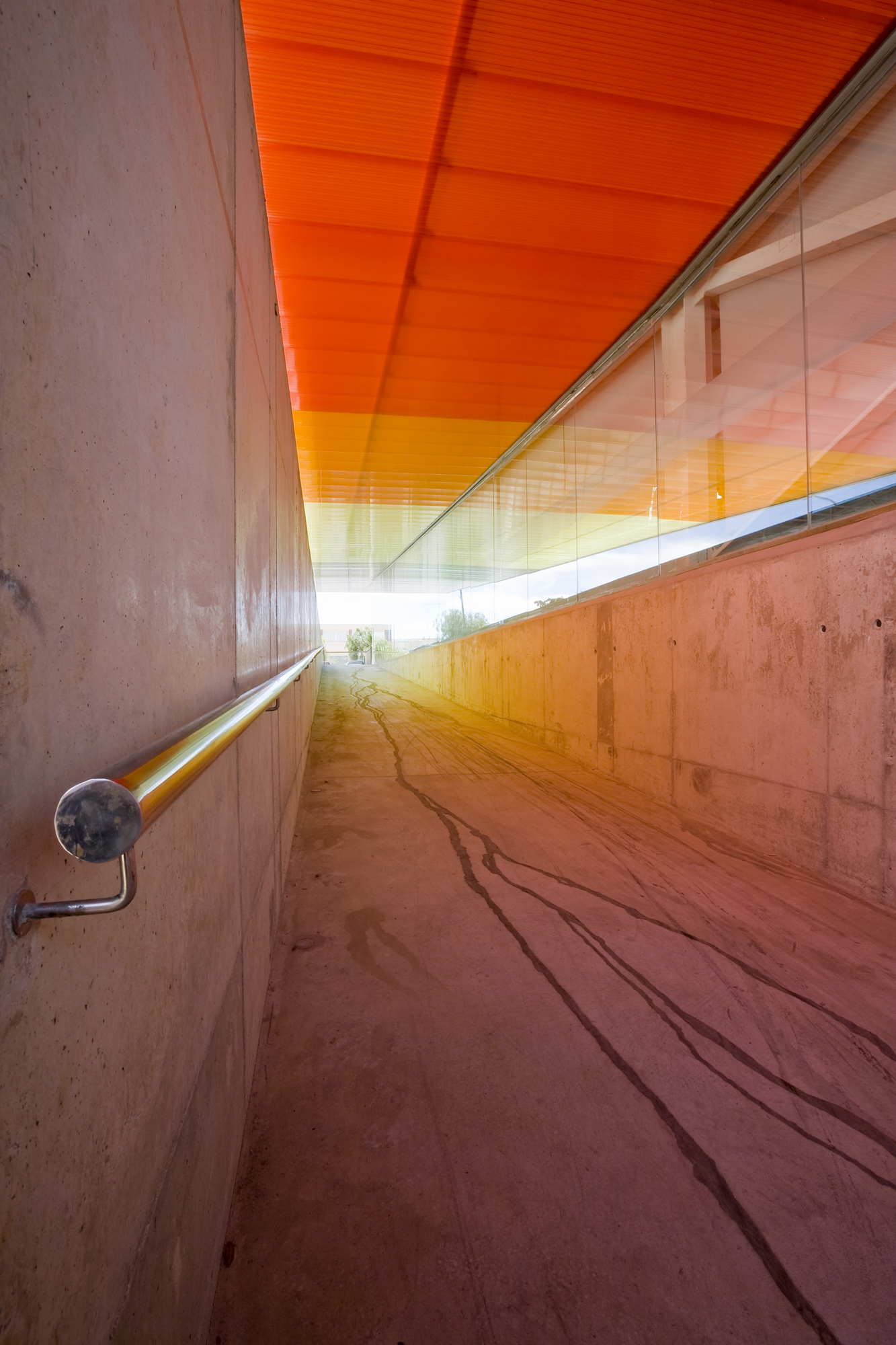
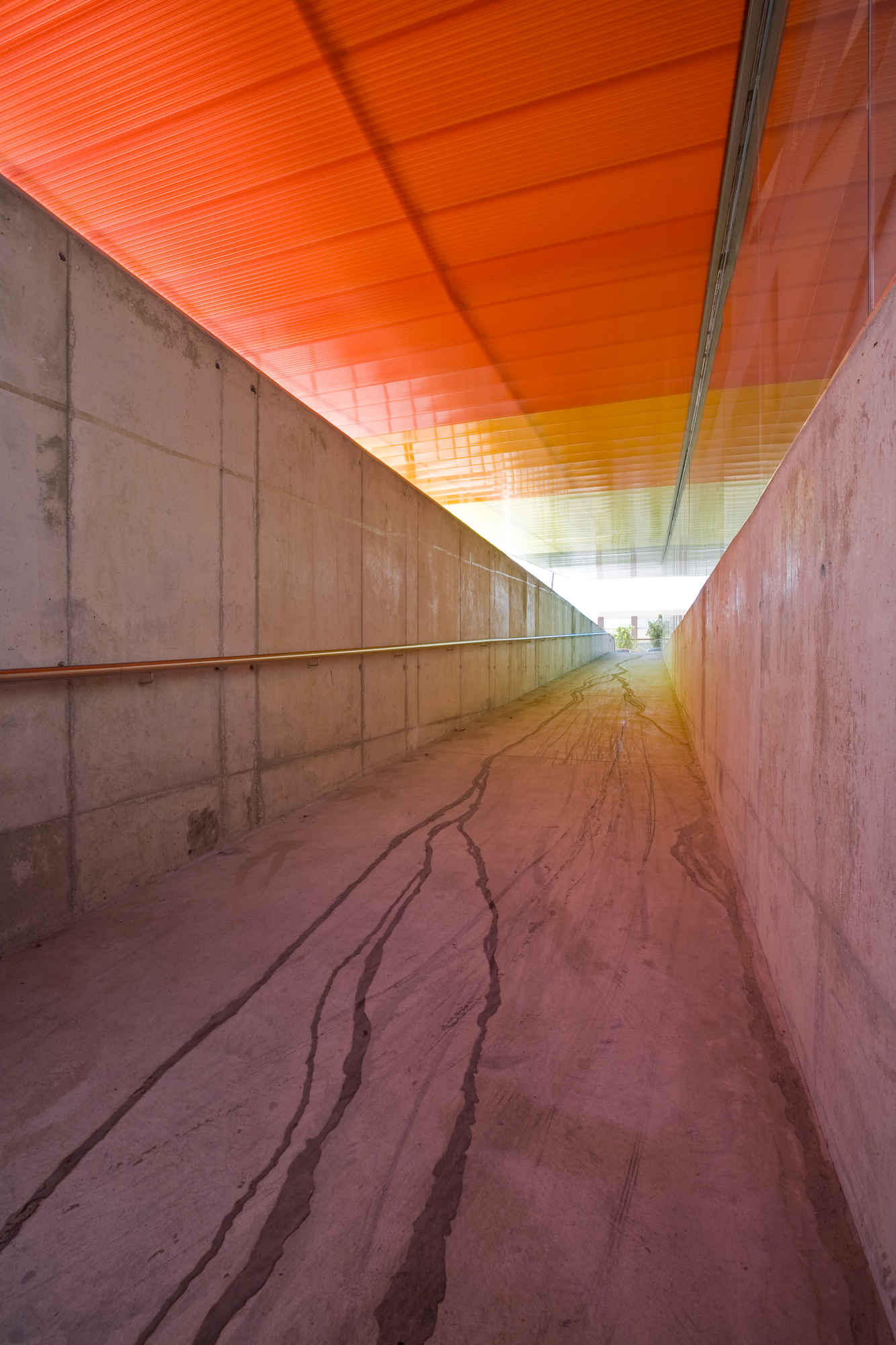
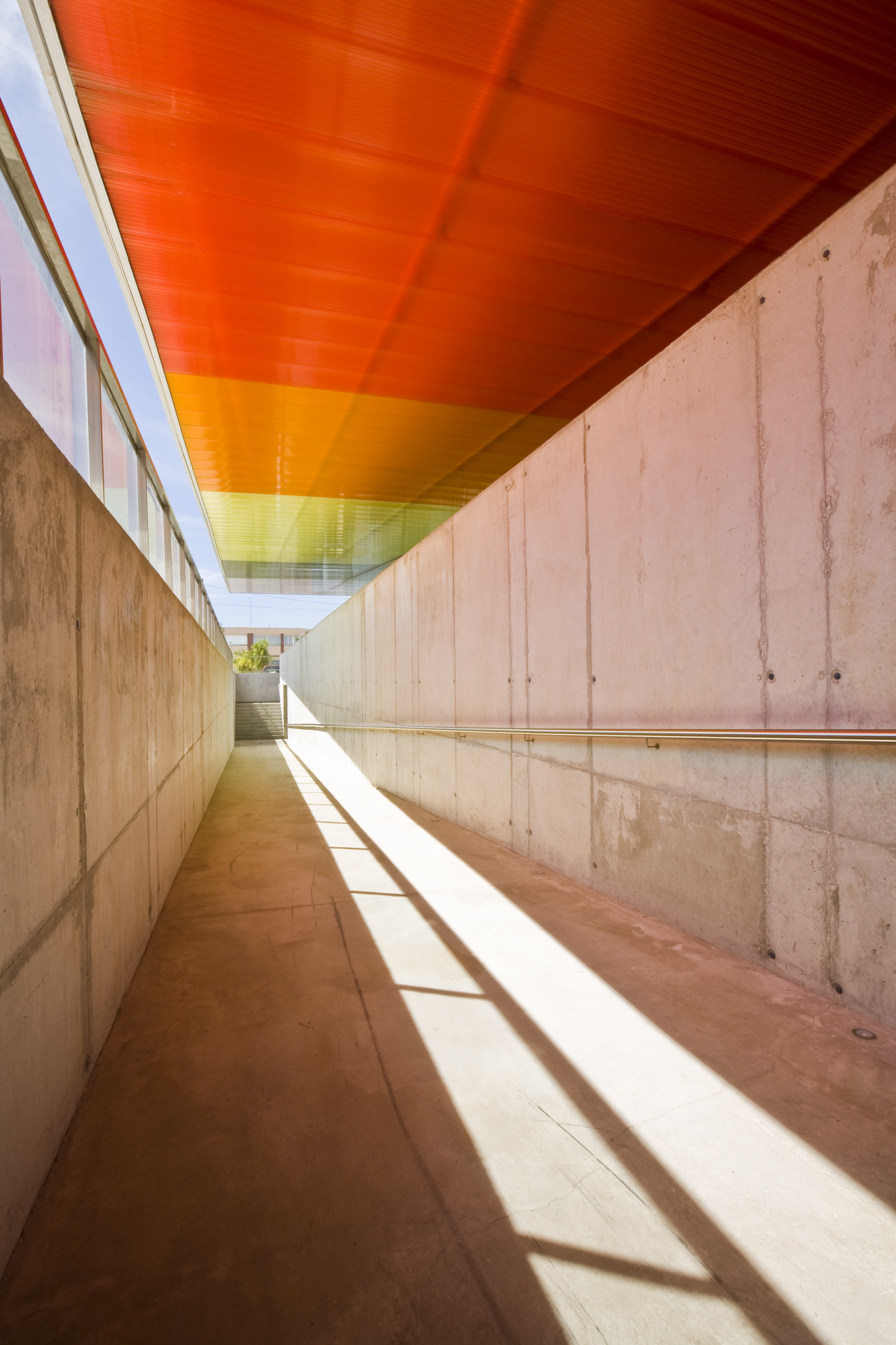
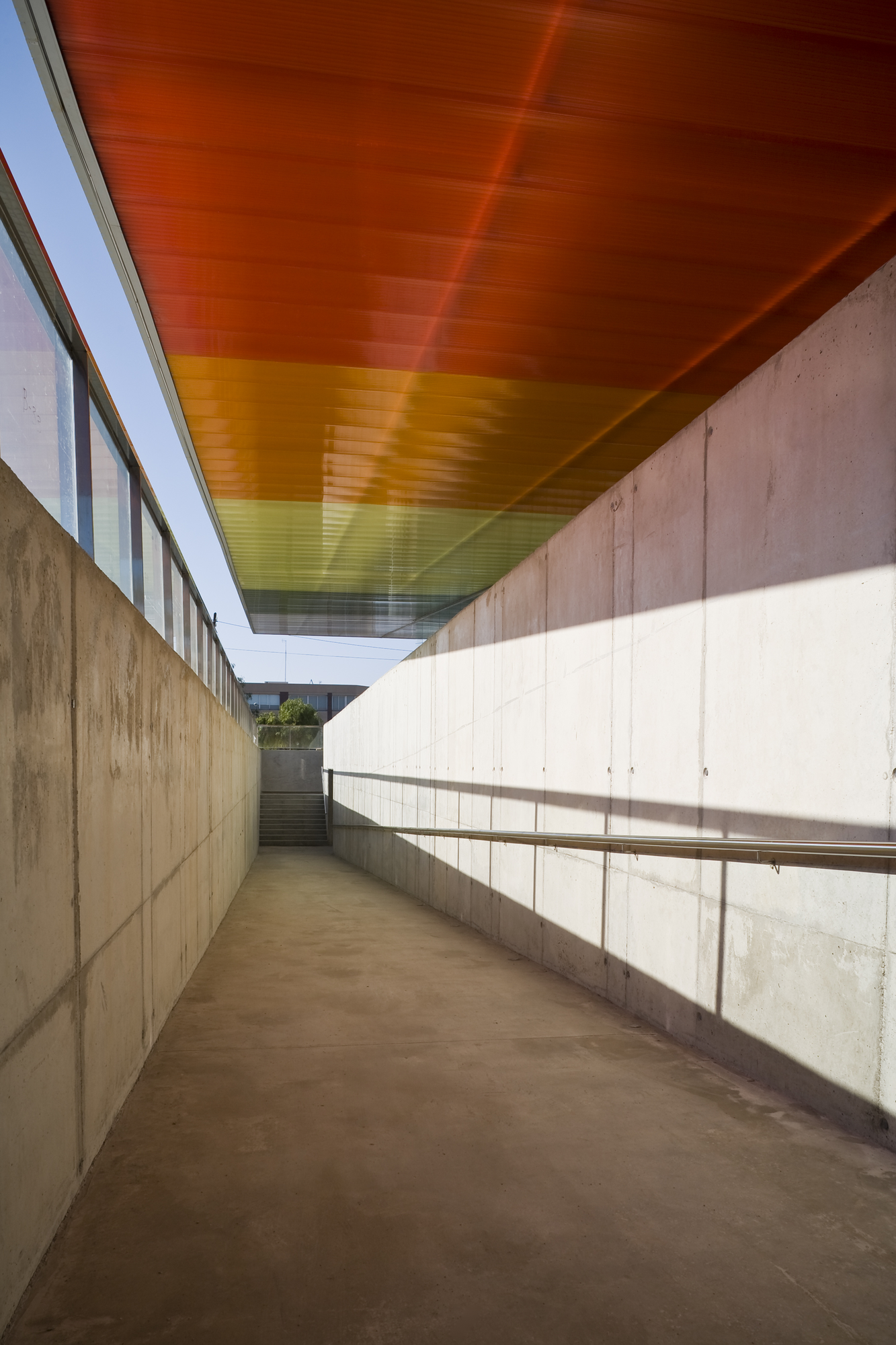
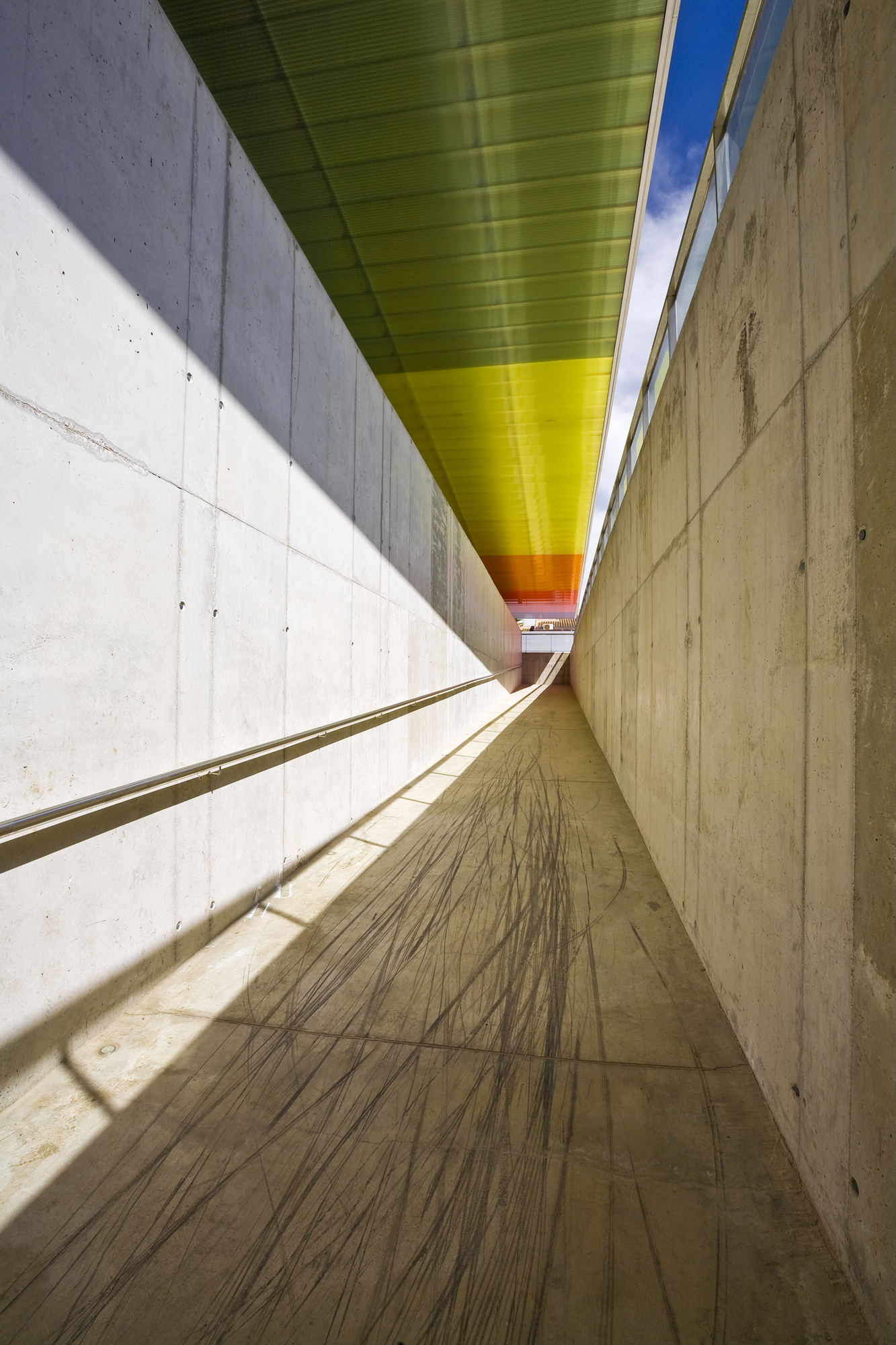
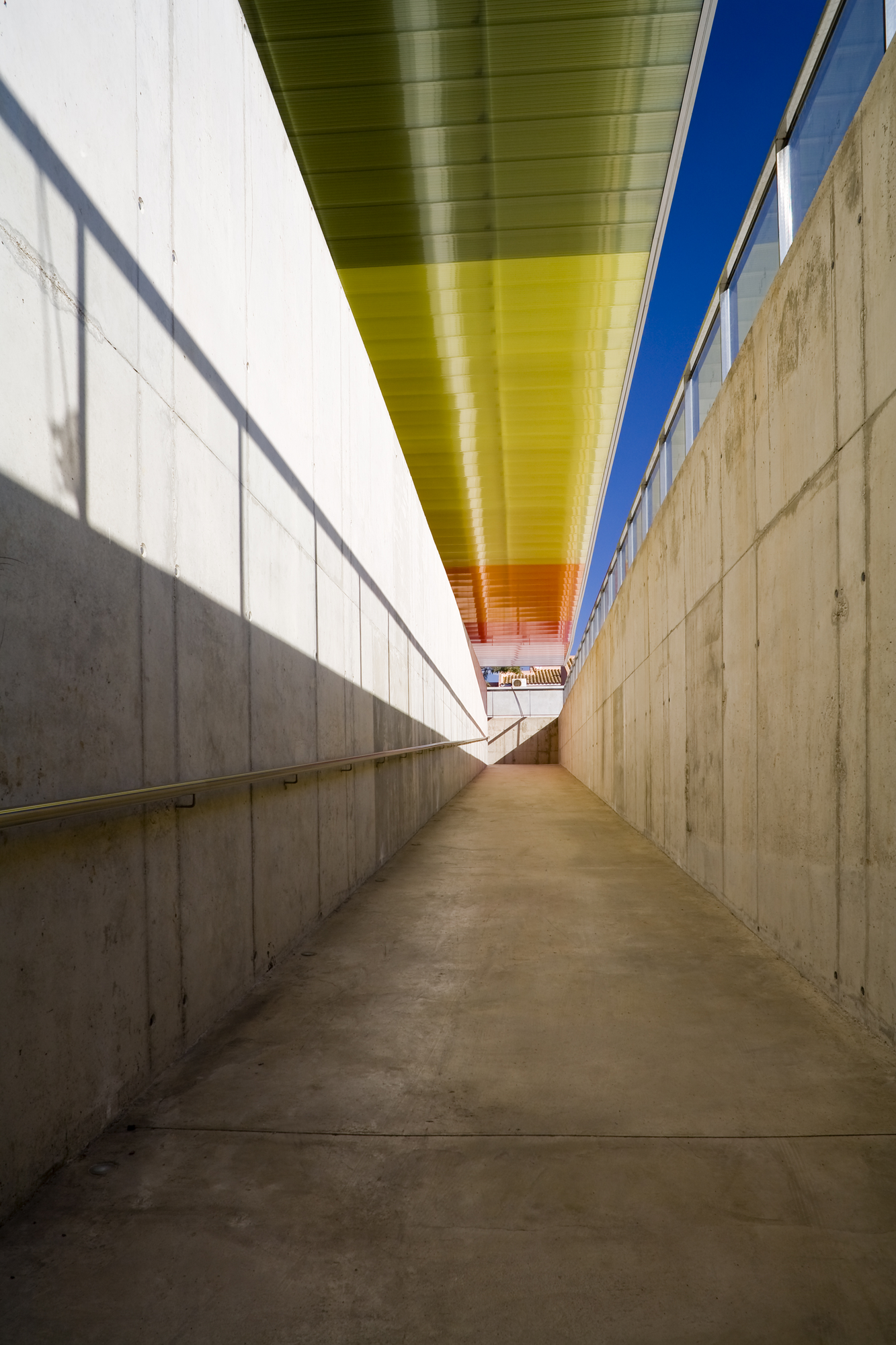
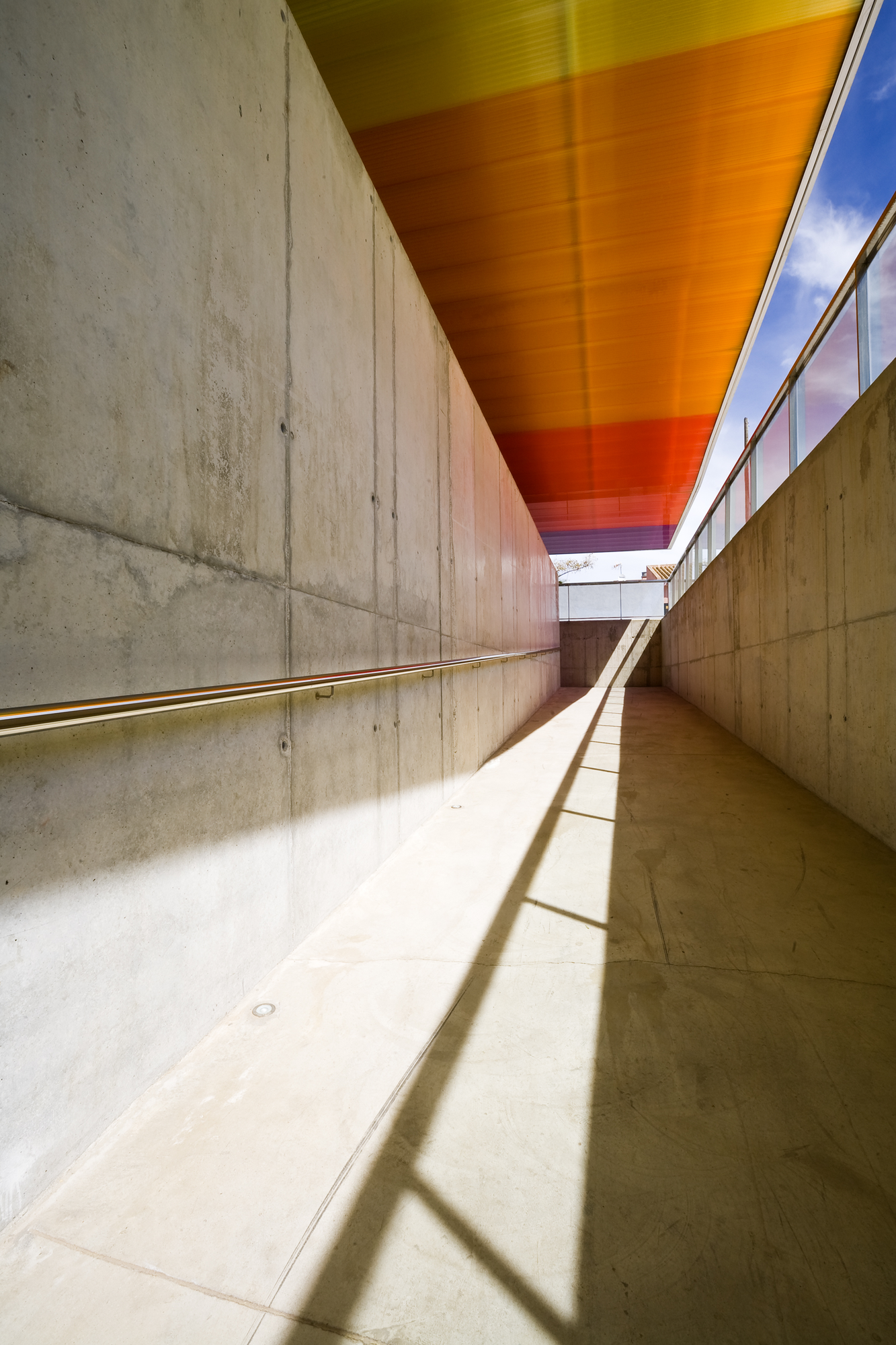
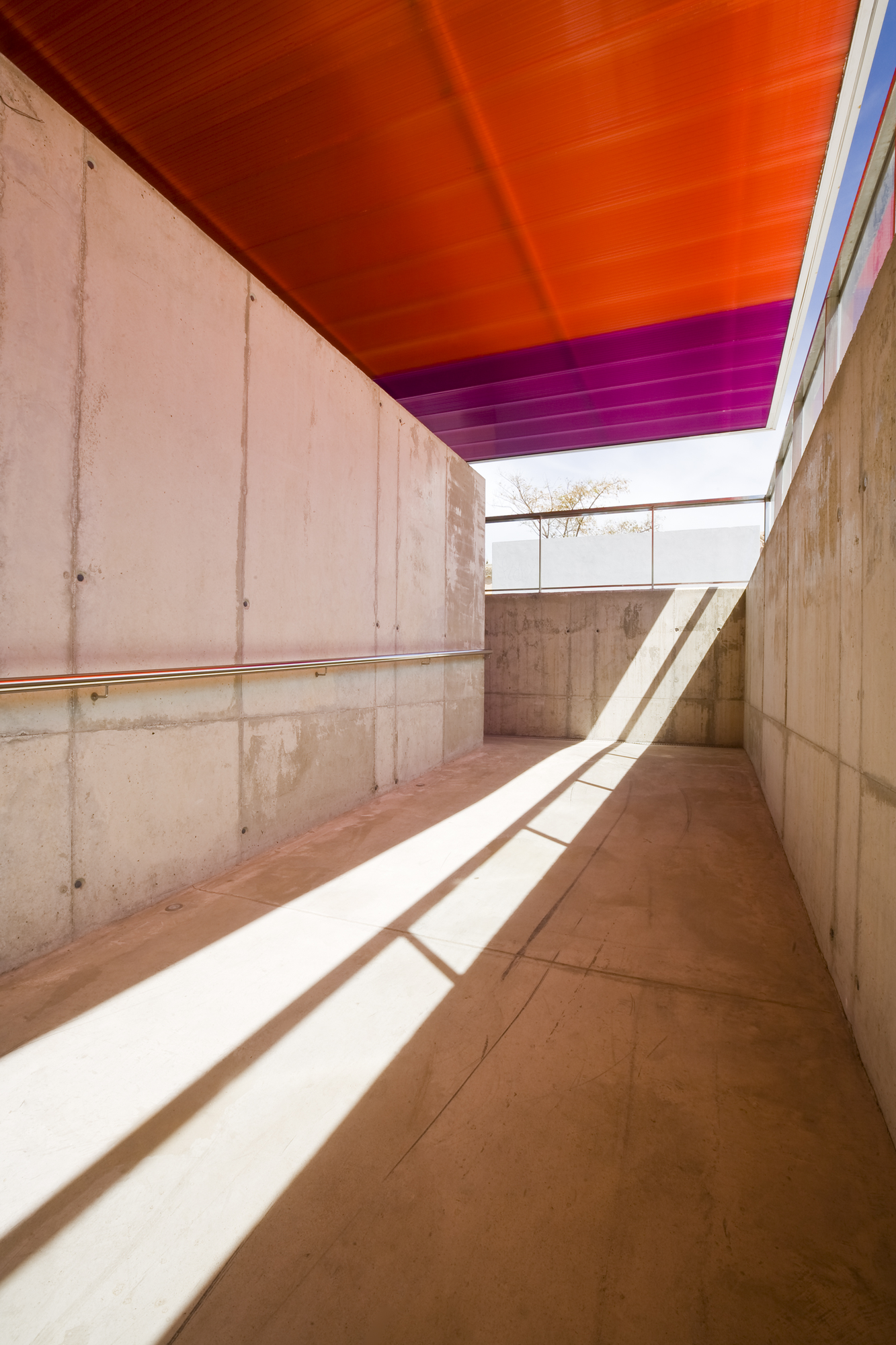
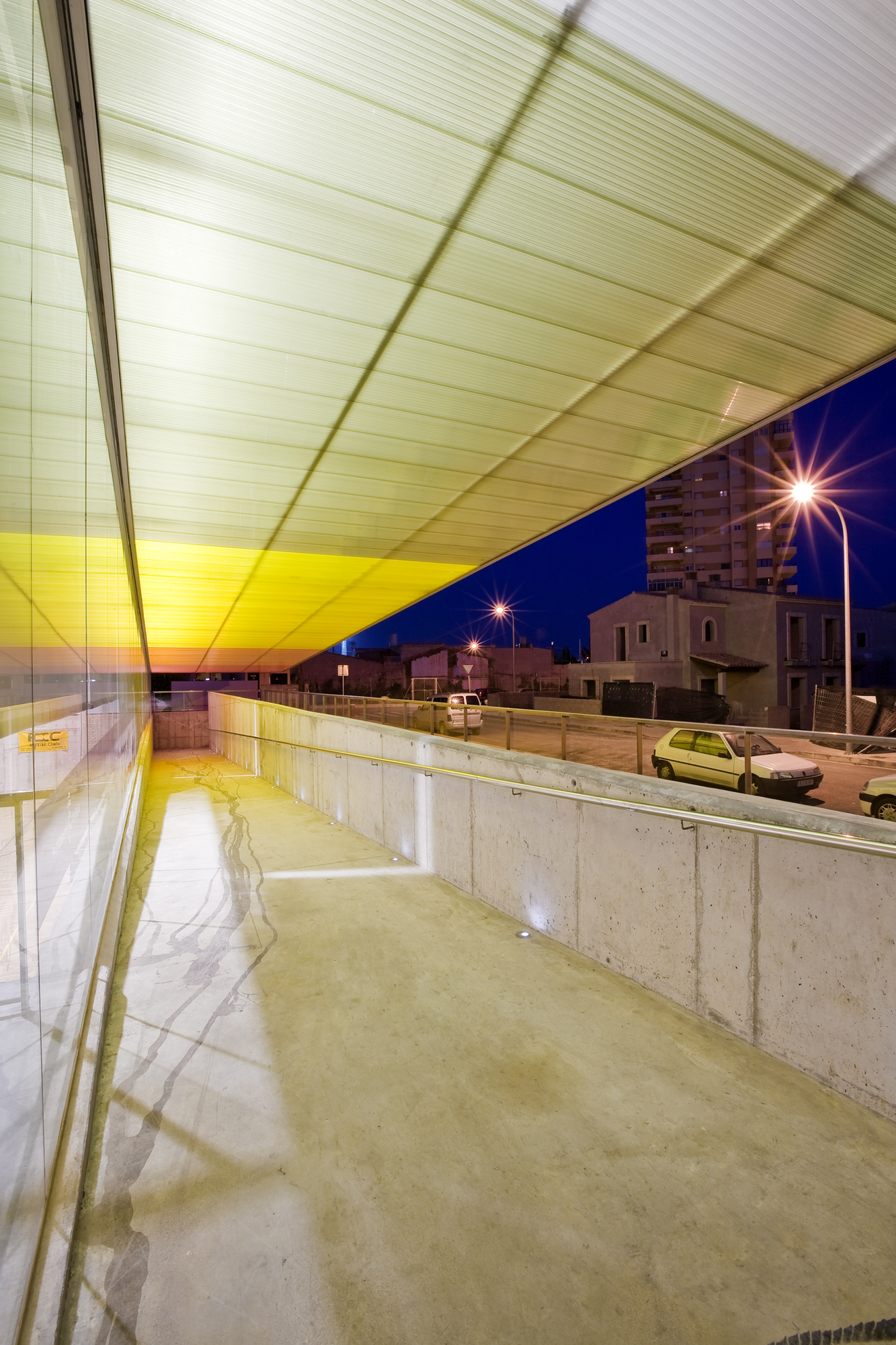
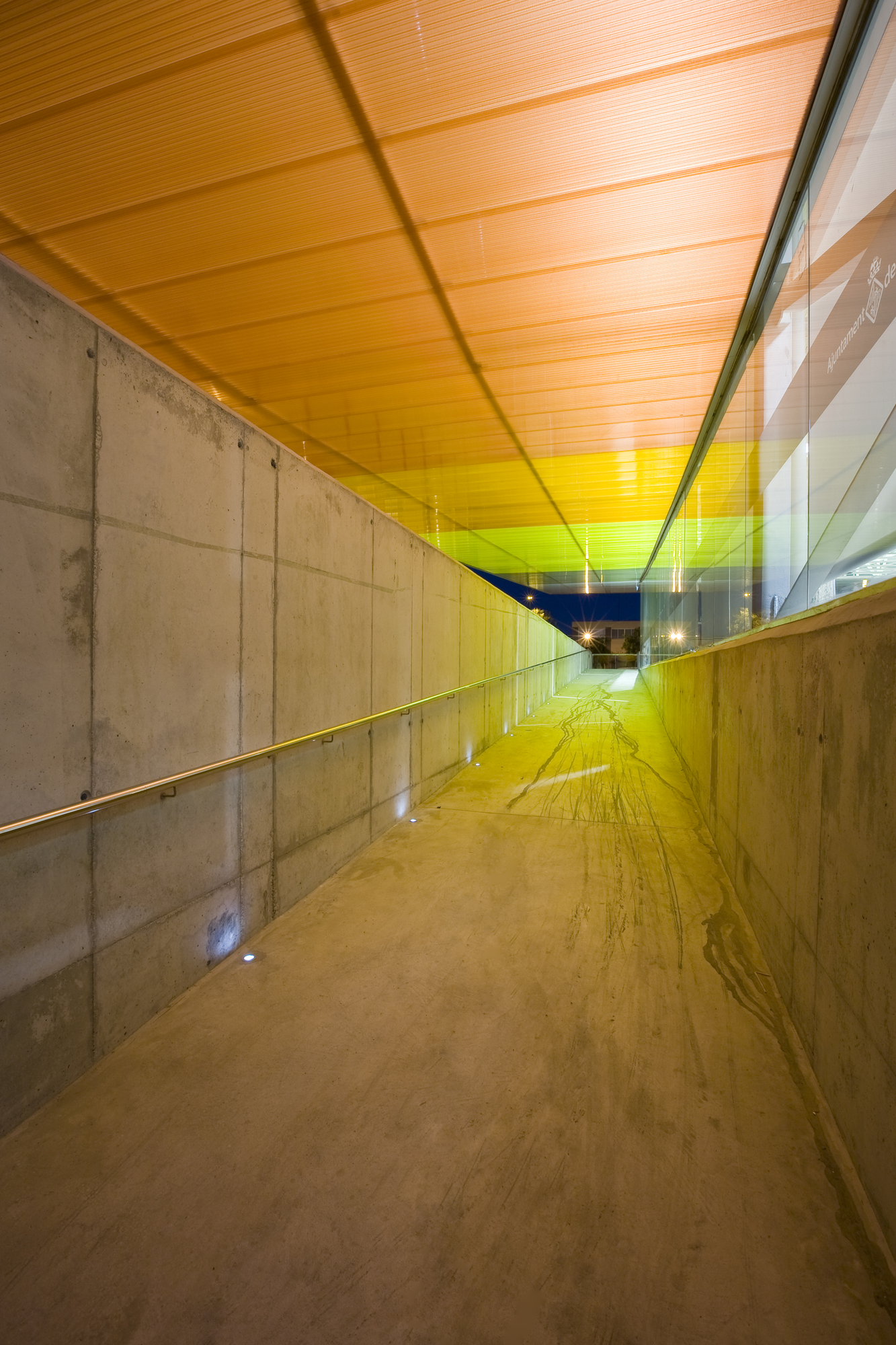
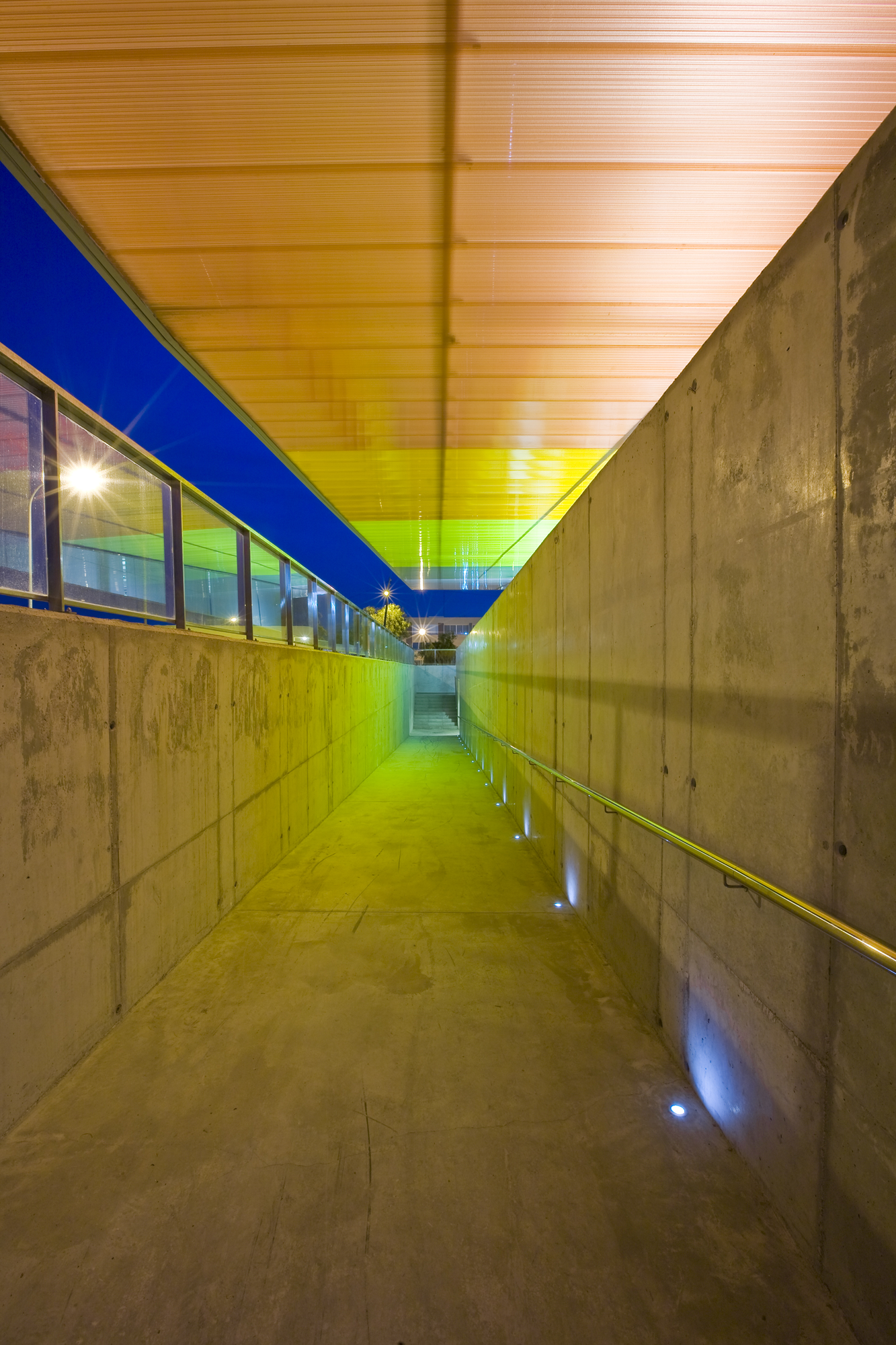
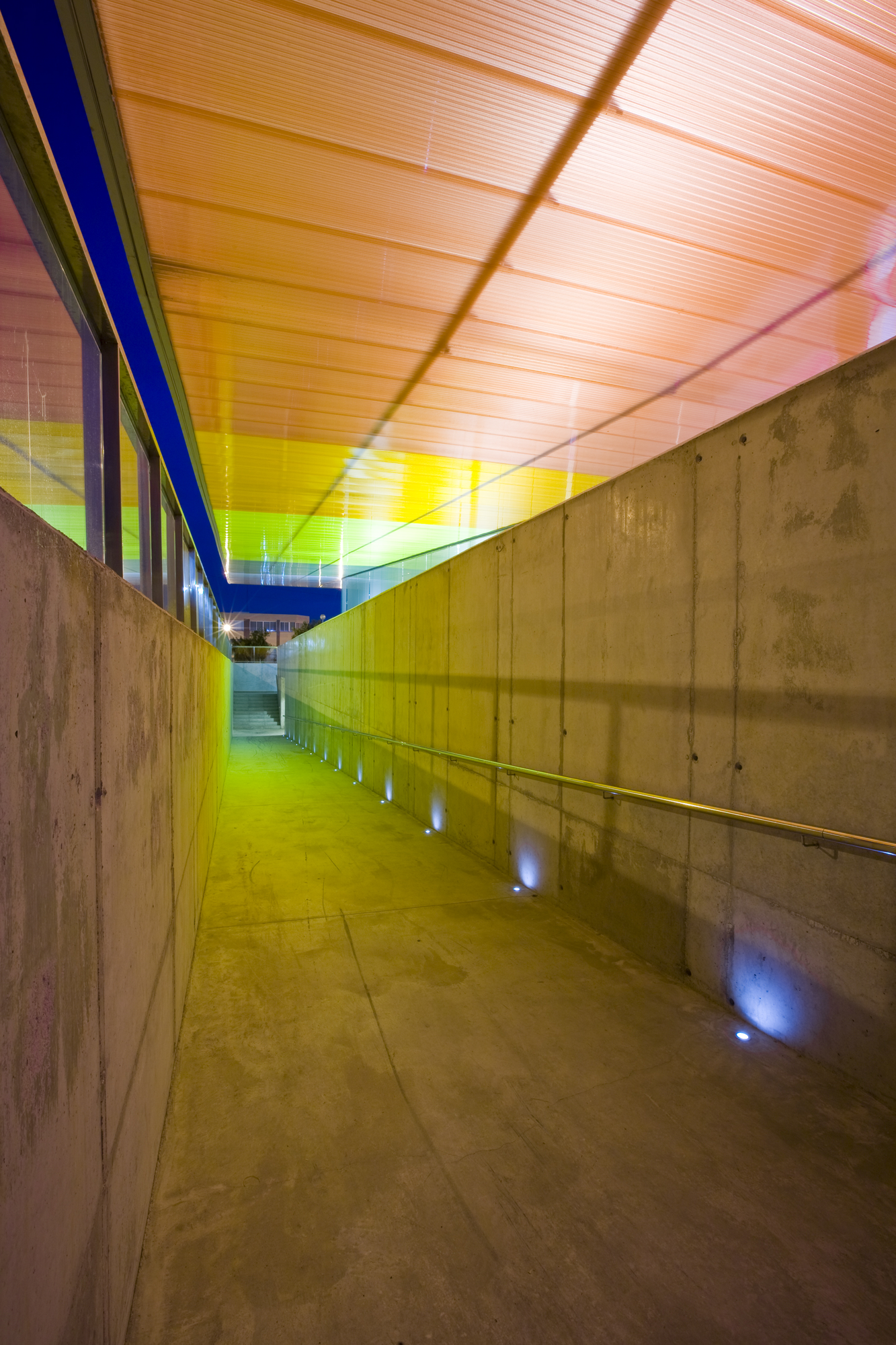
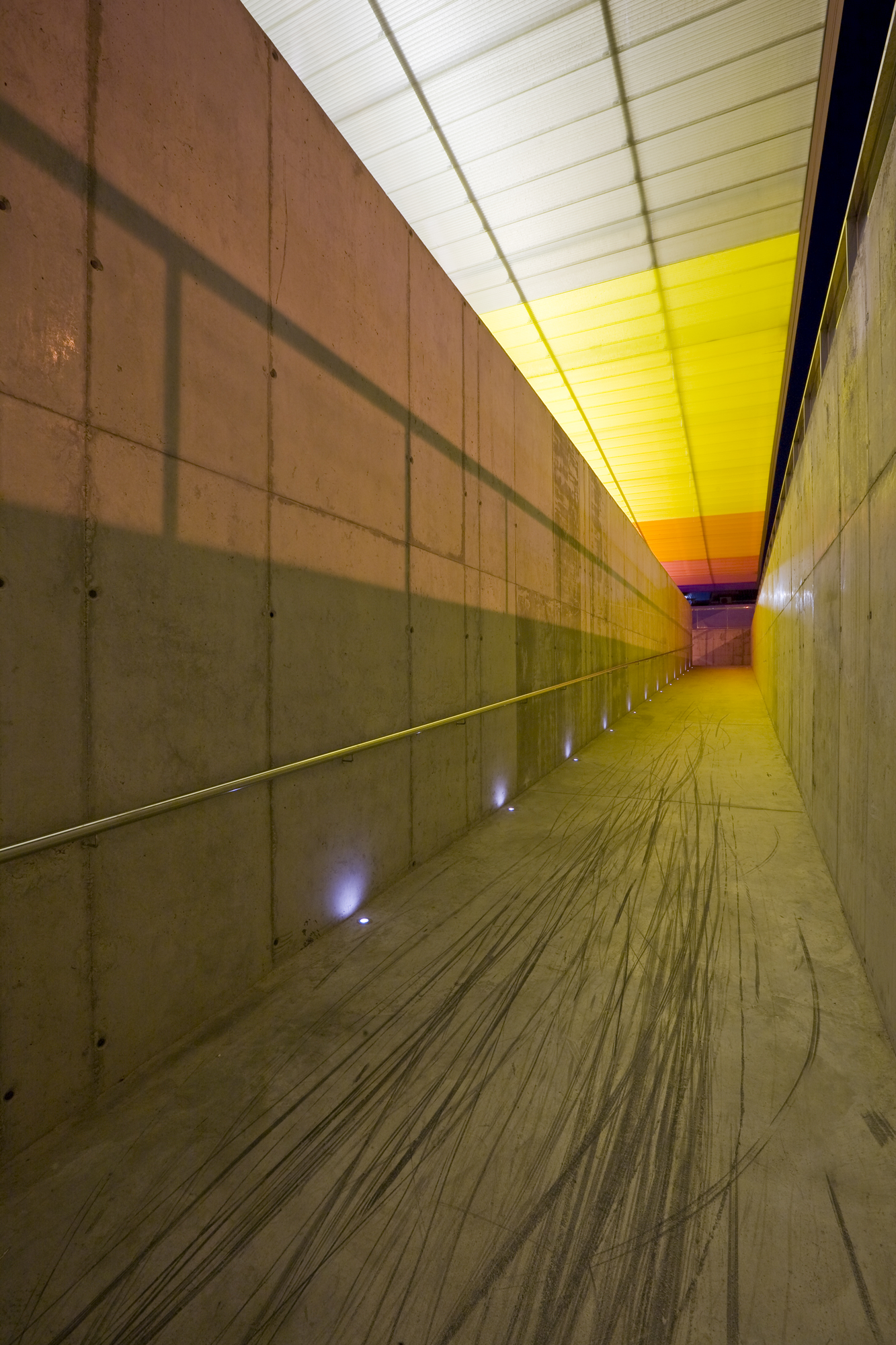
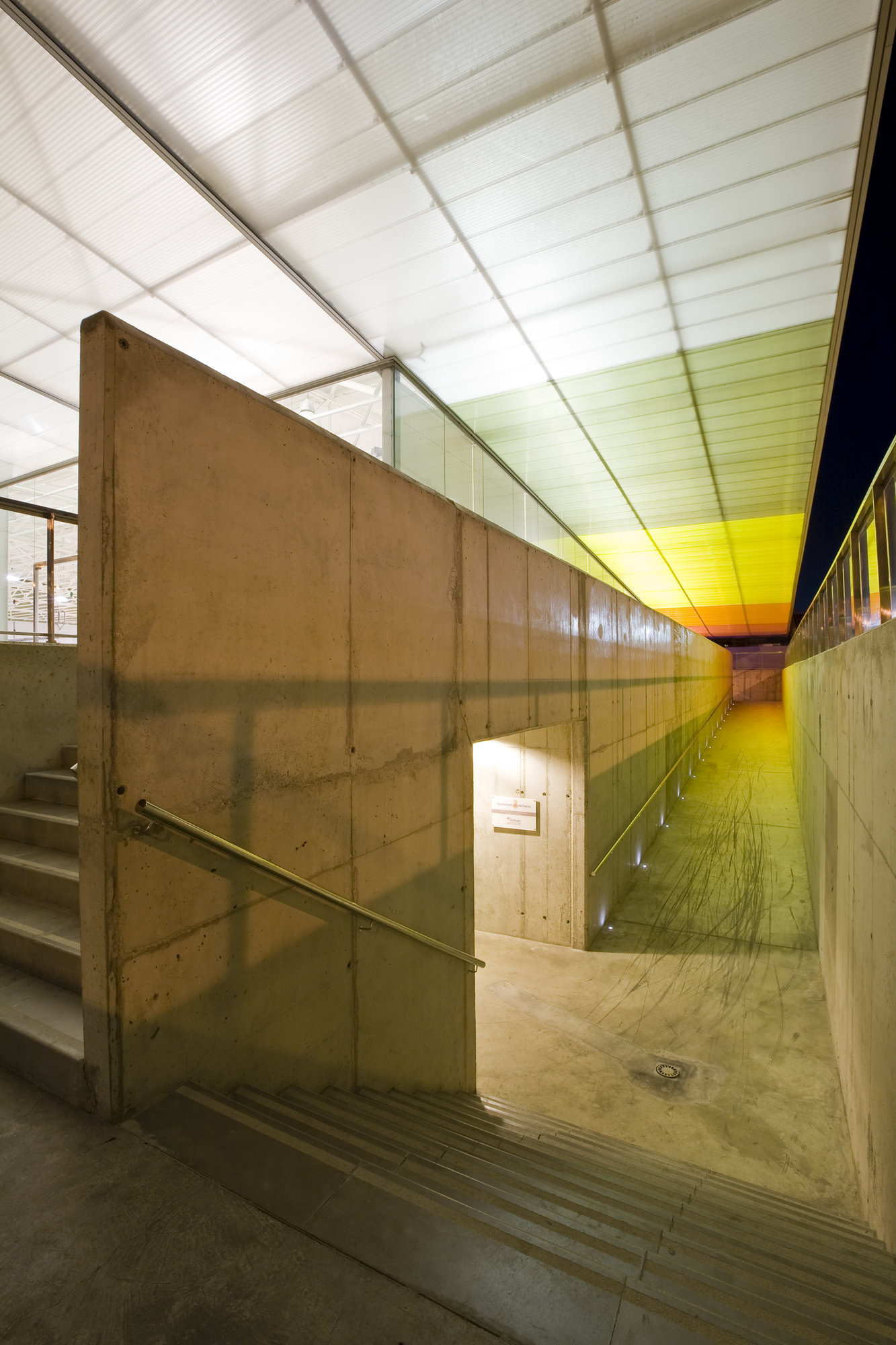
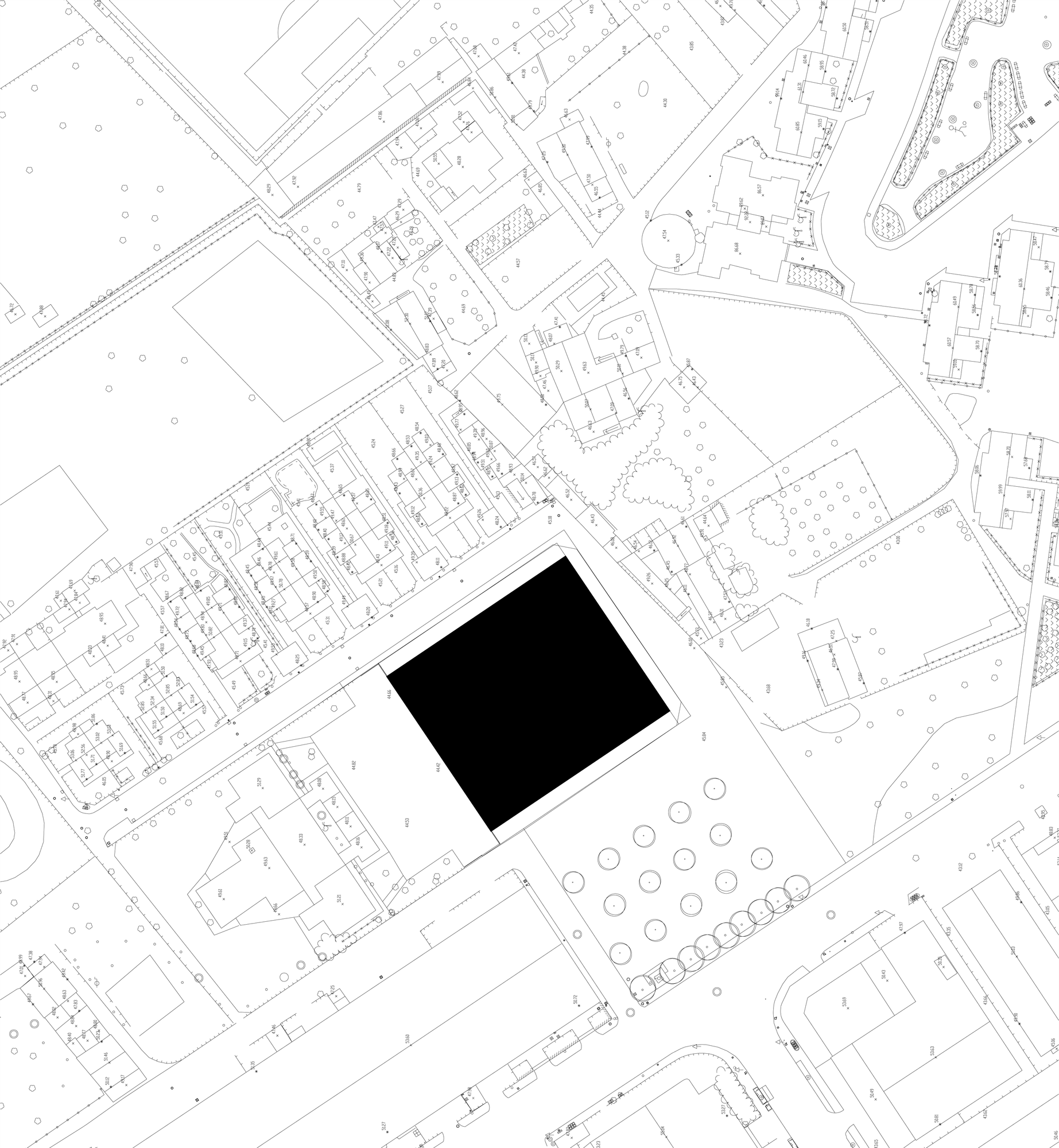
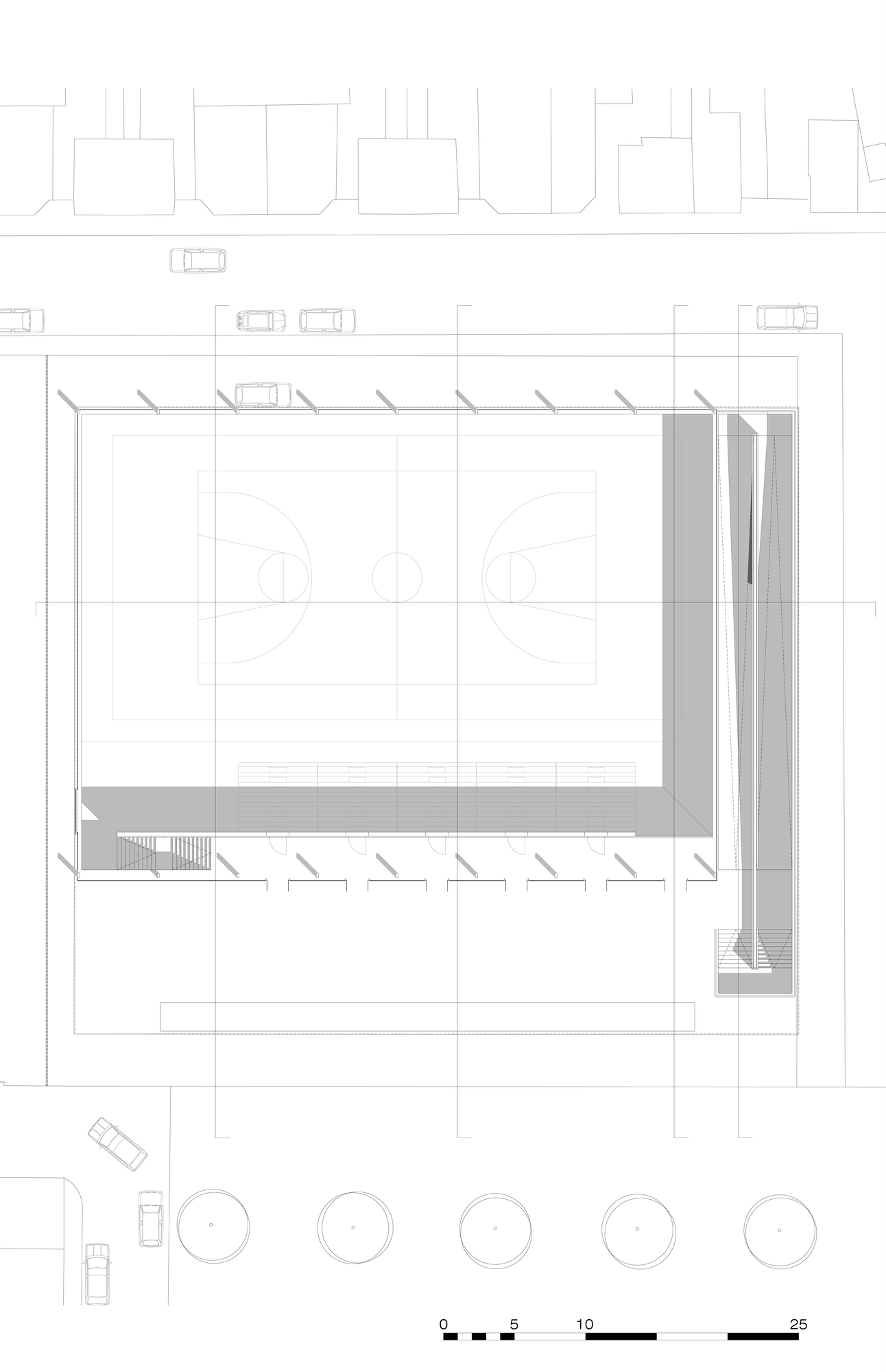
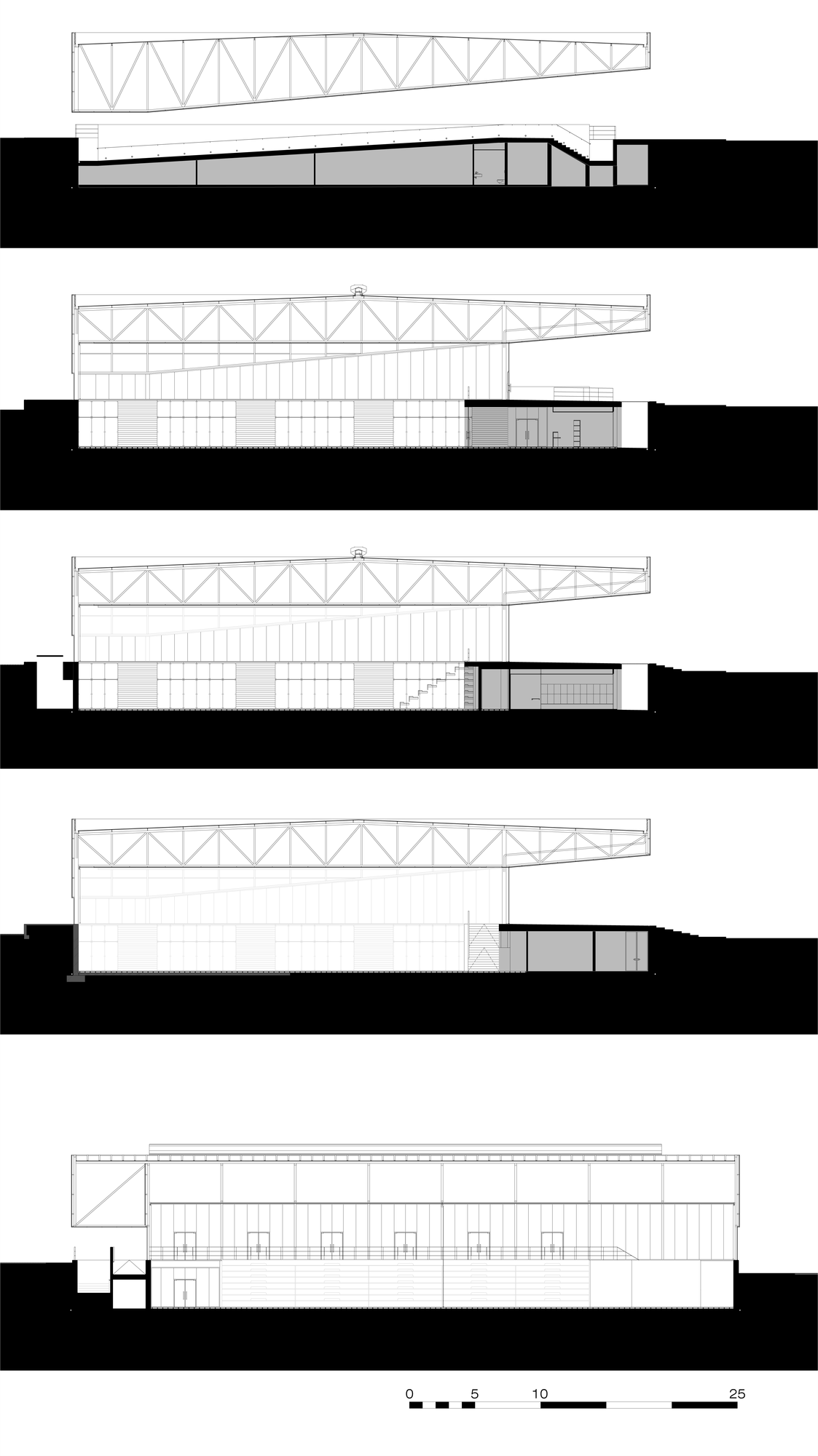
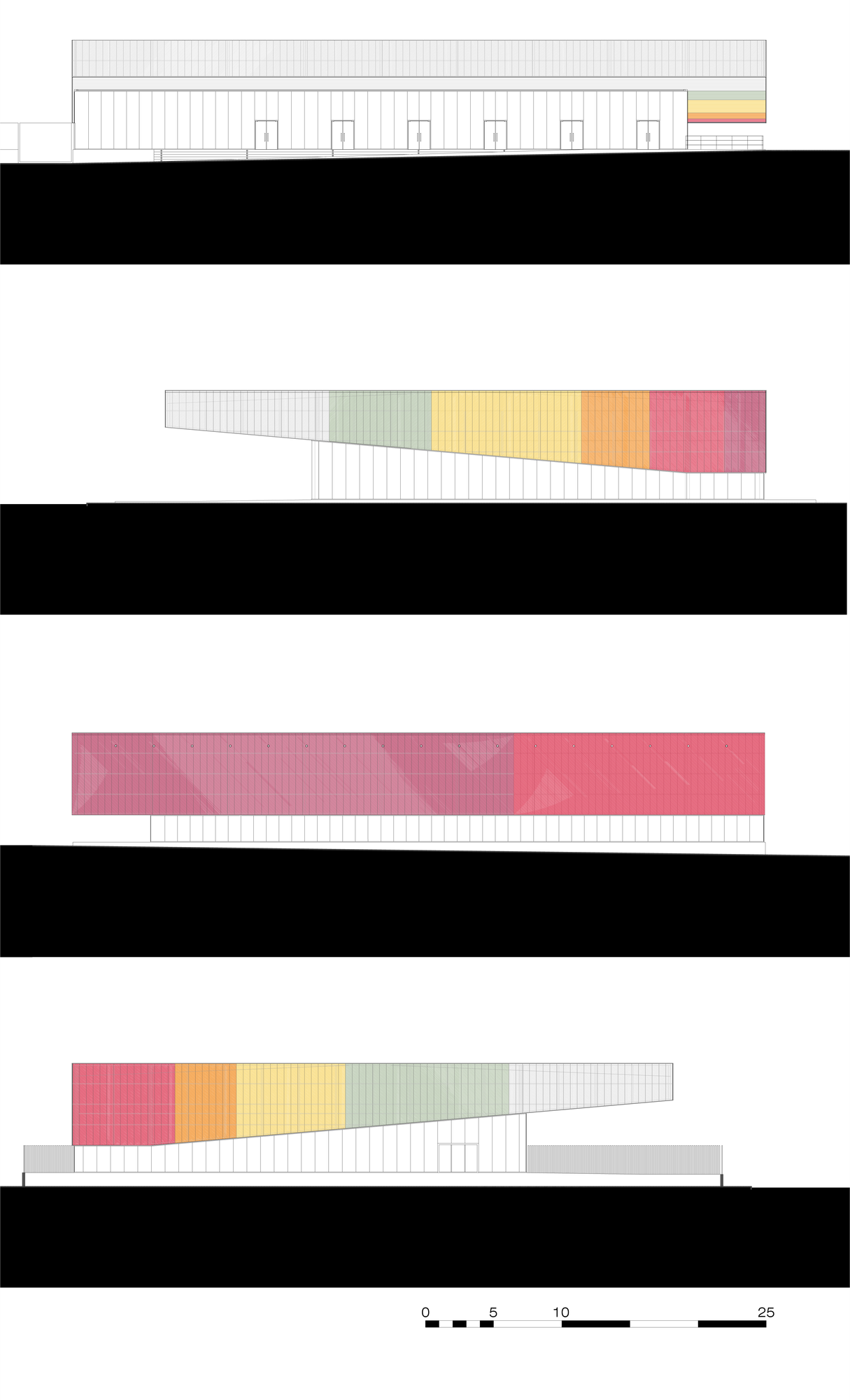
The Polideportivo in Sa Indiotería located in Palma de Mallorca, Spain and designed by Jordi Herrero + Sebastián Escanellas is most notable for its cantilever. The superstructure of the building is designed in such a way that outdoors seems to flow directly into indoors. Composed structurally as an efficiently designed steel trussed space frame, it is skinned with light-weight, coloured polycarbonate, lending an air of playfulness and enabling the large cantilever which fronts the building, presenting it to the public.
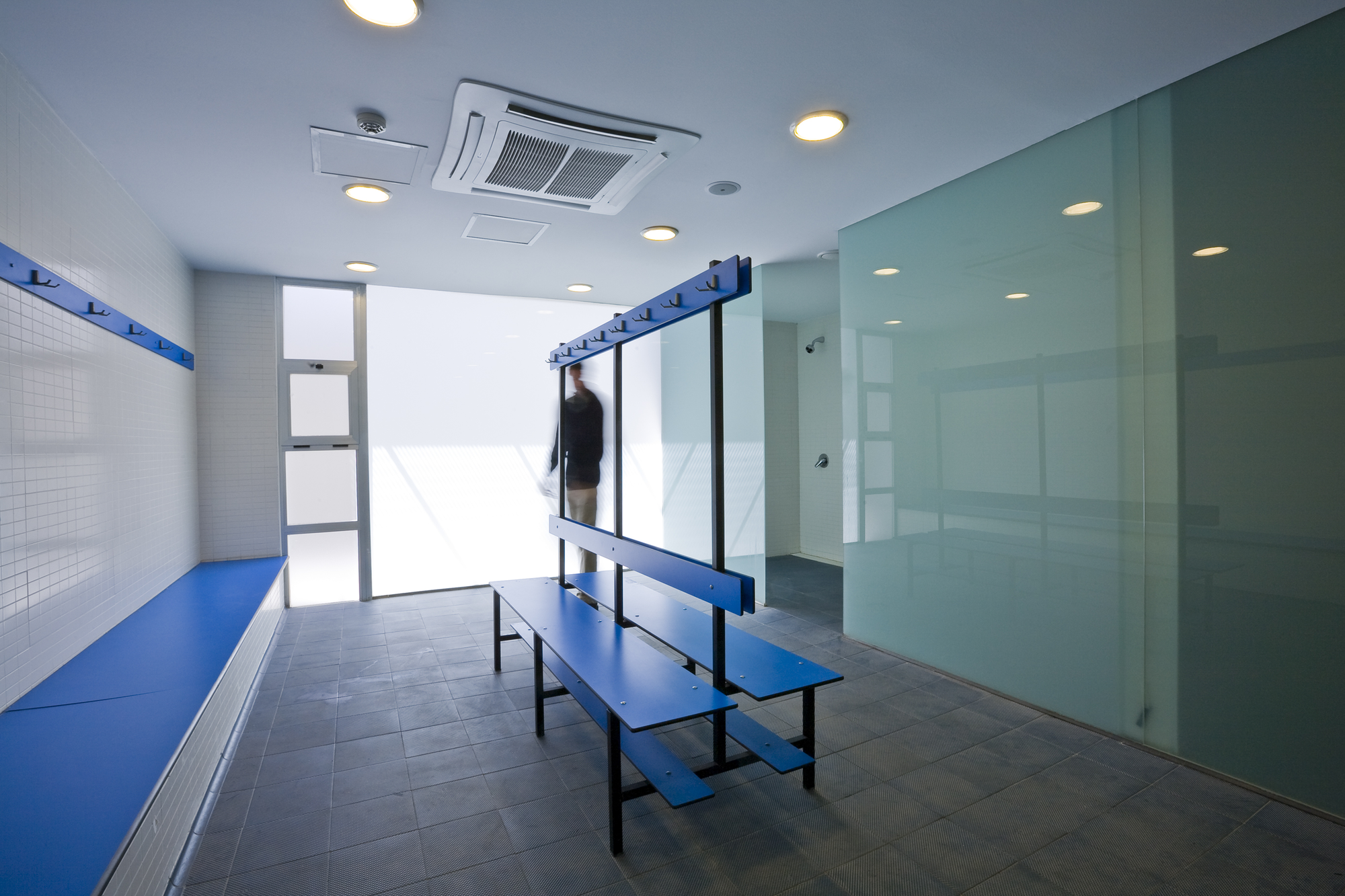
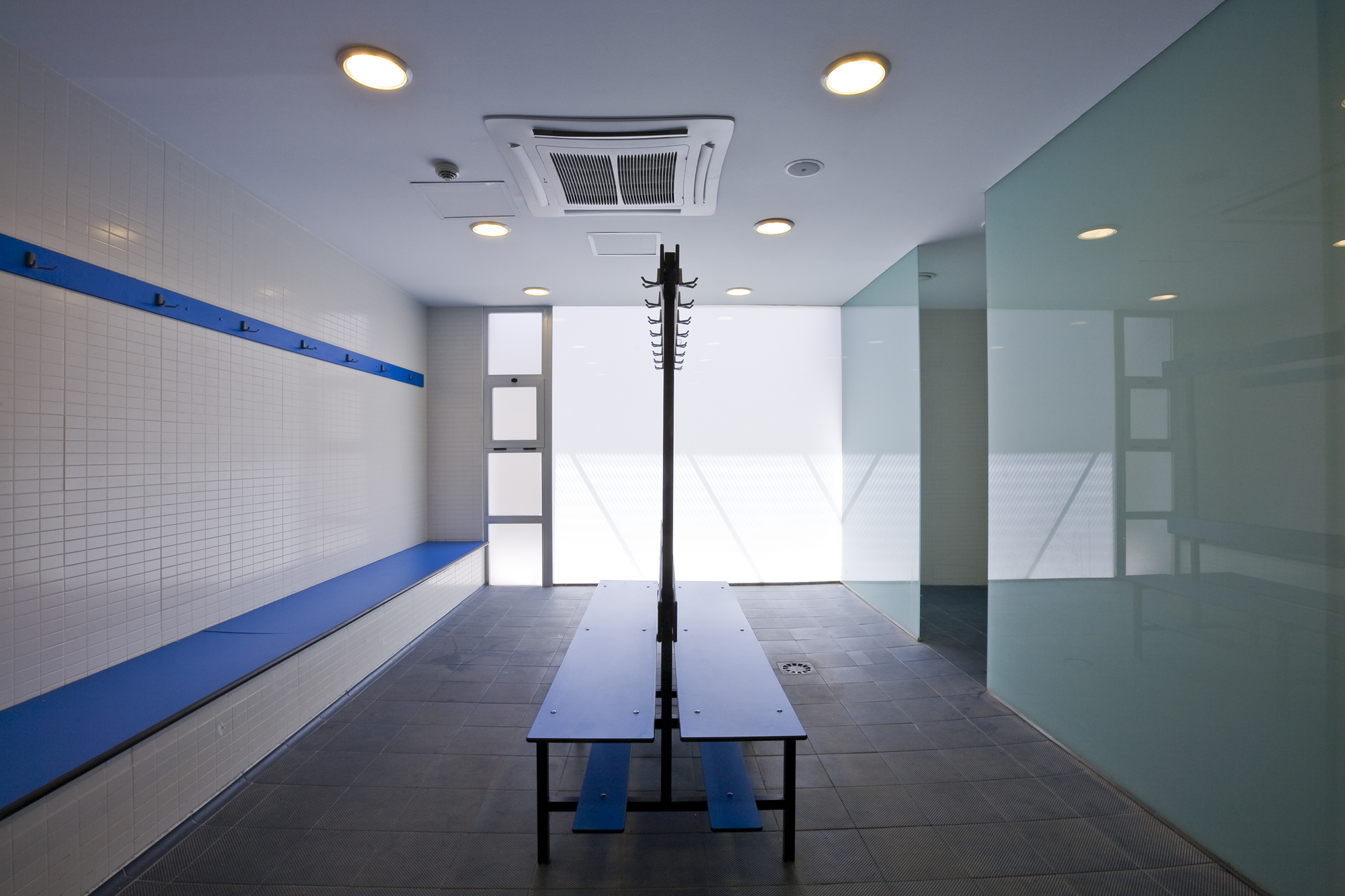
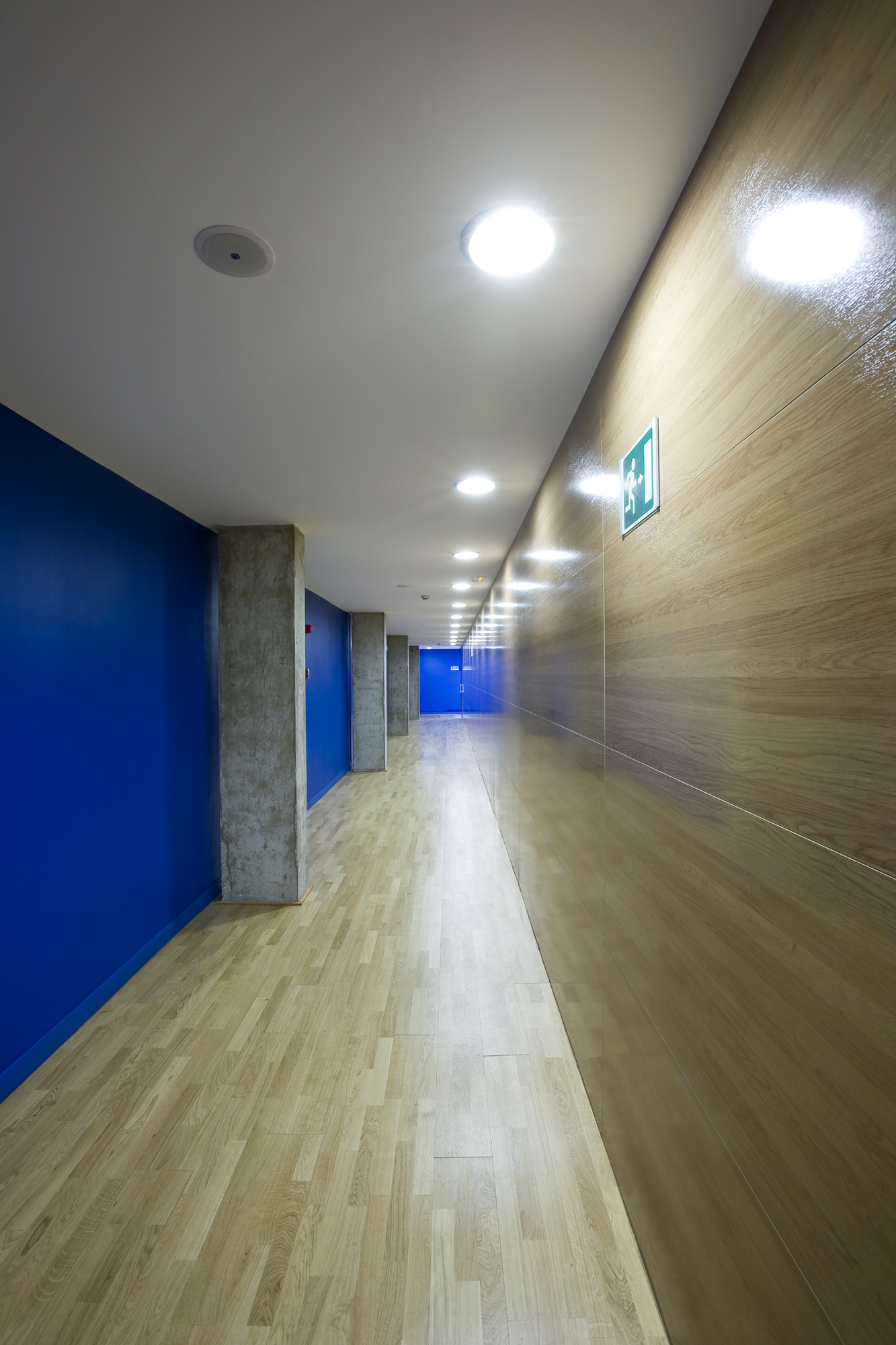
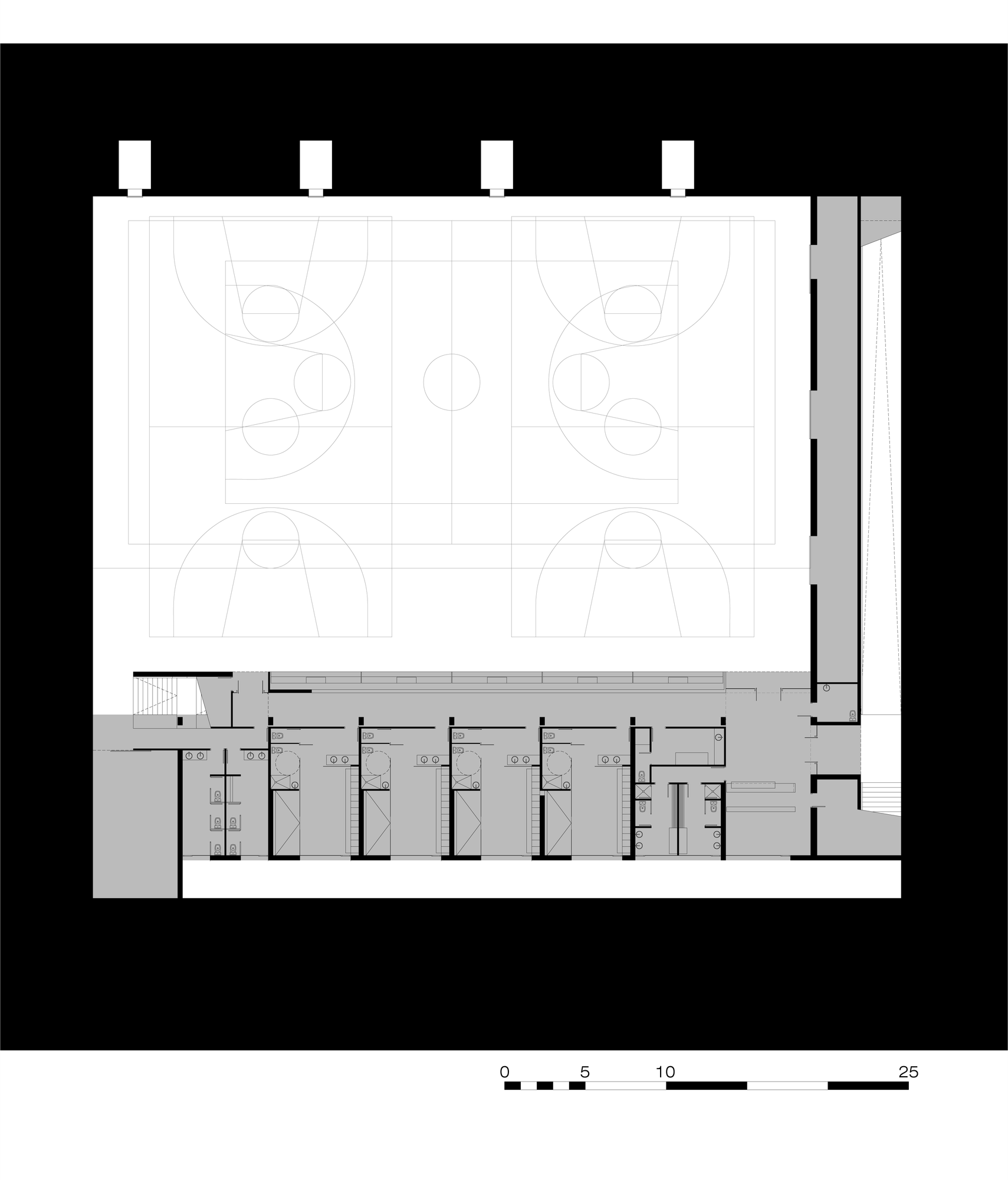
In order to keep an open layout without visual barriers from the park outside to the interior, the court itself as well as locker rooms and support facilities, are buried below grade. Light filters down indirectly, coating the courts with an ambient glow. Without windows, fresh air enters the gymnasium through courtyards while hot air exits through openings in the roof. The architects strove throughout for a feeling of being outside while enjoying the benefits of a roof and protective structure.

Matt Davis is a Virginia Tech graduate and one of the founding editors behind Arch2O. Launching the platform in mid‑2012 alongside fellow Hokies, he helped shape its identity as an international hub for design innovation and critical dialogue . With a foundation in architectural education and a passion for uncovering unconventional design approaches, Matt has contributed significantly—both editorially and strategically—to Arch2O’s growth, ensuring that emerging architects, academics, and creatives have a space to question, explore, and elevate the built environment.