

If you’re pursuing an architecture degree, you’ll quickly discover that a significant portion of your time isn’t spent sketching futuristic skyscrapers—it’s spent immersed in the past. History of architecture and theory courses will walk you through everything from the mathematical precision of Greek classical orders to Roman engineering breakthroughs, from Renaissance fundamentals to the revolutionary Bauhaus movement. You’ll dive deep into architectural movements, exploring both the triumphs and failures that shaped our built environment.
Why Architectural History Still Matters in Modern Education
Architecture students constantly ask themselves: why spend countless hours studying ancient styles when we’re living in a world of parametric design and AI-generated forms? The answer runs deeper than you might expect. Architectural history isn’t just a nostalgic look backward—it’s the foundation that supports every innovative leap forward.
The relevance of architectural history extends far beyond your school years and into professional practice. When you understand how past architects solved problems, you develop a sophisticated grasp of how form, function, and social context intertwine. These history lectures do more than teach you about old buildings; they introduce you to the revolutionary ideas, philosophical movements, and technological innovations that shaped our understanding of space, place, and architectural language.
More Than Just Old Buildings: What You Actually Learn
Studying architectural heritage gives you something invaluable: a subconscious reservoir of design solutions and theoretical frameworks. Without this knowledge bank, your creative potential hits a ceiling. Every groundbreaking architect—from Le Corbusier to Mies van der Rohe—drew heavily from historical precedent.
Le Corbusier famously attempted to improve upon Leonardo da Vinci’s Vitruvian Man with his own Modulor system, using the human body as a basis for proportional perfection. This became the cornerstone of his architectural theories and modernist designs. Similarly, Mies van der Rohe looked to Gothic architecture’s expressive use of light to inspire his minimalist spatial compositions. Both created unique contemporary expressions by mining the past for wisdom.
The Hidden Curriculum: Philosophy, Technology, and Social Context
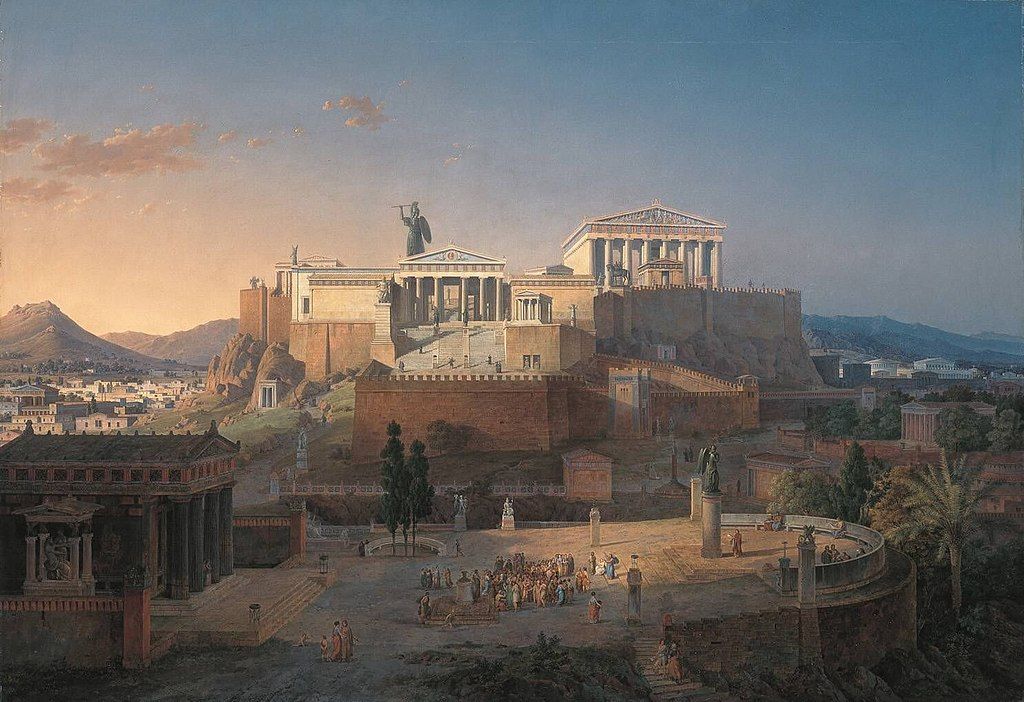
The Greeks didn’t invent column styles in a vacuum—they developed a visual language that expressed their entire culture’s relationship with space and place. Their simple forms became a sophisticated architectural language that outlasted their civilization by millennia. When you study Greek architecture, you’re really studying how design principles can capture a society’s values.
The Romans took this Greek foundation and expanded it dramatically. While Greek architecture used three classical orders (Doric, Ionic, Corinthian), the Romans developed five, adding Tuscan before Doric and Composite after Corinthian. This wasn’t just decorative preference—it represented a deliberate evolution of architectural language, using familiar forms to express new imperial ideals and engineering ambitions.
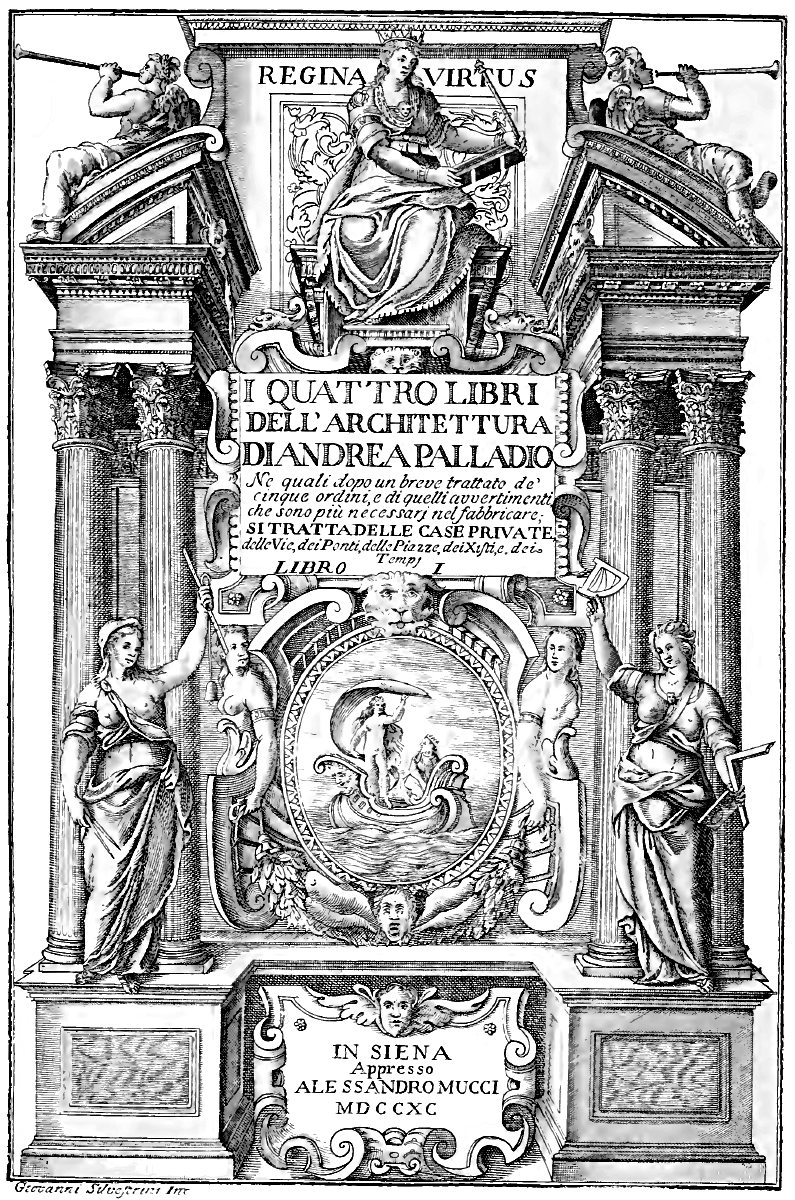
Courtesy of I quattro libri dell’Architettura
How Historical Knowledge Shapes Contemporary Design
Modernism’s Breakthrough: Form Follows Function
The modernist movement didn’t emerge spontaneously—it required a deep understanding of classical languages to intentionally break from them. Architects had to comprehend traditional design principles thoroughly before they could articulate the revolutionary “form follows function” philosophy. This shift from decorative decadence to structural simplicity was only possible through historical knowledge combined with new technology.
In America, Frank Lloyd Wright pioneered the Prairie Style, which subtly echoed Japanese vernacular architecture’s spatial flow and horizontality. Wright’s travels and historical studies gave him a cross-cultural design vocabulary that felt both radically new and timelessly familiar. This demonstrates how architectural history operates in your subconscious—you might not explicitly reference a Japanese tea house in your design, but that spatial memory informs your approach to flow and proportion.
The Double-Edged Sword of Ideological Architecture
Le Corbusier’s five points of architecture established a revolutionary agenda for spatial creation, but his rigid application of historical principles also revealed their limitations. By using the human body as the absolute measure of space, he created theoretically perfect proportions that sometimes felt restrictive in practice. His minimalist boxes, while philosophically coherent, occasionally sacrificed the richness of human experience for ideological purity.
Yet this “failure” was itself a crucial lesson. History teaches us that even brilliant theories need room for life, adaptation, and change. Le Corbusier’s work became a catapult for subsequent movements precisely because architects could see both its innovations and its constraints. Without studying these historical experiments, you’d be doomed to repeat their mistakes instead of building upon their breakthroughs.
The Evolution of Architectural Language: From Classical to Contemporary
Architecture correlates directly with how societies pursue life. Each movement—Classical Greek to Romanesque, Gothic to Baroque, Rococo to modernism, and finally to contemporary architecture—represents a dialogue with what came before. These aren’t random stylistic shifts; they’re responses, improvements, or deliberate rejections of previous design principles.
The brilliance of today’s architectural landscape is that we’re at a turning point where no single language dominates. This pluralism makes historical knowledge more valuable, not less. You can draw from multiple traditions—classical proportion, modernist spatial flow, regional vernacular—to create hybrid solutions for contemporary challenges.
Common Questions About Architectural History
Why is architectural history important for students?
It builds a mental library of design solutions, theoretical frameworks, and cultural contexts that inform every creative decision you’ll make. Without it, you’re designing in a vacuum.
What do you learn in architectural history beyond building styles?
You absorb the philosophical movements, technological innovations, and socio-economic forces that shaped each era’s approach to space and place—knowledge that directly applies to solving today’s design challenges.
How does history influence modern architecture?
Every contemporary innovation has historical roots. Whether it’s biomimicry echoing Gothic structural logic or sustainable design drawing from pre-industrial climate-responsive strategies, the past informs the future.
Is architectural history still relevant in digital design age?
Absolutely. Digital tools are just new mediums for expressing timeless principles of space, proportion, and human experience that history teaches us.
How can I study architectural history online?
Many platforms now offer free online architecture courses that let you explore historical movements at your own pace, complementing your formal education with flexible learning options.
What are the best architecture schools for history?
Top programs integrate historical studies throughout their curriculum rather than treating it as a separate subject. The Ultimate Guide to Top Architecture Schools in the US: 2025 Rankings and What They Look For highlights institutions that excel at this integrated approach, while Top 10 Architecture Schools in Germany showcases European programs with strong historical foundations.
How does architectural history inform sustainable design?
Historical buildings often exemplify climate-responsive design and local material use. Studying them reveals time-tested strategies for promoting sustainability in architecture education, especially crucial in developing regions facing environmental challenges.
The Future of Architectural Education
Today’s architecture schools face a unique challenge: preparing students for licensing while fostering creative innovation. Architecture schools in the USA that prepare students for the architect license must balance historical knowledge with technical proficiency and design thinking. This balance isn’t optional—it’s essential.
Without architectural history education, future architects would lack the critical framework to understand why certain spaces feel right, why some innovations succeed while others fail, and how to build upon centuries of accumulated wisdom. The theory of architecture lives in its history, and each movement is a conversation with its predecessor.
The question isn’t whether architectural history has a place in schools—it’s how we can teach it more effectively to empower the next generation of architects who will shape our world.

Emily Reyes is a Brooklyn-based architecture writer and Article Curator at Arch2O, known for her sharp eye for experimental design and critical theory. A graduate of the Southern California Institute of Architecture (SCI-Arc), Emily’s early work explored speculative urbanism and the boundaries between digital form and physical space. After a few years in Los Angeles working with boutique studios on concept-driven installations, she pivoted toward editorial work, drawn by the need to contextualize and critique the fast-evolving architectural discourse. At Arch2O, she curates articles that dissect emerging technologies, post-anthropocentric design, and contemporary spatial politics. Emily also lectures occasionally and contributes essays to independent design journals across North America.