

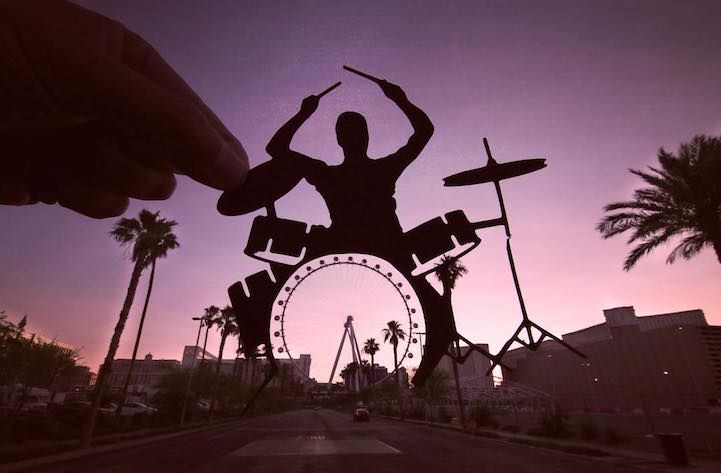
You’re scrolling through Instagram when suddenly the Leaning Tower of Pisa isn’t just tilting—it’s become the iconic nurse from that V-J Day Times Square photograph. The Arc de Triomphe? It’s now a giant Lego man standing guard over Paris. Welcome to the wonderfully warped world of Rich McCor, the London-based artist known as Paperboyo, who’s turning the world’s most famous architecture into something you’ve never seen before.
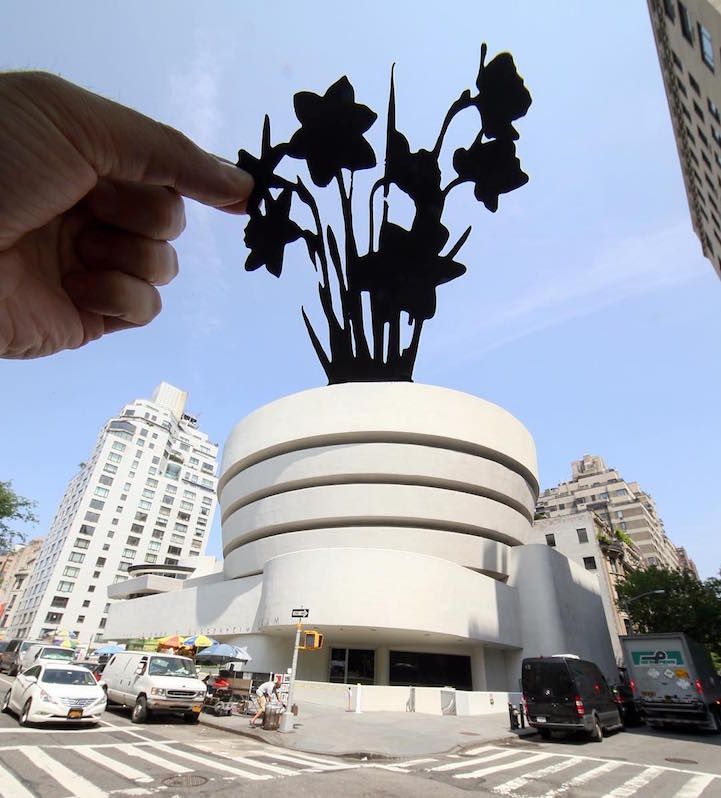
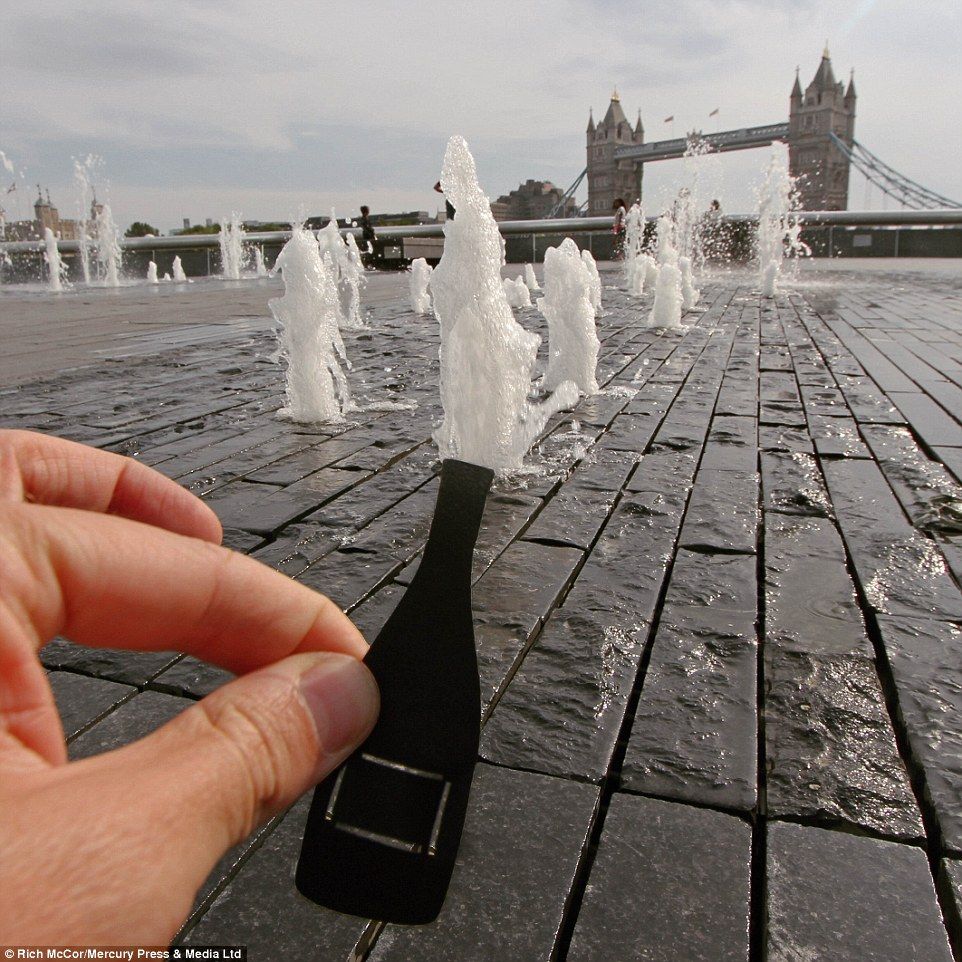
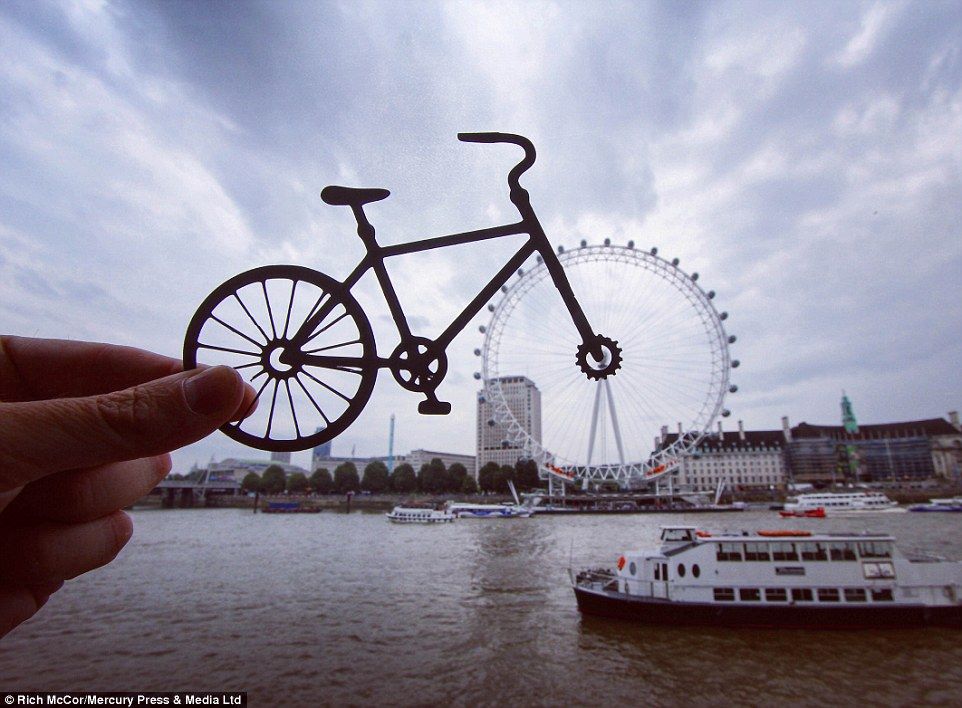
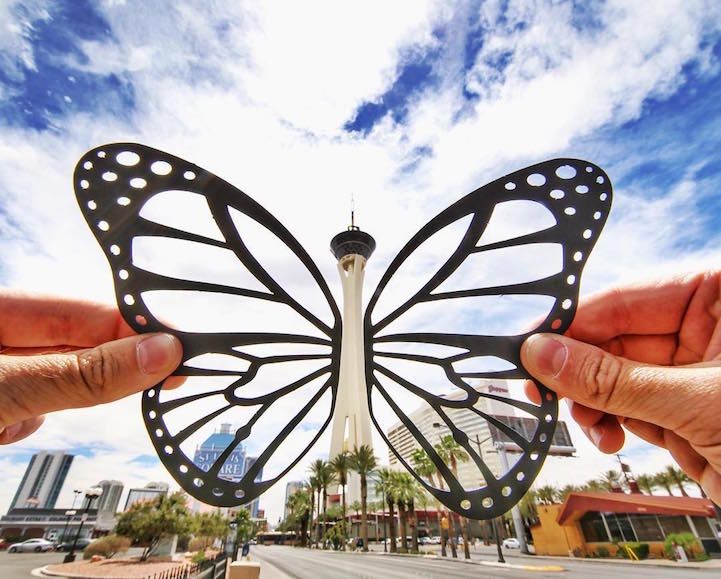
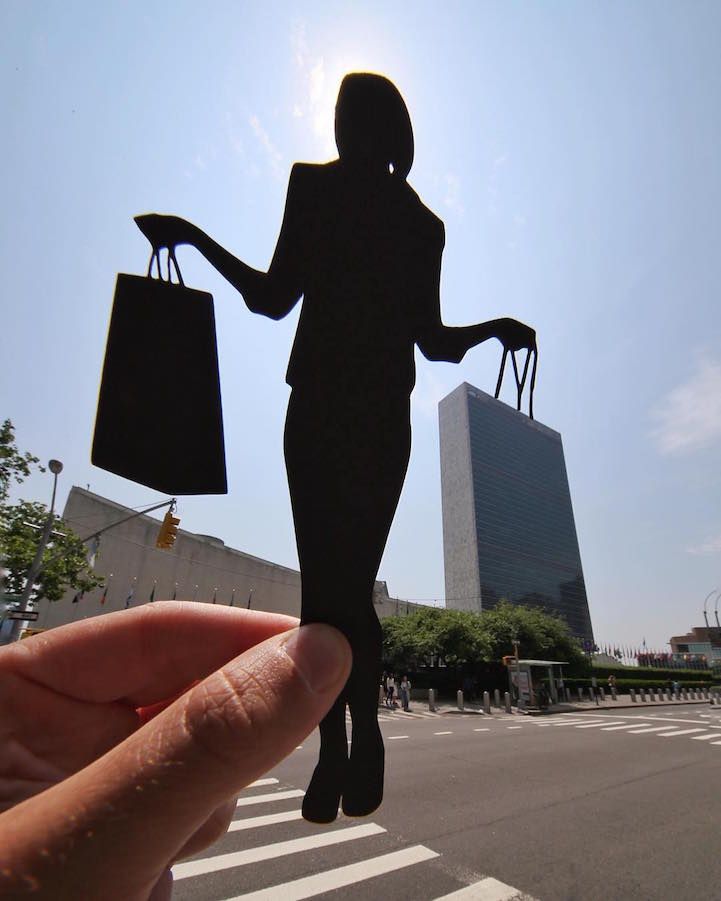
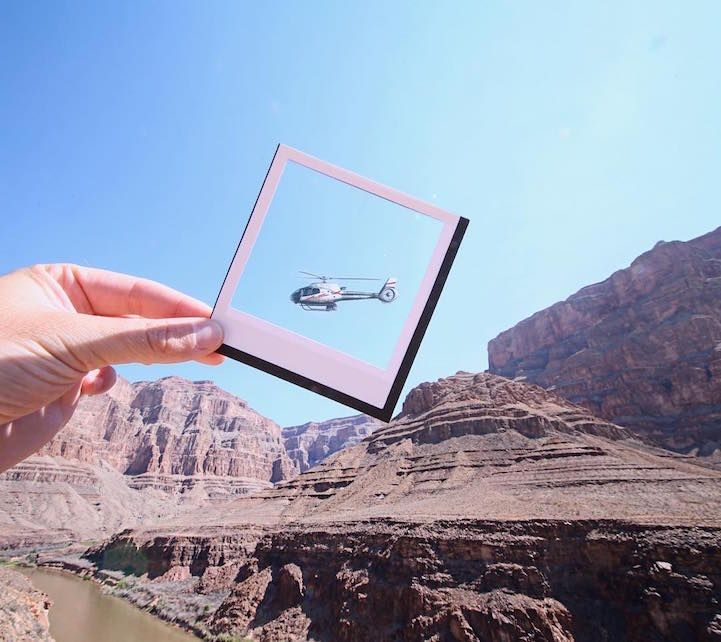
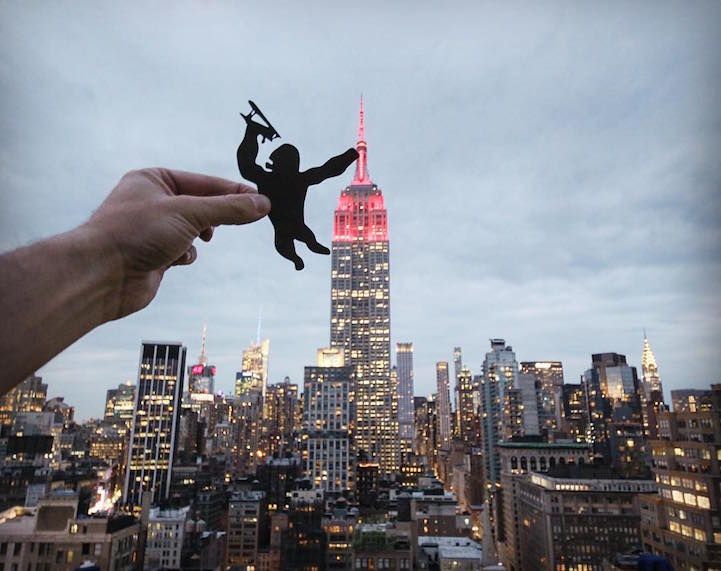
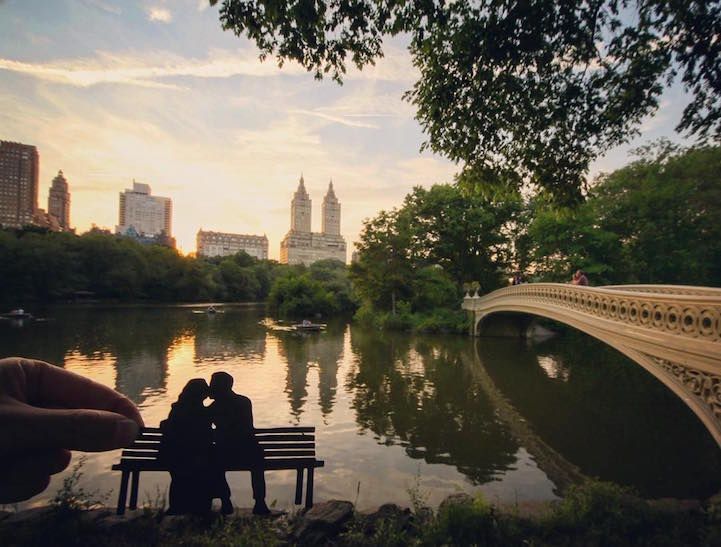
McCor doesn’t just photograph landmarks—he remodels them using nothing but paper cutouts and a camera. His forced perspective photography has become a viral sensation, making people look twice at buildings they thought they knew by heart. Once you see his work, these architectural icons will never look the same way again.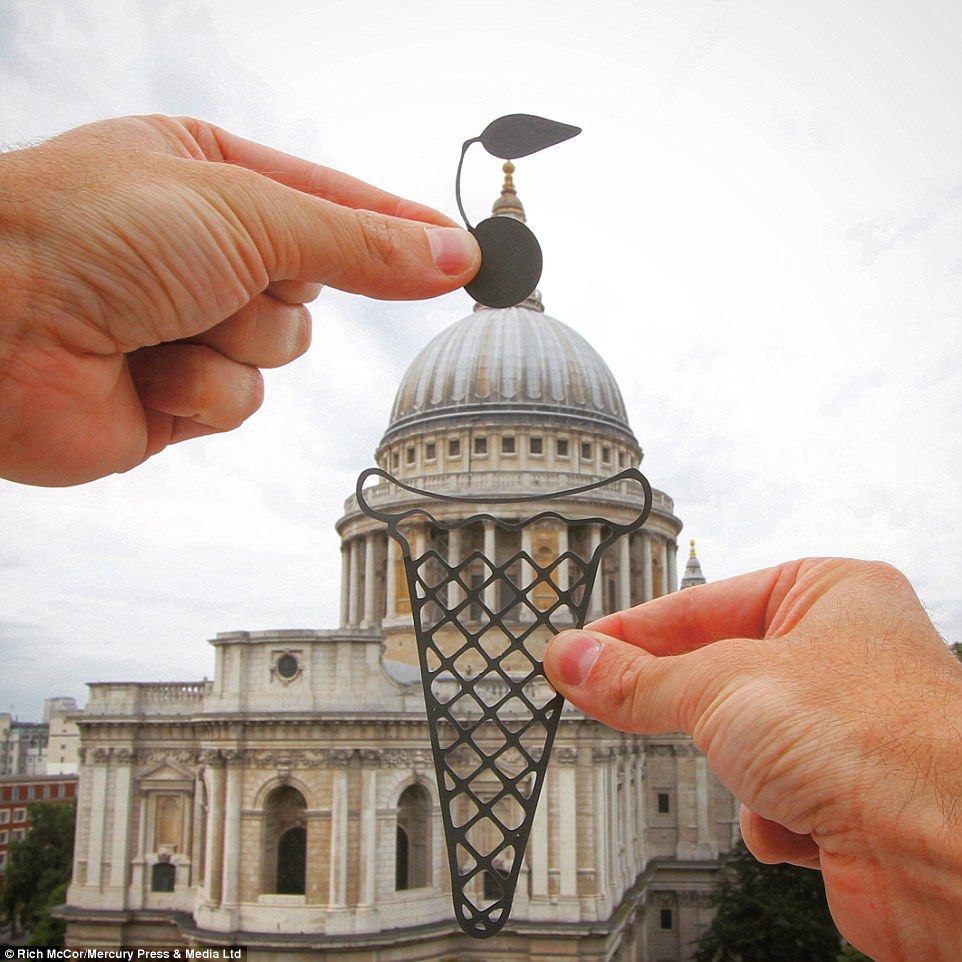
Who Is Paperboyo? The Man Behind the Paper
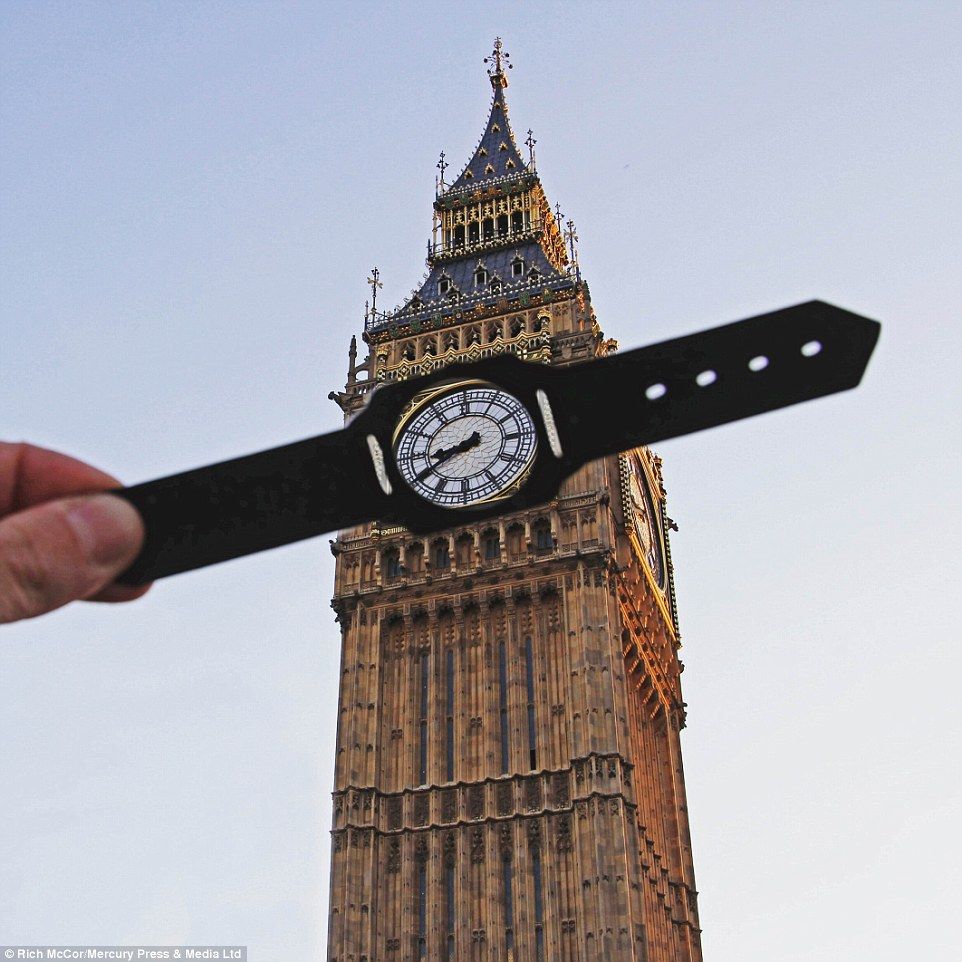
Rich McCor started like any other photographer documenting London’s icons—Big Ben, St Paul’s Cathedral, Tower Bridge. But then he had a thought: what if these landmarks could tell different stories? That’s when he crafted his first paper cutout—a simple wristwatch shape—and positioned it between his camera lens and Big Ben. The result was pure magic: the clock tower became a giant timepiece, and Paperboyo was born.
His Instagram account exploded. The press picked up his playful remixes of familiar sights. Soon, what began as a creative experiment in London became a global tour, with McCor reimagining famous architecture across Europe and America, one snip of paper at a time.
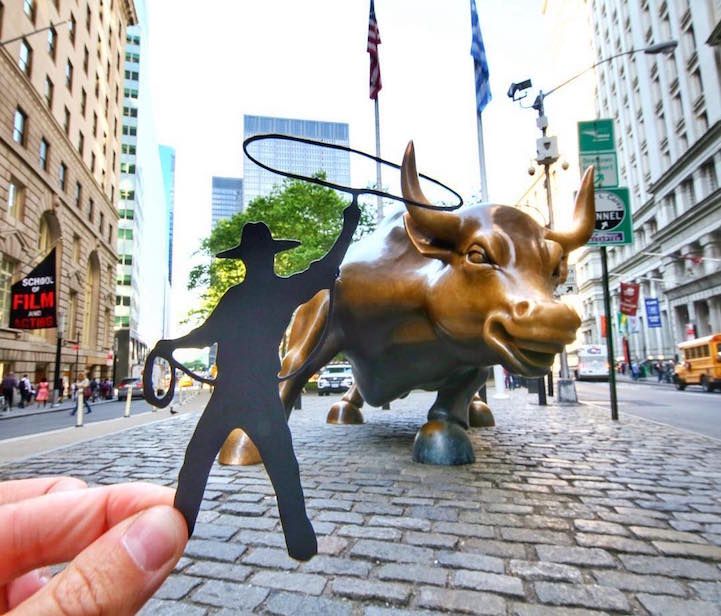
photography by Rich McCor
How Forced Perspective Turns Landmarks Into Playgrounds
The technique is deceptively simple: place a paper cutout at exactly the right distance from your camera, align it with a famous building, and suddenly architecture becomes storytelling. But the execution requires precision, patience, and an eye for visual puns.
The London Experiments: Where It All Began
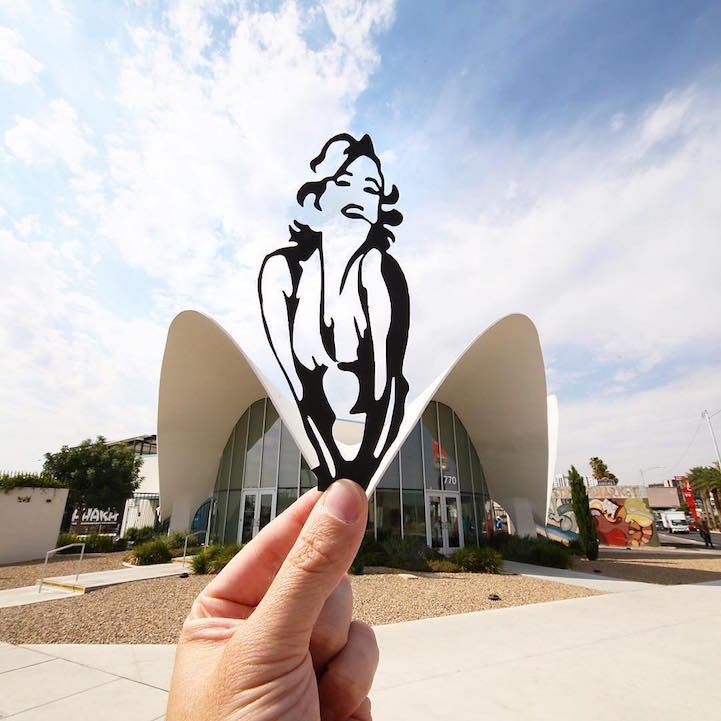
© Rich McCor
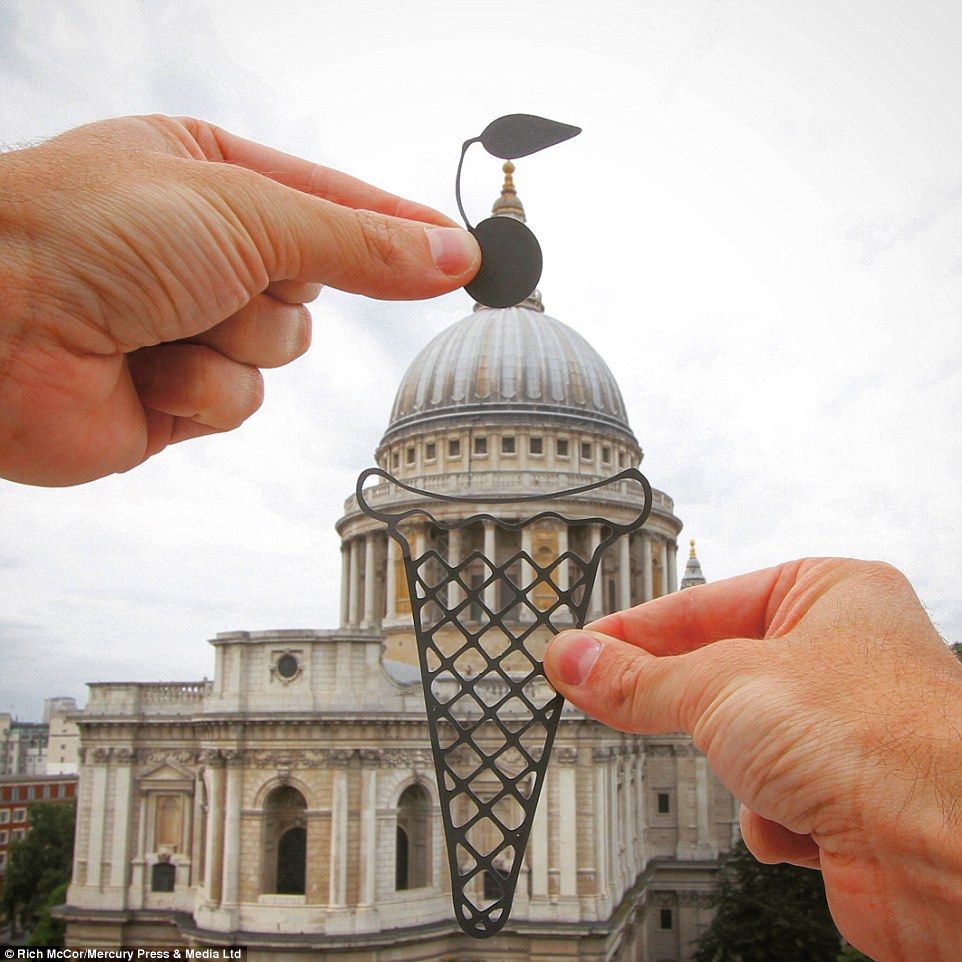
McCor’s early work focused on English capital icons. Big Ben became a wristwatch. St Paul’s Cathedral transformed into something entirely unexpected. Tower Bridge? Let’s just say it’s not just a bridge anymore. These first experiments proved that even the most photographed buildings in the world still have secrets waiting to be revealed.
European Adventures: Architecture Gets a Personality
Once his London series went viral, McCor took his paper and camera on the road. In Italy, the Leaning Tower of Pisa became the leaning nurse from the famous V-J Day Times Square photograph—a perfect visual pun that works because the tower’s angle matches the nurse’s pose exactly.
In Paris, the Arc de Triomphe morphed into a Lego man, its rectangular form and symmetrical design making it the perfect body for a toy soldier standing at attention. Each cutout is carefully chosen to match the architectural proportions, turning structural elements into characters in a larger story.
American Icons: From Neon to Marilyn
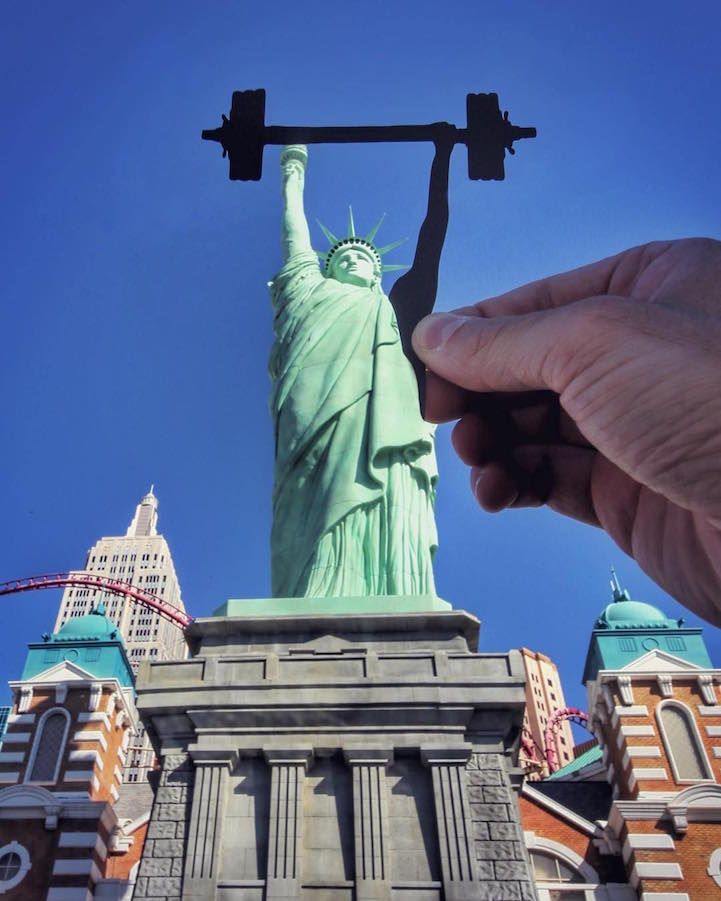
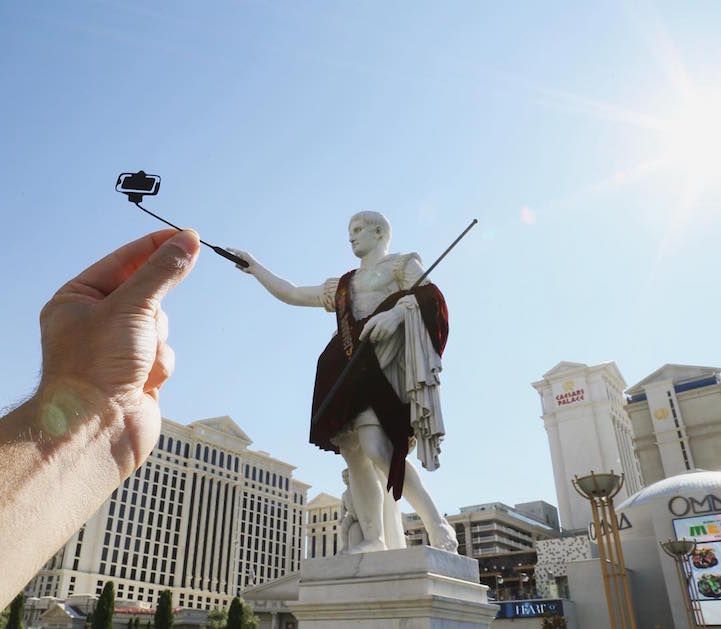
© Rich McCor
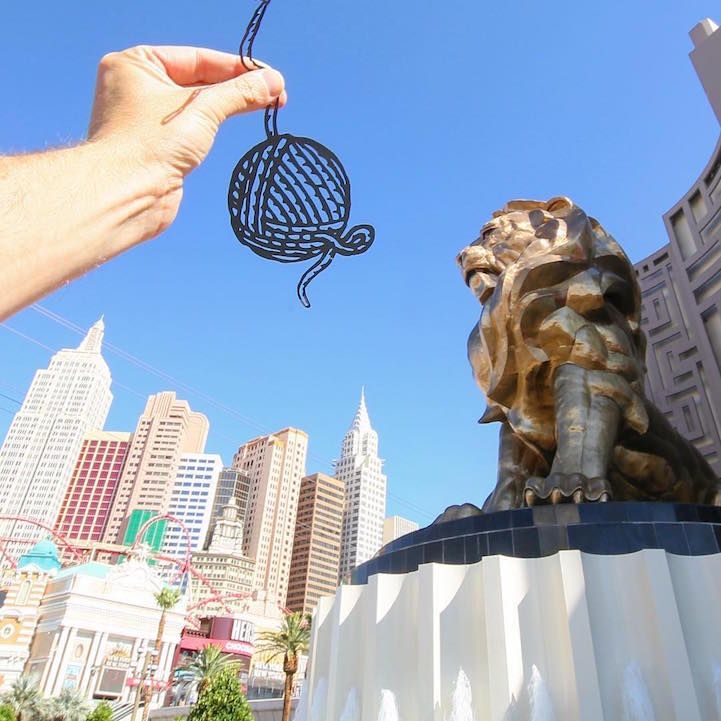
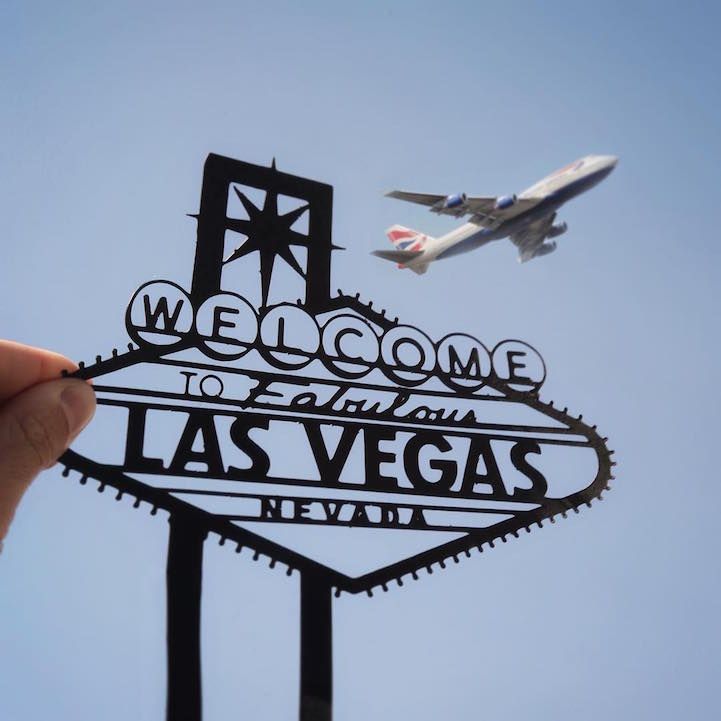
McCor’s tour reached the United States, where even modern landmarks got the Paperboyo treatment. At the Neon Museum in Las Vegas, he saw not just vintage signs, but the flowing skirt from Marilyn Monroe’s famous subway grate scene. The museum’s collection of curved, illuminated forms became the perfect canvas for his pop culture references.
Why This Matters: Seeing Architecture With Fresh Eyes
In an age where every landmark has been photographed millions of times, Paperboyo’s work does something remarkable: it makes us look again. It reminds us that architecture isn’t just about form and function—it’s about imagination, storytelling, and the joy of seeing familiar things in new ways.
His paper cutouts create what he calls “architectural interventions” that are temporary, harmless, and endlessly creative. They don’t damage the buildings or alter them permanently. Instead, they exist only through the camera lens, creating a moment of magic that exists purely in the viewer’s mind.
This approach resonates with how we experience architecture today. Just as British photographers remodel famous architecture using paper cutouts and forced perspective, we’re all looking for new ways to connect with the built environment around us.
The Technique: How to Create Your Own Architectural Illusions
Want to try this yourself? The secret is in the alignment. McCor uses a simple process:
-
Choose your landmark – Look for strong, recognizable silhouettes
-
Design your cutout – Sketch something that matches the building’s proportions
-
Find the right distance – Move your paper cutout until it aligns perfectly
-
Shoot from low angle – This makes the cutout and building appear on the same plane
-
Be patient – Sometimes it takes dozens of attempts to get the alignment just right
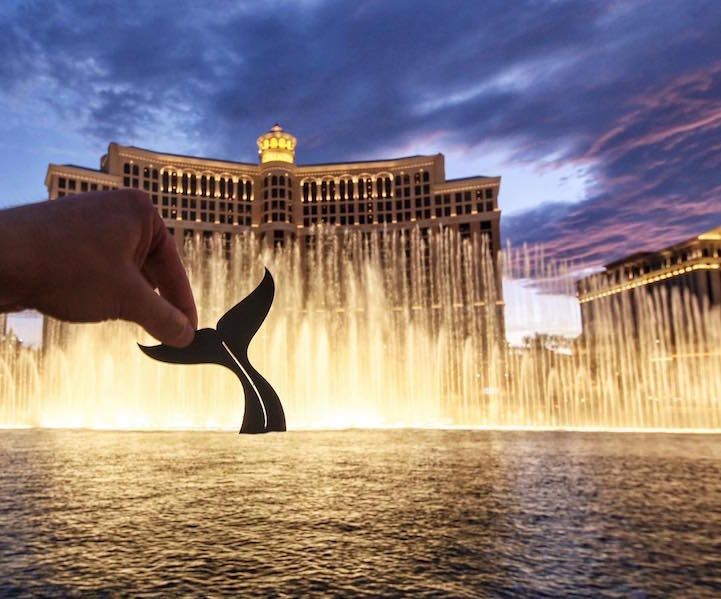
© Rich McCor
The best part? You don’t need expensive equipment. Just paper, scissors, a camera, and imagination.
Paperboyo’s Impact: Changing How We See Famous Buildings
McCor’s work has been featured in major publications and exhibitions worldwide. But more importantly, it’s inspired thousands of people to look at their own cities differently. Suddenly, that boring office building might become a robot. The local church steeple could be a rocket ship.
This playful approach to architectural photography connects to larger movements in how we experience design. Just as the architecture tourist’s manifesto encourages designers to experience buildings firsthand, Paperboyo’s work encourages everyone to see the potential for storytelling in every structure.
© Rich McCor
His cutouts also highlight something profound about famous architecture: these buildings are so well-designed, so perfectly proportioned, that they can support multiple interpretations. The Arc de Triomphe works as a Lego man because its geometry is timeless and adaptable.
Which famous buildings work best for this technique?
Monuments with strong, simple silhouettes work best: towers, arches, domes, and geometric skyscrapers. The clearer the outline, the easier it is to match with a cutout. That’s why landmarks like the Leaning Tower of Pisa or St Paul’s Cathedral are perfect subjects.
Can anyone try this, or do you need to be an artist?
Anyone can try it! The technique is accessible, but the creative vision—seeing the nurse in the leaning tower, the Lego man in the arch—that’s what makes McCor’s work special. It’s about imagination as much as skill.
The Bigger Picture: Why Playful Architecture Matters
In a world that often takes architecture too seriously, Paperboyo’s work is a reminder that buildings should bring joy. His cutouts create what he calls “moments of delight” in our everyday environment. They’re tiny interventions that make people smile, think, and look twice.
This playful approach connects to broader architectural movements. Just as surrealist architecture challenges our expectations, and Googie style embraced whimsy and space-age optimism, Paperboyo’s work shows that architecture doesn’t have to be solemn to be meaningful.
Even serious architectural concepts like long-span structures or postmodern icons can be reimagined through this playful lens. The rigid geometry of modernist masterpieces like Villa Savoye becomes a canvas for new stories.
Your Turn: Creating Architectural Stories
Rich McCor’s journey from London photographer to global Instagram sensation proves that you don’t need a massive budget or complex technology to change how people see architecture. You just need paper, scissors, a camera, and the willingness to see familiar landmarks as characters waiting for their story to be told.
The next time you’re in front of a famous building, ask yourself: what story could this tell? What could it become with just a simple piece of paper and the right perspective? You might be surprised at what you discover.

Yosra is an architect, writer, and teacher. She is always into learning something new. Her life motto is: "A jack of all trades is a master of none, but oftentimes better than a master of one.” One day she will travel the world and visit its architectural wonders. In the meanwhile, she contends herself with reading and writing about them.