

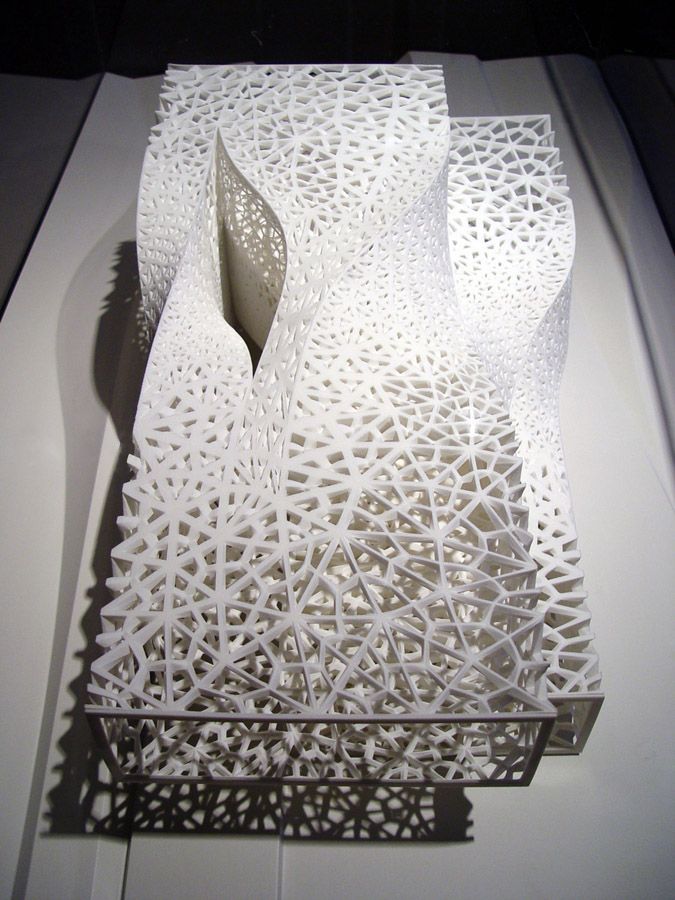
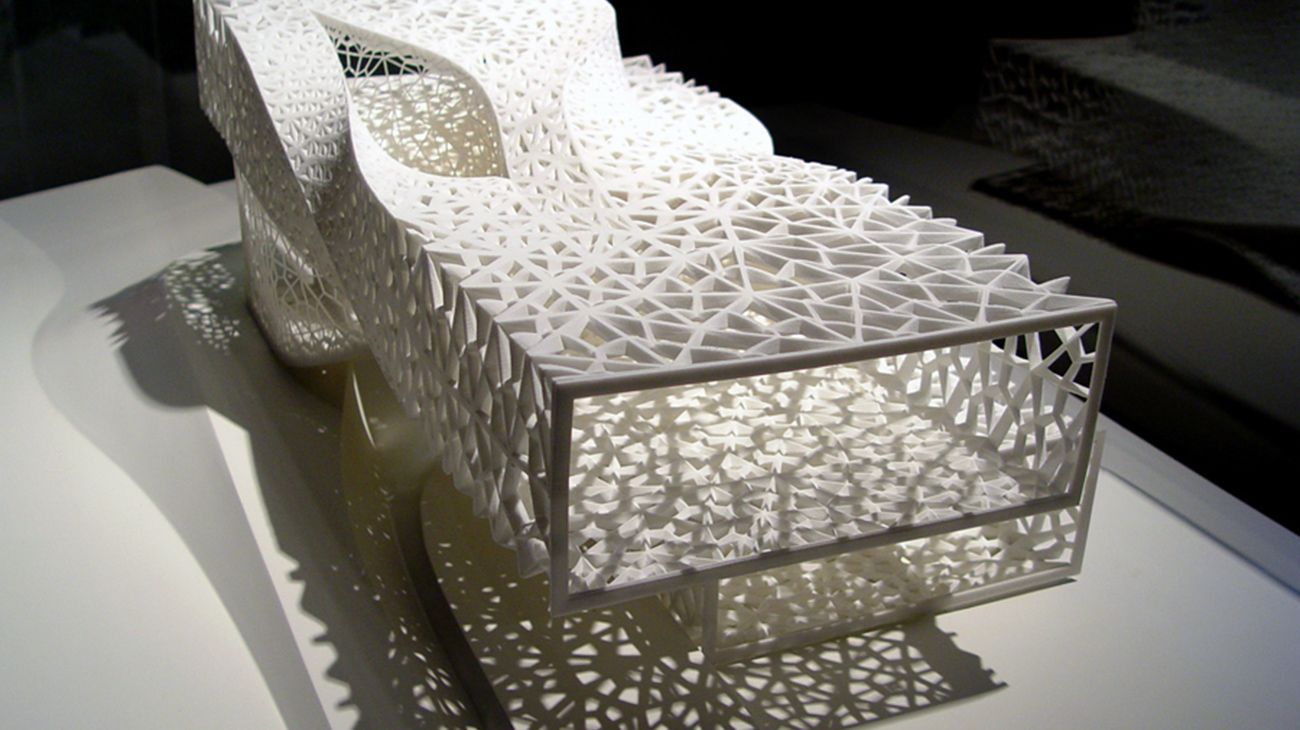
I wanmotoscott architects where invited to present a design for the clue exhibition as a part of the 2009 Gwangju Design Biennale. They had to design something called a restbox, which is to be one of 42 cubic designs on show. The requirement they had is that the cube had to be a ¼ scale model of the 2x2x2 meter cube pavilion. Taking reference from the traditional Korean garden, the pavilion is used as a means of achieving relaxation.
Courtesy of © Iwamotoscott
The restbox comes from a series of design and research ideas working around digital fabrication and using lightweight wood veneer as a means of construction.
Courtesy of © Iwamotoscott
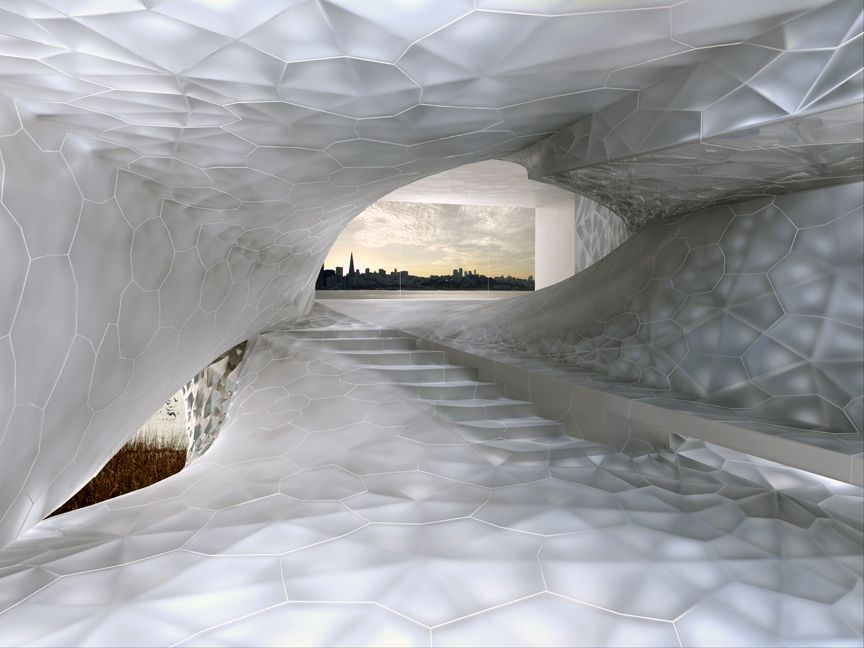
In designing the restbox, the porous nature of the design comes from the architects’ interpretation of the materials textures use, and to also allow light to move throughout the cube. Having the cube create such shadows, this changes the immediate environment to something that resembles that of the Soswaewon garden, which also promotes relaxation. A central section is then removed to allow individuals to dwell within the space. This change of perspective gives the viewer a distorted rendition of the exterior, while promoting its observational qualities; its main intent is to promote relaxation.
Courtesy of © Iwamotoscott
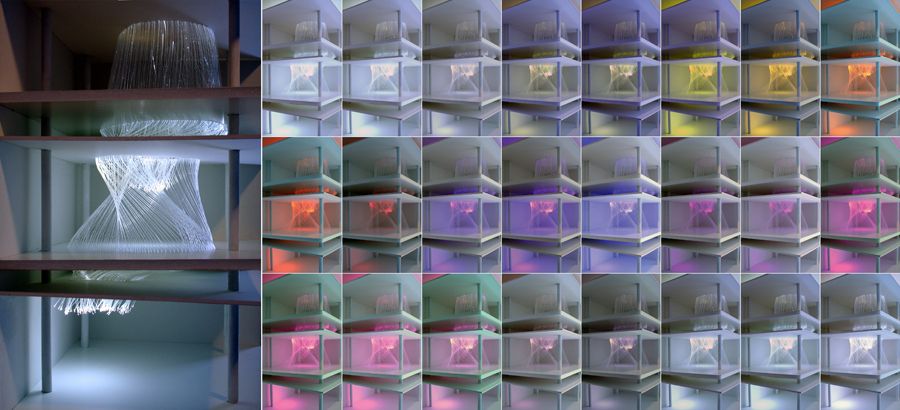
Courtesy of Iwamotoscott

Anastasia Andreieva is an accomplished Architectural Projects Editor at Arch2O, bringing a unique blend of linguistic expertise and design enthusiasm to the team. Born and raised in Ukraine, she holds a Master’s degree in Languages from Taras Shevchenko National University of Kyiv. Her deep passion for architecture and visual storytelling led her to transition from translation and editorial roles into the world of design media. With a keen eye for conceptual clarity and narrative structure, Anastasia curates and presents global architectural projects with precision and flair. She is particularly drawn to parametric and digital design, cultural context, and emerging voices in architecture. When I’m not analyzing the latest architectural trends, you’ll probably find me searching for hidden gems in cityscapes or appreciating the beauty of well-crafted spaces. After all, great design—like great connections—can be found in the most unexpected places. Speaking of connections, because architecture isn’t the only thing that brings people together.