

The largest city in the world is now Jakarta, Indonesia, with about 41.9 million people, according to the United Nations’ World Urbanization Prospects 2025, published in November 2025. Dhaka (about 36.6 million) and Tokyo (about 33.4 million) follow. Older lists that put Tokyo first at around 37 million used the UN’s 2018 figures and a different way of drawing city boundaries.
This guide is for students and designers who need a ranking they can cite. It explains the three ways a city’s size is measured, gives the UN’s 2025 top ten with its 2050 projections in one dated table, and then profiles 27 of the world’s largest cities, from Dhaka and Tokyo to Lagos and Los Angeles. If you are studying density or planning a site analysis, our guide to urban analysis shows how to turn figures like these into drawings.

© Sergio Souza
What is the largest city in the world?
It depends on what you count, but on the UN’s current, harmonised method the answer is Jakarta. The 2025 revision of World Urbanization Prospects replaced the patchwork of national city definitions with one grid-based method, the Degree of Urbanisation. Under it, cities hold 45% of the world’s 8.2 billion people, compared with 20% of 2.5 billion in 1950, according to the UN’s press release on the 2025 revision. The same release counts 33 megacities of more than 10 million people in 2025, up from 8 in 1975, with 19 of them in Asia, and expects 37 by 2050.
The new method changes the order at the top. Jakarta rises to first because the grid captures the continuous built-up area around the capital rather than the city’s administrative limits; IFLScience’s summary of the report notes that Jakarta counts about 30 million more people than under the previous criteria. Tokyo, first in every UN ranking for decades, is now third. Cairo is the only city outside Asia in the top ten. China and India still supply four of the ten.
So the short answer to “which is the largest city in the world?” is Jakarta by population on the UN’s 2025 method, Tokyo on the UN’s 2018 figures, and New York if you mean the largest urban area by land. The next section explains why all three can be right.
City proper, urban agglomeration and metropolitan area: three different “cities”
Rankings disagree mainly because they measure different things. Before you compare two lists of the largest city in the world, check which of these three definitions each one uses.
City proper (administrative city)
The city proper is the area inside a municipal boundary, the unit that elects a mayor and collects local taxes. It is the figure national statistics offices publish, but boundaries are political and vary wildly. The Tokyo Metropolis, the prefecture-level government, had an estimated 14.25 million residents on 1 May 2025, according to a Tokyo Metropolitan Government release, far fewer than the region’s continuous urban area. At the other extreme, Chongqing Municipality covers about 82,000 km² (31,700 sq mi), roughly the size of Austria, but most of that land is rural, as Britannica’s entry on Chongqing explains.
Urban agglomeration
An urban agglomeration is the continuous built-up area of a city and its suburbs, regardless of administrative lines. This is what the UN’s 2018 revision measured, using each country’s own definitions. Its 2018 key facts named Tokyo the world’s largest city with an agglomeration of 37 million, followed by Delhi (29 million) and Shanghai (26 million). Many web rankings, including earlier versions of this article, still repeat figures projected from that edition.
Degree of Urbanisation (the UN’s 2025 method)
The 2025 revision divides the world into 1 km² grid cells. A city is a contiguous cluster of cells with at least 1,500 people per km² and a total of at least 50,000 people, as Al Jazeera’s report on the ranking sets out. Because every country is measured the same way, the results are comparable, which is why the order changed. The UN’s threshold for counting a city also fell from 300,000 to 50,000 residents, raising the number of cities analysed to more than 12,000.
Metropolitan area and land area
A metropolitan area adds commuter towns linked to the core by daily travel, so it is larger again. Land-area rankings usually use the built-up urban area. On that measure the largest city in the world by size is New York: the Guinness World Records entry, citing the 2023 Demographia World Urban Areas report, gives the New York urban area 11,344 km² (4,380 sq mi) and 21.4 million people. Low-density American suburbs spread a population over far more land than in Asian cities of similar size.
The table below puts the definitions side by side, using Tokyo and New York as worked examples.
| Measure | What it counts | Worked example | Source |
|---|---|---|---|
| City proper (administrative) | People inside a municipal boundary | Tokyo Metropolis: about 14.25 million (1 May 2025) | Tokyo Metropolitan Government |
| Urban agglomeration (UN 2018 revision) | Continuous built-up area, using each country's own definition | Tokyo: 37 million (2018), first in the world | UN DESA, WUP 2018 key facts |
| Degree of Urbanisation (UN 2025 revision) | Contiguous 1 km² grid cells with at least 1,500 people/km² and 50,000 people in total, same rule everywhere | Tokyo: about 33.4 million (2025), third after Jakarta and Dhaka | UN DESA, WUP 2025, as reported by Al Jazeera |
| Urban area by land | Built-up area in km² | New York: 11,344 km² (4,380 sq mi), 21.4 million people, largest by land | Demographia World Urban Areas 2023, via Guinness World Records |
Source: Tokyo Metropolitan Government; UN DESA World Urbanization Prospects 2018 and 2025; Demographia World Urban Areas 2023 via Guinness World Records (as of 24 October 2026).
For design work the lesson is practical: quote the definition with the number. A density figure calculated from a city-proper population and a metropolitan land area, or the other way round, can be wrong by a factor of ten.
Largest cities by population and by area (UN data, 2025)
The UN’s 2025 ranking of the largest city in the world and the nine that follow, with each city’s projected 2050 population where it stays in the top ten, is below. Figures are the UN’s 2025 estimates as reported by Al Jazeera; the 2050 projections are from IFLScience’s summary of the same report.
| Rank 2025 | City | Population 2025 (million) | Projected 2050 (million, rank) |
|---|---|---|---|
| 1 | Jakarta, Indonesia | 41.9 | 51.8 (2nd) |
| 2 | Dhaka, Bangladesh | 36.6 | 52.1 (1st) |
| 3 | Tokyo, Japan | 33.4 | 30.7 (7th) |
| 4 | Cairo, Egypt | 32.0 | 32.4 (6th) |
| 5 | New Delhi, India | 30.2 | 33.9 (4th) |
| 6 | Shanghai, China | 29.6 | 34.9 (3rd) |
| 7 | Guangzhou, China | 27.6 | 29.2 (8th) |
| 8 | Manila, Philippines | 24.7 | 27.1 (9th) |
| 9 | Kolkata, India | 22.5 | 23.8 (10th) |
| 10 | Seoul, South Korea | 22.5 | Not in 2050 top ten (Karachi enters 5th at 32.6) |
Source: UN DESA, World Urbanization Prospects 2025 (November 2025), 2025 figures as reported by Al Jazeera; 2050 projections as reported by IFLScience (as of UN WUP 2025 revision; checked 24 October 2026).
Three things stand out. Dhaka is projected to overtake Jakarta and become the largest city in the world by 2050, at about 52.1 million. Tokyo is the only top-ten city projected to shrink, to about 30.7 million. Karachi, outside the 2025 top ten, is projected to enter it at fifth place with 32.6 million. By area, the answer is different again: the largest urban areas by land are in the United States, led by New York, because their suburbs are spread thinly.
If you came here for the largest city in the United States, it is New York City, with about 8.48 million residents in July 2024 within its five boroughs, according to the NYC Department of City Planning’s analysis of Census Bureau estimates.
Jakarta, Indonesia: the new number one
As the largest city in the world on the UN’s 2025 method, Jakarta has an urban area of about 41.9 million people that runs well beyond the city’s administrative limits into the surrounding regencies and cities of West Java and Banten. It is also one of the most exposed: the UN estimates the city will add about 10 million residents by 2050, while up to a quarter of it could be under water by then, Al Jazeera reported. For planners, Jakarta is a case study in how land subsidence and sea-level rise interact with rapid growth.
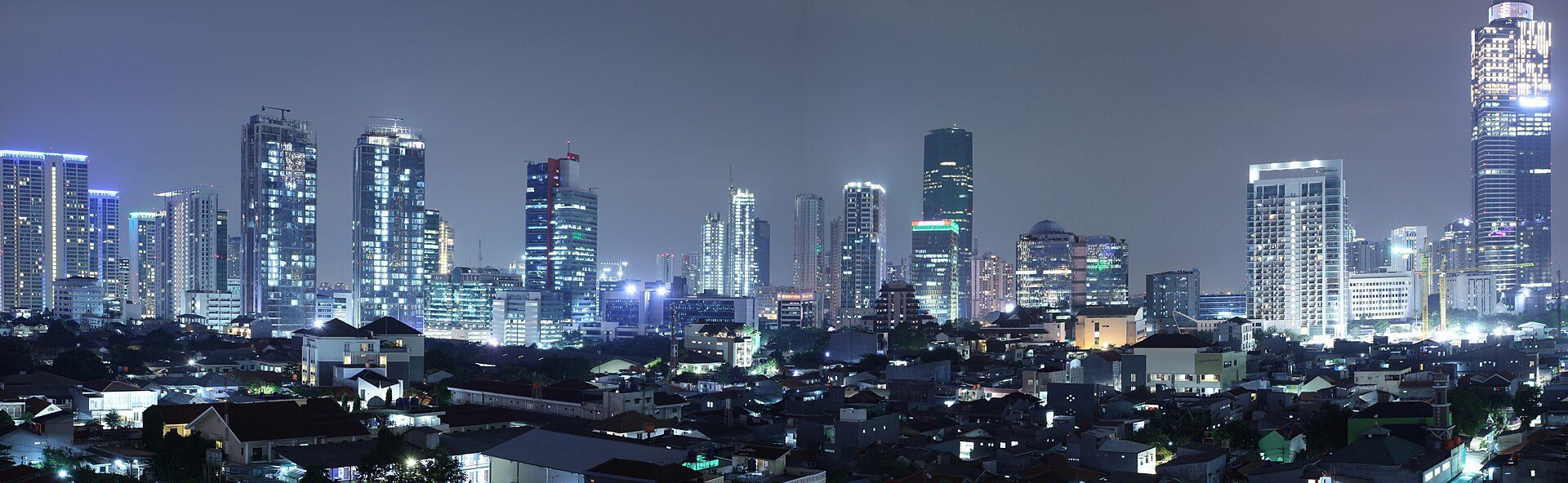
Jakarta's Rasuna Said business district seen from Kuningan, with low-rise neighbourhoods in front: the mix of towers and dense housing the UN's 2025 grid counts as one city of about 41.9 million. Photo: Robin Widjaja, CC BY-SA 4.0, via Wikimedia Commons. Robin Widjaja, source, CC BY-SA 4.0
Seoul, South Korea: tenth place
Seoul enters the UN’s 2025 top ten at about 22.5 million, level with Kolkata. The grid method joins Seoul with the continuous built-up area around it, which is why the figure is more than twice the population of the city proper. Seoul is not among the projected top ten for 2050.
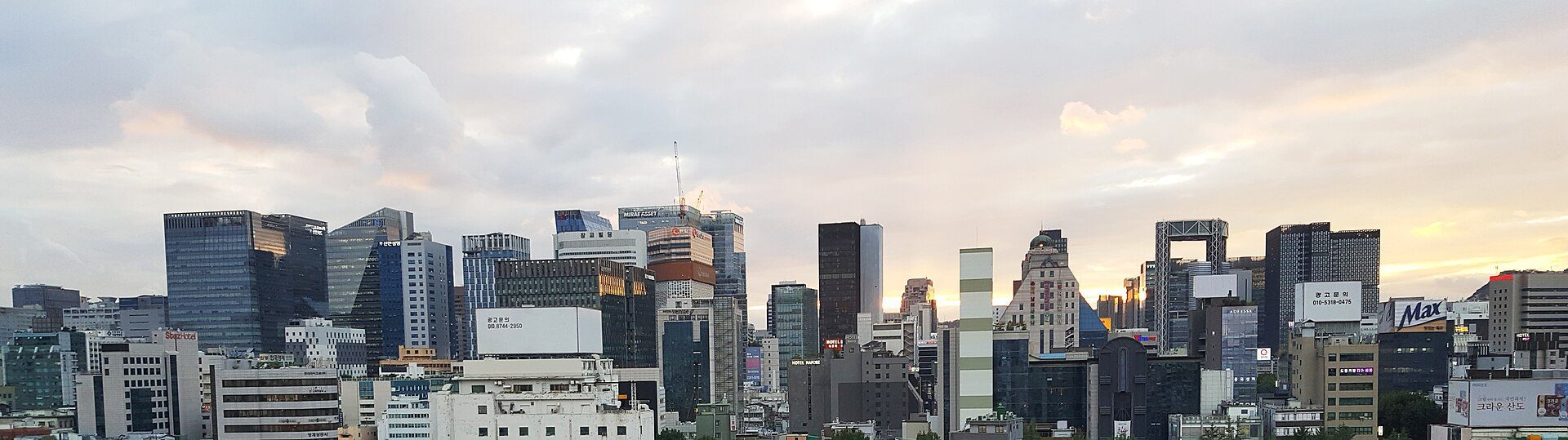
Downtown Seoul from the east. The UN's 2025 method joins the city with the continuous built-up area around it, giving about 22.5 million people. Photo: Minseong Kim, CC BY-SA 4.0, via Wikimedia Commons. Minseong Kim, source, CC BY-SA 4.0
Top 27 populated cities: profiles
The profiles below cover the 27 cities of our original list. Entries 1 to 8 follow the UN’s 2025 order (Jakarta and Seoul, the two top-ten cities not on our original list, are described above). Entries 9 to 27 are other very large cities that the UN does not place in its 2025 top ten; their order follows our earlier list and is not a 2025 ranking. We have removed the area and density figures that earlier versions gave, because they mixed city-proper areas with metropolitan populations.
1. Dhaka, Bangladesh
Dhaka, the capital of Bangladesh, is second in the UN’s 2025 ranking with about 36.6 million people (the UN’s press release rounds the figure to “almost 40 million”). It is projected to become the largest city in the world by 2050, at about 52.1 million. Part of that growth comes from rural migration linked to flooding and rising sea levels, according to Al Jazeera’s report.

© Nasim Borno
2. Tokyo, Japan
Tokyo was the largest city in the world in every UN ranking for decades and was still first, with 37 million, in the 2018 revision. On the 2025 method it is third, at about 33.4 million, and it is projected to fall to about 30.7 million by 2050 as Japan’s population ages. The city proper, the Tokyo Metropolis, has about 14.25 million residents. Tokyo shows why a single headline number is not enough: the same region can be ranked first or third depending on where the line is drawn.

© Pierre Blaché
3. Cairo, Egypt
Cairo is fourth in 2025, at about 32 million, and is the only city outside Asia in the UN’s top ten. It is projected to reach about 32.4 million by 2050 and to remain in the top ten. Greater Cairo spreads along the Nile valley, where farmland and desert constrain where the city can grow.

© gas-kvas.com
4. Delhi, India
Delhi, whose urban area includes the national capital, New Delhi, is fifth in 2025 at about 30.2 million and is projected to rise to fourth by 2050, at about 33.9 million. In the UN’s 2018 revision it was second only to Tokyo, with 29 million, and was then expected to become the largest city in the world around 2028. The 2025 method’s different boundaries moved Jakarta and Dhaka ahead of it.

©Digital Sevaa
5. Shanghai, China
Shanghai is sixth in 2025 at about 29.6 million, and it is the largest Chinese city on the UN’s list. It is projected to rise to third by 2050, at about 34.9 million. Its metro network, built mostly since the 1990s, is one of the longest urban rail systems in the world, a reminder of how much infrastructure a city of this size must build.

© Barry Tan
6. Guangzhou, China
Guangzhou, in the Pearl River Delta, is seventh in 2025 at about 27.6 million and is projected to reach about 29.2 million by 2050. The delta is one of the most urbanised regions on earth, and Guangzhou, Shenzhen and their neighbours form an almost continuous built-up area.

© wallpapercave.com
7. Manila, Philippines
Manila is eighth in 2025, at about 24.7 million, and is projected to grow to about 27.1 million by 2050. The figure describes the wider urban area; the City of Manila itself is a small, very dense municipality within Metro Manila, so densities calculated from the city proper and the urban area differ greatly.

© TTR WEEKLY
8. Kolkata (Calcutta), India
Kolkata is ninth in 2025, at about 22.5 million, the same as Seoul, and is projected to be tenth in 2050 at about 23.8 million. The former capital of British India, it remains the main city of eastern India.

© Radiokafka / Shutterstock
9. São Paulo, Brazil
São Paulo is the largest city in the Americas, with about 18.9 million people on the UN’s 2025 method, Al Jazeera reported. In the 2018 revision it was among the five largest cities, at about 22 million; the different counting method, not a sudden fall in population, explains most of the gap. Traffic congestion is a long-standing planning problem in the city.

© Snapair
10. Mexico City, Mexico
Mexico City was one of the five largest cities in the UN’s 2018 revision, at about 22 million. The 2025 revision lists it among the large cities whose population has declined, according to the UN’s press release. It remains the largest city in Mexico and one of the largest Spanish-speaking cities in the world.

© Andres Ordaz Vega
11. Beijing, China
Beijing is a deliberate exception to growth. The city’s master plan for 2016 to 2035 caps its permanent resident population at 23 million, and the population was about 21.83 million in 2024, Caixin reported. The plan also limits construction land, which makes Beijing a useful case study in growth management.

© bosshunting.com.au
12. Mumbai, India
Mumbai (formerly Bombay) is India’s financial and commercial capital and the country’s second very large city on this list. Its suburban railway carries millions of commuters every day along the narrow peninsula, a geography that has shaped the city’s extreme density.

© eiu.com
13. Osaka, Japan
Osaka is the centre of Japan’s second-largest urban region, Kansai, which also includes Kyoto and Kobe. Like Tokyo, it faces an ageing and slowly shrinking population, so it is unlikely to climb any ranking of the largest cities.

© wallpapercave.com
14. New York, United States
New York City is the largest city in the United States, with about 8.48 million residents in its five boroughs in July 2024. Its urban area, about 21.4 million people over 11,344 km² in the 2023 Demographia report cited by Guinness World Records, makes New York the largest city in the world by land area on the built-up urban area measure.

© m.apkpure.com
15. Chongqing, China
Chongqing is sometimes called the largest city in the world by area because its municipality, about 82,000 km² in area, contains more than 30 million people. Most of that territory is rural, and the continuous urban core is much smaller. Chongqing is the clearest example of why administrative boundaries make poor comparisons.

© National Geographic
16. Karachi, Pakistan
Karachi, Pakistan’s largest city and main port, is outside the UN’s 2025 top ten but is projected to be fifth in the world by 2050, at about 32.6 million, according to IFLScience’s summary of the projections. Few cities face a steeper housing and infrastructure challenge over the next 25 years.

© Getty Images
17. Kinshasa, Democratic Republic of the Congo
Kinshasa, the capital of the Democratic Republic of the Congo, is one of the fastest-growing large cities in Africa. Sub-Saharan Africa is the region where much of the world’s future urban growth is expected, and Kinshasa’s expansion along the Congo River shows how quickly informal neighbourhoods can outpace planned infrastructure.

© www.keywordbaskets.com
18. Lagos, Nigeria
Lagos is the largest city in sub-Saharan Africa and is growing rapidly, Al Jazeera noted in its coverage of the UN report. Built around a lagoon and low-lying islands, it shares Jakarta’s exposure to flooding and sea-level rise.

© Tolulope Fatunbi
19. Istanbul, Turkey
Istanbul is the largest city in Turkey and straddles the Bosphorus between Europe and Asia. Its growth is constrained by water on three sides, which pushes new development north and west.

© wallpapercave.com
20. Buenos Aires, Argentina
Buenos Aires is one of the largest cities in South America. The Autonomous City itself is small; most of the region’s population lives in the surrounding Greater Buenos Aires municipalities, another case where city-proper and urban-area figures diverge sharply.

© iStock
21. Tianjin, China
Tianjin, a port city south-east of Beijing, is one of China’s four directly governed municipalities. It is part of the Beijing-Tianjin-Hebei region that national planning treats as a single urban cluster.

© best-wallpaper.net
22. Lahore, Pakistan
Lahore, in north-eastern Pakistan close to the Indian border, is the capital of Punjab province and the country’s cultural centre. Its Mughal heritage includes the Badshahi Mosque and the Shalimar Gardens, and its historic gardens earned it the name “City of Gardens”.

© en.everybodywiki.com
23. Rio de Janeiro, Brazil
Rio de Janeiro, Brazil’s second very large city on this list, is squeezed between mountains and the Atlantic. That geography explains why its informal settlements climb the hillsides close to the wealthy coastal districts.

© keywordbaskets.com
24. Bengaluru (Bangalore), India
Bengaluru, often called India’s Silicon Valley for its technology industry, is one of the country’s fastest-growing cities. Its growth has outpaced its lakes, drainage and transport networks, a challenge many planners now study.

© Reuters/Stringer
25. Shenzhen, China
Shenzhen grew from a small market town into one of China’s largest cities after it became a Special Economic Zone in 1980. It is part of the Pearl River Delta urban region with Guangzhou and Hong Kong.

© Xinhua
26. Moscow, Russia
Moscow is the largest city in Russia and one of the largest in Europe. Its population growth has slowed, and it does not appear among the world’s projected largest cities for 2050.

© traveltalktours.com
27. Los Angeles, United States
Los Angeles is the second-largest city in the United States. Its urban area is famously low in density and spread across a wide basin, which makes it rank higher by land area than by population.

© iStock
What the numbers mean for urban design
For architects and planners, the useful question is less “which is the largest city in the world?” than “what is growing, where, and how fast?” The UN’s 2025 data point to three trends. First, the largest cities of 2050 will be concentrated in South Asia, South-East Asia and Africa, led by Dhaka, Jakarta and Karachi. Second, several of the very largest, including Jakarta, Dhaka and Lagos, are low-lying coastal cities, so flood defence and managed retreat become part of urban design. Third, some large cities, including Tokyo and Mexico City, are stable or shrinking, which shifts the work from expansion to adaptation and reuse.
For a population-first view of the same subject, see our ranking of the largest cities in the world by population. For a lighter take on urban scale and identity, compare these real cities with the names of fictional cities designers have imagined, or explore the most colourful cities around the world and the strangest buildings in the world.
Sources and further reading
- UN DESA, World Urbanization Prospects: the 2025 revision (data portal and downloads)
- UN press release: cities are home to 45 per cent of the global population (November 2025)
- Al Jazeera: Jakarta now the world’s largest city, Tokyo falls to third (26 November 2025)
- UN DESA, World Urbanization Prospects 2018: key facts
- Guinness World Records: largest city by area (Demographia World Urban Areas 2023)
- NYC Department of City Planning: population estimates and trends (May 2025)

Daniel Mercer is a Coffee Break section editor at Arch2O, currently based in Berlin, Germany. With a background in architectural history and design journalism, Daniel holds a Master’s degree from the University of Edinburgh, where he focused on modern architecture and urban theory. His editorial work blends academic depth with a strong grasp of contemporary design culture. Daniel has contributed to several respected architecture publications and is known for his sharp critique and narrative-driven features. At Arch2O, he highlights innovative architectural projects from Europe and around the world, with particular interest in adaptive reuse, public infrastructure, and the evolving role of technology in the built environment.