

The 2026 FIFA World Cup was played from 11 June to 19 July 2026 in 16 stadiums across the United States (11), Mexico (3) and Canada (2). Estadio Azteca in Mexico City staged the opening match, and MetLife Stadium in New Jersey the final, where Spain beat Argentina 1-0 after extra time, as the match record shows. This updated article, for architects and football fans, ranks every 2026 World Cup stadium by tournament capacity, describes each venue, explains the design challenges of staging football in stadiums mostly built for American football, and analyses three precedents. It replaces our 2018 predictions, several of which proved wrong.
In 2018 we were writing in the wake of France’s victory at Moscow’s Luzhniki stadium and looking ahead to the 2022 World Cup in Qatar. Several iconic stadiums were built specifically to host such major events; 2026 took the opposite approach, using existing venues.
Where Was The 2026 World Cup Held?
The tournament was the first hosted by three countries: Canada, Mexico and the United States. It was also the first with 48 teams, which raised the number of matches from 64 to 104. Every 2026 World Cup stadium was an existing venue (see our stadiums archive); FIFA gave each a sponsor-free tournament name (for example, “Los Angeles Stadium” for SoFi Stadium) and installed natural grass where stadiums normally use artificial turf.
Also read: Qatar Constructs ‘Mobile’ Stadium for FIFA World Cup 2022 and Zaha Hadid Architects + AECOM to design FIFA World Cup 2022 stadium in Qatar.
2026 World Cup stadium ranking by capacity
We rank the venues by FIFA’s net tournament capacity, the one measure published for all 16. These figures, taken from FIFA’s ticketing information as compiled by Wego’s venue guide, are lower than the stadiums’ usual capacities because of media, security and hospitality areas.
| Rank | Stadium | City, country | FIFA net capacity (approx.) | Roof | Key 2026 matches |
|---|---|---|---|---|---|
| 1 | MetLife Stadium | East Rutherford (NY/NJ), USA | 78,576 | Open | Final (19 July) |
| 2 | Estadio Azteca | Mexico City, Mexico | 72,766 | Open | Opening match (11 June) |
| 3 | AT&T Stadium | Arlington (Dallas), USA | 70,122 | Retractable | Semi-final |
| 4 | SoFi Stadium | Inglewood (Los Angeles), USA | 69,650 | Fixed translucent canopy | |
| 5 | Levi's Stadium | Santa Clara (SF Bay Area), USA | 69,391 | Open | |
| 6 | NRG Stadium | Houston, USA | 68,311 | Retractable | |
| 7 | Arrowhead Stadium | Kansas City, USA | 67,513 | Open | Quarter-final |
| 8 | Mercedes-Benz Stadium | Atlanta, USA | 67,382 | Retractable | Semi-final |
| 9 | Lincoln Financial Field | Philadelphia, USA | 65,827 | Open | |
| 10 | Lumen Field | Seattle, USA | 65,123 | Partial canopy | |
| 11 | Hard Rock Stadium | Miami Gardens, USA | 64,091 | Seat canopy | Third-place match |
| 12 | Gillette Stadium | Foxborough (Boston), USA | 63,815 | Open | Quarter-final |
| 13 | Estadio BBVA | Monterrey, Mexico | 50,113 | Open | |
| 14 | BC Place | Vancouver, Canada | 48,821 | Retractable | |
| 15 | Estadio Akron | Guadalajara, Mexico | 44,330 | Open | |
| 16 | BMO Field | Toronto, Canada | 44,315 | Open | Canada's opening match (12 June) |
Source: FIFA ticketing net capacities as compiled by Wego; match roles from the same guide and CBS Sports (as of 25 October 2026).
Which Cities Hosted The 2026 World Cup? ‘2026 World Cup Cities’
Canada
1. BMO Field, Toronto

via usatoday.com
Tournament capacity: about 44,300, the smallest 2026 World Cup stadium. The home of Toronto FC was enlarged with temporary seating for the tournament and staged Canada’s opening match on 12 June. Its stands sit close to the pitch, giving an intimate atmosphere despite the modest size.
2. BC Place, Vancouver
Tournament capacity: about 48,800. Vancouver’s downtown stadium, opened in 1983 and rebuilt with a cable-supported retractable roof in 2011, was the second Canadian venue. Montreal and Edmonton, both on the original bid list, were not selected.
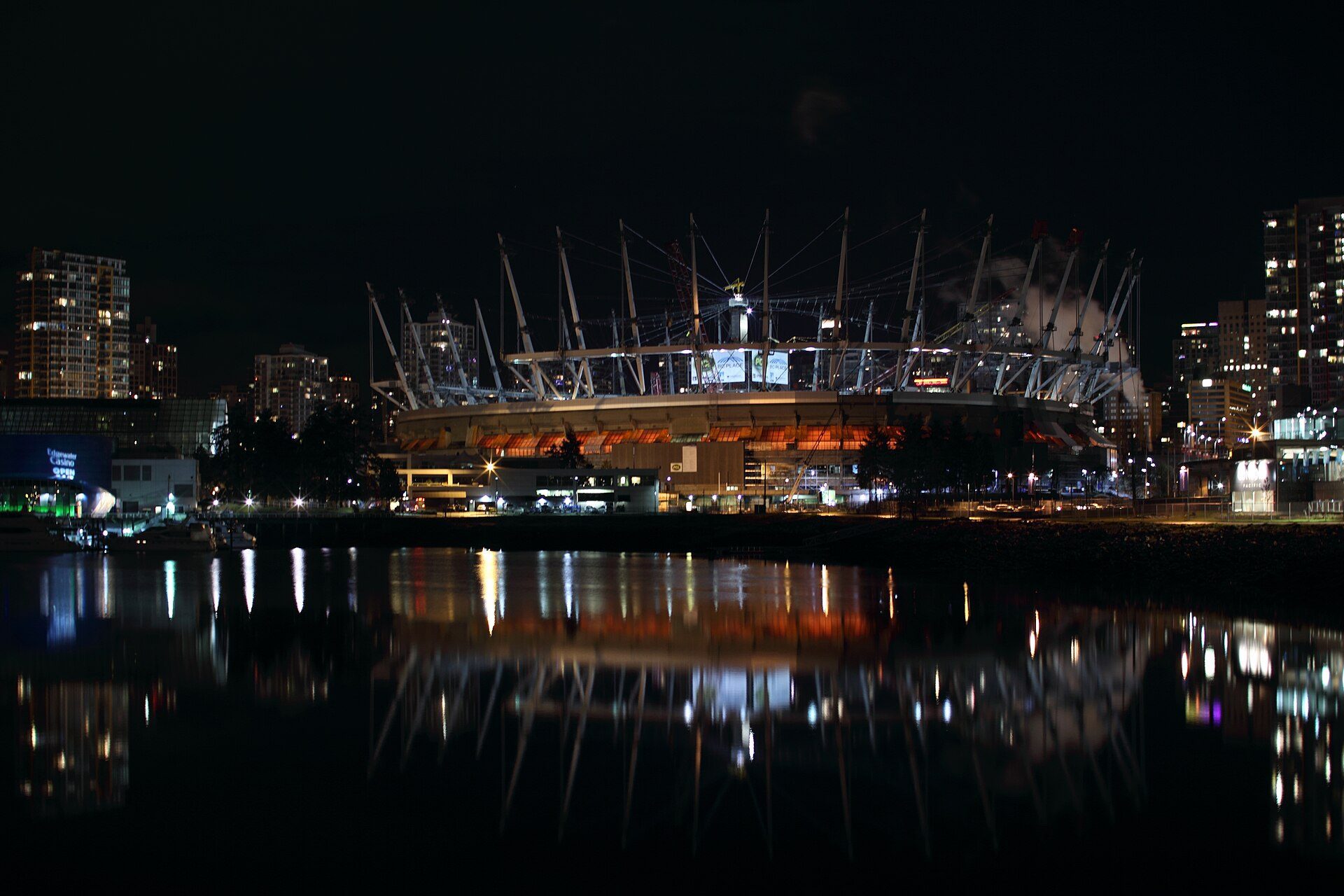
BC Place, Vancouver, during construction of its cable-supported retractable roof (photographed around 2010-11). Photo: Geoff Peters, CC BY 2.0, via Wikimedia Commons. Geoff Peters from Vancouver, BC, Canada, source, CC BY 2.0
Mexico
3. Estadio Akron, Guadalajara

via stadiumdb.com
Tournament capacity: about 44,300. Opened in 2010 after years of delay, the home of Chivas sits on a landscaped mound with a light, cloud-like roof ring; it hosted group-stage matches.
4. Estadio BBVA, Monterrey

Via EFE/Miguel Sierra
Tournament capacity: about 50,100. Designed by Populous with local architects and opened in 2015, the “Steel Giant” places its stands close to the pitch and frames views of the Cerro de la Silla mountain. Its landscape collects rainwater to recharge the aquifer.
5. Estadio Azteca, Mexico City

Via Jymlii Manzo
Tournament capacity: about 72,800. Renovated before the tournament, the Azteca staged the opening match on 11 June and became the first stadium to host matches at three World Cups (1970, 1986 and 2026). It was the scene of Diego Maradona’s “Hand of God” goal in 1986.
United States
6. MetLife Stadium, East Rutherford (New York/New Jersey)

Via Anthony Quintano
Tournament capacity: about 78,600, the largest 2026 World Cup stadium. The open-air home of New York’s two NFL teams, outside New York City, hosted the final on 19 July, its first World Cup final; our 2018 guess that it would not be chosen for the final was wrong.
7. AT&T Stadium, Arlington (Dallas)

Via Flickr/Nicole Cordeiro
Tournament capacity: about 70,100. With its retractable roof, huge centre-hung video board and air-conditioned bowl, the Dallas Cowboys’ stadium hosted a semi-final. Its location in a bustling metropolis within reach of Mexico made it a natural hub.
8. SoFi Stadium, Inglewood (Los Angeles)
Tournament capacity: about 69,700. The new stadium in Inglewood, which our 2018 article mentioned only as speculation, replaced the Rose Bowl as Los Angeles’s venue. Designed by HKS and opened in 2020, it sits under a vast translucent ETFE canopy that shades both the stands and an open plaza.
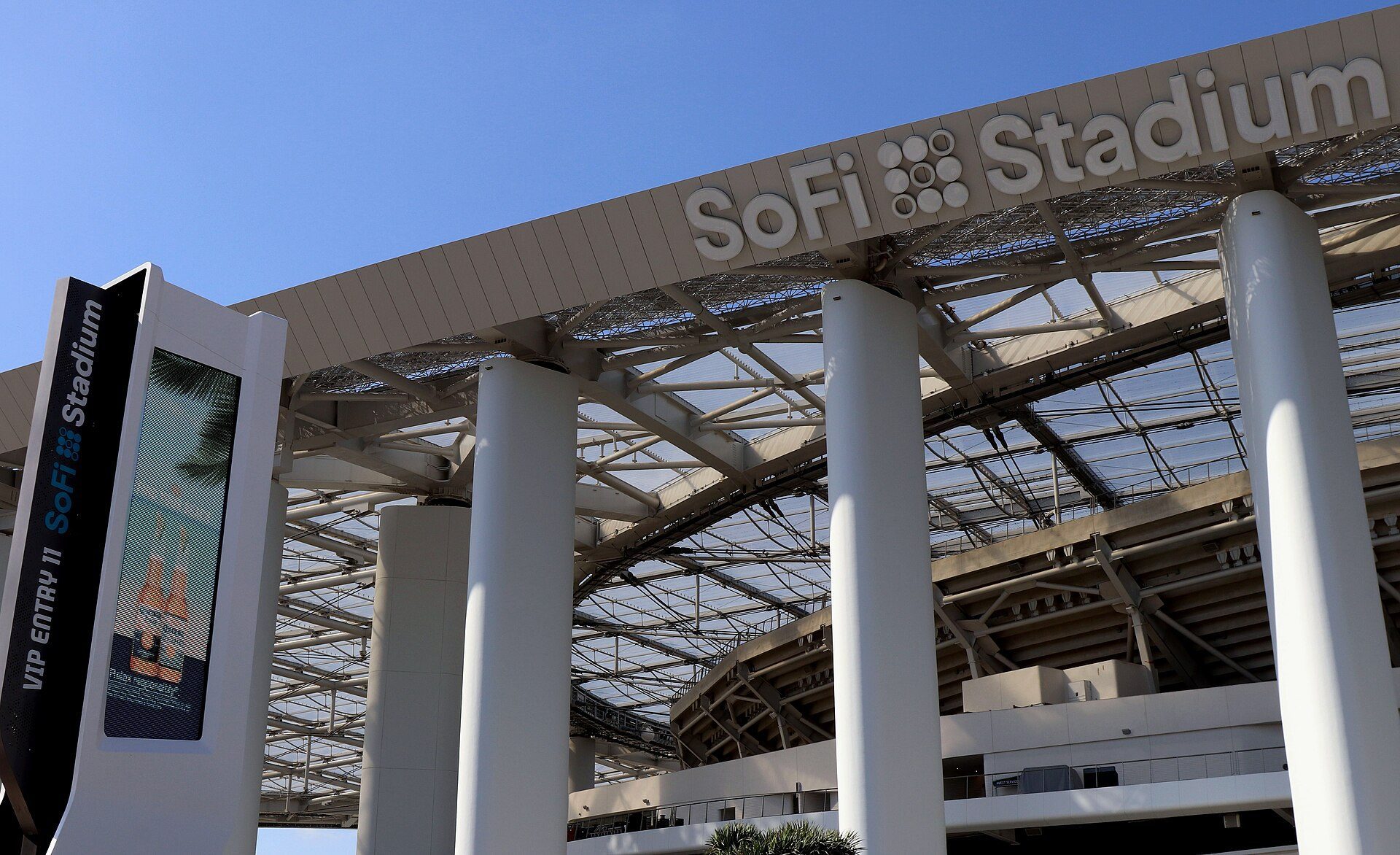
SoFi Stadium, Inglewood (HKS, 2020): the translucent canopy shades the stands and the plaza. Photo: Thank You (21 Millions+) views, CC BY 2.0, via Wikimedia Commons. Thank You (21 Millions+) views, source, CC BY 2.0
9. Levi’s Stadium, Santa Clara (San Francisco Bay Area)

via fortune.com
Tournament capacity: about 69,400. The San Francisco 49ers’ open-air stadium, opened in 2014, has a green roof on its suite tower and solar panels; its natural grass pitch, often criticised in its early years, was a focus of preparation.
10. NRG Stadium, Houston

Via LoneStarMike
Tournament capacity: about 68,300. Its retractable roof and air-conditioning made it valuable in Houston’s summer heat.
11. Mercedes-Benz Stadium, Atlanta

via curbedatlanta.com
Tournament capacity: about 67,400. HOK’s stadium, opened in 2017, is known for its eight-panel retractable roof that opens like a camera aperture. It hosted a semi-final.
12. Arrowhead Stadium, Kansas City
Tournament capacity: about 67,500. Opened in 1972 and famous for its steep, enclosed bowl and loud crowds, the Chiefs’ stadium hosted a quarter-final.
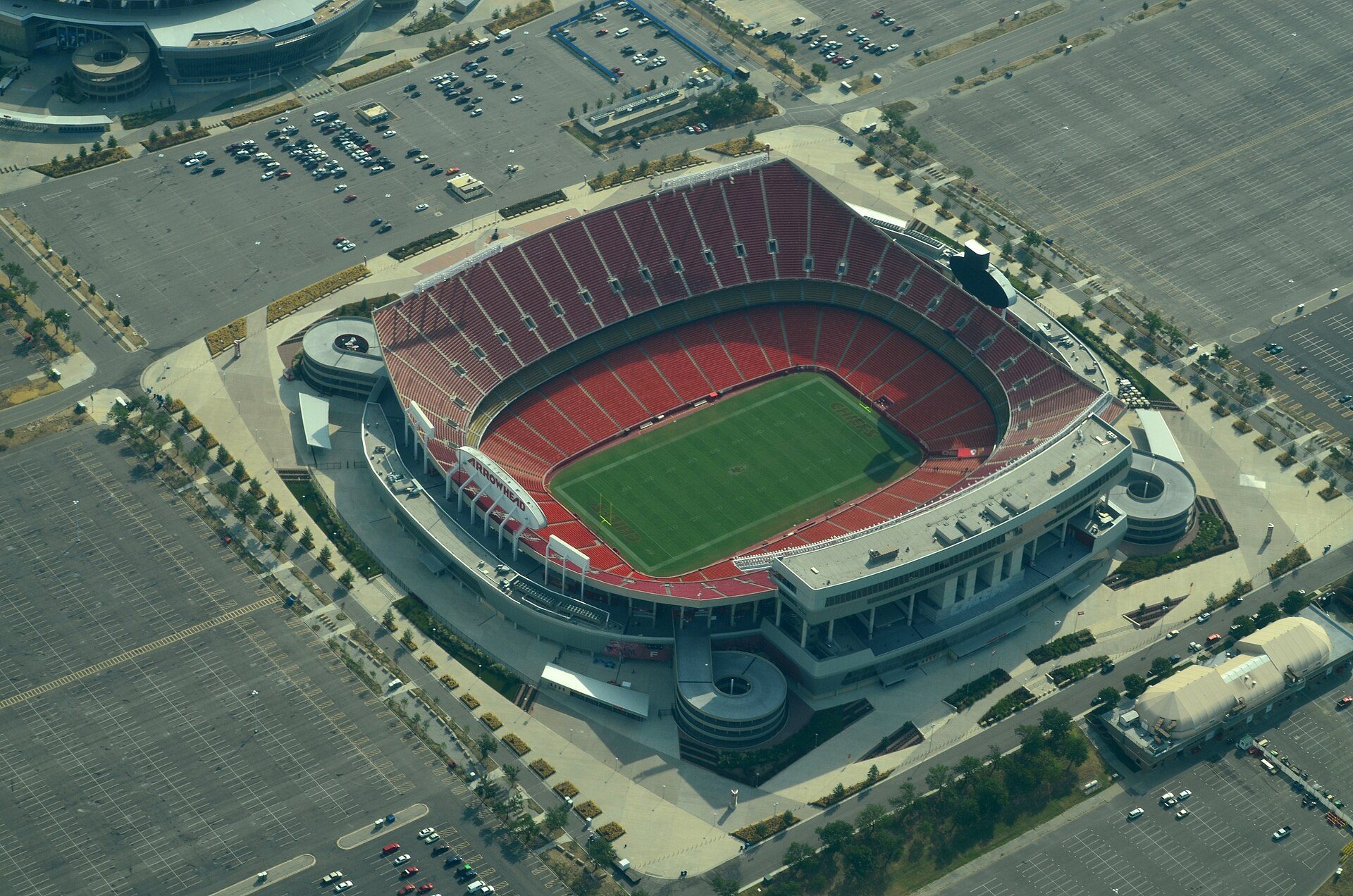
Arrowhead Stadium, Kansas City (1972), seen from the air in 2013: a steep, enclosed bowl. Photo: Ichabod, CC BY-SA 3.0, via Wikimedia Commons. Ichabod, source, CC BY-SA 3.0
13. Lincoln Financial Field, Philadelphia
Tournament capacity: about 65,800. The Philadelphia Eagles’ stadium, opened in 2003, replaced Washington’s FedEx Field on the final list; matches here fell close to the 250th anniversary of US independence on 4 July 2026.
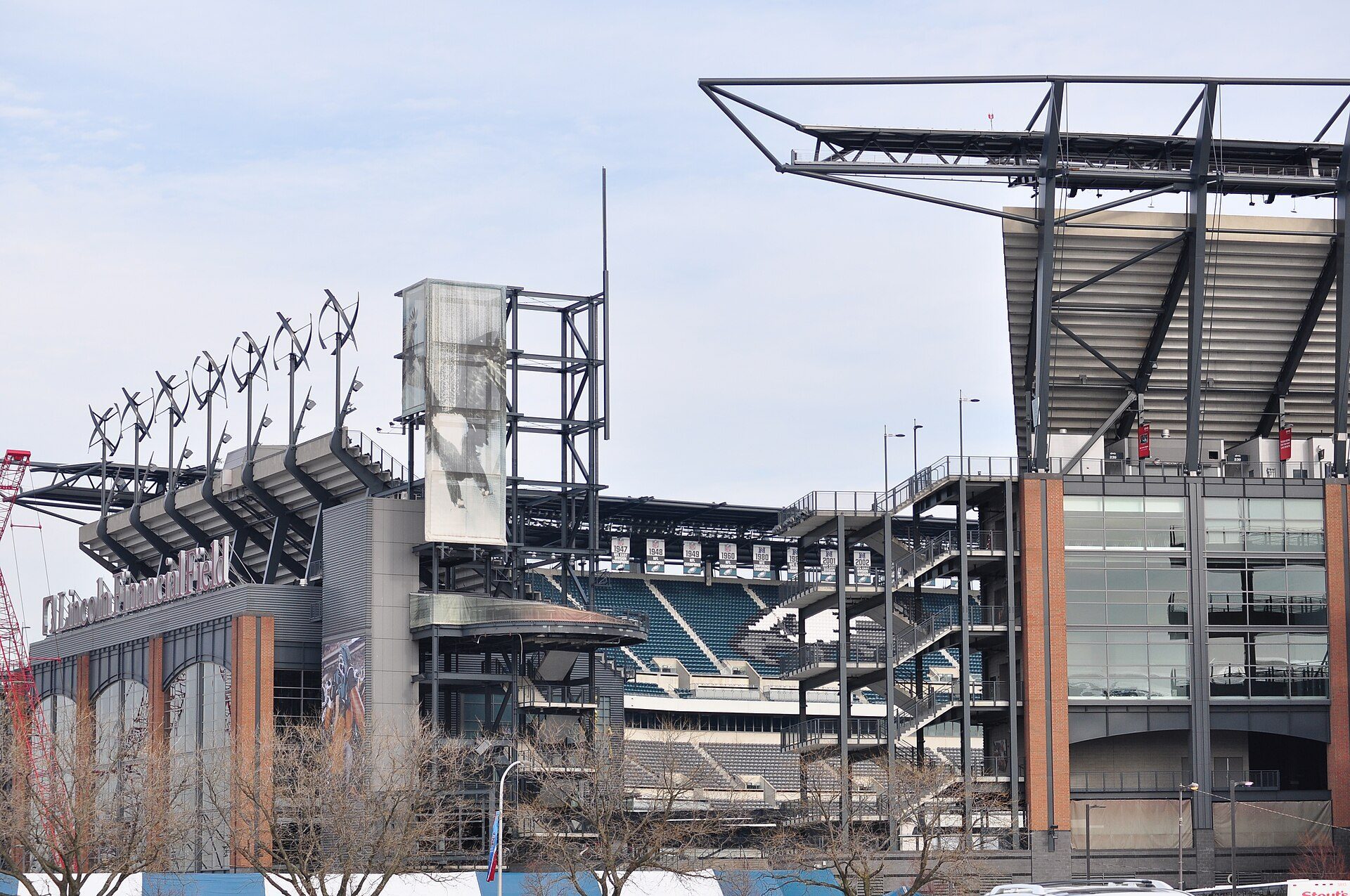
Lincoln Financial Field, Philadelphia (2003). Photo: Andrey Bobrovsky, CC BY 3.0, via Wikimedia Commons (Panoramio). Андрей Бобровский, source, CC BY 3.0
14. Lumen Field, Seattle

via twitter.com
Tournament capacity: about 65,100. Formerly CenturyLink Field, the stadium’s partial roof canopies over the stands help hold in crowd noise, and Seattle is one of the strongest football cities in the US.
15. Hard Rock Stadium, Miami Gardens (Miami)

via stadiumsofprofootball.com
Tournament capacity: about 64,100. A canopy added in a 2015-16 renovation shades most of the seats in the Florida sun; it hosted the third-place match.
16. Gillette Stadium, Foxborough (Boston)

Via Flikr user Art01852
Tournament capacity: about 63,800. The New England Patriots’ stadium hosted a quarter-final; the Boston area also staged matches at the 1994 World Cup.
Stadiums on the 2018 shortlist that were not selected
Four venues in our 2018 ranking never became a 2026 World Cup stadium: they did not make FIFA’s final list, announced in 2022. Montreal’s Olympic Stadium, with its troubled roof, and Edmonton’s Commonwealth Stadium lost out to Vancouver.

via: sinoramabus.com

Via WinterE229
In the US, FedEx Field near Washington, D.C., was not chosen (Philadelphia was), and the Rose Bowl in Pasadena, host of the 1994 final, gave way to SoFi Stadium.

via cbssports.com

Via Stephen Kallin
Design principles: turning an American-football venue into a 2026 World Cup stadium
- Pitch size and grass. A football pitch (FIFA recommends 105 × 68 m) is wider than an American-football field, so corner seating is often removed or reconfigured, and natural grass has to be laid over or in place of artificial turf, sometimes in indoor stadiums where grass struggles without sunlight.
- Climate. A summer tournament in Texas, Florida and Georgia makes shade and cooling central: retractable roofs and air-conditioning (Atlanta, Dallas, Houston, Vancouver) or large canopies (Miami, Los Angeles).
- Sightlines and atmosphere. Stands close to the touchline, as at Monterrey and Toronto, make a smaller crowd feel larger; steep bowls and roofs that reflect sound (Kansas City, Seattle) amplify noise.
- Temporary overlay. Media tribunes, broadcast positions, security perimeters and hospitality are added for the tournament, which is why World Cup capacities are lower than everyday capacities.
- Reuse over new-build. Using existing stadiums avoids the cost and embodied carbon of building venues that may be under-used afterwards, a lesson from earlier tournaments.
These are design observations; stadium safety, capacity and accessibility are governed by local building codes and by FIFA’s and national authorities’ requirements.
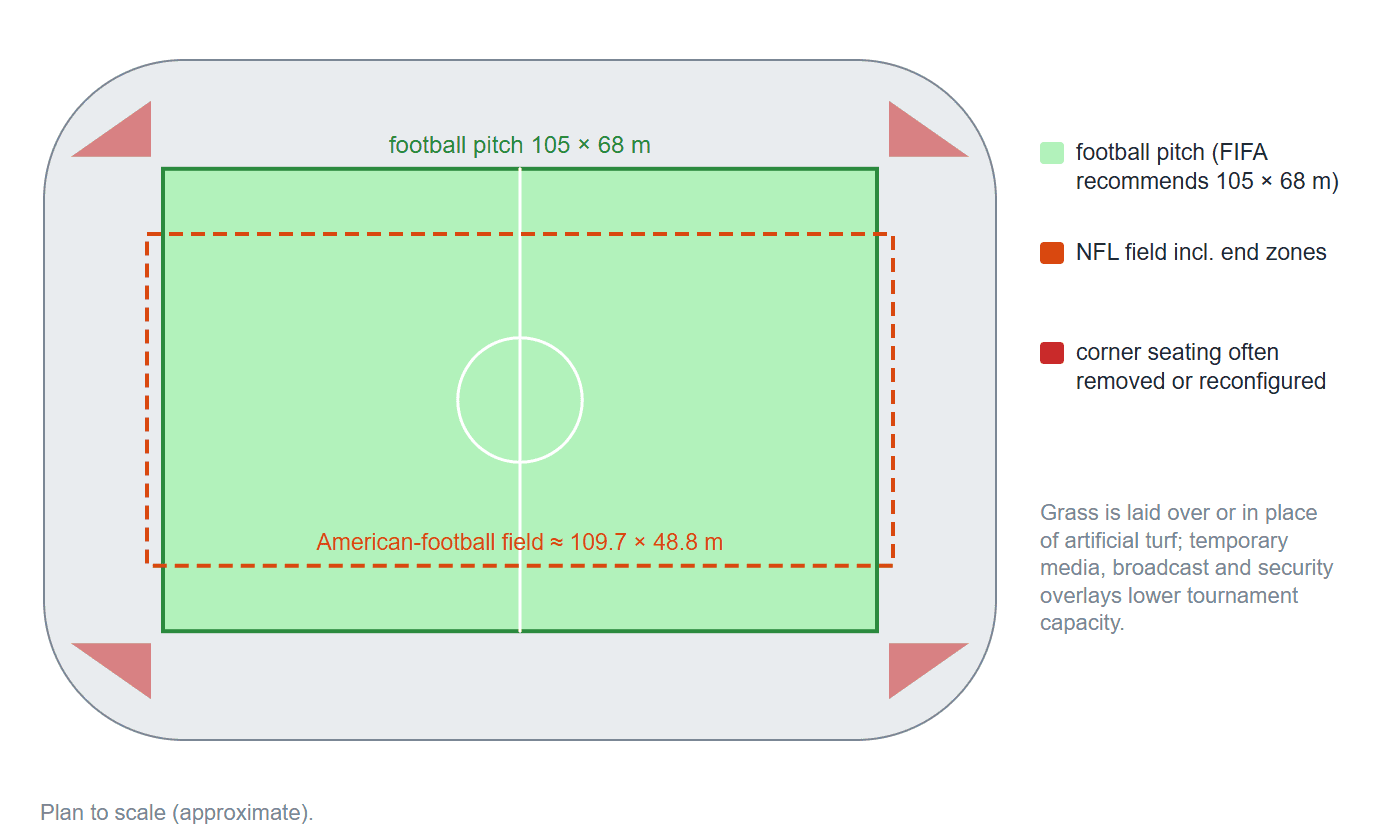
Why NFL stadiums need changes for the 2026 World Cup: a football pitch (FIFA recommends 105 × 68 m) is wider than an American-football field (about 110 × 49 m including end zones), so corner seating is often removed or reconfigured and grass is laid over or in place of turf. Diagram: Arch2O
Precedent analysis
Estadio Azteca (1966). Designed by Pedro Ramírez Vázquez and Rafael Mijares, the Azteca was built for football and has now served three World Cups across six decades, showing the value of a stadium that is renovated rather than replaced.
SoFi Stadium (2020). HKS designed a stadium sunk into the ground with a separate translucent roof canopy covering the stands and a public plaza. The canopy gives shade and weather protection without enclosing the bowl, an approach suited to a mild climate and to summer events.
Mercedes-Benz Stadium (2017). HOK’s retractable roof lets the stadium operate as an indoor, air-conditioned venue in summer heat, the strategy several southern US venues relied on in 2026.
Sources and further reading
- 2026 FIFA World Cup final (result and attendance).
- Wego: all 16 2026 World Cup venues with FIFA net capacities.
- CBS Sports: final and semi-final venues.

Alia El Saady is a graduate of the American University in Cairo (AUC Egypt) and currently works in Venice. She is a contributing writer for Arch2O, where she shares her insights on architecture, design, and culture. Since joining in 2018, she has authored 26 articles exploring topics such as sustainable living, architectural visualization, and the cultural significance of design. Her work reflects a passion for understanding the intersection of design and the built environment, offering readers a diverse and thoughtful perspective on contemporary architectural trends.