

What Makes Modern Architecture So Revolutionary?
Ever wonder why some buildings just feel different? Like they belong in a different era entirely? “Iconic Buildings” That’s the magic of modern architecture—the design movement that completely rewrote the rules of how we build and live.
Born from the ashes of World War I and crystallized after World War II, modern architecture emerged when the world desperately needed practicality and functionality to rebuild demolished cities. The ornate Beaux-Arts and neoclassical styles that had dominated for centuries suddenly felt irrelevant. People needed homes and buildings that worked for modern life, not monuments to past empires.
So what exactly is modern architecture? It’s a design philosophy that champions clean lines, open spaces, and honest materials. It says “no thanks” to unnecessary decoration and “yes please” to form following function. Think sharp angles, exposed concrete, steel frames, and massive glass windows that blur the line between inside and outside. It’s bold, it’s honest, and yeah—it can be pretty polarizing.
While you’re exploring architectural movements, you might also enjoy checking out how modern architecture compares to postmodernism or diving into some mind-bending surrealist architecture.
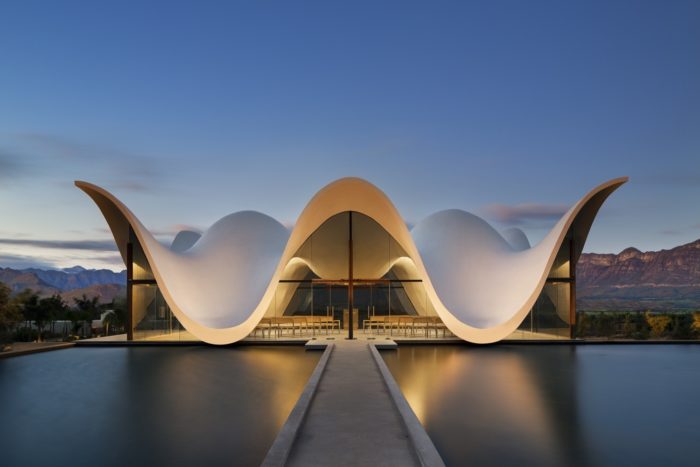
Bosjes Chapel, ©Adam Letch
What Makes Modern Architecture Tick?
Before we dive into the iconic buildings, let’s talk about what makes this style so distinctive:
Clean, abstract shapes and lines – Forget ornate columns and decorative flourishes. Modern architecture embraces geometry in its purest form.
Open floorplans – Walls? Who needs ’em? Modern design loves flowing spaces that adapt to how people actually live.
Massive glass windows – We’re talking floor-to-ceiling glass that brings the outside in and makes spaces feel boundless.
Connection with the environment – These buildings don’t sit on the landscape—they become part of it.
New materials – Reinforced concrete, steel, and glass weren’t just new toys for architects; they were game-changers that made entirely new forms possible.
This style absolutely dominated government buildings and universities from the 1920s through the 1980s, until postmodernism and neomodernism came along with their own ideas. But the influence of modern architecture? That never really went away.
The 10 Most Eye-Opening Iconic Buildings of Modern Architecture
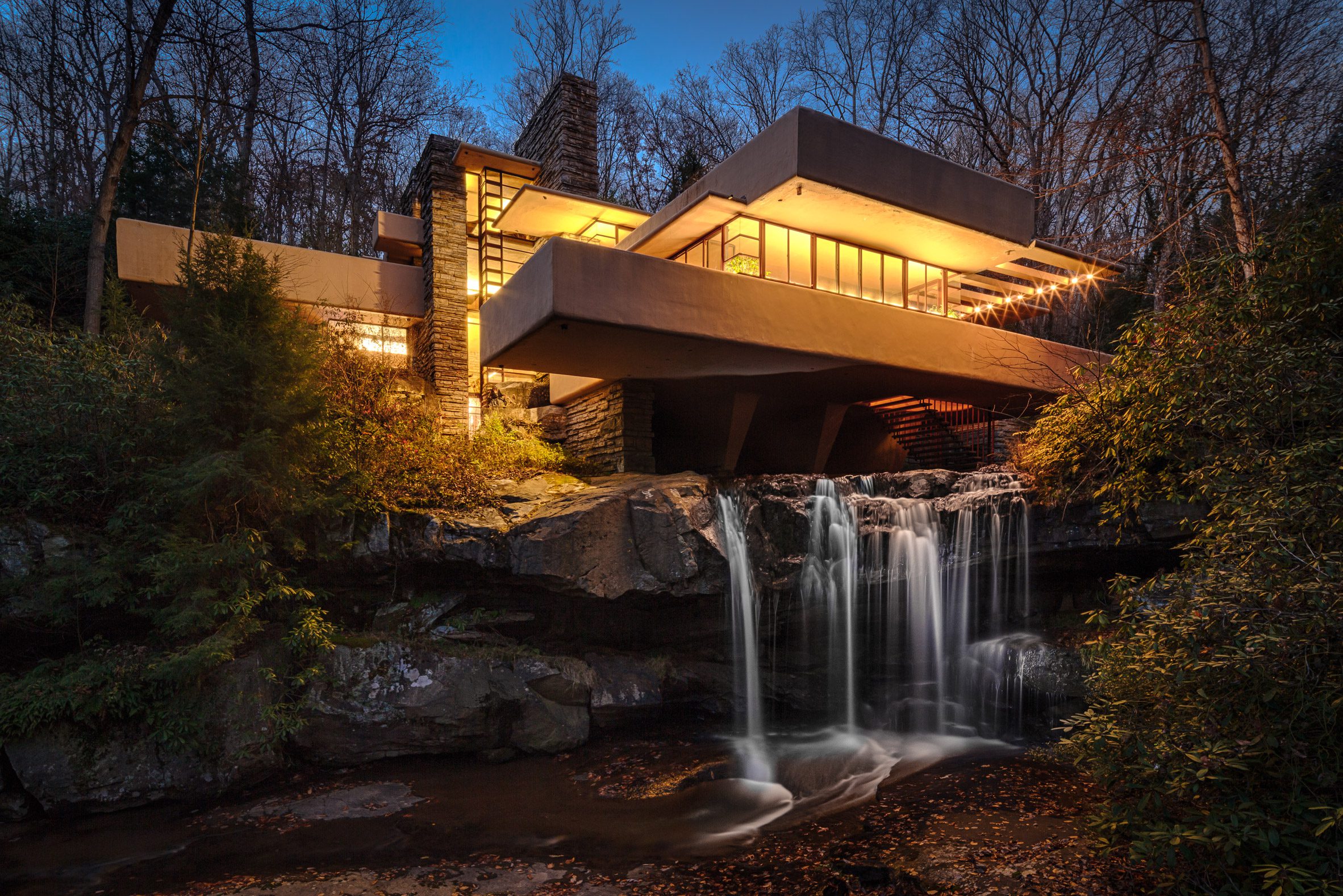
1) Fallingwater House | Frank Lloyd Wright, Mill Run, Pennsylvania, USA, 1935
©Western Pennsylvania Conservancy
A house built directly over a waterfall, its terraces seeming to float in mid-air like they’re part of the forest itself. That’s Fallingwater—Frank Lloyd Wright‘s masterpiece that might be the most famous modern architecture house ever built.
Inspired by Japanese architecture’s use of cantilevers, Wright designed this weekend getaway for the Kaufmann family to feel like it grew naturally from the Pennsylvania landscape. The result is breathtaking, but here’s a fun fact: the house had some serious problems. The roof leaked so much that Mr. Kaufman nicknamed it the “seven-buckets building,” and those dramatic cantilevered terraces started sagging because they weren’t properly reinforced.
It took multiple renovations to fix these issues, and today it operates as a museum where you can experience Wright’s vision firsthand. For more on architectural innovation, check out these 5 long span structures with awesome roofs.
Also Read: 10 Startling Surrealist Architecture Examples That Will Take Your Breath Away
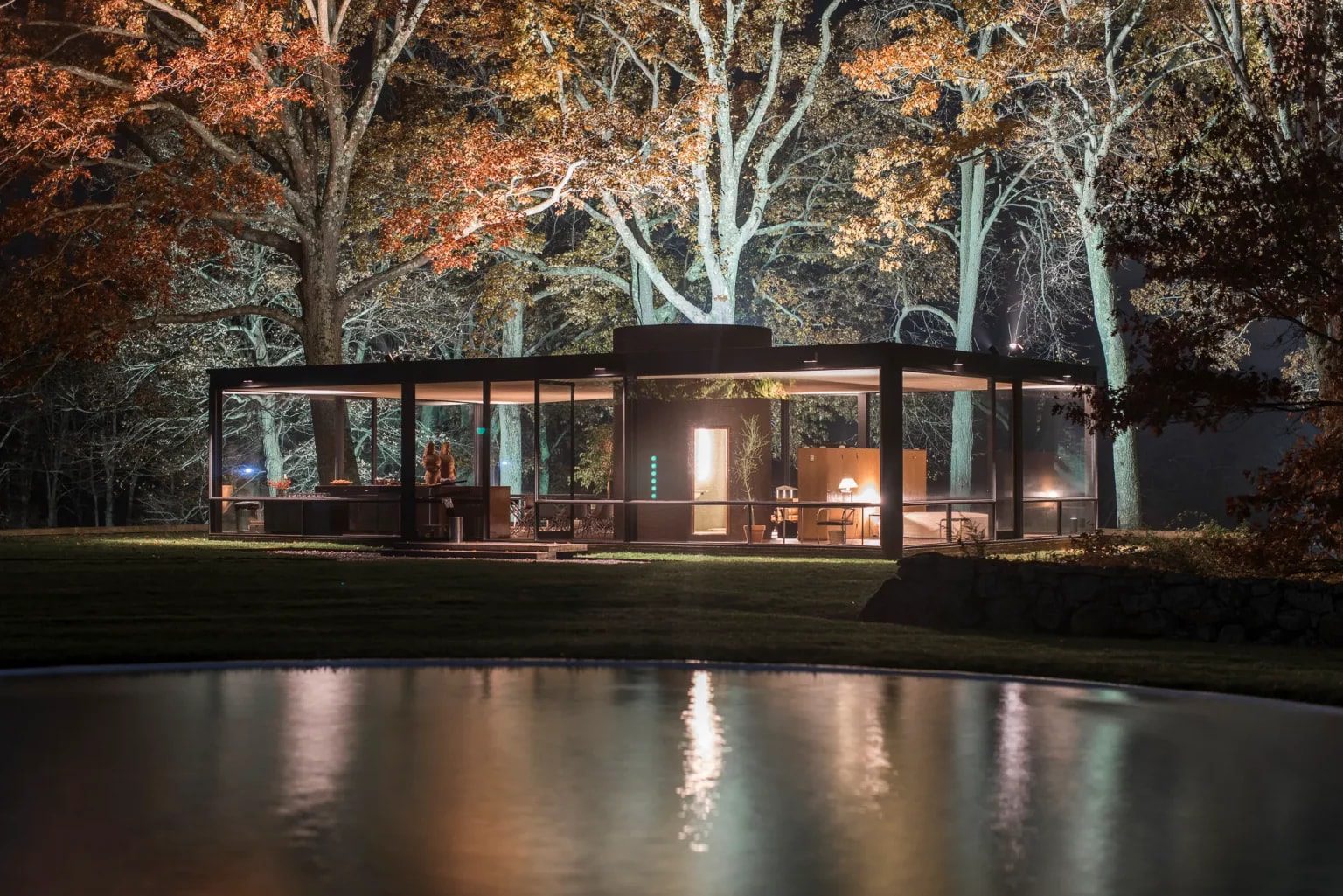
2) Glass House | Philip Johnson, New Canaan, Connecticut, USA, 1949
©mavink.com
Philip Johnson built that house to be his own. His design was minimal and utilized the reflection/transparency features of glass. He also experimented with dimensions and geometric shapes, which made the house one of the landmarks of the area and an icon in the world of Modern architecture.
The vacation home was made mainly of glass and steel. However, it also suffered from the ‘leaky roof’ issue like the Fallingwater house, which made Johnson describe it, jokingly, as the’ four-bucket house.’
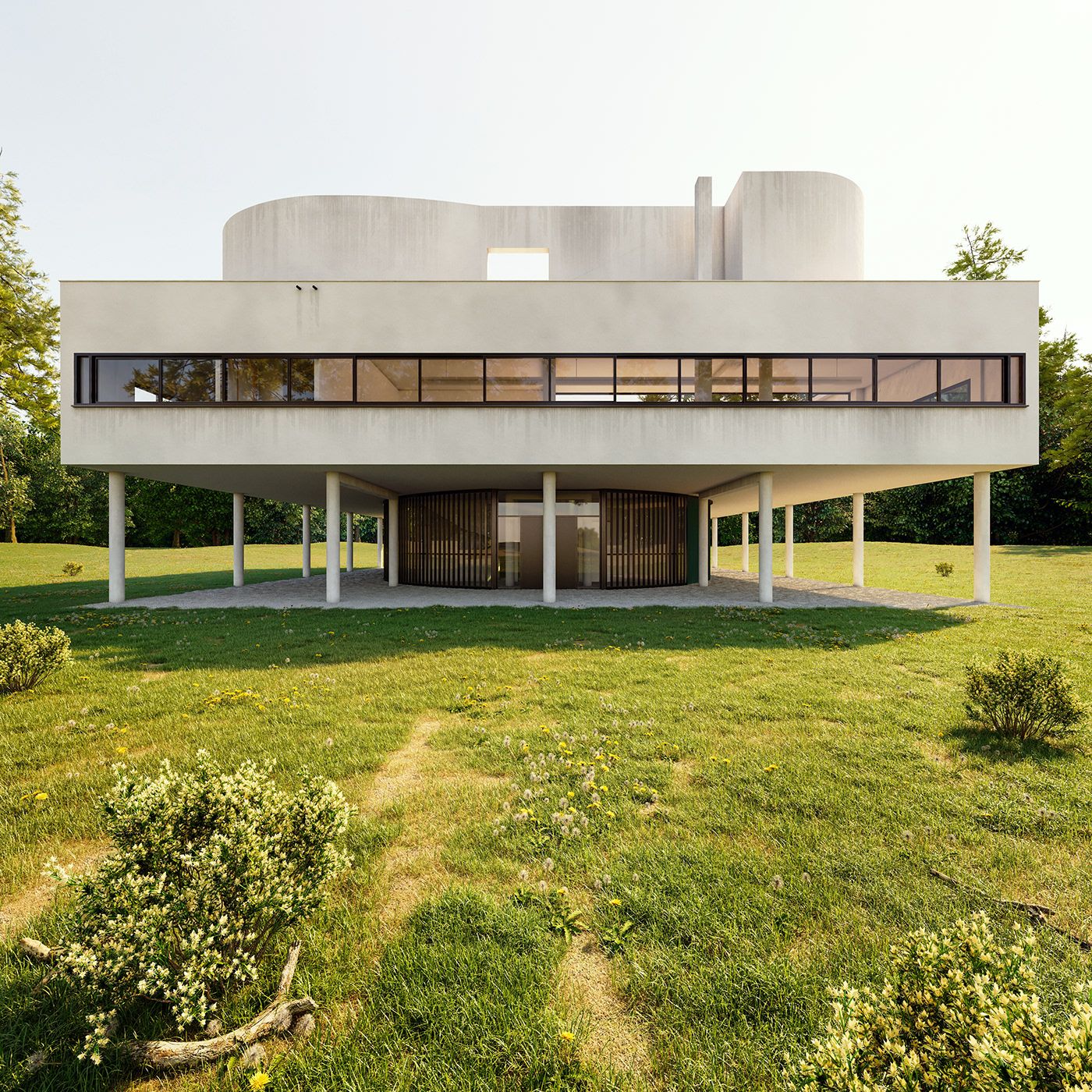
3) Villa Savoye | Le Corbusier, Paris, France, 1931
©Behance
Le Corbusier didn’t just build houses—he created manifestos you could live in. Villa Savoye is his five-point thesis made real: open plan, reinforced concrete columns, horizontal windows, a roof garden, and an independent façade.
Built as a family retreat for the Savoyes near Paris, it looks like a white box floating on pilotis (those slender concrete columns). But the family had a rough time with it—construction problems and design flaws made it barely livable, and they abandoned it after just a few years. Somehow, it still became a UNESCO World Heritage site and now operates as a museum where architecture students make pilgrimages to see modernism’s holy grail.
4) Guggenheim Museum | Frank Lloyd Wright, New York, USA, 1959
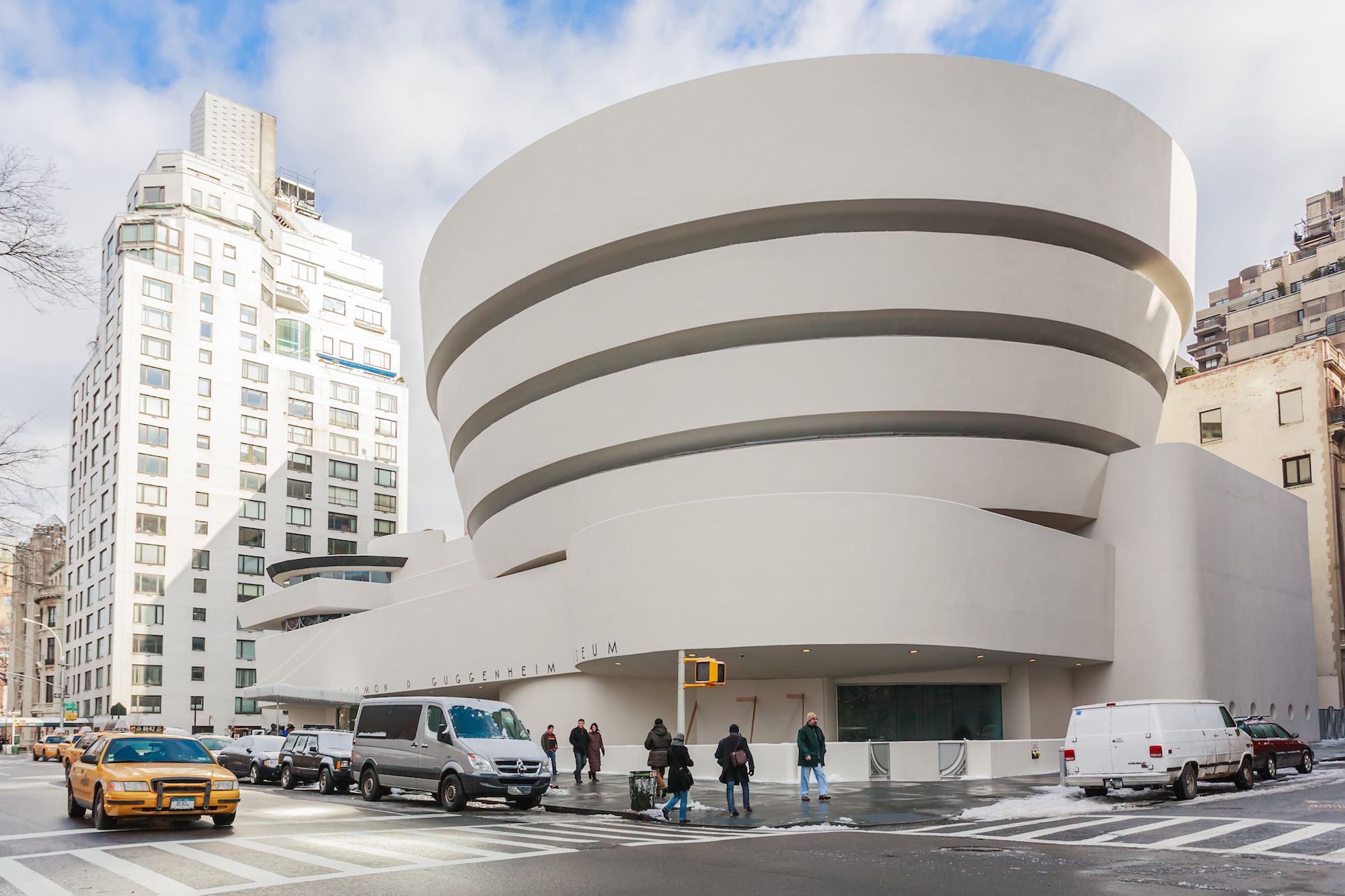
©Arnout Fonck
Wright called this his “temple of the spirit,” and it’s easy to see why. The Guggenheim‘s spiraling ramp takes you on a continuous journey through art, dissolving the barriers between spaces. It’s organic architecture at its finest—humanity intimately linked to the environment.
Those rigid geometric shapes Wright loved? He believed they carried meaning: circles for infinity, triangles for structural unity, spirals for organic progress, squares for integrity. The building itself became a sculpture, challenging the very idea of what a museum should be.
5) Barcelona Pavilion | Ludwig Mies Van der Rohe, Barcelona, Spain, 1929
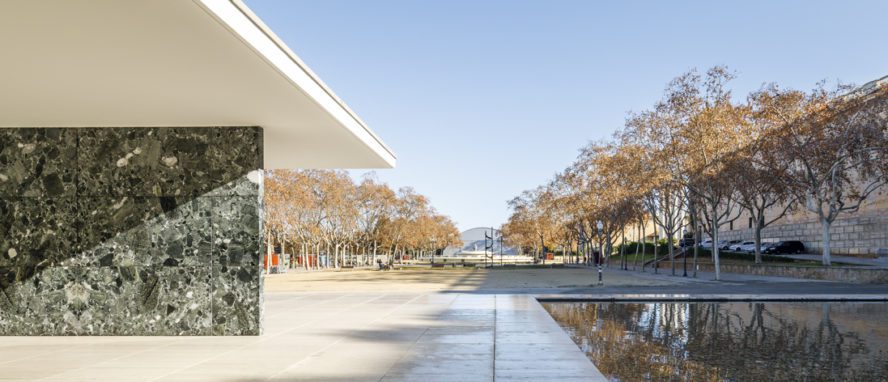
©Fundació Mies van der Rohe
When Mies van der Rohe designed the German Pavilion for the 1929 International Exposition, he created what might be the purest expression of modern architecture ever built. Influenced by the Bauhaus movement, the pavilion features transparent walls and a cantilevered roof that seems to float.
Despite its minimal appearance, Mies used luxurious materials like red onyx, marble, and travertine. And that iconic Barcelona Chair you’re probably sitting on right now? He designed it specifically for this building. The pavilion was dismantled after the expo but rebuilt in the 1980s, allowing visitors to experience Mies’s vision of “less is more.”
6) David S. Ingalls Skating Rink (Yale Whale) | Eero Saarinen, Connecticut, USA
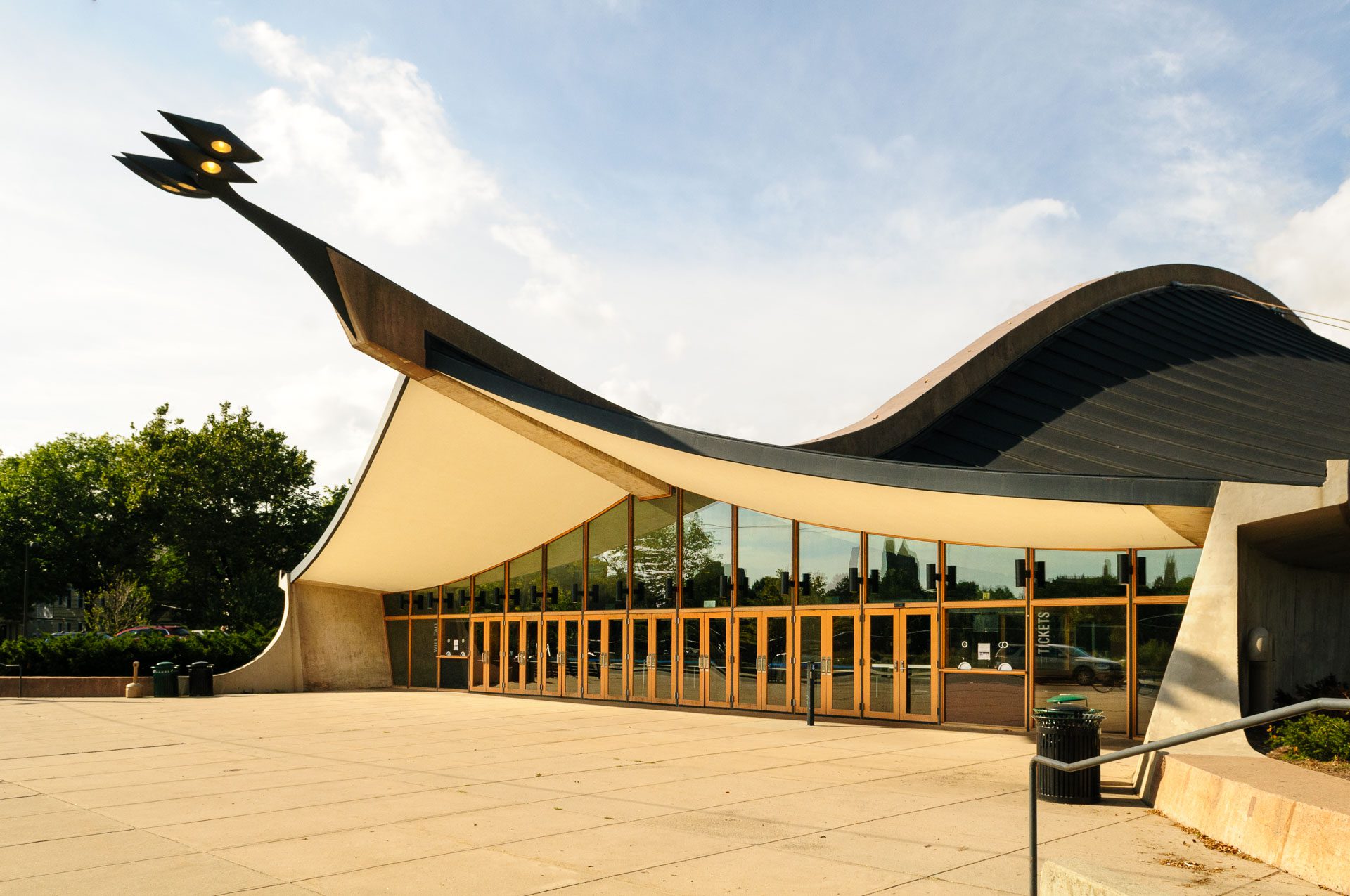
Eero Saarinen
Eero Saarinen, a Yale graduate, gave his alma mater this hockey arena that looks like a whale emerging from the landscape. The undulating cantilevered roof is supported by a massive 90-meter reinforced concrete arch—a signature Saarinen move.
The catenary arch became his architectural calling card, and this building shows why. It’s functional, dramatic, and completely unlike any other hockey rink ever built. For more on dramatic roof designs, check out these 7 recognizable Googie style buildings in Los Angeles.
7) Villa Dirickz | Marcel Leborgne, Brussels, Belgium, 1933
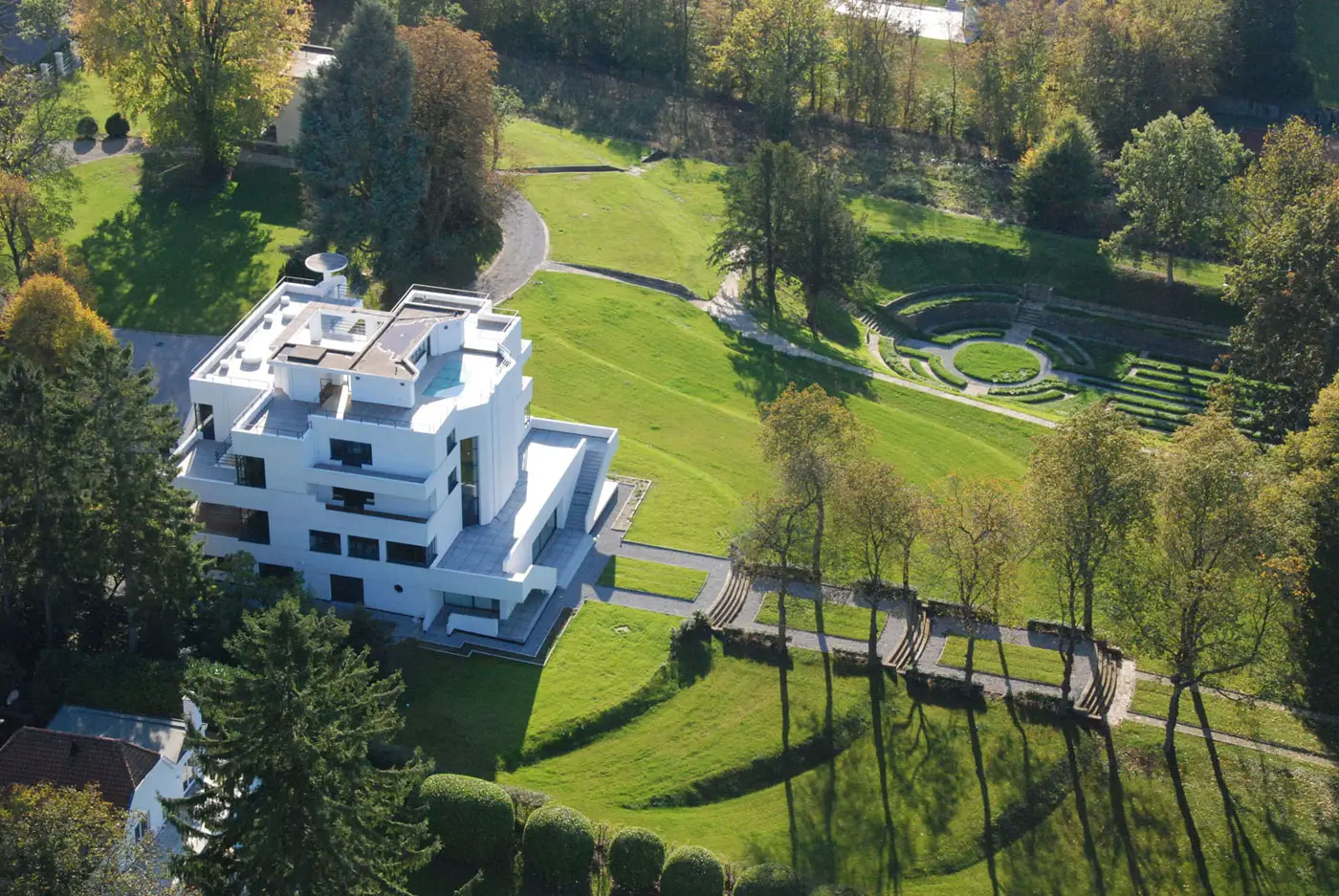
©Myfancyhouse.com
Marcel Leborgne, the father of modern architecture in Belgium, designed this striking villa for industrial magnate Mr. Dirickz—who happened to be an art enthusiast. The building features bold blocky forms, extensive glasswork, and white concrete surrounded by lush greenery.
Estimated at around $10 million, the villa includes lavish interiors with a wine cellar and cinema. After years of neglect, developer Alexander Cambron purchased it in 2007 and poured resources into its renovation. Today, it stands as a monument to how modern architecture can be both minimal and luxurious.
8) Isokon Building | Wells Coates, London, UK, 1934
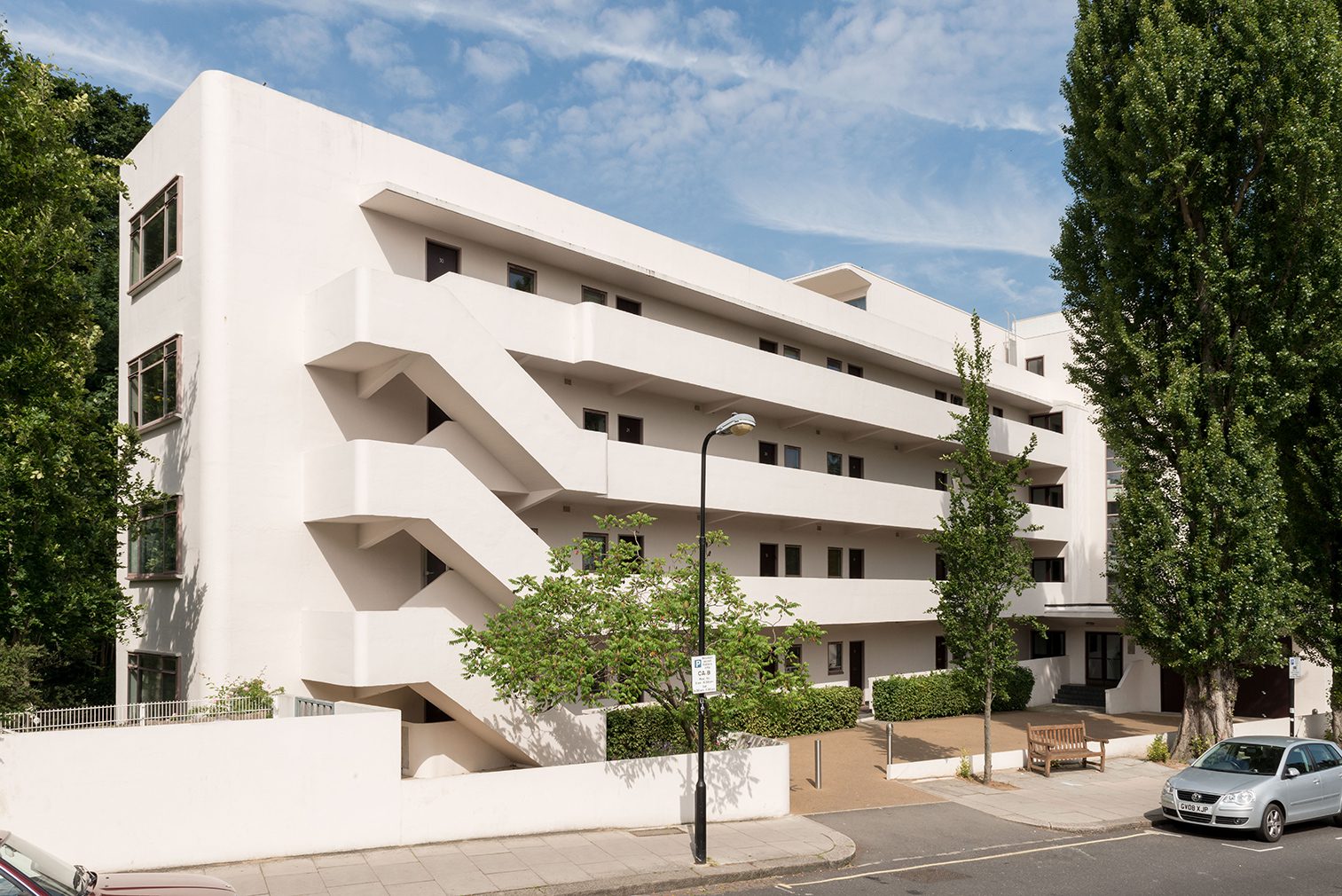
©The Modern House
Still in use today, the Isokon Building houses 32 apartments—24 studios and 8 one-bedrooms—plus staff rooms and a large garage. The flats had tiny individual kitchens because residents shared a communal kitchen, along with laundry and shoe-shining services.
Avanti Architects refurbished the building in 2003, converting the garage into a gallery that tells the building’s history. Now a Grade I listed building, it’s one of London’s most important architectural landmarks, showing how modern architecture created community living decades before co-living became trendy.
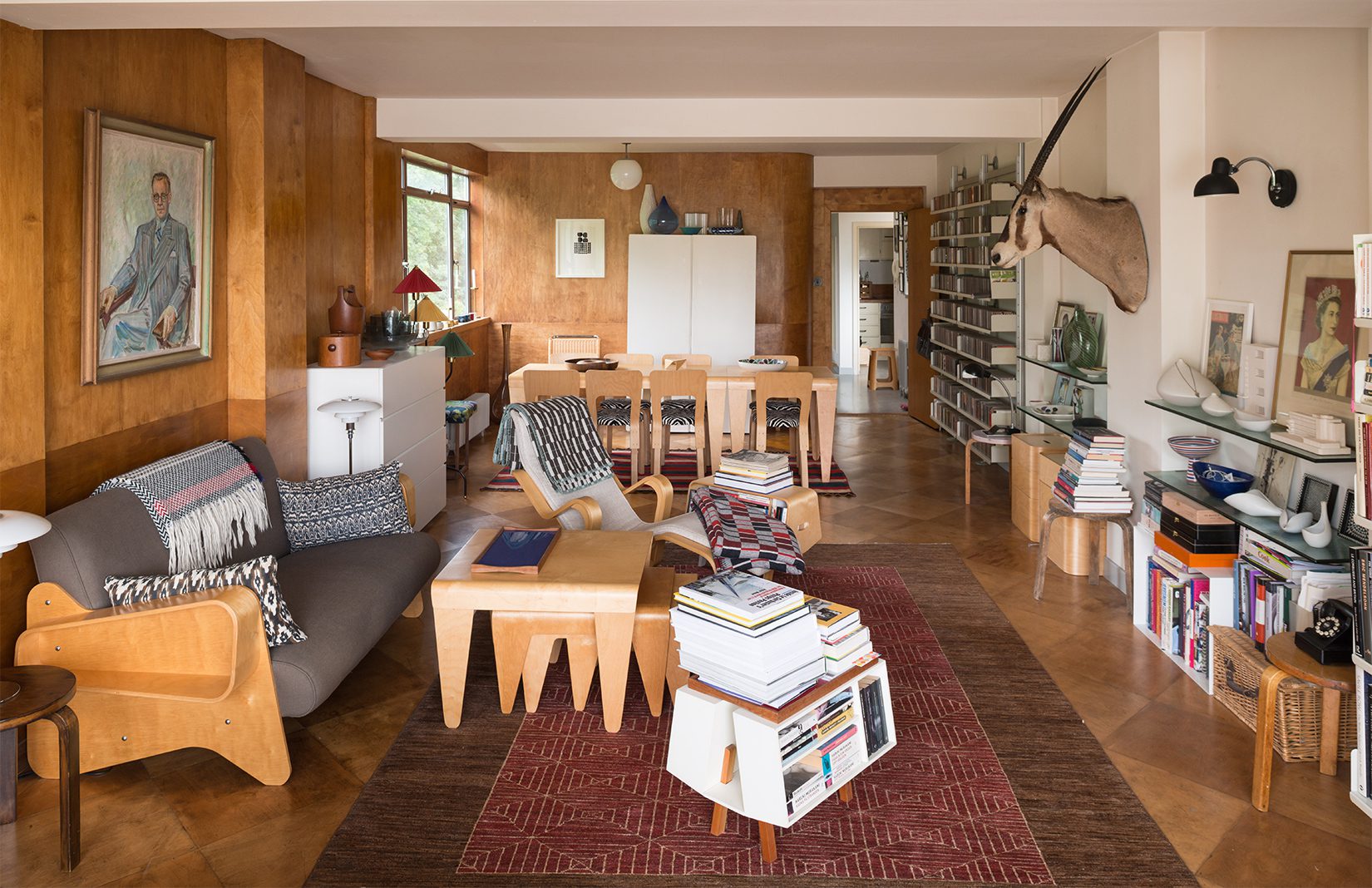
Inside London’s Isokon Building. ©The Modern House
Avanti Architects, who are specialized in revamping apartments’ Modern architecture, refurbished the building in 2003. The refurbishment resulted in the establishment of a communal gallery in the garage to tell the people the history of the building. The concrete residential block is listed as a Grade I building and is one of the critical architectural landmarks in the British capital.
9) Neue National Galerie | Ludwig Mies Van der Rohe, Berlin, Germany, 1968
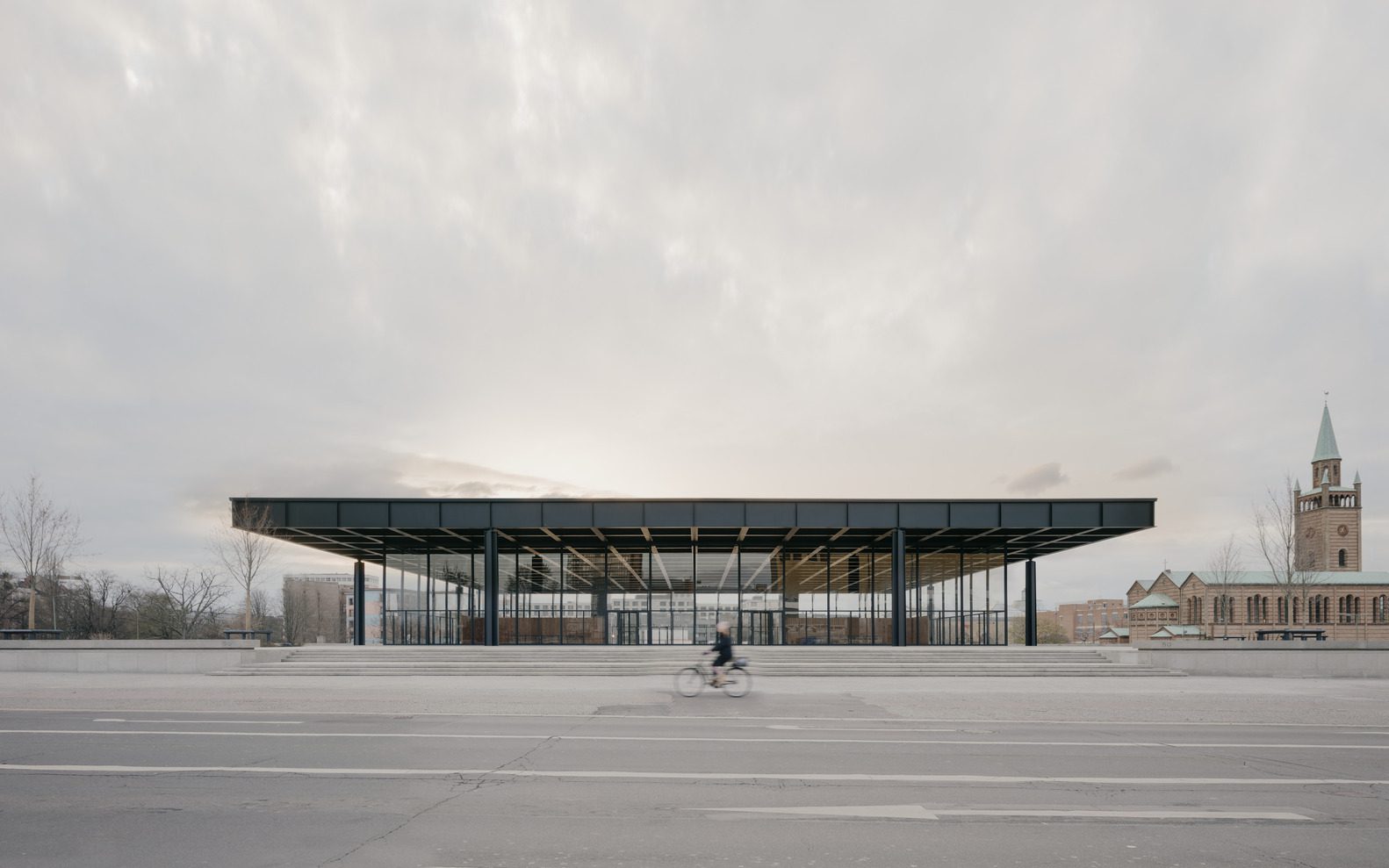
©Simon Menges
Dedicated to 20th-century art, the museum features Mies’s signature modernist vocabulary: enormous glass walls, a cantilevered roof, and flat exteriors. The entire building rests on a sculptural landscape that Mies also designed.
It’s been closed since 2015 for extensive renovations, but when it reopens, it will continue to demonstrate how modern architecture creates spaces where art and architecture become inseparable. The building itself is as much a work of art as the pieces it houses.
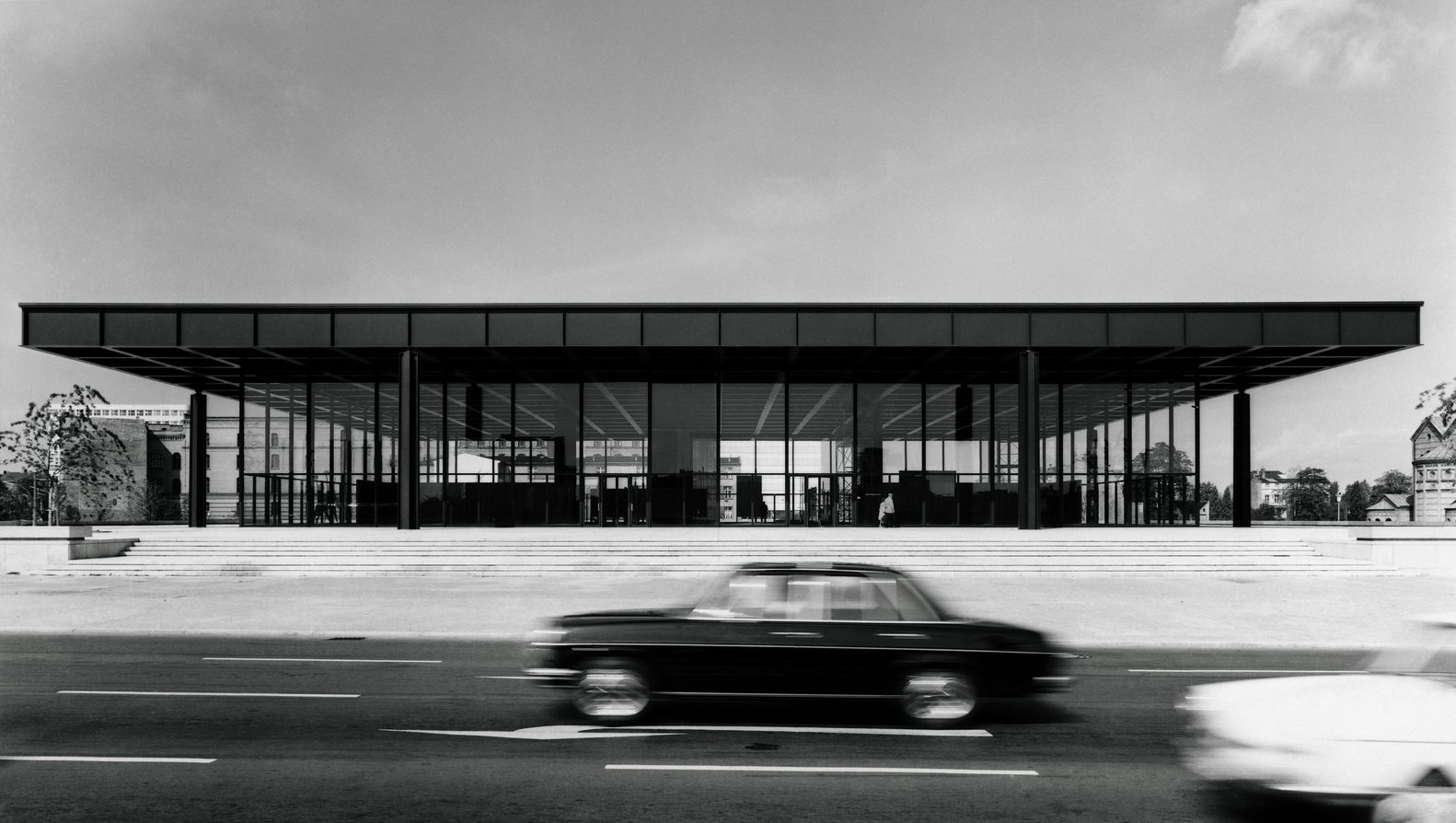
©Archiv Neue Nationalgalerie, Nationalgalerie, Staatliche Museen zu Berlin, Reinhard Friedrich
10) Cité Radieuse | Le Corbusier, Marseille, France, 1952
Le Corbusier’s “Radiant City” is arguably his most influential housing project—a massive concrete block that inspired countless modernist developments. The Bauhaus-inspired color scheme (yellow, red, and blue) gives life to the rough-cast concrete structure.
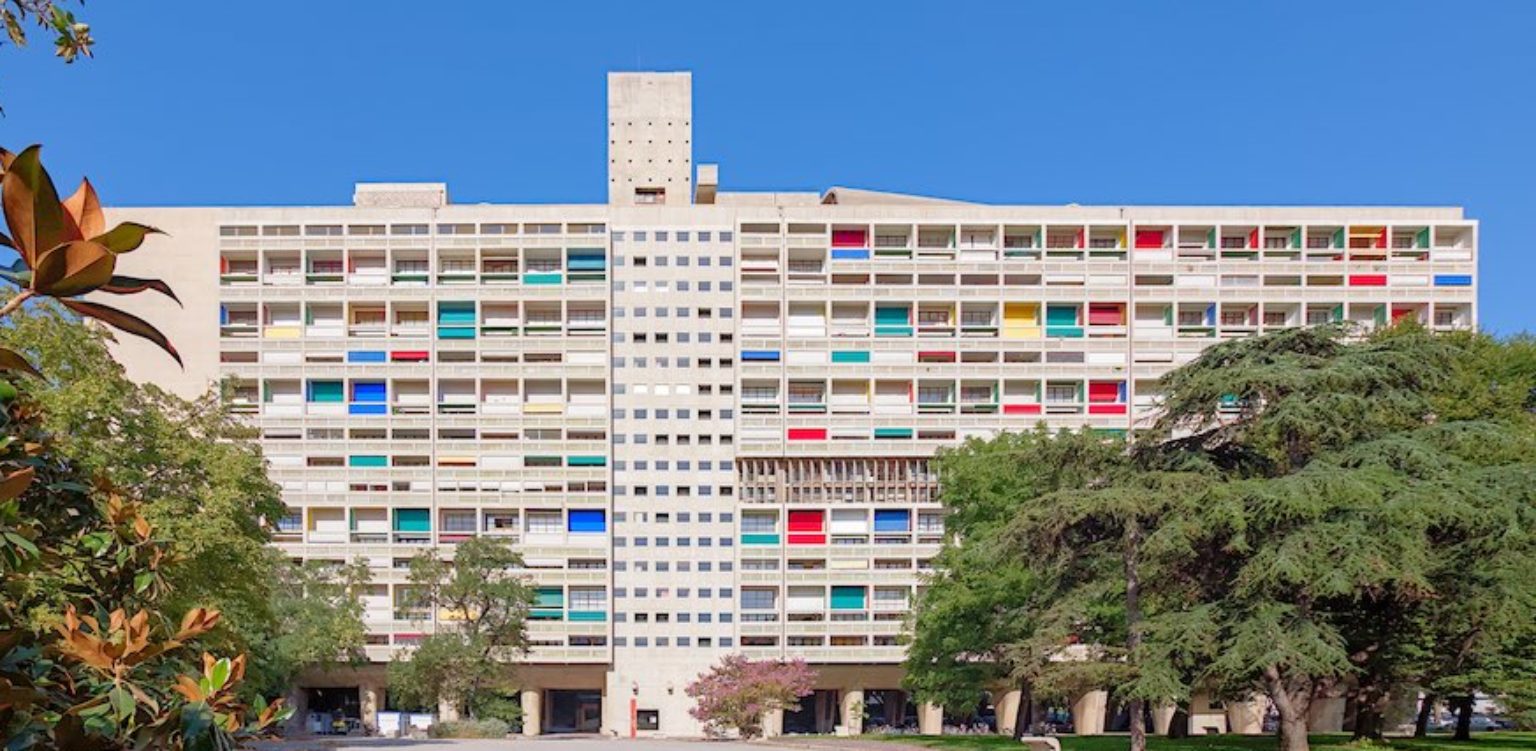
©Thal.art
It houses 337 apartments across 27 different types, plus a playground and pool. Corbusier originally wanted a steel frame, but WWII made steel scarce, so concrete became the primary material. Since 2016, it’s been a UNESCO World Heritage Site, cementing its place as a pivotal moment in architectural history.
Are contemporary and modern architecture the same thing?
Nope! This is one of the most common mix-ups in architecture. Modern architecture refers specifically to the style that dominated from the 1920s through the 1980s, with clear principles: clean lines, minimal decoration, new materials like steel and glass.
Contemporary architecture, on the other hand, has no fixed historical origin—it’s whatever’s happening right now. Today’s contemporary style borrows from modernism but also incorporates elements from postmodernism, neomodernism, and even traditional styles. It’s flexible, evolving, and much more eclectic. What’s contemporary today might look dated in 20 years.
Where is modern architecture most commonly used?
You’ll find the biggest concentrations in major urban centers. New York, Los Angeles, and Chicago have skylines dominated by modernist buildings—the Willis Tower, Walt Disney Music Hall, and the Guggenheim Museum are perfect examples.
But modern architecture truly went global. France, Germany, Italy, and Spain all embraced it, creating iconic landmarks like the Eiffel Tower’s modernist additions, Barcelona’s Sagrada Familia (which blends Gothic with modern), and countless Bauhaus-influenced buildings throughout Europe.
Why do so many people find modern architecture “bland”?
Here’s the honest answer: modernist architects believed that unnecessary decoration distracts from a building’s essential purpose. They saw architecture as pure artistic expression through form—where the shape itself, unadorned, carries meaning.
To them, adding decorative elements was like putting makeup on a sculpture—it hides the truth of the design. They wanted buildings to express their function through their form alone.
The problem? Most of us are wired to connect with art through memory, emotion, and ornamentation. When architecture is stripped down to pure geometry, it can feel cold, impersonal, or even hostile. Modernists would argue that’s not the building’s fault—it’s our expectations that need updating.
But here’s the thing: look at any of the 10 buildings above. Are they really bland? Or are they just different from what we’re used to? The Villa Savoye isn’t decorated, but it’s undeniably beautiful. The Guggenheim’s spiral isn’t ornate, but it’s breathtaking.
Maybe “bland” is just another word for “challenging our assumptions.”
The Bottom Line: Why Modern Architecture Still Matters
Nearly a century after these buildings were created, their influence is everywhere. The open floor plans we love in our apartments? Modern architecture. The big windows that flood our homes with light? Modern architecture. The minimalist aesthetic that dominates Instagram feeds? You guessed it.
These 10 iconic buildings didn’t just change architecture—they changed how we think about space, light, materials, and what buildings can be. They proved that less really can be more, that function can be beautiful, and that architecture can be art.
Whether you love them or find them challenging, you can’t ignore them. They’re the foundation everything else is built on.

Daniel Mercer is a Coffee Break section editor at Arch2O, currently based in Berlin, Germany. With a background in architectural history and design journalism, Daniel holds a Master’s degree from the University of Edinburgh, where he focused on modern architecture and urban theory. His editorial work blends academic depth with a strong grasp of contemporary design culture. Daniel has contributed to several respected architecture publications and is known for his sharp critique and narrative-driven features. At Arch2O, he highlights innovative architectural projects from Europe and around the world, with particular interest in adaptive reuse, public infrastructure, and the evolving role of technology in the built environment.