

Postmodernism: The Movement That Said “Less is a Bore”
Ever looked at a building and thought, “Wait, is that serious?” You’re probably looking at postmodern architecture—the design movement that looked at modernism’s strict rules and said, “Nah, we’re doing things differently.” It’s not just a style; it’s a full-blown rebellion that gave us some of the world’s most memorable (and sometimes head-scratching) buildings.
Here’s the thing: postmodernism didn’t just happen randomly. It was a direct reaction to modernism’s rigid “less is more” philosophy. When Mies van der Rohe famously declared “Less is more,” Robert Venturi cheekily fired back, “Less is a bore.” That single sentence captures the entire conflict in a nutshell.
Modernism wanted worldwide unity—a architectural utopia that ignored historical and cultural context entirely. The result? Cities that felt sterile, anonymous, and yes, boring. Postmodernism brought back color, ornamentation, symbolism, and playfulness. But here’s the irony: while it tried to restore identity, it also rode the wave of globalization, which meant those classical columns and Roman arches could pop up anywhere—from Las Vegas to Tokyo.
Want to see how this rebellion against boring buildings played out? Check out these 9 postmodern architecture icons designed by pioneers of the movement, including the legendary advocate of postmodernism, Michael Graves.
What Makes Postmodern Architecture So Different?
What is the Main Idea of Postmodernism?
Before we dive into the buildings, let’s unpack what postmodernism actually stands for. It’s not just about making things weird for the sake of being weird—it’s a complex philosophy that includes:
-
Cultural Equality – No single style is superior; all historical references are fair game
-
Deconstruction – Breaking down rigid rules and rebuilding them with a sense of humor
-
User-Focused Design – Actually paying attention to what people want, not just what architects think they should want
-
Fragmentation and Disorder – Embracing complexity over sterile simplicity
-
Rejecting Absolute Knowledge – There’s no one “right” way to build
Postmodernism basically said: “Hey, modernism, you’re taking yourself way too seriously. Let’s have some fun with this.”
Read more: 10 of the Most Iconic Buildings of Modern Architecture
The Great Postmodern Rebellion: How It All Started
The shift didn’t happen overnight. By the 1960s, people were getting tired of modernism’s glass boxes and concrete towers. Cities started looking like copy-paste versions of each other, devoid of personality or local flavor. Then along came architects like Robert Venturi, Michael Graves, Charles Moore, and Philip Johnson—designers who weren’t afraid to mix high and low culture, to reference history playfully, and to use color unapologetically.
They asked: Why can’t a skyscraper have a giant Chippendale pediment on top? Why can’t a government building be pink and teal? Why can’t we put Roman columns next to stainless steel pipes?
What exactly is postmodern architecture?
Postmodern architecture is a design movement that emerged in the 1960s and 1970s as a direct reaction against modernism’s rigid rules and sterile aesthetics. It embraces historical references, ornamentation, color, and symbolism while rejecting the idea that there’s one “right” way to design. It’s playful, contextual, and unapologetically eclectic.
How is postmodern architecture different from modern architecture?
Modern architecture prioritizes function over form, minimal ornamentation, and universal design principles. Postmodern architecture says “function is important, but so is meaning, context, and human delight.” Modernism is minimalist and serious; postmodernism is decorative and playful. Modernism ignores history; postmodernism reinterprets it.
The answer? We totally can. And the results are unforgettable.
The 9 Architecture Icons That Define Postmodernism
1) AT&T Building (550 Madison Avenue) | Philip Johnson & John Burgee, New York, USA, 1984
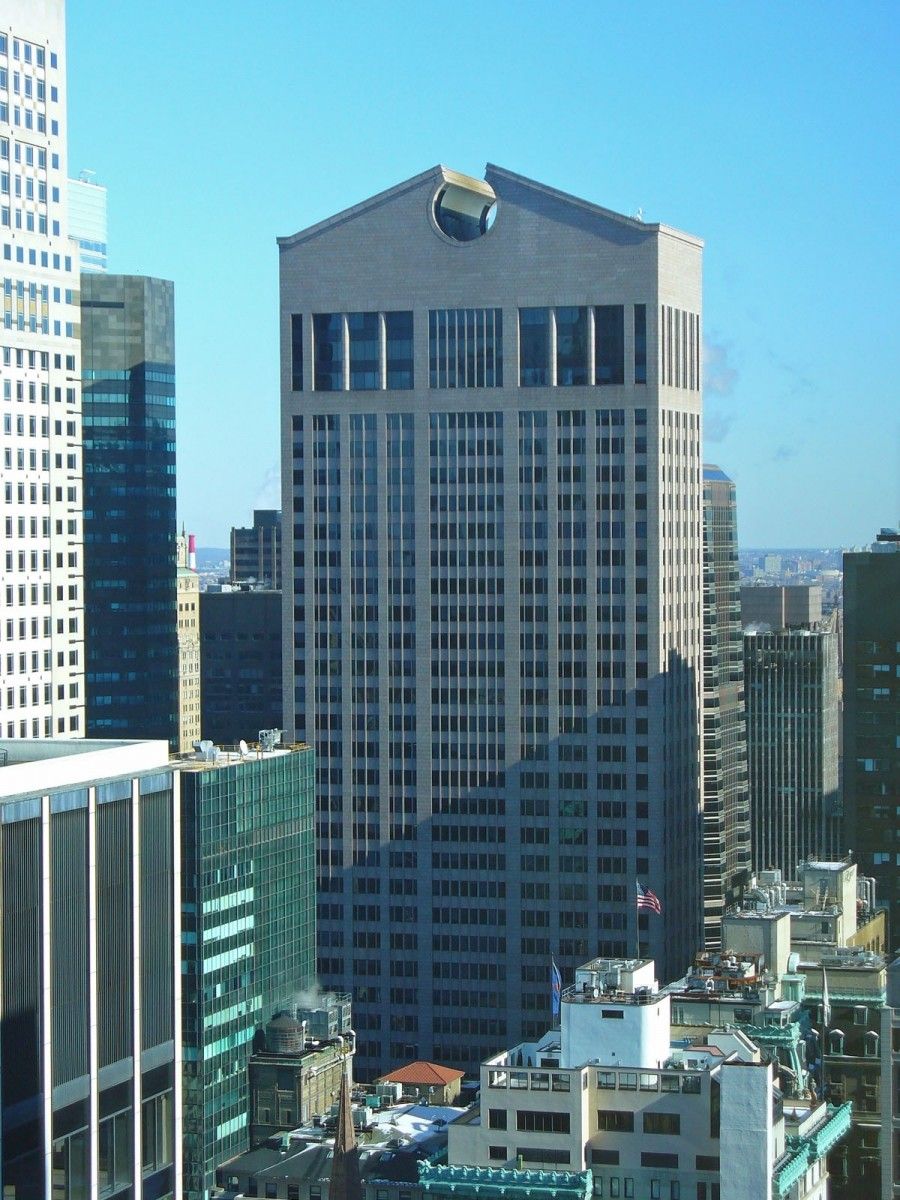
© David Shankbone
This is where postmodernism went big-time. The AT&T Building (now 550 Madison Avenue) dared to put a giant broken pediment—nicknamed the “Chippendale top”—on a Manhattan skyscraper. In a sea of modernist glass boxes, this was architectural trolling at its finest.
The 7-story arched entrance referenced Roman gateways, while the pink granite cladding screamed “I’m not like the other buildings.” Critics mocked it mercilessly, but that didn’t matter. This building single-handedly announced that a new era had arrived. Love it or hate it, you can’t ignore it—which is exactly the point of postmodernism.
2) The Portland Building | Michael Graves, Portland, Oregon, USA, 1982
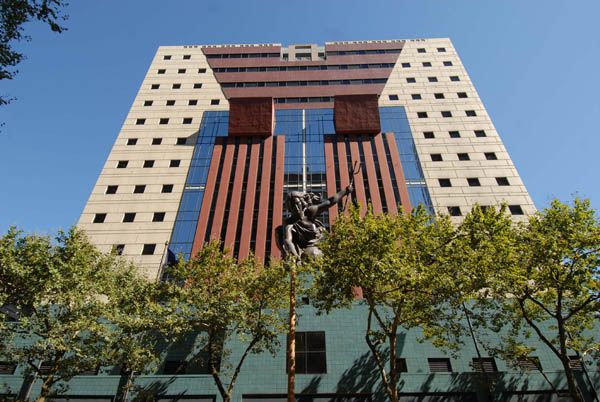
Photo by flickr.com
Michael Graves looked at America’s boring city centers and said, “Enough.” The Portland Municipal Services Building is his colorful, unapologetic response to modernist monotony.
Finished two years before the AT&T Building, this government office building features a teal and salmon façade with oversized, cartoonish keystones and pilasters that wink at classical architecture. Graves used color to make the building feel connected to its environment and used historical references to thumb his nose at modernism’s “no ornamentation” rule.
Sure, critics said it had too much symbolism. But regular people? They loved it. It made a government building feel human, approachable, and actually interesting to look at.
3) Vanna Venturi House | Robert Venturi, Philadelphia, Pennsylvania, USA, 1964
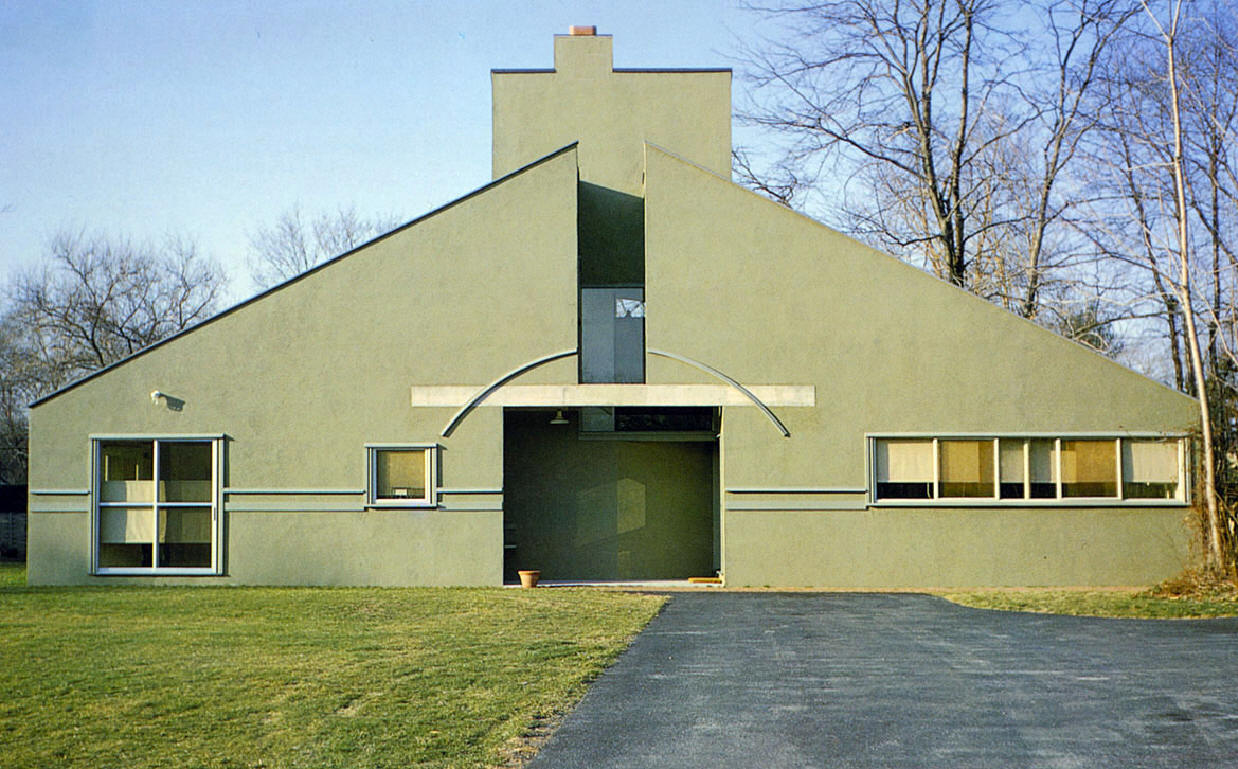
Courtesy of Wikiarquitectura
This is ground zero for postmodernism. Robert Venturi designed this house for his mother, and in doing so, broke modernism’s most sacred rule: “Form follows function.” Spoiler alert: the form doesn’t follow function at all, and that’s exactly the point.
The house has a gabled roof (scandalous in modernist circles), a giant chimney that dominates the façade, and a square doorway that’s perfectly centered—except the actual door is off to the side. It’s deliberately awkward, playfully wrong, and intellectually provocative.
Completed in 1964, it rose more than a decade before postmodernism gained momentum, making it the movement’s founding document in built form. It’s not just a house; it’s a manifesto you can walk through.
4) Piazza D’Italia | Charles Moore, New Orleans, Louisiana, USA, 1978
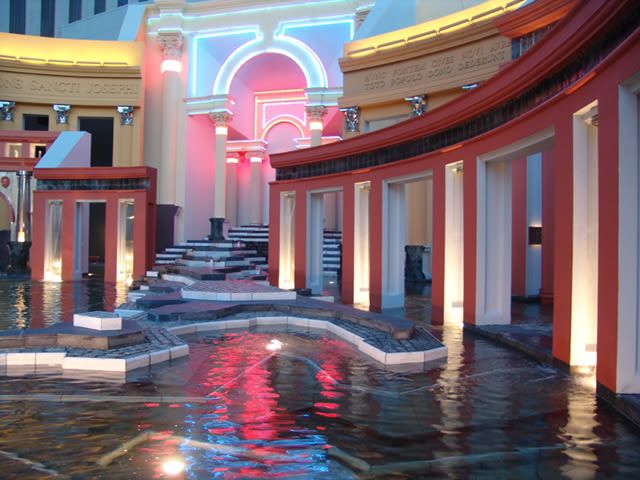
Courtesy Charles Moore Foundation
Charles Moore took Roman architecture, put it through a funhouse mirror, and painted it in bold reds, yellows, and metallics. The result? Piazza D’Italia—a public space that celebrates Italian culture while completely reinventing classical forms.
The arches and colonnades curve around a fountain, with capitals ornamented in reflective metal for dramatic night effects. When it opened in 1978, critics called it a masterpiece. But then it was abandoned for years due to undeveloped surroundings.
In 2003, it was fully restored when the adjacent Lykes Center became Loews Hotel. Today, it stands as proof that postmodernism’s playful approach to history can create spaces that are both meaningful and visually stunning.
5) National Gallery of London Sainsbury Wing | Venturi & Scott Brown, London, UK, 1991
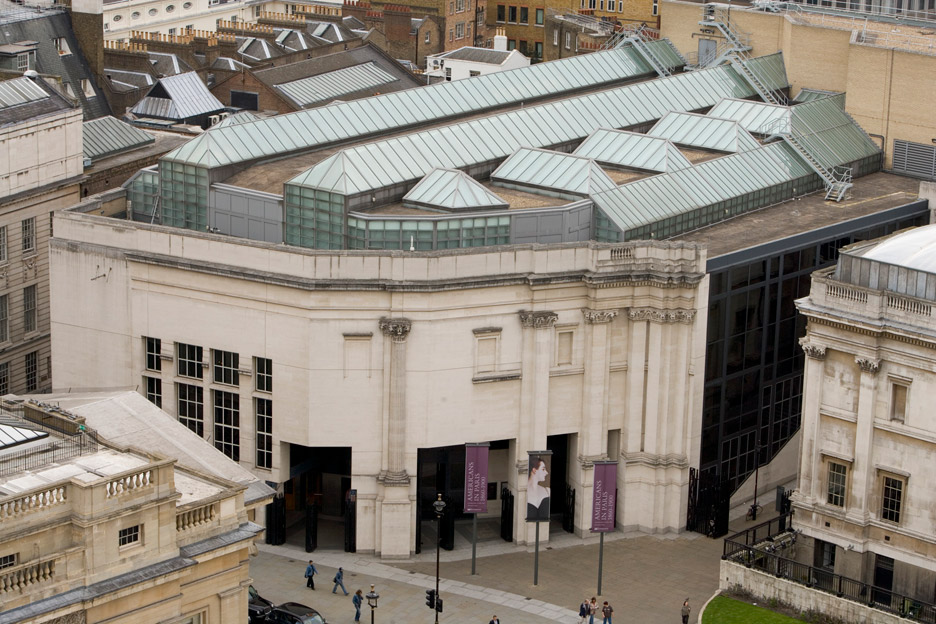
courtesy of the National Gallery
More than 25 years after the Vanna Venturi House, Robert Venturi and Denise Scott Brown designed this wing that perfectly captures postmodernism’s mature approach. Their proposal won a second competition after Prince Charles famously described the winning hi-tech design as a “monstrous carbuncle on the face of a much-loved and elegant friend.”
The Venturi-Scott Brown solution? A façade that gradually transitions from neoclassical (to match the National Gallery) to modern elements. Plain stone with classic entablatures and lavishly ornamented pilaster capitals coexist with extended glass surfaces, English brick walls, and polychromatic cast-iron columns.
It’s a masterclass in respectful contextualism while still being boldly postmodern. The building says, “Yes, we honor history, but we’re not afraid to be of our time.”
6) Neue Staatsgalerie | James Stirling, Stuttgart, Germany, 1984
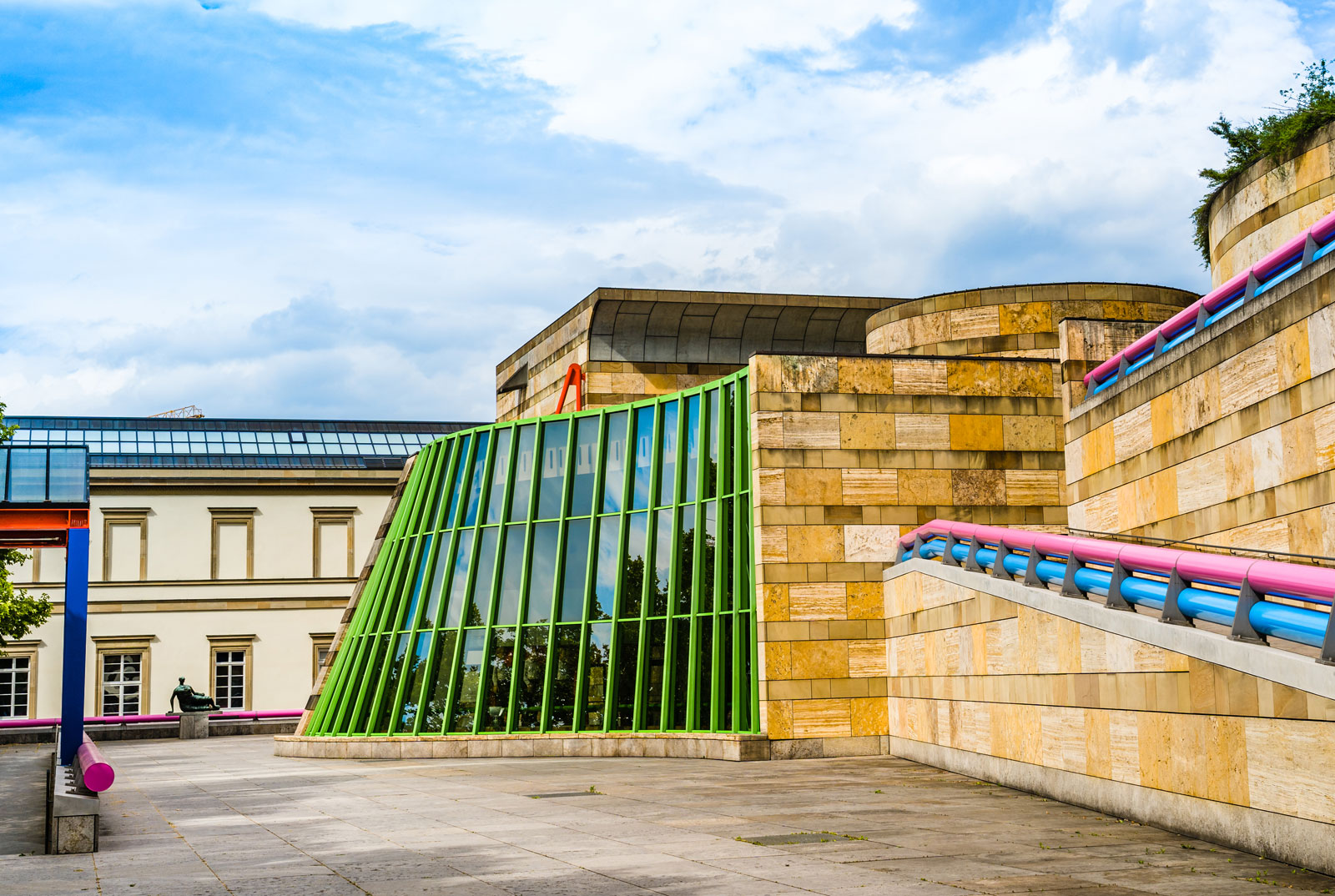
Staatsgalerie museum, Stuttgart, Germany
James Stirling took the competition brief—”connect to the 1843 Staatsgalerie”—and created a postmodern symphony of old and new. He combined classical travertine and sandstone with modern glass and outrageously colored industrial steel pipes (blue and pink, no less).
The gallery spaces adopt the U-shaped format of the older building while injecting modern spatial concepts. The atrium is surrounded by massive sandstone walls, arches, and columns that channel 19th-century spirit, while the colorful pipes guide visitors through the space like a postmodern circulatory system.
It’s serious architecture that doesn’t take itself too seriously—a perfect postmodern balancing act.
7) Team Disney Building | Michael Graves, Burbank, California, USA, 1990
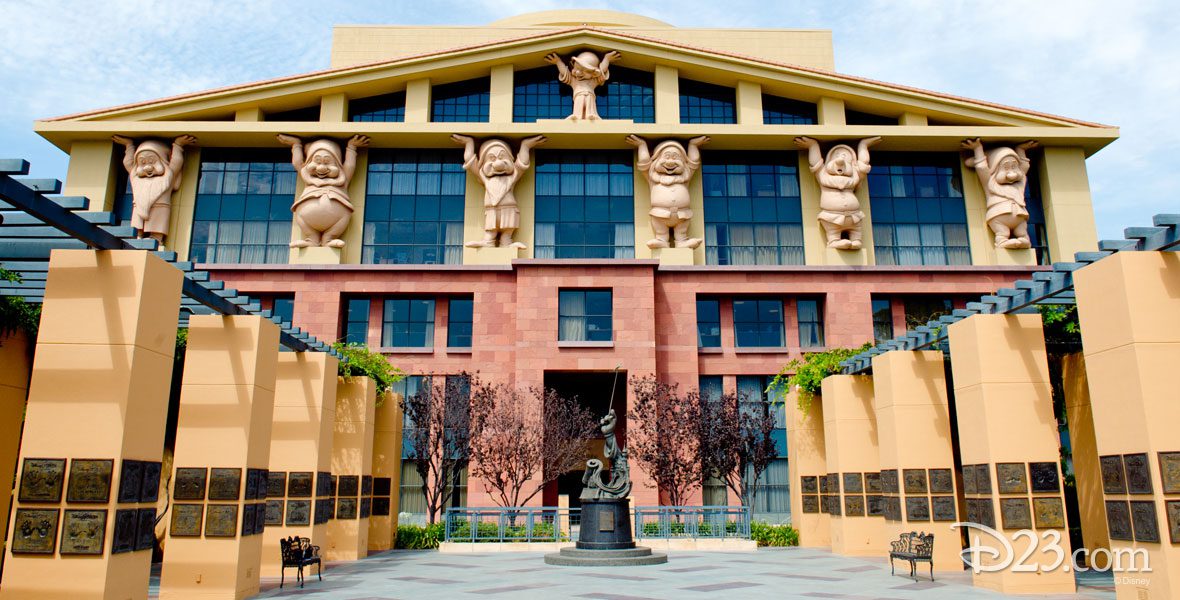
Michael Graves took the Seven Dwarfs and turned them into columns. Seriously. The Team Disney Building features oversized, cartoonish columns that look like they walked straight out of Snow White and into architectural history.
This is postmodernism at its most playful—taking pop culture and making it part of high architecture. The building uses Graves’ signature colorful facades and classical references, but with a Disney twist that makes it unlike any corporate headquarters you’ve ever seen.
It proves that postmodernism can be fun, accessible, and still architecturally sophisticated. It’s corporate architecture that doesn’t feel corporate.
8) Humana Building | Michael Graves, Louisville, Kentucky, USA, 1985
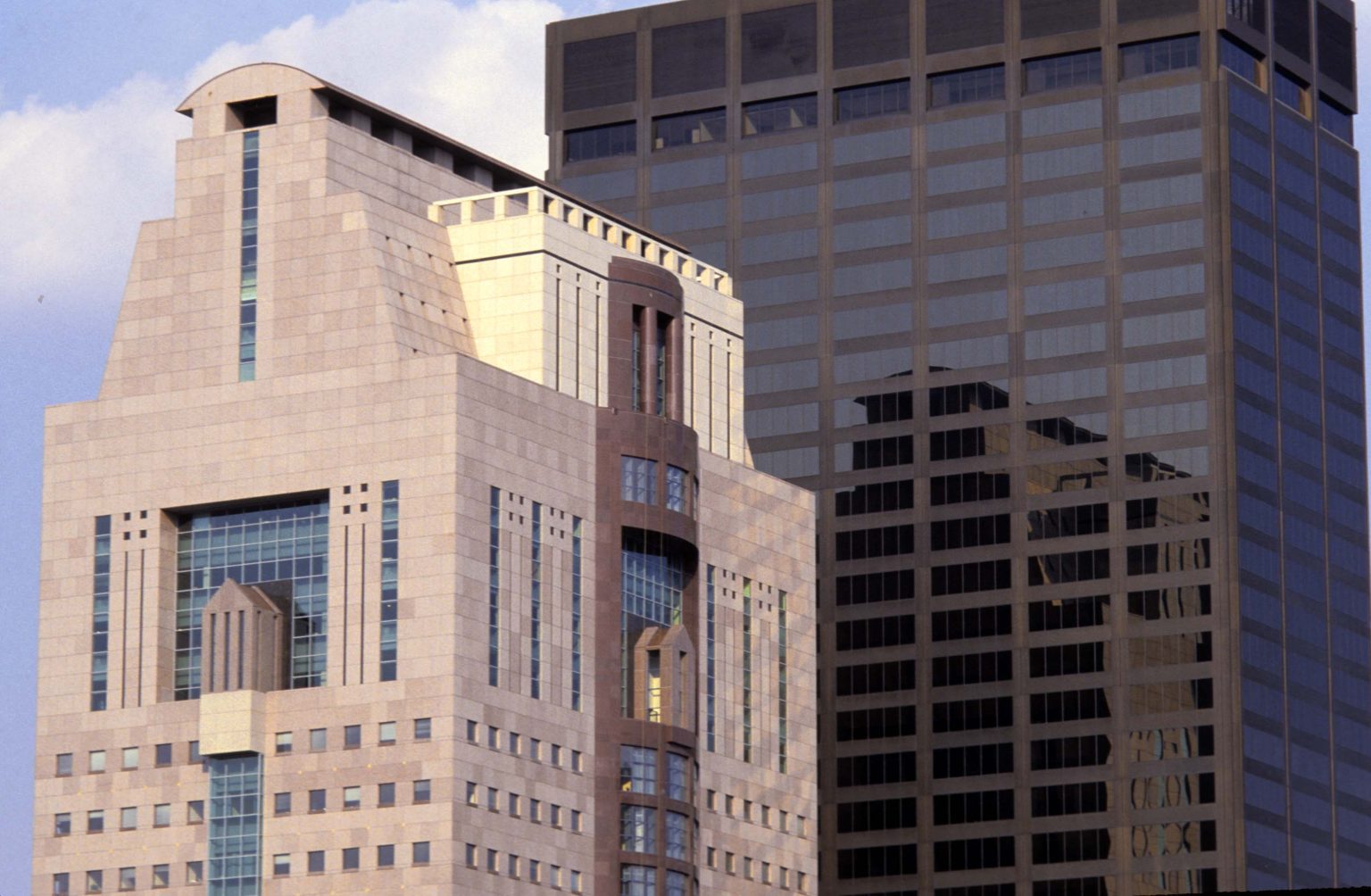
Humana Building Exterior Image3 1536×1004
Before Graves went full-cartoon with his Disney projects, he designed the Humana Building—a skyscraper that proved postmodernism could work at scale. The building features a stepped profile with green steel bars, granite facades, and classical references that make it look like a modern interpretation of a Renaissance palazzo.
It shows that postmodernism isn’t just about being silly—it can create dignified, serious corporate architecture that still breaks free from modernist monotony. The building commands respect while refusing to be boring.
9) The Morgan Library Addition | Renzo Piano, New York, USA, 2006
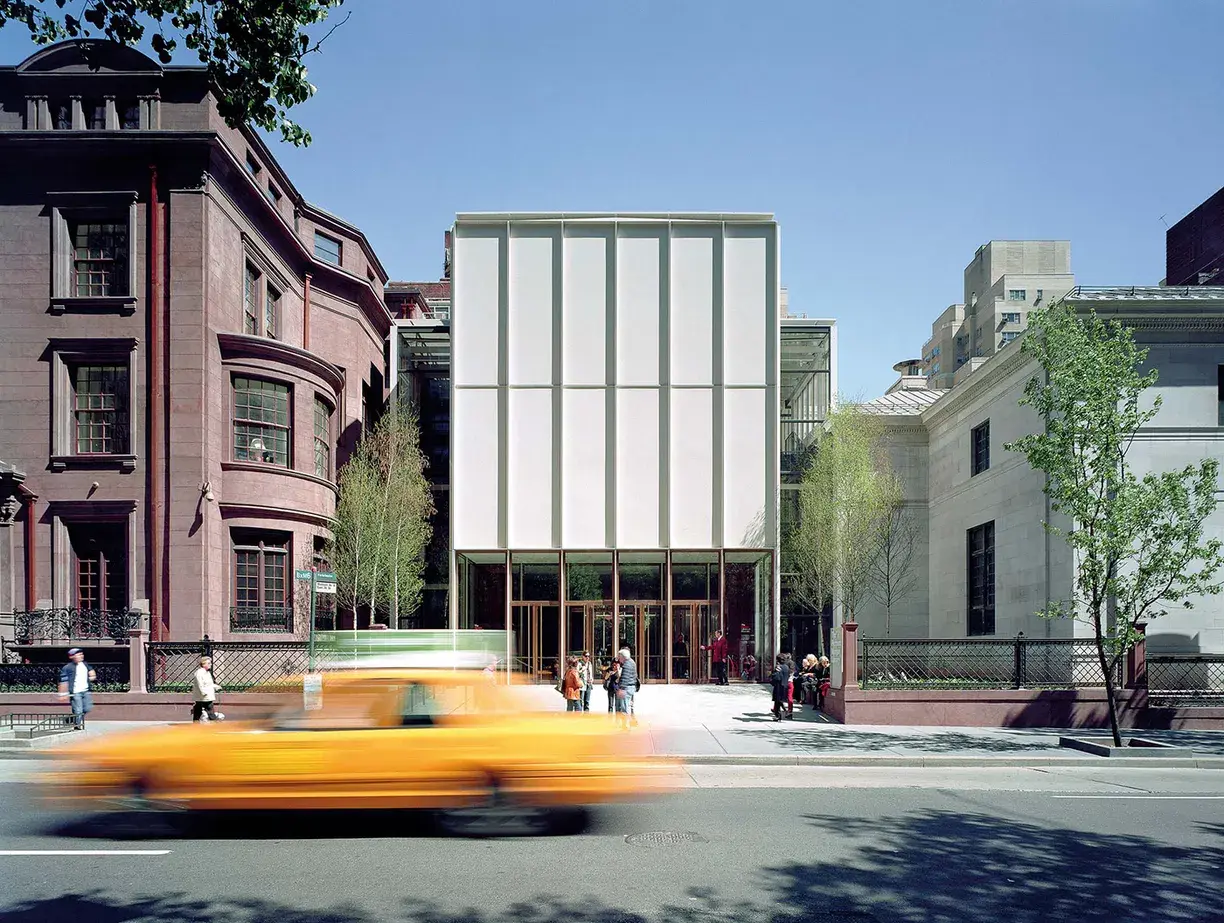
Wait, Renzo Piano? Isn’t he a modernist? Yes, but this addition to the Morgan Library shows how postmodern principles influenced even the most committed modernists. The project required Piano to interface with a historic Beaux-Arts library, and his solution is profoundly postmodern in its approach.
He created a transparent, respectful dialogue between old and new, using modern materials and techniques to highlight rather than compete with the historic building. It’s postmodernism’s influence seen through a modernist lens—proof that the movement’s ideas about context, history, and dialogue became part of architecture’s DNA.
Who are the key figures in postmodern architecture?
The holy trinity is Robert Venturi (the philosopher), Michael Graves (the popularizer), and Charles Moore (the poet). Other crucial figures include Philip Johnson (the defector from modernism), James Stirling (the British interpreter), and Denise Scott Brown (the collaborative genius who worked with Venturi).
Why did postmodernism disappear?
It didn’t exactly disappear—it evolved. By the 1990s, the wild colors and cartoonish elements fell out of fashion, but postmodernism’s core ideas—respect for context, rejection of universal solutions, and embrace of meaning—became fundamental to how we practice architecture today. Even contemporary “modern” buildings use postmodern principles.
Is postmodernism coming back?
Absolutely. In an age of sterile glass towers and copy-paste developments, architects and the public are hungry for buildings with personality, meaning, and joy. The recent restoration of postmodern landmarks and the work of architects like Thomas Heatherwick and Bjarke Ingels show that postmodernism’s spirit is very much alive.
The Bottom Line: Why Postmodernism Still Matters
Postmodernism didn’t just give us weird, colorful buildings—it gave us permission to ask questions, to play with history, and to design for humans rather than ideologies. It reminded us that architecture should delight, surprise, and connect with cultural meaning.
In a world increasingly dominated by sterile, developer-driven buildings, postmodernism’s lessons are more relevant than ever. It teaches us that:
-
Context matters – Buildings should respond to their environment
-
History is a resource, not a burden – We can learn from the past without being trapped by it
-
People deserve joy – Architecture can and should make people smile
-
Identity is precious – Buildings should reflect their place and culture
The next time you see a building with a giant Chippendale top, colorful columns, or deliberately “wrong” proportions, don’t roll your eyes. Smile. That building has the courage to be interesting in a world that too often settles for boring.

Yosra is an architect, writer, and teacher. She is always into learning something new. Her life motto is: "A jack of all trades is a master of none, but oftentimes better than a master of one.” One day she will travel the world and visit its architectural wonders. In the meanwhile, she contends herself with reading and writing about them.