

Almost three years after the King of Bhutan unveiled his vision for Gelephu Mindfulness City (GMC), the project is moving quickly. On 16 November, Skidmore, Owings & Merrill (SOM) unveiled designs for a new district within the city, while luxury hospitality operator Aman Group and its investment partners began exploring ways to take part in its development. Together with plans for a health and longevity campus, healing centres and an airport with wellbeing services, the Gelephu Mindfulness City masterplan aims to make wellness a foundation of Bhutan’s urban and economic growth.
The vision was first outlined by King Jigme Khesar Namgyel Wangchuck in his National Day address in December 2023. GMC is conceived as a special administrative region in southern Bhutan, with its own legal and regulatory framework designed to attract international investment, diversify the economy and create jobs for young people. Health and wellness is one of its priority sectors, alongside sustainable tourism, green energy, education, finance, agriculture, technology and spiritual and cultural heritage. The project rests on Bhutan’s philosophy of Gross National Happiness, which places psychological wellbeing, health, cultural preservation, environmental conservation and good governance alongside economic development.
The physical plan came from Bjarke Ingels Group (BIG), engineering consultancy Arup and Singaporean planning consultancy Cistri. It proposes a series of neighbourhoods woven into the natural landscape, with waterways, agricultural land, wildlife corridors and extensive green spaces. Among its distinctive features are inhabited bridges that carry public buildings and services, including a Vajrayana Buddhist spiritual centre, a healthcare facility combining Eastern and Western medicine, and a university. The scheme belongs to a growing field of visions of future cities, although its emphasis on wellbeing as an economic engine sets it apart.
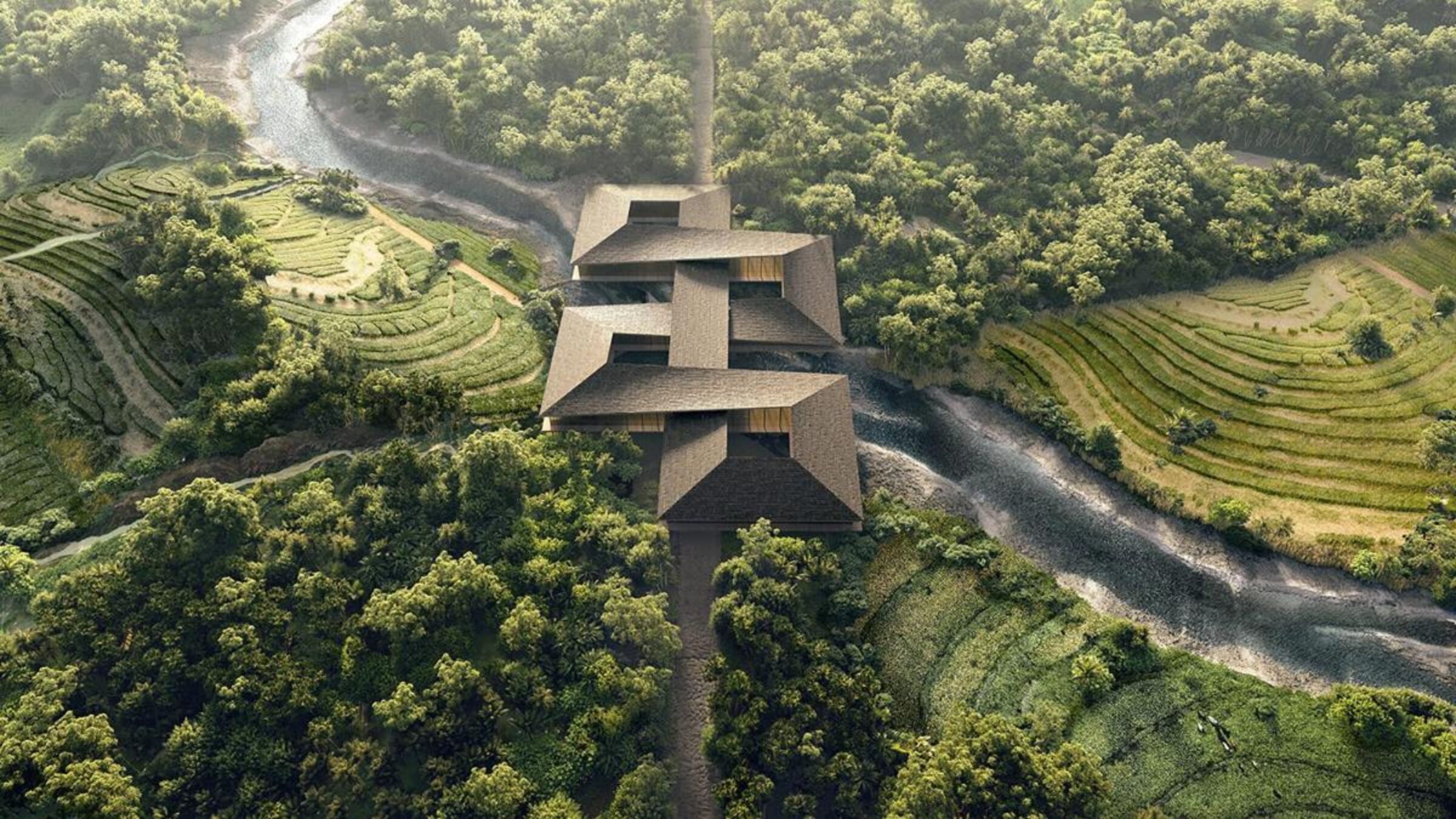
Gelephu will be built in Southern Bhutan / Bjarke Ingels Group
The latest designs, from Skidmore, Owings & Merrill, envisage a mixed-use district on the western bank of the Mau River, close to the Royal Park and within walking distance of Gelephu’s Old Town. The district will combine hospitality, residential, commercial and retail buildings with pedestrian routes, gardens, waterways and communal spaces. A landscaped central promenade will connect the public spaces and encourage walking, social interaction and contact with nature. The architects drew on the surrounding national parks, the rivers and the 108 Buddhist stupas to determine the layout of buildings and public spaces.
Those stupas are already taking shape on the ground. On 1 November, around 40,000 volunteers took part in Project 108, a royal initiative that erected the external structures of 108 Jangchub Chortens, Buddhist stupas of enlightenment, each 15 metres high, along a 12km stretch of the Mao Chhu river in a single day. The monuments will form a defining feature of the city’s landscape. Twenty-two sacred sites have now received royal approval, reflecting the King’s ambition to create a home for the world’s major Buddhist traditions.
Eight of those projects were approved earlier this year, including the Druk Yoga and Mindfulness Centre, the Menjong Healing Garden and the Tendrel Nyensel Healing Centre. The Varahi Mandala will be the first approved spiritual project led by a female spiritual leader, Khandro Dorji Phagmo. On 22 October, a groundbreaking ceremony took place for the Dewachen Spiritual Centre, which occupies around 30 acres (12 hectares) and will provide facilities for Buddhist learning, contemplation and spiritual practice.
Alongside the spiritual programme, the city is building a base for international health and longevity businesses. On 10 August, Gelephu Investment and Development Corporation (GIDC) signed a letter of intent with Tower Capital Group to explore a Generational Health Park, a dedicated campus covering these areas:
- Longevity and regenerative medicine
- Preventative health and diagnostics
- Women’s health and fertility
- Sports science
- Digital health infrastructure
- Wellness services
Read more:
- Bjarke Ingels Group Reveals Masterplan For A New Education Campus on Denmark’s Esbjerg Island
- Foster + Partners Unveils Nature-Inspired Sustainable Masterplan for Maratué
- Bjarke Ingels and BIG: How Sustainable Design Became Visually Radical
Other partnerships support the same goal. Tower Council Foundation and Druk Holding & Investments (DHI), the investment arm of the Bhutanese government, announced a collaboration in October to develop a wider health innovation ecosystem across the kingdom. Gelephu Mindfulness City is working with Singapore’s KK Women’s and Children’s Hospital on Bhutan’s first in vitro fertilisation (IVF) centre, and the hospital will provide expertise in clinical training, laboratory development and facility design. The city has also signed an agreement with US-based Waive Diagnostics to explore AI-enabled diagnostics and genetic testing. In September, DHI and GMC signed a memorandum of understanding with Viome Life Sciences to explore an AI-based molecular research platform with potential uses in diagnostics and drug development.
Traditional wellness remains part of the offer. John Reed, then wellness development advisor to the project, told Spa Business in 2024 that plans include healing centres and destination spas drawing on Bhutanese traditions, with wellbeing built into residents’ daily lives as well as visitors’ stays. Those traditions include meditation, medicinal hot stone bathing and Sowa Rigpa, a traditional system of medicine using herbal and mineral preparations and therapeutic practices. The World Health Organization has identified opportunities for this system to support wellness tourism and encouraged closer collaboration between Bhutan’s health and tourism sectors.
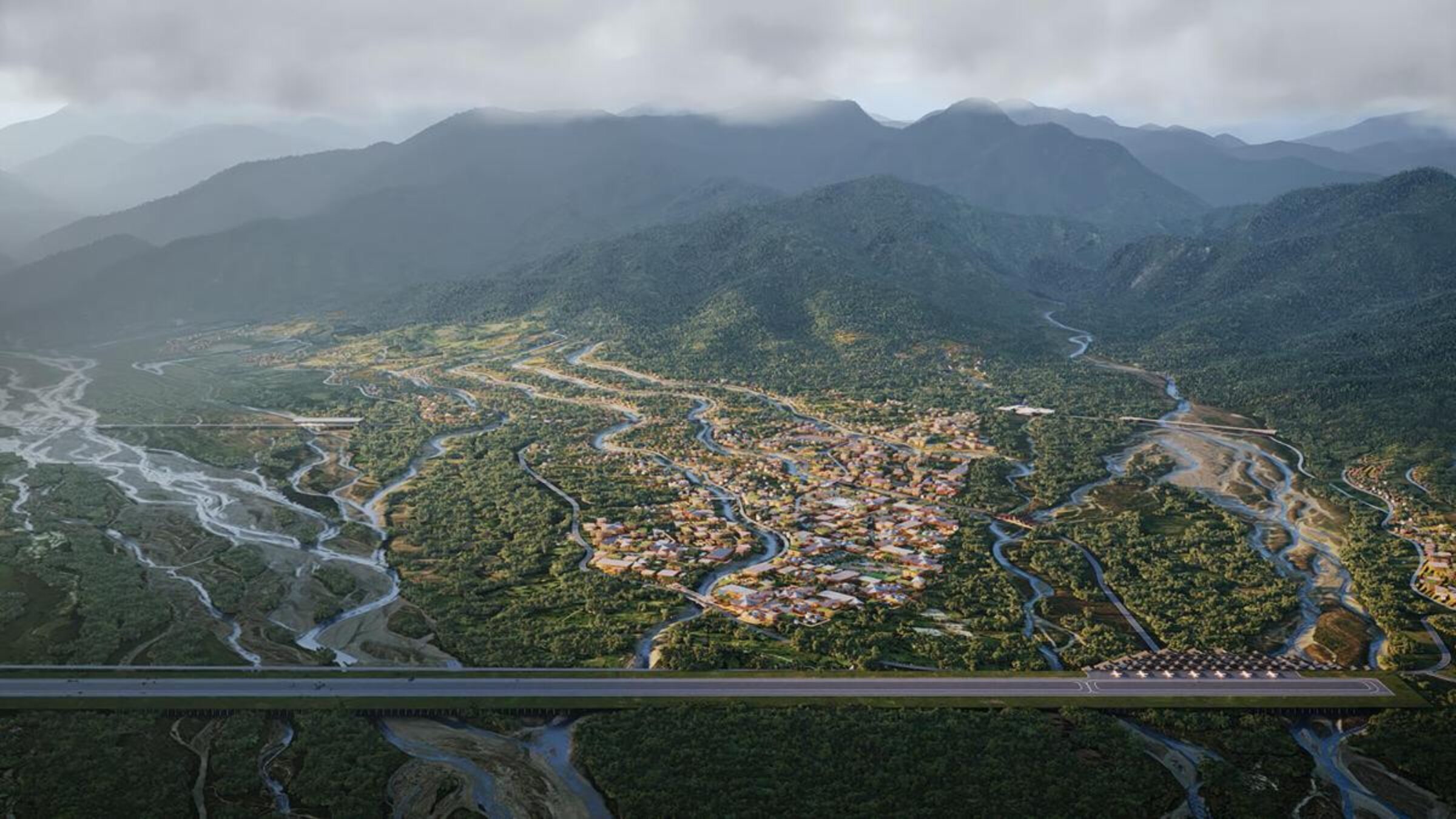
Gelephu’s 35 rivers naturally create ribbon-like neighbourhoods / Bjarke Ingels Group
Access to the city depends on a new international airport, whose construction began in July 2025 and which is scheduled to open in 2029. Designed by BIG with aviation engineering specialist NACO, Gelephu International Airport will build wellbeing into the passenger experience, with indoor and outdoor spaces for yoga, meditation and gong baths. Its architecture will draw on Bhutanese building traditions, and landscaped areas will reflect the region’s subtropical environment. The airport will improve access to southern Bhutan and support tourism, hospitality, healthcare and wellness, and its design sits within the broader field of airport design standards.
Aman’s role is still at an early stage. On 1 November, the group signed a memorandum of understanding with investment manager Patience Capital Group (PCG) and GDL-Raven, a subsidiary of Bhutan’s state-owned Green Digital Limited, to explore a partnership that would attract long-term real estate investment to Gelephu. Aman would contribute luxury hospitality and lifestyle expertise, PCG investment management and real estate experience, and GDL-Raven local development and asset management capabilities. Aman has operated in Bhutan since 2004, and its Amankora operation now spans five lodges across the central and western valleys.
The parties have yet to agree the details of the proposed investment fund or partnership, and no specific Aman resort or spa has been announced. The project also answers an economic problem, because Bhutan wants to diversify beyond hydropower and create opportunities for younger generations, many of whom have sought work overseas. In its assessment published in January 2026, the International Monetary Fund recognised Gelephu’s potential to attract investment and generate employment, while identifying risks tied to public finances, potential financial liabilities and the diversion of investment from other national priorities.

Olivia Bennett is a seasoned American news editor at Arch2O, born in the UK and a proud alumna of UCLA, where she studied Architecture and Media Studies. With a strong editorial background and a passion for design storytelling, she excels in translating complex architectural ideas into engaging narratives. Olivia focuses on contemporary trends, sustainability, and emerging talents in the field, offering readers a fresh, global perspective on the built environment.