


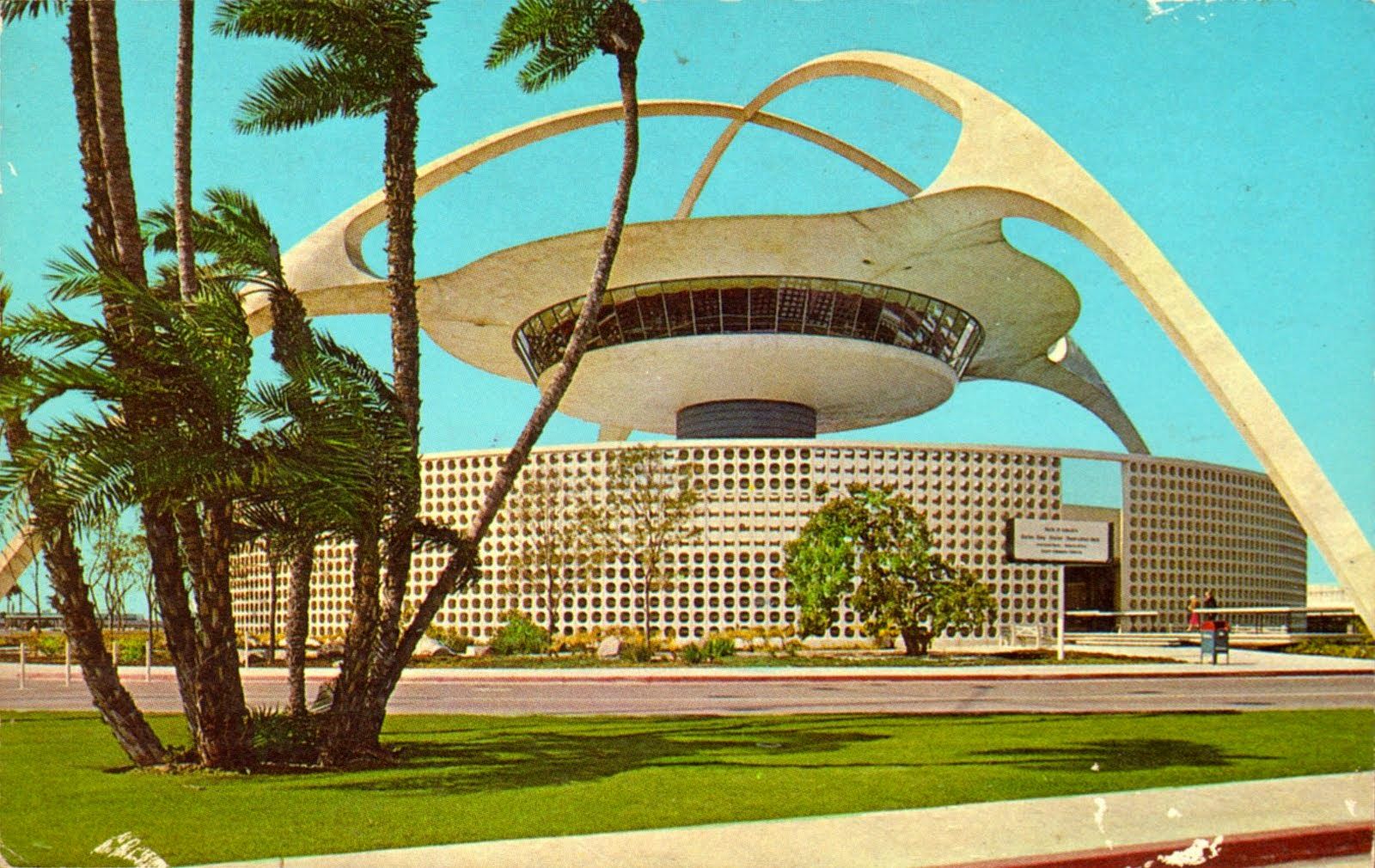
Built on extravagance, sharp angles, plastic and steel, neon and wide-eyed technical cheerfulness, borrowing inspiration from Space Age concepts and spaceship fantasies. That’s how Americans have always known the Googie style, but what is this architectural style genuinely attempting to convey?
©mavink.com
What Is the Googie Style?
The mid‑twentieth century was a turning point in American architecture, driven by industrial growth, car culture, and the excitement of the Space Age. Out of this world—quite literally—emerged Googie architecture, a playful, futuristic branch of mid‑century design that flourished across the United States, especially in Southern California.
Googie architecture took shape in the Los Angeles region and nearby areas, where highway visibility, bold signage, and eye‑catching silhouettes mattered as much as floor plans. Typical Googie features include strong geometric forms, dramatically curved or sloped roofs, a sense of motion, and expressive combinations of steel, glass, concrete, and jagged stone.
Why is it called “Googie” architecture?
The term “Googie” comes from a Los Angeles coffee shop named Googie’s, designed by John Lautner in the late 1940s. Architecture critic Douglas Haskell popularized the term after using the café as a reference point to describe this emerging, futuristic roadside style.
Is Googie part of mid-century modern architecture?
Yes. Googie is often considered a playful, more commercial branch of mid‑century modern architecture. While classic mid‑century modern tends to be restrained and minimal, Googie exaggerates form, color, and signage to catch the eye of drivers and celebrate car culture, aviation, and the Space Age.
Also Read: What Happens to Architecture When Form Follows Fashion?
©inspireexpo.blogspot.com
A Quick Look at Googie’s Origins
Googie’s roots reach back to around 1930, when Streamline Moderne used sweeping curves, aerodynamic lines, and nautical motifs to express speed and progress. As cars and airplanes began to replace boats and railways as dominant modes of travel, architectural styles changed to match this new era of motion and machinery.
After World War II, Googie design truly took off. Architectural historian Alan Hess points to a Bob’s Big Boy restaurant in Burbank—designed by Wayne McAllister and completed in 1949—as a strong candidate for the first full Googie design. Southern California became the style’s laboratory in the 1950s, but Googie quickly spread to places like Wildwood, New Jersey; Seattle; Colorado Springs; Phoenix; Miami; and even the 1964 World’s Fair in New York.
The Apollo missions of the 1960s and early 1970s marked the high point of the space and atomic ages, but also the beginning of Googie’s decline. Many buildings were demolished as tastes shifted, and the survivors now stand as nostalgic roadside landmarks and historic curiosities that capture a very specific mid‑century optimism.
Also Read: 20 of The Strangest Sculpture Art Spots and Buildings Worldwide
Key Characteristics of Googie Architecture
Googie architects embraced the promise of mid‑century engineering and expressed it through forms that looked like they were moving—or about to launch. A few signature elements define classic Googie architecture:
1) Sloped, Rocket‑Like Roofs
©flickr.com
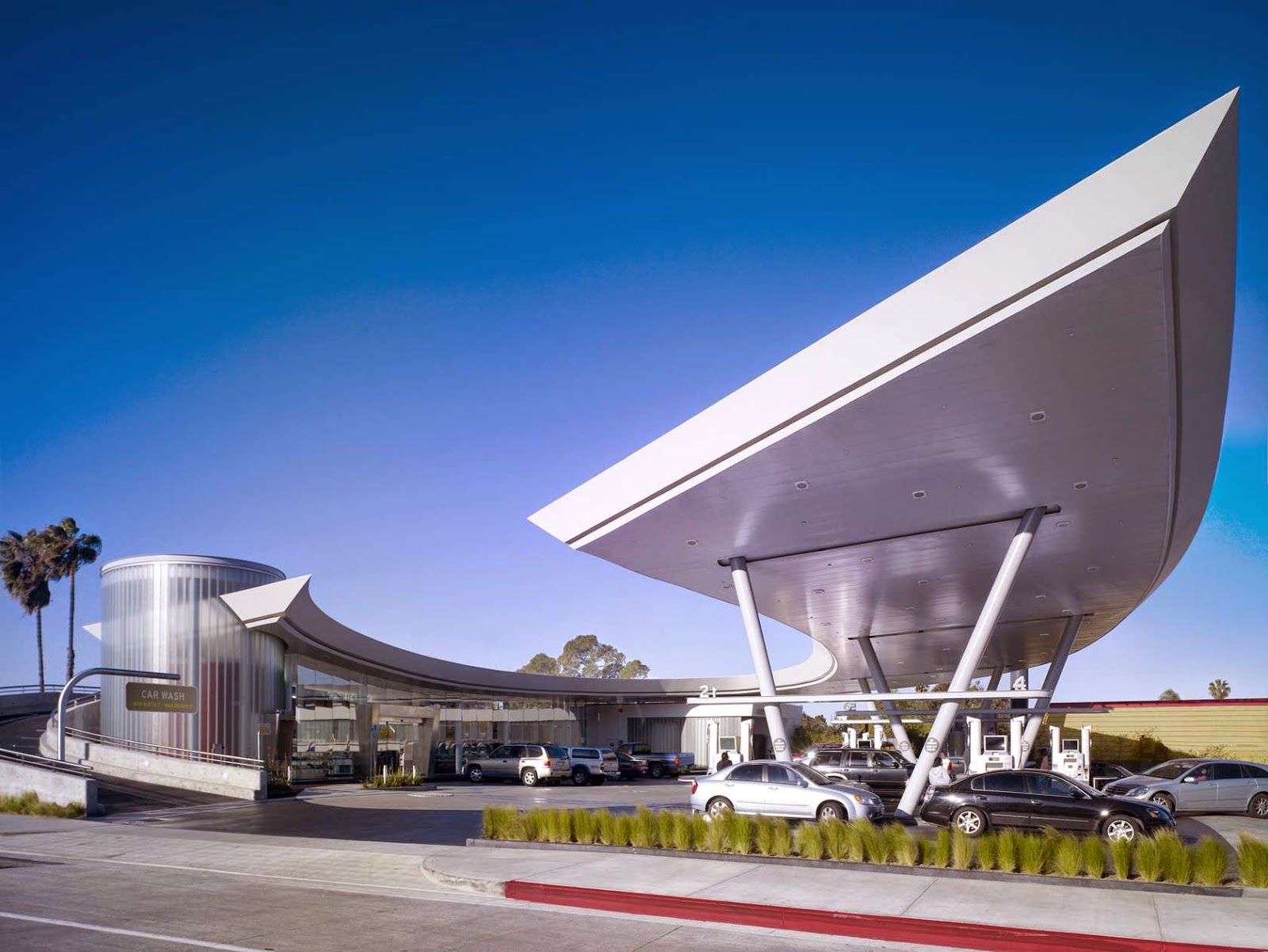
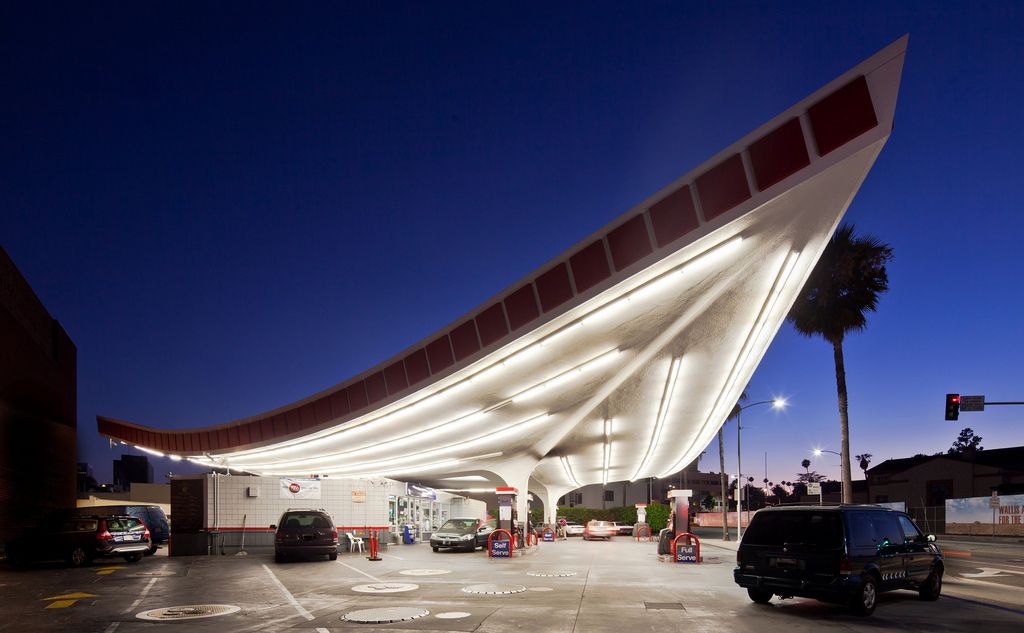
Inverted, sharply sloped, or butterfly roofs made buildings seem ready for takeoff. These dramatic profiles, often paired with extensive glazing, created silhouettes you could spot instantly from the highway.
2) Boomerang Shapes
©Michael Koukoullis
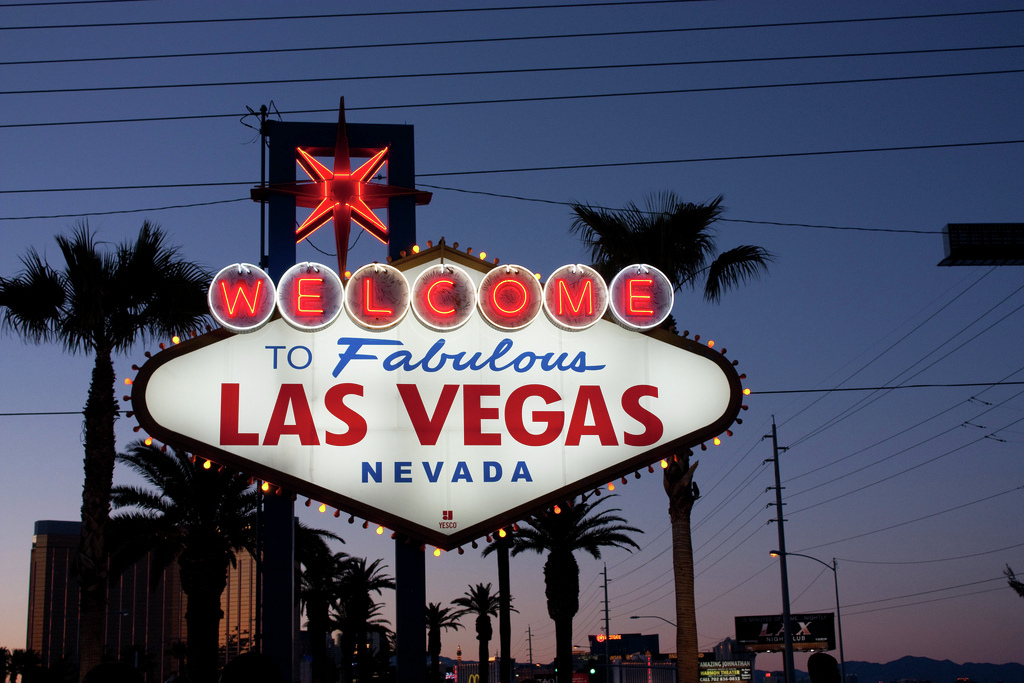
Boomerang forms appeared everywhere in mid‑century design—chairs, Formica patterns, logos, pools, roadside signs, and, of course, buildings. In Googie architecture, these angular motifs echoed airplanes, jets, and even World War II camouflage patterns, visually tying architecture to flight and speed.
3) Starbursts and Atomic Motifs
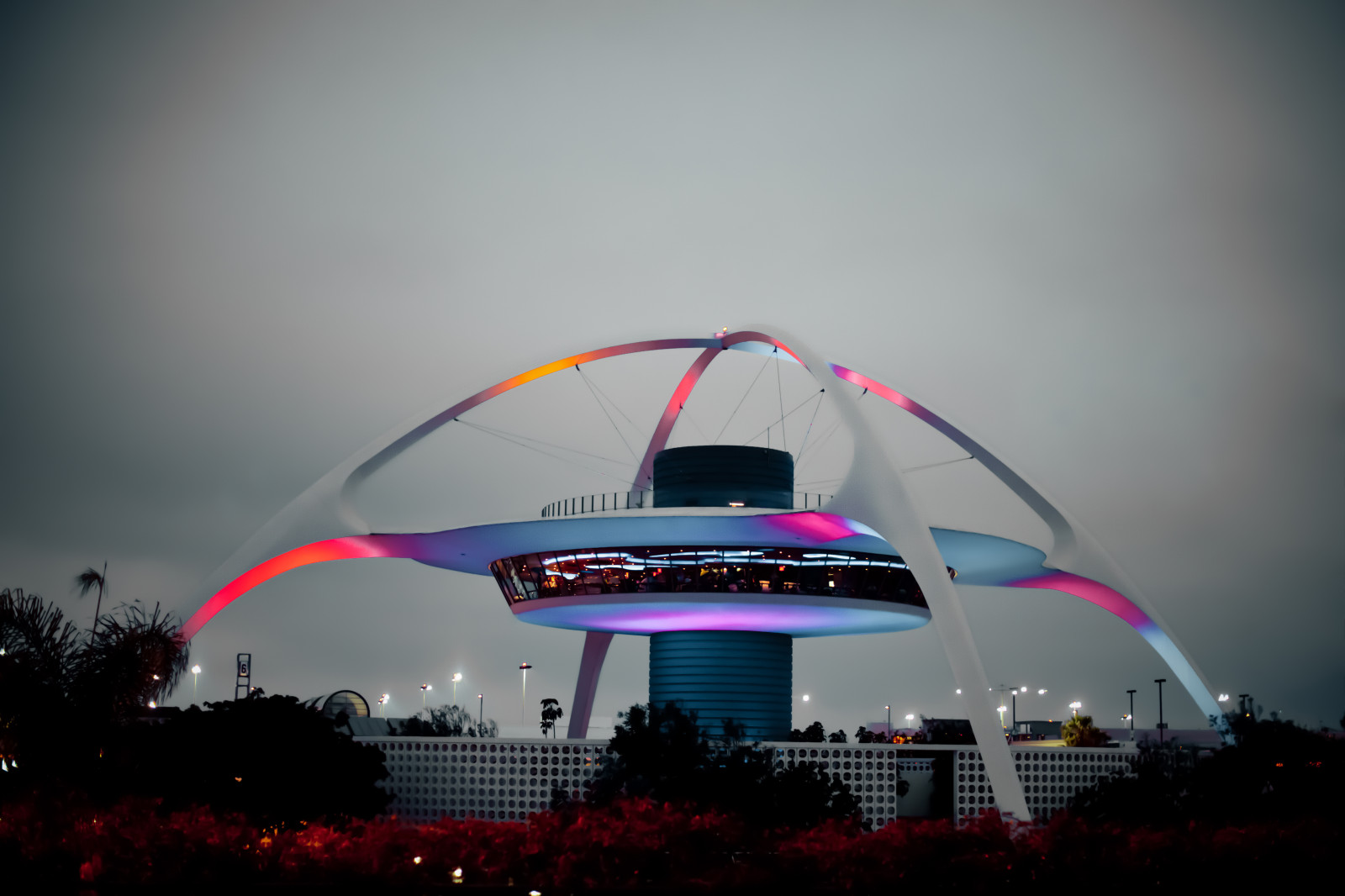
©wallhere.com
Starburst graphics captured the era’s optimism about science and technology, especially the Space Race. These playful shapes hinted at satellites, atomic particles, and distant galaxies, turning everyday places like diners and motels into gateways to a “futuristic” society.
4) Massive Domes and Space‑Age Shells
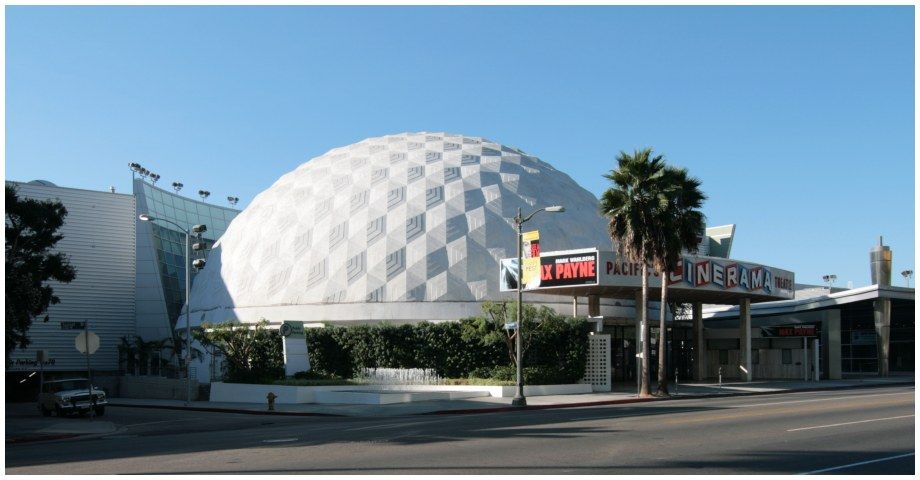
©you-are-here.com
Advances in concrete technology allowed Googie designers to experiment with large domes and thin shells. These forms amplified the style’s space‑age character and created dramatic, open interiors—perfect for showrooms, bowling alleys, and exhibition halls.
Iconic Googie-Style Buildings in Los Angeles
Los Angeles became the unofficial capital of Googie architecture, especially for coffee shops, diners, and gas stations designed to catch the eye of passing drivers.
1) NORMS Restaurant
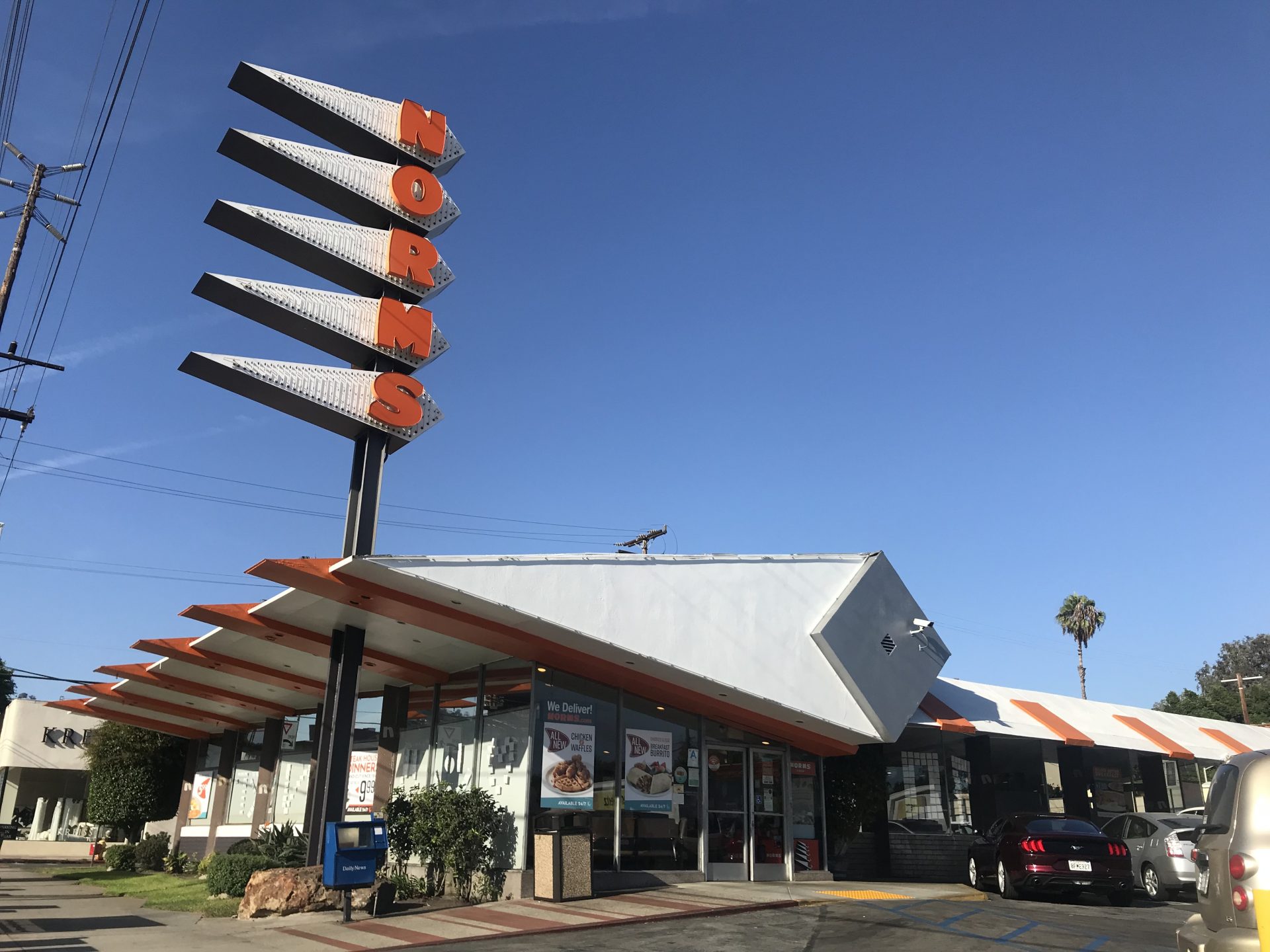
©lamag.com
The renowned firm Armet & Davis used NORMS to crystallize what Googie could be. Lewis Armet and Eldon Davis created a distinctive diamond‑shaped roof and a bold five‑part sign for each location, turning everyday diners into glowing roadside beacons.
2) Pann’s
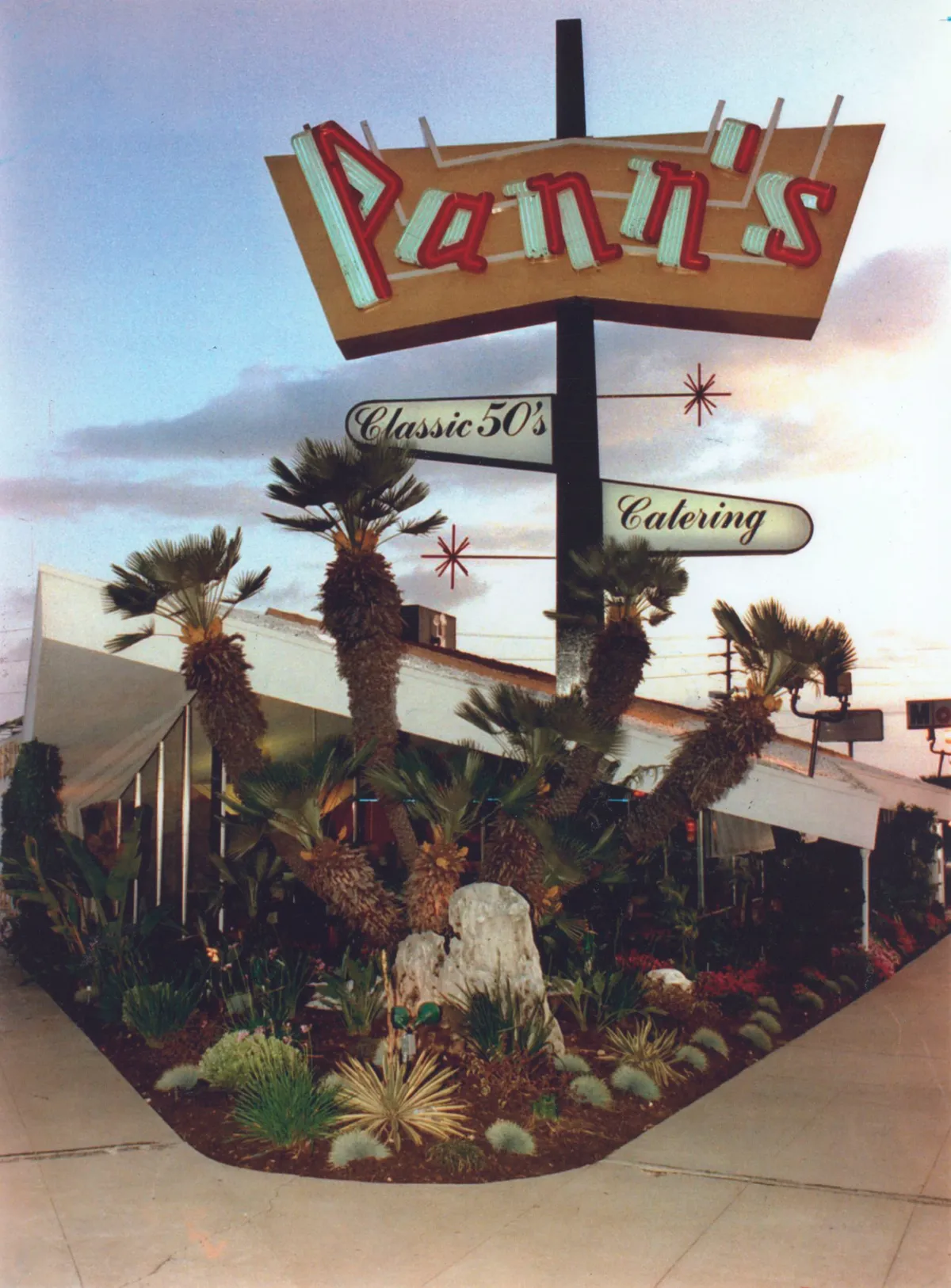
©LA Times/ Getty Images
Also designed by Armet & Davis, Pann’s combines expressive roofing, large expanses of glass, and a striking sign that still radiate 1950s charm. Located on the route to LAX, it has become an informal gateway—welcoming travelers to Los Angeles or saying goodbye in full mid‑century style.
3) Union 76 Station, Beverly Hills
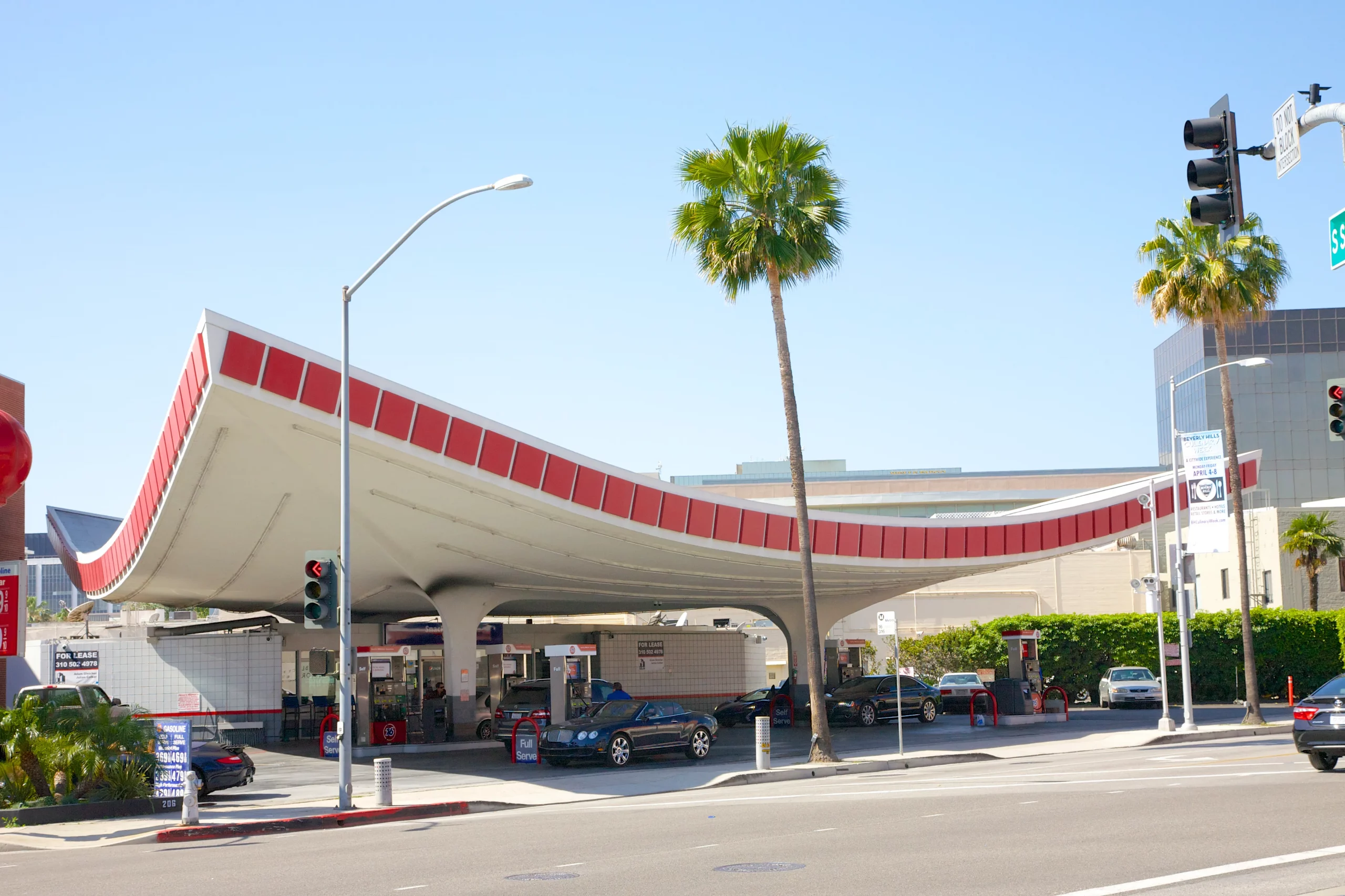
©web.solacesf.org
This Union 76 station is one of the purest Googie gas station designs. Architect Gin Wong gave it a dramatic boomerang‑shaped roof that feels both sculptural and space‑age, turning a simple fuel stop into a small piece of futuristic theater.
4) Bob’s Big Boy Broiler
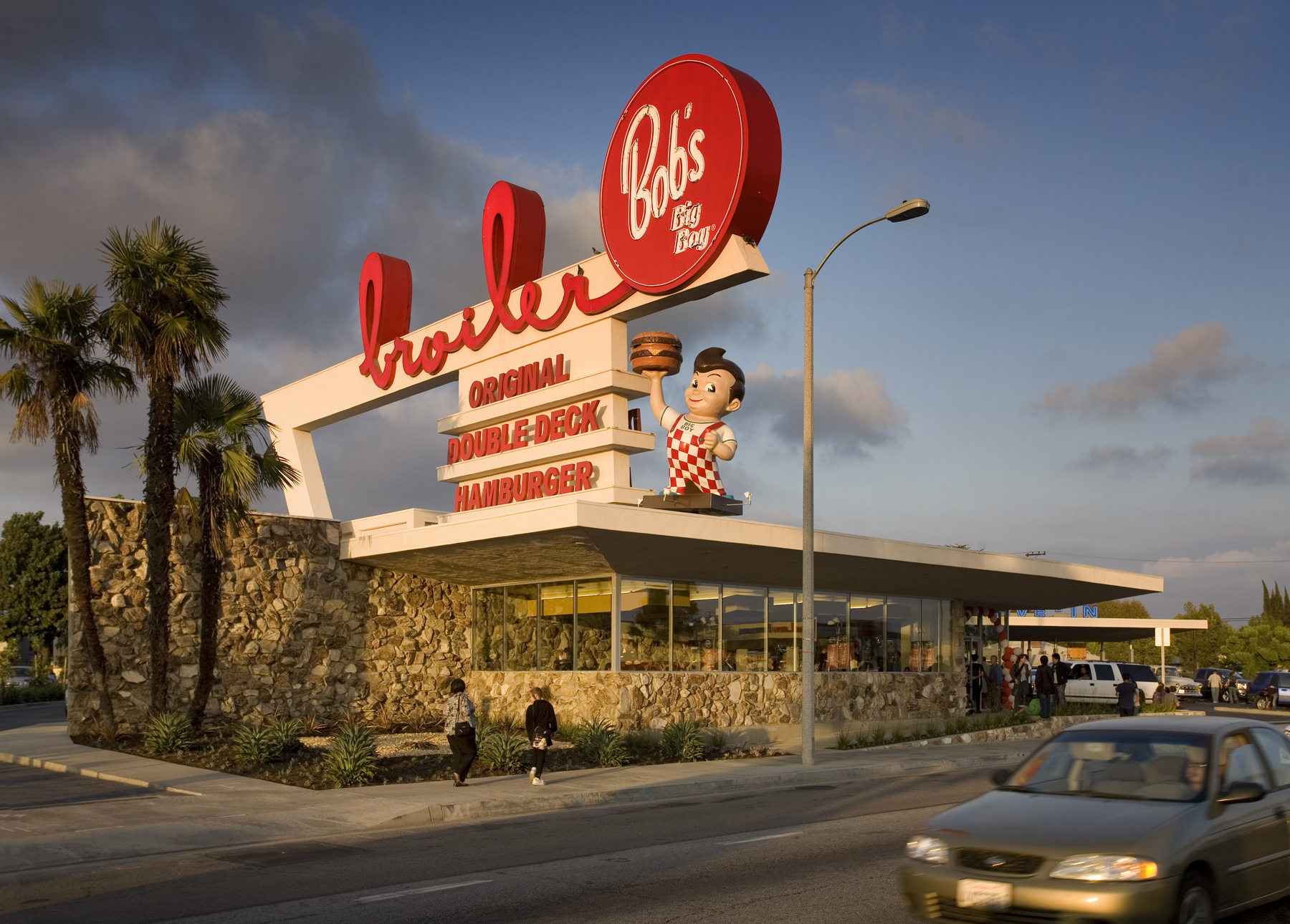
©John Eng
Opened as Harvey’s Broiler in 1958, this Southern California drive‑in became one of the region’s biggest and most iconic. Architect Paul B. Clayton combined a coffee shop, restaurant, and drive‑in with extravagant Googie elements—including a 65‑foot‑long sign that dominated Firestone Boulevard and anchored the 1950s cruising scene.
Also Read: 10 Buildings Show the Rich Diversity of Chicago Architecture
5) Covina Bowl
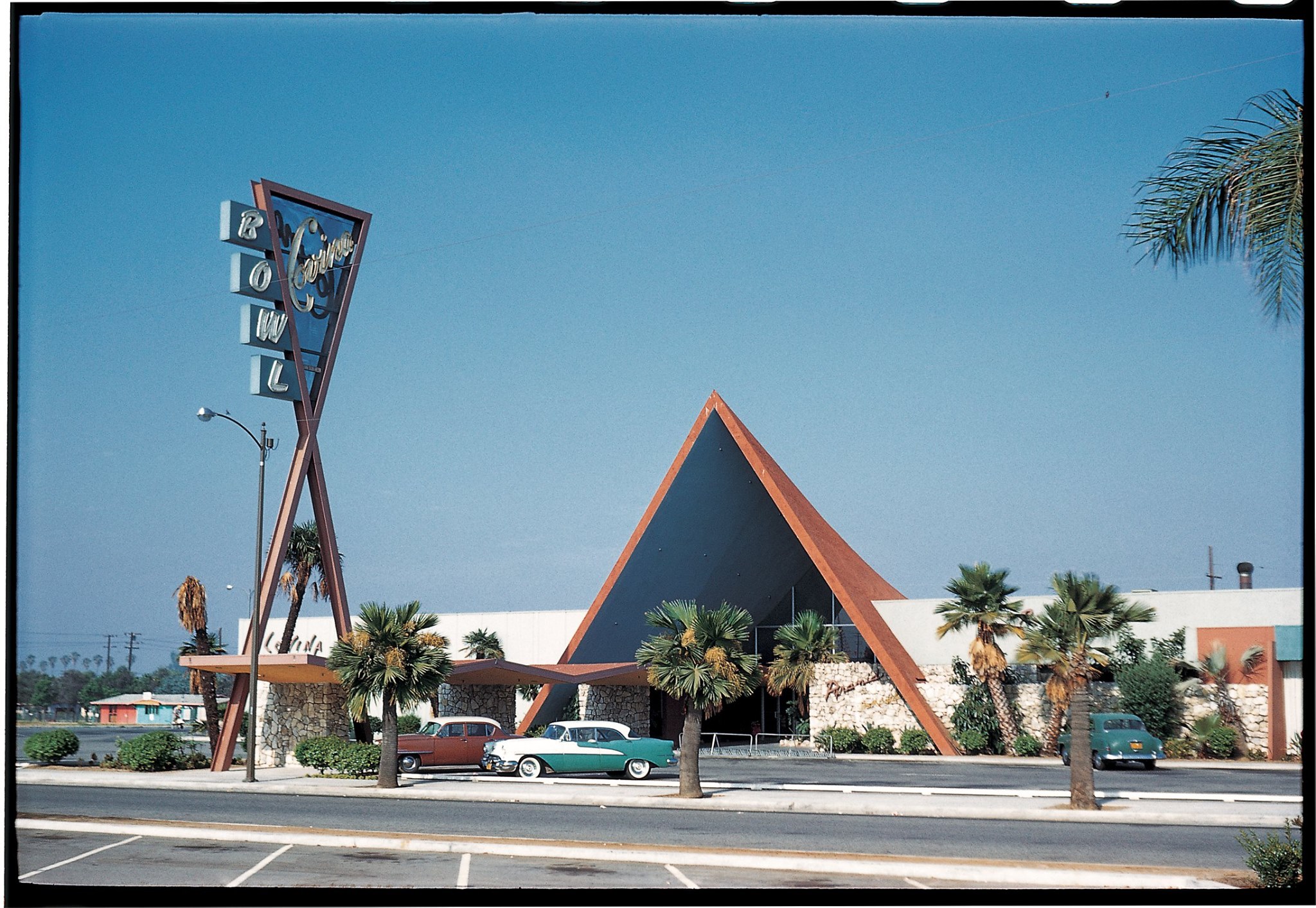
©greatnonprofits.org
During the 1950s and 1960s, Covina Bowl on San Bernardino Road was a quintessential Googie destination, welcoming bowlers, diners, and performers. Its rock cladding, soaring roofline, and vivid interior accents created a theatrical atmosphere, complete with a cocktail lounge that once featured Egyptian statues, mid‑century lighting, and terrazzo floors.
Designed by Powers, Daly, and DeRosa, Covina Bowl became a model for Googie bowling alleys across the United States in the post‑war era.
6) Chips
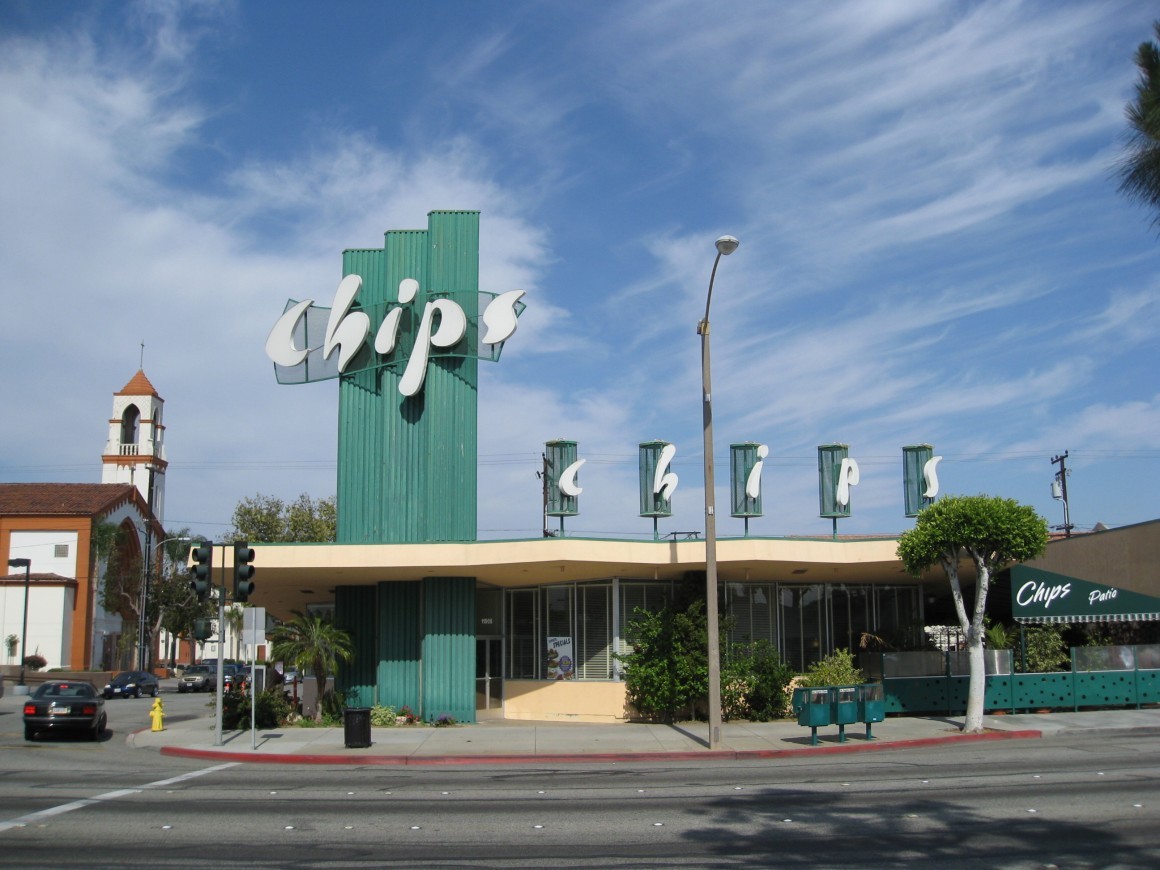
©Don Barrett
Like Pann’s, Johnie’s, and NORMS, Chips on Hawthorne Boulevard features the classic Googie combination of bold rooflines, big windows, and eye‑catching signage. Architect Harry Harrison designed this 1957 coffee shop with a roof that curves unevenly in profile and forms a zig‑zag in front view—less flamboyant than some peers but still unmistakably Googie.
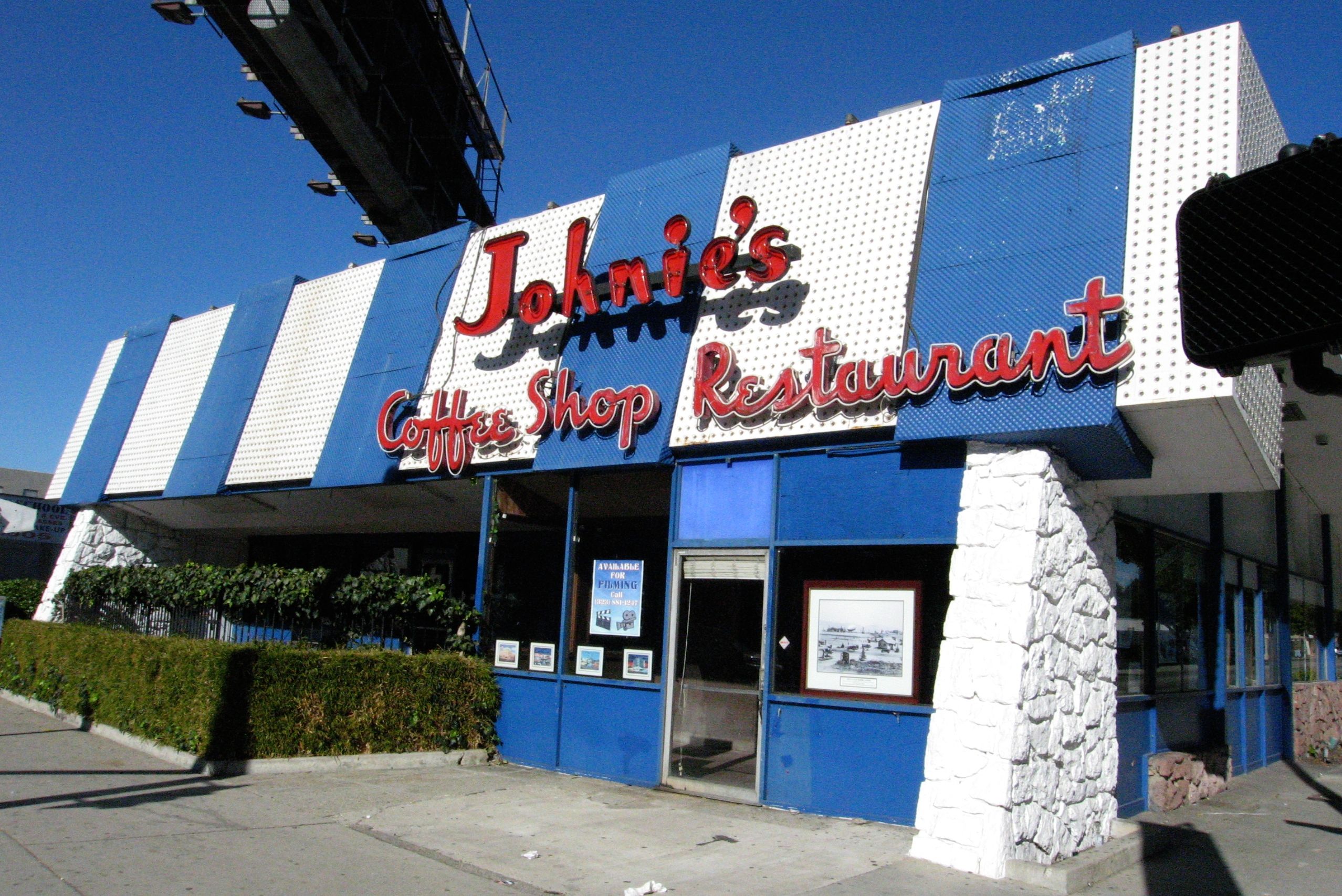
7) Johnie’s Coffee Shop
©foursquare.com
Johnie’s Coffee Shop, at Wilshire Boulevard and Fairfax Avenue, is often cited as one of Los Angeles’ finest Googie landmarks. Designed by Armet & Davis, it showcases the firm’s signature approach: futuristic rooflines, glass walls, and strong signage that grab the attention of passing motorists.
Although Johnie’s is no longer a regular restaurant and is now used mostly for filming, the building still stands as a proud reminder of Googie’s mid‑century heyday.
Where did Googie architecture appear most frequently?
Googie flourished first in Southern California, especially Greater Los Angeles, along major boulevards and near freeways. It later spread to other American cities and resort areas, showing up in motels, diners, gas stations, bowling alleys, and pavilions at events like the 1964 World’s Fair in New York.
Why did Googie architecture fall out of fashion?
By the 1970s, tastes shifted toward more subdued, corporate modernism, and many Googie buildings were seen as kitschy or dated. As land values rose, especially along prime commercial corridors, many of these structures were demolished or heavily altered, leaving only a handful of intact examples.
Why Googie Still Matters Today
Even if some critics once dismissed Googie as gimmicky, it captured something essential about mid‑century America: optimism, motion, and faith in technology. These buildings were designed for everyday people—motorists, families, travelers—turning routine stops for coffee or gasoline into small, cinematic experiences.
Googie’s legacy also lives on in today’s fascination with retro‑futurism and mid‑century design. Many of the surviving structures are now treated as cultural artifacts, studied alongside UNESCO‑listed modernist landmarks and modern icons like Villa Savoye. They continue to inspire architects, photographers, and design tourists who seek out famous buildings to visit and reinterpret them—sometimes even through playful paper cutout photography.
If you’re exploring bigger movements around Googie, it’s worth looking at how it sits alongside postmodern icons, surrealist architecture, long‑span structural experiments, and modernist masterpieces that defined the 20th century’s evolving idea of “the future.”

Aly Bayoumi is an editor with a sharp eye for detail and a deep commitment to clarity and precision. Passionate about architecture and design, he sees every project as an opportunity to shape compelling narratives that bring creative visions to life. With a focus on accuracy and engaging storytelling, Aly combines editorial expertise with a dedication to elevating the voices and ideas that shape the built environment.