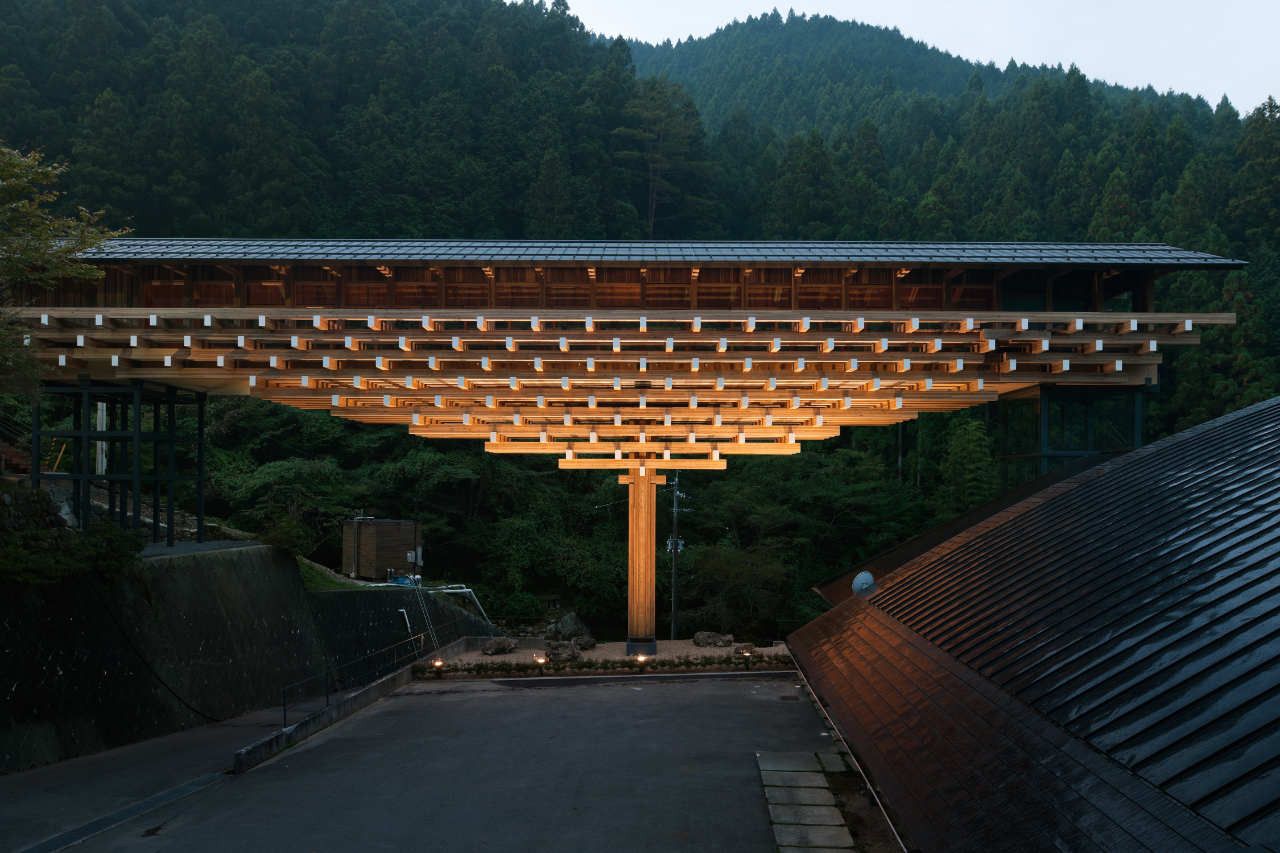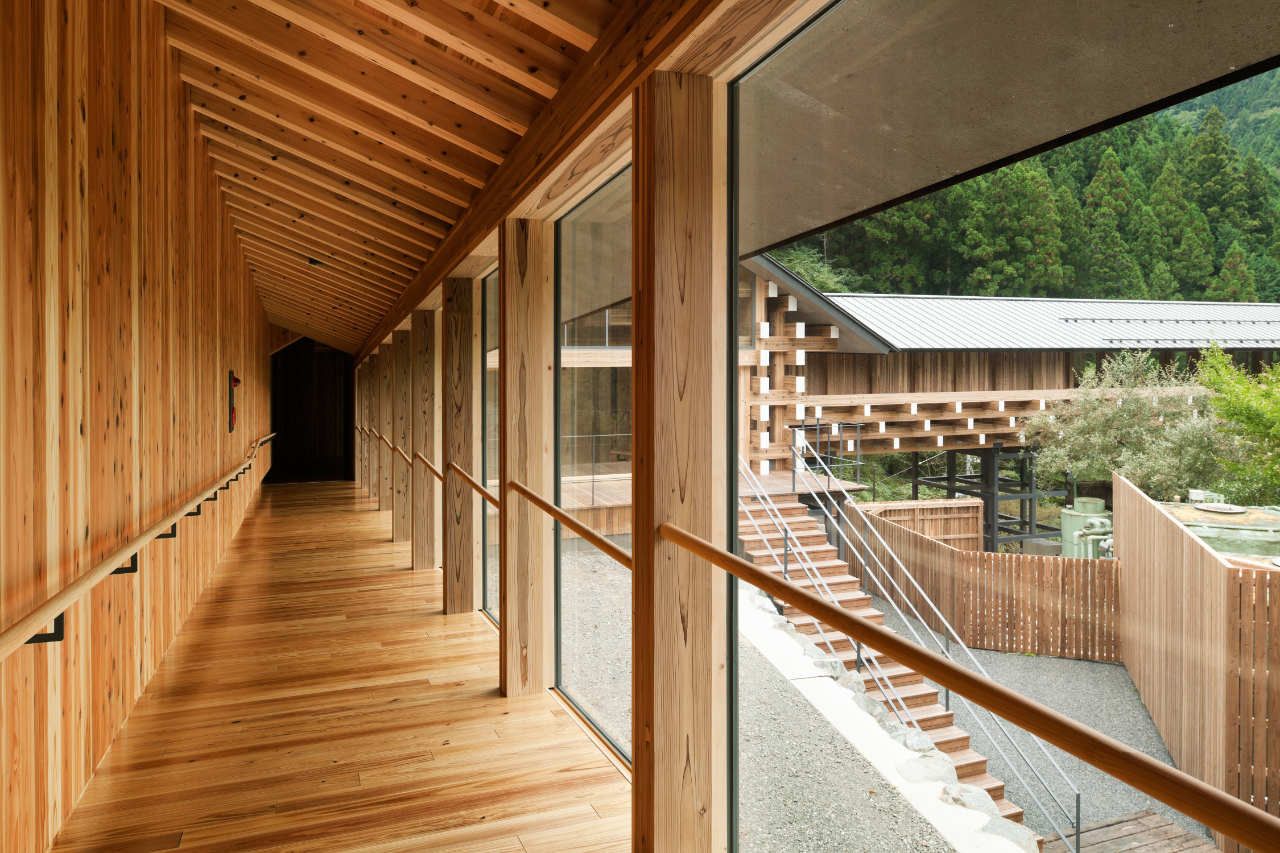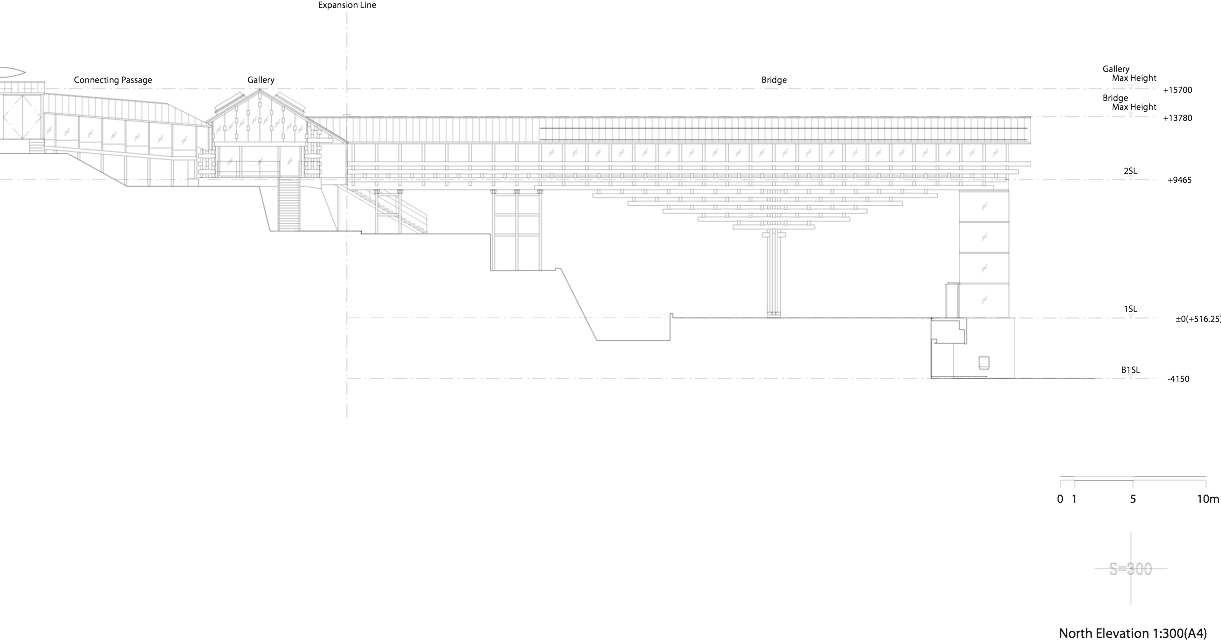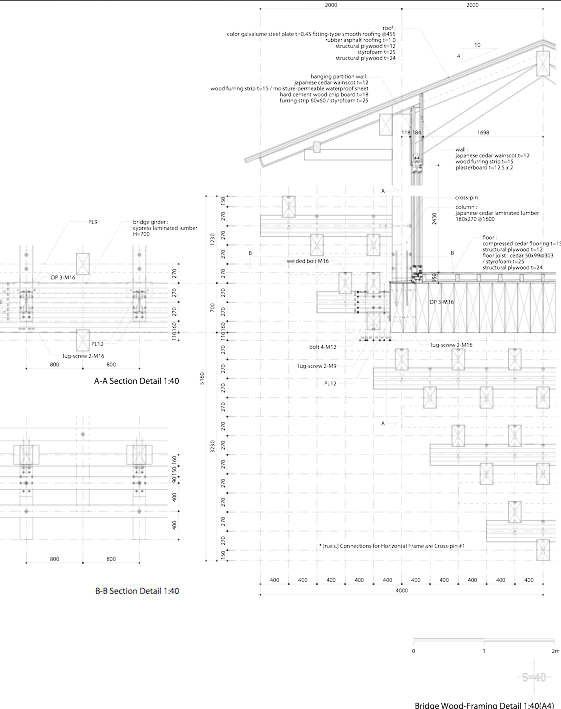


While pursuing a design that accumulates laminated timber of small cross section, we adopted a forgotten framing formula called ‘ Yusuhara Wooden Bridge Museum ‘ which brings out bridge girders by bringing out a number of trees from both ends. Bridge Bridge is only existing in Yamanashi Prefecture, only “Saruhashi” has changed to steel frame sticking with wood board.
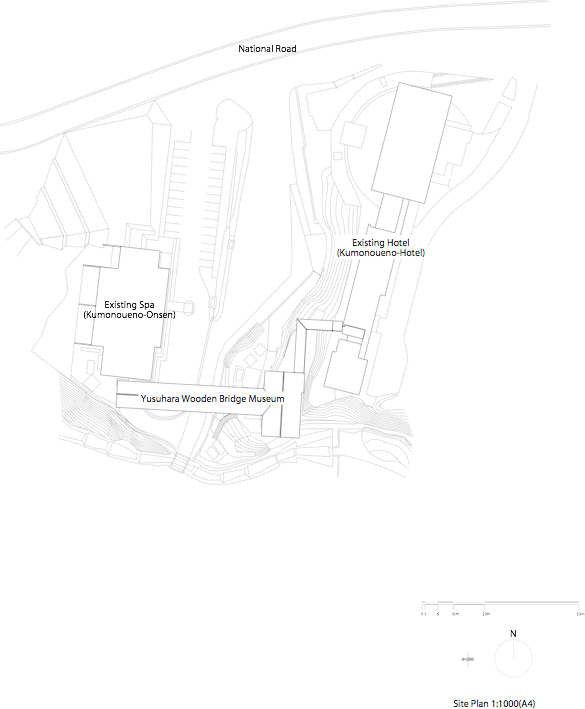
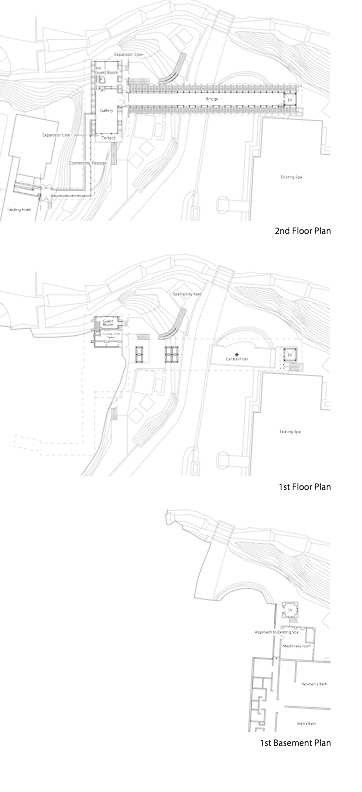
Furthermore, in order to apply this to the topography of the premises, by balancing the two ends with the pier who undergoes vertical loading as the center, a new framing formula to say “Yuhara Kinbashi Museum” has been completed. At the end of the cliff is a roof-shaped atelier and gallery with a similar framework inverted.

photography by © Takumi Ota Photography
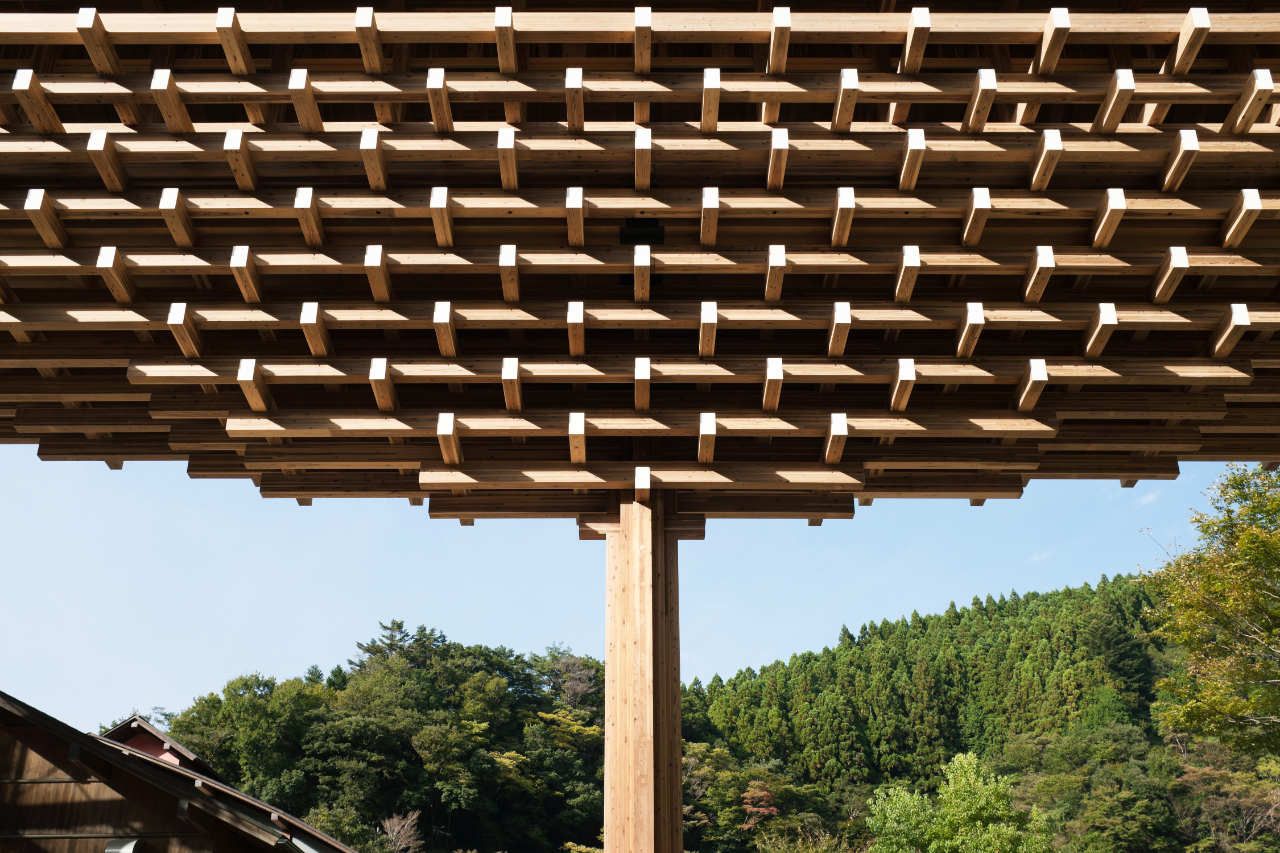
The whole that is made by overdriving the traditional expression “斗 栱” where the trees overlap is to be said as “masonry of wood”, and the existence (concrete) and the abstractness It exudes.
In the first place, the laminated wood itself is a material combining the concreteity and abstractness of “wooden masonry”, and by making a state where the composition of the masonry continues even if the composition is dimensioned up to the composition, We are aiming for non-hierarchical architecture in everything from technology, information and history.
photography by © Takumi Ota Photography
It is trying new way of public building which is made by bridging various subjects such as revitalization of regional culture, urban design, framing technique, material and traditional expression.

photography by © Takumi Ota Photography
Project Info :
Architects : Kengo Kuma & Associates
Project Year : 2011
Project Area : 14736.47 sqm
Photographs : Takumi Ota Photography
Client : Tomio Yano, Town Mayor of Yusuhara
Project Location : 3799-3 Taro-gawa Yusuhara-cho, Takaoka-gun, Kochi Prefecture, Japan