

Why Study Architecture in the United States?
Three of the world’s leading architecture schools call America home—MIT, UC Berkeley, and Harvard continue to dominate global rankings year after year. But rankings only tell part of the story. What truly sets American architecture education apart is its culture of innovation, diversity, and leadership in shaping tomorrow’s built environment.
The country’s architecture programs span every imaginable approach to design, from sustainable building practices to computational design, historic preservation to commercial architecture. Whether you’re dreaming of iconic skyscrapers or community-centered design, America’s 115+ accredited architecture schools offer pathways that match your ambition.

The Reality Check: What You’re Actually Up Against
Let’s be honest—getting into a top US architecture program as an international student is no walk in the park. The selectivity is brutal. Cornell accepts just 55 undergraduates annually. SCI-Arc? Only 70 spots. Add in tuition starting at $25,000+ per year, complex visa requirements, and the challenge of navigating a foreign education system, and it’s easy to feel overwhelmed.
But here’s the thing: these challenges aren’t deal-breakers—they’re simply puzzles to solve. The flexibility of the US system, with its community colleges, state universities, and private institutions, actually gives you more options than you might think. The key is having a clear roadmap.
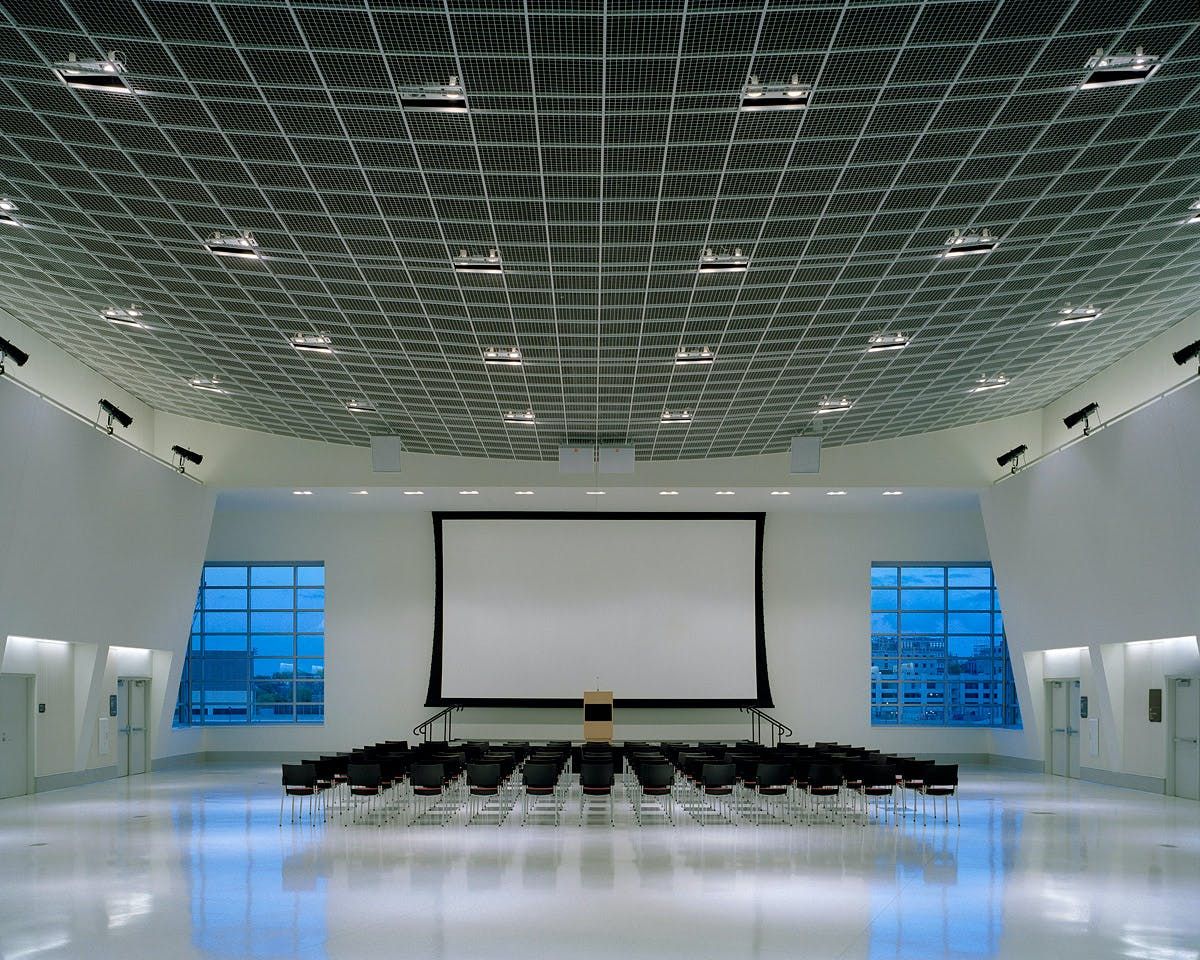
The Tangeman Center at the University of Cincinnati, Architect: Gwathmey Siegel & Associates Architects © Brad Feinknopf
However, these facts are not meant to dismantle you, on the contrary, in what follows we will simplify the steps you have to follow, and highlight the points that may be ignored or mistaken during your search and application.
Your 5-Step Roadmap to Architecture School in America
Step 1: Find Your Perfect Program Match
Choosing where to apply isn’t just about prestige—it’s about finding a school whose philosophy aligns with your design sensibilities. MIT merges media and technology with architecture, SCI-Arc pushes experimental boundaries, Virginia Tech champions sustainability, and UCLA blends media with architectural innovation.
What degrees can you pursue?
-
Undergraduate: Bachelor of Architecture (B.Arch), Bachelor of Science in Architectural Studies, Bachelor of Arts in Architectural Studies
-
Graduate: Master of Architecture (M.Arch), Master of Science in Architecture
-
Doctoral: Ph.D. in Architecture, Doctorate in Architecture (DArch), Doctorate in Design (DDes)
Smart strategy: Consider starting at a community college. You’ll pay lower fees, face less selective admissions, and can transfer credits to a four-year university later. Just verify which credits will transfer before you enroll.
Pro tip: Research faculty profiles and identify professors whose work resonates with your interests. Reaching out to potential advisors can help you “get your foot in the door” for research positions and funding opportunities.
Step 2: Crack the Funding Code

Tuition at top architecture schools typically ranges from $40,000-$65,000 annually for international students. But sticker shock doesn’t mean it’s unaffordable.
Funding sources to explore:
-
University scholarships: Some schools offer merit-based aid covering 25-50% of tuition. MIT is particularly generous, though admission standards are sky-high
-
Graduate assistantships: The best funding often comes from working directly with faculty on research or design projects
-
Home country support: Check government and NGO scholarships in your home country first
-
US programs: Fulbright and Amideast offer limited spots but substantial support
Beware the J-1 visa trap: Government-funded scholarships often require a J-1 visa with a two-year home residency rule, meaning you can’t switch to an H1B work visa until you return home for two years.
Step 3: Master the Application Process
Start early—this process demands months of preparation. While requirements vary by school, here’s what you’ll typically need:
For undergraduate applicants:
-
High school transcripts equivalent to US standards
-
SAT or ACT scores (many schools require these)
-
TOEFL or IELTS scores (minimums vary)
-
Portfolio (for B.Arch programs)
-
Letters of recommendation
-
Personal essays
For graduate applicants:
-
Bachelor’s degree in architecture or related field
-
GRE scores (some programs)
-
Strong portfolio showcasing design work
-
Statement of purpose
-
CV/resume
-
Minimum 3.0 GPA (though many programs prefer higher)
The portfolio is your golden ticket. This isn’t just a collection of pretty pictures—it’s a narrative about your design thinking process. Most schools want to see 3-5 complete projects that demonstrate conceptual clarity, technical skill, and creative problem-solving.
Step 4: Navigate the Visa Maze
Don’t wait until acceptance to figure out visas. You have three main options:
F-1 Academic Visa: Your primary choice for full-time degree programs at SEVP-certified schools. Requires proof of financial support, English proficiency, and intent to return home after studies.
J-1 Exchange Visitor: For exchange programs, often tied to specific scholarships. Comes with that two-year home residency requirement.
M-1 Vocational: For non-academic programs—generally not suitable for architecture degrees.
Critical steps:
-
Get accepted by a SEVP-certified school
-
Receive your Form I-20
-
Pay the SEVIS fee
-
Complete DS-160 visa application
-
Schedule and attend your visa interview
During the brief interview, consular officers assess your genuine student intent, financial resources, and post-graduation plans. Be prepared to articulate why you chose your specific program and how it fits your career goals back home.

photograph by By Jessica Pedraza, Esq
The Exchange Visitor (J-1) visa is a nonimmigrant visa type issued for individuals who are coming to the states to ‘participate in work-and study-based exchange visitor programs. These Exchange Visitor Programs are managed by the Department of State (DoS) and aim at enhancing the intercultural relationships of the US. It is worth noting that these exchange programs necessitate that the exchanged visitors return back to their homelands when their program is over in order to spread their gained experience in their countries.
The (M-1) visa is a non-academic visa issued for students who want to enroll in a non-academic or vocational school. These students are not allowed to work during their program that must be a “full course of study”, meaning in a community or junior college.
As noted before, not all schools are SEVP approved. A SEVP certified college and university can admit international students in their academic programs. This allows you to enroll in the Student and Exchange Visitor Information System (SEVIS) when you’re accepted. Then the school will issue a Form I-20 to you to present to the counselor officer in the visa interview.
Visit the U.S. Department of State’s Bureau of Consular Affairs website and the U.S. Department of Homeland Security’s Study in the States to read detailed information about visas.
Step 5: Prepare for the Intensity Ahead
Architecture programs in the US are notoriously demanding. You’ll face challenging projects, tight deadlines, and studio culture that becomes your second home. But this intensity forges exceptional architects.
Before you depart:
-
Connect with your school’s international student office
-
Join EducationUSA pre-departure orientation sessions
-
Research housing, transportation, and health insurance options
-
Network with alumni from your home country already studying in the US
Career mindset: Start thinking about internships from day one. Practical experience is invaluable, and many schools have strong connections to leading firms. Programs like STEM OPT allow you to work in the US for up to 36 months after graduation if your degree qualifies.
What is the acceptance rate for architecture schools in the USA?
Acceptance rates vary dramatically. Top programs like MIT and Stanford admit less than 5% of applicants. State universities like Arizona State accept up to 90%. The key is finding the right balance between ambition and realistic options.
How much does it cost to study architecture in the USA for international students?
Annual tuition ranges from $25,000 at state universities to $65,000+ at private institutions like Columbia or Harvard. Living costs add another $15,000-$30,000 depending on location. Total budget: $40,000-$95,000 per year.
Do I need a portfolio for undergraduate architecture programs?
Most B.Arch programs require a portfolio, though requirements vary. Some accept creative work beyond architecture—photography, drawing, sculpture—while others expect architectural projects. Check each school’s specific requirements early.
Can international architecture students work in the USA after graduation?
Yes, through Optional Practical Training (OPT). Architecture degrees qualify for the STEM OPT extension, allowing up to 36 months of work authorization. However, transitioning to long-term work visas (H1B) requires employer sponsorship and is highly competitive.
What English proficiency scores do I need?
Most schools require TOEFL iBT scores of 90-100+ or IELTS 6.5-7.0+. Top programs often have higher minimums. Some waive this requirement if you’ve studied at an English-speaking institution for 2+ years.
Are there free architecture courses I can take before applying?
Absolutely. Many top universities offer free online courses to help you explore architecture fundamentals and strengthen your application https://www.arch2o.com/free-online-architecture-courses/. These can be excellent preparation and show initiative to admissions committees.
How do I choose between B.Arch and M.Arch?
A B.Arch is a professional degree taking 5 years, allowing you to pursue licensure immediately. An M.Arch requires a 4-year undergraduate degree plus 2-3 years of graduate study. If you’re certain about architecture, B.Arch is direct. If you want broader undergraduate exploration, choose a related major then M.Arch https://www.arch2o.com/architecture-schools-in-usa-license/.
Does architectural history still matter in modern programs?
While technology and sustainability dominate current discourse, history remains foundational. Understanding architectural lineage informs contemporary design decisions and cultural sensitivity. Most top programs integrate historical context with modern practice https://www.arch2o.com/history-of-architecture-does-it-still-have-a-place-in-architecture-schools/.
What makes US architecture schools different from European programs?
US programs emphasize interdisciplinary learning, hands-on studio culture, and professional accreditation pathways. European schools often focus more on theoretical grounding. For a broader perspective, explore top architecture schools in Germany and leading European institutions to understand which approach fits your learning style.
Final Thoughts: Is It Worth It?
If you’re passionate about architecture and ready for the challenge, studying in the USA can be transformational. The investment—financial, emotional, and intellectual—pays dividends in your design thinking, professional network, and career opportunities.
The path isn’t easy, but that’s precisely what makes it valuable. Every late night in studio, every critique session, every visa hurdle overcome shapes you into a more resilient, creative architect ready to tackle global challenges.
Start your journey today by exploring the ultimate guide to 2025 architecture school rankings and mapping out your personalized roadmap to success.

Ibrahim Abdelhady is an architect, academic, and media entrepreneur with over two decades of experience in architecture and digital publishing. He is the Founder and CEO of Arch2O.com, a leading platform in architectural media, renowned for showcasing innovative projects, student work, and critical discourse in design. Holding dual PhDs in Architecture, Dr. Abdelhady combines academic rigor with industry insight, shaping both future architects and architectural thought. He actively teaches, conducts research, and contributes to the global architecture community through his writing, lectures, and media ventures. His work bridges the gap between practice and academia, pushing the boundaries of how architecture is communicated in the digital age.