


The world of LED lights is getting trendier and more innovative over time. Not only is it being used to satisfy the functional requirements of spaces, but LED lights are also used to give buildings new souls! The various advantages qualify LED lights as everyone’s first choice, especially in residential building zones, including kitchens.
Top 7 LED Lights for Your Kitchen: Best Types & Lighting Tips
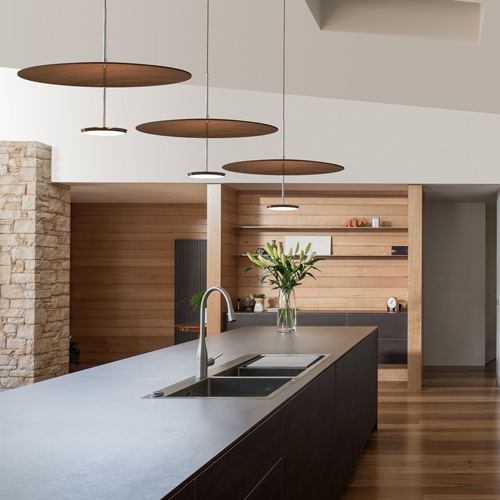
Kitchens are basically workspaces – whether cooking a complicated French recipe and needing to focus under a bright lighting fixture or winding down your day with a cup of tea on the kitchen table beside a cozy dimmed light, LED lights will give you these!
©Lumens
Why LED Lights Are Ideal for Kitchens?
- They are energy efficient: less heat and more light.
- Budget Friendly
- They last much longer.
- Have shorter payback periods.
- They contain much less and almost harmless chemicals.
- They offer a range of different shapes and colors.
- Require less cleaning and maintenance.
- They provide a variety of color temperatures.
Are LED lights Suitable for a Kitchen?
LED lights are suitable for kitchens due to the above reasons. Moreover, their brightness makes it easier and safer to use kitchen tools that can sometimes be dangerous or need more focus, and their different shapes and design make them space-efficient for dense areas like kitchens.
What are the best-LED lights for a kitchen?
Before going through the best-LED lights for a kitchen, it is worth knowing what to consider while choosing your kitchen lighting. Different mounting methods, luminosity, and the design of LED lights are essential criteria. Moreover, your kitchen needs three types of lighting in terms of functions: ambient lighting, which dominates the atmosphere of a room; accent lighting, to highlight unique elements; and task lighting. In the following, we recommend to you the best-LED lights for your kitchen that can suit different requirements and fit in other contexts.
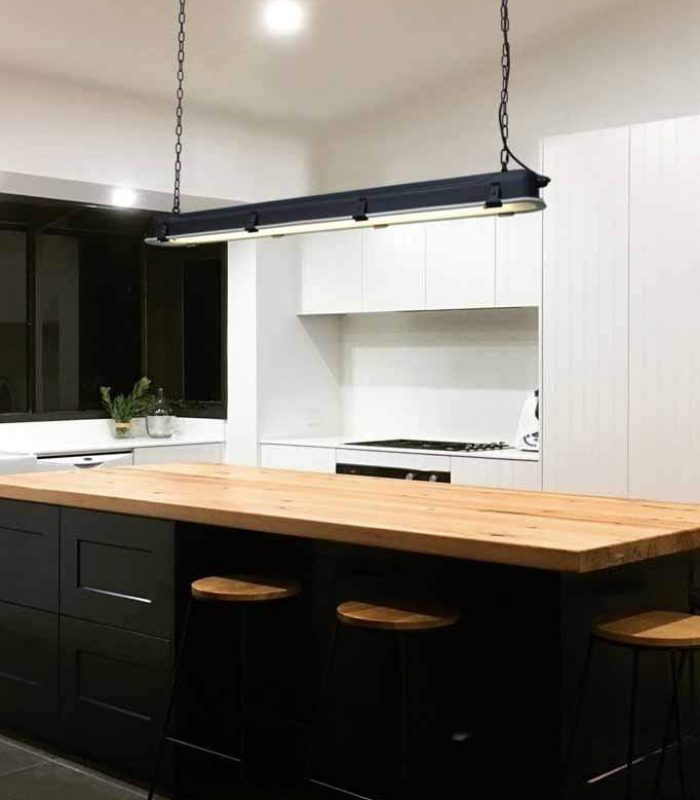
1) LED Lighting Tubes
©Fat shack vintage
This type of LED light is an excellent alternative to traditional fluorescent lighting; the LED light fixtures provide the same brightness, are more energy-efficient and affordable, and last longer. One inconvenience of the LED light tubes is that they do not include a replaceable bulb or strip. However, they are lightweight and provided in various mounting methods, making them easy to install or replace.
Also Read: Interior Lighting Design Actually Transforms Spaces! Watch These 6 Projects
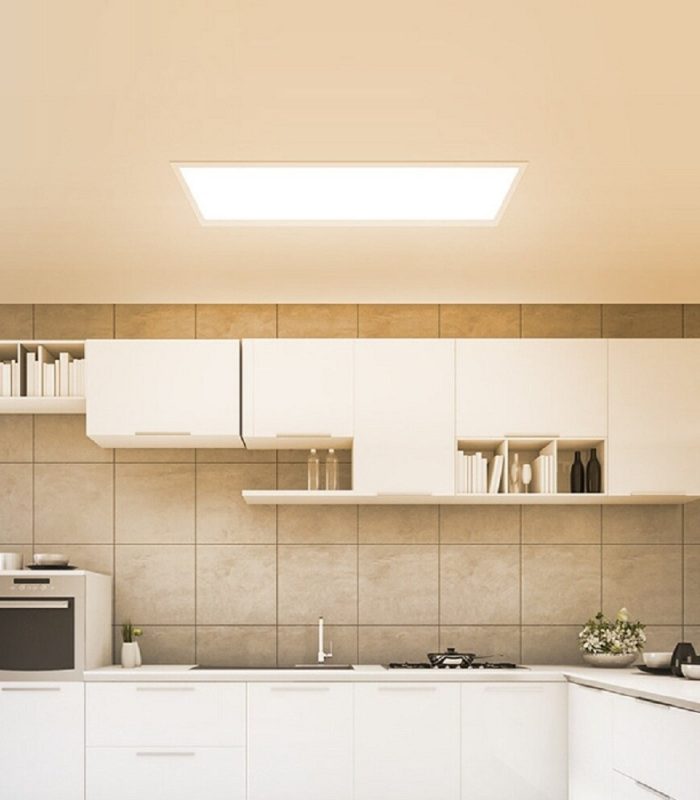
2) Daylight LED Lights
©Ali express
This type of LED light is used to provide lighting that is closest to daylight. It is mainly used where the actual sunlight has little access to space, and they totally change the aesthetic and overall feeling of the kitchen. What is different about Daylight LEDs is their color temperature is higher than regular LED lights. They are especially great for kitchens where more complicated tasks are being performed.
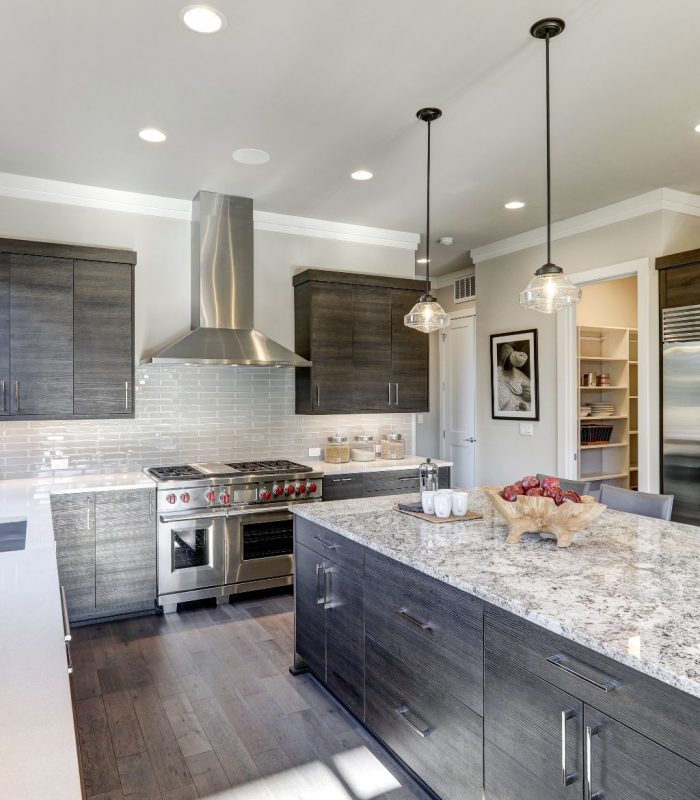
3) LED Downlights
©LED Monkey
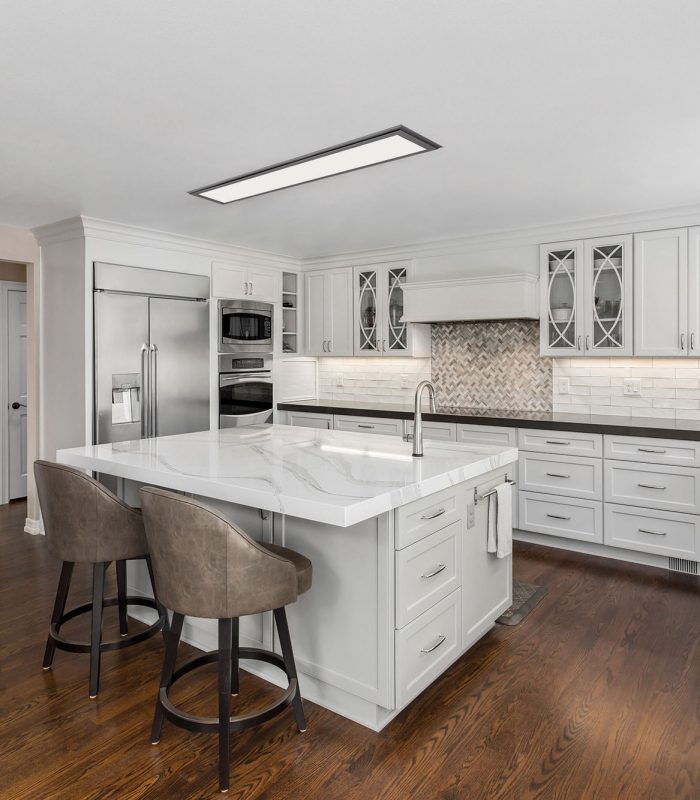
LED downlights or recessed lights are known to be the critical product of LED lights. They provide ambient lighting for the entire space without being the center of attention. They are usually used in the kitchen ceiling. They consume less energy and last longer because they are most probably provided in a highly resistant material to corrosion and rust. Recessed LED lights are also dimmable and can be installed easily because of their light shell.
4) Flush Mount LED Lights
©Lightology
Flush Mount LED Lights blend very well into their context. This choice is excellent for kitchens and dining areas; these flush-mount LED lights are ceiling-mounted and can illuminate a large area without attracting much attention. They are typically dome-shaped, and the fact that they leave no space between the fixture and the ceiling makes them easier to clean, especially in low-ceiling kitchens.
5) Semi-Flush Mount LED Lights
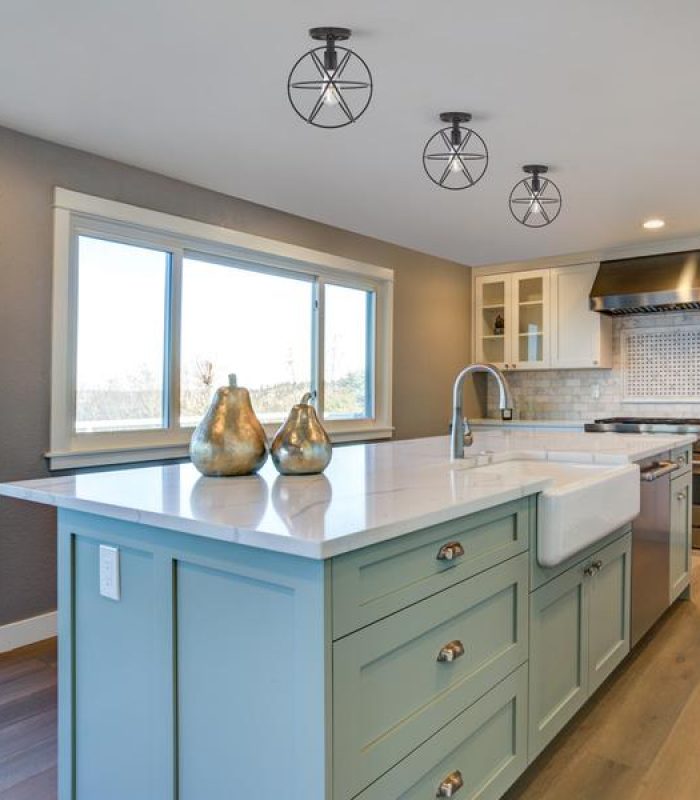
©Linea di Liara
This LED light provides enough illumination using only a single fixture, adding a decorative feature. The difference between a flush mount and a semi-flush mount fixture is that the latter isn’t fixed directly to the ceiling, allowing for an uplit effect and downlight, offering an overall better ambient light. Semi-flush mount LED lights work, as well, and are best for low-ceiling kitchens.
6) LED Kitchen Spotlights
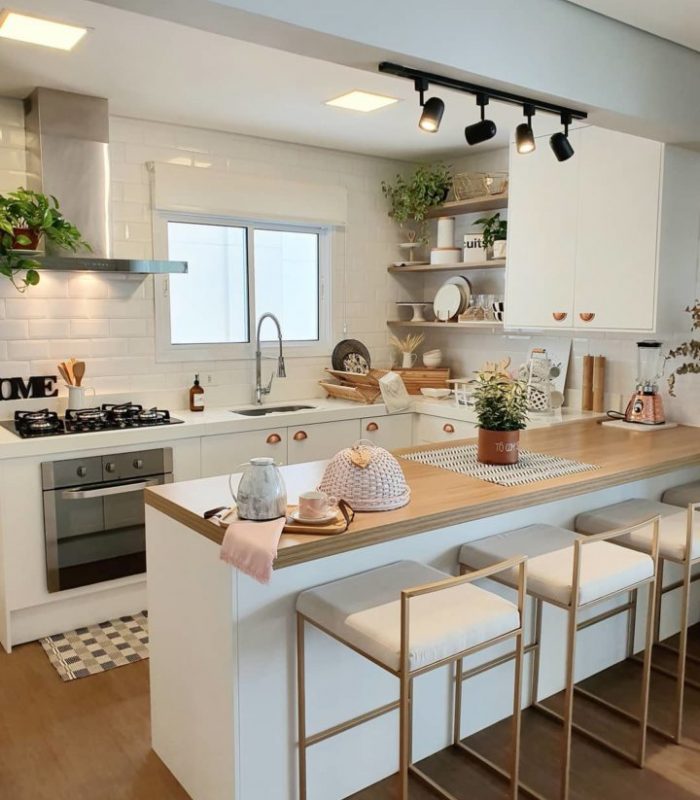
©ElasDuasDecoram
LED spotlights are a great addition to huge kitchens–they can add more overall illumination. They can be directed to specific surfaces and act as task or accent lighting because of their narrow, focused beam angle. LED spotlights are also an aesthetically better choice than bulky light bulbs when less attention is needed to the ceiling.
7) LED Strip Lights
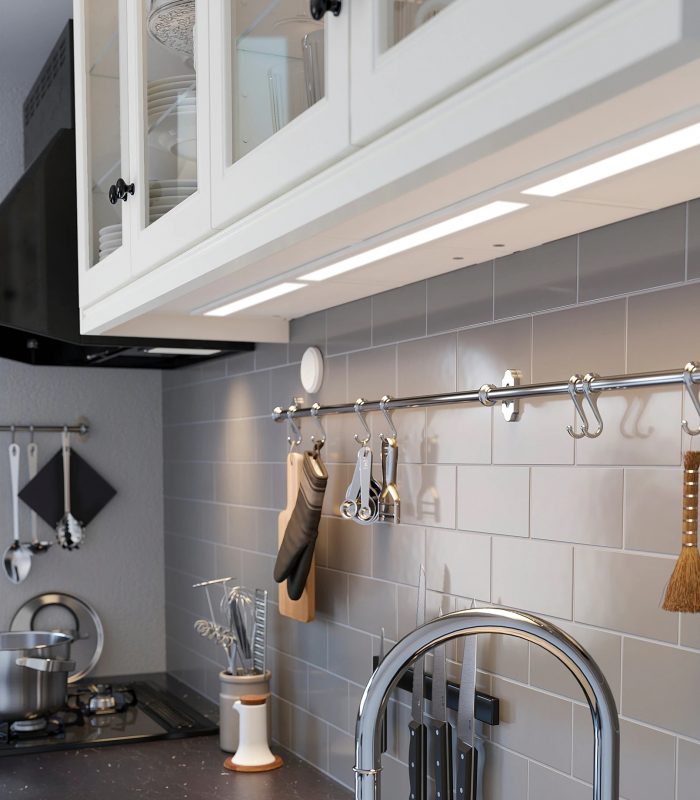
©IKEA
LED strip lights are both functional and stylish. They are great to be installed inside or under your kitchen cabinets, offering more illumination, especially to the low cabinets that do not get enough ambient light. LED strip lights come in various lengths and colors and can be dimmable, waterproof, and splashproof.
What Color LED Light is Best for a Kitchen?
Color temperature plays a major role in kitchen atmosphere and functionality.
Warm White (2700K–3000K)
Creates a cozy, inviting feel — great for dining corners or decorative lighting.
Neutral White / Dazzling White (3000K–4000K)
Ideal for everyday kitchen use. Balanced brightness without harshness.
Bright White / Cool White (4000K–5000K)
Best for high-task areas where clarity is essential.
Modern kitchens benefit from cooler whites, while traditional or rustic kitchens often look better under warmer tones.
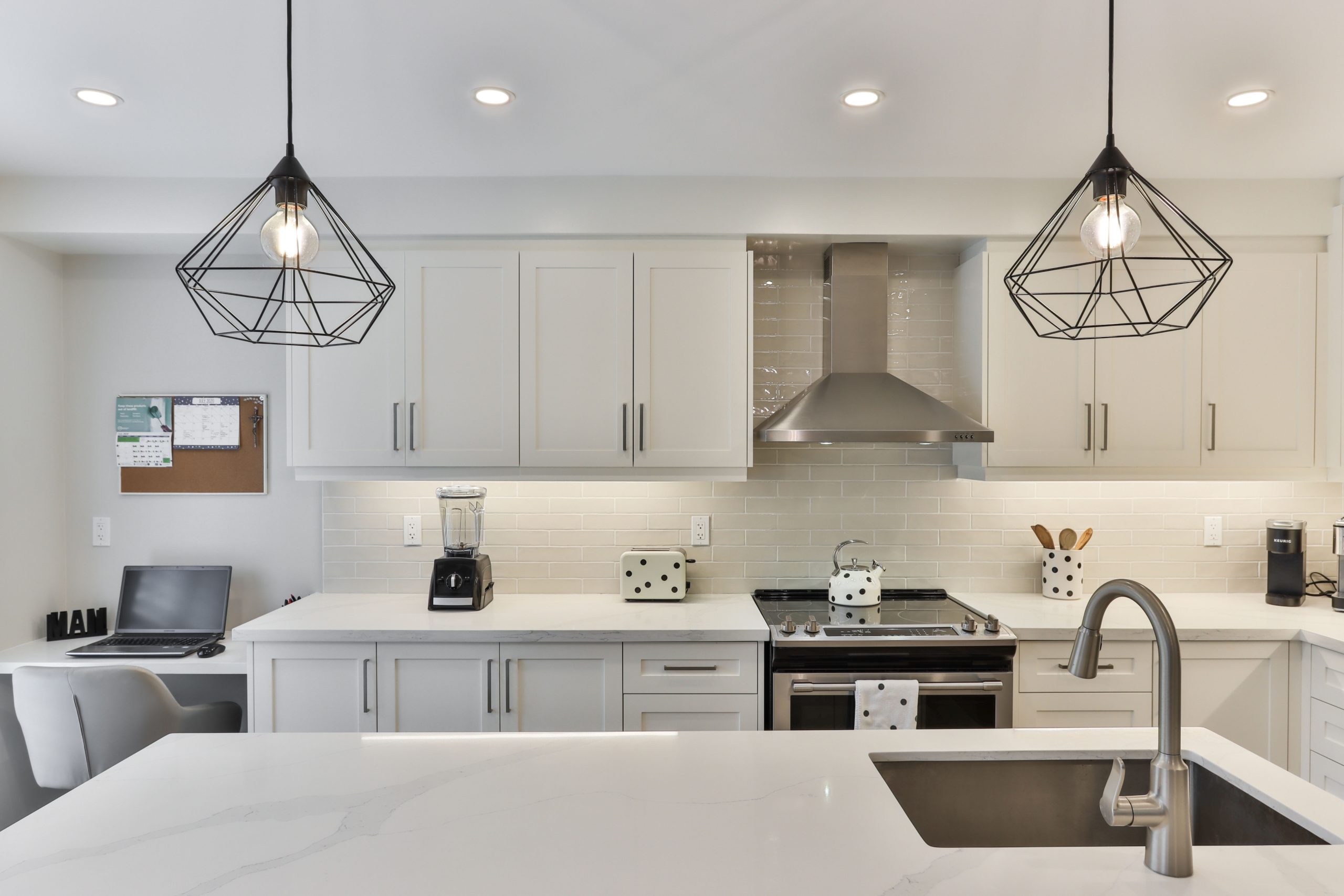
Photo by Sidekix Media on Unsplash.
Choosing the right LED lights for your kitchen can significantly enhance both functionality and ambiance. From energy savings to aesthetic versatility, LEDs offer solutions for every layout and design preference. With the right combination of ambient, task, and accent lighting, your kitchen can become a more efficient, beautiful, and comfortable space.

Daniel Mercer is a Coffee Break section editor at Arch2O, currently based in Berlin, Germany. With a background in architectural history and design journalism, Daniel holds a Master’s degree from the University of Edinburgh, where he focused on modern architecture and urban theory. His editorial work blends academic depth with a strong grasp of contemporary design culture. Daniel has contributed to several respected architecture publications and is known for his sharp critique and narrative-driven features. At Arch2O, he highlights innovative architectural projects from Europe and around the world, with particular interest in adaptive reuse, public infrastructure, and the evolving role of technology in the built environment.