

The Therme Manchester wellness resort has moved into a new design phase, with updated CGI images showing a £500m (US$656m, €599m) development taking shape on a 28-acre site at TraffordCity. The 680,000sq ft scheme is organised into three zones called Play, Restore and Relax, and it adds extensive indoor and outdoor spaces, a 53,000sq ft wellbeing garden and a new public plaza that improves links with the Bridgewater Canal. Therme Group expects the resort to open in 2029 and to attract around two million visitors each year.
Construction is already visible on site, because cranes are working and the foundations of the three main areas are emerging. Installation of the first main pool, in the northern section of the Relax zone, was scheduled to begin in November 2026. That work is expected to take approximately eight weeks and includes fitting the water filtration system within the concrete pool base. The resort sits in Manchester, in the United Kingdom, and it is billed as a world-first in urban wellbeing resorts.
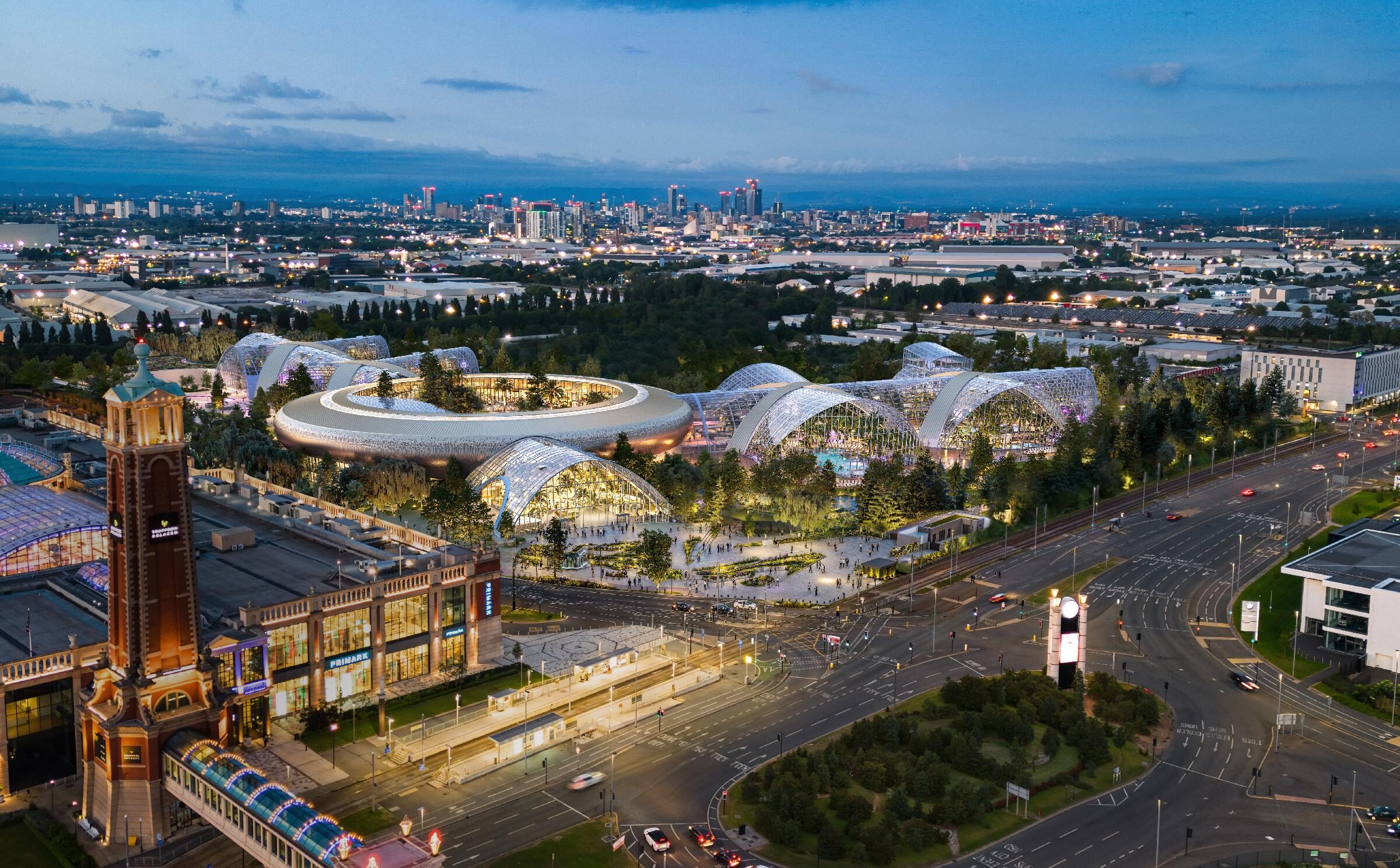
The Manchester development is part of Therme Group’s wider strategy to bring large-scale wellness destinations to urban populations / Therme Group
The design changes followed the appointment of Sir Robert McAlpine as contractor, and they aim to improve construction efficiency, the visitor experience and public transport connections, including access to the Metrolink. Two previously proposed multi-storey car parks have been removed to open up views across the resort. Parking will instead be spread across the site, providing around 1,400 spaces. Changes to the entrance and to internal and external areas are also intended to improve efficiency and energy management.
A minor Section 73 planning application has been submitted to cover these changes, including the revised parking arrangements. The overall scale of the development remains unchanged after a reduction in size in 2024. Professor David Russell, CEO of Therme UK, told Spa Business, “As we move closer to bringing Therme Manchester to life, it’s natural that the design continues to evolve. The refinements we’ve made are testament to our passion of ensuring that every aspect of the resort works as effectively and efficiently as possible, both for our guests and the environment.”
Read more:
- The First Cortina Hotel to Open with a 1,200sq m Revivo Spa in the Dolomites
- 24 Hour Fitness Founder Unveils Founders Club, a Fitness and Medical Spa Concept
- Garden Tennis Club of Cabourg | Lemoal Lemoal Architectes
Russell added that the team had taken the opportunity to fine tune certain elements, building on lessons from its international resorts. In his words, “Our ambition has, and will always be to create something exceptional for Manchester, a world-first in urban wellbeing resorts that feels welcoming, accessible and unmistakably connected to its surroundings.” The Manchester scheme is part of Therme Group’s wider strategy to bring large-scale wellness destinations to urban populations, a spa and resort model the company is pursuing on several continents.
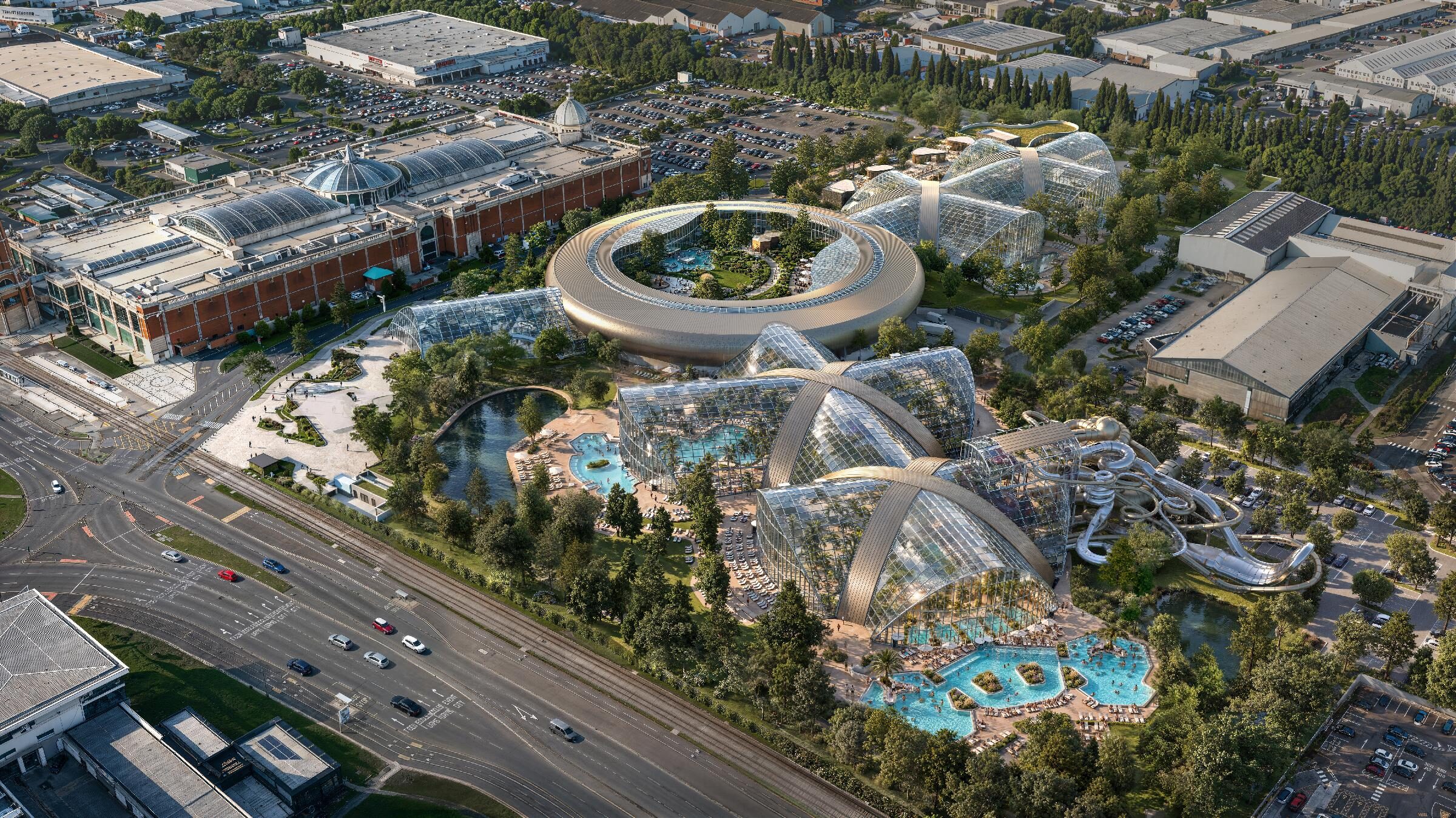
The improvements to the Manchester site’s design include public transport connections, including access to the Metrolink / Therme Group
That strategy was the subject of a talk by Ramona Chiriac, Therme Group’s vice-president of global impact, at the recent Global Wellness Summit. Chiriac joined the group after more than two decades in diplomacy and public service, and she argued that wellbeing should be treated as social infrastructure rather than a consumer privilege. She said, “Wellbeing must evolve from a consumer privilege into social infrastructure. Luxury and commercial success are not the enemy of this idea, but an industry devoted to wellbeing cannot measure its success only in revenues and affluent guests. Our next frontier is access, scale, and public value.”
Chiriac also made the case that scale lowers cost, since a destination that welcomes thousands of people a day reduces the price of each visit. “So we’re discussing affordability because of the scale, and wellbeing becomes affordable on an ordinary Saturday for any family,” she said. Her comments echoed Therme Group CEO Robert Hanea, who said at the 2025 summit that the company aims to restore lost infrastructure, such as Roman bathhouses, at scale to democratise wellness.
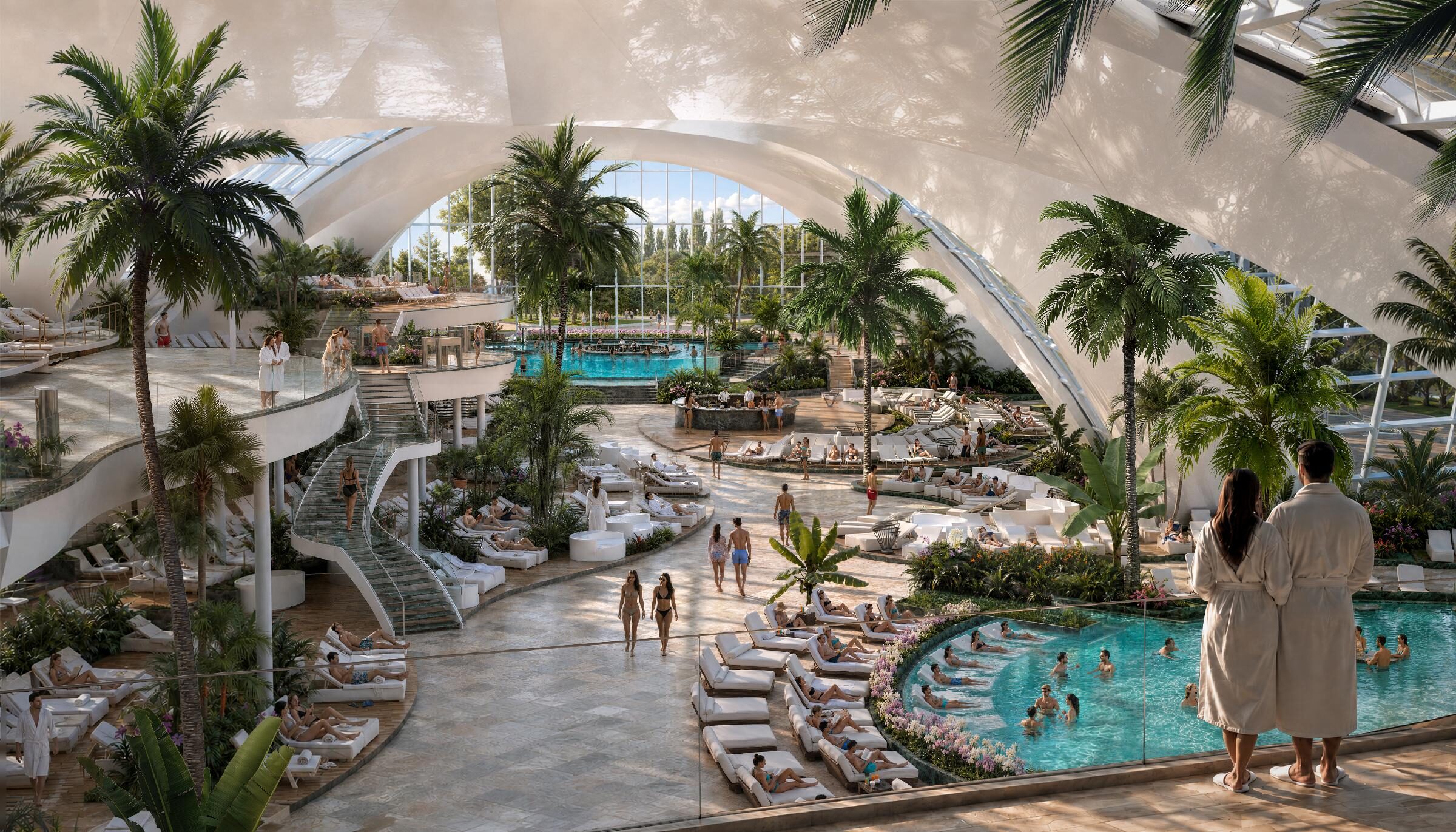
Design updates have been made to improve construction efficiency / Therme Group
She called for closer cooperation between businesses and governments, with public authorities providing planning and public mandates while private operators contribute investment, design and operational expertise. She urged the industry to measure social value and public impact alongside revenue, and to work with cities as partners. Therme Group currently operates five major facilities in Europe and is developing destinations in Manchester, Dallas, Washington, Toronto, Dubai, Singapore and Incheon.

Jane Doe is an American architectural editor with a deep-rooted passion for design and the built environment. She holds a degree in Architecture from Columbia University, where she developed a strong foundation in both architectural theory and urban studies. With over a decade of editorial experience, Jane specializes in shaping content that bridges architecture, urbanism, and cultural discourse. Her work spans leading design publications, exhibition texts, and digital platforms, where she is known for her clear, engaging narratives and her ability to translate complex spatial ideas for a broad audience. Jane is particularly interested in issues of equity, sustainability, and the evolving role of cities in a changing world.