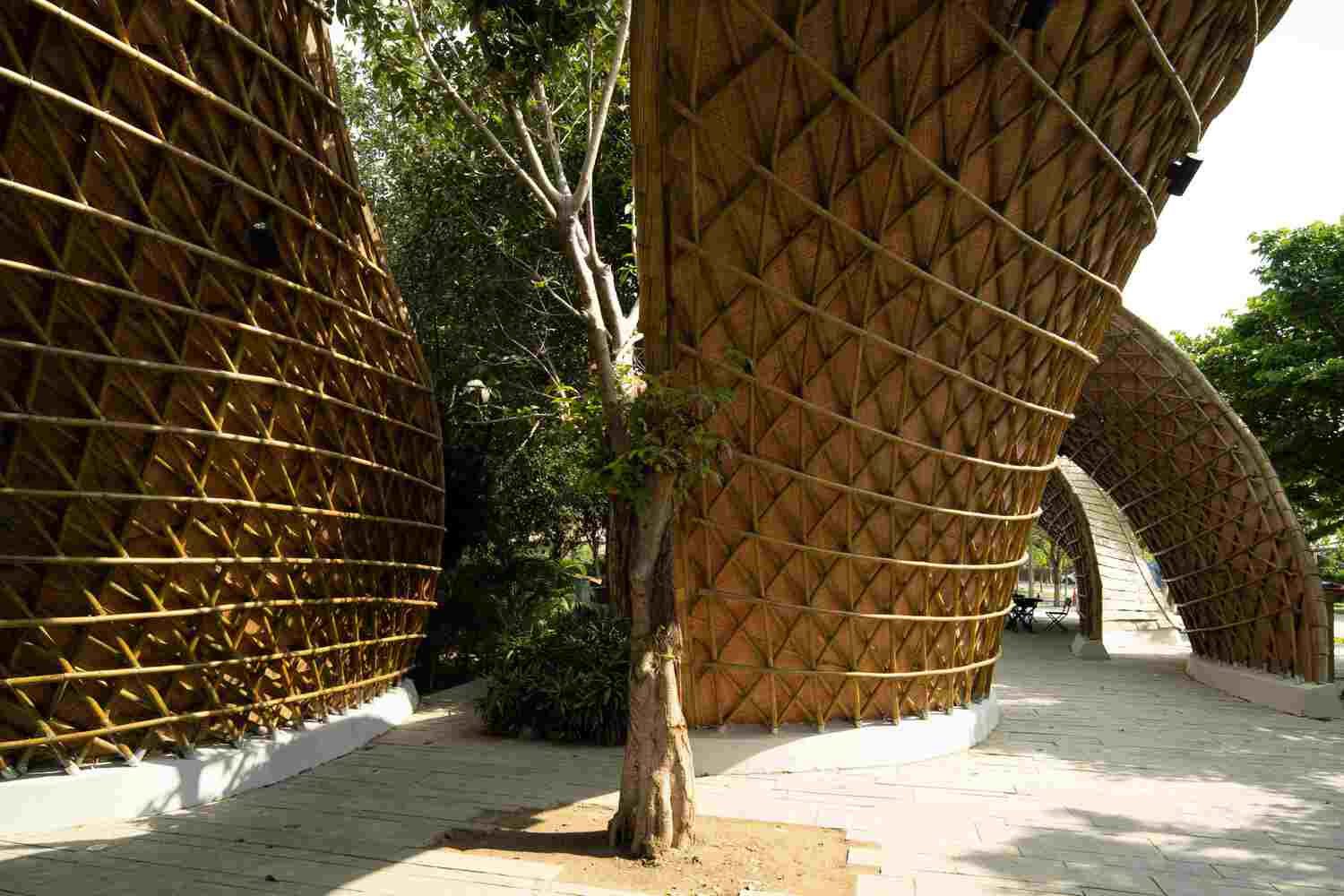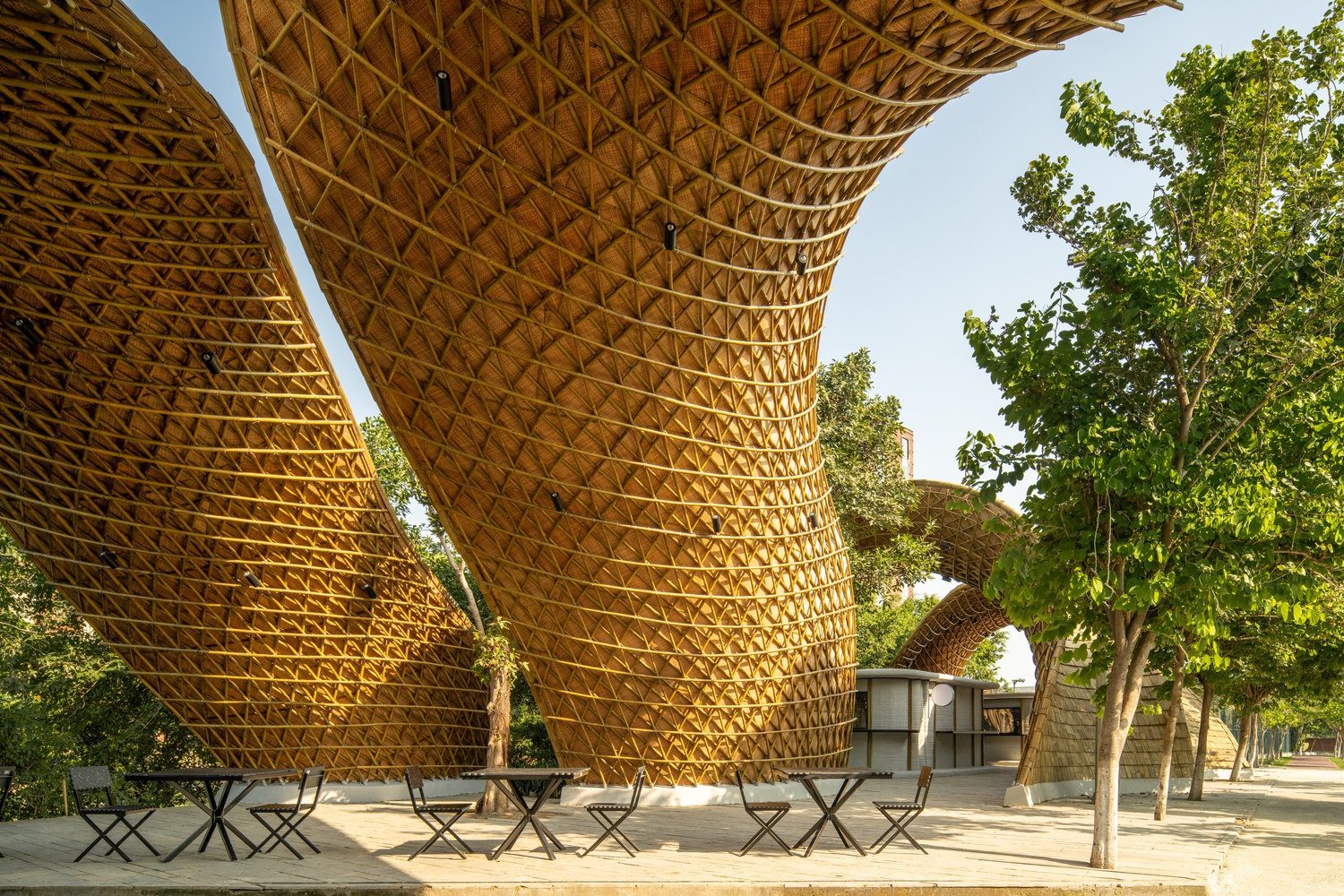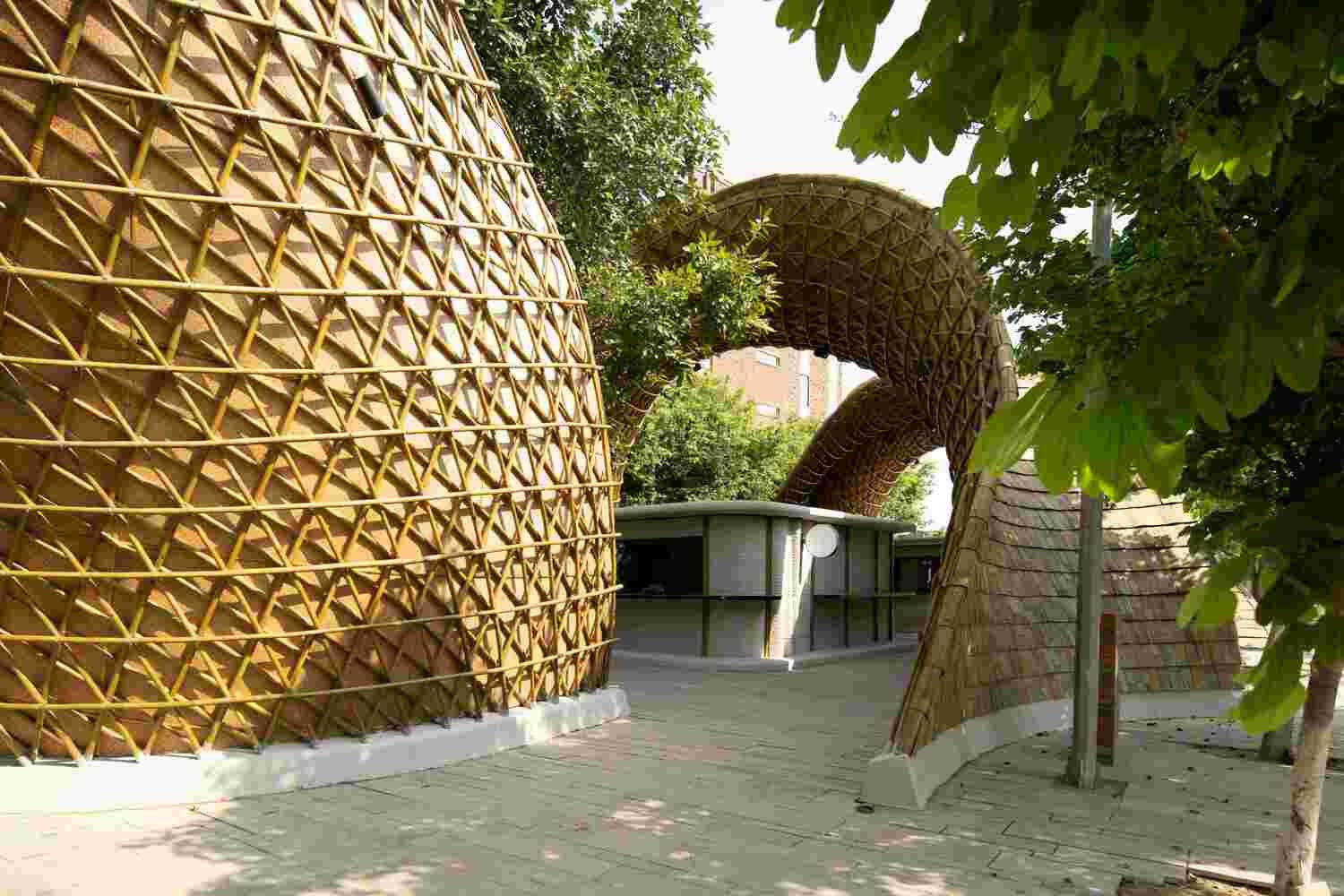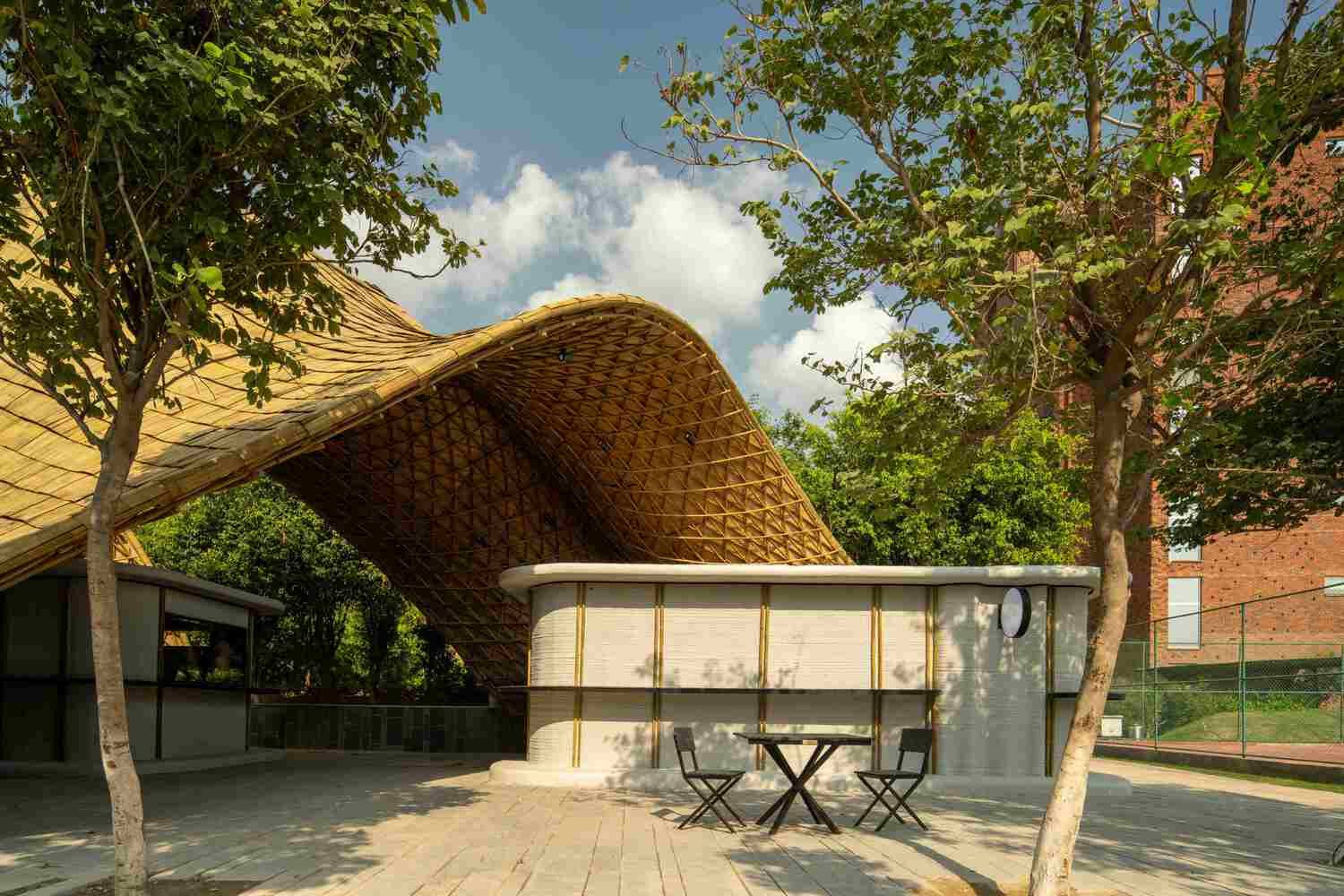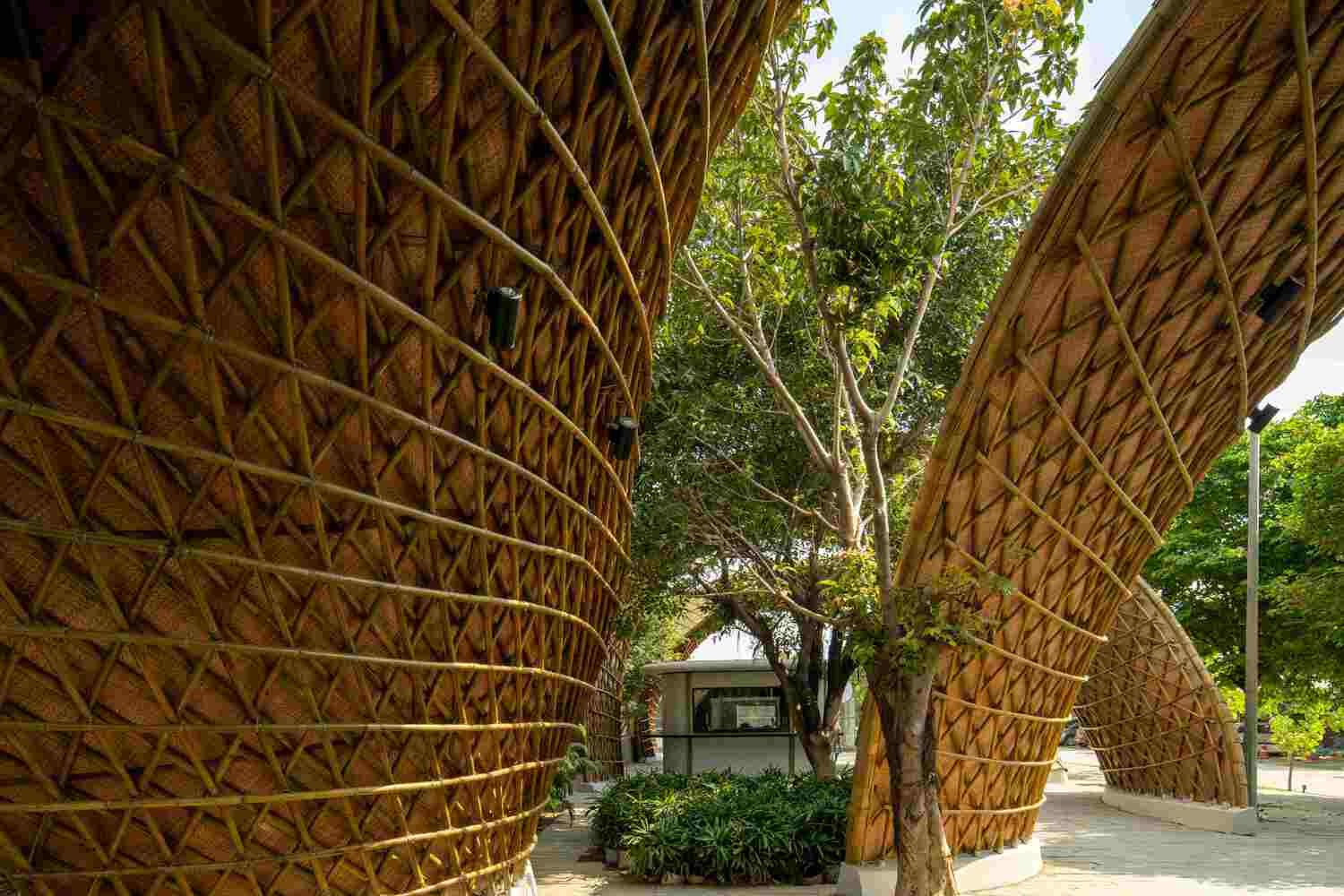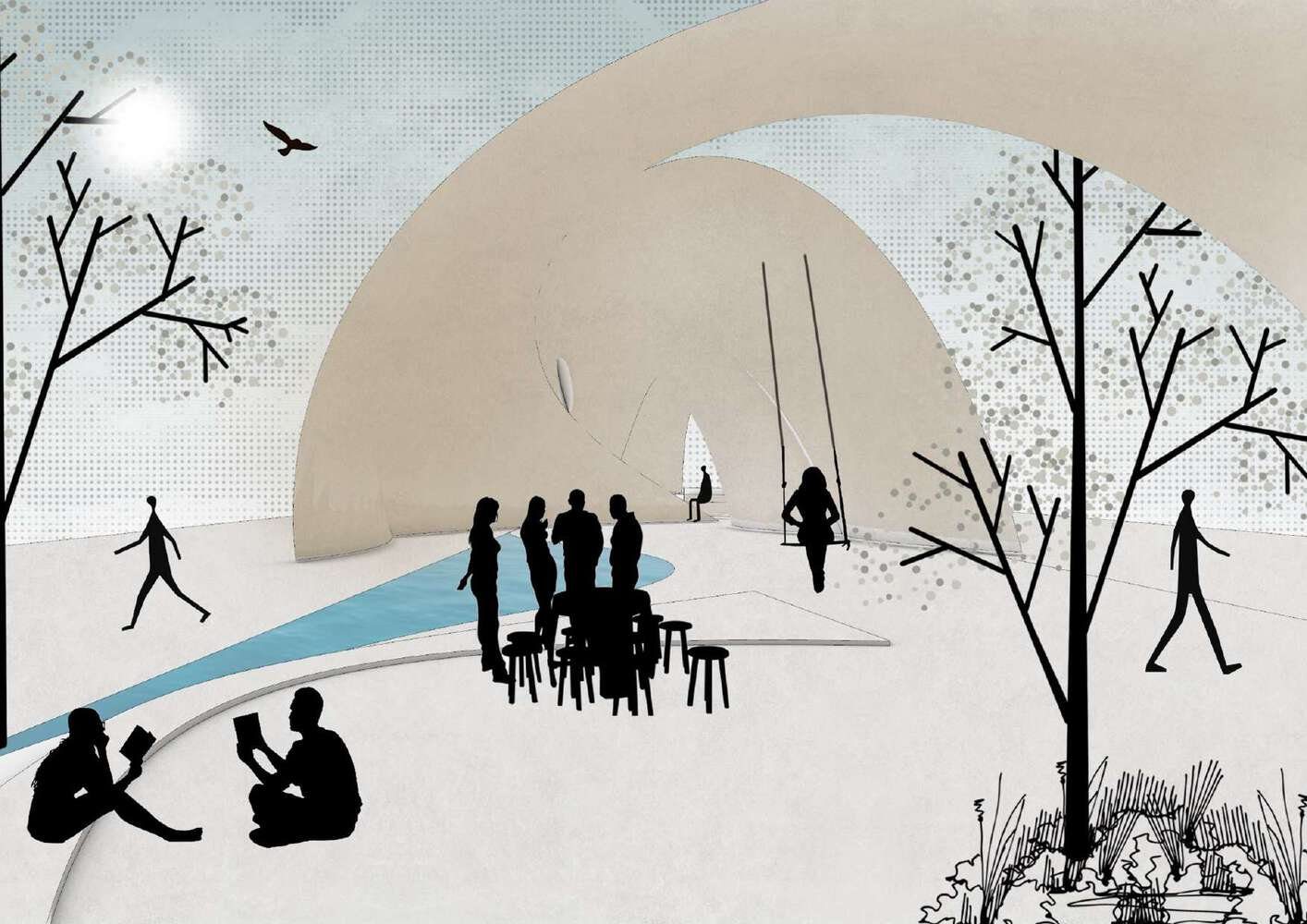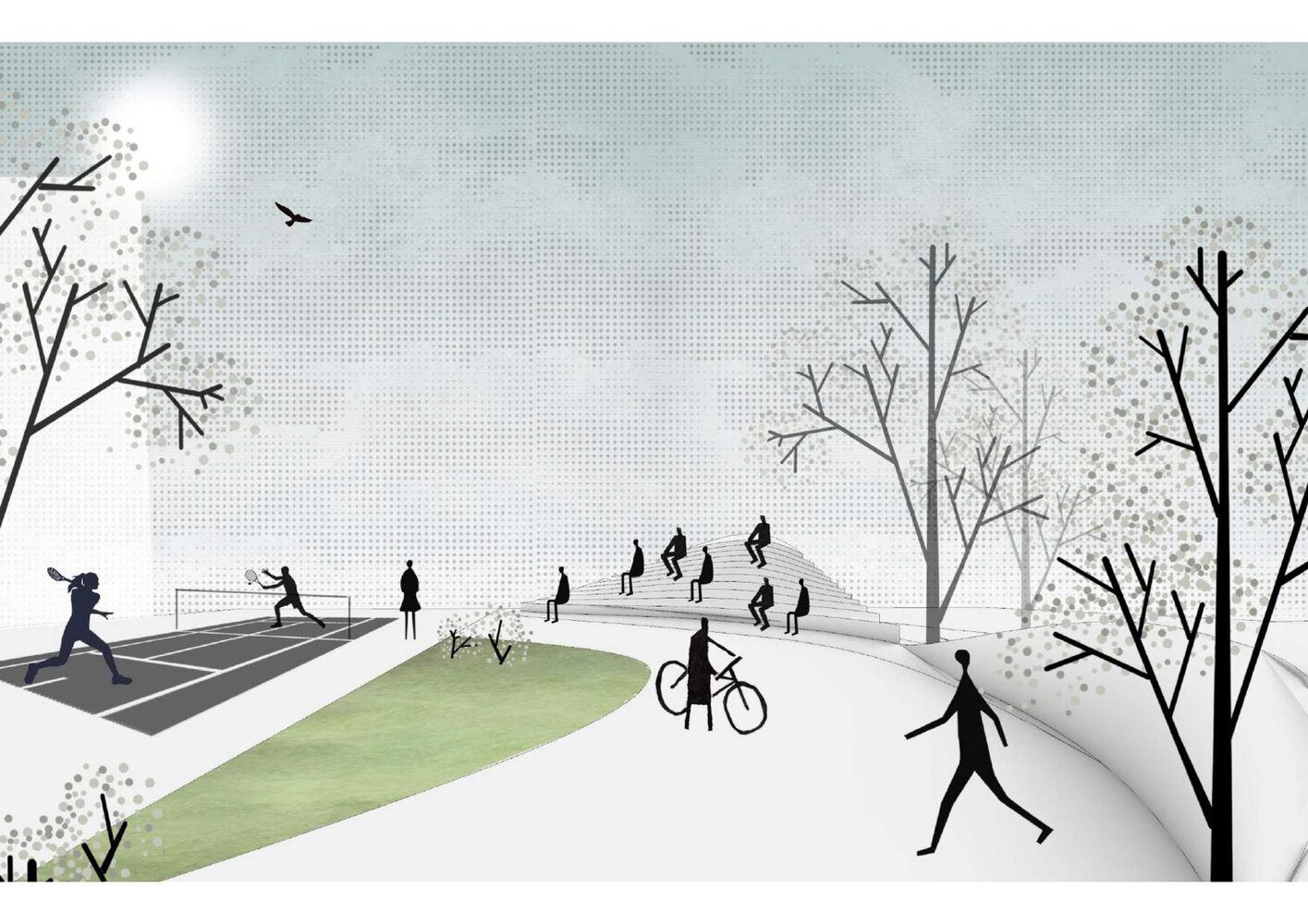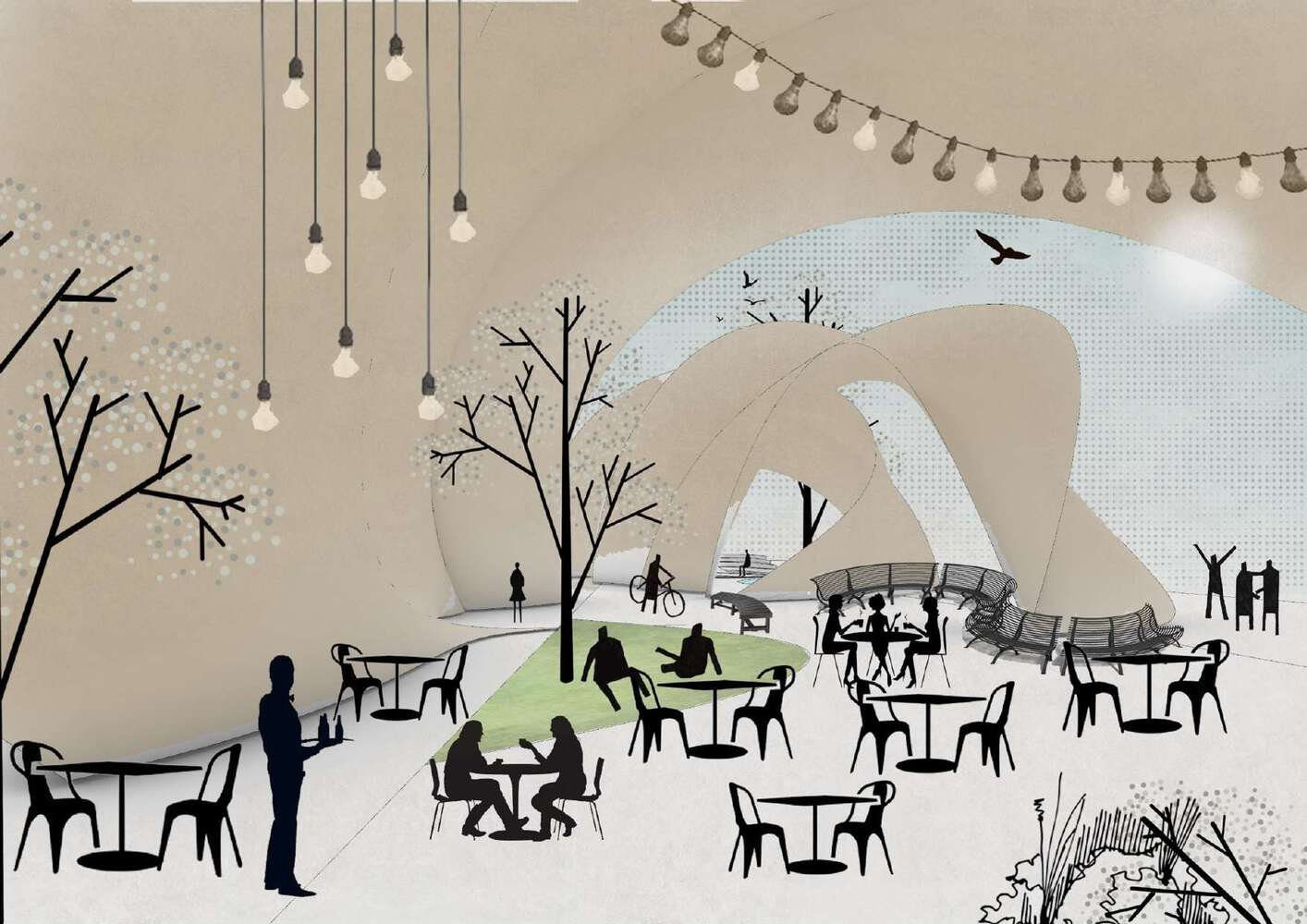


The idea behind The Hungry Caterpillar is mainly sustainability. Adopting sustainable living today, both in design and daily life, is crucial for reducing our environmental footprint and preserving resources for future generations. In design, this means using eco-friendly materials, energy-efficient technologies, and creating spaces that harmonize with natural surroundings. In daily living, sustainability involves mindful consumption, reducing waste, conserving water and energy, and supporting local, ethical products. Together, sustainable design and living form a holistic approach that not only benefits the environment but also enhances health, well-being, and long-term resilience.
© Avesh Gaur and Sohaib Ilyas
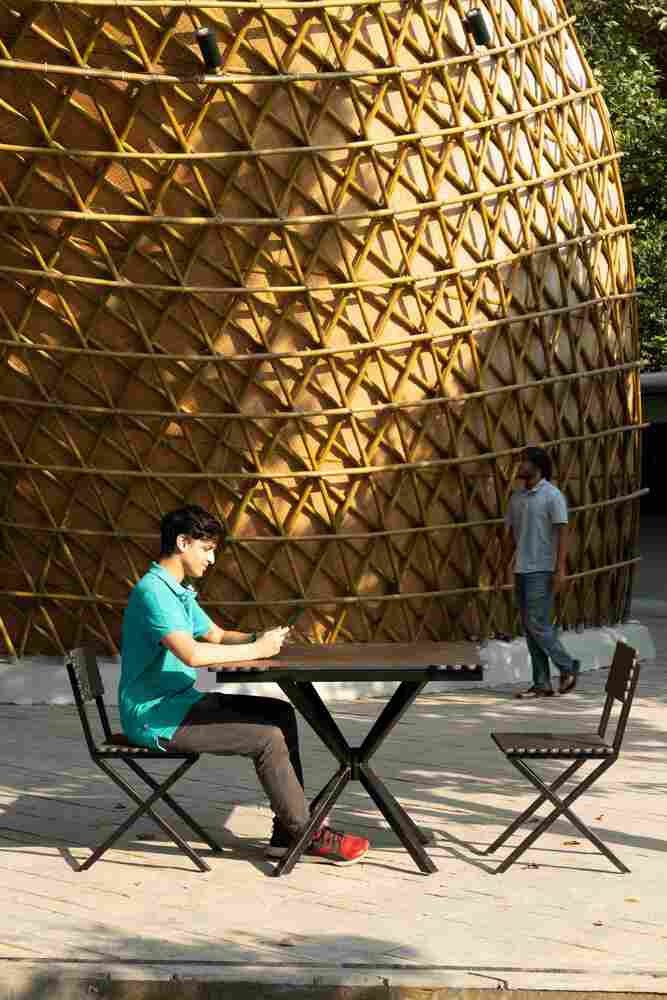
The brief was to design a food street with character, a space that children would enjoy, beyond simply grabbing a quick meal. One visit to the site, and I instantly visualized a cocoon nestled within lush tree canopies, a caterpillar leisurely feeding, feeling safe and at home. But today, the world demands more than just beautiful ideas; it calls for responsible, conscious design. What emerged was a food street that’s special for more reasons than one, a vision brought to life through the effort and belief of many.
© Avesh Gaur and Sohaib Ilyas
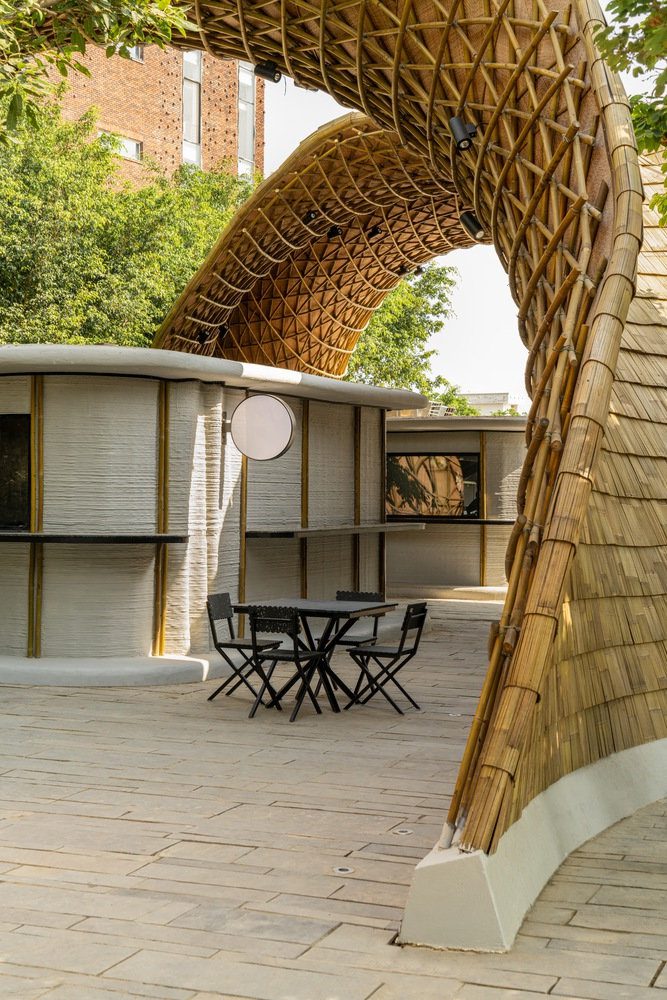
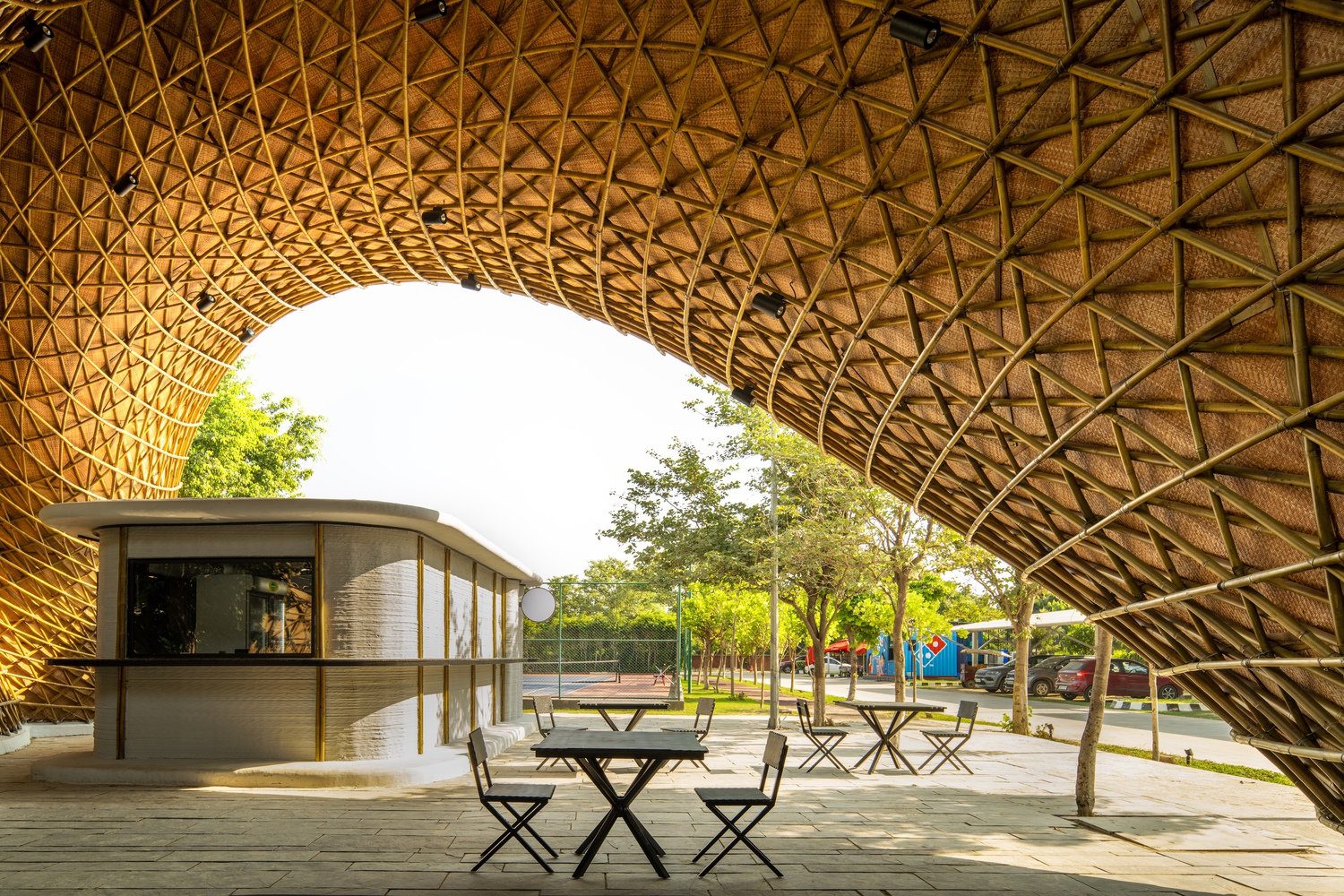
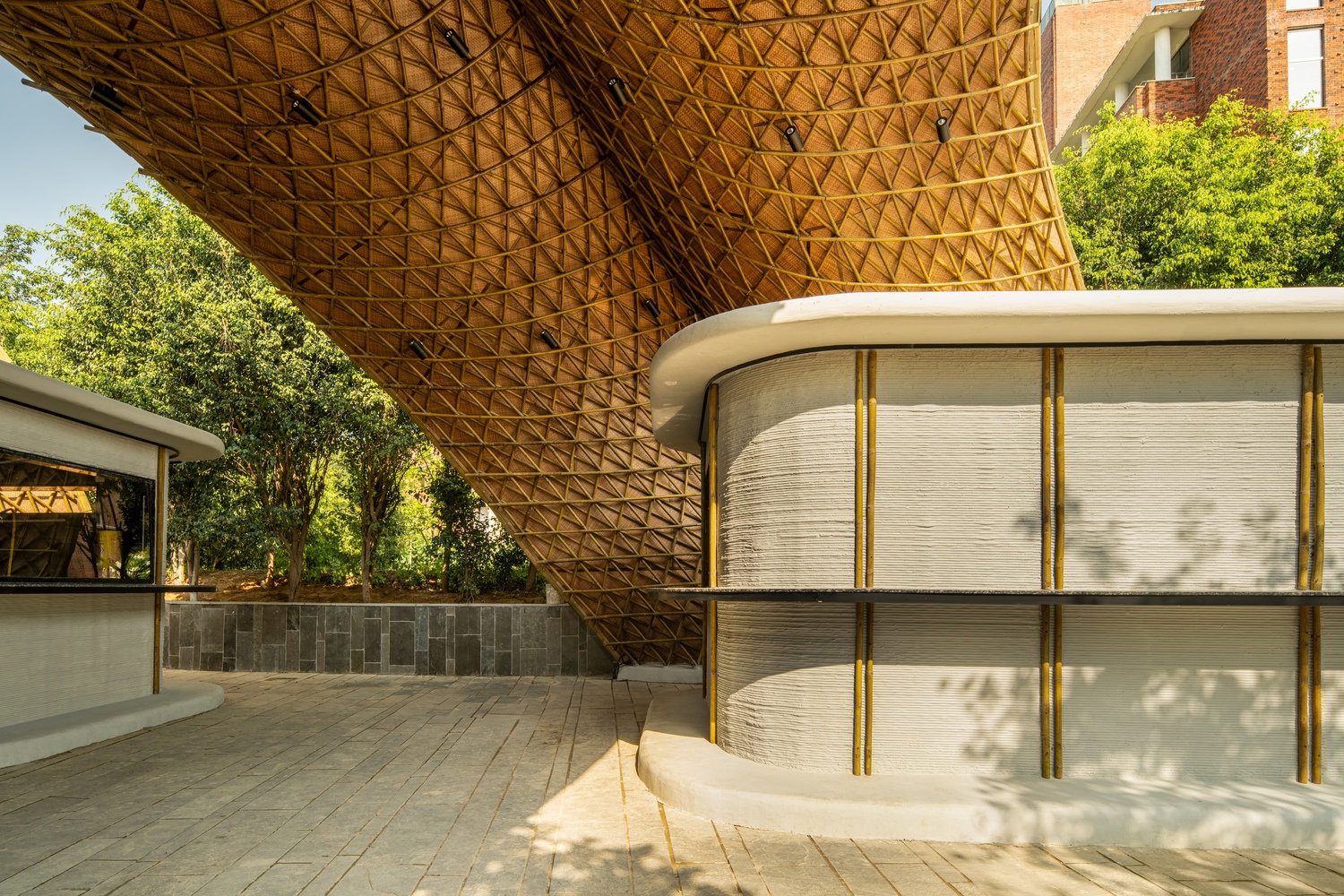
The kitchens, inspired by the food truck concept, are 3D printed in concrete. These modular units were printed by Micob Pvt. Ltd. in Ahmedabad and assembled on campus. 3D printing is a precise, additive process that deposits only the material needed, significantly reducing waste compared to conventional methods. Its automated nature accelerates construction timelines while lowering energy use and the overall environmental footprint. As an added benefit, the cavity between the 3D-printed walls provides thermal insulation, reducing heat transfer and enhancing energy efficiency.
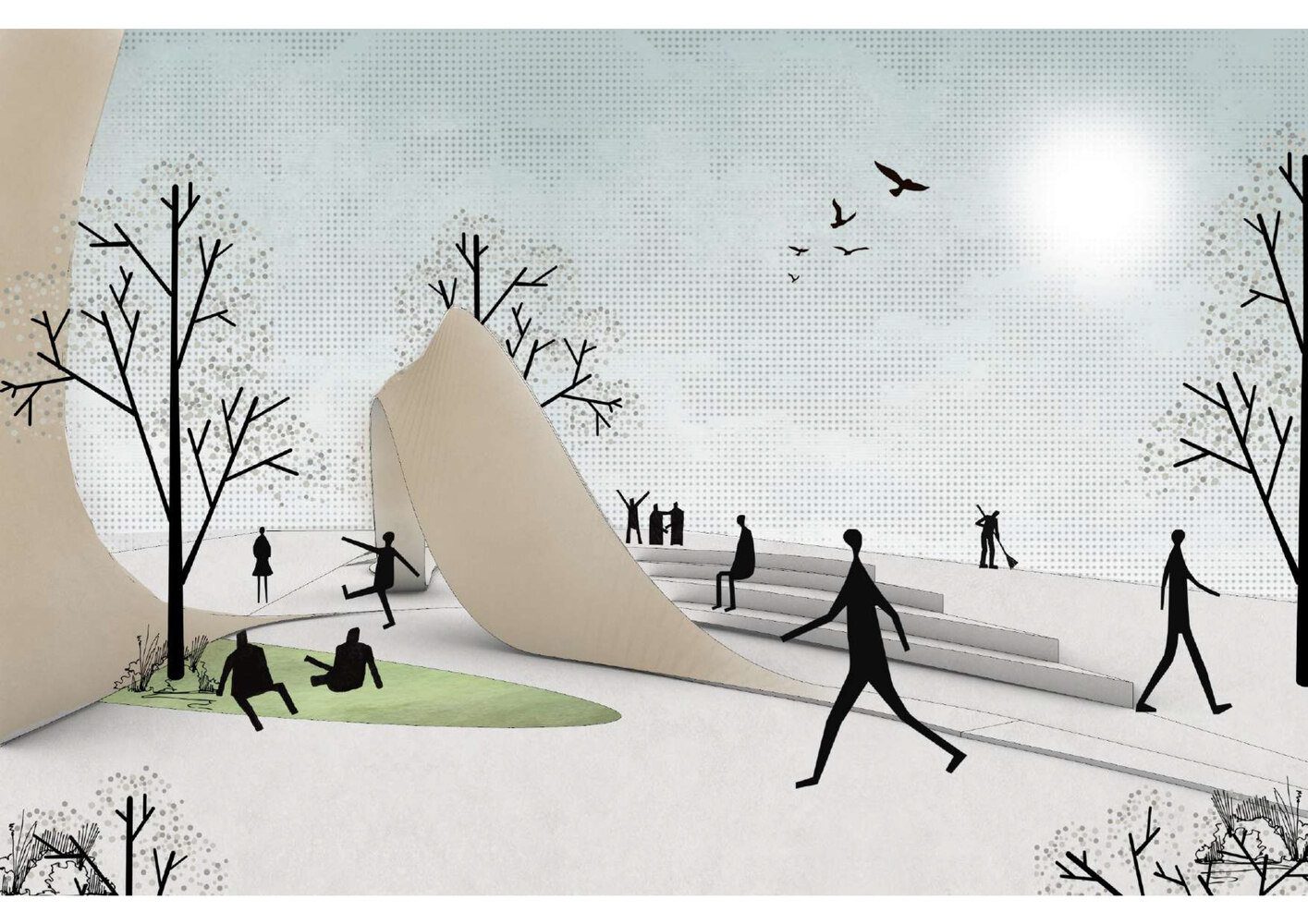
Sketch
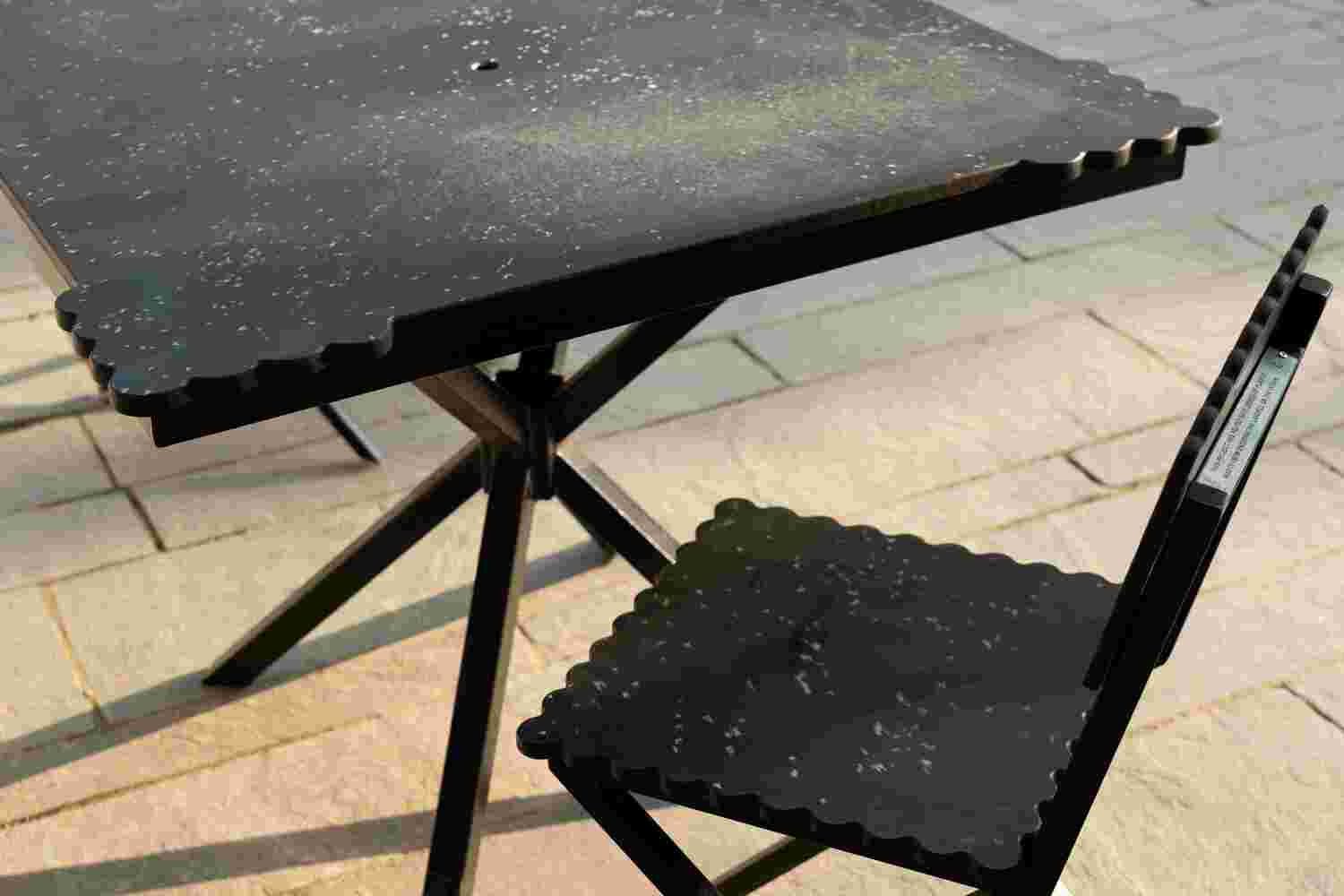
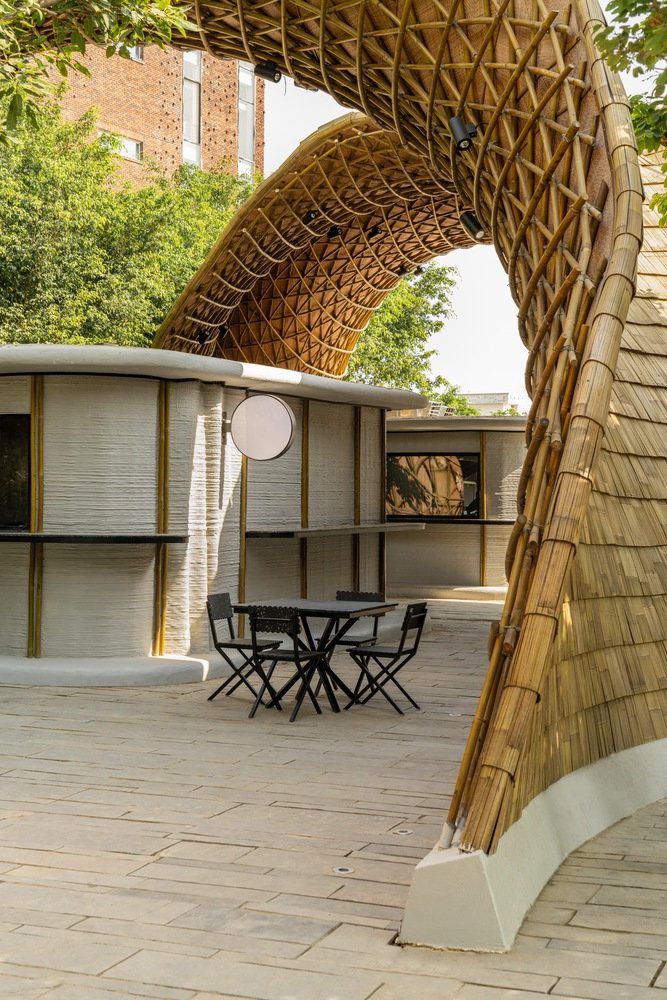
The furniture, created by Placyle, has been crafted using recycled plastic waste. By transforming discarded plastics into durable, weather-resistant seating, a conscious choice was made to reduce landfill overflow and ocean pollution, an everyday act of sustainability embedded into the design.
© Avesh Gaur and Sohaib Ilyas
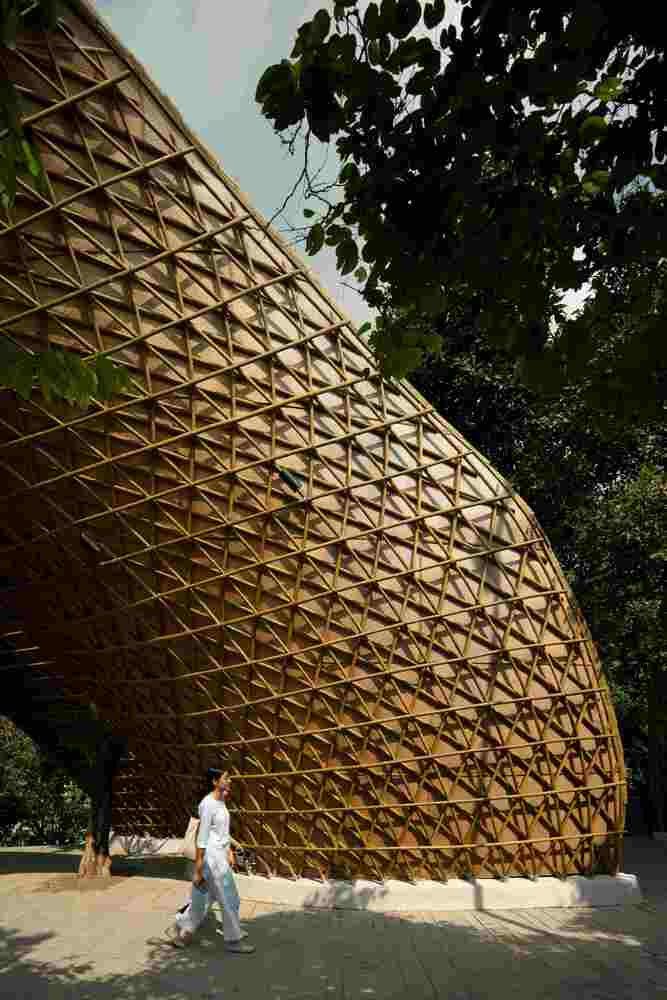
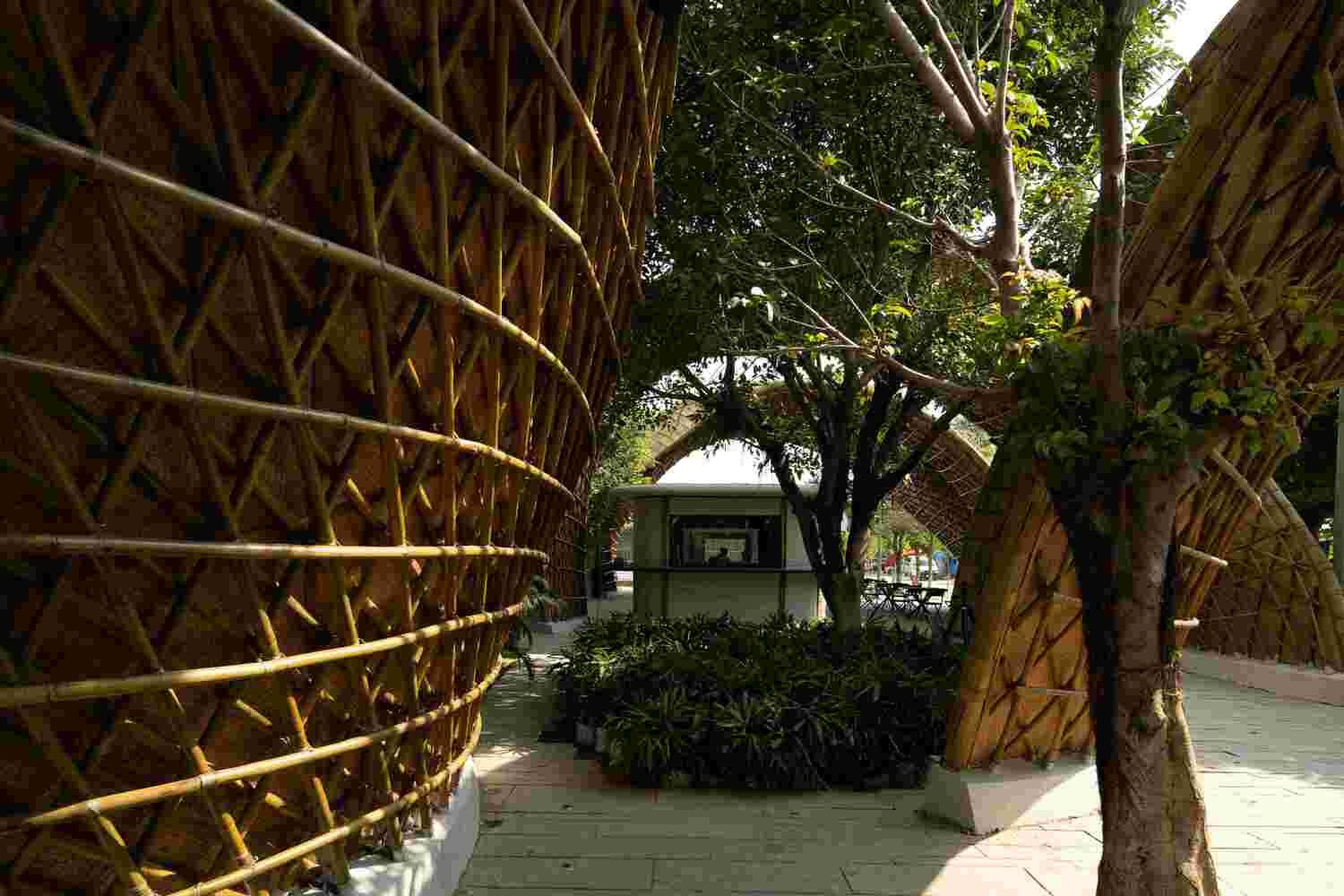
The shade, cocooned like a caterpillar, draws inspiration from nature’s geometry. Like a leaf that folds to use less material while reaching for the sun, the bamboo shells curve in two directions to form a structure that is both light and strong. The longest gridshell spans 19 metres, using four layers of 30–50 mm diameter bamboo, each oriented at 45 degrees, topped with a crushed bamboo mat. The use of slender bamboo sections makes the complex double curvature possible, resulting in a shading device that is expressive, materially efficient, and low in environmental impact. Structural design was led by Atelier One, London, with architectural detailing resolved by Jurian Sustainability, and built by Jans Bamboo, bringing the caterpillar to life. The project was designed by Architect Apoorva Shroff of Lyth Design.
© Avesh Gaur and Sohaib Ilyas
In the end, this is more than just a place to eat; it’s a space for curiosity, for chatter, and for reflection. It’s where design meets ecology, where technology and tradition coexist. The caterpillar-inspired street isn’t just a metaphor; it’s a living example of how thoughtful design can nurture not just people, but the planet too.
© Avesh Gaur and Sohaib Ilyas
Project Info:
Architects: Lyth Design
Country: Rai, India
Area: 650 m²
Year: 2025
Photography: Avesh Gaur and Sohaib Ilyas
Architect: Apoorva Shroff, Lyth Design
Team: Khushi Saraiya and Param Gala, Lyth Design