


Understanding Spiral Staircase Fundamentals
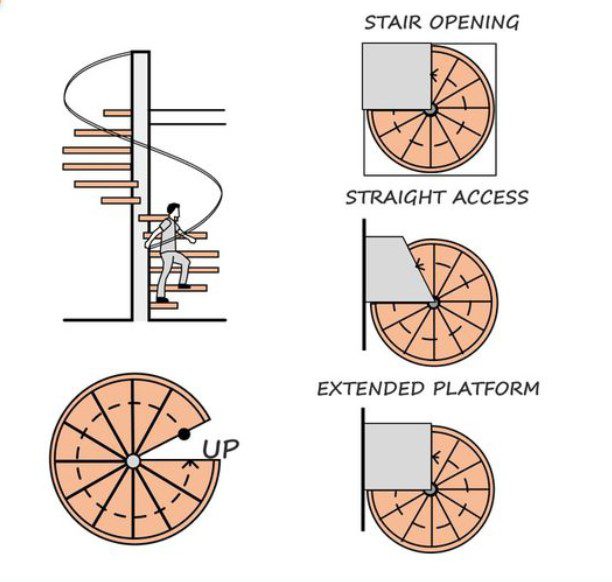
Spiral staircases follow specific geometric principles that affect every dimension. The center pole anchors the entire structure, while treads radiate outward in a helical pattern. This creates a unique situation where tread width varies dramatically from inside edge to outside edge. The walkline—your primary reference point—sits at two-thirds of the tread depth from the narrow inside edge.
Basic Geometric Relationships
The relationship between diameter, number of risers, and tread geometry determines if your design will work. Each tread occupies a specific angle of rotation. For a full 360-degree spiral with 16 risers, each tread takes up 22.5 degrees. This angular relationship affects every other dimension, from tread width to headroom clearances.
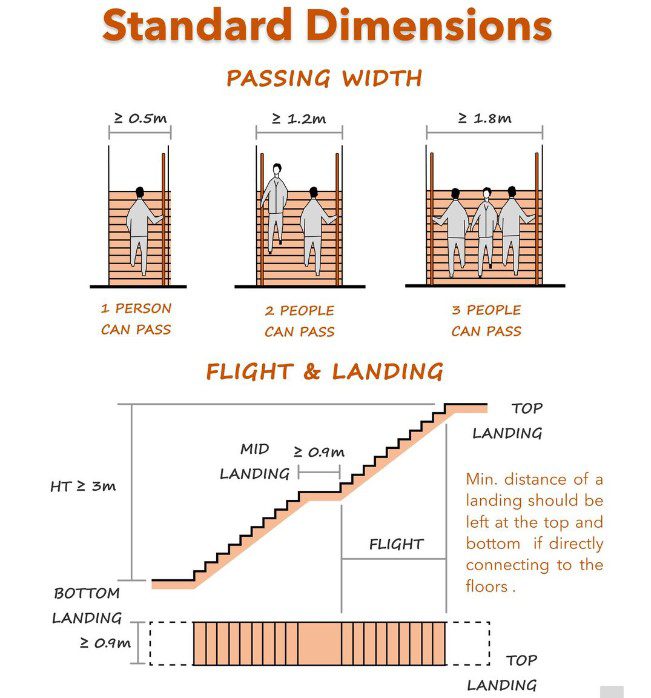
Via: Aishwarya Bomble
Walkline Positioning
The walkline represents where people actually step. Building codes base most requirements on this line, not the tread edges. Proper walkline positioning ensures consistent step dimensions throughout the spiral. This consistency matters for user safety and comfort.
Material Impact on Dimensions
Steel spiral staircases allow for thinner profiles than wood or concrete. Material choice affects overall diameter calculations because thicker components require more clearance. Concrete spirals need additional space for formwork and reinforcement placement.
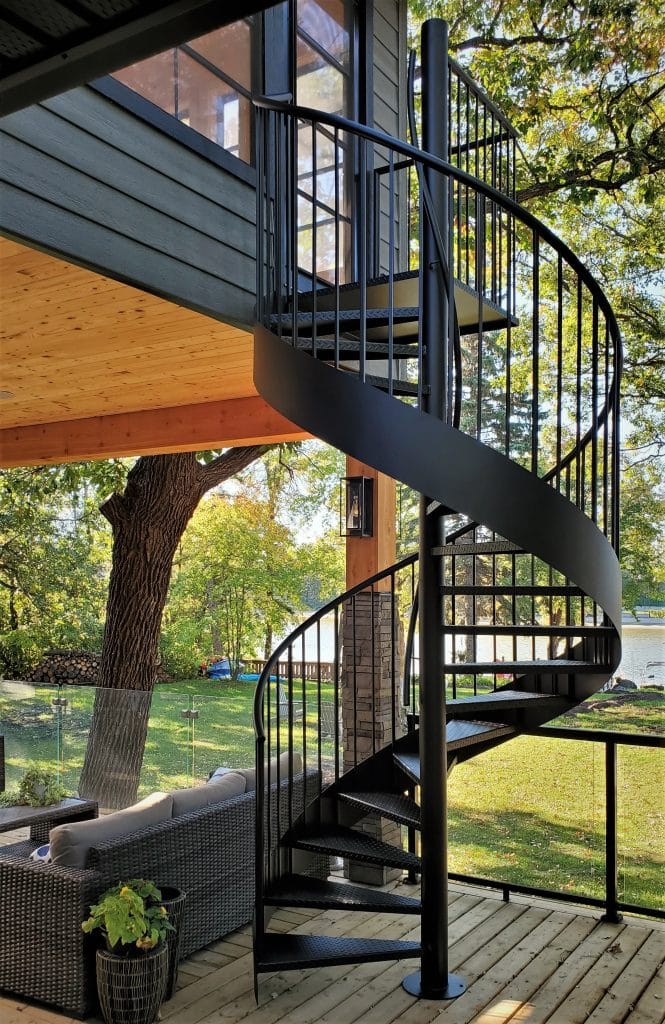
What is the Minimum Diameter for a Spiral Staircase?
Building codes set minimum diameter requirements based on occupancy type and intended use. Residential spiral staircases need at least 60 inches diameter measured from the outer edges of handrails. Commercial applications typically require 66 inches or more. These aren’t arbitrary numbers—they’re based on research into human movement patterns and safety statistics.
Residential Requirements
The 60-inch minimum for residential use provides adequate tread width at the walkline while allowing safe passage. This dimension works for most family homes where spiral stairs serve as secondary circulation. Primary egress stairs often need larger diameters to meet accessibility requirements.
Commercial Standards
Commercial spiral staircases face stricter requirements. The 66-inch minimum diameter accommodates higher traffic volumes and diverse user groups. Office buildings, retail spaces, and public buildings often need even larger diameters to meet accessibility standards.
Safety Research Behind Minimums
Studies show that diameters below 60 inches increase accident rates by 23%. The human gait pattern becomes awkward on tighter spirals, leading to missteps and falls. Larger diameters provide more natural stepping patterns and better emergency egress.
What are the Building Code Requirements for Spiral Staircases?
Building codes for spiral staircases cover dimensions, structural requirements, and safety features. The International Building Code (IBC) provides baseline standards that most jurisdictions adopt with local modifications. Key requirements include minimum tread width, maximum riser height, and specific clearance dimensions.
Dimensional Requirements
Minimum tread width must measure 7.5 inches at the walkline. Maximum riser height can’t exceed 9.5 inches in most applications. Riser consistency throughout each flight is crucial—variation can’t exceed 3/8 inch between any two risers.
Headroom Clearances
Headroom clearance must measure at least 78 inches vertically from tread nosing to any overhead obstruction. This requirement often creates challenges in retrofit projects where existing floor heights limit options. The measurement follows the spiral path, not just vertical clearance.
Handrail Specifications
Handrails must sit between 34 and 38 inches above the tread nosing. Grippability requirements affect handrail profile dimensions. The handrail must provide continuous support throughout the spiral, with specific connection details at top and bottom.
Accessibility Considerations
Recent code updates include enhanced accessibility provisions for commercial spiral staircases. These requirements affect minimum diameters, lighting specifications, and tactile warning surfaces. The Americans with Disabilities Act (ADA) generally prohibits spiral stairs in primary egress paths.
How Wide Should a Spiral Staircase Tread Be?
Tread width varies across the radius of each step, creating a trapezoidal shape. The narrowest point occurs at the inside edge near the center pole, while the widest point sits at the outside edge. Building codes focus on tread width at the walkline, which must meet minimum requirements for safe passage.
Walkline Width Requirements
At the walkline position—typically 24 inches from the center pole—minimum tread width must equal or exceed 7.5 inches. This dimension ensures adequate foot placement for users of various sizes. Larger diameters naturally provide better walkline tread width.
Inside Edge Considerations
The narrow inside edge of each tread can create trip hazards if too small. Most codes require minimum 4-inch width at the inside edge. This prevents foot entrapment while providing adequate structural support for the tread.
Outside Edge Dimensions
The wide outside edge affects material usage and structural requirements. Extremely wide treads may require additional support or thicker materials. The outside edge width typically ranges from 12 to 18 inches depending on diameter and tread count.
Nosing Profile Impact
Nosing projections of 1 to 1.5 inches affect effective tread width calculations. The nosing must provide adequate grip while maintaining dimensional compliance. Anti-slip surfaces and nosing profiles significantly impact usable tread area.
How do you Calculate Spiral Staircase Dimensions?
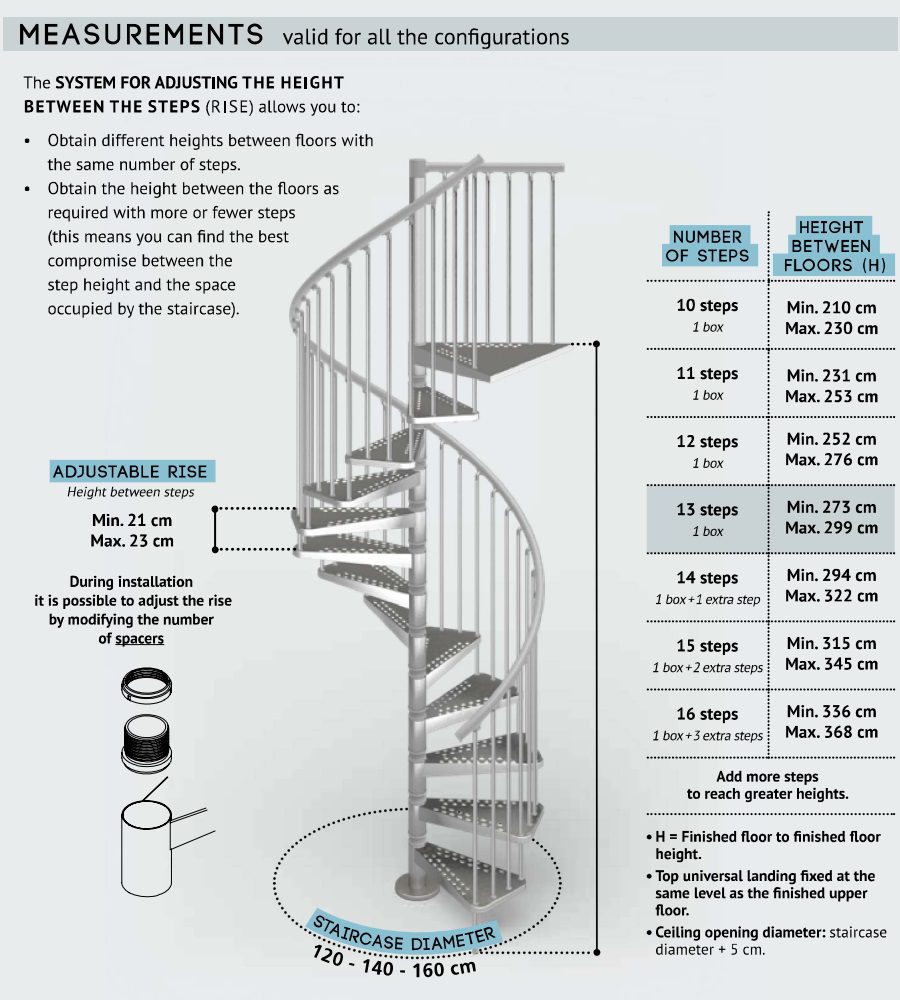
Calculating spiral staircase dimensions requires a systematic approach that balances geometry, building codes, and user ergonomics. Start with the total rise—the vertical distance from finish floor to finish floor. This measurement determines your minimum number of risers based on maximum allowable riser height.
Basic Calculation Steps
First, divide total rise by maximum riser height to find minimum riser count. Then determine if you want a full 360-degree spiral or something less. The number of risers and rotation angle determine individual tread angles. Each tread angle affects tread width calculations.
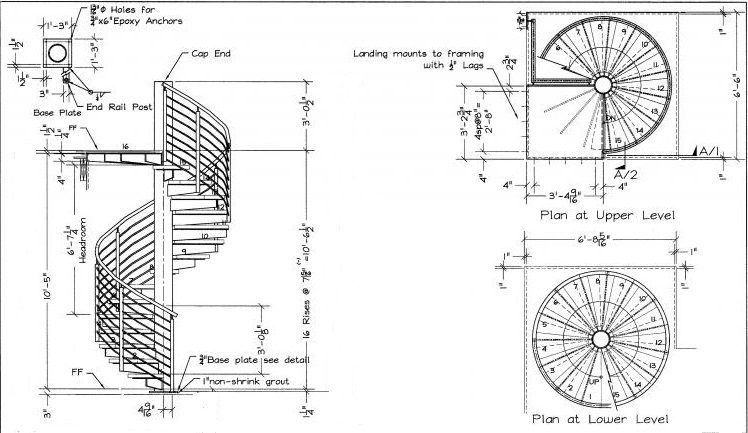
Spiral Stair.
Walkline Radius Calculation
Calculate walkline radius as (diameter ÷ 2) minus handrail width. This radius determines tread width at the walkline position. The formula for walkline tread width equals: walkline radius × sin(360° ÷ number of risers).
Headroom Verification
Check headroom clearance at multiple points along the spiral path. The helical geometry means clearance varies throughout the rotation. Calculate clearance at the critical points where users’ heads would be closest to overhead obstructions.
Structural Considerations
Structural requirements affect dimensional calculations. Steel spirals need specific connection details that impact overall diameter. Concrete applications require consideration of formwork constraints and reinforcement placement. The structural system choice influences final dimensions.
What is the Walkline Radius for Spiral Staircases?
The walkline radius represents the most critical dimension in spiral staircase design. This measurement determines where most users will step and forms the basis for all building code calculations. The walkline typically sits at two-thirds of the tread depth from the narrow inside edge.
Standard Radius Ranges
Walkline radius typically ranges from 18 to 30 inches depending on overall diameter and application. Residential spirals with 60-inch diameter usually have walkline radius of 21 to 24 inches. Commercial applications with larger diameters provide walkline radius of 24 to 30 inches.
Ergonomic Research
Research shows that walkline radius below 18 inches creates awkward gait patterns. Users experience increased energy expenditure and higher fall risk. Radius above 30 inches may encourage users to deviate from the intended path, reducing the ergonomic benefits.
Relationship to Tread Width
Walkline radius directly affects tread width calculations. The relationship follows specific geometric formulas based on the number of risers and total rotation. Larger walkline radius generally provides better tread width, but must be balanced against overall diameter constraints.
Handrail Integration
Handrail design must maintain consistent height relationships relative to the walkline throughout the spiral. The handrail path follows the helical geometry, requiring careful dimensional coordination. Modern design software enables precise modeling of these complex relationships.
Advanced Dimensional Considerations
Modern spiral staircase design involves considerations beyond basic code compliance. Building performance, accessibility, and integration with other building systems create additional dimensional challenges. Advanced analysis tools help optimize these complex relationships.
Thermal Performance
Thermal bridging through spiral staircases affects building energy performance. The relationship between diameter, material selection, and thermal conductivity requires careful analysis. Larger diameters may increase thermal bridge area but allow for better insulation strategies.
Acoustic Design
Sound transmission through spiral staircases impacts occupant comfort. The helical geometry creates unique acoustic challenges that require specific dimensional solutions. Tread thickness, connection details, and material specifications affect sound transmission class ratings.
Prefabricated Systems
Prefabricated spiral staircases impose specific dimensional constraints based on manufacturing capabilities. Modular systems require standard dimensional relationships to ensure proper fit and performance. These constraints must be balanced against custom design requirements.
Future Adaptability
Dimensional planning should consider future modifications or code changes. Designing with slightly larger dimensions than minimum requirements provides flexibility for future adaptations. This approach prevents costly modifications if requirements change.
Getting spiral staircase dimensions right requires understanding the complex relationships between geometry, building codes, and human factors. These dimensional requirements aren’t just bureaucratic hurdles—they’re based on decades of research into safe and efficient vertical circulation. Start with your local building codes, calculate carefully, and don’t cut corners on critical dimensions. The small additional cost of proper sizing prevents expensive problems later. Remember that spiral staircases serve users for decades, so invest in dimensions that prioritize safety and usability over minimal compliance.

Luca Moretti is a content strategist with a foundation in urban design and architecture. Based in Milan, he focuses on writing that bridges aesthetics, material culture, and everyday spatial experiences.