

A sustainable house is a home designed to use little energy, water and material over its whole life while staying healthy and comfortable to live in. In practice that means a compact, well-insulated and airtight envelope, orientation and shading that work with the local climate, efficient heating and ventilation (often a heat pump), on-site renewables where they make sense, low-carbon materials and a design that lasts. This guide, for architects, students and anyone planning a home, shows 14 built examples, then a table that separates certified or measured performance from design claims, and closes with affordable, low-carbon approaches.
Many people still assume that a sustainable house means giving up comfort. The examples below suggest the opposite: most of these homes are bright, quiet and pleasant precisely because they were designed carefully. You can also compare them with the most sustainable office buildings, where the same principles operate at a larger scale.
What makes a house sustainable?
No single feature makes a sustainable house. The strategies that matter most, roughly in order of impact, are:
- Size and form. A smaller, compact home needs less material and less energy to heat or cool. Floor area is one of the main drivers of a home’s total energy use.
- Fabric first. Good insulation, airtightness and high-performance windows reduce demand before any equipment is added. The Passivhaus standard is the best-known benchmark for this approach.
- Climate-responsive design. Orientation, shading, thermal mass and natural ventilation should suit the local climate: what works in Norway does not work in Hanoi.
- Efficient systems and renewables. Heat pumps, heat-recovery ventilation, solar panels and solar water heating cover the reduced demand.
- Water and landscape. Rainwater harvesting, water-efficient fittings, green roofs and native, drought-tolerant planting.
- Materials. Low-carbon, durable and reusable materials, such as timber, reclaimed materials and prefabricated parts that can be taken apart.
Heat pumps, solar panels and water recycling are only part of the picture; our guide to what sustainable architecture is also covers passive design, bio-based materials and adaptive reuse.
14 Astonishing Examples of Sustainable Houses
Each example below says what makes the house sustainable and whether a figure is certified, measured or only a design target. Would you like to live in any of these?
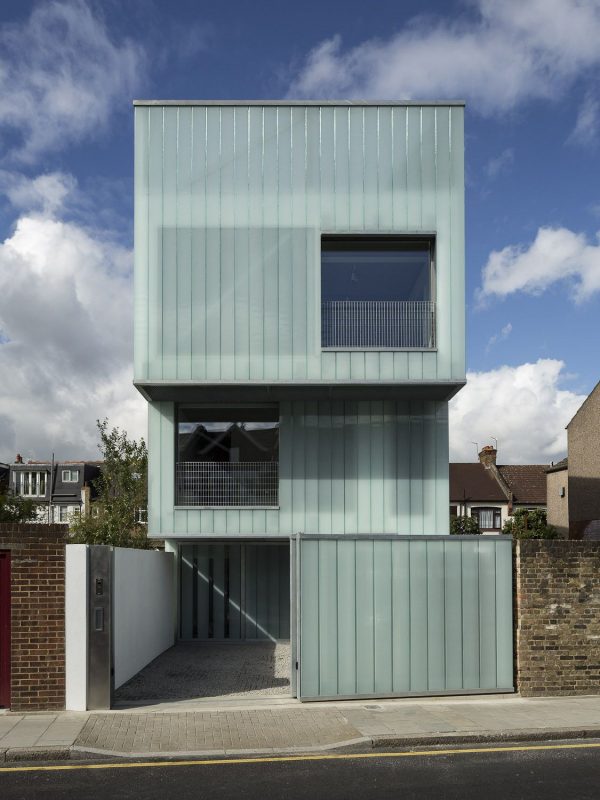
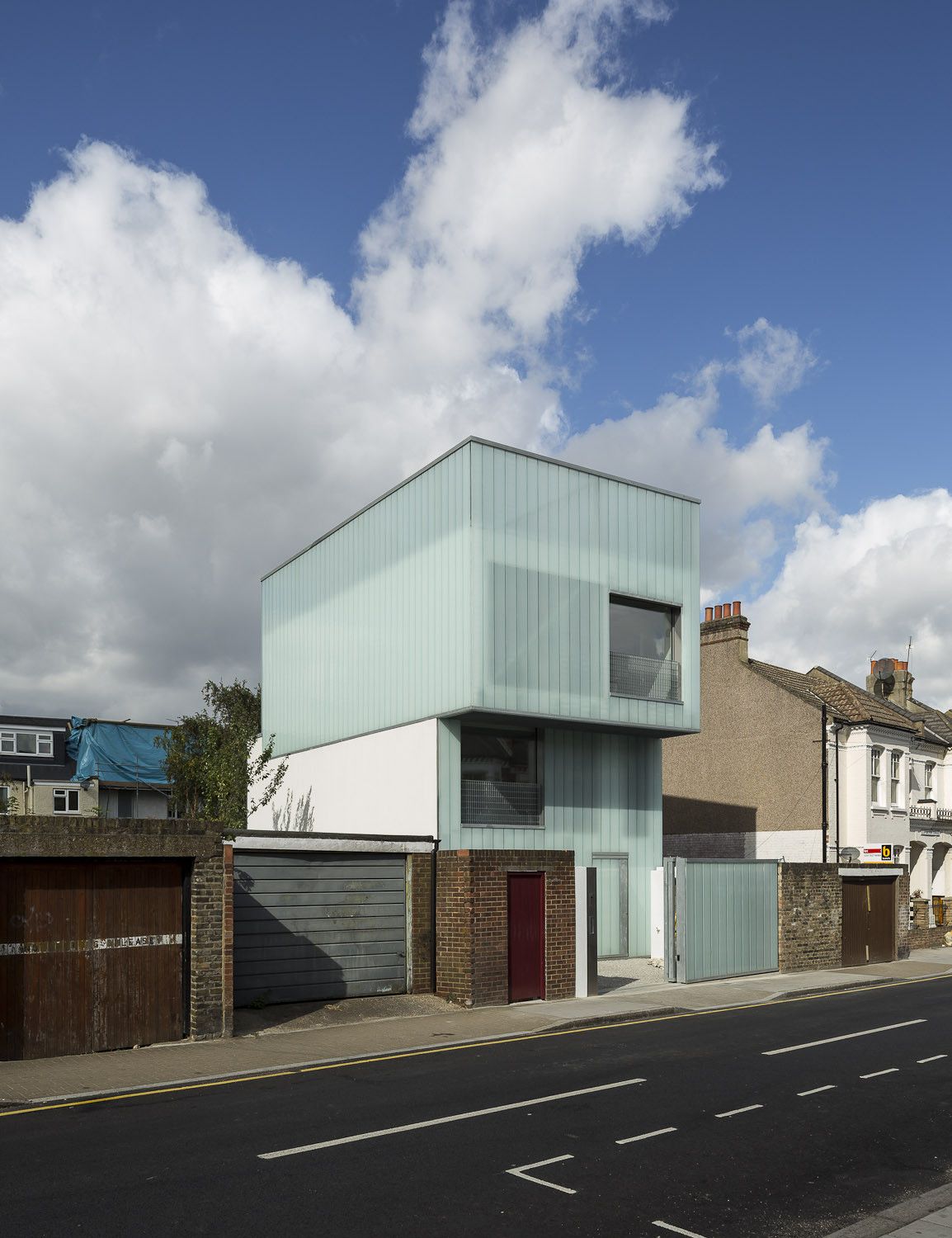
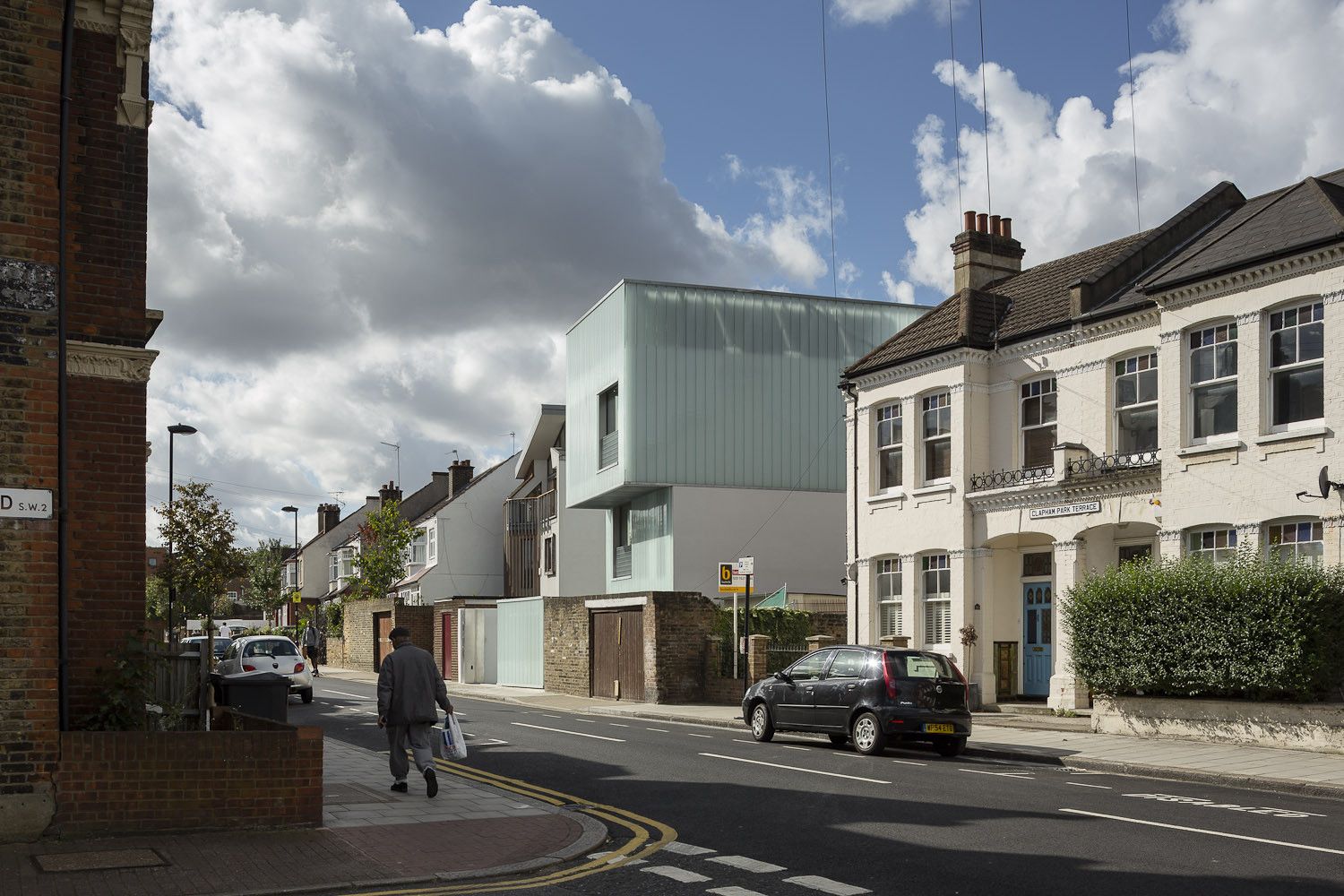
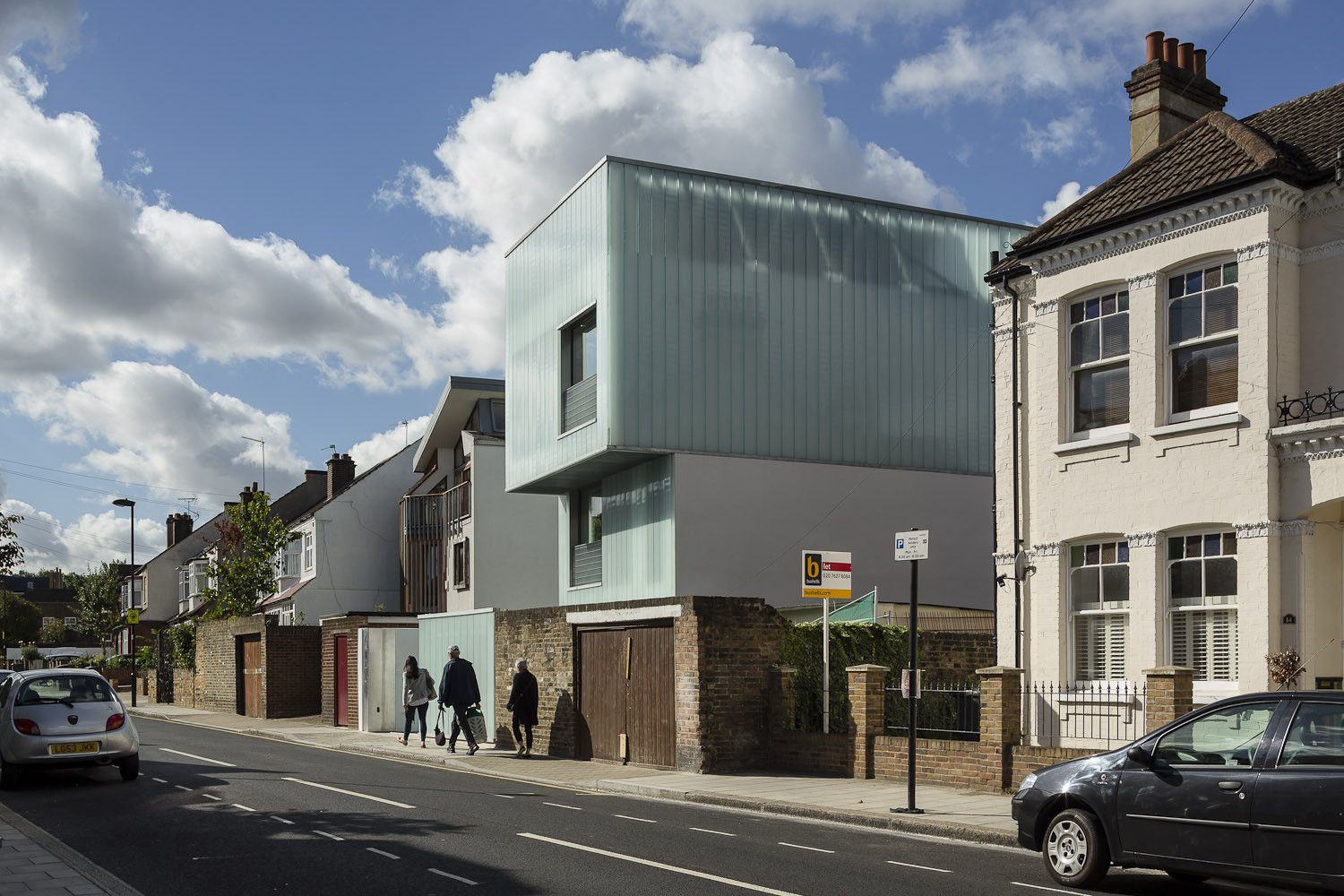
1. Slip House – Carl Turner Architects (London, United Kingdom)
©Tim Crocker
This 200-square-metre sustainable house in Brixton, south London, was designed by Carl Turner as his own home and studio and won the RIBA Manser Medal for the best new house in 2013. It is made of three stacked boxes, slightly shifted from one another and clad in translucent channel-glass planks. Its energy strategy combines a solar-assisted ground-source heat pump with energy piles, mechanical ventilation with heat recovery, photovoltaic panels, rainwater harvesting and a wildflower roof.
Also Read: Why Will Sustainable Buildings Save Our World From Serious Danger?
2. SysHaus Residence – Studio Arthur Casas (São Paulo, Brazil)
©Filippo Bamberghi
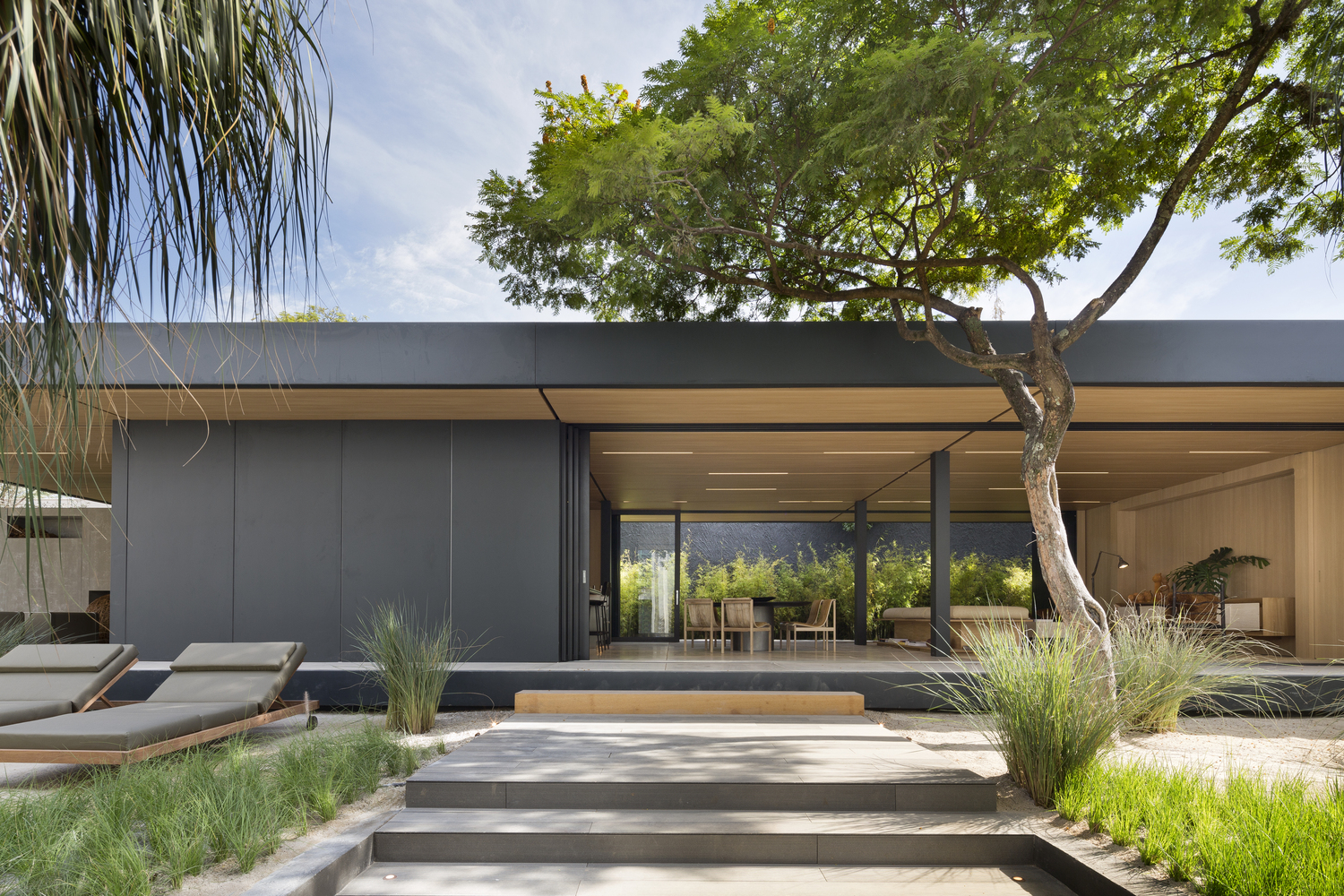
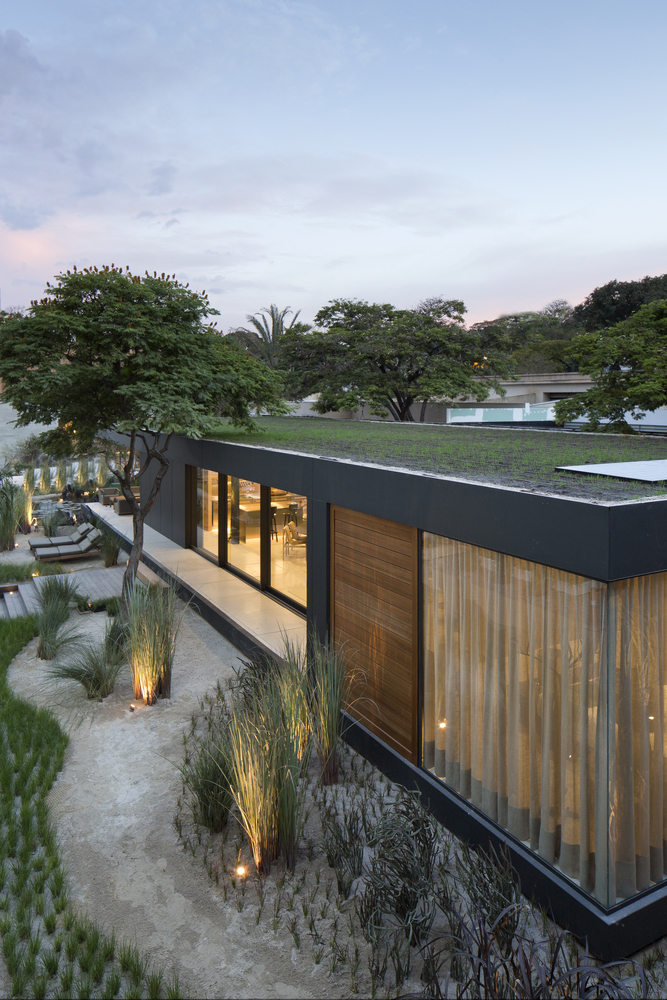
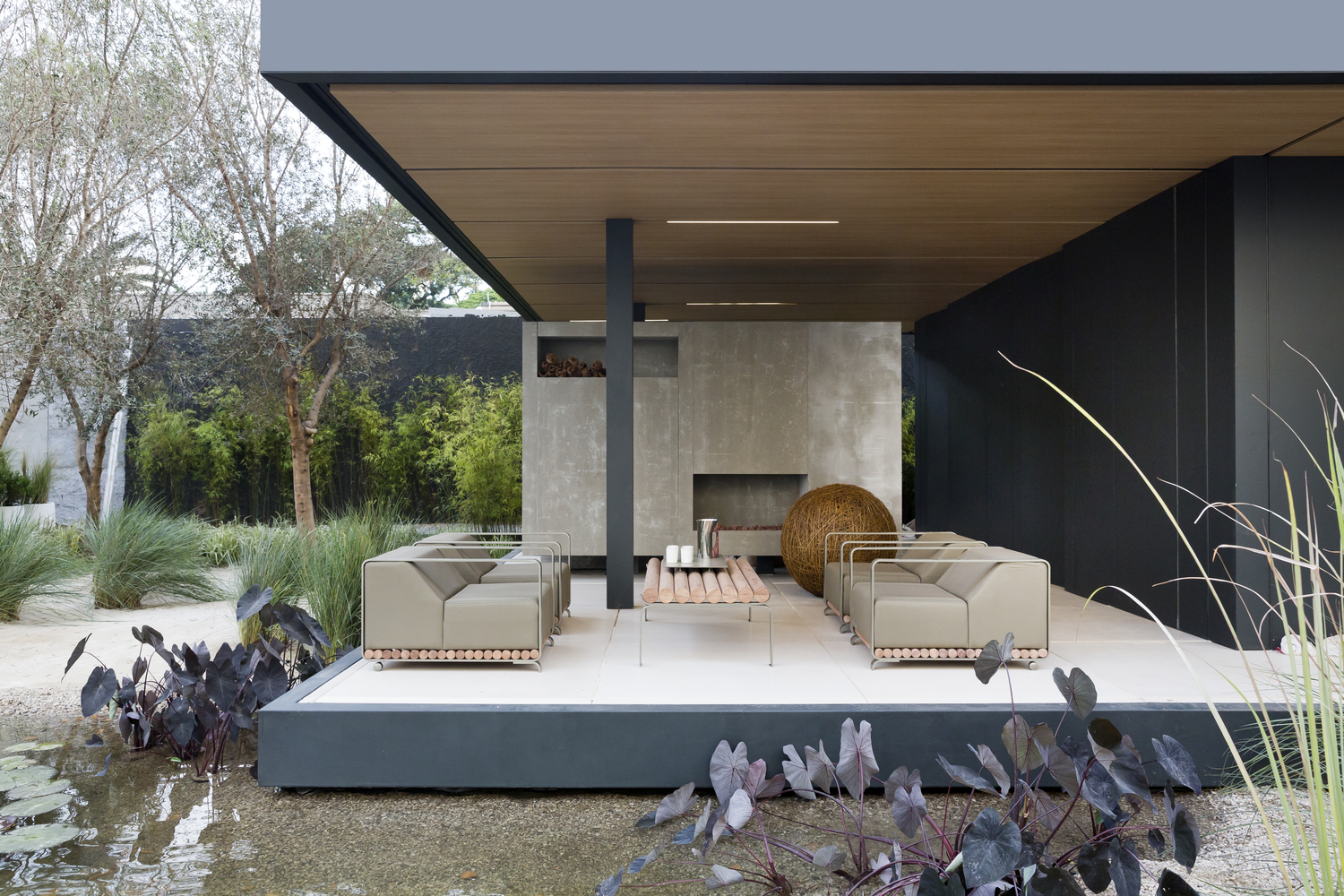
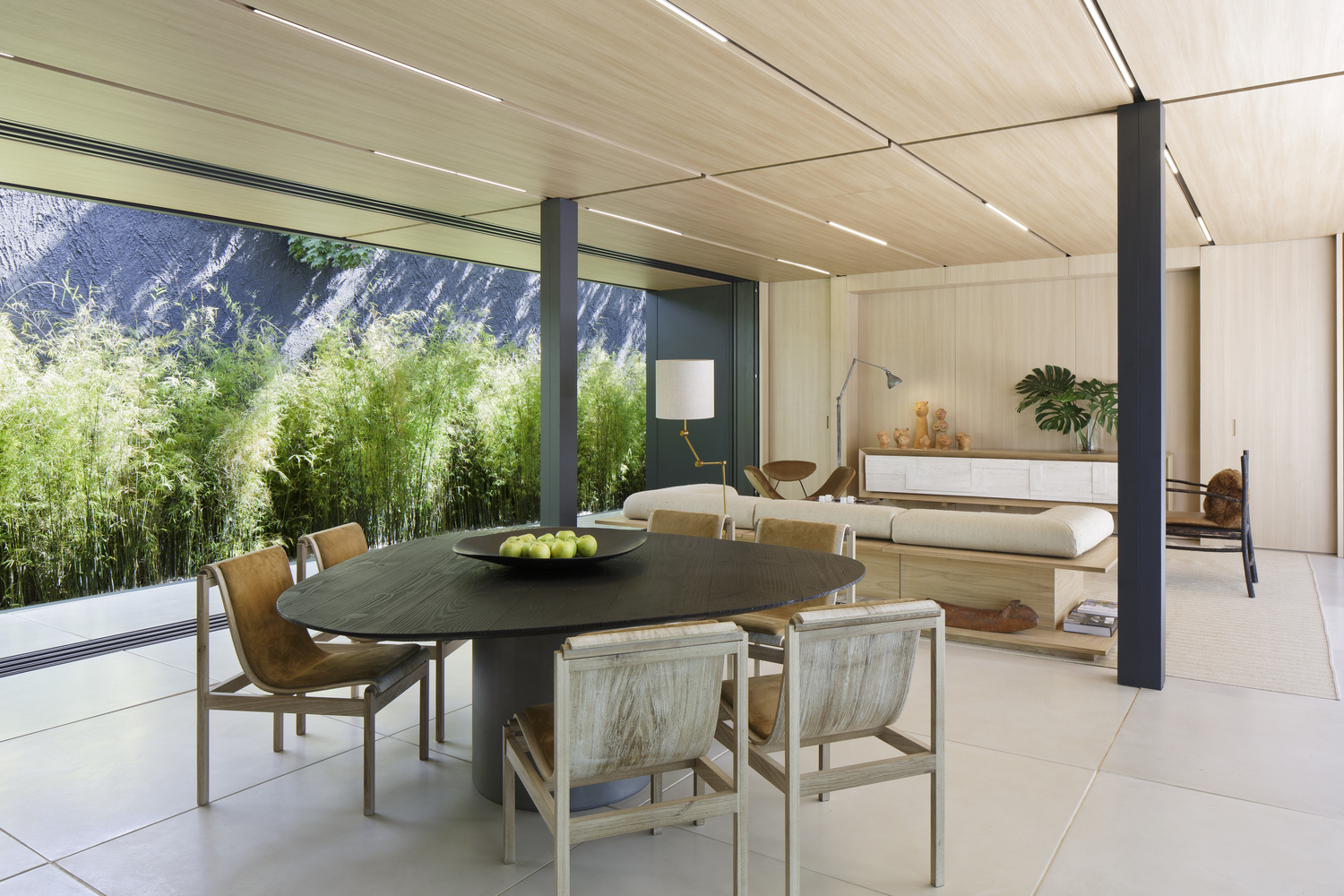
Studio Arthur Casas developed this prefabricated house of about 200 square metres with the Brazilian start-up SysHaus and presented it at CASACOR São Paulo in 2018. The idea is to build quickly, to a high technical and aesthetic standard, with less waste: most components are made in a factory, and the frame of pillars and beams of the same section, joined by metal nodes, can be assembled, extended and taken apart again.
Within a three-storey limit and on flat or sloping sites, the same kit of parts produces different plans and programmes. The recyclability and build-time figures quoted for SysHaus come from the company, not from independent assessment.
3. ZEB Pilot House – Snøhetta (Larvik, Norway)
©EVE
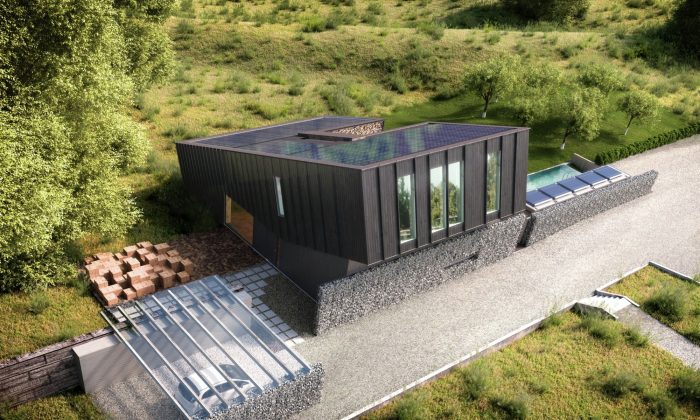
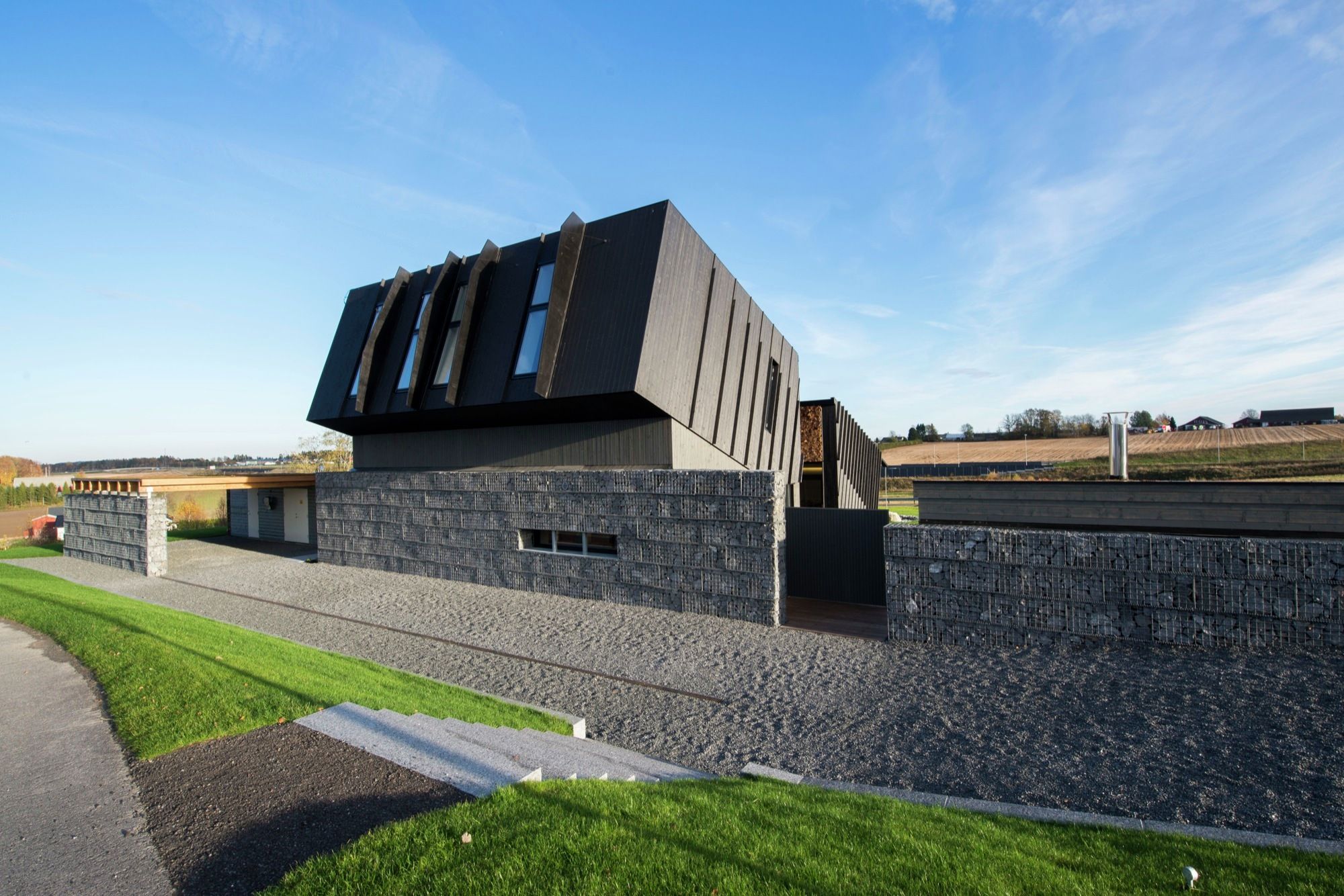
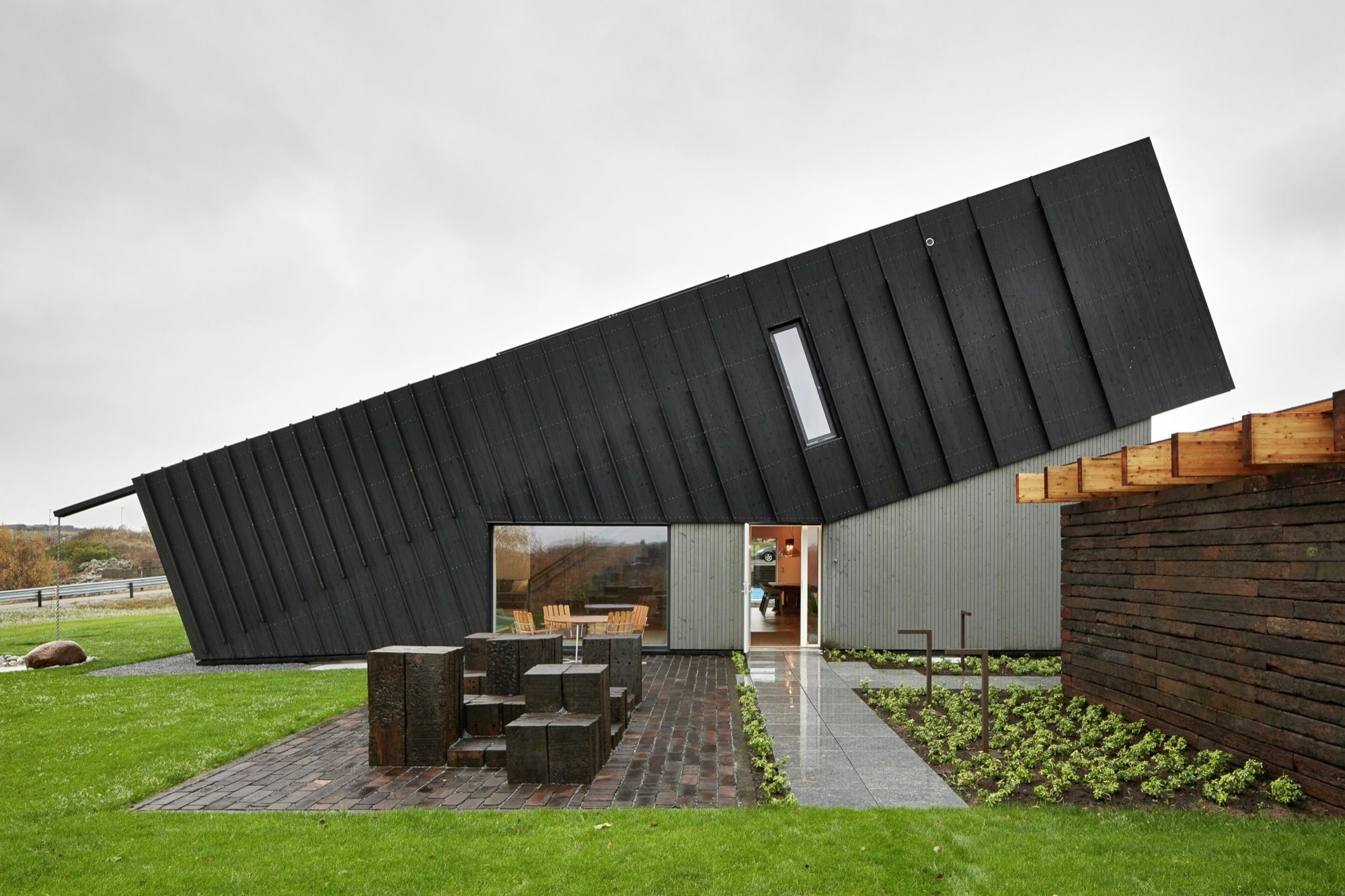
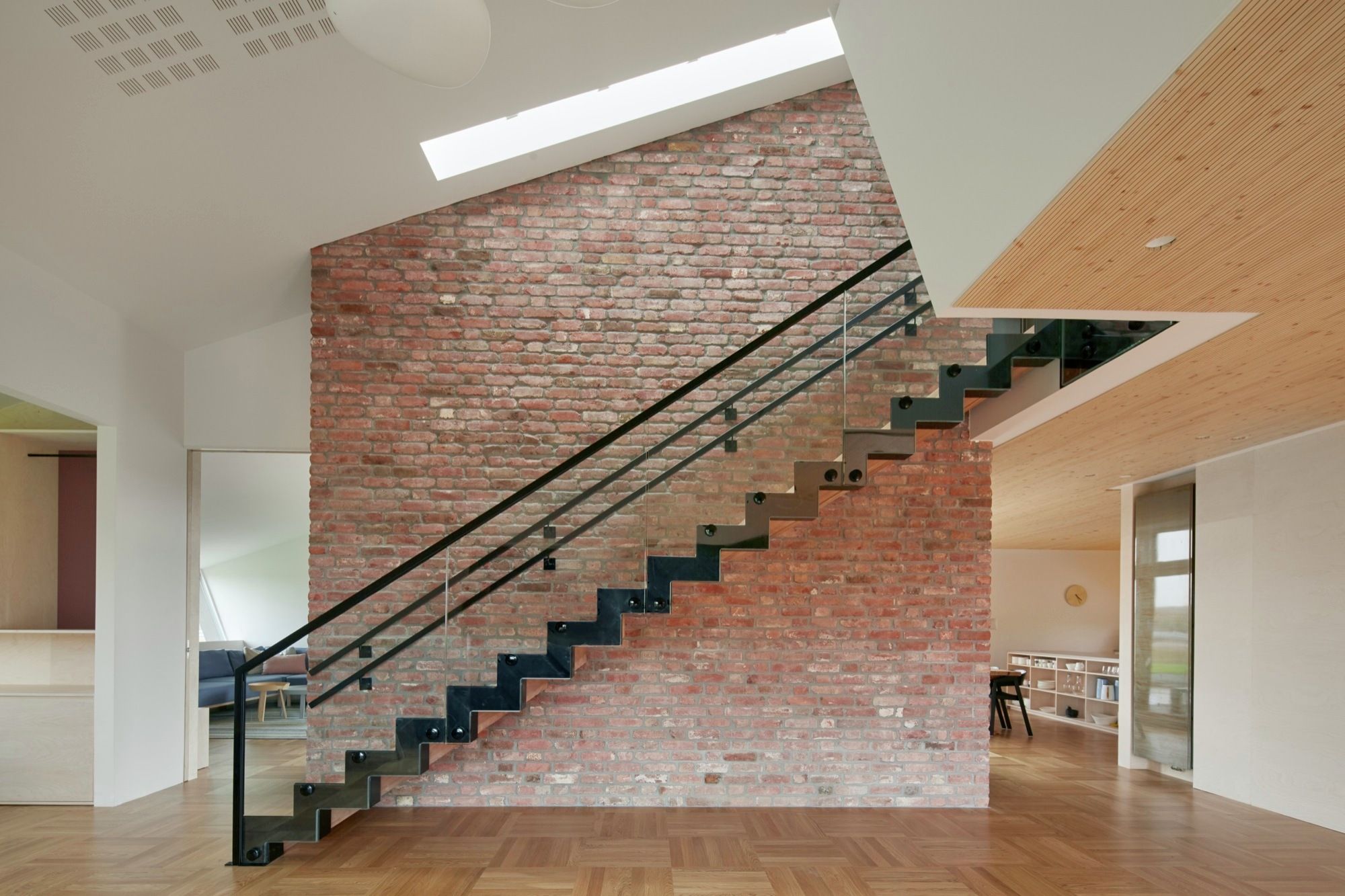
This house in Larvik, completed in 2014, was developed by Snøhetta with the research organisation SINTEF and industry partners as a pilot for zero-emission buildings. It has a floor area of about 200 square metres and a roof tilted towards the south-east, covered in solar panels and solar collectors. Geothermal energy wells supplement the house’s energy supply. Its target was ZEB-OM: to offset the emissions of both its operation and its materials over its lifetime, and to produce enough surplus to charge an electric car. The geometry, orientation and window placement were tuned for passive heating and cooling, and interior finishes were chosen for indoor air quality.
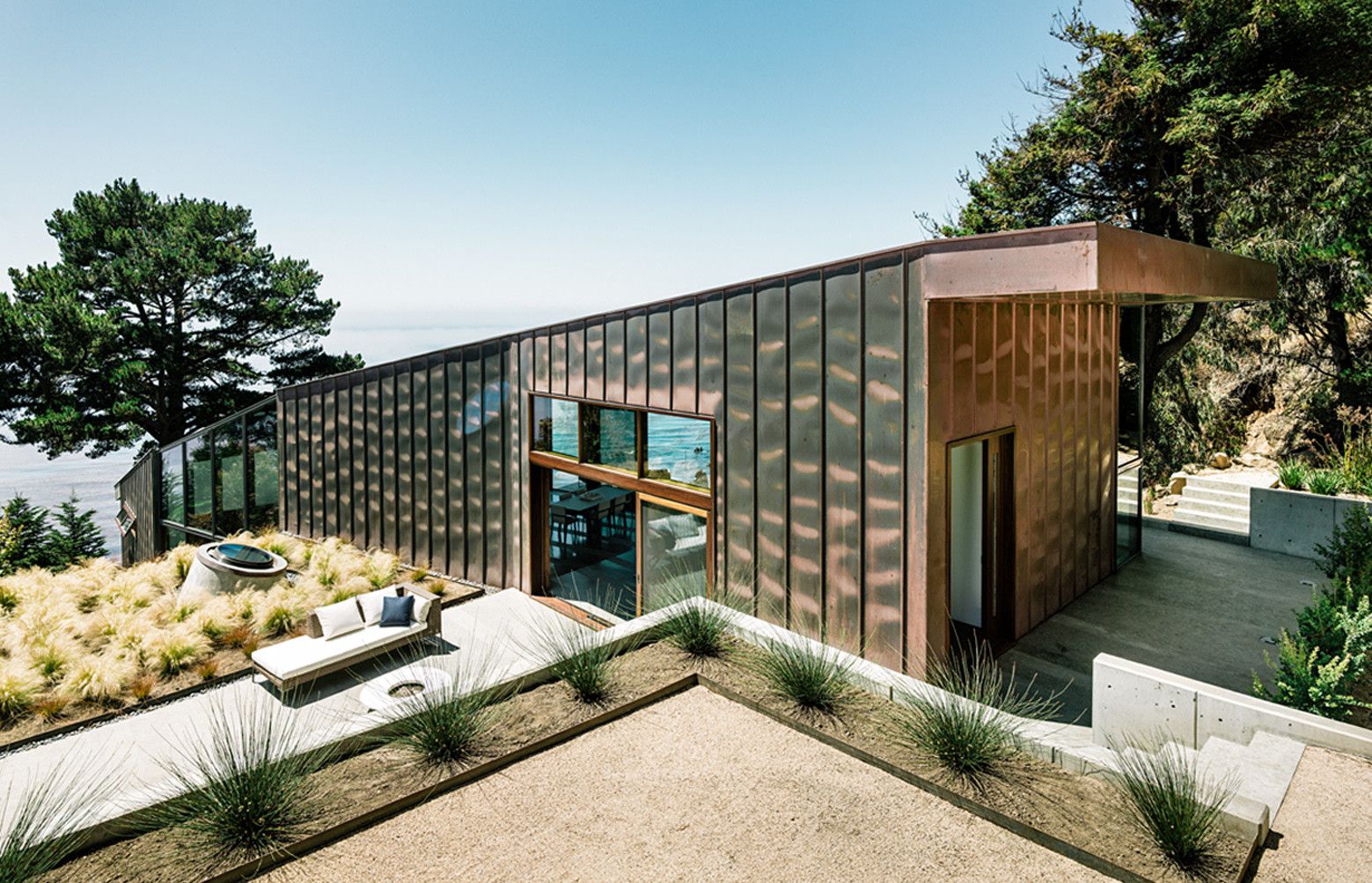
4. Fall House – Fougeron Architecture (Big Sur, United States)
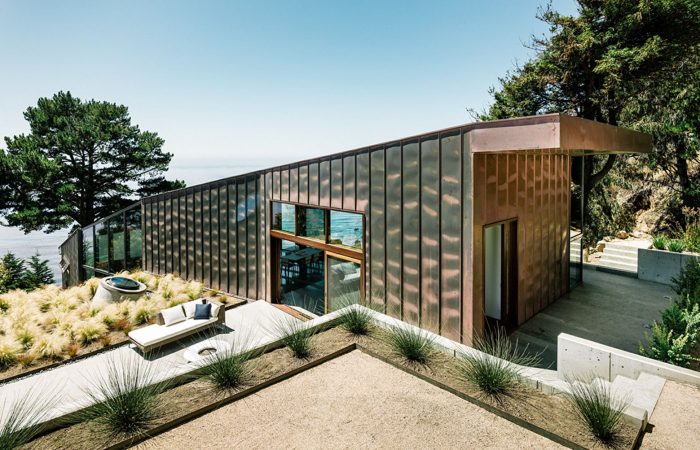
©Joe Fletcher
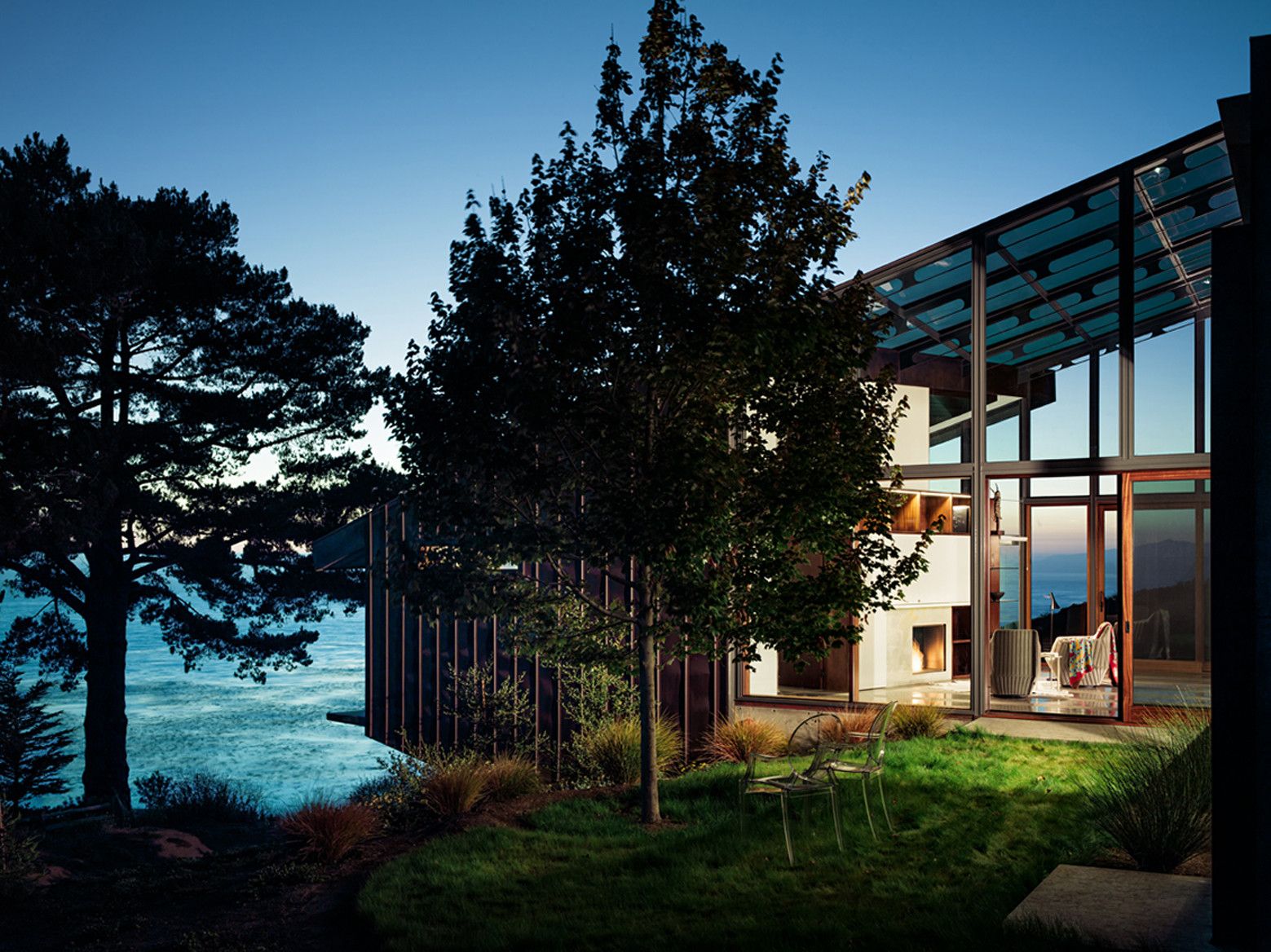
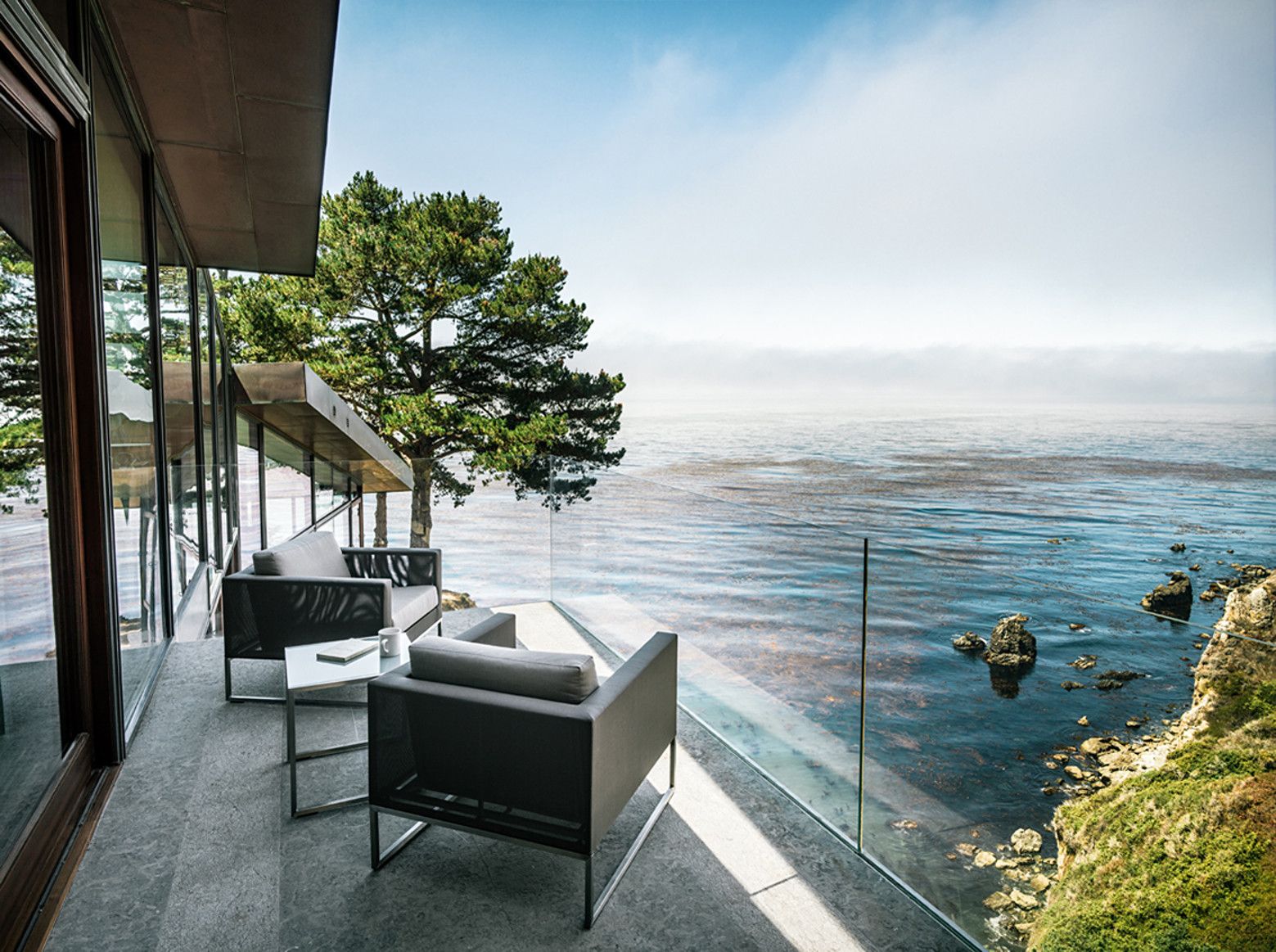
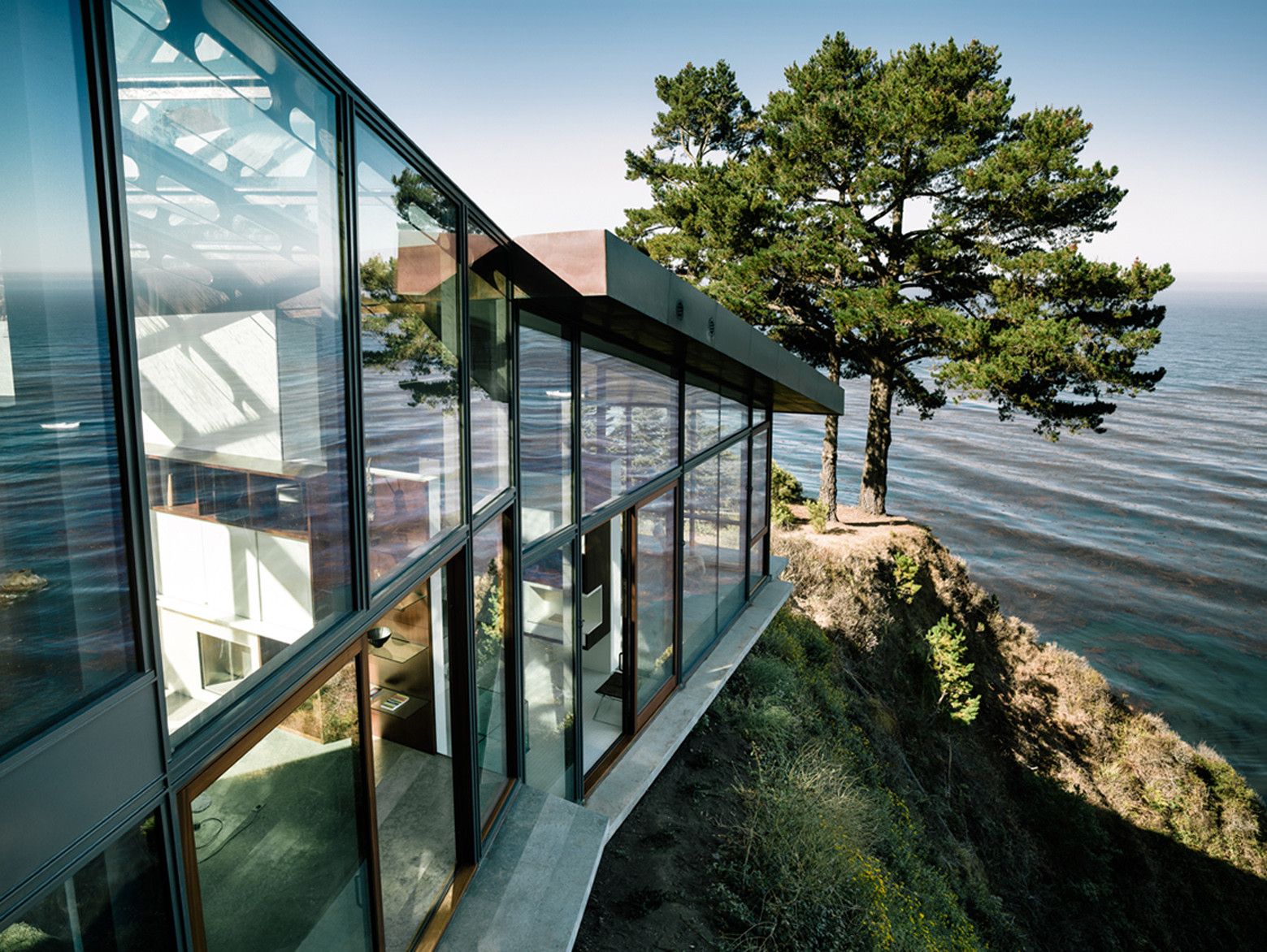
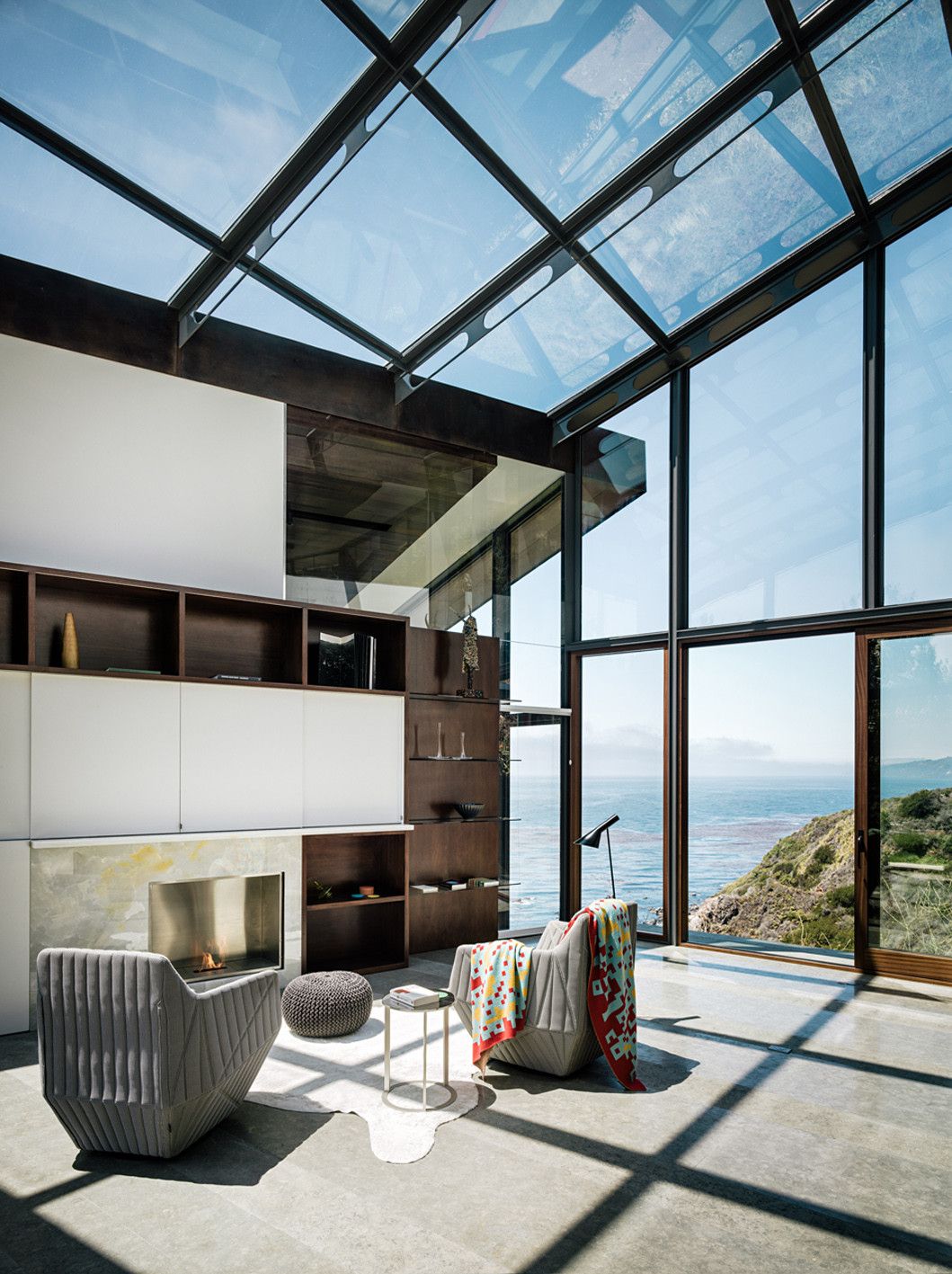
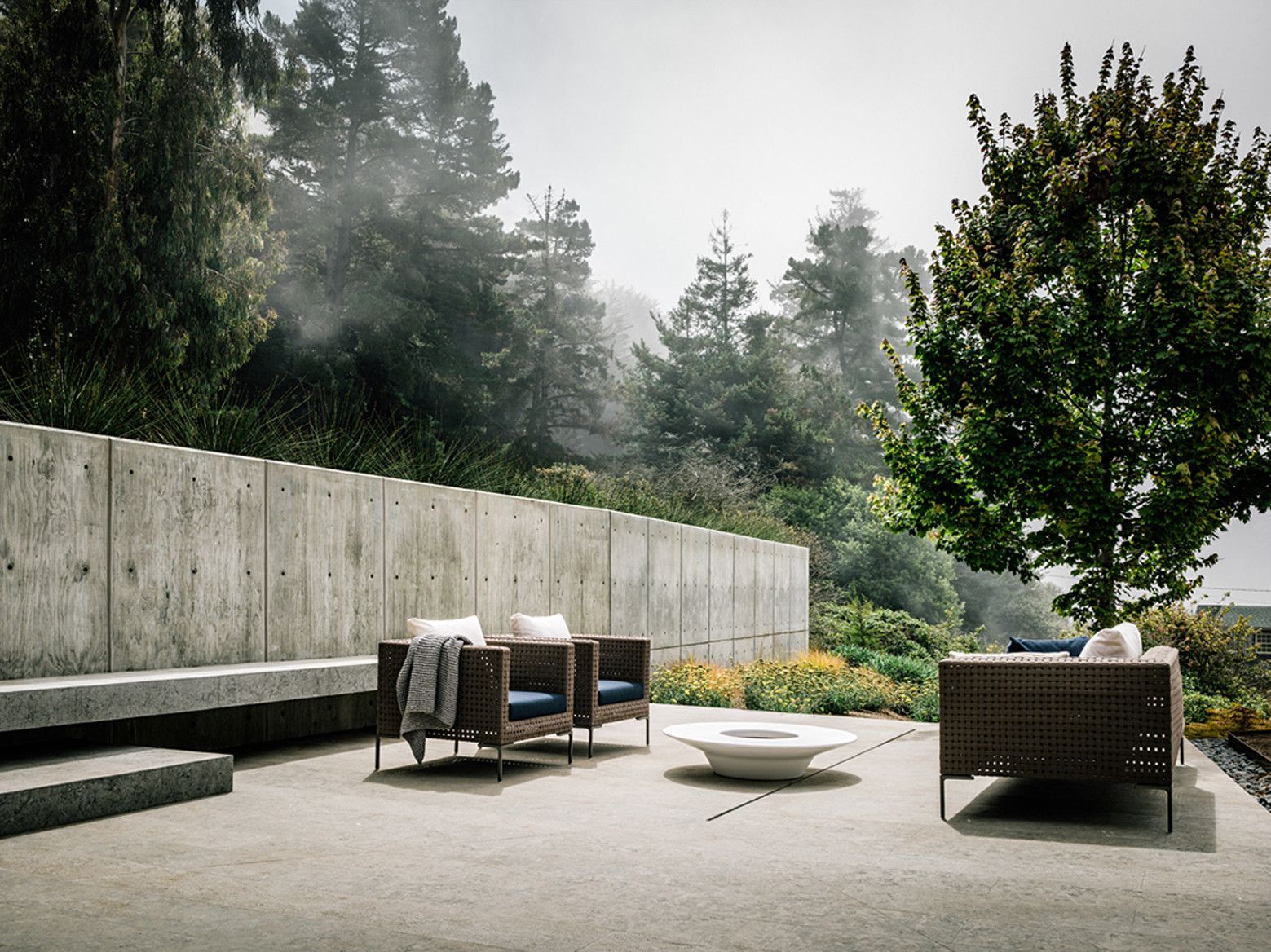
This three-bedroom house on California’s Big Sur coast steps down a cliff towards the Pacific. Its high-performance glass skin gives ocean views and daylight to every room while limiting solar heat gain. Radiant hydronic heating in the floors avoids ductwork and runs at lower temperatures than forced air. The stepped section drives stack ventilation: cool air enters through automatically controlled windows at the lower level and warm air leaves through the top. A green roof and on-site wastewater treatment complete the strategy.
5. Living Screen House – CplusC Architectural Workshop (North Bondi, Australia)
©Murray Fredericks
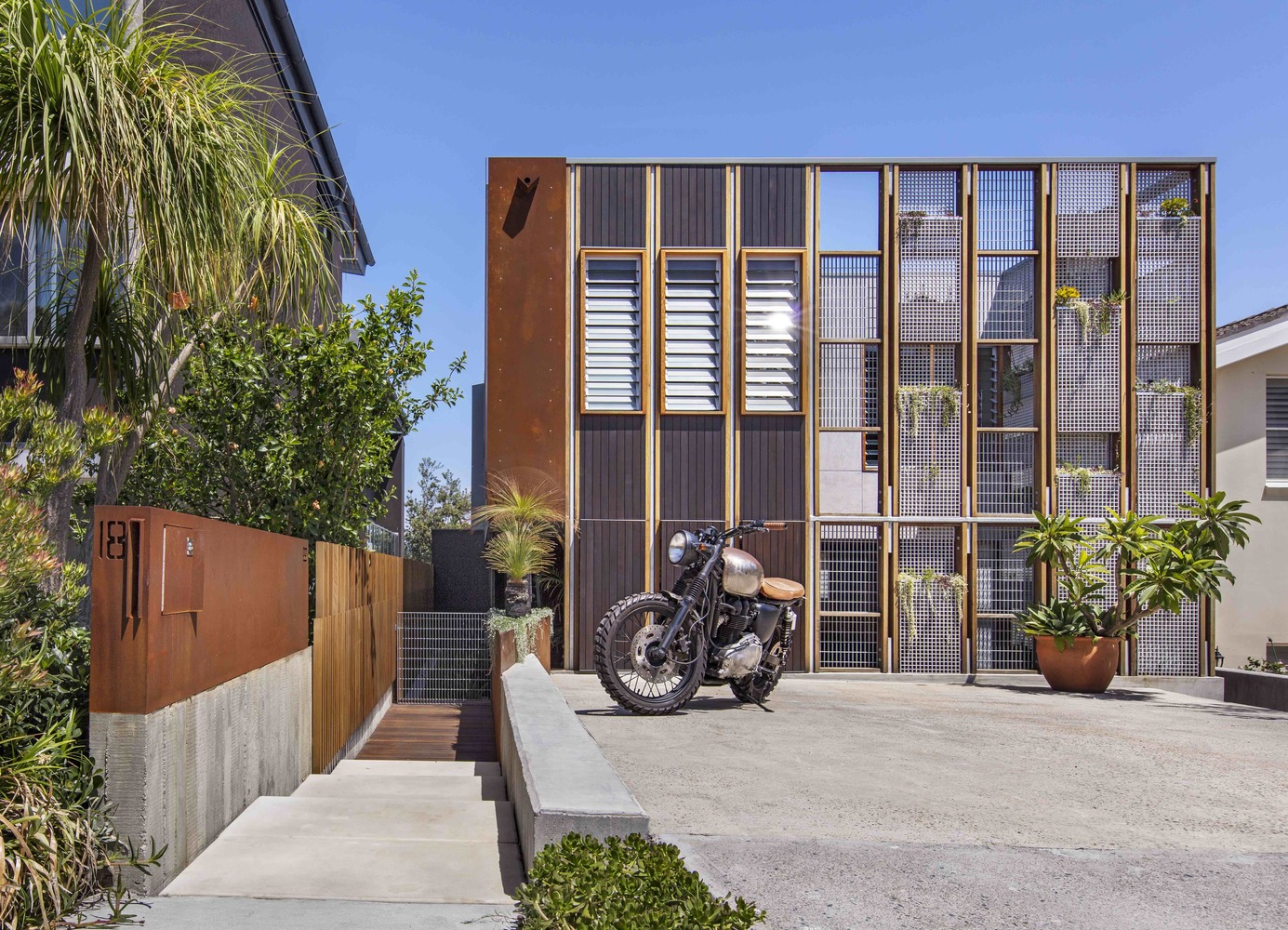
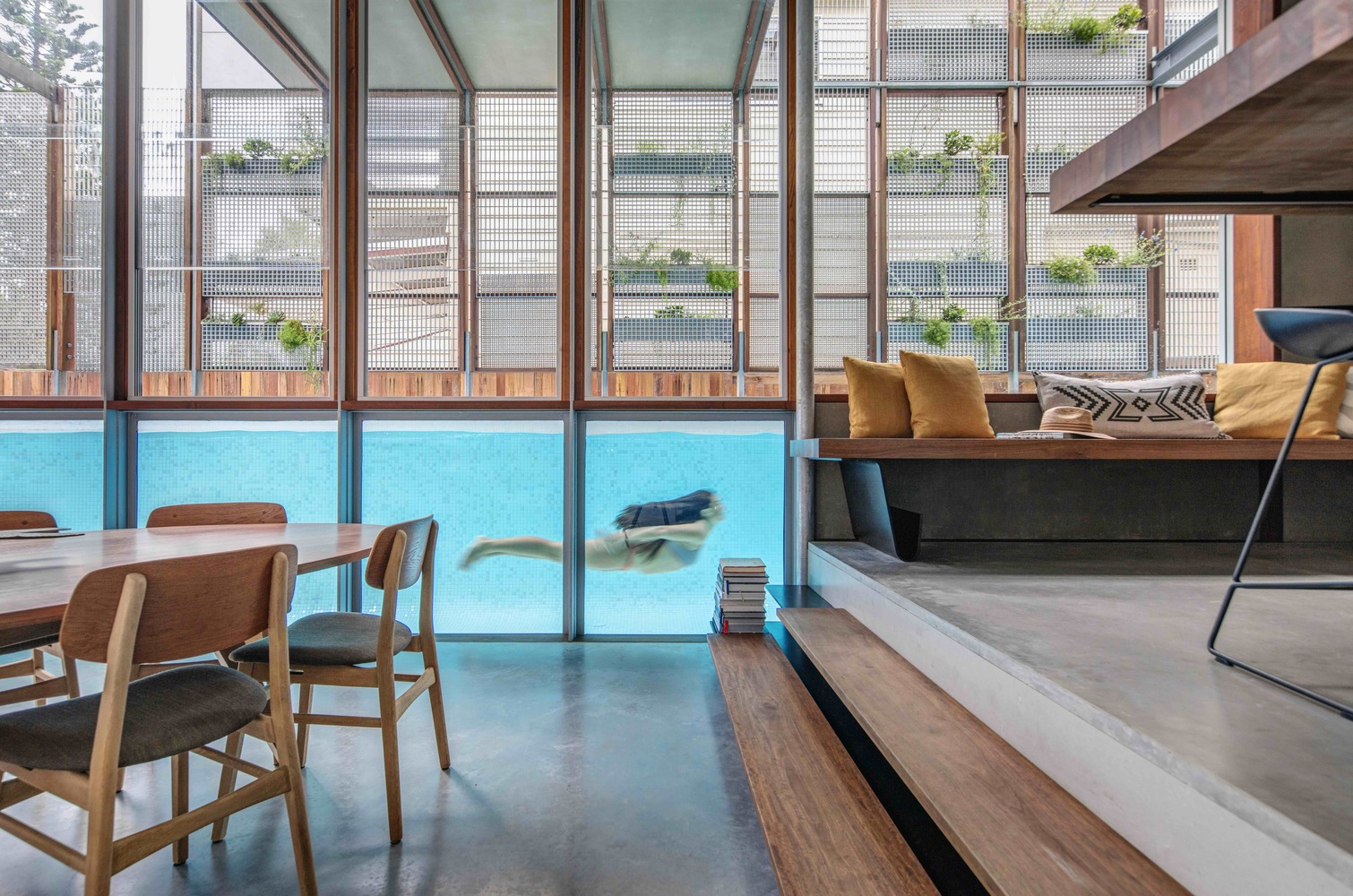
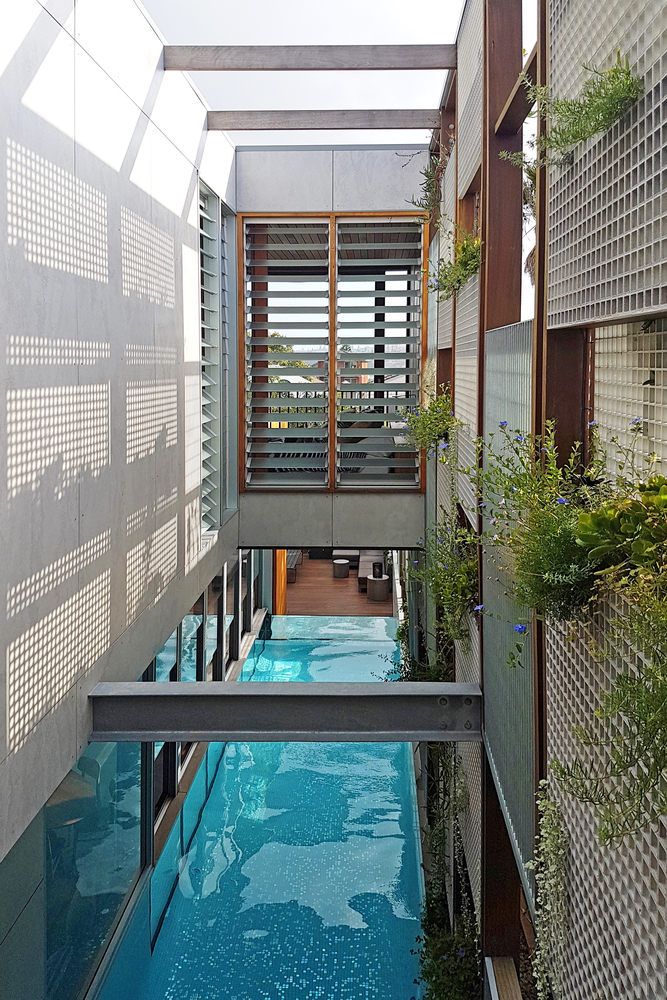
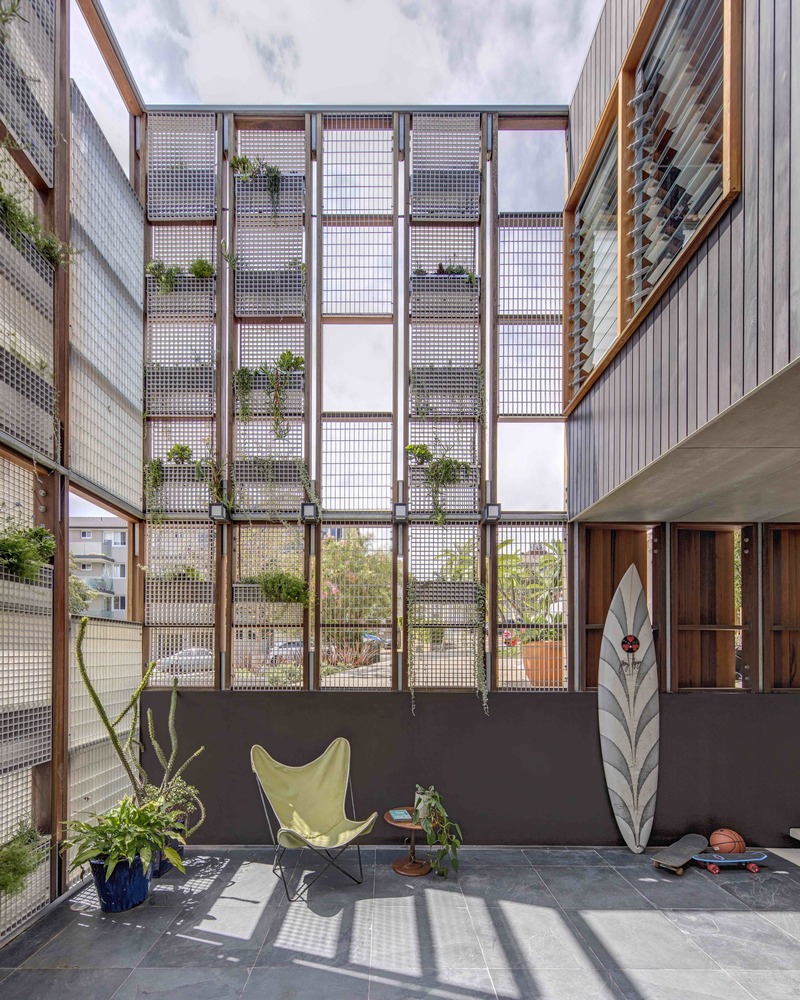
This single-family home in North Bondi, Sydney, sits on a narrow site that raised problems of overlooking. The answer was a façade of planted screens: self-irrigating green walls that give privacy and shade. The architects describe a 10-kilowatt solar array on the roof, 10,000 litres of rainwater storage, mostly raw, low-embodied-energy materials, and timber and planters reused from the demolition of the previous building.
6. Haus W – Kraus Schoenberg (Hamburg, Germany)
©Loana Marinescu
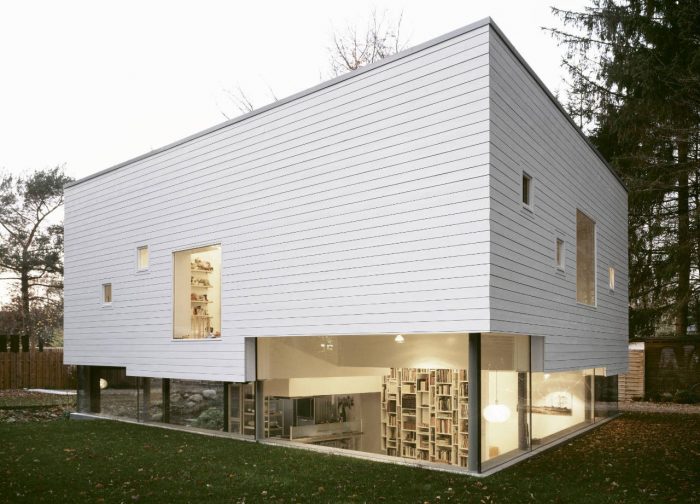
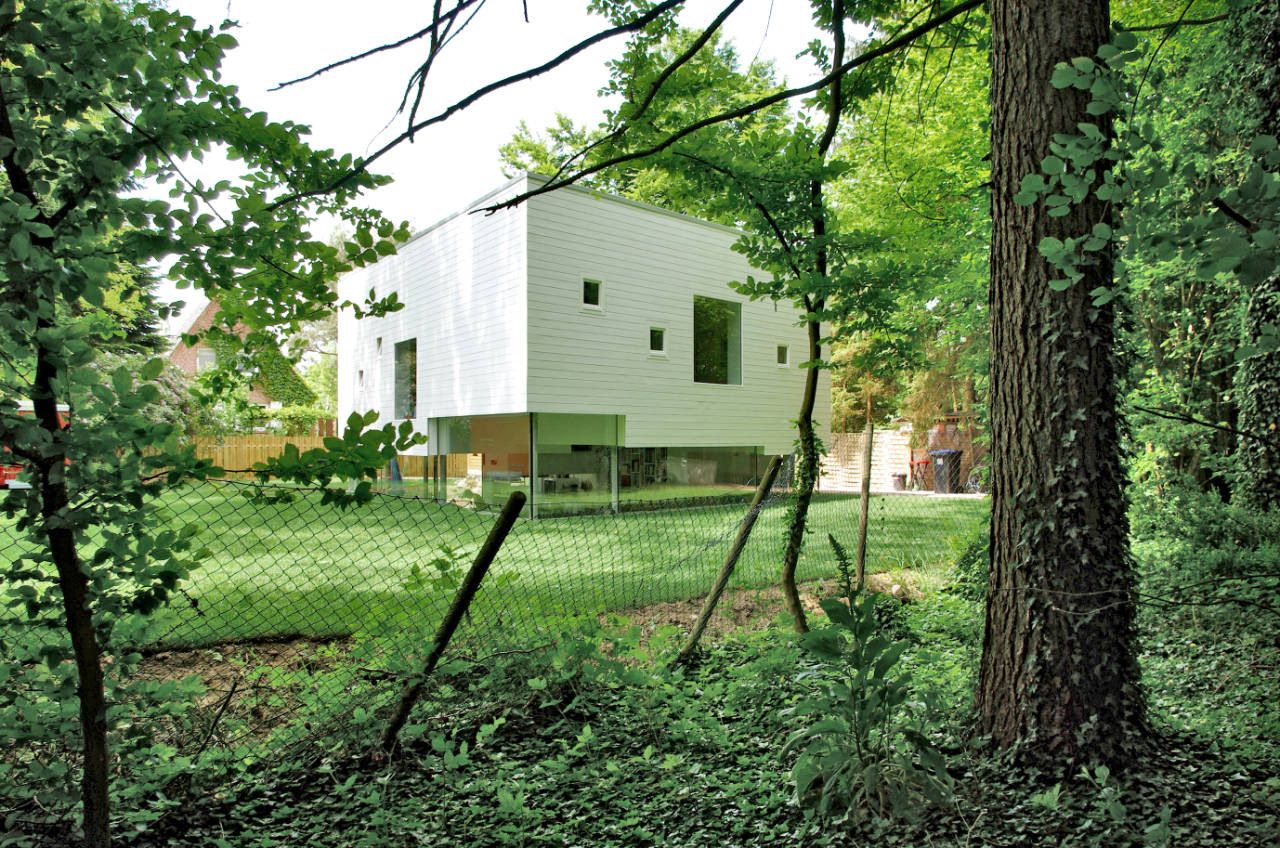
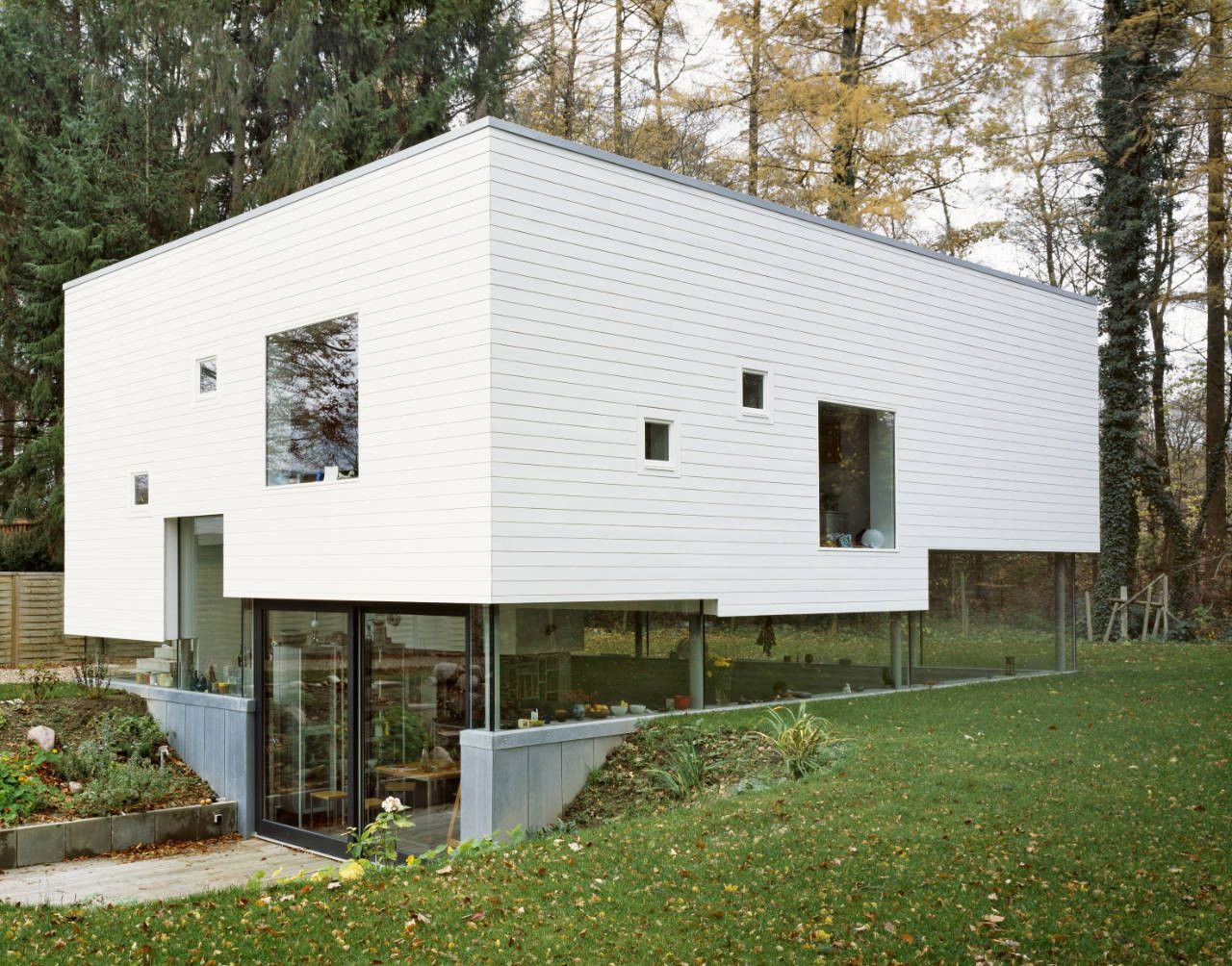
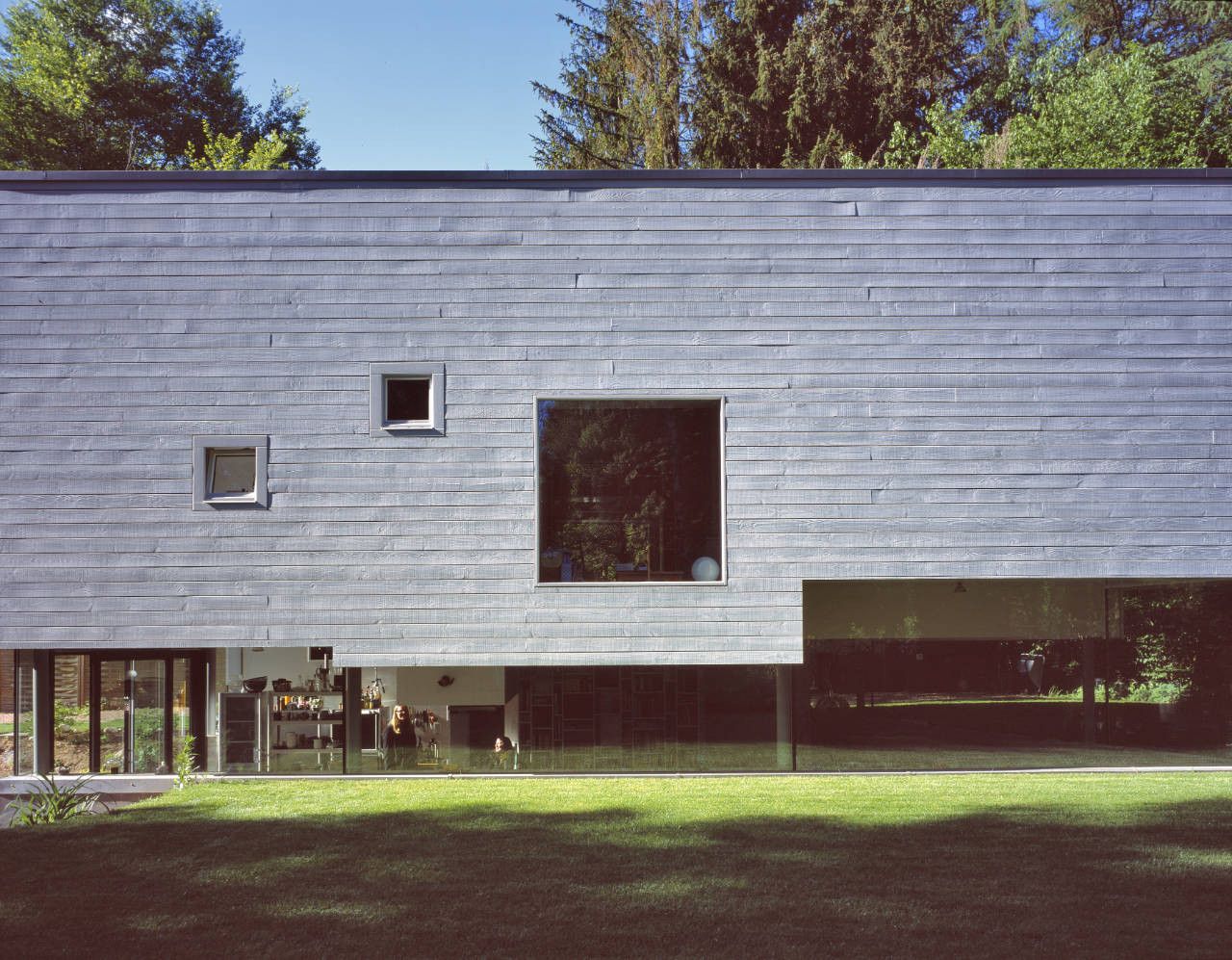
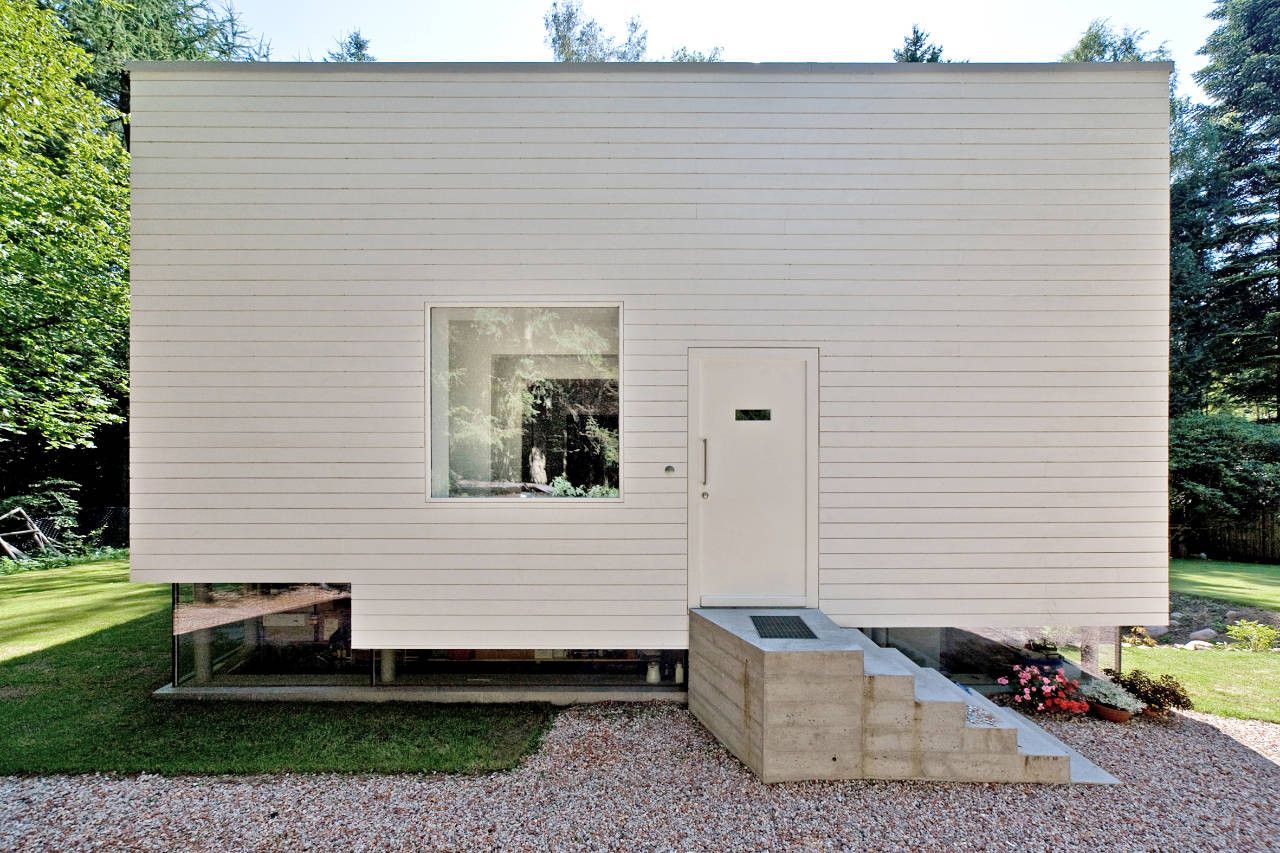
Haus W, completed in 2007 for a young family, is a two-storey prefabricated low-energy house on a sloping garden site. The ground floor is glazed all round and sunk into the garden, while the upper floor is built from CNC-cut timber panels that were prefabricated and assembled on site in a few days, a fast build that kept costs down. Werner Sobek was the structural engineer.
7. Marmalade Lane Cohousing – Mole Architects (Cambridge, United Kingdom)
©David Butler
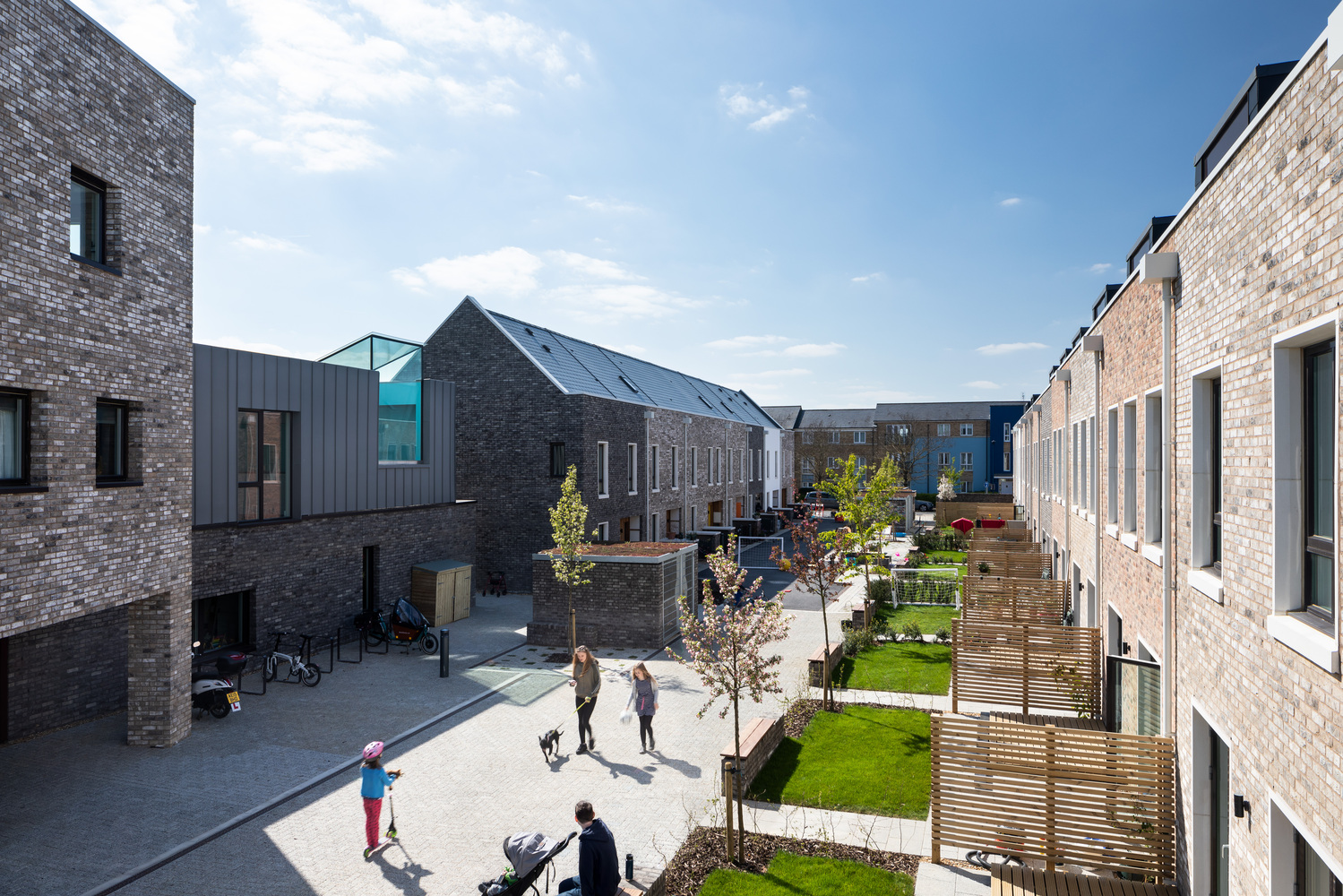
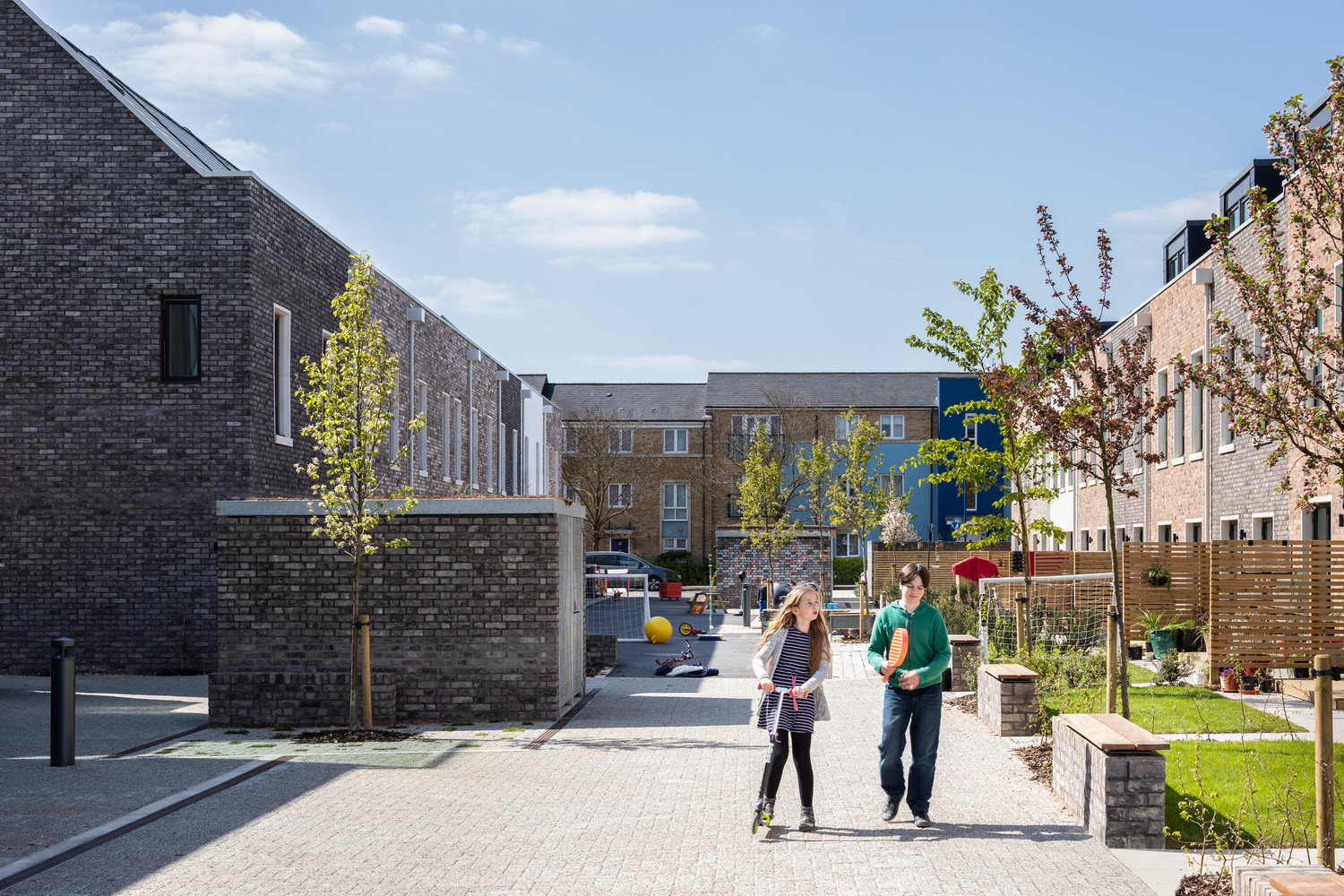
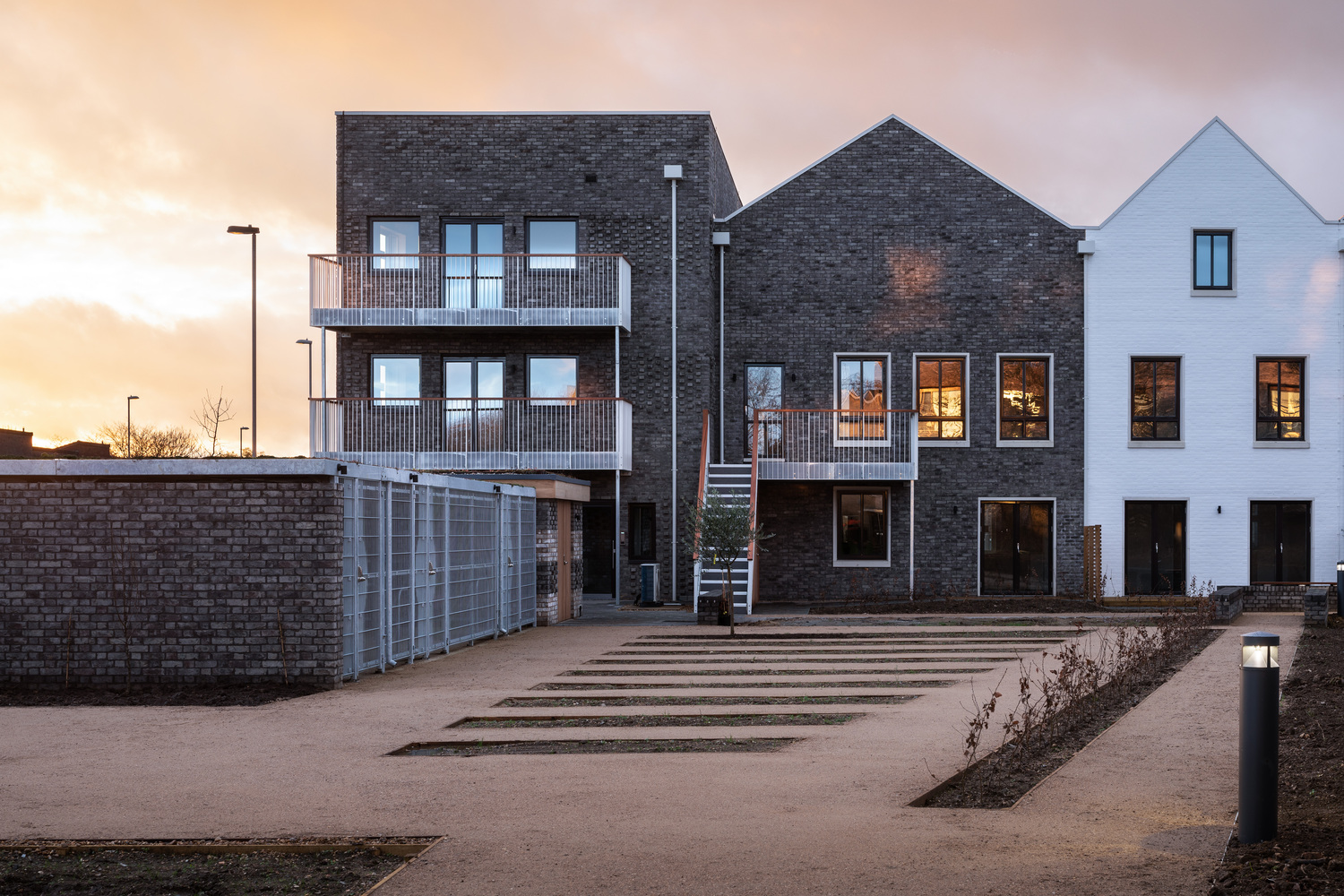
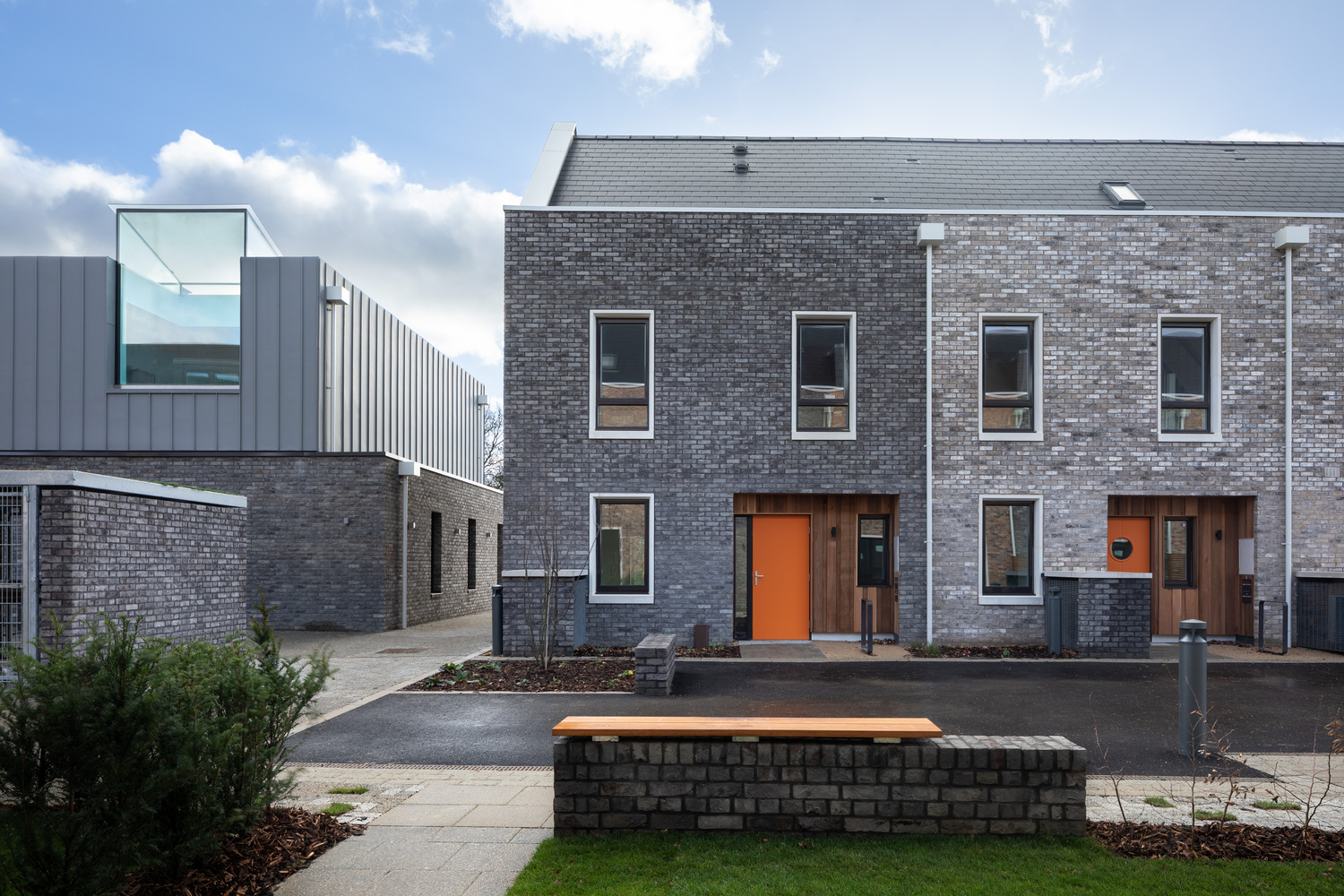
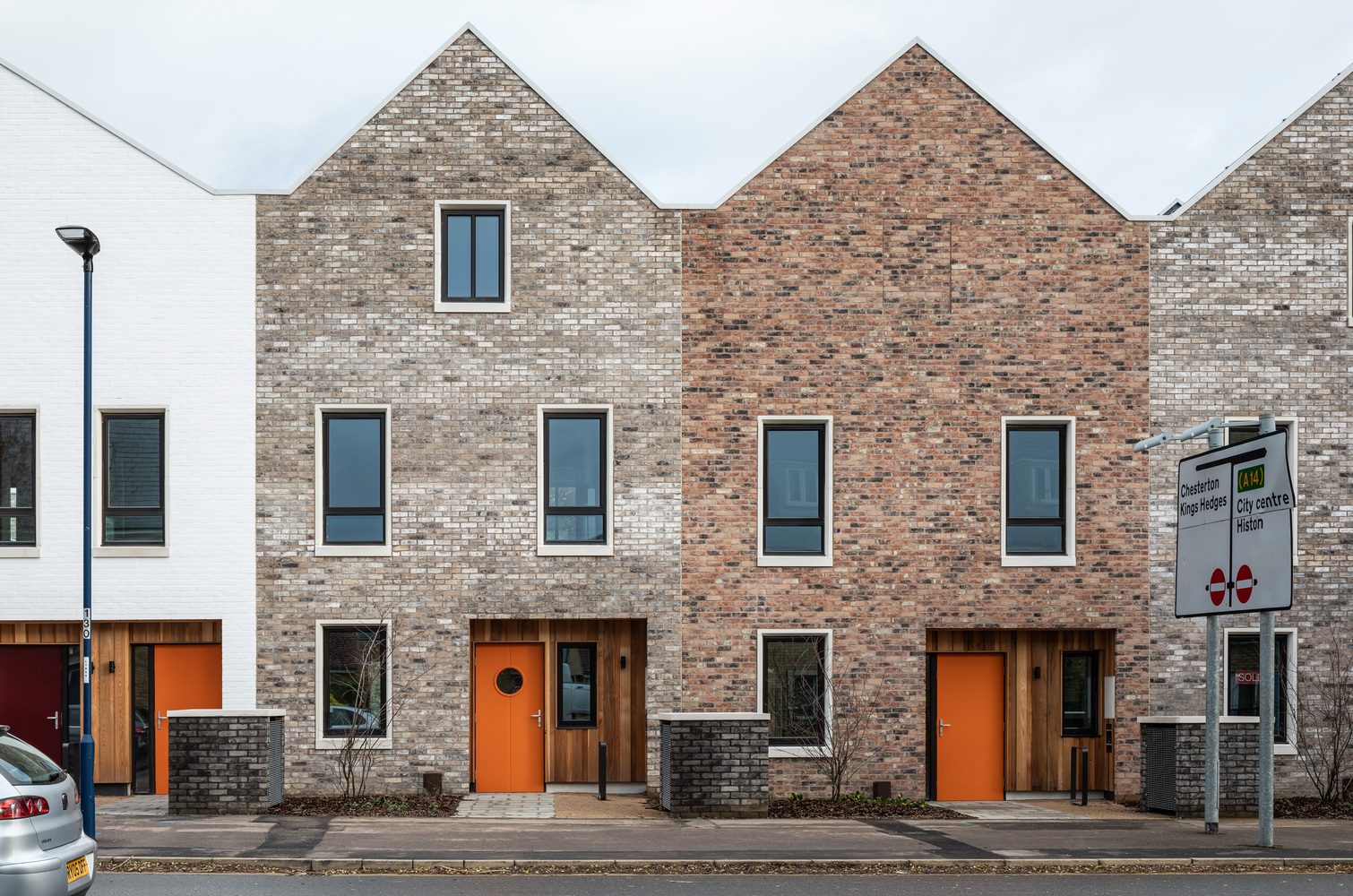
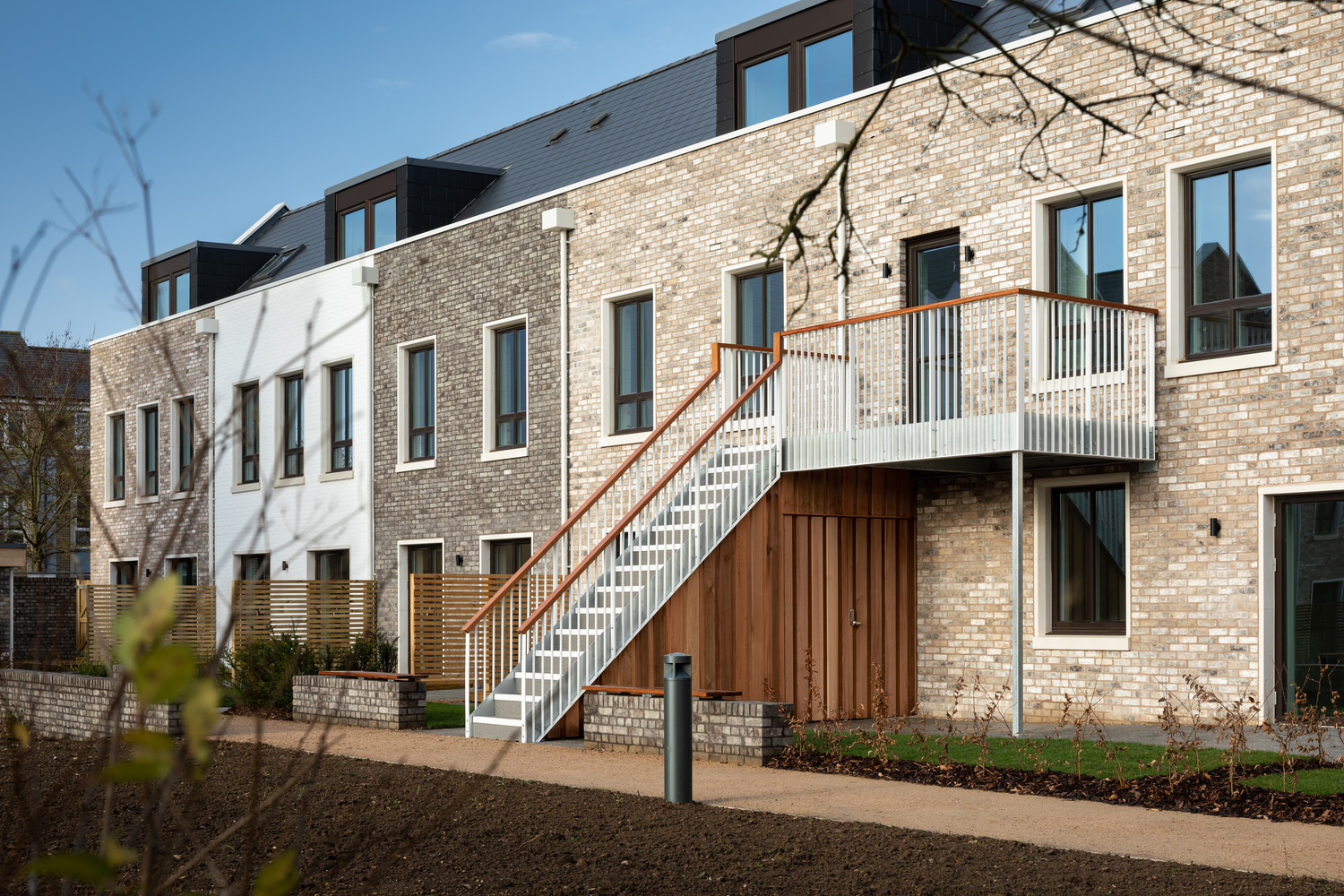
Marmalade Lane, completed in 2018, is a cohousing development of 42 homes, from one-bedroom flats to five-bedroom terraced houses, built with the Swedish manufacturer Trivselhus in closed timber panels. Triple glazing, high insulation and airtightness, mechanical ventilation with heat recovery and air-source heat pumps keep heating demand and bills low; the homes were designed to the energy equivalent of Code for Sustainable Homes Level 4.
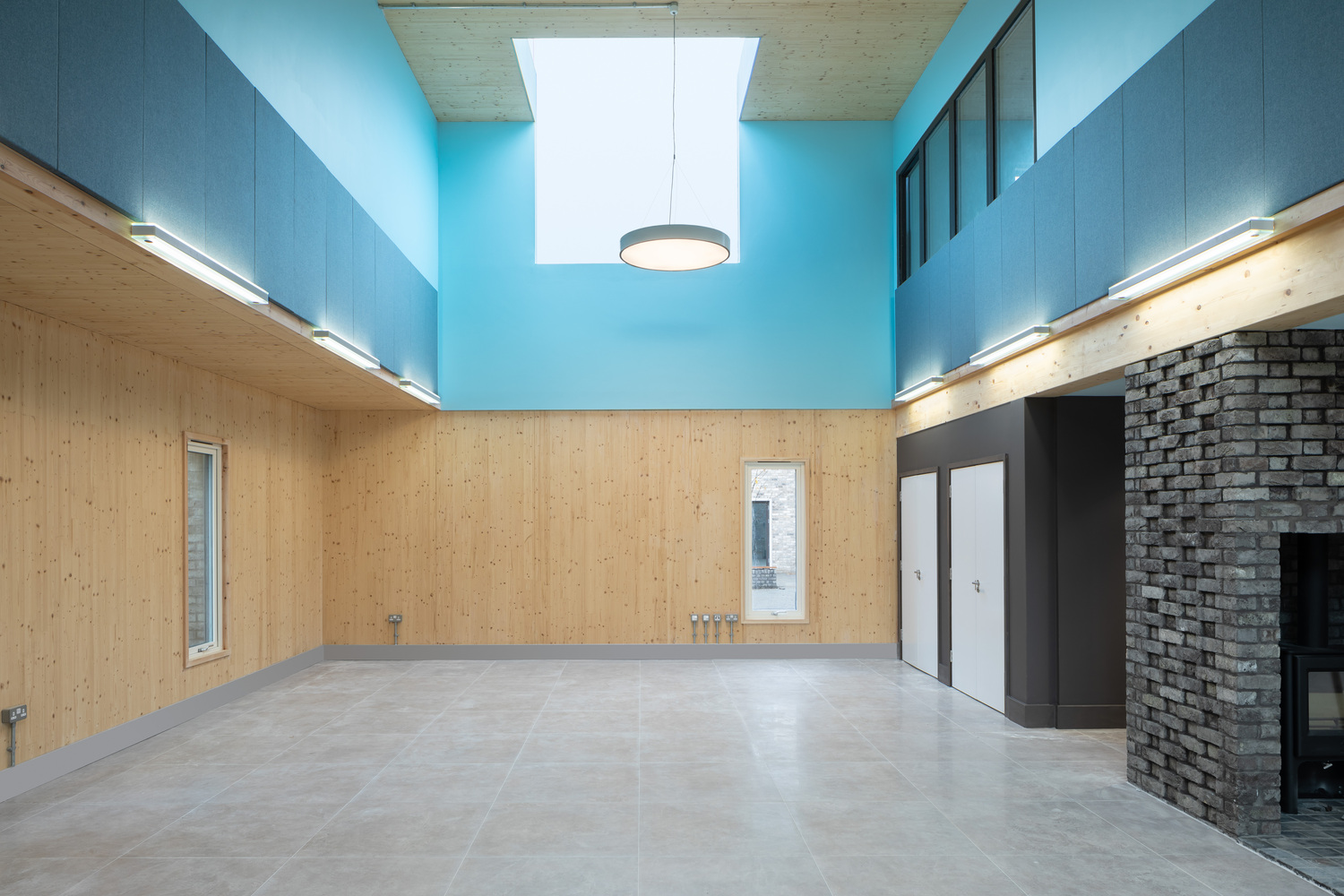
Shared space is as important as the fabric. A large communal garden is the centre of the scheme, and a common house provides a playroom, guest bedrooms, laundry, a hall and a kitchen for shared meals, so each household needs less private space and fewer appliances.
8. MO House – FRPO Rodríguez & Oriol (Madrid, Spain)
©Miguel de Guzmán
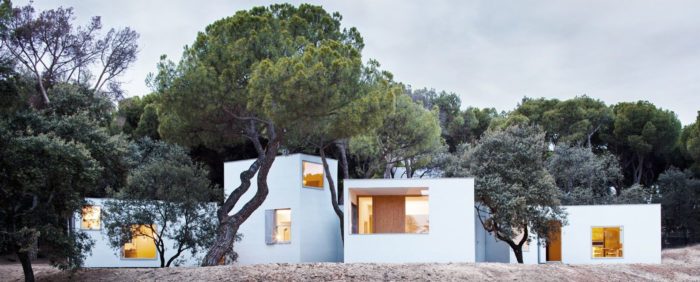
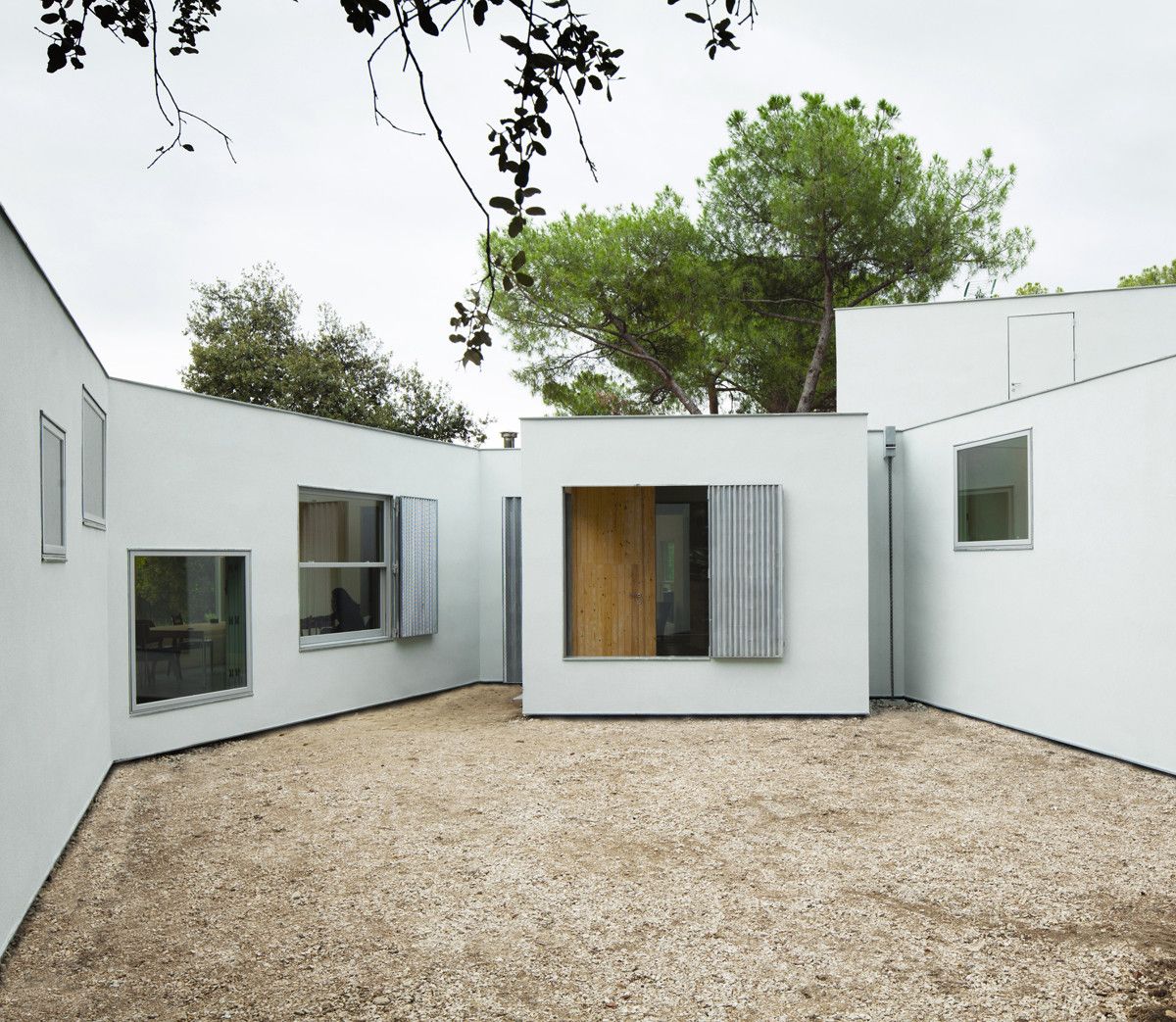
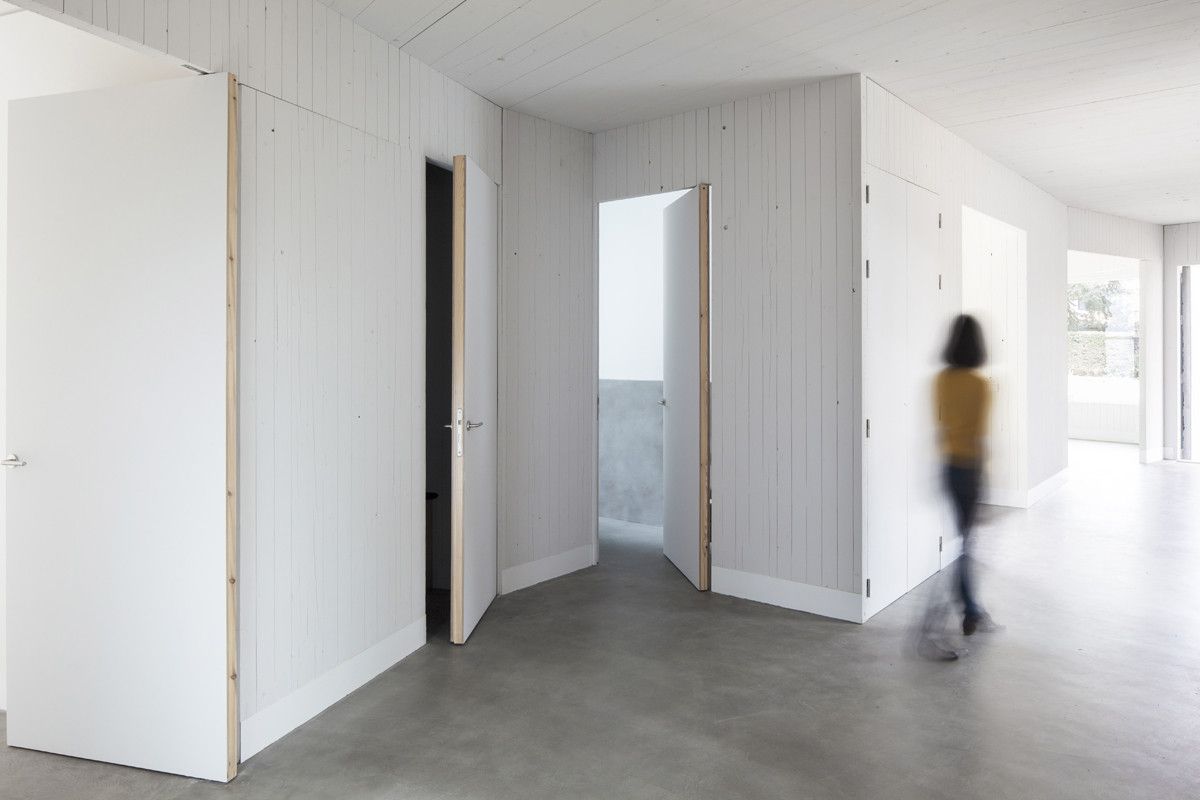
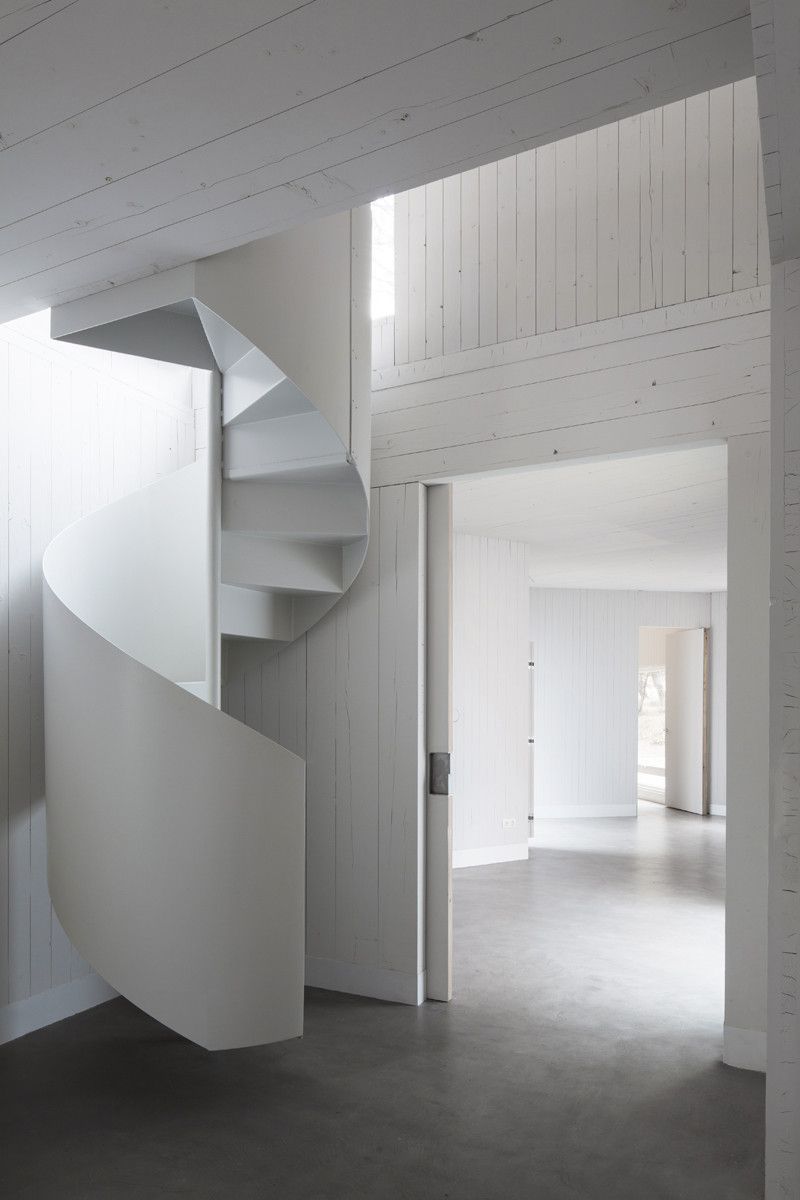
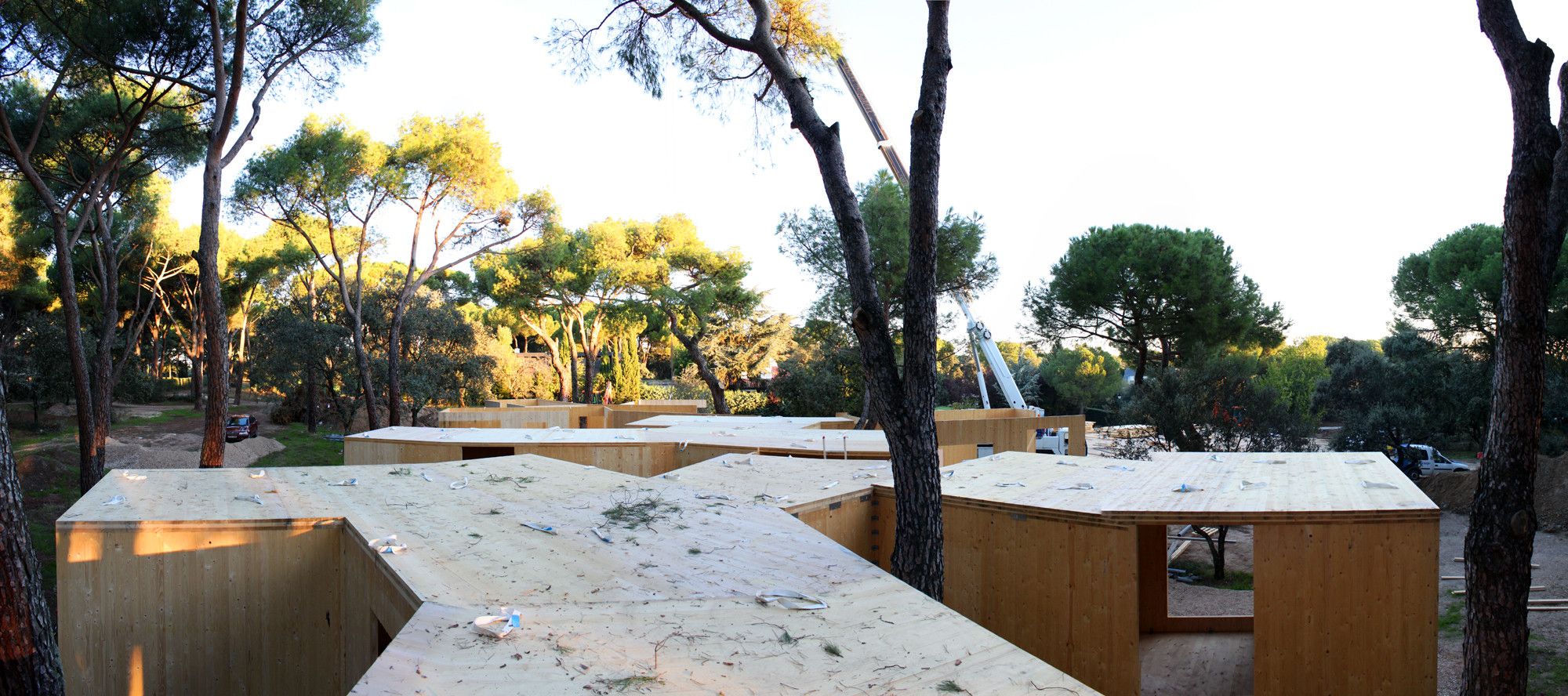
This family house in a pine forest outside Madrid, completed in 2013, is split into box-like volumes set into the gaps between the trees. It is built from cross-laminated timber panels only 72 millimetres thick, cut by machine and assembled on site. Instead of a concrete slab, the house stands on steel micropiles about two metres deep, which avoids damaging the tree roots.
9. Edgeland House – Bercy Chen Studio (Austin, United States)
©Paul Bardagjy
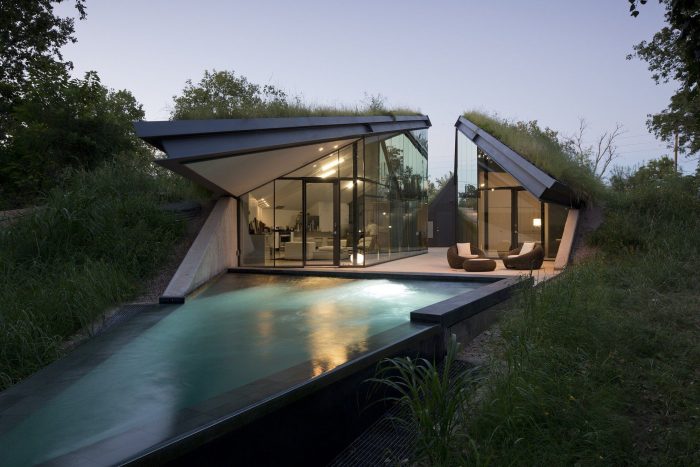
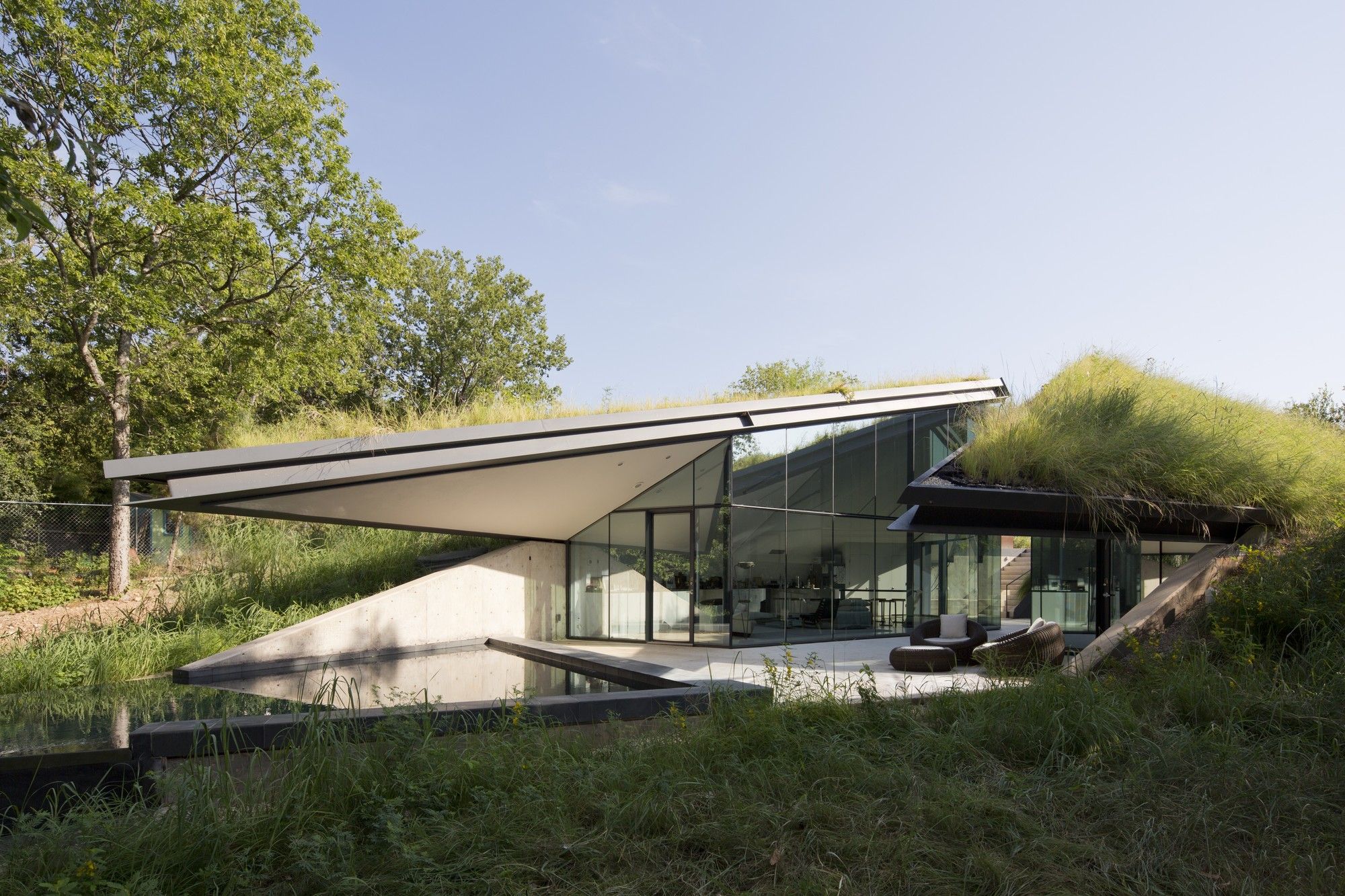
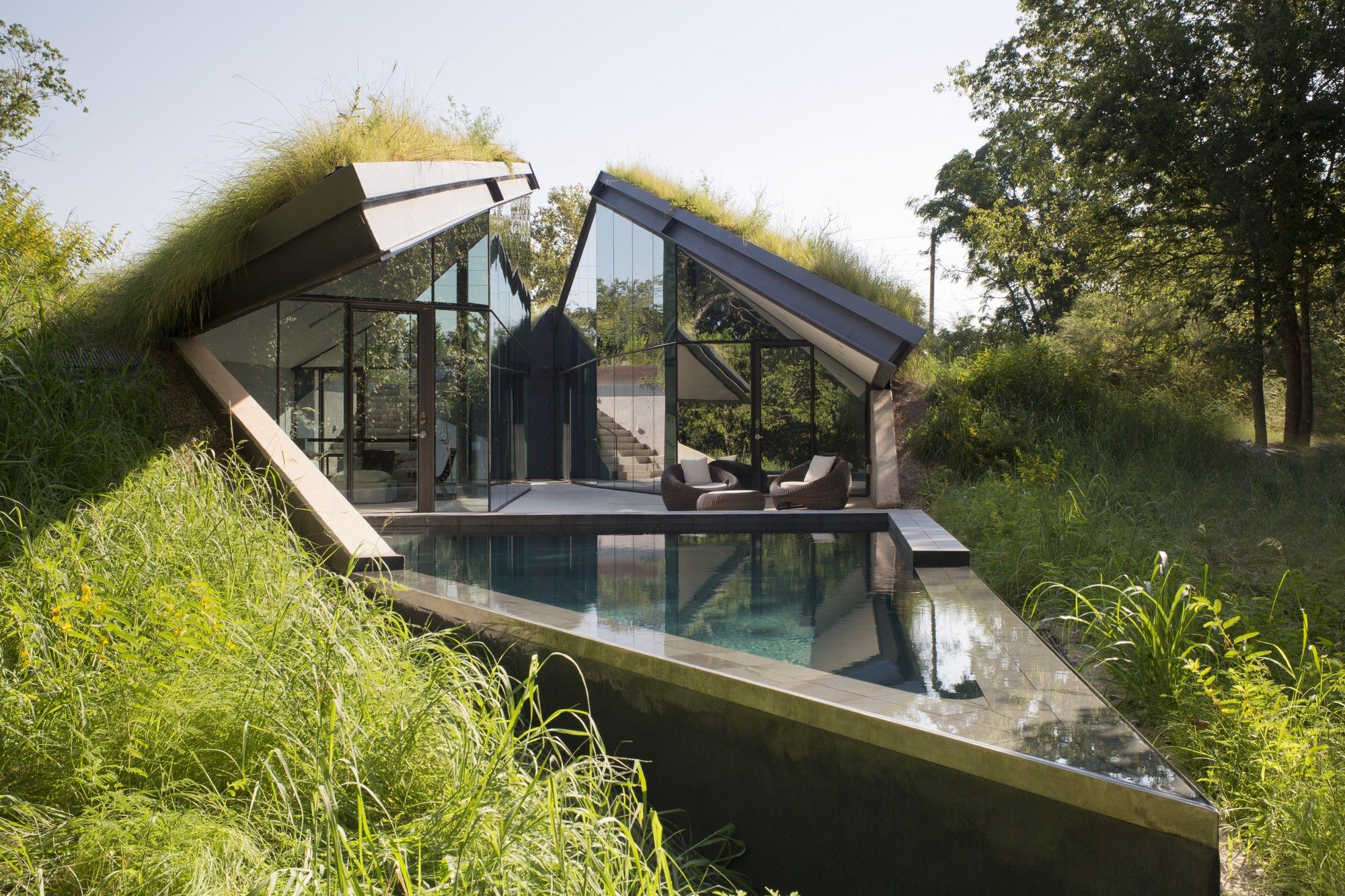
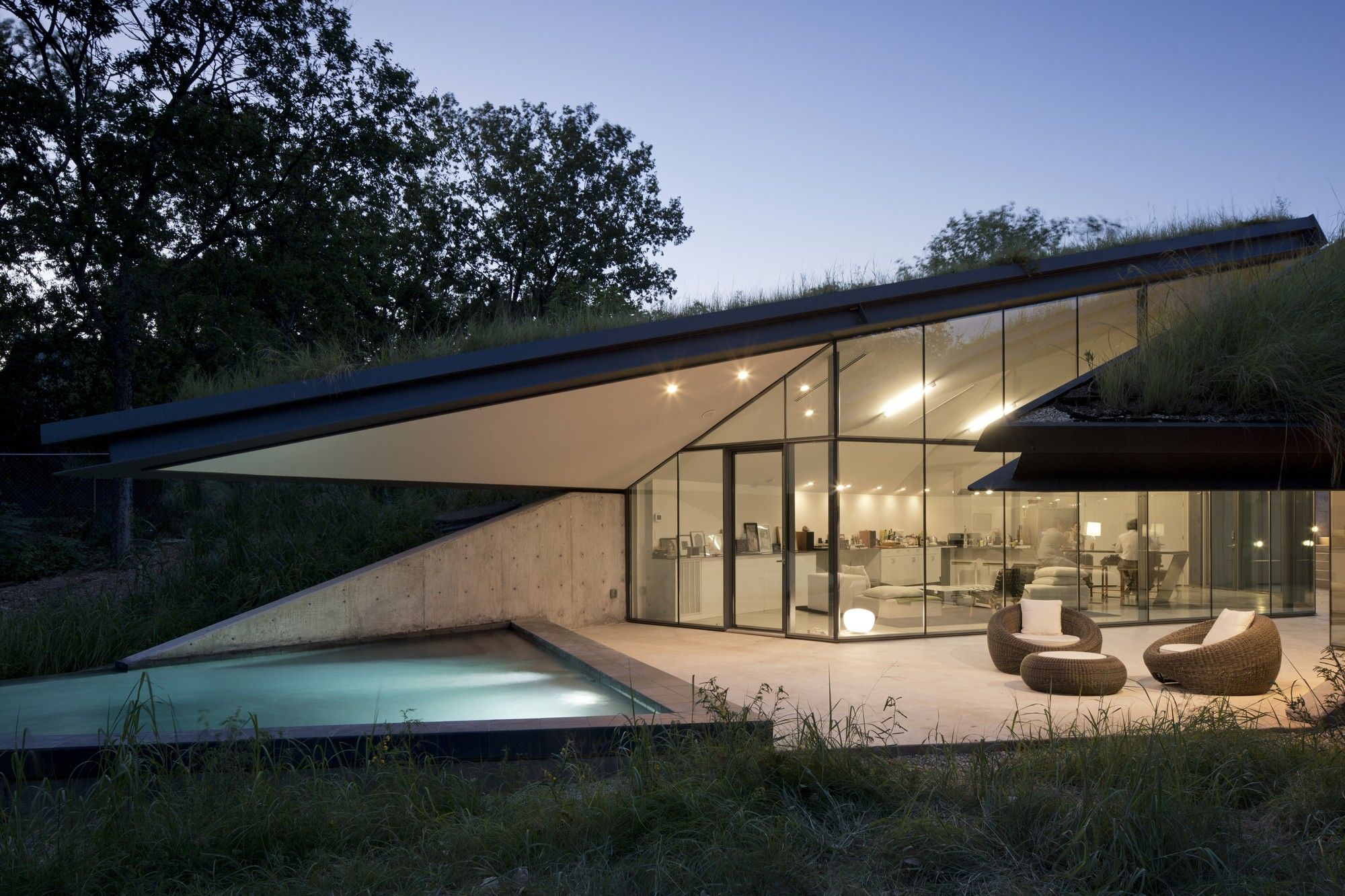
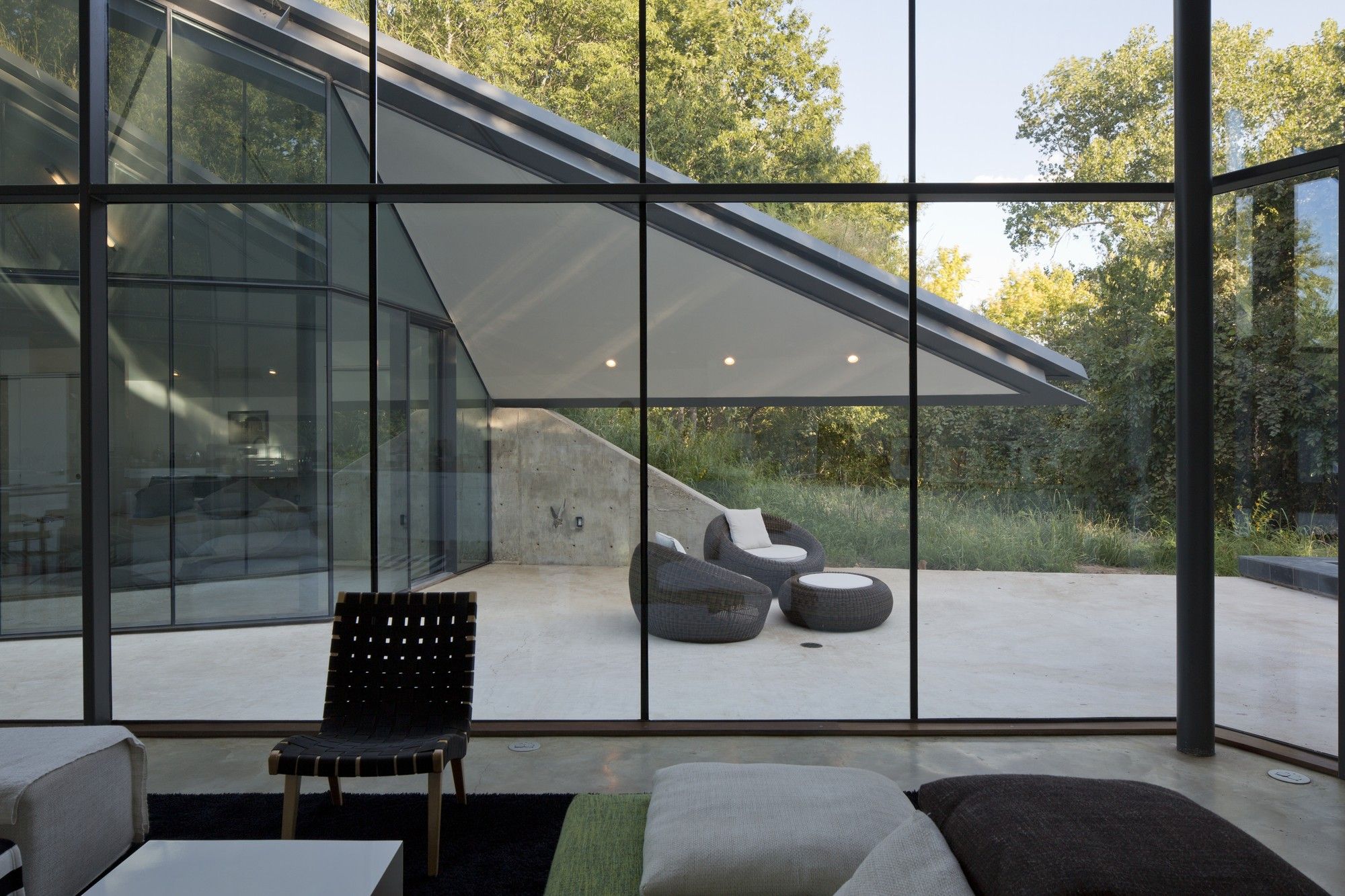
Edgeland House stands on a brownfield site in Austin, Texas, a former oil-pipeline corridor. The design draws on the pit houses of Native Americans: the house is sunk about two metres into the ground to use the earth’s thermal mass. Two green-roofed wings shade each other, and a linear courtyard between them allows airflow. With the Lady Bird Johnson Wildflower Center, the team planted about 2,300 square feet (210 square metres) of green roof with native species to help restore the prairie habitat on the damaged land.
10. Casa Nirau – Paul Cremoux Studio (Mexico City, Mexico)
©Paul Cremoux Wanderstok
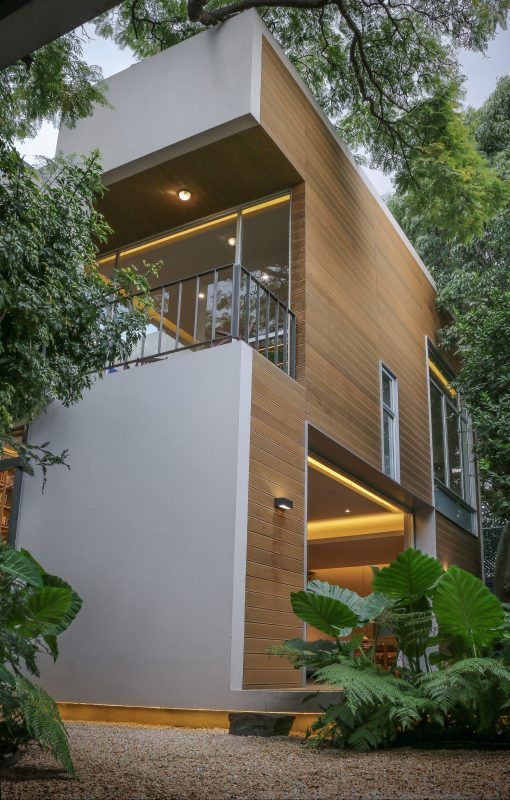
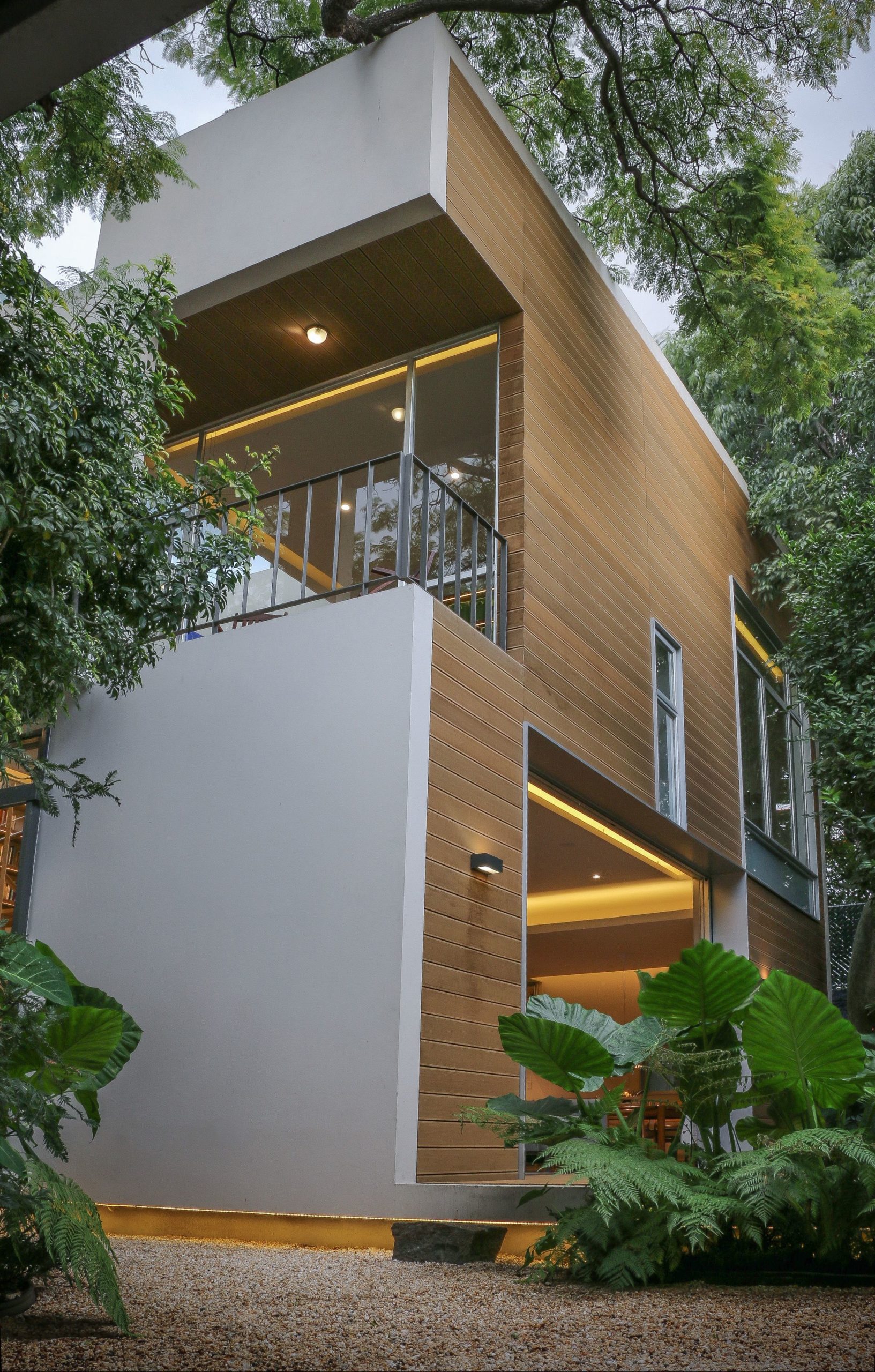
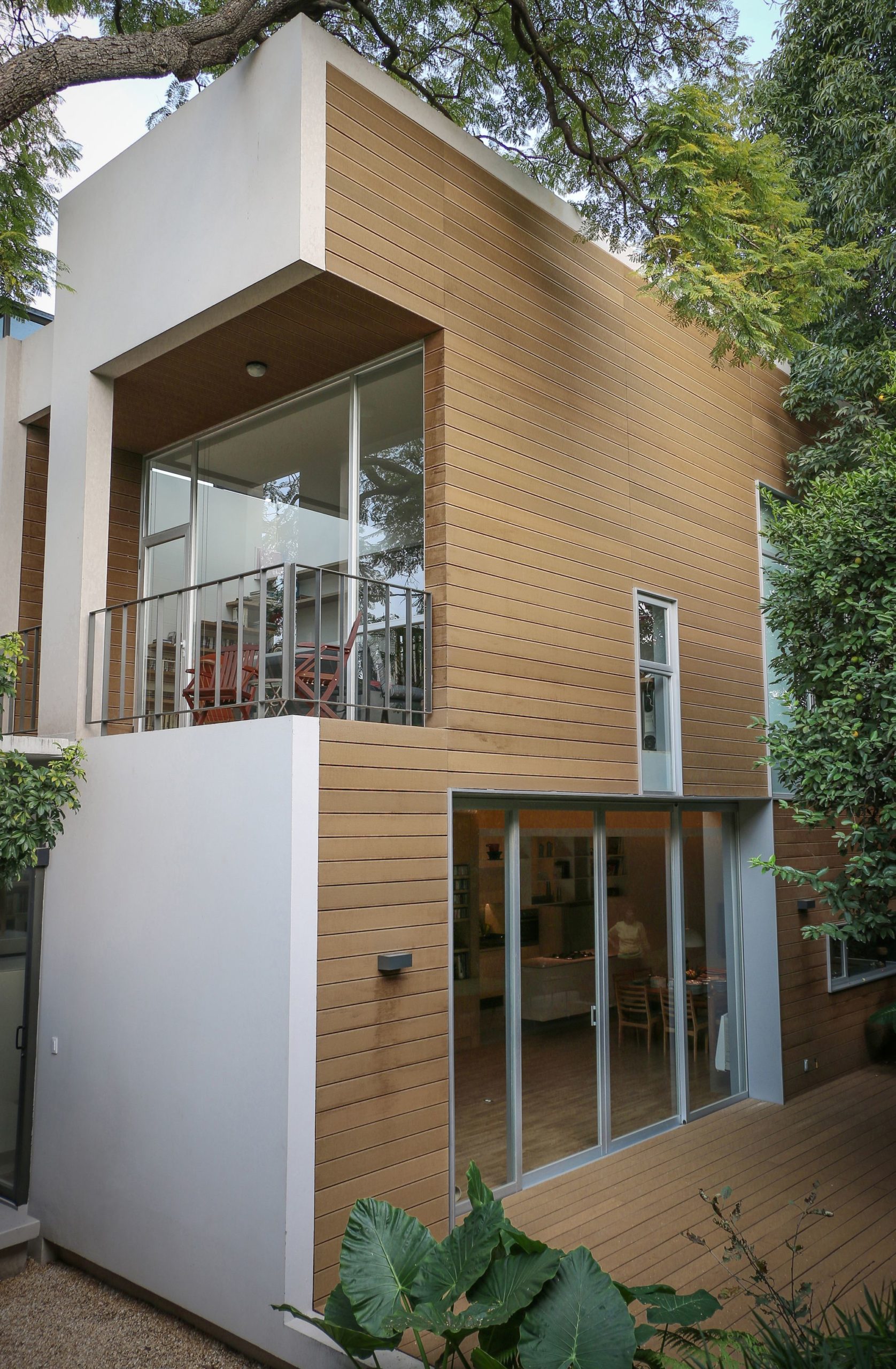
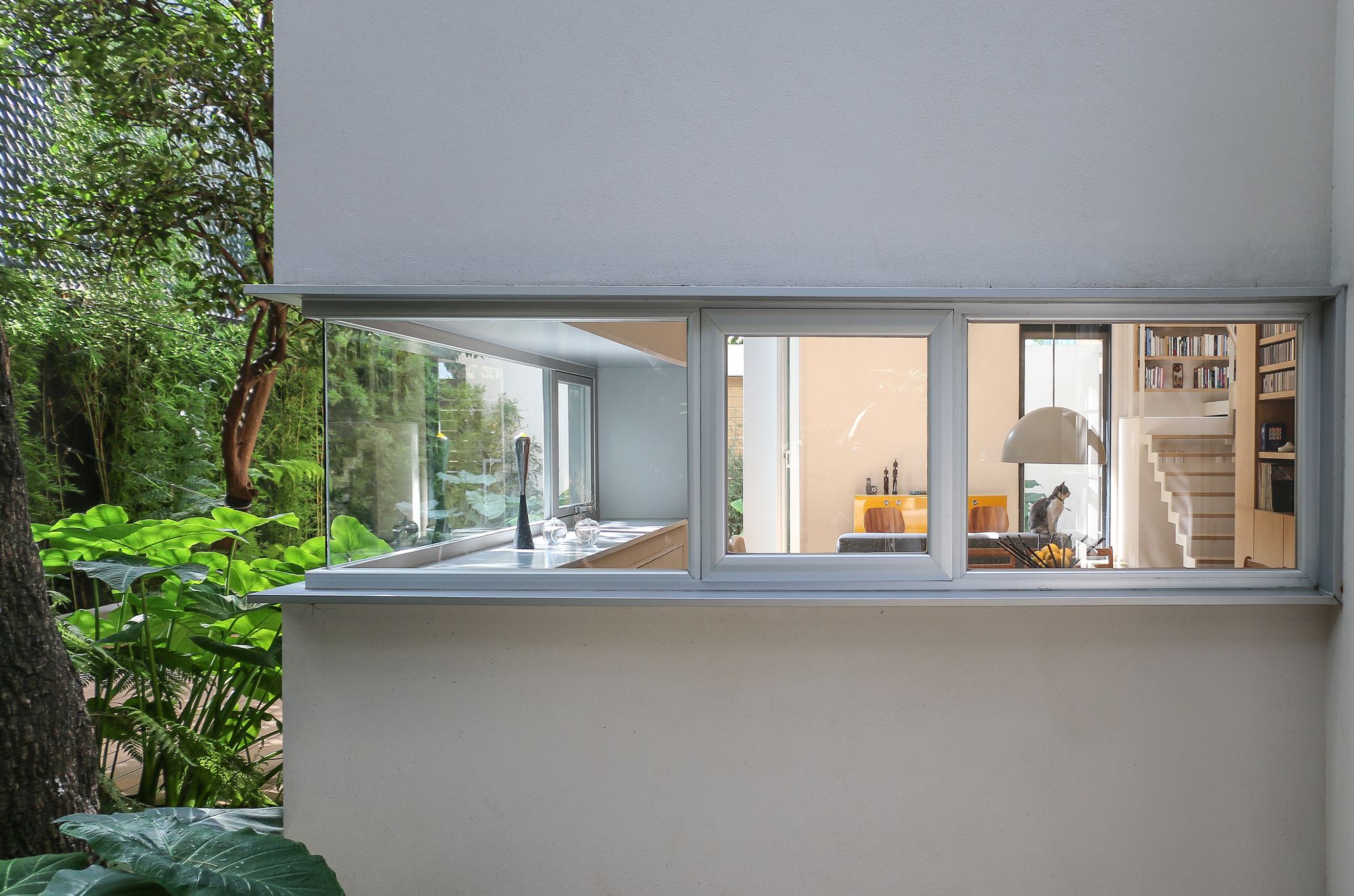
Casa Nirau is a two-storey house for a retired couple in Mexico City. It replaced a larger house on the same plot, cutting the floor area from 2,754 to 1,937 square feet (about 256 to 180 square metres). Rain falling on the roof and main terrace passes through activated-carbon filters to become drinking water. The architects modelled the house’s energy use with simulation software and projected running costs of about US$15 a month for electricity and gas; this is a design projection, not a measured bill.
11. Caruth Boulevard Residence – Tom Reisenbichler (Texas, United States)
©Bret Janak
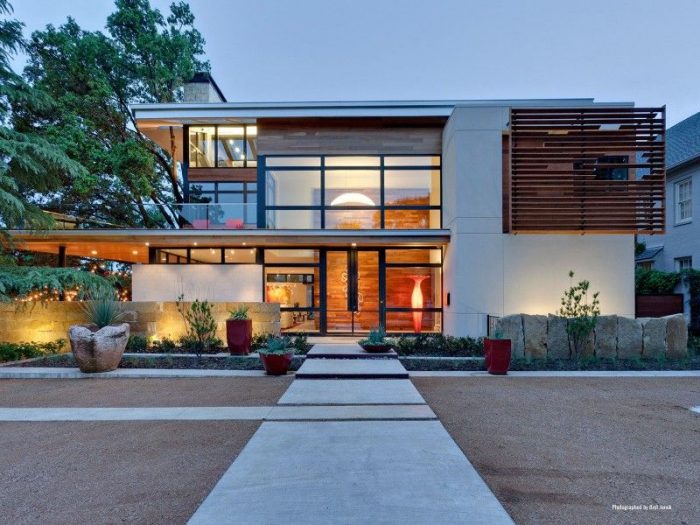
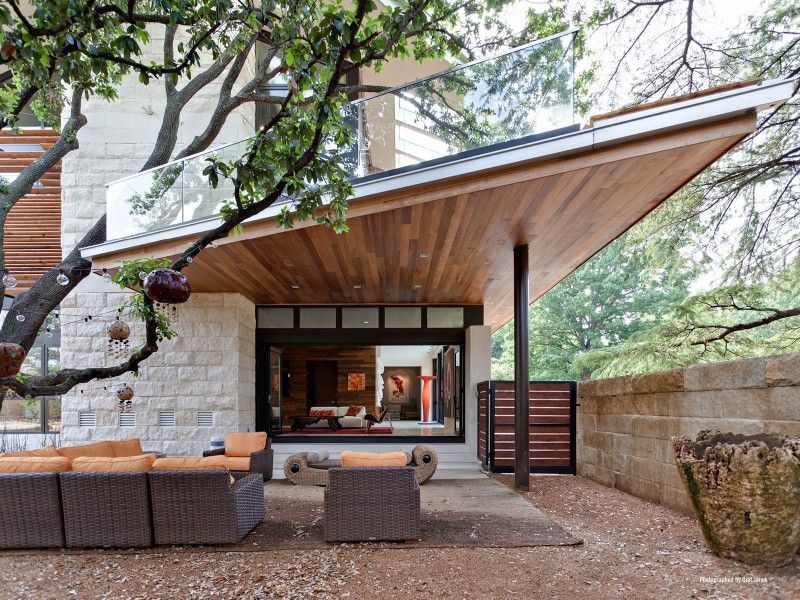
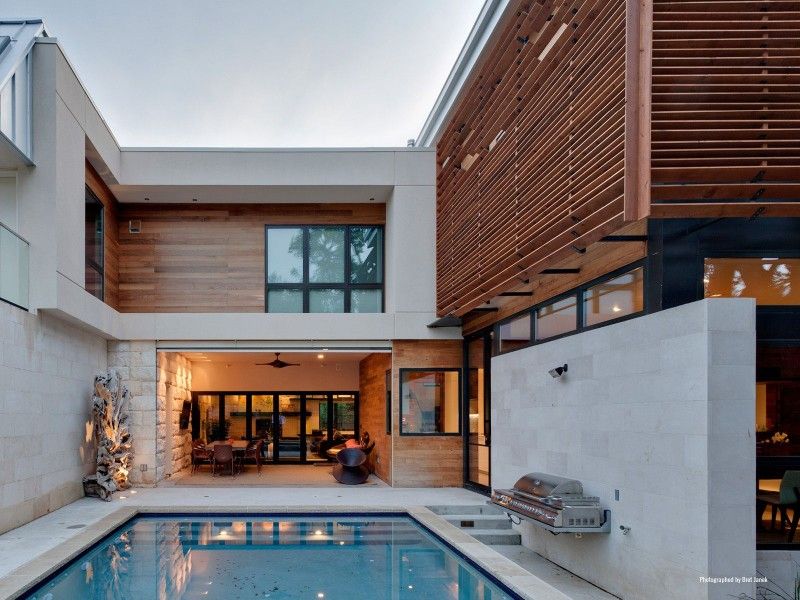
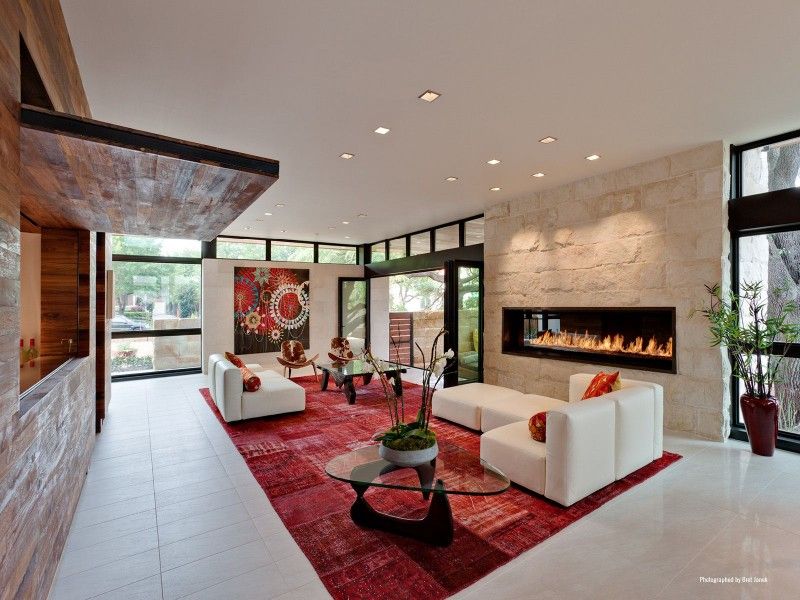
The architect’s own house in University Park, Dallas, is reported to have achieved LEED Gold, showing that a luxurious home can still meet a green building standard. It is built to fit between existing mature trees, and its horizontal planes frame them. It has photovoltaic panels, recycled, reclaimed and locally sourced materials, and drought-tolerant native plants. At about 8,300 square feet (770 square metres) it is also by far the largest house here, a reminder that size matters as much as technology.
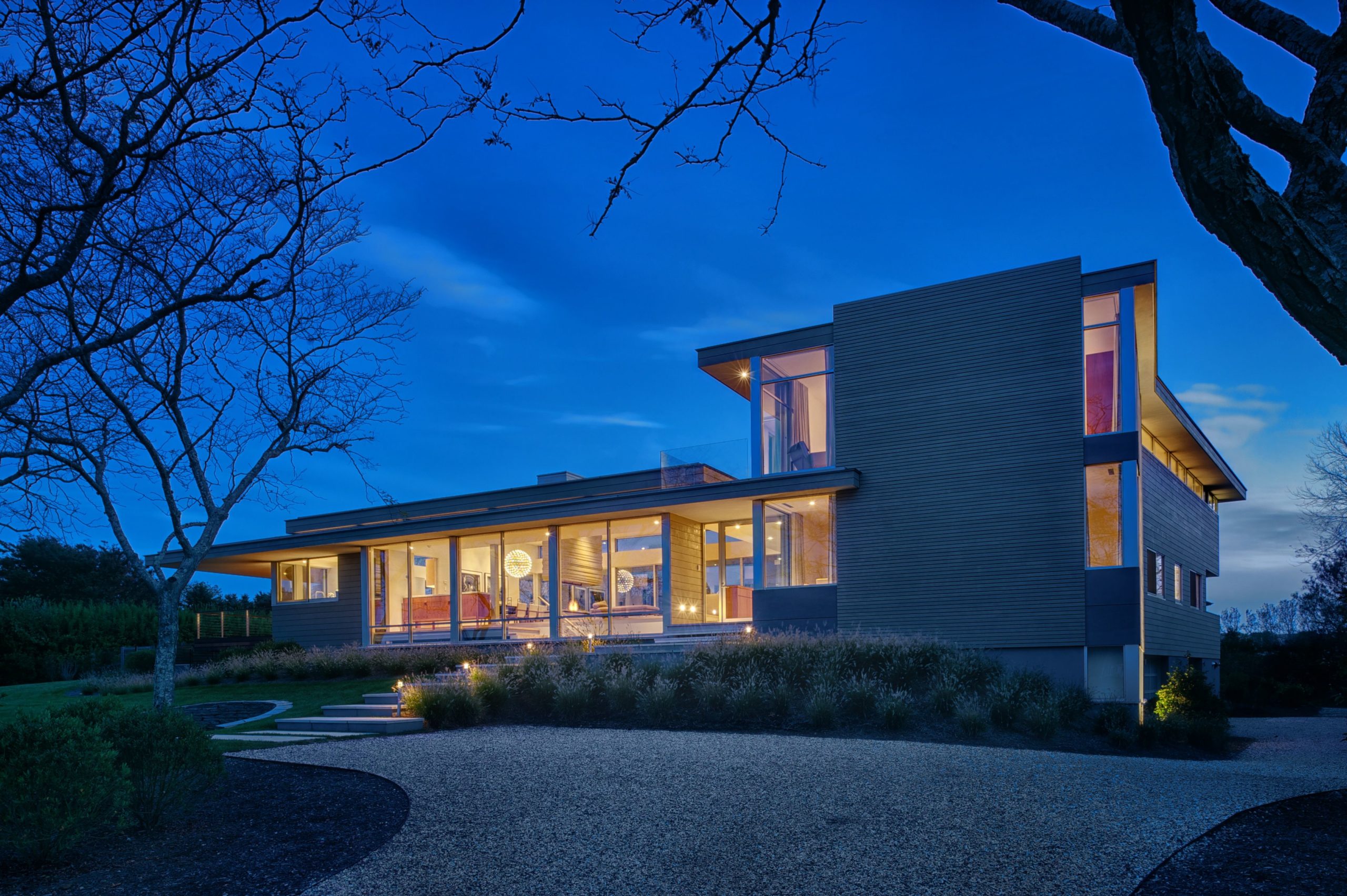
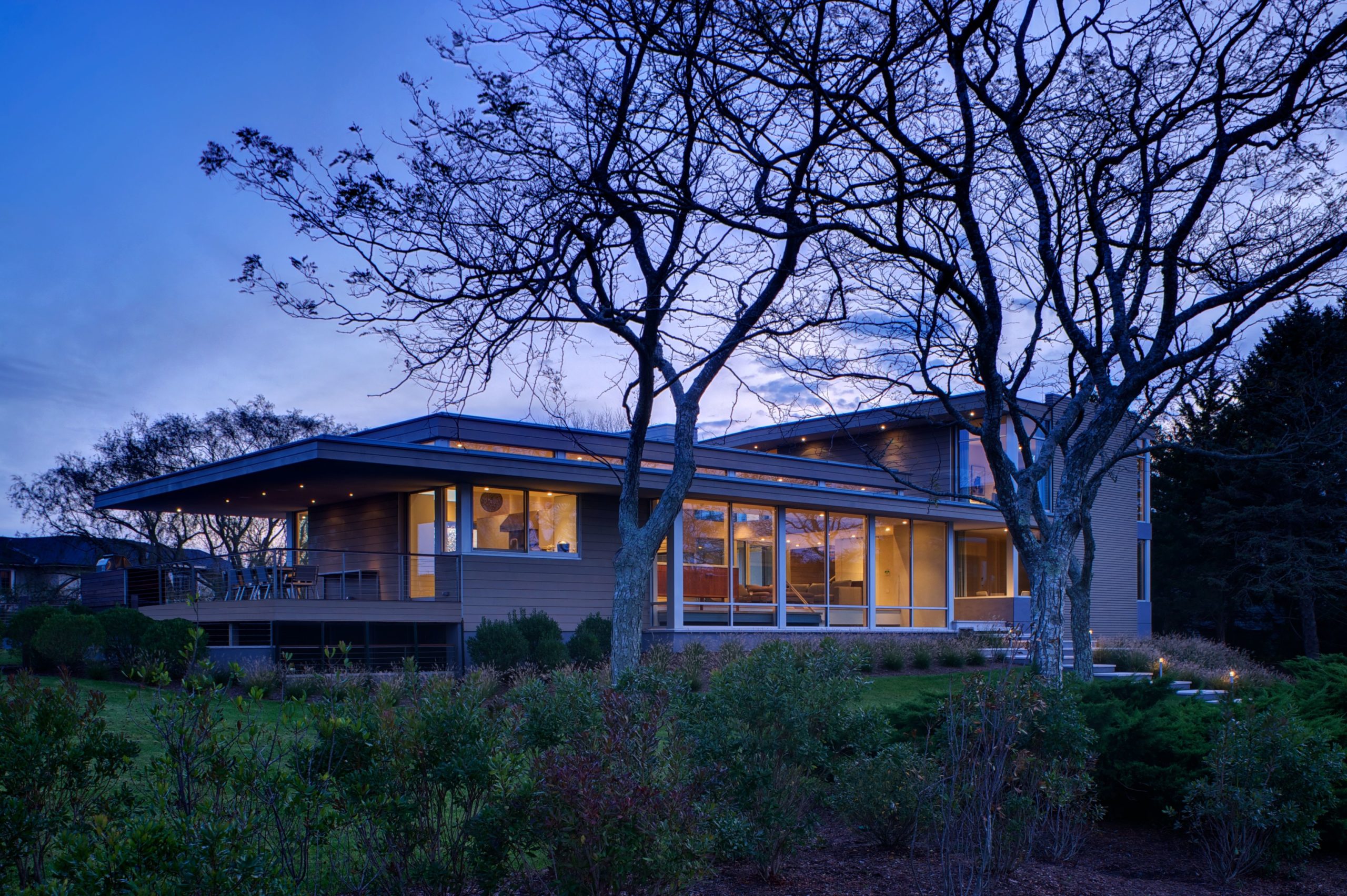
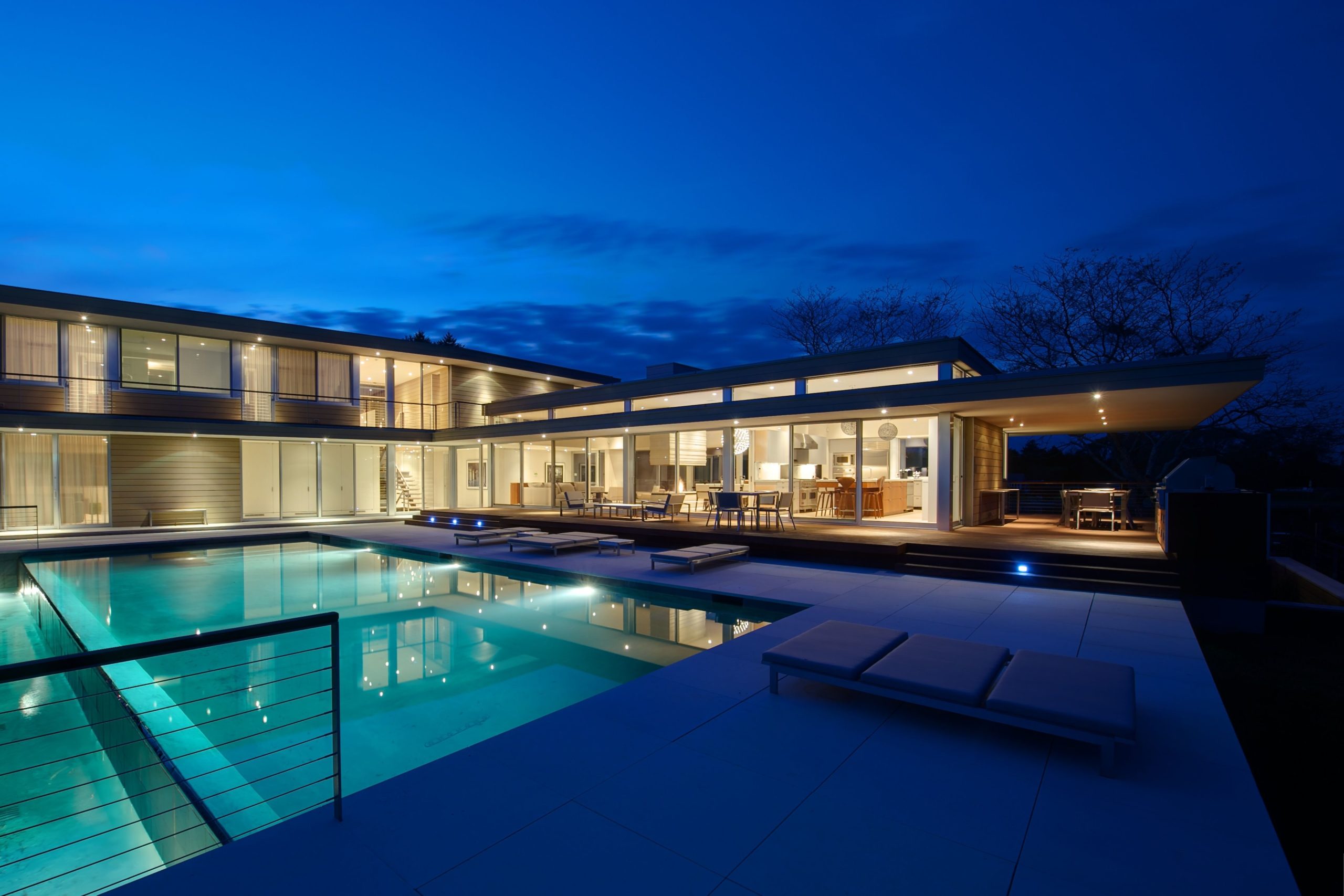
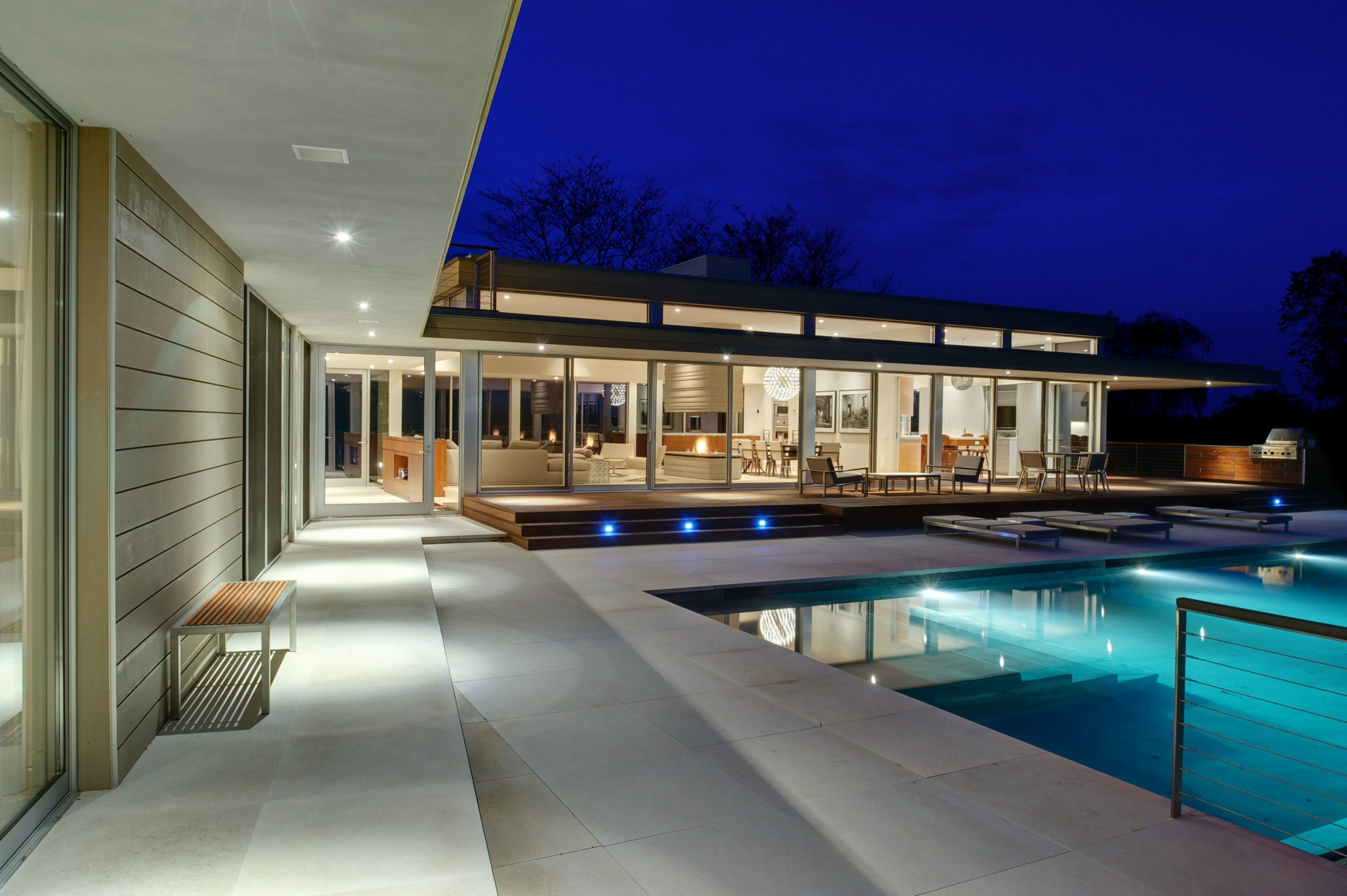
12. House by the Pond – Stelle Lomont Rouhani Architects (Water Mill, United States)
©Matthew Carbone
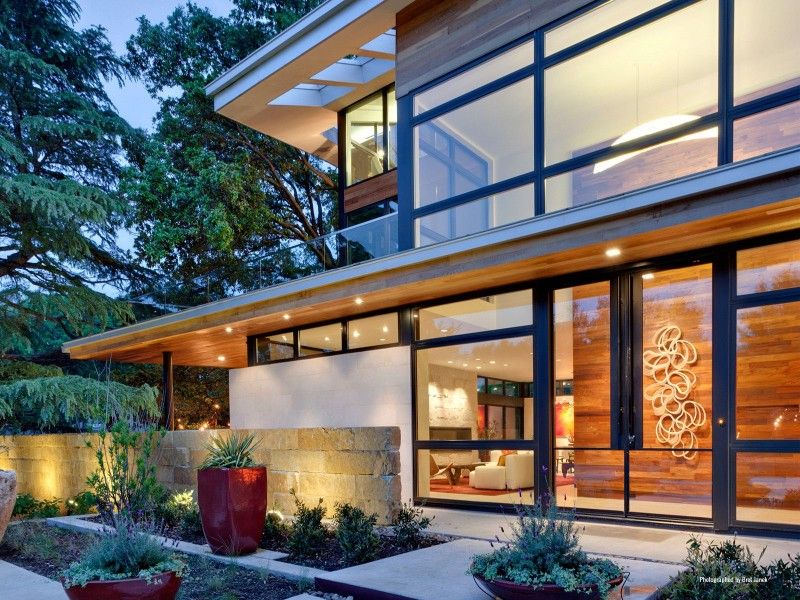
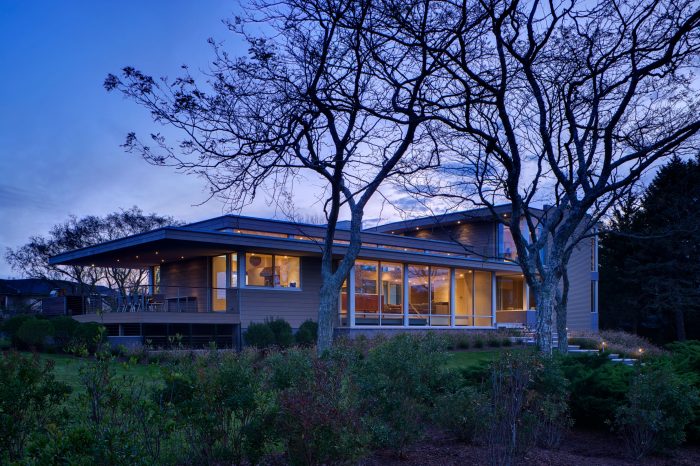
This two-storey house in Water Mill, New York, completed in 2011, looks over a pond. Large energy-efficient glass panels and clerestory windows above deep overhangs bring in daylight, shade the interior in summer and let in low winter sun. A geothermal heating and cooling system, careful zoning and a high level of insulation helped it exceed the requirements of the US Energy Star programme, according to the architects. Native, drought-tolerant planting replaced most of the former suburban garden.
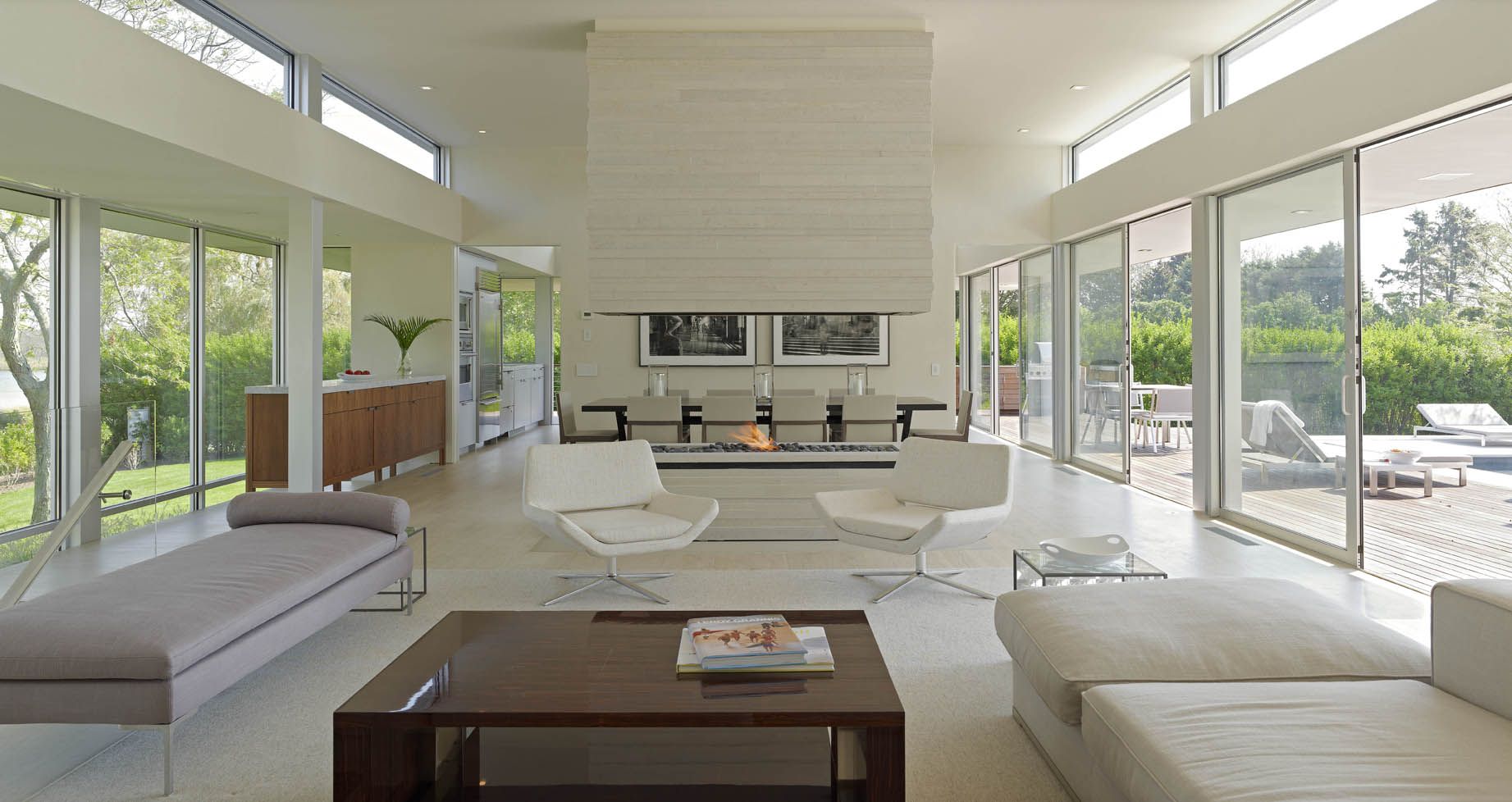
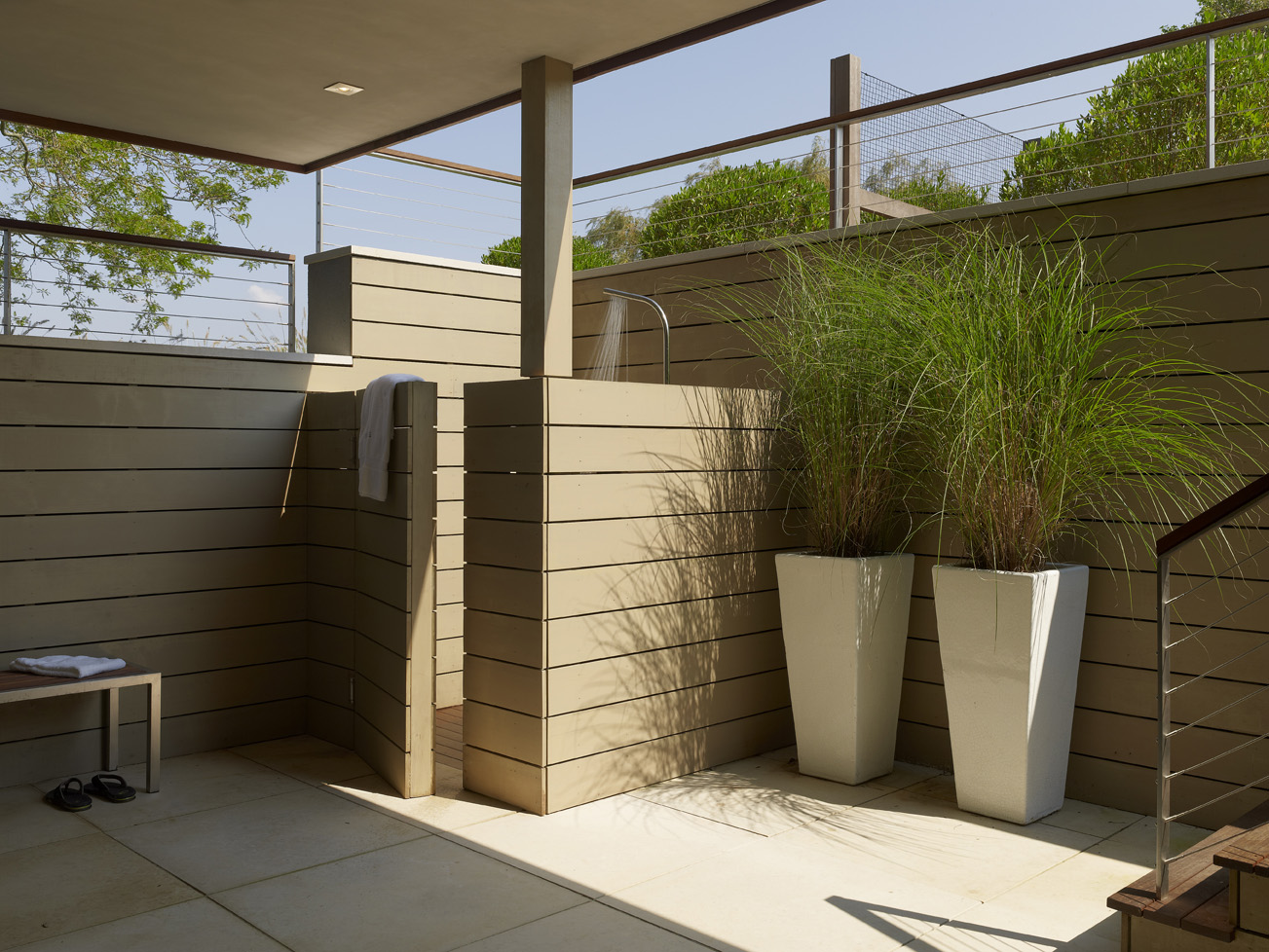
13. Đại Kim House – Aline Architect (Hanoi, Vietnam)
©Triệu Chiến
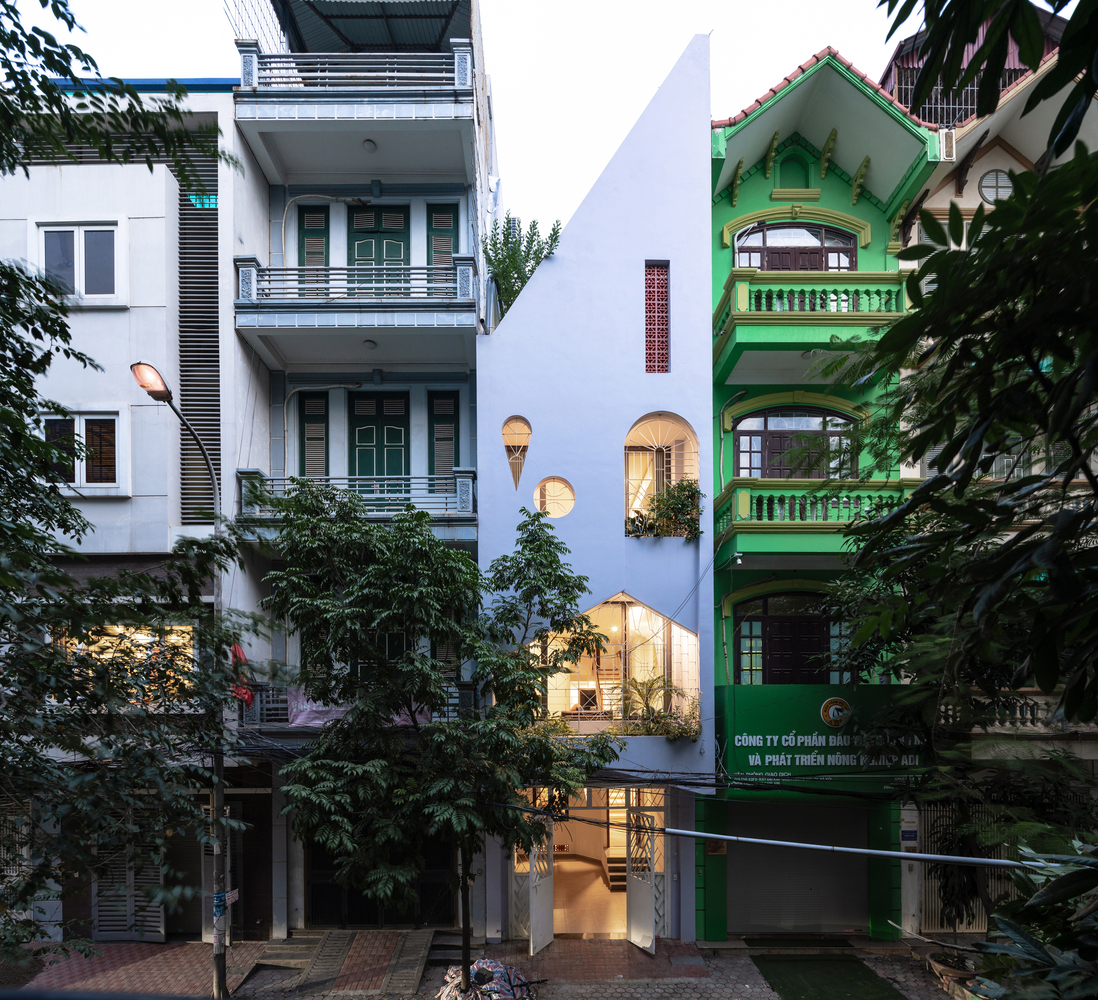
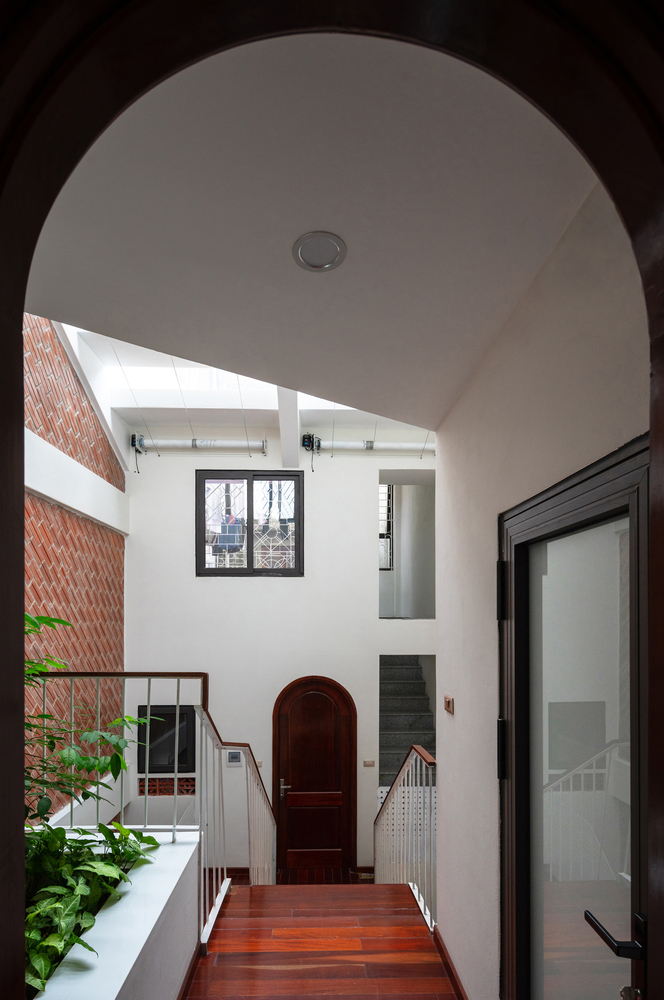
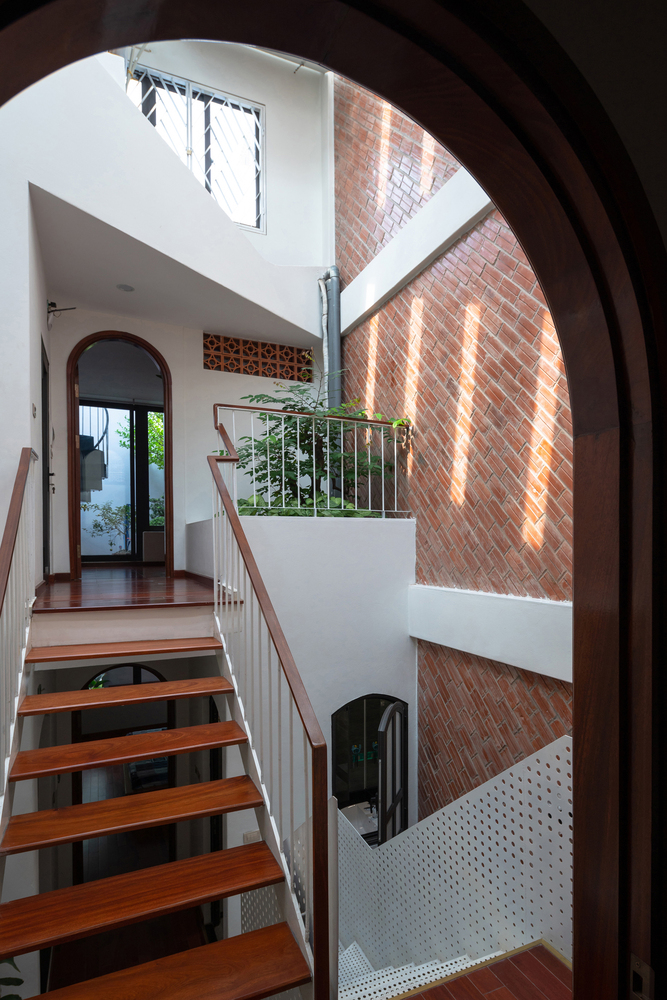
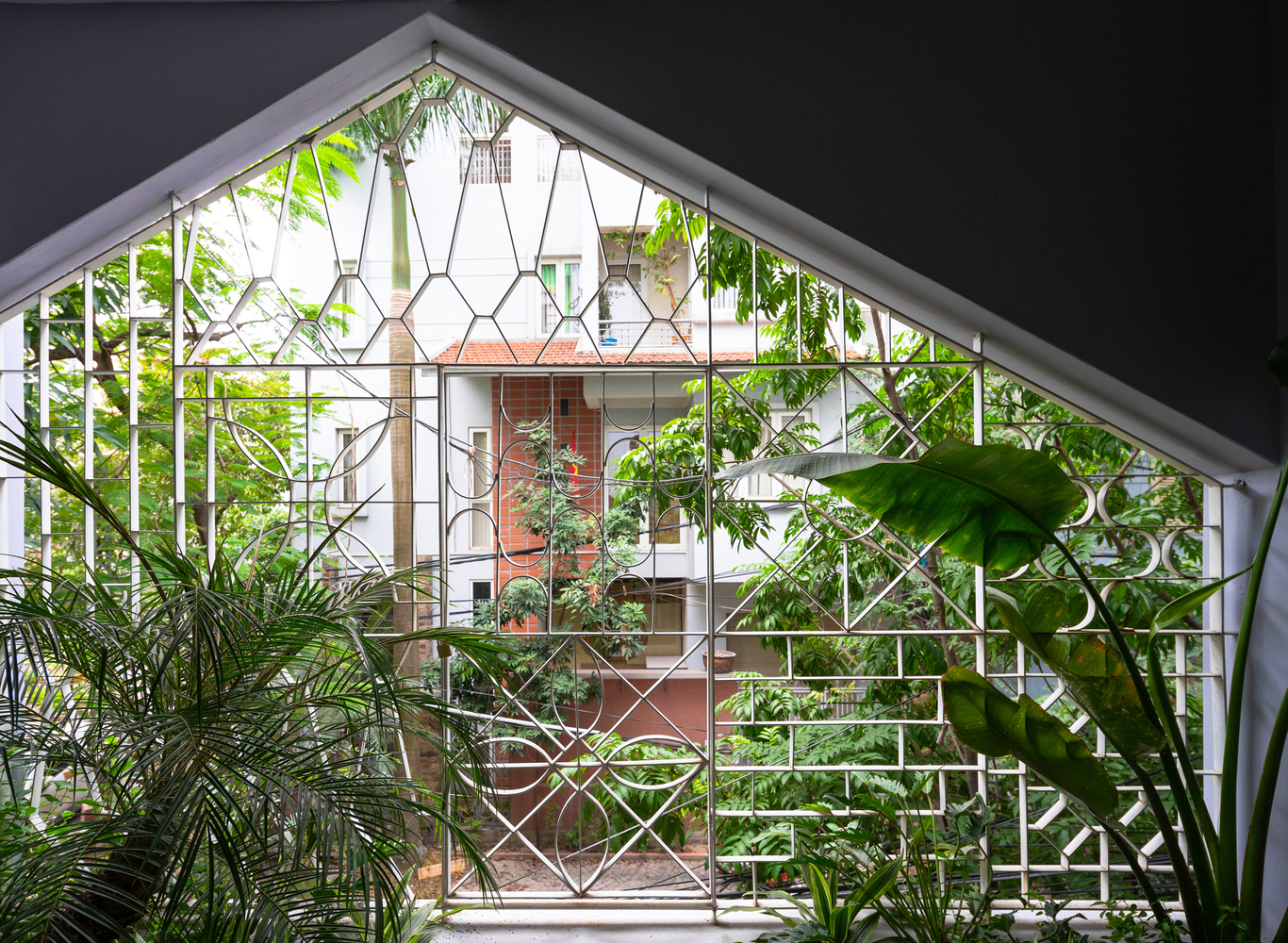
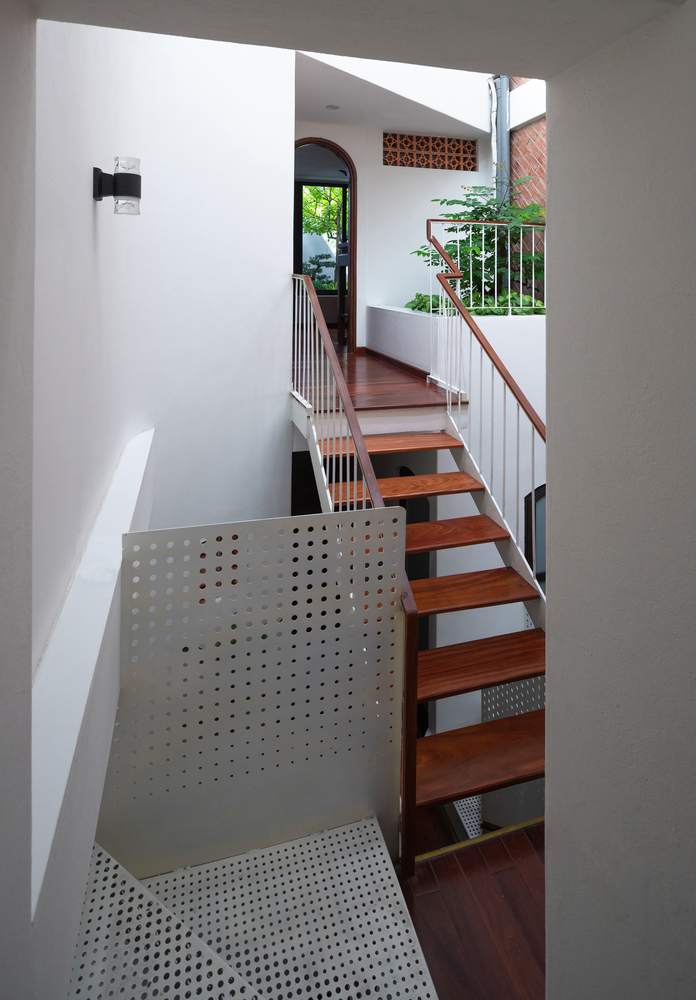
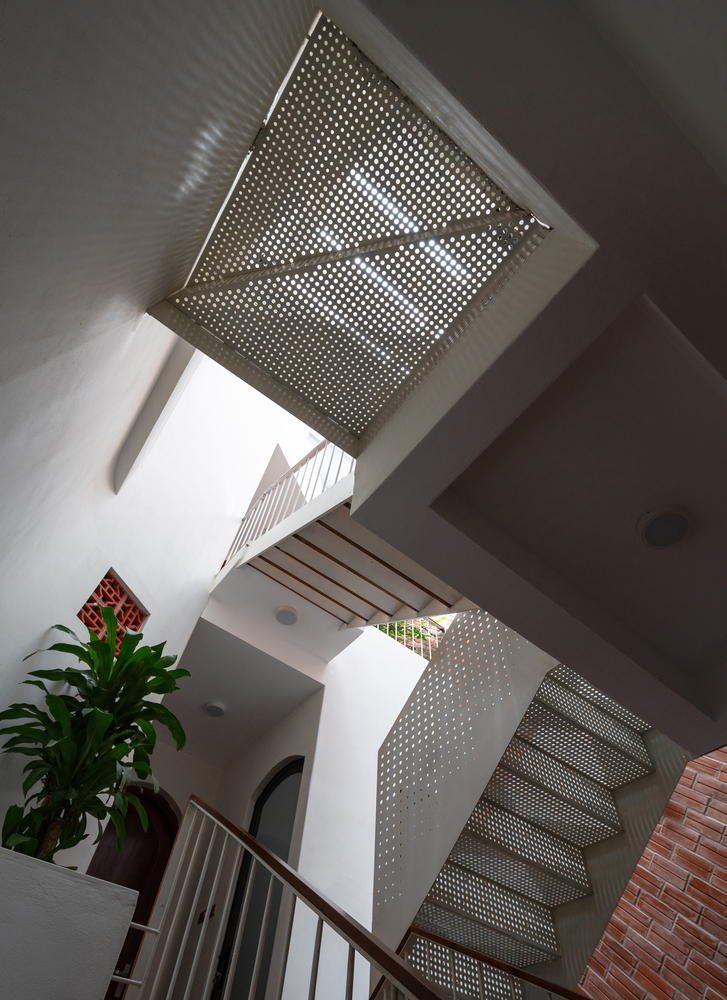
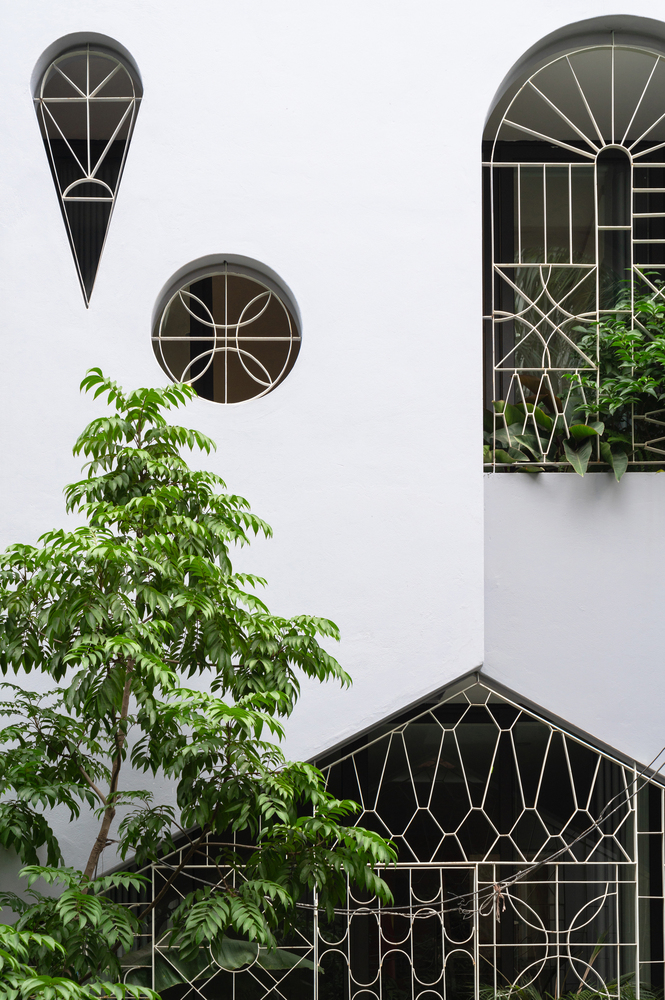
This narrow 56-square-metre street house, completed in 2018, sits on a plot of about 4 by 14 metres. Daylight and natural ventilation were the starting point of the design, and trees and planting appear on almost every level, so that nearly every room looks onto greenery. Because the house faces west, the architects used three layers against the summer heat: a 220-millimetre outer wall, a planted buffer and a glass door. Split-level floors keep the five levels connected.
14. OUTrial House – KWK PROMES (Książenice, Poland)
©Julisz Sokolowski
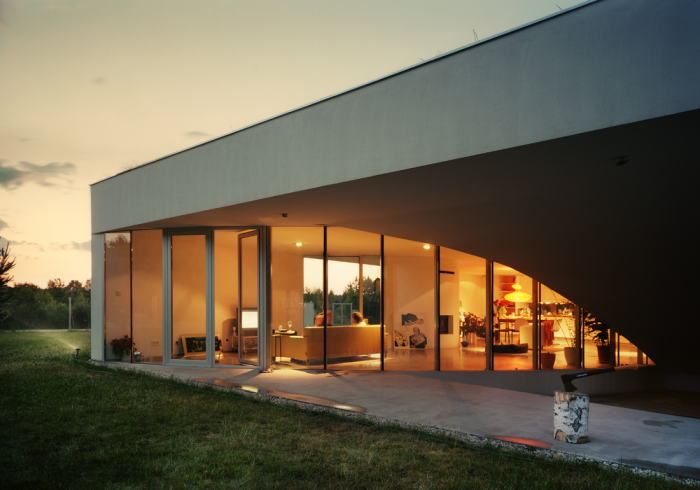
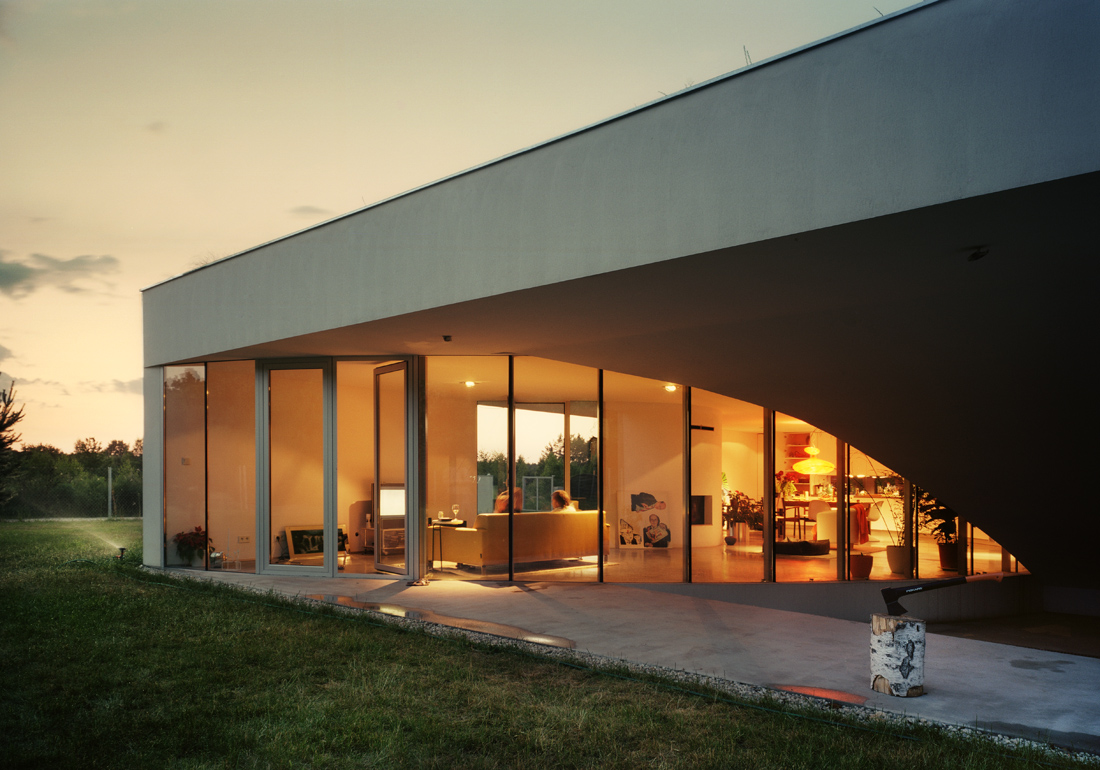
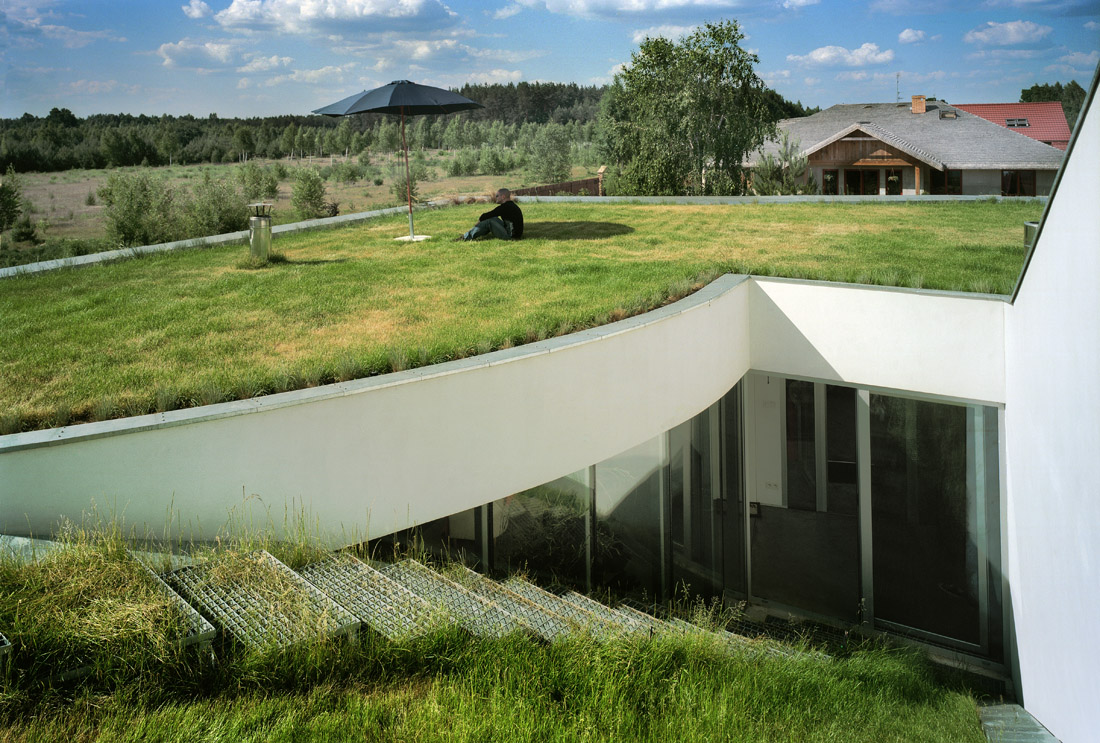
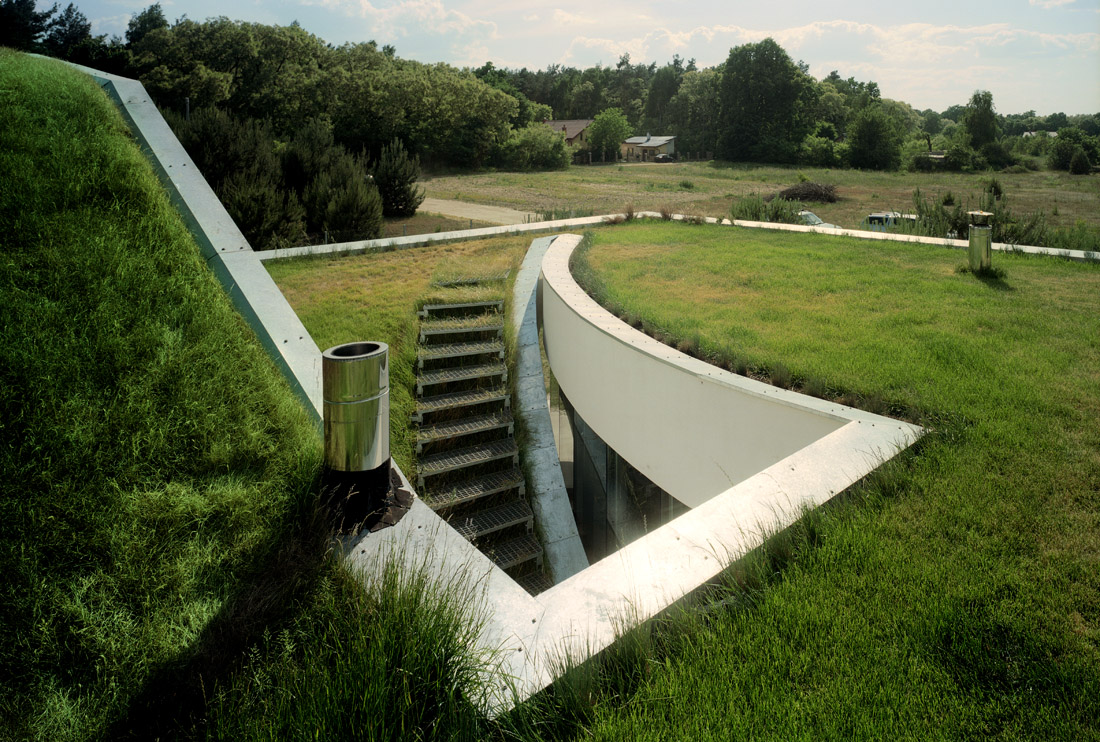
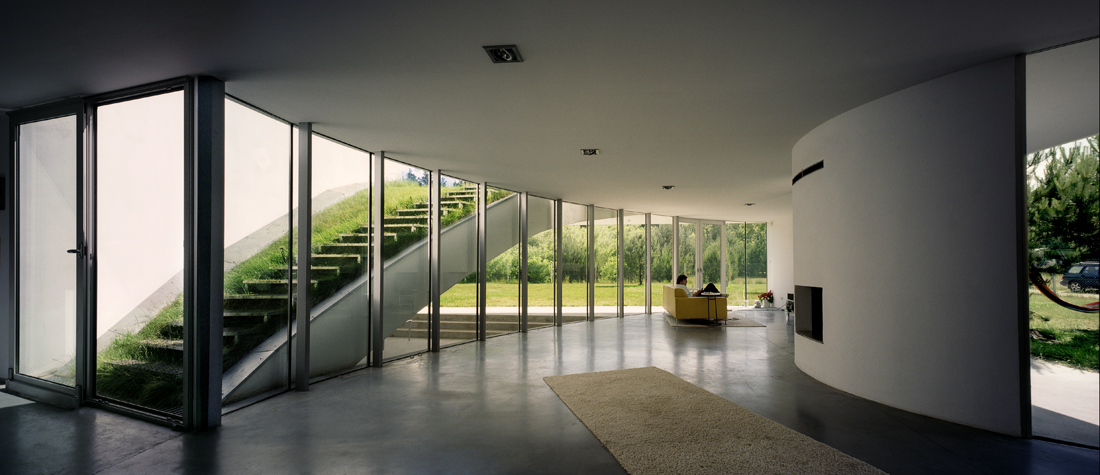
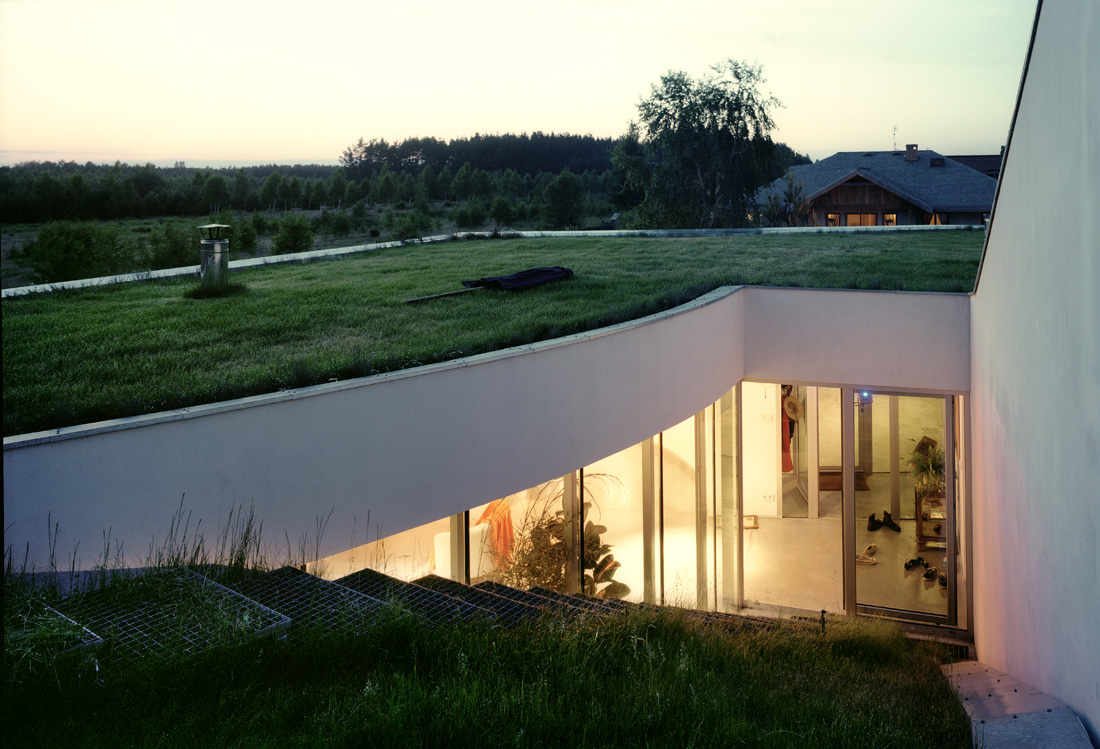
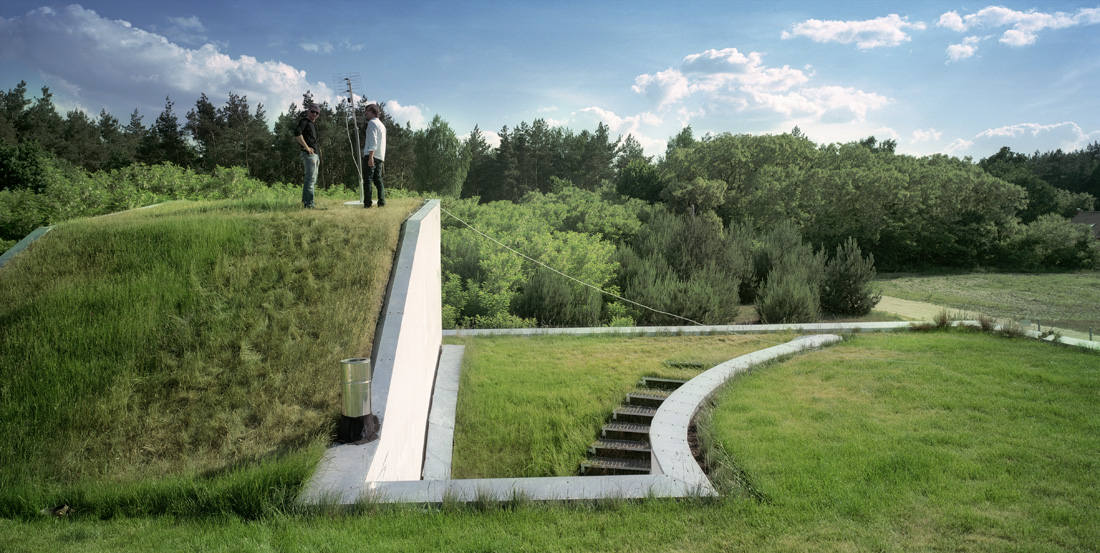
OUTrial House, completed in 2007, has a floor area of 180 square metres on a 1,440-square-metre site in Książenice, Poland. The house is tucked under its own lawn: part of the ground is lifted to form a green roof that adds insulation. Floor-to-ceiling glass on the ground floor brings in daylight and views of the surrounding greenery.
What makes each house sustainable (data table)
Most houses in this list have no independently certified energy data. The table separates certifications and design targets from features, so you can judge each sustainable house on evidence rather than adjectives. When a sustainable house has no certificate, ask for its energy bills or monitored data before believing a performance figure.
| House (location, completed) | Key sustainable measures | Certification, award or target | Evidence status |
|---|---|---|---|
| Slip House (London, 2012) | Channel-glass envelope, solar-assisted ground-source heat pump with energy piles, MVHR, PV, rainwater harvesting, wildflower roof | RIBA Manser Medal 2013 (design award) | Features described by architect and press; no published energy data found |
| SysHaus (São Paulo, 2018) | Factory-made, demountable kit of parts; quick assembly | None found | Manufacturer's claims |
| ZEB Pilot House (Larvik, 2014) | PV and solar collectors, geothermal energy wells, passive orientation | Target: ZEB-OM (offset operational and material emissions) | Design target set with SINTEF; no monitored results found |
| Fall House (Big Sur, c. 2014) | Solar-control glazing, radiant hydronic floors, stack ventilation, green roof, on-site wastewater treatment | None found | Architect's description |
| Living Screen House (Sydney) | 10 kW PV, 10,000 l rainwater storage, green wall screens, reused demolition timber | None found | Architect's description |
| Haus W (Hamburg, 2007) | Prefabricated CNC-cut timber upper floor assembled in days; sunken ground floor | Described as low-energy | No published energy data found |
| Marmalade Lane (Cambridge, 2018) | Timber closed panels, triple glazing, MVHR, air-source heat pumps, shared facilities | Designed to Code for Sustainable Homes Level 4 energy equivalent | Good Homes Alliance case study |
| MO House (near Madrid, 2013) | 72 mm cross-laminated timber panels, steel micropiles to protect tree roots | None found | Architect's description |
| Edgeland House (Austin, c. 2012) | Earth-sheltered (about 2 m deep), green roofs, native planting on a brownfield site | Design awards (Texas Architect 2016 Design Awards) | Wildflower Center project record |
| Casa Nirau (Mexico City, 2016) | Smaller replacement house, rainwater to drinking water, simulation-led design | None; about US$15/month running cost is a projection | Design projection, not measured |
| Caruth Boulevard Residence (Dallas) | PV, recycled and reclaimed materials, native drought-tolerant plants | Reported LEED Gold | Press reports; not checked in the USGBC directory |
| House by the Pond (Water Mill, 2011) | Geothermal heating and cooling, efficient glazing, overhangs, insulation | Exceeded Energy Star requirements (architect) | Architect's statement |
| Đại Kim House (Hanoi, 2018) | 56 m², planted heat buffer on west façade, natural light and ventilation | None found | Architect's description |
| OUTrial House (Książenice, 2007) | Lifted lawn forms a green roof, extensive glazing | None found | Architect's description |
Source: Arch2O, from the architects' and project sources listed under Sources and further reading (checked 24 October 2026) (as of 24 October 2026).
Affordable and low-carbon housing approaches
How much does it cost to build a sustainable house? There is no reliable single figure: costs depend on the country, the site, the size of the house and the standard chosen. The best evidence comes from the UK, where the Passivhaus Trust’s 2019 cost study found that best-practice Passivhaus projects cost about 8% more to build than comparable conventional ones, and that the uplift could fall to around 4% as the supply chain matures. Lower running costs can then recover part of that extra cost over the life of the home.
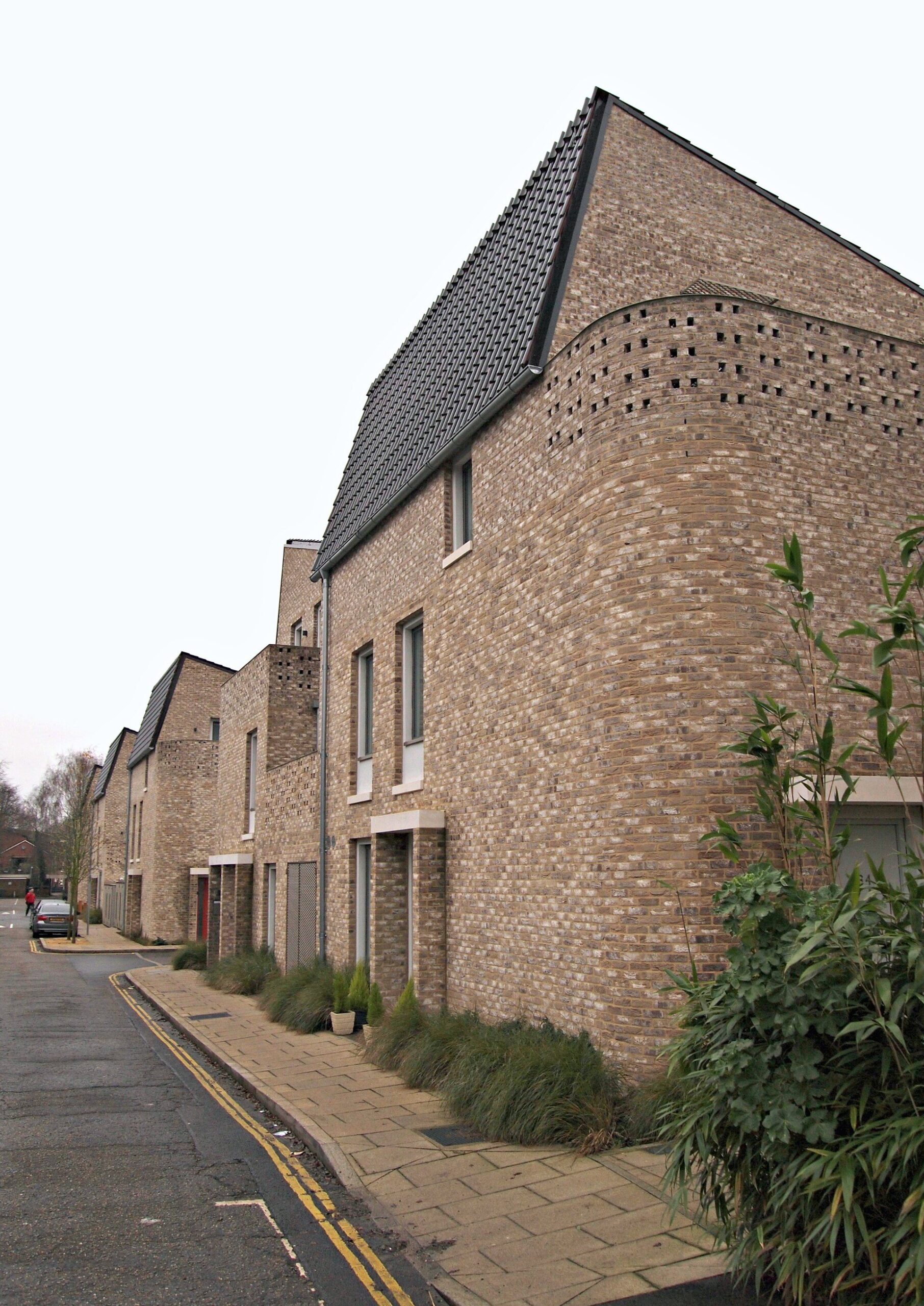
Goldsmith Street, Norwich: 105 council homes built to the Passivhaus standard, designed by Mikhail Riches with Cathy Hawley (RIBA Stirling Prize 2019). Photo: David Hallam-Jones, CC BY-SA 2.0, via Geograph/Wikimedia Commons. David Hallam-Jones, source, CC BY-SA 2.0
Goldsmith Street in Norwich, designed by Mikhail Riches with Cathy Hawley for Norwich City Council, shows that low-energy housing can also be social housing. Its 105 homes, built to the Passivhaus standard and let at social rent, won the RIBA Stirling Prize in 2019, and residents’ energy bills were estimated at around 70% lower than those of an average household. Marmalade Lane, above, shows another route: sharing gardens, guest rooms and laundry so that each sustainable house can be smaller.
How can you build your own sustainable house? The examples above suggest a practical sequence:
- Build smaller and simpler: compact forms with fewer corners lose less heat and cost less, as Casa Nirau and Đại Kim show.
- Spend on the fabric first (insulation, airtightness, windows), then add a heat pump and solar panels.
- Design for your climate: shading and cross-ventilation in hot regions, solar gain and airtightness in cold ones.
- Use prefabricated or timber construction where it is available, which shortens building time, as at Haus W and SysHaus.
- Reuse what is already on the site, as the Living Screen House did with timber from demolition.
- Ask for evidence: an energy certificate, a Passivhaus certificate or monitored data is worth more than a list of green features.
Sustainable Homes: In a Nutshell
A sustainable house reduces its environmental impact by using less energy, water and material, and it improves daily life through better daylight, air quality and comfort. The most effective decisions are made early: how big the house is, how it faces the sun and how well its envelope is built. Technology then covers a much smaller demand.
Community-scale approaches matter too. Shared facilities, such as those at Marmalade Lane, and community energy schemes allow households to share resources and cut costs. For larger buildings, see the office examples linked at the top of this article; for the principles behind all of them, return to the sustainable architecture guide linked above.
Sources and further reading
- Dezeen: Carl Turner on Slip House and e-architect: Slip House
- Snøhetta: ZEB Pilot House
- Dezeen: Fall House by Fougeron Architecture
- ArchitectureAU: Living Screen House
- Werner Sobek: House W
- Good Homes Alliance: Marmalade Lane case study
- Arquitectura Viva: MO House
- Lady Bird Johnson Wildflower Center: Edgeland House
- Architizer: Casa Nirau
- Architizer: House by the Pond
- KWK PROMES: OUTrial House
- Dezeen: Goldsmith Street wins the Stirling Prize 2019
- Passive House Plus: Passivhaus Trust cost study (2019)
Next step: if you are planning a sustainable house, start with size, orientation and the envelope, and ask your architect for a target you can verify after you move in.

Yosra is an architect, writer, and teacher. She is always into learning something new. Her life motto is: "A jack of all trades is a master of none, but oftentimes better than a master of one.” One day she will travel the world and visit its architectural wonders. In the meanwhile, she contends herself with reading and writing about them.