

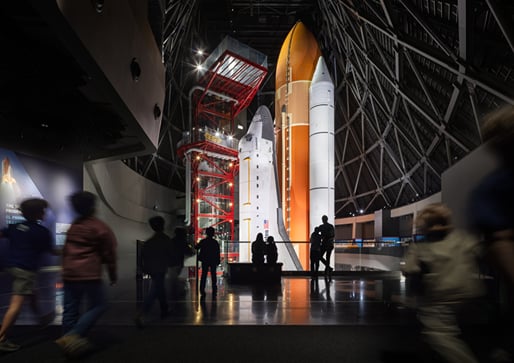
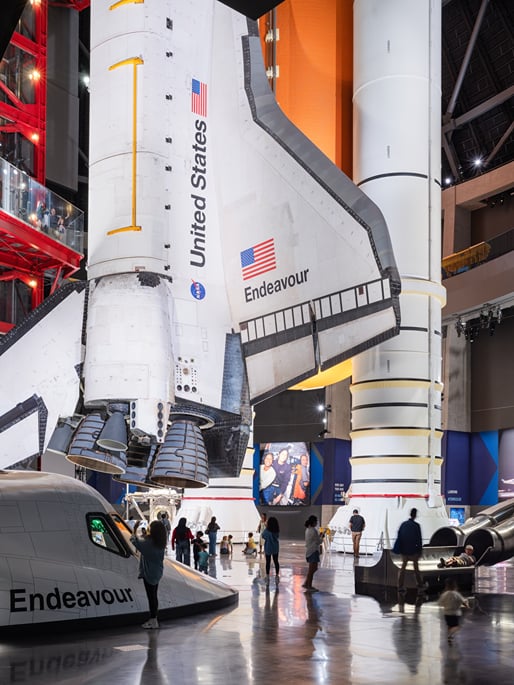
The Samuel Oschin Air and Space Center has opened at Exposition Park in Los Angeles, giving Space Shuttle Endeavour a permanent home. ZGF Architects designed the 200,000-square-foot expansion of the California Science Center, which also houses a collection of aircraft and spacecraft. The building arrives after years of planning and now stands as the newest addition to one of the city’s best-known science destinations.
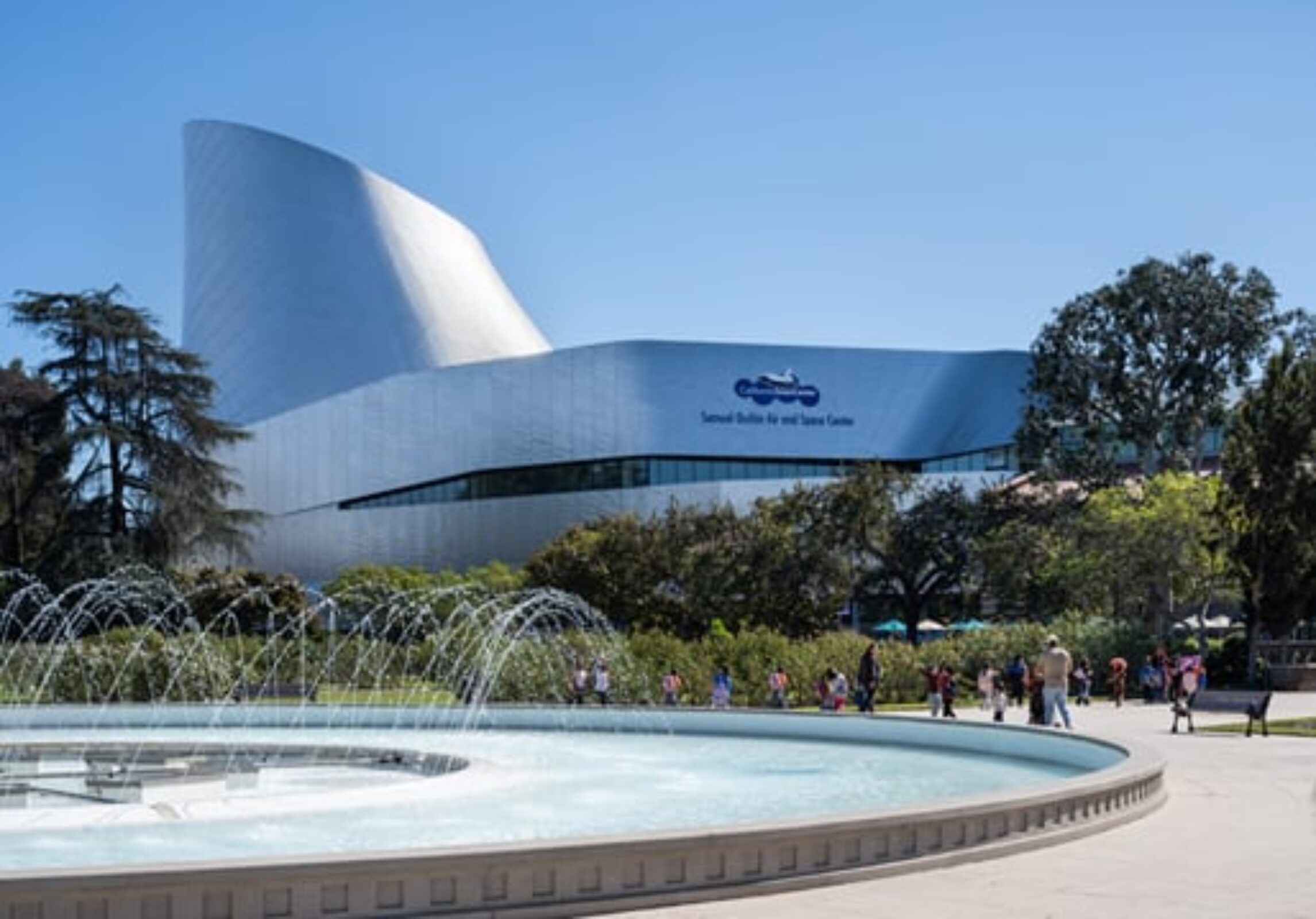
Image credit: Mike Kelley, courtesy of ZGF Architects
The project forms part of a three-decade vision to establish a major educational and cultural destination in Los Angeles, with a focus on science engagement and public learning. It is designed to accommodate 100 artefacts and more than 100 new hands-on exhibits, which means the expansion will nearly double the Science Center’s exhibition space. That scale turns a single-orbiter display into a wider program built around how people learn about flight and space.
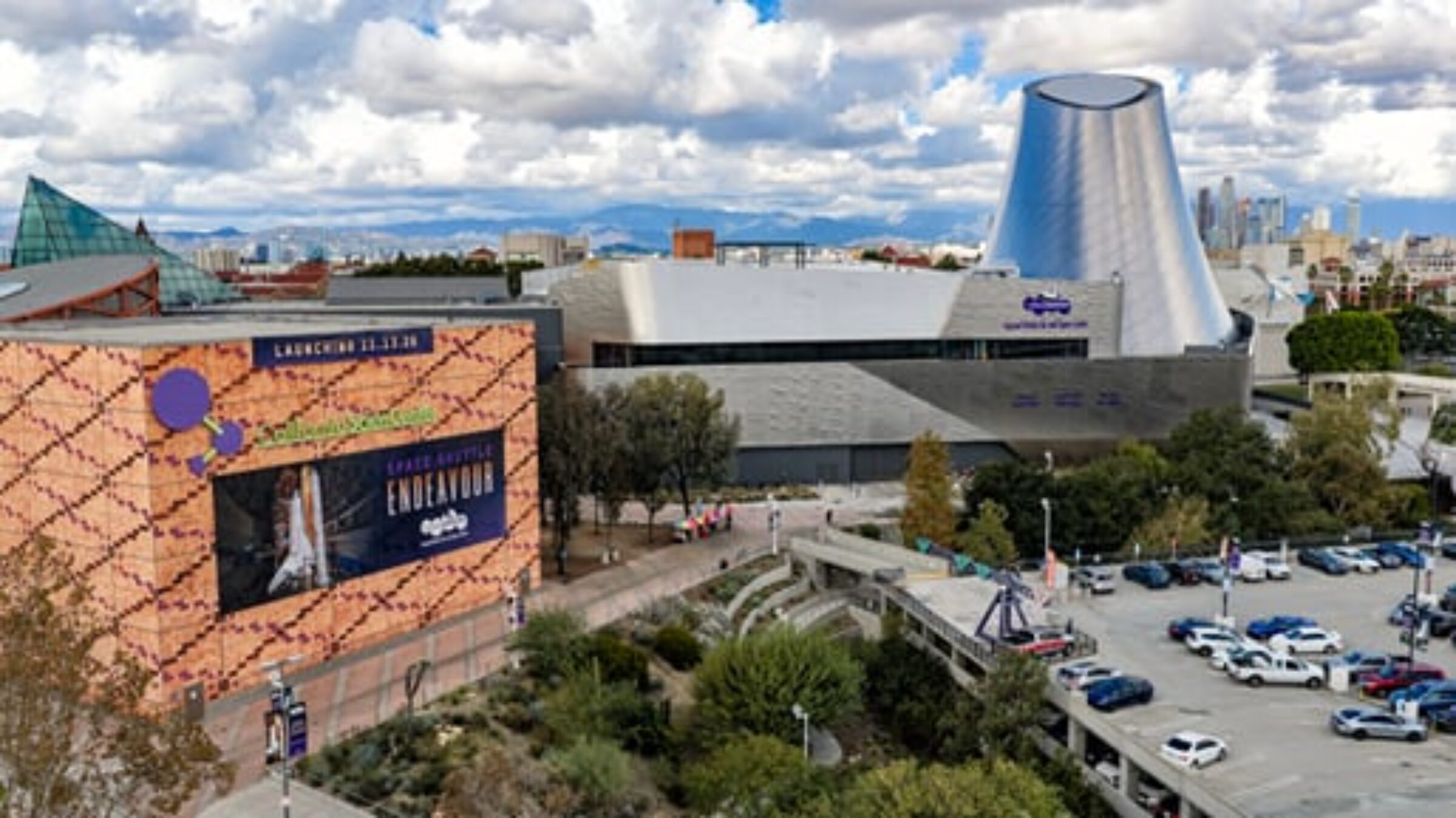
The architects gave the building a curvilinear stainless-steel exterior informed by the aerodynamic geometry of the Endeavour, so the shape of the shuttle shapes the shape of its shelter. The primary structure spans four levels, while the Samuel Oschin Shuttle Gallery rises across six levels to a height of 200 feet. That height makes the gallery the tallest structure in Exposition Park.
Read more:
- Powerhouse Parramatta Museum Opens November 7 in Western Sydney
- Herzog & de Meuron and EHDD Turn Novato Warehouse into Eames Institute Museum
- Arizona State University, Biodesign Institute C | ZGF Architects
Beyond the shuttle gallery, the expansion adds two other multi-level exhibition spaces, the Korean Air Aviation Gallery and the Kent Kresa Space Gallery. Together the three galleries organize the collection by theme, with aircraft and spacecraft each given their own volume. The arrangement lets the center present its 100 artefacts at different scales without crowding them into a single hall.
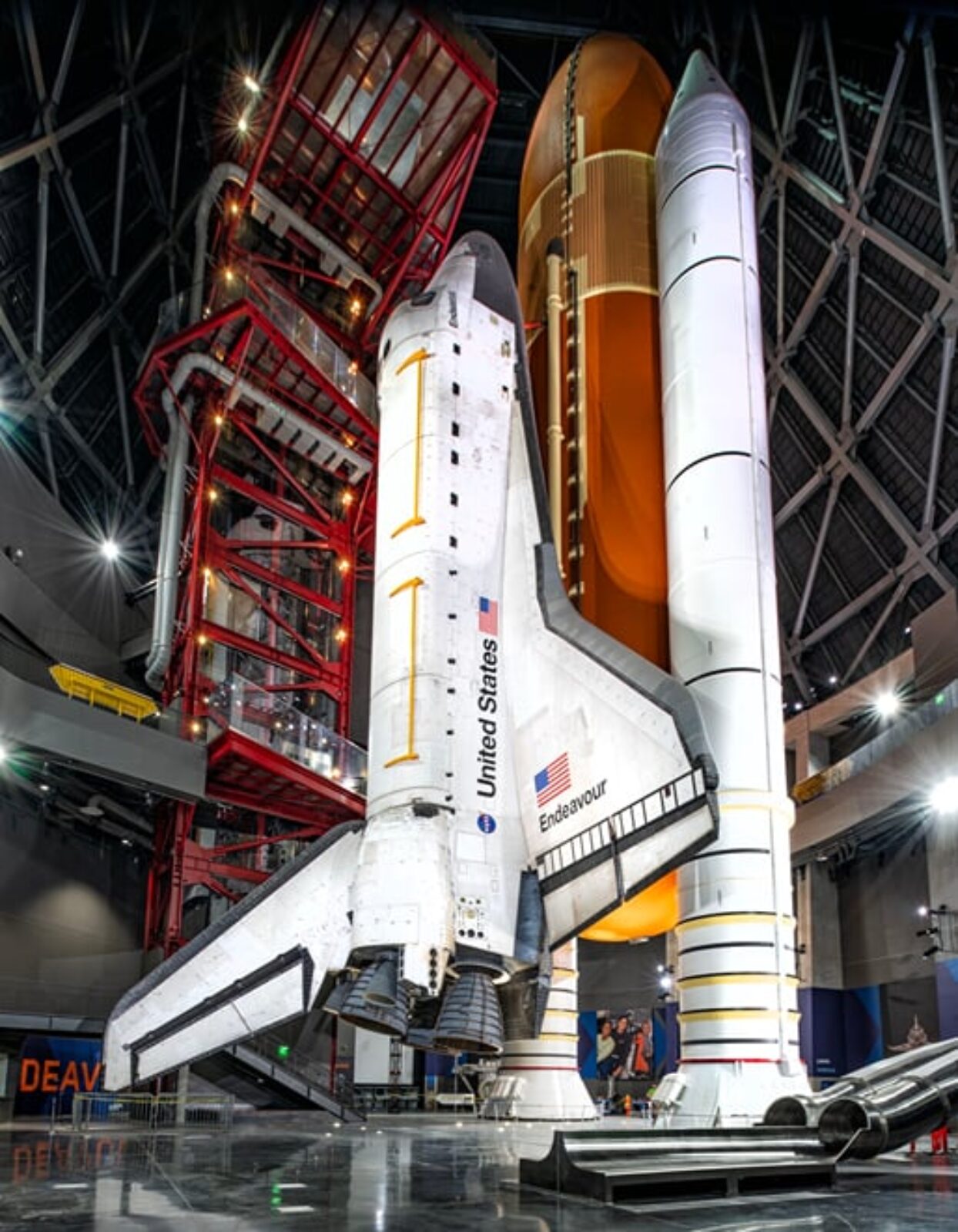
Image credit: California Science Center
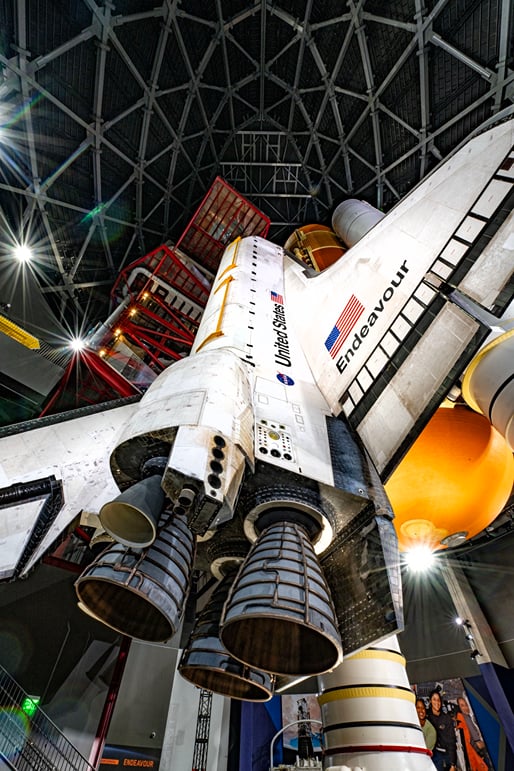
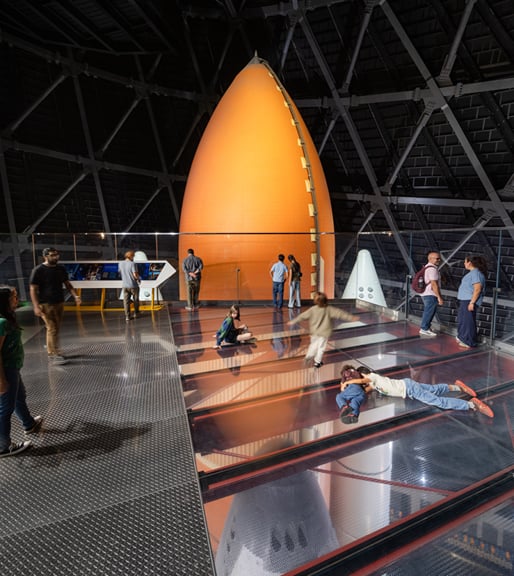
Visitor experiences carry the same ambition into the way people move through the building. A glass elevator rises nearly 140 feet to a viewing platform above Endeavour’s nose, so visitors can look at the orbiter from a height few museum displays allow. Alongside it, a 115-foot tubular slide descends 45 feet, which adds a playful route down for those who want one.
For more background, see our guide to most beautiful museums in the world.

Jane Doe is an American architectural editor with a deep-rooted passion for design and the built environment. She holds a degree in Architecture from Columbia University, where she developed a strong foundation in both architectural theory and urban studies. With over a decade of editorial experience, Jane specializes in shaping content that bridges architecture, urbanism, and cultural discourse. Her work spans leading design publications, exhibition texts, and digital platforms, where she is known for her clear, engaging narratives and her ability to translate complex spatial ideas for a broad audience. Jane is particularly interested in issues of equity, sustainability, and the evolving role of cities in a changing world.