

No matter how solid, excellently engineered, or heavy a structure is, engineering can sometimes relocate it without destroying it. The Indiana Bell building, constructed in 1884 and operated until 1957, is an ideal example when the American architect Kurt Vonnegut Sr. suggested relocating the existing structure to the back of the land so it could stand on 13 West New York Street rather than being demolished. This innovative problem-solving would give enough space to create a new structure. Wait, was that even possible?
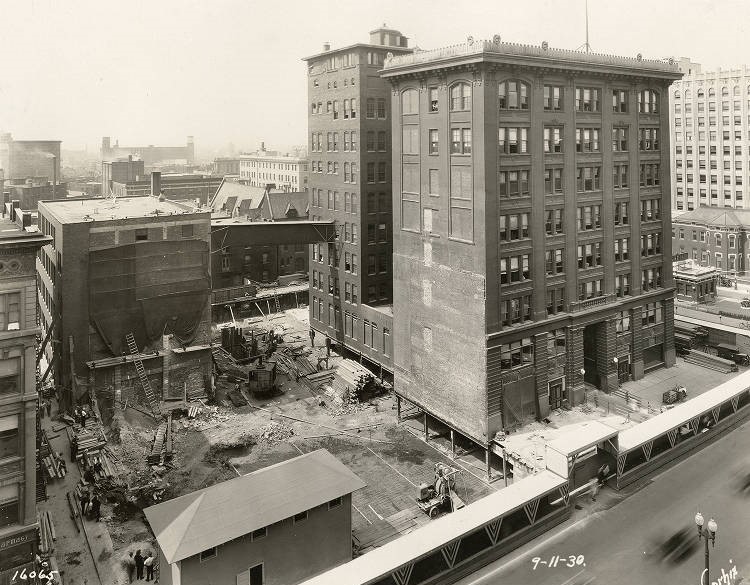
Throughout the Indiana Bell Building’s rotation process, 1930. ©Indiana Historical Society
Indiana Bell Building History and Foundation:
Was Indiana Bell building an iconic building? In 1929, the Central Union Telephone Company building was bought by the Indiana Bell Telephone Company and was initially planned to be demolished to construct a much larger headquarters instead of the old one. However, they could not destroy the old structure because it served an essential function in the city that couldn’t be interrupted, so practically demolishing the building didn’t seem applicable.
Indiana Bell Telephone Building Rotation in 1930
On the other hand, moving an eight-story, steel-frame, and brick building, which measured about 100 X 135 with a weight of 11,000 tons, wasn’t easy, especially in the 1930’s right? The process involved shifting the vast steel and brick structure 16 meters south before rotating 30 degrees, then going again 30 meters west. However, this massive execution of moving the building began on October 12, 1930, and took over four weeks to finish.
Bare in mind that the power used to move the building was generated by hand-operated jacks with the aid of a steam engine. Moving the mass was accomplished using a tangible mat, softened by Oregon fir timbers, with hydraulic jacks and rollers.
The construction workers utilized a pair of manually operated jacks that turned handles through an arc of 90 degrees six times in just thirty seconds to push and pull the building three-eights of an inch in one move, while the rotating movement was accomplished with cables attached to the stationary steam engine.
So why is it considered an architectural accomplishment? The answer is simply that during the relocation, the building still operated normally; gas, electric heat, water, and sewage had maintained at all times so the structure could be used. On the other hand, utility cables and pipes serving the building had to be stretched and flexible to continue providing service during the move without interrupting them.
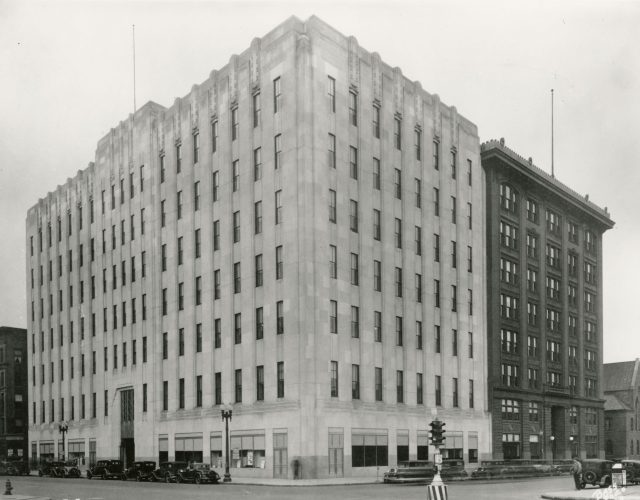
The Indiana Bell building at its new location, 1933. ©Indiana Historical Society
Alongside precision, safety was one of the central pillars that were taken care of, as safety spots were placed in the elevator shafts to prevent movement In the building. It was also stated that the 600 employees and the public could enter and leave the building at any time while the relocation was in progress. The building never moved, and telephone services didn’t go down. Additionally, the company didn’t lose any time or service.
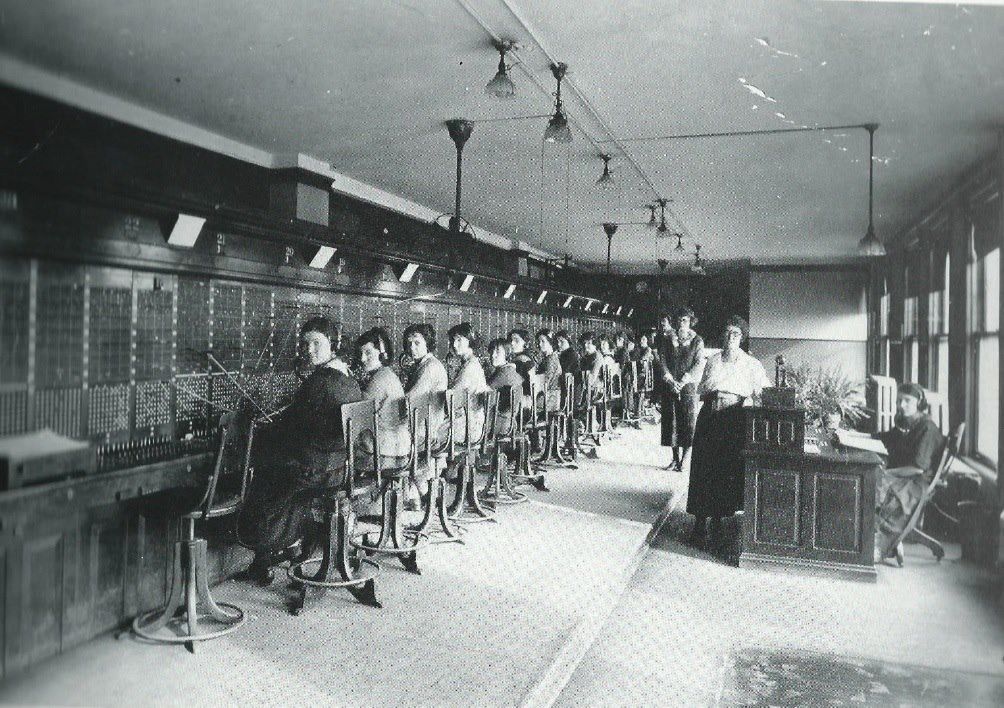
A photo of the employees operating during the relocation process. ©LoraHoppes, Pinterest
Indiana Bell Building Demolition:
The Indiana Bell Building was among the first structures to be relocated rather than destroyed. Despite the significant effort, the building only lasted until the late 1950s before it was demolished in 1963 and replaced with new office space to fit the expanding number of business operators, making it a fascinating structure relocation of the century.
The most frequent questions:-

Aly Bayoumi is an editor with a sharp eye for detail and a deep commitment to clarity and precision. Passionate about architecture and design, he sees every project as an opportunity to shape compelling narratives that bring creative visions to life. With a focus on accuracy and engaging storytelling, Aly combines editorial expertise with a dedication to elevating the voices and ideas that shape the built environment.