

If you are wondering how to display your art at home, the short answer is: choose one method per wall (a single focal piece, a grid, a salon-style gallery wall, a picture ledge or a leaning display), hang the centre of the main piece at about 145–152 cm (57–60 in) from the floor, keep 5–8 cm (2–3 in) between frames, and keep original works out of direct sun and away from heat and damp. This guide is for homeowners and renters. It keeps our 25 display ideas, adds a worked hanging-height example, a plan-and-section layout described for an in-house diagram, display types used in different countries, and conservation advice from museum sources.
Art can also change how a room feels; the right piece and the right light can even make a small room feel bigger. The ideas below cover every budget, from a single print to a full collection.
Displaying a collection without clutter
A good first step in deciding how to display your art at home is to look at what you actually own. Most people collect something: prints, photographs, plates, ceramics, records or found objects. The way to display a collection without clutter is to give each group one clear home and one organising idea. Flat works suit a gallery wall or a grid; small three-dimensional objects suit floating shelves or a bookcase; fragile or valuable pieces belong in a glazed cabinet. Repeating one element across the group, such as frame colour, mat width or subject, makes even a large collection read as a single display.
25 eye-catching ways to display art in your new home
The ideas run from single statement pieces to whole-wall arrangements and unexpected places, including the kitchen, where good kitchen lighting can turn a print above a counter into a feature.
1. Go for frameless artwork
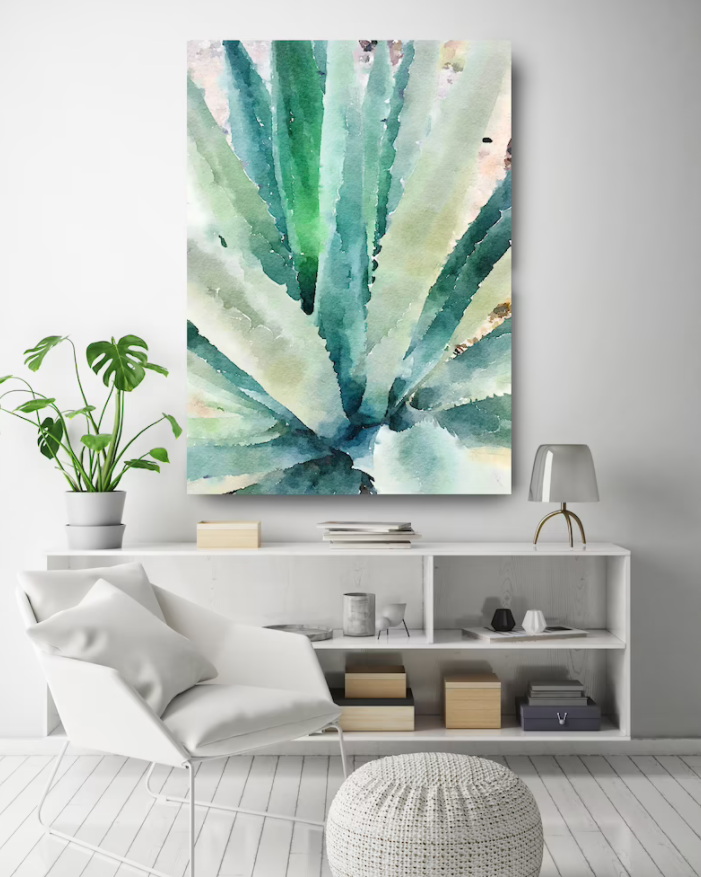
Courtesy of Etsy
Frameless canvases (stretched canvas with the image wrapped round the edges) give clean lines and suit most modern interiors. Without a frame, colour and composition carry the piece. They work well in clusters because there is no visual weight from multiple frames.
2. Use the floor space
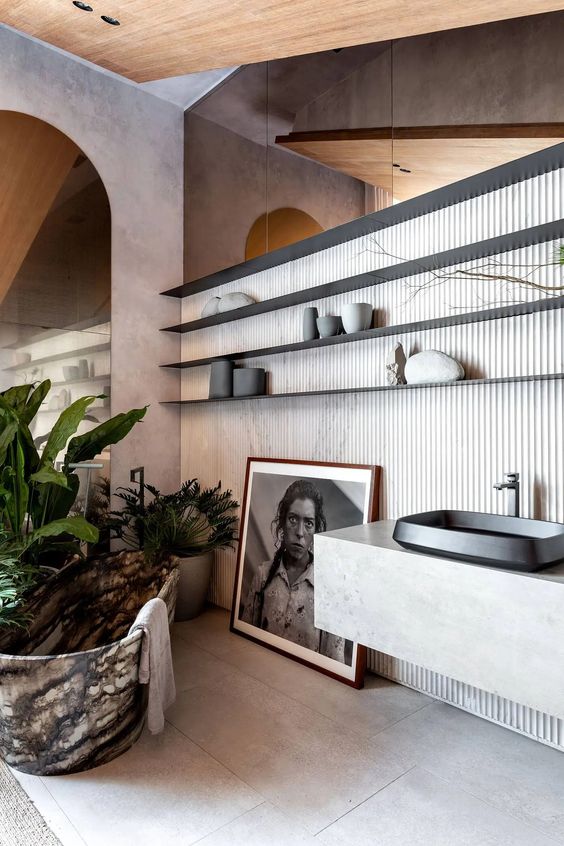
Courtesy of Planete Deco
If you cannot drill, or the wall is already patterned, lean artwork against the wall on the floor or on a low piece of furniture. Layering two or three pieces of different sizes gives depth to an empty corner. Large pieces should lean at a shallow, stable angle on a non-slip surface, out of walkways, especially in homes with children or pets.
Read more: Detailed floor plans of homes from popular TV shows
3. Mix and match different styles
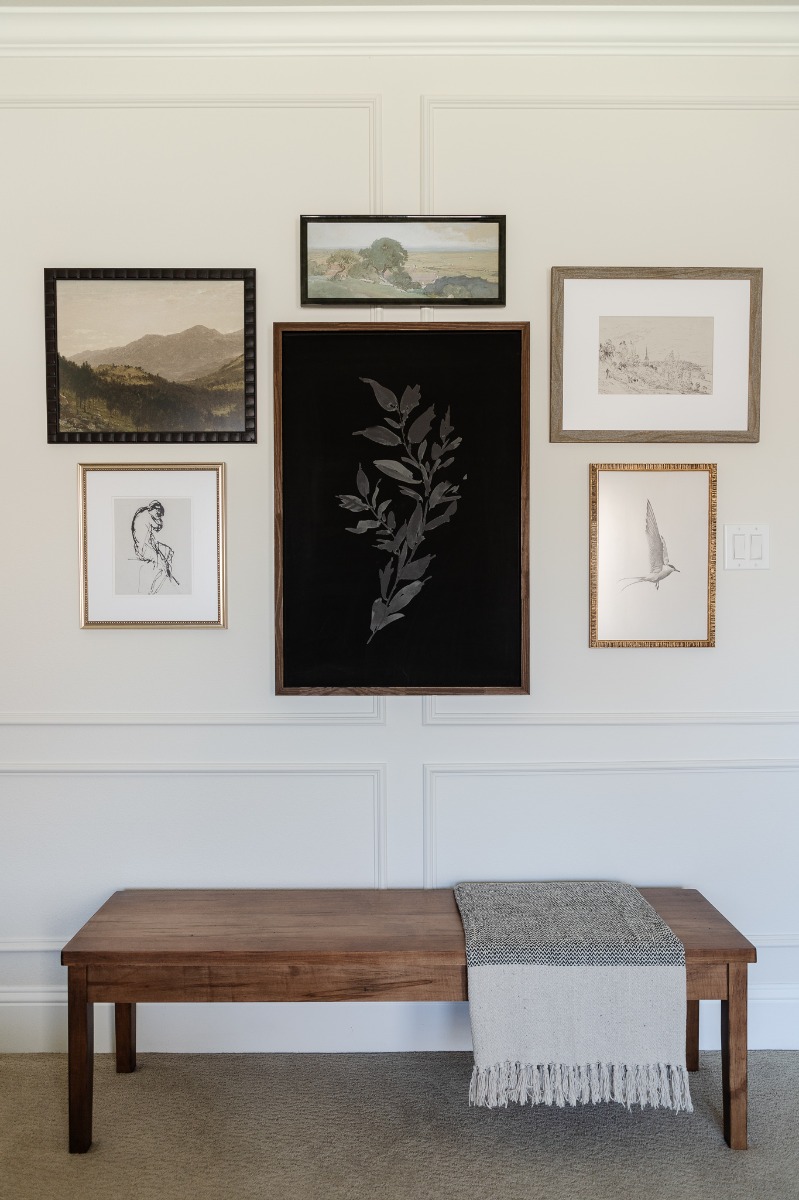
Courtesy of Shelley Westermanc
You can combine works from different periods or media if one element ties them together: a shared colour palette, a common subject or matching frames. Here, gold and black frames and a muted palette unify drawings, prints and a large dark botanical.
4. Create a gallery wall

Courtesy of Nicole Interiors
A gallery wall shows many pieces on one wall. It suits a dining area or a long blank wall and can mix your own photographs with prints and drawings. Uniform black frames and white mats, as here, keep a dense wall calm.
5. A gallery wall with picture ledges
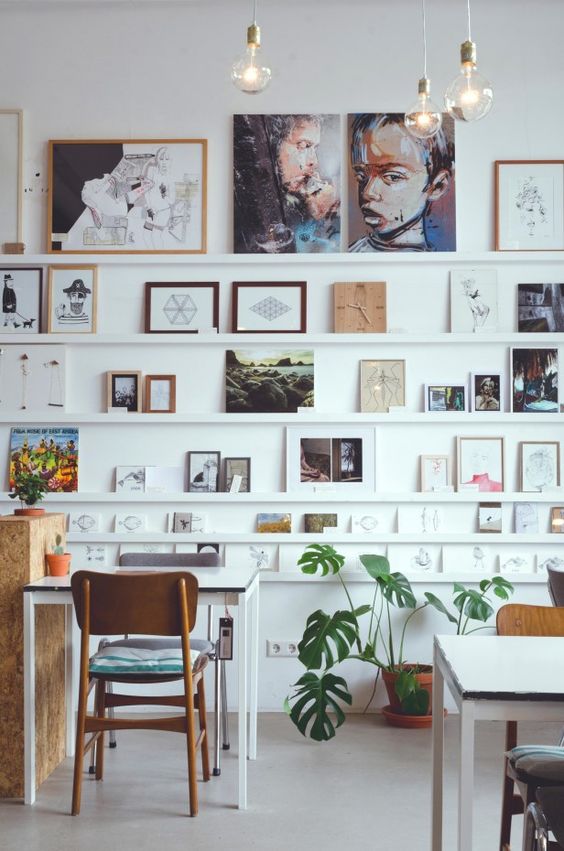
Courtesy of vtwonen
Picture ledges (narrow shelves with a lip) let you layer frames and swap them without new holes. You can add natural elements such as plants or books between the frames.
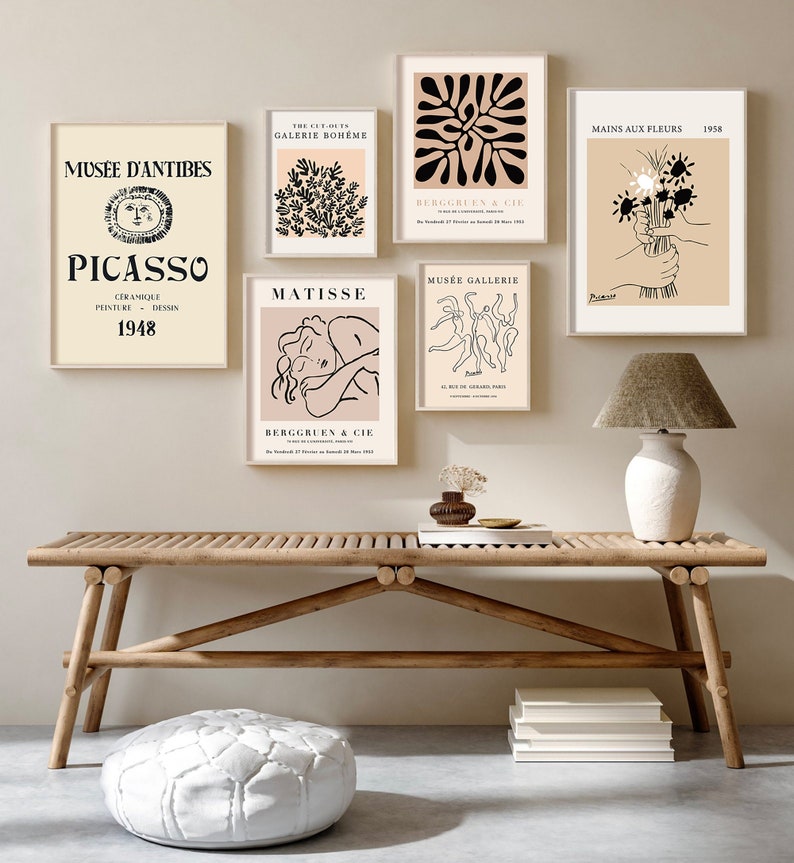
6. Mix art pieces and match colour shades
Courtesy of Etsy
Pick two or three colours from your favourite piece and repeat them in the other frames, the mats and nearby objects. Matching frame colour to the furniture below, as in this display of exhibition posters above a timber console, makes the group feel planned.
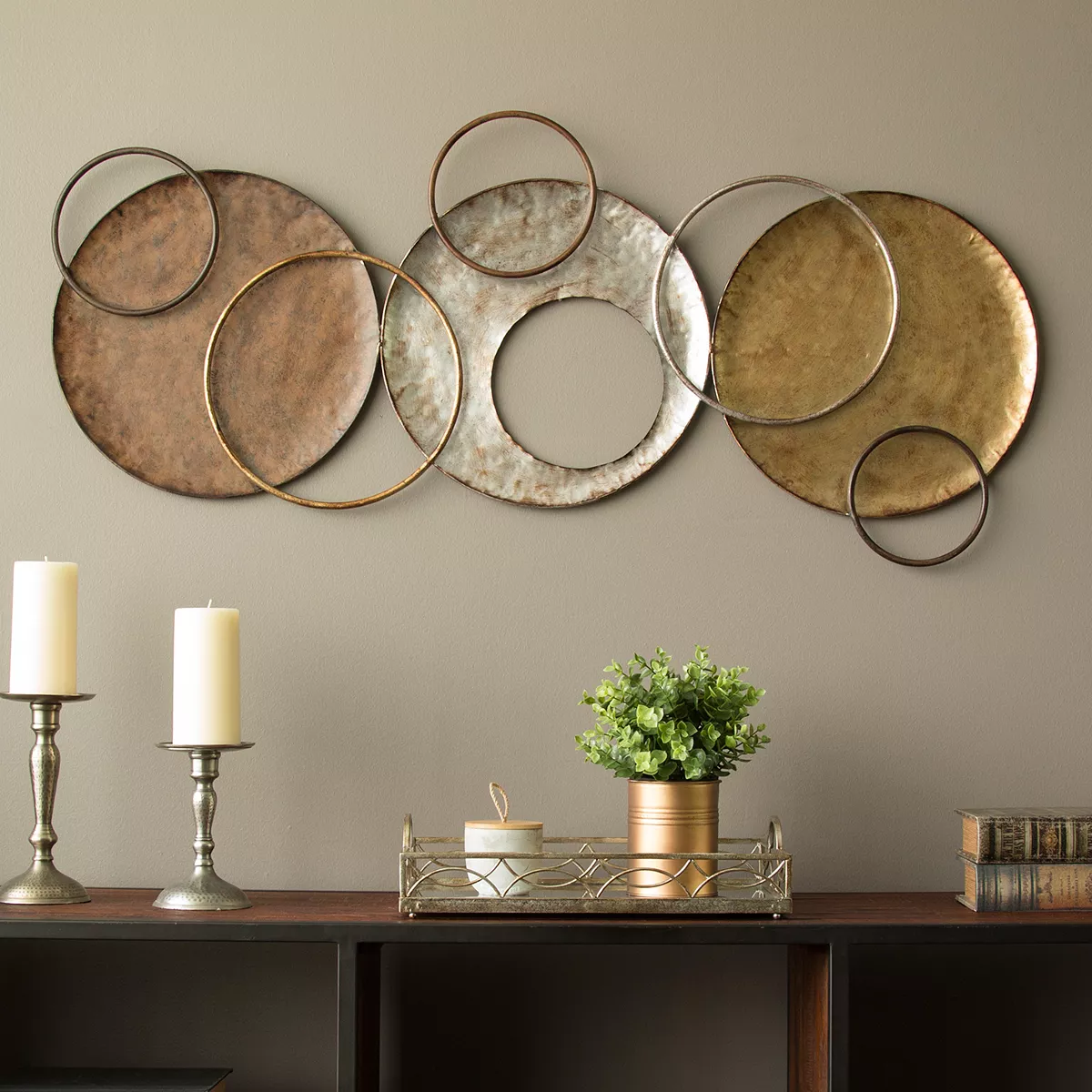
7. Almost anything can be an art piece
Courtesy of Kohl’s
Three-dimensional objects make strong wall displays: metal wall sculptures, salvaged window frames, plates, woven baskets or trays. Check the weight and use fixings rated for it.
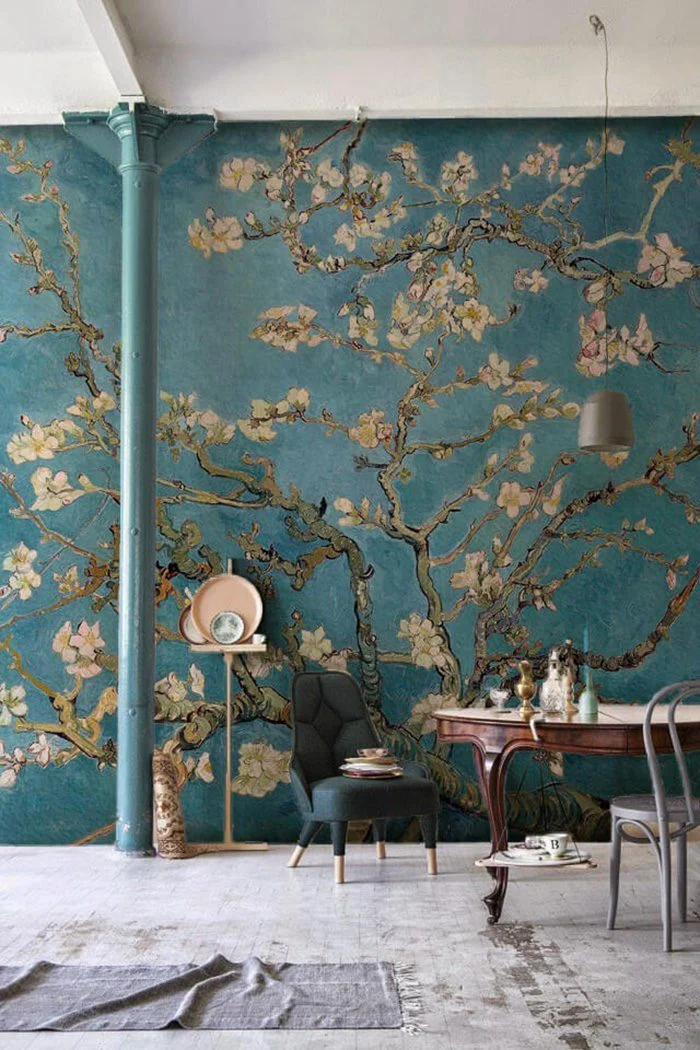
8. Go for an oversized mural
Courtesy of Hovia
A wall mural or large-format wallpaper reproduction changes a whole room. This one reproduces Vincent van Gogh’s Almond Blossom (1890), a work long out of copyright. Murals suit high walls and rooms that need one strong focal point.
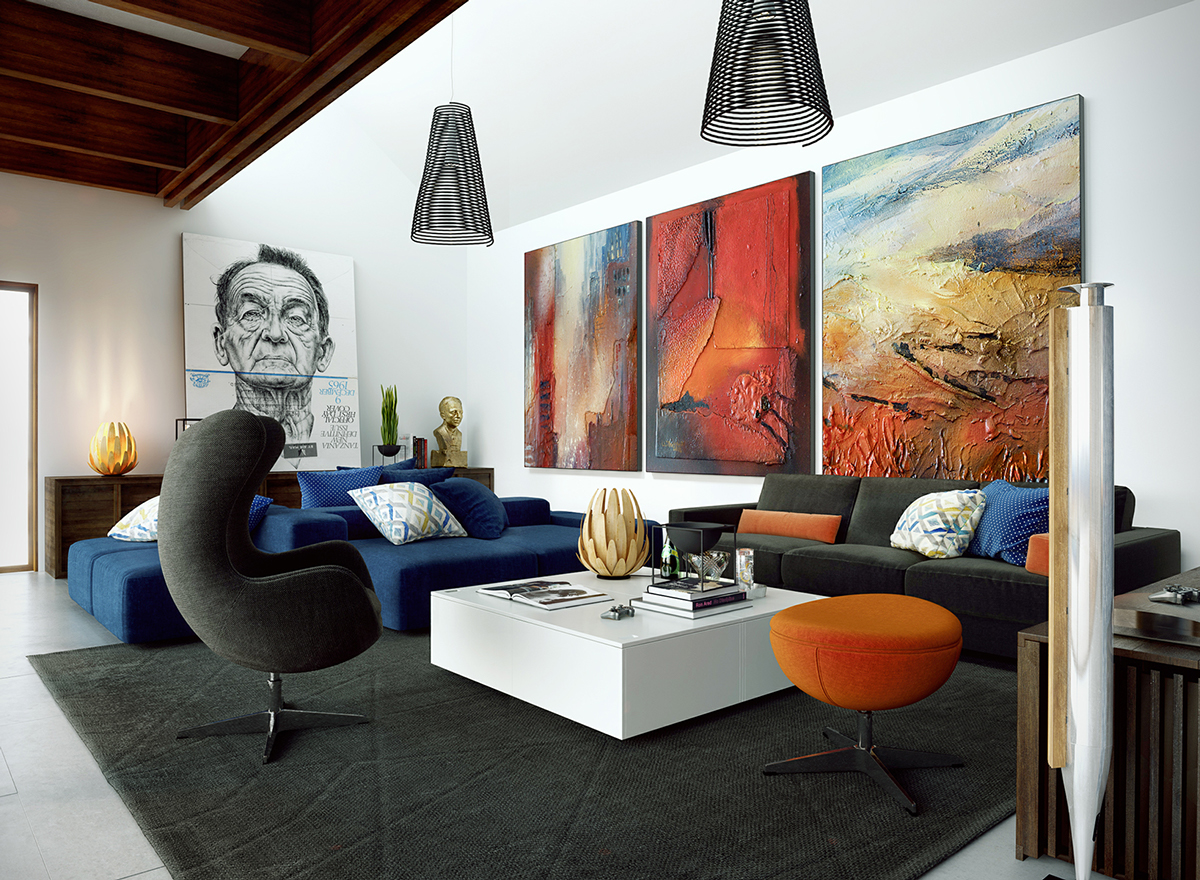
9. Or an oversized print
©Artranked.com
If a mural is too much, one oversized print does a similar job. Large-format photography, abstract work or botanical studies hold up well at scale, and a single big piece is calmer than many small ones.
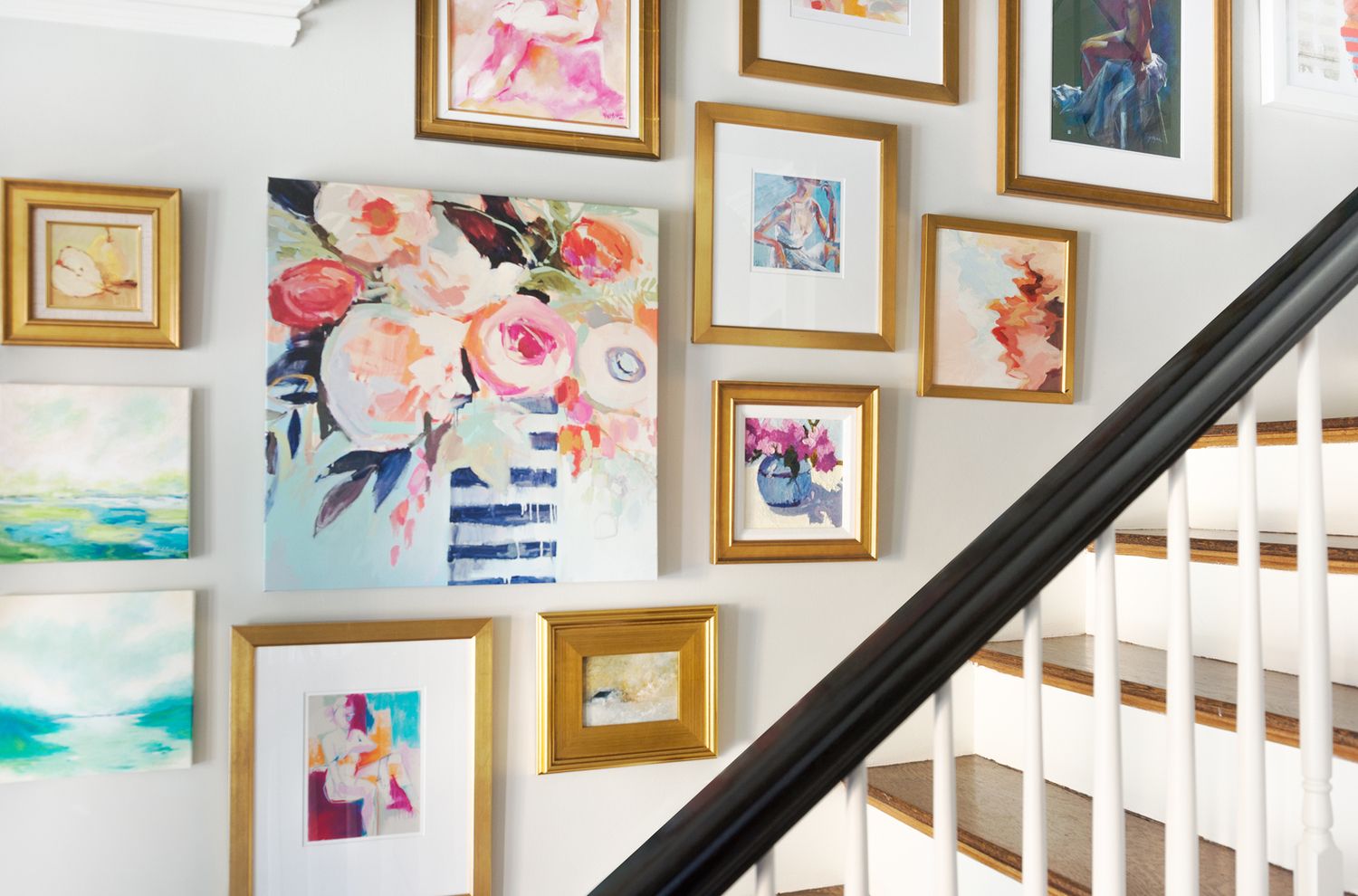
10. Use the stair space
Staircase walls are often left bare. Hang pieces so their centres follow a line parallel to the stair pitch, at roughly eye level for someone standing on the nearest step, and keep the spacing even as you climb.
©Mandarinstudio.net
11. Amplify columns
Columns and door openings frame views naturally. A sculpture, a piece of furniture or a hung work placed on the axis between them creates a deliberate vignette.

©Phaidon.com
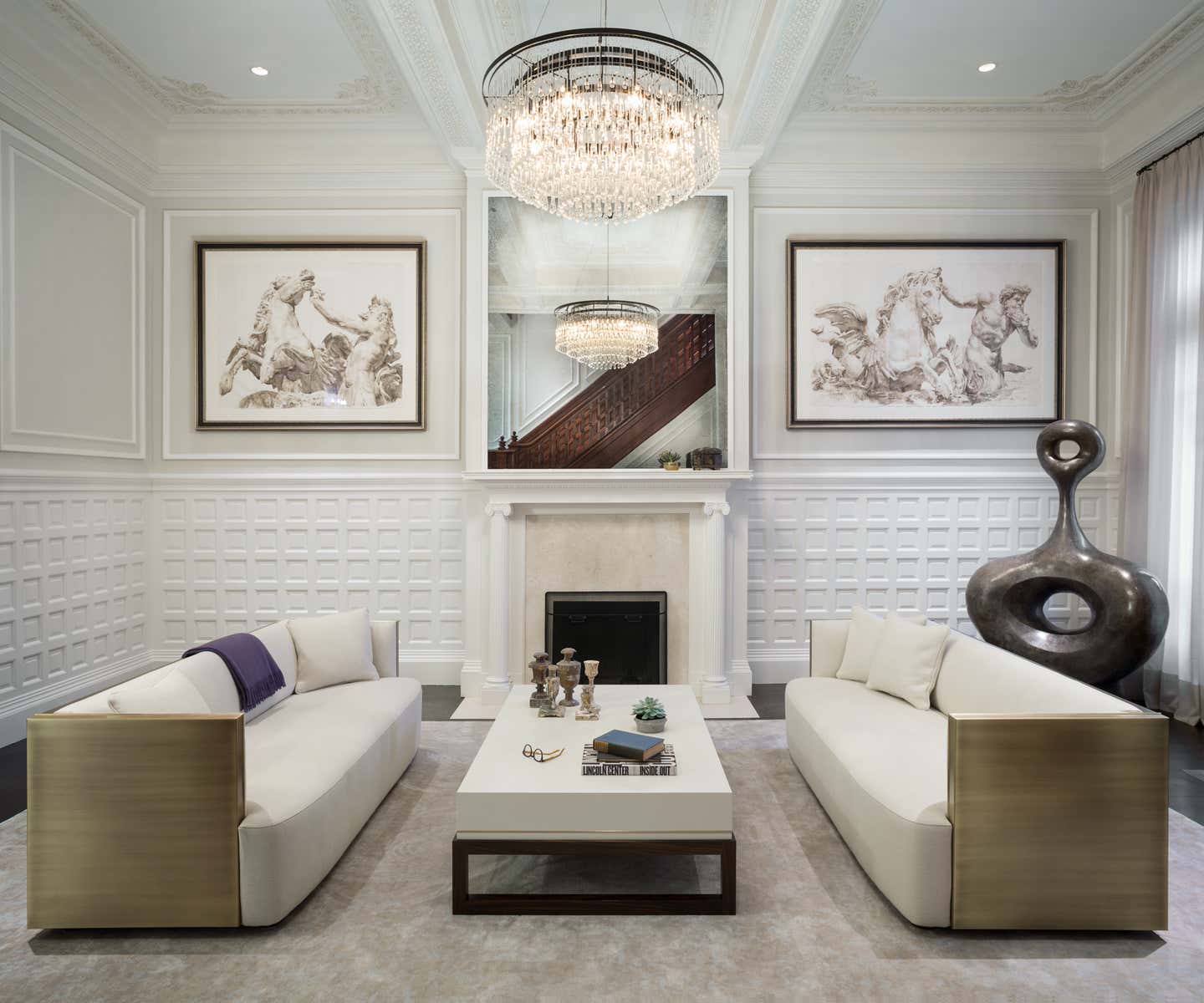
12. Arrange art pieces symmetrically
Photography: Trent Bell
For a formal look, use identical or matching works in the same frames and arrange them symmetrically about a central feature such as a fireplace or sofa.
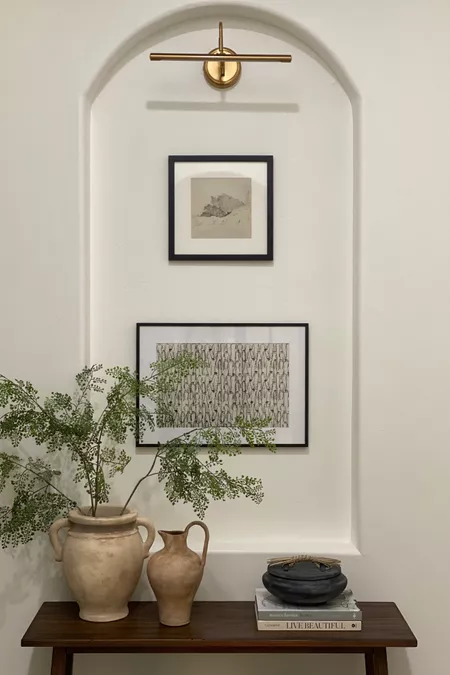
13. Use lighting for a more artistic look
Courtesy of LTK
Light changes how art is seen. A wall-washer or a small spotlight aimed from the ceiling, or well-planned artificial lighting, draws attention to a piece. Keep the light gentle and low in heat for original works, and see our mood lighting tips for layering it with the rest of the room.
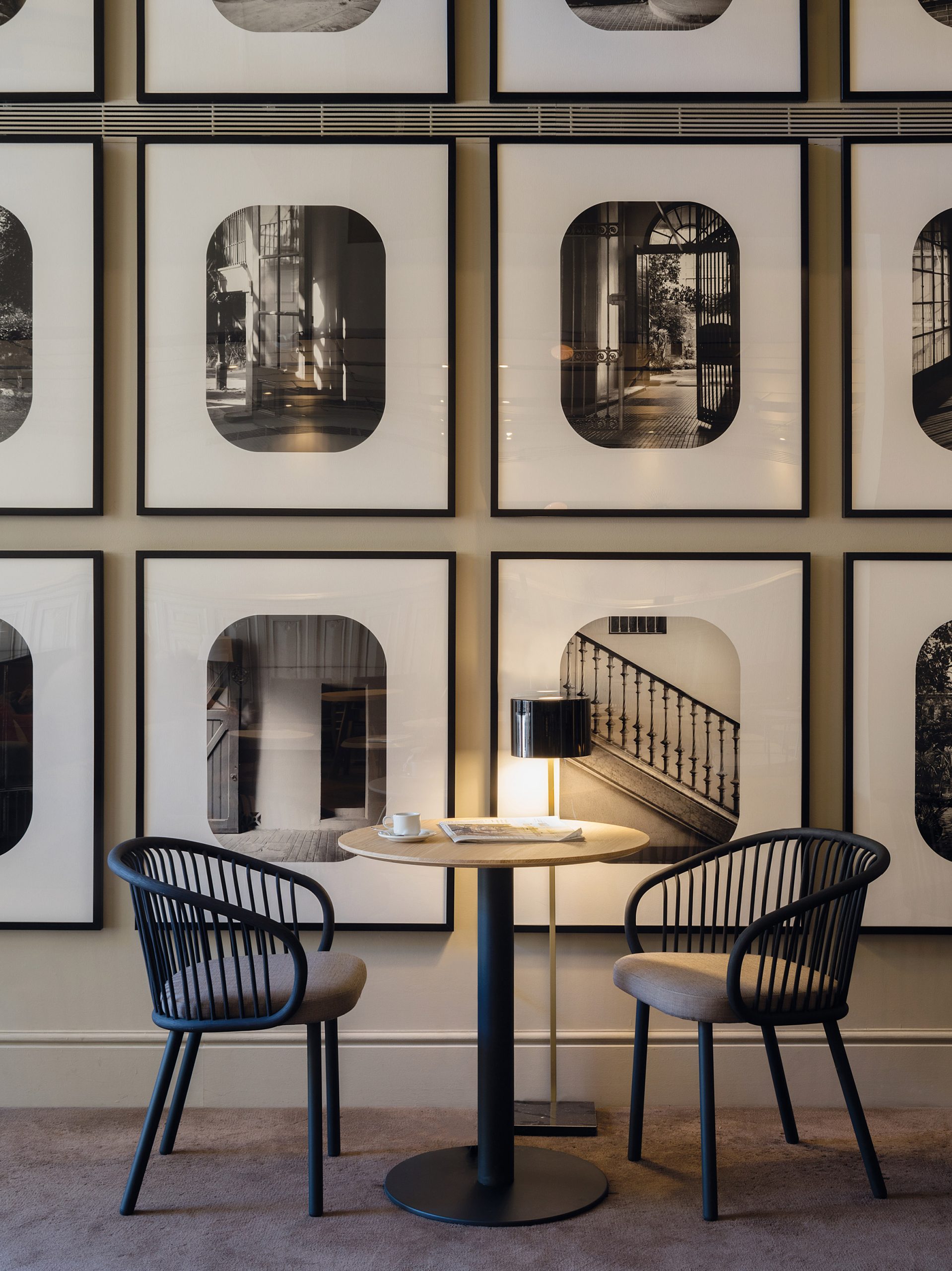
14. Stick to a grid
Courtesy of Mario Ruiz
A grid of same-size frames with equal gaps combines the order of a symmetrical hang with the richness of a gallery wall. It suits photo series and sets of prints.
15. Or break the rules
Courtesy of Haus Love Interiors
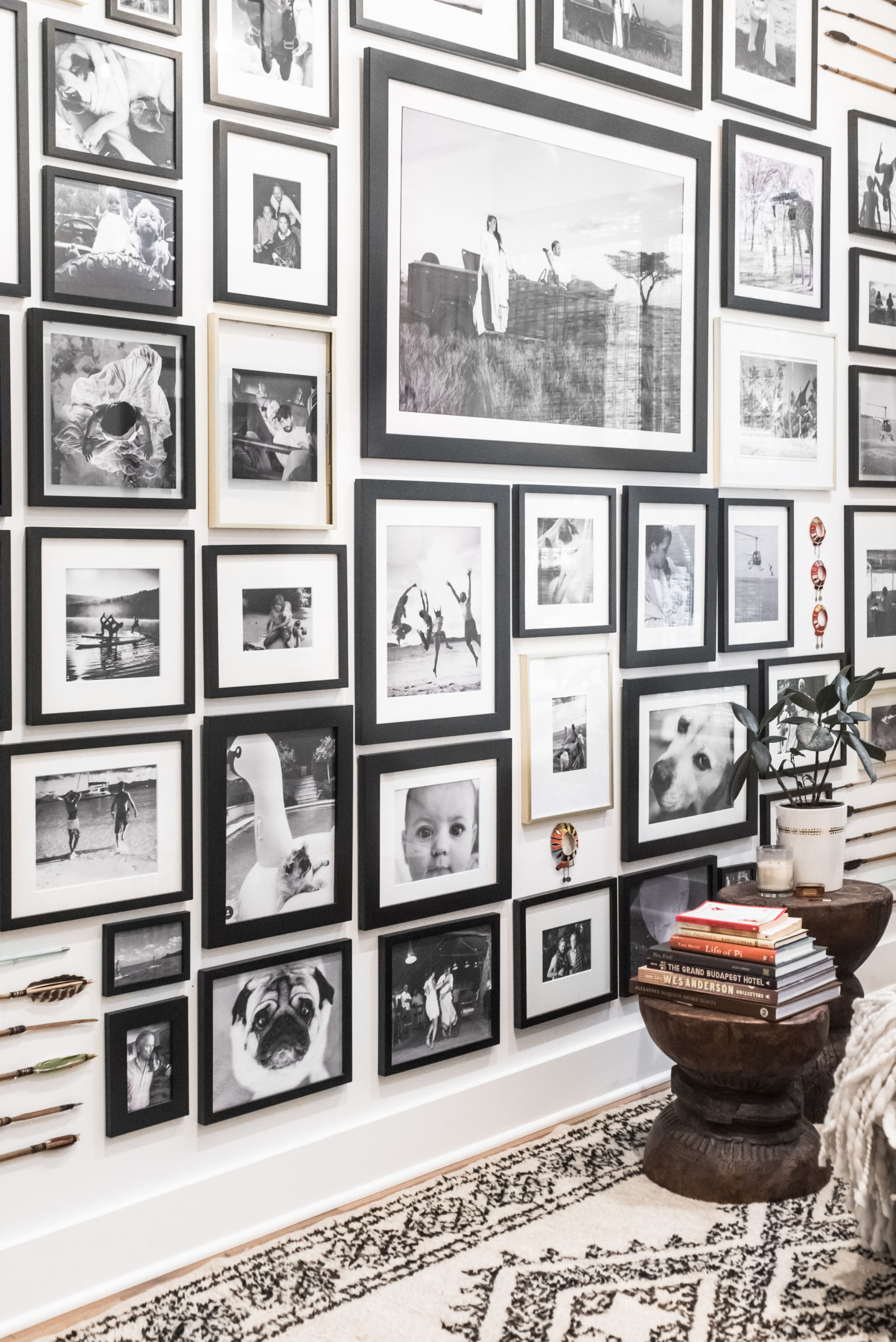
A salon-style hang starts with one anchor piece near the centre and works outwards, with frames of different sizes close together. A common theme or colour keeps it from looking random.
16. Don’t forget the bookshelves
Courtesy of Sarah Gibson
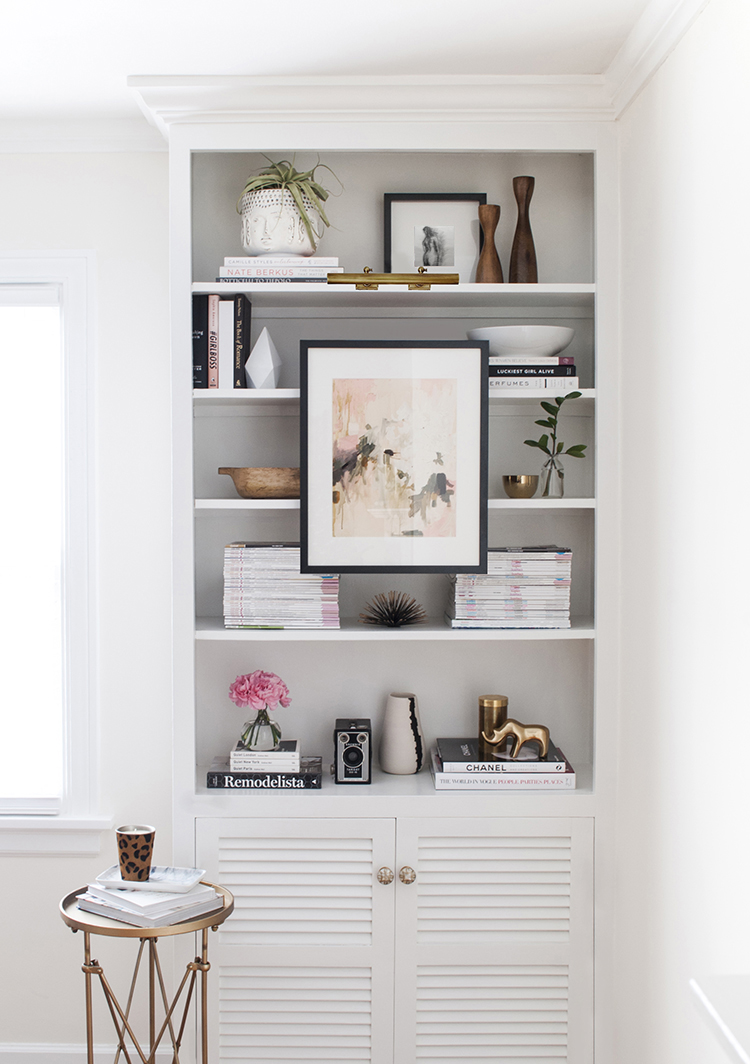
Shelves can hold small framed prints, ceramics and plants between books. Leave some empty space on each shelf so the art is visible.
17. Go up
Courtesy of Helen Norman
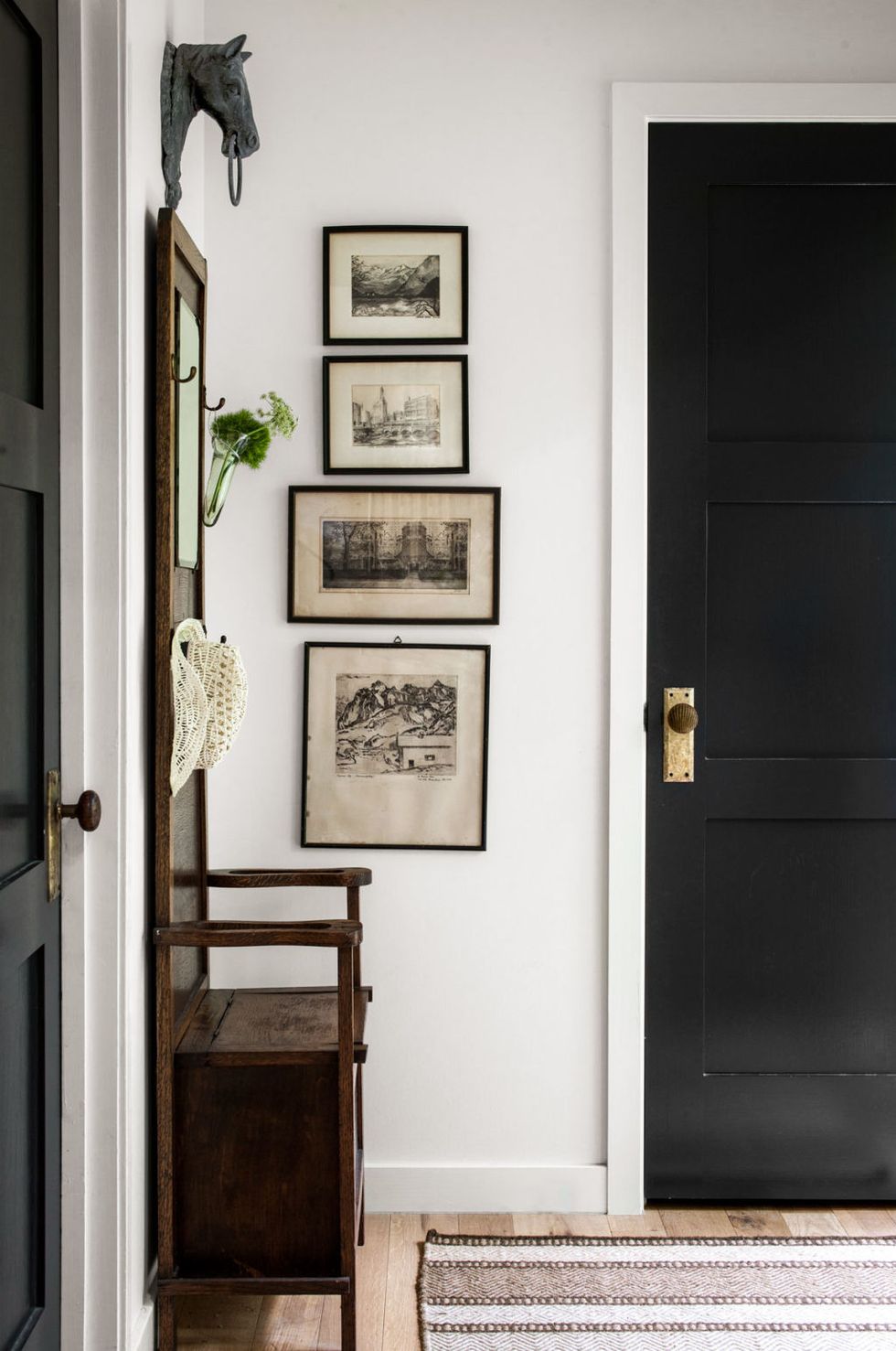
A narrow wall beside a door or window suits a vertical column of small works, which draws the eye upwards and uses space that would otherwise be wasted.
18. Arrange art pieces in pairs
Courtesy of Vadim Maltsev
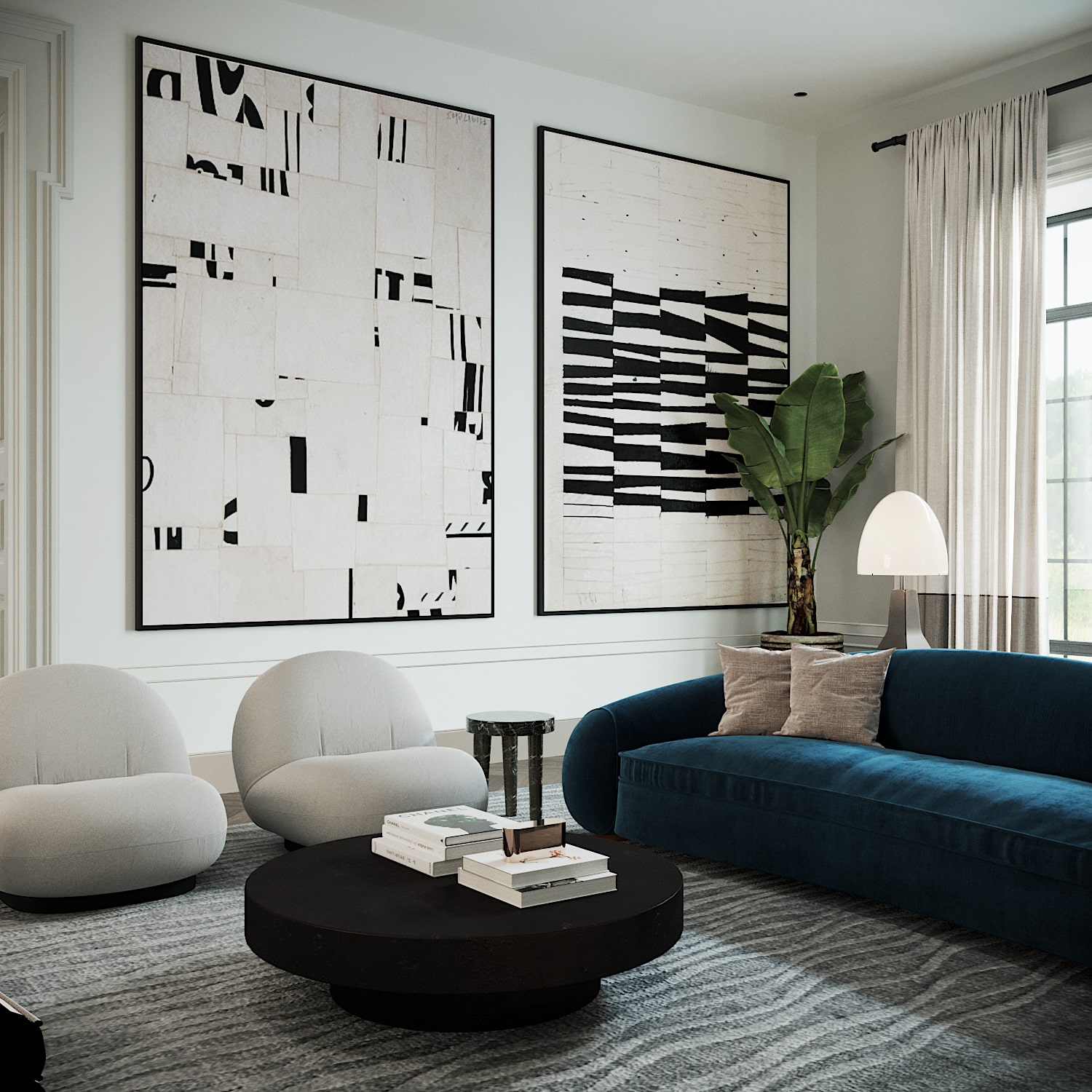
Two works of similar size and character hung side by side make a simple, balanced display above a sofa or bed.
19. Or in threes
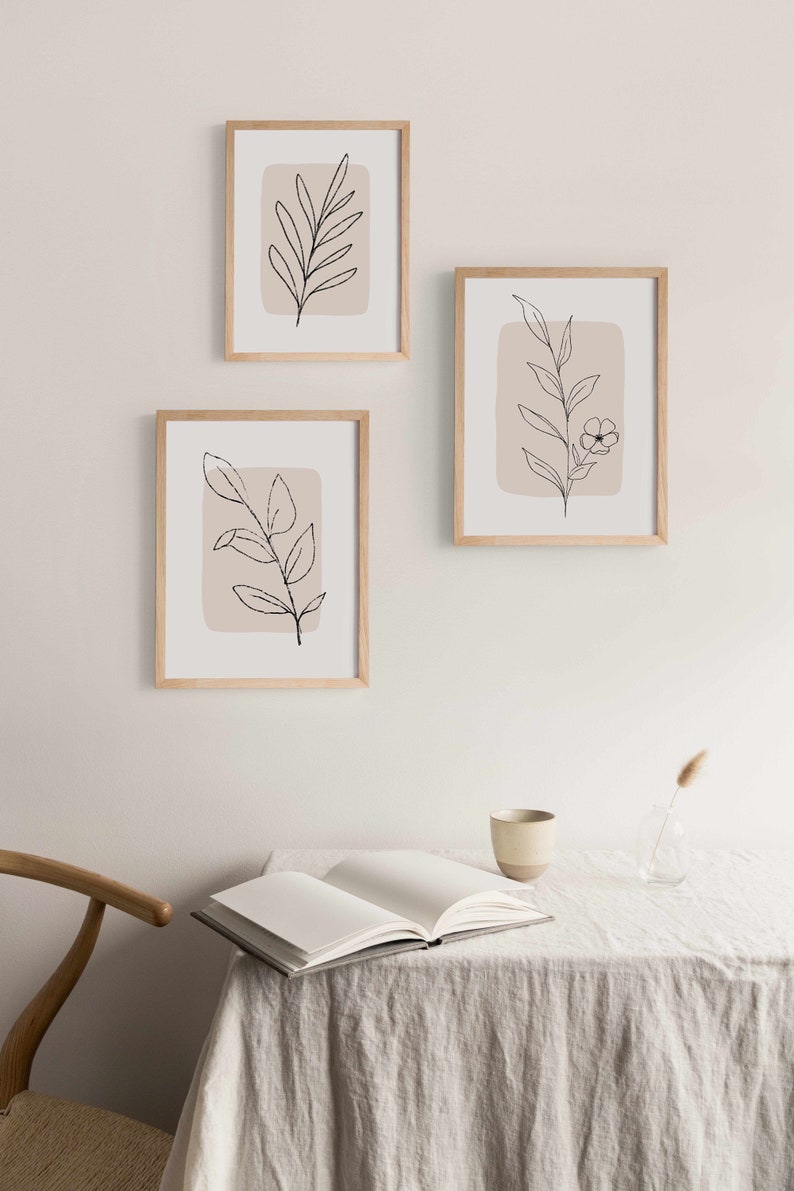
Courtesy of Etsy
Many designers group objects in odd numbers, especially threes, because an odd group has a clear centre. Three related prints, as here, can be hung in a row or in a loose triangle.
20. Use flexible wall fixtures
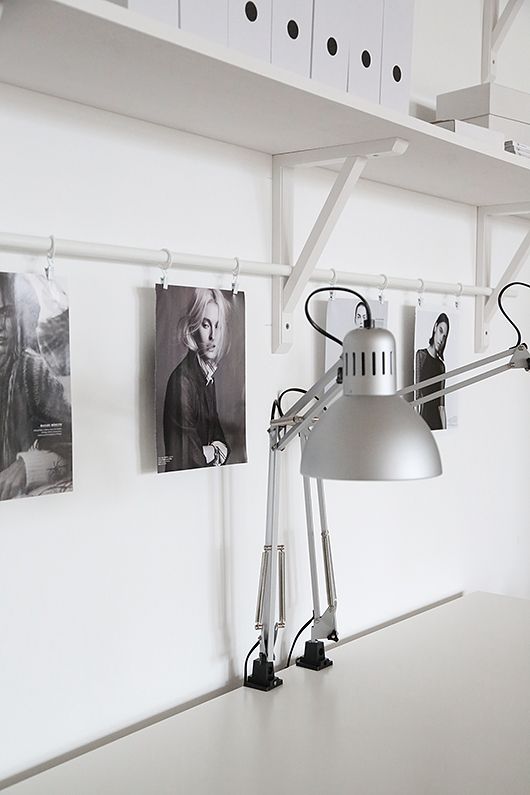
Courtesy of Frida Ramstedt
For a casual, changeable display, clip prints to a rail or wire, or use low-tack washi tape. These methods suit posters and photographs, not valuable originals, because clips and tape can mark paper.
21. Use art to fix scale
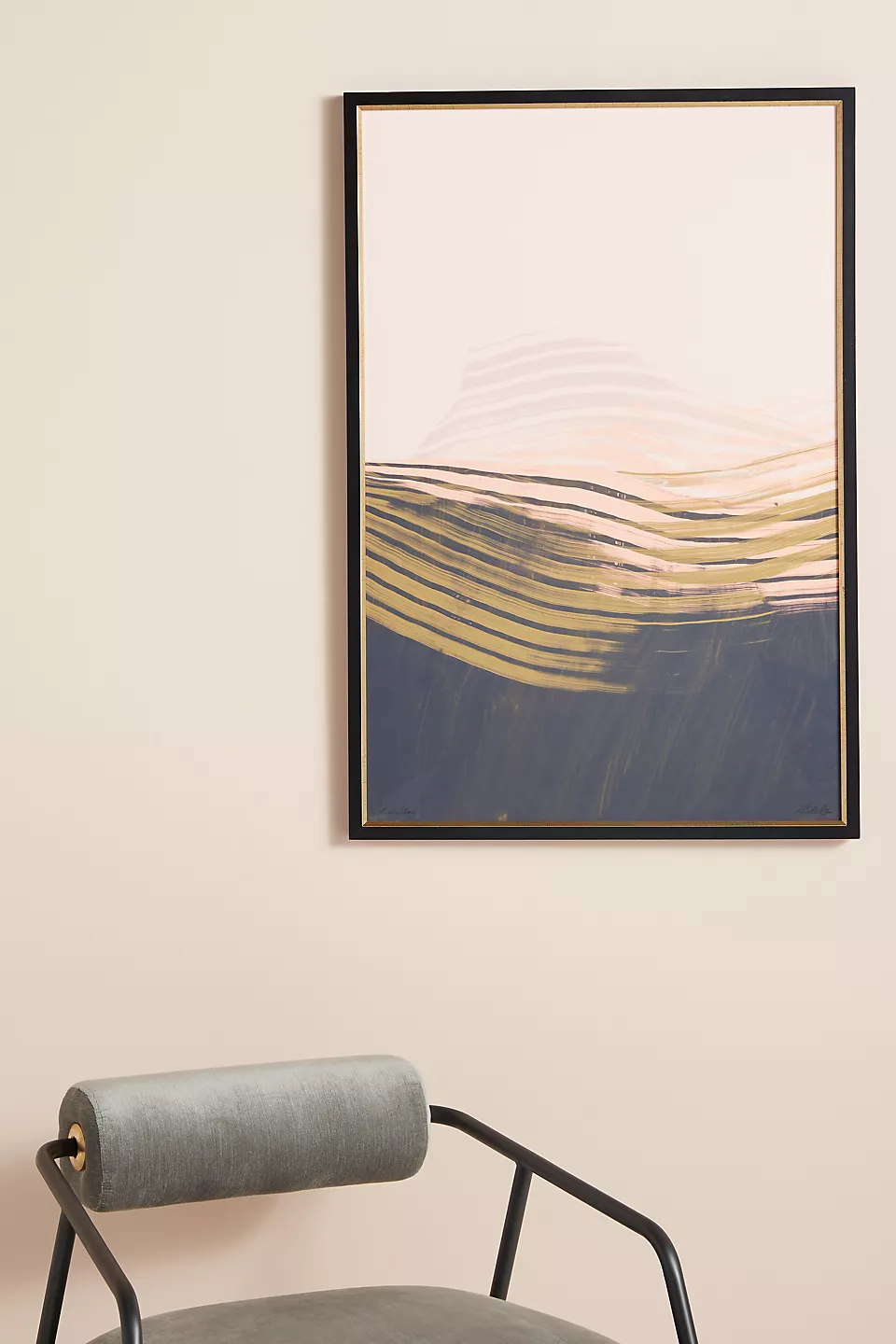
Courtesy of Anthropologie
Art can correct scale problems. A tall, narrow work makes a low room feel taller; a wide work steadies a long, low sofa; a large piece can stop a big empty wall from dwarfing the furniture.
22. Create a view
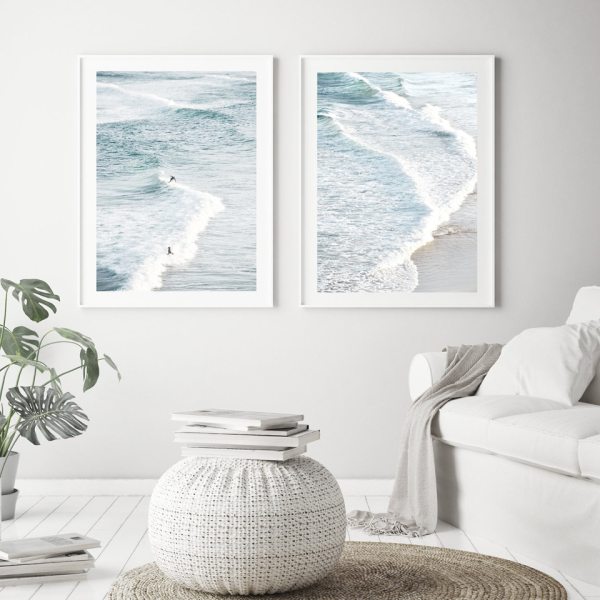
Courtesy of Nordic
In a room with no window or a poor view, a landscape or seascape gives the eye somewhere to rest. Hang it where you naturally look, for example opposite a seat or above a sink.
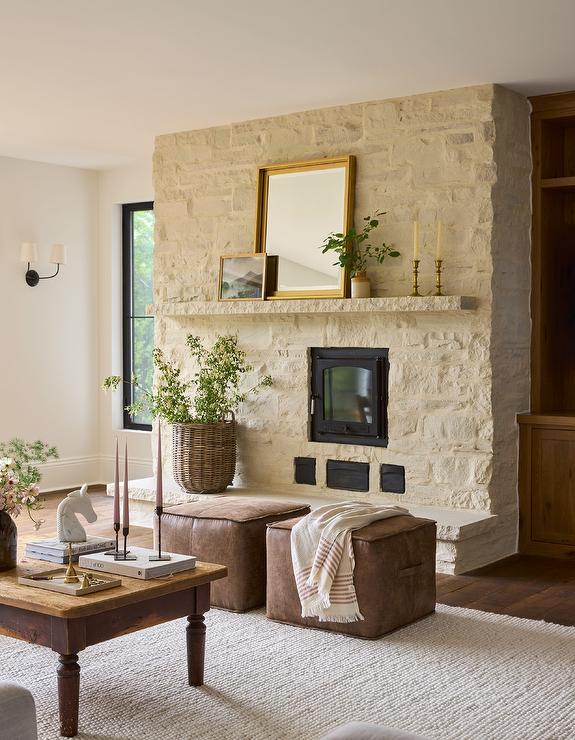
23. Layer art on mantels and consoles
Mantels, console tables and deep window sills let you lean and overlap pieces of different sizes with books and objects, and rearrange them without tools. Avoid leaning originals on a mantel above a working fire, for the conservation reasons below.
Via: AKB Design
24. Create themed collections
Group works by theme: botanical prints, maps, family photographs or monochrome abstracts. A theme makes pieces from different sources feel intentional and can suit a room’s use, such as botanicals in a kitchen or maps in a study.
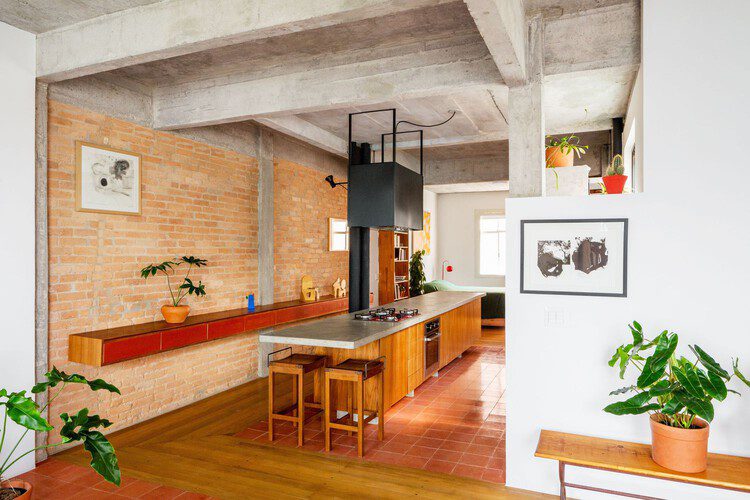
25. Use unconventional spaces
Art also works in glass-fronted cabinets, above doorways, on the back of a door or in multi-purpose rooms where a kitchen, dining and living space share one wall. Bathrooms and laundry rooms can take prints and photographs, but not valuable originals, because of humidity.
espacos multifuncionais integrando ambientes com bancadas 7
The best height to hang art
The most widely repeated rule is to put the centre of a work about 57 in (145 cm) from the floor, roughly the eye level of a standing adult. Decorating guides often call it a “museum standard”, as in Apartment Therapy’s explanation of the 57-inch rule, but it is a convention rather than a published museum standard, and many people use 57–60 in (145–152 cm). Adjust it for context:
- Above furniture: leave about 15–20 cm (6–8 in) between the top of the sofa, bed or console and the bottom of the frame, so the two read as one group.
- Dining rooms and seating areas: hang slightly lower, because people view the work sitting down.
- Hallways: the standing eye-level rule works well.
- Stairs: follow the pitch of the stair, as in idea 10.
Worked example: where to put the hook
Say a framed print is 60 cm tall, and its hanging wire, pulled taut towards the top, sits 8 cm below the top of the frame. Centre height: 145 cm. The top of the frame is then 145 + 60 ÷ 2 = 175 cm from the floor, and the hook goes 8 cm lower, at 167 cm. Above a sofa with a back 85 cm high, check the gap: the bottom of the frame would be at 145 − 30 = 115 cm, leaving 30 cm above the sofa, which is more than the 15–20 cm guideline, so you could lower the whole work by about 10 cm to connect it with the sofa.
How to arrange several pieces on one wall
Lay the arrangement out on the floor first and photograph it. Then cut paper templates the size of each frame, mark the hook position on each, and tape them to the wall until the layout works; you can then nail through the marks. Keep gaps of about 5–8 cm (2–3 in) between frames in a gallery wall, and keep them exactly equal in a grid.
Rules of thumb for hanging art
- Width above furniture: a work or group about two-thirds to three-quarters the width of the furniture below it looks balanced.
- Size on a bare wall: a group should fill roughly two-thirds of the wall area you are treating; one small frame on a large wall looks lost.
- Mixing frames: different frame styles can be mixed if a common element (colour, finish or subject) ties them together.
- Common mistakes: hanging too high, ignoring scale, drilling before planning, poor lighting and overcrowding.
Displaying art without nails
Renters have several options. Leaning works on the floor, a mantel or a picture ledge needs no fixing at all, and a freestanding easel suits one featured piece. Adhesive picture-hanging strips are rated by the manufacturer for limited weights; 3M’s product listing for Command Large Picture Hanging Strips (product 17206) says four pairs hold 16 lb (about 7 kg) and gives a maximum frame size of 24 × 36 in. Follow the packaging instructions and avoid them for heavy, glazed or valuable works, and in damp rooms.
Paint first, then hang
Paint and patch the wall before hanging anything, so you are not working around frames. Most water-based wall paints are touch-dry within hours but take longer to cure fully; secondary guides commonly suggest waiting at least 24–48 hours before hanging light pictures and a couple of weeks before heavier contact. Check the paint maker’s technical data sheet for the exact product.
Protecting original art at home
Deciding how to display your art at home also means protecting it. Prints and posters are easy to replace; original paintings, drawings and photographs are not. The Museums Galleries Scotland guide to caring for paintings and frames recommends:
- keeping light on paintings at or below 200 lux and limiting ultraviolet light, with blinds or UV-filtering film on windows;
- not hanging paintings above heat sources such as radiators or fires;
- a stable temperature around 20 °C and relative humidity of 50–60%, below the 65% at which mould typically grows;
- hanging on internal walls, away from draughts, with fixings that leave an air gap behind the painting.
Works on paper and photographs are generally more light-sensitive than oil paintings, so rotate them or hang them away from windows. For anything valuable or damaged, consult a professional conservator.
Plan and section: a layout to draw
The diagram that accompanies this guide (to be drawn in-house) shows one living-room wall 4.0 m wide and 2.6 m high in elevation and plan. A 2.1 m sofa sits centred on the wall. Above it, a group of three frames about 1.5 m wide in total (roughly 70% of the sofa width) is centred on the sofa, with the group’s centre at 145 cm and 6 cm gaps. A picture light is not used; instead a ceiling wall-washer sits about 60–90 cm out from the wall. The section shows the 15–20 cm gap above the sofa back and the eye line of a standing and a seated viewer.
Display types in different countries
How people display art at home also depends on tradition and building type:
- Picture rails (UK and Europe): many older British and European houses have a moulding running round the room, typically some way below the ceiling, from which pictures hang on hooks and cords or chains. It lets you rearrange works without new holes.
- The salon hang: walls covered floor to ceiling with frames, as in 18th- and 19th-century academies and country houses; the modern gallery wall is a domestic version.
- The tokonoma (Japan): a recessed alcove in a traditional Japanese reception room where a single hanging scroll and a flower arrangement are displayed and changed with the seasons.
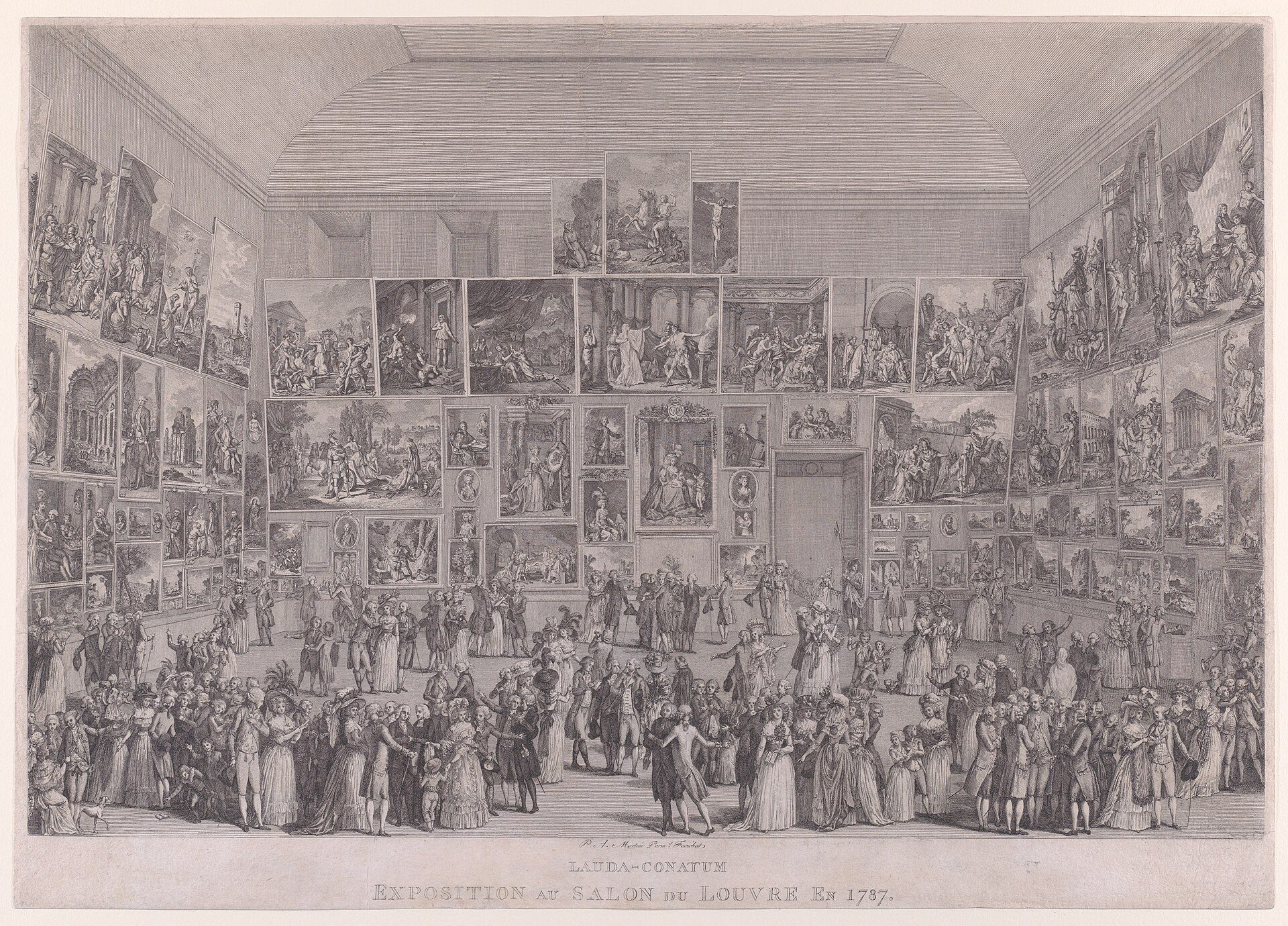
Exposition au Salon du Louvre en 1787, engraving by Pietro Antonio Martini. The Metropolitan Museum of Art, CC0, via Wikimedia Commons. Image: Pietro Antonio Martini (Creative Commons Zero)
This 1787 engraving of the Paris Salon at the Louvre shows the salon hang at its most extreme: paintings frame to frame from the dado to the cornice, the largest at the top. A home gallery wall borrows the same idea at a much smaller scale; if your house has a picture rail, hanging from it is a practical way to display your art at home without drilling into old plaster.
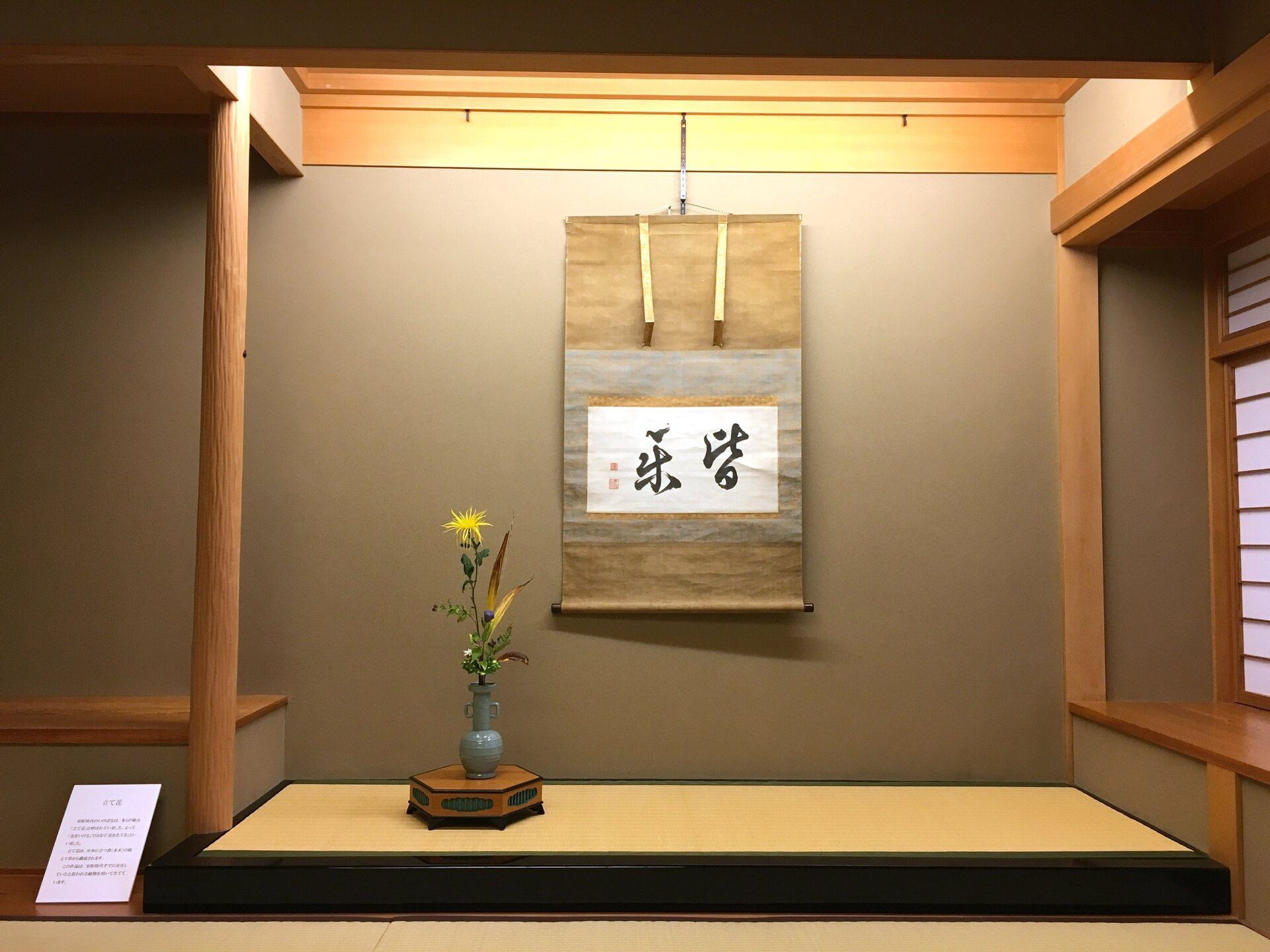
A tokonoma alcove with a hanging calligraphy scroll and a tatehana flower arrangement (Ikenobo exhibition, 2018). Photo: Gryffindor, CC0, via Wikimedia Commons. Image: Gryffindor (Creative Commons Zero)
The tokonoma shows the opposite approach to the gallery wall: one work at a time, given its own space and rotated, which also limits each piece’s exposure to light.
Final thoughts: making your house a home with art
Learning how to display your art at home is mostly about choosing one clear idea per wall and getting the height, spacing and light right. Start with the piece you love most, use paper templates before drilling, protect originals from sun, heat and damp, and change the display as your collection grows.
Sources and further reading
- Museums Galleries Scotland – Caring for paintings and frames
- Crawford Art Gallery – Looking after artworks
- Apartment Therapy – The 57-inch rule
- 3M – Command Large Picture Hanging Strips listing

Toqa Mostafa is a dedicated editor at Arch2O, bringing a sharp editorial perspective to architectural storytelling. Based in Egypt, she curates and refines content that showcases innovative design and urban solutions. Her work at Arch2O highlights her ability to engage readers with compelling narratives, bridging architectural creativity and critical discourse. Toqa’s editorial expertise contributes significantly to Arch2O’s mission of exploring the intersection of design, technology, and sustainability.