


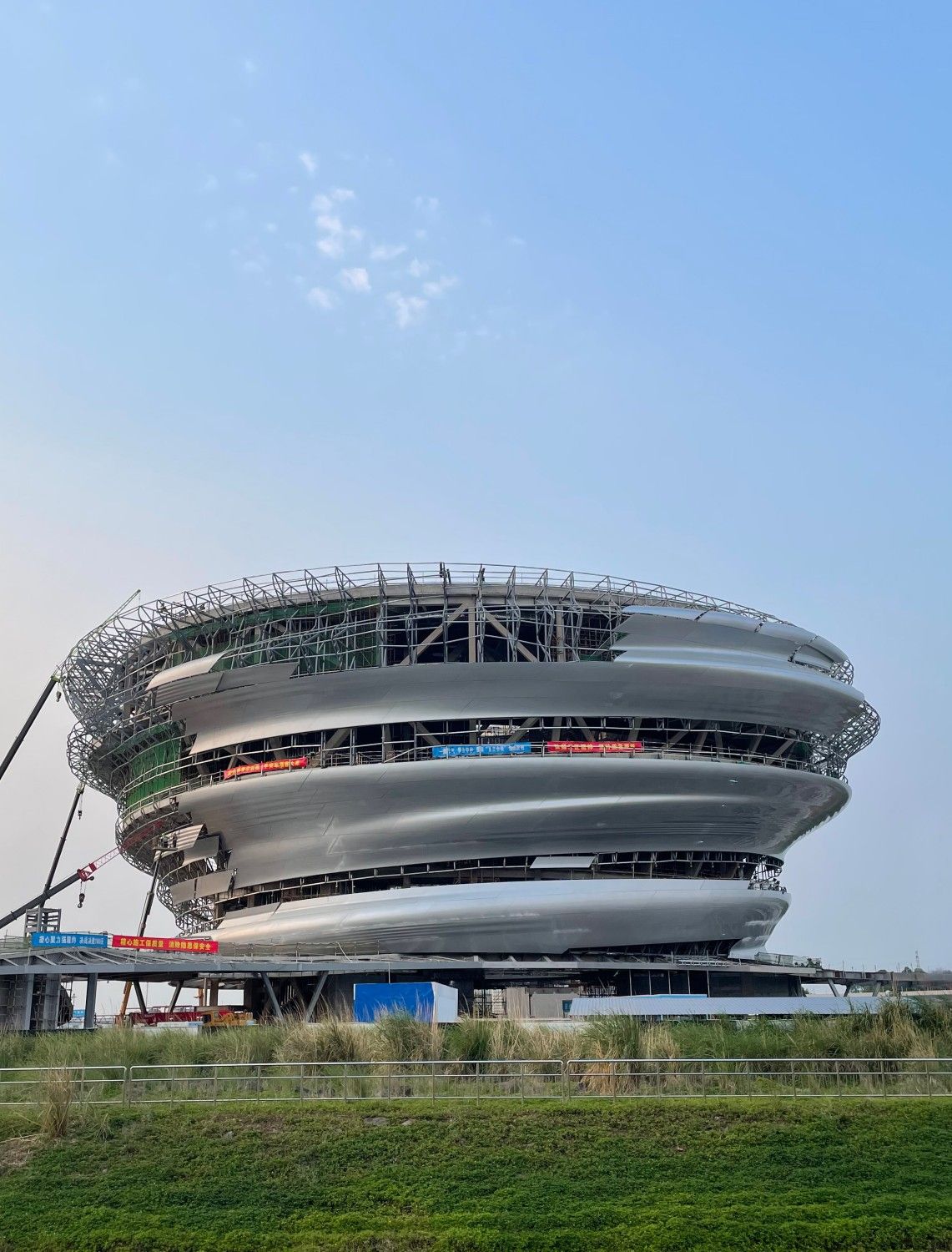
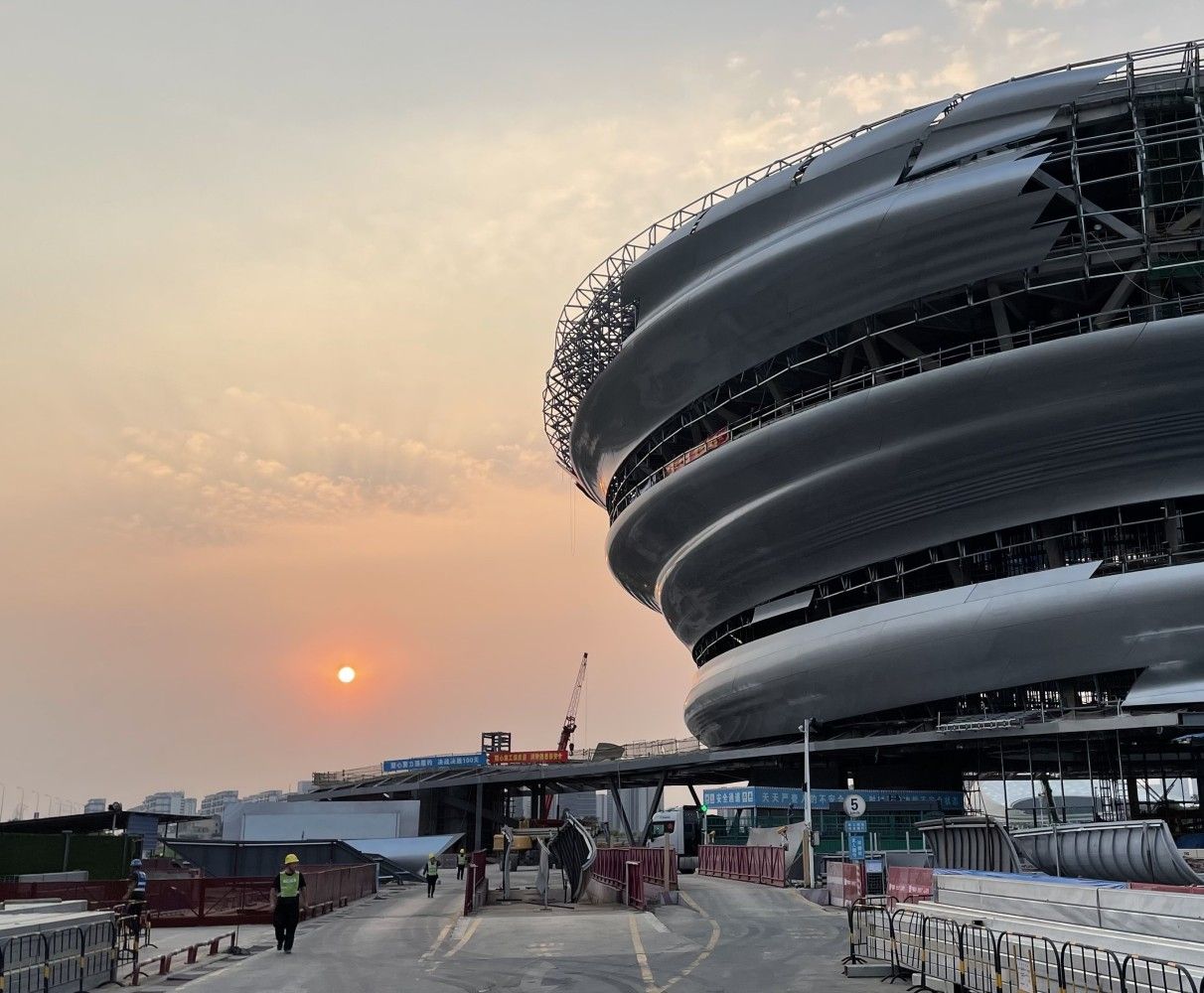
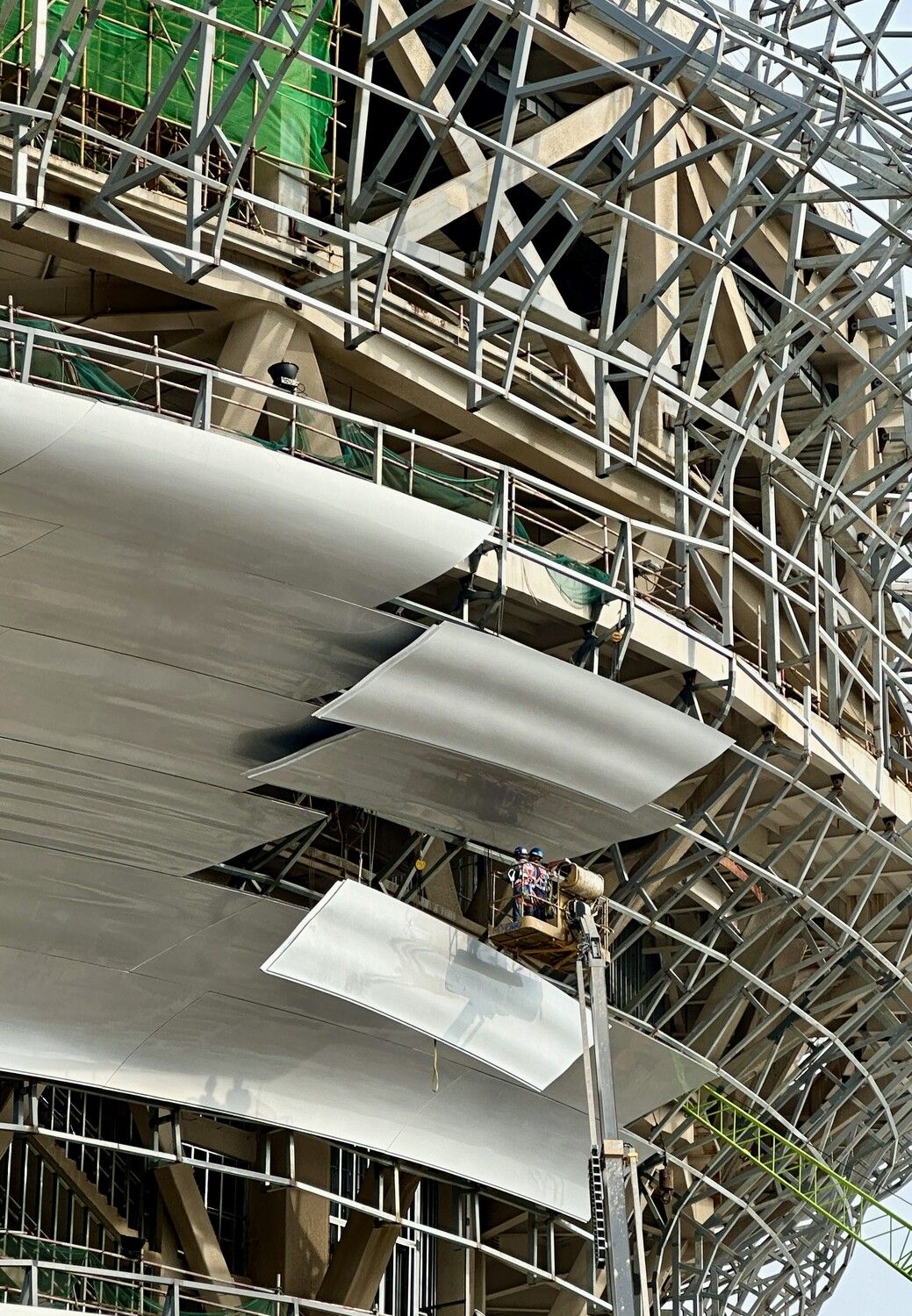
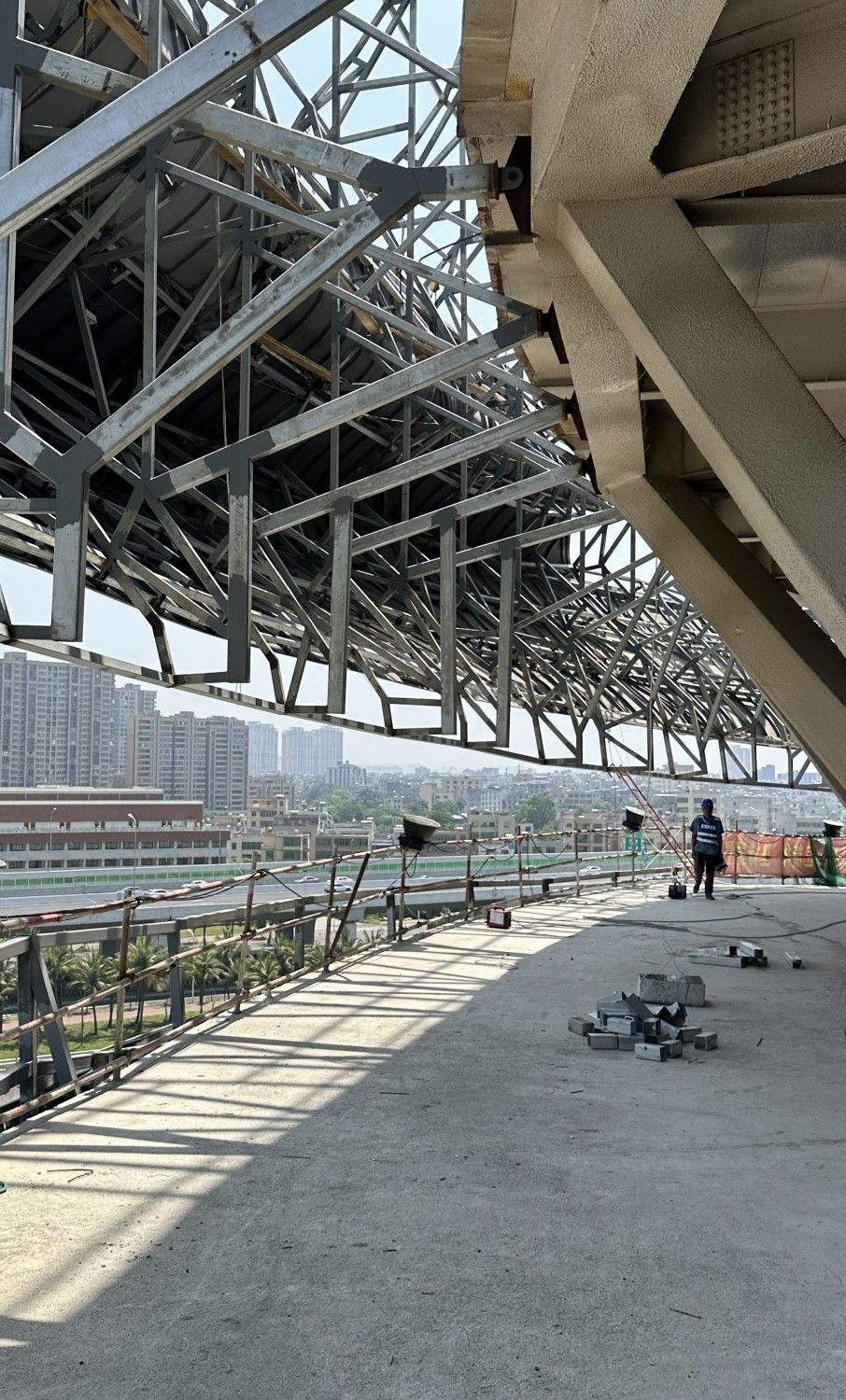
The Hainan Science and Technology Museum, conceptualized by Ma Yansong of MAD Architects, is being diligently constructed. Construction began in early 2020. The design of the R6 building began in 2020, and the construction started in November 2021. Hainan Science and Technological Museum: The main structure of the building was completed by June 2023.
©MAD Architects
This seaport city is situated in the eastern part of the Hainan Province. The capital city of Haikou enjoys popular tourist attractions for its warm weather, beautiful beaches, and green environment. Haikou is also the core city of the economic, political, science and technology, and cultural gathering area of the island, which makes it very suitable for the location of the Hainan Science and Technology Museum.

©MAD Architects
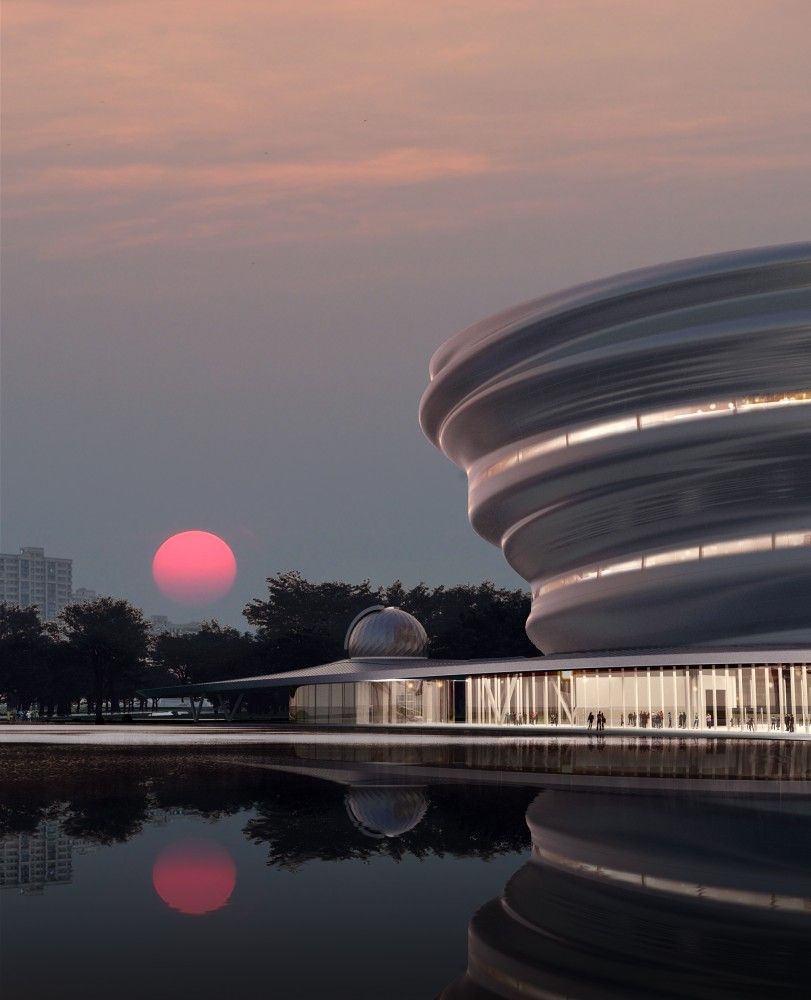
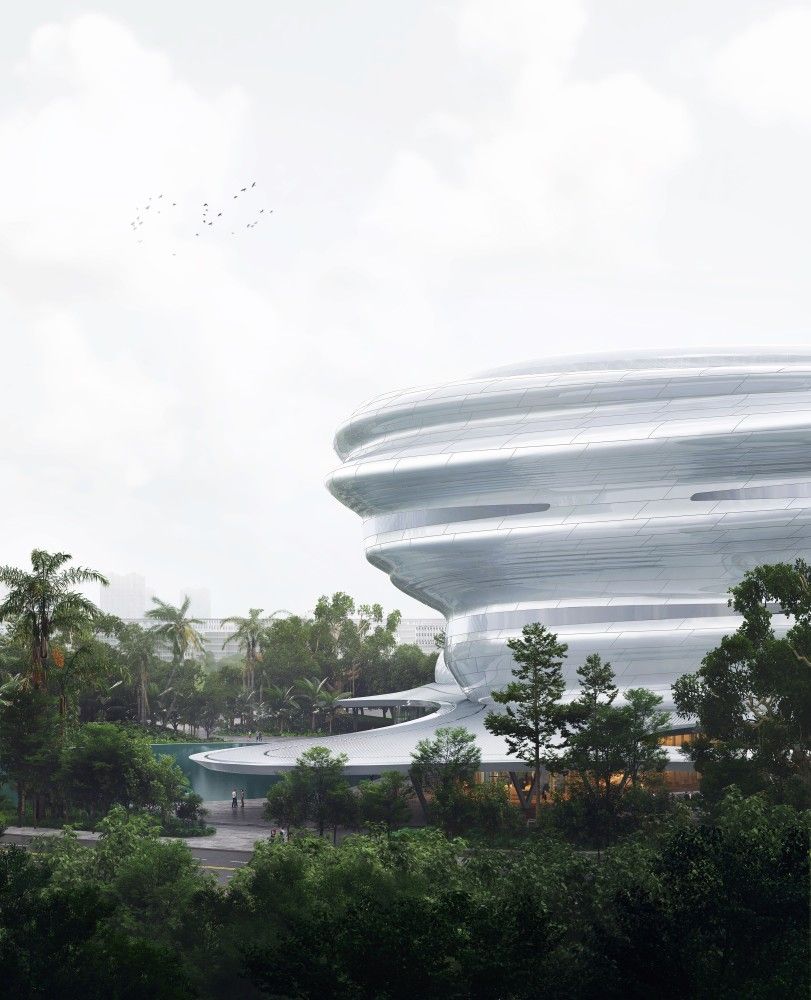
Located on a land of 40,000 sqm, the overall built-up area of the science museum is 46,000 sqm. It is biomorphic in design and features fluid, soft shapes, making it easily distinguishable from other contemporary iconic buildings. Their design concept aims to mimic an “updraft,” the rising motion of warm air in the atmosphere akin to the ground.

©MAD Architects
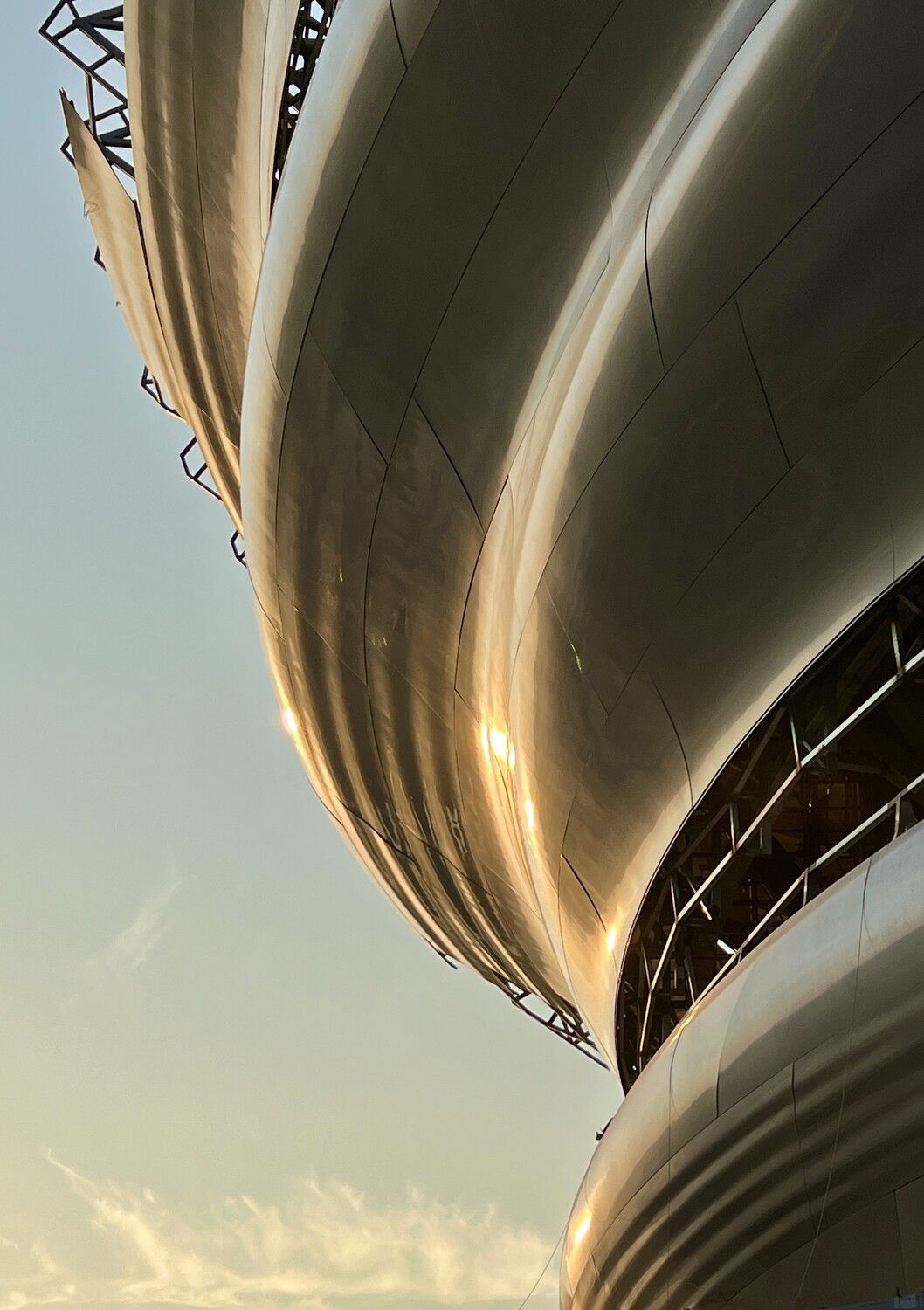
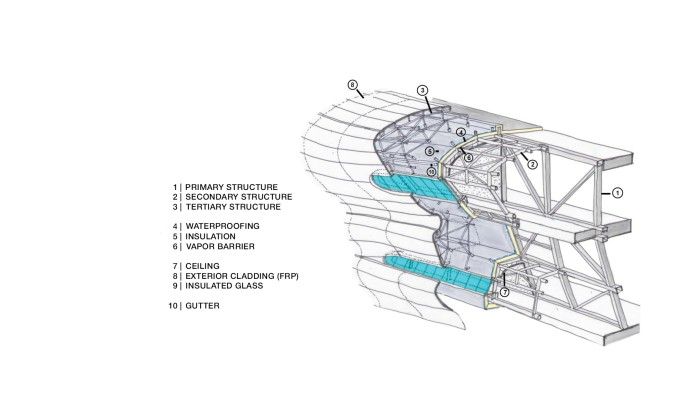
To offer this dynamic and ascending structure, 843 panels were designed for the curtain wall of the museum, which is made from fiberglass-reinforced plastic (FRP). Specially designed for Hainan’s warm climate, these panels have open joint seams and water-directing ridges on their surface to expel excess water. One of the critical case studies is the Hainan Science and Technology Museum, which strongly focuses on innovation and sustainability in its architecture.
©MAD Architects
Hainan Science and Technology Museum’s Concept
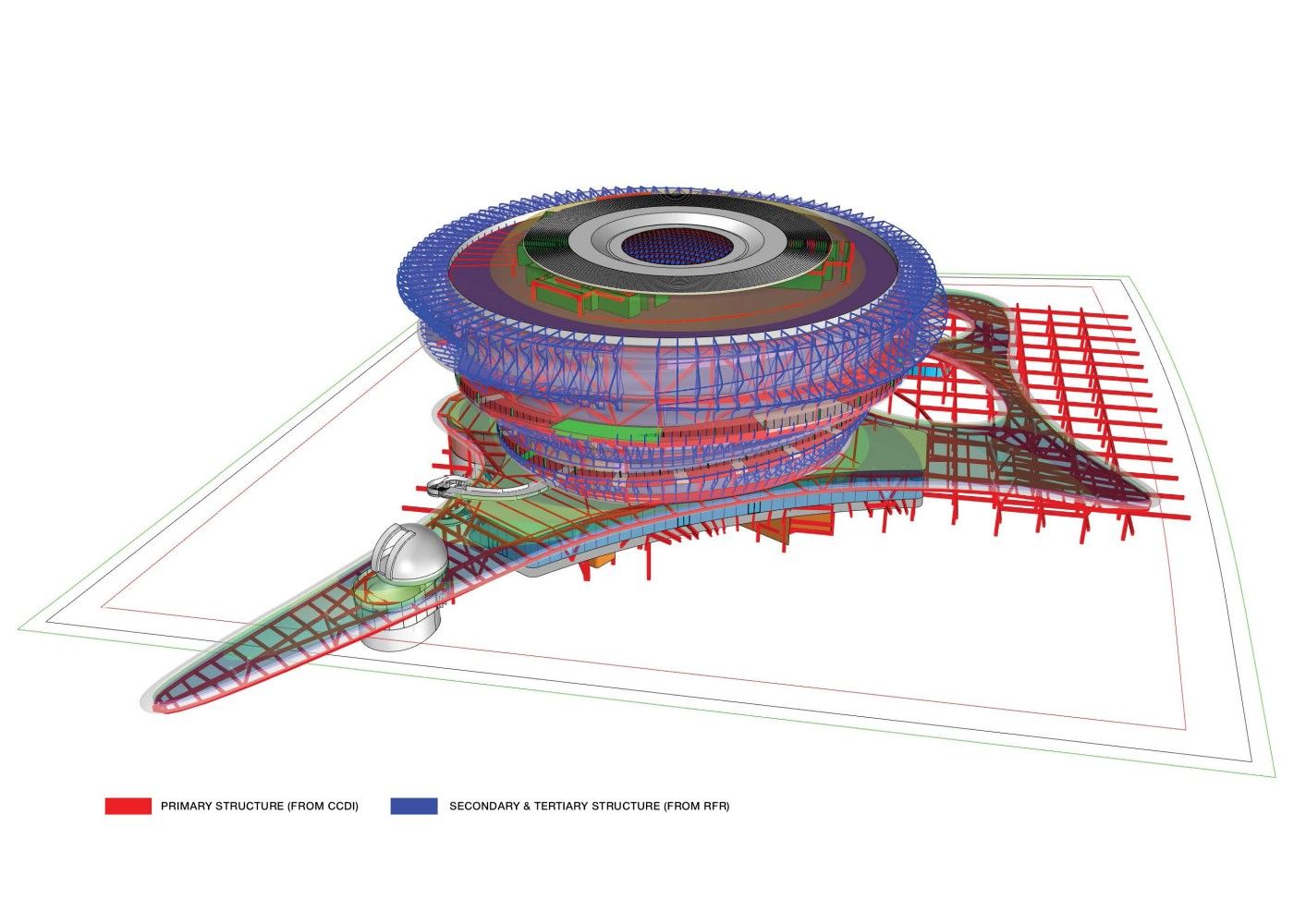
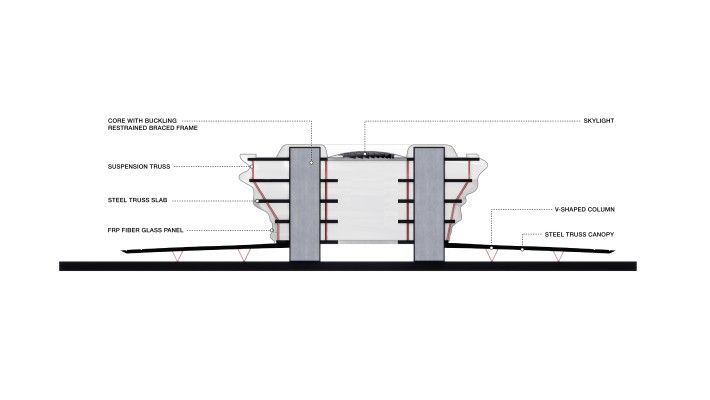
The curvilinear forms and masterful organization of the Building’s shape and composition are admitted to avoid any wasted space and matter. The low-rise Building’s central service core, floor plates, and significant structure are distinct and comfortable with the curved façade, and the high-rise Building’s space frame structure and façade are interlinked and efficient in their usage of resources. MAD Architects achieved this by organizing routes and plans of functioning with a structural one, avoiding dramatically minimizing waste. This approach demonstrates the adherence of the Hainan Science and Technology Museum to the principles of sustainability and rationality in construction.

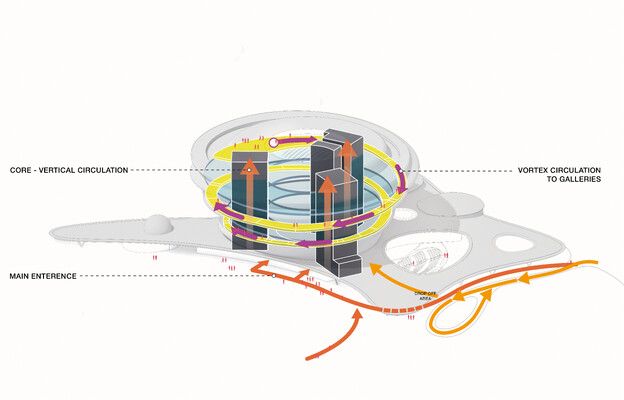
diagram
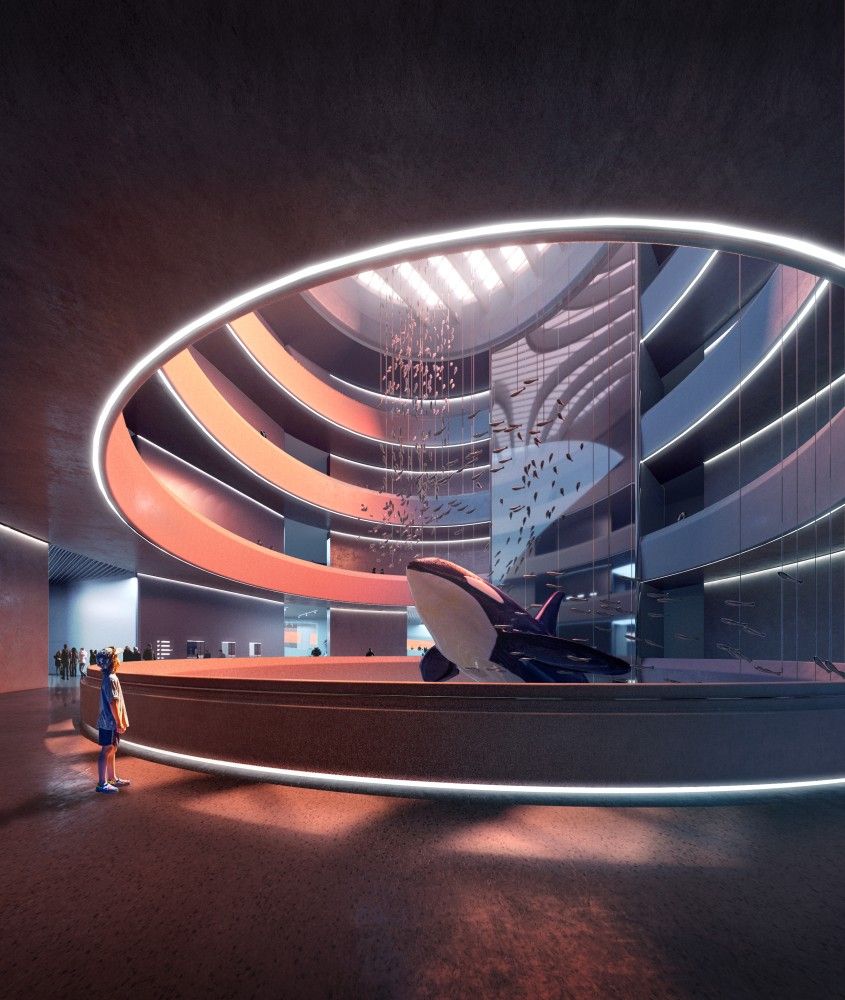
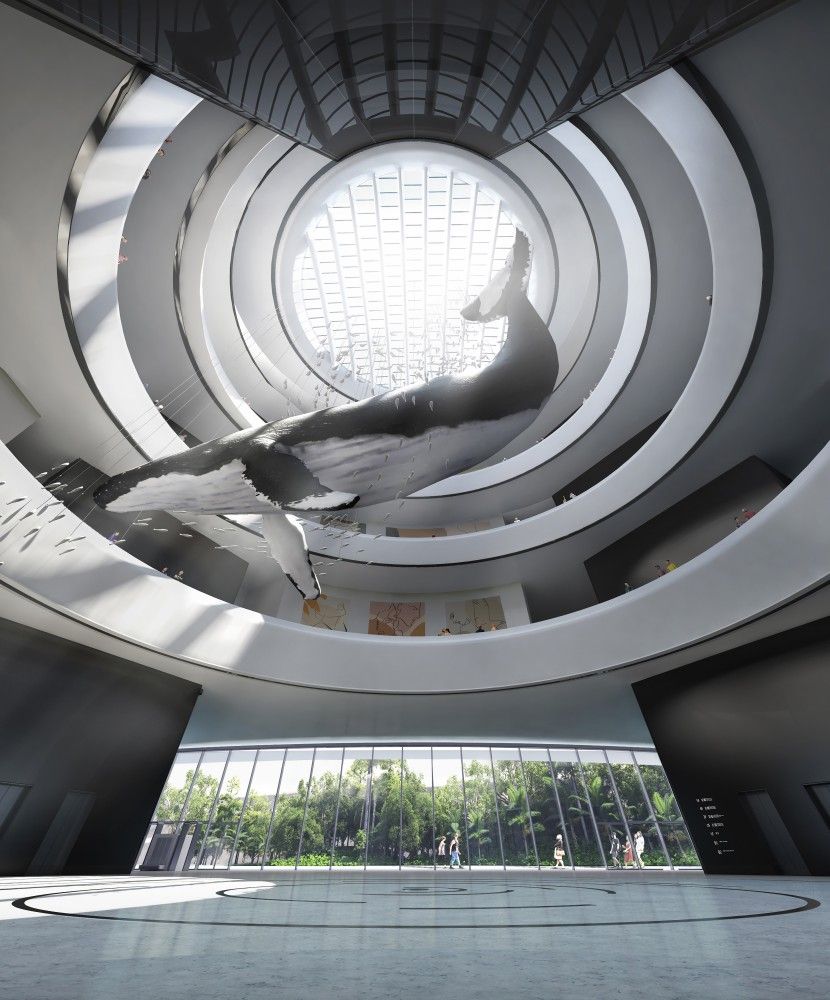
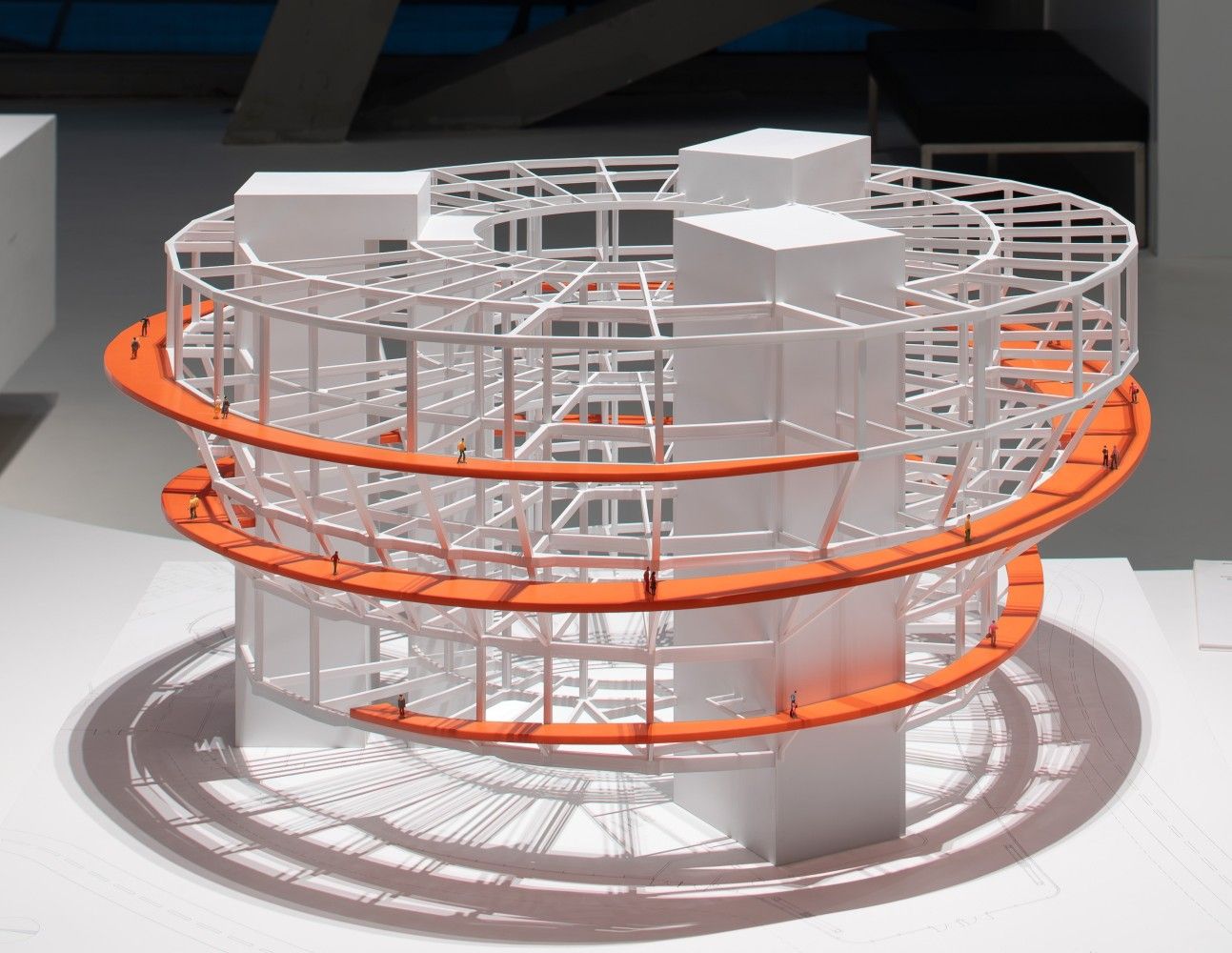
The Hainan Science and Technology Museum is built of six stories, five upper ones occupying 28,000 square meters, and one lower illicit story. One of the striking features noticed in the museum design is the ramp, which starts from the exterior surface on the ground floor and swirls like a helix up to the 6th floor, extending into the indoor exhibition area. Above the atrium, a large central hall within the Hettinger Building composed of glass and steel is a glass dome letting natural light flood via a ramp, making visiting the Hainan Science and Technology Museum an exceptional experience.
©MAD Architects
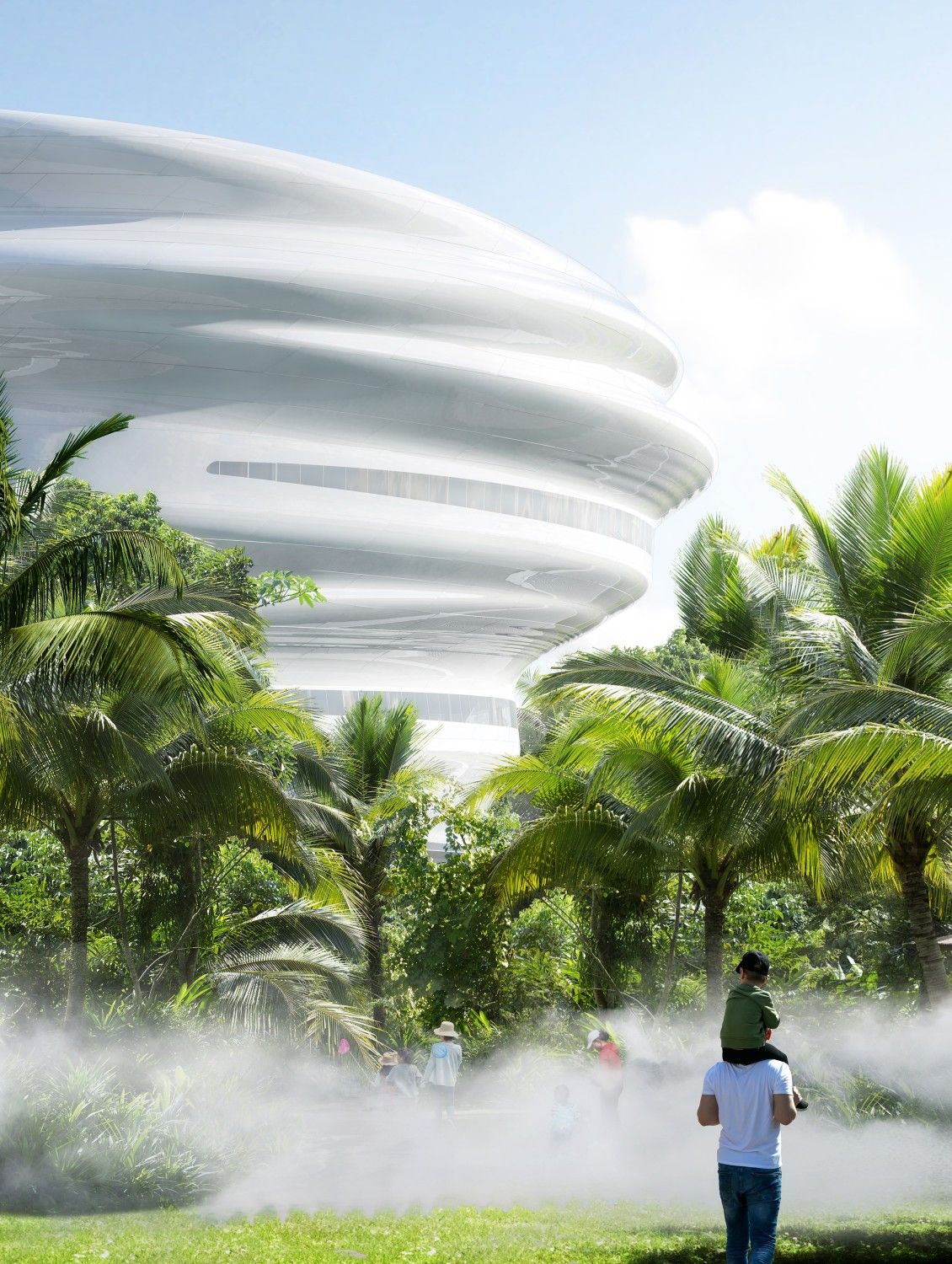
The approach to design manifested in MAD’s Harmony of the Great is a carefully deliberated strategy of utilizing certain areas of the park for children, teenagers, parents, and other visitors of different age groups. Through research, the organization known as MAD unveiled information that large museum environments cause fatigue in little children. So, they have provided them with areas on the second and third levels beyond the overhanging canopy and garden. Here, children, for instance, can learn through various activities in sections inside the Hainan Science and Technology Museum before going out to enjoy their leisure time in the garden.
©MAD Architects
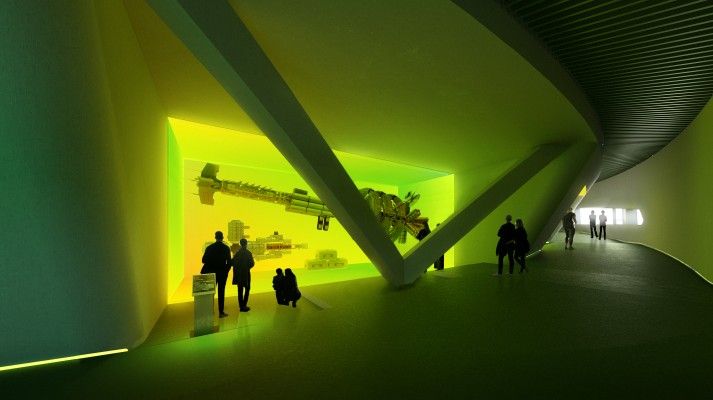
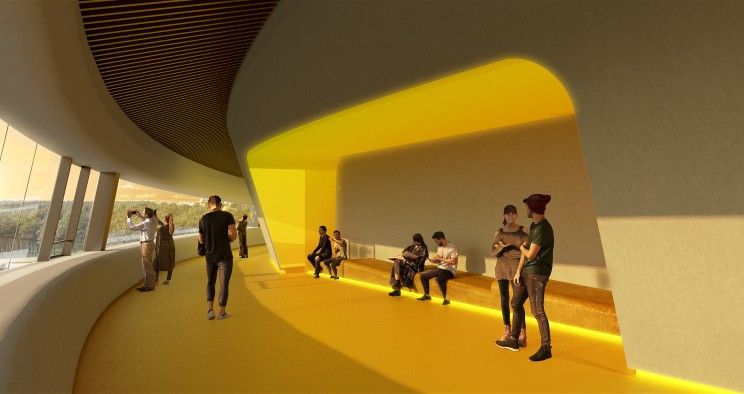
Children and teenagers, when entering the science museum, are introduced to it in a specific way, which applies to people of all ages. They enter from a doorway marked as the entrance, step into the elevator, and go up to the sixth floor before the descension process begins. A circular ramp goes all around the building where the captivating viewing of the garden to the right and the gallery spaces to the left are arranged and thus enables an adequate and visually stimulating circulation from one level to the other at the Hainan Science and Technology Museum.

©MAD Architects
The curtain wall and landscape of the Hainan Science Museum, designed by the Ma Yansong/MAD Architects, are envisaged to be elaborated by June this year. Current visitors are expected to be inaugurated in 2025, making this a great addition to the Hainan Science and Technology Museum.






Mireille Chevalier is a projects editor and architectural writer from Lyon. With a dual background in architecture and history, she brings a contextual lens to design criticism and theory