

Oxford Street pedestrianization has reached its first milestone, because on Monday, October 26, almost a kilometer of the street between Orchard Street and Great Portland Street became traffic-free. The section is now closed to private motorized vehicles, buses, taxis and private hire vehicles, cycles, scooters and pedicabs. It marks the opening of the first phase of a program that has taken a decade to move from announcement to street.
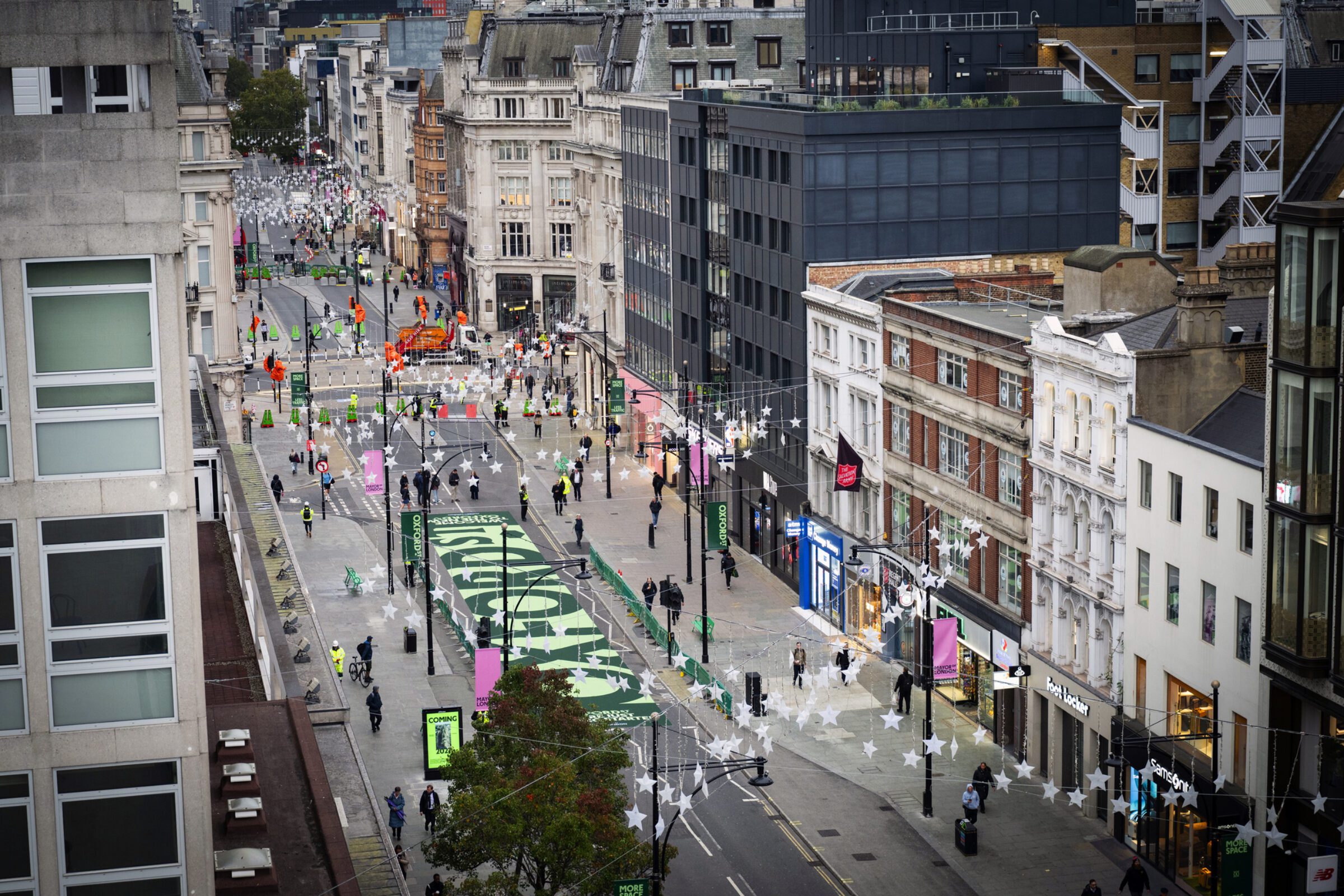
First phase of the Oxford Street pedestrianization project. October 2026. Image © Greater London Authority + Caroline Teo
The idea dates back to 2016, when Mayor of London Sadiq Khan first said he intended to pedestrianize the street in the City of Westminster, in central London. The original plan called for completion in 2020, but the project was blocked in 2018 after two public consultations. It resumed in 2024 and was followed by two further consultations that showed majority support among respondents, and final approval came in February 2026. To oversee the work, the Mayor created the Oxford Street Development Corporation (OSDC), a Mayoral Development Corporation able to take over planning powers from Westminster City Council.
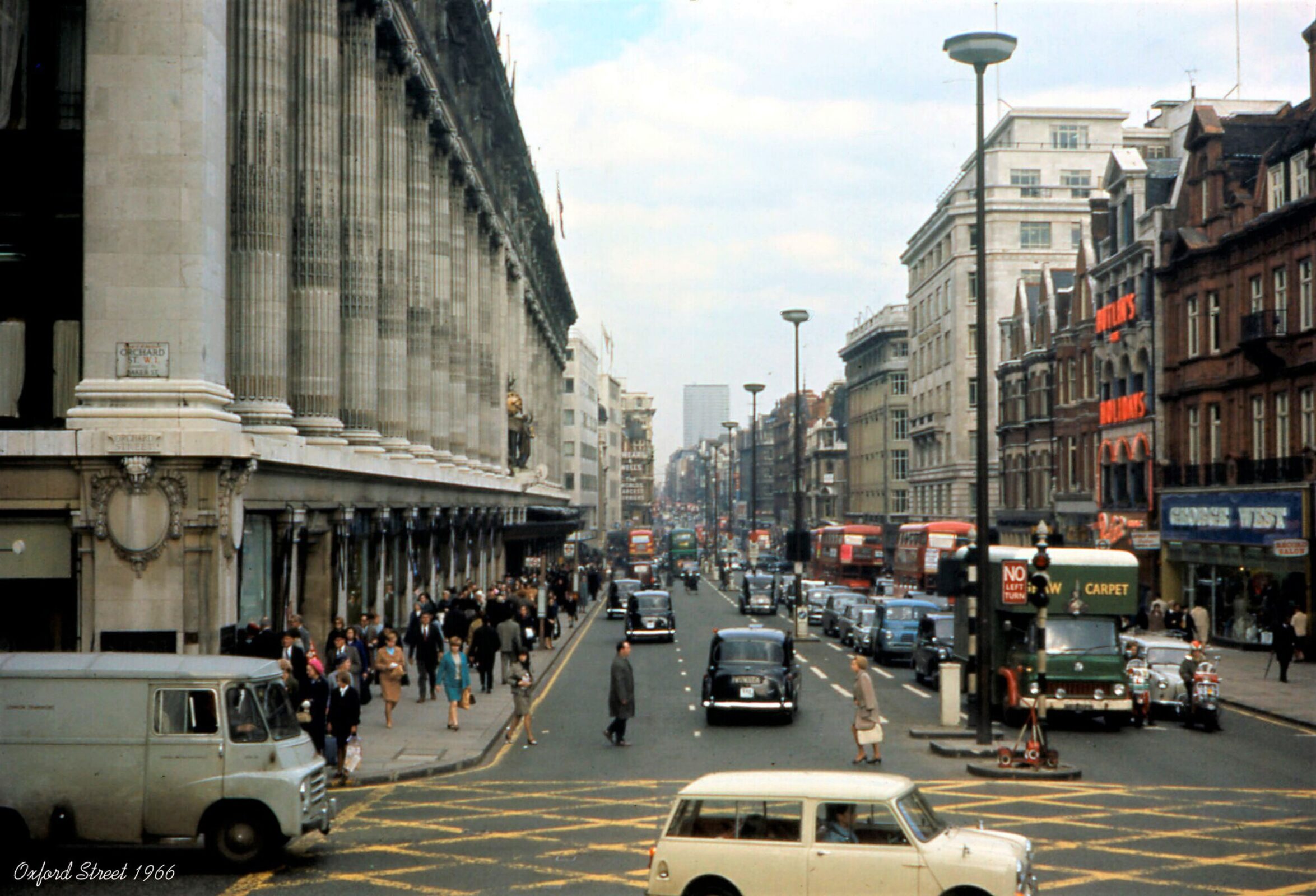
Oxford Street Crowds, July 2013. Image © Gary J. Wood via Flickr, CC BY-SA 2.0 original license
The design team is led by East, a landscape and urban design practice based in East London. Its subconsultants include the global urban strategy consultancy Gehl, the research and urban design practice Publica, landscape architects J&L Gibbons, sustainability and low-energy building consultants Etude, and transport consultants NRP. Working in parallel, the architecture practice Hawkins\Brown is developing a long-term design vision for the whole project, which extends from Marble Arch to Tottenham Court Road.
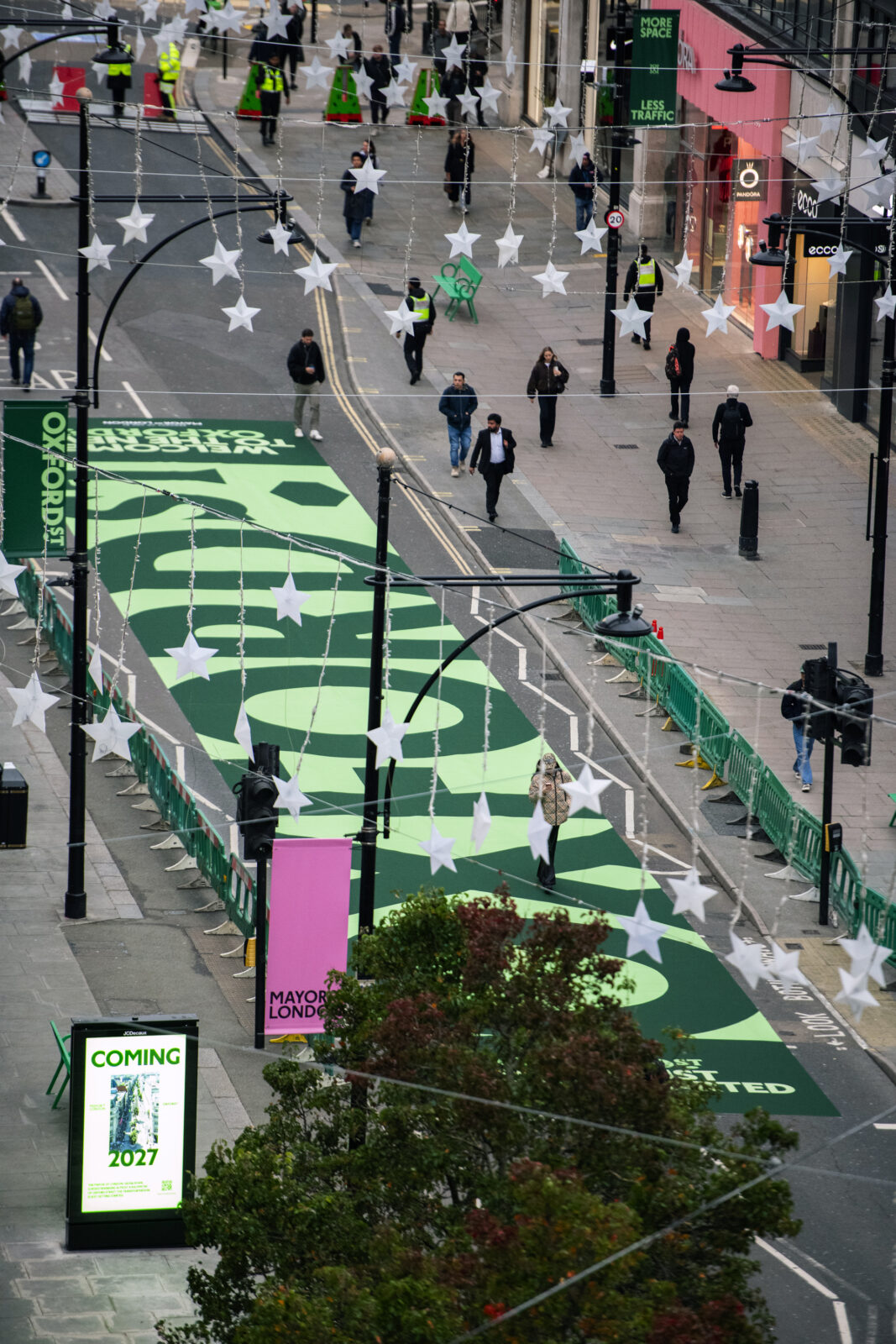
Image © Greater London Authority + Caroline Teo
East has drawn on descriptions of the street by Henry James and Virginia Woolf, which capture its spectacle and historic image, and the team’s stated objective is to give Oxford Street “a distinct character and a richer, more varied life.” The street’s wide variety of shops will be joined by new workplaces, leisure facilities, and cultural and hospitality destinations. During the transition period, crews will remove road markings and add new seating, planting and signage. A textured stone surfacing will guide movement along the street, while larger pavers will mark the north-south street crossings.
Read more:
- Stefano Boeri Architetti Wins Loco Park Masterplan for Tbilisi Locomotive Factory
- BIG’s Dubai Masterplan Turns Iconic Racecourse into a Pedestrian Paradise
- Portlands Place East Village | Hawkins\Brown
Street furniture forms a key part of this transition phase and combines timber and steel benches, placed only where they do not obstruct circulation. Seating at regular intervals is meant to support not only sitting but also meeting, eating and resting. Timber seats and tables sit in areas marked by distinct surface textures that indicate stopping points, and East will test different furniture configurations to make sure they are usable, welcoming and suitable.
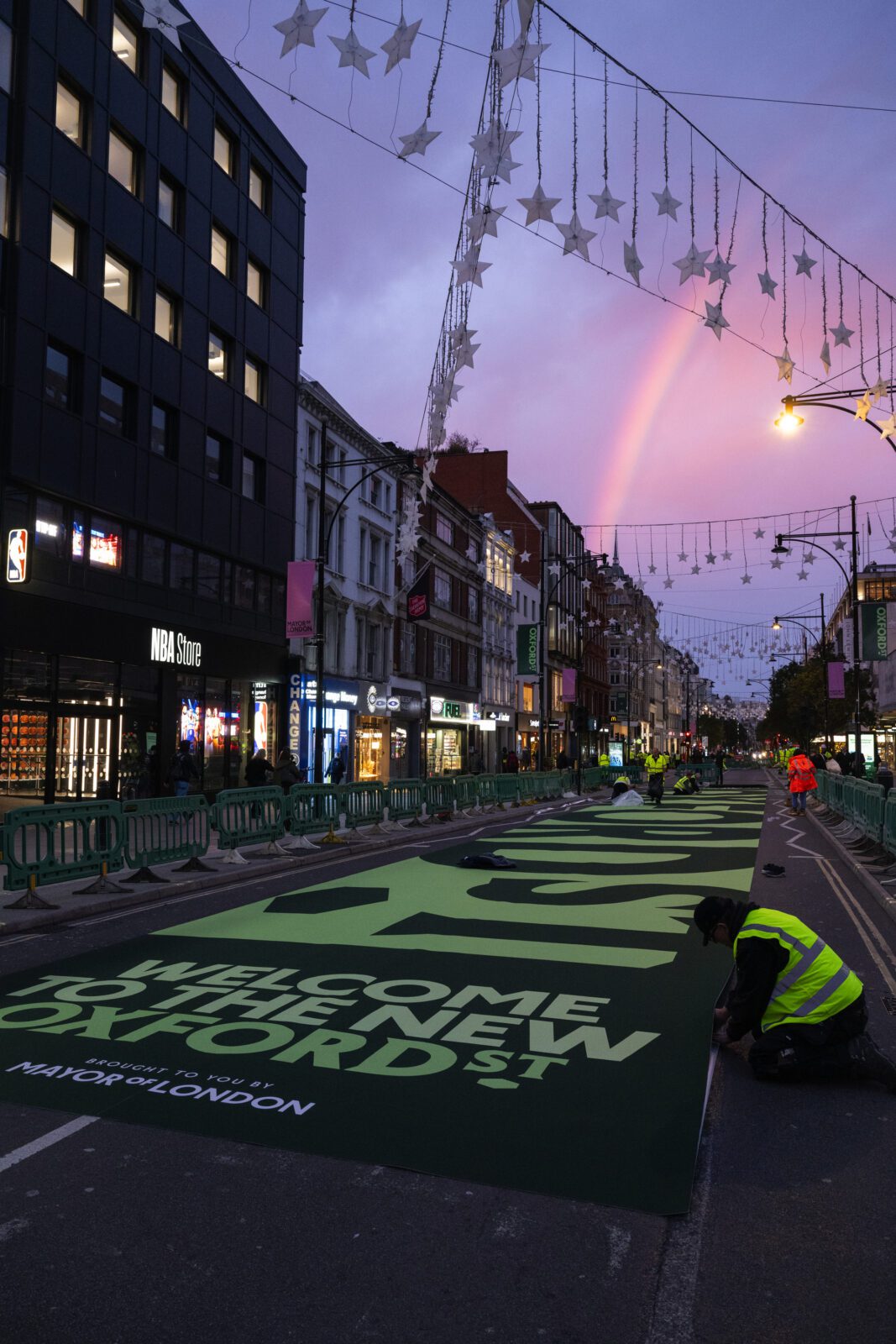
Image © Greater London Authority + Caroline Teo
The landscape design adds tree planting intended to mitigate the urban heat island effect, capture carbon, intercept rainwater and increase biodiversity. Trees will grow in large pots until they are ready to be lowered into the ground permanently. Later phases will include two new public squares marked with a new surface dressing, one close to Holles Street and the other close to Duke Street.
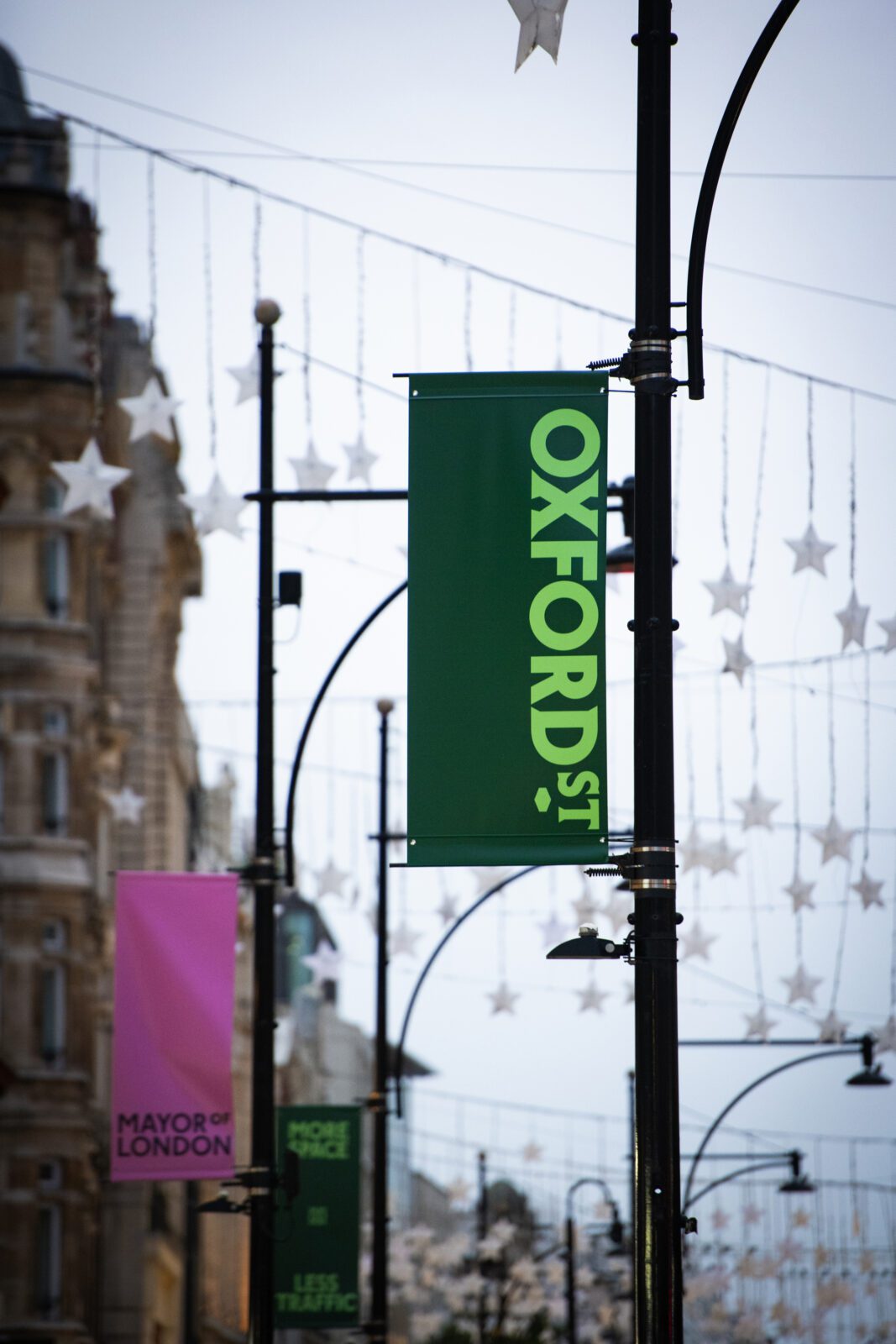
Image © Greater London Authority + Caroline Teo
The transition phase also works as a trial period for the permanent design. The OSDC and East will assess real-time insights into how the space is used and collect feedback from residents, accessibility groups, businesses, workers, transport partners and other Londoners. Sensors built into the furniture will monitor the flow of people and the duration of use, and that data will inform the permanent scheme. Construction of the permanent scheme for the section between Orchard Street and Great Portland Street is expected to begin later in 2027, with completion anticipated in 2028.
For more background, see our guide to visions of future cities.

Mireille Chevalier is a projects editor and architectural writer from Lyon. With a dual background in architecture and history, she brings a contextual lens to design criticism and theory