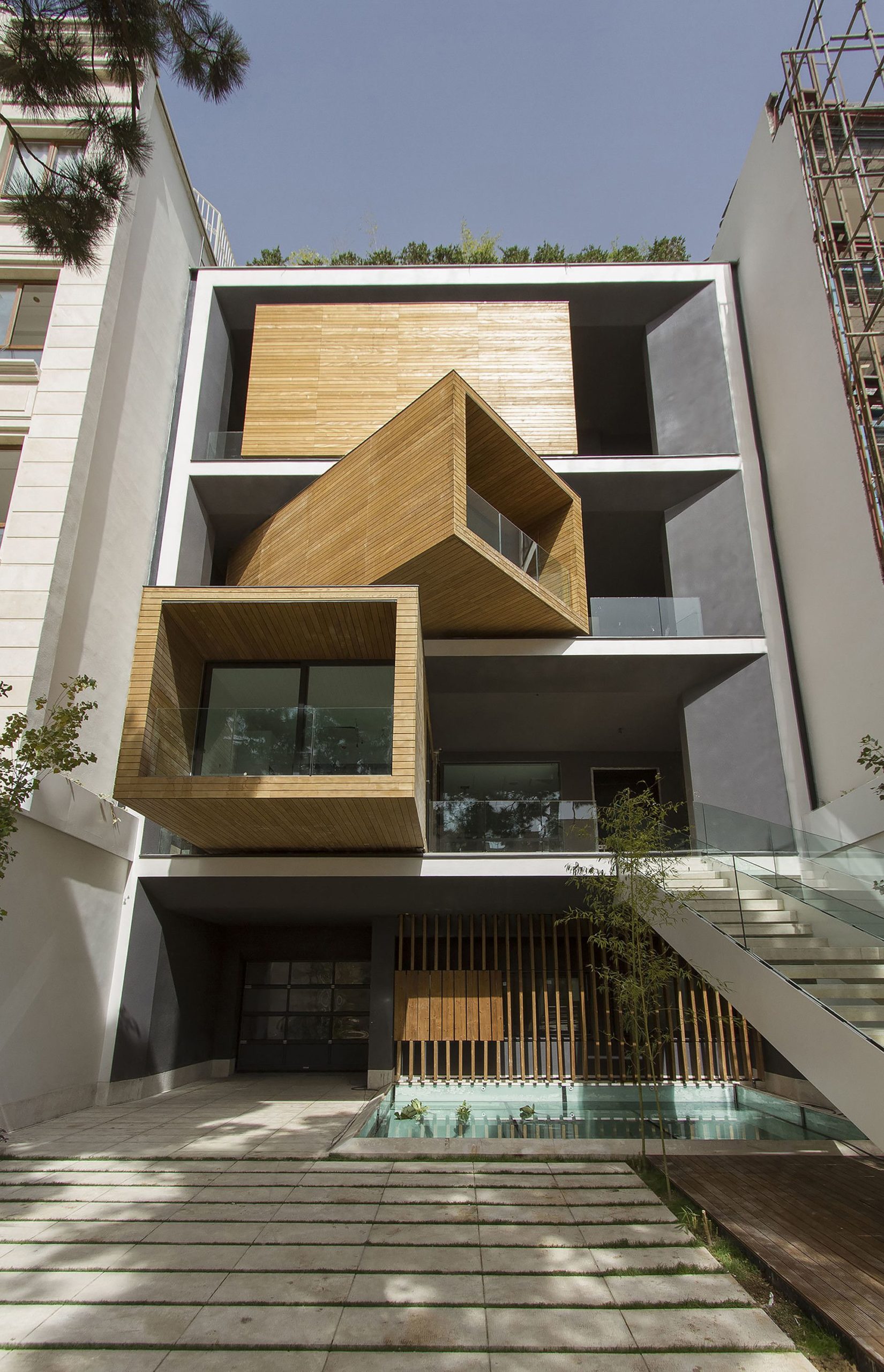
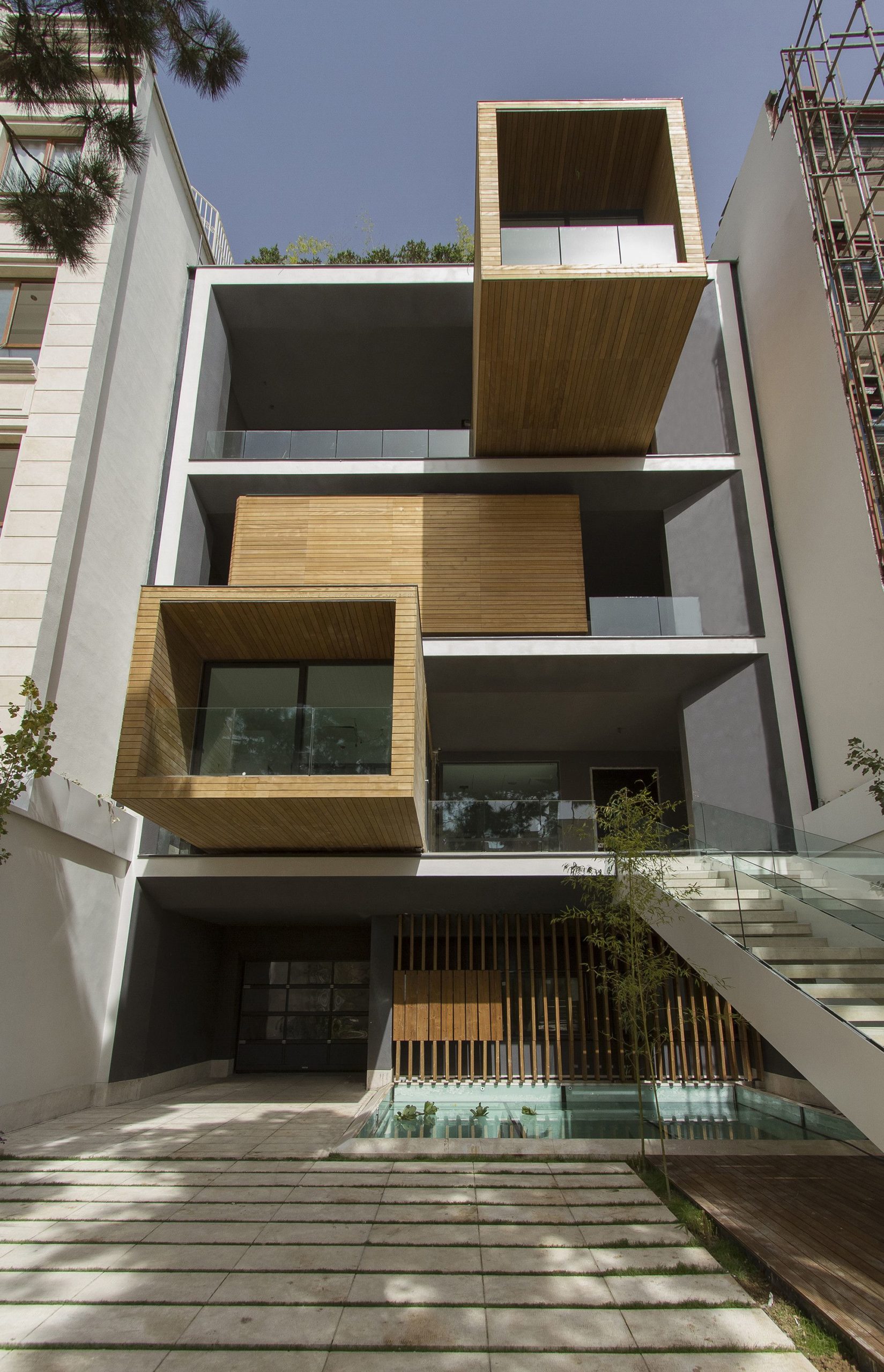
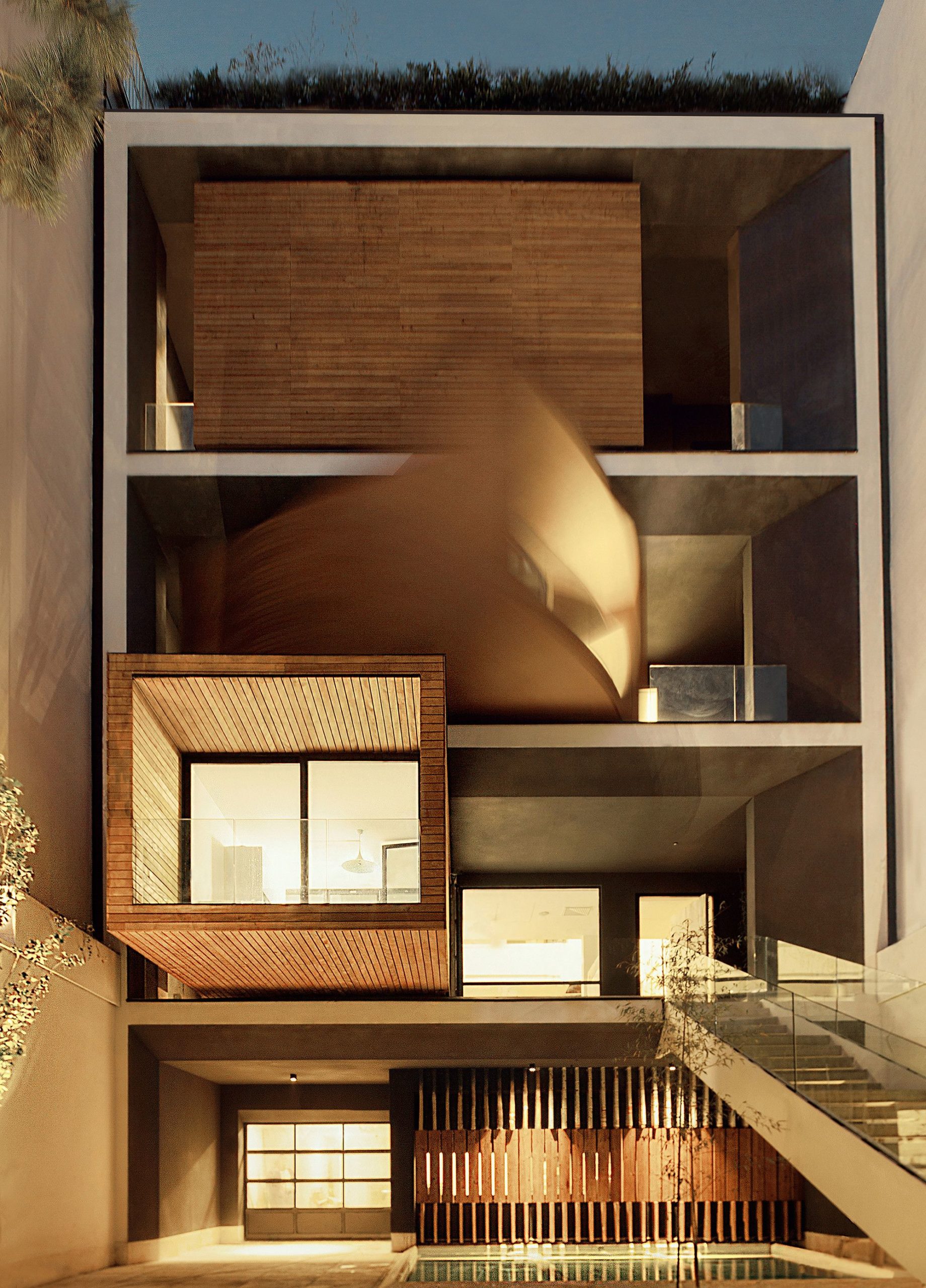
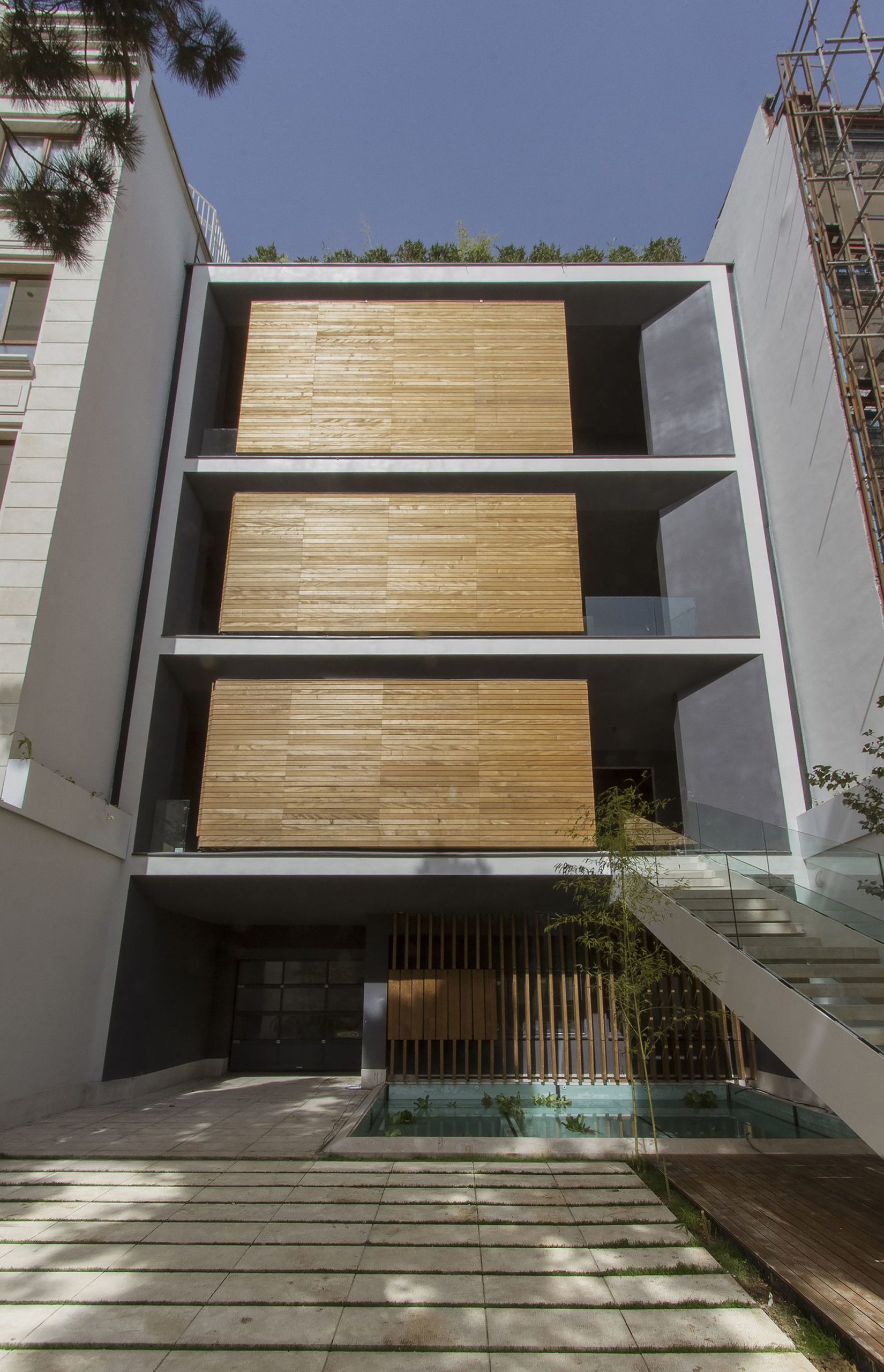
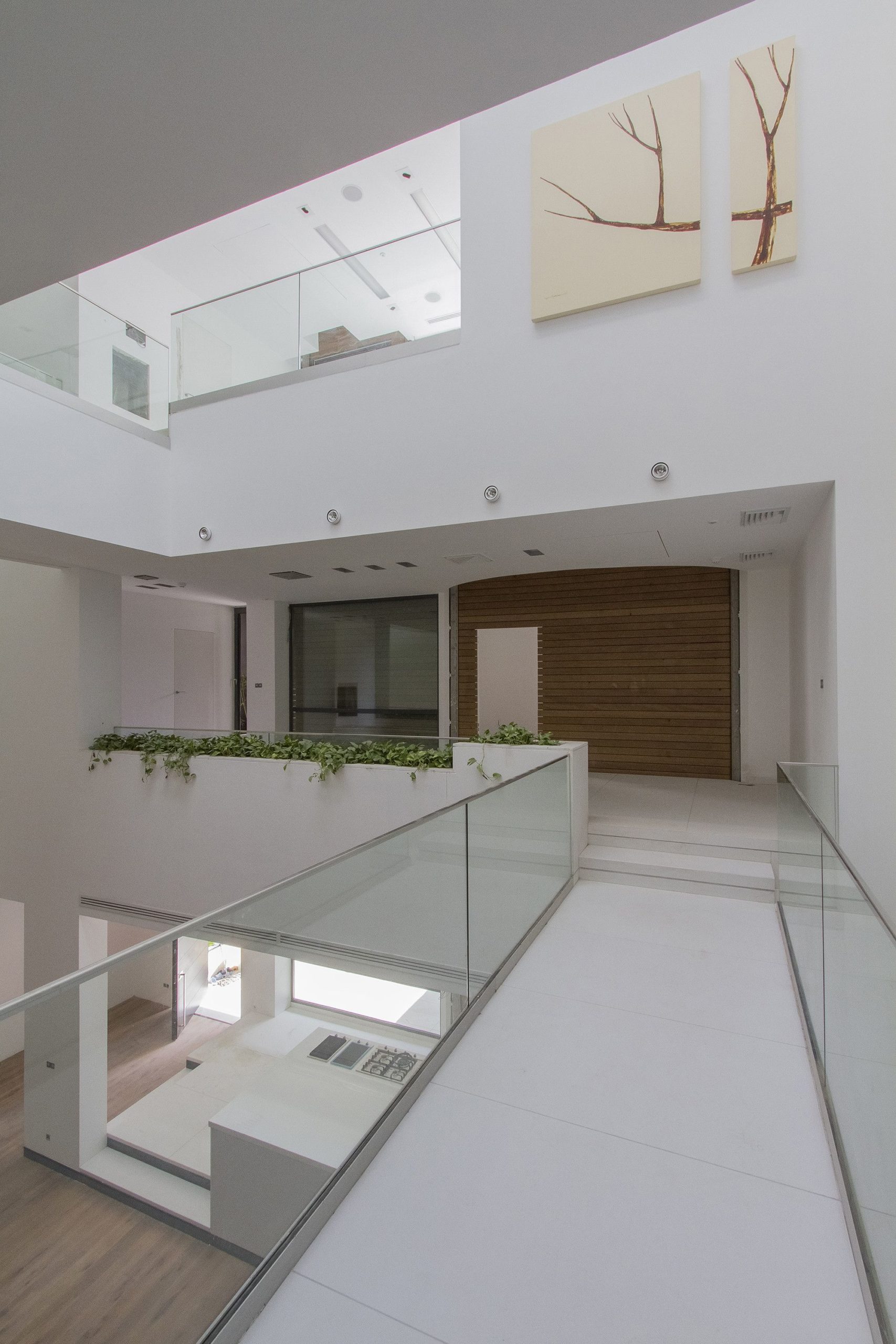
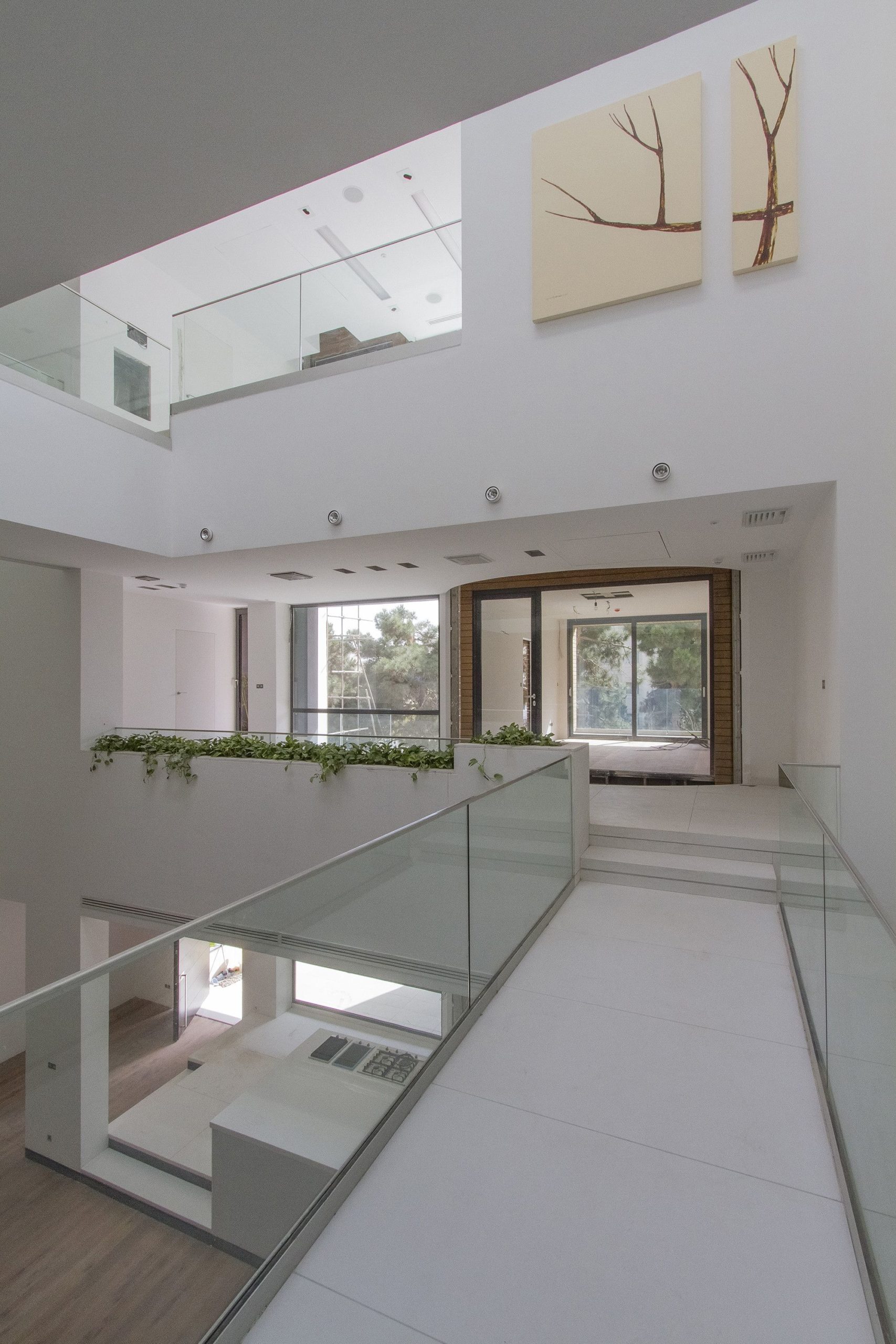
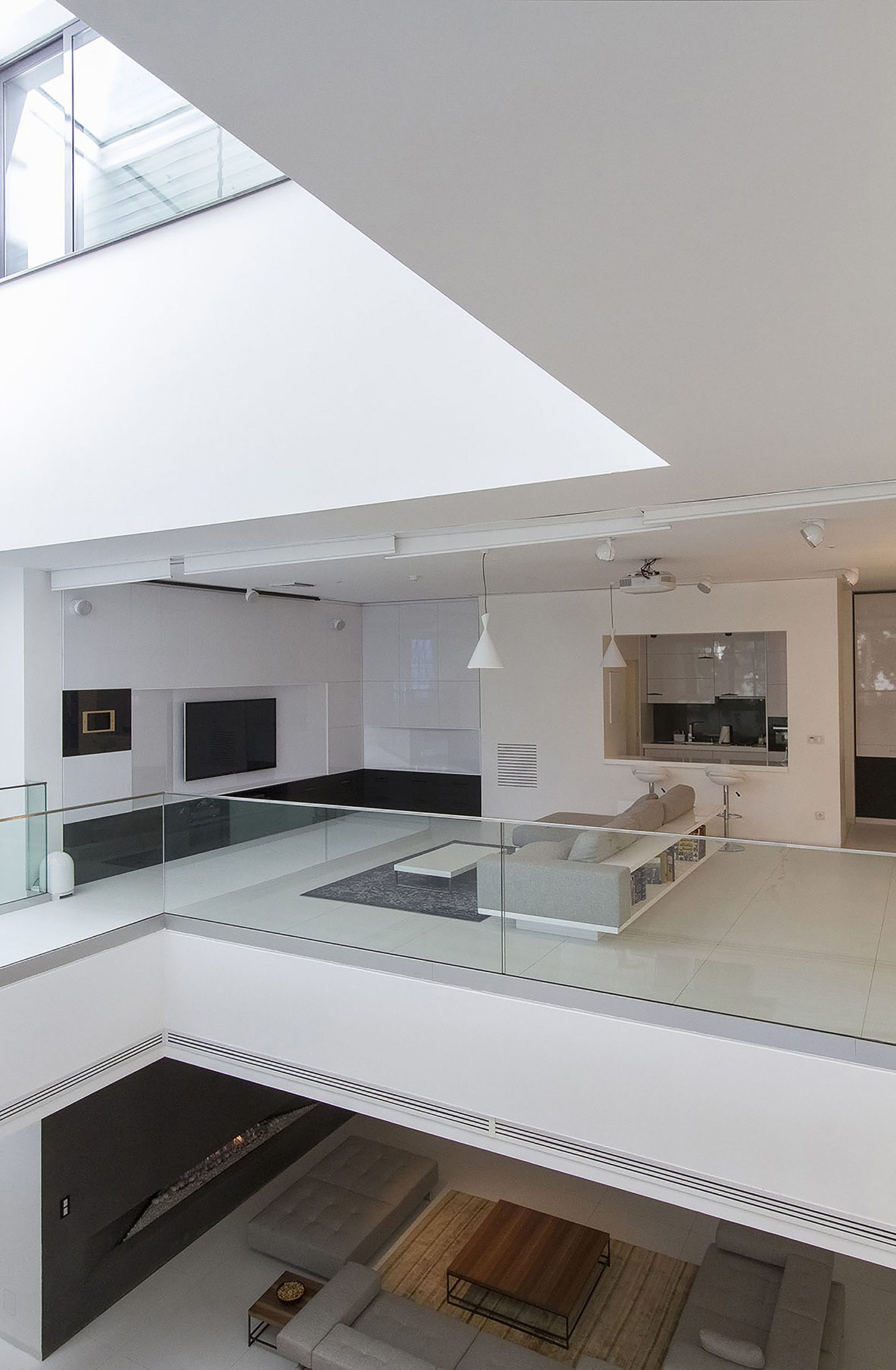
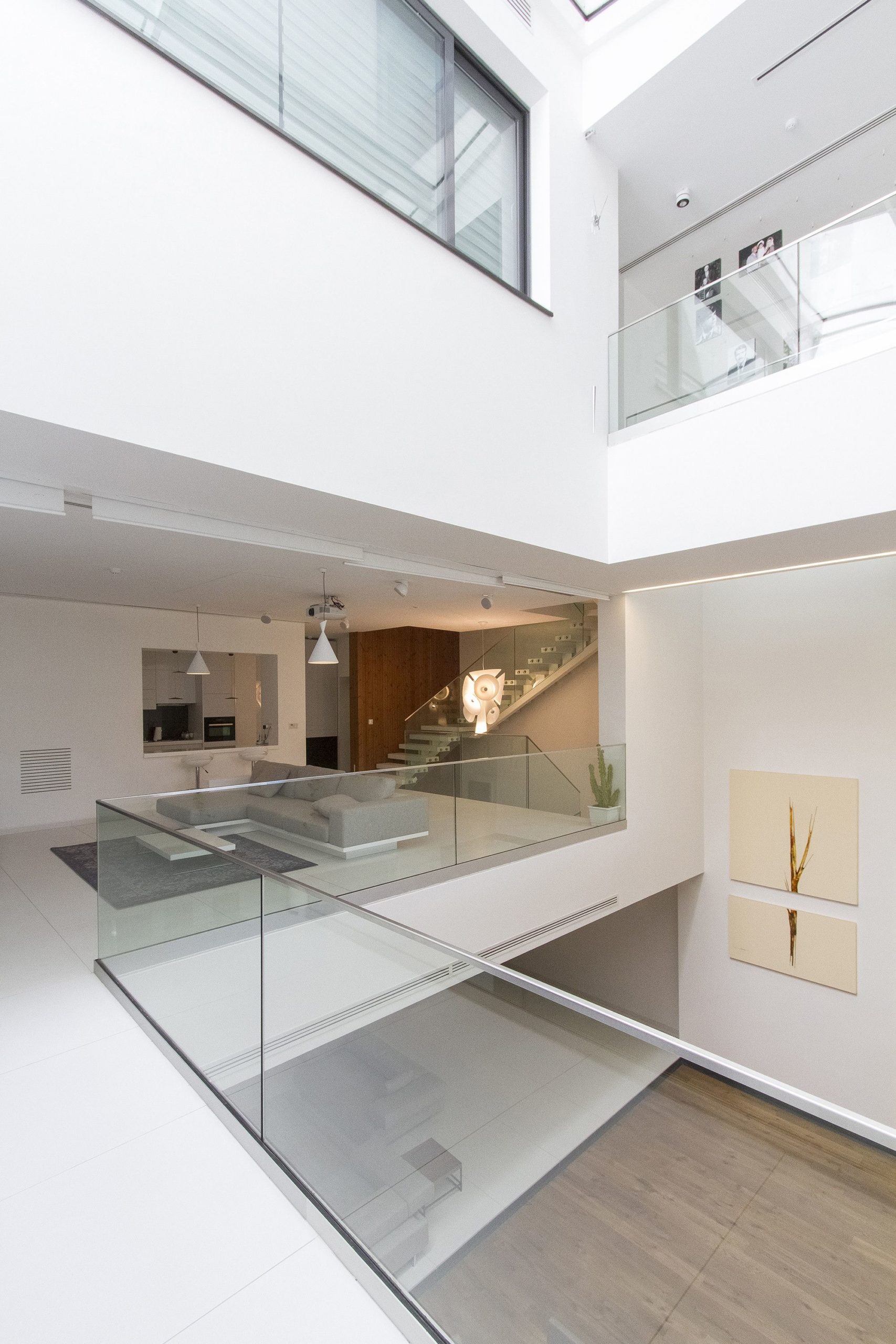
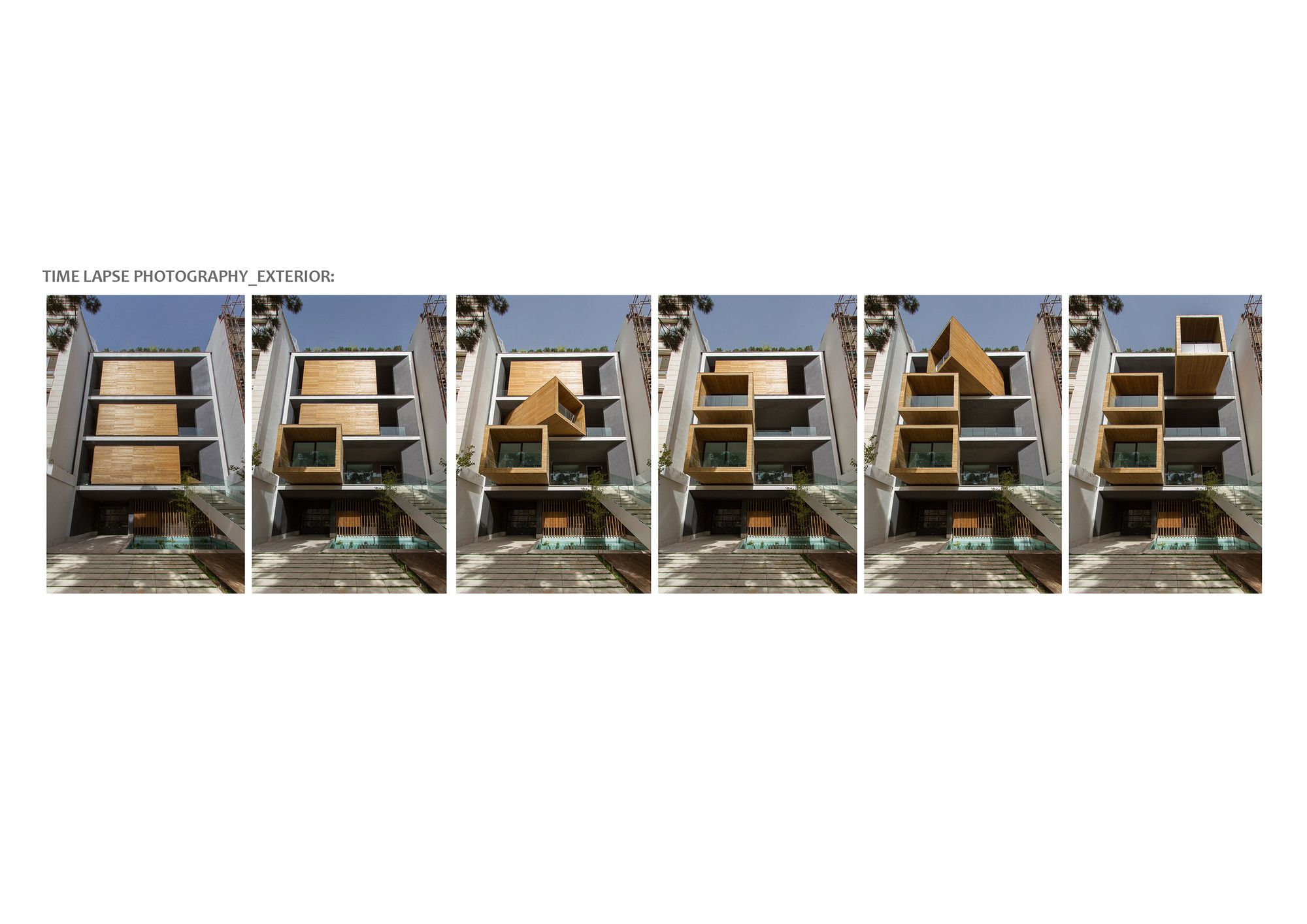
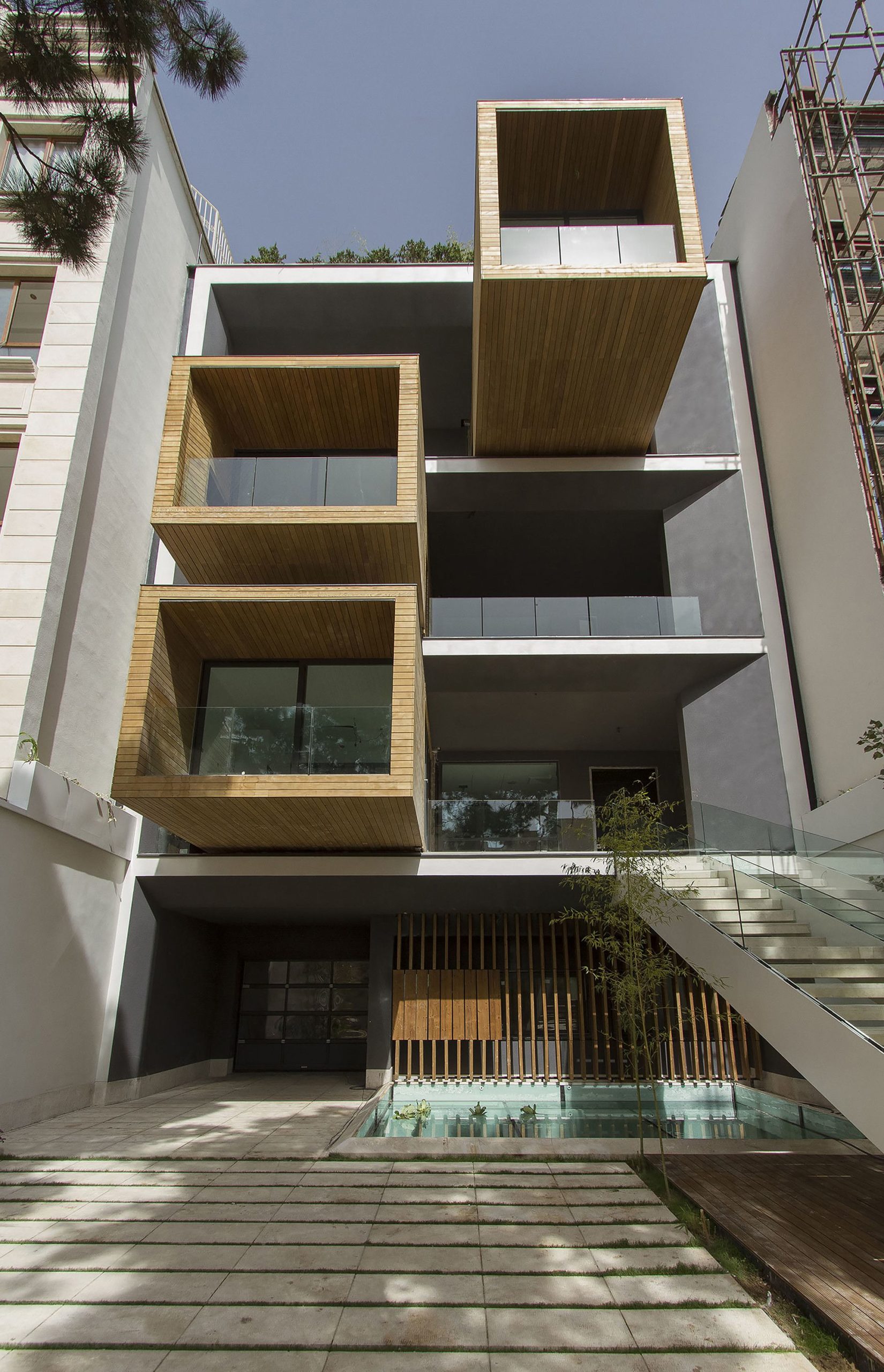
Sharifi-ha House designed by Nextoffice – Alireza Taghaboni, Uncertainty and flexibility lie at the heart of this project’s design concept. The sensational, spatial qualities of the interiors, as well as the formal configuration of its exterior, directly respond to the displacement of turning boxes that lead the building’s volume to become open or closed, introverted or extroverted.
Courtesy of nextoffice
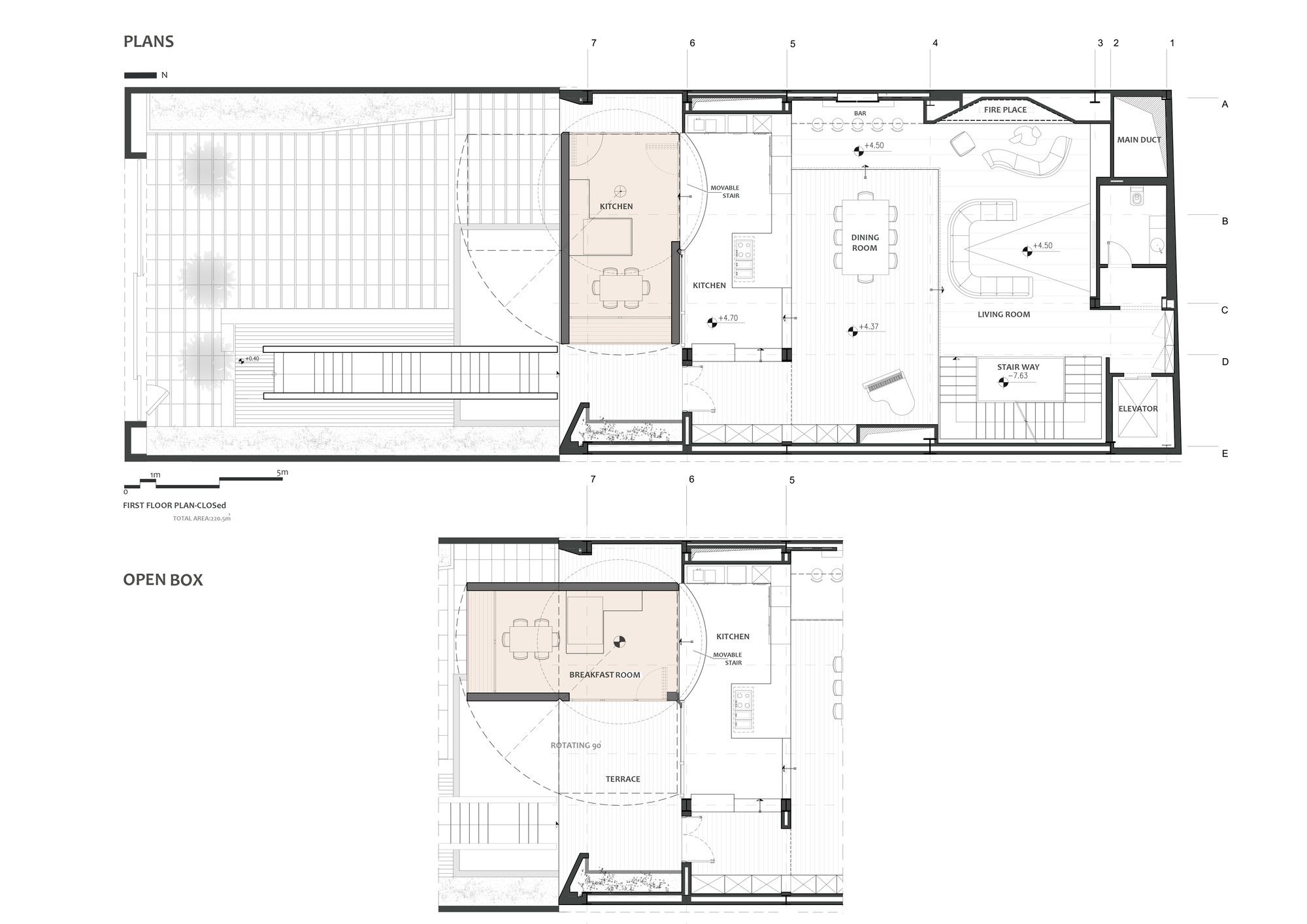
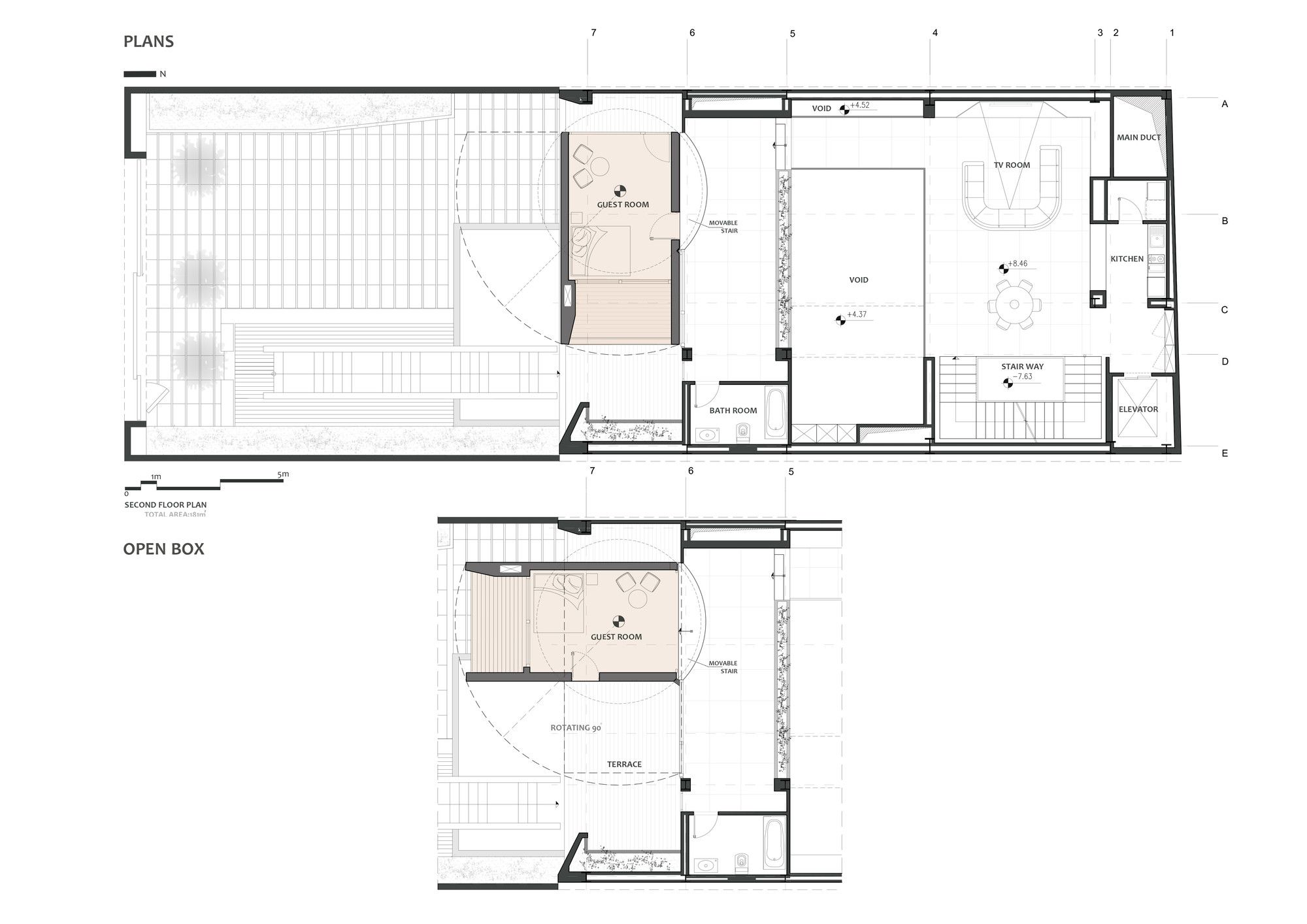
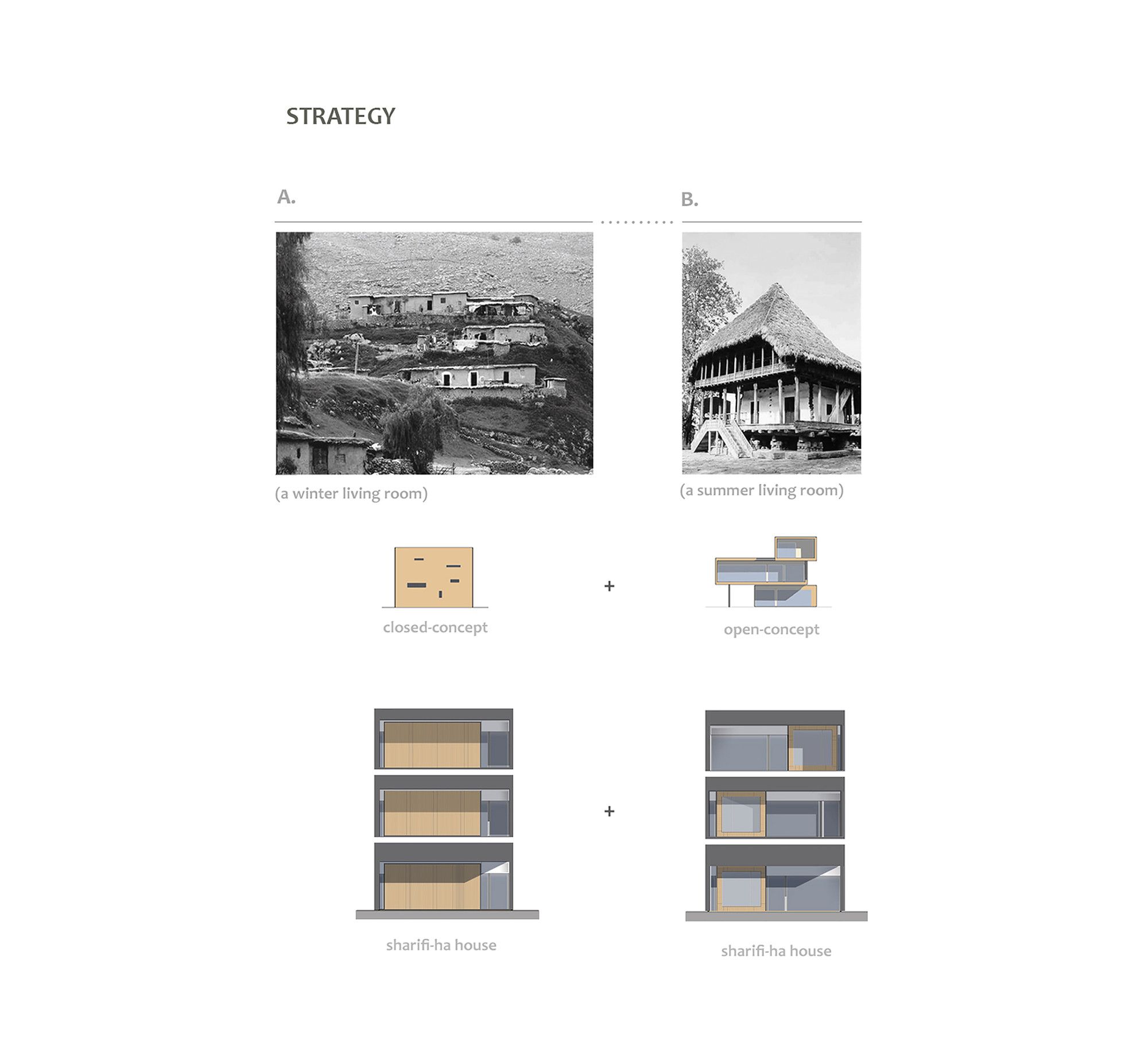
These changes may occur according to changing seasons or functional scenarios. Like many other urban plots, the land for this project had a noticeably narrow façade-width compared with the depth of its length. Consequently, our expertise in transforming a two-dimensional façade to a three-dimensional one became indispensable. Here, the openness /closure of the building’s volume is a reference to traditional Iranian houses, which would dynamically serve as seasonal modes of habitation by offering both a Zemestan-Neshin (a winter living room) and Taabestan-Neshin (a summer living room) to their residents.
Courtesy of nextoffice
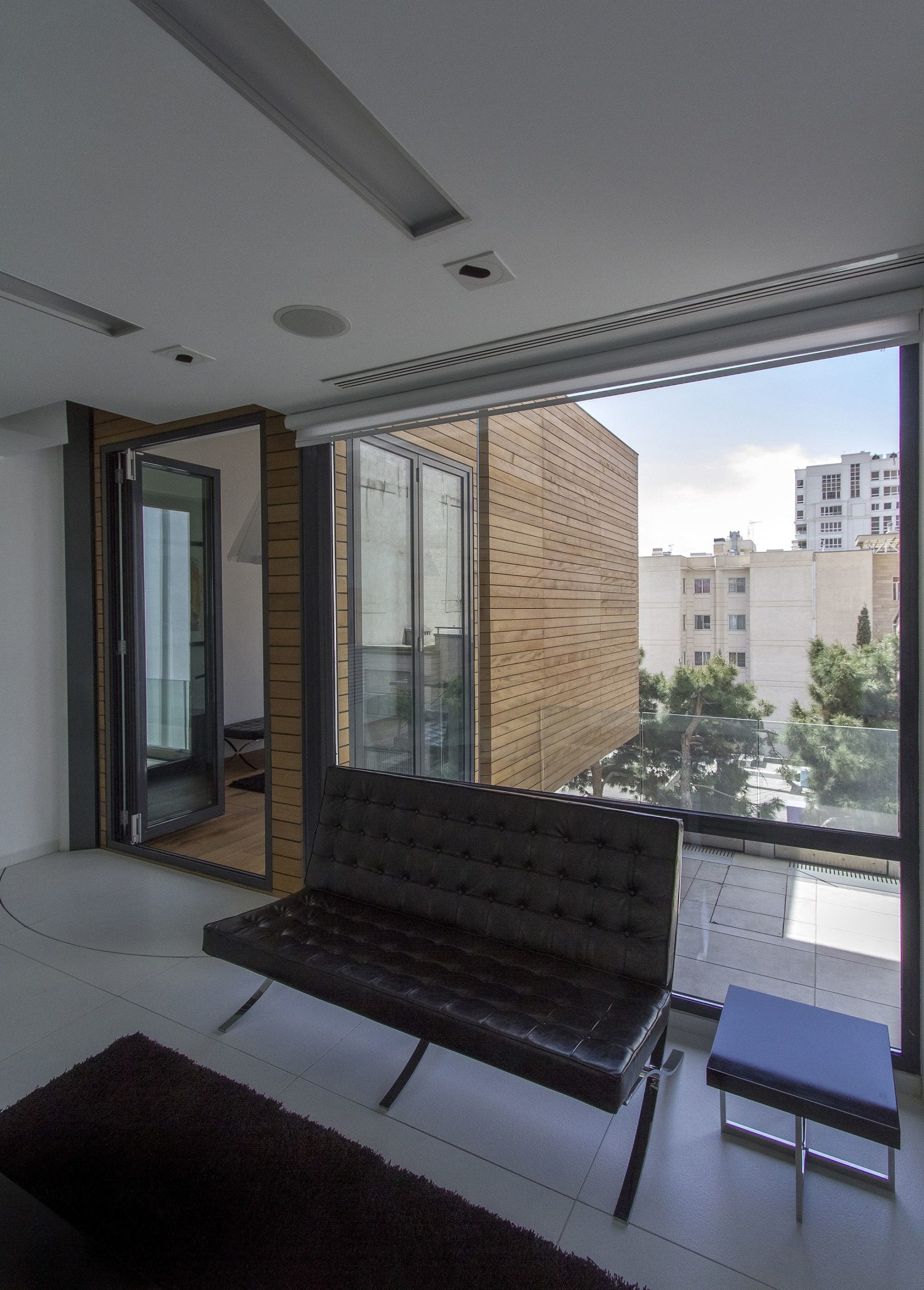
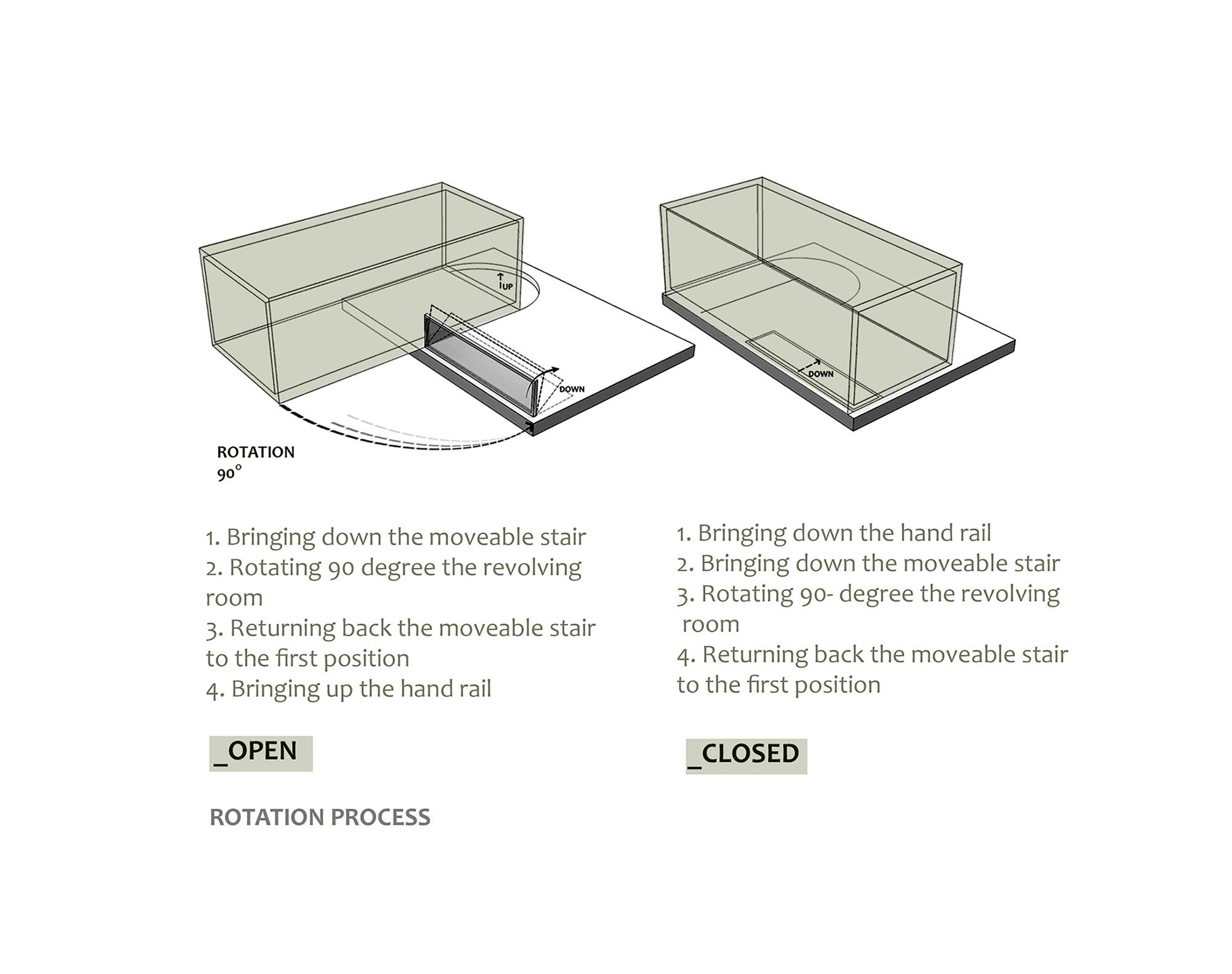
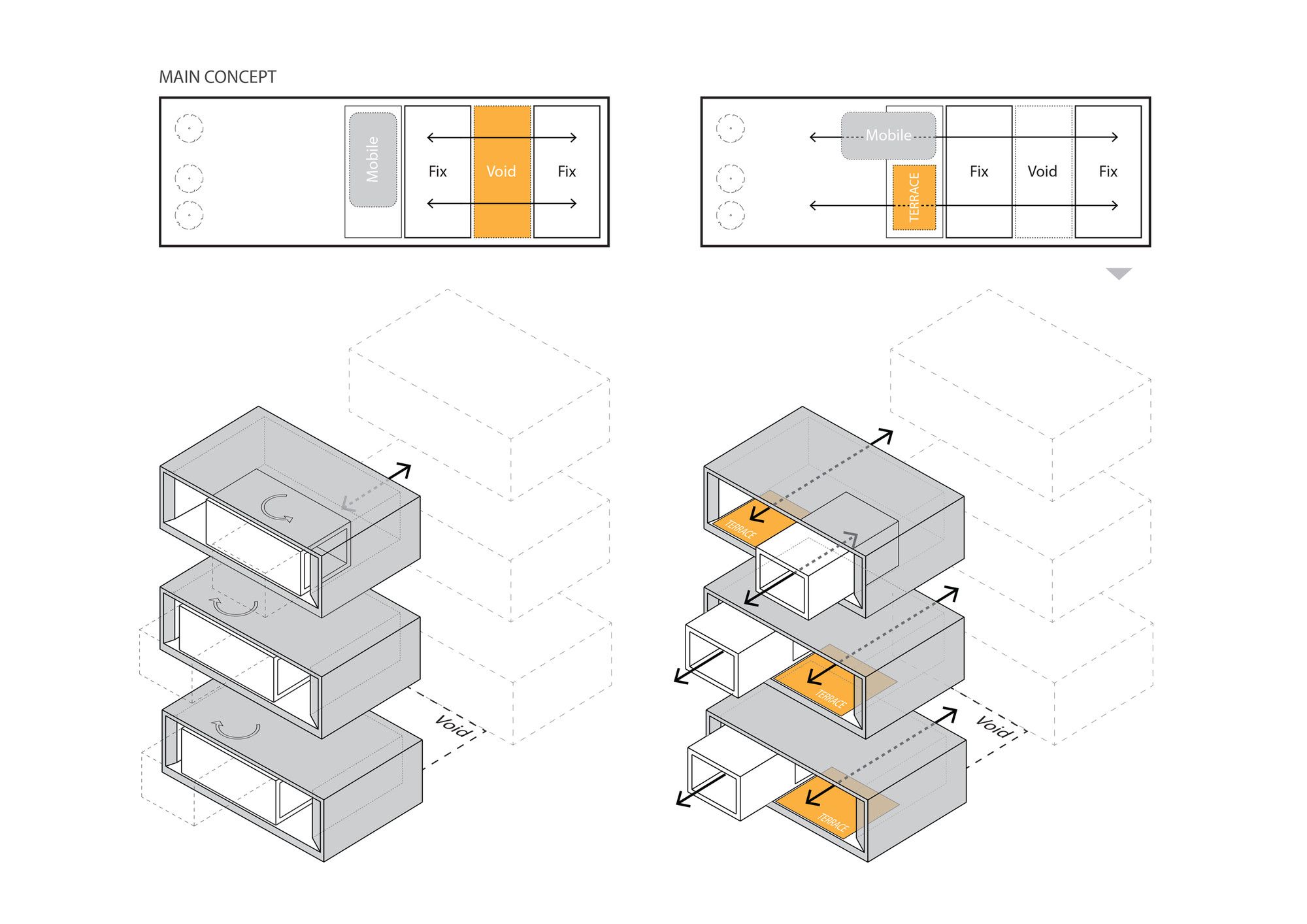
In the summertime, Sharifi-ha House offers an open /transparent /perforated volume with wide, large terraces. In contrast, during Tehran’s cold, snowy winters the volume closes down, offering minimal openings and a total absence of those wide summer terraces. In this project, the challenges to the concepts of introverted/extroverted typology led to an exciting spatial transformation of an ever-changing residential building.
Courtesy of nextoffice
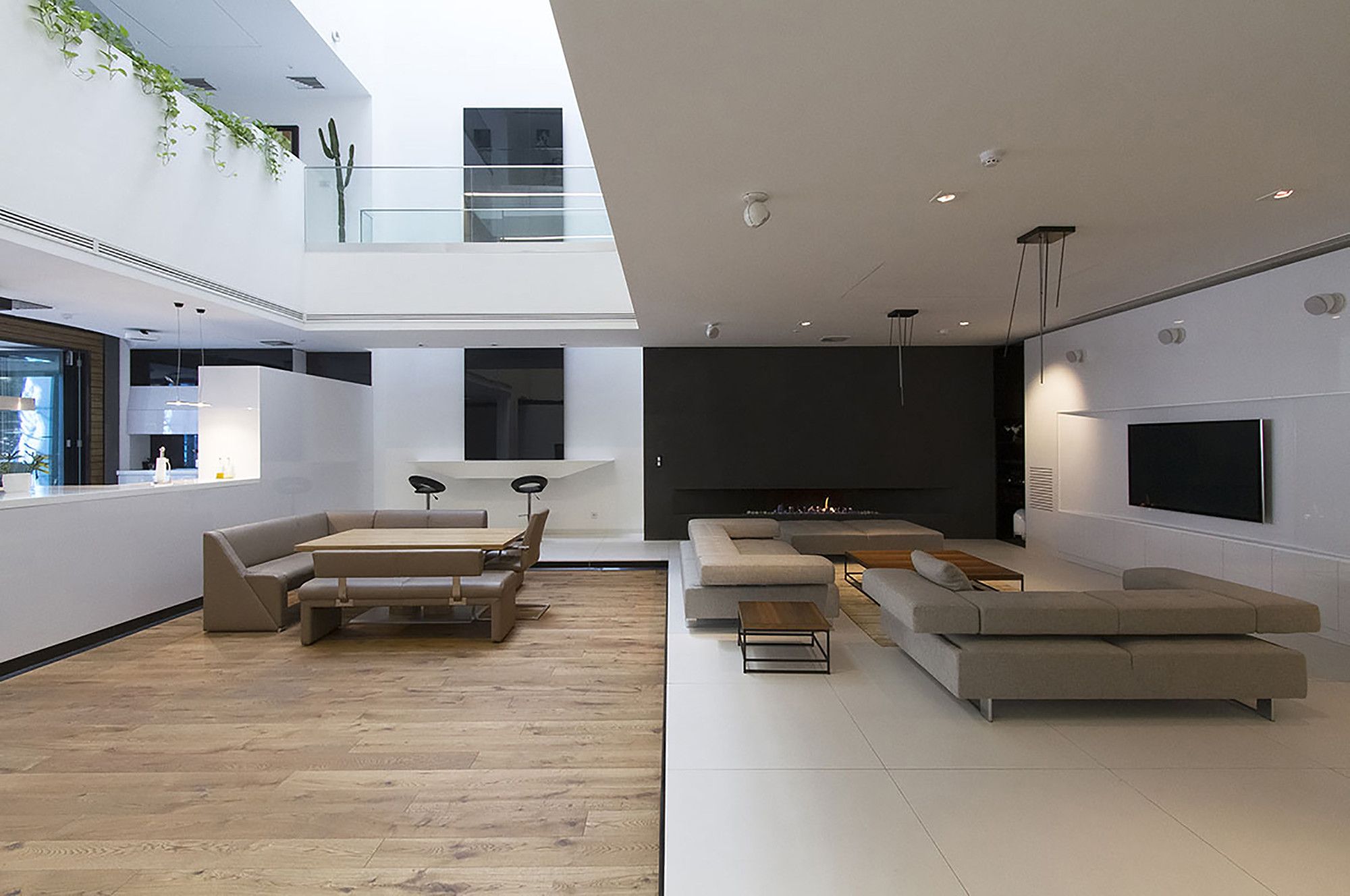
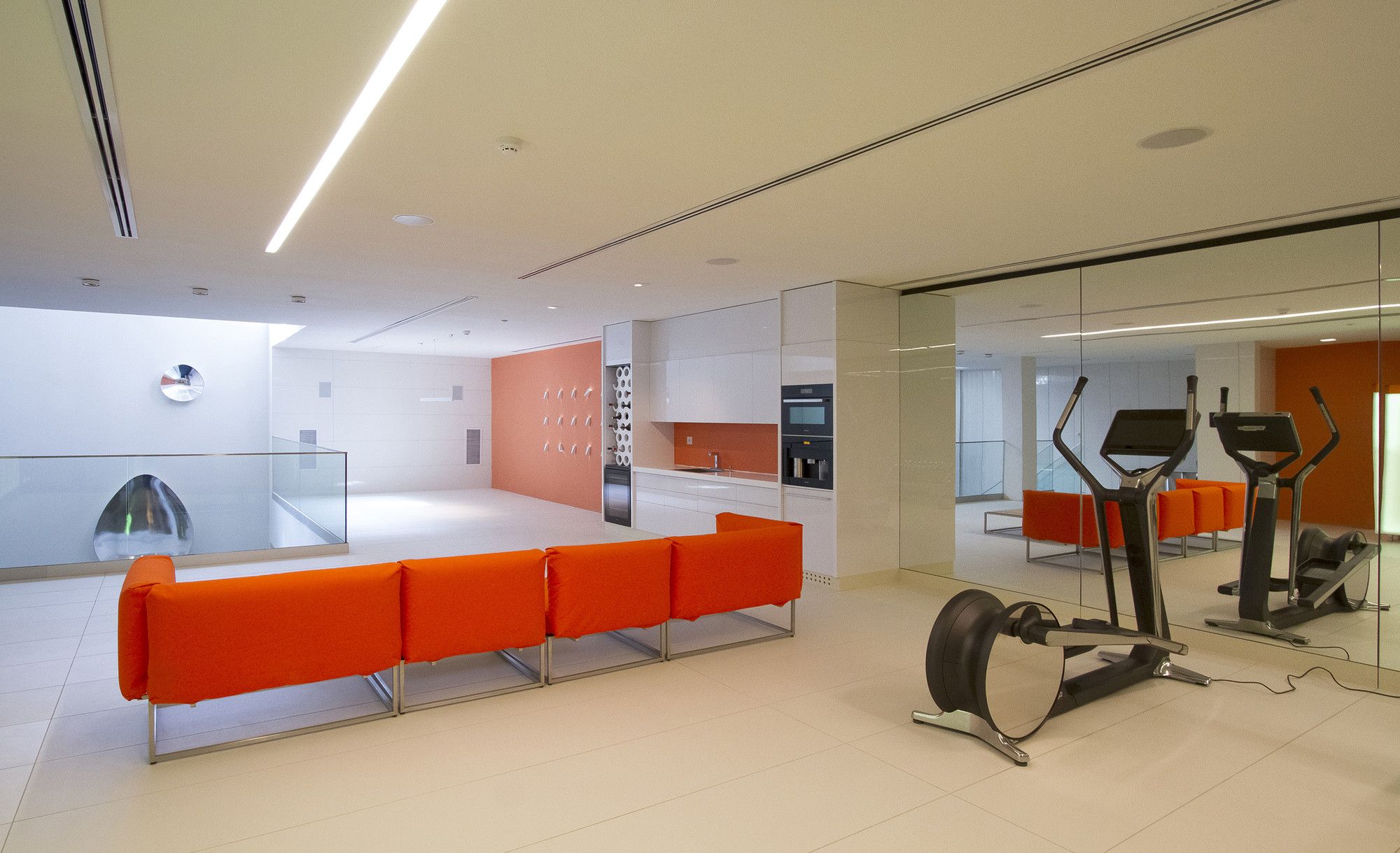
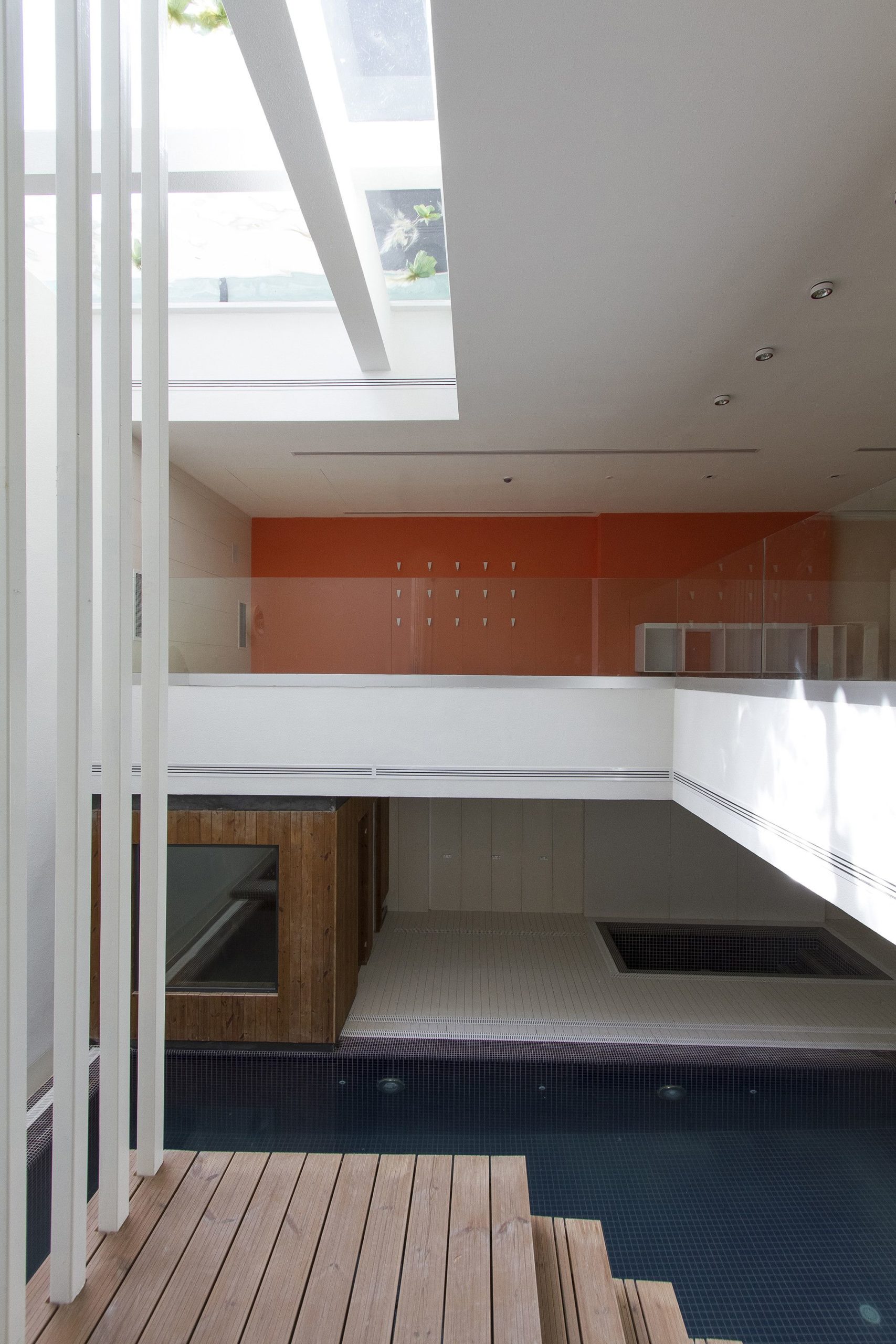
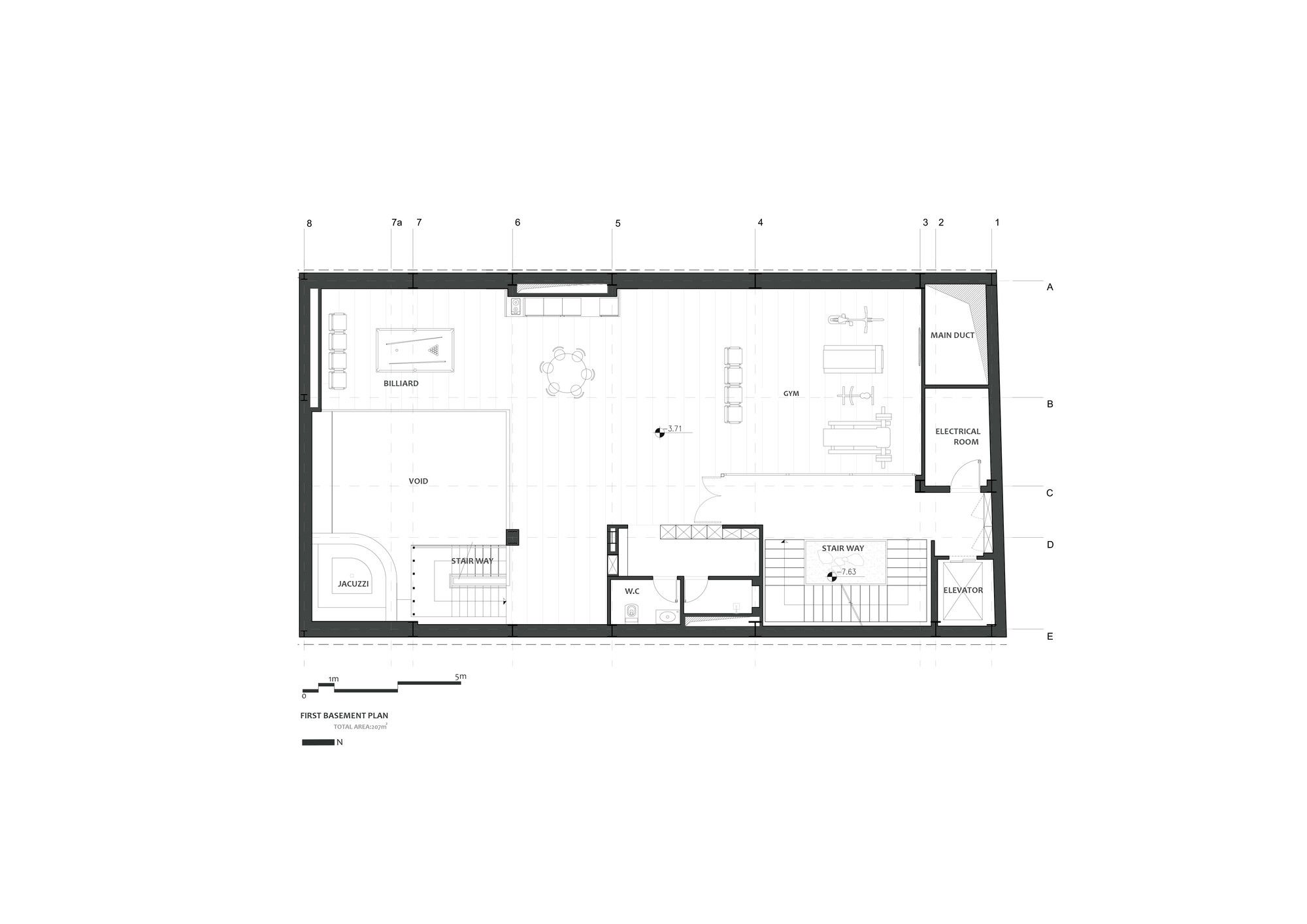
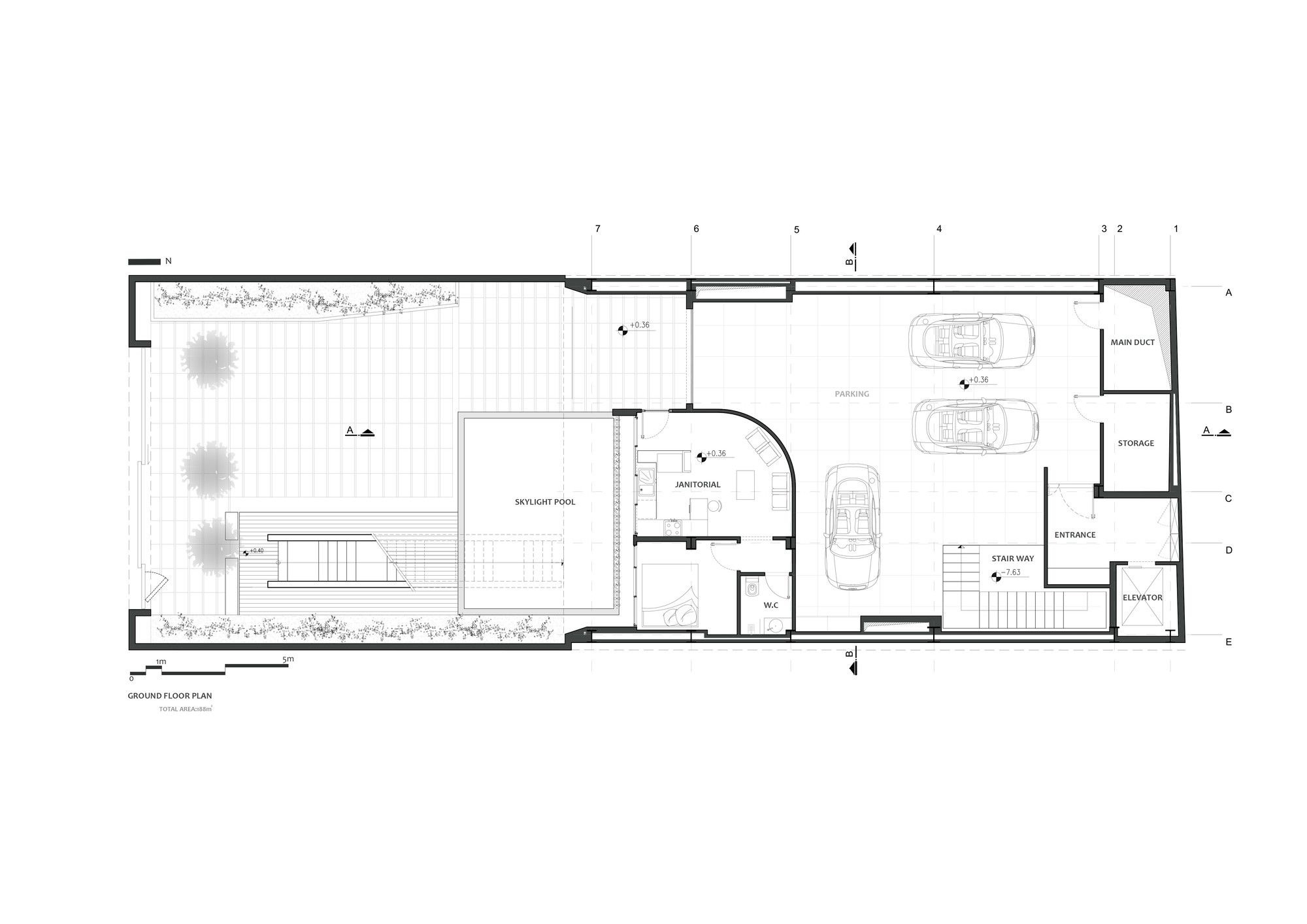
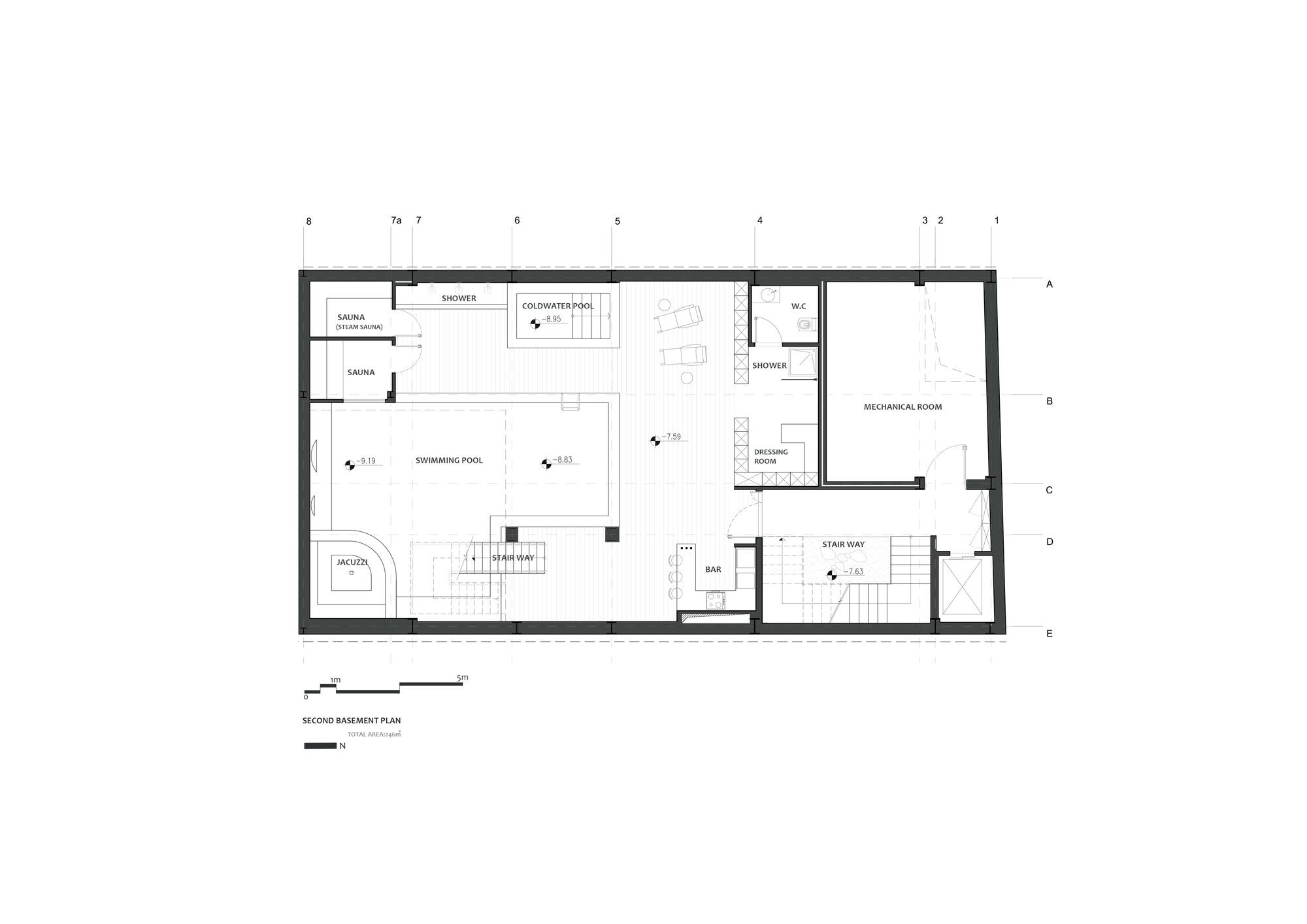
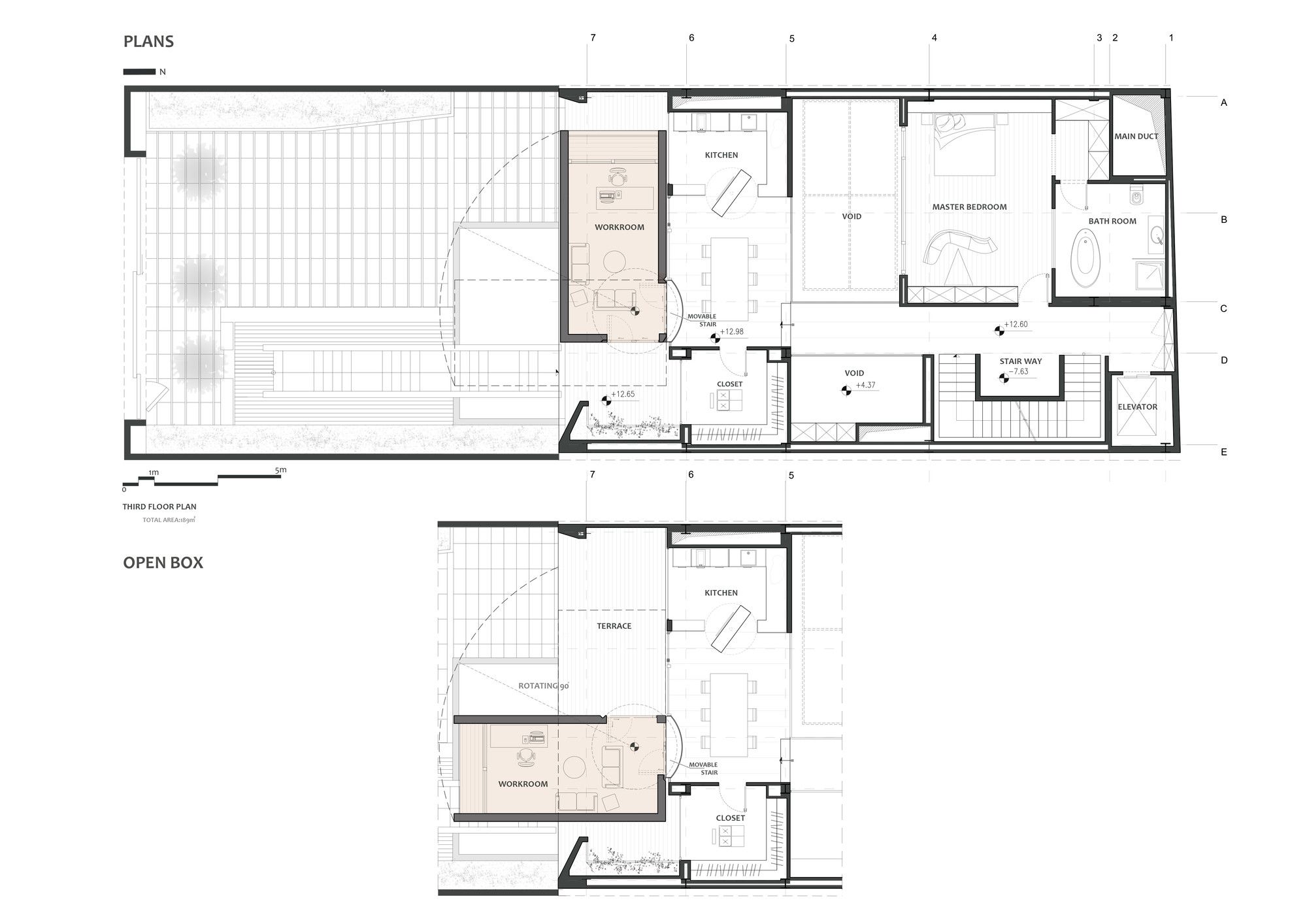
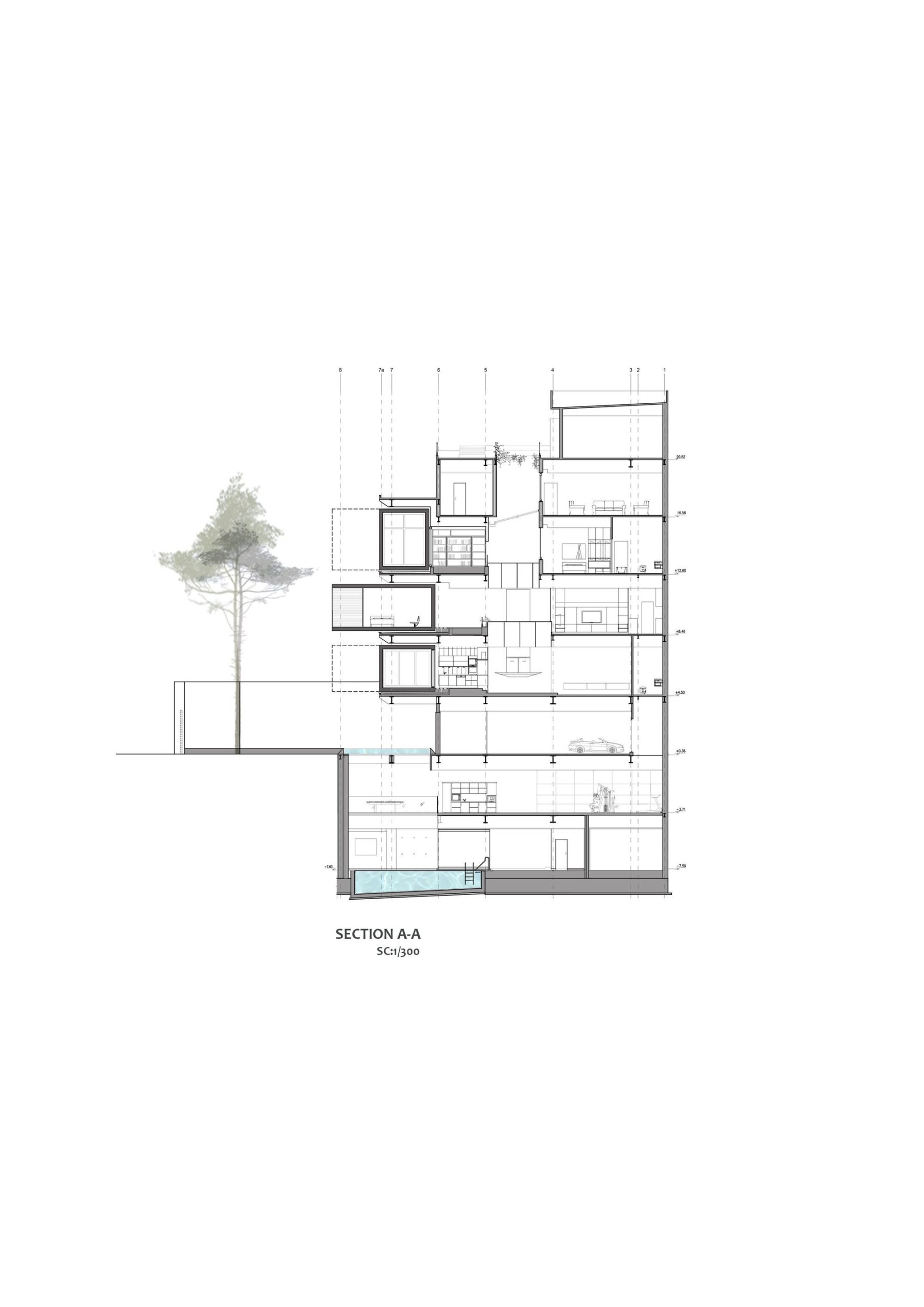
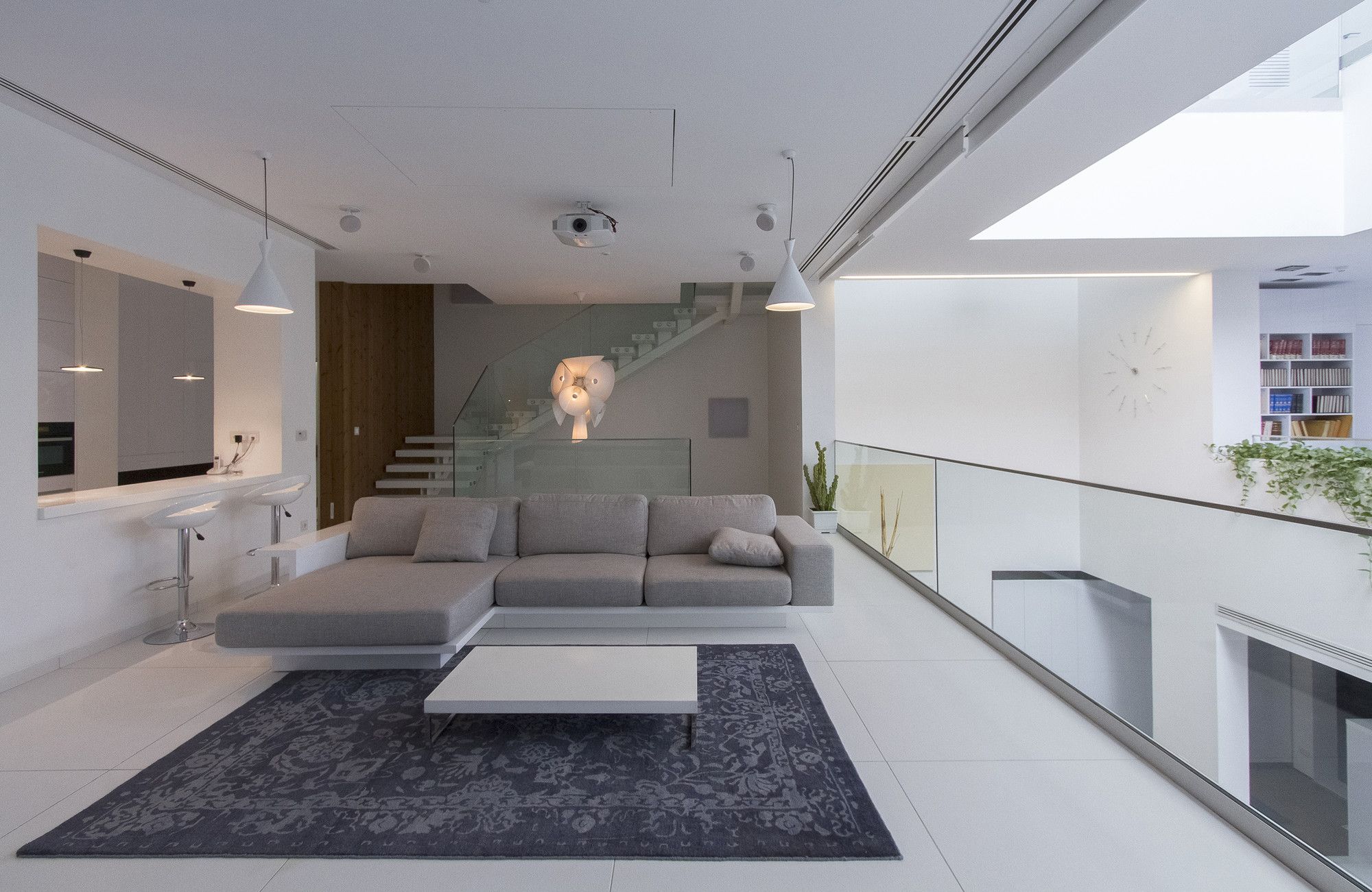
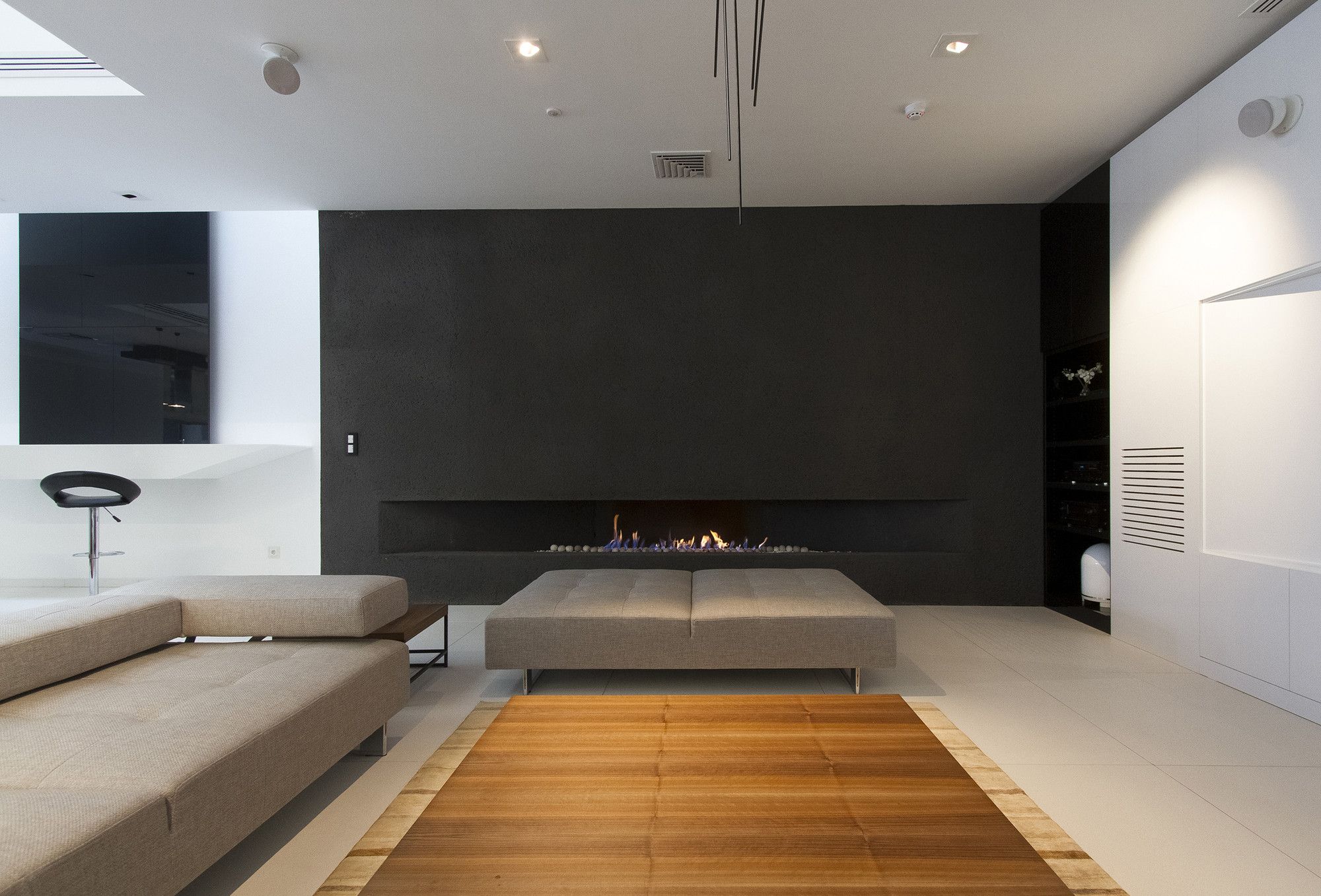
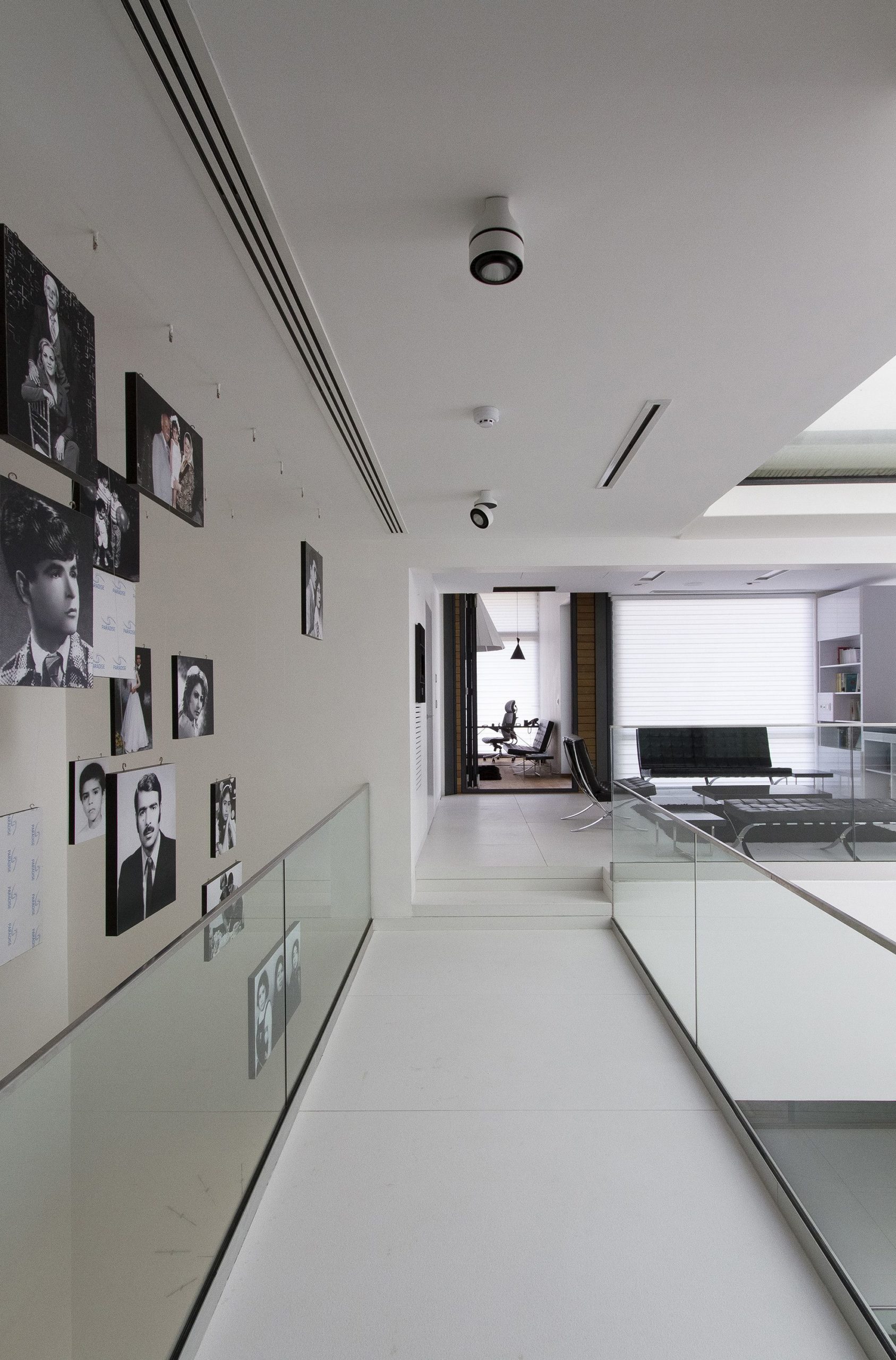
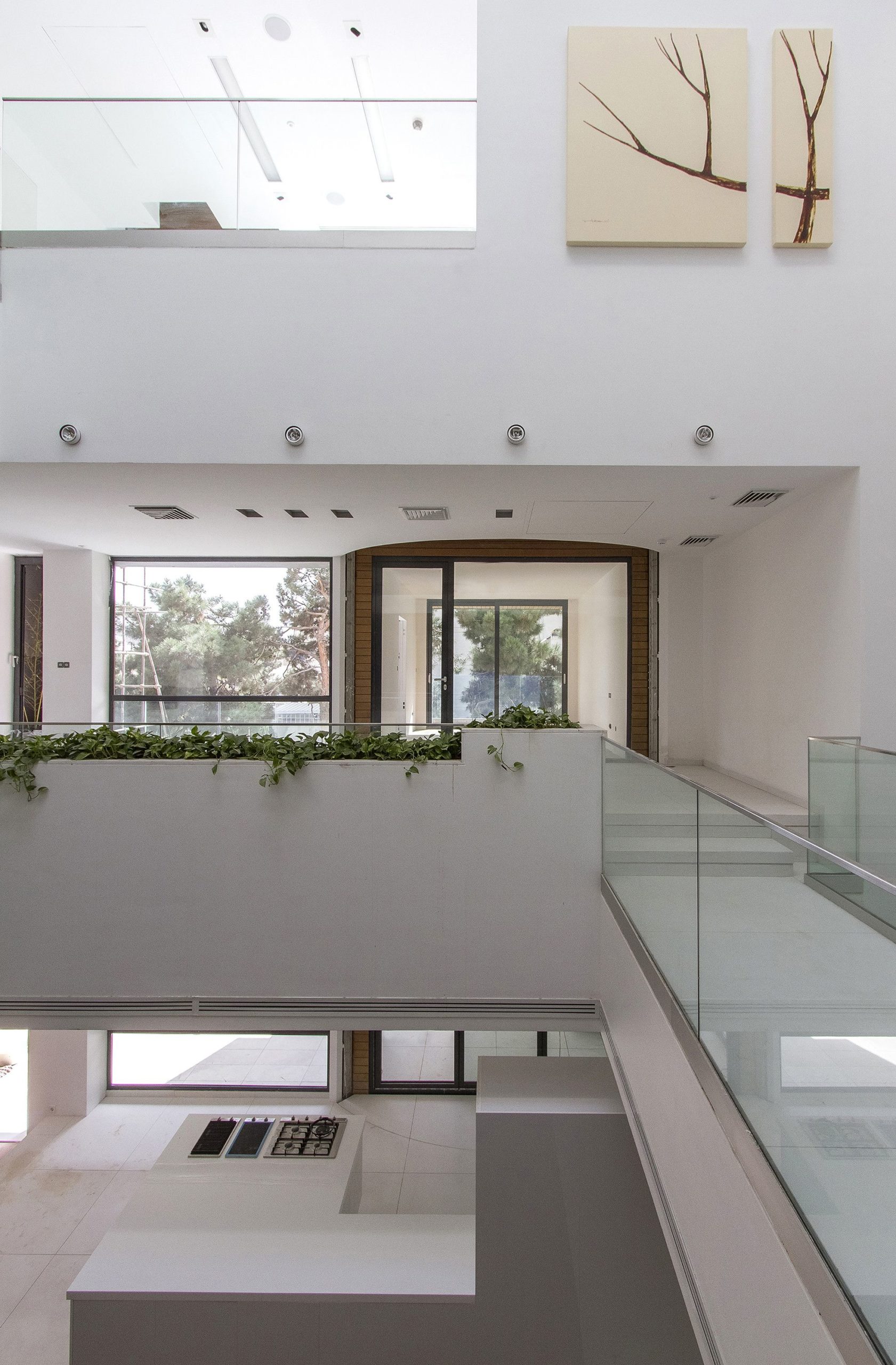
The House is distributed over seven floors: the two basement floors are allocated to family conviviality, fitness facilities, and wellness areas, while the ground floor hosts parking and housekeeping rooms. Public activities all happen on the first and second floors, and the family’s private life takes place on the third and fourth floors.
Courtesy of nextoffice
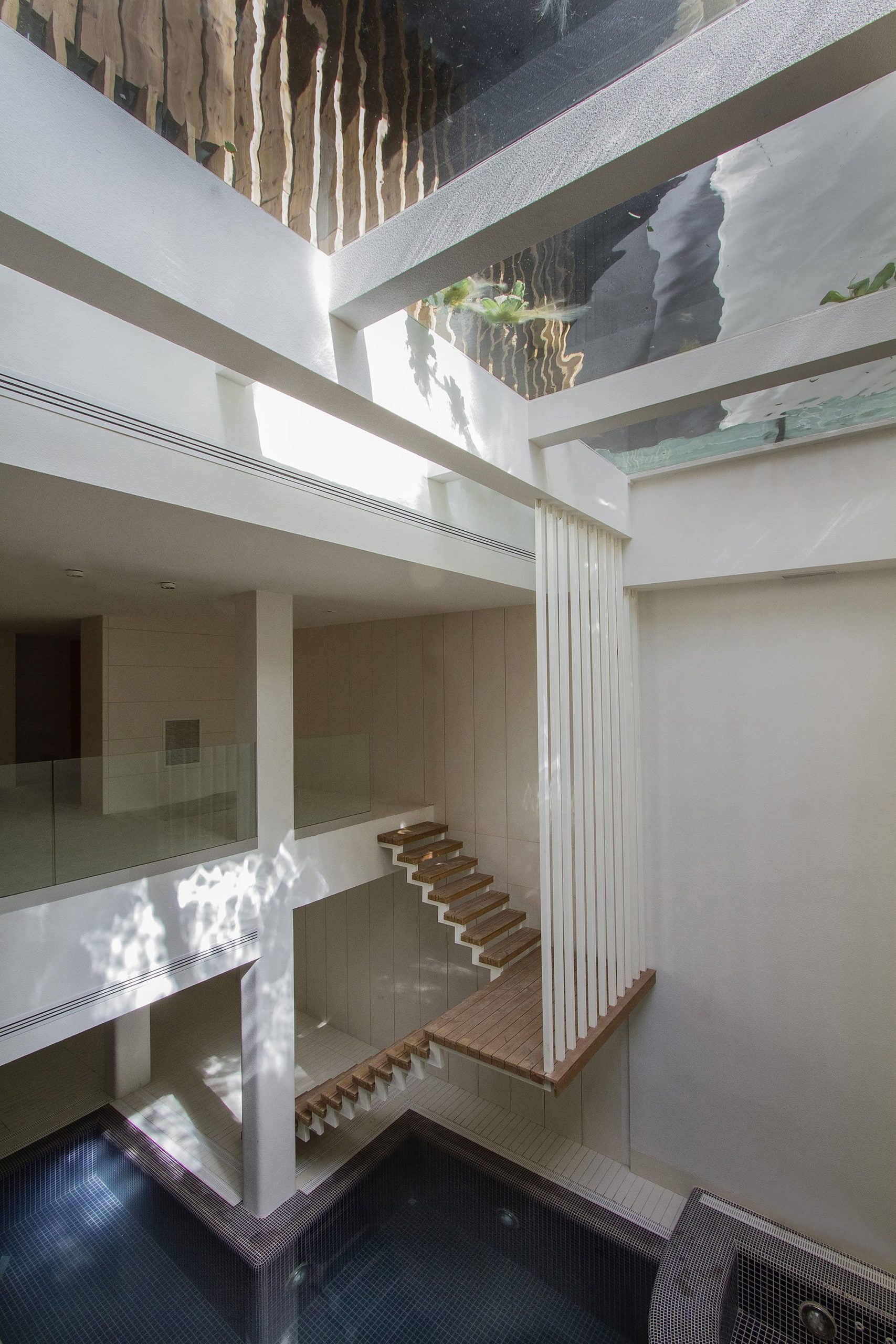
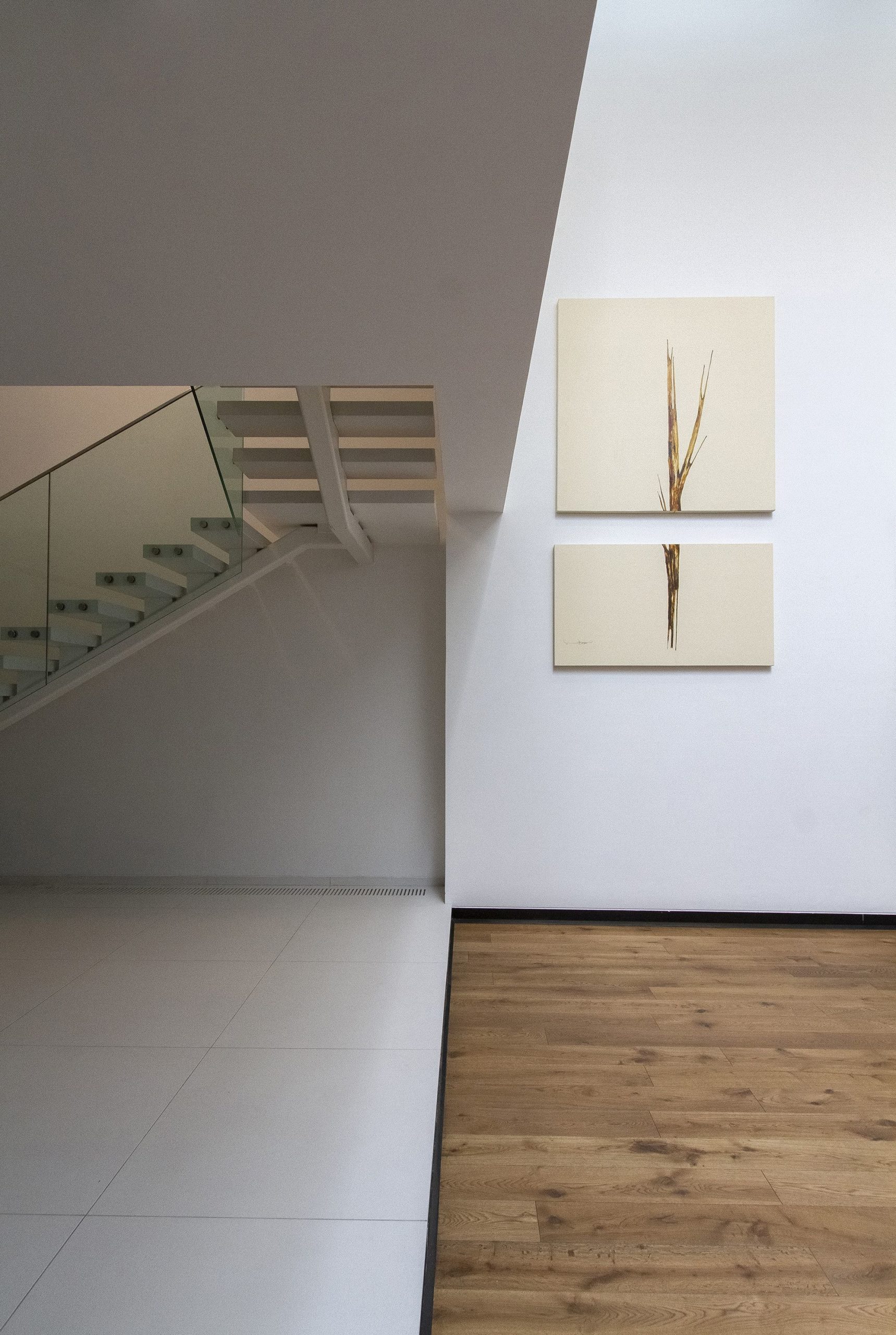
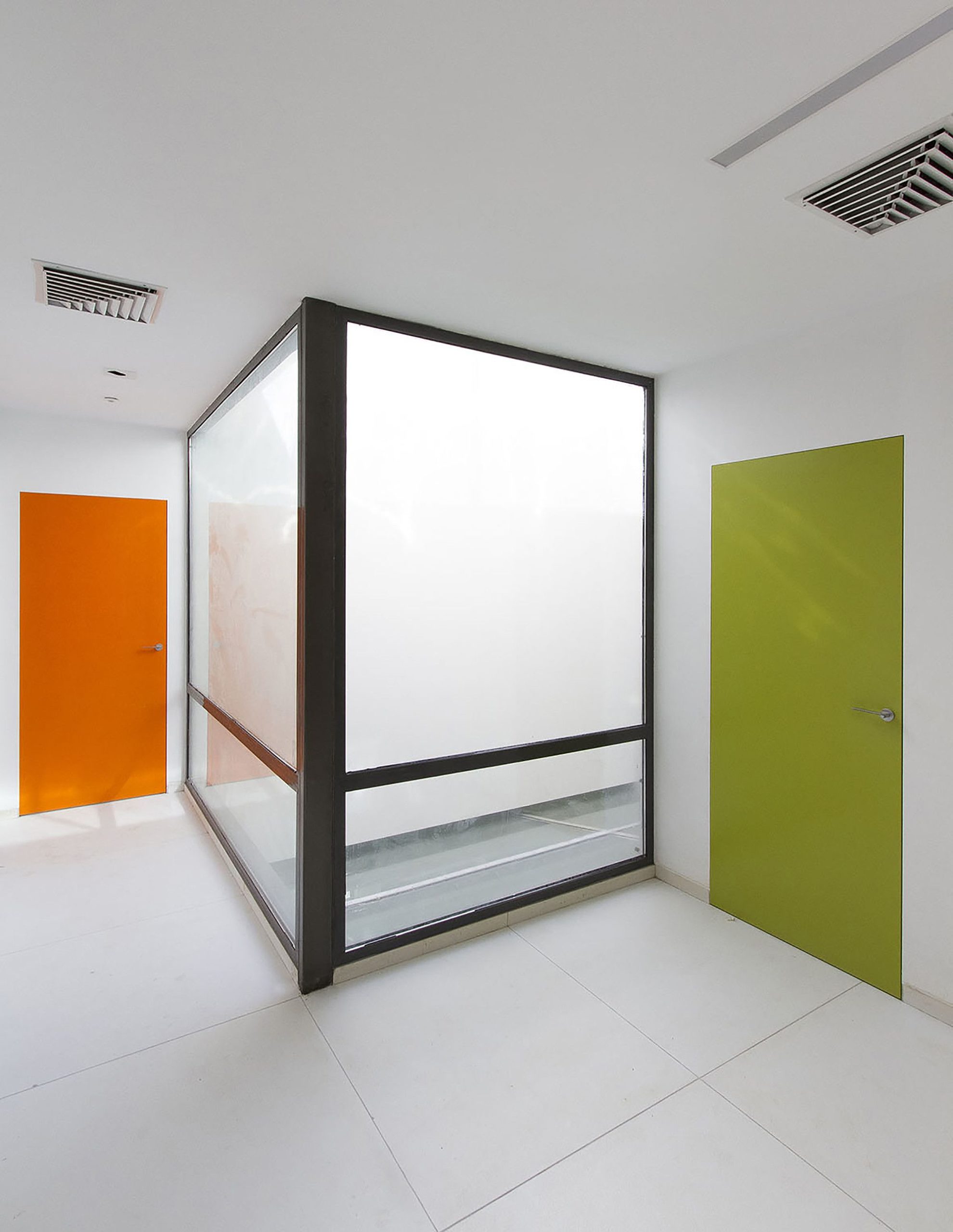
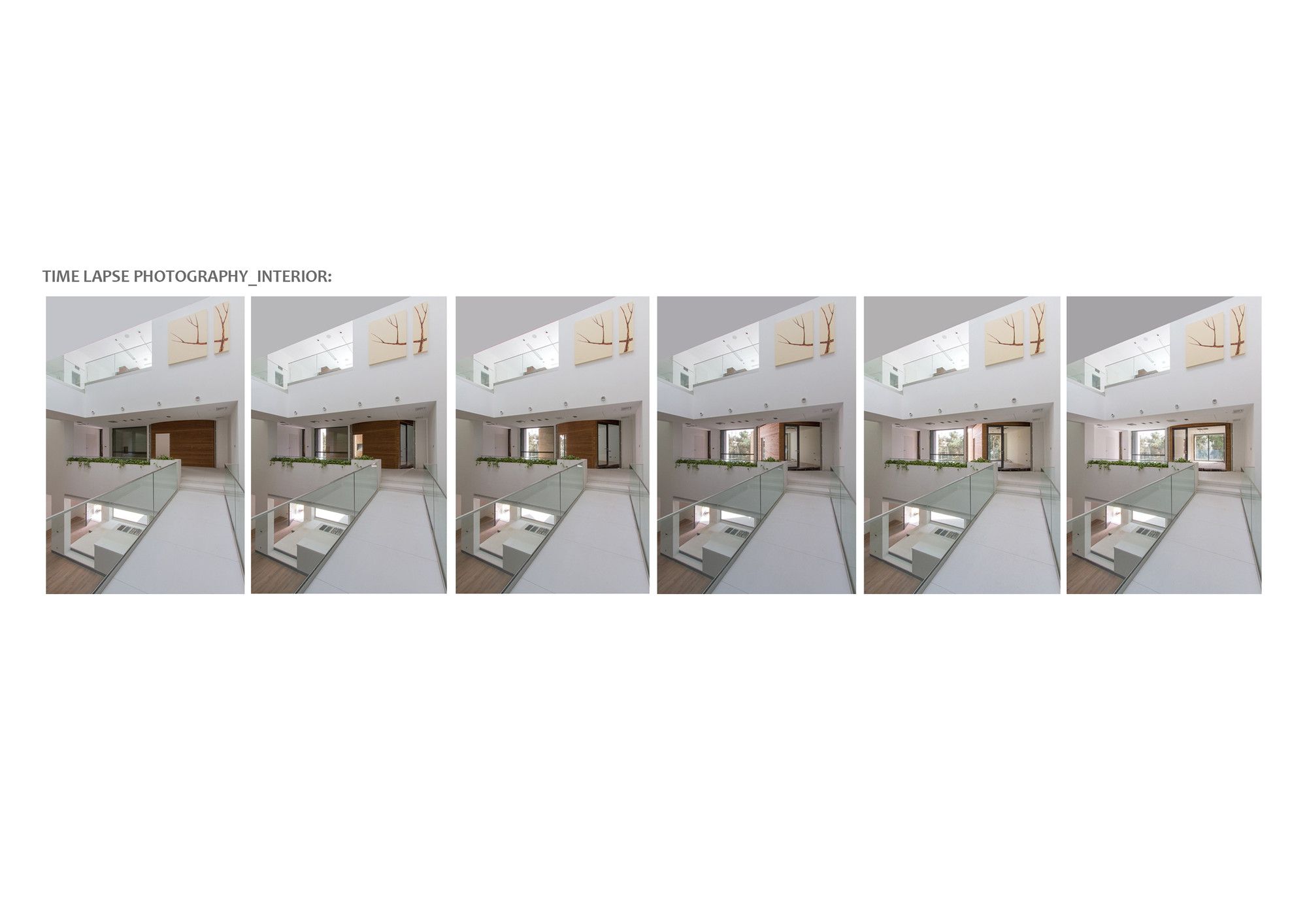
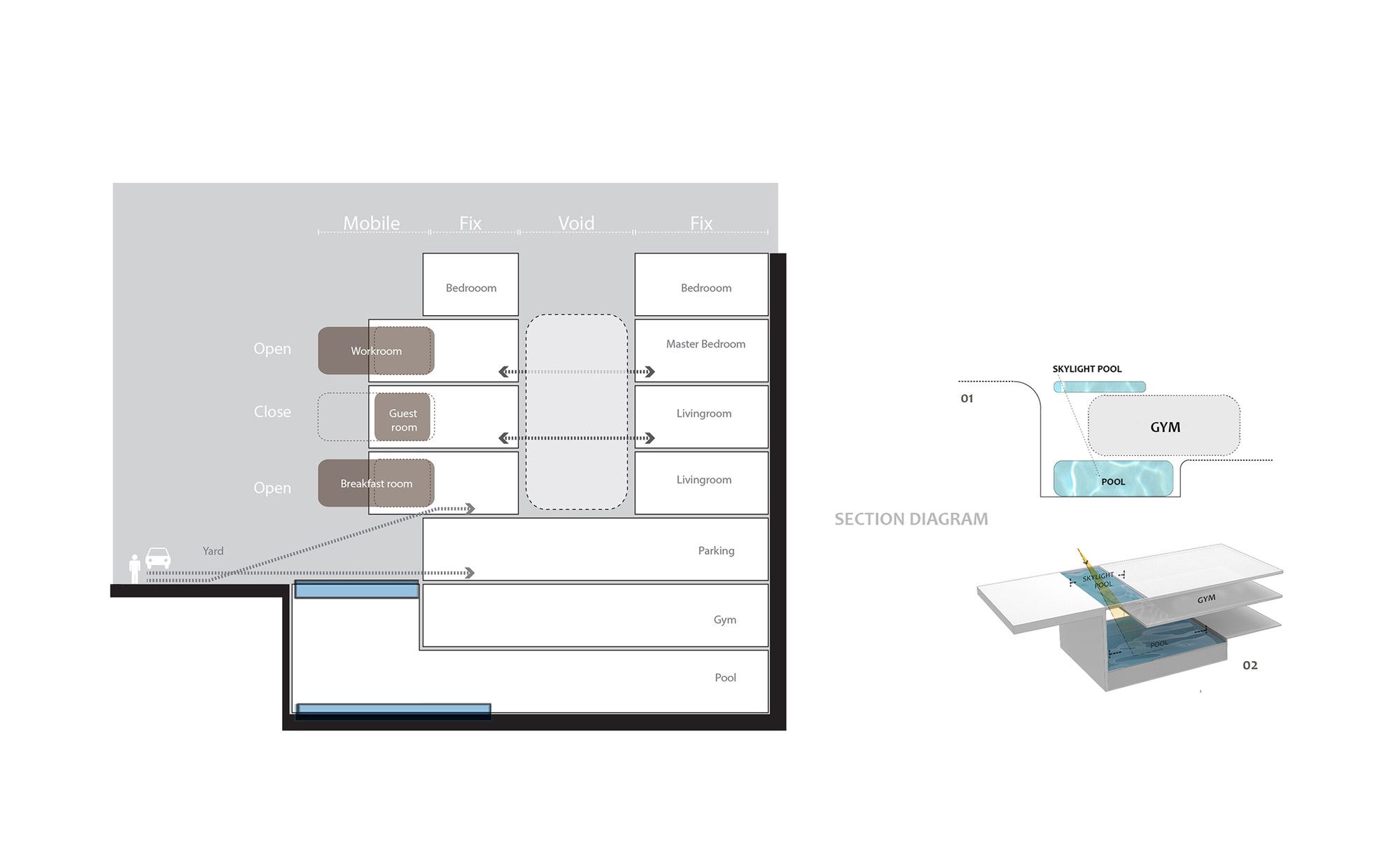
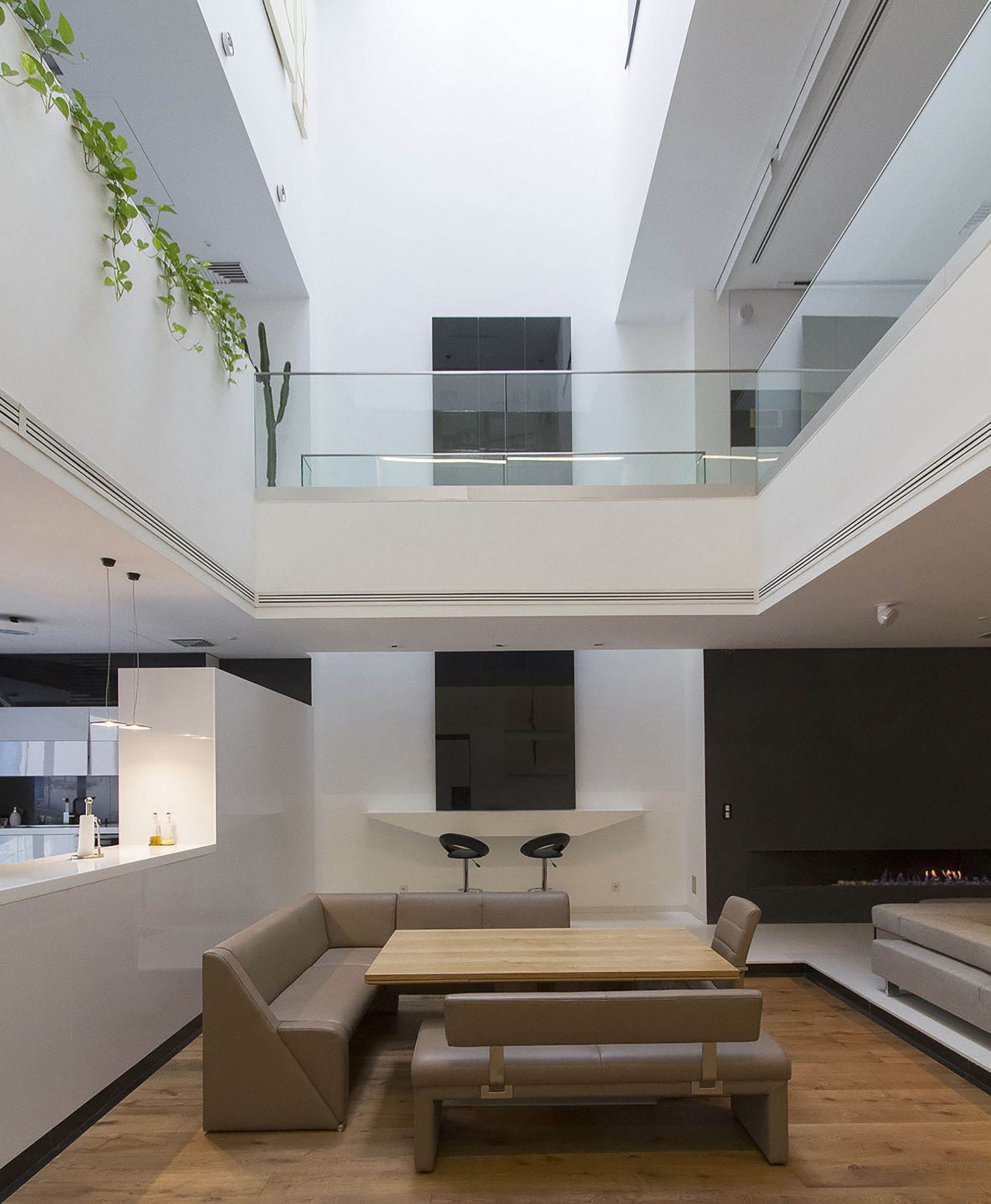
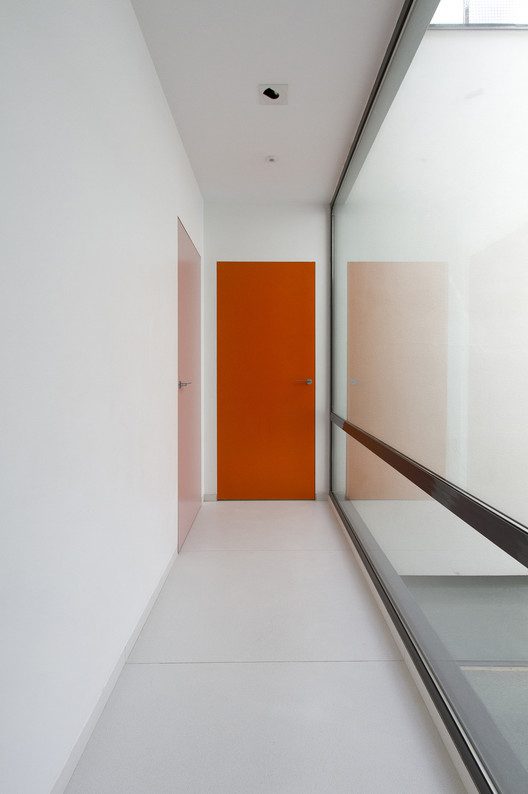
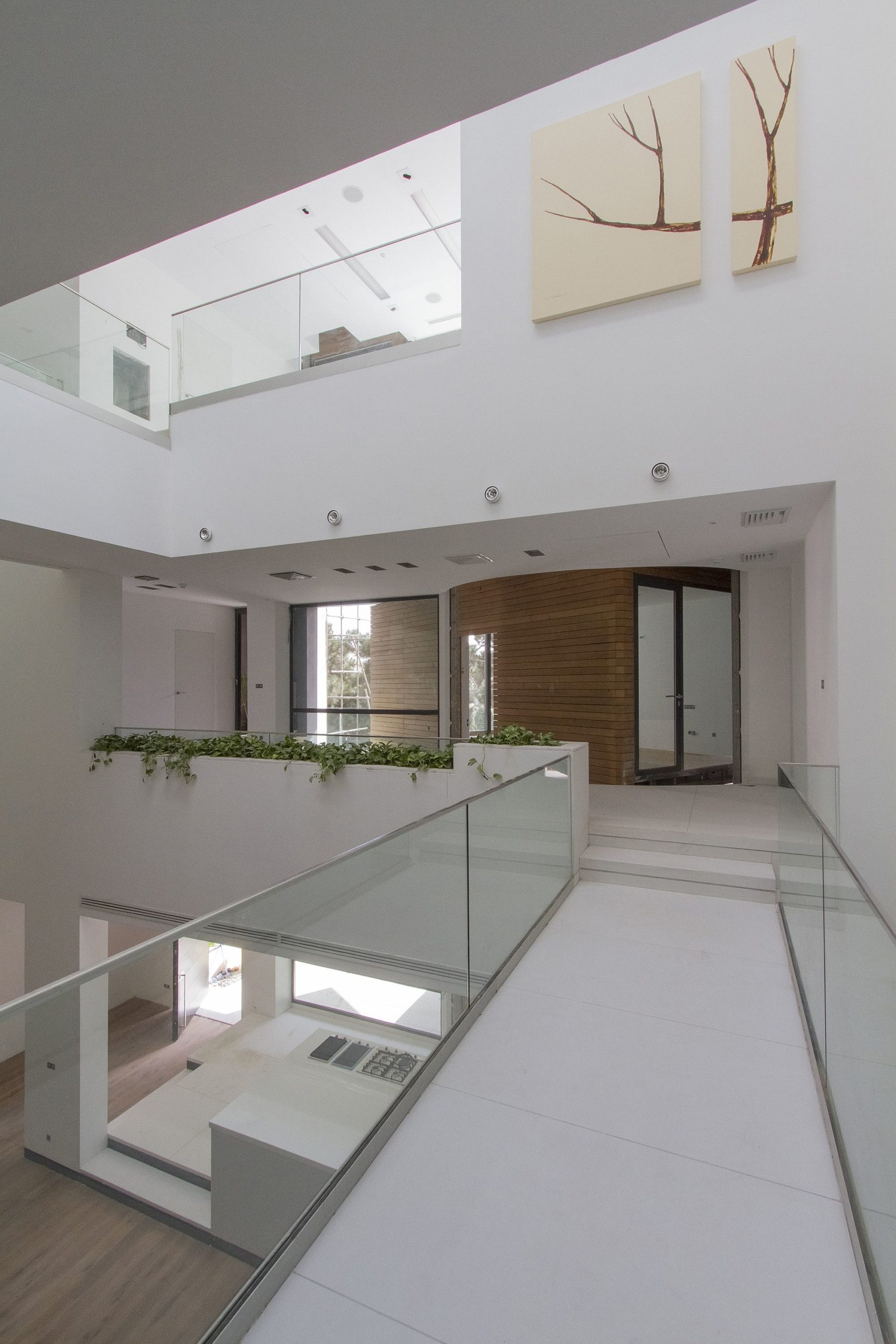
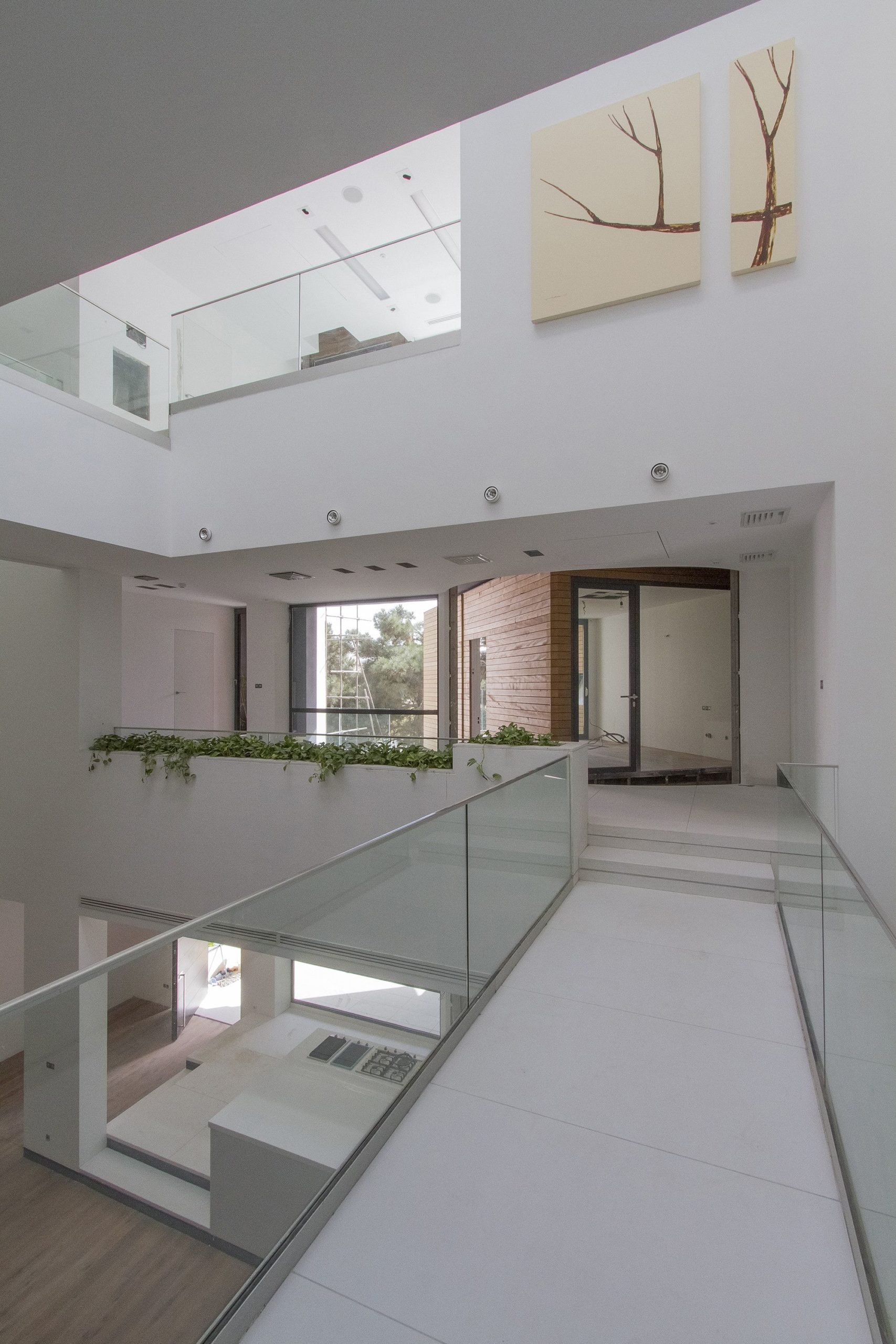
The project consisted of four major parts; the fixed volume of the structure, the void, and the fixed volume and the mobile volume, respectively. When the turning boxes are closed, the building captures sunlight throughout the space of the central void, which also connects the two fixed volumes by suspended bridges.
23
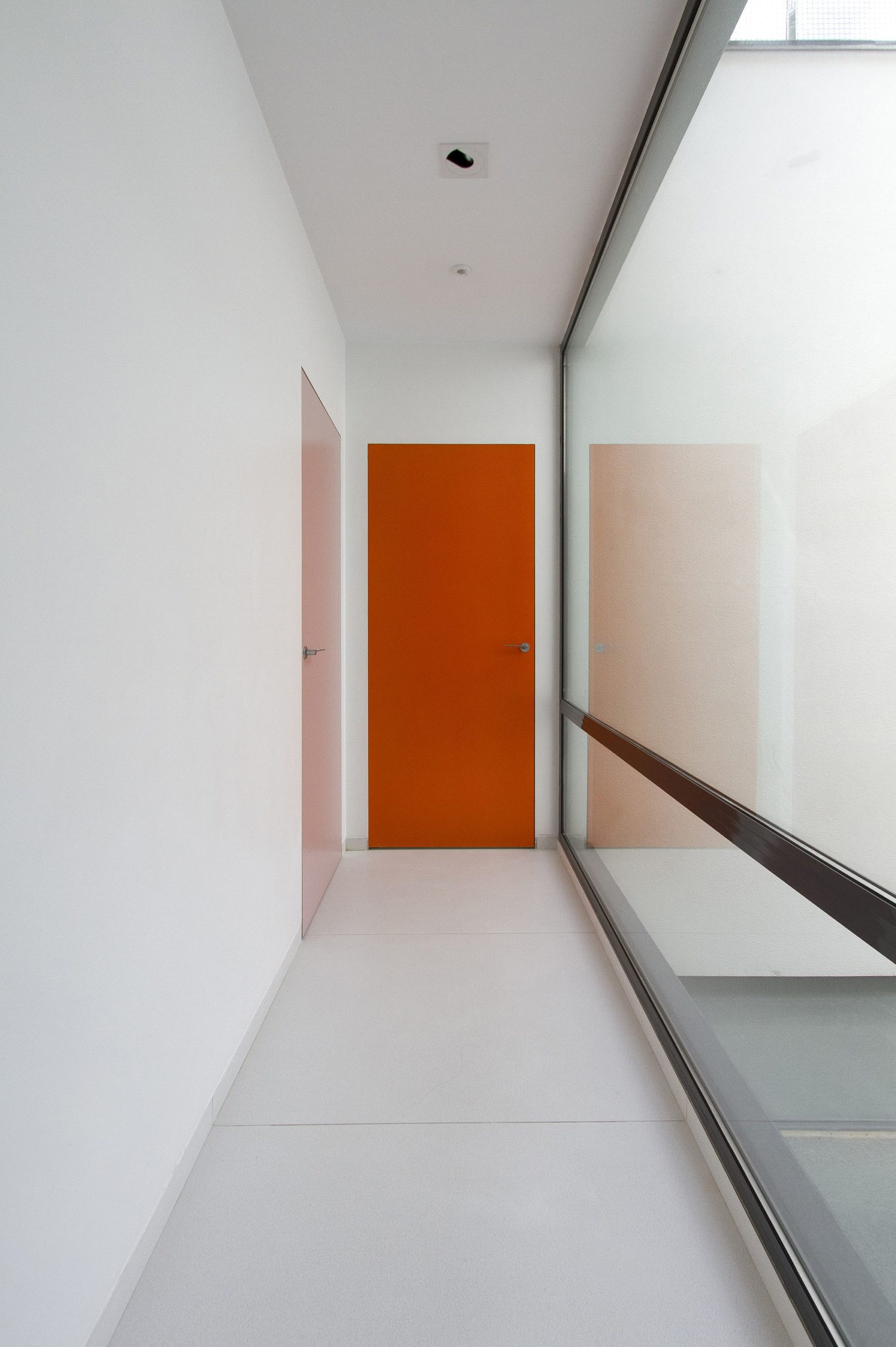
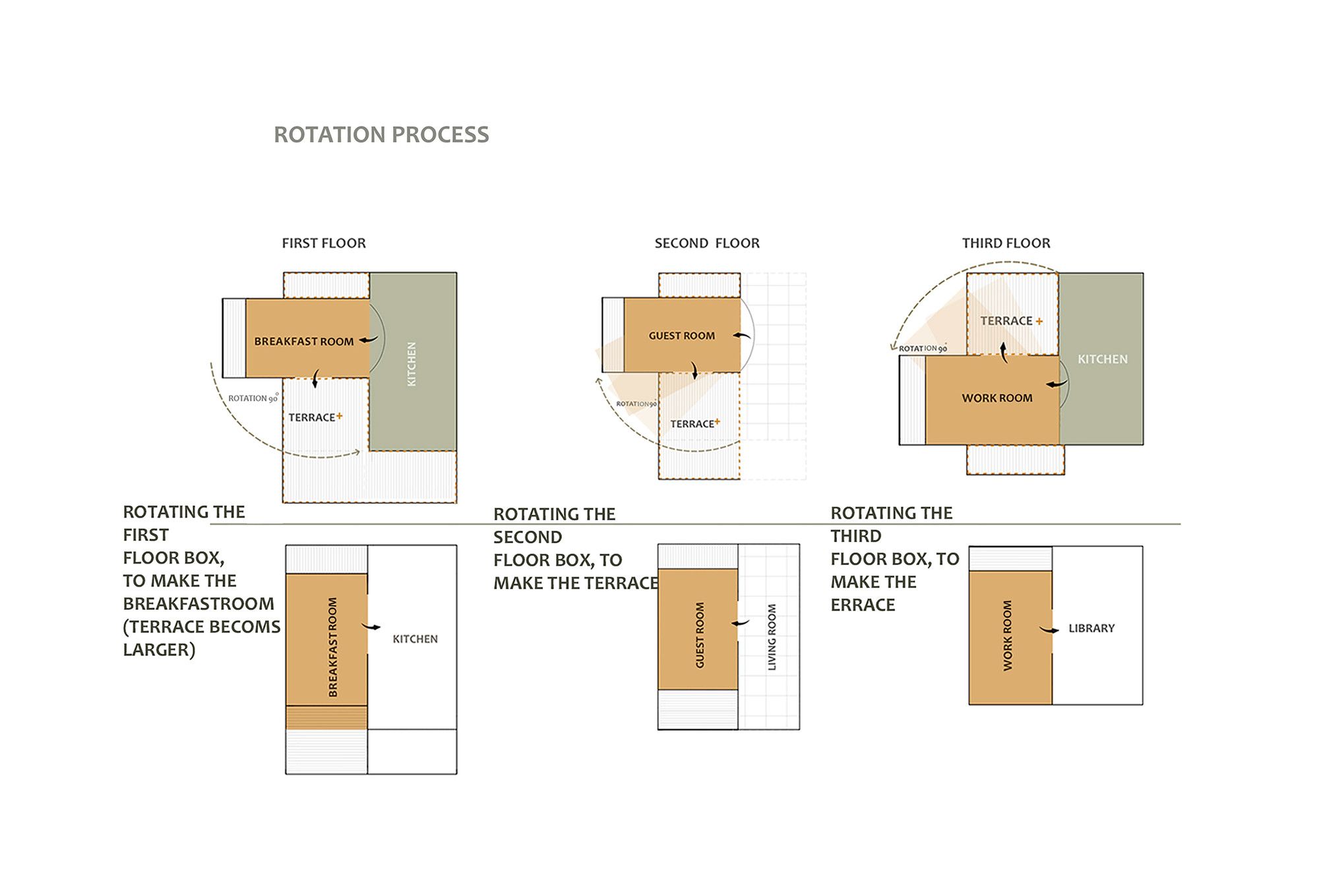
The house adapts to the functional needs of its users. For instance, depending on whether there is a guest or not, the guest room (located on the second floor) can be reconfigured for different purposes. Similarly, home offices and breakfast rooms (turning rooms on the first and third floors) can change the formality of their appearance according to their residents’ desires. In the other words, there is always the possibility of having different seasonal or lighting scenarios, some of which have been already considered in the BMS program of the project.
Courtesy of nextoffice
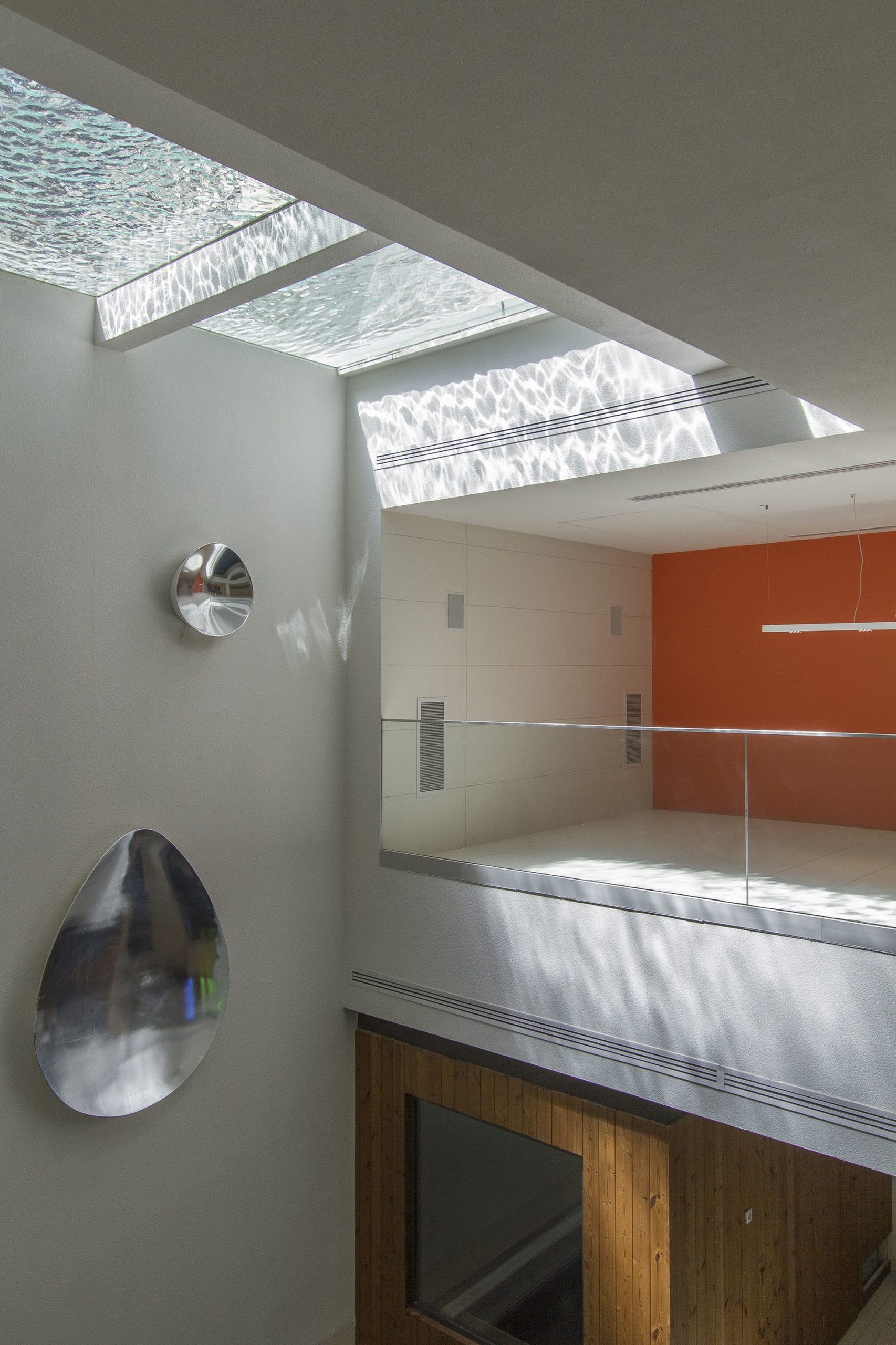
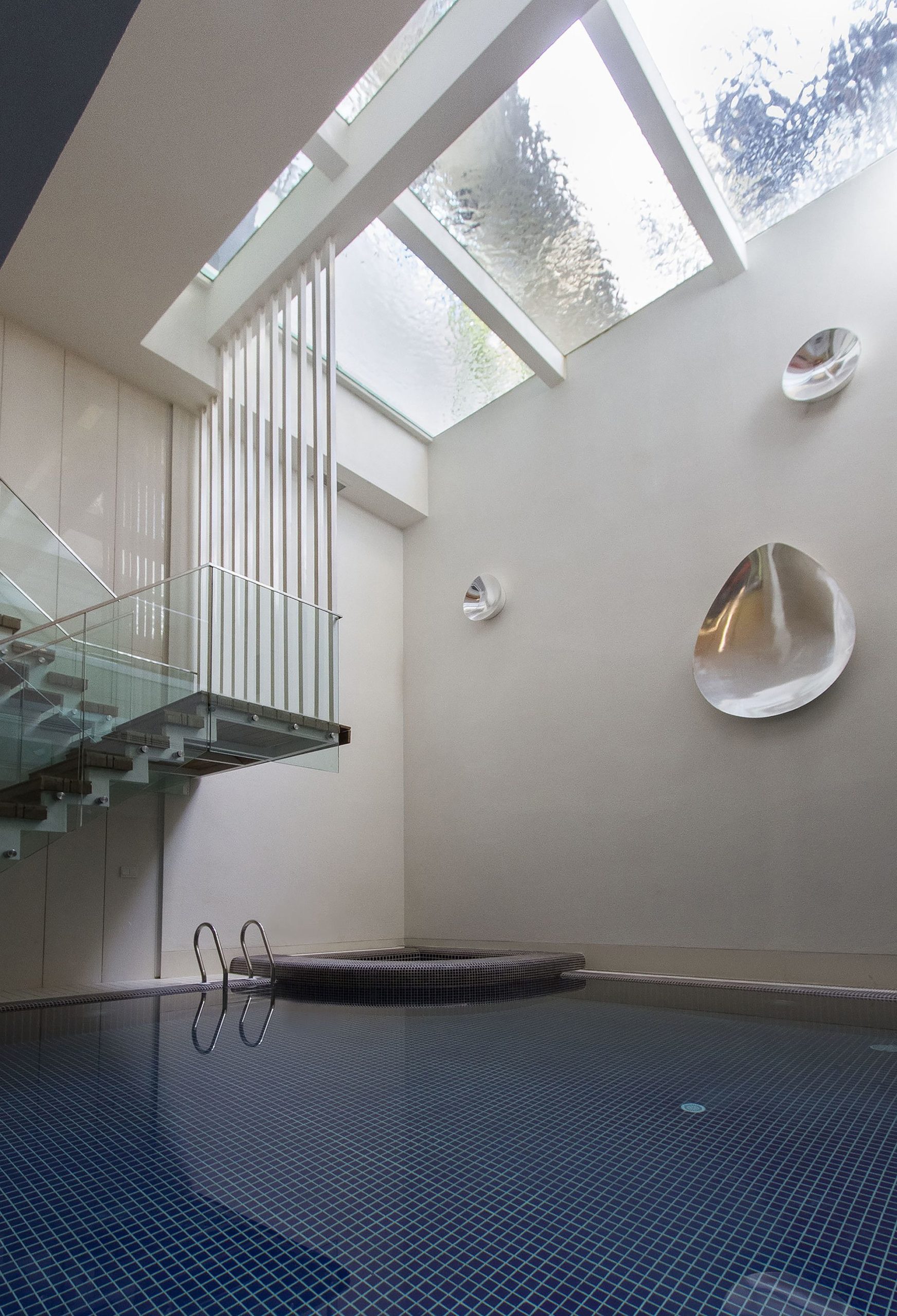
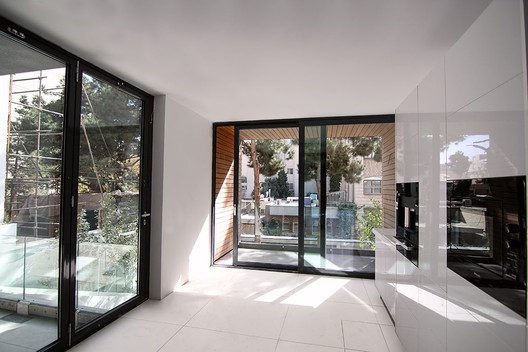
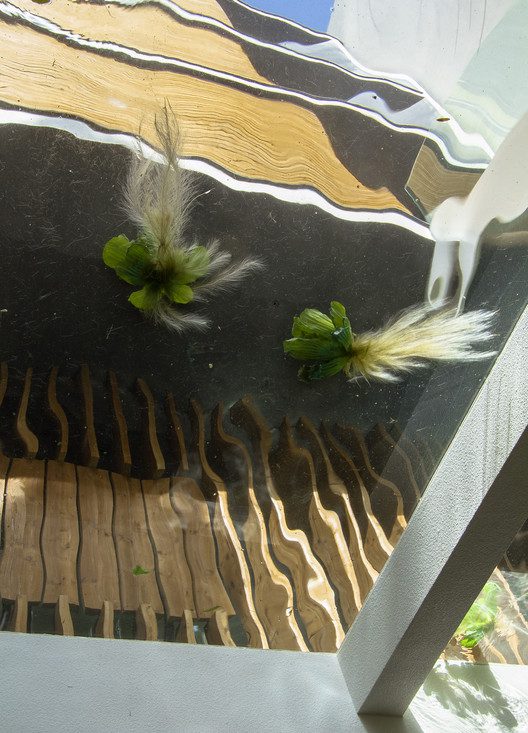
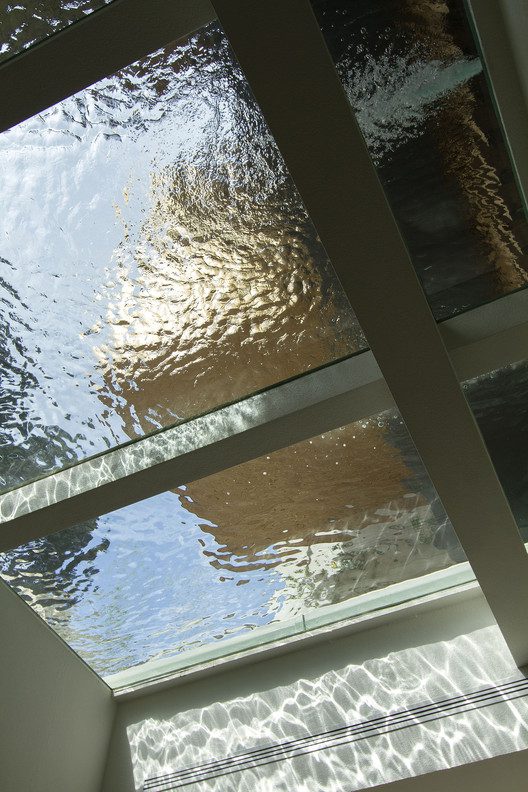
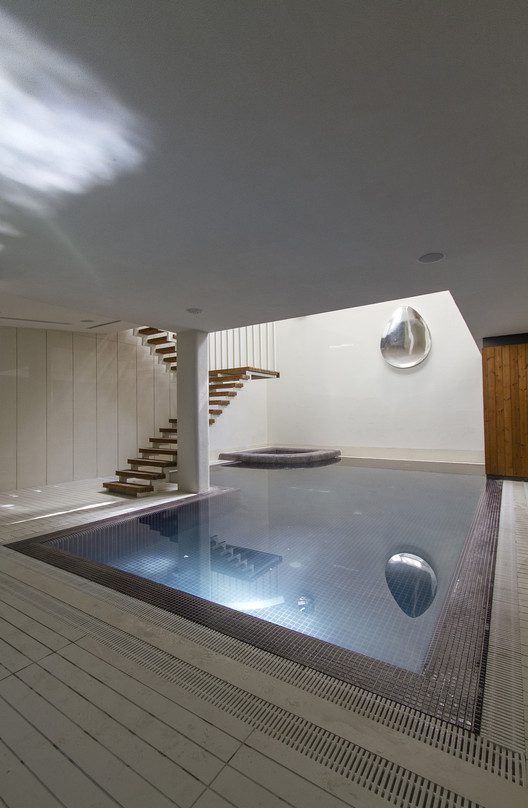
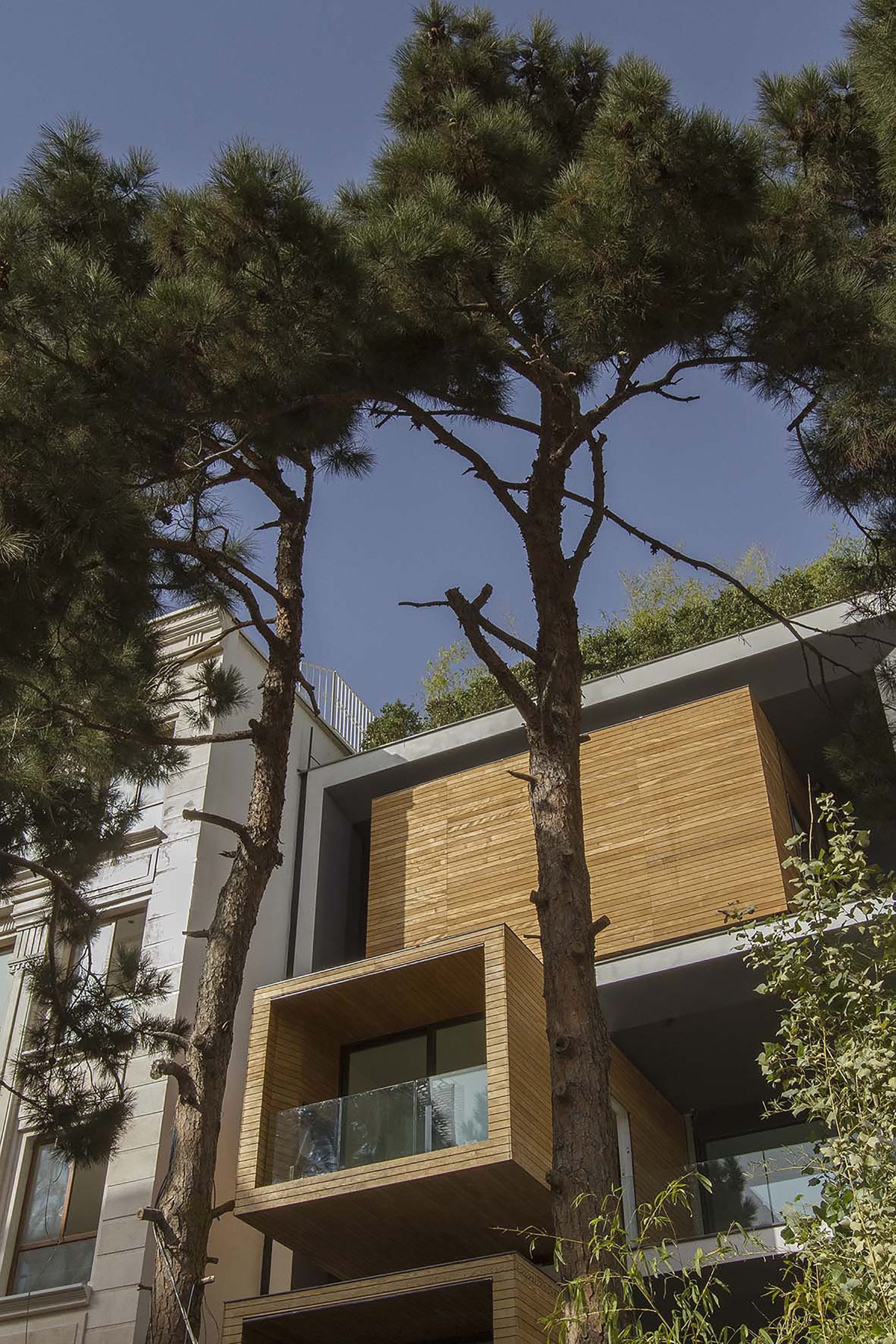
From the initial design steps, we noticed that three pine trees outside could be incorporated into the spaces of the interior. Now, in the open mode of the house, the trees are pleasantly captured by the window frames. Stepping back for about three meters from the permitted construction boundary line allowed us to provide splendid daylight for the basement floors by inserting a glass fountain.
Courtesy of nextoffice
The fitness and wellness areas are accommodated between the fountain’s two small basins, whose mirrored sculptures reflect the water’s radiance throughout the space. The applied manufacturing technique for the turning mechanism was, in fact, a simple one the same method employed in turning theatrical scenes, turning the floor of car exhibitions, and employed by steel companies and the shipping industry in Iran.
Courtesy of nextoffice
But as our client himself was into importing CNC and other similar industrial German machines, he preferred the structural system to be fabricated in Germany. In doing so, he could engage his employees in the manufacturing process and thus train them for future maintenance purposes. Details of the handrails and air-penetration controlling methods were major issues considered in developing the design of the turning boxes. Designing foldable handrails and refining the boxes’ edges happened to be our feasible solutions.
Courtesy of nextoffice
Considering the specialties of this kind of architecture, the structural system was inevitably irregular. After digitally modeling the structure, a series of SAP2000 analyses were undertaken to examine the static/dynamic performance of the proposed system. Being partially moveable is the dominant feature of this structural assembly, which was contemplated throughout the fabrication process by the German manufacturer company.
Courtesy of nextoffice
The main loads all rest on the beams of the living rooms.Due to the various configurations the turning boxes may take, the loading calculation has been estimated based on the largest possible loading value applied to the system. Additionally, controlling the probable vibrations to prevent structural deformation in the turning boxes was taken into account during the design of the house.
Project Info:
Architects: NextOffice–Alireza Taghaboni
Country: Iran, Tehran
Year: 2014
Photographs: Parham Taghioff, Mandana Mansouri, Salar Motahari, Majid Jahangiri
Area: 1400 m²
Manufacturers: IB RUBINETTERIE
Structural Consultant: Bastanpol Engineering Group, Vahid Qarakhniniya
Mechanical Consultant: Payabanaafarin Company, Mojtaba Arabpour
Electrical Consultant: Payabanaafarin Company, Saeed Afshar
Landscape Consultant: Babak Mostofi Sadri, Omid Abbas Fardi
Construction: Imen Sazeh Fadak Co.
Designer: Alireza Taghaboni
Design Associates: Roohollah Rasouli, Farideh Aghamohammadi
Detailing Design Associates: Bahoor Office (Hamid mohammadi, Amir Taleshi)
Senior Consultant In Detail: Shahnaz Goharbakhsh
Supervisions: Shahnaz Goharbakhsh, Alireza Taghaboni
Project Associates: Mojtaba Moradi, Negar Rahnamazadeh, Asal Karami, Majid Jahangiri, Masoud Saghi, Hossein Naghavi, Fatemeh S.Tabatabaeian, Iman Jalilvand
Revolving Rooms System: Bumat Company
Client: Shiraz Municipality
Team: Alireza Taghaboni, Mohamad Motamedinia, Ebrahim Roostaee, Sepideh Sarrafzadeh, Maziar Ghaseminia, Majid Jahangiri, Hoodad Zoroufchiyan, Peyman Nozari, Roza bemani, Arian Spiridonoff, Vahid karamad, Fatemeh Tabatabaeian, Shima Mohammadi, Siavash Shareghi, Homa Asadi, Farideh AghaMohammadi, Mohammad Kahidi, Mehrdad Raoofi, Sahar Mehdizadeh, Gorgin Sharifi, Ali Maleki Kahaki, Sajad hosseini, Tina Shahnazari, Mehdi Pourbasat, Asal Karami, Amin Zargar, Sarvenaz Rezae