

Standing in South Beach’s Art Deco Historic District during king tide season hits you with immediate irony. Those pastel buildings that made Miami architecture world-famous now face their biggest threat from the same waters that once brought tourists to their doors. City planning documents show a harsh reality: by 2070, sea levels could rise 17 inches. This puts 60% of Miami-Dade County’s most fascinating Art Deco buildings at risk of regular flooding. But there’s another story here—one about architectural evolution. Miami is changing from a city that simply celebrated its coastal location to one actively defending against it.
What Makes Art Deco Architecture in Miami Unique?
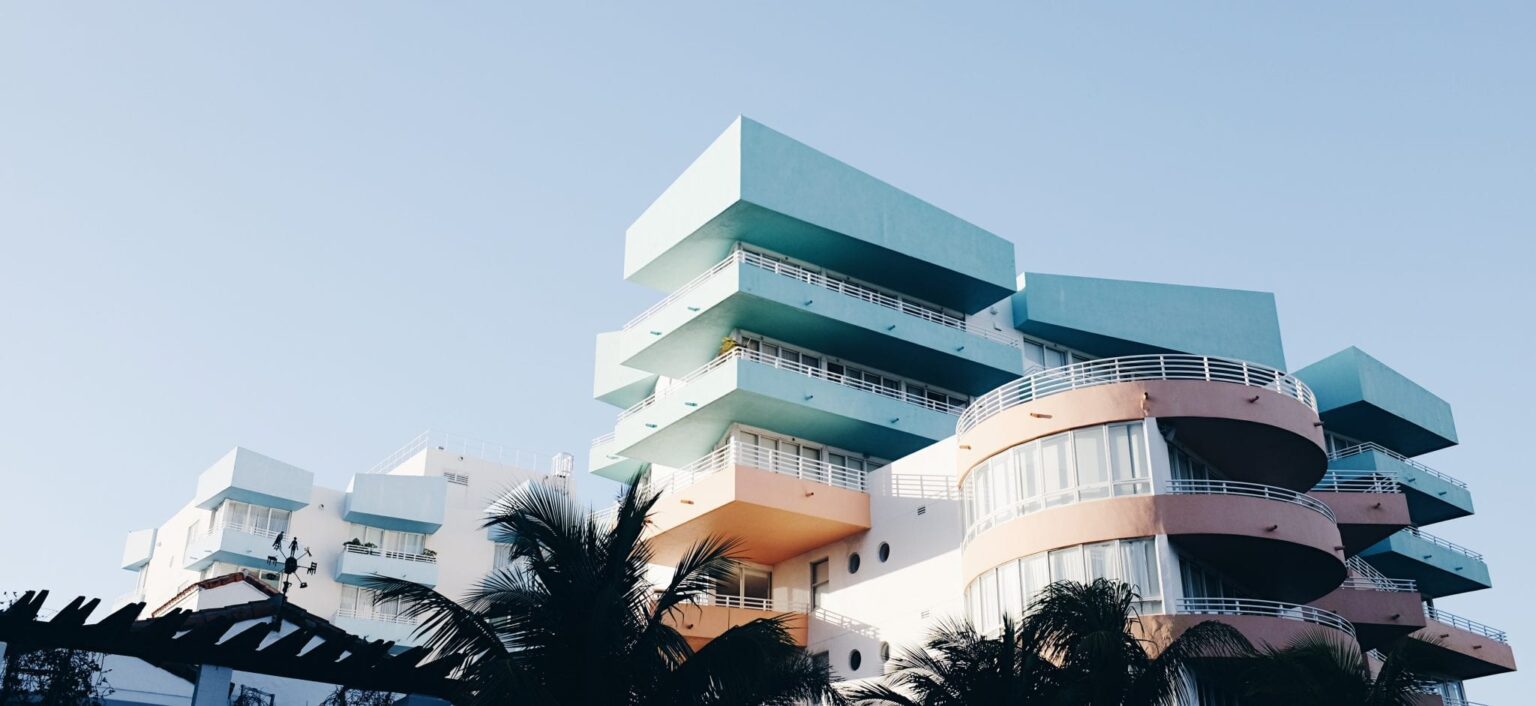
Nautilus by Arlo
Miami’s Art Deco buildings tell a story of optimism meeting reality. These structures weren’t built with climate resilience in mind. Between 1925 and 1940, architects created fantasy escapes with nautical motifs, curved corners, and tropical pastels. They built dreams, not fortresses.
The Original Vision: Building Dreams by the Sea
Henry Hohauser, the movement’s pioneer, designed streamlined facades that captured Miami’s carefree spirit. His buildings featured horizontal lines that stretched toward the ocean, maximizing views and minimizing barriers between inside and outside. The Cardozo Hotel, with its signature curves and large windows, became the poster child for this approach. Nobody thought about Category 5 hurricanes or rising groundwater levels back then.
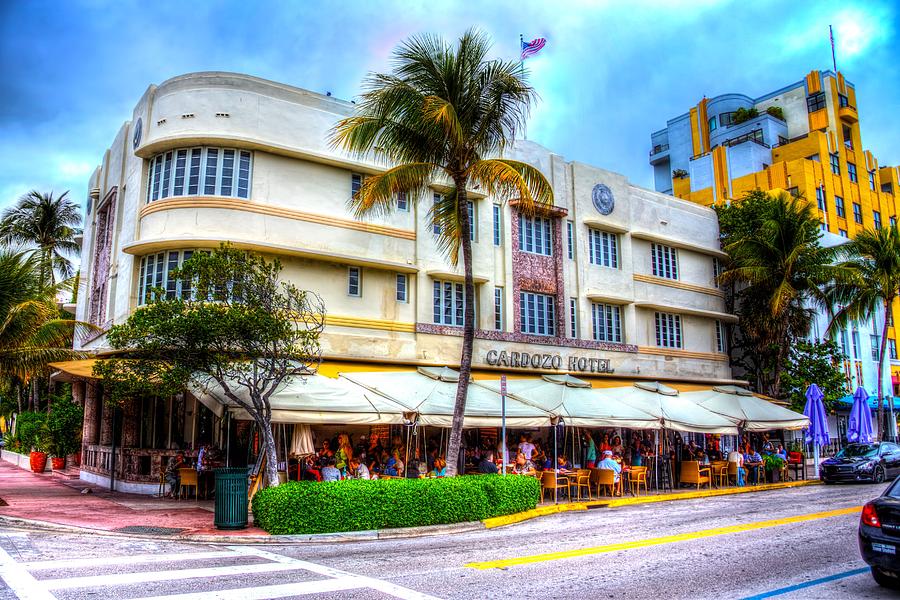
Via: Mark Andrew Thomas
The decorative elements that made these buildings famous also made them vulnerable. Geometric reliefs carved into facades looked stunning but created pockets where saltwater could settle. Terrazzo floors added elegance but deteriorated quickly under saltwater exposure. The horizontal emphasis that defined Art Deco masterpieces relied on large window openings and minimal elevation—perfect for ocean views, terrible for storm protection.
Why These Buildings Matter Today
Miami’s Art Deco district represents the largest collection of 1930s architecture in the world. Over 800 buildings span 28 blocks, creating a living museum of design history. But this isn’t just about preserving old buildings. These structures house 15,000 residents and generate billions in tourism revenue. When you threaten Art Deco, you threaten Miami’s identity.
The architectural significance goes beyond aesthetics. These buildings pioneered climate-responsive design for subtropical environments. Large overhangs provided shade, cross-ventilation reduced heat, and light colors reflected sunlight. The problem is that 1930s climate is different from today’s climate. What worked then doesn’t work now.
How Does Miami Architecture Adapt to Climate Change?
The transformation started quietly in city planning offices and engineering firms across Miami-Dade County. Hurricane Andrew in 1992 was the wake-up call. Flooding events followed. A new generation of architects started asking tough questions: Could you preserve architectural heritage while completely changing its relationship to the environment?
Credit: Alyson Hurt/NPR Via: npr.org
Learning from Disaster: The Hurricane Andrew Effect
Hurricane Andrew didn’t just destroy buildings—it destroyed assumptions. Wind speeds reached 175 mph, storm surge topped 17 feet, and many Art Deco buildings suffered severe damage. The rebuilding process forced architects to rethink everything. You couldn’t just restore these buildings to their original state. You had to make them stronger.
Building codes changed first. New requirements for impact-resistant glass, reinforced foundations, and elevated mechanical systems became standard. But the real innovation happened when architects started asking: How do you strengthen a building without losing its character?
Modern Solutions for Historic Buildings
The Faena Miami District by OMA shows one approach. New construction gets elevated while flood-resistant landscaping doubles as public amenity. But the real challenge is retrofitting existing structures.
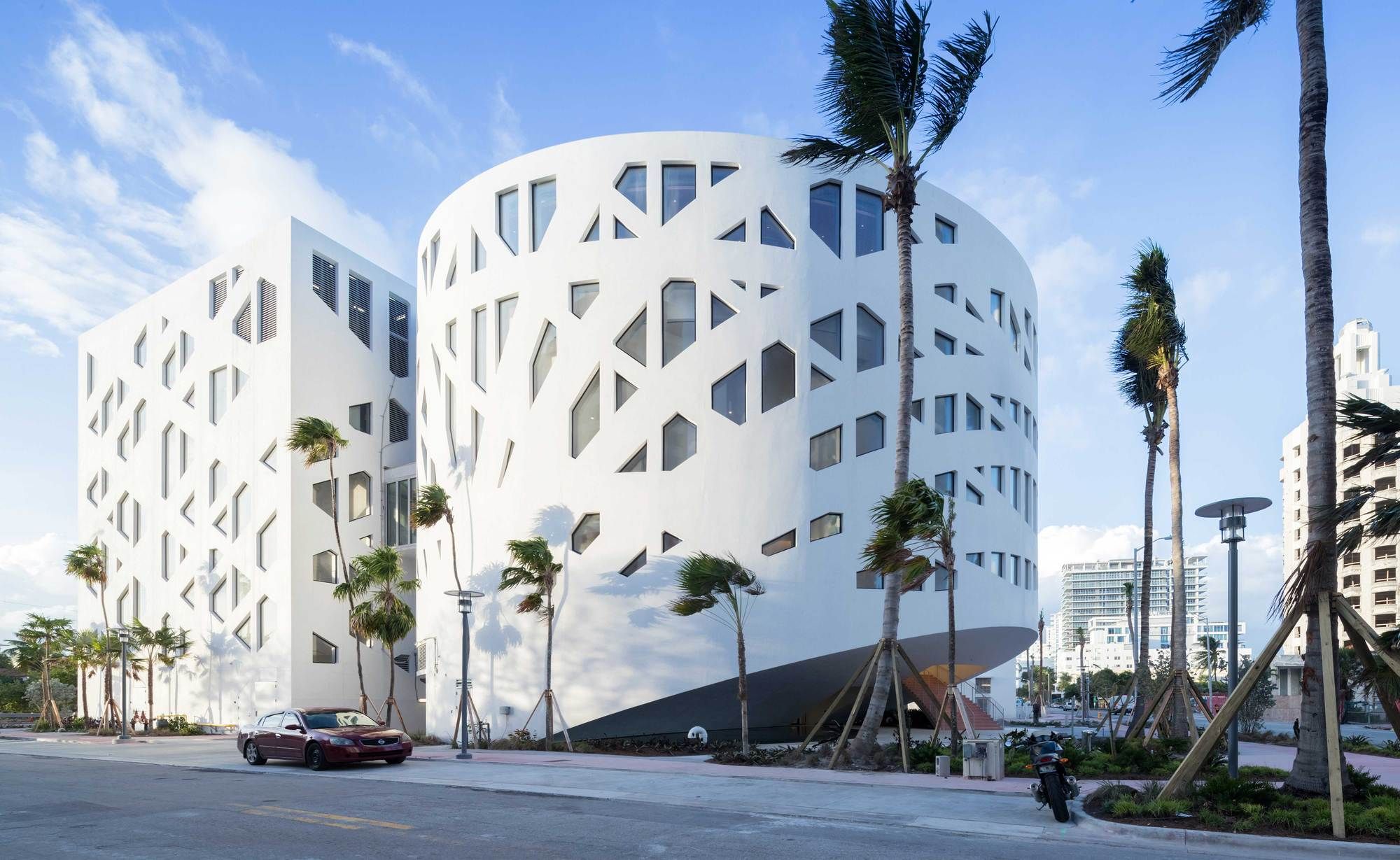
© Iwan Baan
The Raleigh Hotel renovation from the 1930s proves it’s possible. Engineers discovered that raising the building’s foundation by just 18 inches—while keeping its Art Deco silhouette—could extend its lifespan by decades. The solution required custom-fabricated stilts hidden within existing columns. The $3.2 million investment preserves both heritage value and future habitability.
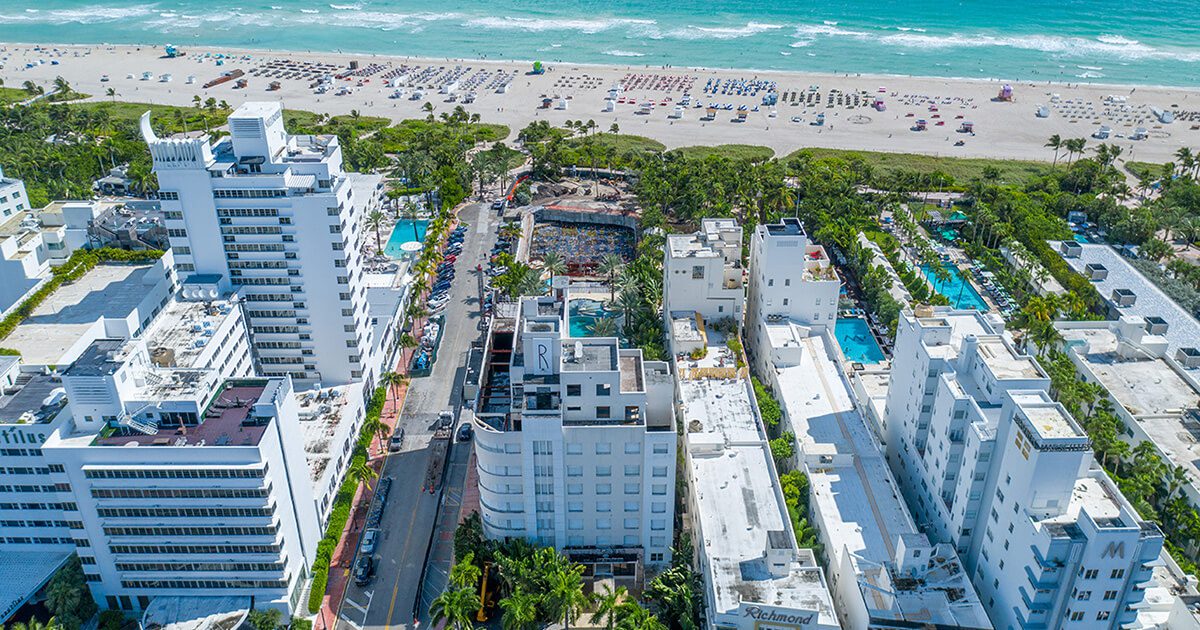
Raleigh Hotel
Similar strategies are spreading across the district. The Abbey Hotel incorporated permeable pavers in geometric patterns that echo original Art Deco motifs while managing stormwater runoff. The Shelborne South Beach installed a living seawall disguised as decorative landscaping. Both provide storm surge protection while staying true to the neighborhood’s character.
The Engineering Behind Invisible Upgrades
The best adaptations are the ones you don’t see. Take the Betsy Hotel’s recent renovation. Engineers installed a sophisticated drainage system beneath the original terrazzo floors. Waterproof membranes protect the building’s foundation while maintaining the 1930s aesthetic. Guests have no idea they’re staying in a flood-resistant fortress.
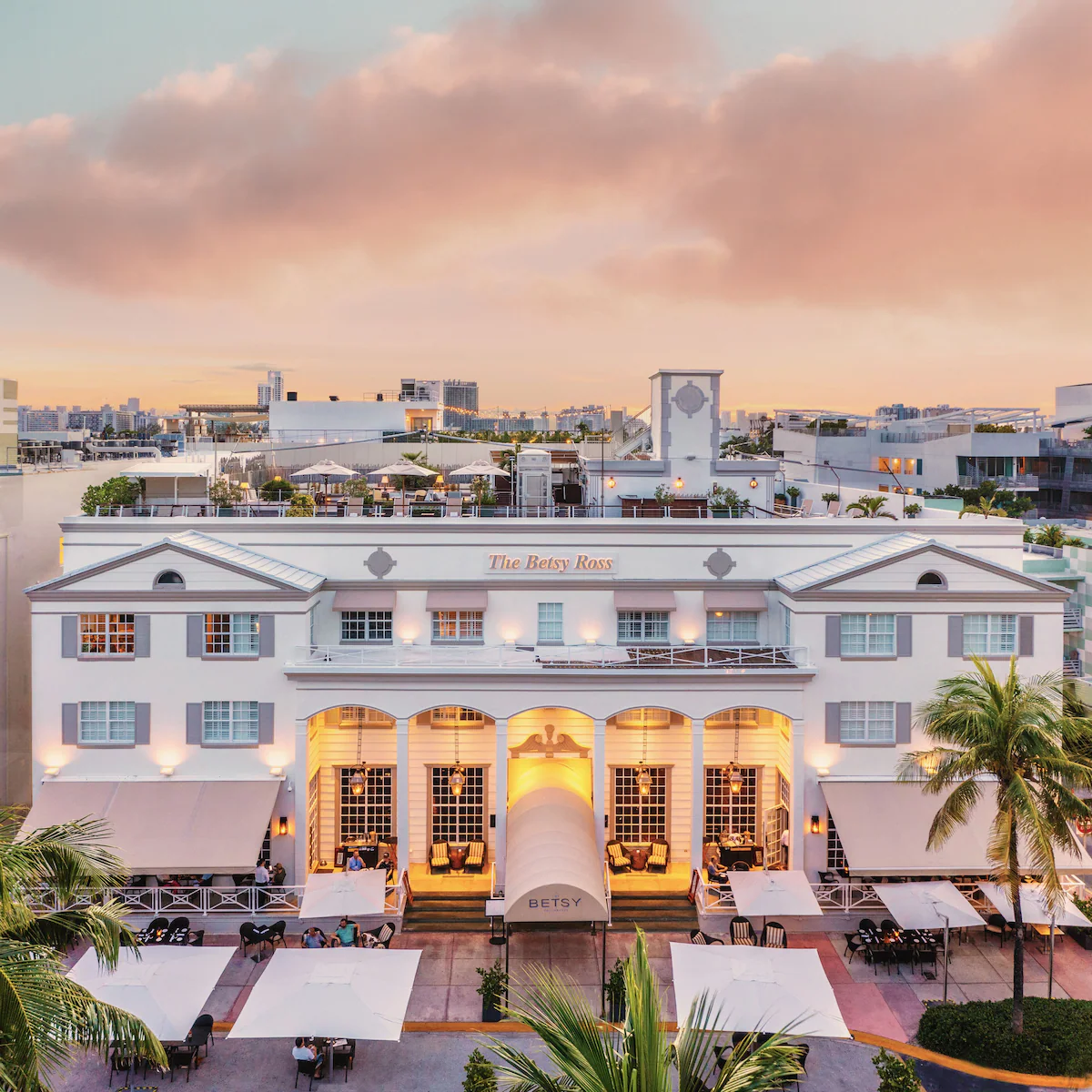
The Betsy
Window replacements present another challenge. Original Art Deco windows were single-pane glass in steel frames. Modern hurricane windows are triple-pane in reinforced aluminum. The trick is making new windows look like old ones. Manufacturers now create custom profiles that match 1930s designs while meeting current building codes.
Why Is Climate-Resilient Design Important in Miami?
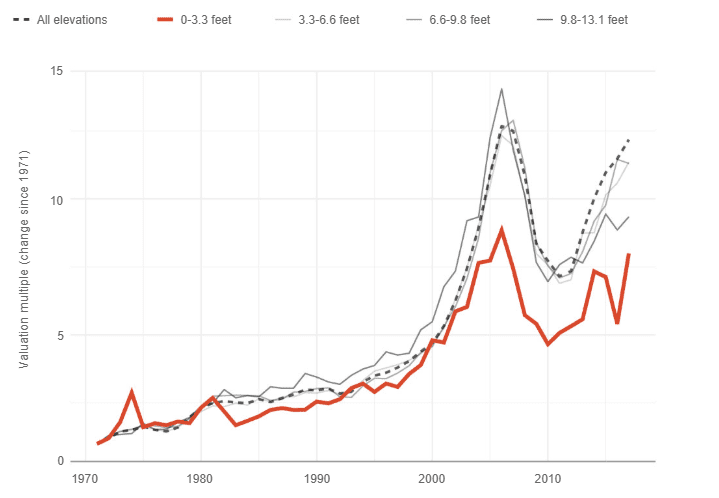
The numbers tell the story that politics often hides. Miami-Dade County experiences sunny-day flooding 26% more frequently than it did in 2000. Property insurance claims related to water damage have increased 340% since 2010. For a city whose economy depends on architectural tourism—Art Deco tours alone generate $127 million annually—the stakes couldn’t be higher.
Economic Impact: When Tourism Meets Reality
Climate-resilient design in Miami isn’t just about preservation. It’s about survival. The Miami Museum Garage demonstrates how contemporary structures can acknowledge environmental challenges while maintaining architectural ambition. Its facades by different architects create dialogue between current design thinking and the experimental spirit that originally defined Miami’s built environment.
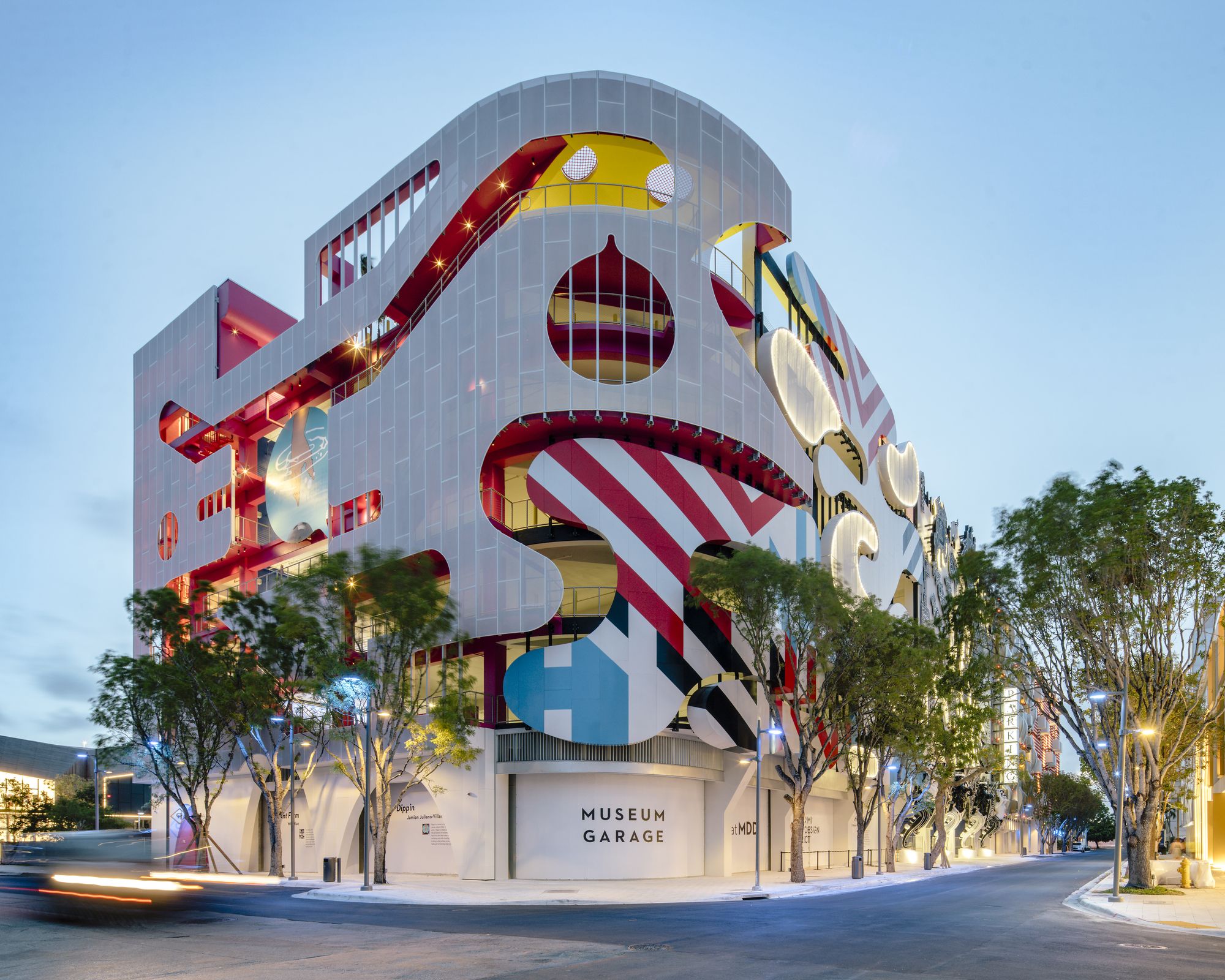
© Imagen Subliminal
Tourism drives Miami’s economy. Over 17 million visitors come each year, and many come specifically to see Art Deco architecture. When buildings flood, tourists cancel trips. When hotels close for repairs, workers lose jobs. When the historic district deteriorates, Miami loses its unique selling point.
Legal Requirements: Building Codes That Matter
The city’s new building codes, implemented in 2021, require all structures below 10 feet of elevation to incorporate “adaptive design strategies.” This bureaucratic language masks a radical shift: Miami is the first major American city to legally mandate that architecture account for its own future obsolescence.
These codes affect everything from foundation design to roof materials. New buildings must prove they can withstand Category 5 hurricanes and 100-year floods. Existing buildings undergoing major renovations must meet similar standards. The result is a construction industry that’s relearning how to build in a coastal environment.
Insurance and Investment: Market Forces at Work
Insurance companies drive change faster than government regulations. Flood insurance premiums have tripled since 2010 for buildings in high-risk zones. Property owners face a choice: upgrade your building or pay crushing premiums. Many choose to upgrade.
Real estate investors are paying attention. Climate-resilient buildings command higher rents and sell faster. Properties with flood-resistant features appreciate 15% faster than similar buildings without them. The market is rewarding smart adaptation.
What Are LEED Certified Buildings in Miami?
The pursuit of LEED certification in Miami reveals another layer of this adaptation story. Unlike cities in temperate climates, Miami’s LEED certified buildings must address tropical conditions that the rating system wasn’t originally designed to handle. The result is a unique interpretation of sustainable design that prioritizes hurricane resistance, humidity control, and coastal erosion management.
Adapting Green Standards for Tropical Conditions
The Pérez Art Museum Miami, certified LEED Gold, showcases this approach. Its elevated design and storm-resistant vegetation aren’t just environmental statements—they’re survival strategies. The building’s hanging gardens, originally conceived as artistic elements, now function as natural flood barriers during storm surges.
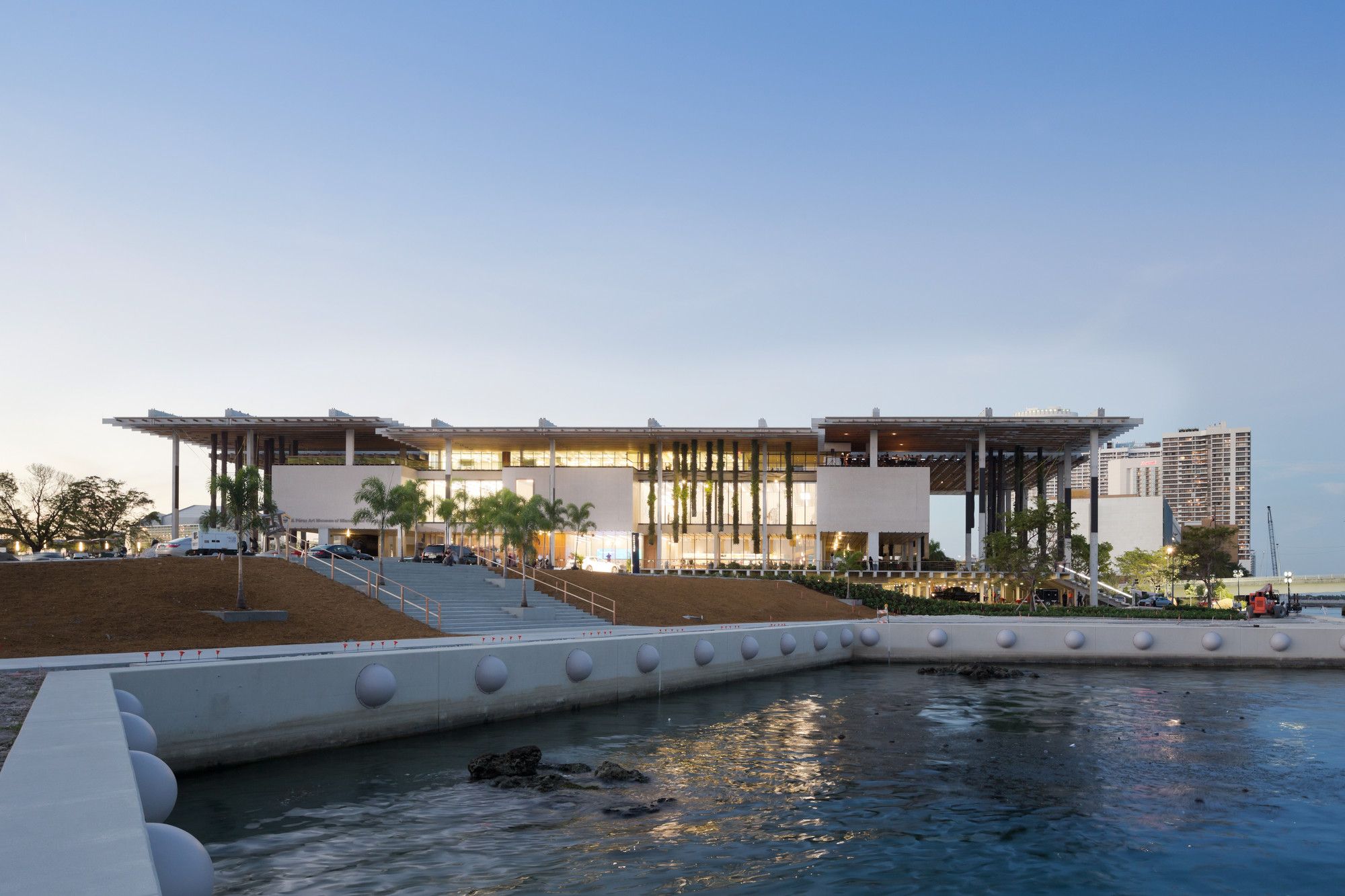
© Iwan Baan
LEED certification in Miami requires creative interpretation. Standard LEED points for water efficiency take on new meaning when you’re dealing with saltwater intrusion. Energy efficiency becomes more complex when you need hurricane-resistant windows that may not have the best thermal properties. Green roofs must survive 150 mph winds.
Residential Success Stories
The residential sector’s embrace of green certification tells an interesting story. The Residences at 1 Hotels South Beach achieved LEED Platinum status while maintaining Art Deco-inspired design elements. The project’s success—units sold 60% faster than comparable non-certified buildings—suggests that Miami buyers increasingly view sustainability as luxury amenity rather than environmental obligation.
Buyers are smart. They understand that green buildings cost less to operate and maintain. In Miami’s climate, this means lower cooling costs, better humidity control, and reduced maintenance from salt exposure. LEED certification has become a selling point for luxury developments.
The Numbers Behind Green Building Growth
The city now has 47 LEED certified buildings, a 280% increase since 2015. But certification alone doesn’t tell the complete story. Many projects pursue LEED points through strategies specifically adapted to coastal conditions: elevated mechanical systems, impact-resistant glazing systems, and indigenous landscaping that can survive saltwater intrusion.
These buildings perform better during storms. LEED certified buildings report 40% fewer insurance claims related to weather damage. They also maintain their value better during market downturns. Green building isn’t just good for the environment—it’s good for business.
The Financial Architecture of Climate Adaptation
Following the money reveals the true scope of Miami’s architectural transformation. The city has allocated $400 million through 2026 for “resilience infrastructure,” with 60% dedicated to retrofitting existing buildings rather than new construction. Private investment tells a parallel story: developers report spending an average of 23% more on coastal projects compared to inland sites, with the premium justified by long-term property value protection.
Public Investment in Private Buildings
The city’s $400 million resilience fund focuses on practical improvements. Seawalls, drainage systems, and elevated utilities get priority funding. But the program also includes grants for historic building owners who want to add flood-resistant features. The goal is keeping people in their homes and businesses open during storms.
Federal money adds another layer. FEMA’s Building Resilient Infrastructure and Communities program has awarded Miami $127 million for flood mitigation projects. Much of this money goes to retrofitting existing buildings rather than building new ones. The focus is on keeping what we have rather than starting over.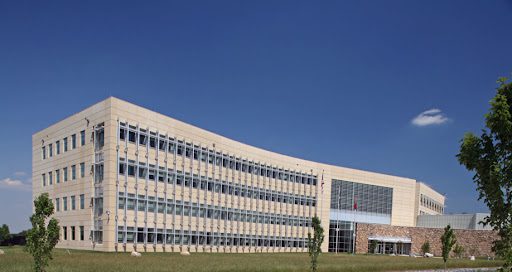
Private Sector Response
Insurance companies now require engineering assessments for any building constructed before 1992. This policy effectively forces owners to choose between costly upgrades or prohibitive premiums. Economic pressure has accelerated architectural innovation more effectively than any planning mandate.
The emergence of “resilience consulting” as a professional service reflects this new reality. Firms like Coastal Risk Consulting report 400% growth in Miami-area projects since 2019. Services range from flood-proofing historic facades to designing amphibious foundations for new construction. A whole industry has emerged around keeping buildings dry.
Return on Investment
Climate adaptation pays for itself. Buildings with flood-resistant features command 12% higher rents and sell 20% faster than similar buildings without them. Insurance savings alone often justify the cost of upgrades within five years. Property owners who invest in resilience see immediate returns.
The math is simple: a $100,000 investment in flood-resistant features might save $20,000 per year in insurance premiums. Over the life of the building, these investments pay for themselves many times over. Smart owners are making these investments now, before insurance companies make them mandatory.
Beyond Preservation: Miami’s Architectural Future
The most radical projects hint at architecture that doesn’t simply resist climate change but embraces it. Concepts like floating neighborhoods and amphibious housing, once dismissed as surrealist architecture, now appear in serious planning documents. The Dutch firm DeltaSync’s proposal for Miami’s first floating district, though still conceptual, demonstrates how dramatically the city’s architectural imagination has shifted.
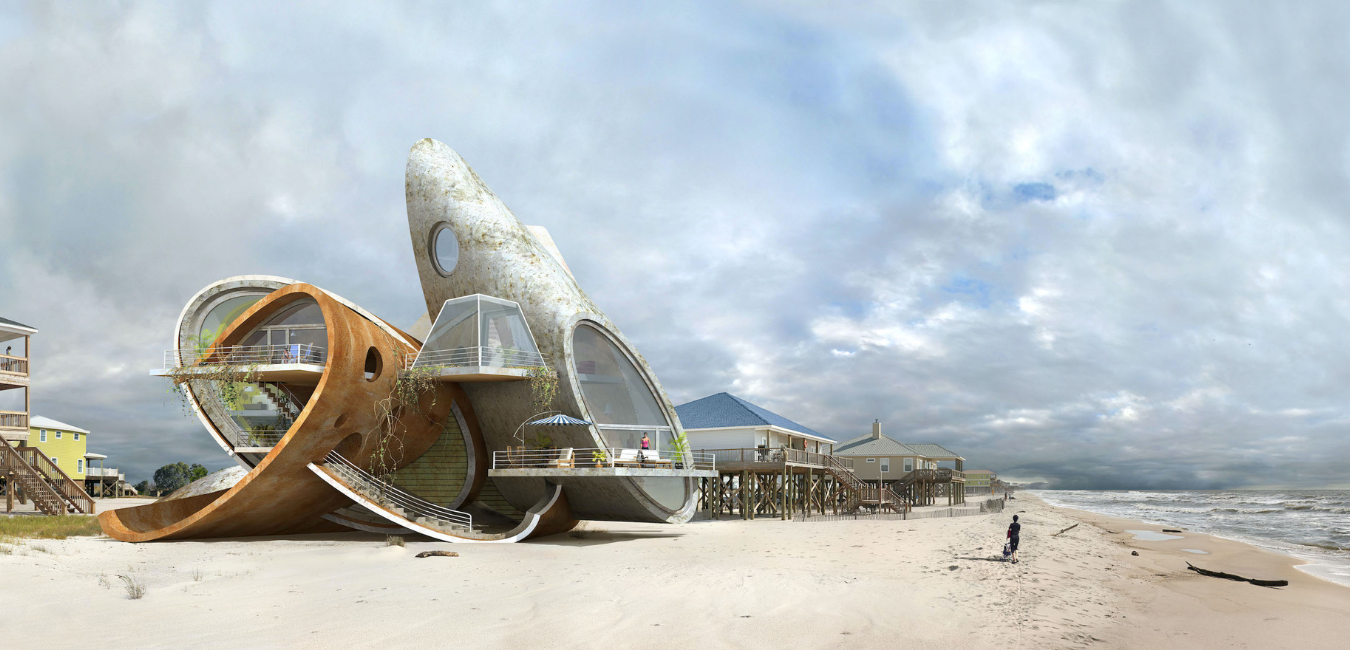
©Dionisio González
Floating Architecture: Learning from the Netherlands
The Netherlands has been building floating structures for decades. Their expertise is coming to Miami. Floating foundations can rise and fall with water levels, making them ideal for areas prone to flooding. The technology exists—the question is whether Miami is ready to embrace it.
Early projects are testing the waters. A floating restaurant in Biscayne Bay proved that the concept works in Miami’s marine environment. Plans for floating residential communities are under review. If successful, these projects could change how we think about waterfront development.
Current Projects Point to Future Directions
The planned renovation of the Art Deco Welcome Center will incorporate tidal pools as both flood management and educational feature. The redesign of Lummus Park proposes artificial reefs that protect the coastline while creating underwater sculpture gardens visible from renovated Art Deco hotels.
These interventions represent more than technical solutions—they signal architecture’s expanding definition in the age of climate change. Miami’s buildings must now function as both cultural artifacts and environmental infrastructure, preserving the past while actively shaping a viable future.
The Next Generation of Miami Architecture
Young architects in Miami are thinking differently about building design. They’re not just designing buildings—they’re designing systems that respond to changing conditions. Buildings that can flood safely, structures that move with rising seas, and communities that treat water as a resource rather than a threat.
Architecture schools are teaching climate adaptation as a core skill. Students learn to design for uncertainty, to create buildings that can evolve with changing conditions. This new generation will shape Miami’s architectural future in ways we’re only beginning to understand.
The story reveals a city in the midst of reinventing itself without losing its identity. From the careful elevation of Art Deco landmarks to the ambitious sustainability goals of new LEED certified buildings, Miami architecture is writing a new chapter in coastal resilience. The question isn’t whether these adaptations will succeed, but whether other coastal cities will learn from Miami’s evolving blueprint for architectural survival in an uncertain climate.
Miami’s Art Deco district faces its greatest challenge yet. But this challenge is also creating its greatest opportunity. By adapting these beloved buildings to new realities, Miami is showing the world how to preserve the past while building for the future. The pastel facades that define South Beach will survive—but they’ll be stronger than ever before.

Sofia Klein is a Projects Editor at Arch2O, originally from Germany, with a Master’s in Architecture and Urban Design from the Technical University of Munich. Since joining Arch2O in October 2023, she has helped shape the platform’s editorial direction, focusing on sustainability, cultural relevance, and urban innovation. With nearly a decade of experience in architecture and editorial work, Sofia brings clarity and depth to every project she curates. Her ability to transform complex ideas into accessible narratives bridges the gap between professionals and the public, strengthening Arch2O’s role in global architectural discourse.