

The best bathroom wallpaper is a washable or scrubbable vinyl or a well-coated non-woven, hung on a sealed wall in a room with good extract ventilation, and kept away from direct shower spray. Paper and natural-fibre wallpapers suit only powder rooms without a bath or shower. With the right product and preparation, wallpaper can last for years in a bathroom and give it far more character than paint or tiles alone. This updated guide explains how to choose and hang it, then offers 25 design ideas.
Wallpaper is an often-overlooked way to give bathrooms the same attention as living rooms, bedrooms or kitchens. Whether your bathroom is minimal or decorative, the right paper can make it a true sanctuary; for the basics of each material, see our guide to wallpaper types.

© Lucie Anabel
What type of wallpaper is best for bathrooms?
Vinyl is the usual first choice because its plastic face does not absorb water and can be wiped or scrubbed. That does not make it mould-proof. A solid vinyl wallcovering is also a vapour barrier, and building scientists have documented mould growing behind vinyl on walls where moist air gets trapped, especially in hot, humid climates, as Building Science Corporation’s study of hotel mould shows. Research by the US National Institute of Standards and Technology reached a similar conclusion: the same vinyl-covered wall that performed acceptably in a cold climate built up moisture in a hot, humid one, according to its modelling report. In practice, ventilation and wall preparation matter as much as the paper.
| Type | Moisture and cleaning | Best place | Watch out for |
|---|---|---|---|
| Solid vinyl (vinyl face on fabric or paper backing) | Very good; most are washable or scrubbable | Family bathrooms, near basins | Acts as a vapour barrier; in hot, humid climates moisture can build up behind it |
| Vinyl-coated paper | Good; usually spongeable or washable | Well-ventilated bathrooms | Edges and seams can lift with steam |
| Non-woven | Fair to good, depending on the coating | Powder rooms, cloakrooms | Check the washability symbol |
| Peel-and-stick (self-adhesive vinyl) | Wipeable surface | Rented homes, small accent walls | Adhesion can fail in steam; not for shower areas |
| Paper, grasscloth and other natural fibres | Poor; stains and swells | Powder rooms with no bath or shower | Avoid in rooms with showers |
| Mural panels with a protective coating | Varies by product | Feature walls away from direct spray | Follow the maker's limits for wet rooms |
Source: Arch2O guidance; Building Science Corporation BSI-130 (as of 1 November 2026).
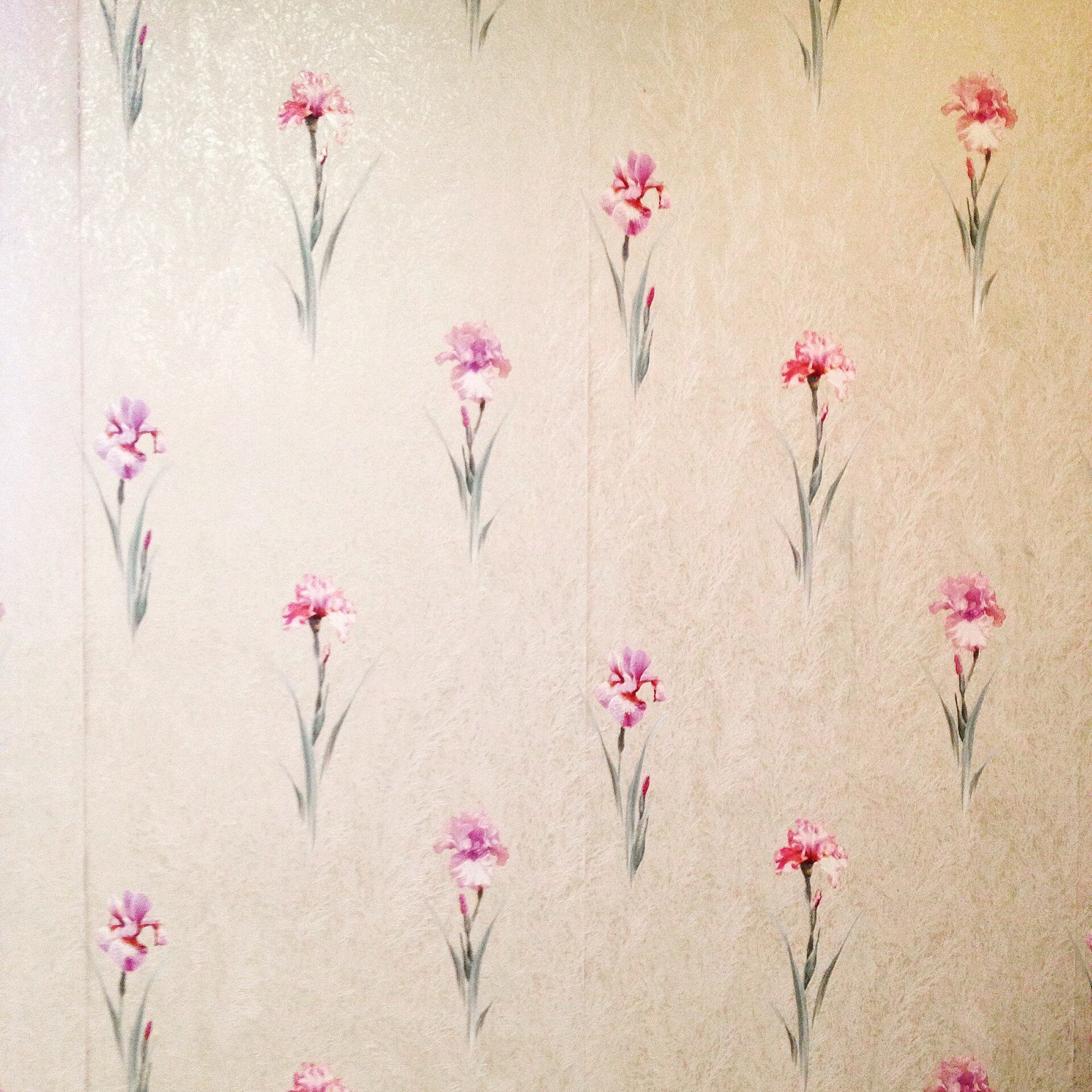
Floral bathroom wallpaper on a pale textured ground in the East Midwood Jewish Center, Brooklyn. Photo: Donyaemilia, CC BY-SA 4.0, via Wikimedia Commons. Donyaemilia, source, CC BY-SA 4.0
How to choose and hang bathroom wallpaper
- Check the cleaning rating. In Europe, wallcoverings carry symbols for how they can be cleaned, tested to EN 12956, from spongeable to washable and scrubbable; finished wallpapers and vinyls are specified in EN 233, and heavy-duty products in EN 259-1. In the US, ASTM F793 classifies wallcoverings by use, with Types I to III for commercial vinyls. For a family bathroom, choose washable or better.
- Plan the zones. Keep wallpaper out of the shower enclosure and away from where water splashes directly; use tiles, glass or wet-room panels there and wallpaper on the remaining walls.
- Ventilate well. A good extract fan running during and after showers is the best protection. In England, for example, Approved Document F sets minimum extract rates for bathrooms; check the rules where you live.
- Prepare the wall. The wall must be sound, dry and sealed with a suitable primer. Use an adhesive recommended for humid rooms, ideally one with a fungicide.
- Seal the edges. Roll seams firmly and finish edges at basins and baths neatly, or with a clear sealant if the manufacturer allows it.
- Follow the maker’s instructions. Products differ, and warranties often depend on the specified adhesive and conditions.
Bathroom wallpaper ideas
These 25 ideas work with the practical advice above: choose the look, then check that the product suits the room.
1) Start with the whole room
Treat the walls as one composition with the tiles, fittings and lighting, and decide where the wallpaper stops before choosing a pattern.
2) Choose vinyl for busy bathrooms
Washable vinyls survive splashes and frequent cleaning best; textured vinyls can imitate grasscloth or linen without the risk.

© G P & J Baker
3) Use bold geometric patterns
Strong geometrics suit small bathrooms where one pattern can set the whole mood; keep fittings simple alongside them.

© Sweeten
4) Bring in large-scale botanicals
Oversized flowers and leaves make a bathroom feel like a garden room, especially behind a freestanding bath.

© Tile Space
5) Add metallic accents
Metallic inks catch light from mirrors and wall lights; use them on one wall if the room is small.

© Beut
6) Choose texture
Embossed or textured papers add depth; choose coated versions so steam and cleaning do not flatten them.

© Nicki Pasqualone
7) Try a monochrome scheme
Pattern in one colour family gives interest without clutter, and pairs well with matching paint on woodwork.

© The Curious Department
8) Contrast paper with tiles
Pair a busy wallpaper above with plain tiles below, or the reverse, so the two do not compete.

© Tile Club
9) Make one feature wall
A single papered wall behind the basin or bath focuses attention and keeps wallpaper away from wet zones.

© Villeroy & Boch
10) Go vintage
Victorian florals and damasks, many descended from designs such as William Morris’s, suit period homes and freestanding baths.
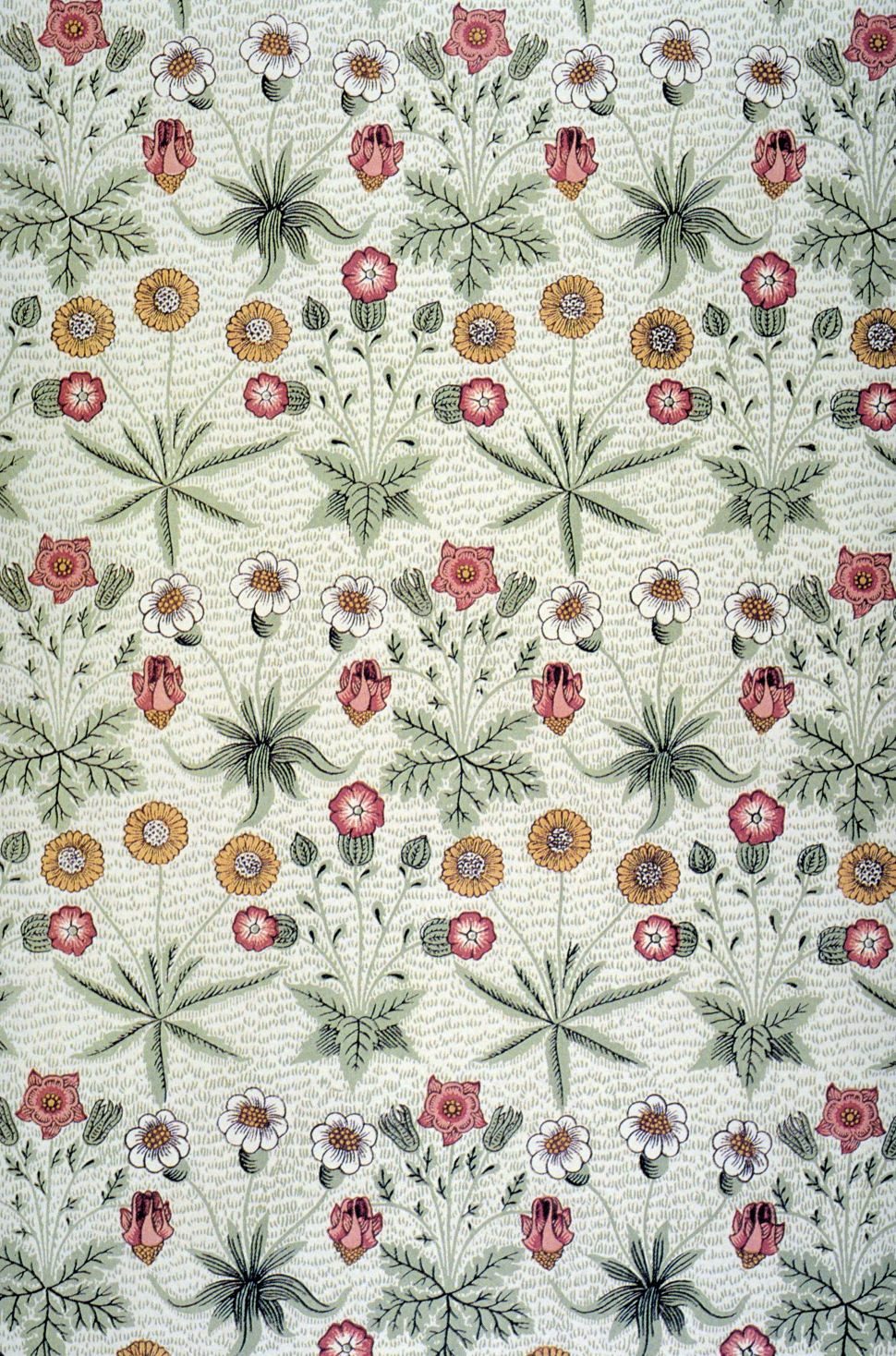
William Morris's 'Daisy' wallpaper, designed in 1864, one of the patterns behind today's vintage-style papers. Image: public domain, via Wikimedia Commons. Image: William Morris (Public domain (verified))

© Etsy
11) Choose calm coastal tones
Soft blues, sand colours and watercolour washes suit bathrooms with plenty of daylight.

© FEATHR Wallpaper
12) Add something playful
Animals, birds and whimsical motifs work especially well in cloakrooms and powder rooms, where visitors linger briefly.

© Lindsay Brown
13) Rely on classic stripes and damasks
Timeless patterns outlast trends; vertical stripes also make a low room feel taller.

© Max Vakhtbovych
14) Use deep, moody colours
Navy, forest green and charcoal create a cocooning room; good lighting at the mirror is essential. For colour inspiration, see our notes on deep, rich colours like navy blue or emerald green.

© Drummonds Bathrooms
15) Go bohemian
Layered patterns and earthy tones suit a relaxed, boho-style bathroom with plants and natural materials.

© FUKU MON Store
16) Treat it as art
Murals and painterly designs turn a bathroom wall into a picture; position them away from direct splashing.

© Joy Green
17) Try an industrial look
Concrete, plaster or marble-effect vinyls give an urban feel at lower cost and weight than the real material.

© Shopee
18) Add a starry sky
Celestial patterns on dark grounds suit small, windowless rooms lit by warm wall lights.

© Etsy
19) Use gold sparingly
Gold patterns look richest with simple fittings; too much shine can feel busy under bright lights.

© This Worthey Life
20) Go tropical
Palm leaves and birds bring colour and energy; real plants that like humidity complete the look.

© Linwood Fabrics
21) Keep it minimal
Subtle textures and quiet patterns suit minimalist bathrooms, adding softness without visual noise.

© Foogo
22) Choose chinoiserie
Hand-painted-style scenes of birds, branches and landscapes bring elegance; panel murals can fill one wall.

© de Gournay
23) Design for children
Washable, cheerful patterns suit family bathrooms; avoid papers that tear easily at child height.

© Shannon Lazic
24) Be bold with black
Black grounds make patterns glow and walls recede; balance them with light floors and good lighting.

© Graham & Brown
25) Make it your own
Custom-printed papers, stencils or hand painting give a unique wall; seal hand-painted work with a suitable varnish.

© Rterior Studio
Working with a powder room or a compact layout? Combine these ideas with our tips for designing small bathrooms.
Sources and further reading
- Building Science Corporation, BSI-130 “Hotel Mold” (vinyl wallcoverings and trapped moisture).
- NIST IR 5558, moisture analysis of walls with vinyl wallpaper in different climates.
- ASTM F793/F793M, classification of wall and ceiling coverings by use (US).
- EN 233, EN 12956 and EN 259-1, European specifications and tests for wallcoverings.
Chosen and hung with care, bathroom wallpaper can bring pattern, colour and personality to a room that is too often treated as purely practical.



Aly Bayoumi is an editor with a sharp eye for detail and a deep commitment to clarity and precision. Passionate about architecture and design, he sees every project as an opportunity to shape compelling narratives that bring creative visions to life. With a focus on accuracy and engaging storytelling, Aly combines editorial expertise with a dedication to elevating the voices and ideas that shape the built environment.