

Many leaning towers lean further than Pisa. The tower of Gau-Weinheim in Germany, measured at 5.43 degrees in 2022, and Suurhusen’s church tower at 5.19 degrees both tilt more than the Leaning Tower of Pisa, which has leaned about 3.97 degrees since its stabilisation. This article is for architecture enthusiasts and students. It ranks the towers in this list by their published lean, with the source and date of each figure, explains the method, and gives the story of each tower, from medieval churches on drained marshes to a San Francisco skyscraper.
When we think of leaning towers, the first image is usually the Leaning Tower of Pisa. But this famous landmark is neither the most tilted nor the only one. Most leaning towers lean by accident, because of soft or changing ground; a few extraordinary towers were designed to lean. For a tower built to lean on purpose, see Capital Gate in Abu Dhabi by RMJM, designed with an 18-degree lean.
[irp posts=’239932′]
Method: how leaning towers are compared
A tower’s lean can be described in two ways: as an angle from the vertical, or as the horizontal displacement of its top relative to its base. Angles allow comparison between towers of different heights; displacement shows how far the top has moved. The table below uses the angle where a published figure exists, and the displacement where only that is reported. Figures come from Guinness World Records reports, heritage bodies and published summaries, accessed 29 October 2026; measurements change over time, and stabilisation work can reduce or stop movement. Towers designed to lean, such as Capital Gate, are excluded from the ranking.
| Rank | Tower | Country | Lean | Source / status | Built |
|---|---|---|---|---|---|
| 1 | Gau-Weinheim tower (former defence tower, bell tower since 1749) | Germany | 5.43° | 2022 survey; Guinness | Medieval |
| 2 | Suurhusen church tower | Germany | 5.19° | Guinness 2007 | Medieval |
| 3 | Bad Frankenhausen Oberkirche tower | Germany | ~4.8° | Published figure (live page) | 14th-century origins |
| 4 | Leaning Tower of Pisa (for reference) | Italy | 3.97° | After 2001 stabilisation | 1173-1372 |
| 5 | Tiger Hill (Yunyan) Pagoda | China | ~3° (top 2.3 m) | Published figure | 961 |
| 6 | Garisenda, Bologna | Italy | ~4° (commonly cited) | Under stabilisation 2024-26 | 12th century |
| 7 | Oude Kerk tower, Delft | Netherlands | top ~2 m | Published figure | 14th century |
| 8 | Nevyansk Tower | Russia | top ~1.8 m | Published figure | 18th century |
| 9 | Toruń leaning tower | Poland | top ~1.5 m | Published figure | Medieval |
| 10 | Belfry of Bruges | Belgium | top ~0.87 m | Published figure | from c. 1240 |
| 11 | Elizabeth Tower (Big Ben) | UK | ~0.26° | Monitoring reports, early 2010s | 1859 |
Source: Guinness reports (via press), List of leaning towers, ANSA, heritage summaries; accessed 29 Oct 2026 (as of 29 October 2026).
Leaning towers that aren’t the Leaning Tower of Pisa
1. Nevyansk Tower, Nevyansk, Russia

via Wikimedia commons
This brick tower in the Urals was built in the 18th century for the Demidov family of industrialists. Its exact purpose is debated: local stories make it a prison, a watchtower or a secret laboratory. Its upper part deviates noticeably from the vertical, by about 1.8 m at the top according to commonly published figures.
2. Suurhusen Church Tower, Suurhusen, Germany

via Wikimedia commons
The tower of this medieval church in East Frisia was recognised by Guinness World Records in 2007 as the world’s most tilted tower, at 5.19 degrees, as reported in the press at the time. The church was built on oak foundations in marshy ground; when the land was drained in the 19th century, the timber rotted and the tower began to tilt. In 2022 a survey of the tower at Gau-Weinheim in Rhineland-Palatinate, a medieval fortification tower later converted into a bell tower, measured 5.43 degrees, and Guinness now lists it as the record holder.
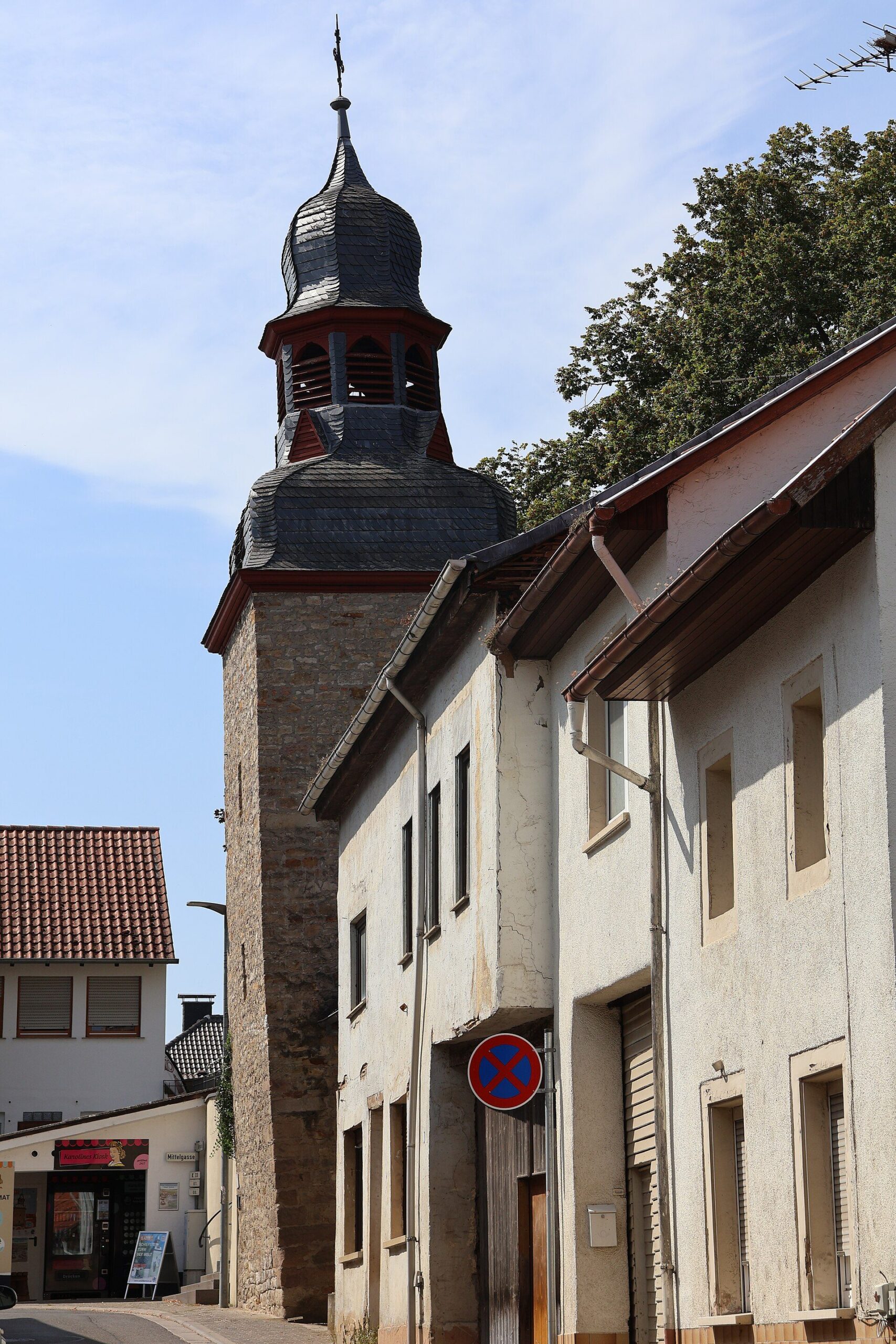
The leaning tower of Gau-Weinheim, Rhineland-Palatinate: measured at 5.43 degrees in 2022. Photo: Schwalbe, CC BY-SA 4.0, via Wikimedia Commons. Schwalbe, source, CC BY-SA 4.0
3. Big Ben (Elizabeth Tower), London, England

via Shutterstock
The Elizabeth Tower, home of the bell known as Big Ben, leans slightly to the north-west. Engineers monitoring the tower in the early 2010s reported a tilt of about 0.26 degrees, increasing by fractions of a millimetre a year, possibly linked to nearby tunnelling and underground construction. At that rate, it was said, it would take thousands of years to approach Pisa’s lean.
4. Tiger Hill (Yunyan) Pagoda, Suzhou, China

via Wikimedia commons
This brick pagoda on Tiger Hill, completed in 961, leans by about 3 degrees because it stands partly on rock and partly on soil. Its top is displaced by roughly 2.3 m. Stabilisation work in the 20th century, including strengthening the foundations and the ground, has stopped further movement.
5. Oude Kerk, Delft, Netherlands

via Wikimedia commons
The tower of Delft’s Old Church (Oude Kerk) was built in the 14th century beside a canal and began to lean while it was still under construction; builders tried to correct the tilt as it rose, which is why the tower appears slightly bent. The church became Protestant at the Reformation. Its top leans by about 2 m.
6. Leaning Tower of Toruń, Toruń, Poland

via Wikimedia commons
This medieval brick tower was part of Toruń’s town walls. It was built on soft, clay-rich soil that could not carry its weight evenly, and its top is displaced from the base by about 1.5 m. It has been used as a gate tower, a prison for women and a café. Local legend tells of a knight of the Teutonic Order who broke his vows and was made to build a tower that would be as crooked as his conduct.
7. Belfry of Bruges, Bruges, Belgium

via shutterstock
The 83 m belfry on Bruges’ Markt was begun around 1240 and rebuilt after fires and lightning strikes over the centuries. It leans about 87 cm towards the east. It is part of the UNESCO World Heritage listing of the Belfries of Belgium and France.
8. Leaning Temple of Huma, Odisha, India

via holidify.com
This temple to Shiva on the banks of the Mahanadi river is known for its leaning body, while its crowning elements are reported to sit closer to the vertical. The lean is usually attributed to floods and the river’s effect on the ground beneath it.
9. Millennium Tower, San Francisco, U.S.

Via Daniel Ramirez/Flickr
This 58-storey residential skyscraper, completed in 2009, rests on friction piles in soft soil rather than on bedrock. By 2016 it had sunk and tilted measurably, leading to lawsuits. A retrofit adding piles down to bedrock along one side began in 2021; it was slowed after the work itself increased the tilt in 2022, and the tower’s long-term stabilisation has been closely monitored since. It is the clearest modern example of how foundations, not the tower above, decide whether a building leans.
10. The Two Towers of Bologna, Italy

via Shutterstock
Bologna’s symbol, the Due Torri, are two medieval family towers: the taller Asinelli and the shorter but more steeply leaning Garisenda. The Garisenda’s lean is cited by Dante in the Divine Comedy. In late 2023 the streets around the Garisenda were closed after monitoring found a high risk of collapse; the city announced a stabilisation project, reusing steel pylons and cables from the Pisa works, with a first phase planned to run until June 2026, as ANSA reported.
11. Bad Frankenhausen Church Tower, Bad Frankenhausen, Germany

via Fotocommunity/Rainer Beneke
The tower of the Oberkirche in Bad Frankenhausen, Thuringia, leans by about 4.8 degrees because underground salt deposits are being dissolved by groundwater, causing the ground to subside. Stabilisation work has been carried out, but the tower’s long-term future has repeatedly been in doubt.
What leaning towers teach about foundations
Almost every tower in this list leans for the same reason: uneven ground. Soft clay, drained marshland, rock beside soil, dissolving salt or poor piles let one side settle more than the other. Pisa’s own lean was reduced by careful soil extraction from the high side in the 1990s and early 2000s, a technique that has influenced later stabilisation works. For context on height records rather than tilt, see Arch2O’s guide to the tallest buildings in the world.
Sources and further reading
- List of leaning towers (summary with references to measurements).
- RTÉ (2007): Suurhusen recognised by Guinness.
- ANSA (2024): securing the Garisenda tower.

Alia El Saady is a graduate of the American University in Cairo (AUC Egypt) and currently works in Venice. She is a contributing writer for Arch2O, where she shares her insights on architecture, design, and culture. Since joining in 2018, she has authored 26 articles exploring topics such as sustainable living, architectural visualization, and the cultural significance of design. Her work reflects a passion for understanding the intersection of design and the built environment, offering readers a diverse and thoughtful perspective on contemporary architectural trends.