

A cantilevered building is one in which part of the structure projects beyond its supports, held up only by being fixed at one end, so that rooms seem to float in the air. In houses, cantilevers are used to reach views, to step over steep or fragile ground, and to keep the footprint small. This updated list is for readers who love bold houses and for students. It presents ten cantilevered houses from Croatia to Japan, adds a short explanation of how a cantilever works, with a worked example of why long cantilevers are so demanding, and outlines the main structural variants.
Cantilevers are much older than modern houses: Frank Lloyd Wright made them famous in domestic architecture, most dramatically at Fallingwater, whose large balconies project from the rock over a waterfall, as the history of the cantilever notes, but builders had used projecting beams and balconies for centuries.
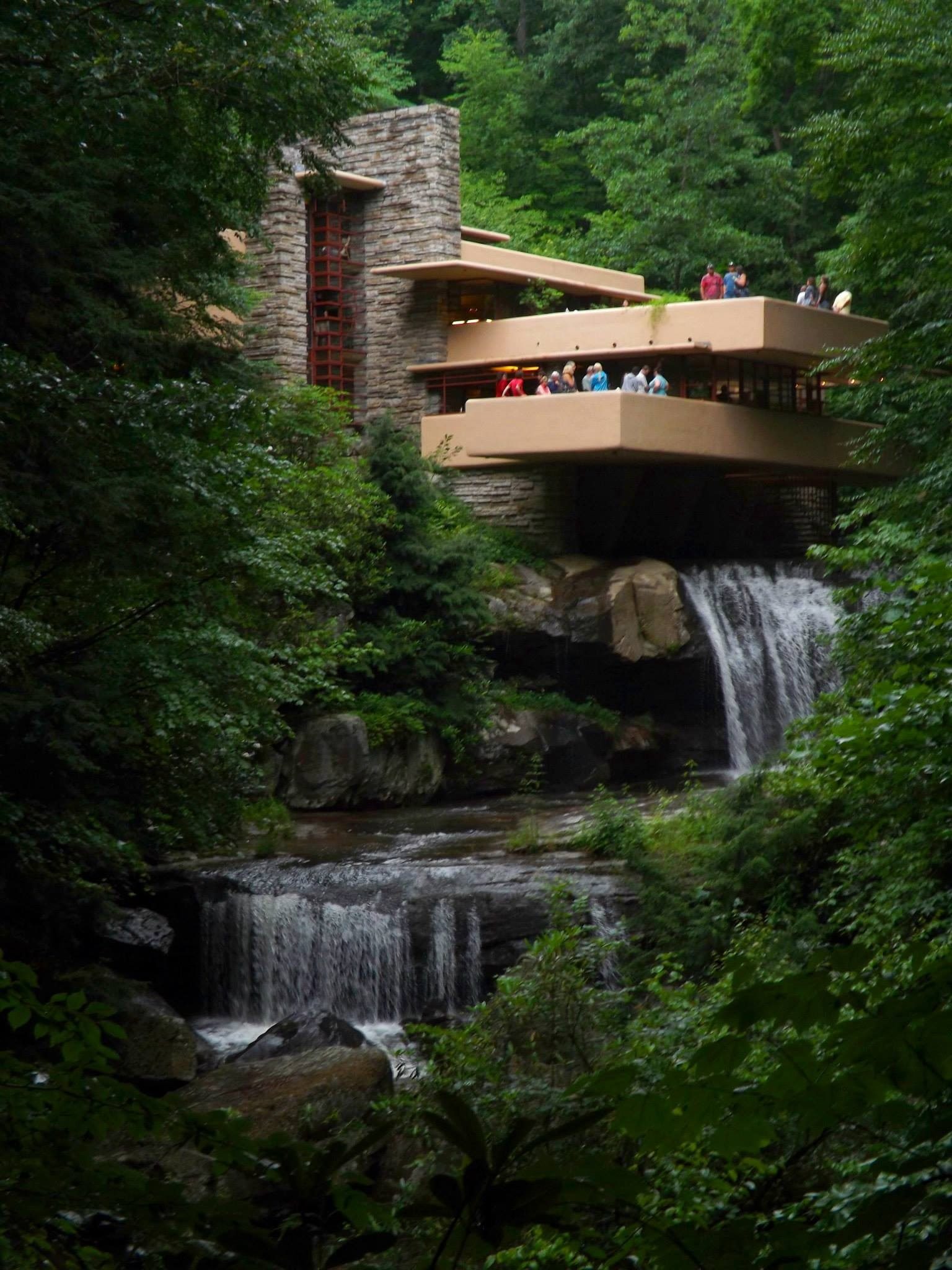
Fallingwater, Pennsylvania (Frank Lloyd Wright, 1935-1939): concrete terraces cantilevered over Bear Run. Photo: Andre Carrotflower, CC BY-SA 4.0, via Wikimedia Commons. Andre Carrotflower, source, CC BY-SA 4.0
Fallingwater remains the best-known cantilevered building in domestic architecture. Since then, architects have kept finding new ways to make cantilevered houses that seem to defy gravity. If you have seen our earlier list of extraordinary cantilevered house designs, here are ten more; Frank Lloyd Wright‘s work is a good place to start for the history.
How a cantilever works
A cantilever carries its load back to a single fixed support, where it produces both a shear force and a bending moment. To stay up, the projecting part must be tied into something heavier or stiffer behind it: a back-span of the same structure, a counterweight, a concrete core or a deep truss. That is why so many houses designed as a cantilevered building are rigid boxes, with walls that act as deep beams.
Worked example: why length matters so much
For a simple cantilever carrying a uniform load w over a length L, standard beam theory gives a bending moment at the support of wL²/2 and a tip deflection of wL⁴/(8EI), where E and I describe the stiffness of the material and section. The consequences are dramatic:
- Doubling the projection from 7.5 m to 15 m, with the same load per metre, multiplies the moment at the support by 4 (2²).
- It multiplies the deflection at the tip by 16 (2⁴), so the structure must be roughly 16 times stiffer to sag the same amount.
This is a textbook relationship, not an analysis of any of the houses below, but it explains why the longest residential cantilevers are built as full-depth steel trusses or concrete boxes, with structure hidden inside the walls.
| Approach | How it works | Typical use | Trade-off |
|---|---|---|---|
| Back-span or counterweight | The projecting part is balanced by a longer or heavier part on the ground | Barns and boxes on slopes | Needs a long or heavy rear section |
| Storey-deep steel truss | Walls of the projecting volume act as a deep truss | Long projections of 10 m or more | Diagonals in walls limit window positions |
| Concrete box or slab | Monolithic reinforced concrete walls/slabs fixed to a core | Medium projections; terraces | Weight, cost, cracking control |
| Diagonal struts or ties | Inclined members carry part of the load to the ground or up to a mast | Hillside houses | Struts are visible; foundations on the slope |
| Cross-stacked volumes | Each floor spans across the one below, cantilevering at both ends | Small urban plots | Complex load paths at crossing points |
Source: Arch2O summary of common structural approaches (general structural practice) (as of 31 October 2026).
10 amazing cantilevered houses
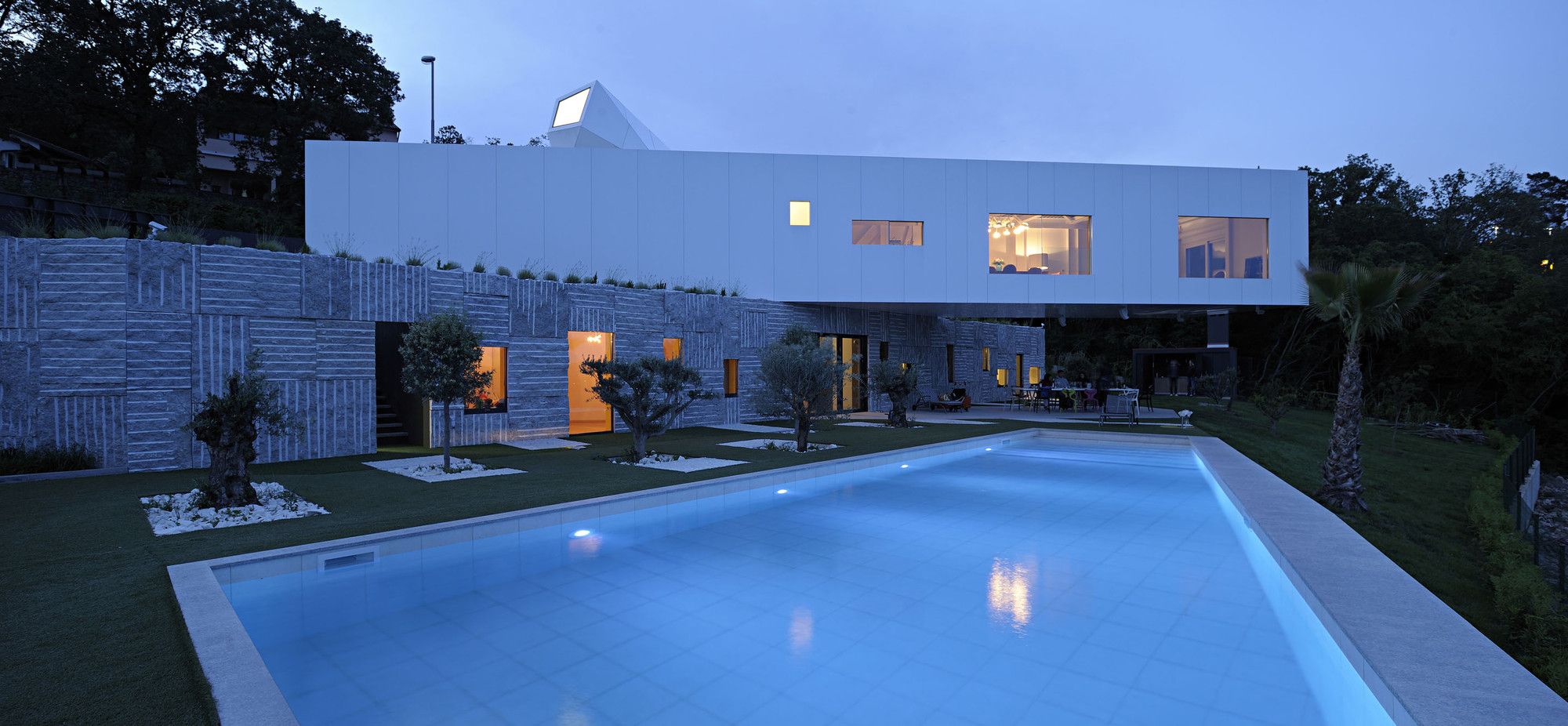
1) The Nest and Cave House, Opatija, Croatia
© Photography by © Sandro Lendler
The house, designed by Idis Turato, has two storeys in contrasting styles. The steel structure of the upper floor is clad in white panels, while the base is rugged concrete anchored into the ground. A geometric chimney acts as a light well for the main stair and connects the living spaces upstairs with the bedrooms below.
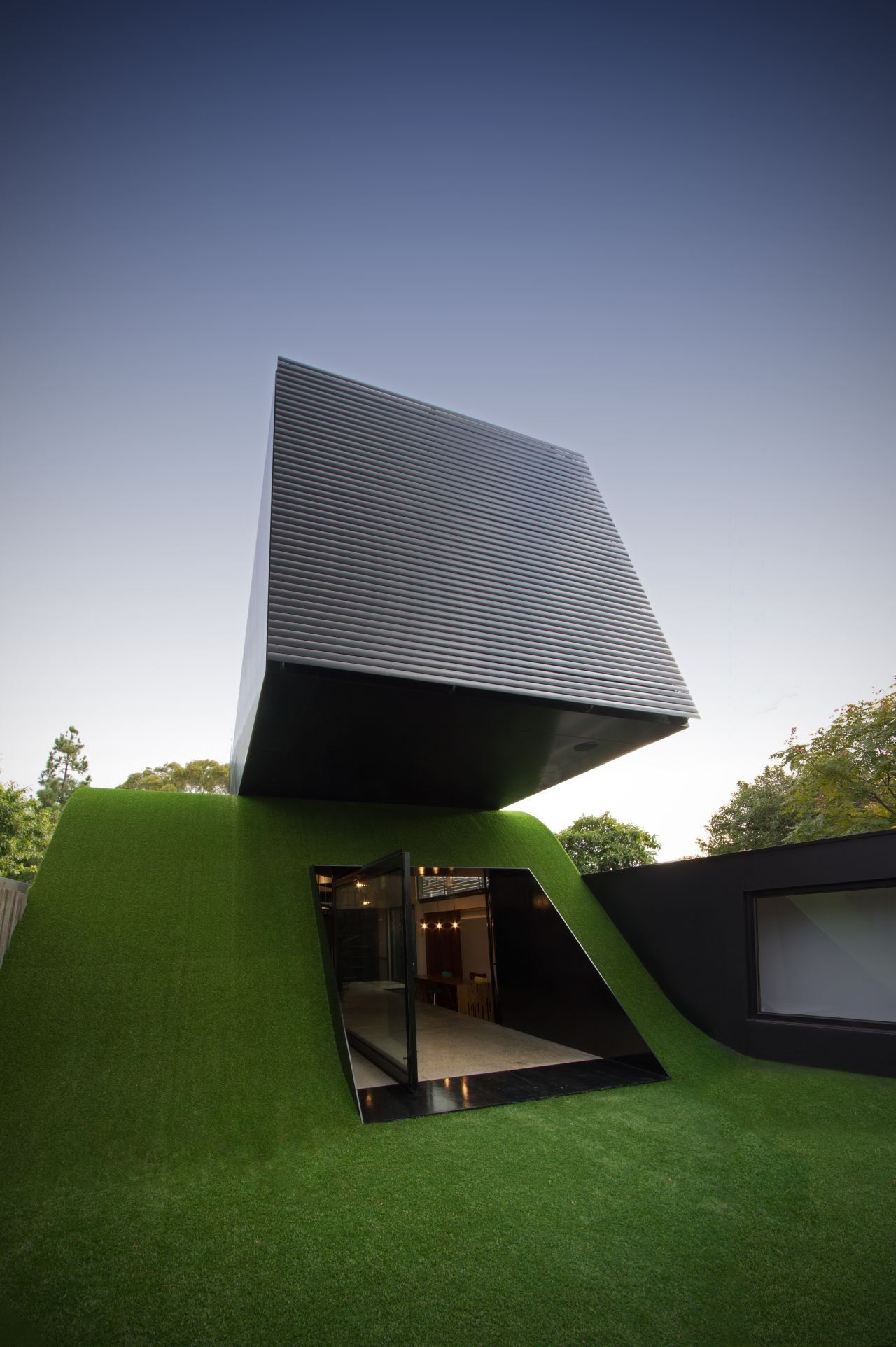
2) The Hill House, Melbourne, Australia
Photography by © Nic Granleese
The Hill House is an extension to an existing house, designed by Andrew Maynard Architects to face the sun and the main house, with the garden between them. With no cliff to cantilever over on the flat site, the architects created an artificial rippling landscape that supports the annex and doubles as a slide for the children.
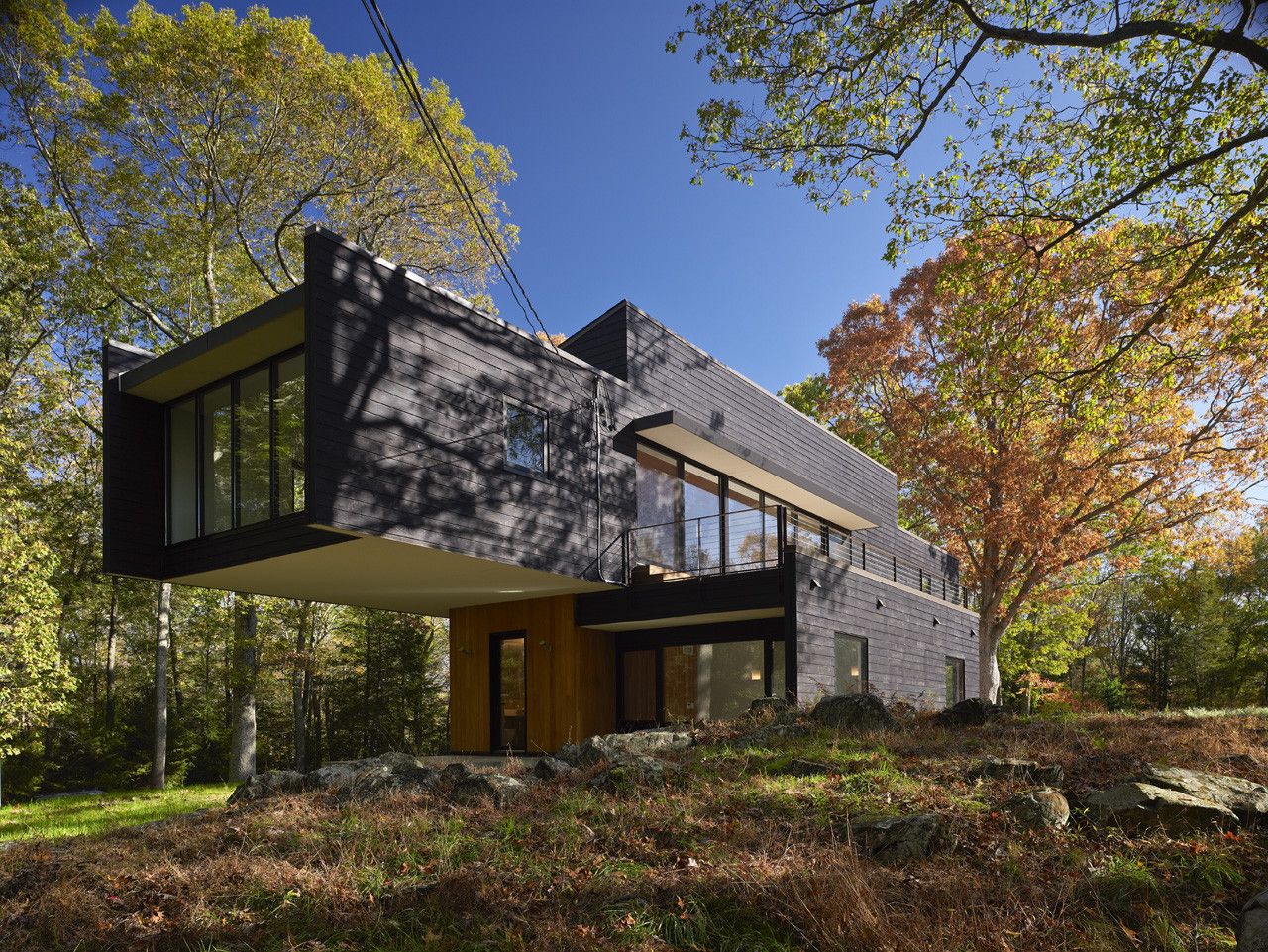
3) The Waccabuc House, New York, USA
Photography by © Brad Feinknopf
Designed by architect Chan-li Lin of Rafael Viñoly Architects and completed in 2011, this two-floor house is cantilevered on both sides rather than one. The small footprint led to a volume that extends about 20 feet (6 m) beyond its supports, with the spaces beneath used for parking and a porch.
4) The Balancing Barn, Suffolk, UK
Photography by © Edmund Sumner
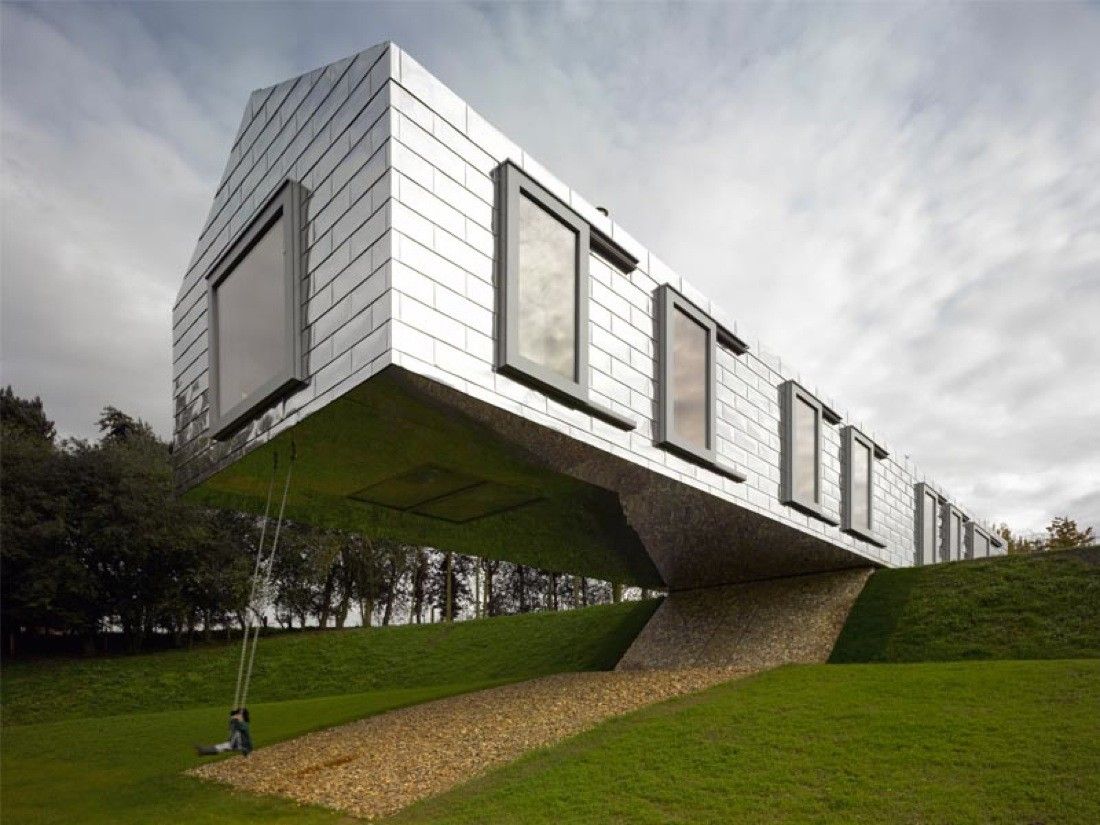
Designed by MVRDV with Mole Architects as executive architects for Living Architecture, the Balancing Barn near Thorington in Suffolk opened as a holiday house for rent in October 2010. About half of the barn projects over a descending slope, with a 15 m cantilever made possible by the rigid structure of the building, and a swing hangs beneath it, as reported by Dezeen. It is clad in reflective metal sheeting.
5) The Beaumaris House, Melbourne, Australia
Photography by © Gerrard Warrener, Rhiannon Slatter
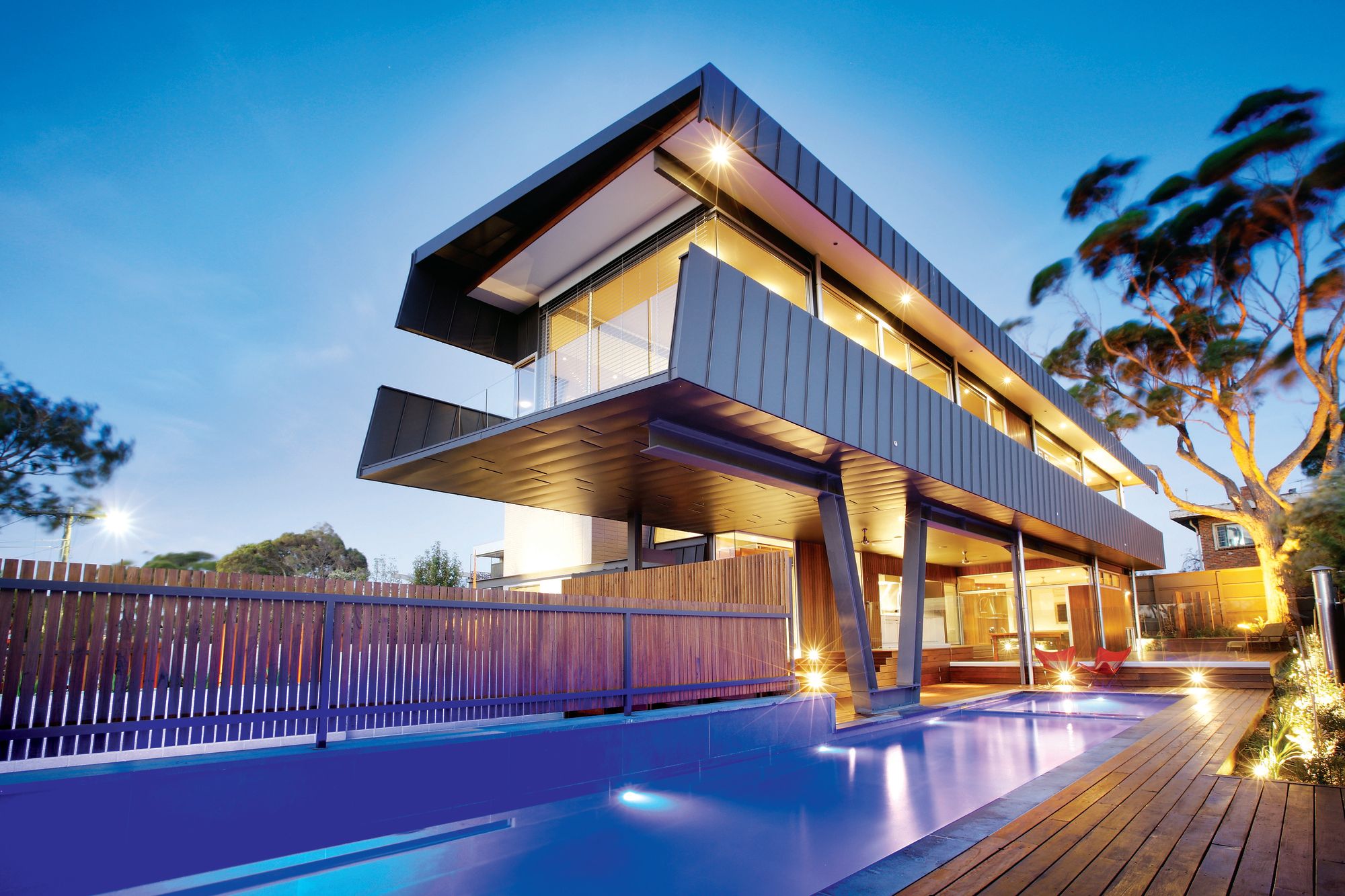
Maddison Architects designed this house as two boxes overlooking the bay. The black-clad box, with floor-to-ceiling glass walls, contains the bedrooms and bathrooms as well as living spaces, balconies and a kitchen.
6) Narigua House, El Jonuco, Nuevo León, Mexico
Photography by © Sofia Flores Chapa
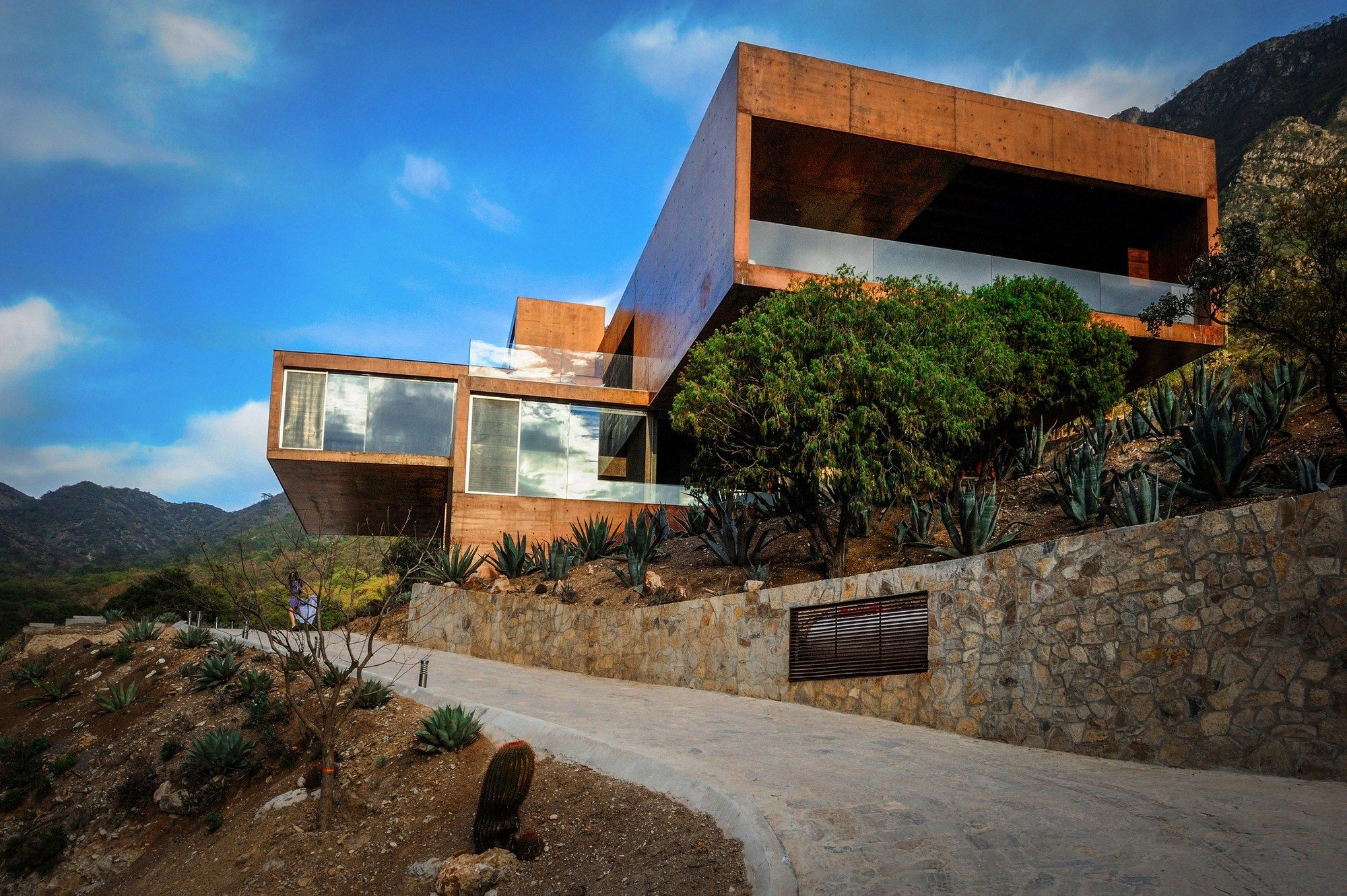
Designed by architect David Pedroza Castañeda, the house is formed from a series of cantilevered volumes. Its rustic finishes and reddish-brown exterior blend with the surrounding landscape.
7) Hoke House, Portland, Oregon, USA
Courtesy of Skylab Architecture
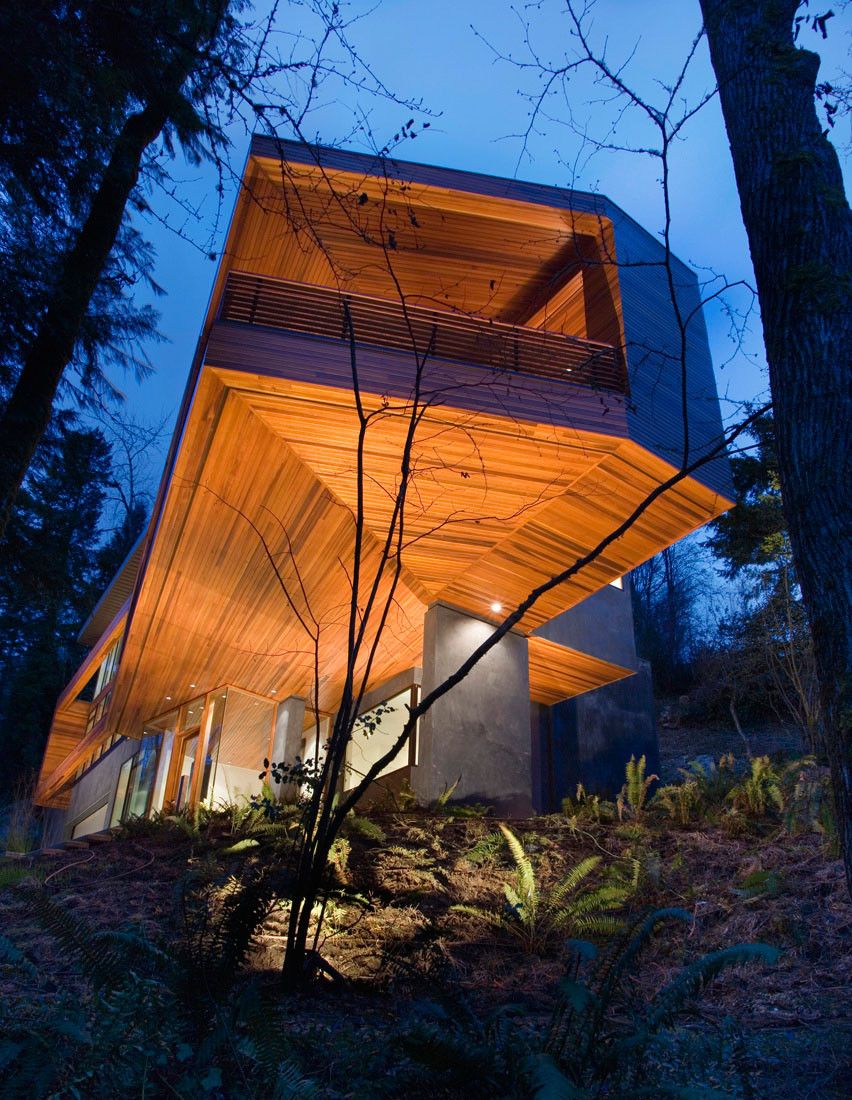
This house by Skylab Architecture, widely known as the Cullen family home in the Twilight films, sits on a steep, forested hillside. Its wood-clad main floor cantilevers out over the slope, keeping the footprint small and giving the feel of a treehouse, with large windows onto the forest, according to Western Art & Architecture. Practices such as BIG have since made stacked and projecting volumes a signature of much larger buildings.
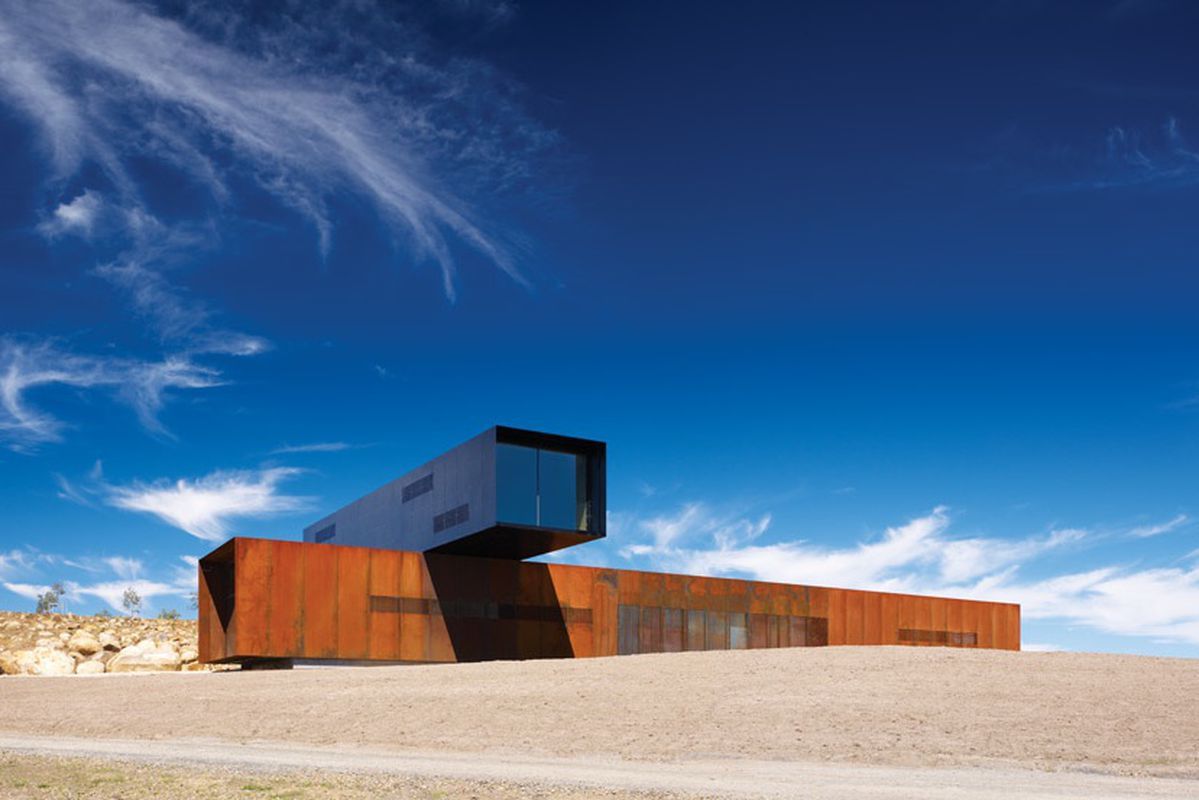
8) The View Hill House, Victoria, Australia
Photography by © Tim Griffith
Designed by Denton Corker Marshall, the house has two floors. The upper floor, clad in black aluminium, is cantilevered at 90 degrees across the lower floor, which is clad in pre-rusted steel. Both floors have mountain views on either side, and three large glazed panels on the lower floor open the living room to the vineyard.
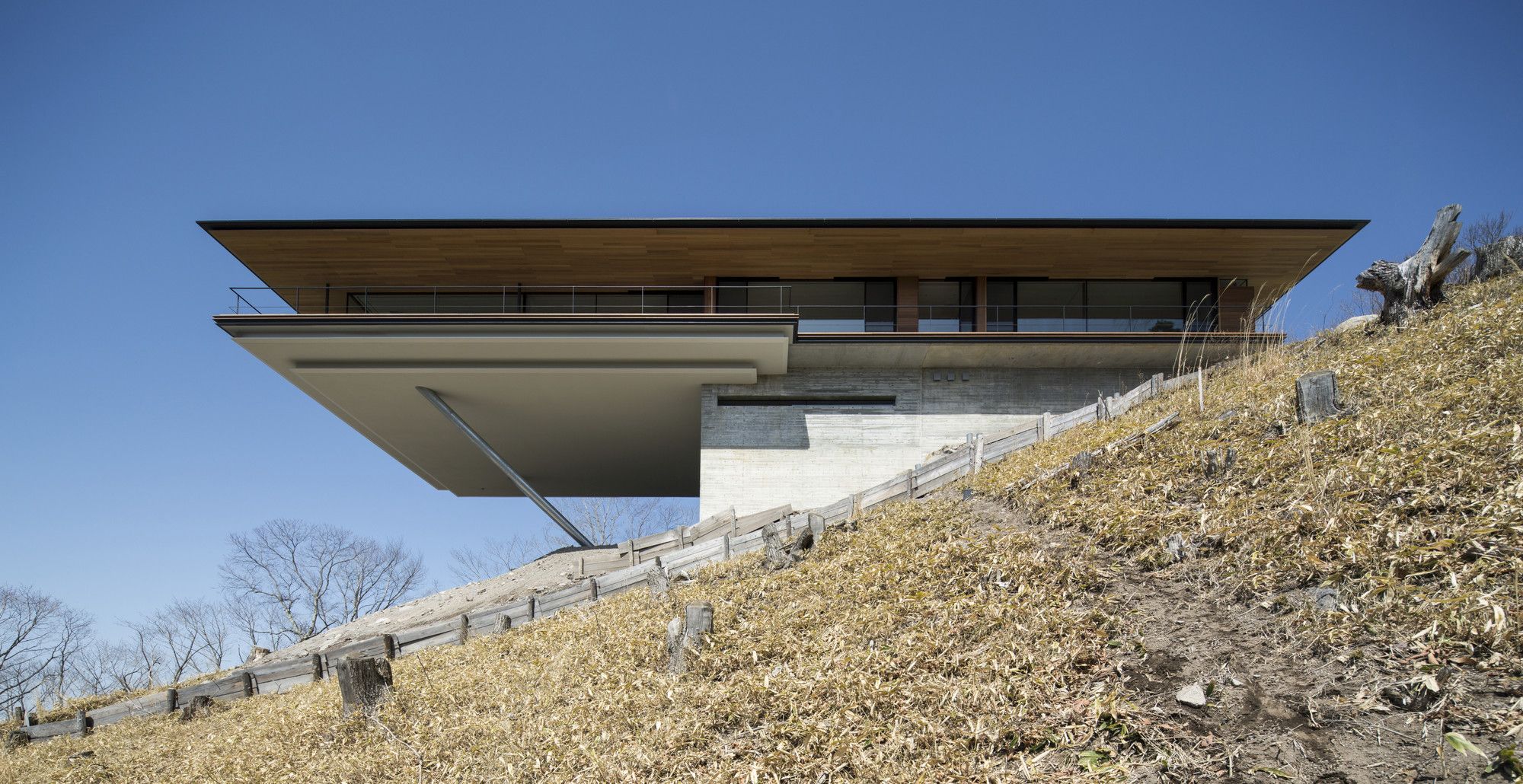
9) House in Yatsugatake, Nagano, Japan
Photography by © 45g Photography
Designed by Kidosaki Architects Studio on a naturally sloping site at the foot of the Yatsugatake Mountains, the house hangs half its volume in the air to make the most of the view. The projecting part is supported by two diagonal steel tubes, each 300 mm in diameter, and the raised volume also catches the mountain breeze.
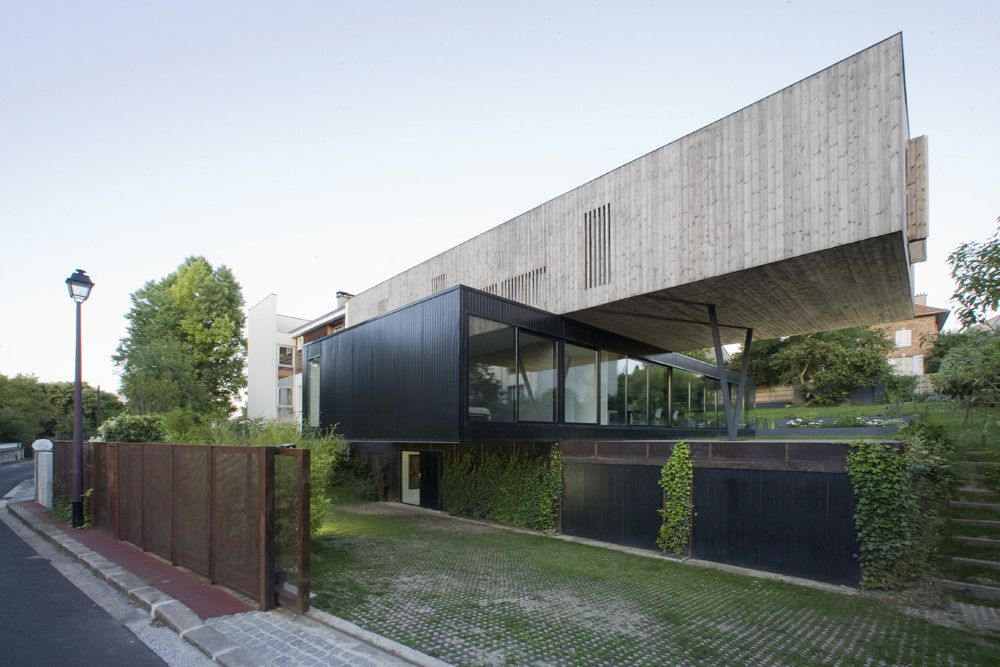
10) The House in Sèvres, France
Photography by © Cécile Septet
Designed by Colboc Franzen & Associés, this residence is the only one in our collection with three floors, stacked perpendicular to one another because of the small footprint. The lowest floor holds the family spaces, the middle floor is for receiving guests, and the top floor holds the bedrooms.
Sources and further reading
For bigger structures that push spans even further, see our feature on long span structures. Project facts above come from each practice’s published descriptions and the sources linked in the text; dimensions not linked to a source should be checked with the architects before reuse.

Daniel Mercer is a Coffee Break section editor at Arch2O, currently based in Berlin, Germany. With a background in architectural history and design journalism, Daniel holds a Master’s degree from the University of Edinburgh, where he focused on modern architecture and urban theory. His editorial work blends academic depth with a strong grasp of contemporary design culture. Daniel has contributed to several respected architecture publications and is known for his sharp critique and narrative-driven features. At Arch2O, he highlights innovative architectural projects from Europe and around the world, with particular interest in adaptive reuse, public infrastructure, and the evolving role of technology in the built environment.