

If you’re an architect or designer, you know Le Corbusier as the modern architecture pioneer who revolutionized how we build and live. You’ve studied his Villa Savoye: Le Corbusier’s Revolutionary Masterpiece That Changed Architecture Forever—that perfect cube on pilotis that showcases his famous Five Points of Architecture. You’ve admired the sculptural Ronchamp Chapel, analyzed his Modulor system, and maybe even critiqued his unrealized Radiant City. But here’s what your textbooks probably didn’t tell you: the man behind these icons was far more complex, controversial, and surprisingly human than his concrete masterpieces suggest.
These fourteen facts peel back the layers of myth surrounding Charles-Édouard Jeanneret-Gris, the watchmaker’s son who renamed himself Le Corbusier and changed architecture forever. Some will inspire you, others might disappoint you, but all of them will make you see his legacy differently.
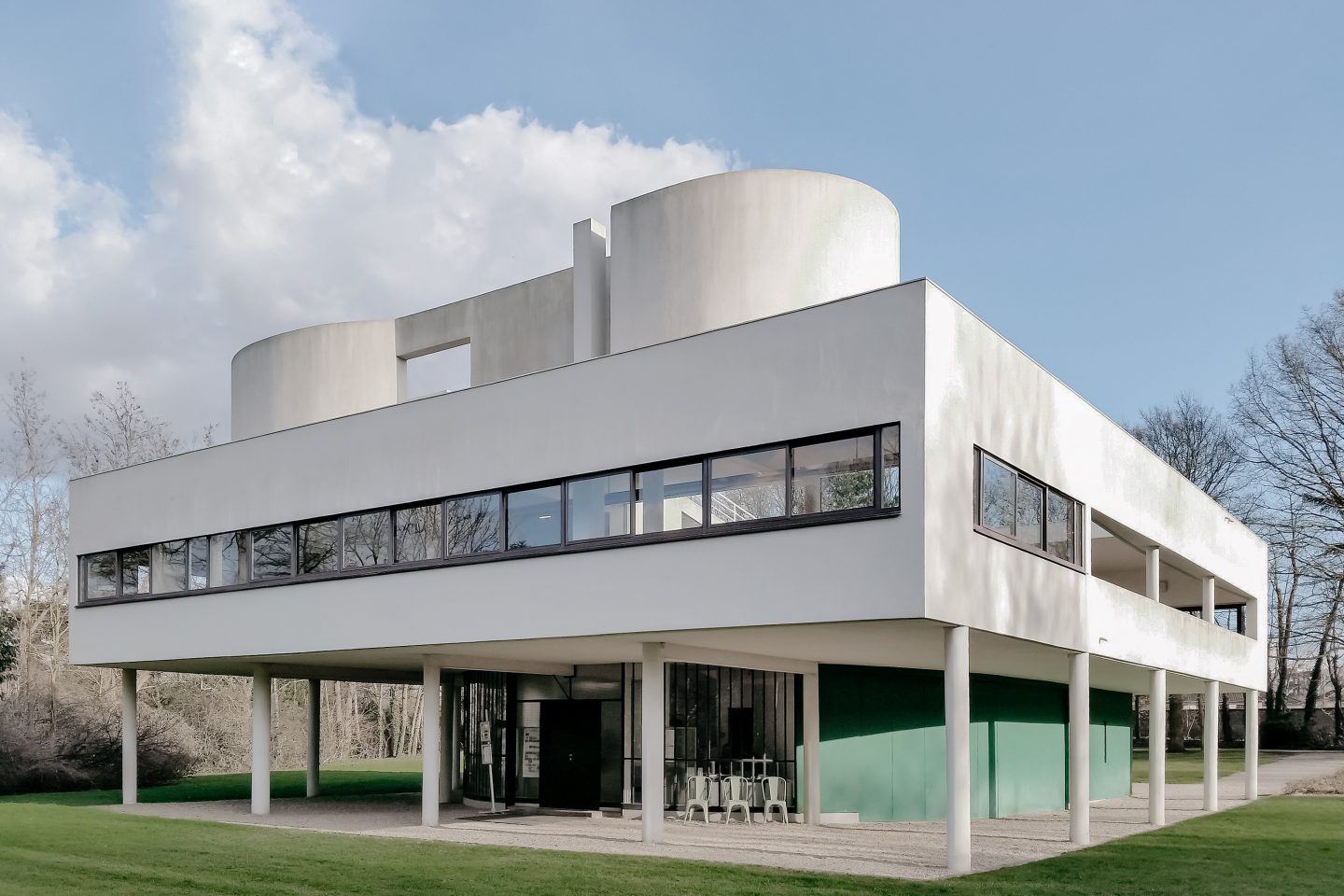
Villa Savoye by Le Corbusier, © LStrike
What Le Corbusier Is Famous For
Before we dive into the lesser-known stories, let’s anchor ourselves in his undeniable achievements. Le Corbusier’s influence stretches far beyond individual buildings:
-
Villa Savoye: The ultimate manifesto of modernist principles
-
Colline Notre Dame du Haut (Ronchamp Chapel): Sculptural sacred space that broke every rule
-
Unité d’Habitation: A revolutionary residential complex that reimagined urban living
-
Maison Dom-Ino: The unbuilt prototype that made modular housing possible
-
Chandigarh Master Plan: India’s first planned city after independence
-
“Toward a New Architecture” : The book that became modernism’s bible
What style is Le Corbusier?
Le Corbusier’s style can be summarised through his architectural manifesto “Five Points of a New Architecture” which is observed in his Villa Savoye. These five points are:
- The Pilotis: the structural elements carrying the building
- Open Floorplan
- A Facade free of structure
- Strip Windows
- The Roof Garden
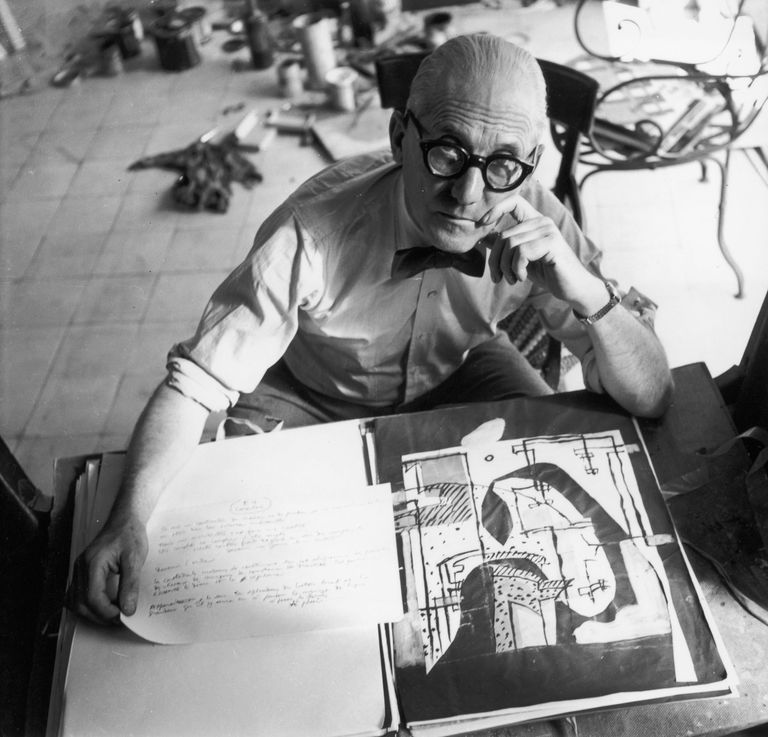
Via: GETTY IMAGES
14 Le Corbusier Facts That Will Change Your Perspective
1. The Name Game
His real name was Charles-Édouard Jeanneret-Gris, but in 1920 he rebranded himself “Le Corbusier”—a variation of his grandfather’s name, Lecorbésier. Adopting a single name was trendy among avant-garde artists, but it also let him shed his Swiss past and become a brand, a movement, an idea.
2. The Self-Taught Genius
Here’s the kicker: Le Corbusier never formally studied architecture. He left school at 13, telling the BBC in 1951, “I am anti-school. I am going to confess to you that I left school at 13 because schools were very mean in the past, they were no fun.” Instead, he taught himself by reading voraciously, sketching buildings across Europe, and learning directly from master craftsmen. This autodidact background made him both brilliantly original and stubbornly resistant to conventional wisdom.
3. The Half-Priced Glasses
Around 1918, Le Corbusier went nearly blind in one eye. Ever the pragmatist, he argued his glasses should cost half price. This quirky logic shows his obsession with efficiency and rational thinking—even in personal matters.
4. The Architect as Fashion Icon
In 1934, Philip Johnson was so captivated by Le Corbusier’s signature round glasses that he designed his own version and had Cartier manufacture them. When your eyewear inspires other architects, you know you’ve become a cultural icon.
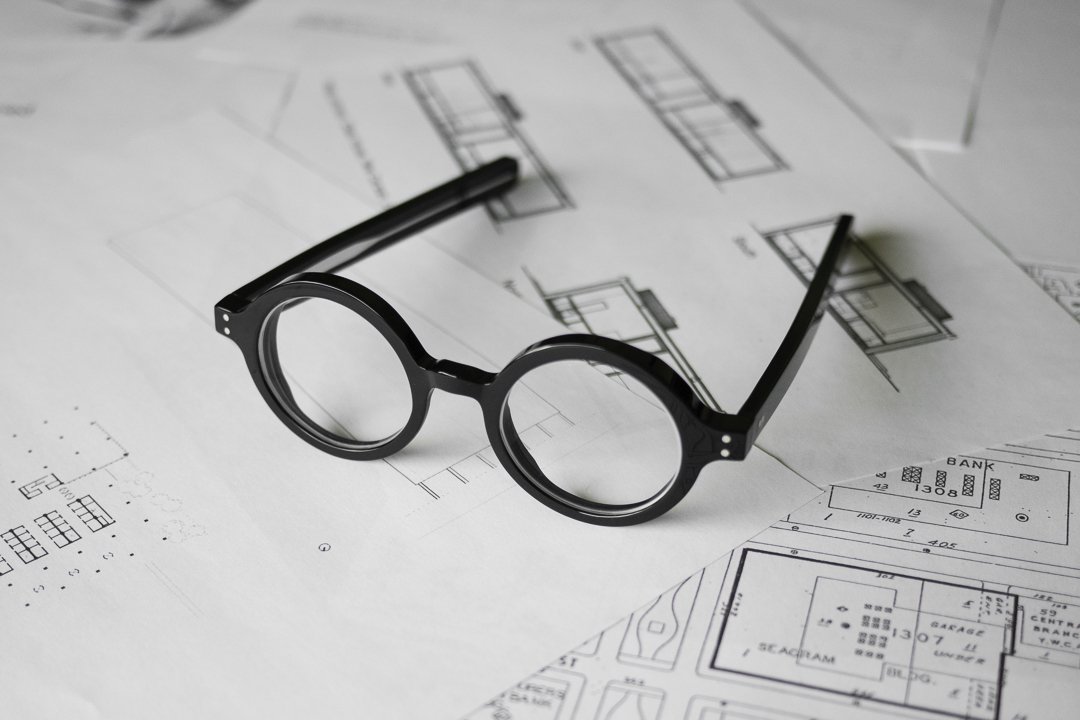
Philip Johnson-designed his own glasses, inspired by Le Corbusier’s, 1934
5. The Mussolini Connection
In 1934, Fascist Italian Prime Minister Benito Mussolini personally invited Le Corbusier to lecture in Rome. The architect accepted, seeing it as a chance to promote his urban ideas. This uncomfortable fact reminds us that modernism’s clean lines appealed to both democratic and authoritarian regimes—a complexity we can’t ignore.
6. The Car That Never Drove
Le Corbusier and his cousin Pierre Jeanneret designed a car in 1936 called the Voiture Minimum. They described it as a “minimalist vehicle for maximum functionality.” Though never manufactured, Le Corbusier insisted it inspired the Volkswagen Beetle. Whether true or not, it shows his ambition to design everything from cities to silverware.
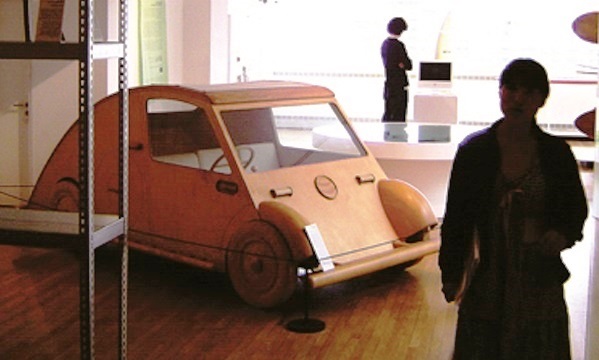
Voiture Minimum car, in 1936
7. The Vichy Government Job
In 1944, Le Corbusier accepted an urban planning position from France’s Vichy government, which collaborated with Nazi Germany. He was tasked with redesigning cities including Algiers, but his plans were rejected and he eventually withdrew from political life. This dark chapter complicates his legacy, showing how his utopian visions could align with problematic powers.
8. The Chandigarh Experiment
After India’s independence, Le Corbusier designed Chandigarh—the country’s first planned city. Based on his Radiant City concepts, he created monumental administrative buildings and a strict grid plan. While influential, especially in the former Soviet Union, the city was criticized for being pedestrian-unfriendly and overly monumental. The buildings, some argued, felt huge and boring despite their theoretical brilliance.
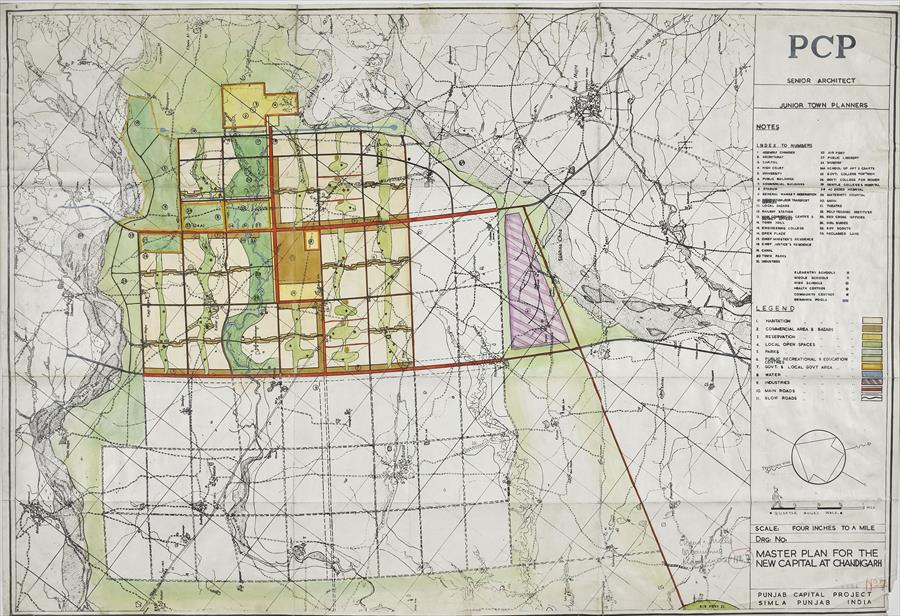
Urbanisme, Chandigarh,© FLC/ADAGP
9. The Einstein Endorsement
In 1964, Le Corbusier met Albert Einstein at Princeton to discuss his Modulor system—a proportional scale based on human measurements. Despite Le Corbusier’s self-deprecating description of his own explanation, Einstein wrote that it was “a scale of proportions which makes the bad difficult and the good easy.” When a genius validates your genius, you know you’re onto something.
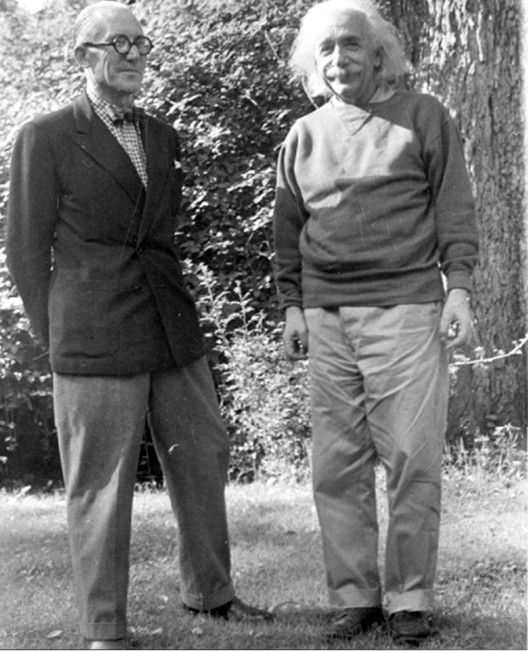
Le Corbusier and Albert Einstein (1946)
10. The Complicated Marriage
Le Corbusier married fashion model Yvonne Gallis in 1930. Though he loved her, that didn’t stop affairs with French entertainer Josephine Baker and Swedish-American heiress Marguerite Tjader Harris. His personal life was as complex as his architectural theories.
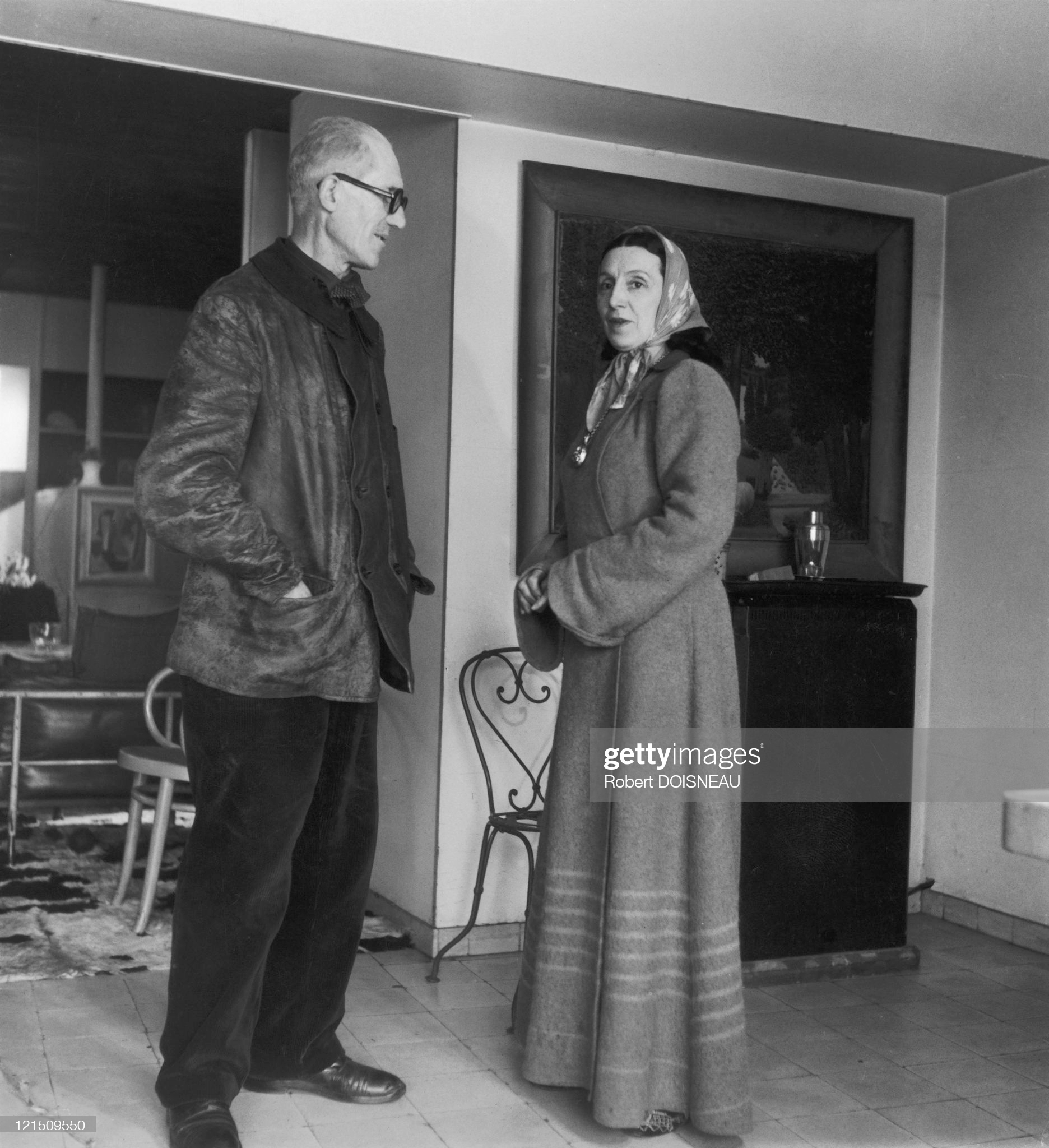
Le Corbusier And Yvonne Le Corbusier (Photo by Robert DOISNEAU / Gamma-Rapho / Getty Images)
11. The Macabre Memento
After Yvonne died, Le Corbusier kept her non-cremated backbone in his trouser pocket. He would place it on his work table while designing, using it as a physical connection to his lost love. This haunting detail reveals the romantic, obsessive side behind the rationalist façade.
12. The Prophetic Death
Le Corbusier once said, “How nice it would be to die swimming toward the sun.” In 1965, he died doing exactly that—swimming in the Mediterranean against his doctor’s orders. His body washed ashore later, the victim of a heart attack. He died as he lived: defiantly, dramatically, on his own terms.
13. The Dali Feud
Surrealist painter Salvador Dalí despised Le Corbusier’s work, calling his buildings “the ugliest and most unacceptable in the world.” After Le Corbusier’s death, Dalí confessed “immense joy,” calling him a “pitiable creature working in reinforced concrete.” Yet Dalí still placed flowers on his grave, admitting, “on the one hand I detested him but on the other hand I am an absolute coward.” Even his enemies couldn’t ignore him.
14. The National Hero
The Swiss-French architect’s legacy is so celebrated that he appears on the Swiss 10 franc banknote. Streets in Canada and Argentina bear his name. Love him or hate him, Le Corbusier became architecture itself for much of the 20th century.
Why is Le Corbusier so controversial?
Le Corbusier’s controversies stem from his political associations and the gap between his utopian ideals and human reality. His work for the Vichy government and Fascist Italy raises ethical questions. More fundamentally, his rationalist approach sometimes ignored how people actually live—the dark side of Villa Savoye includes leaks, condensation, and a family that grew to hate their iconic home. His urban plans, while visionary, could feel inhuman at street level. Yet this very controversy keeps his work relevant, forcing us to debate the relationship between idealism and lived experience.
What is Le Corbusier’s most famous building?
While he designed many influential works, Villa Savoye (1931) stands as his most complete statement of modernist principles. This weekend house near Paris perfectly demonstrates all Five Points: pilotis lifting it above the ground, an open floor plan, free façade, ribbon windows, and a roof garden. It’s both a functional home and a three-dimensional manifesto, making it the most studied modern building in architecture schools worldwide.
Did Le Corbusier have any formal architectural training?
No—Le Corbusier was entirely self-taught, which makes his influence even more remarkable. He learned by doing, traveling, and obsessive study. This autodidactic background gave him freedom from academic conventions but also meant he sometimes lacked the practical wisdom that comes from formal apprenticeship. His self-education explains both his revolutionary innovations and his occasional disconnect from construction realities.
How did Le Corbusier influence modern architecture?
Le Corbusier didn’t just influence modern architecture—he practically invented its vocabulary. His Five Points became the foundation for the International Style, which dominated mid-century design worldwide. He pioneered the use of pilotis, open plans, and curtain wall facades that define modern buildings. His urban planning ideas shaped cities from Brasília to Chandigarh. Even his critics had to respond to him, making him the unavoidable center of 20th-century architectural debate.
The Human Behind the Hero
These fourteen facts reveal Le Corbusier as more than an architectural god—he was a flawed, brilliant, contradictory human being. He could be visionary and arrogant, romantic and rational, inspiring and infuriating. His self-taught genius produced ideas that changed how we build, while his political missteps and personal eccentricities remind us that genius never exists in isolation.
The next time you walk through a modern building with an open floor plan, thank Le Corbusier. When you see a building on pilotis, think of his revolutionary vision. And when you notice the gap between architectural idealism and human comfort, remember the Savoye family’s complaints. His legacy isn’t just concrete and glass—it’s the ongoing conversation about how architecture can serve humanity while reaching for the sublime.
For more fascinating details about this complex figure, explore 14 interesting facts you probably didn’t know about Le Corbusier that continue to shape how we understand modern architecture.

Yosra is an architect, writer, and teacher. She is always into learning something new. Her life motto is: "A jack of all trades is a master of none, but oftentimes better than a master of one.” One day she will travel the world and visit its architectural wonders. In the meanwhile, she contends herself with reading and writing about them.