

Famous buildings history is full of stories that guidebooks leave out: a temple used as a gunpowder store, a saint smuggled under pork, a bridge sold to an American city, a skyscraper’s spire assembled in secret. Buildings outlive the people who made them, and their stories teach us about the history of the world, the nature of people and the way places change. Some famous buildings are so unusual they raised controversy; others simply have a remarkable life story. This article tells twelve of them, with dates checked against current sources, and a table to keep the facts straight.
Famous buildings history at a glance: twelve buildings
| Building | Place | Designer / builder | Key date | Status today |
|---|---|---|---|---|
| Parthenon | Athens, Greece | Ictinus and Callicrates; sculpture under Phidias | Built 447-432 BC; explosion 1687 | Ruin under long-term restoration |
| St Mark's Basilica | Venice, Italy | Unknown master builders | Present church begun c. 1063 | Cathedral of Venice |
| Eiffel Tower | Paris, France | Gustave Eiffel's company (engineers Koechlin and Nouguier, architect Sauvestre) | Opened 1889 | Monument and visitor attraction |
| Buell Hall (Macy Villa) | New York, USA | Ralph Townsend | Built 1885; moved 1905 | Columbia University building |
| London Bridge (Rennie) | London, UK / Lake Havasu City, USA | John Rennie | Opened 1831; sold 1968; reopened 1971 | In use in Arizona |
| The Shard | London, UK | Renzo Piano Building Workshop | Completed 2012 | Offices, hotel, homes, viewing gallery |
| Sydney Opera House | Sydney, Australia | Jørn Utzon; completed by Hall, Todd and Littlemore | Opened 1973 | Performing arts centre; UNESCO World Heritage |
| Leaning Tower of Pisa | Pisa, Italy | Attributed to several builders | Begun 1173; stabilised 1990-2001 | Bell tower and visitor attraction |
| Sagrada Família | Barcelona, Spain | Antoni Gaudí and successors | Begun 1882; permit 2019 | Under construction; consecrated basilica |
| Chrysler Building | New York, USA | William Van Alen | Spire raised 1929; completed 1930 | Offices |
| Empire State Building | New York, USA | Shreve, Lamb & Harmon | Opened 1931; crash 1945 | Offices and observatory |
| Hagia Sophia | Istanbul, Türkiye | Anthemius of Tralles and Isidore of Miletus | Completed 537 | Mosque (since 2020), open to visitors |
Source: Sources linked in the article; Arch2O summary (as of 29 October 2026).
Stories of world-famous buildings
The stories run roughly from the oldest building to the newest at first, then turn to six landmarks whose famous buildings history includes a dispute, a disaster or a record.
1. Parthenon – Athens, Greece
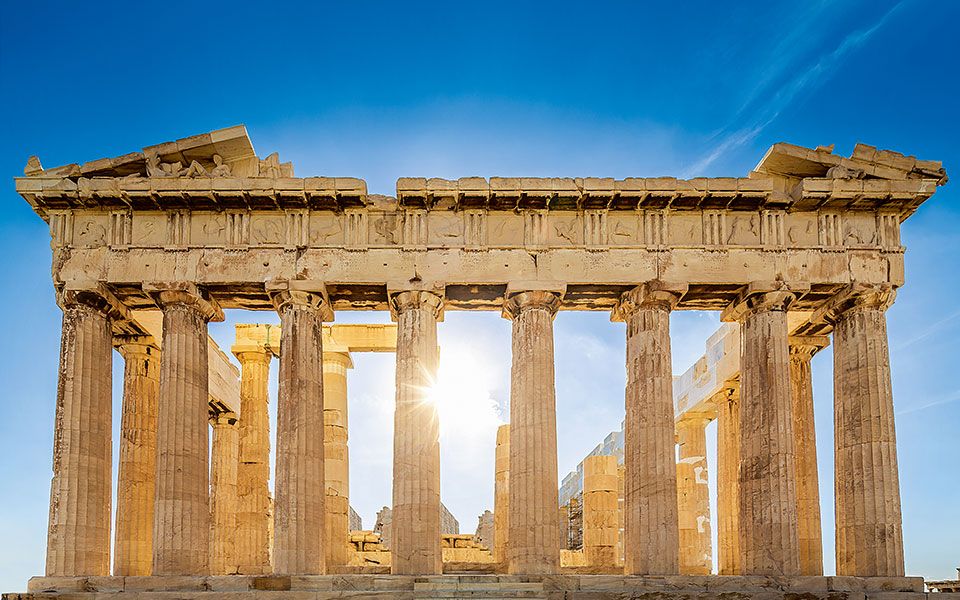
Parthenon – Athens, Greece-© Getty Images/Ideal Image
Architects know the ancient Greek temple as an image of architectural perfection, and almost everyone recognises its silhouette. Built in the 5th century BC and dedicated to Athena, the goddess of wisdom, it has lived for almost 2,500 years, and its uses changed with each ruler of Athens. It became a Christian church in late antiquity, was used as a Catholic cathedral under Frankish rule, and was converted into a mosque after the Ottoman conquest in the 15th century.
The building survived all of this largely intact. Its worst day came in 1687, during the Venetian siege of the Acropolis in the Great Turkish War. The Ottoman garrison was storing gunpowder inside, and a Venetian shell fired by the forces of Francesco Morosini ignited it. The explosion blew out most of the long side walls, columns and sculptures. The ruin stood largely as it was left for almost three centuries. The Greek state set up the Committee for the Conservation of the Acropolis Monuments in 1975, and restoration has continued since, in phases; it is a long-running programme rather than a finished project.
2. St Mark’s Basilica – Venice, Italy

Basilica San Marco – Venice, Italy- © .matteo colombo
In his book The Secret Lives of Buildings, Edward Hollis describes Venice as a transformed Constantinople, which was itself a transformed Rome, which had transformed Greece. In the Middle Ages, taking and reusing parts of older buildings was common. In the case of St Mark’s Basilica, what Venice took was more than columns and marble: it was St Mark himself.
St Mark the Evangelist was traditionally the founder of the Church of Alexandria, where his body was kept for centuries. In 828, according to the Venetian account, two merchants took the relics from Alexandria and hid them under pork, which the Muslim customs officials would not touch. The story says a storm on the voyage home was calmed when the saint appeared to the captain. Venice built a church beside the Doge’s Palace to house the relics, and the theft is told in the mosaics of the basilica. The present church is the third on the site: the first was damaged by fire during a revolt in 976, and the building we see today was begun around 1063.
3. Eiffel Tower – Paris, France

Courtesy of Britannica
Paris’s international landmark was not always loved. Built as the entrance to the 1889 Exposition Universelle, held for the centenary of the French Revolution, the wrought-iron tower rose oddly above classical Paris. In 1887, while it was being built, a group of writers, painters, sculptors and architects published a protest in the newspaper Le Temps, calling the tower useless and monstrous and an insult to French taste. The tower survived the criticism and is now a symbol of the city; see more facts about the Eiffel Tower.
It was meant to stand for only 20 years. It was saved in part by its usefulness as a giant radio antenna, and it remained the world’s tallest man-made structure until the Chrysler Building overtook it in 1930.
4. Columbia University – New York, USA

Columbia University – New York, USA-(photo by Eileen Barroso)
Columbia University has not always been in Morningside Heights, in the north of Manhattan. It began at Park Place in Lower Manhattan, moved to 49th Street, and in 1892 bought land in Morningside Heights, opening its new campus there in 1897. The land was not empty. It belonged to the Bloomingdale Insane Asylum, a private psychiatric hospital that sold the site and moved to White Plains as the city spread north.
One asylum building survives. Buell Hall was built in 1885 as Macy Villa, a house-like building designed by Ralph Townsend for wealthy male patients. It was moved uphill in 1905 to make room for Kent Hall and is now the oldest building on Columbia’s campus.
5. London Bridge – London, UK, and Lake Havasu City, USA

London Bridge – London, UK-Pictures from David Blockley, UK
“London Bridge is falling down,” goes the old nursery rhyme, and the bridges over the Thames at this point have indeed been repaired, rebuilt and replaced many times since Roman times. The stone bridge by John Rennie, opened in 1831, was by the 1960s sinking under modern traffic. In 1968 the City of London sold it to Robert P. McCulloch, the founder of Lake Havasu City in Arizona, USA. Its facing stones were numbered, shipped and rebuilt over a new concrete core, and the bridge reopened in Arizona in 1971.
London Bridge is often confused with Tower Bridge, completed in 1894 with its Gothic Revival towers and high-level walkways. A popular story says the American buyer thought he was buying Tower Bridge; both the City of London and McCulloch denied it.
6. The Shard – London, UK

The Shard – London, UK-photography by © Michel Denancé
Not far from London Bridge, the Shard, originally called London Bridge Tower, is the tallest building in the United Kingdom at 309.6 m (1,016 ft). It was designed by the Italian architect Renzo Piano and replaced Southwark Towers, an office block of the 1970s about a third of its height. The Shard was completed in 2012, has 72 habitable floors, and its public viewing gallery opened in 2013.
Piano is said to have been sceptical about tall buildings at first, then sketched a spire rising from the Thames on a napkin during a meeting with the developer, Irvine Sellar. He took inspiration from the railway lines beside the site, the masts of sailing ships and the church spires in Canaletto’s views of London. The name was not Piano’s. Critics, including English Heritage, described the planned tower as a shard of glass through the heart of historic London, and because the tower does look like a shard, the name stuck.
7. Sydney Opera House – Sydney, Australia
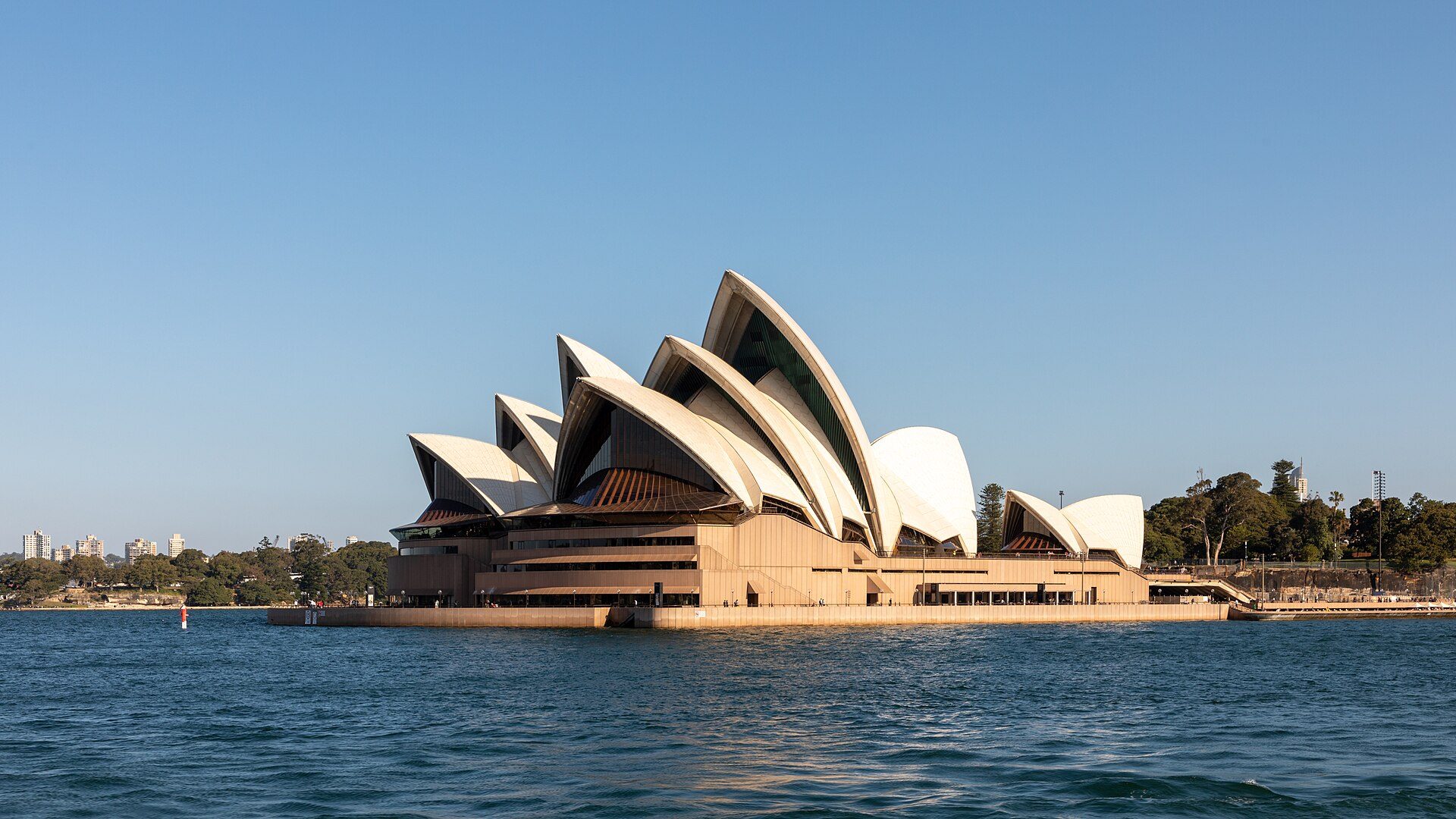
The Sydney Opera House by Jørn Utzon, opened in 1973. Photo: Dietmar Rabich, CC BY-SA 4.0, via Wikimedia Commons. Dietmar Rabich, source, CC BY-SA 4.0
The Danish architect Jørn Utzon won the competition for the Sydney Opera House in 1957 with a set of sail-like shells that no one yet knew how to build. Construction began in 1959, and solving the geometry of the shells took years. Costs and delays led to a bitter dispute with the New South Wales government, and Utzon resigned on 28 February 1966; the interiors were completed by a team of Australian architects. Queen Elizabeth II opened the building on 20 October 1973, a decade late, at a cost of A$102 million against an early estimate of A$7 million, according to the Project Management Institute. Utzon never returned to see it finished, although he was later invited back to prepare design principles for its future.
8. Leaning Tower of Pisa – Pisa, Italy
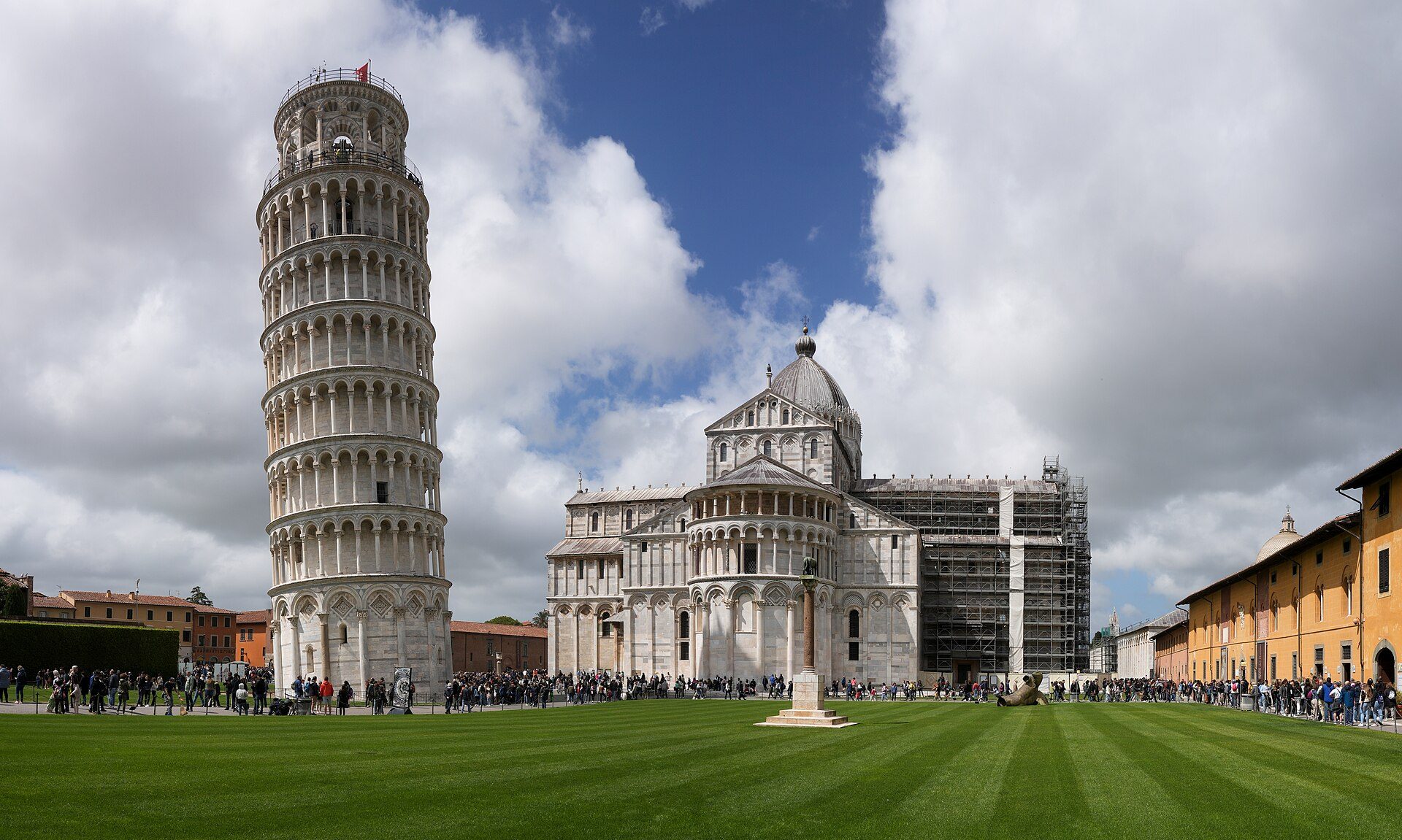
The Leaning Tower of Pisa, begun in 1173, beside the cathedral it serves. Photo: PaestumPaestum, CC BY 4.0, via Wikimedia Commons. PaestumPaestum, source, CC BY 4.0
The bell tower of Pisa Cathedral began to lean while it was still being built. Work started in 1173 on soft, uneven ground, and the tower tilted as the upper storeys went up; long pauses in construction let the soil settle, and the builders tried to correct the lean by making later storeys slightly curved. By the late 20th century the lean was getting dangerous. The tower closed to the public in January 1990, and an international committee stabilised it by carefully extracting soil from under the north side. When it reopened in 2001, the lean had been reduced by about 40 cm, and monitoring since then shows it has straightened by a further 4 cm or so.
9. Sagrada Família – Barcelona, Spain
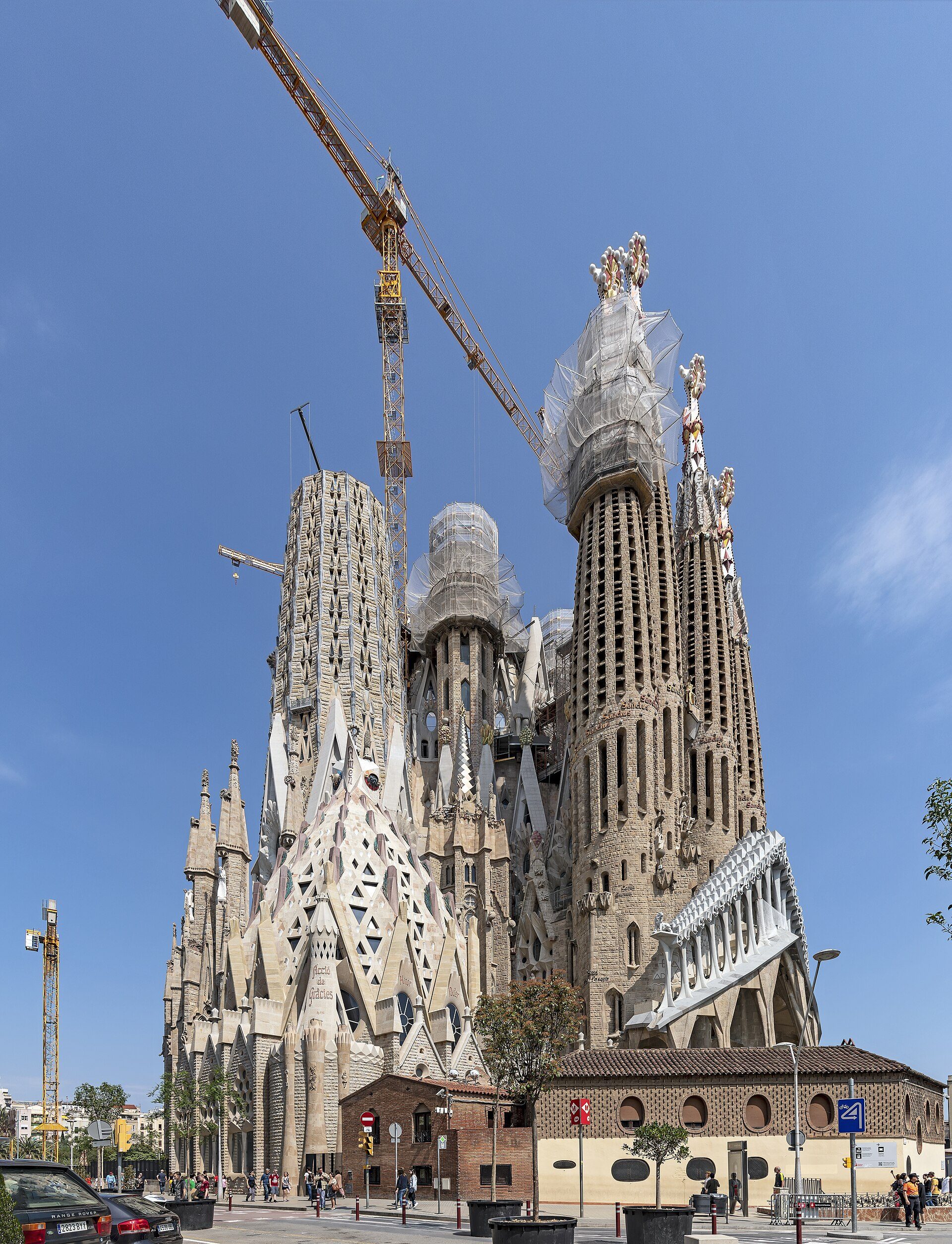
The Sagrada Família in Barcelona, still under construction. Photo: Didier Descouens, CC BY-SA 4.0, via Wikimedia Commons. Didier Descouens, source, CC BY-SA 4.0
Construction of the Sagrada Família basilica began in 1882, and Antoni Gaudí took over the project the following year. He worked on it for the rest of his life and was buried in its crypt after his death in 1926. The church is still being completed by later architects. One of its odder stories is legal: the basilica had never received a building permit. An application made in 1885 was never answered, and the city of Barcelona only granted a permit in June 2019, 137 years after work started, with the basilica paying a fee of about €4.6 million.
10. Chrysler Building – New York, USA
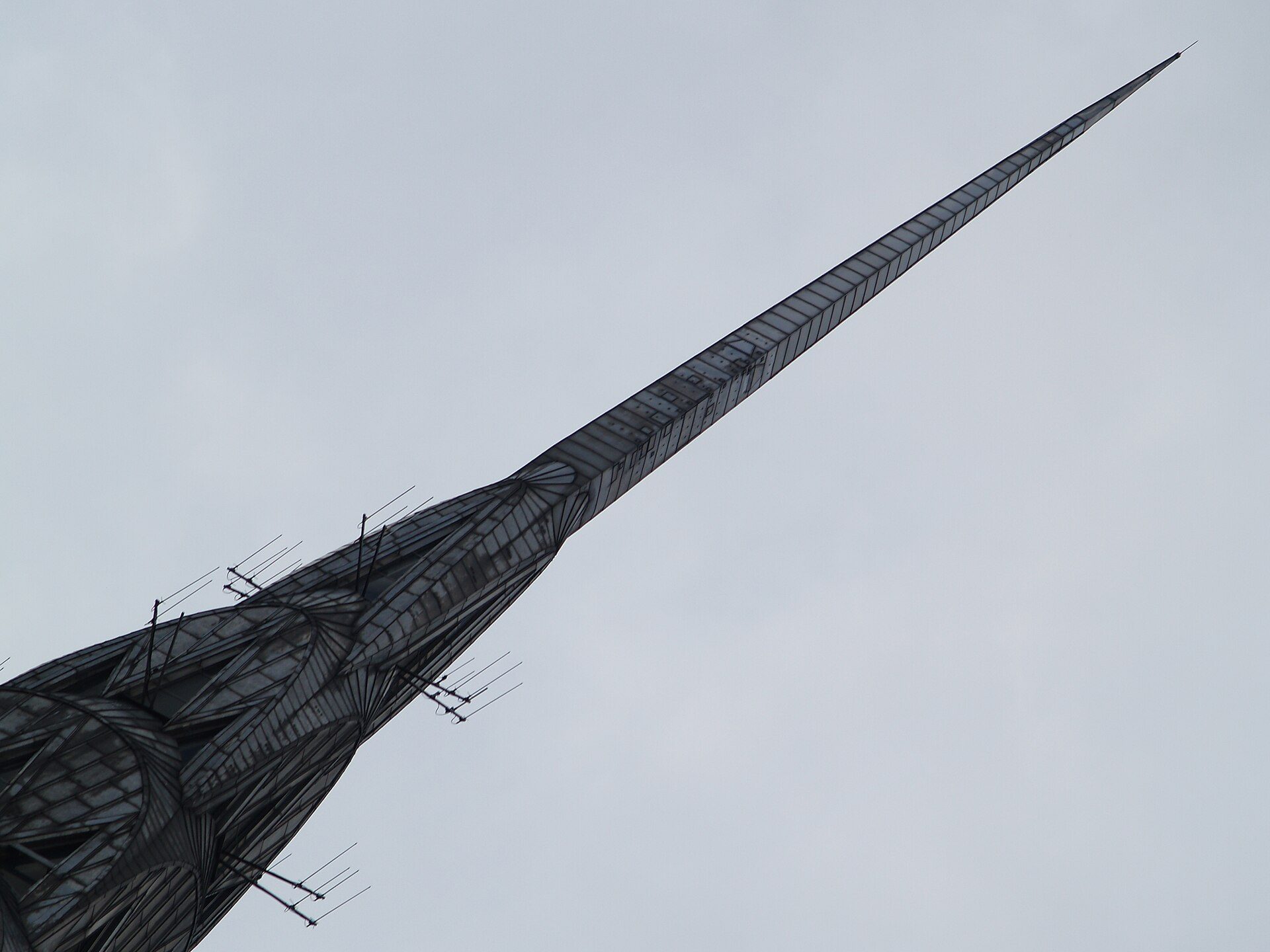
The spire of the Chrysler Building, raised through the crown in 1929. Photo: Marc Smith, CC BY-SA 2.0, via Wikimedia Commons. Marc Smith, source, CC BY-SA 2.0
In 1929, the Chrysler Building by William Van Alen was racing 40 Wall Street to become the world’s tallest building. Van Alen had the steel spire, known as the “vertex”, assembled in secret inside the building’s crown. Once the rival had finished, the spire was hoisted through the top and fixed in place in about 90 minutes in October 1929, taking the Chrysler Building to 319 m (1,046 ft) and past the Eiffel Tower. Its reign was short: the Empire State Building overtook it in 1931.
11. Empire State Building – New York, USA
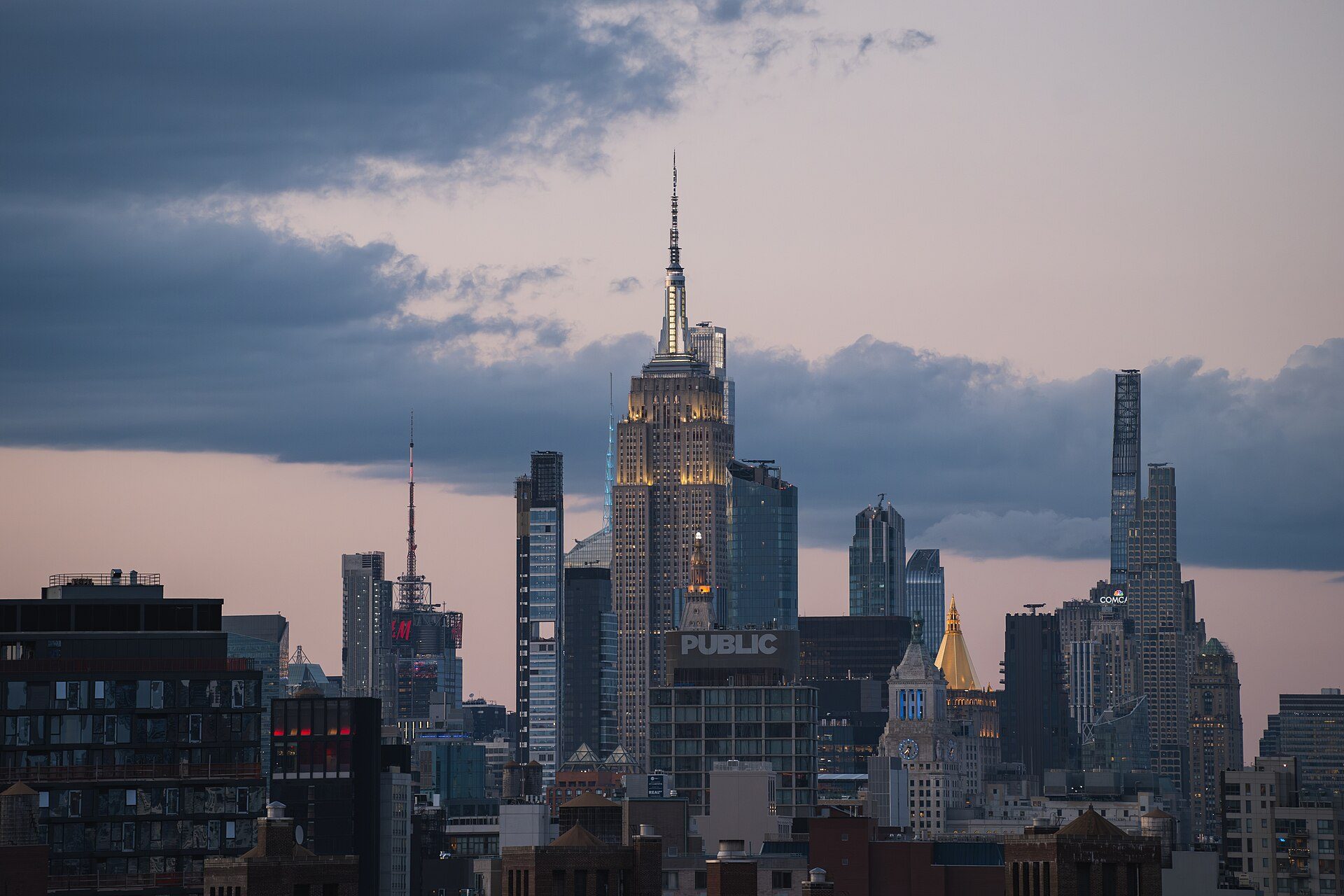
The Empire State Building, New York. Photo: Christian David, CC BY-SA 4.0, via Wikimedia Commons. Christian David, source, CC BY-SA 4.0
On the foggy morning of 28 July 1945, a US Army B-25 bomber flying low over Manhattan crashed into the north face of the Empire State Building around the 79th floor. Fourteen people died, including the three crew. One engine passed through the building, and a lift operator, Betty Lou Oliver, survived a fall of many floors when her lift cables were cut. Despite a hole about 6 m (20 ft) wide, the steel frame held, and much of the building reopened for business within days. The disaster contributed to changes in US law that allowed people to sue the federal government for negligence.
12. Hagia Sophia – Istanbul, Türkiye
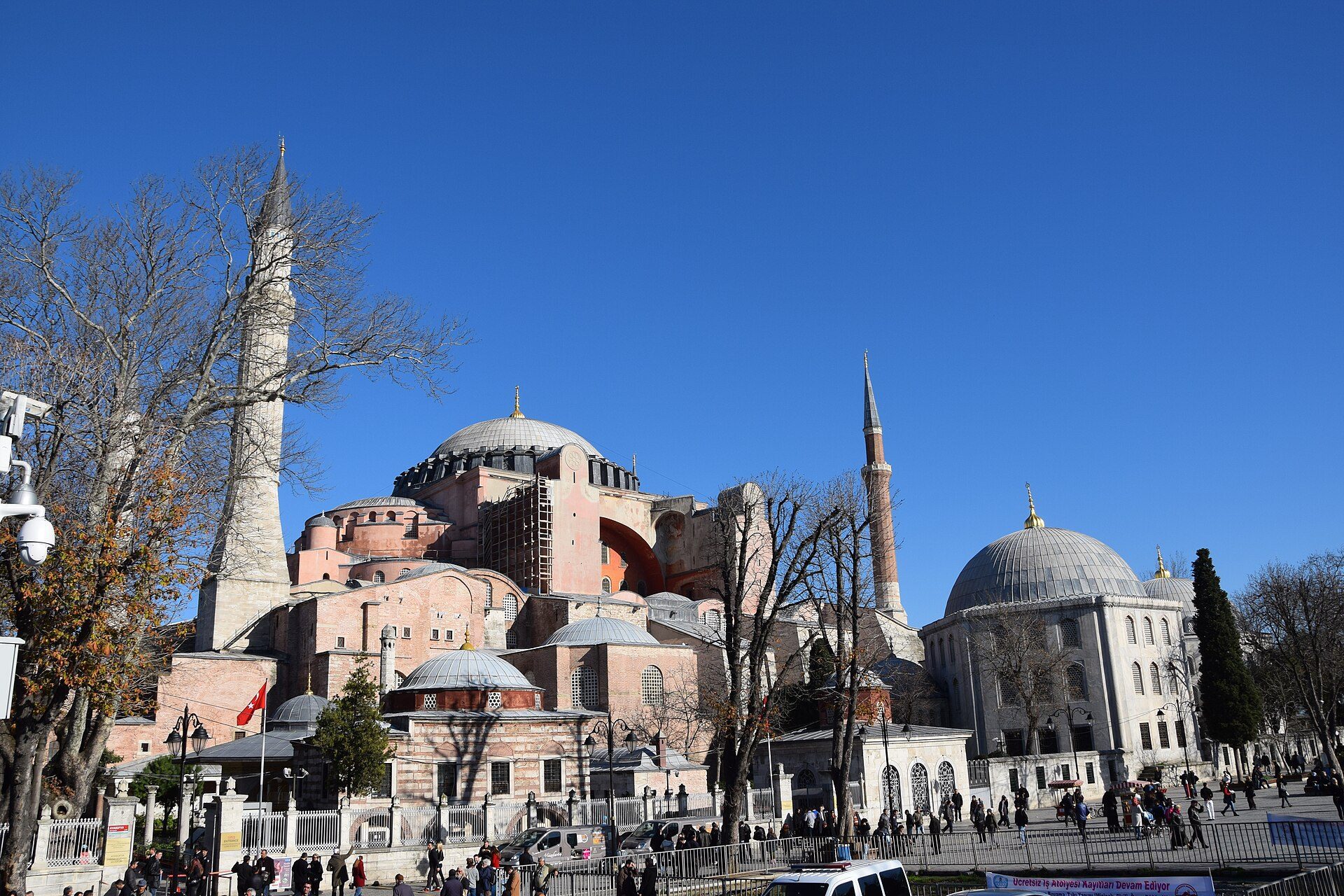
Hagia Sophia in Istanbul, completed in 537. Photo: Ank Kumar, CC BY-SA 4.0, via Wikimedia Commons. Ank Kumar, source, CC BY-SA 4.0
Few buildings in famous buildings history have changed identity as often as Hagia Sophia. Built for the Byzantine emperor Justinian I and completed in 537, it was the largest church in the Christian world for centuries. After the Ottoman conquest of Constantinople in 1453 it was converted into a mosque, and minarets were added. In 1934 the Turkish Republic made it a museum, and it opened to visitors in 1935. In July 2020 a Turkish court annulled that decision and the building was reopened as a mosque, while remaining open to visitors outside prayer times.
What these stories teach
Read together, these stories show a pattern in famous buildings history. Use changes more often than form: temples become churches and mosques, asylums become universities. Buildings that were hated, like the Eiffel Tower and the Shard, often become symbols. And engineering problems, from Pisa’s soil to Sydney’s shells, can be as much a part of a building’s legend as its architect. For more on the people behind landmarks, see Arch2O’s guide to famous architects.
Sources and further reading
- Acropolis Museum, museum and conservation history.
- Wikipedia, Buell Hall and Bloomingdale Insane Asylum.
- Project Management Institute, Sydney Opera House.
- Artnet News, the Leaning Tower of Pisa now leans less.
- Dezeen, Sagrada Família gets building permit after 137 years (10 June 2019).

Yosra is an architect, writer, and teacher. She is always into learning something new. Her life motto is: "A jack of all trades is a master of none, but oftentimes better than a master of one.” One day she will travel the world and visit its architectural wonders. In the meanwhile, she contends herself with reading and writing about them.