

A Brooklyn building collapse on Wednesday afternoon left at least four people dead and 17 injured, after a three-story mixed-use structure at 1321 Flatbush Avenue fell at approximately 4 pm. The building stood on the corner of Flatbush and Bedford Avenues in Brooklyn, in the United States, and was completed in 1930. Emergency crews responded to the scene, and the New York City Fire Department supplied the image of the site.
The building held four apartments above a street-level store, so the collapse affected both residents and the shop below. It reportedly fell into an open construction site next door, a detail that has shaped where investigators are looking first. No further information about the casualties or the occupants has been confirmed in the early reporting.
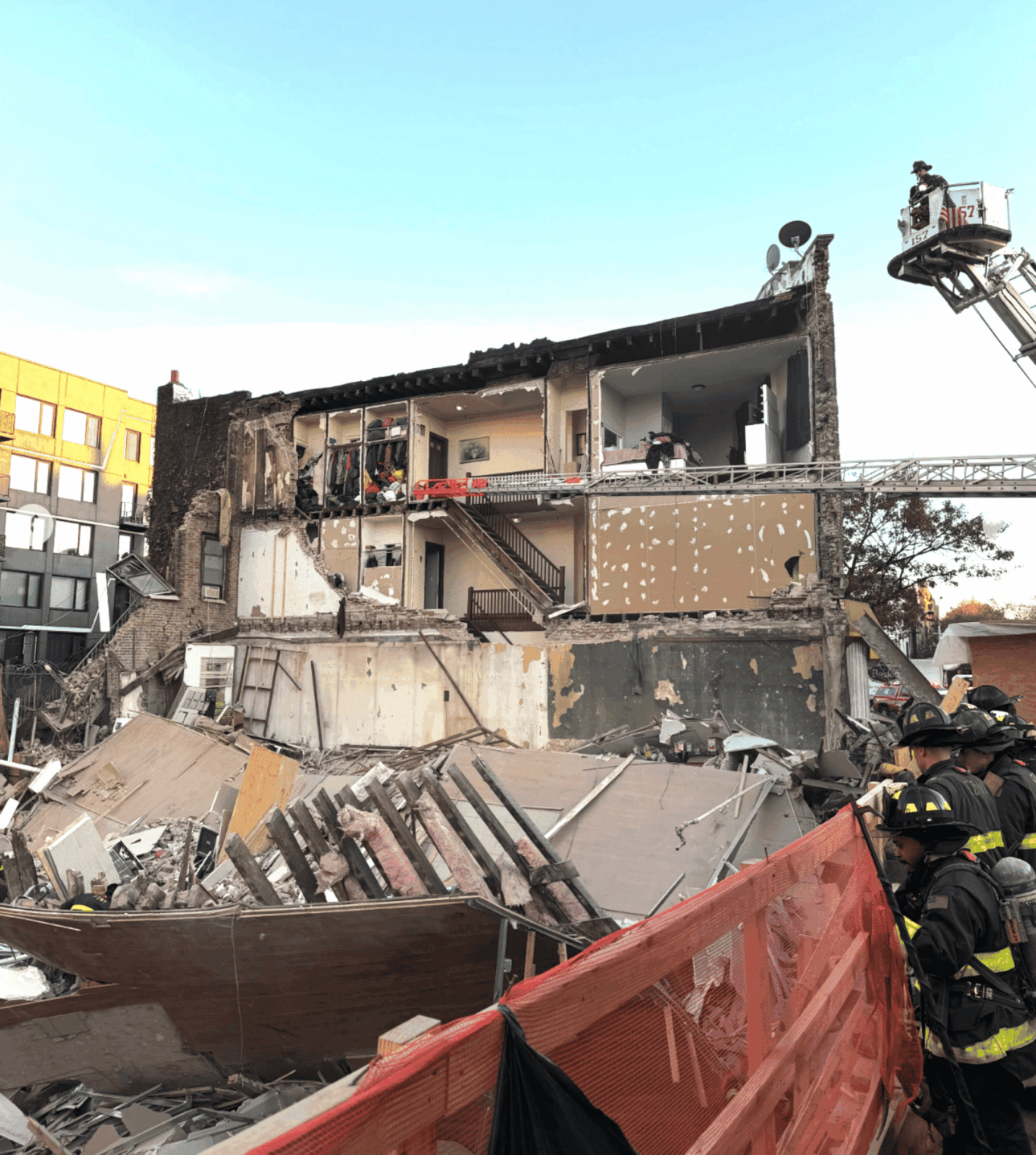
Image courtesy of New York City Fire Department
Initial investigations are focusing on that neighboring site, where demolition has been taking place for months. ABC7 reports that the site was the center of early attention, and CNN reports that excavation work was underway there at the time of the collapse. CNN also reports that a demolition contractor was issued a violation in April for unlawfully continuing demolition work at the site.
Read more:
- 10 Fatal Building Collapses That Have Remained in the Public’s Mind for Years
- Architectural Failures: Why Did these Structures Collapse in the Past Few Decades?
The collapsed building itself appears to have had a cleaner record, because ABC7 reports that it found no record of building violations for that address. That contrast matters to the inquiry, since the older structure sat directly beside ground that was being demolished and excavated. Officials have not yet said how the two sites may be connected.
The cause of the collapse will be investigated by the NYC Department of Buildings and law enforcement. Their findings will determine whether the demolition and excavation next door contributed to the failure of the 1930 building.

Mireille Chevalier is a projects editor and architectural writer from Lyon. With a dual background in architecture and history, she brings a contextual lens to design criticism and theory