

The Architectural Magic of Building Without Columns
Ever walk into a space so vast, so open, that you instinctively look up and wonder: “How on earth is this roof staying up?” That’s the magic of long-span structures—engineering marvels that create huge, column-free spaces where architecture feels like it’s defying the laws of physics. These are the buildings that let architects dream big and engineers pull off the seemingly impossible.
But here’s the thing: designing long-span structures can feel restrictive. The longer the span, the deeper the beam, the more material you need, the more costs go up. Many architects feel trapped by the math, unable to let their creativity run wild. Yet when done right, these structural systems become the very thing that makes a building breathtaking.
Long-span structures are defined as those spanning more than 20 meters (about 65 feet). The most common types include trusses, folded plates, shell structures, frames, and tensile structures. Each system has its strengths, and when architects and engineers collaborate closely, the results can be spectacular. For those interested in alternative structural approaches, diagrid systems commonly used in high-rise buildings offer another fascinating option.
Here are five projects where architects didn’t just work within the constraints—they turned those constraints into iconic designs.
What exactly qualifies as a long-span structure?
Long-span structures are generally defined as those spanning more than 20 meters (about 65 feet). However, the impressive ones—the ones that make you look up in wonder—typically span 50 meters or more. These include sports stadiums, airport terminals, exhibition halls, and any space where columns would interrupt the function or aesthetic experience.
What materials work best for long-span structures?
Steel is the most common for its strength-to-weight ratio, allowing spans up to 200+ meters. Reinforced concrete works beautifully for shells and folded plates (as Nervi proved). Ferro-cement offers unique possibilities for thin-shell construction. Timber is making a comeback with engineered wood products. And tensile fabrics create the lightest possible spans for temporary or permanent structures.
5 Projects Where Long-Span Structures Create Architectural Poetry
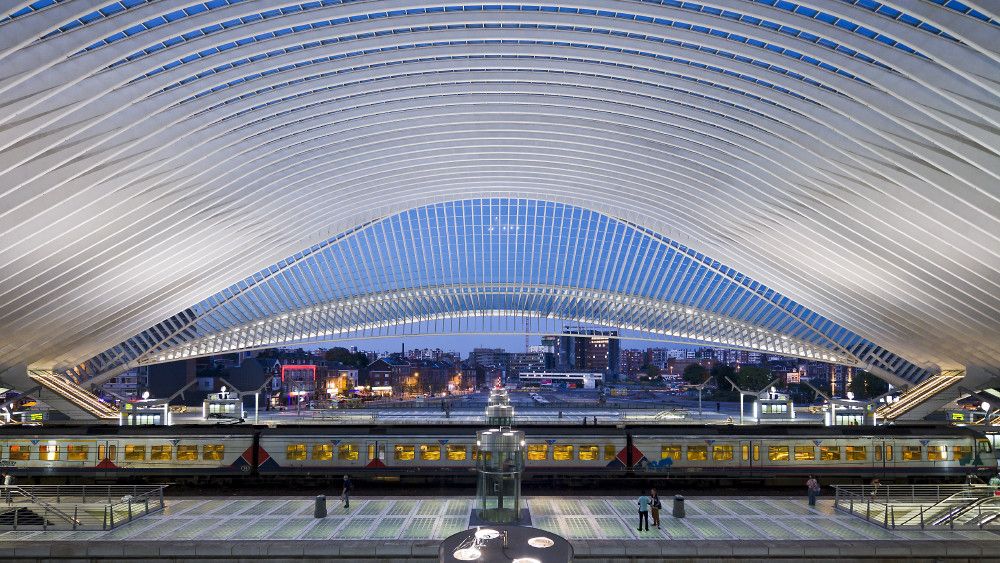
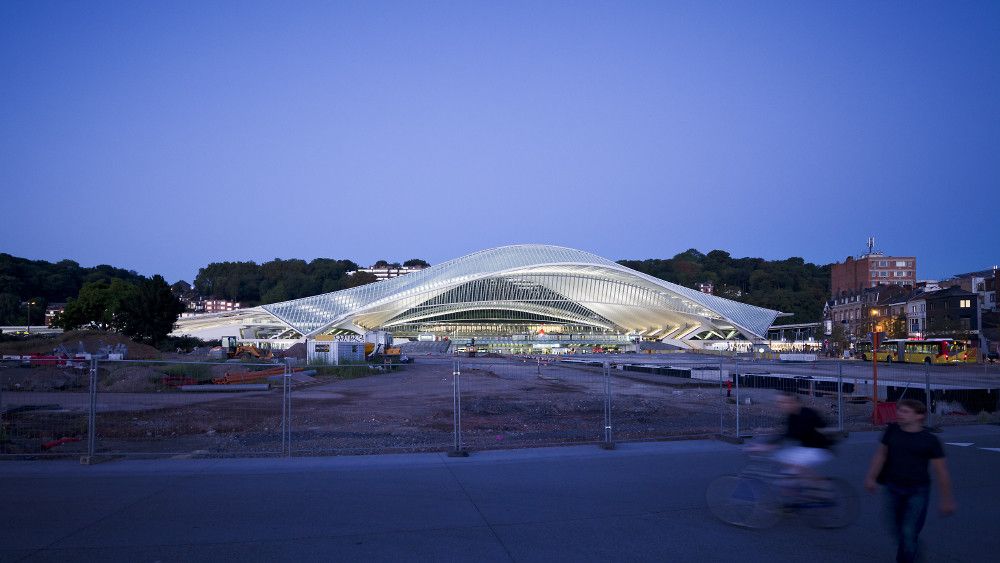
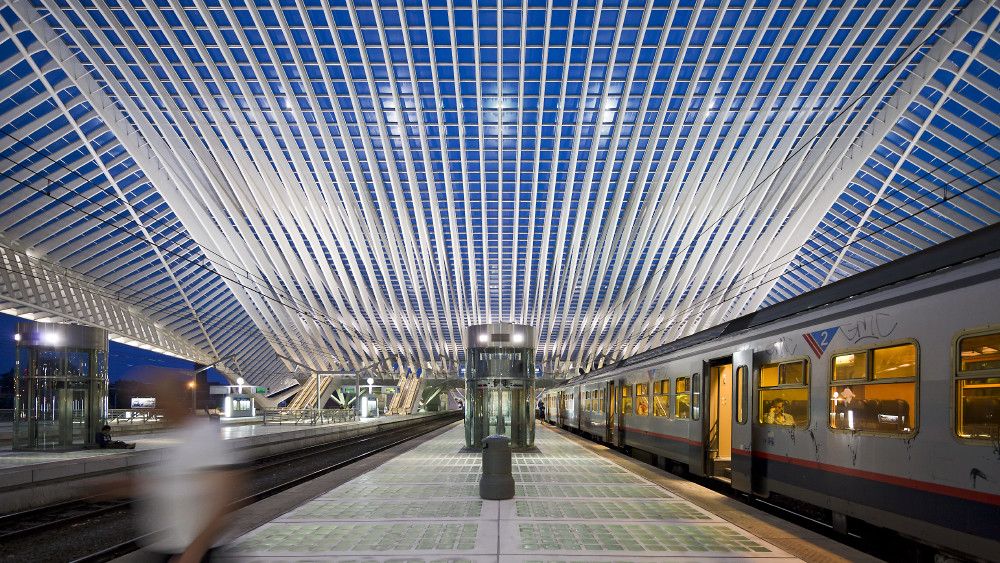
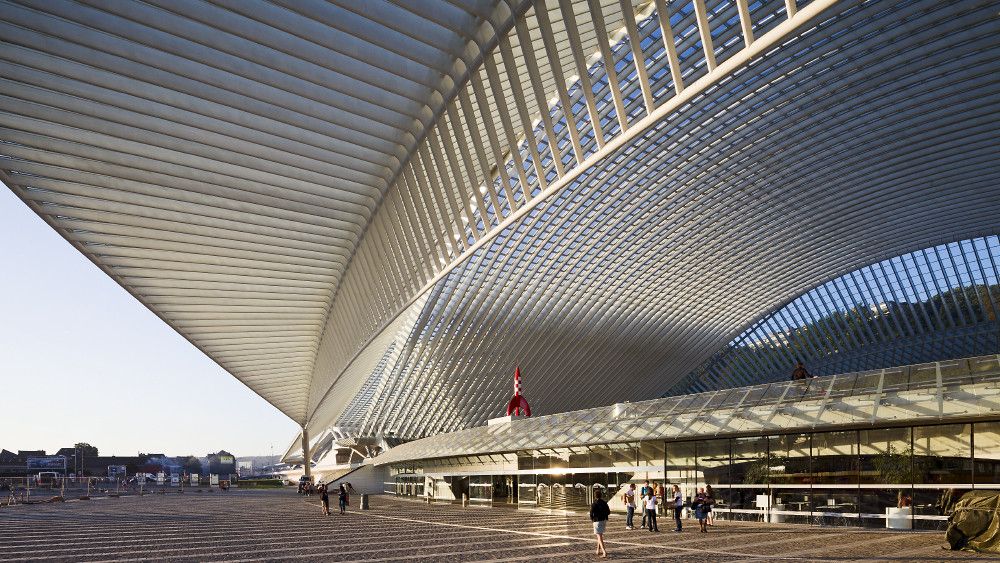
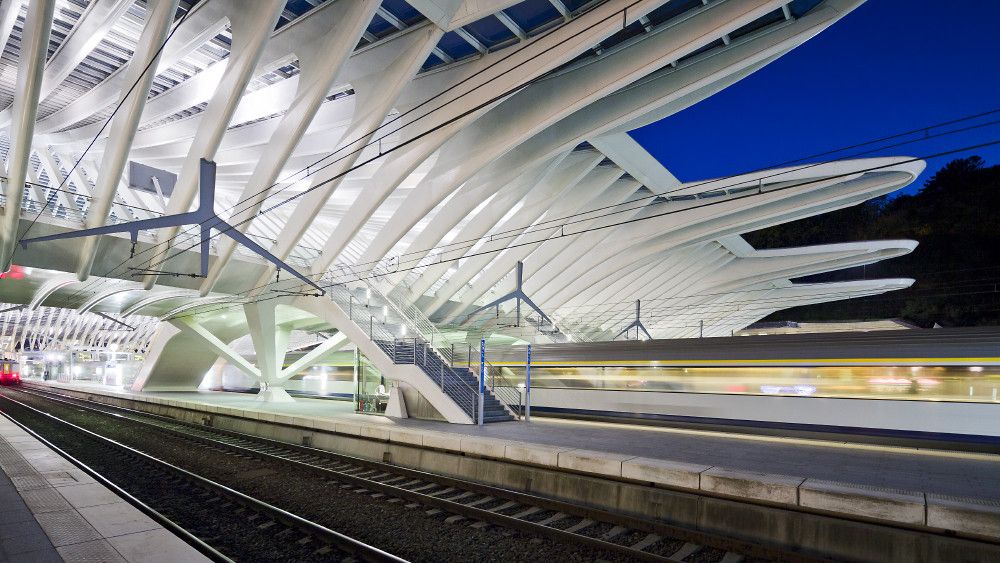
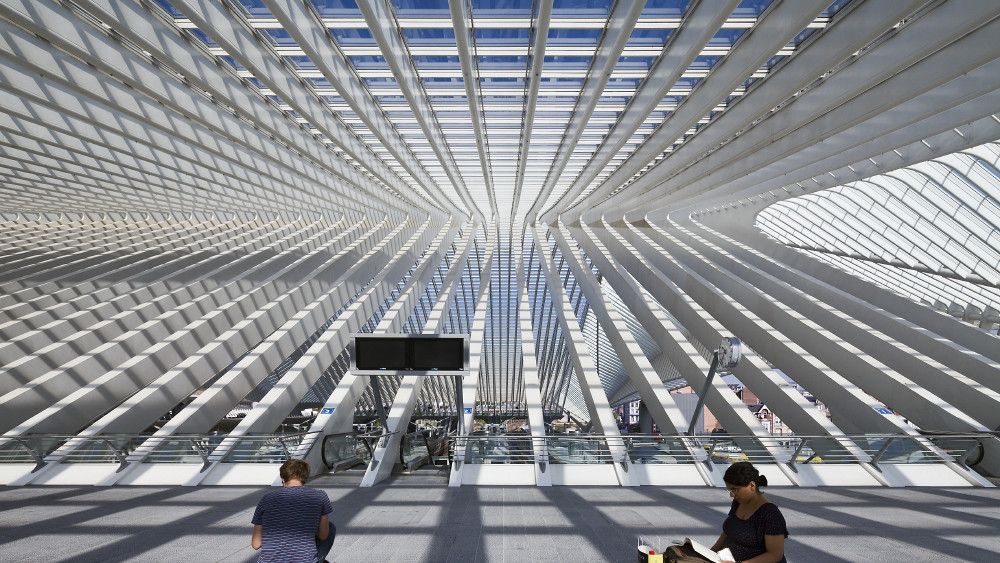
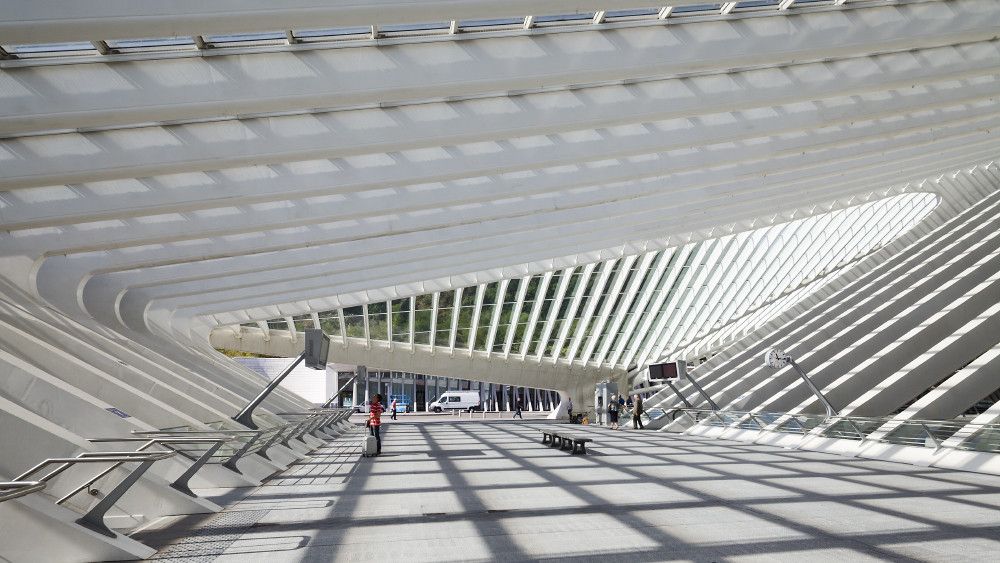
1) Liège-Guillemins TGV Railway Station | Santiago Calatrava, Liège, Belgium
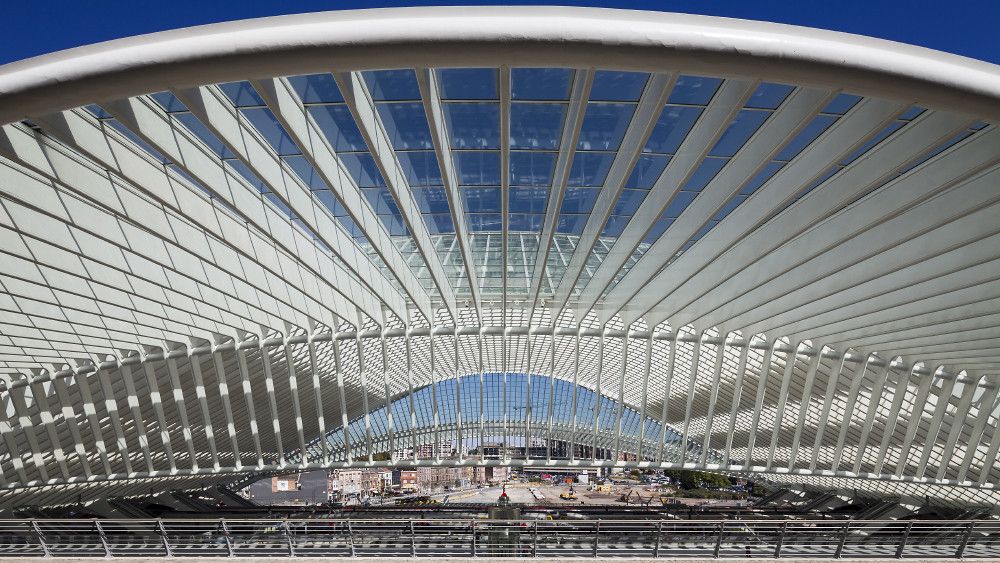
Photography by © Yannick Wegner
In the historic city of Liège, Belgium, Santiago Calatrava transformed a simple train station into a cathedral of movement. The steel and glass structure creates a vaulted canopy that spans an incredible 590 feet (180 meters), allowing natural light to flood the platforms while protecting travelers from the elements.
What makes this project extraordinary is how Calatrava used concrete to its full potential. The structural elements—made of steel, glass, and cast-on-site concrete—work together to create a rhythm that feels both transparent and sculptural. The glazed balustrades and stainless steel details complement the sweeping forms, generating what many have described as a brave, dreamlike, and innovative space.
The European Concrete Societies Network (ECSN) recognized this achievement with the 2006 Award for Excellence, acknowledging the unique way Calatrava pushed concrete beyond its conventional limits. It’s proof that long-span structures can be both technically brilliant and emotionally moving.
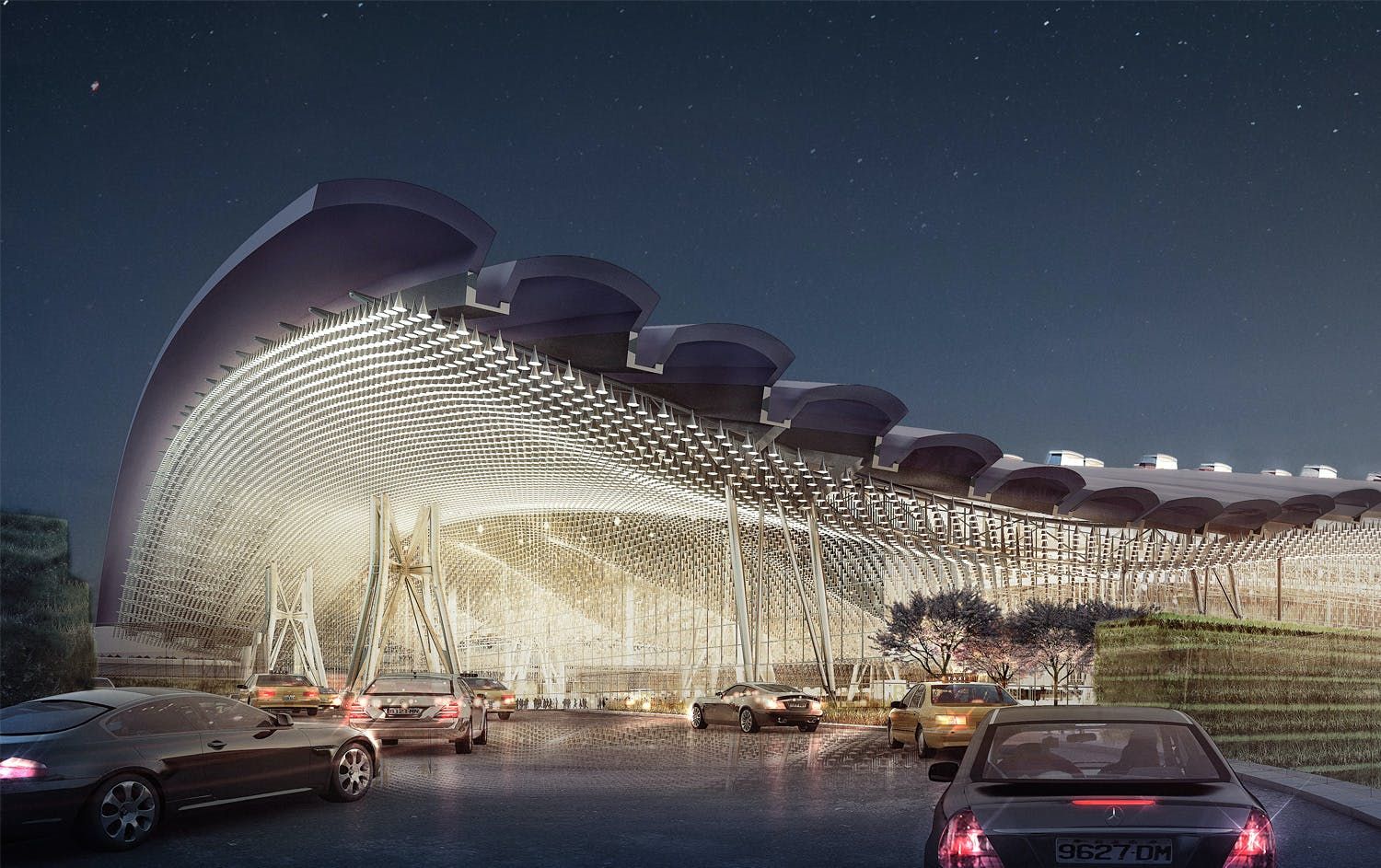
2) Taoyuan International Airport Terminal 3 | Rogers Stirk Harbour + Partners with ARUP, Taiwan
courtesy of Rogers Stirk Harbour + Partners
As Taiwan’s largest airport and the eleventh busiest in the world, Taoyuan International Airport needed a terminal that could handle massive passenger volumes while creating a memorable experience. Rogers Stirk Harbour + Partners, in collaboration with ARUP Group, designed a solution that feels both massive and intimate.
The structure features a series of four-legged towers supporting a massive shell roof with an 80-meter span. Covering 640,000 square meters, the roof appears hard from the outside but creates a soft, ductile ceiling inside that gracefully encloses the various functions below. This clever design allows for column-free spaces where passengers can move freely while enjoying natural light and open sightlines.
Beyond the impressive span, ARUP achieved significant savings in fire protection costs while meeting the client’s strict aesthetic requirements. It’s a masterclass in how engineering innovation can solve practical problems while creating visual drama.
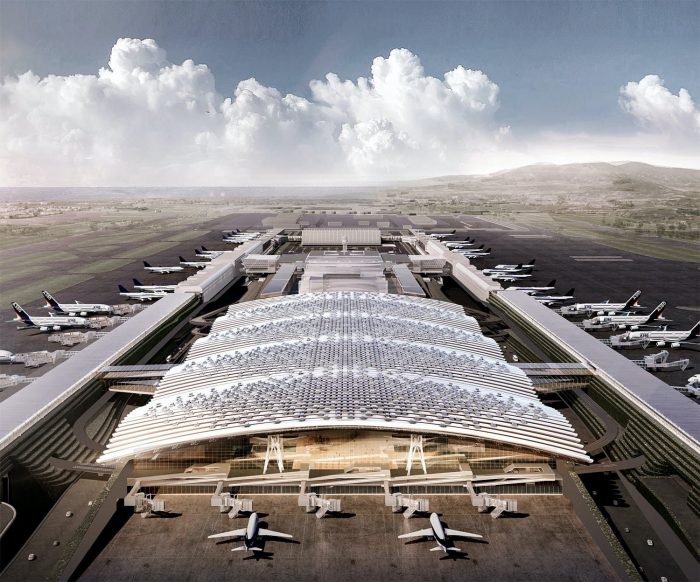
Courtesy of Rogers Stirk Harbour + Partners
The structure is designed to reflect the unique surrounding landscape of the city. A series of four-legged towers support the massive shell roof. Here, the roof span is 80 meters long and the project covers an area of 640,000 m.sq. Although the roof is hard, the ceiling takes the form of a soft ductile surface that encloses the different functions taking place inside the building.
Additionally, ARUP achieved significant savings in the cost of fire protection in this structure, while at the same time achieving the client’s aesthetic requirements.
3) Palazzetto Dello Sport | Pier Luigi Nervi, Rome, Italy, 1957
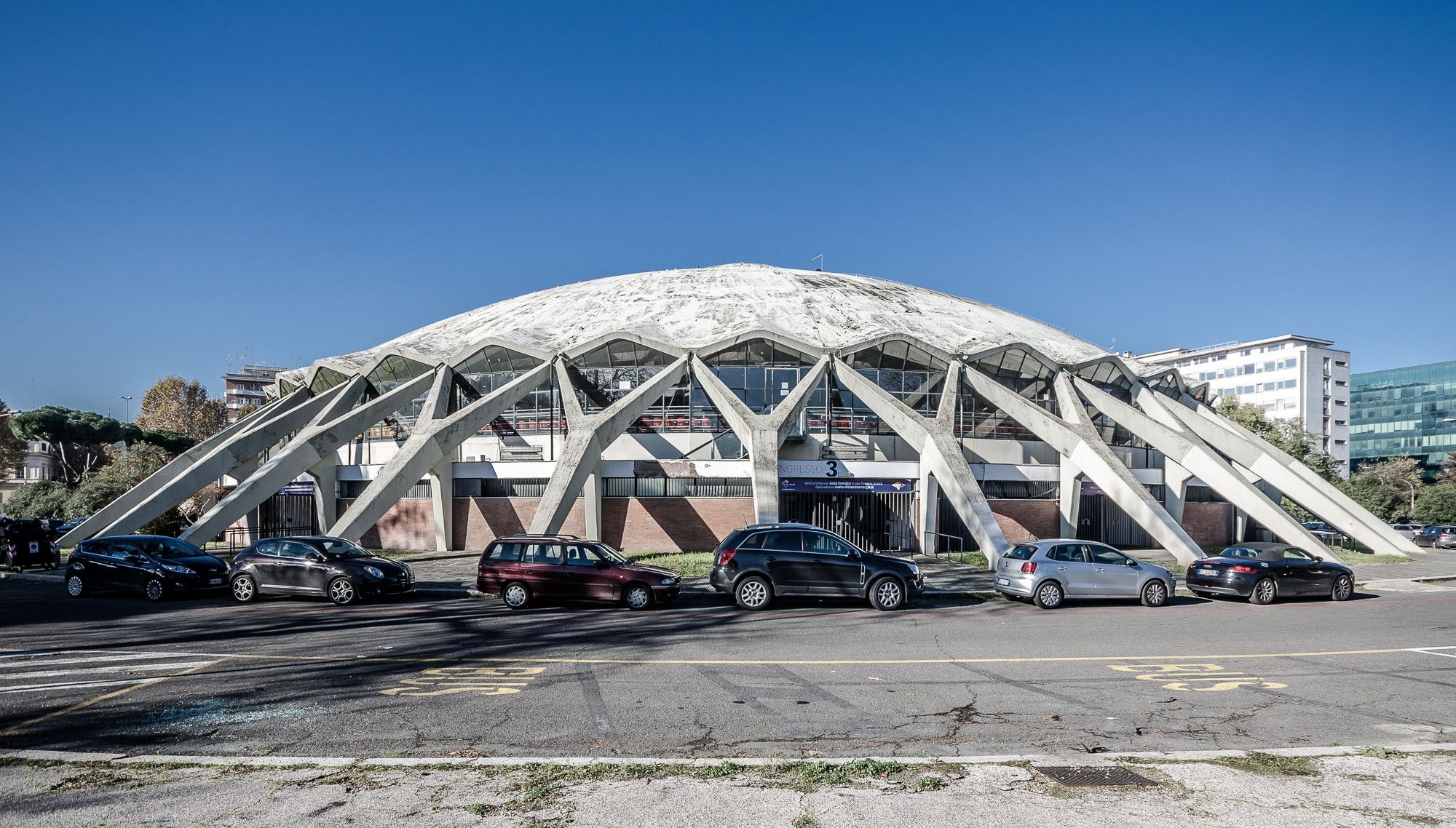
Palazzetto dello sport. Image © Flickr user lulek licensed under CC BY-NC 2.0
Sometimes the old ways are the best ways. Italian engineer-architect Pier Luigi Nervi—often called the “poet of concrete”—designed the Palazzetto Dello Sport indoor arena in 1957, and it remains remarkably advanced even today. The building can host 3,500 basketball spectators or 5,600 for other sports like wrestling and boxing.
The genius lies in the enormous reinforced thin-shell ribbed concrete dome, which spans 61 meters in diameter. Designed in partnership with architect Annibale Vitellozzi, the dome is composed of smaller prefabricated elements supported by flying buttresses—also made of concrete. This innovative approach allowed Nervi to create a vast, column-free interior that feels both intimate and monumental.
Nervi’s philosophy was that structure and beauty are inseparable. He didn’t hide his engineering—he celebrated it, turning the concrete ribs into the building’s primary aesthetic feature. It’s a reminder that long-span structures can be both highly technical and profoundly beautiful.

Courtesy of MAXXI
The enormous dome was designed in partnership with architect Annibale Vitellozzi. It is a reinforced thin-shell ribbed concrete dome that has a diameter of 61 meters. It is composed of smaller prefabricated elements and supported by flying buttresses, also made of concrete.
For more on unconventional structural approaches, explore 6 unconventional structure systems and their outstanding uses.
4) Sports Center in Medellín | Giancarlo Mazzanti, Colombia
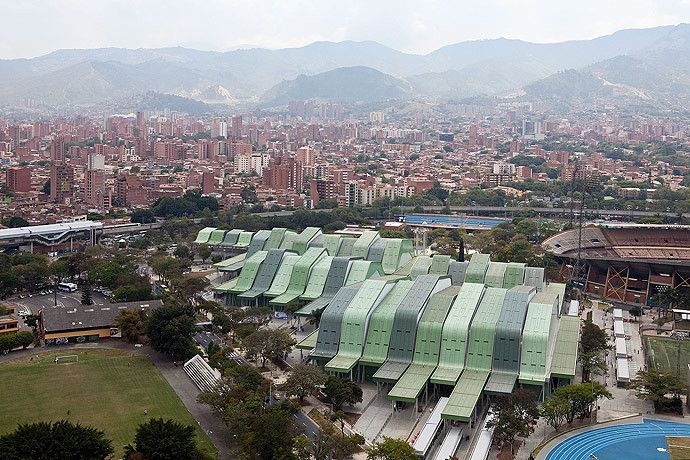
Photography: Iwan Baan
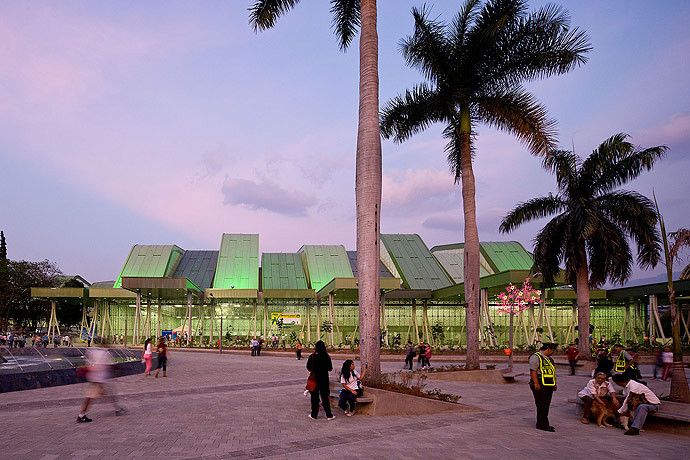
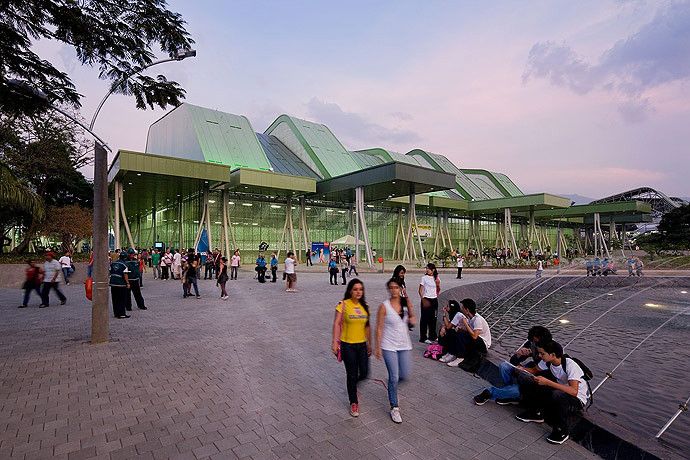
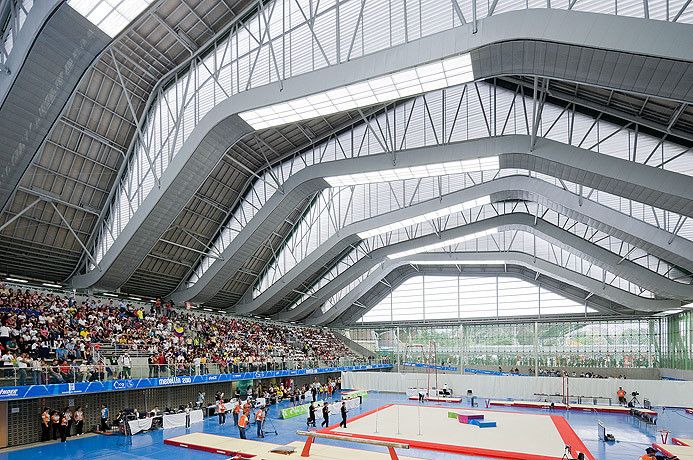
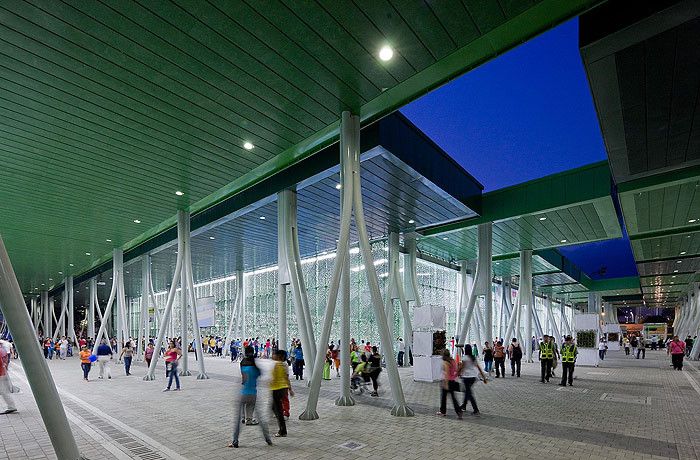
Giancarlo Mazzanti (Mazzanti Arquitectos) looked at Medellín’s mountainous skyline and thought: why shouldn’t the building reflect that landscape? The Sports Center features a series of strip-like steel truss frames, each with different heights that mimic the surrounding peaks.
But these varying heights aren’t just aesthetic—they’re functional. The volleyball gym needs higher clearance than the gymnastics hall, so the structure adapts accordingly. The roof is supported by a large circular cross-section girder, and the long-span frames double as environmental treatments. The designers studied the solar position and bioclimatic patterns, aligning the structural elements with the sun’s path to control heat gain naturally.
The “Ivan de Bedout Coliseum” within the complex provides a clear span of 280 feet (85 meters), creating a vast space for sports and community events. It’s proof that long-span structures can respond to both program and climate while creating iconic forms.
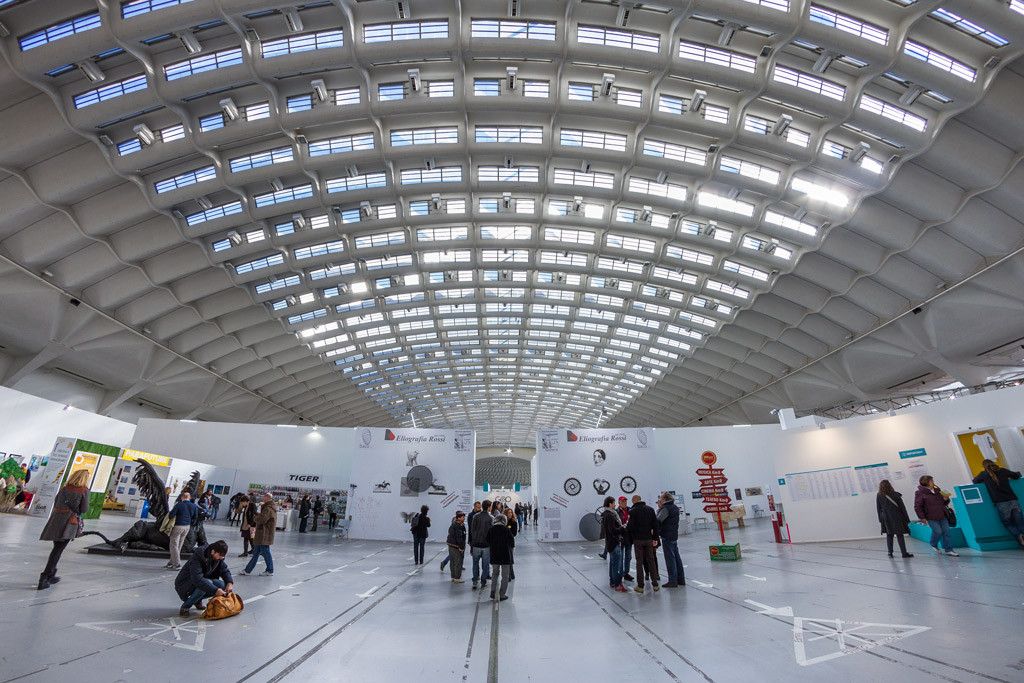
5) Torino Espozizioni | Pier Luigi Nervi, Turin, Italy, 1949
Courtesy of Mario Carrieri
Pier Luigi Nervi strikes again, this time with his revolutionary two-way reinforced concrete space frame at the Torino Espozizioni exhibition hall. Built in 1949, the hall covers an area of 240 x 309 feet (95 x 74 meters)—a massive footprint made possible by Nervi’s innovative use of Ferro-cement.
Each prefabricated Ferro-cement unit measures 15 x 8.3 feet (4.6m x 2.5m), creating a modular system that could be assembled efficiently. The half-dome roof uses these prefabricated elements to achieve its impressive span, demonstrating Nervi’s belief that prefabrication and beauty could go hand-in-hand.
Today, the exhibition hall is undergoing recovery by prominent firms including Daniel Libeskind, Dominique Perrault, and Stefano Boeri, proving that great structural systems can serve new generations with only minimal intervention.
What are the most common types of long-span roof systems?
The most common systems include:
-
Steel trusses (up to 190m spans) – Triangular units that efficiently distribute loads
-
Space frames (up to 91m spans) – 3D grids that handle loads in multiple directions
-
Folded plates – Concrete slabs folded like origami for stiffness
-
Shell structures – Curved surfaces that work in compression
-
Tensile/membrane structures – Fabric stretched over cables for lightweight spans
-
Cable-stayed systems – Using tension cables to support the roof
-
Diagrid systems – Diagonal grid patterns that work like a space frame
For more on diagrid applications, see how diagrid systems are used in high-rise buildings.
How do architects balance creativity with structural constraints in long-span design?
The secret is early collaboration between architects and structural engineers. Instead of designing a shape and forcing a structure to fit, successful teams work together from day one. The structural system becomes the architectural expression. Calatrava’s stations, Nervi’s domes, and Mazzanti’s sports center all prove that the engineering is the architecture.
Can long-span structures be sustainable?
Absolutely. Long-span designs often use less material overall because they eliminate redundant columns and walls. Natural daylighting becomes easier with open spaces. The large volumes can be naturally ventilated. And many modern systems use recycled steel or sustainable timber. The key is designing the span to be exactly what’s needed—no more, no less.
Why Long-Span Structures Matter More Than Ever
In an era of increasing urban density and larger public gatherings, long-span structures are essential. They create the column-free spaces we need for airports, stadiums, convention centers, and transportation hubs. But beyond pure function, they represent architecture’s highest aspirations: to create spaces that inspire.
These five projects prove that structural engineering isn’t just about holding up roofs—it’s about creating experiences. Whether it’s Calatrava’s cathedral of movement, Nervi’s concrete poetry, or Mazzanti’s landscape-inspired forms, the best long-span structures make the engineering disappear and the magic appear.
The next time you find yourself in a vast, open space, look up. That roof isn’t just protecting you from the elements—it’s a testament to human ingenuity, a sculpture in steel and concrete, a dream made real through mathematics and creativity. And if you’re planning to explore these marvels in person, don’t forget to check out the architecture tourist’s manifesto for inspiration on where to go next.

"Nour is a Cairo based architect who has an obsession with Landscape Architecture, nature and meditation. She considers writing as a powerful tool to send her ideas to the community and make this world a better place. She is addicted to traveling and teaching. Her international exposure gives her a unique and well-rounded perspective that keeps her articles fresh and interesting."