

The top 7 flooring types that will make your interior stand out are marble, vinyl, hardwood, linoleum, concrete, granite and epoxy resin. Each suits different rooms: granite and concrete for hard-wearing areas, hardwood and linoleum for warmth underfoot, vinyl and epoxy for water-resistant, easy-clean floors, and marble where appearance matters more than wear. This guide is for homeowners, students and self-builders. It corrects common myths, adds a sourced comparison table and a typical floor build-up, and gives maintenance notes without unsourced prices.
Flooring covers the largest surface in a home, so it sets the tone for an impressive interior and has to suit the room’s use as well as your chosen style. The best choice depends on traffic, moisture, budget and how much upkeep you will accept; for more ideas, see our interior design tips.
Related article: The Timeless Beauty of Terrazzo Floors.

© Faisal Waheed, Unsplash
Top 7 flooring types that will make your interior stand out
1) Marble flooring
Marble is valued for its veining and polish, and comes in many colours, from white and beige to green, black and pink. It is a calcareous stone made mainly of calcite, which is only 3 on the Mohs hardness scale, so it scratches more easily than granite and is etched by acids such as lemon juice, vinegar and some cleaners.
Related article: Which is preferable: granite, quartz or marble?

© Arad Branding
- Pros: distinctive appearance; long-lasting where wear is moderate; can be honed and re-polished.
- Cons: scratches and etches; porous, so it needs sealing against stains (sealing does not prevent etching); polished marble is slippery when wet; cold without underfloor heating.
2) Vinyl flooring
Vinyl (PVC) flooring comes as sheet, tiles and luxury vinyl planks or tiles (LVT) that can imitate wood or stone. It is water-resistant, warm and quiet underfoot, and quick to install.

© Tarkett
- Pros: water-resistant; easy to install (glue-down or click systems); low maintenance; wide range of designs.
- Cons: cannot be sanded or refinished, so damaged planks or tiles must be replaced; can dent under heavy furniture; it is a plastic product, so check manufacturers’ environmental declarations and emissions labels (for example low-VOC certifications) if indoor air quality and recycling matter to you.
3) Hardwood flooring
Solid hardwood floors are made from planks or parquet blocks of timber such as oak, ash or maple, and can be laid in boards, herringbone or chevron patterns. Their resistance to dents depends on the species: on the Janka side-hardness test, white oak is rated at about 6,000 N (1,360 lbf) and northern red oak about 5,700 N (1,290 lbf), according to commonly cited Janka values. Engineered wood, with a hardwood top layer on a plywood or softwood base, is more dimensionally stable and suits underfloor heating better.
Related article: The three types of wood every architect should know.
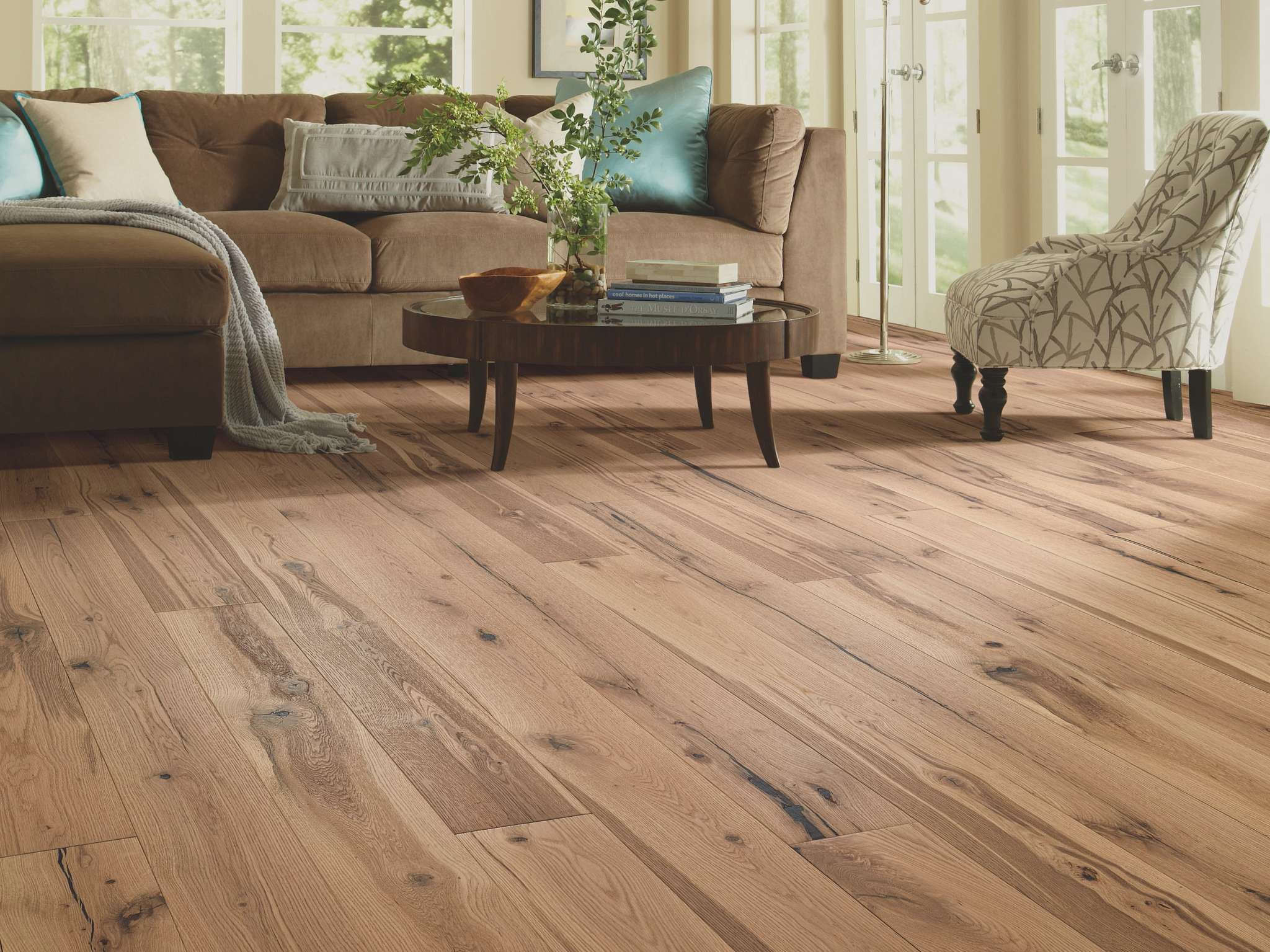
© Shaw Floors
- Pros: warm and natural; can be sanded and refinished several times (solid wood more often than engineered); a hard floor that is easy to keep free of dust, unlike carpet.
- Cons: scratches and dents; moves with humidity, so it needs expansion gaps and stable indoor conditions; not suitable for wet rooms; usually more expensive than vinyl or laminate.
4) Linoleum flooring
Linoleum is made mainly from natural and renewable materials. One published product analysis by the US National Institute of Standards and Technology lists a typical mix of wood flour (about 30 per cent), linseed oil (about 23 per cent), limestone (about 18 per cent), pine rosin, cork flour and pigment on a jute backing, according to the NIST BEES linoleum data sheet. It is sold as sheet, tiles and click panels, and has been used for more than a century.

© Forbo Flooring Systems
- Pros: largely bio-based materials; warm and slightly resilient underfoot; many colours; easy to clean; most modern products have a factory surface finish that reduces maintenance.
- Cons: can be dented by point loads such as stiletto heels; sensitive to standing water and strong alkaline cleaners; colours can change slightly with light exposure (“ambering” when new, fading over time); sheet installation needs a skilled fitter.
5) Concrete flooring
Concrete floors are made from cement, aggregate (sand and gravel) and water, and can be ground, polished, stained or sealed; see our guide to polished concrete floor types. Where the structural slab is used as the finished floor, it has to be placed and finished with that in mind; otherwise a separate topping or screed is laid.

© Crest Property Investments
- Pros: very durable; low maintenance when properly sealed; works well with underfloor heating and thermal mass; many finishes and colours.
- Cons: hard and cold underfoot without heating or rugs; concrete shrinks as it dries, so fine cracks are normal unless joints are planned; unsealed concrete stains easily.
6) Granite flooring
Granite is a siliceous stone of feldspar and quartz (Mohs 6 and 7), so it resists scratching and acids far better than marble. It is available polished, honed, brushed or flamed; the finish decides how slippery it is. Polished granite suits living and dining rooms, while honed, brushed or flamed finishes are safer in bathrooms and entrances.

© Building and Interiors
- Pros: very hard-wearing; resists scratches from pets and heavy traffic; acid-resistant; good with underfloor heating.
- Cons: heavy; cold underfoot without heating; usually costs more than ceramic tile or vinyl; most granites are still sealed to reduce staining.
7) Epoxy resin flooring
Epoxy floors are poured or rolled resin systems, made from a resin and a hardener that cure into a hard, seamless layer bonded to a prepared concrete or screed base. They range from thin coatings to self-levelling and decorative “metallic” finishes, and are common in garages, workshops and contemporary homes.

© EPODEX
- Pros: seamless, easy to clean and resistant to water and many chemicals; can be very decorative.
- Cons: success depends on surface preparation and on the base being dry; moisture rising through the slab can cause blistering or debonding; installation takes several days to cure; scratches show on glossy finishes; can be slippery unless an anti-slip aggregate is added.
Properties table: top 7 flooring types compared
| Floor | Make-up | Wear / scratch resistance | Water and stains | Underfloor heating | Slip (when wet) |
|---|---|---|---|---|---|
| Marble | Calcareous stone (calcite, Mohs 3) | Low-moderate; scratches | Etches; needs sealing | Good | Polished: slippery wet |
| Vinyl / LVT | PVC sheet, tile or plank | Moderate; dents | Water-resistant | Check product rating | Varies by product |
| Hardwood | Solid timber (e.g. oak ~5,700-6,000 N Janka) | Moderate; dents and scratches | Not for wet rooms | Engineered wood preferred | Good when dry |
| Linoleum | Linseed oil, wood flour, limestone, rosin, cork, jute | Moderate; point-load dents | Avoid standing water | Check product rating | Good |
| Concrete | Cement, aggregate, water; ground/sealed | High | Stains unless sealed | Good (thermal mass) | Depends on finish |
| Granite | Siliceous stone (feldspar 6, quartz 7) | High | Acid-resistant; usually sealed | Good | Polished: slippery wet; honed/flamed better |
| Epoxy resin | Resin + hardener on concrete/screed | High (scratches show) | Resistant; base must be dry | Check system | Add anti-slip aggregate |
Source: Mohs scale; NIST BEES linoleum data; Janka values (Wikipedia); Arch2O editorial summary of general properties (as of 30 October 2026).
The table sums up how the top 7 flooring types that will make your interior stand out behave in daily use. Use it as a starting point, then ask suppliers for test data for the specific product, such as slip resistance, wear class and emissions, against the standards used in your country.
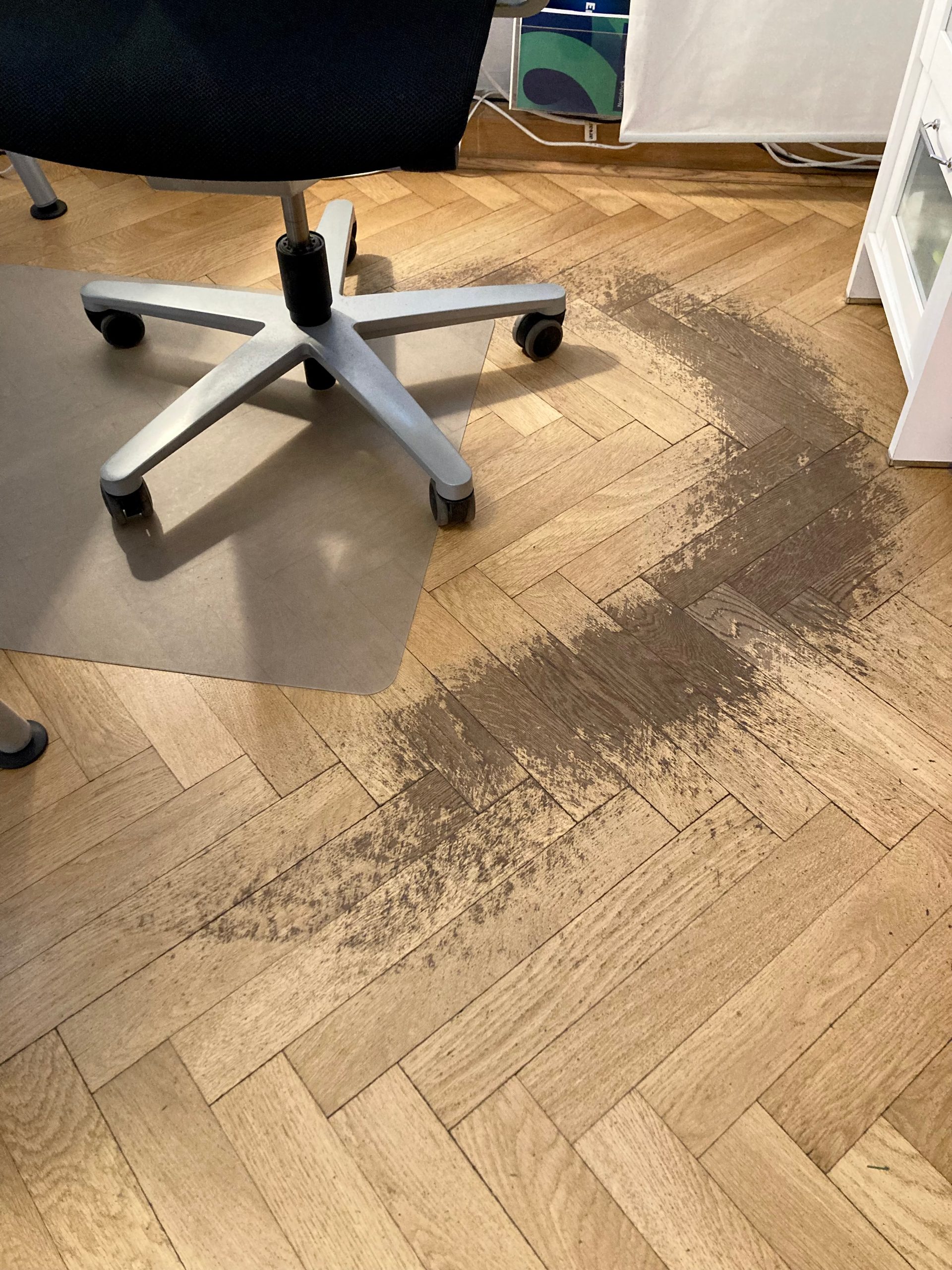
Historic oak herringbone parquet with its lacquer worn through by office-chair castors: even hard-wearing floors need protection from rolling loads. Photo: Kai Kemmann, CC BY-SA 4.0, via Wikimedia Commons. Kai Kemmann, source, CC BY-SA 4.0
Typical detail: a floor build-up over underfloor heating
Most hard floors share a similar build-up. From the bottom: the structural slab; insulation; a screed with heating pipes, fully dried before any finish is laid; then, depending on the floor, an adhesive bed (stone, tile, linoleum, vinyl), an underlay (floating engineered wood or click vinyl) or a primer and resin coats (epoxy). Leave a movement gap at walls and columns, and plan movement joints in large areas of stone or tile. Moisture testing of the screed before installation is one of the most common steps skipped, and one of the main causes of failure for wood, linoleum, vinyl and epoxy.
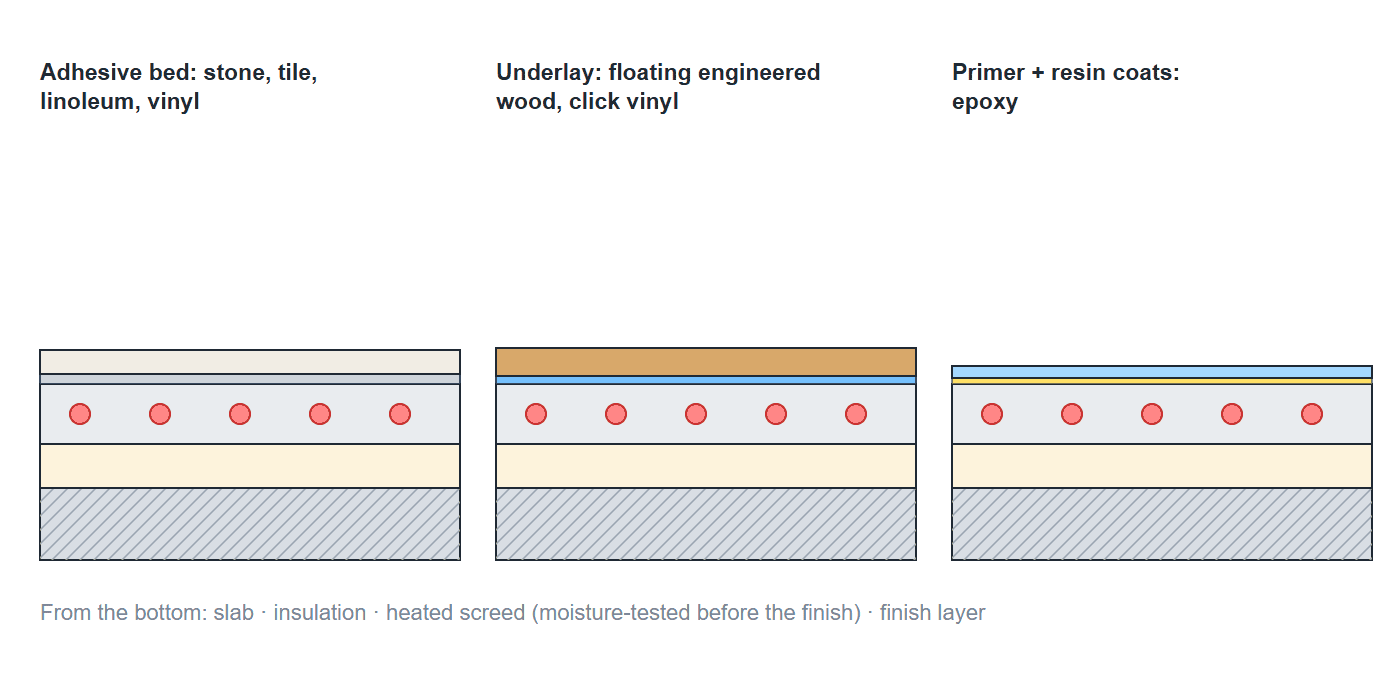
The common hard-floor build-up over underfloor heating: structural slab, insulation, a screed with heating pipes dried before any finish, then the finish layer: an adhesive bed for stone, tile, linoleum or vinyl, an underlay for floating engineered wood or click vinyl, or primer and resin coats for epoxy. Leave movement gaps at walls and columns. Diagram: Arch2O
Flooring types: our thoughts
Among the top 7 flooring types that will make your interior stand out, there is no single best floor. Choose granite or concrete where wear is heavy, hardwood or linoleum where warmth and a natural feel matter, vinyl or epoxy where water and easy cleaning come first, and marble where you will accept some wear as patina. Check the slip resistance for wet areas, the compatibility with underfloor heating, and the maintenance each floor needs before you commit. For the outside of the building, compare facade materials in the same way.

Toqa Mostafa is a dedicated editor at Arch2O, bringing a sharp editorial perspective to architectural storytelling. Based in Egypt, she curates and refines content that showcases innovative design and urban solutions. Her work at Arch2O highlights her ability to engage readers with compelling narratives, bridging architectural creativity and critical discourse. Toqa’s editorial expertise contributes significantly to Arch2O’s mission of exploring the intersection of design, technology, and sustainability.