


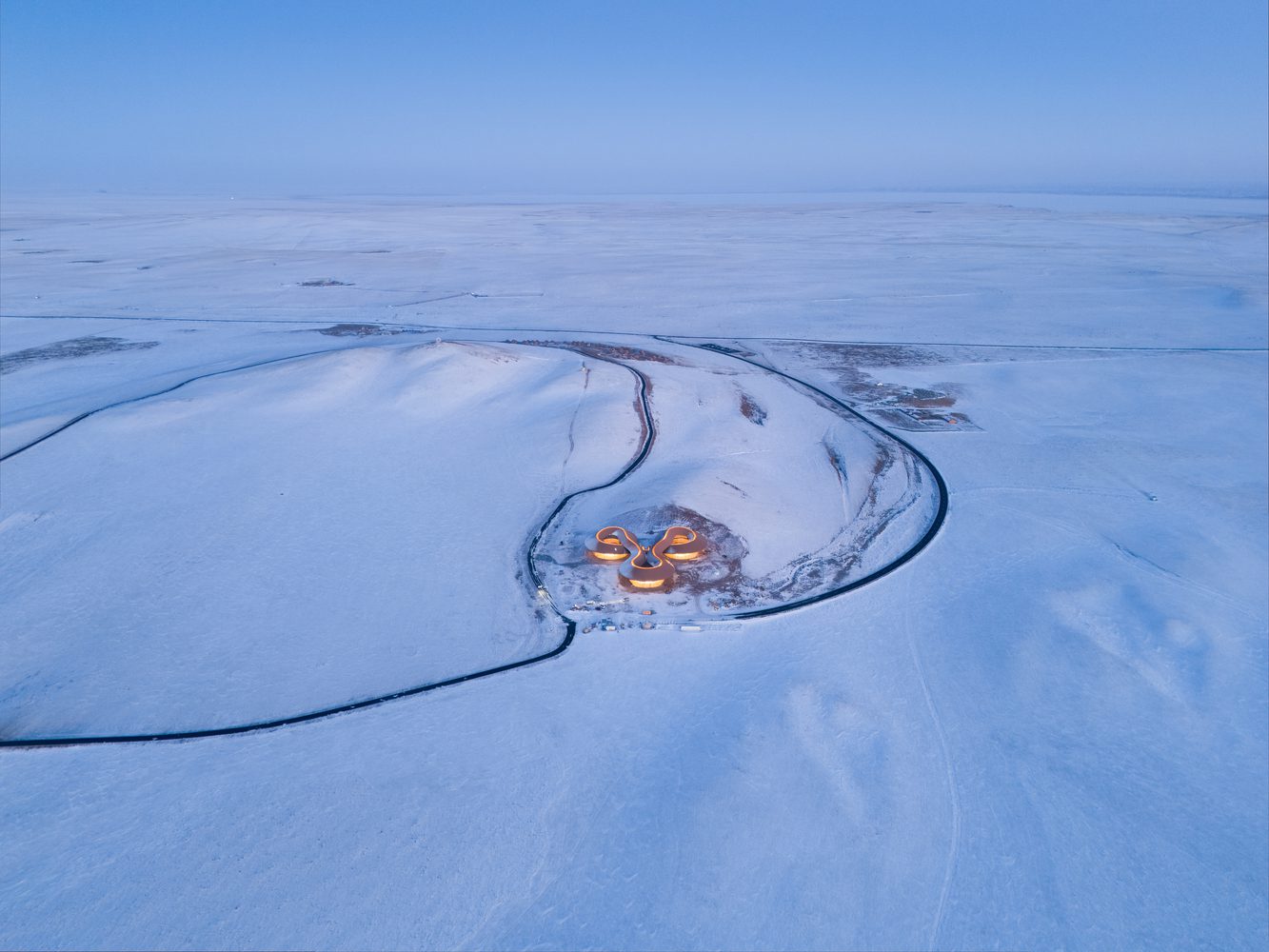
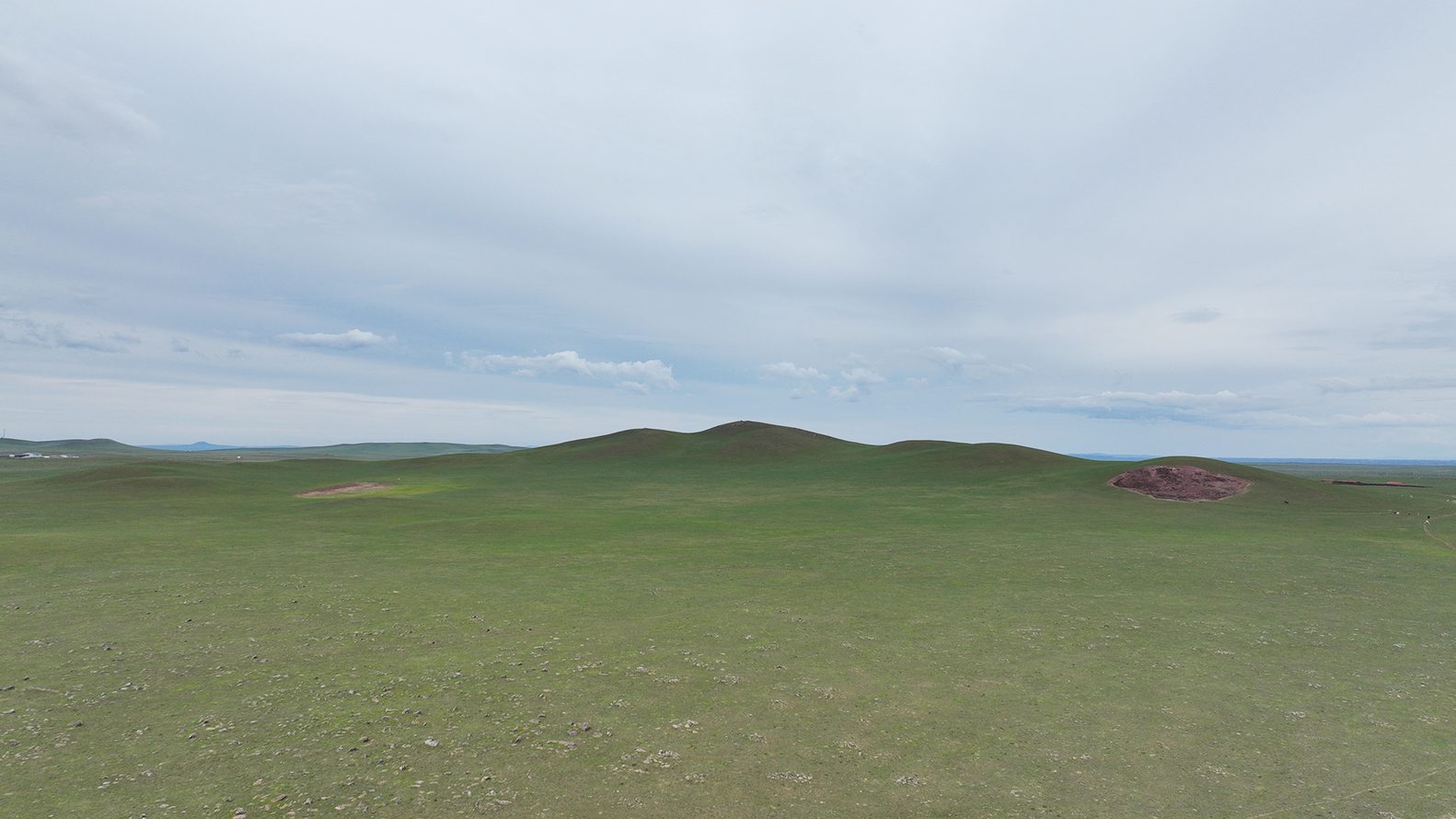
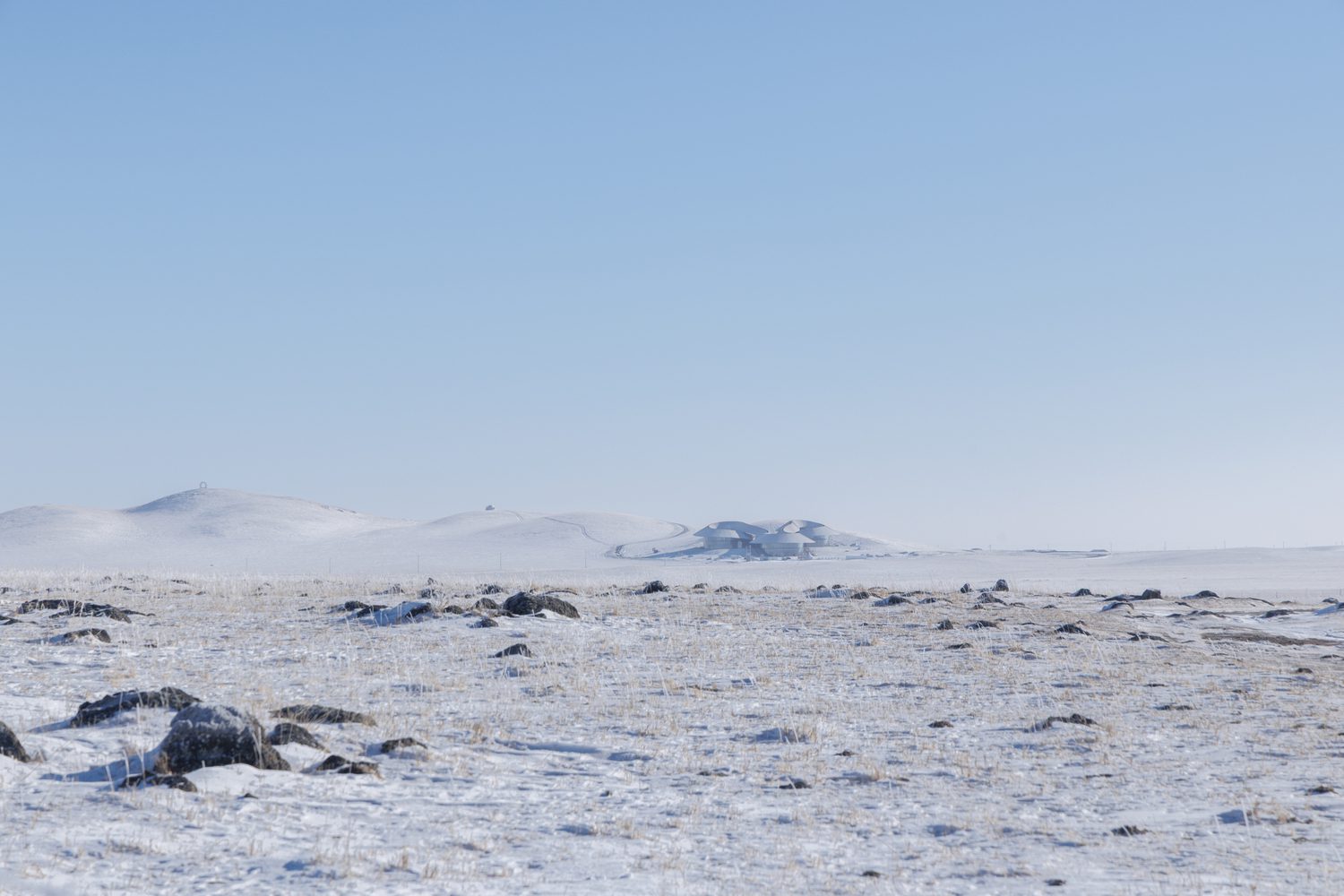
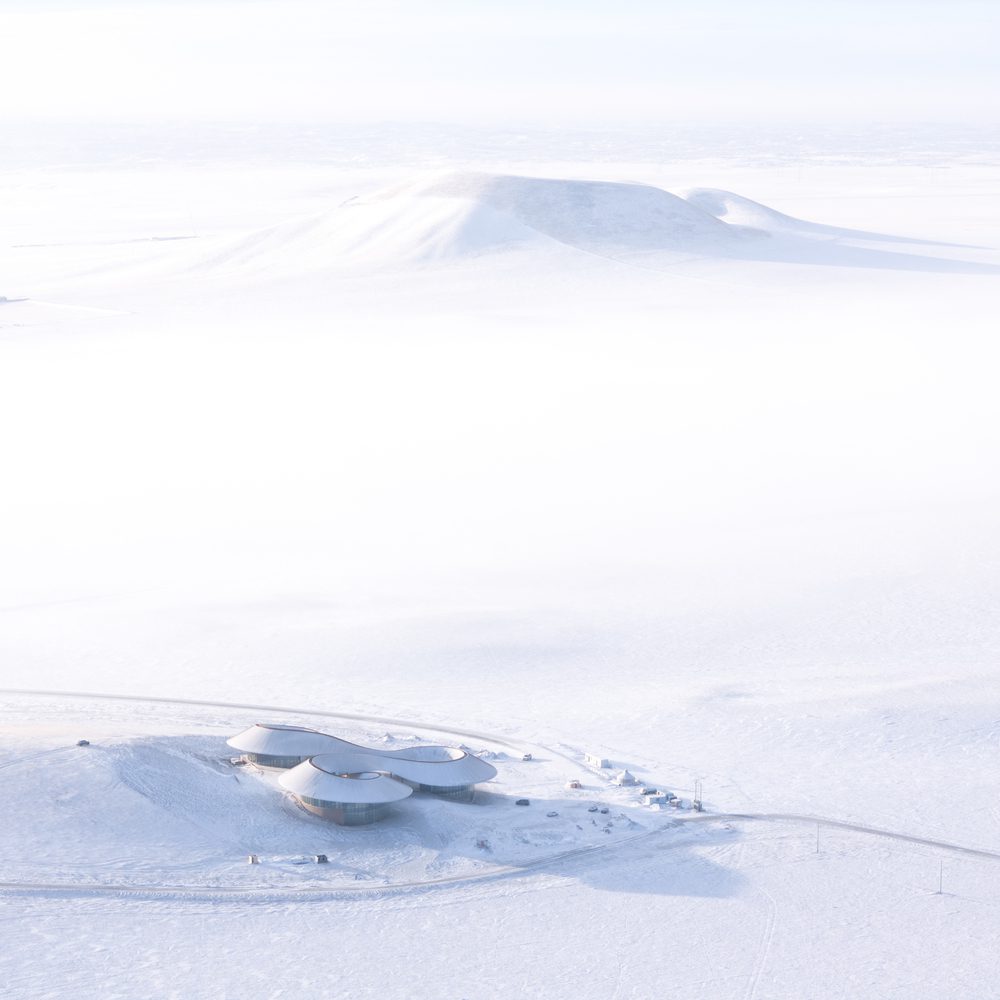
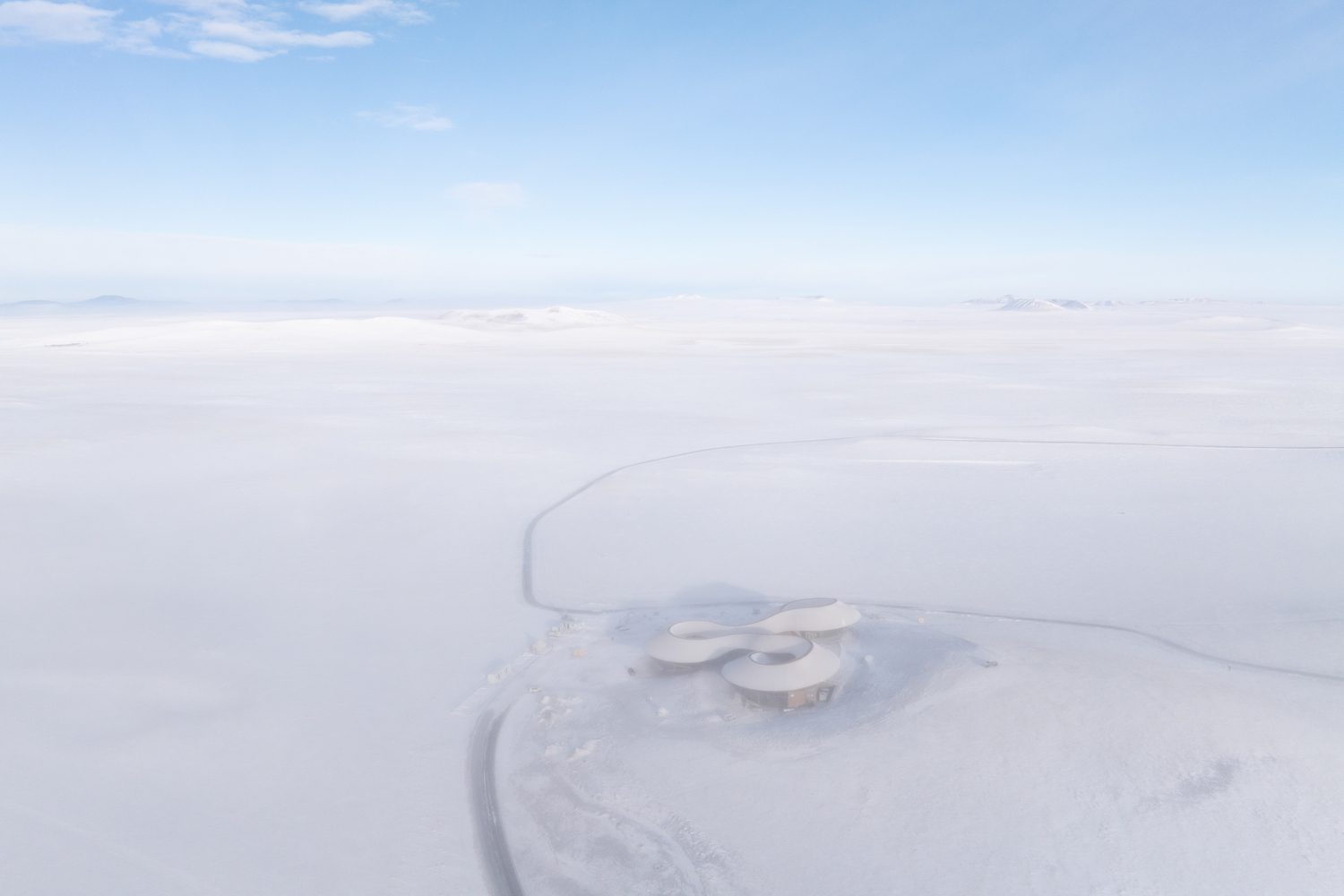
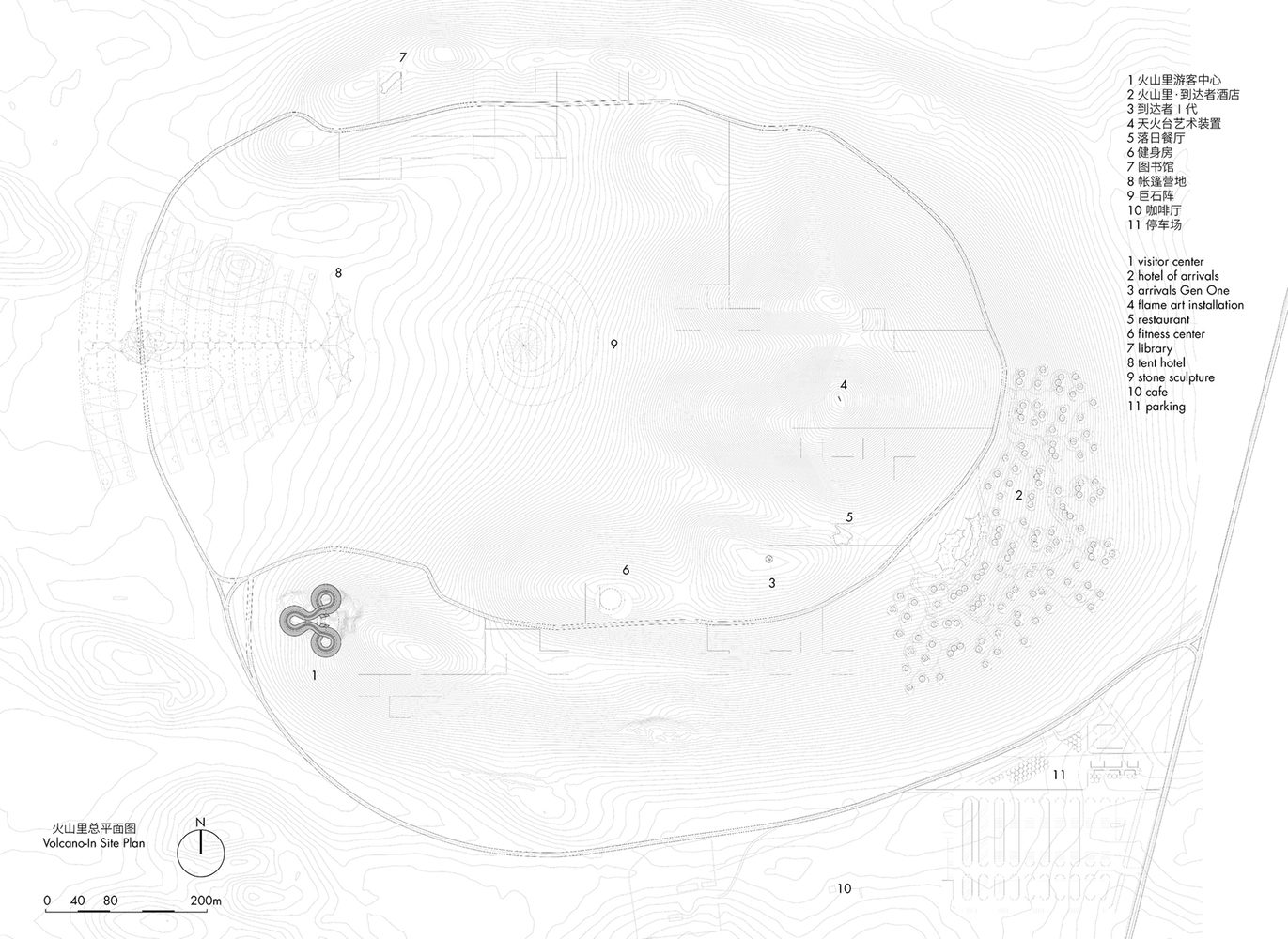
Volcano-In Visitor Centre is located within a C-shaped extinct volcano that erupted approximately 150,000 years ago during the Pleistocene Epoch of the Quaternary Period. It is one of 108 volcanoes in the Baiyinkulun Steppe & Volcano Area, situated about 380 kilometers north of Tian’anmen Square along the longitude line of E 116°23′28″ at latitude N 43°18′37″. Volcano-In lies on the southern edge of the Xilingol Steppe, with the Otindag Sandy Land to the south, Dali Lake to the east, the Yanshan Mountains and the Greater Khingan Range farther to the east, and the Baiyinkulun Relict Gull Nature Reserve to the west. The area is rich in natural resources and features a wild landscape comprising mountains, volcanoes, wetlands, forests, fields, lakes, steppes, sandy lands, and snowfields, which together foster flourishing biodiversity and cultural contexts.
© Arch-Exist
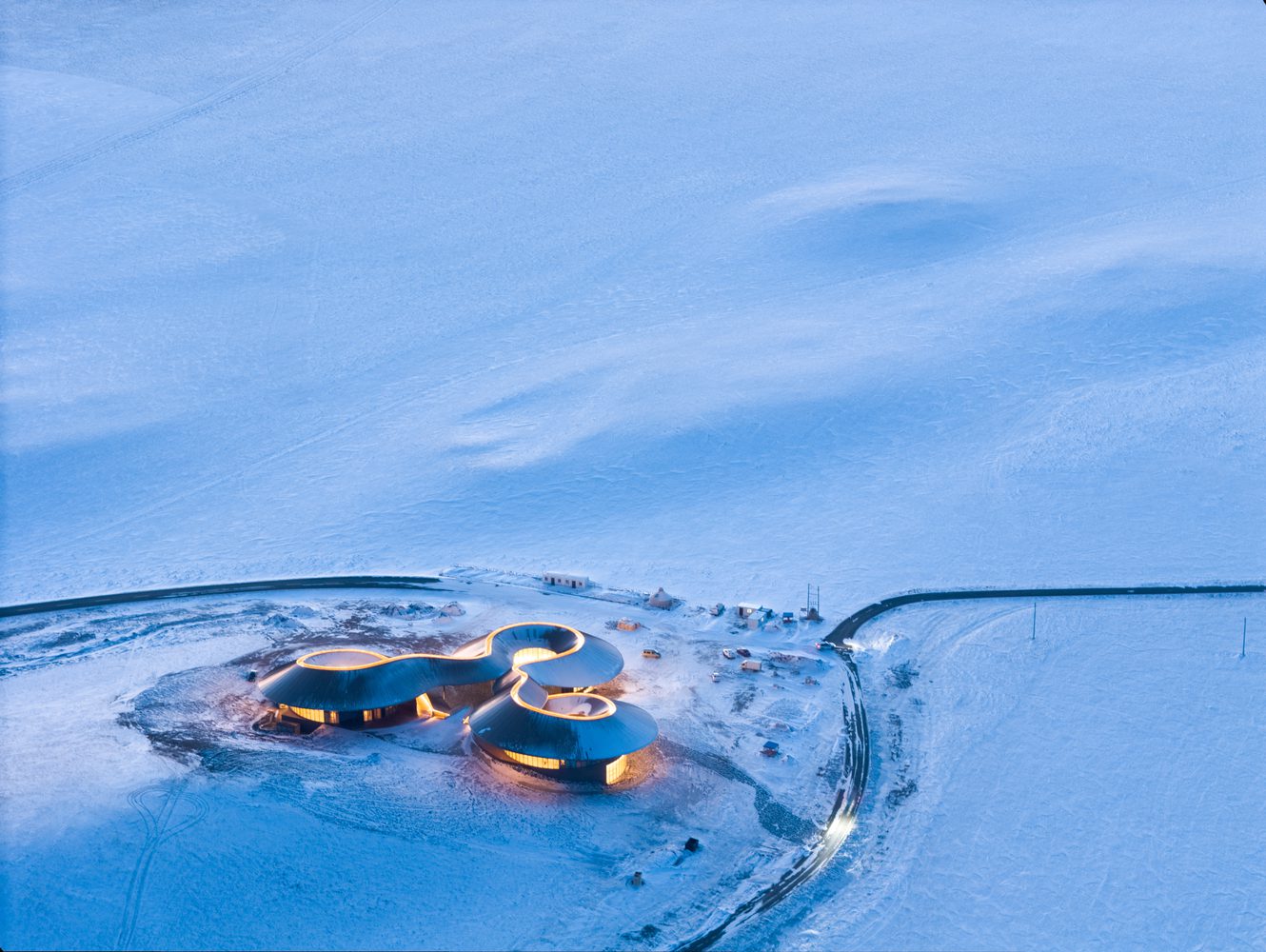
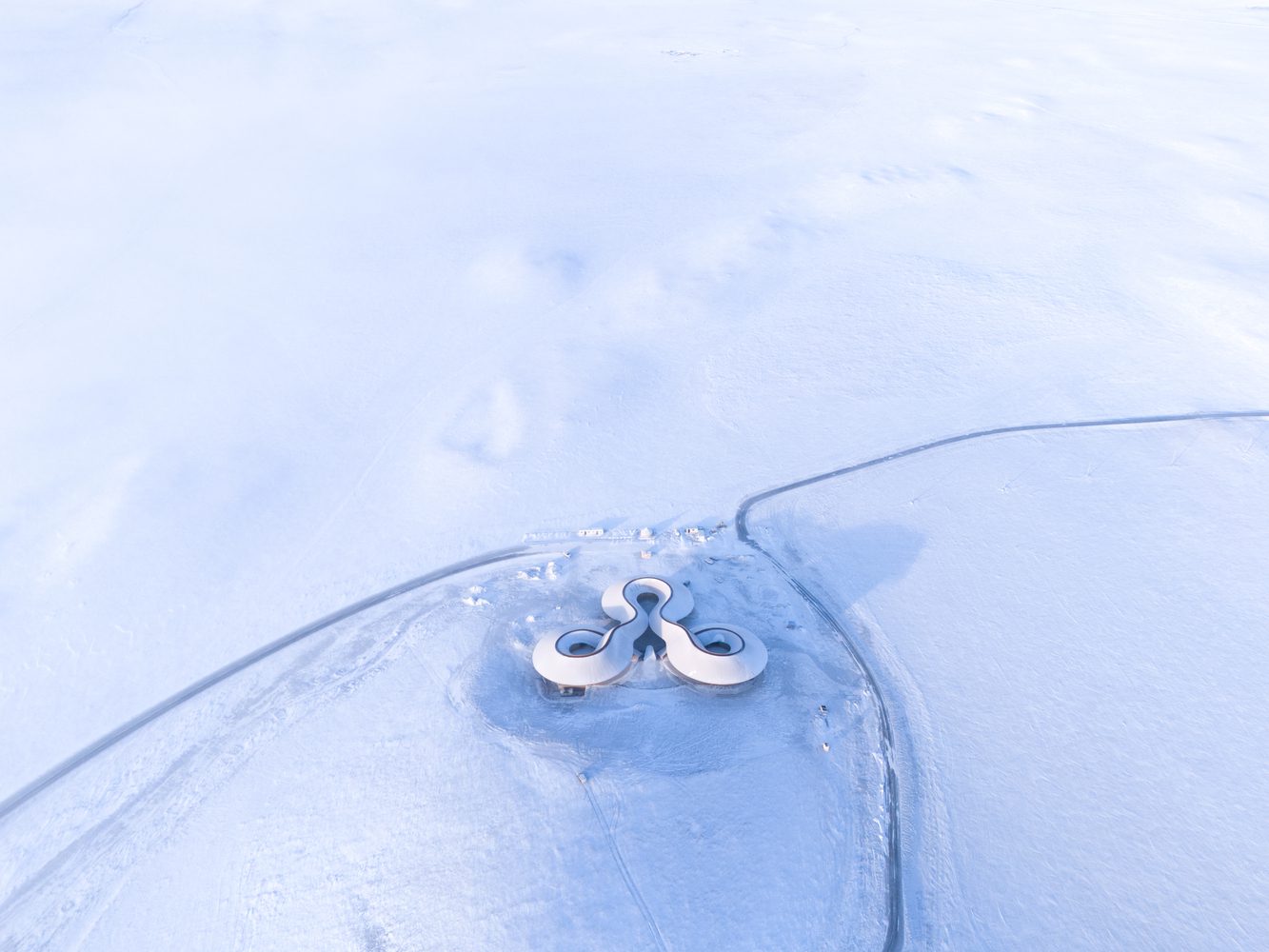
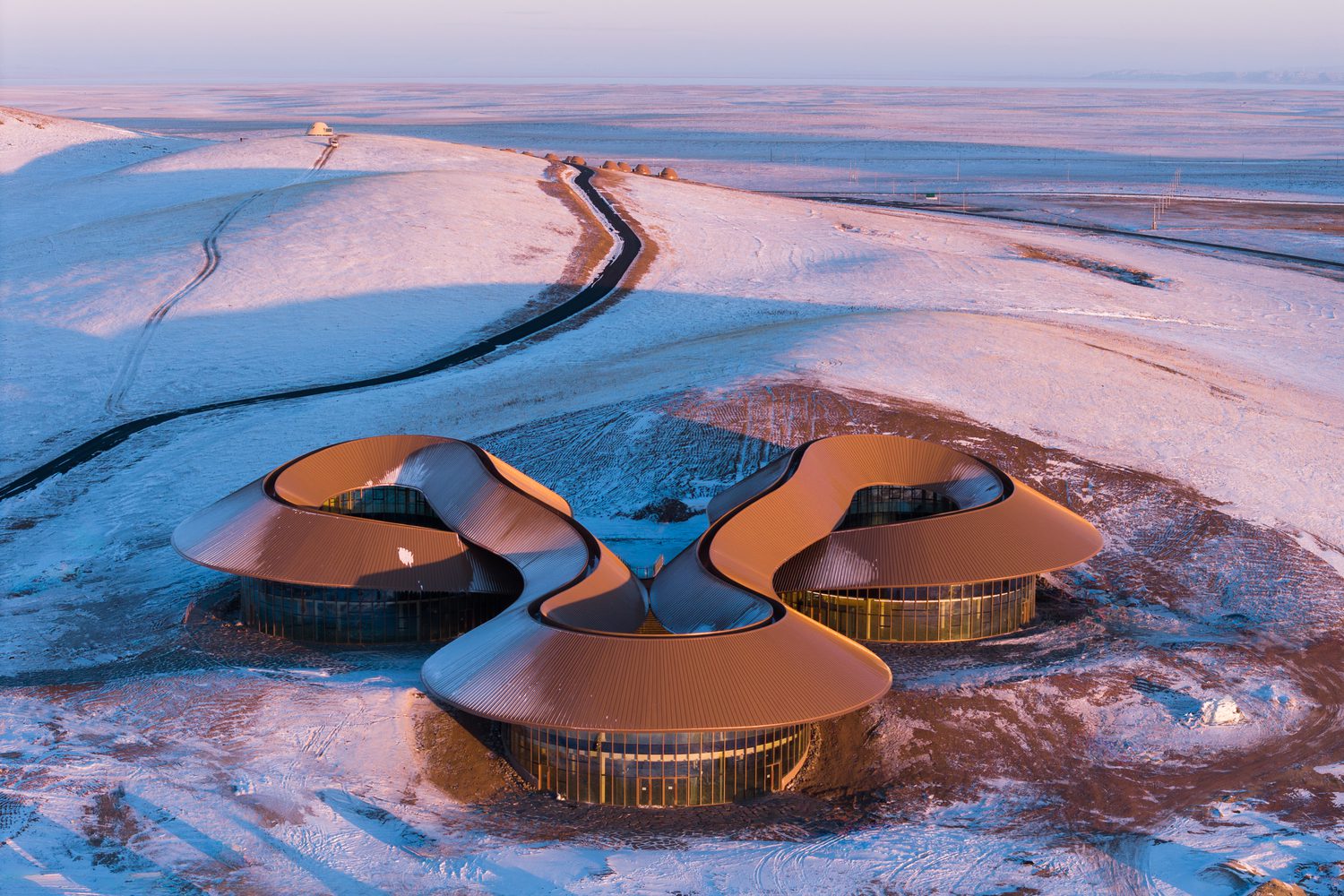
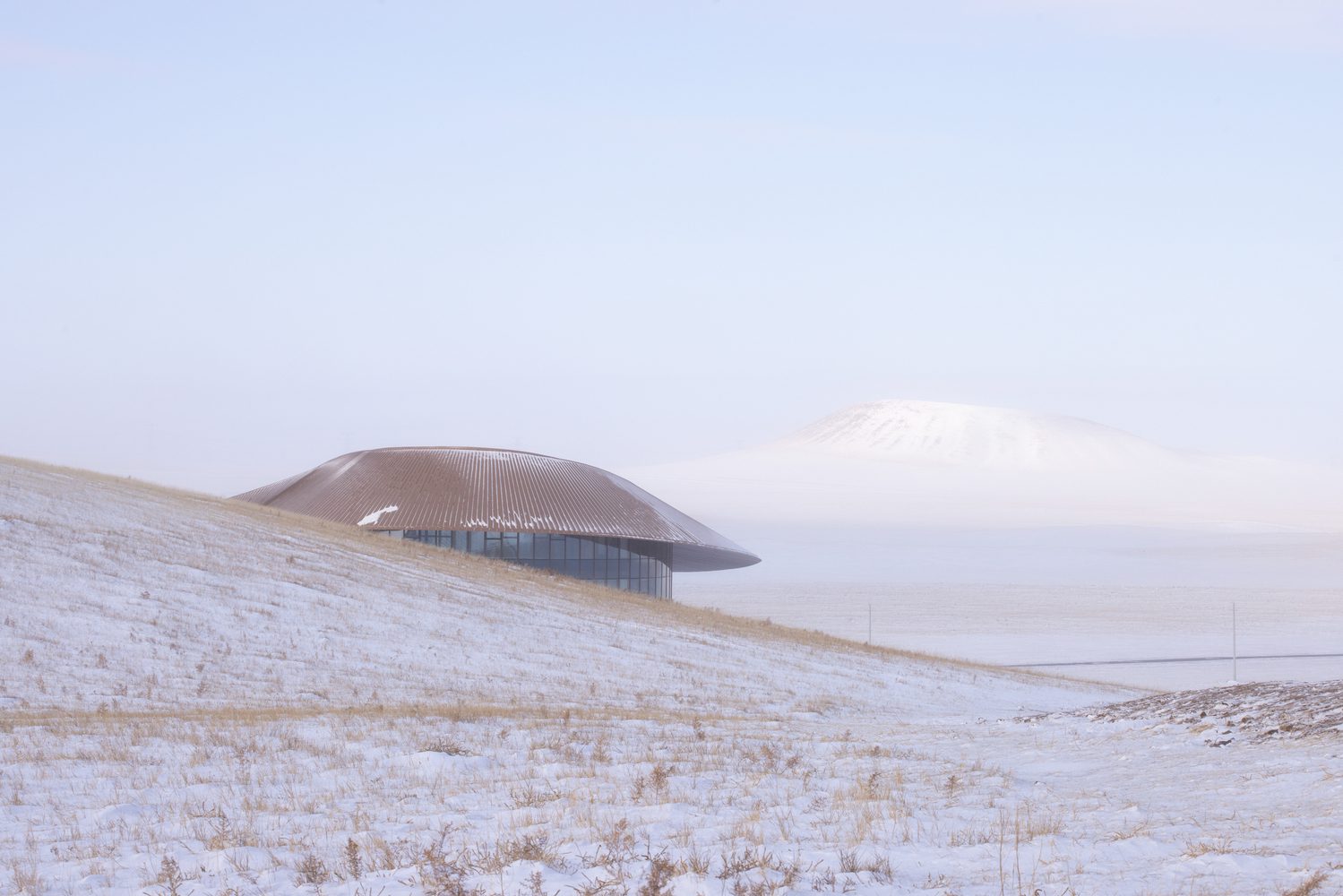
In July 2021, architect Bian Baoyang first set foot on this secluded land, leading PLAT ASIA to begin its practice in the Baiyinkulun Steppe & Volcano Area. During the site survey, the design team discovered a large, excavated area west of the C-shaped volcanic cone. According to local herders, the scar had existed for ten years. Consequently, the architects and the client decided to select this site for the visitor centre. The aim was to prevent further erosion caused by wind and to use the building to heal the land, ultimately integrating the architecture with the volcanic form. The visitor centre would thus become part of the effort to preserve the volcano, protect the original environment, and encourage the development of a new ecology.
© Arch-Exist
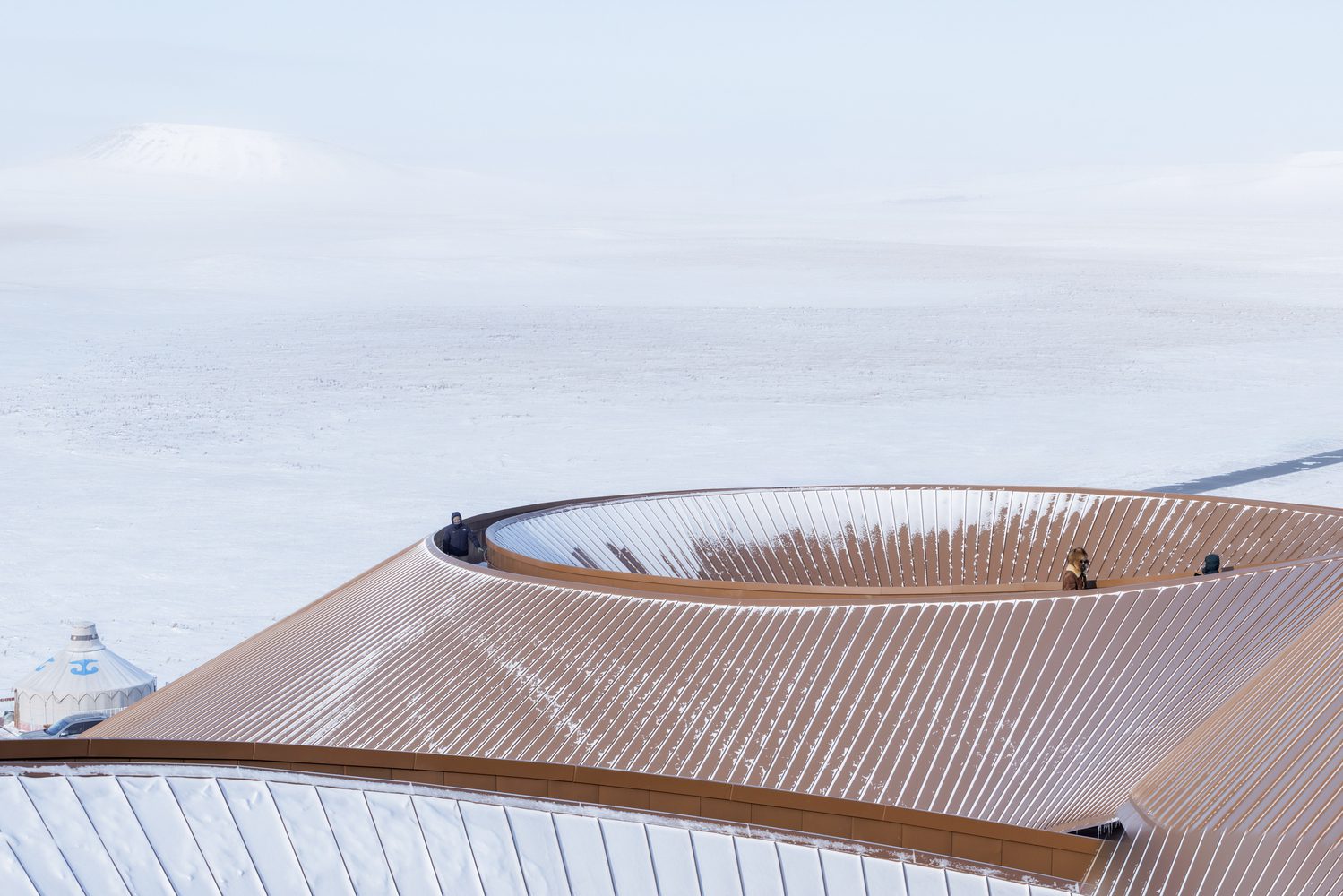
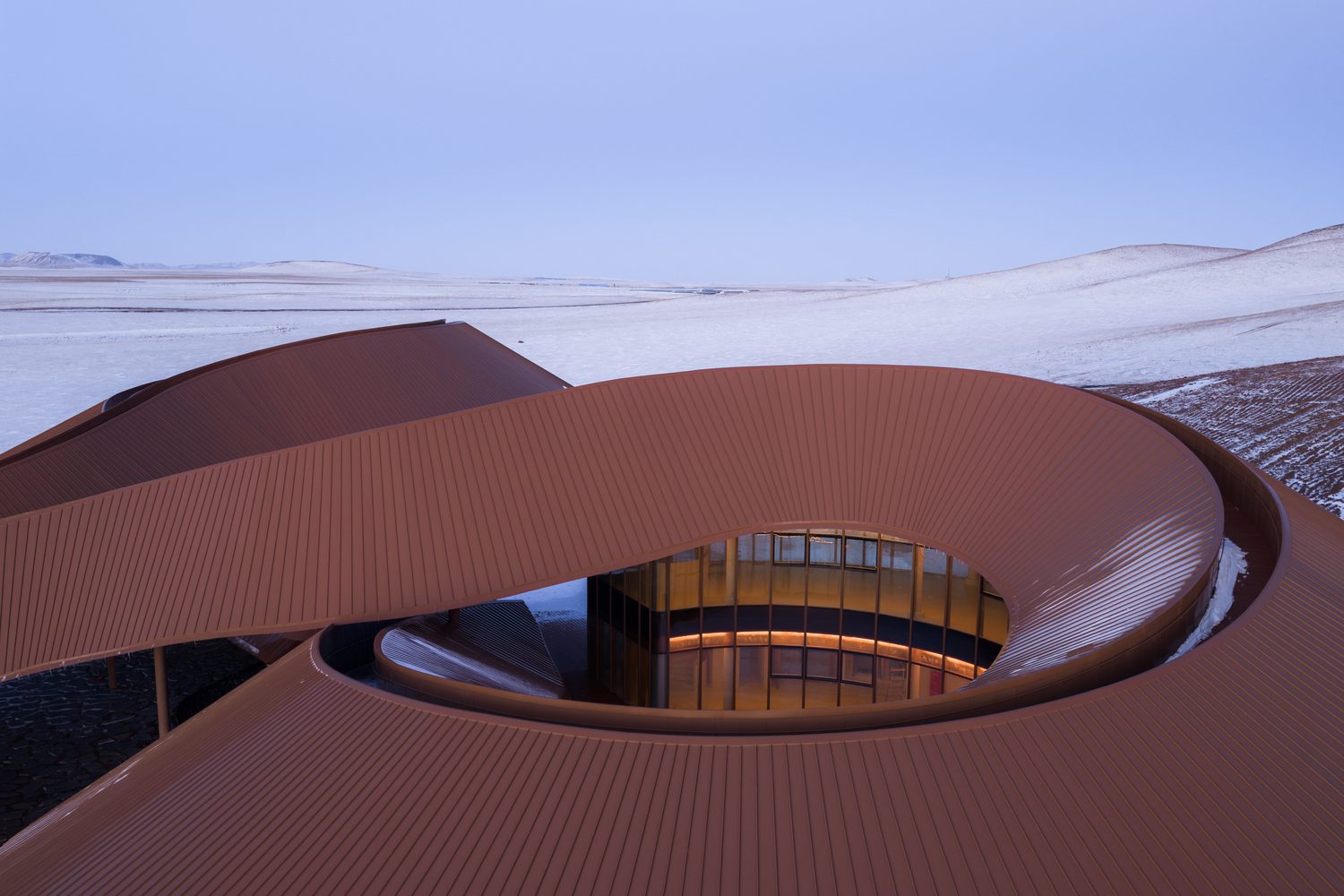
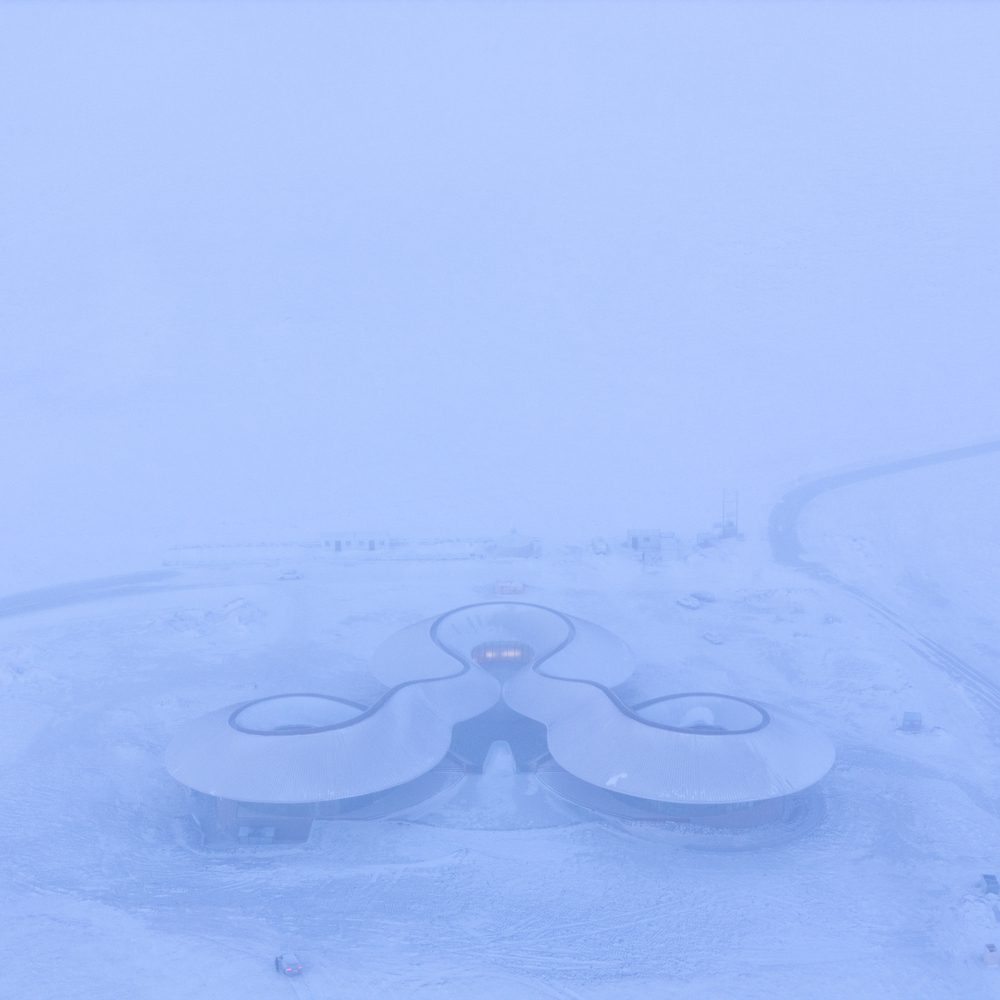
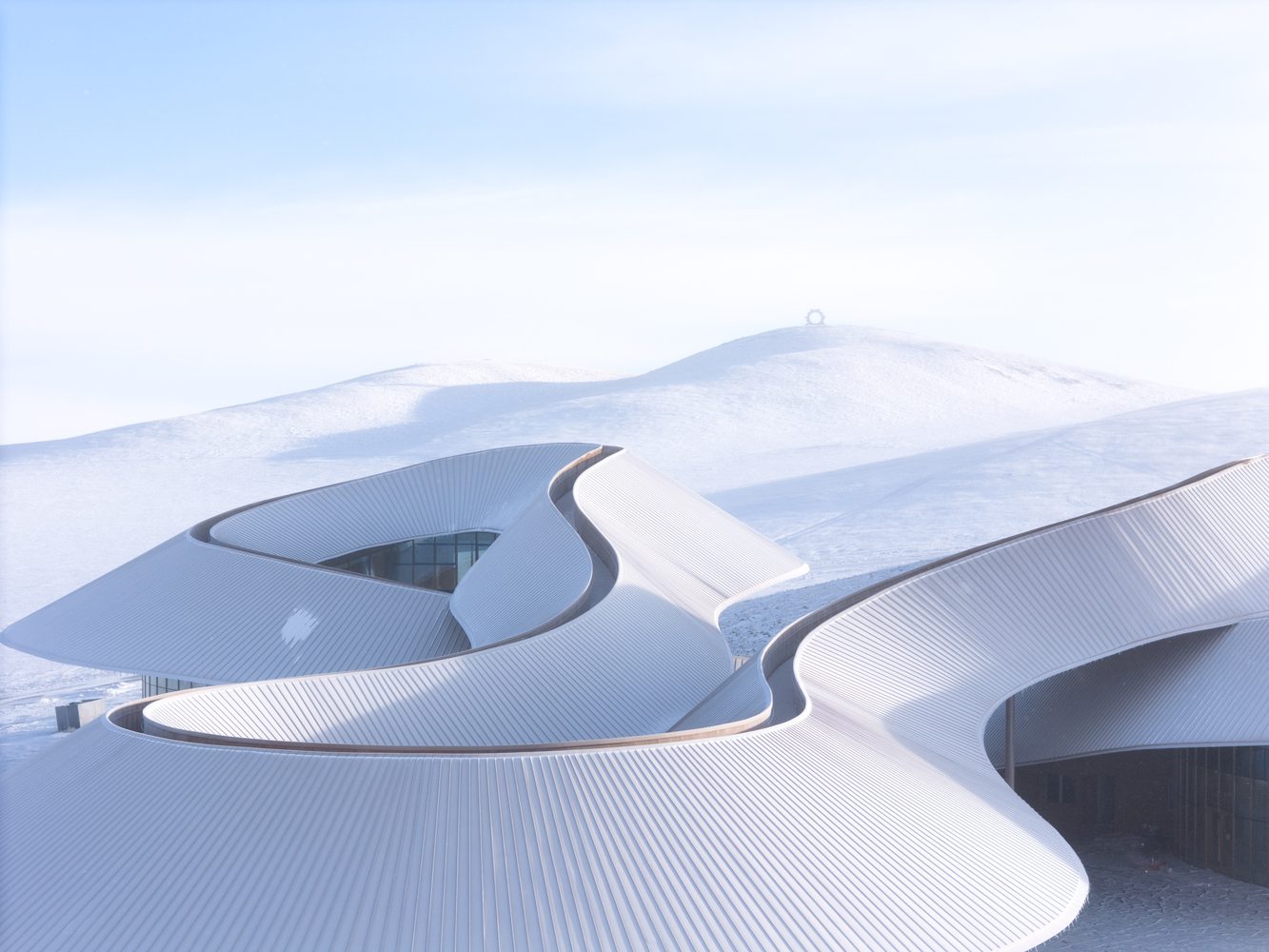
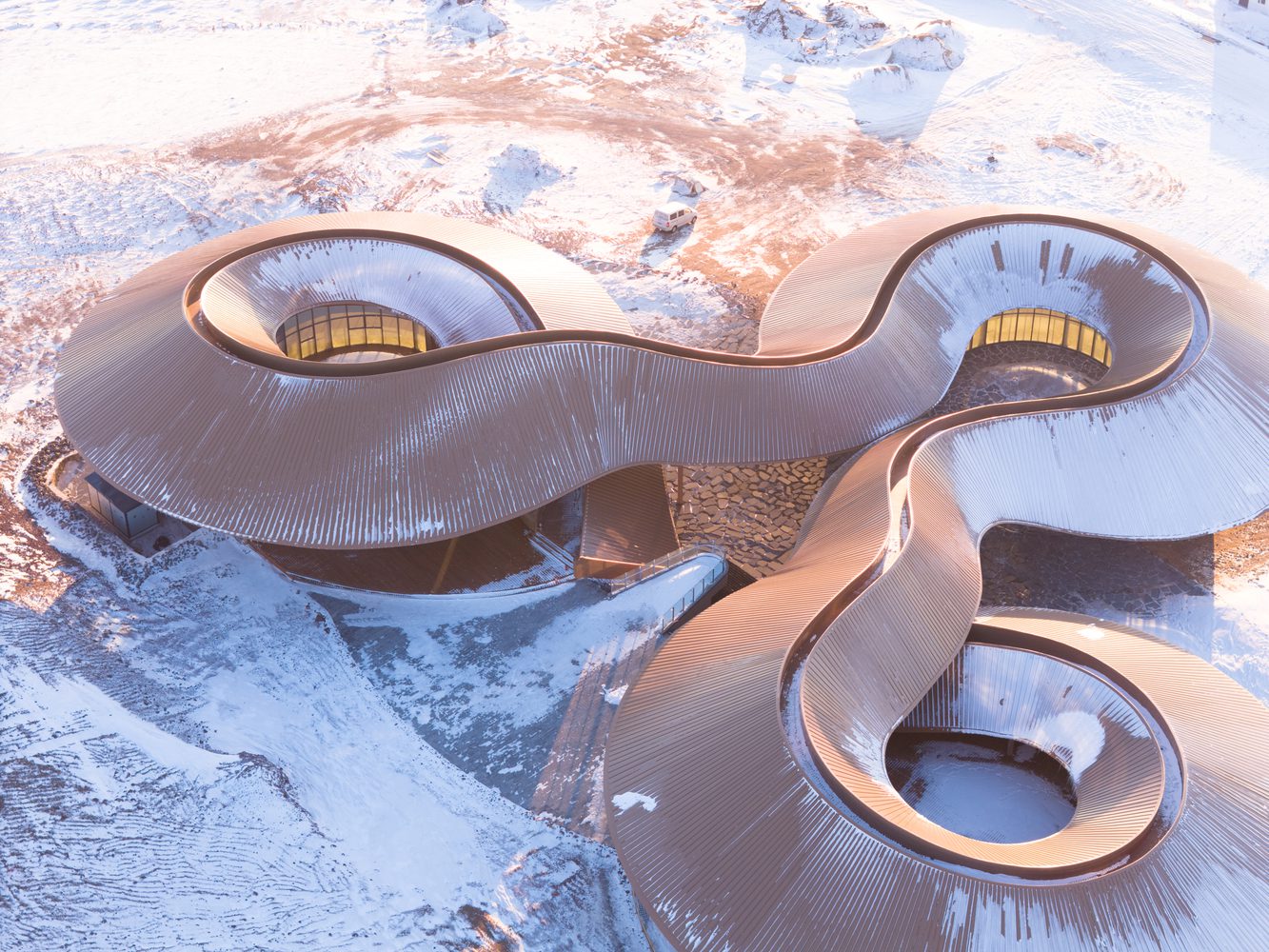
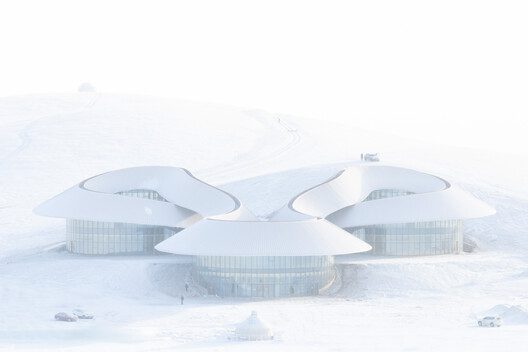
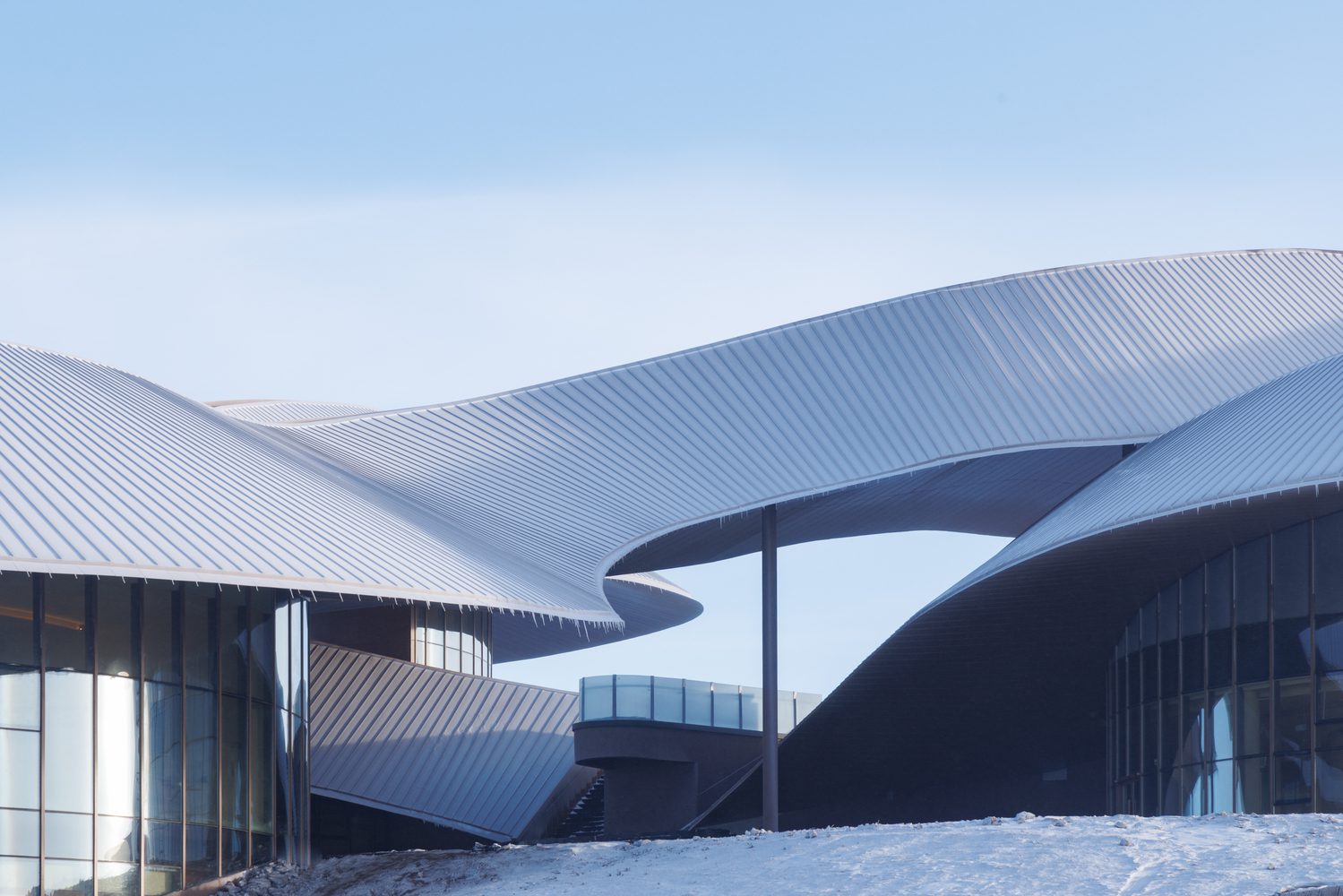
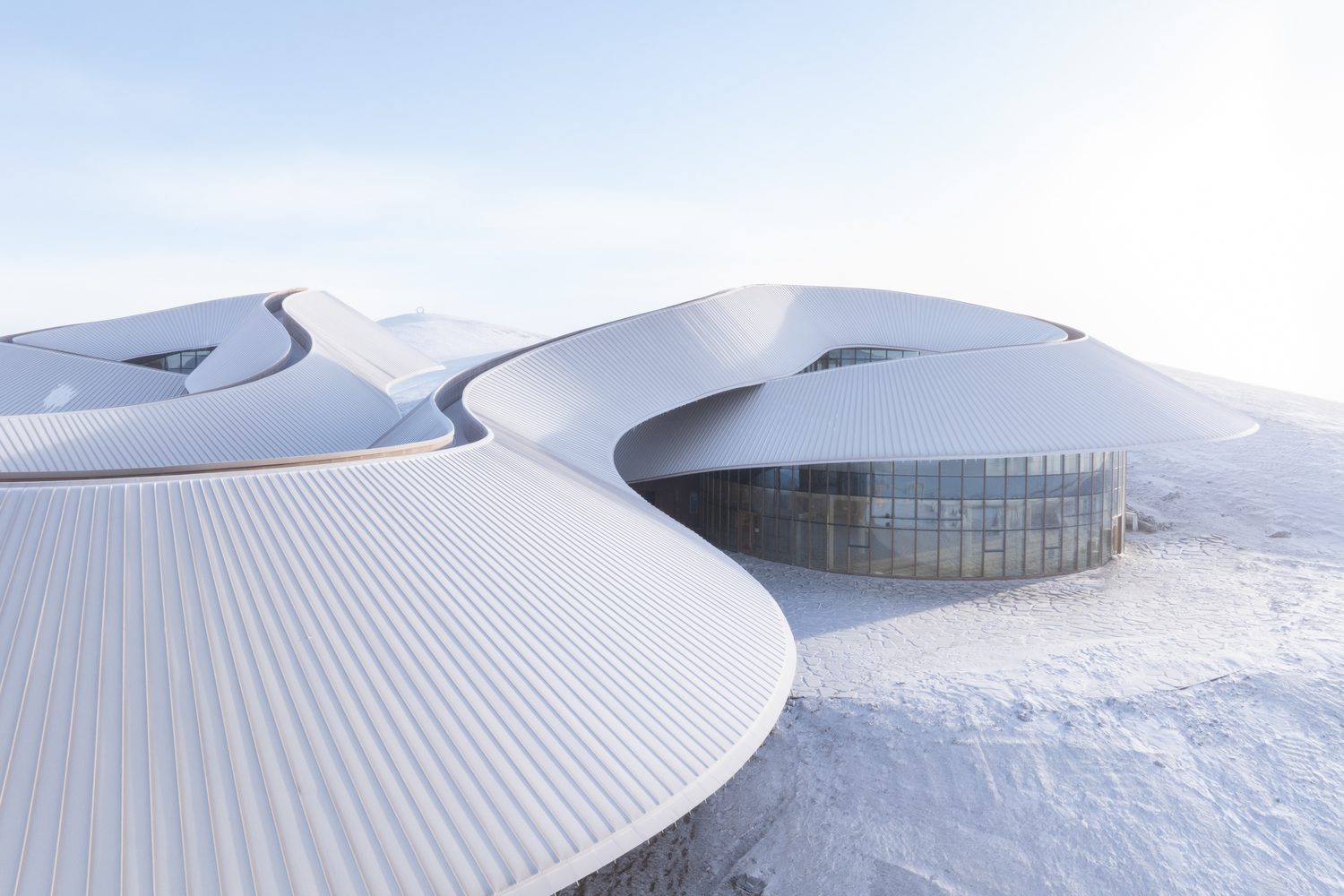
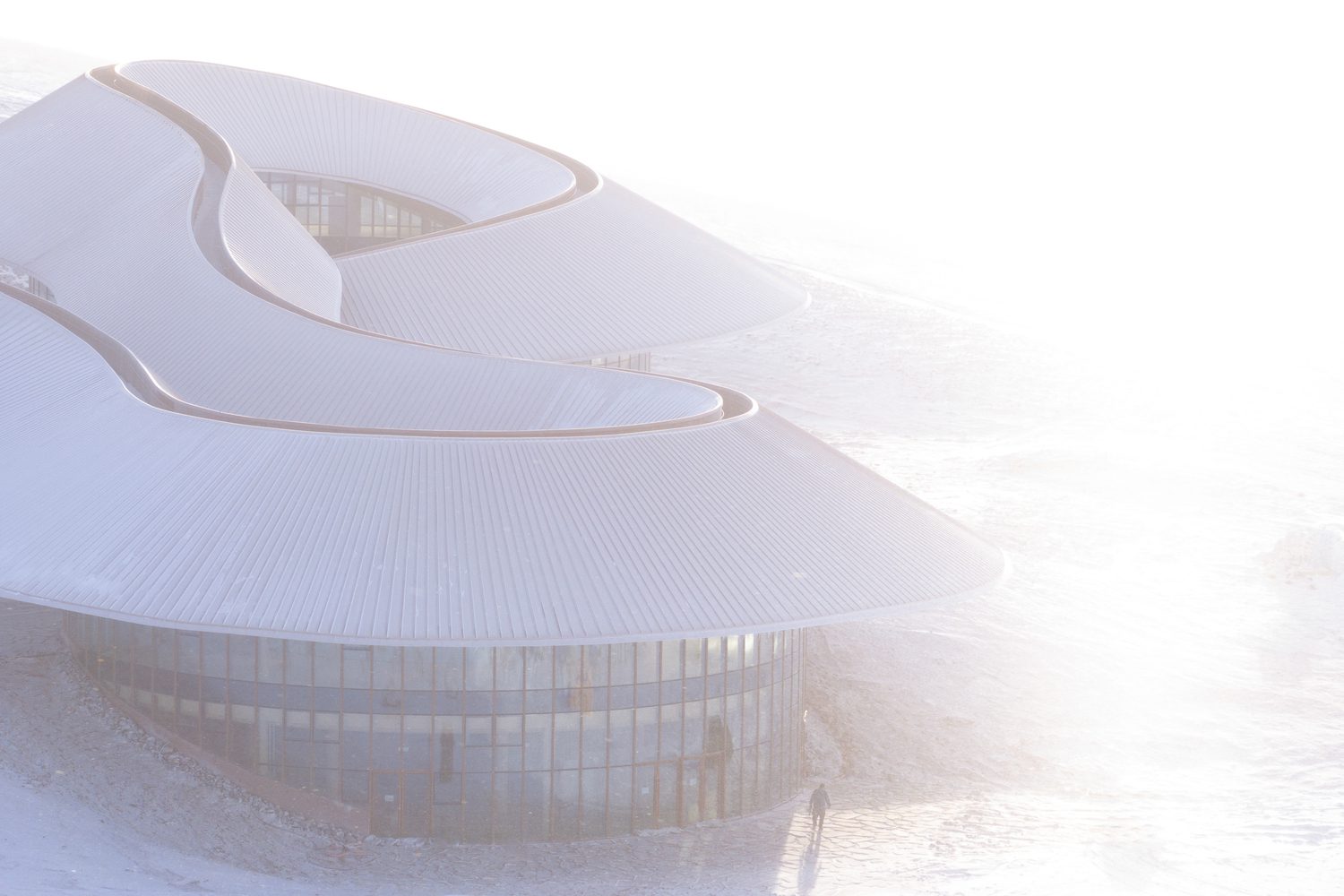
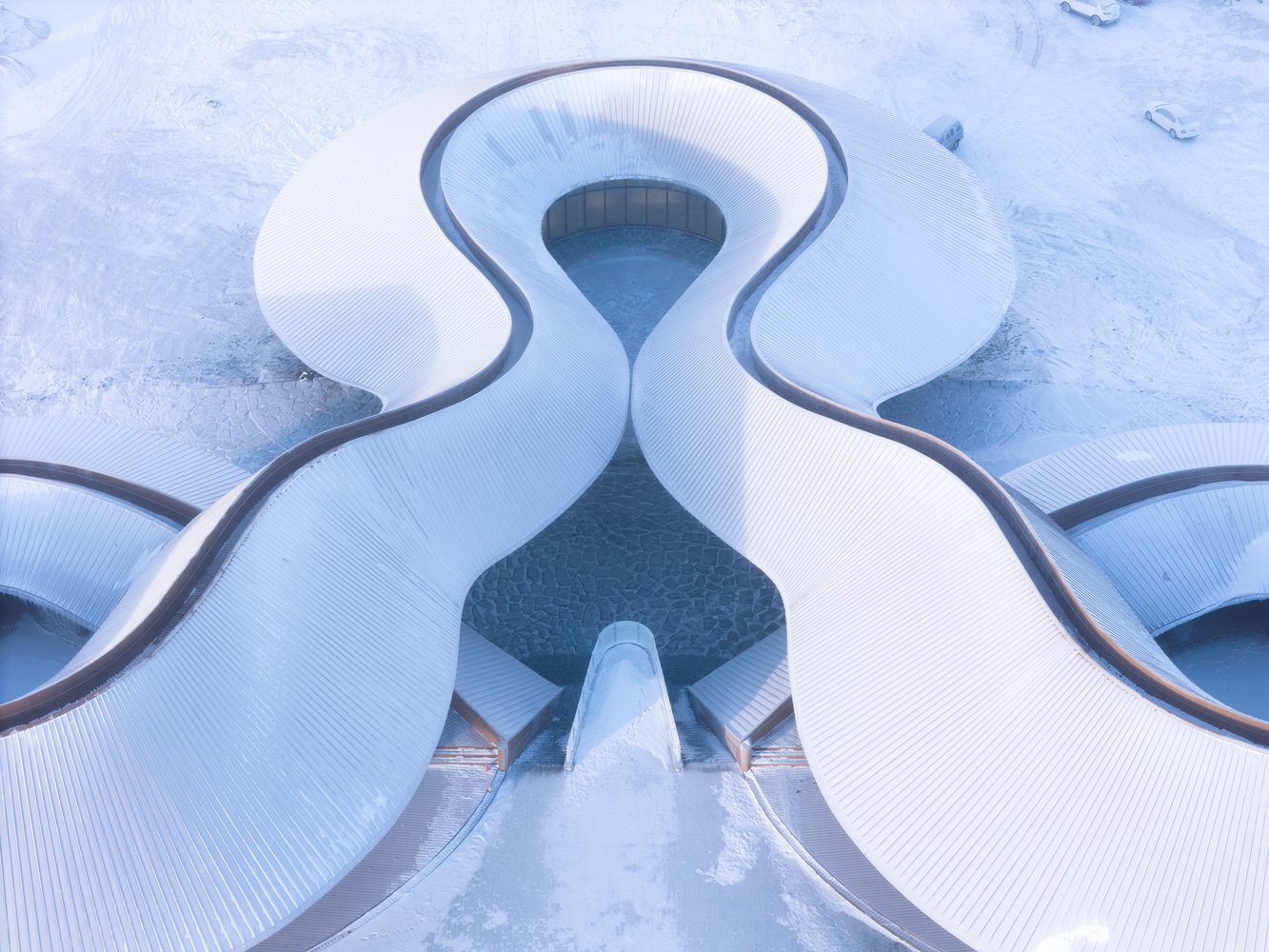
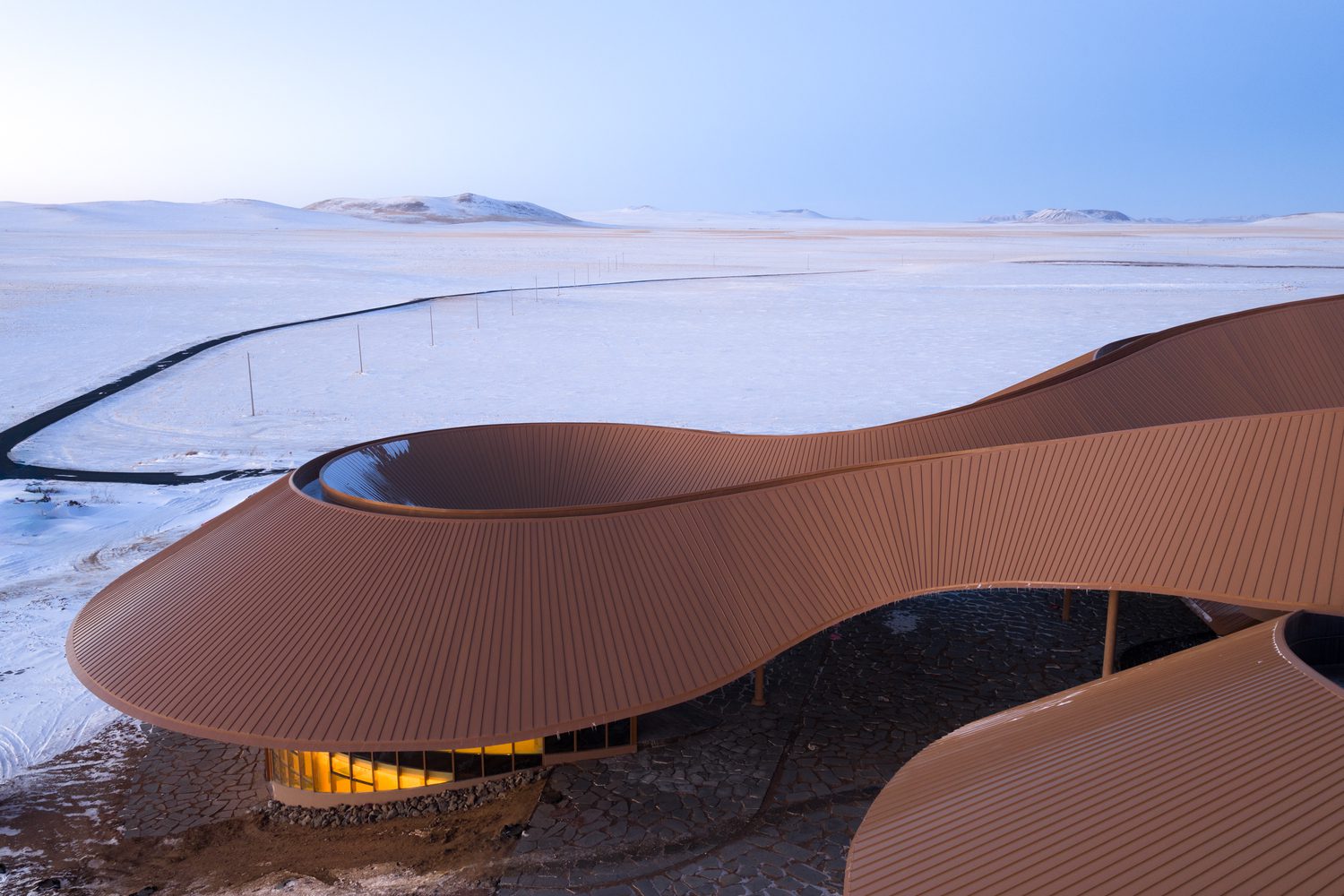
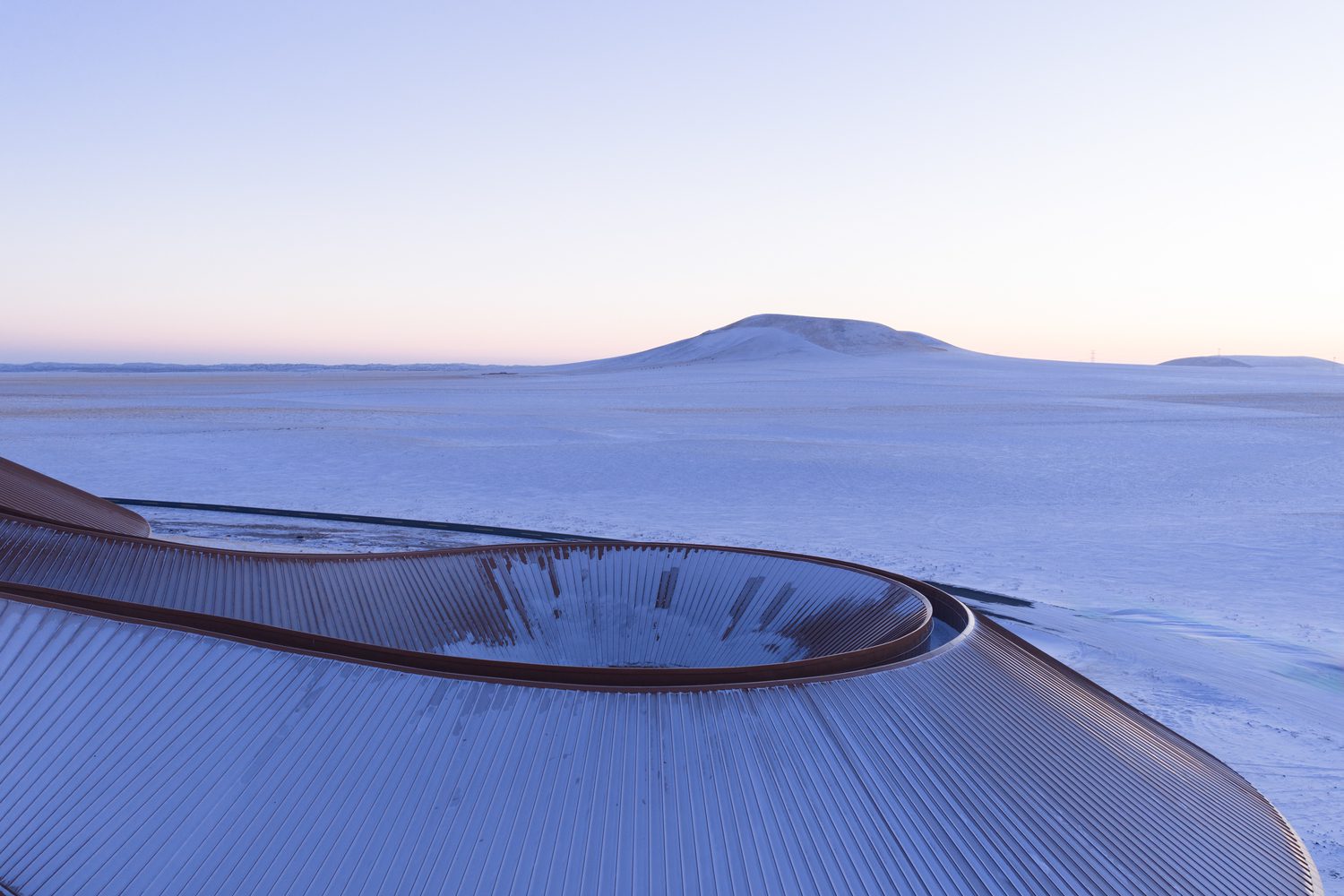
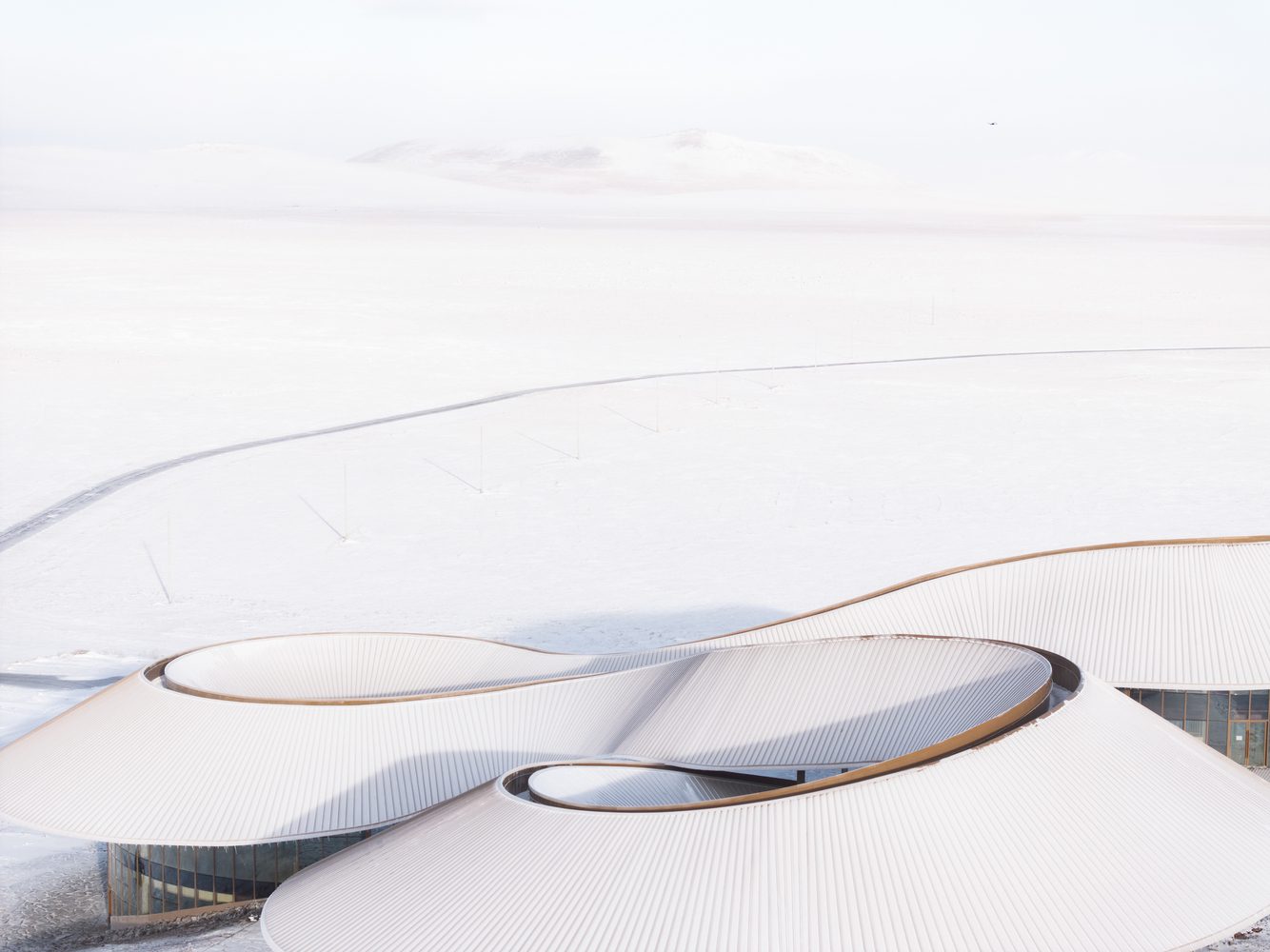
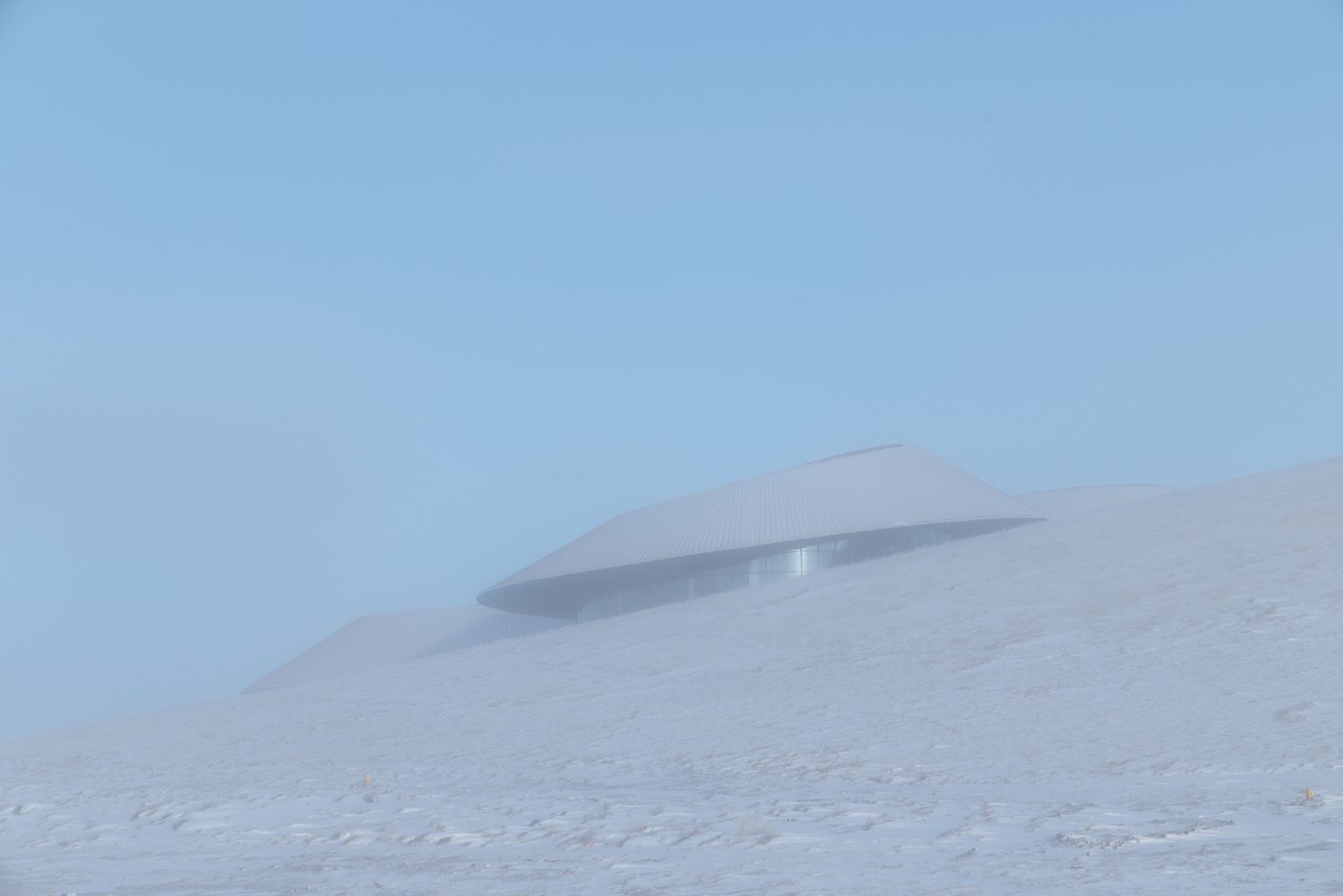
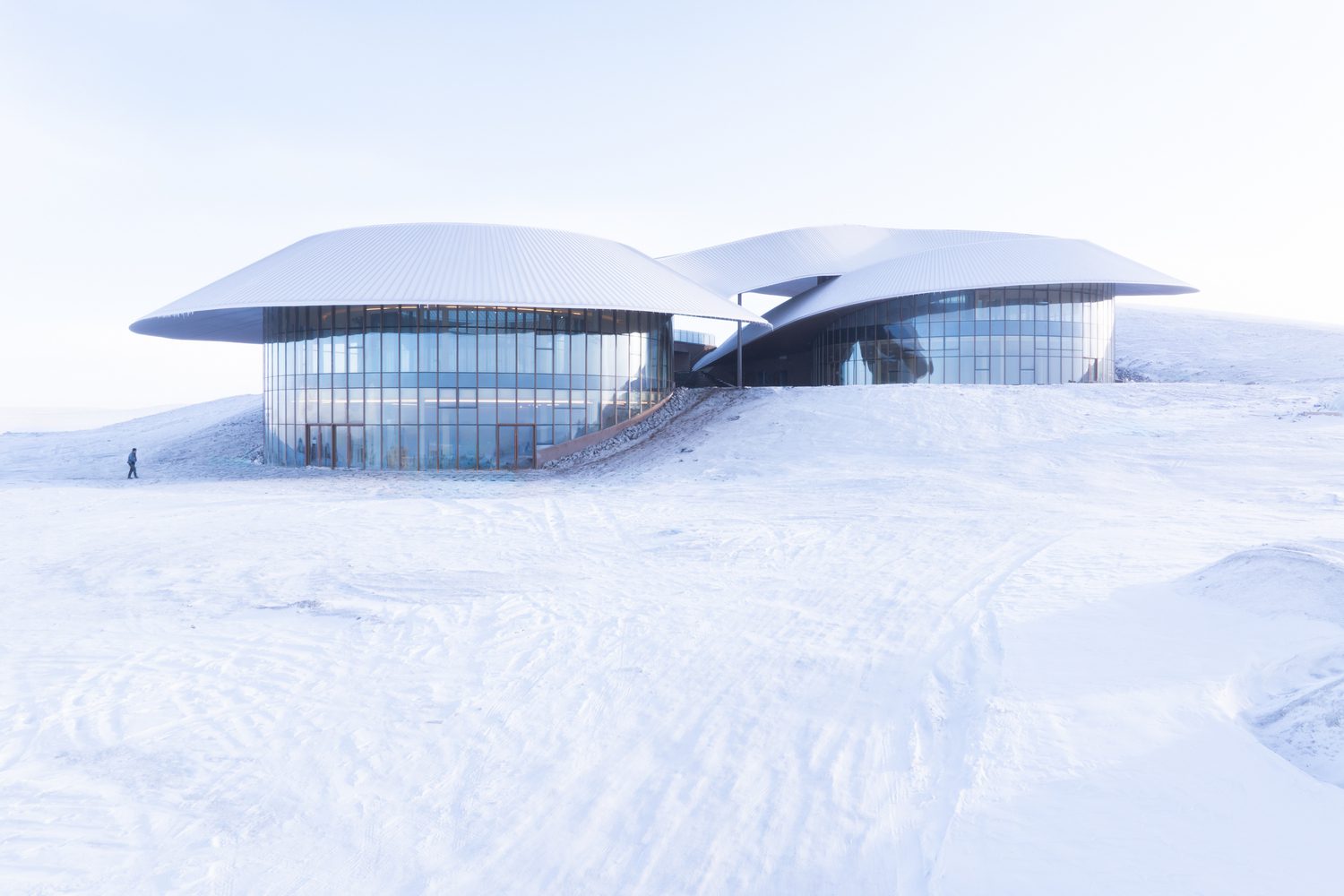
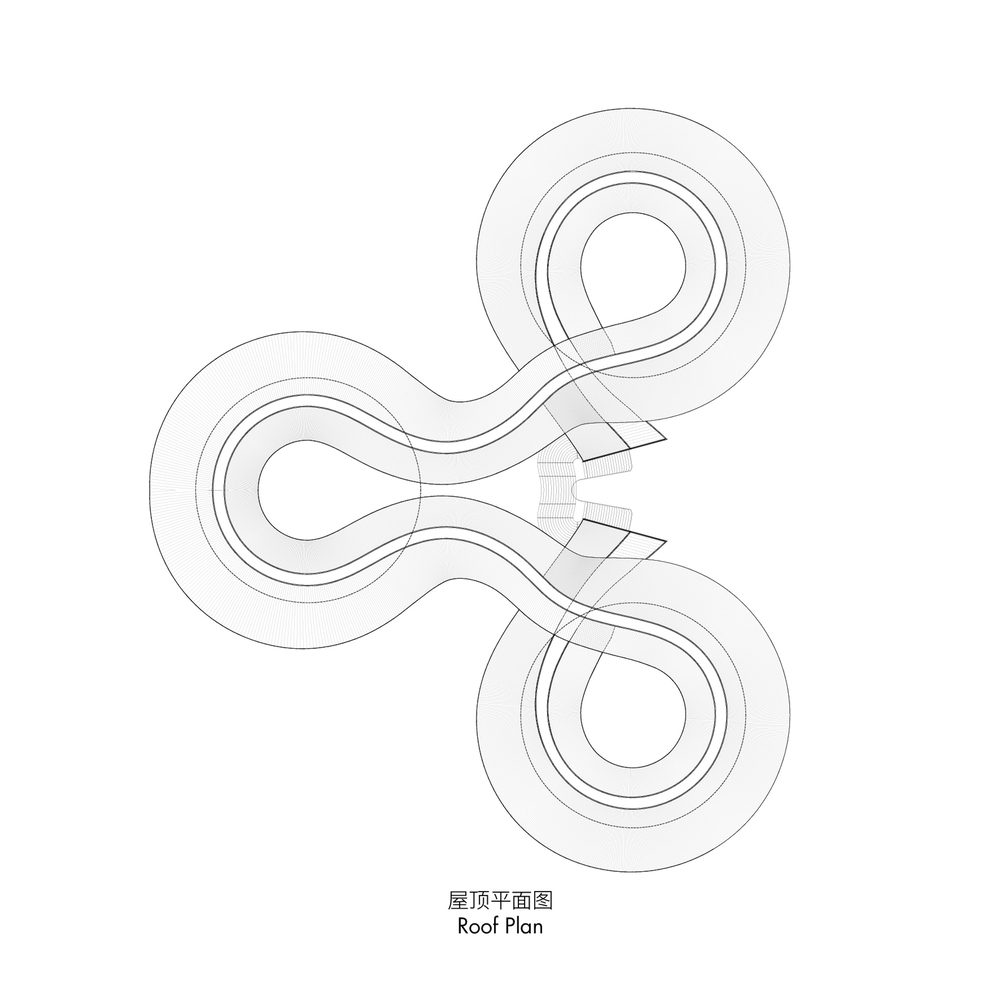
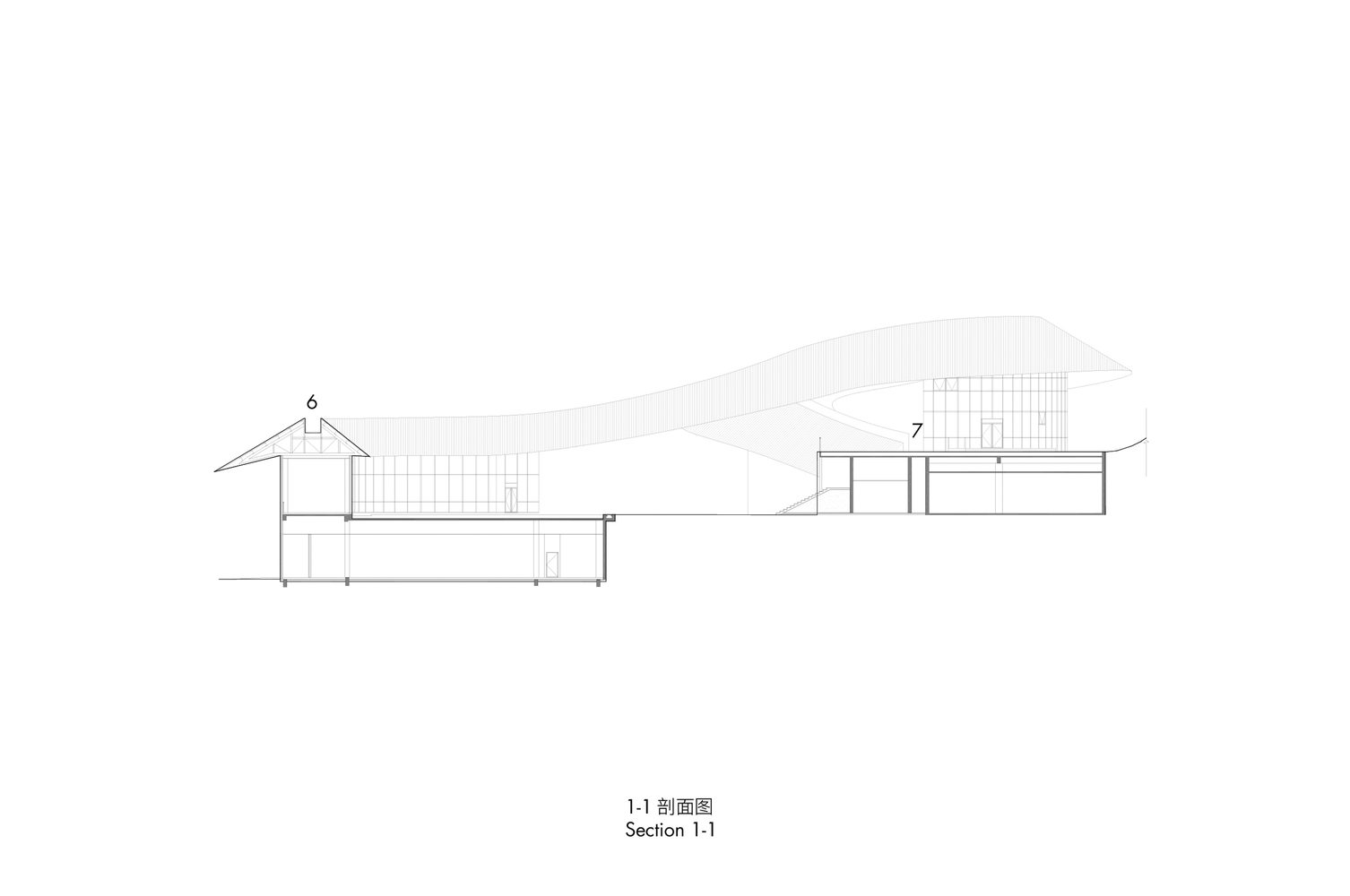
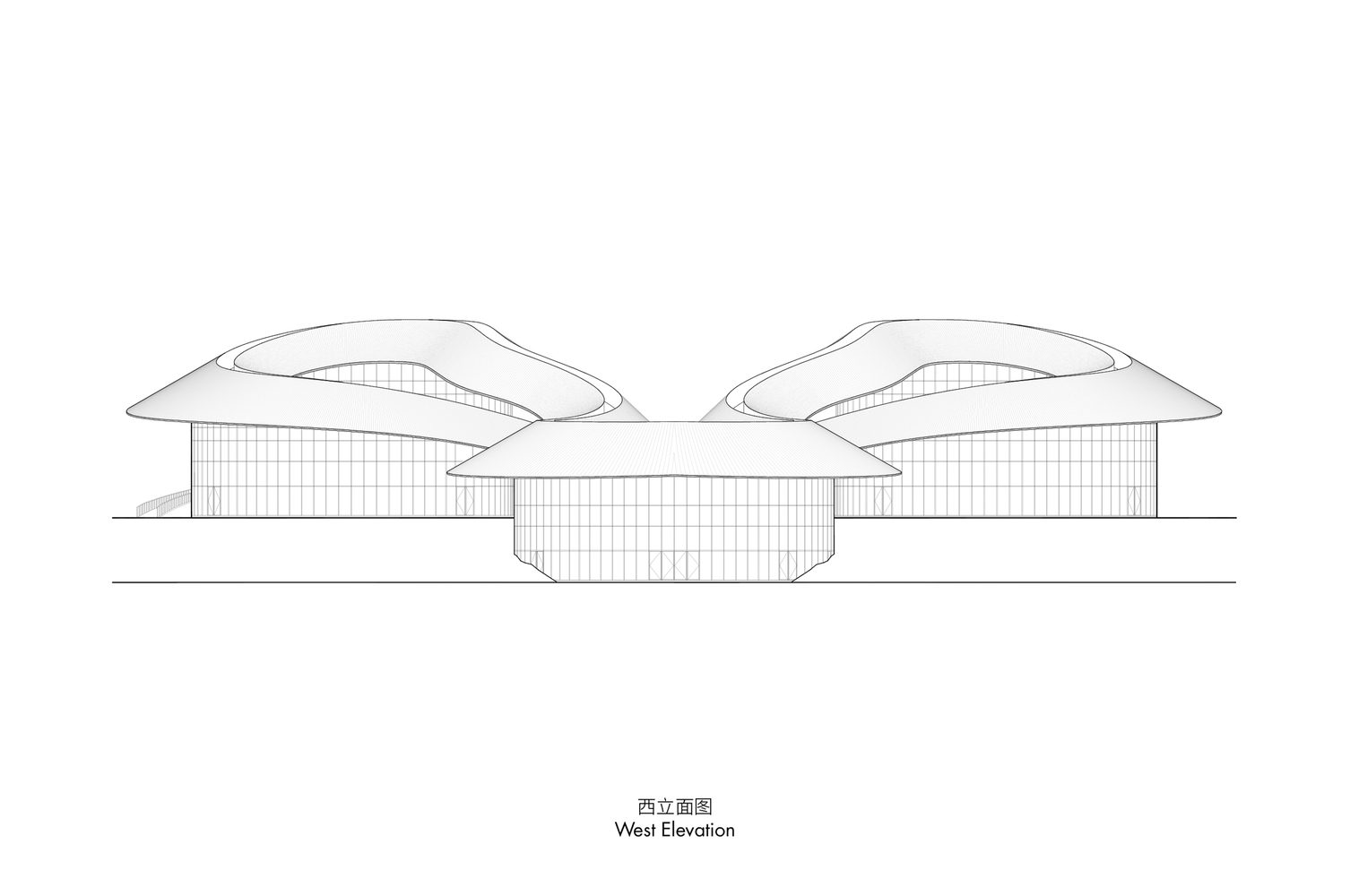
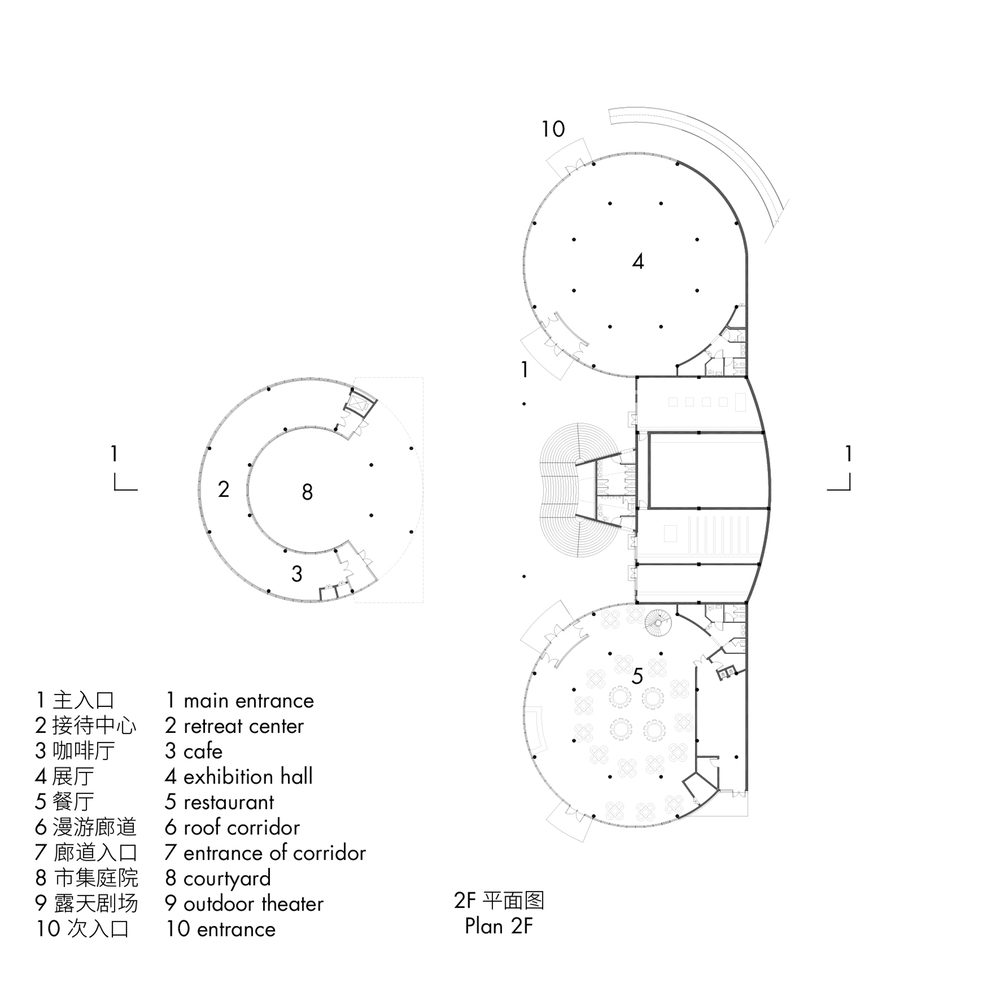
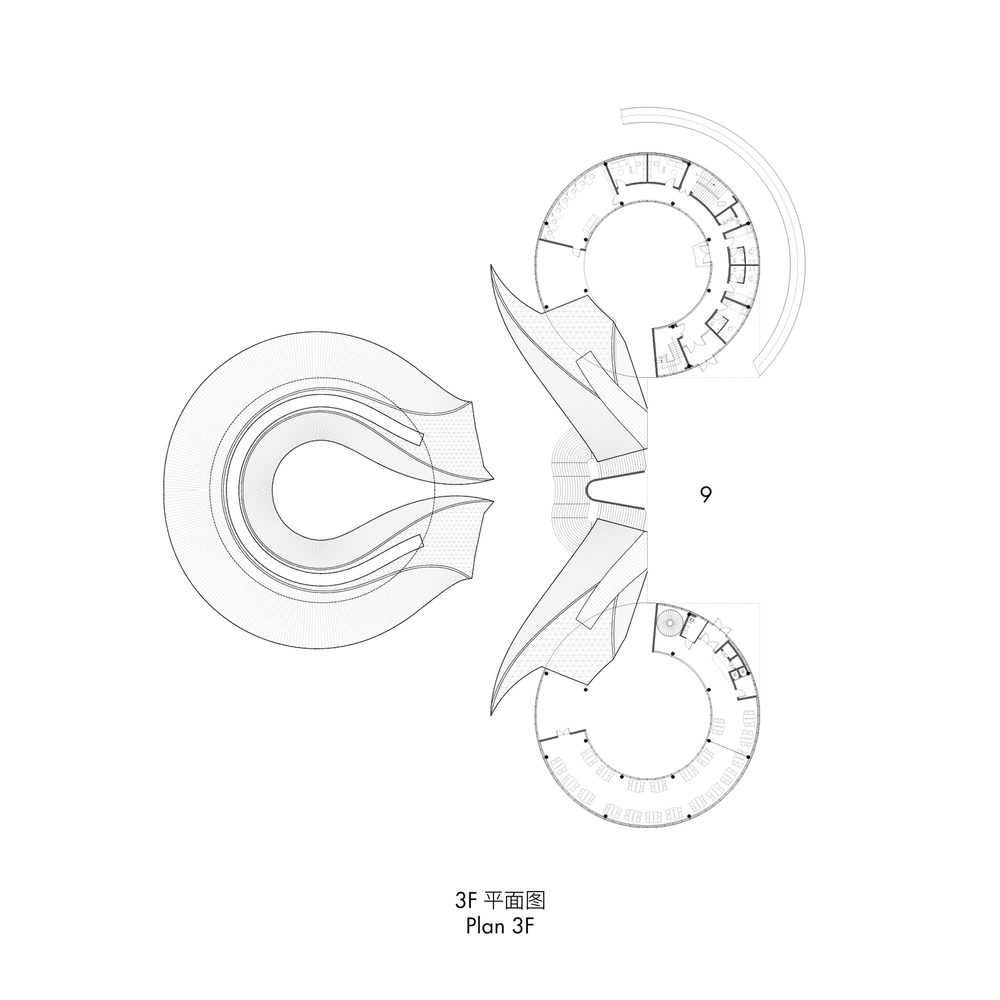
The core concept of the visitor centre is based on the co-growth of architecture and the volcanic cone, the dialogue between the building and the surrounding steppe and volcano, and the immersive experience of moving around the volcano. Architect Bian Baoyang derived the design with the key idea that “the volcano is the leading role.” A curved roof structure and three circular volumes placed at different elevations follow the topography, evoking the primary silhouette of a volcano: the cone. A continuous, winding corridor spirals like a labyrinth, connecting the three blocks along a 274-meter path that offers views of the volcanoes, steppe, sandy land, and lake, creating a sequential experience around the volcanic ash ring. Looking inward from the roof corridor, the third figure of a volcano—the crater—encloses the interior functions, including visitor services, a café-bookstore, exhibition halls, management offices, and a restaurant. The visitor service courtyard can host art fairs in its open space, while the square between the exhibition and restaurant buildings serves as an outdoor theatre. Eco-bleachers along the eastern slope overlook the volcanic ring roof and the distant volcanoes, with the steppe stretching toward the horizon.
© Arch-Exist
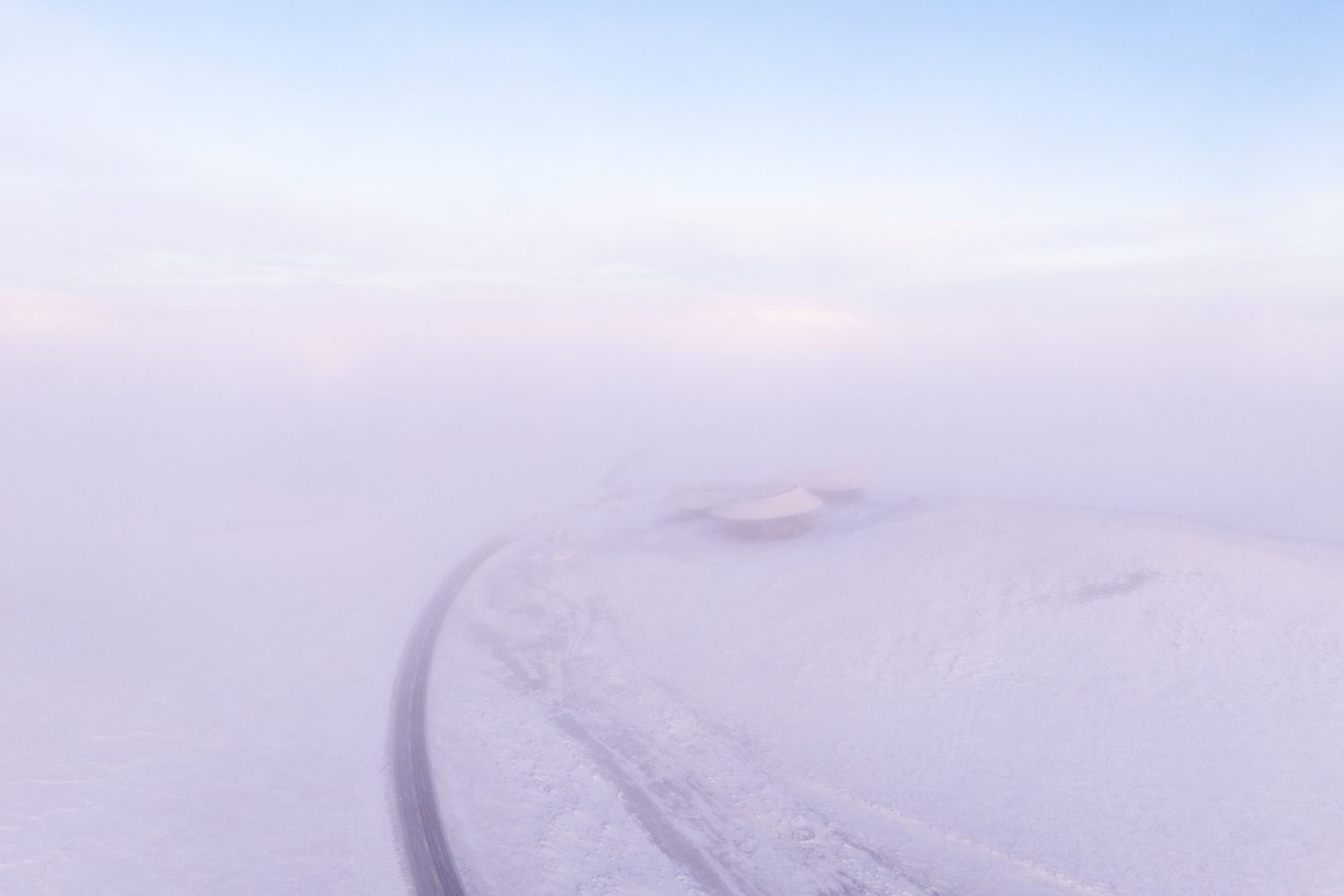
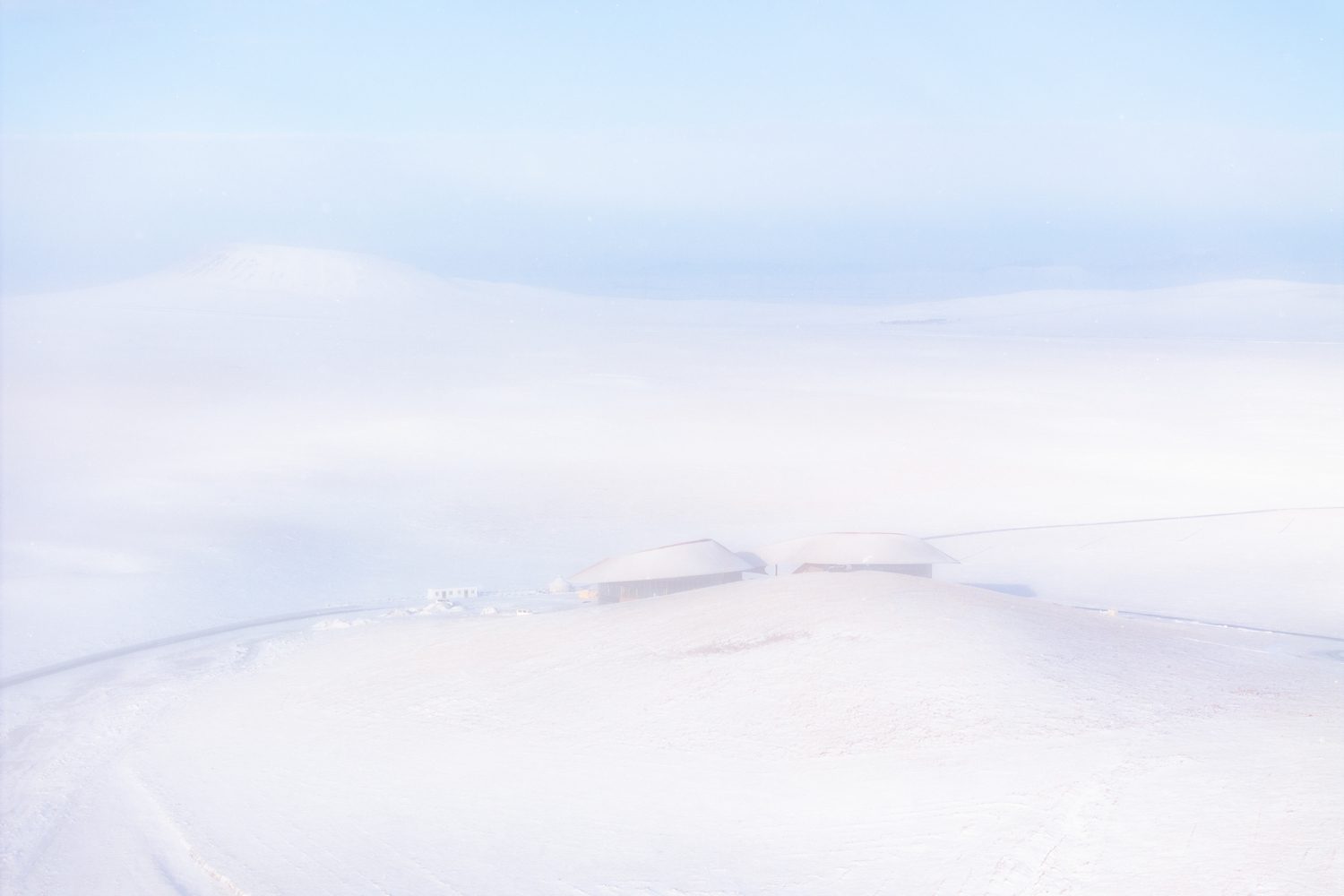
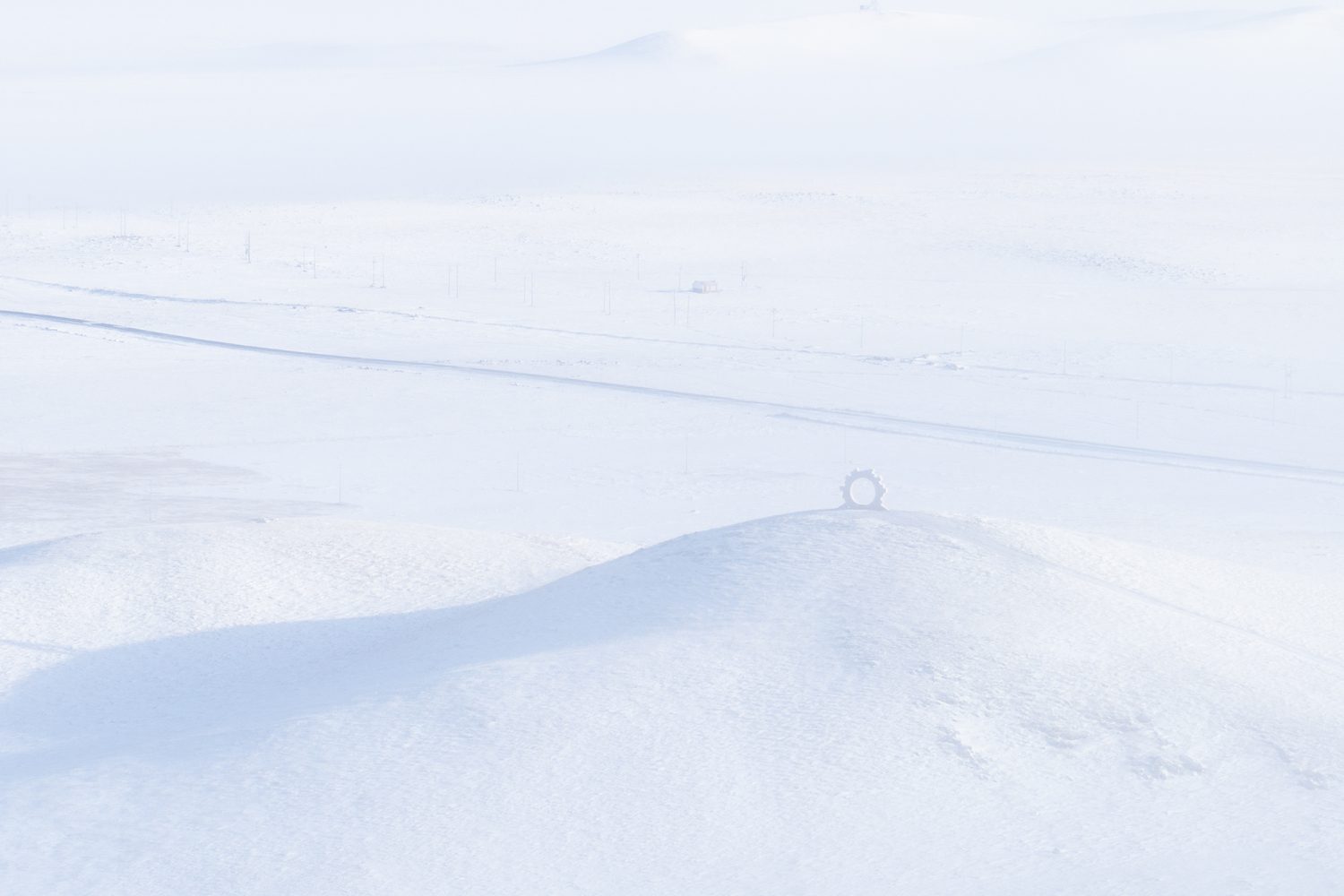
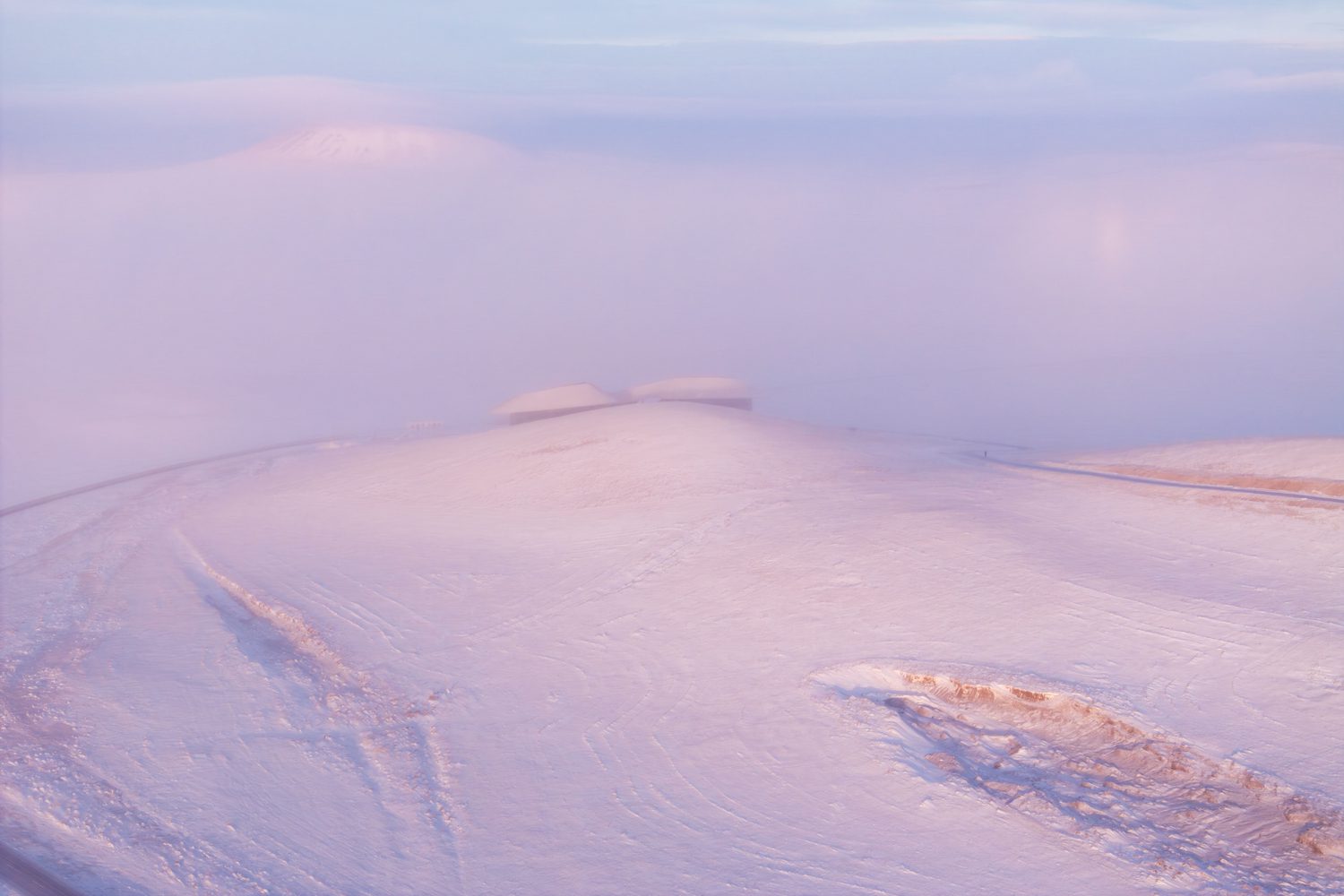
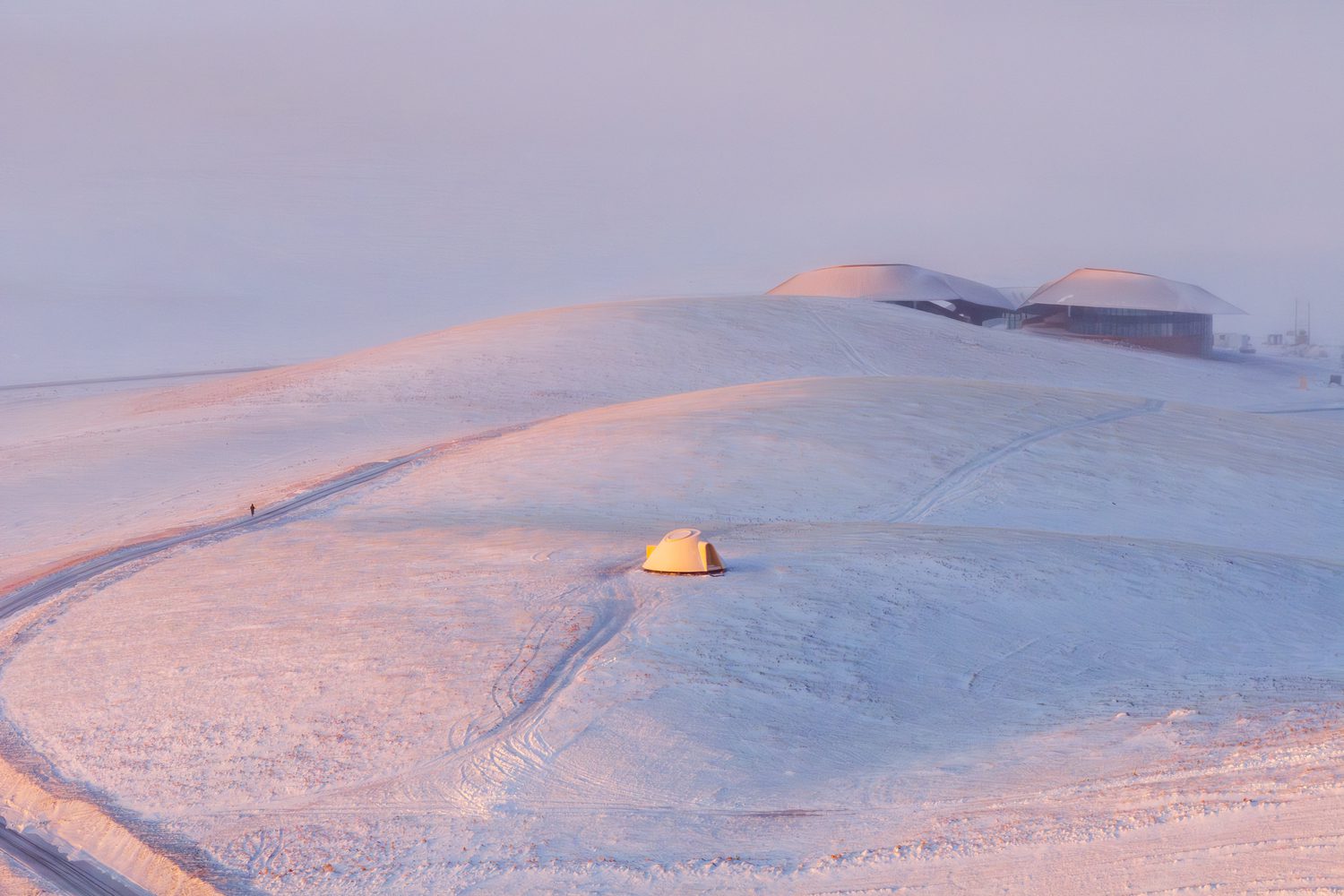
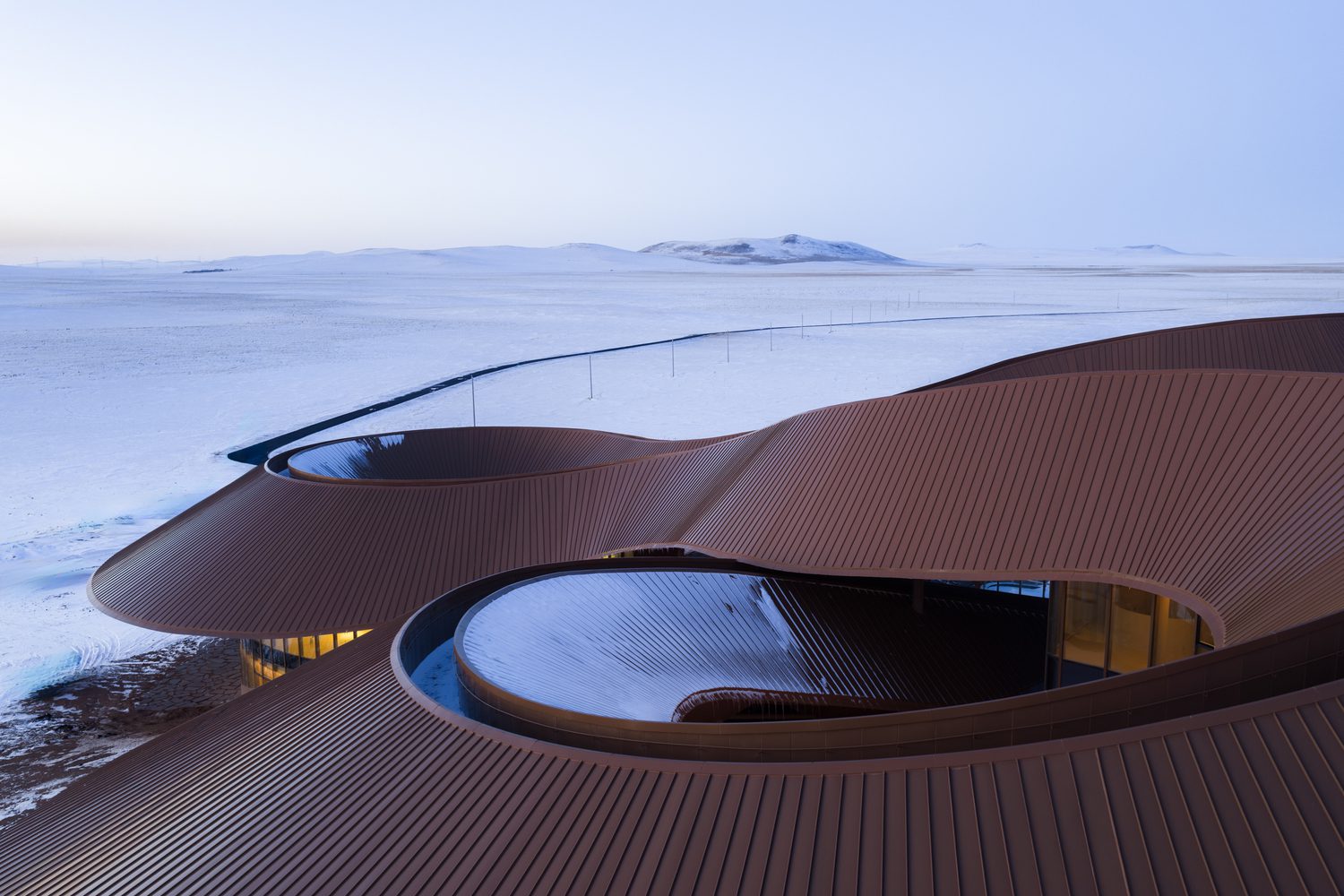
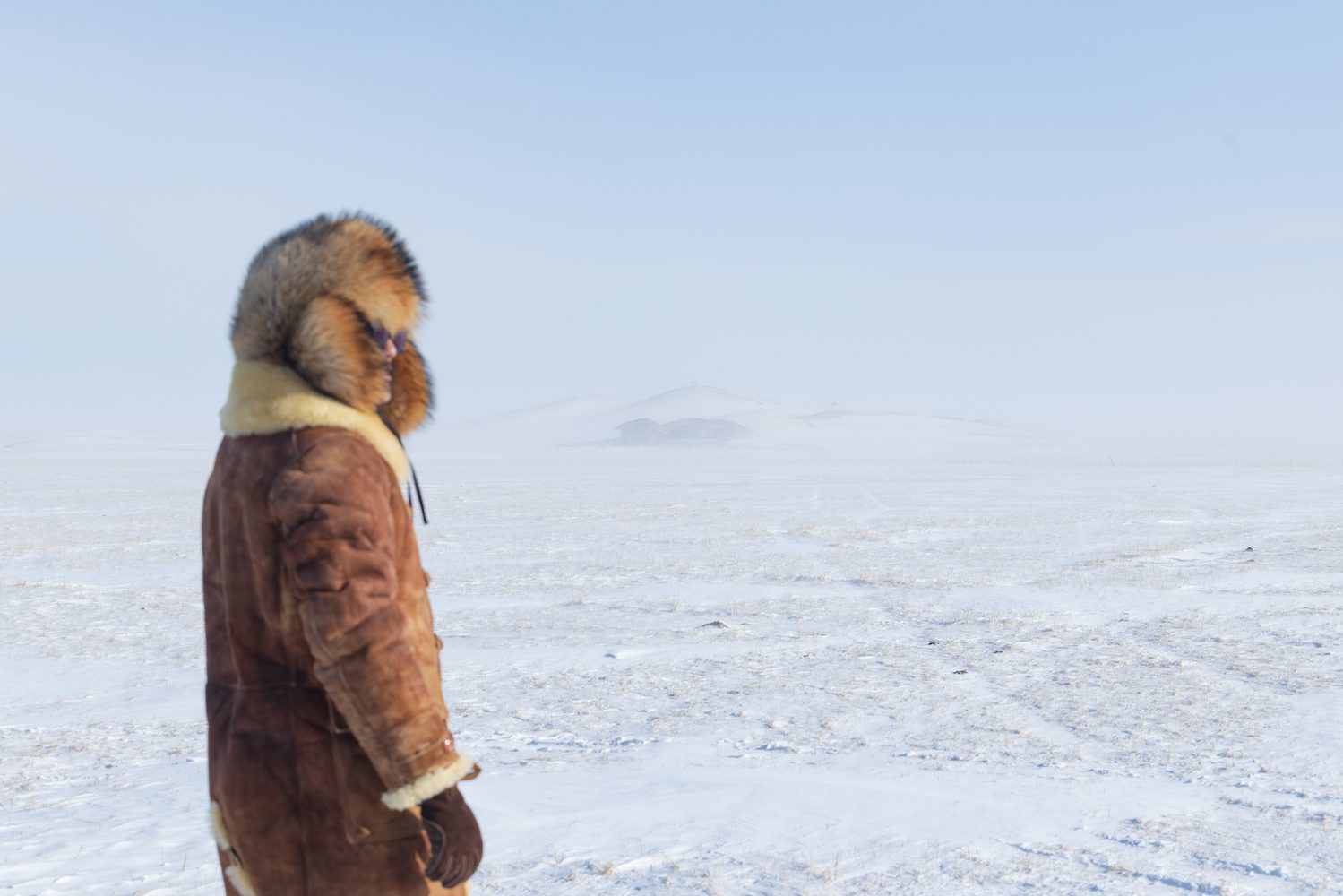
Each time the vast, wild steppe touches the spirit of those on site, the extraordinary scenery—both natural and meteorological—satisfies every visitor. Only by releasing oneself into the wild, through waiting or encountering, is one rewarded with vistas that fulfil anticipation and discovery. For example, the sun sets daily on the horizon between Haritaolegai and Qingayinxile west of Volcano-In, while it rises from the ridge of the volcanic cone itself. Arriving at the Flame Art Installation at Volcano-In means meeting the first rays of sunlight in Xilinhot. Under a starry sky, the wandering corridor glows like a river of lava. Rainbows, clouds, and snow—all are hidden within the flow of time. From a long-term phenological perspective, the russet volcanic-rock architectural surface blends with the green steppe in summer, melts into gradients of gold during spring and autumn, and in winter provides shelter in warm lava tones against the vast snowfield. Here, time embraces the entire physical world, and nature restores the spirit.
© Arch-Exist
The Baiyinkulun region experiences a temperate continental climate, with winter and spring often subject to snowdrifts. To cope with strong winds, the architecture adopts a curved outline and surface to reduce shear forces. The long roof eaves protect the courtyard from snow and wind, frame views of the volcanic landscape, and reflect the surroundings through glass curtain walls. Cold is another challenge. With temperatures in Xilinhot dropping as low as –43°C, the weather resistance metal panel cladding helps maintain a warm interior environment. Following the principle of low environmental intervention, the landscape strategy incorporates local volcanic stone: 5 cm-deep natural slabs pave the outdoor square and pathways, while weathering steel platforms are integrated into the terrain, allowing the architecture to grow with the volcano.
© Arch-Exist
The Volcano-In Visitor Centre demonstrates architectural growth, responds to the environment and climate, creates a volcanic experience, and bridges the relationship between the volcano and people—both in mind and in the physical world.
© Arch-Exist
Project Info:
Architects: PLAT ASIA
Country: Xilingol League, China
Area: 3532 m²
Year: 2025
Photography: Arch-Exist
Manufacturers: LifeSmart
Principal Architect: Bian Baoyang
Project Architect: Liu Xinwei, Yang Lu
Site Architect: Su Lede
Design Team: Nandin, Guo Lulu, Dong Zijuan, Ma Xuan, Chu Jianwei, Yan Xinran
Landscape Design Team: Zhang Xiaozhan, Wang Xiaochun
Architecture Construction Drawing Designer: HUACHENGBOYUAN Engineering Technology Group
Steel Structure Design And Construction: Beijing Jinshengjie Membrane Structure Technology Ltd., Co.
Glass Curtain Wall And Roof Construction: TONGCHUANGHUAJIAN Group
Lighting Consultant: Beijing Wuse International Lighting
General Contractor: Inner Mongolia TianLong Construction Co., Ltd.
Clients: Inner Mongolia Da Meng Shen Zhou Tourism Development Co., Ltd.

Madeline Brooks is a Projects Editor at Arch2O, where she has been shaping and refining architectural content since March 2024. With over a decade of experience in editorial work, she has curated, revised, and published an array of projects covering architecture, urbanism, and public space design. A graduate of the Harvard University Graduate School of Design, Madeline brings a strong academic foundation and a discerning editorial eye to each piece she oversees. Since joining Arch2O, she has played a pivotal role in shaping the platform’s editorial direction, with a focus on sustainability, social relevance, and cutting-edge design. Madeline excels at translating complex architectural ideas into clear, engaging stories that resonate with both industry professionals and general readers. She works closely with architects, designers, and global contributors to ensure every project is presented with clarity, depth, and compelling visual narrative. Her editorial leadership continues to elevate Arch2O’s role in global architectural dialogue.