

A “starchitect” is an architect whose personal celebrity rivals the buildings they design — a fusion of “star” and “architect” describing figures whose formally experimental, headline-grabbing landmarks are commissioned as much for their name recognition as for their design merit. The modern era of the starchitect is widely traced to a single building: Frank Gehry’s 1997 Guggenheim Museum Bilbao, whose rippling titanium curves single-handedly turned a declining Basque industrial port into a global tourist destination. That transformation was so dramatic it spawned its own economic shorthand — the “Bilbao Effect” — and with it, a permanent, unresolved argument inside the profession about whether architecture exists to serve the people who use buildings, or the ambitions of the people who design them.
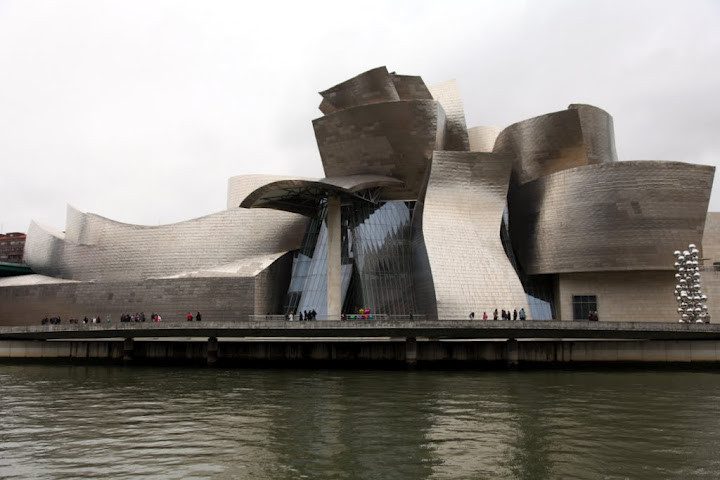
Frank Gehry’s Guggenheim Museum Bilbao, whose rippling titanium curves launched the modern starchitect era and the ‘Bilbao Effect.’ Photograph by Flickr user RonG8888
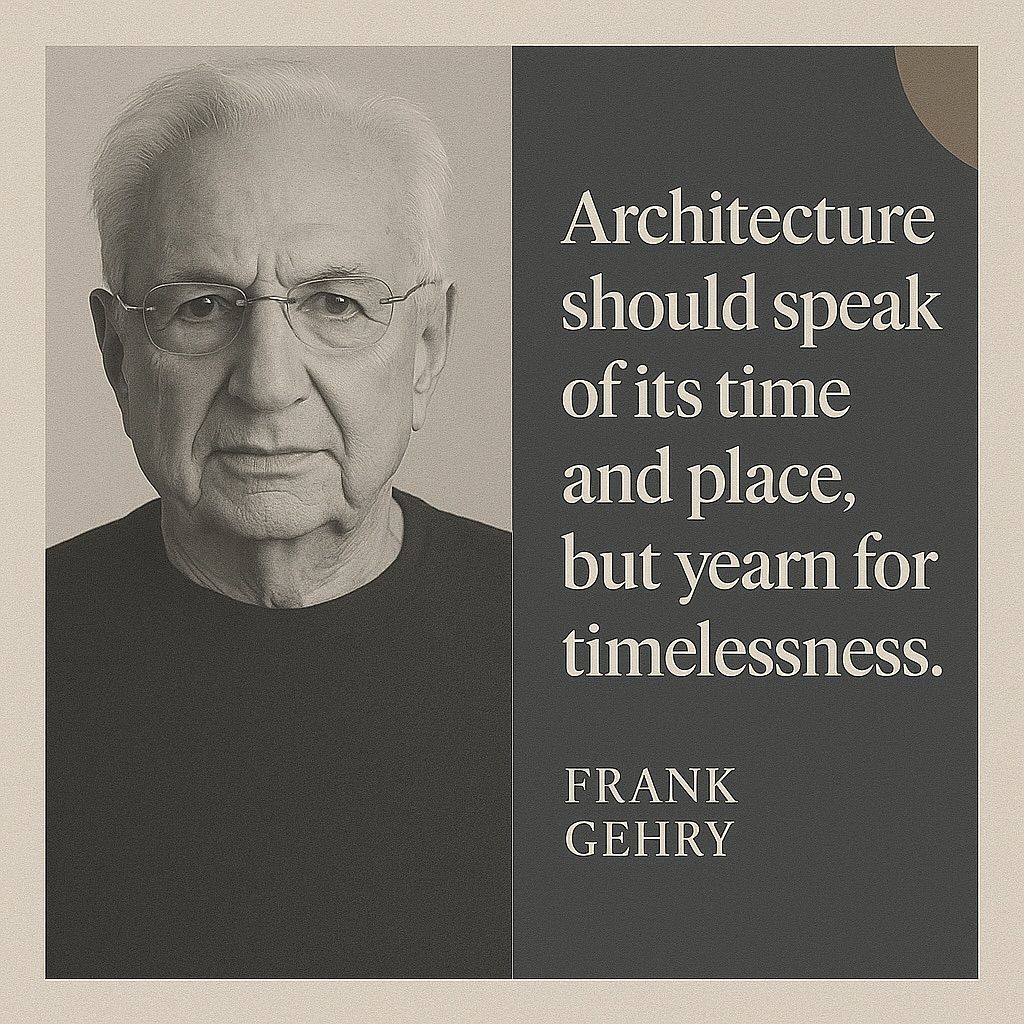
What Is a Starchitect?
The term describes an architect whose personal brand and signature formal style have become more culturally prominent than the specific commissions they build, elevating them to a status closer to a fashion designer or film auteur than a traditional design professional. The word itself is a portmanteau, first circulating in architecture-school jargon in the early 1980s but only entering mainstream design journalism after Bilbao’s opening put a face — Gehry’s — on the phenomenon of architecture-as-media-event.
Crucially, the term did not begin its life as an insult. Through the late 1980s and early 1990s it functioned largely as a neutral, even admiring, label for a small cohort of designers — Gehry, Rem Koolhaas, Peter Eisenman — whose theoretical writing and formal experimentation were reshaping architectural discourse in academic circles long before it reached the public. What changed the term’s connotation was scale and repetition. As municipalities worldwide began commissioning near-identical “iconic” museums, concert halls, and towers from the same shortlist of internationally famous names, critics began using “starchitect” pejoratively — as shorthand for a building process driven by branding logic rather than site-specific problem-solving. By the 2000s, the word had migrated from architecture journals into general-interest media, typically deployed with a raised eyebrow.
A formally experimental, signature-style landmark of the kind associated with celebrity ‘starchitecture,’ where a recognizable form becomes the building’s public identity.
What Is the Main Criticism of Starchitecture?
The central criticism is that starchitecture frequently prioritizes formal novelty, visual spectacle, and institutional prestige over occupant comfort, contextual fit with the surrounding neighborhood, and realistic long-term maintenance budgets. This is not a marginal or purely aesthetic complaint — it draws on a serious strand of architectural theory concerned with the human experience of buildings.
The architect and theorist Christopher Alexander built much of his life’s work — most notably A Pattern Language and his later four-volume treatise The Nature of Order — around the argument that buildings possess a measurable quality of “life” or “wholeness” rooted in incremental, human-scaled, context-responsive design. Alexander was an outspoken critic of what he saw as modernist and late-modernist architecture’s drift toward novelty-for-its-own-sake, arguing that when formal invention is treated as the primary design goal, the resulting buildings can feel emotionally cold and disconnected from ordinary human experience, however impressive they appear in photographs. Applied to the starchitect phenomenon, this critique lands squarely: a titanium-clad museum may generate extraordinary press coverage while functioning poorly as a place to actually inhabit — with harsh acoustics, disorienting circulation, glare-heavy interiors, or facades whose complex geometry drives maintenance costs far beyond what municipal budgets anticipated.
This is where the criticism connects directly to the Bilbao Effect. Municipal governments and cultural institutions increasingly approach a signature building the way a city might approach an Olympic bid: as a single, concentrated bet that global media attention on an iconic form will translate into tourism revenue, inward investment, and civic prestige. That bet occasionally pays off spectacularly, as it did for Bilbao. But it has also produced a long list of expensive, underused “iconic” buildings in secondary cities that never achieved anything close to the same visitor numbers — landmarks that succeeded as photographs long before anyone asked whether they succeeded as architecture.
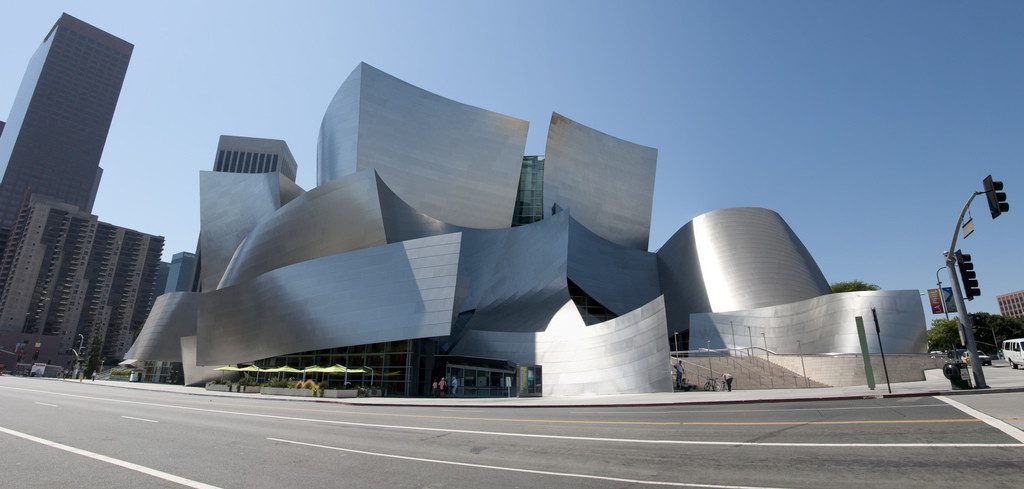
A Frank Gehry building showing the sculptural, computer-modeled forms at the center of the starchitecture debate over spectacle versus function. Photograph © Philipp Rümmele
Who Are Examples of Starchitects?
The most commonly cited figures are Frank Gehry, Zaha Hadid, Rem Koolhaas, Bjarke Ingels, and Santiago Calatrava. Each represents a distinct formal signature — Gehry’s sculptural, computer-modeled curves; Hadid’s fluid, parametric deconstructivism; Koolhaas’s theory-driven conceptual provocations; Ingels’s pragmatic-utopian hybrids that blend spectacle with sustainability branding; and Calatrava’s skeletal, biomorphic engineering forms, which have also drawn some of the sharpest cost-overrun criticism in the group.
Is Starchitecture Good or Bad for Cities?
The honest answer is that it is genuinely both: landmark buildings can deliver real economic windfalls through tourism and international visibility, while simultaneously contributing to the visual standardization of global skylines and inflating public budgets far beyond initial projections. The tension is not hypothetical — it plays out project by project, and the same formal language that reads as thrilling in one city can read as generic “airport architecture” in another once enough cities have commissioned a similar gesture.

A dense global city skyline of the kind critics say has grown visually standardized as cities commission similar iconic landmark forms from the same roster of famous architects.
The Structural Divide: Starchitect vs. Everyday Practice
It is easy to lose sight of how atypical starchitecture actually is when measured against the profession as a whole. The overwhelming majority of licensed architects never design a museum or a concert hall; they spend their careers on schools, clinics, housing, retail fit-outs, and municipal buildings governed by strict programmatic requirements, code compliance, and fixed budgets that leave little room for formal experimentation.
A celebrity commission inverts the usual power dynamic between architect and client. In standard practice, the client’s program and budget constraints are the primary design driver, and the architect’s role is to solve that problem as elegantly as possible within firm limits. In a starchitect commission, the calculus often flips: institutions and municipalities actively seek out a recognizable formal signature, sometimes before a detailed program has even been finalized, because the building’s symbolic and media value is treated as a deliverable in its own right — alongside, or even ahead of, its functional performance. This is precisely what allows genuine engineering breakthroughs to happen. Zaha Hadid’s practice pioneered production-grade parametric and computational geometry tools that pushed what was structurally buildable, and Norman Foster’s high-tech towers advanced double-skin facade engineering and structural transparency in ways that have since filtered down into mainstream commercial construction. Those technical advances are real and durable contributions — the debate is not whether starchitects innovate, but whether that innovation is consistently weighed against occupant experience and fiscal discipline with the same rigor a standard commission would require.

A complex, computationally engineered building form of the type advanced by starchitect practices, where parametric geometry pushes the limits of what is structurally buildable.
Synthesis: The Future of the Icon
By 2026, the profession shows real signs of moving away from the purely hyper-individualistic icon model that defined the two decades after Bilbao. Several forces are pushing in that direction at once. Embodied-carbon accounting and stricter sustainability certification requirements have made the most materially extravagant gestures — vast amounts of custom-fabricated cladding, structurally inefficient cantilevers — harder to justify to increasingly climate-conscious clients and regulators. At the same time, a younger generation of high-profile practices, including Bjarke Ingels’s BIG, has explicitly marketed itself around “pragmatic utopianism”: a synthesis that keeps the spectacle and media appeal of starchitecture while foregrounding measurable sustainability outcomes and mixed-use programmatic flexibility, rather than form for its own sake.
None of this means the icon is disappearing. Cities still want landmarks, and cultural institutions still understand the marketing value of a recognizable silhouette. What is changing is the justification required to build one — the purely formal argument that carried Bilbao in 1997 is increasingly expected to be paired with a sustainability narrative, a community-benefit case, and demonstrable long-term operating viability. The most durable reading of the starchitect debate in 2026 is not “for” or “against,” but an increasing demand that iconic form and rigorous performance be treated as a single design problem rather than two competing ones.
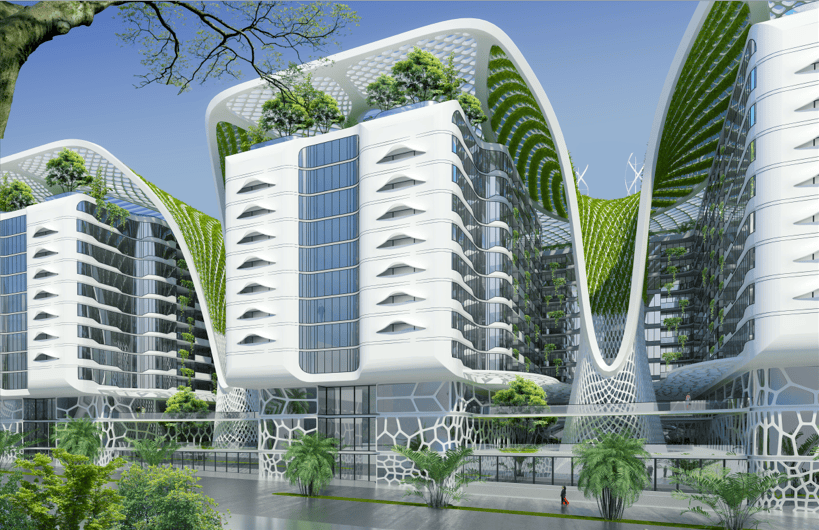
Architectural perspective rendering looking toward a courtyard, illustrating a mixed-use, performance-focused approach to iconic form. Image courtesy of VCA

Luca Moretti is a content strategist with a foundation in urban design and architecture. Based in Milan, he focuses on writing that bridges aesthetics, material culture, and everyday spatial experiences.