


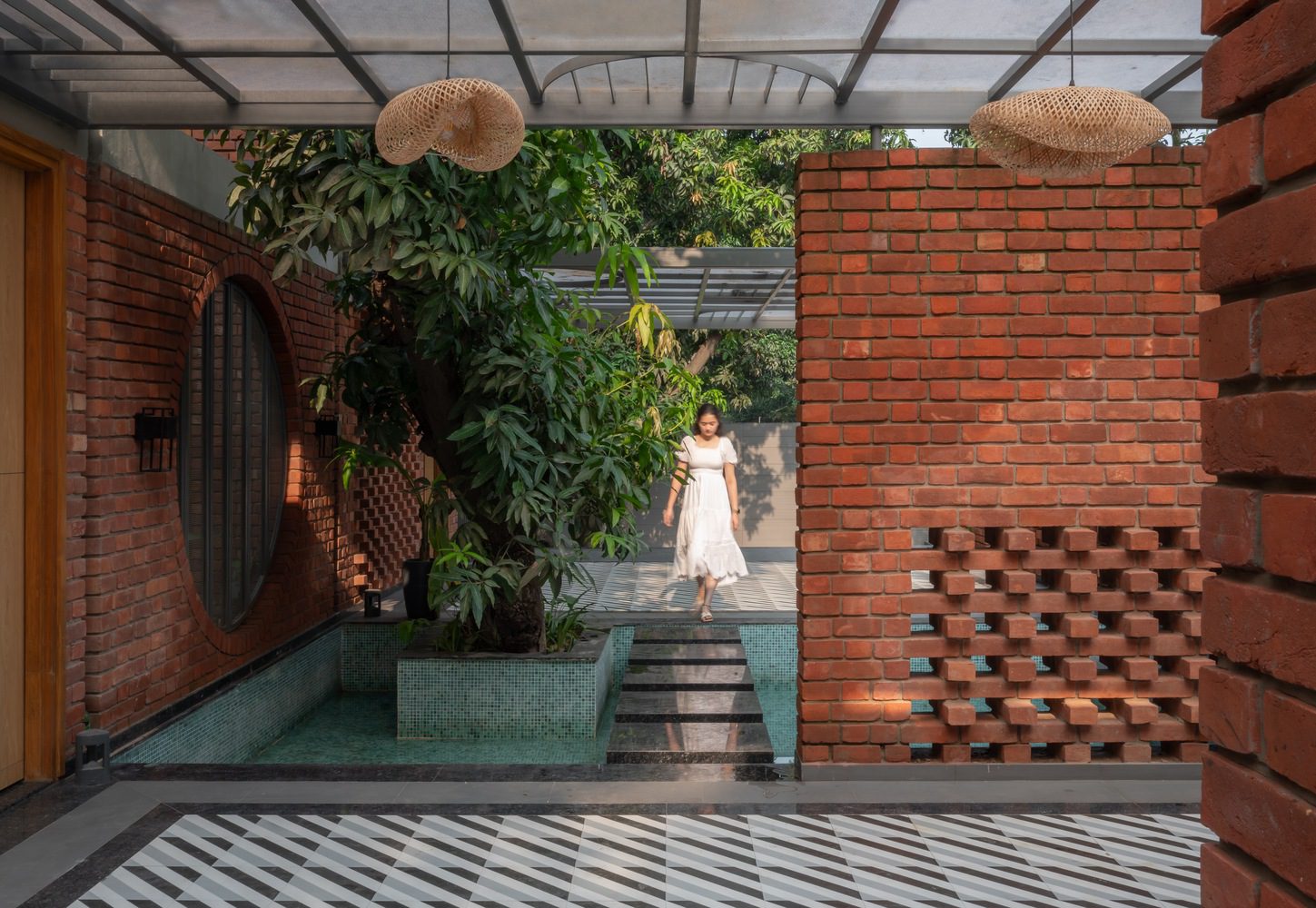
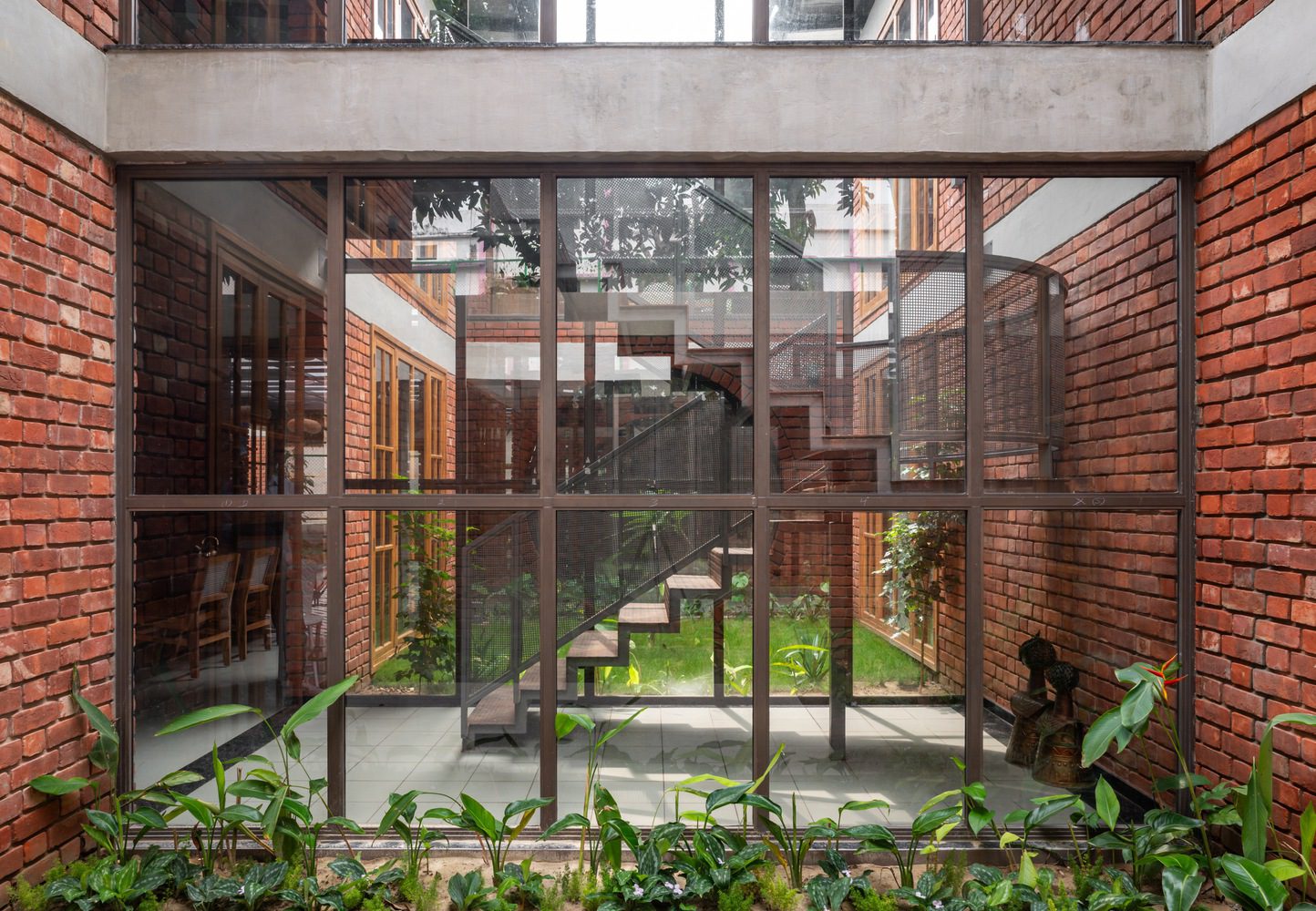
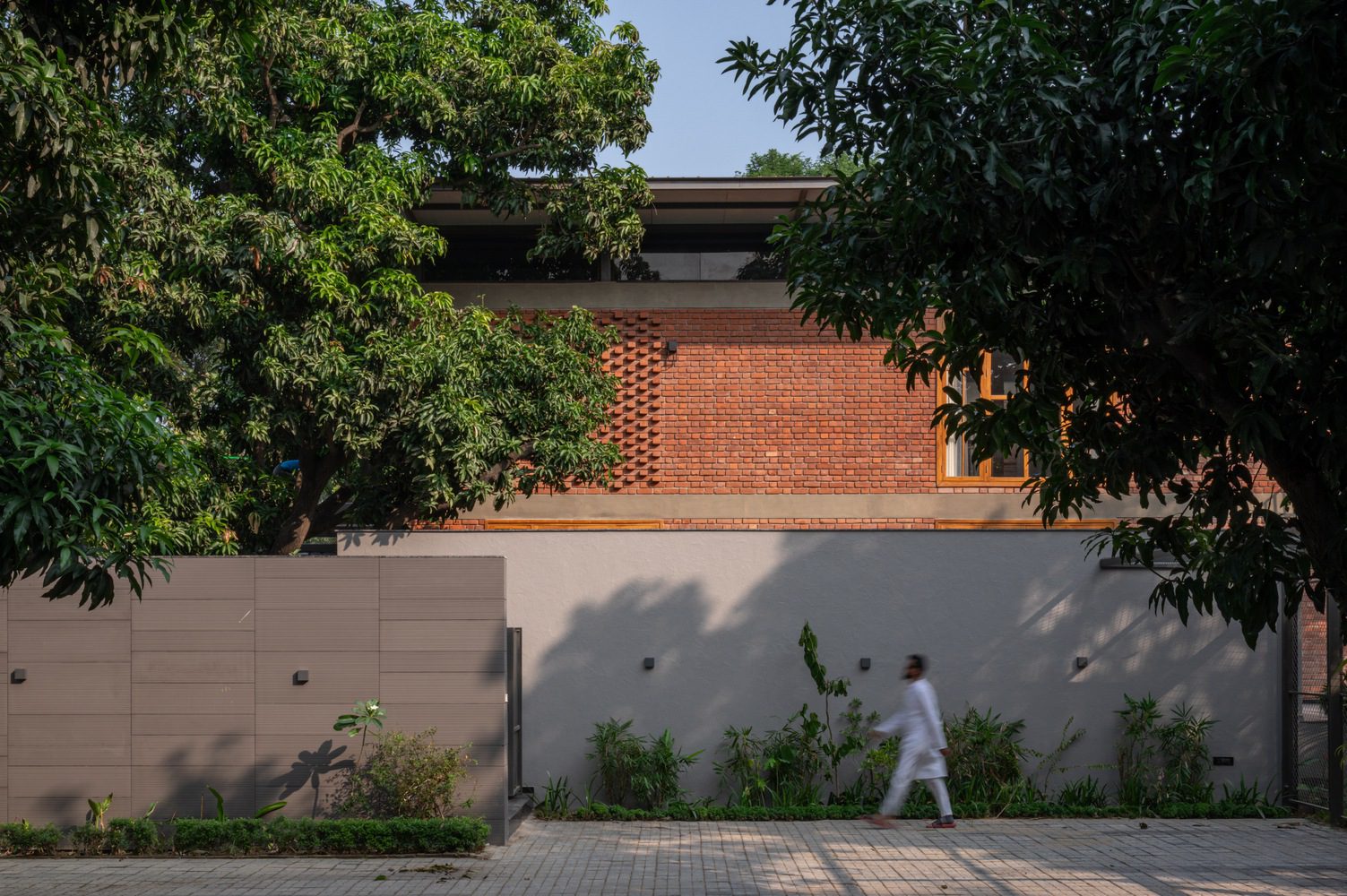
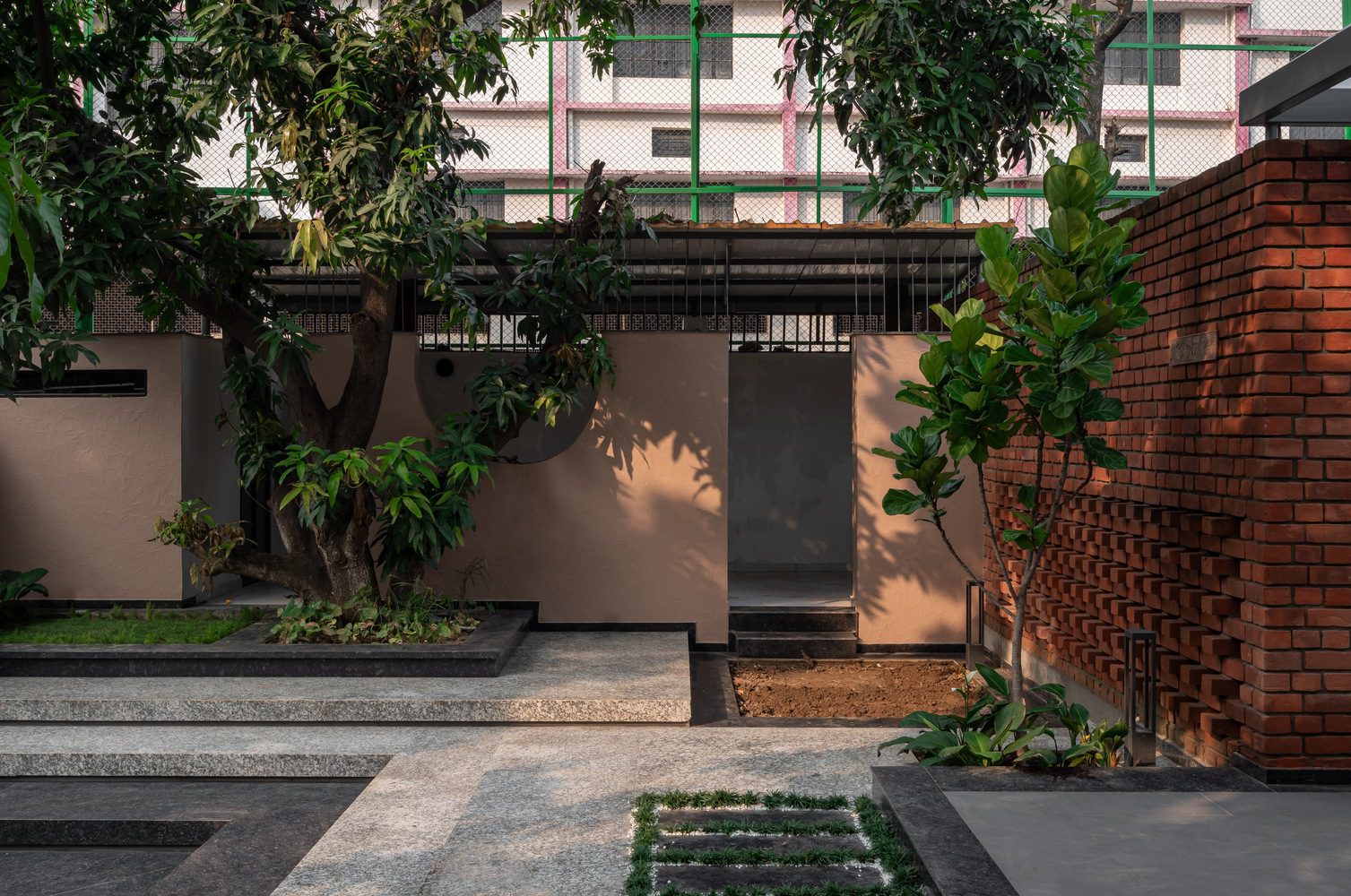
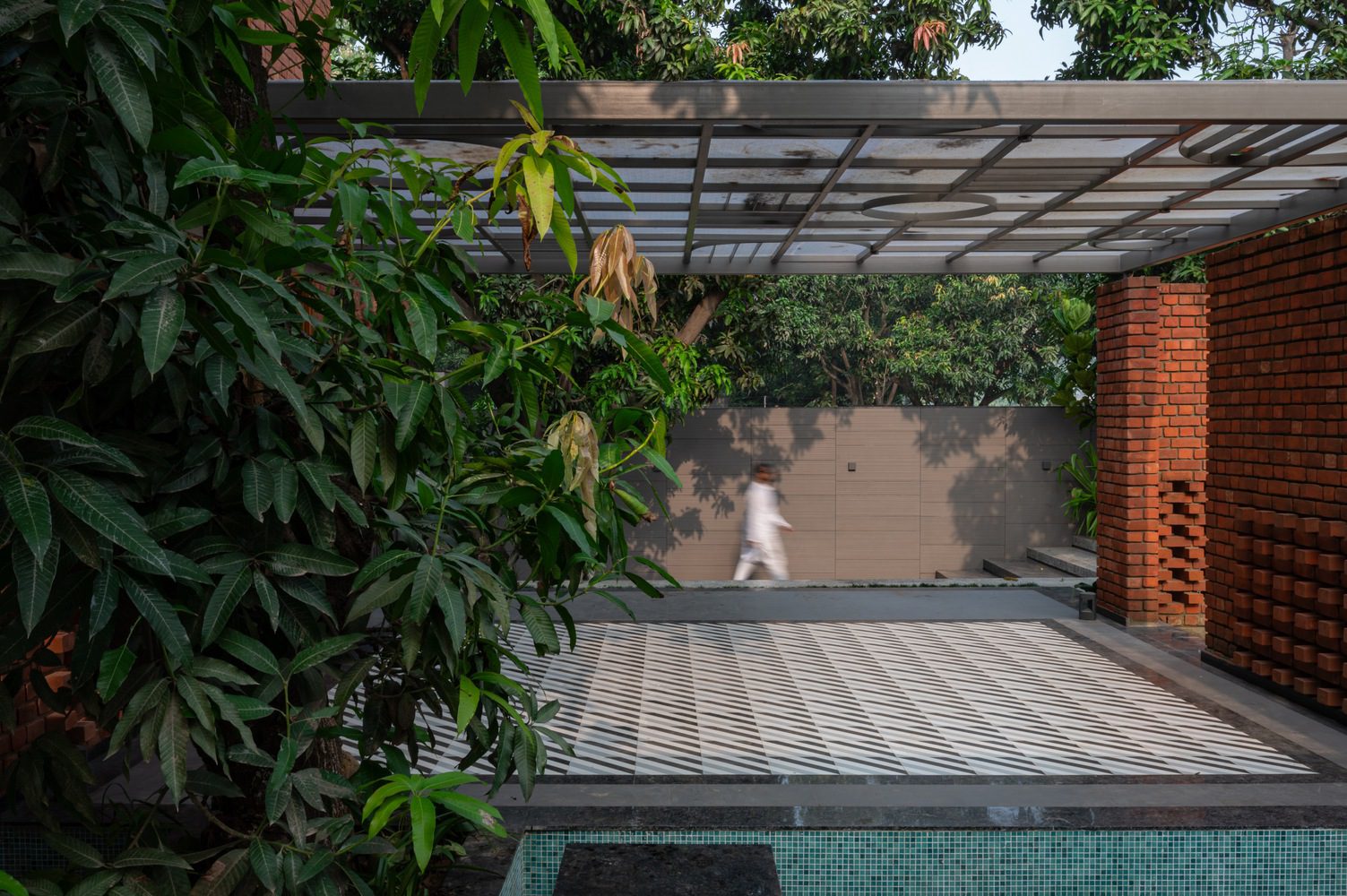
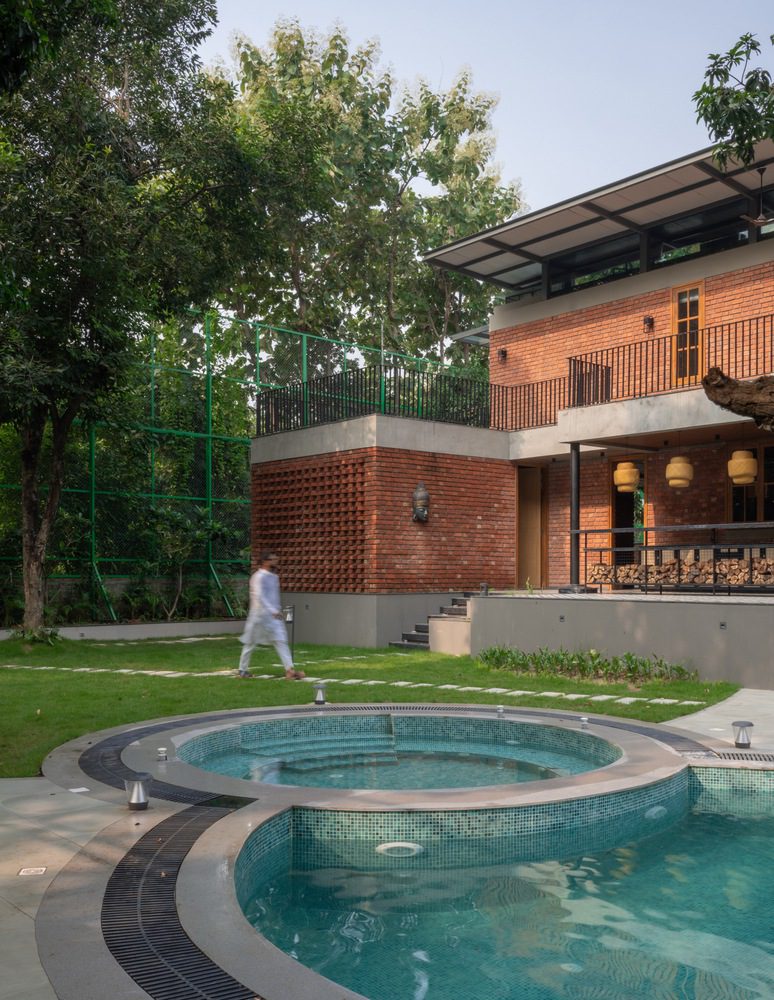
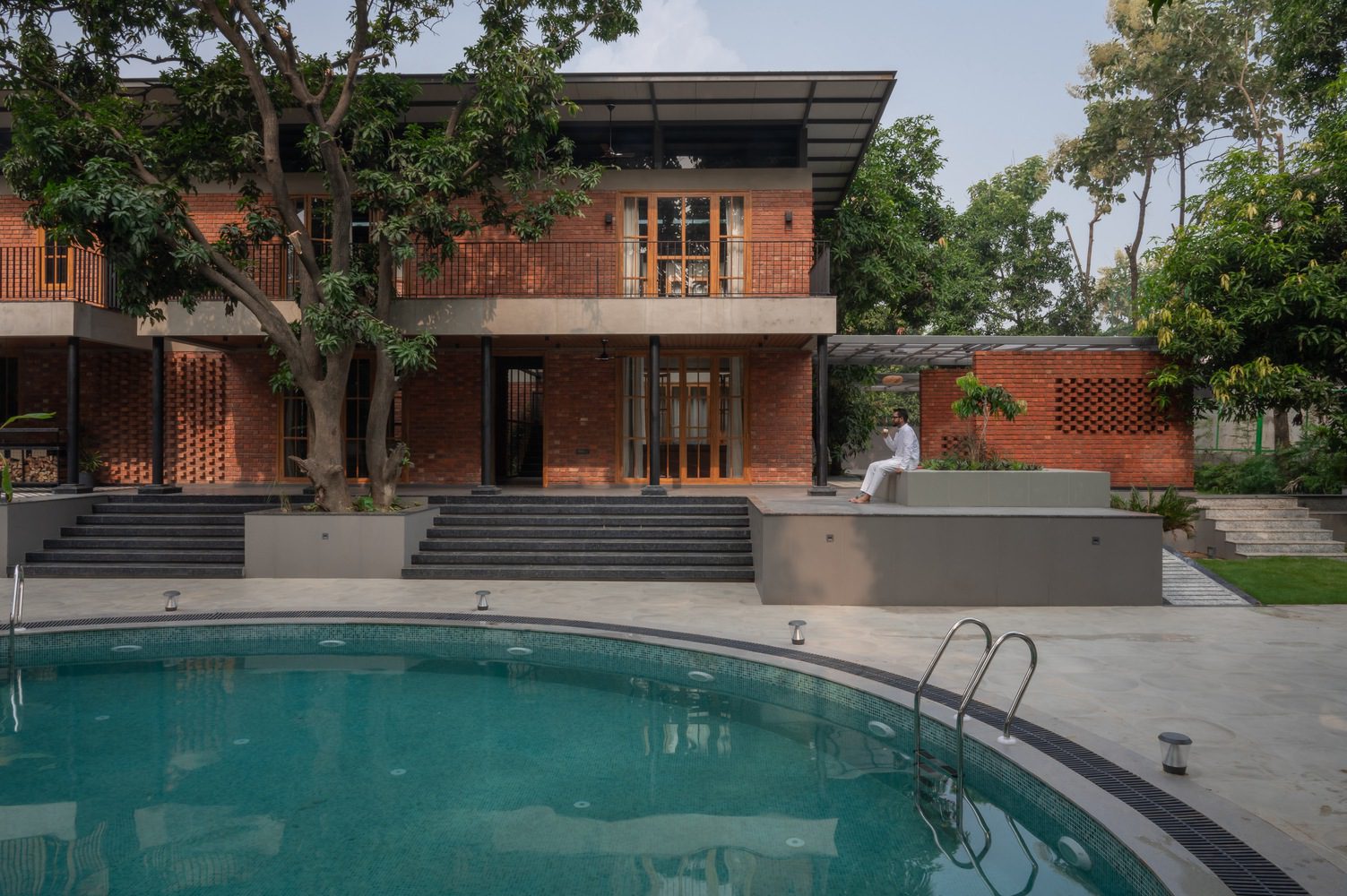
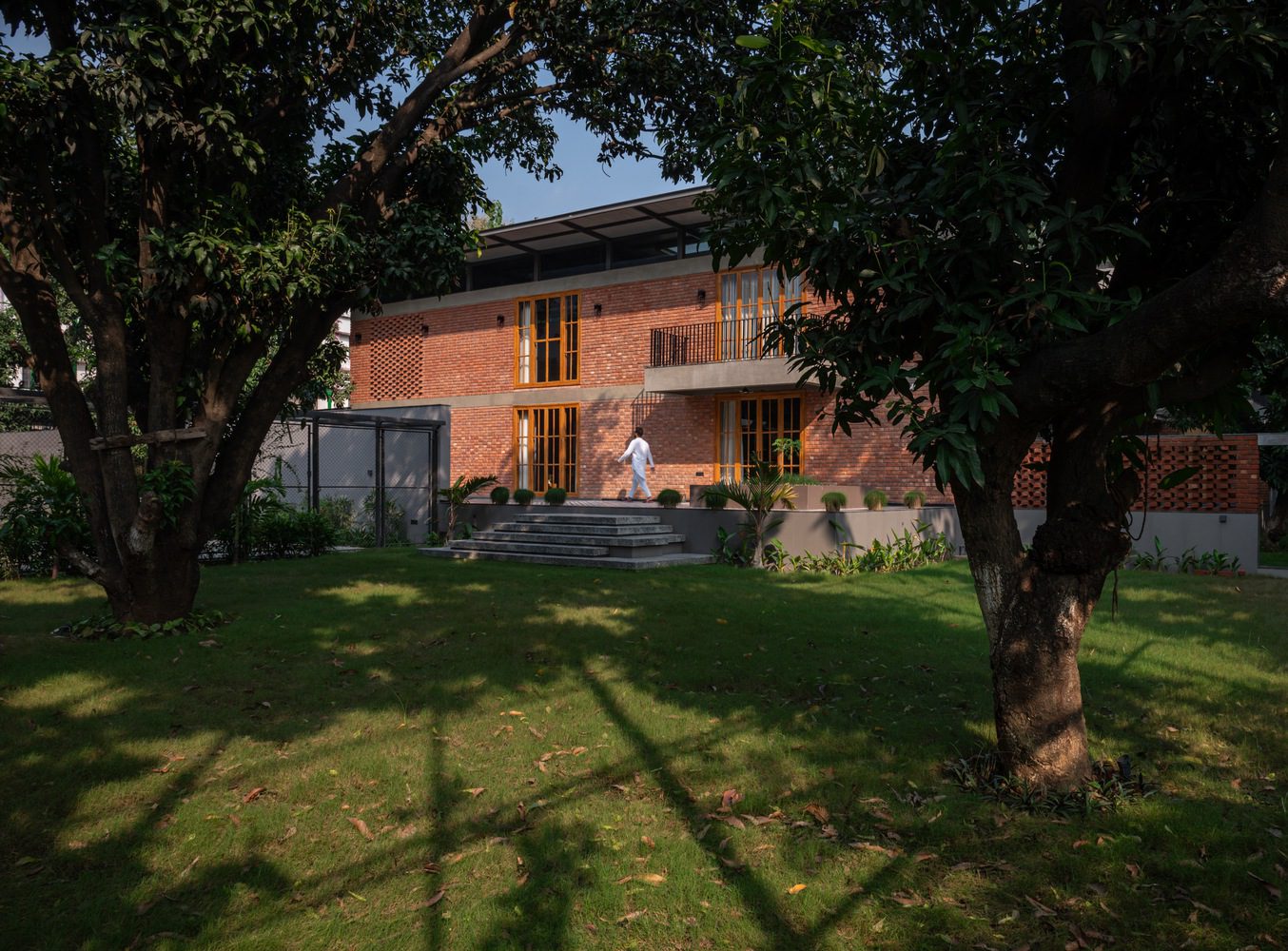
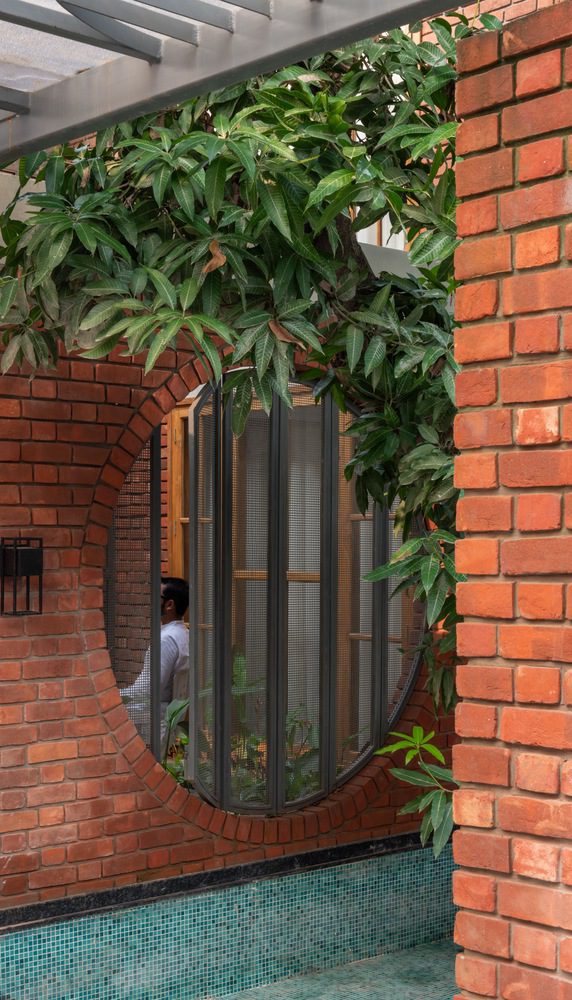
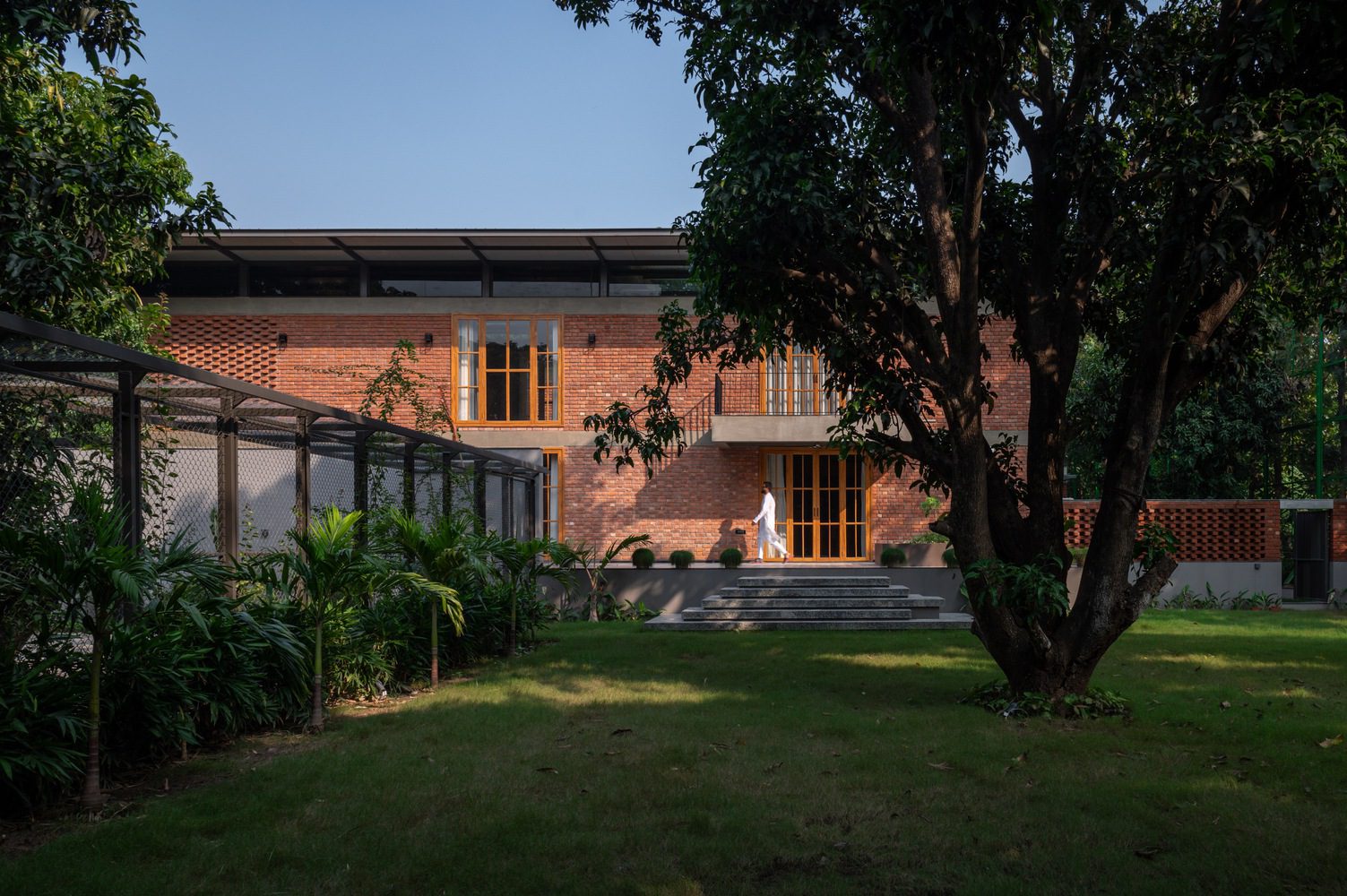
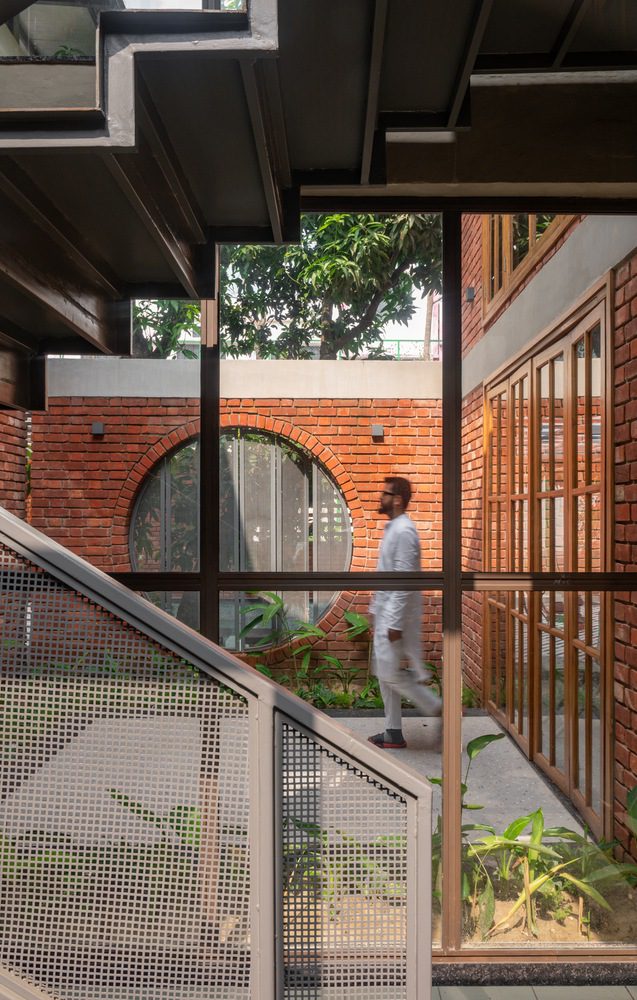
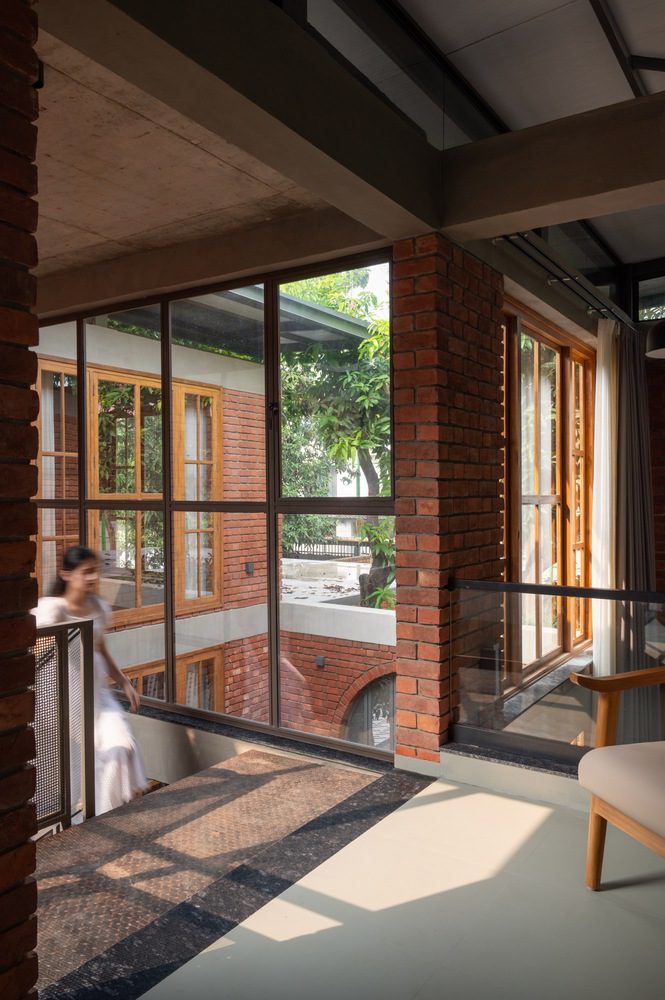
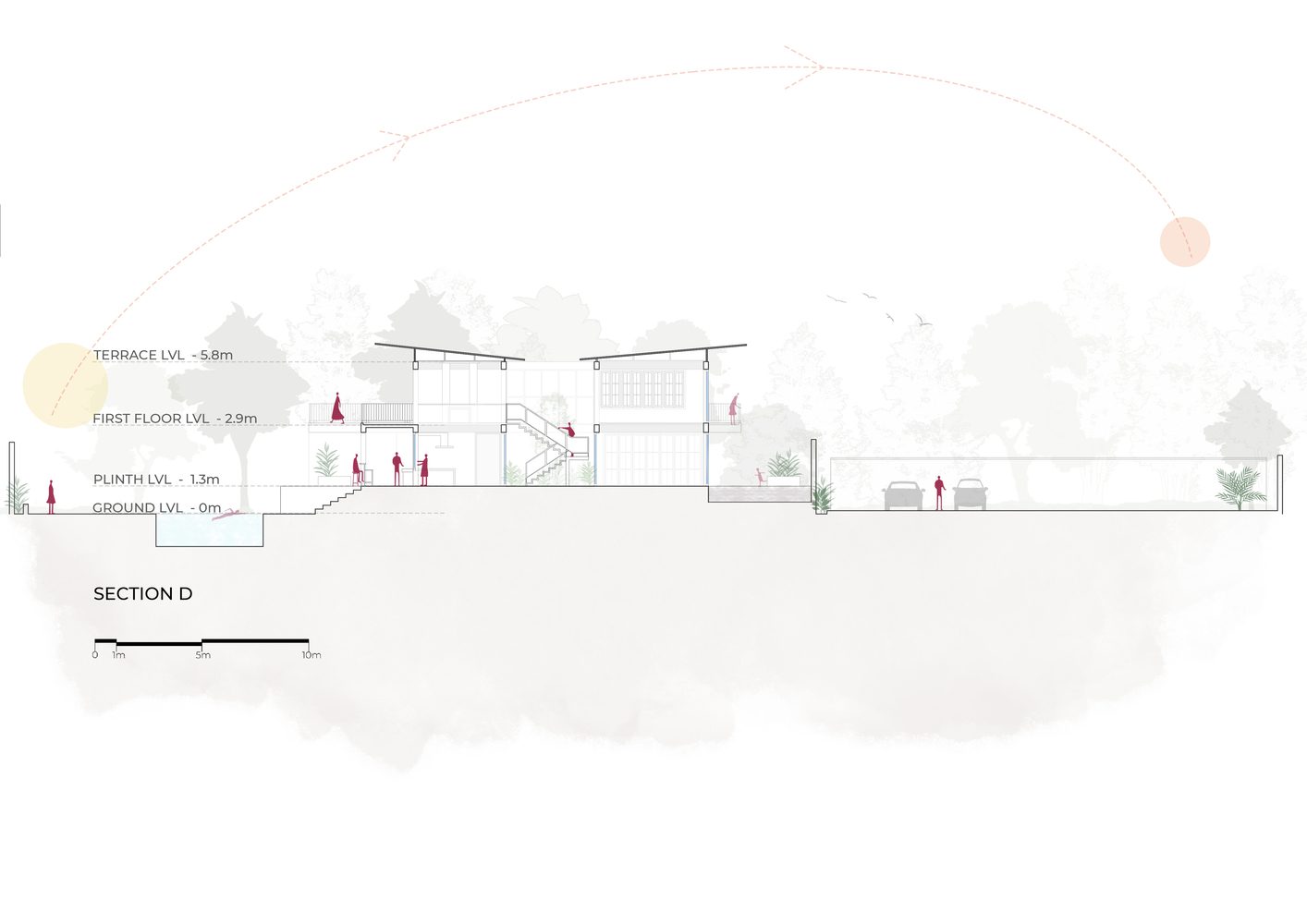
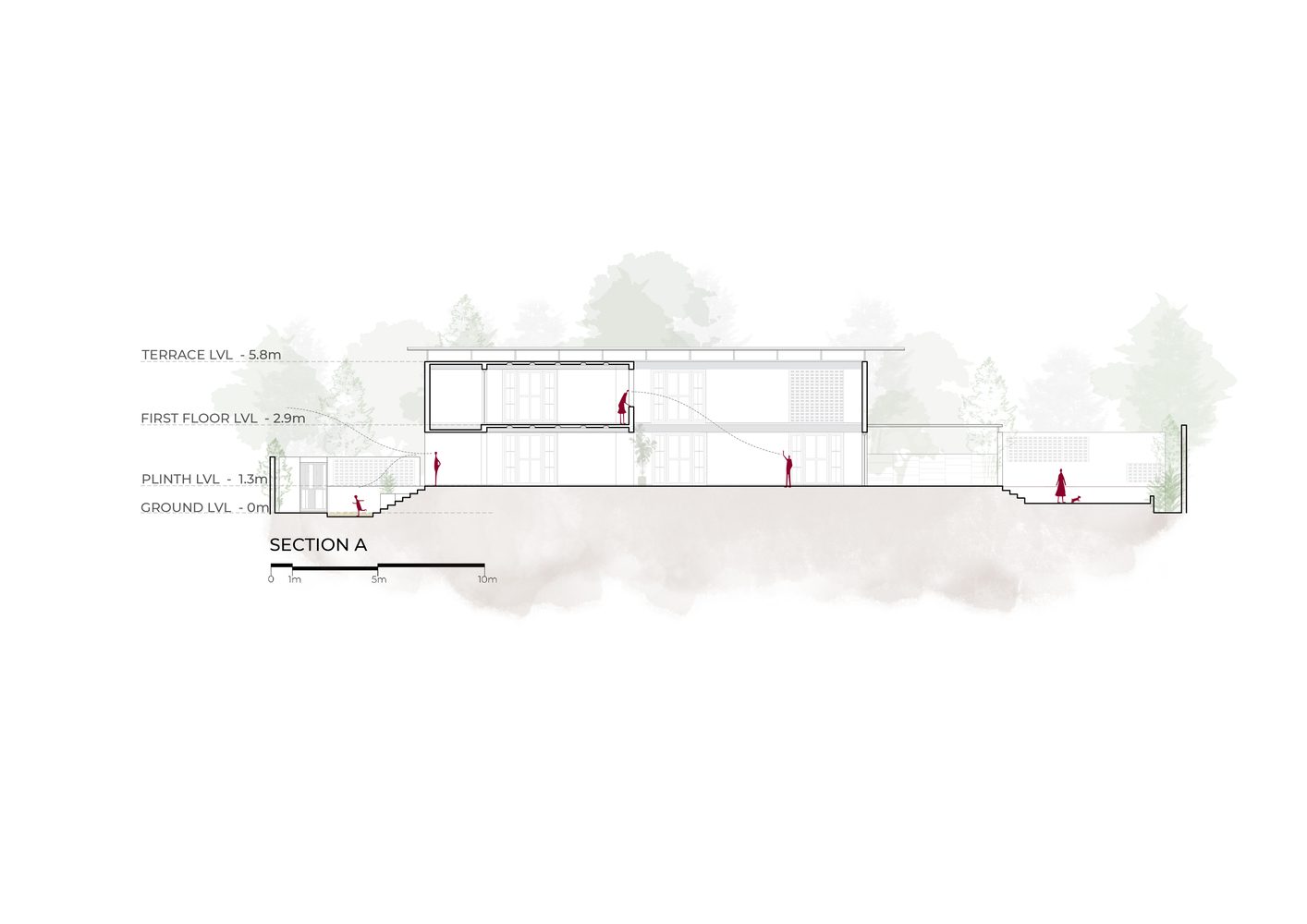
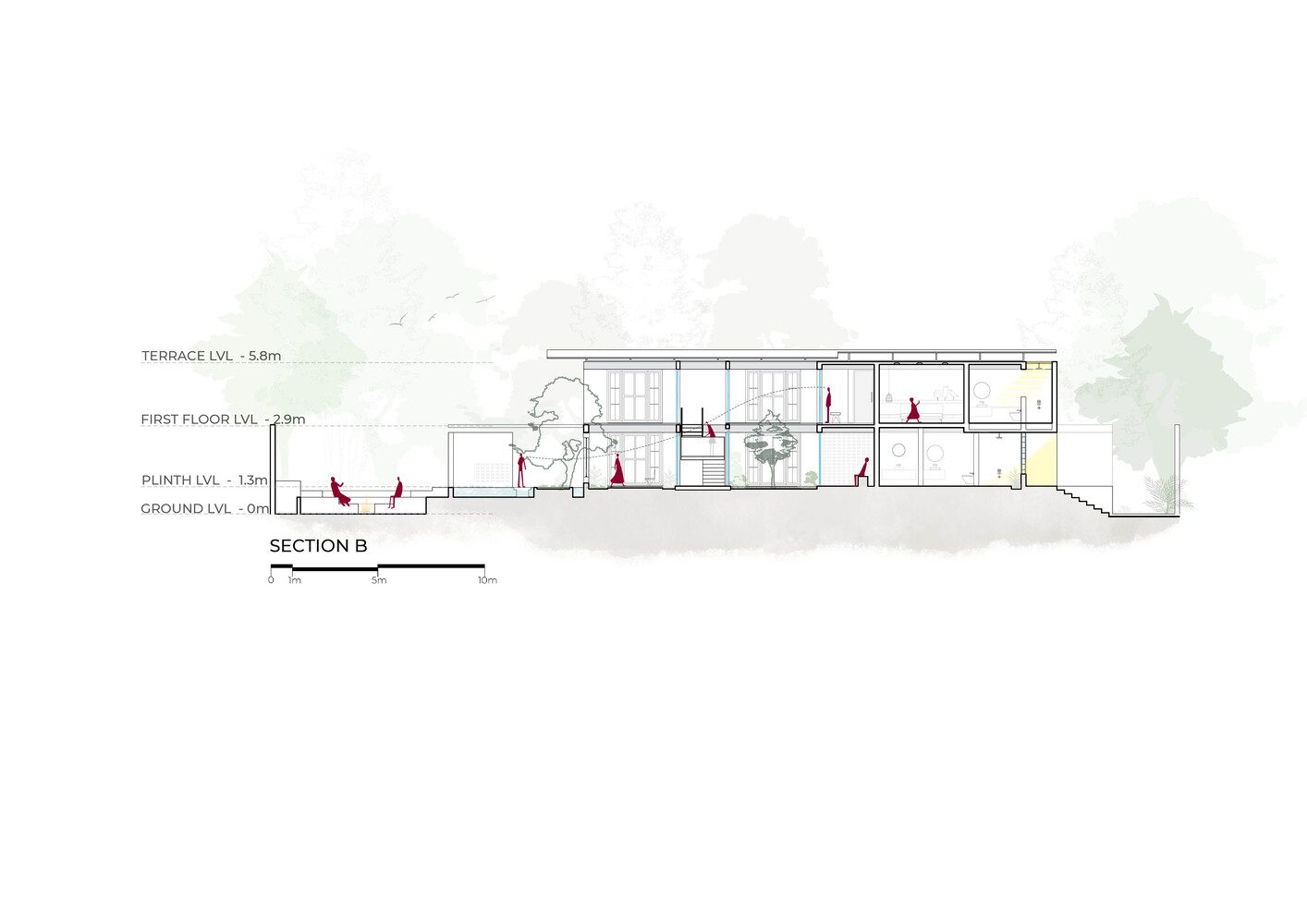
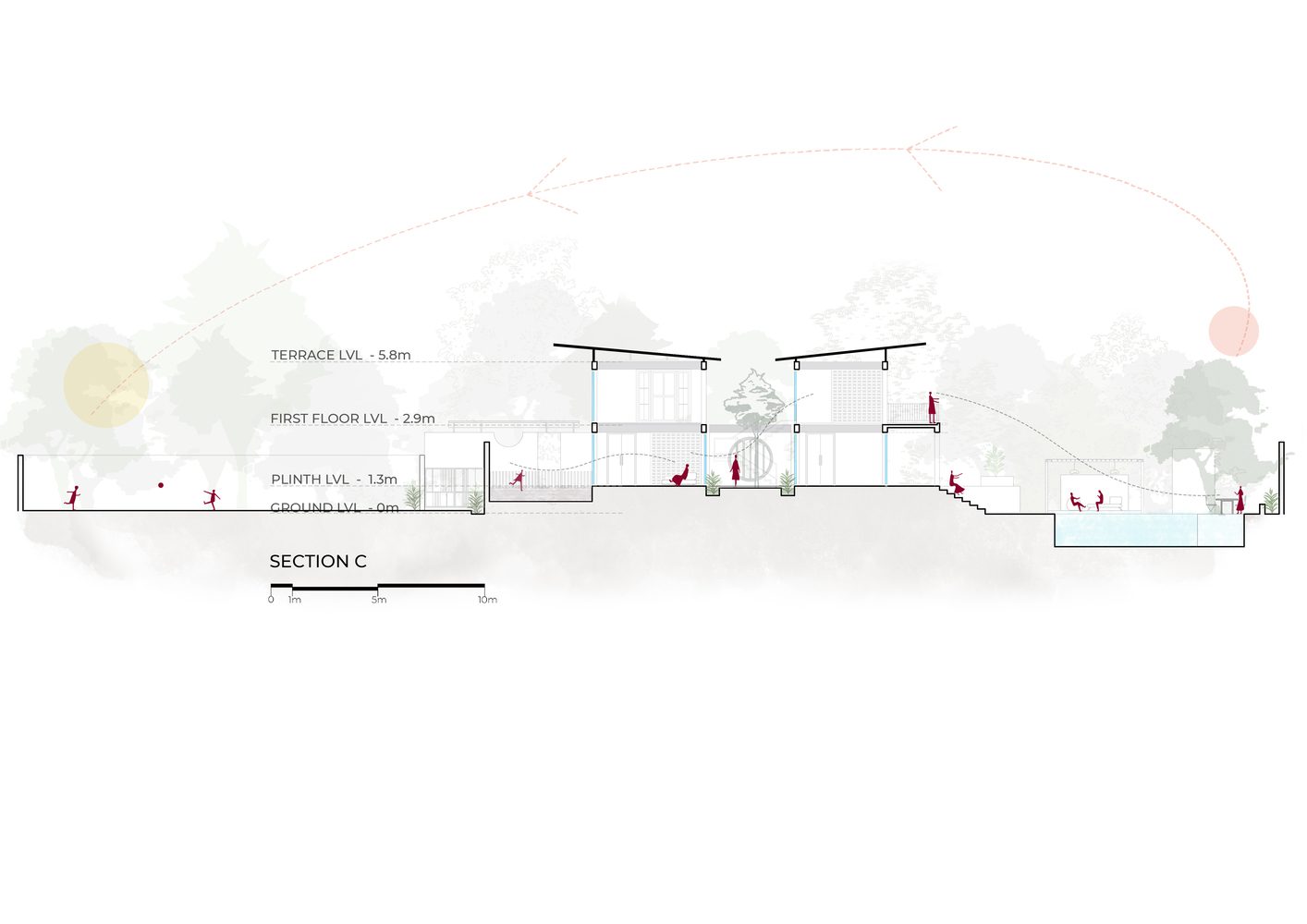
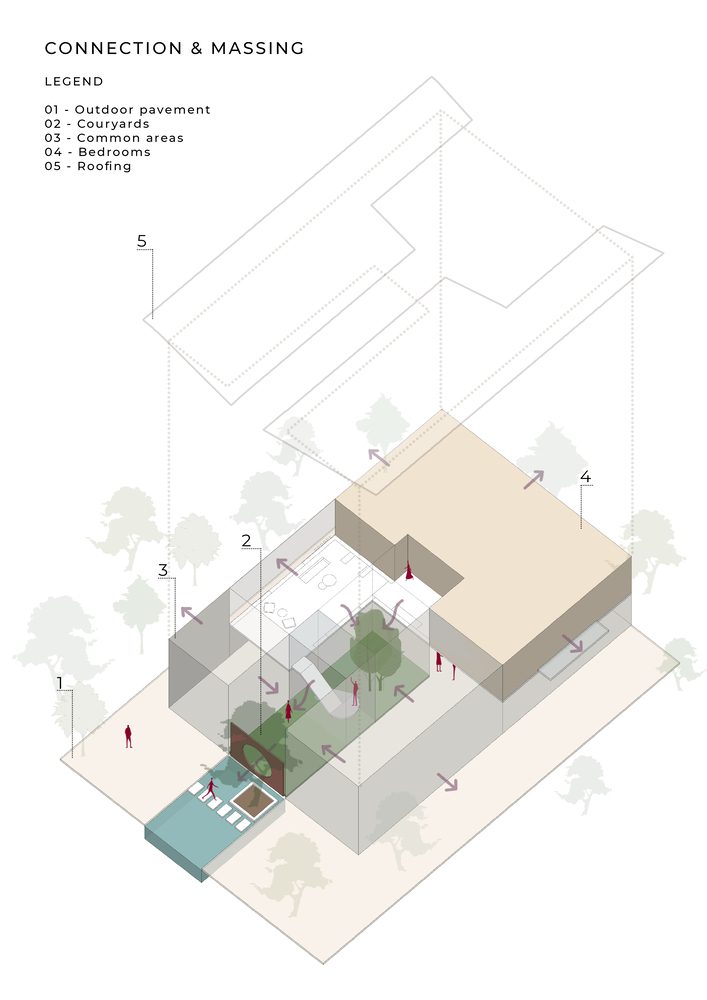
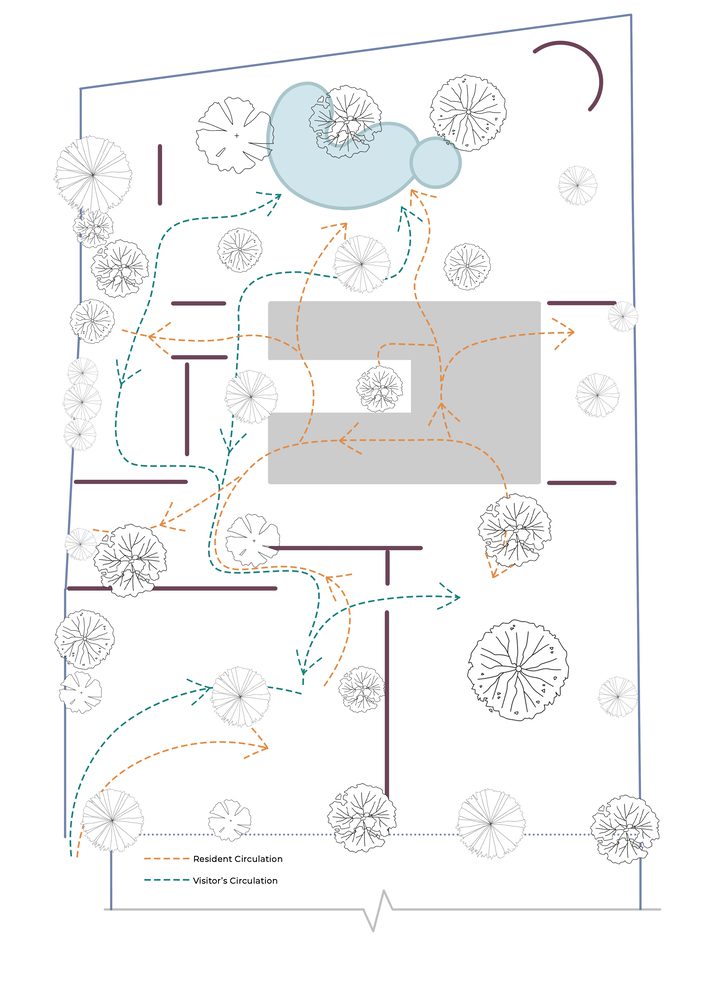
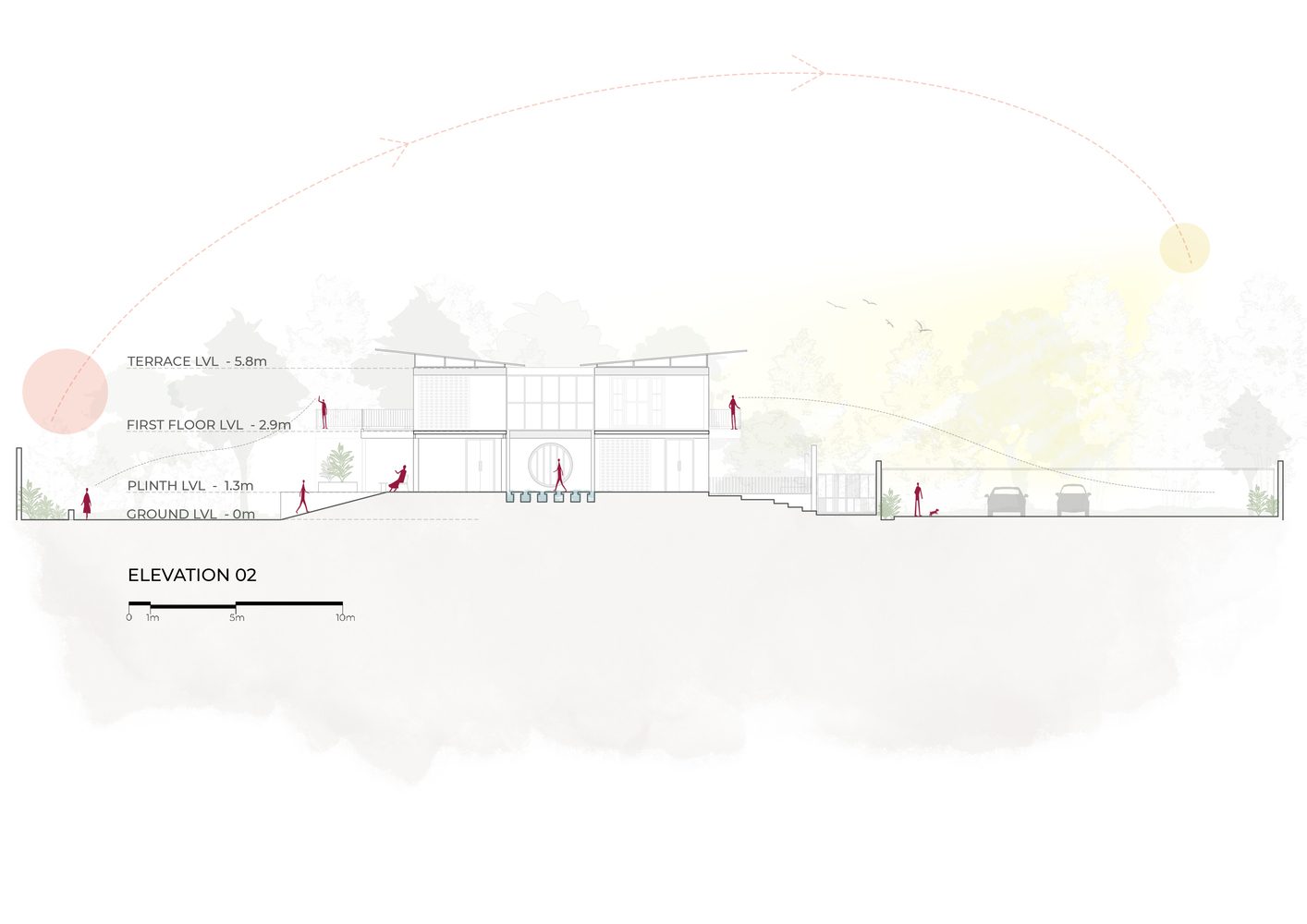
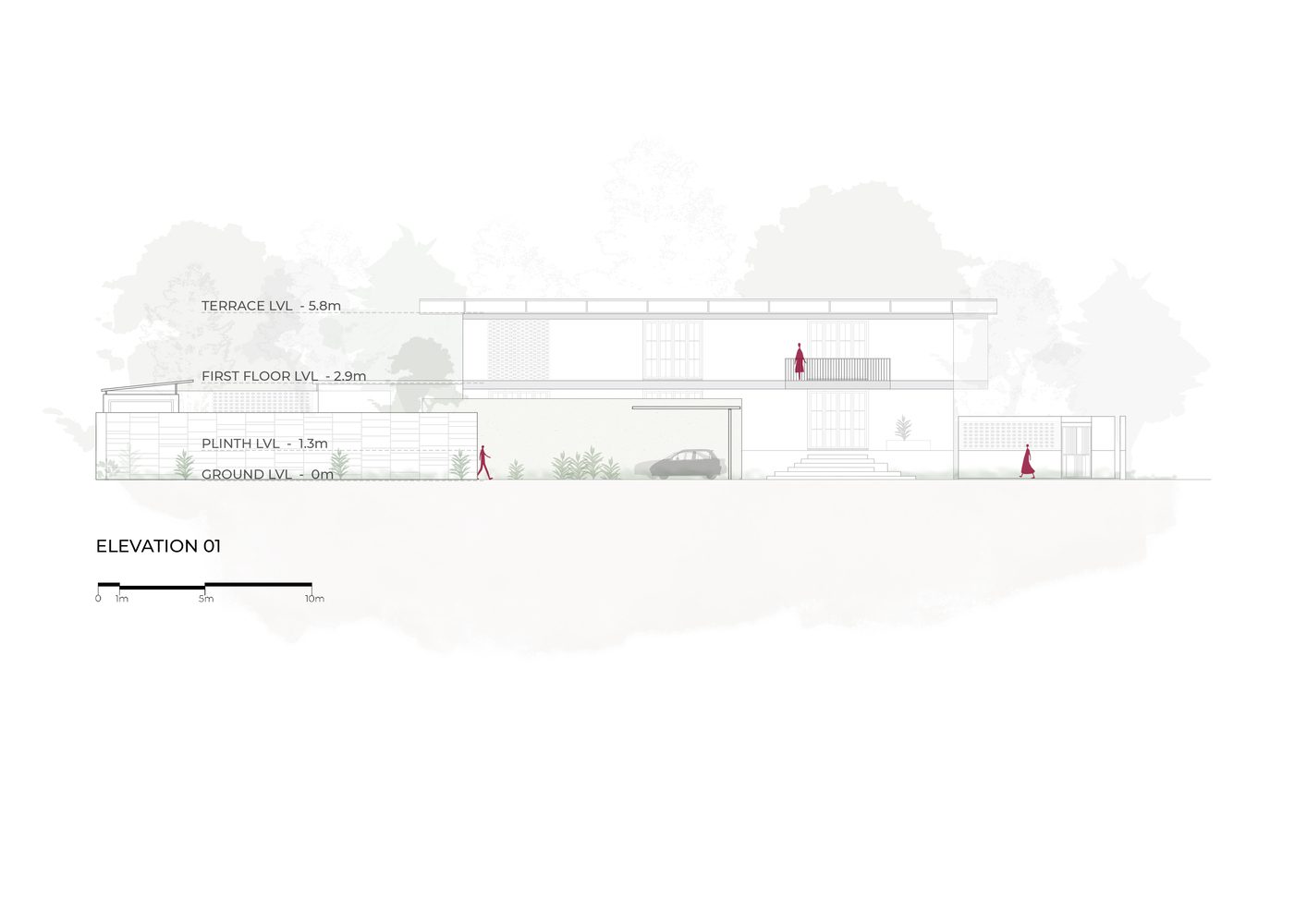
The Gorakhpur Farmhouse is an unwritten dialogue between architecture and nature—an intuitive response to land, climate, and craft. It does not impose itself but rather listens, adapts, and emerges as an organic extension of its surroundings. Located in a 20-year-old mango-teak orchard, the project follows a fundamental principle: to build without erasure. Every tree on site remains untouched, guiding the home’s spatial layout, shaping courtyards, and framing views.
© Atik Bheda
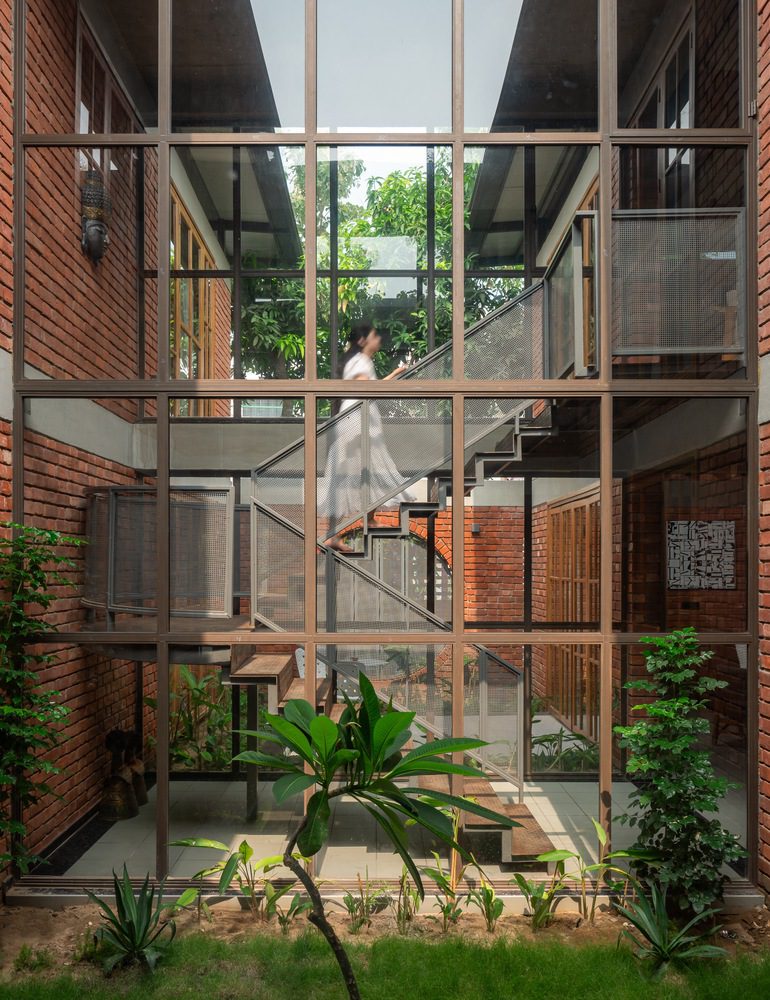
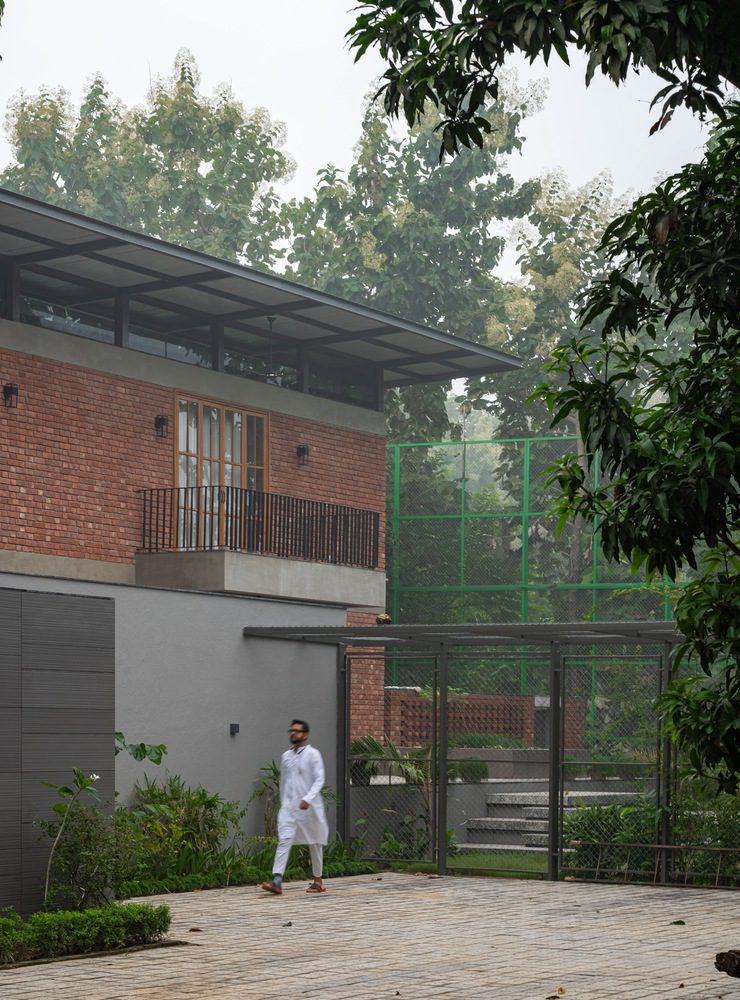
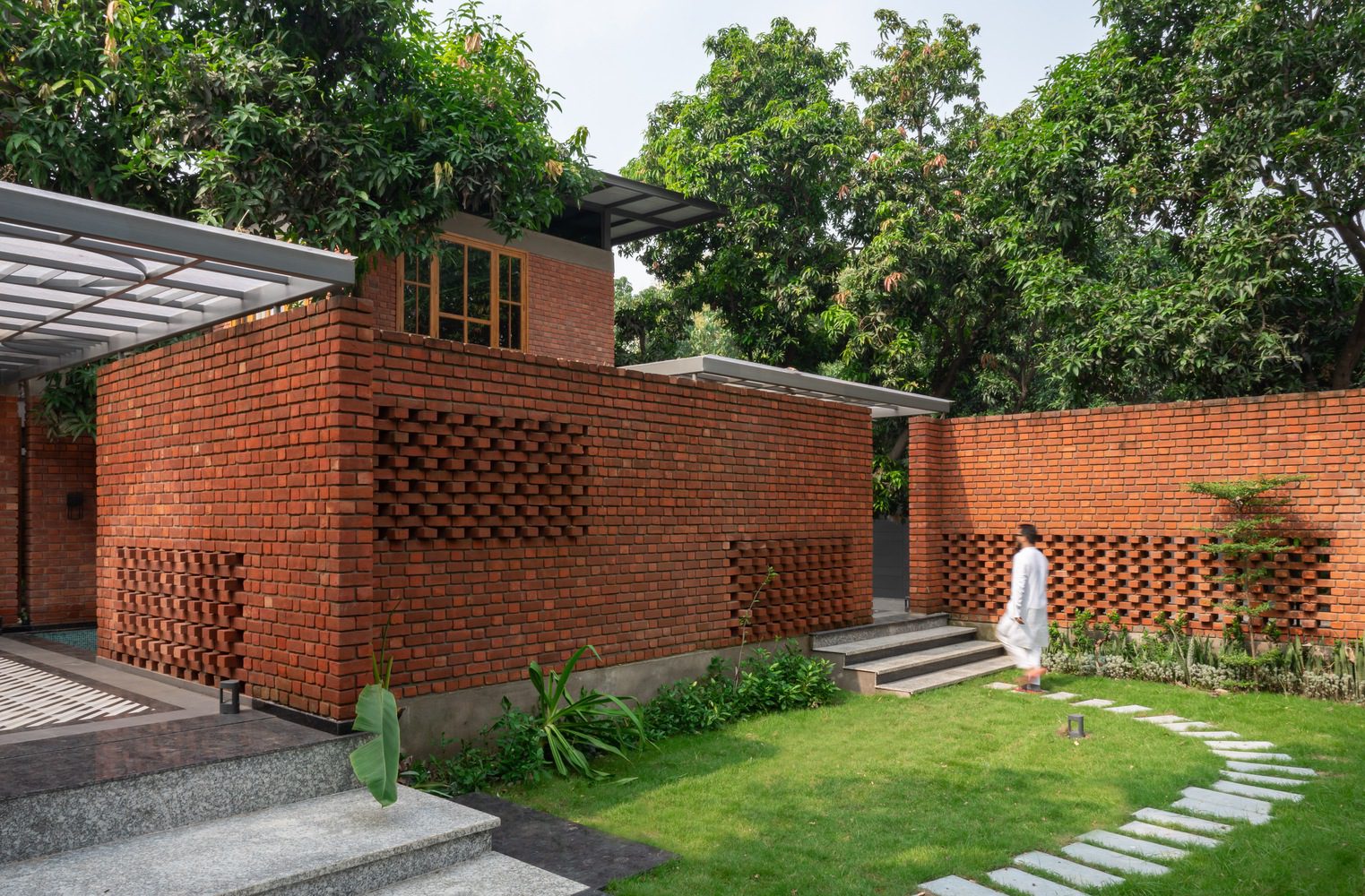
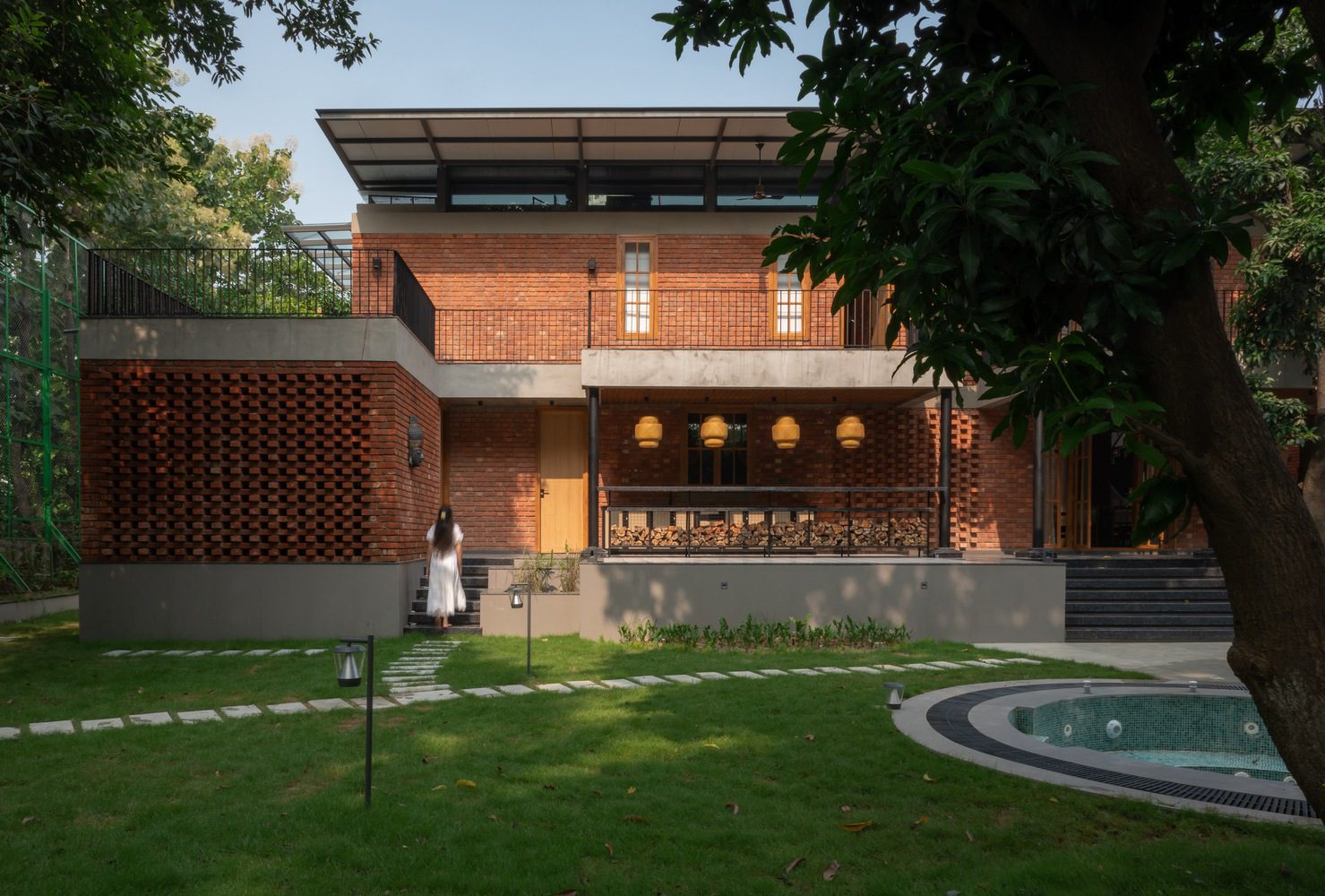
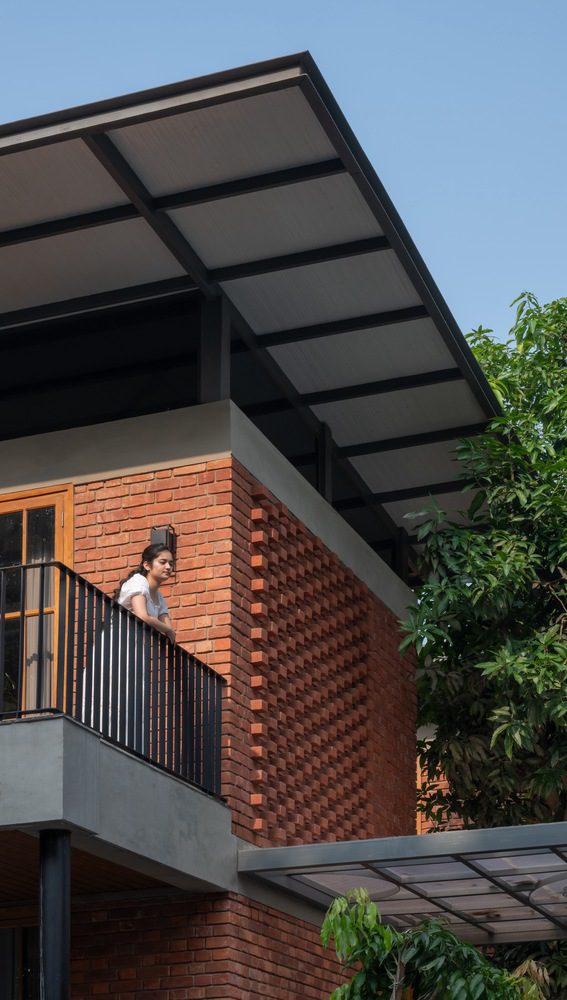
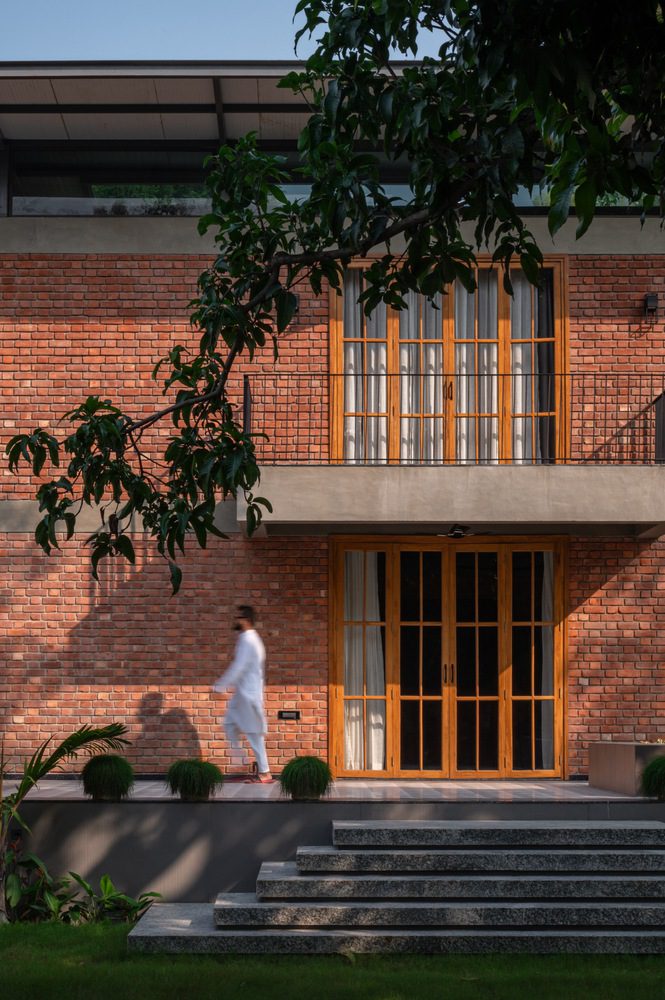
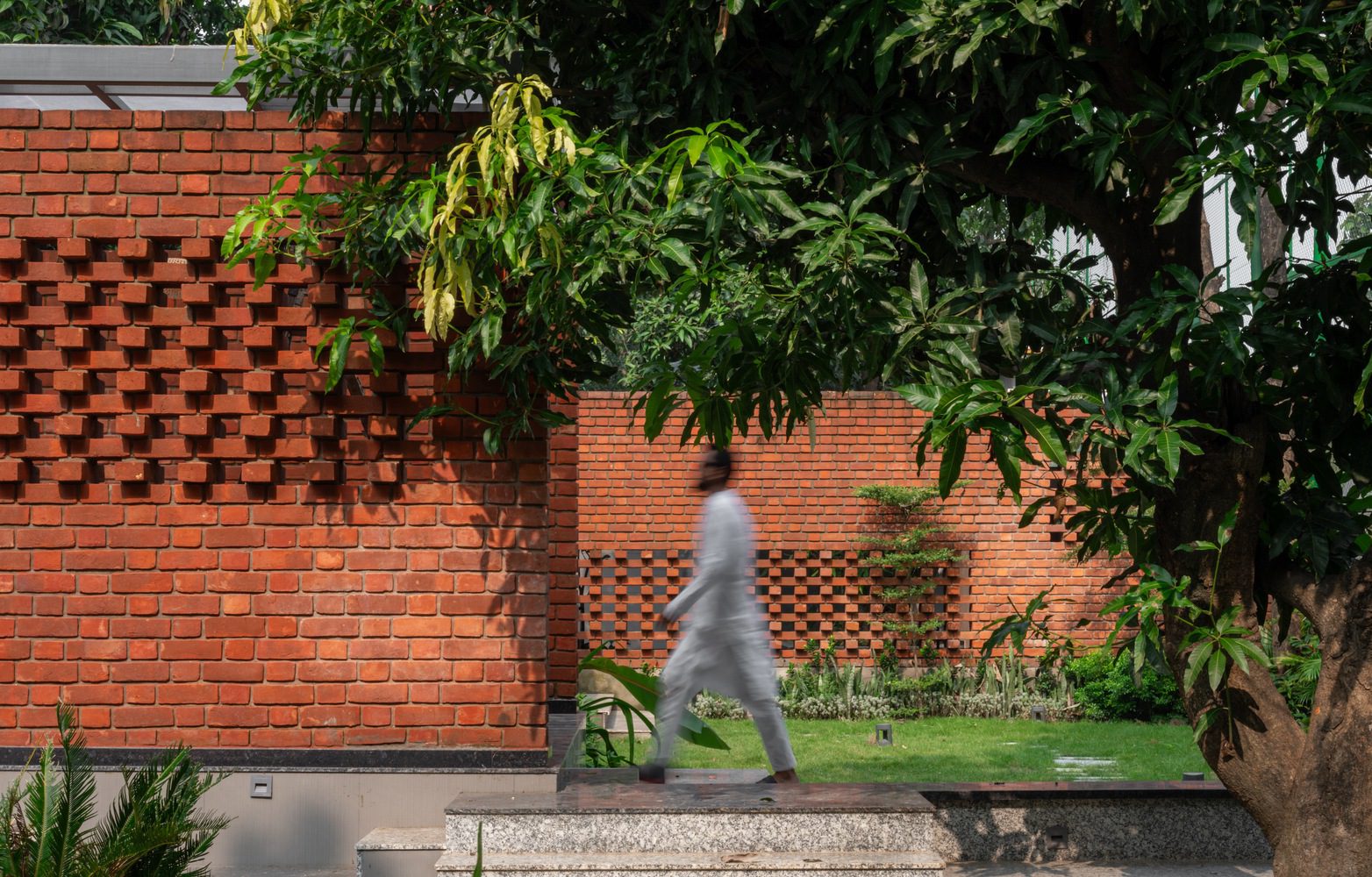
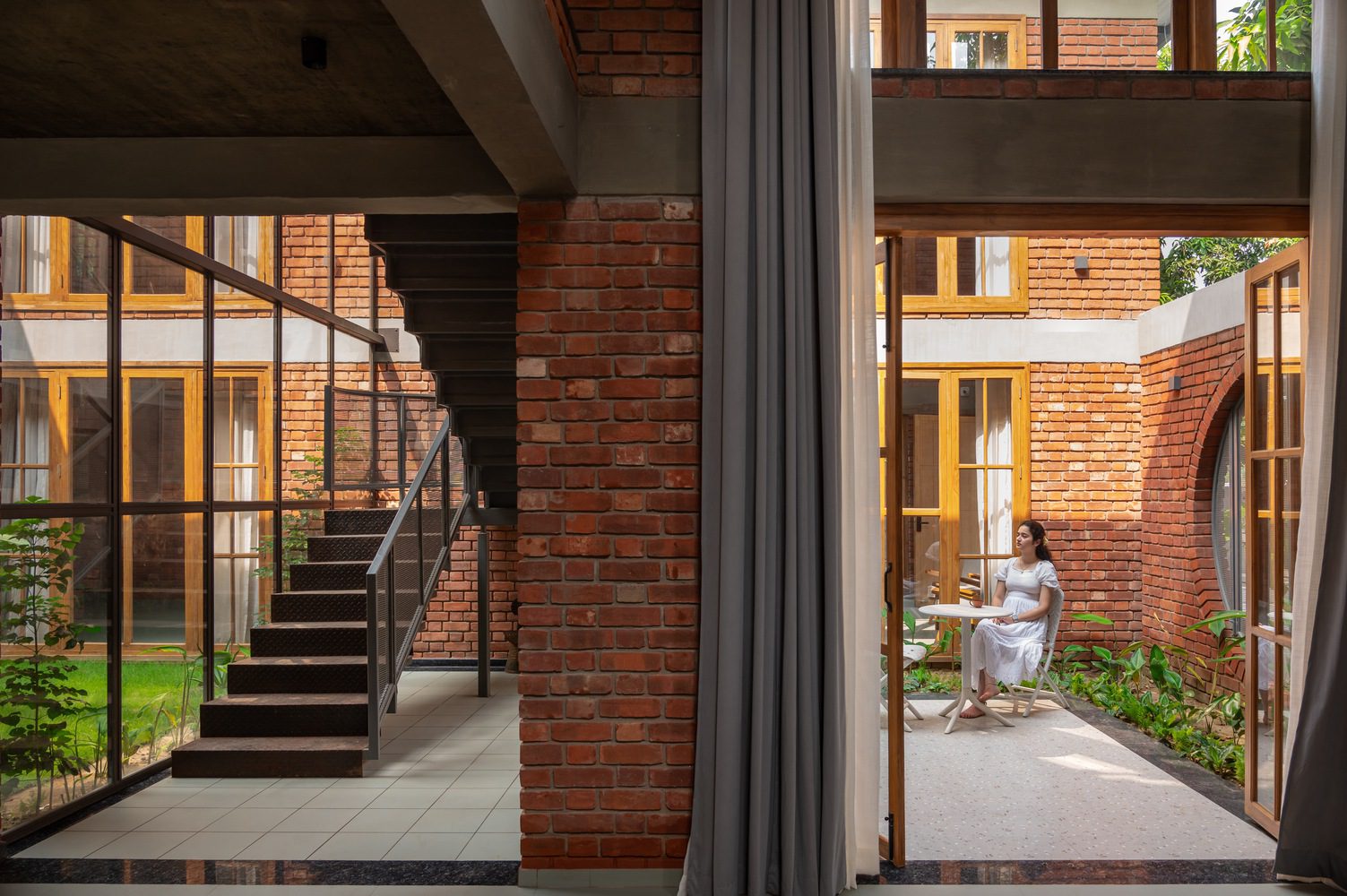
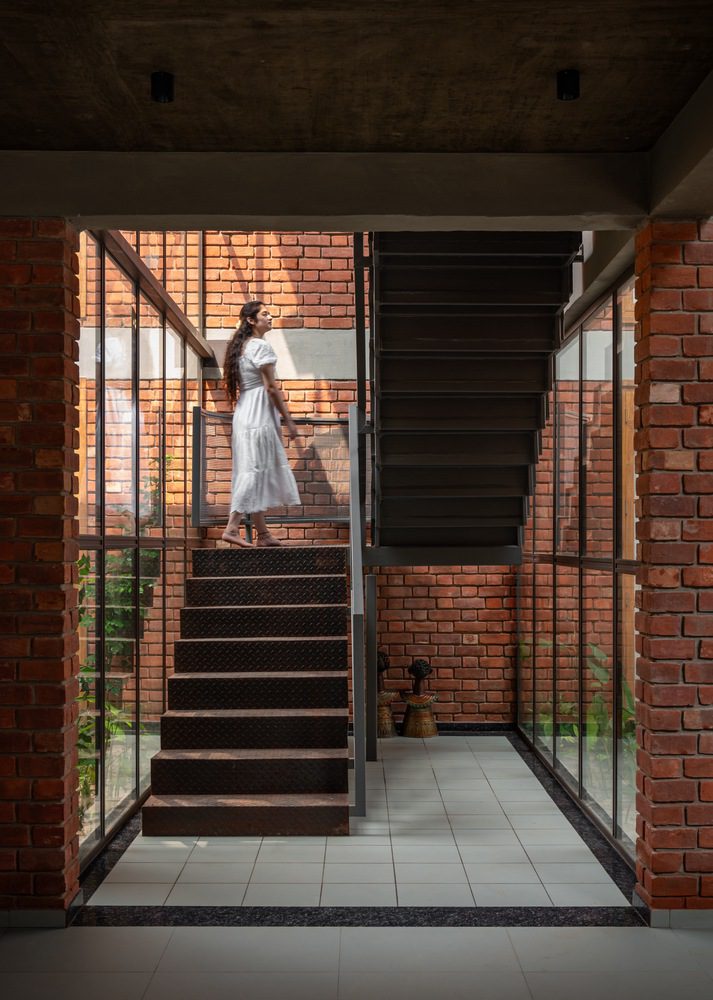
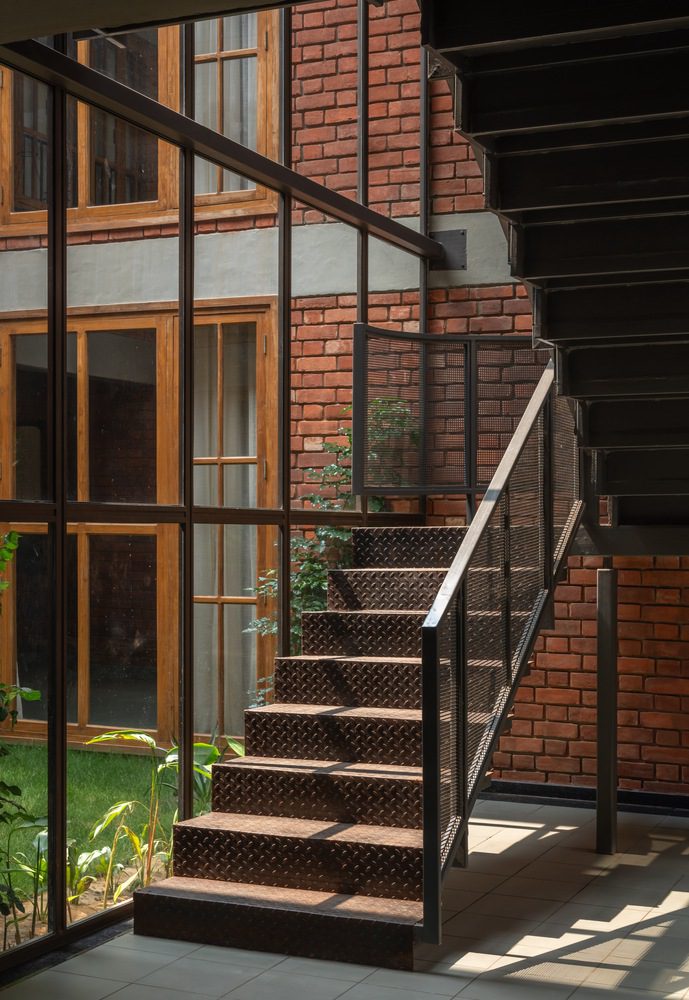
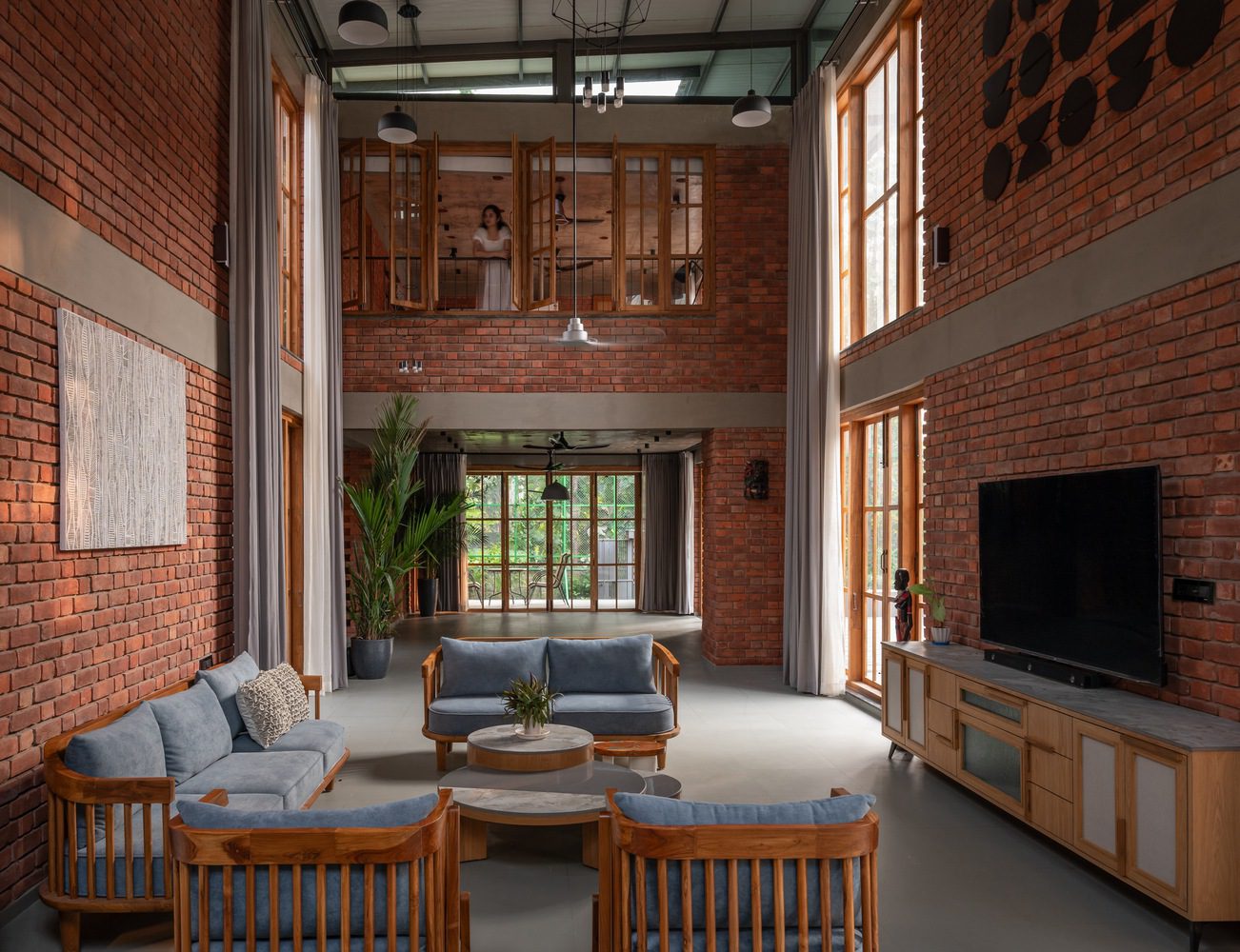
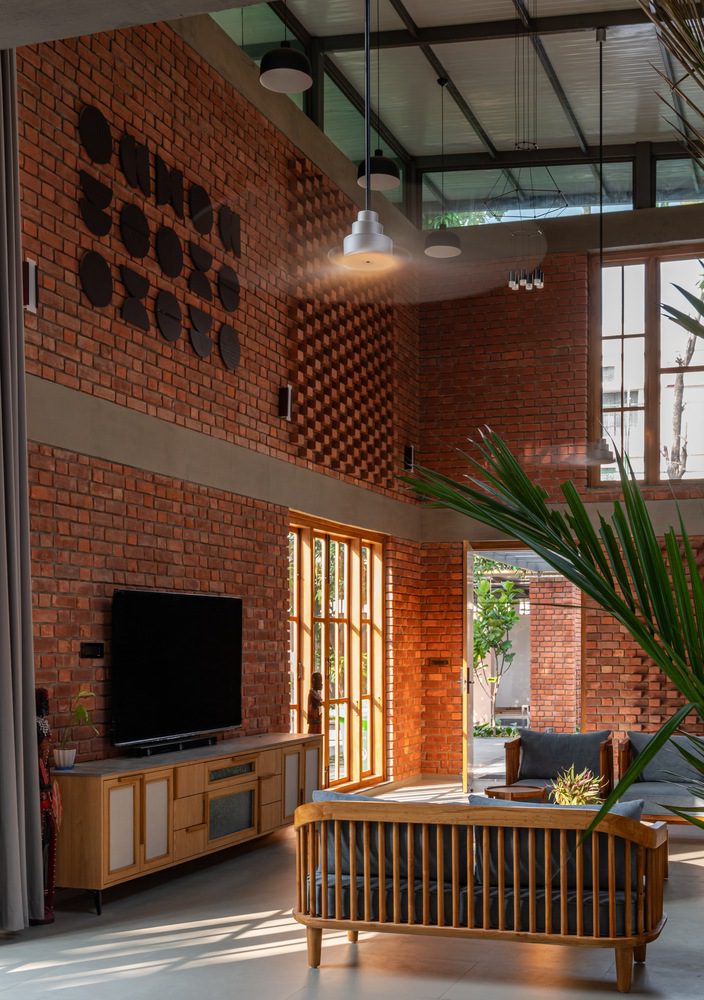
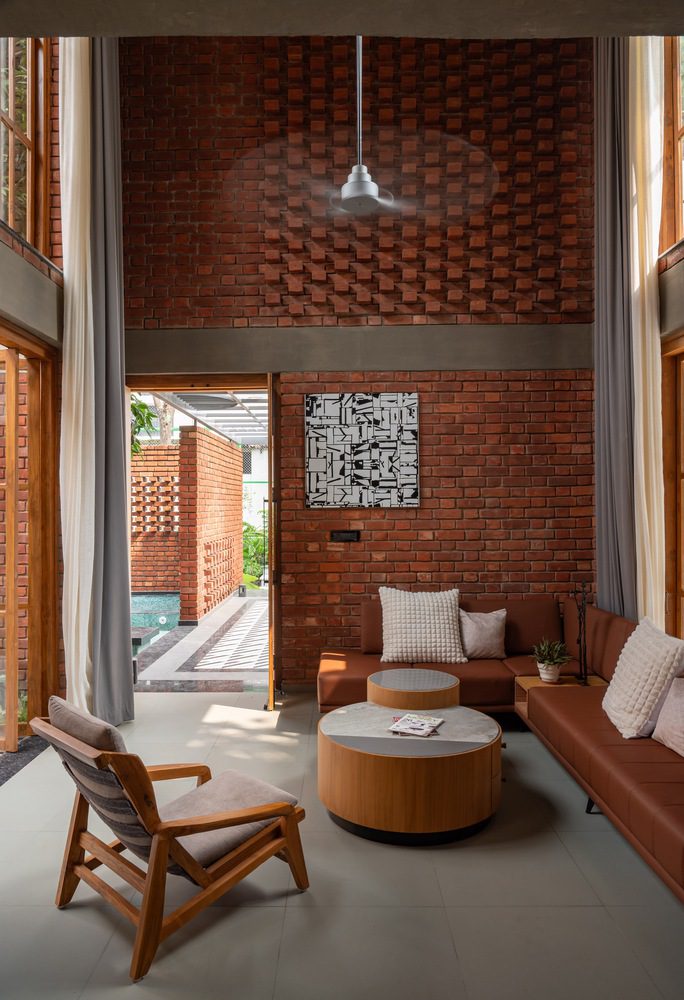
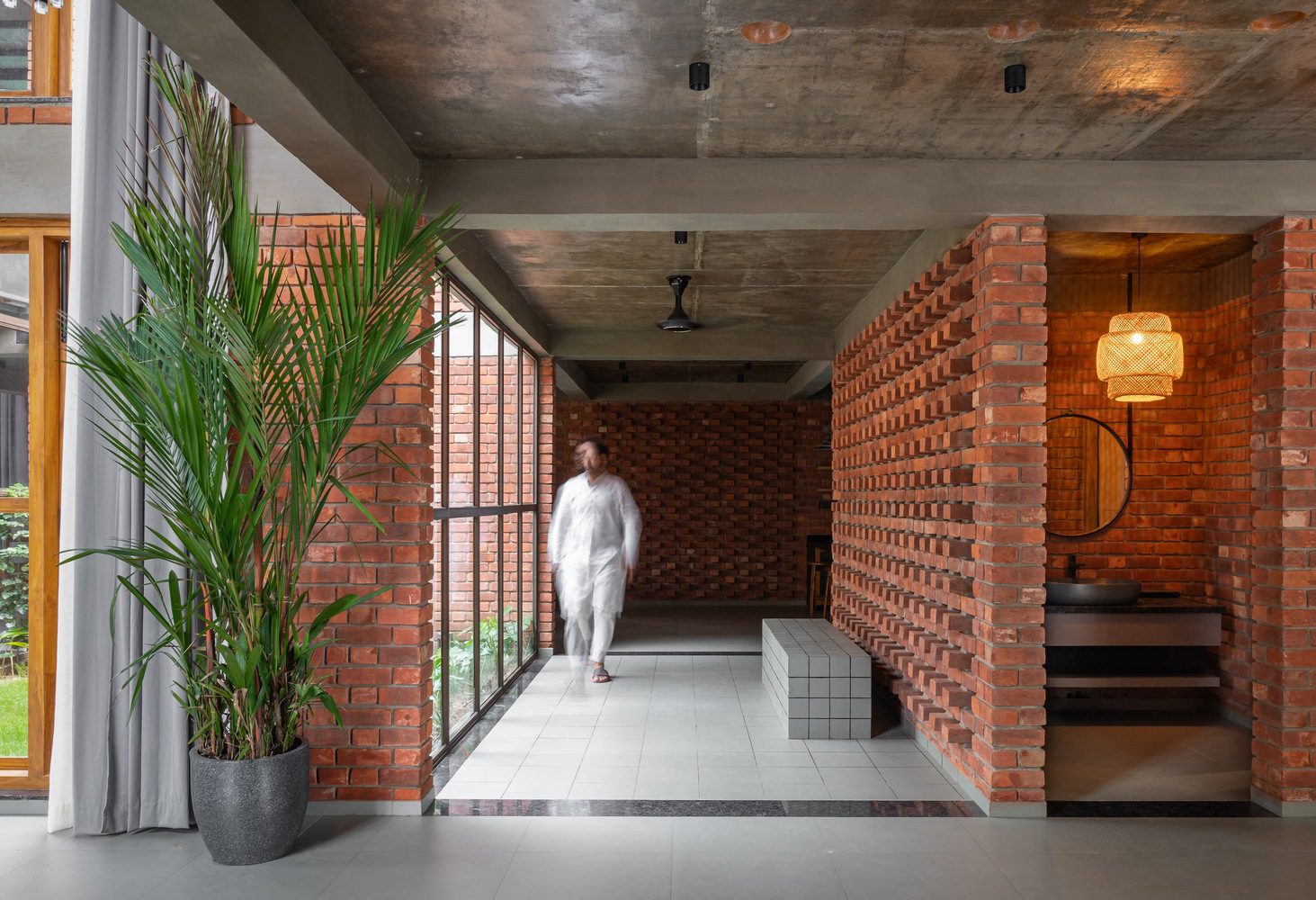
The architectural language is one of porosity and connection. Double-height spaces act as breathing volumes, allowing vertical interactions between floors, where sightlines, air, and light traverse seamlessly. The first light of the day reaches the farthest corner, while the brick facade transforms throughout the day in response to the sun.
© Atik Bheda
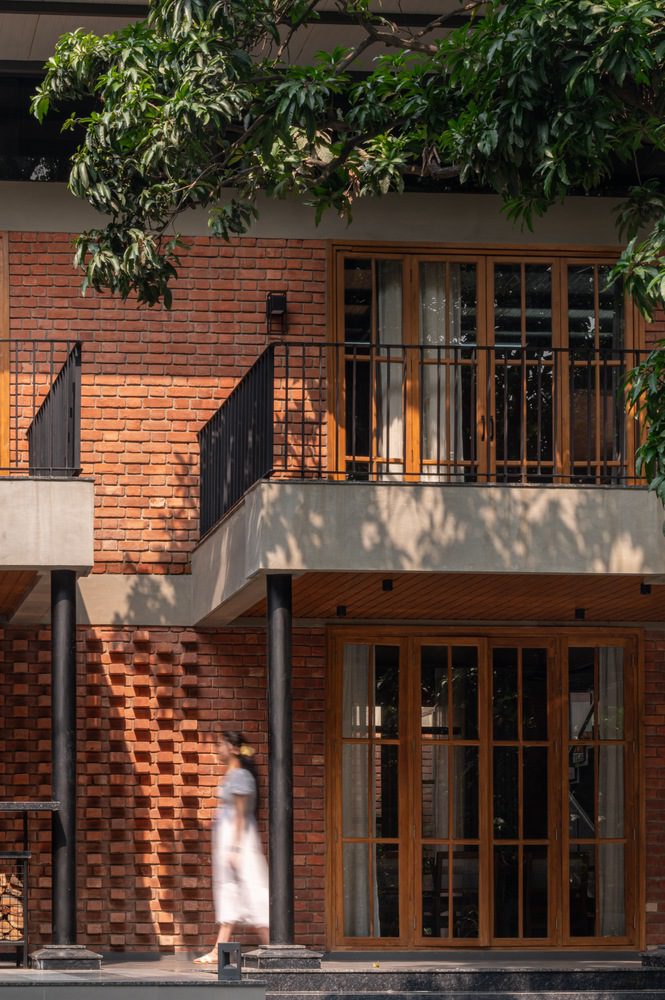
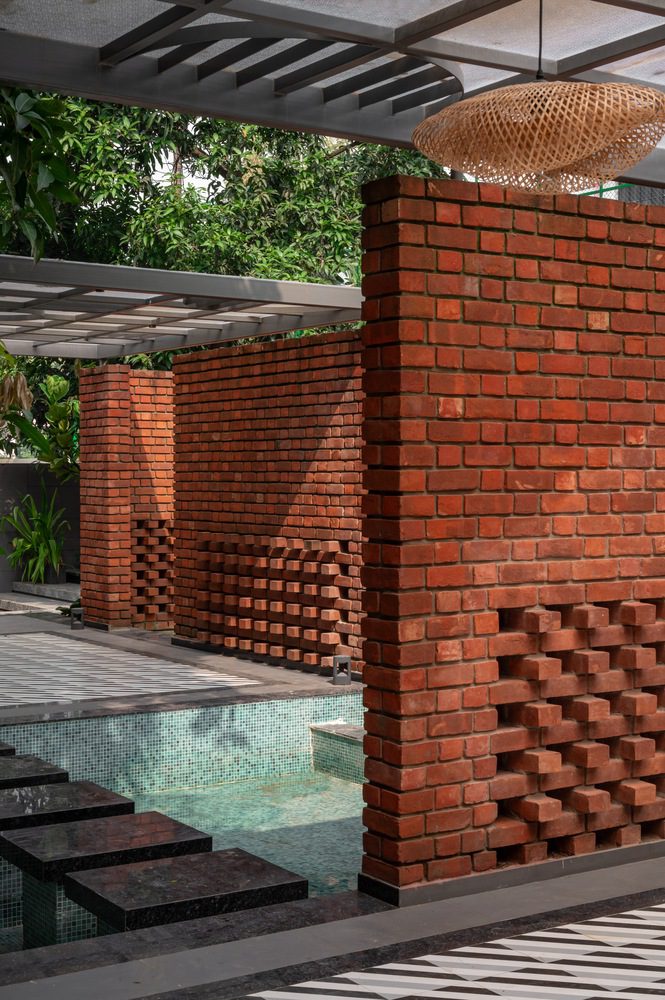
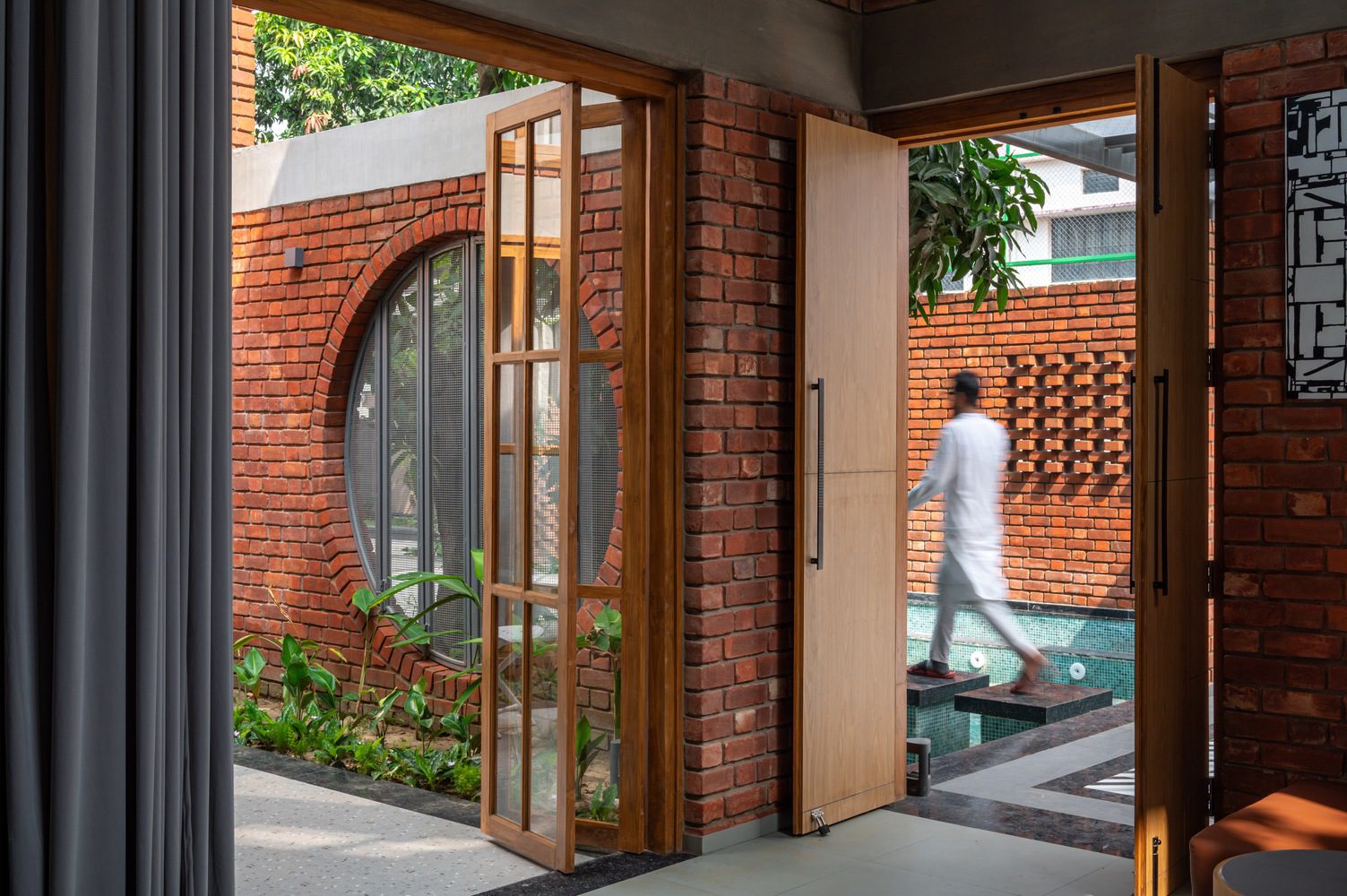
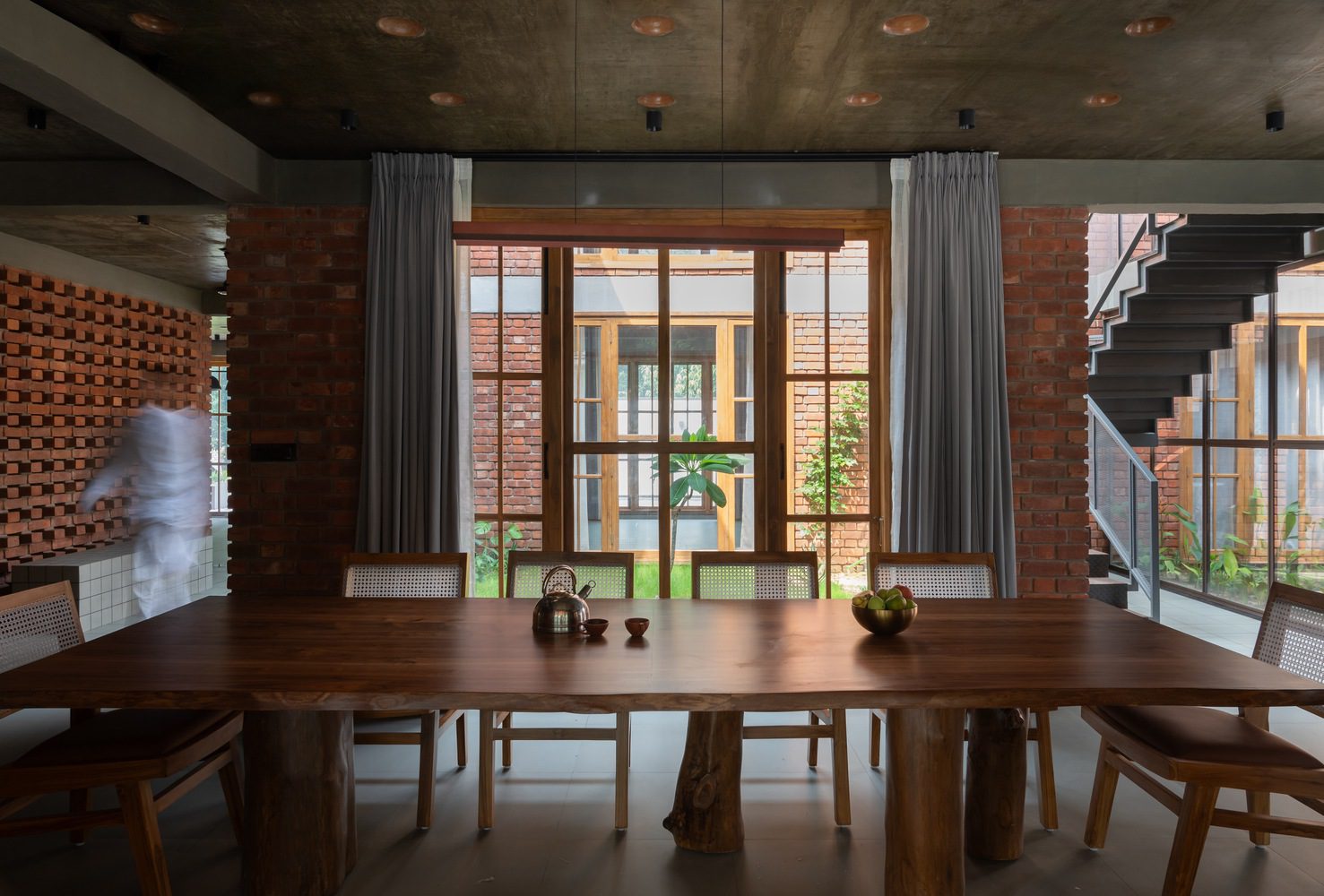
Material & Craftsmanship, The art of Slow Making – Materiality is the soul of the project. Exposed bricks were sourced from a local kiln, with every third brick hand-picked for its texture and character. Teakwood, cut from the site prior to design inception, was repurposed into doors, windows, and sculptural furniture pieces, embedding the past into the present. Terracotta, the ODOP of Gorakhpur, was inverted into roof slabs, reducing concrete consumption while adding warmth and tactility.
© Atik Bheda
Construction followed a low-impact, handcrafted approach. The load-bearing structure negated the need for excessive steel and concrete, keeping the home cooler while reinforcing its raw, unfinished aesthetic. All furniture was crafted on-site, rejecting mass production in favor of slow, deliberate making. From the dining table legs sculpted from raw teak trunks to cane-stitched seating, the home is a showcase of in-situ craftsmanship.
© Atik Bheda
Community & Sustainability: Beyond the Built Form – Architecture is not just about space; it is about people. The farmhouse became a platform for local artisans and women laborers engaged in fine masonry work, intricate brick pointing, and surface texturing. Even waste materials were reincarnated—stone cut-offs found purpose in an amphitheater wall, and discarded wood scraps were turned into wall-mounted artworks. In a city where modern construction favors speed over craft, this project took the opposite path—it embraced slowness, allowing ideas to evolve through material experimentation and hands-on making. Terraces, decks, and garden spaces give the family shaded outdoor living areas and long views across the orchard, reinforcing the home’s role as a quiet, restorative retreat.
© Atik Bheda
A Timeless Gesture – The Gorakhpur Farmhouse does not aspire to be a statement; rather, it invites discovery. It is a place where the wind moves freely through porous walls, where light and shadow sketch their ephemeral patterns, and where the very act of building becomes an extension of nature. In its massing, materials, and methods, it is an antithesis to the fast-built world—a reminder that architecture, at its best, is a slow, patient craft—one that honors time, place, and the human hands that shape it.
Project Info:
-
Architects: W5 Architects
- Country: India, Gorakhpur
- Area: 5500 ft²
- Year: 2024
-
Photography: Atik Bheda
-
Lead Architects: Prakhar Ranjan
-
Technical Team: Abhay Kumar, Vijay Sharma
-
Design Team: Amisha Gupta, Jhanvi Mishra, Rashmi Gupta, Alankrita Sahu
-
Engineering & Consulting > Structural: Farooq Azam
-
General Contractor: Triloki Prajapati

Madeline Brooks is a Projects Editor at Arch2O, where she has been shaping and refining architectural content since March 2024. With over a decade of experience in editorial work, she has curated, revised, and published an array of projects covering architecture, urbanism, and public space design. A graduate of the Harvard University Graduate School of Design, Madeline brings a strong academic foundation and a discerning editorial eye to each piece she oversees. Since joining Arch2O, she has played a pivotal role in shaping the platform’s editorial direction, with a focus on sustainability, social relevance, and cutting-edge design. Madeline excels at translating complex architectural ideas into clear, engaging stories that resonate with both industry professionals and general readers. She works closely with architects, designers, and global contributors to ensure every project is presented with clarity, depth, and compelling visual narrative. Her editorial leadership continues to elevate Arch2O’s role in global architectural dialogue.