


Maria grabs her coffee and steps onto her terrace every Saturday at 7 AM. She looks out at the space where her family creates their best memories. What started as a simple patio became something special—an outdoor kitchen that handles every storm, both weather and life. Like Maria, thousands of homeowners are finding that the best outdoor kitchen design ideas aren’t just about looks. They’re about building spaces that bring people together no matter what nature throws at them. The rules that make open kitchen design work indoors also work outdoors. The tricks from small kitchen ideas help you get the most from outdoor spaces too.
What Should I Consider When Designing an Outdoor Kitchen?
Your local weather determines everything about your outdoor kitchen. Rain, wind, heat, and cold all affect how you cook and what materials last. Before you pick countertops or appliances, you need to understand your climate’s habits. Some places get sudden storms. Others have steady rain for months. Desert areas swing from scorching days to freezing nights. Your outdoor kitchen needs to handle all of it.
Thomas Chen learned this the hard way. He’s a landscape architect in Portland who watched his first client’s dream space turn into a nightmare. Pacific Northwest rains turned their beautiful stone island into a seasonal headache. That failure taught him that good outdoor kitchen design starts with understanding your weather, not picking pretty finishes.
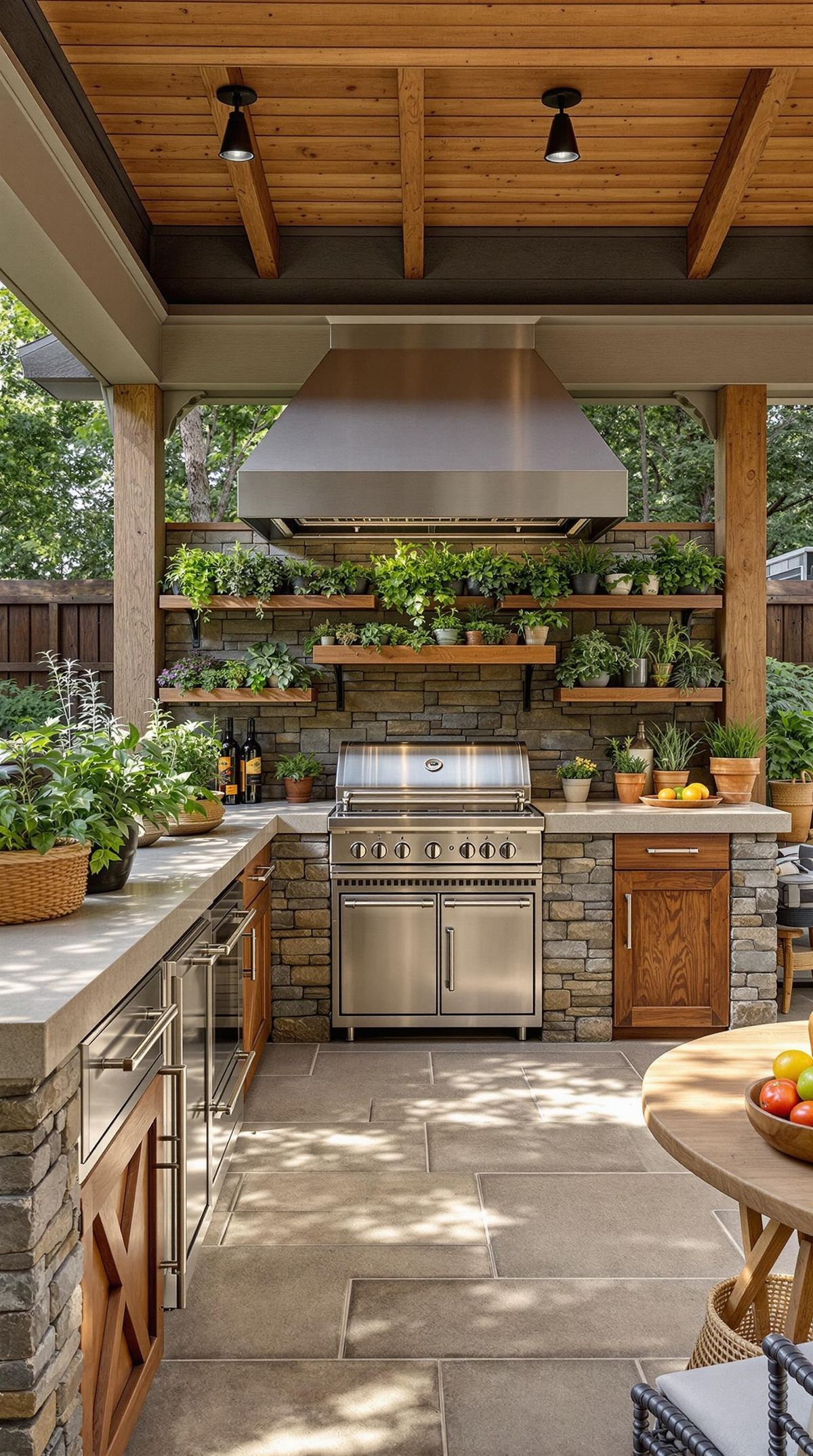
Climate-First Design Solutions:
Different climates need different approaches. Here’s how smart homeowners handle challenging weather in their outdoor kitchens:
- The Seattle Solution: Sarah Mitchell’s covered outdoor kitchen has retractable glass panels. They slide away during summer for an open-air feel. During winter storms, they close while keeping the outdoor feeling through clear views.
- The Phoenix Approach: The Rodriguez family built their outdoor kitchen around smart shade. Adjustable louvers follow the sun’s path. Built-in misting systems drop temperatures by 20 degrees during peak summer heat.
- The Miami Method: Hurricane zones need special planning. The Kowalski family’s modular outdoor kitchen lets them secure everything except basic infrastructure when severe weather hits. Their rolling cart system has survived three major storms.
- The Minnesota Winterization: The Anderson family created a seasonally enclosed outdoor kitchen. Removable glass panels and heating elements allow year-round use. During summer, everything opens completely for traditional outdoor cooking.
Site Selection and Preparation
Where you put your outdoor kitchen matters as much as what you put in it. The best spot protects from wind while catching breezes. It stays dry during rain but doesn’t create a wind tunnel. Smart placement can save you thousands in weather protection later.
Look for natural shelter from trees or hills. Avoid low spots where water collects. Check how wind moves around your house during storms. The perfect spot might not be the most obvious one. Sometimes the side yard works better than the back patio.
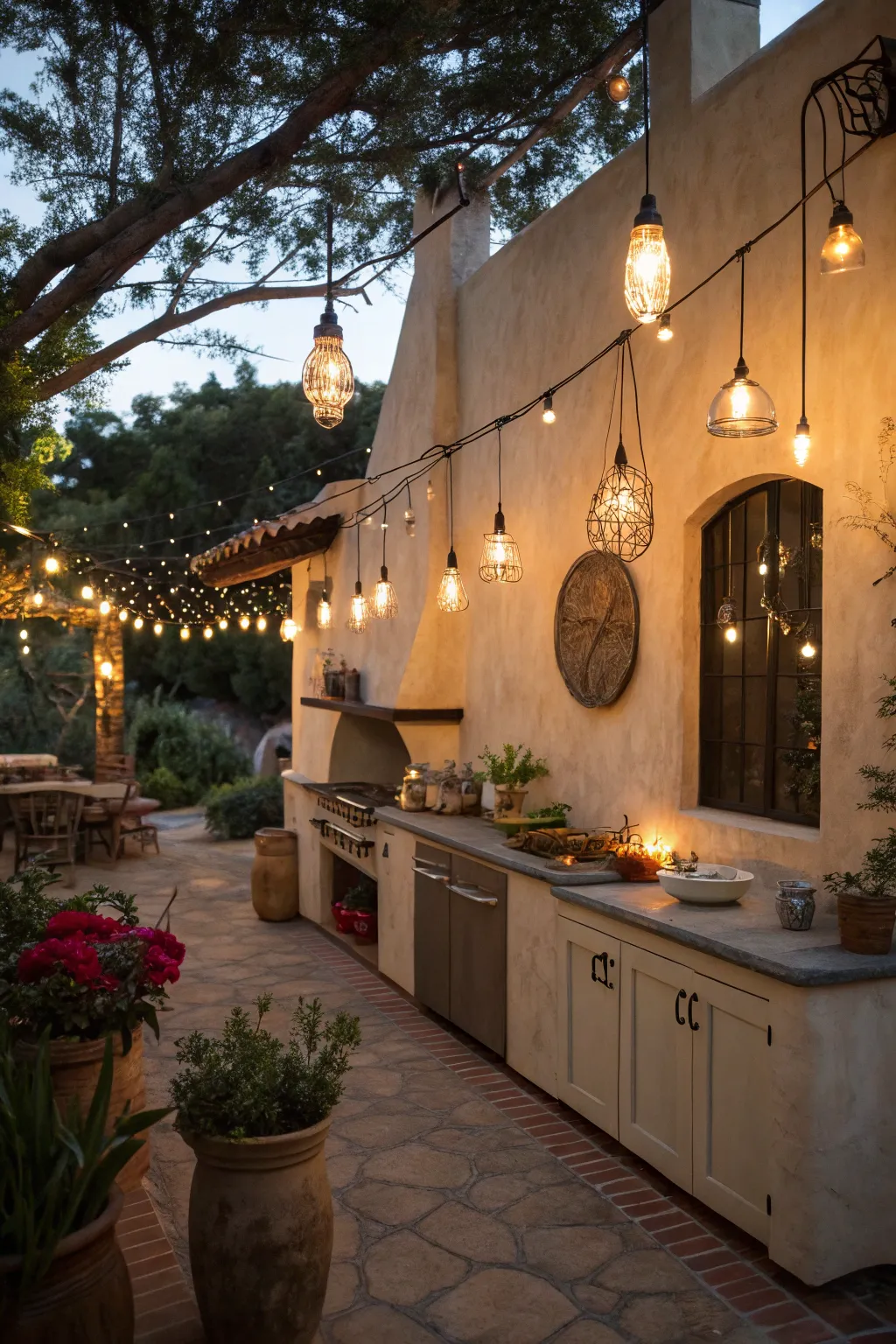
Utility Planning and Infrastructure
Your outdoor kitchen needs power, water, and gas. Running these utilities costs money and requires permits. Plan them early to avoid expensive changes later. Underground lines work better than overhead ones. They look cleaner and weather can’t damage them.
Gas lines need professional installation. Water lines need freeze protection in cold climates. Electrical systems need GFCI protection and weatherproof outlets. Don’t forget drainage for sinks and ice makers. Good planning here prevents problems later.
How Do You Plan an Outdoor Kitchen Layout?
Small spaces can work just as well as large ones if you plan smart. The key is making every square foot count. You want easy movement between cooking, prep, and serving areas. Storage needs to be close but protected. Everything should flow naturally without wasted steps.
Jennifer Park thought her compact Brooklyn backyard meant giving up her outdoor kitchen dreams. Then architect David Liu showed her that smarter space beats more space. His approach turned Jennifer’s 200-square-foot patio into a cooking paradise that works better than suburban outdoor kitchens twice its size.
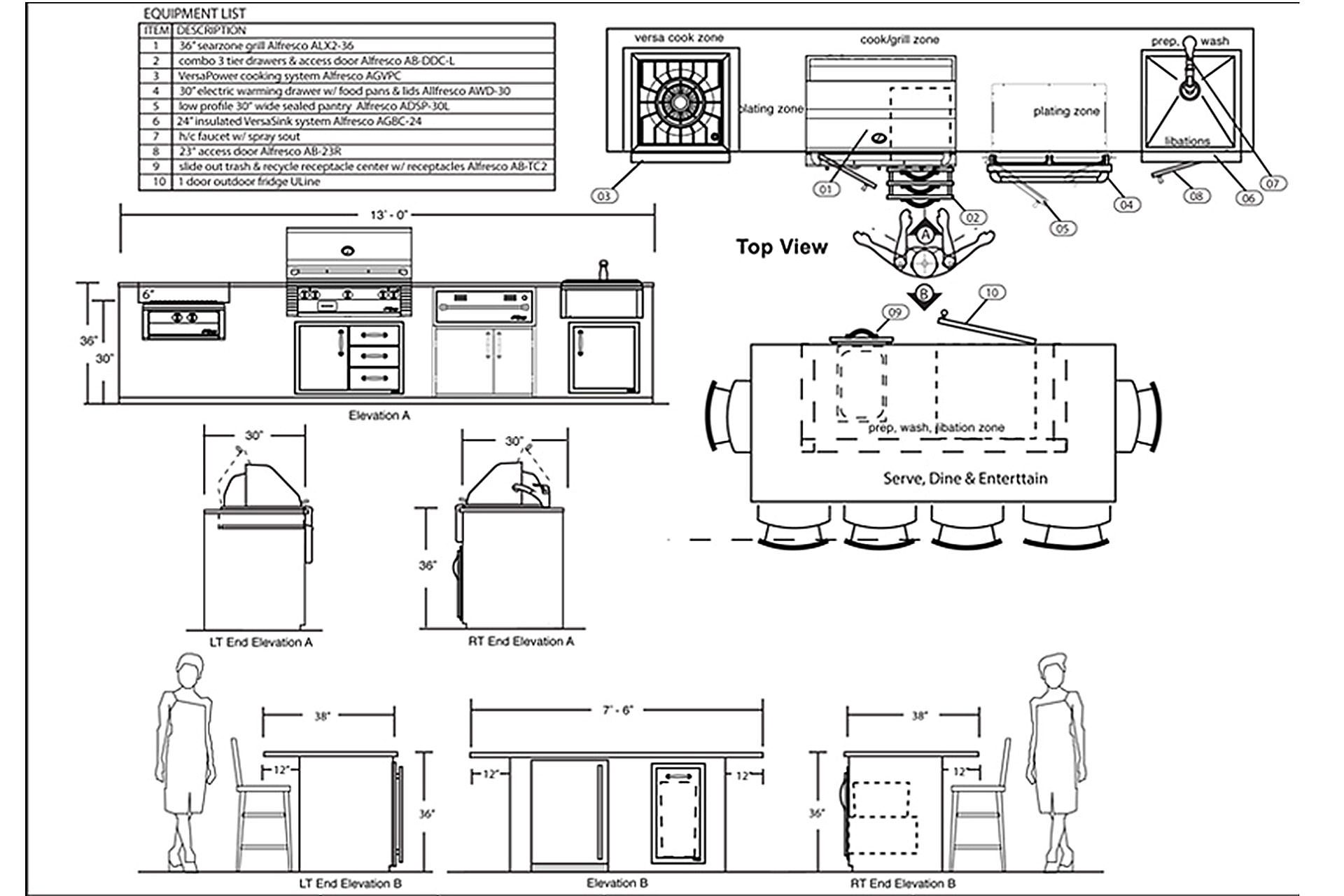
Credit: Alfresco Open Air Culinary Systems
Space-Maximizing Layout Solutions:
These families found creative ways to make their outdoor kitchens work in challenging spaces:
- The Triangle Revolution: The Martinelli family’s outdoor kitchen uses classic work triangle principles. Weather-resistant backup systems keep everything working even during equipment repairs.
- The Vertical Advantage: Chicago architect Lisa Wong’s three-tier system works in narrow spaces. Ground-level storage, counter-height cooking, and overhead storage protected by a custom canopy that also collects rainwater.
- The Peninsula Solution: When the O’Brien family couldn’t fit a traditional island, their designer created a peninsula connecting to their home’s exterior wall. Maximum workspace with less floor space and easier utility connections.
- The Multi-Zone Mastery: The Thompson family’s 12-foot linear island has distinct zones for wood-fired pizza, grilling, and prep with cold storage. Multiple cooks can work at the same time without getting in each other’s way.
Work Triangle Principles Outdoors
The classic kitchen work triangle applies outdoors too. You want easy movement between your grill, prep area, and refrigeration. But outdoor kitchens add complexity. You might have multiple cooking stations. Weather affects how you move around. Wind direction matters for grilling.
Plan your most-used path first. This usually connects your grill to your prep counter. Then add secondary paths for special cooking methods. Keep the main triangle clear but make other areas accessible too.
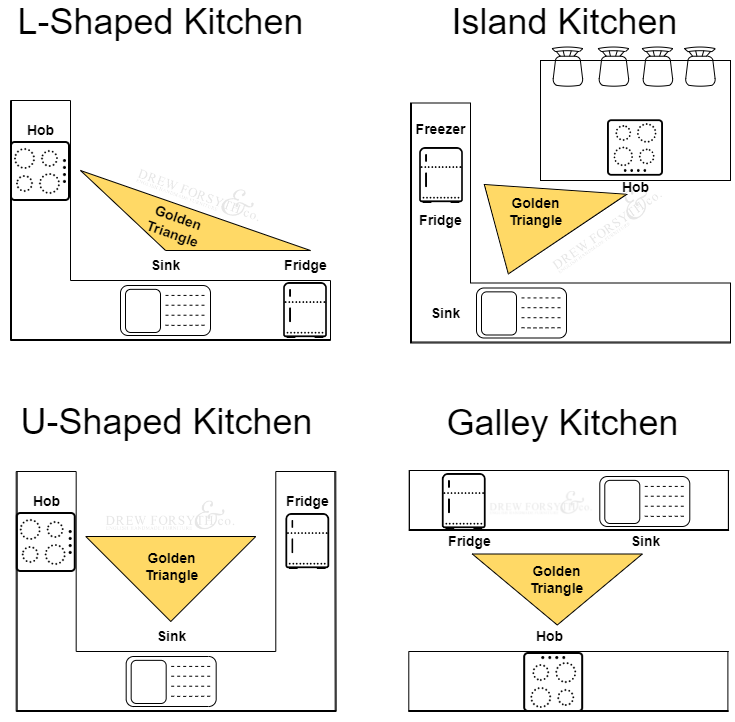
Zoning for Multiple Cooks
Good outdoor kitchens let multiple people cook without conflicts. Create separate zones for different tasks. One person can grill while another preps salads. Someone else can tend the pizza oven. Each zone needs its own tools and workspace.
Think about traffic flow too. People need to move ingredients and finished dishes without crossing cooking zones. Serving areas should connect easily to dining spaces. Storage should be accessible from each work zone.
What Are the Best Outdoor Kitchen Design Ideas?
The best outdoor kitchens do more than cook food. They create experiences. They bring people together. They work for intimate dinners and big parties. They adapt to different seasons and weather. Most importantly, they make cooking outdoors feel natural and enjoyable.
Rachel Santos never expected her outdoor kitchen to become her neighborhood’s unofficial community center. But her architect’s “layered entertainment” concept created spaces that flow from toddler birthday parties to book club meetings without missing a beat.
Entertainment-Focused Design Solutions:
These designs put social connection at the center of outdoor cooking:
- The Stadium Seating Concept: The Williams family’s graduated seating levels make everyone feel included. Bar-height stools for active participants, counter-height seating for observers, and comfortable lounge chairs that maintain sight lines to the action.
- The Performance Kitchen: Chef Marcus Rodriguez designed his two-sided island like a restaurant expo line. Clear sight lines from every angle and lighting that illuminates workspace without blinding diners.
- The Conversation Circle: The Peters family’s circular outdoor kitchen puts the fire feature at center with cooking stations radiating outward. No one sits with their back to the action while maintaining intimate conversation distances.
- The Smart Weather Response: Tech entrepreneur Amanda Chen’s outdoor kitchen has sensors that automatically adjust lighting, music volume, and cooking temperatures based on conditions. Hood exhaust increases with wind, covers deploy before rain.
- The Modular Entertainment System: The Kim family’s mobile cart system changes their space from intimate date nights to extended family gatherings of 30 people through flexible appliance configurations and modular furniture.
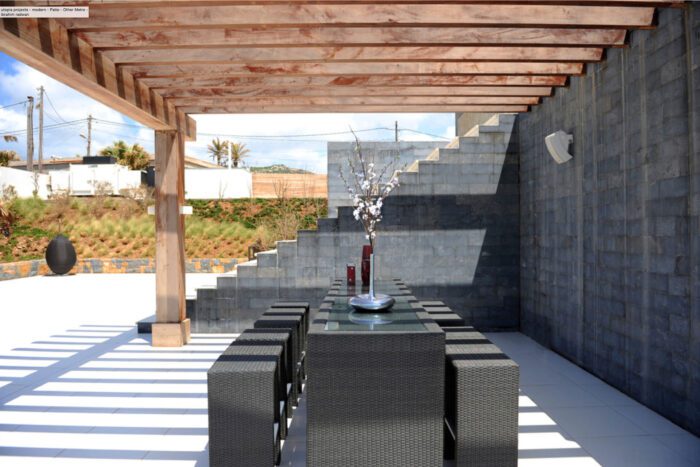
Outdoor Entertaining Dining
Lighting Design for Day and Night
Good lighting makes your outdoor kitchen work after dark. You need bright task lighting for cooking and prep. Softer ambient lighting creates atmosphere for dining. Accent lighting highlights special features like a pizza oven or bar area.
Layer different types of lighting. Under-cabinet LEDs light work surfaces. Pendant lights over islands provide focused task lighting. String lights or lanterns add warmth. Consider dimmers so you can adjust the mood throughout the evening.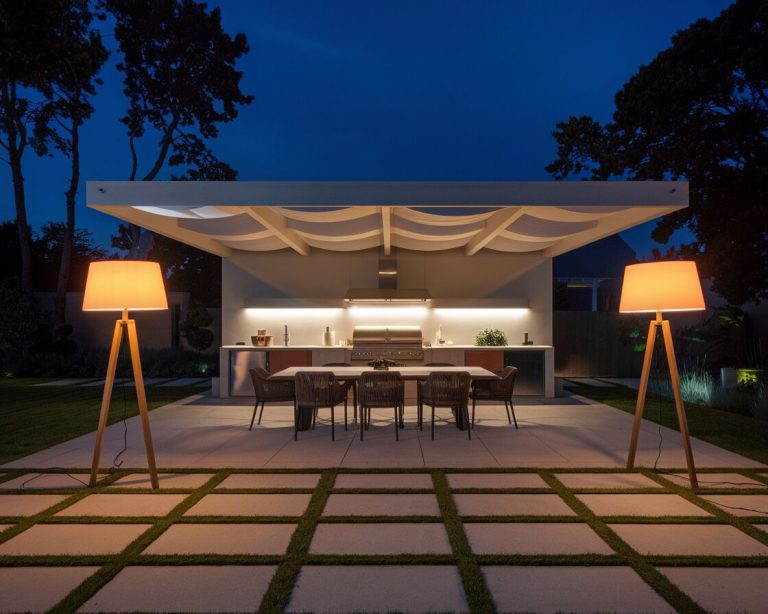
Integration with Indoor Spaces
Your outdoor kitchen should connect smoothly with your indoor kitchen. Large sliding doors or pass-through windows make it easy to move food and dishes. Similar design elements create visual connection. Covered walkways protect you during bad weather.
Think about sight lines too. You want to see your outdoor cooking area from inside your house. This helps with entertaining and keeps you connected to indoor activities while cooking outside.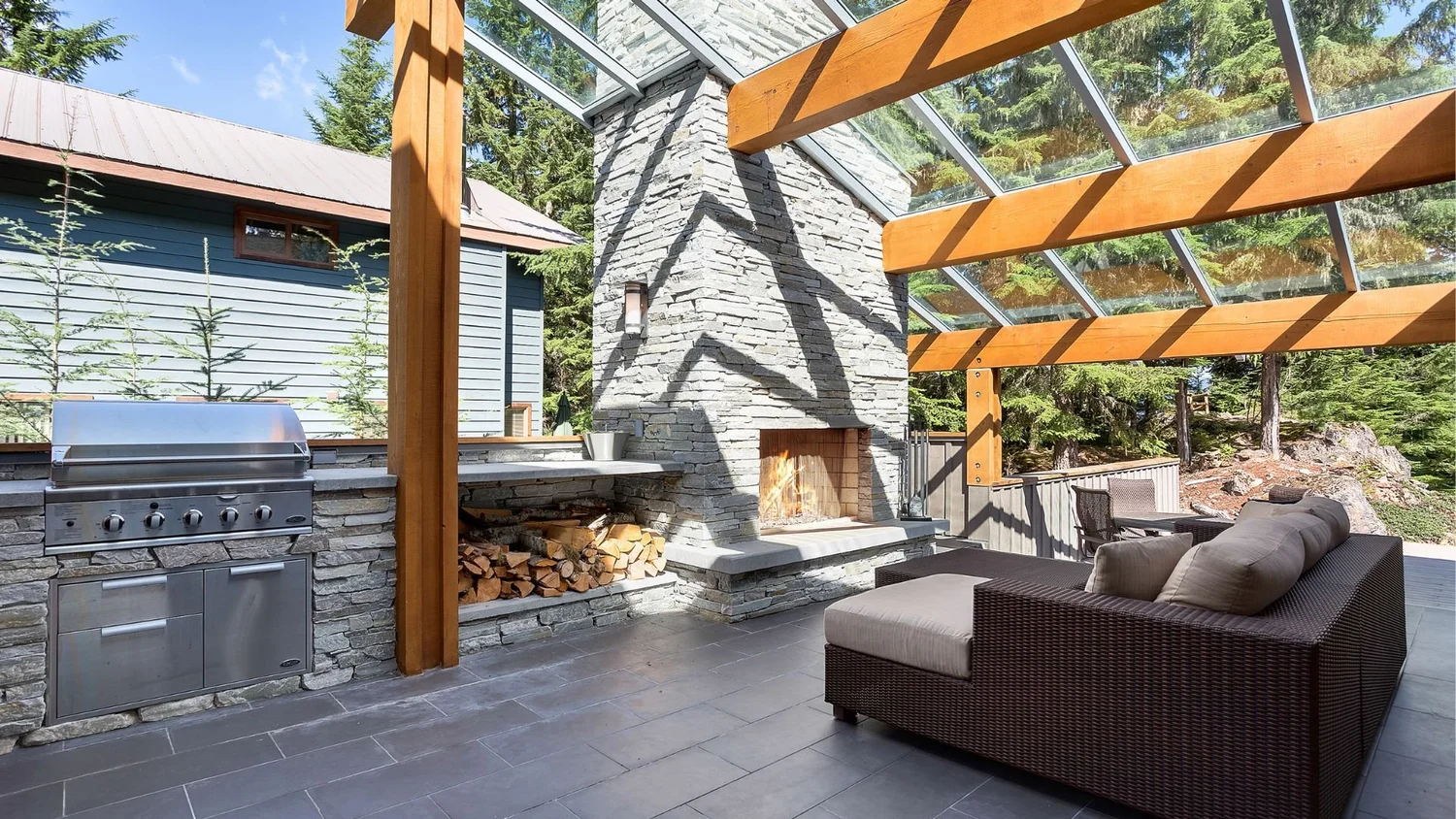
What Materials Are Best for Outdoor Kitchen Cabinets?
Outdoor kitchen cabinets face challenges that indoor cabinets never see. Rain, humidity, temperature swings, and UV rays all attack cabinet materials. Regular wood cabinets will warp, crack, and rot outdoors. You need materials specifically designed for weather exposure.
Robert Chen’s first outdoor kitchen cabinet doors warped beyond recognition after one Seattle winter. His second attempt used marine-grade materials and has withstood five years of Pacific Northwest weather without a single repair. This proves that outdoor kitchen cabinets need completely different construction than their indoor counterparts.
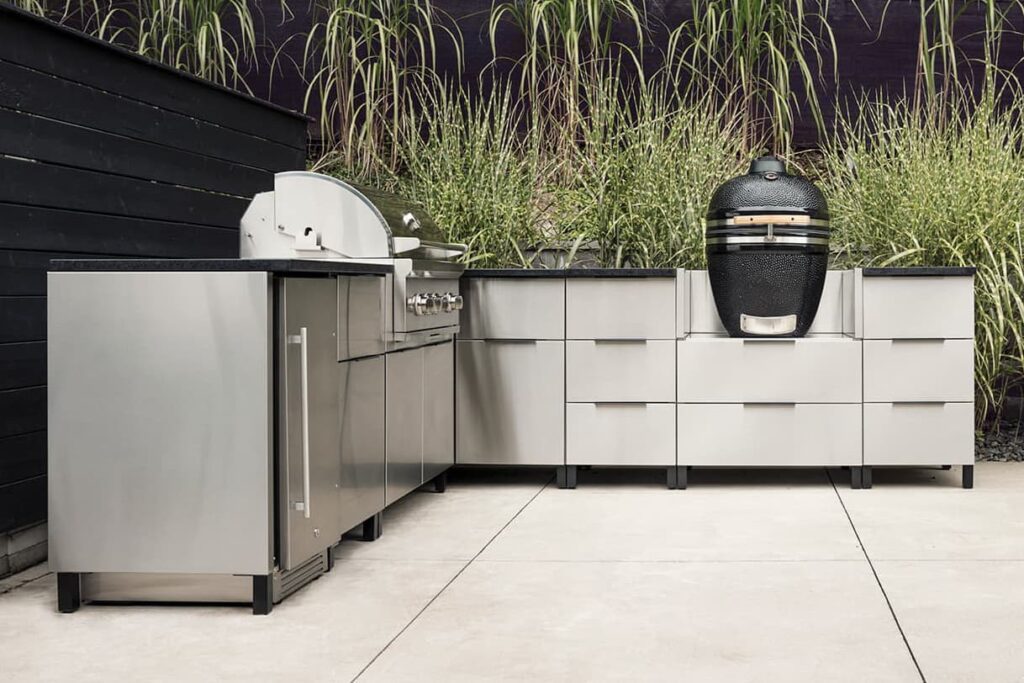
Stainless Steel Cabinetry Home Refinements
Weather-Resistant Cabinet Solutions:
These families found cabinet materials that stand up to their local weather:
- The Marine-Grade Transformation: The Morrison family’s cabinets use yacht construction materials. Closed-cell foam cores prevent water infiltration. Synthetic teak faces provide traditional looks with modern durability.
- The Stainless Steel System: Restaurant equipment supplier Janet Liu applied commercial kitchen principles. Fully stainless steel cabinets with marine-grade locks and built-in drainage systems prevent water accumulation.
- The Powder-Coated Aluminum Solution: The Garcia family’s aluminum cabinet frames with powder-coated finishes resist UV damage and moisture. They handle extreme desert temperature swings without binding or warping.
- The Self-Draining Design: The Walsh family’s cabinets have sloped bottoms and discrete drainage outlets preventing water accumulation. They applied principles from commercial refrigeration design.
- The Modular Replacement System: The Johnson family’s cabinet modules can be individually replaced if damaged. Each module seals independently and removes for deep cleaning or component replacement.
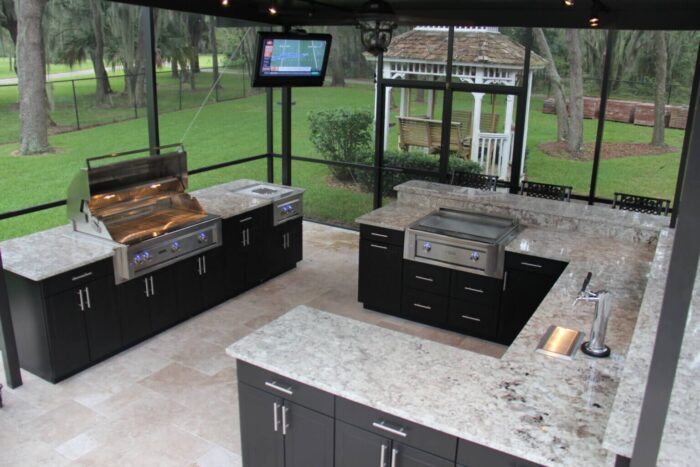
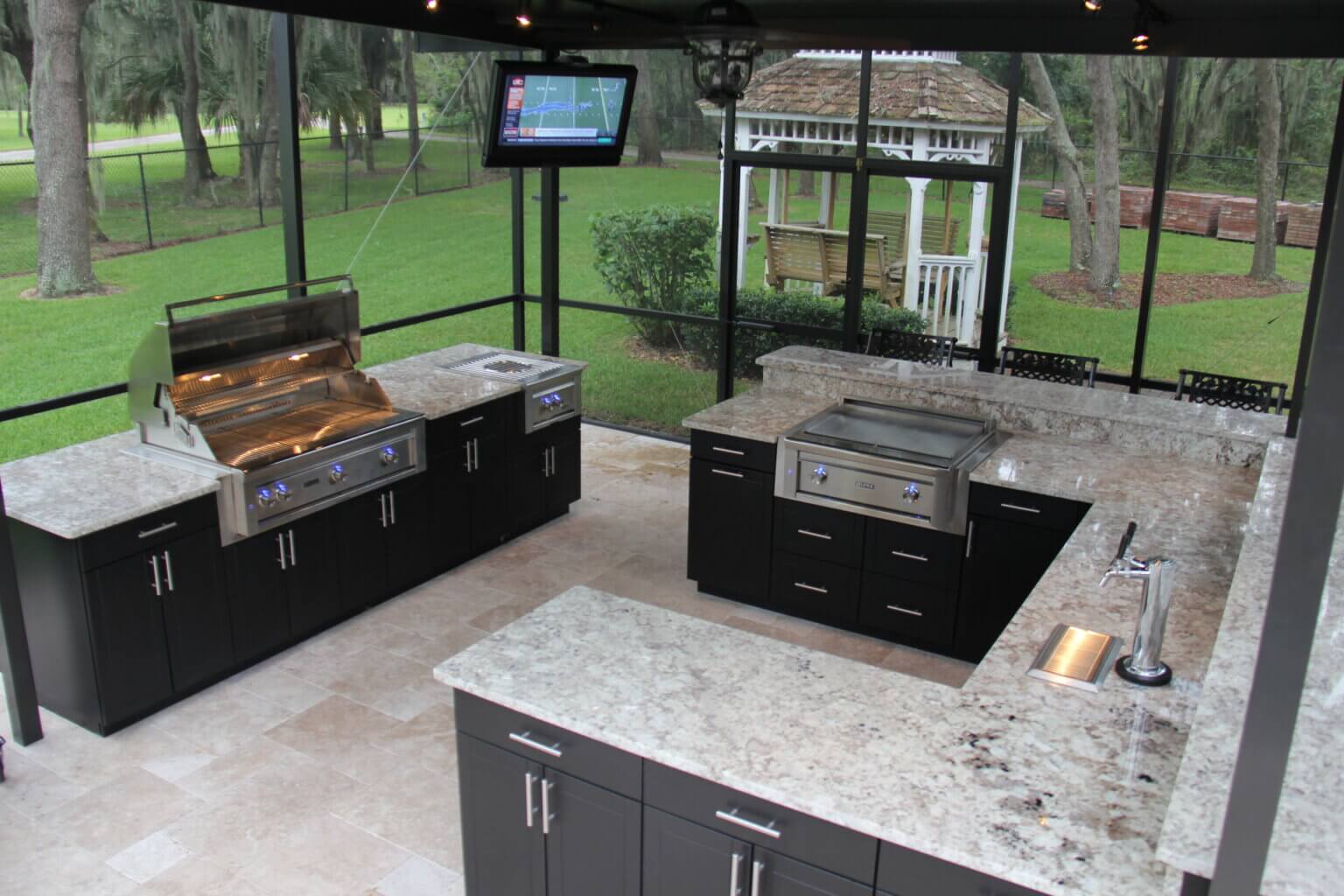
Construction Details That Matter
How cabinets are built matters as much as what they’re made from. All joints need waterproof sealing. Hardware must be marine-grade stainless steel. Hinges and slides need to work smoothly even when wet. Ventilation prevents condensation buildup inside cabinets.
Pay attention to door and drawer construction too. Solid surfaces work better than veneered ones. Rabbeted joints shed water better than butt joints. Proper finishing protects exposed edges from moisture penetration.
Hardware and Accessories
Cabinet hardware takes a beating outdoors. Standard hardware will rust, stick, or break. Marine-grade stainless steel costs more but lasts longer. Soft-close hinges and slides reduce wear from slamming in wind. Weatherproof latches keep doors closed during storms.
Interior accessories need weather protection too. Drawer organizers should be plastic or stainless steel. Lazy Susans need corrosion-resistant bearings. Pull-out shelves should have stops to prevent wind damage.
How Do You Protect Outdoor Kitchen Appliances from Weather?
Expensive appliances need protection from rain, wind, and temperature extremes. Simple covers aren’t enough for serious weather. Real protection comes from smart design that integrates weather resistance into your outdoor kitchen plan. The best protection is invisible—built into the structure itself.
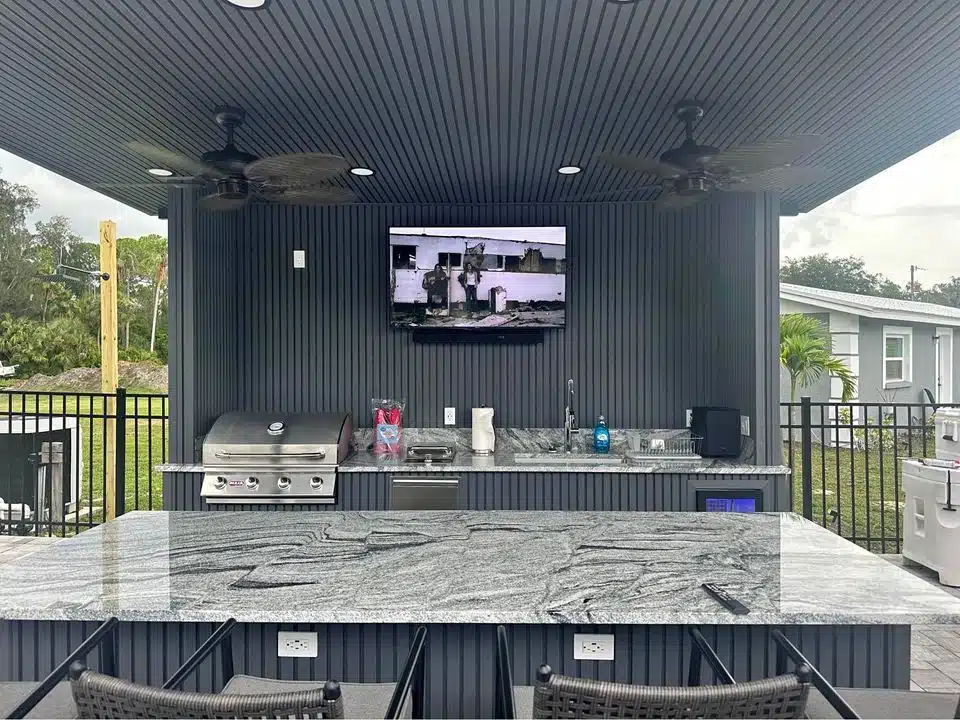
Covered outdoor kitchen
Maria Gonzalez thought expensive covers solved her appliance protection problem until Hurricane Laura taught her that real weather resistance requires integration, not addition. Her rebuilt outdoor kitchen has details invisible to casual observers—the specifics that make her investment survive whatever Texas weather delivers.
Integrated Protection Solutions:
These approaches build weather protection into the outdoor kitchen design:
- The Shelter Integration Method: The Patterson family’s appliances recess into weather-protected alcoves within their pergola structure. Their pizza oven sits in a custom niche that shields it from rain while allowing proper heat and smoke escape.
- The Elevation Strategy: The Cooper family’s raised outdoor kitchen sits 18 inches above grade on a reinforced platform. Drainage channels direct water away from equipment. This design has proven its worth during flash flooding twice.
- The Automated Cover System: The Chen family’s motorized covers deploy automatically based on weather sensors. Their island-mounted grill disappears under custom stainless steel covers that seal completely.
- The Climate Control Enclosure: The Anderson family’s seasonally enclosed design has removable glass panels and heating elements for year-round use while opening completely for traditional summer outdoor cooking.
- The Mobile Solution: The Taylor family’s appliances have heavy-duty casters for quick relocation to protected storage. Modular design breaks down into components that fit through standard doorways.
- The Ventilation Balance: HVAC engineer Peter Yuen designed appliance-specific ventilation that protects electronics while preventing moisture buildup. Dedicated air circulation for refrigeration and balanced air management for grilling areas.
- The Hurricane-Proof System: The rebuilt Gonzalez outdoor kitchen incorporates built-in weather protection, elevated positioning, and automated covers that respond to local weather monitoring systems. It has operated perfectly through two more hurricane seasons.
Appliance-Specific Protection Strategies
Different appliances need different protection approaches. Grills need covers that breathe while blocking rain. Refrigerators need ventilation but protection from direct water. Pizza ovens need heat-resistant covers that don’t trap moisture. Each appliance has unique vulnerabilities.
Study your appliance manuals for specific weather requirements. Some need annual maintenance. Others need daily protection. Understanding these needs helps you choose the right protection strategy for each piece of equipment.
Seasonal Maintenance and Storage
Even the best protection requires regular maintenance. Clean covers regularly to prevent mold and mildew. Check seals and gaskets for wear. Lubricate moving parts before they stick. Store removable items properly during off-season.
Create a maintenance schedule that matches your climate. Monthly checks might be enough in mild weather. Weekly attention might be needed in harsh conditions. Regular care prevents small problems from becoming expensive repairs.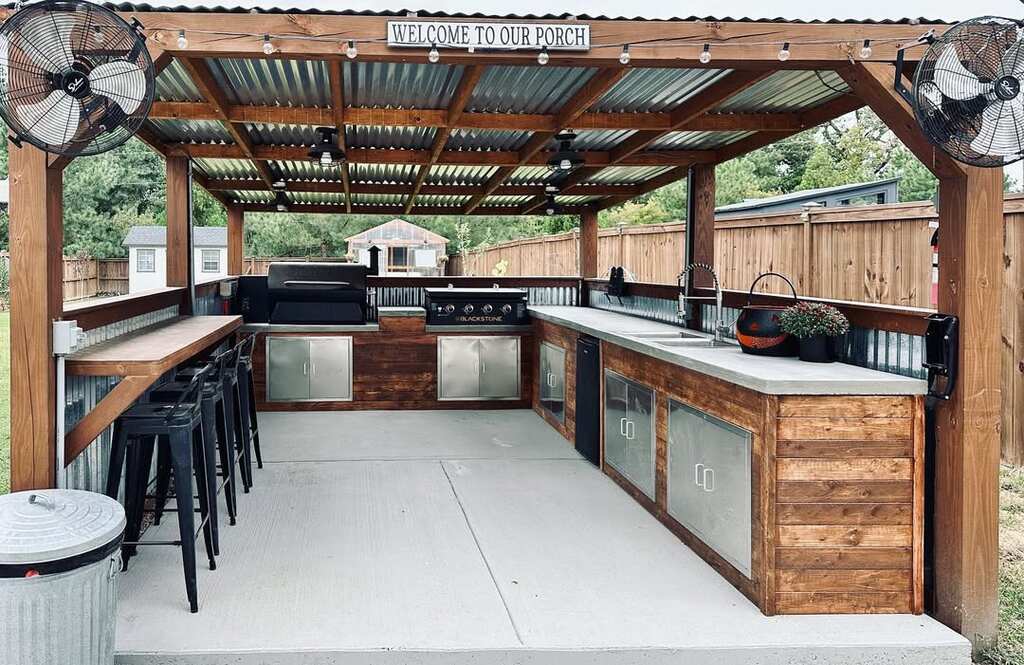
Emergency Weather Protocols
Have a plan for severe weather. Know which items need to be secured or moved. Keep emergency supplies like tarps and tie-downs ready. Practice your storm prep routine so you can do it quickly when weather threatens.
Consider backup power for essential appliances during outages. Portable generators can keep refrigerators running. Battery-powered lights help you see what you’re doing. Weather radio keeps you informed about changing conditions.
These 25 design solutions show how outdoor kitchen design has evolved from fair-weather luxury to year-round necessity. From Maria’s Saturday morning ritual to Rachel’s neighborhood gathering place, each space proves that the best outdoor kitchens don’t fight the weather—they work with it. The common thread connecting all these solutions is thoughtful planning. With smart design, any outdoor space can become a weather-resistant cooking paradise that brings families and communities together, one meal at a time.

Ruba Ahmed, a senior project editor at Arch2O and an Alexandria University graduate, has reviewed hundreds of architectural projects with precision and insight. Specializing in architecture and urban design, she excels in project curation, topic selection, and interdepartmental collaboration. Her dedication and expertise make her a pivotal asset to Arch2O.