


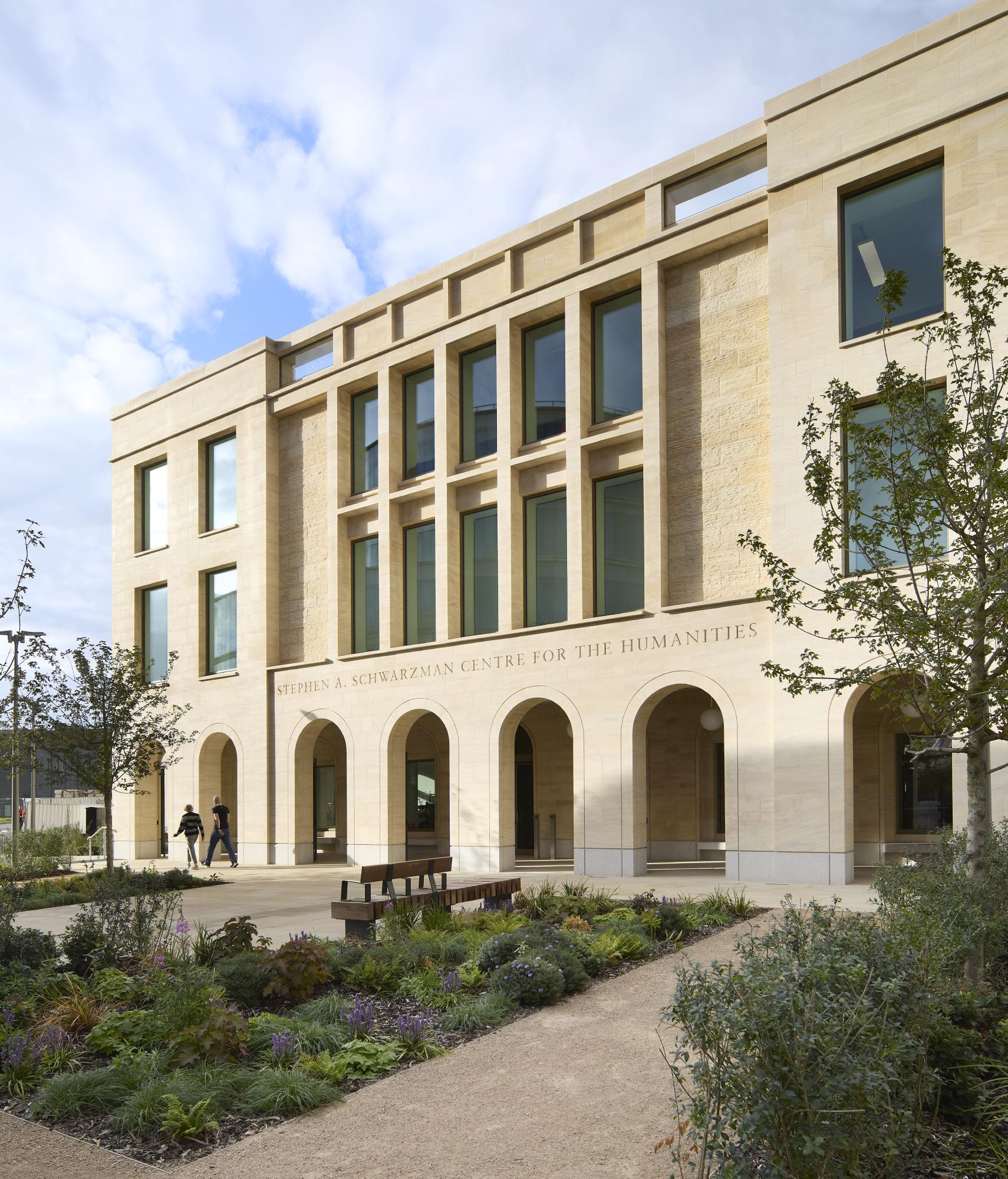
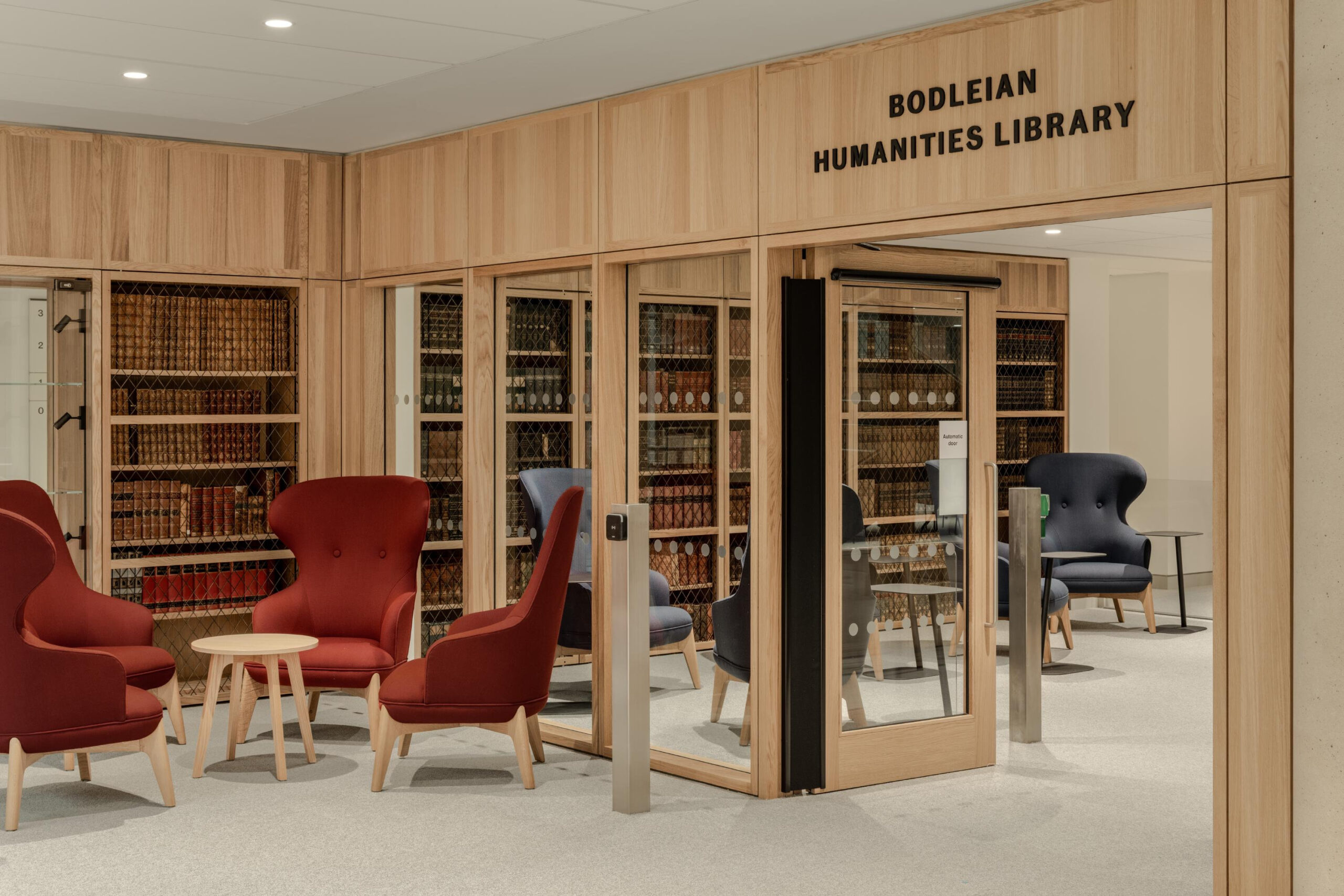
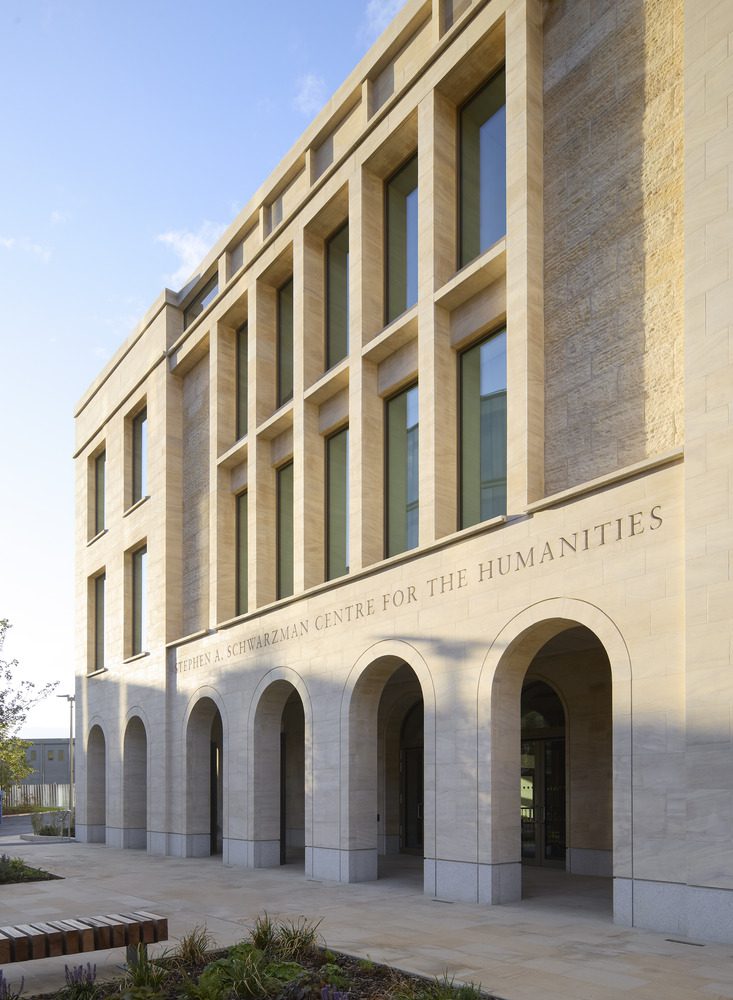
The Stephen A. Schwarzman Center for the Humanities marks a step-change for Oxford, consolidating the Humanities into a critical mass of teaching, research, and outreach. For the city, it introduces within the building a new public “street” and a major cultural venue, embodying collaboration as a foundation of its design.
© Hufton+Crow
Oxford’s global reputation in the Humanities drove the project’s ambition: to enhance models of learning, while embracing environmental and social sustainability and inclusivity. The Centre has been certified as England’s largest Passivhaus scheme and the world’s first Passivhaus Concert Hall. It is Oxford’s first publicly accessible University building, signalling openness to the wider civic community.
© Hufton+Crow
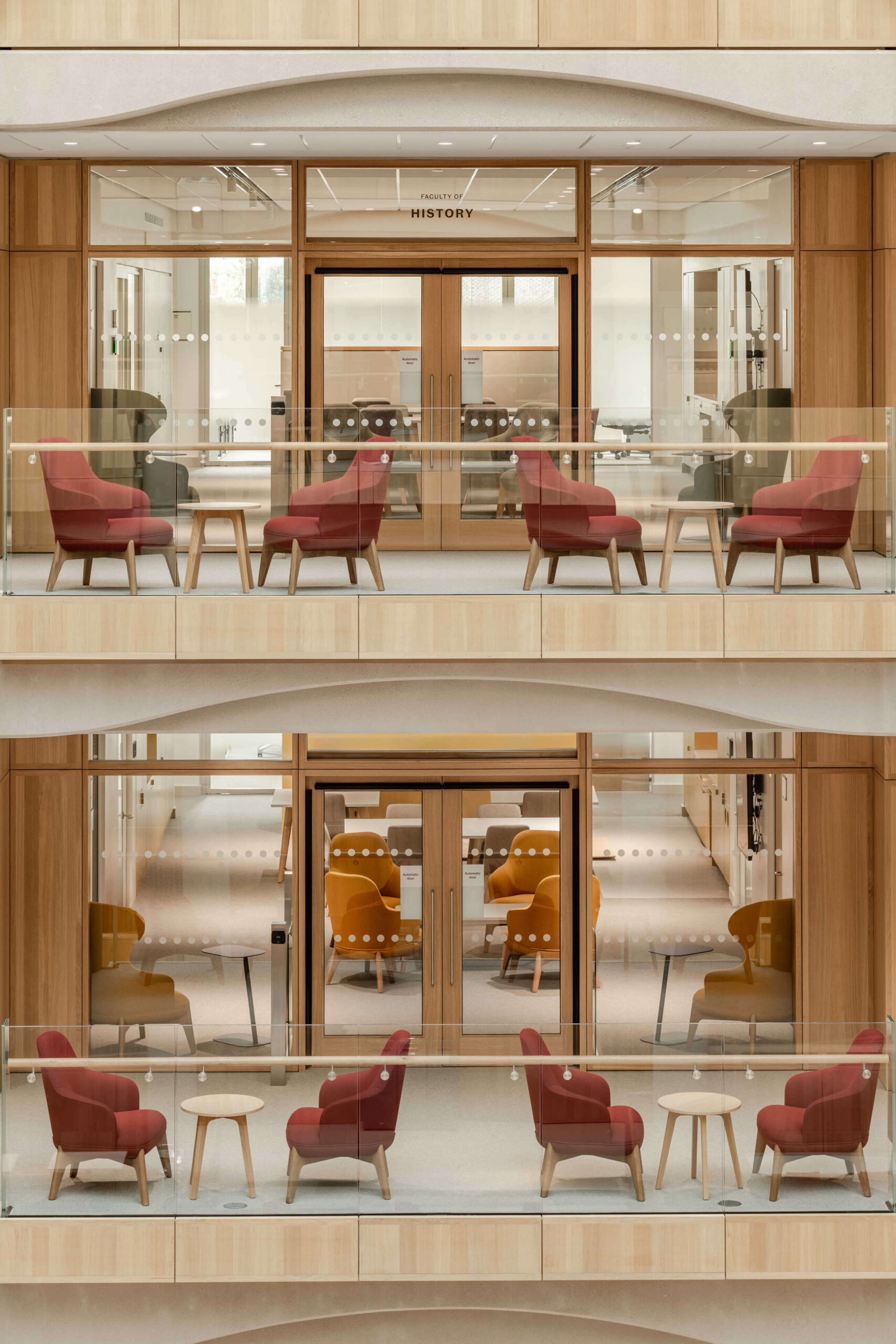
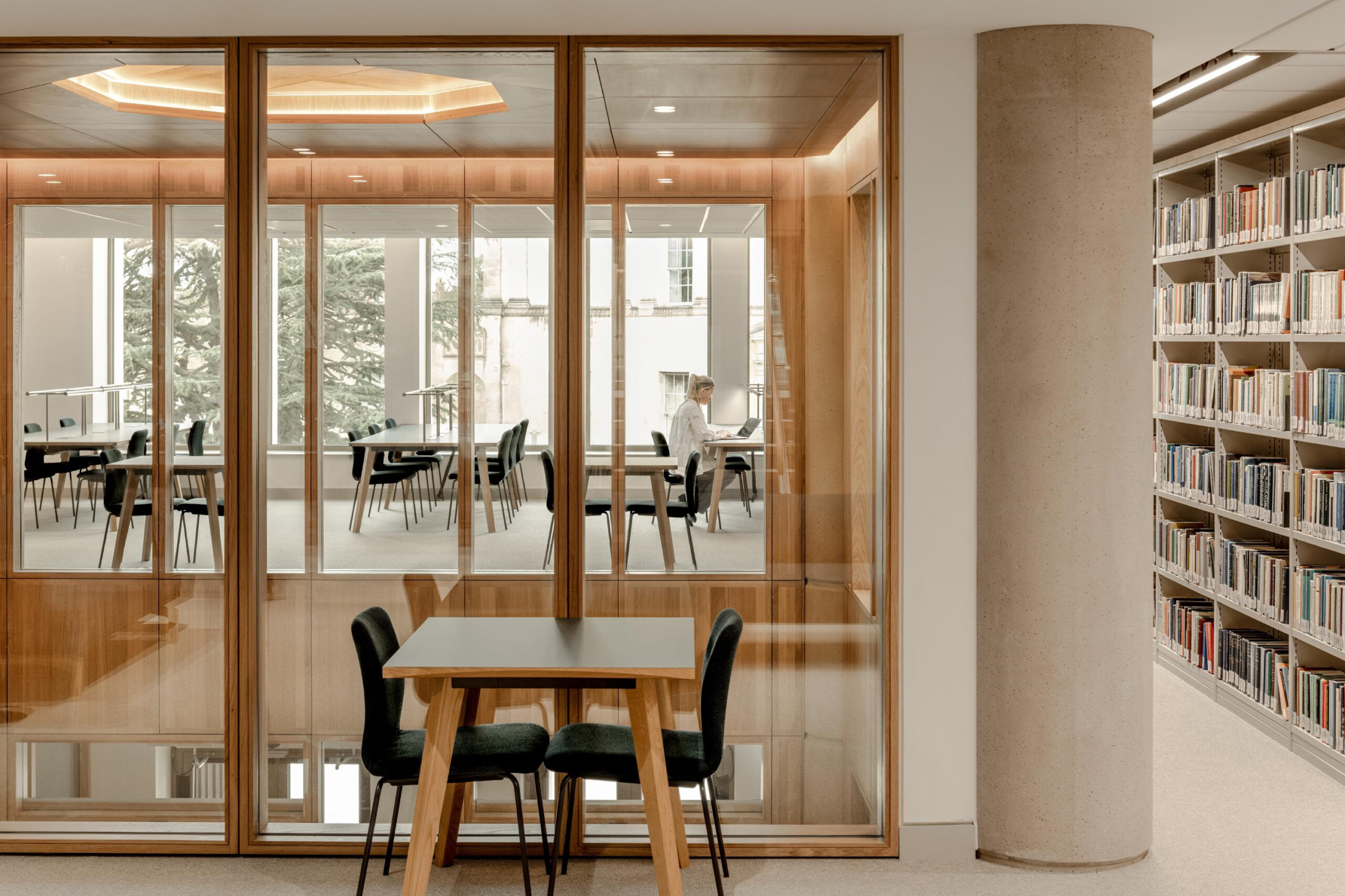
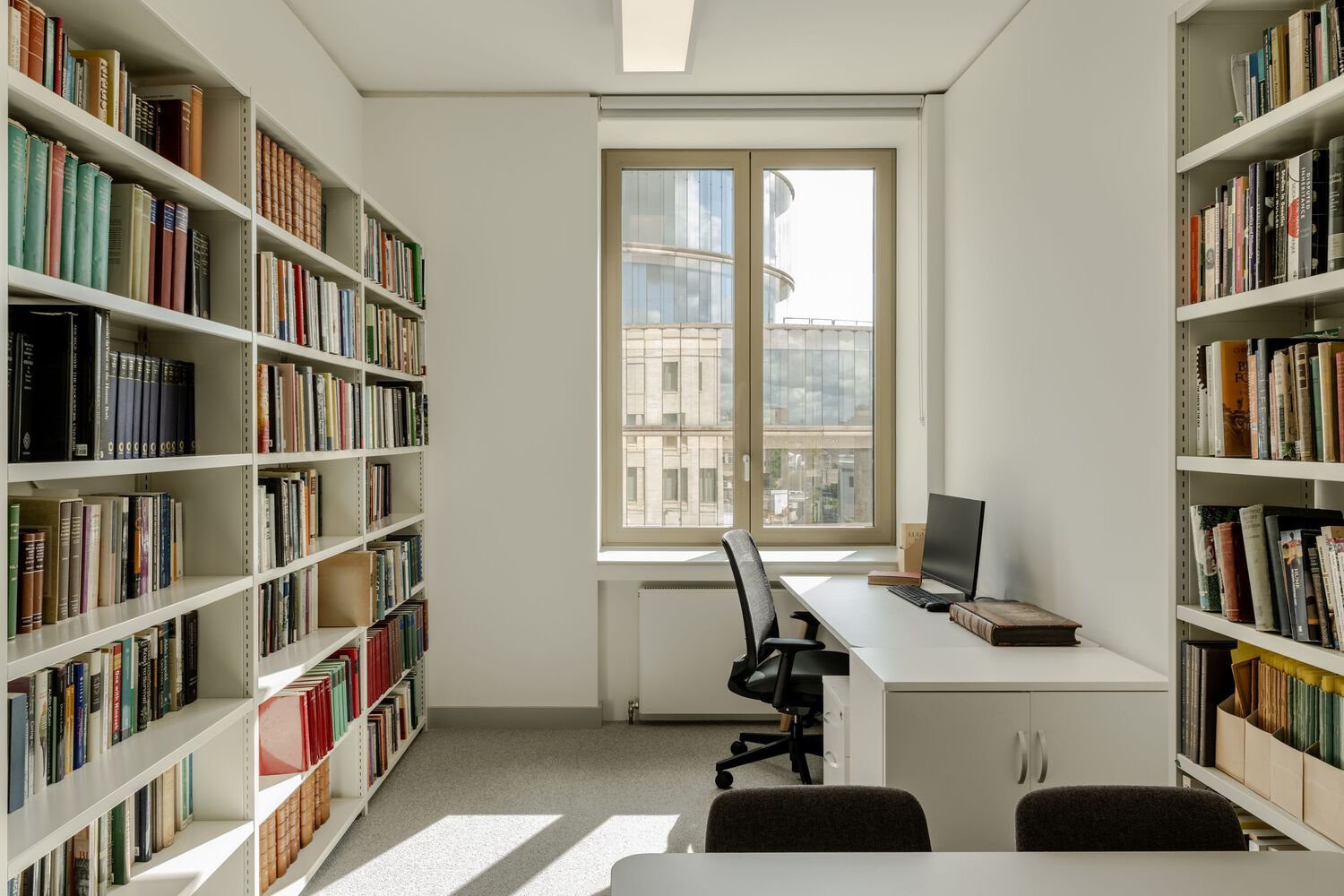
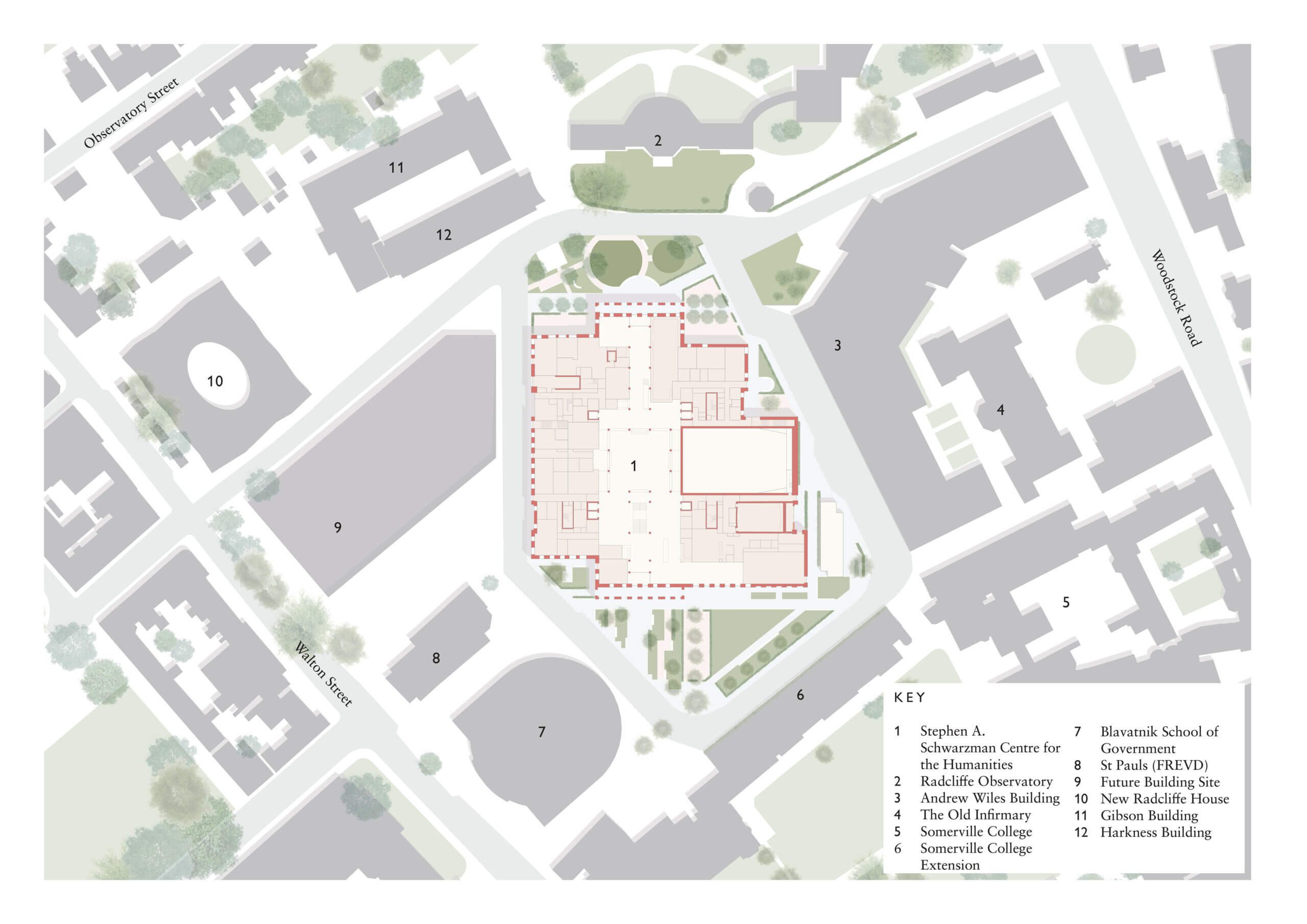
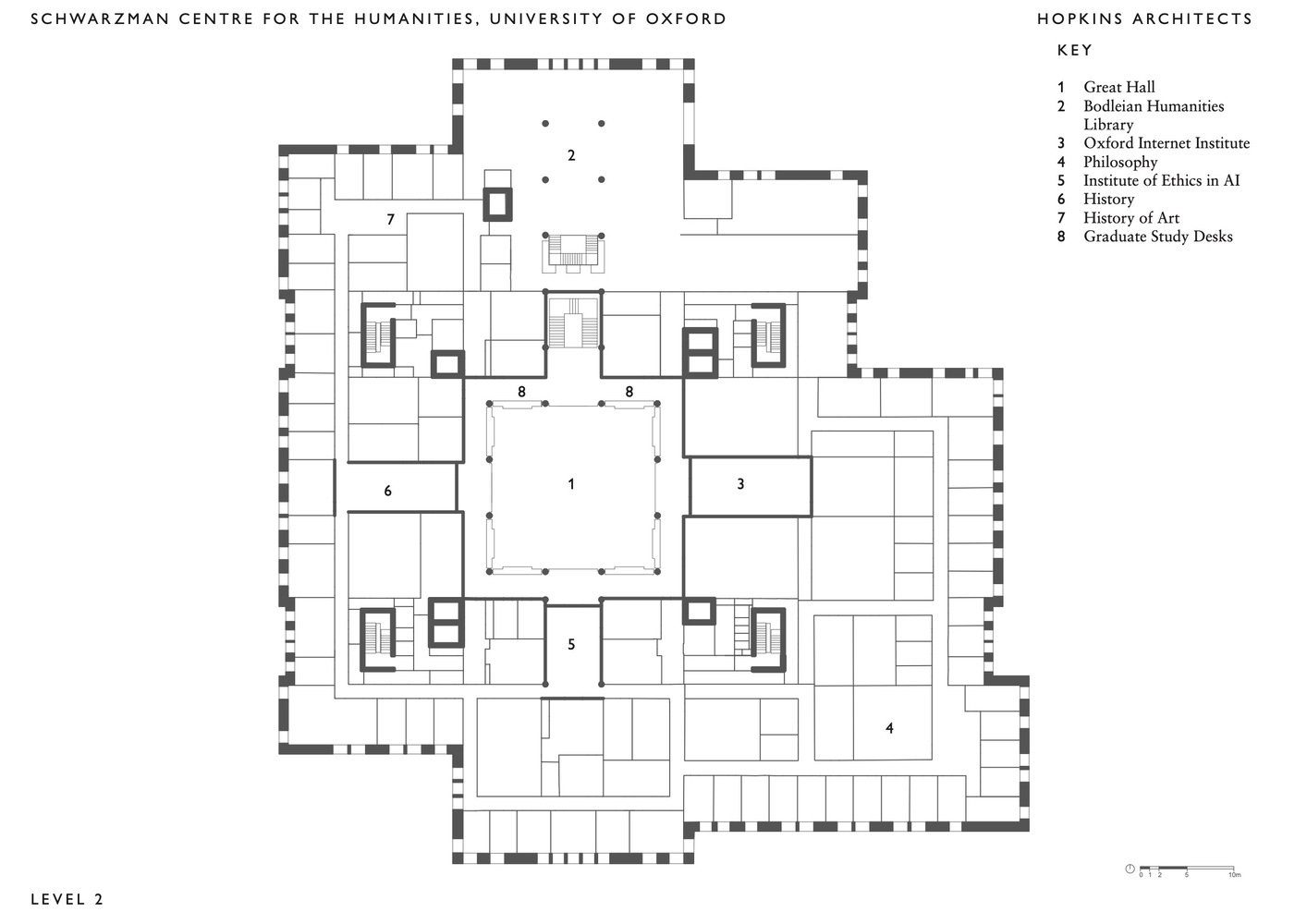
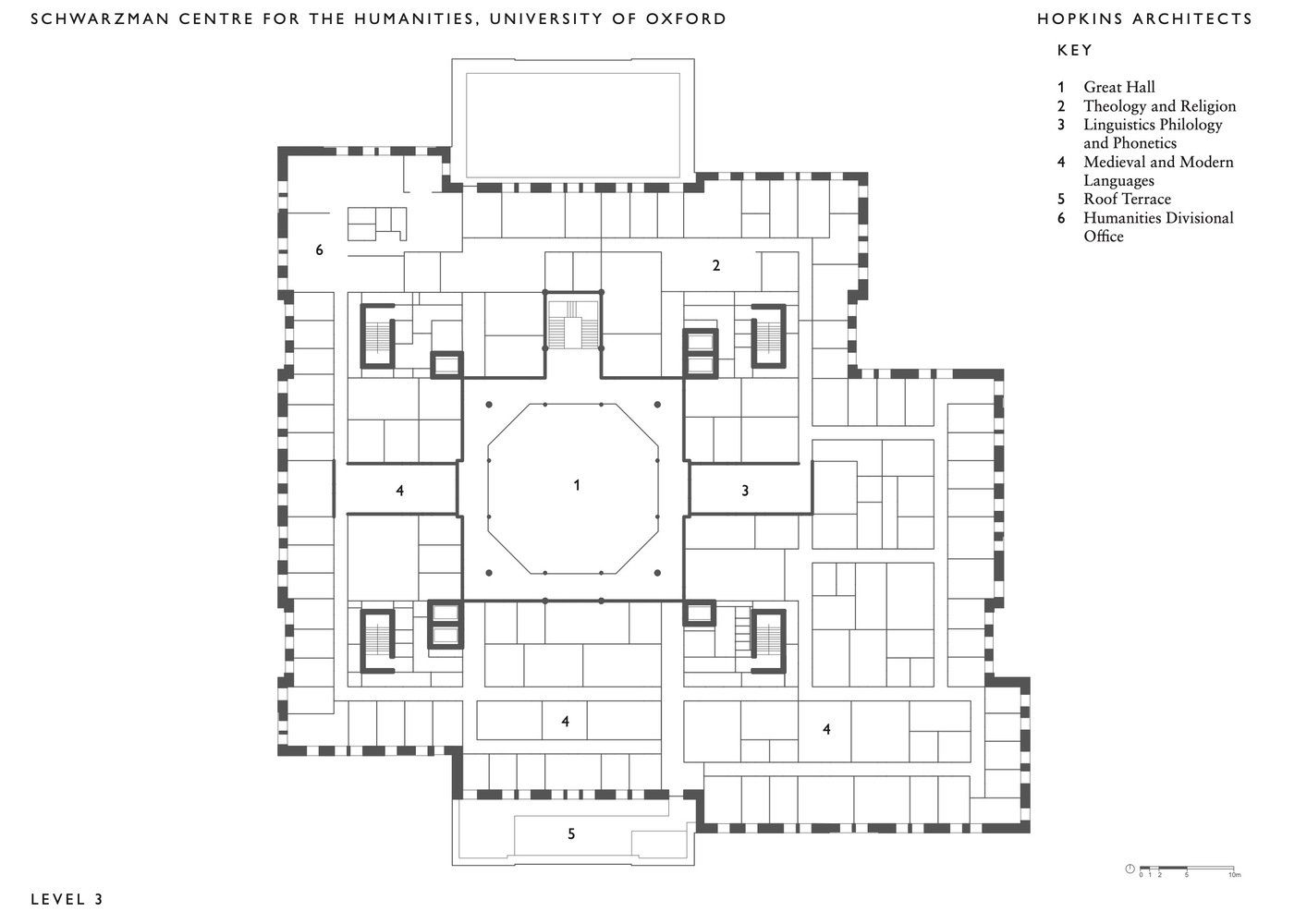
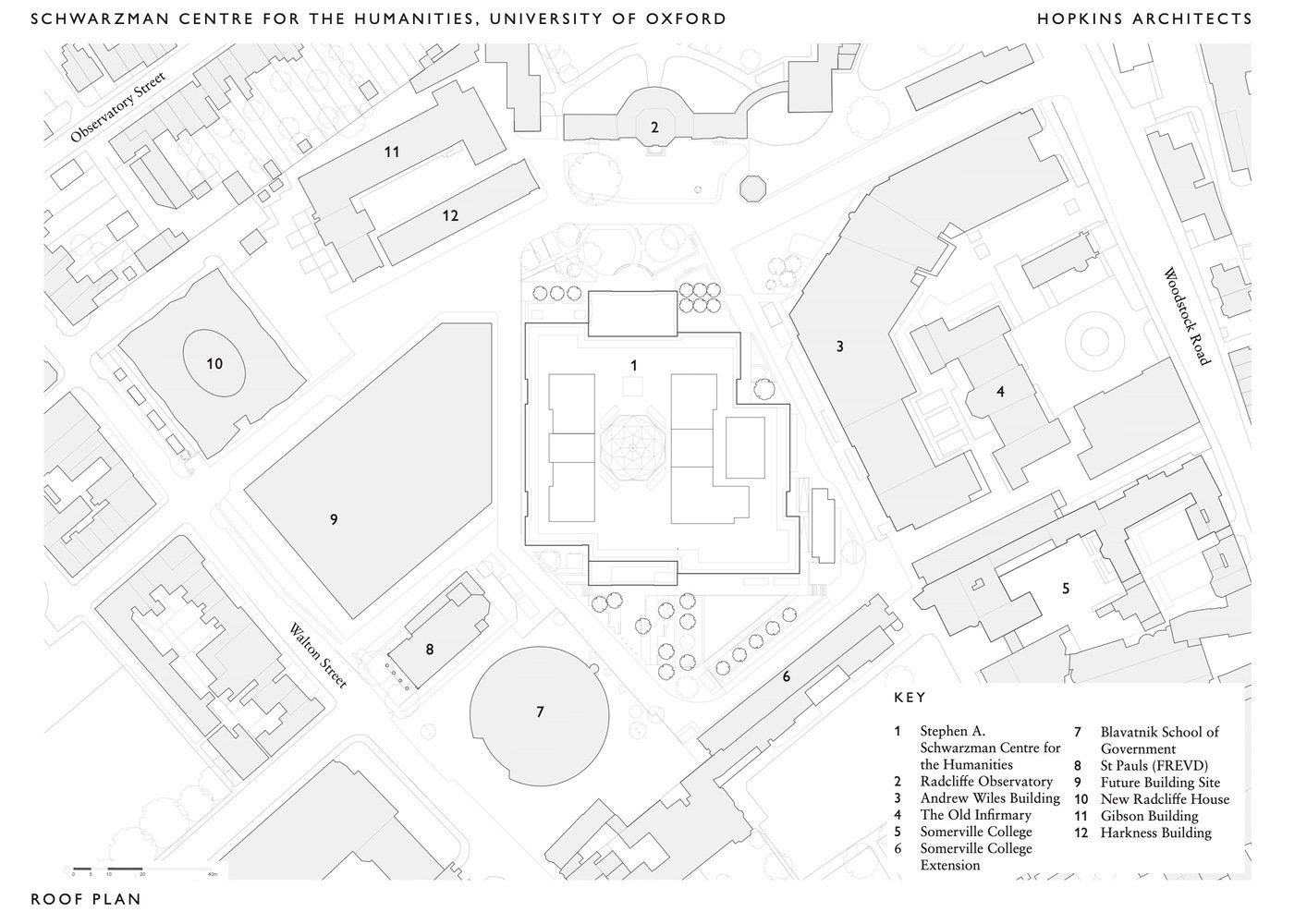
The brief was shaped through extensive consultation with academics, librarians, students, and staff. Previously dispersed across 26 buildings, seven Humanities faculties, seven Bodleian libraries, the Oxford Internet Institute, and a new Institute for Ethics in AI are now united in a central location opposite the Radcliffe Observatory. This physical academic proximity was specifically designed to encourage interdisciplinarity and collaboration.
© Hufton+Crow
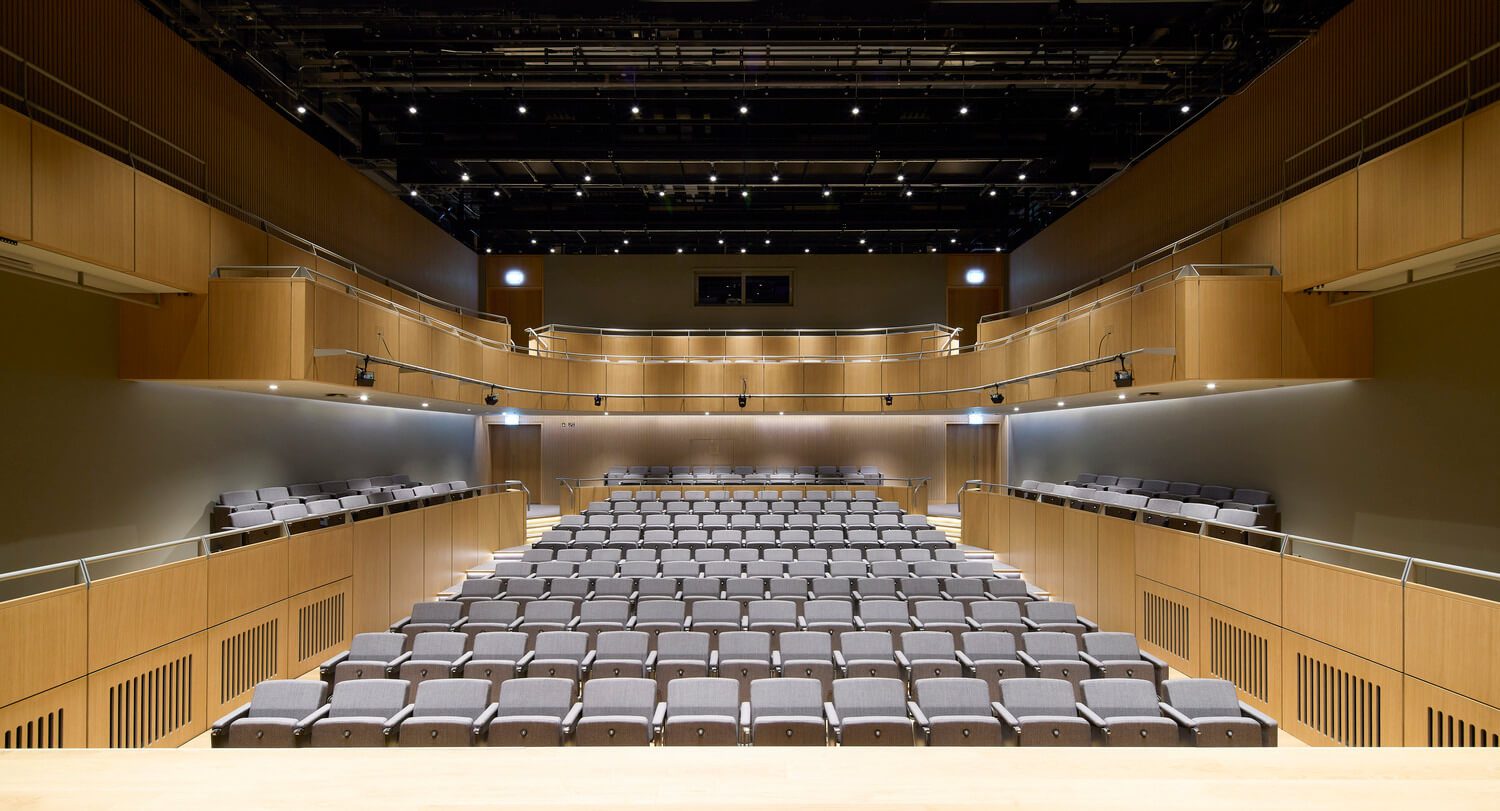
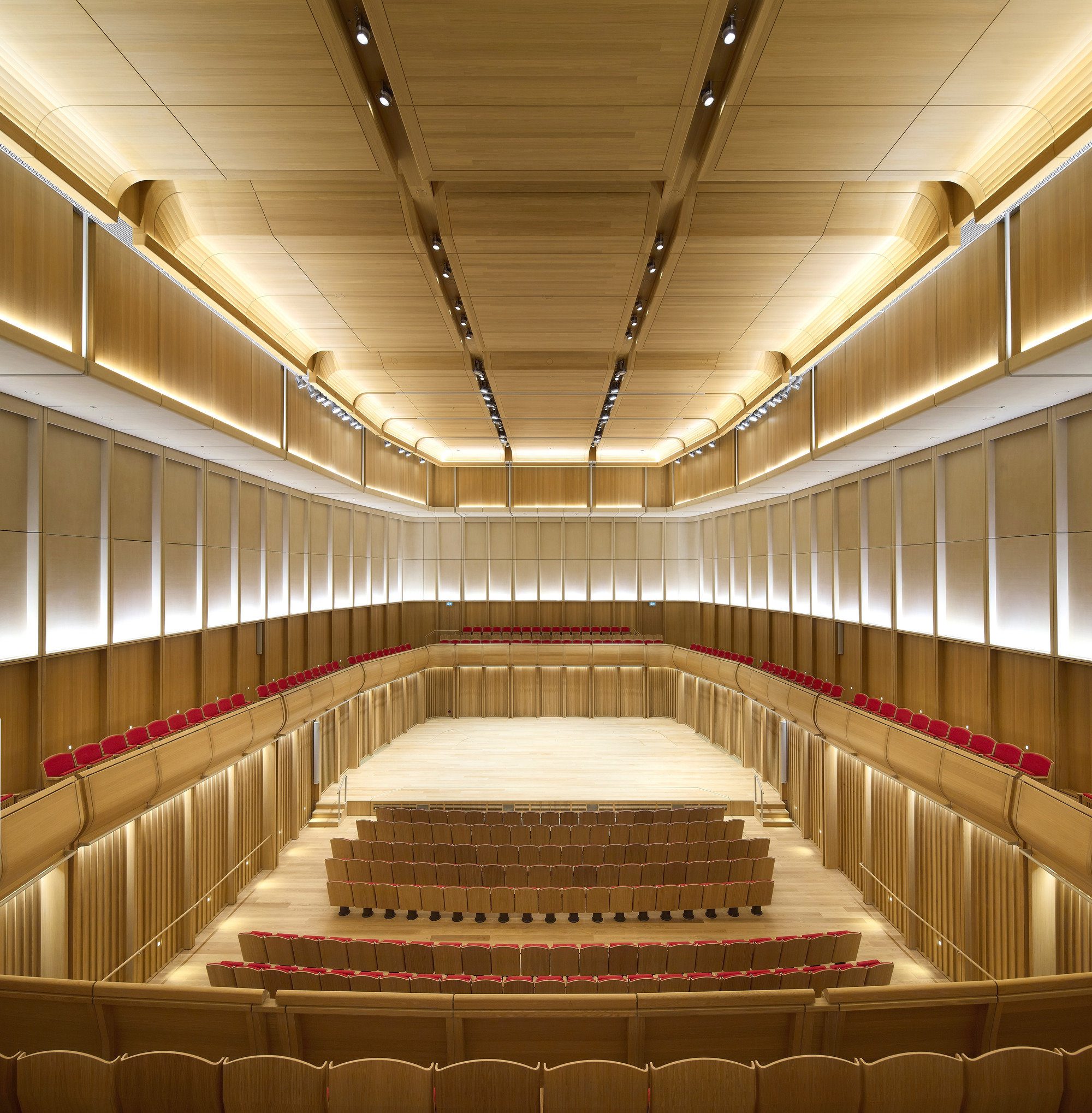
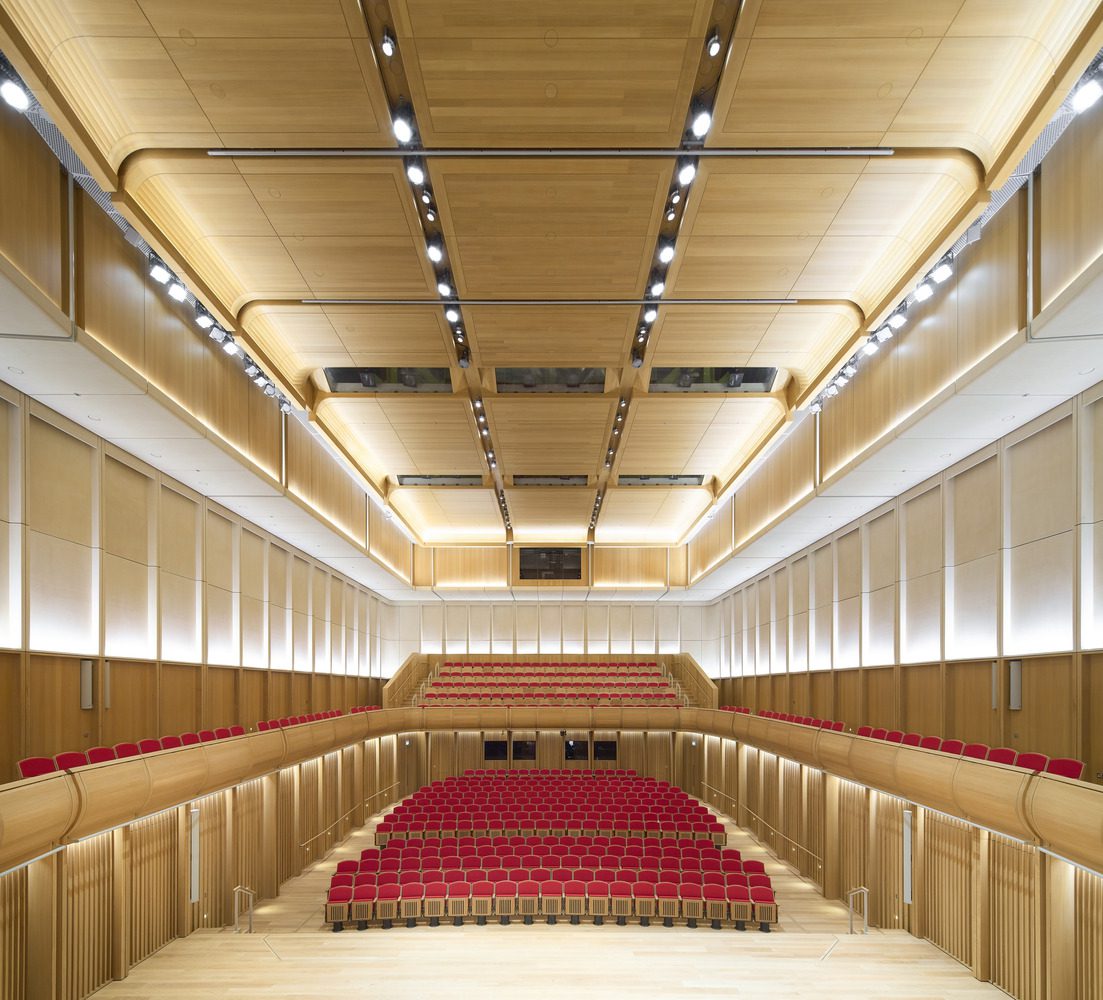
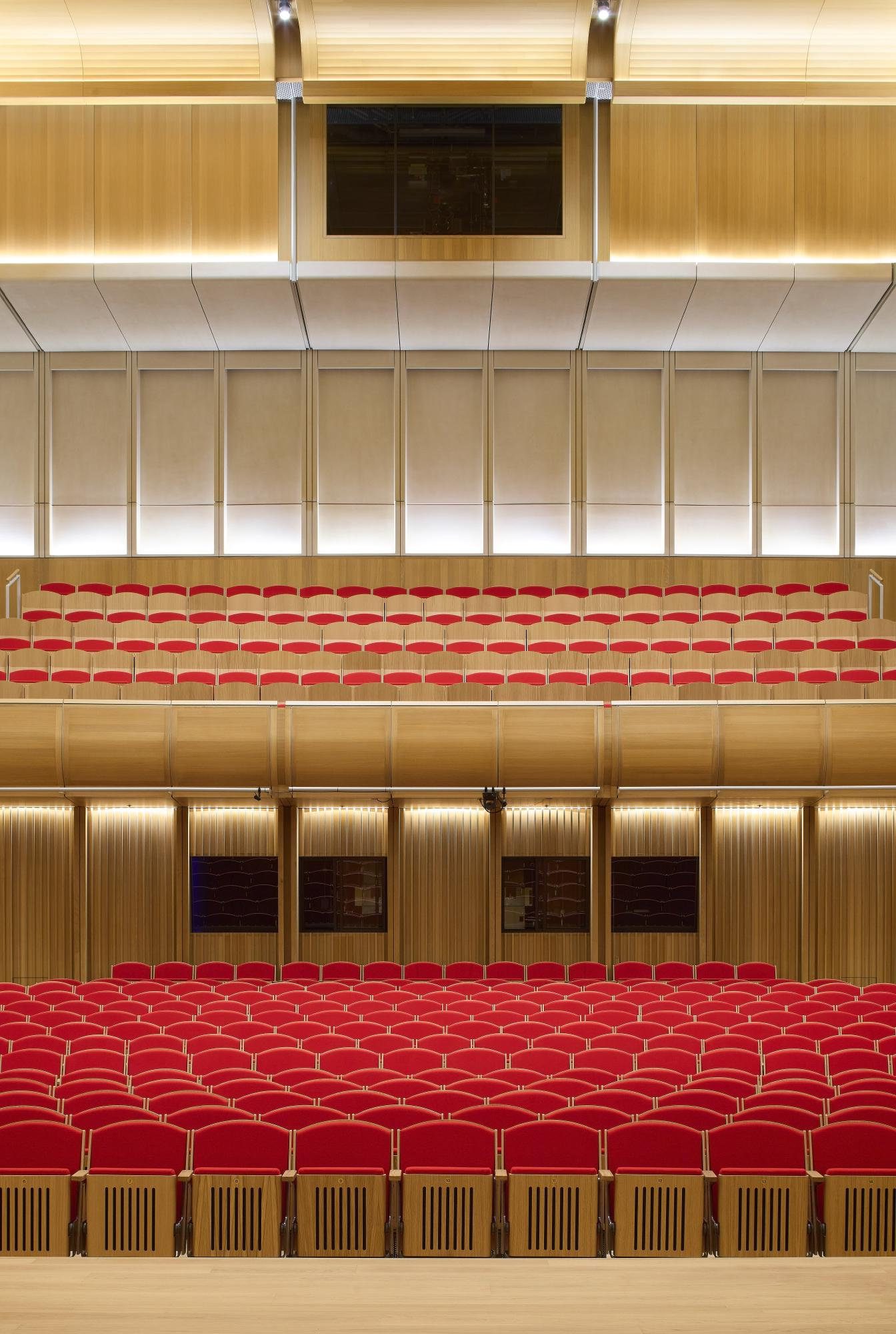
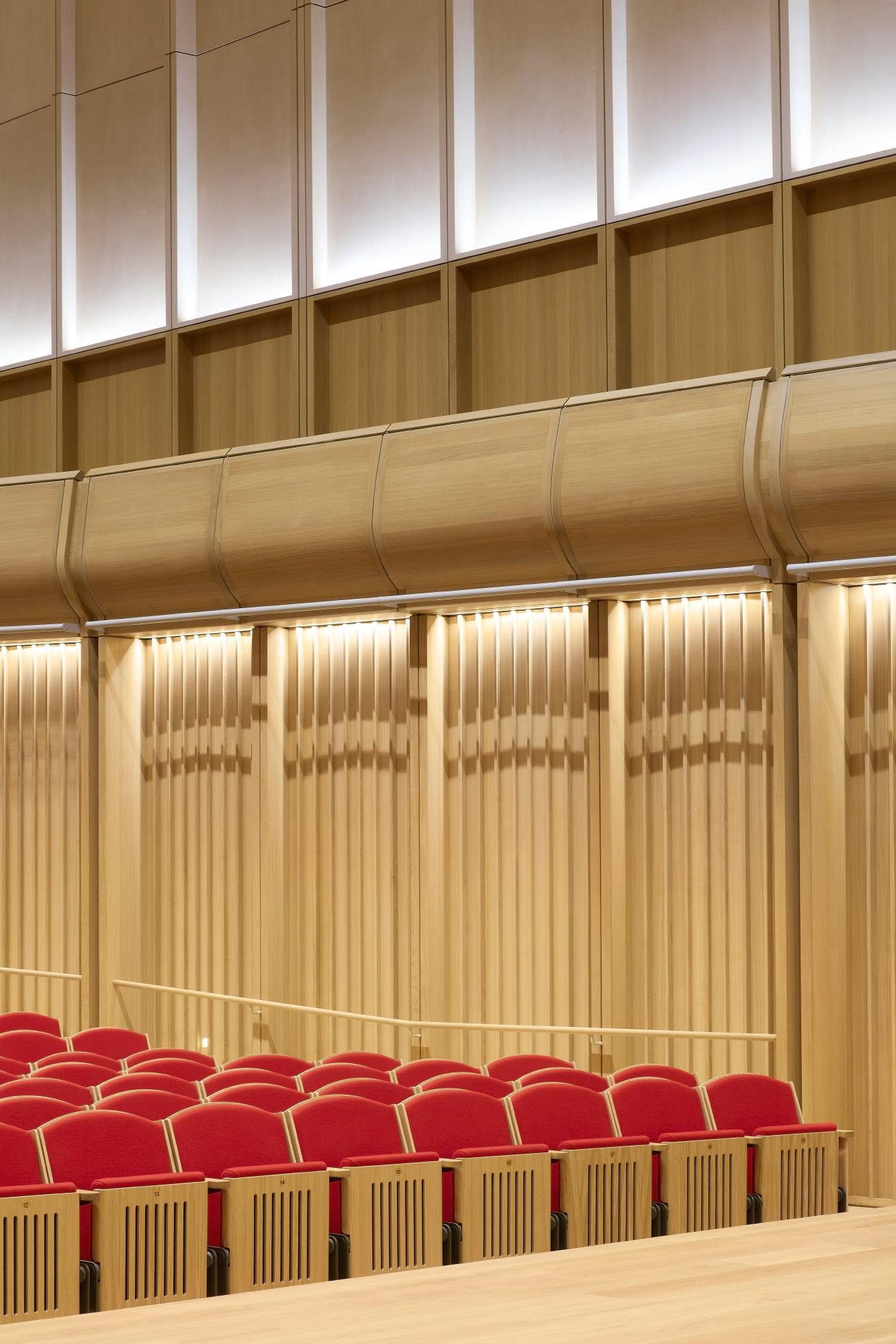
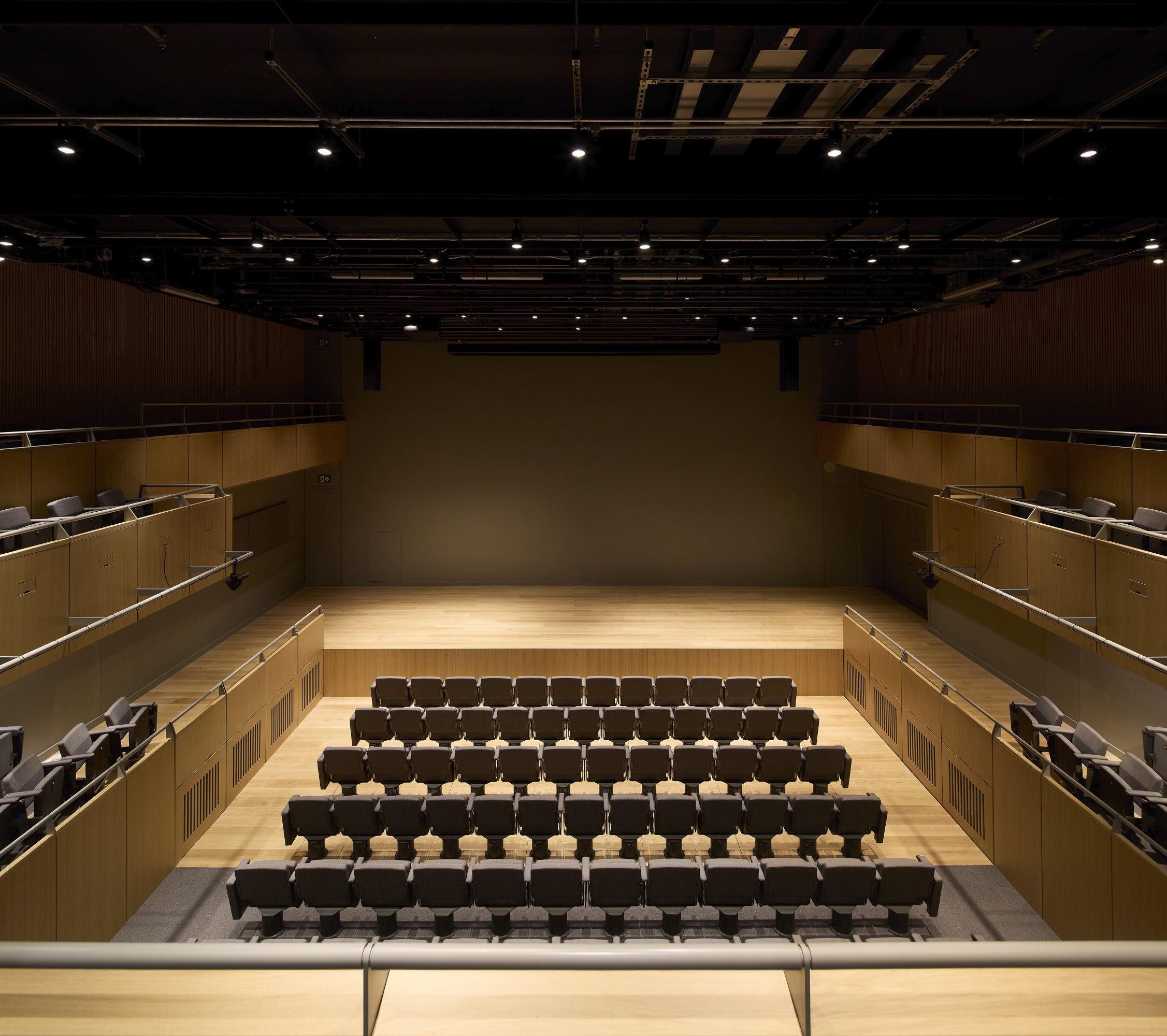
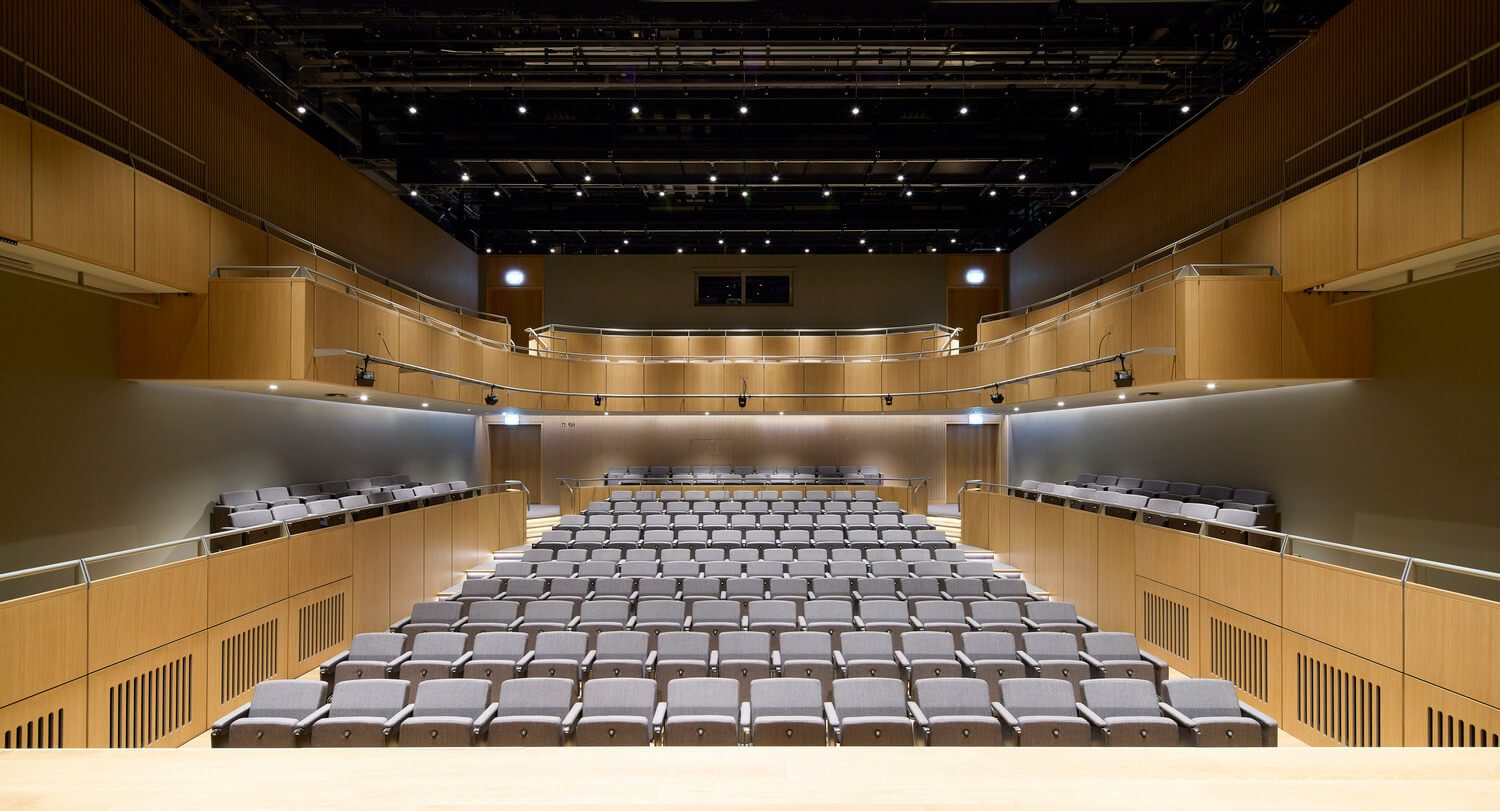
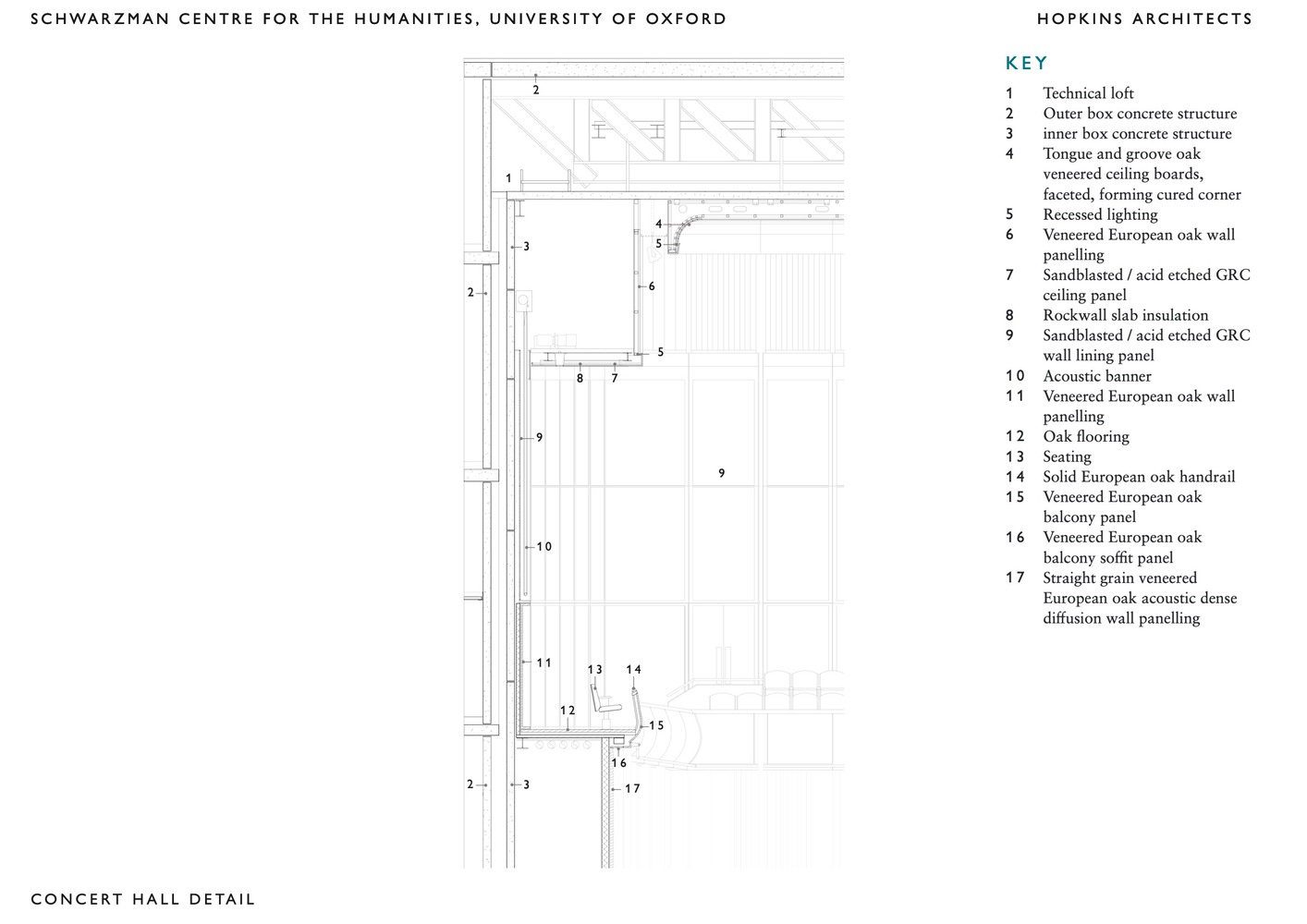
At the heart of this fundamental collaborative drive across both academe and outreach is the Humanities Cultural Programme, centered on a world-class 500-seat Concert Hall, three other performance venues, and exhibition and film spaces. This creates a virtuous cycle of “research as performance” and “performance as research,” strengthening ties between the University and the City.
© Hufton+Crow
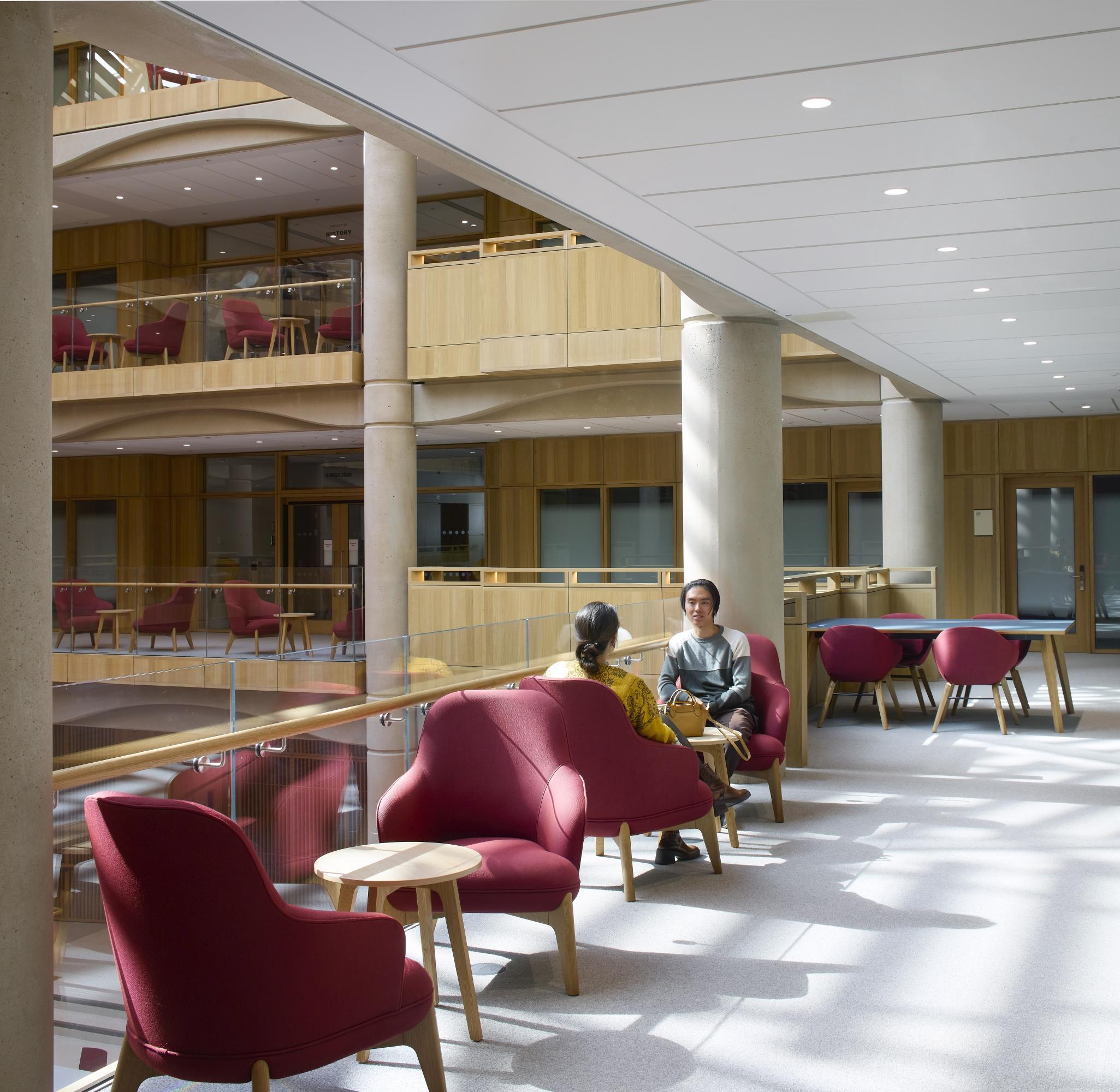
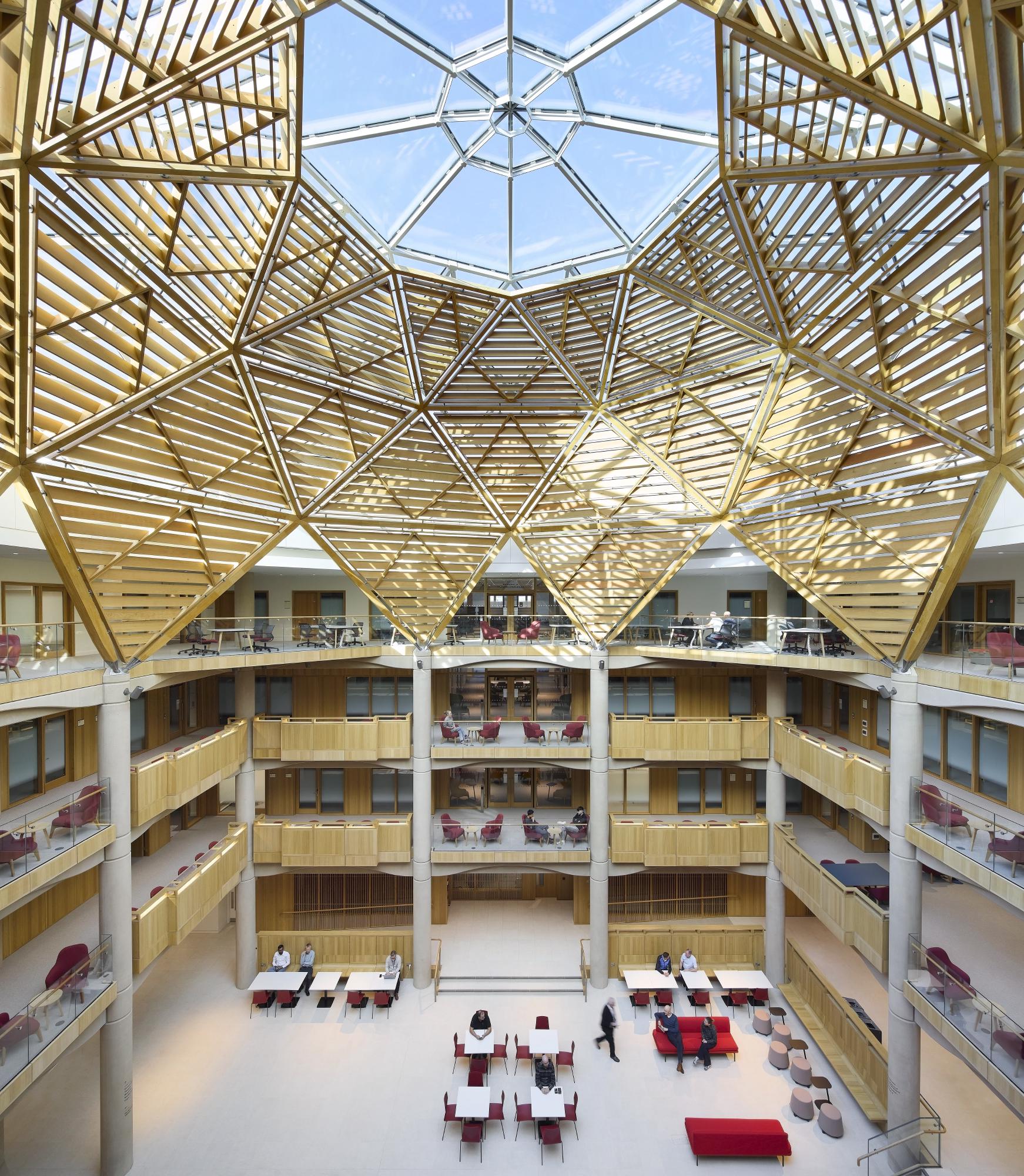
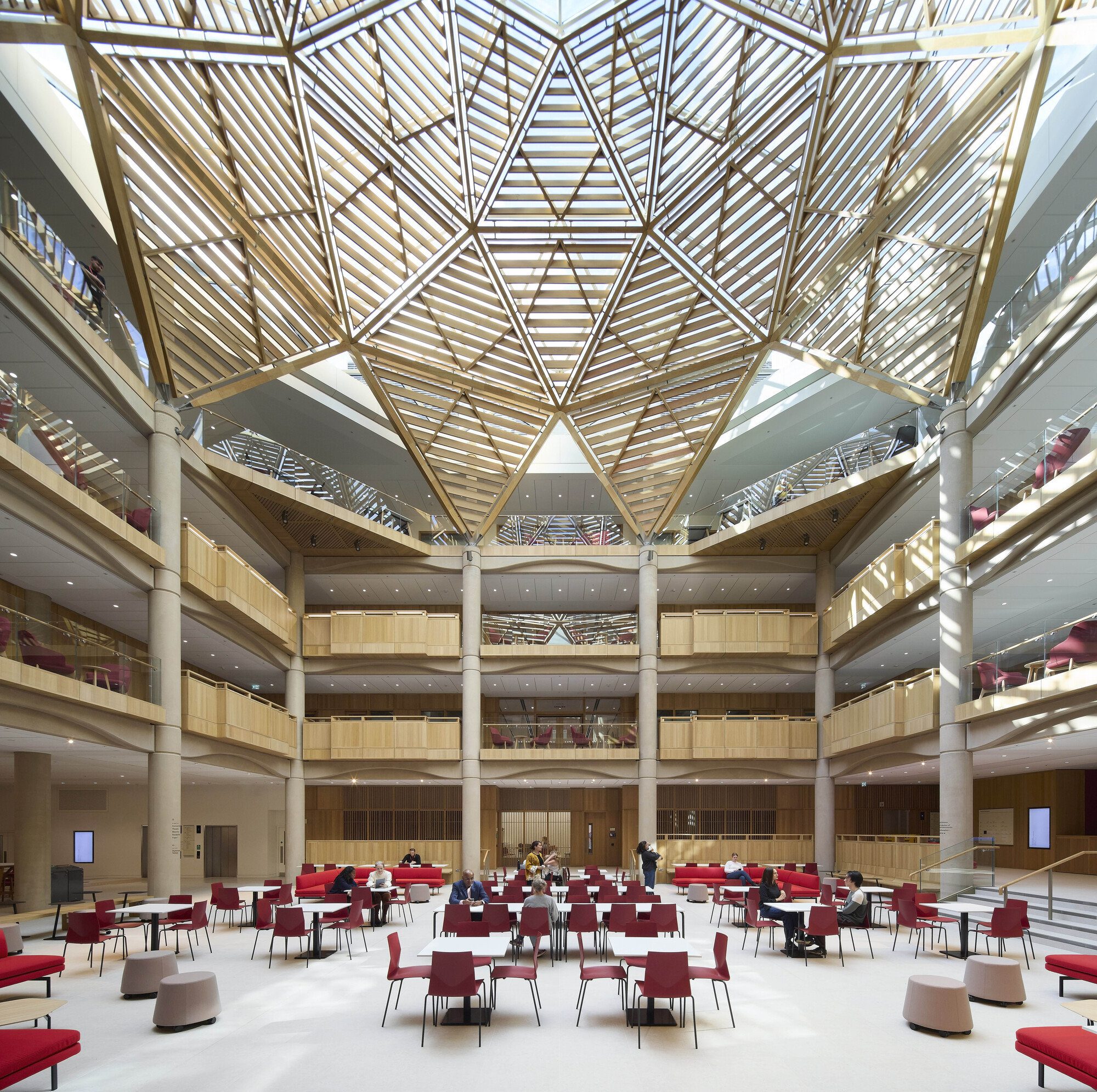
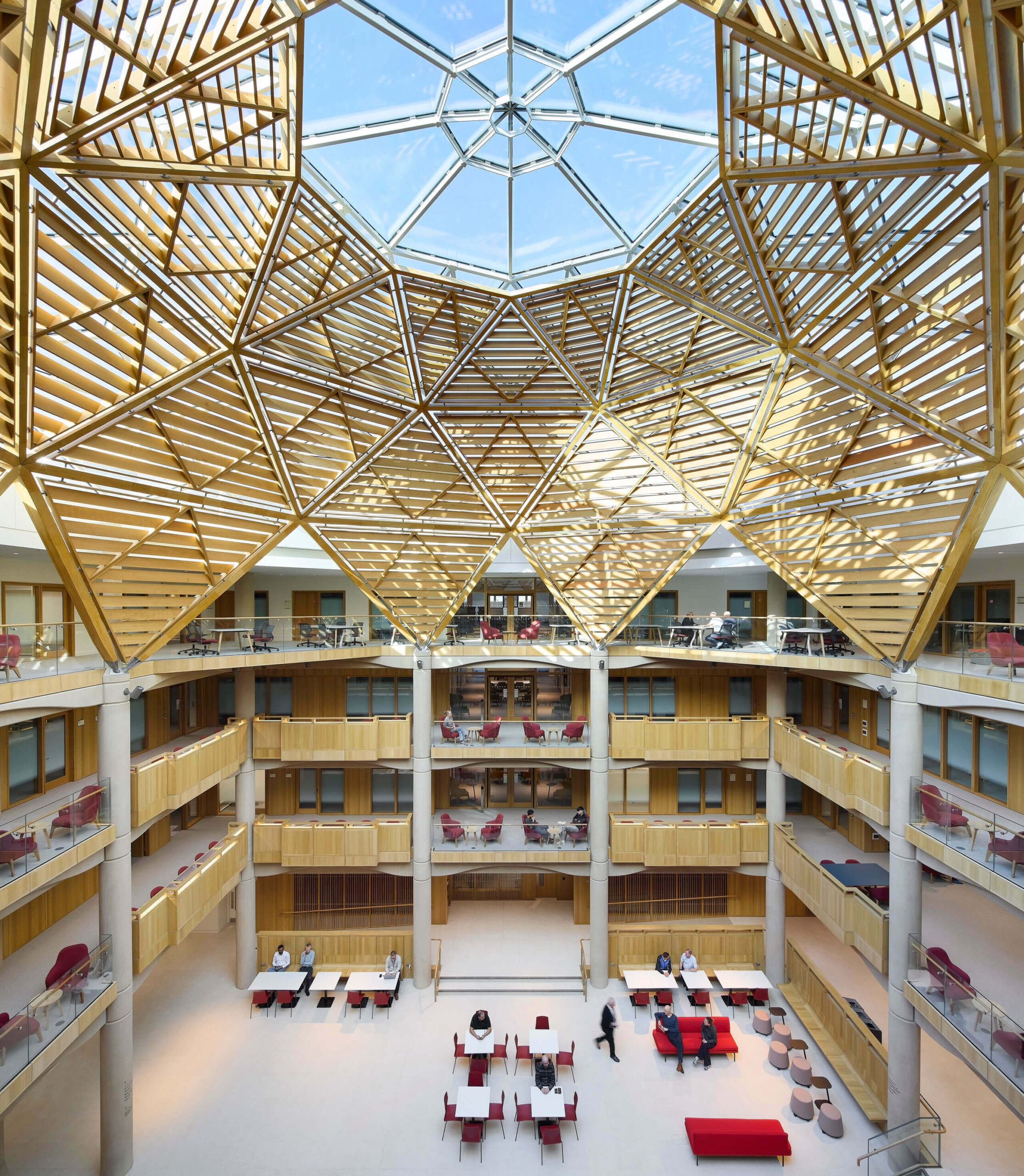
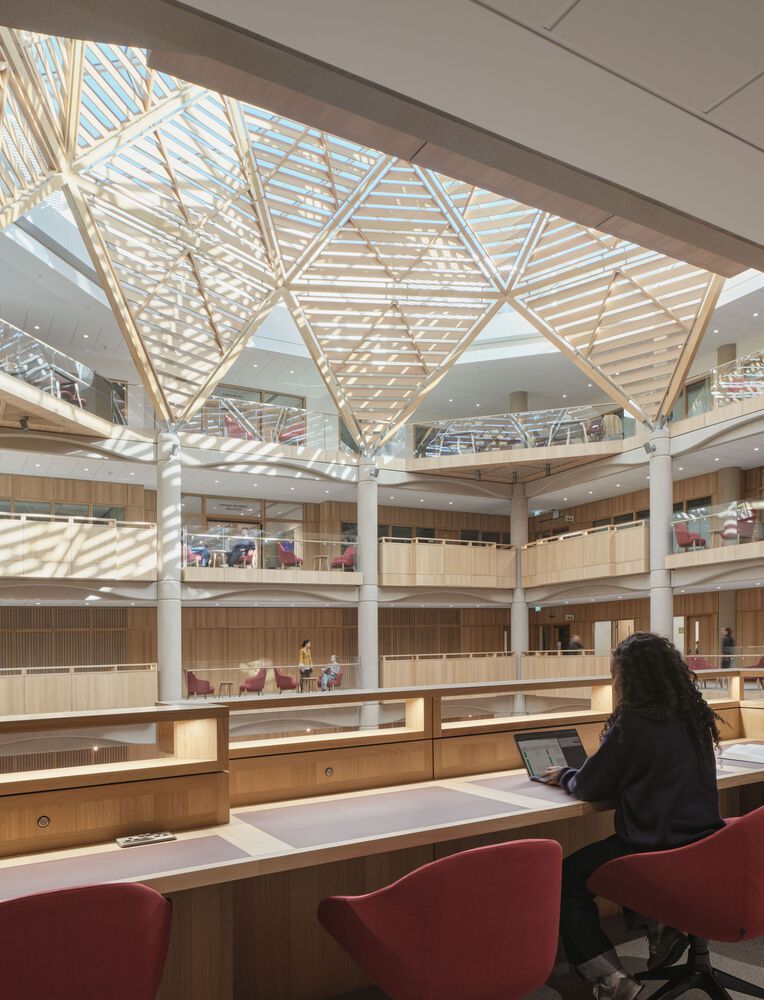
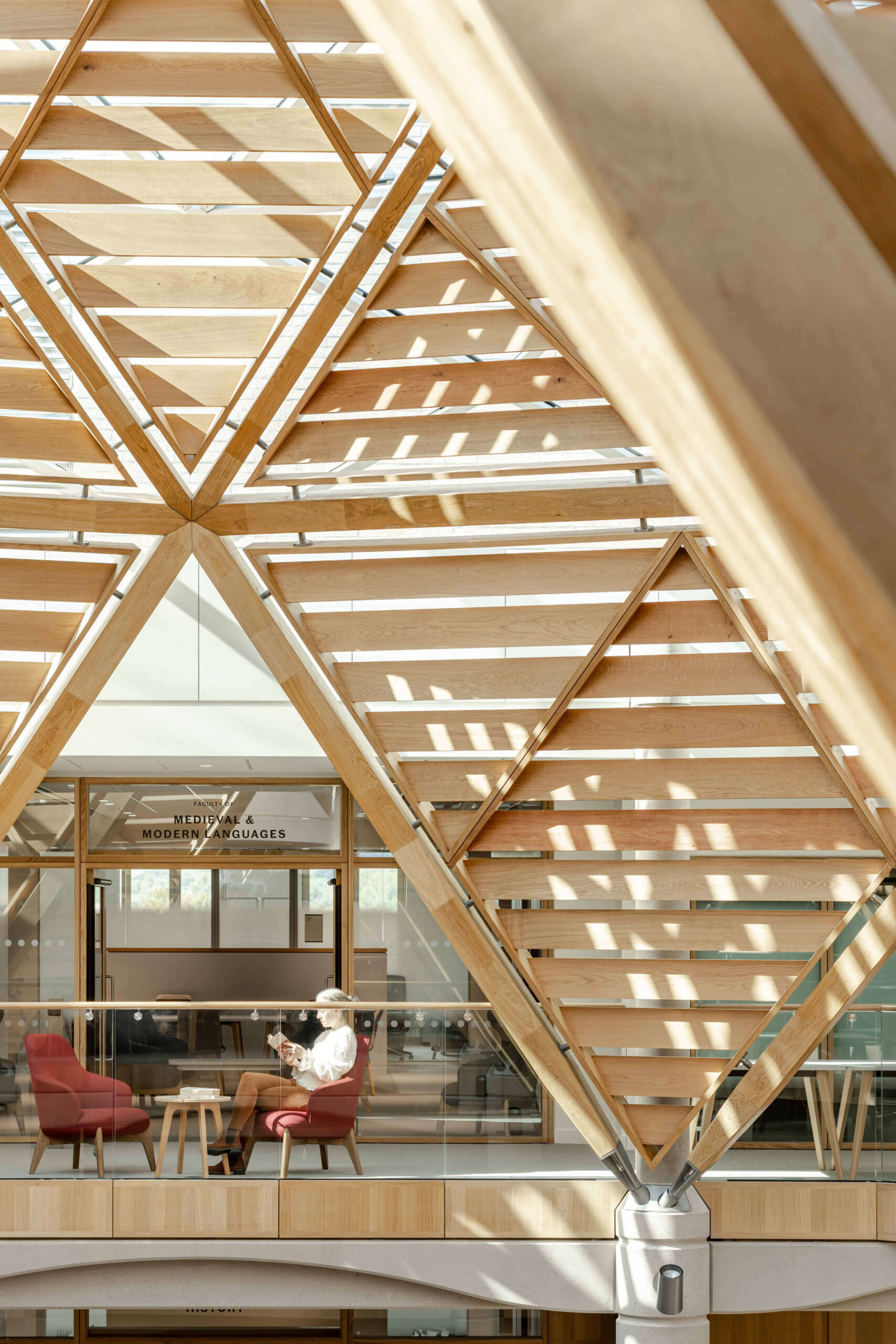
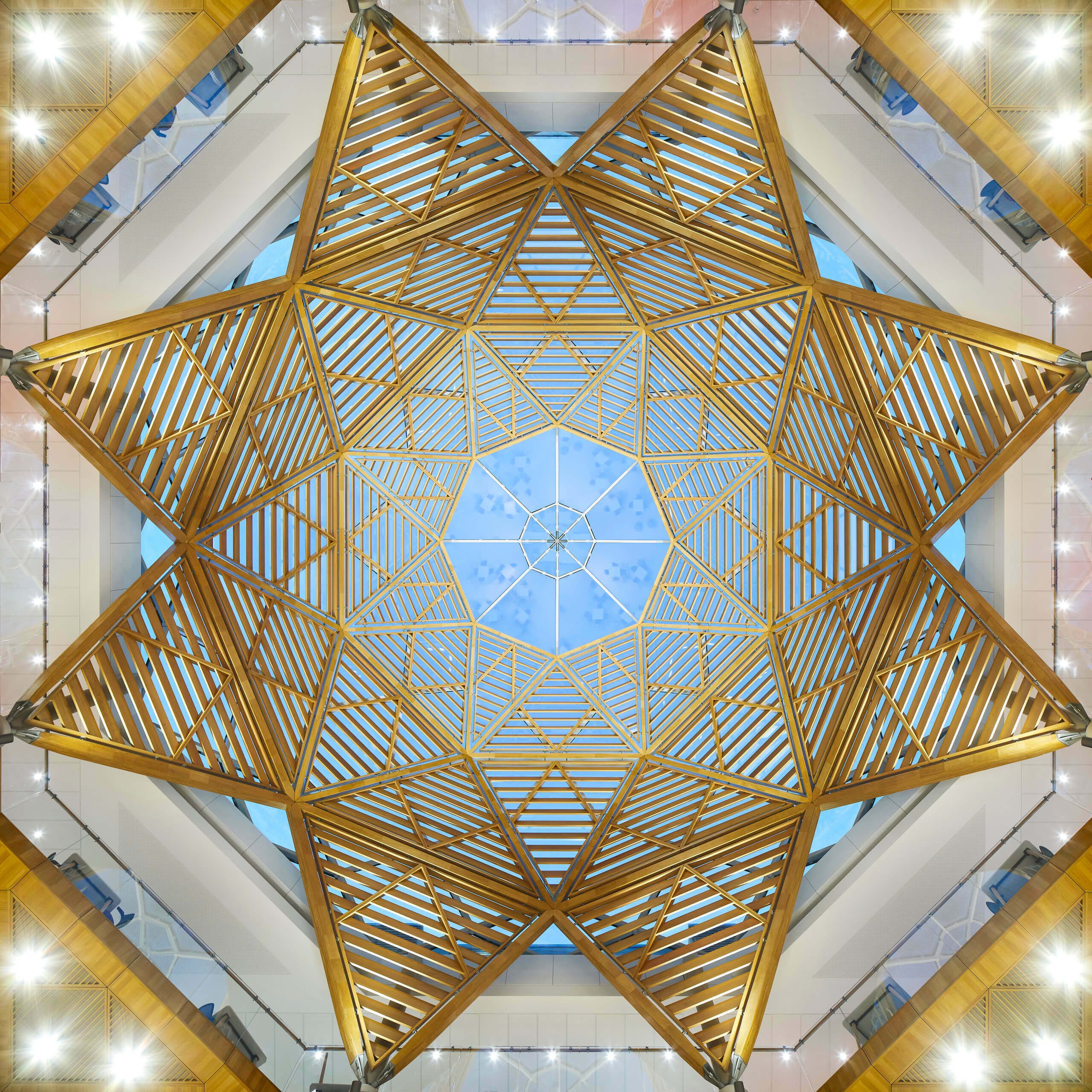
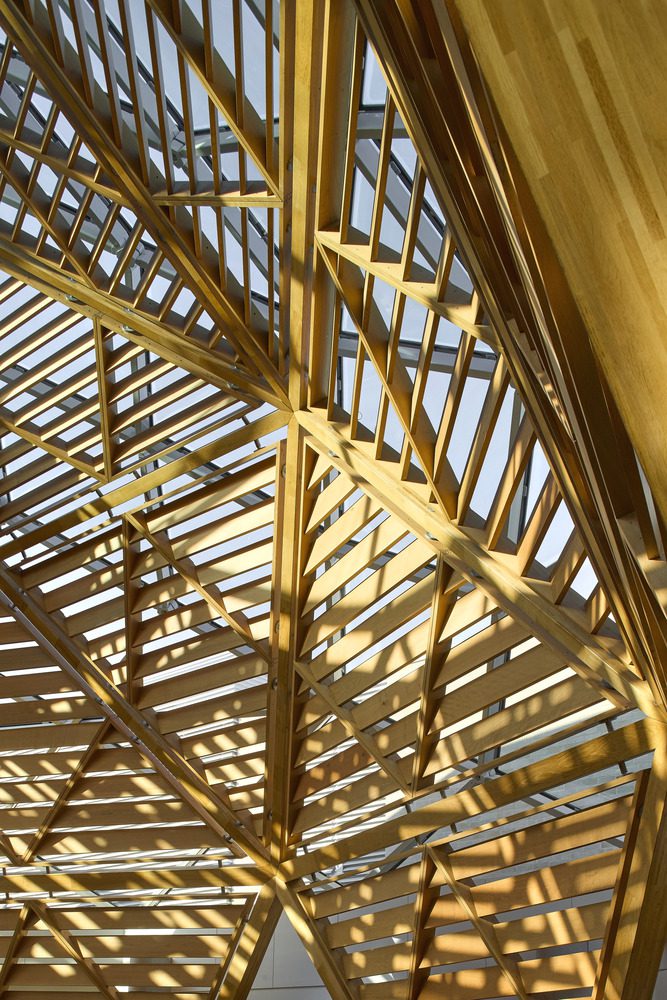
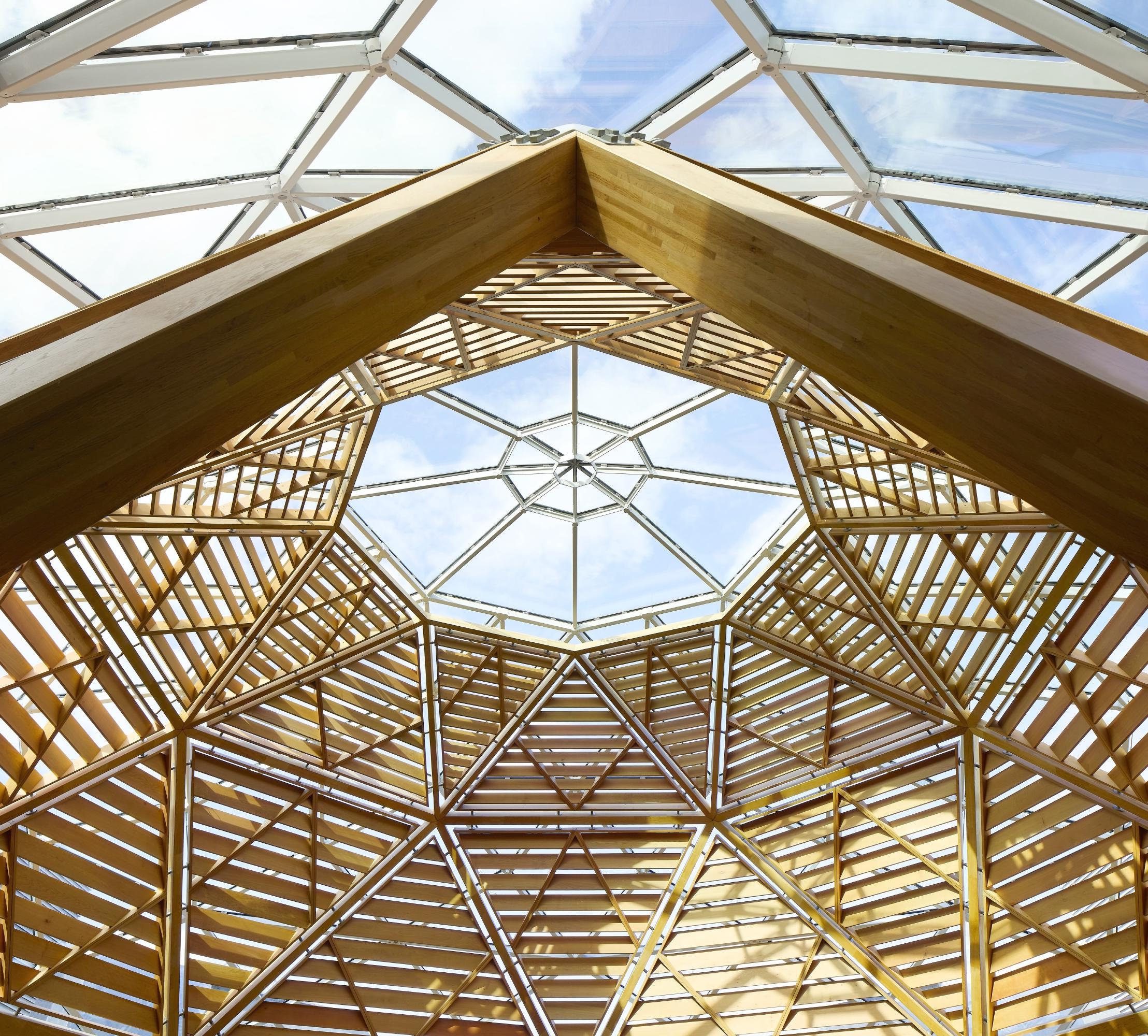
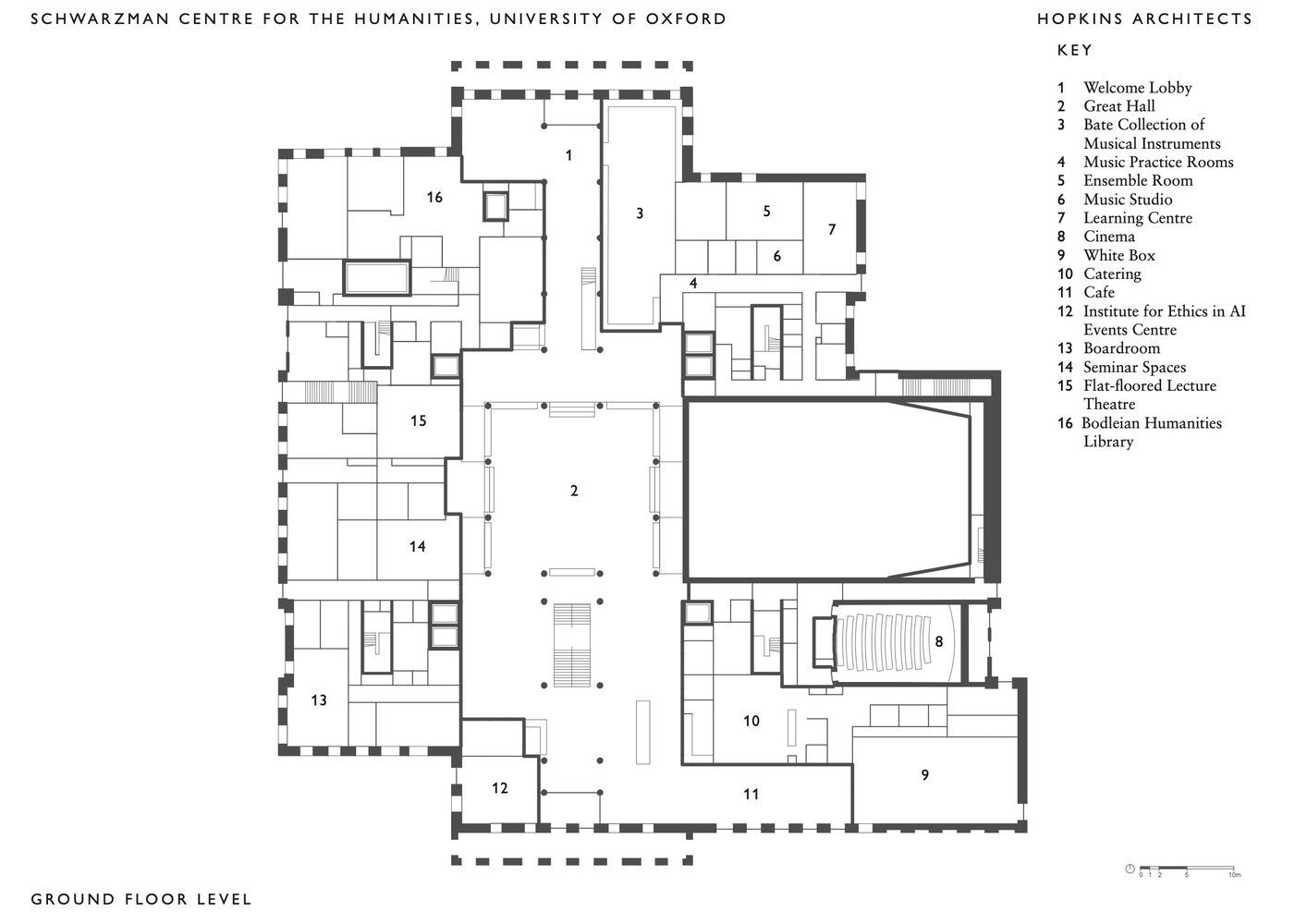
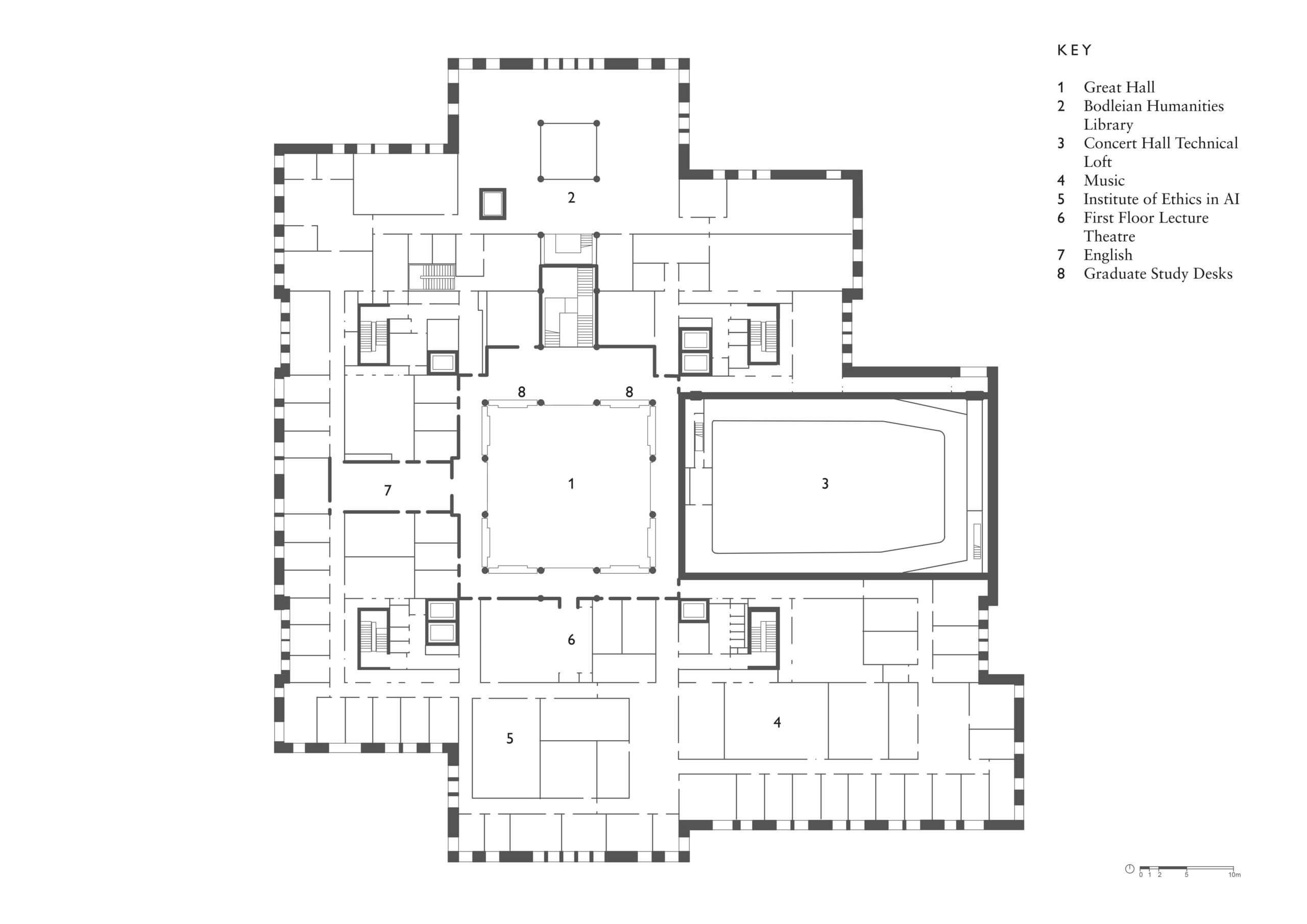
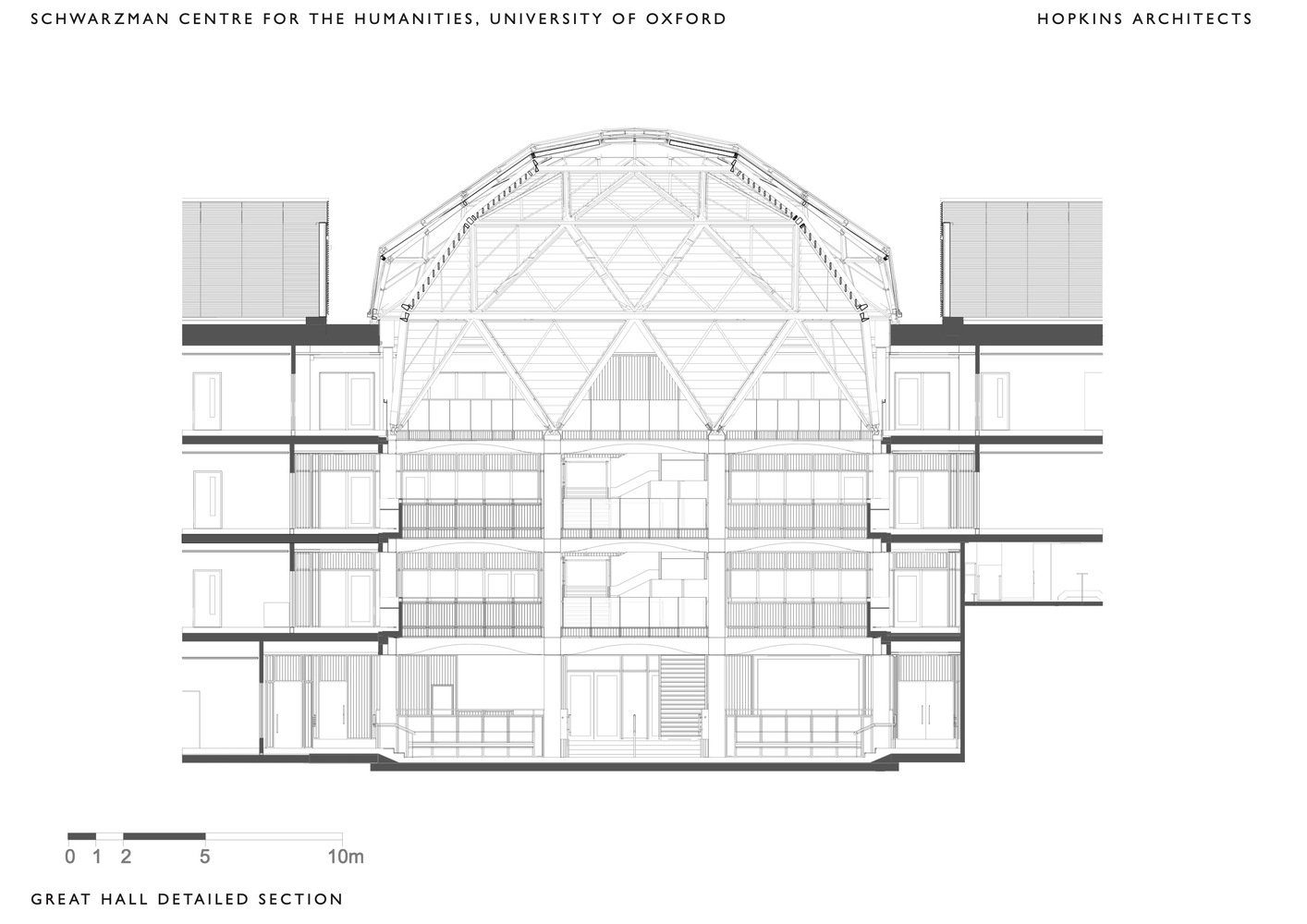
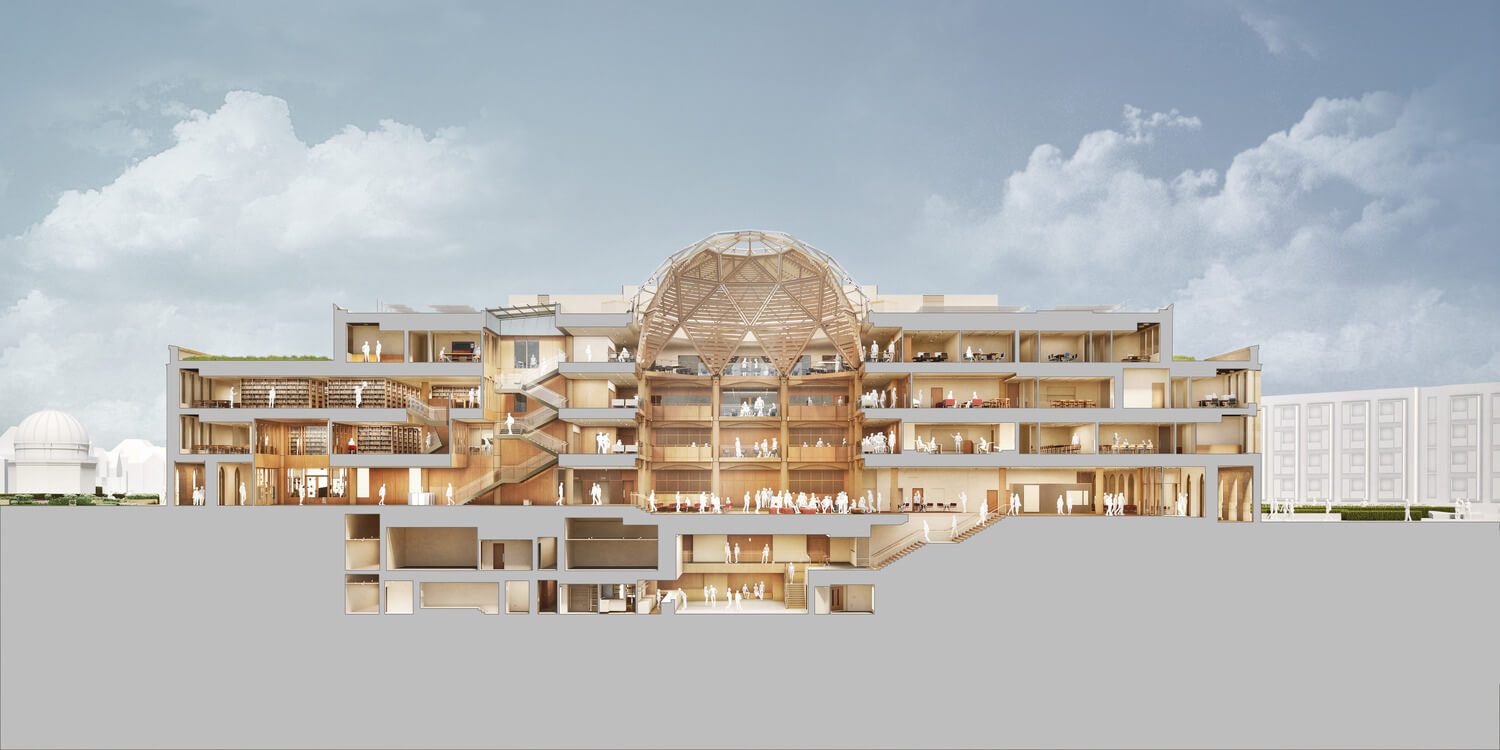
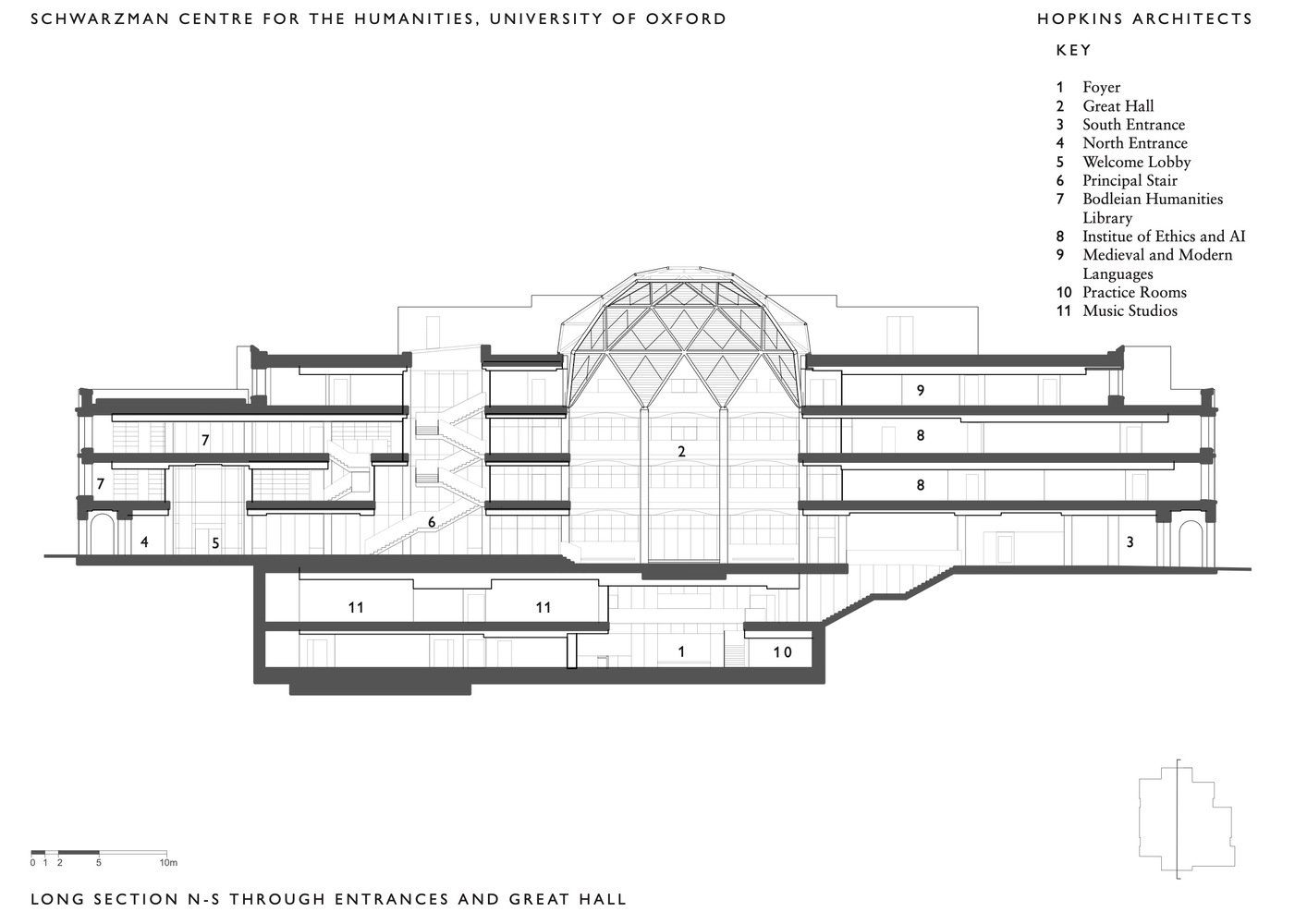
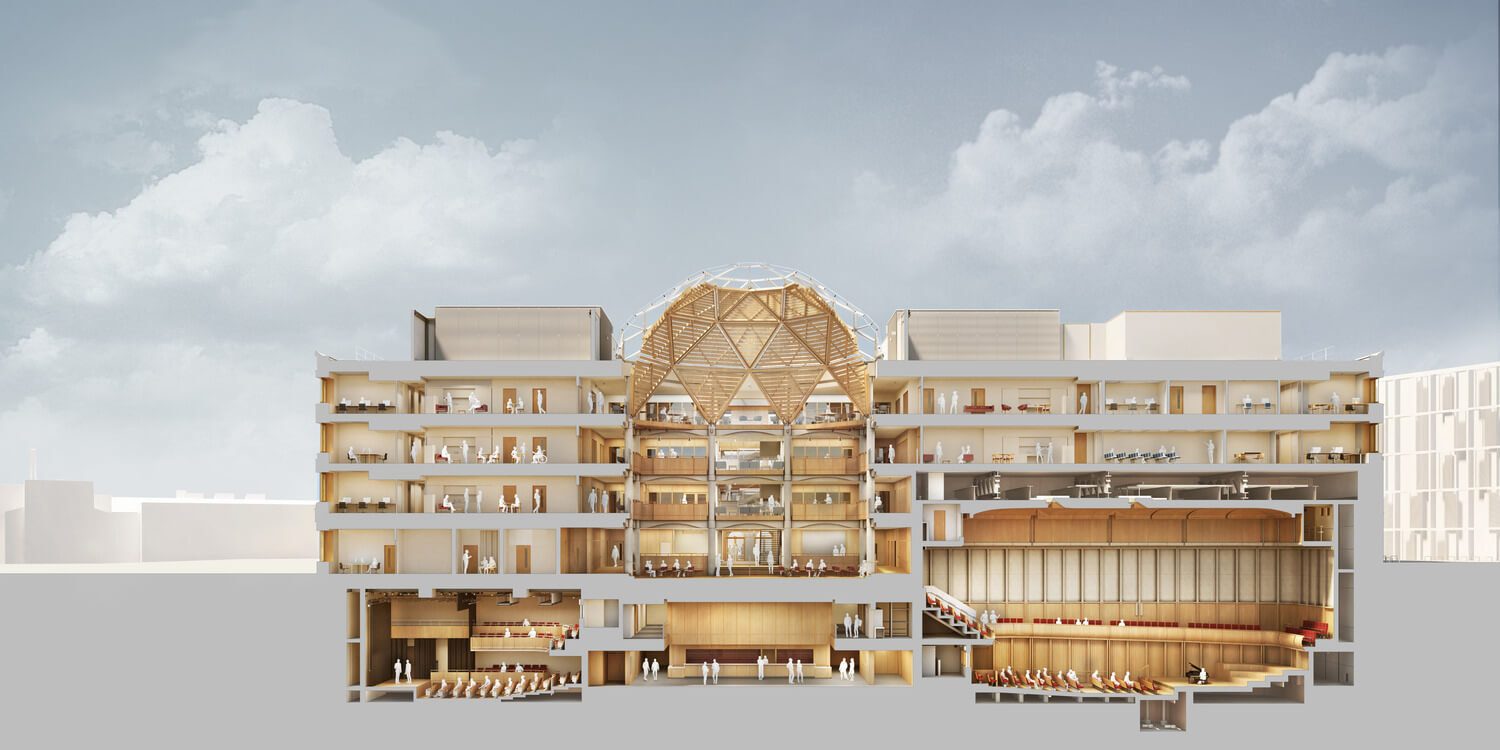
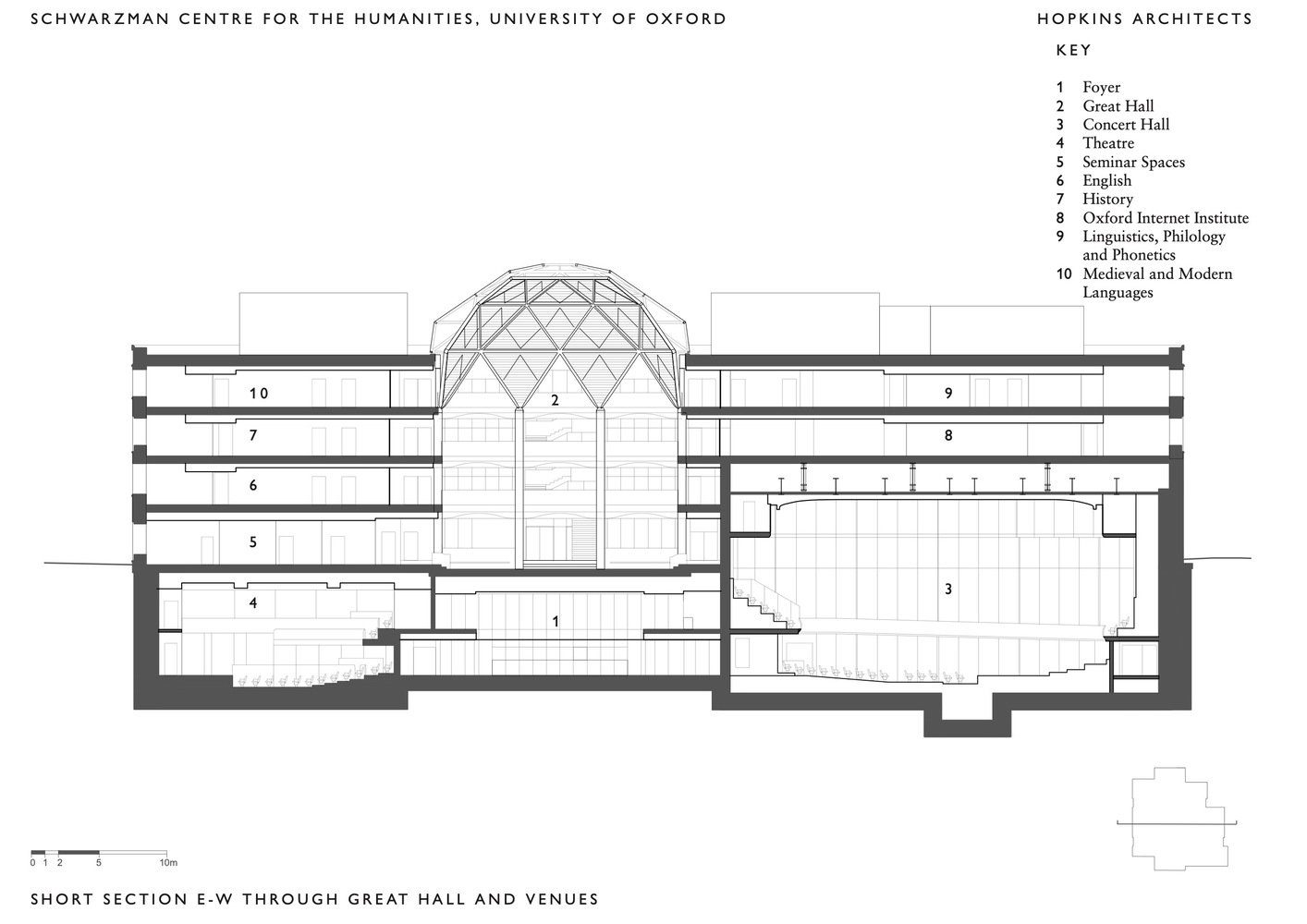
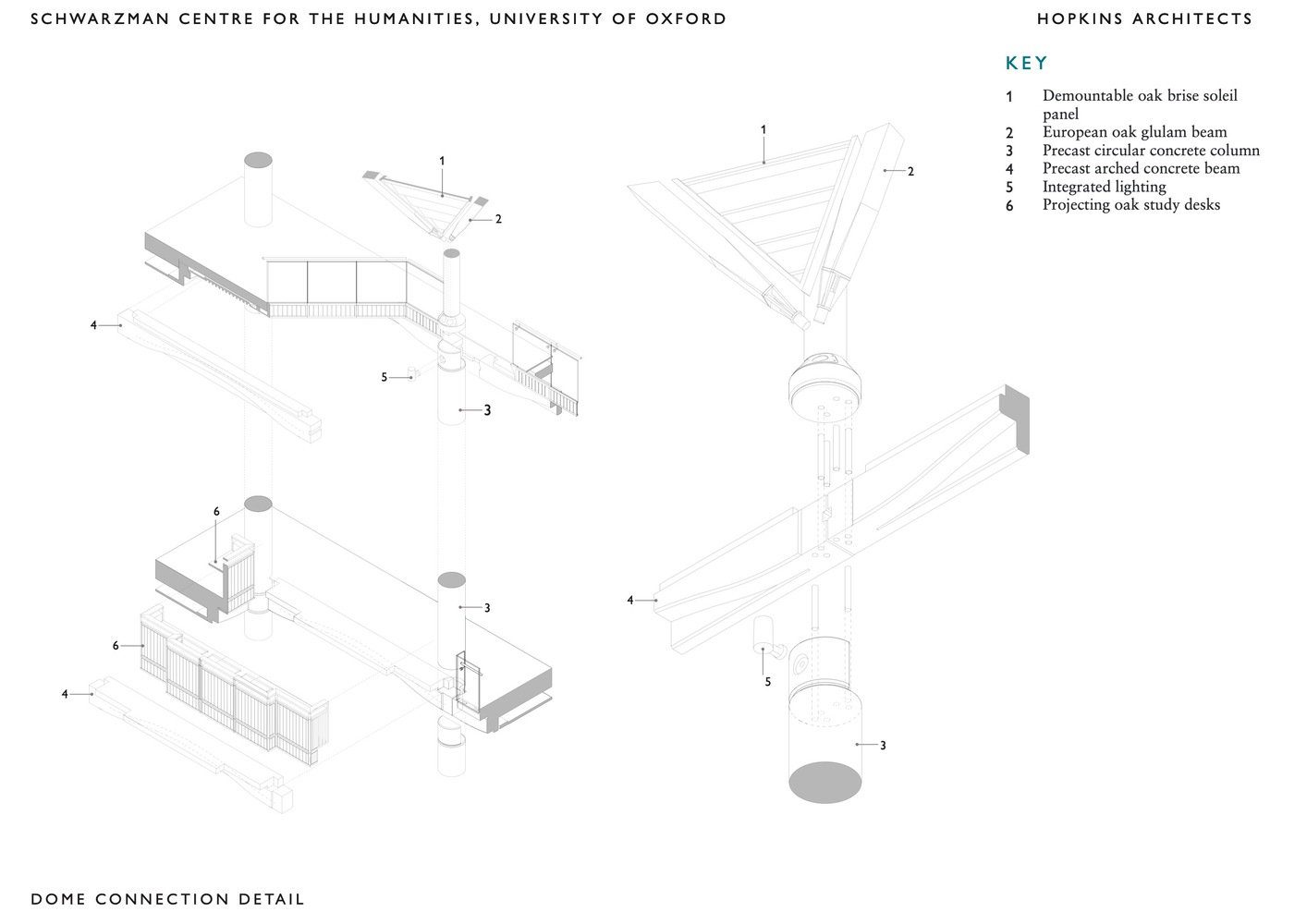
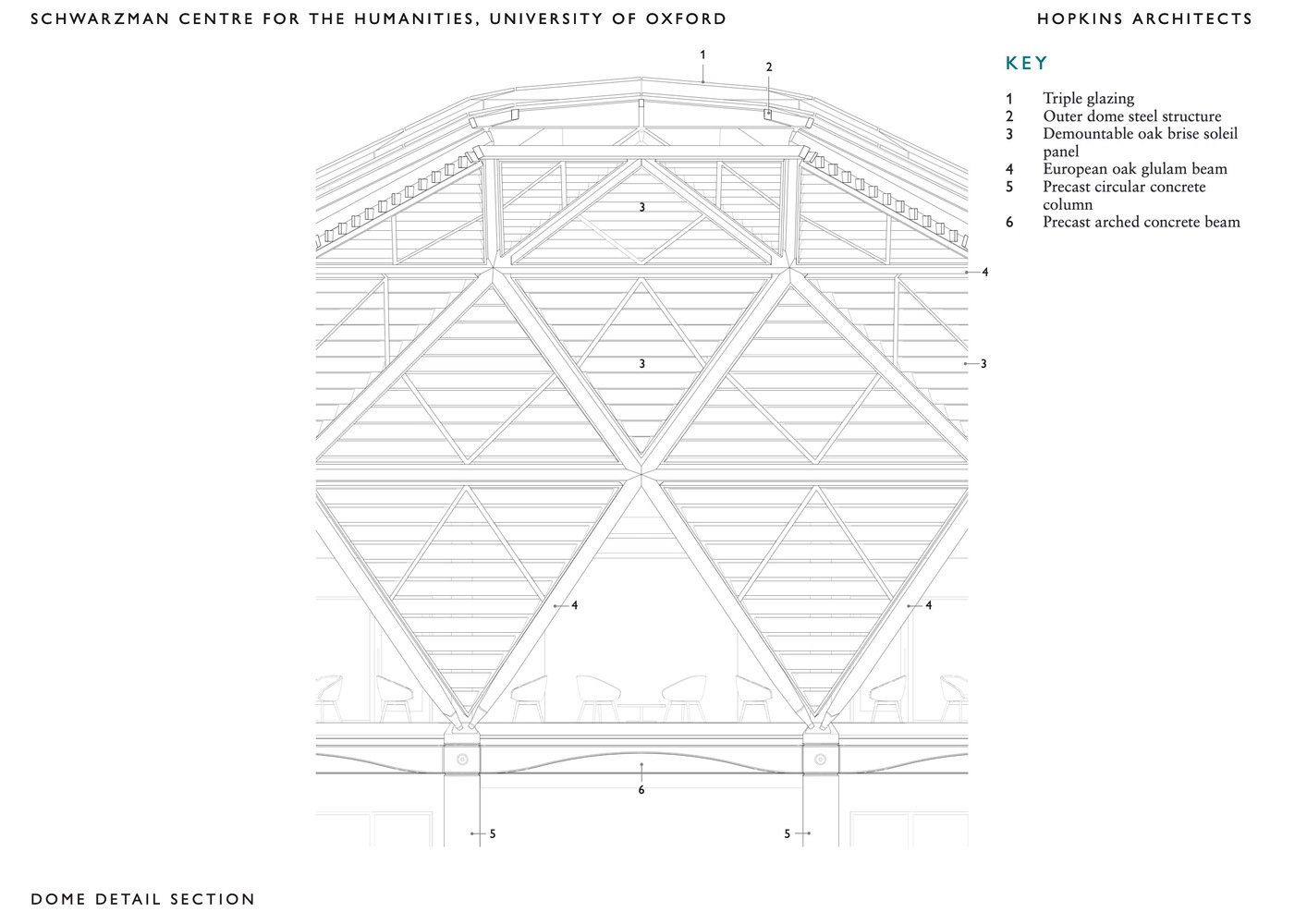
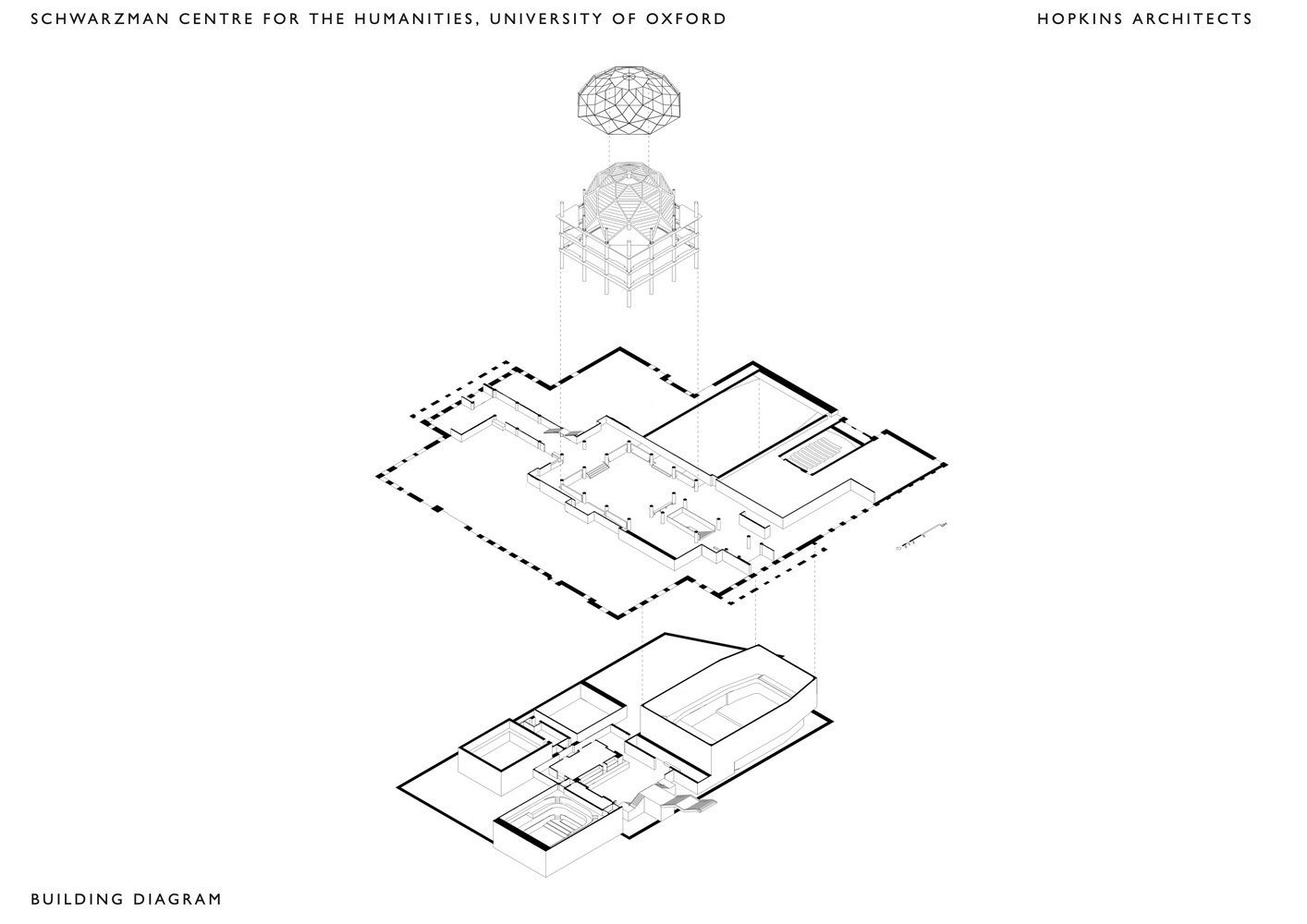
The design prioritizes openness. The public route through the building avoids conventional barriers to entry and is punctuated by public spaces of differing scale and character. At its center lies the Great Hall, a four-story atrium with faculty entrances at its cardinal points, study carrels above, and a domed timber-and-glass skylight bringing light into the space. Flexible enough for exhibitions, lectures, performances, or banquets, it resonates with Oxford’s tradition of civic “rooms” and recalls Hawksmoor’s original vision of a Forum Universitatis.
© Hufton+Crow
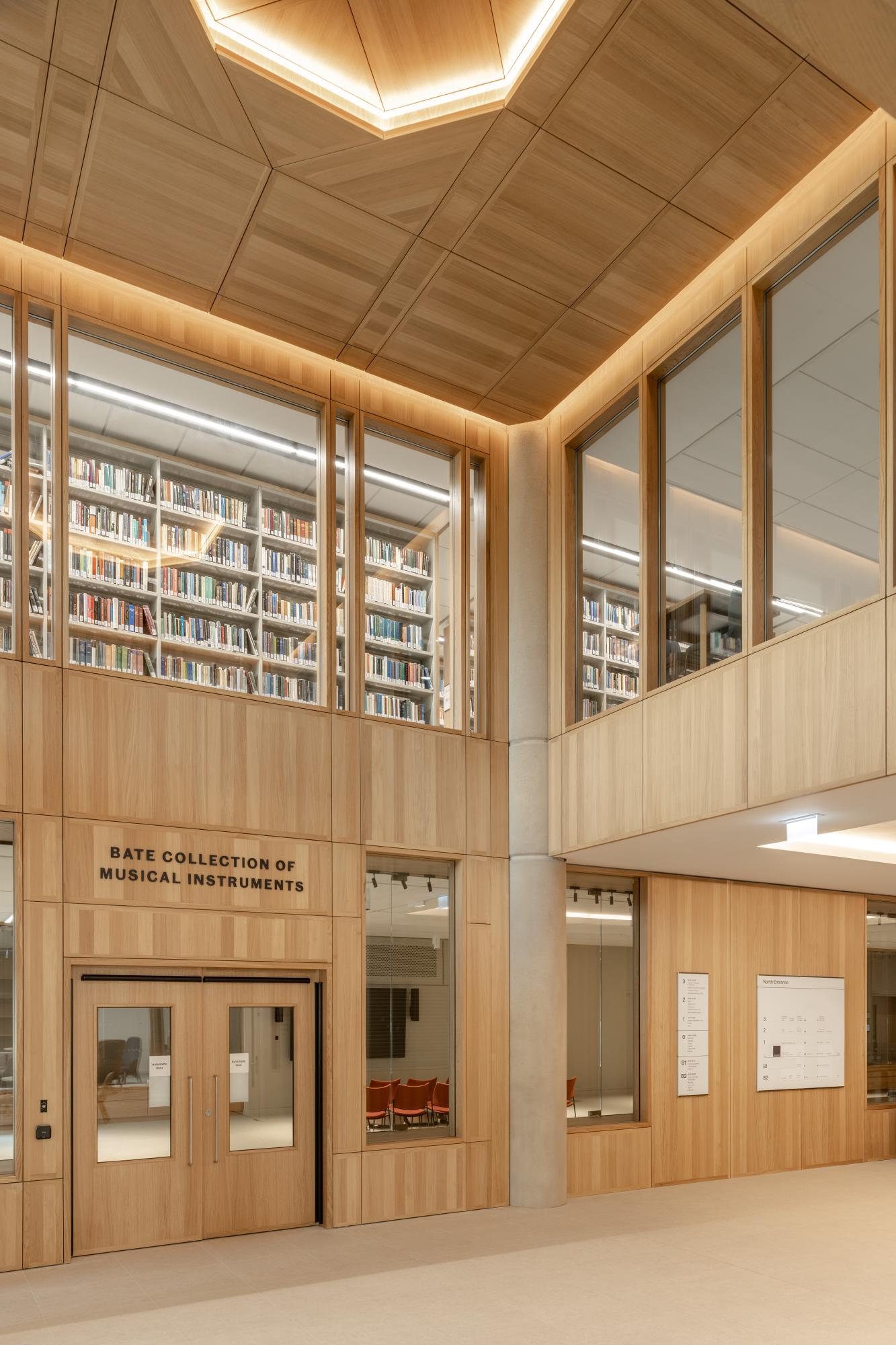
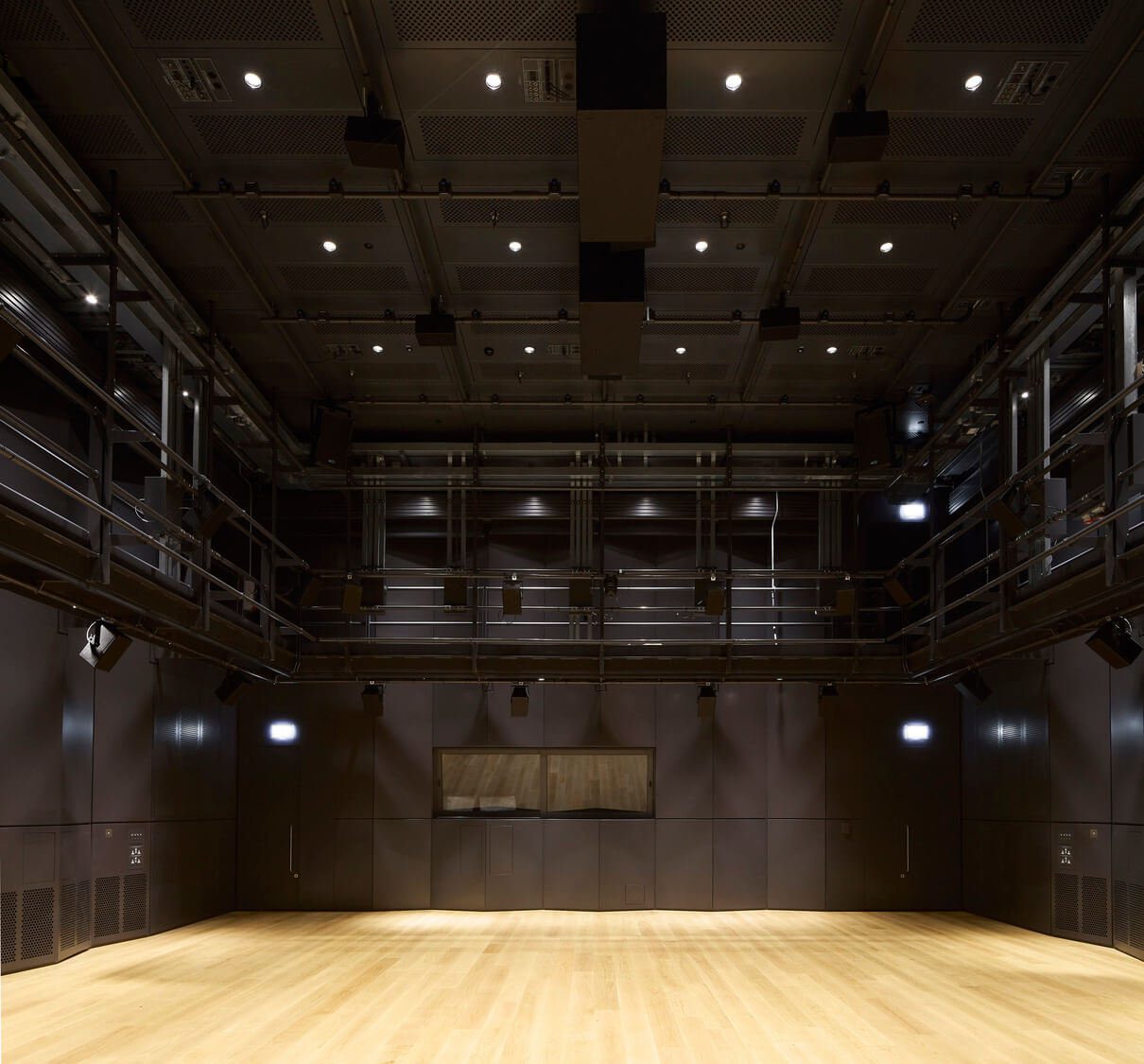
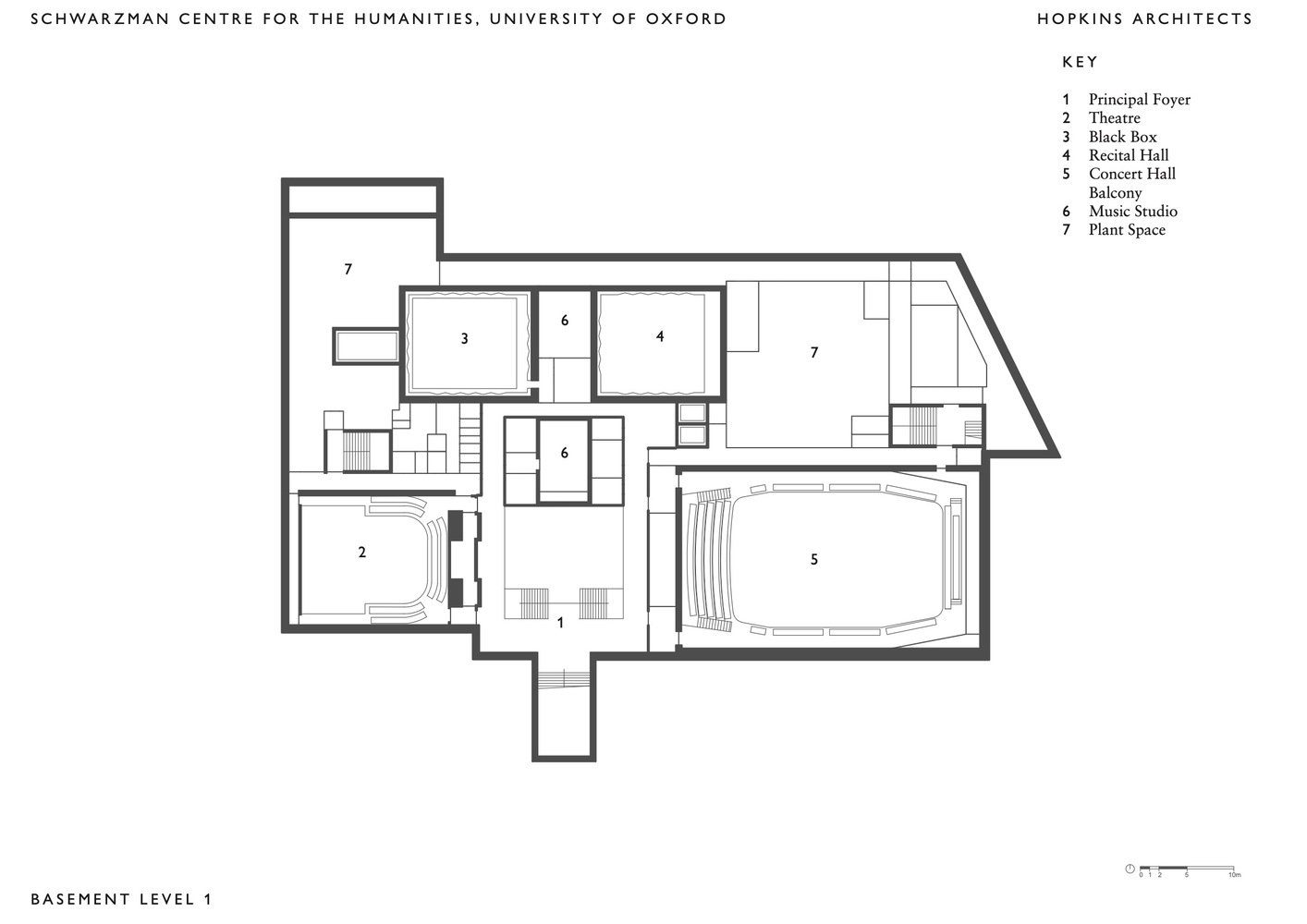
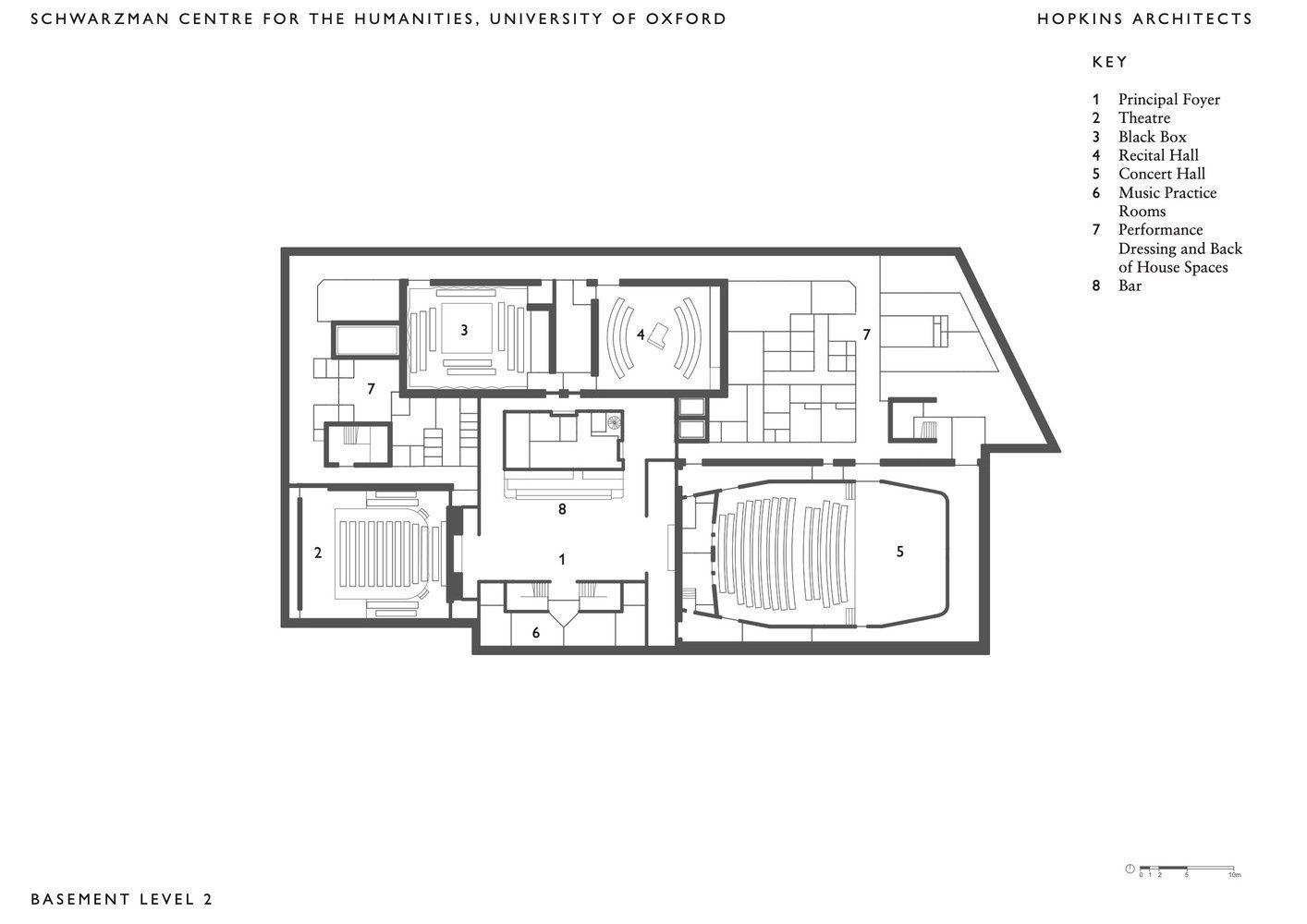
Below, performance spaces cluster around a foyer that doubles as an informal venue. Alongside the concert hall are a 250-seat theatre, a black-box experimental space, rehearsal facilities, and music studios. Together, these expand Oxford’s cultural reach, drawing chamber orchestras, which might ordinarily omit Oxford from their itineraries, and enabling diverse artistic expression from opera to electronic performance.
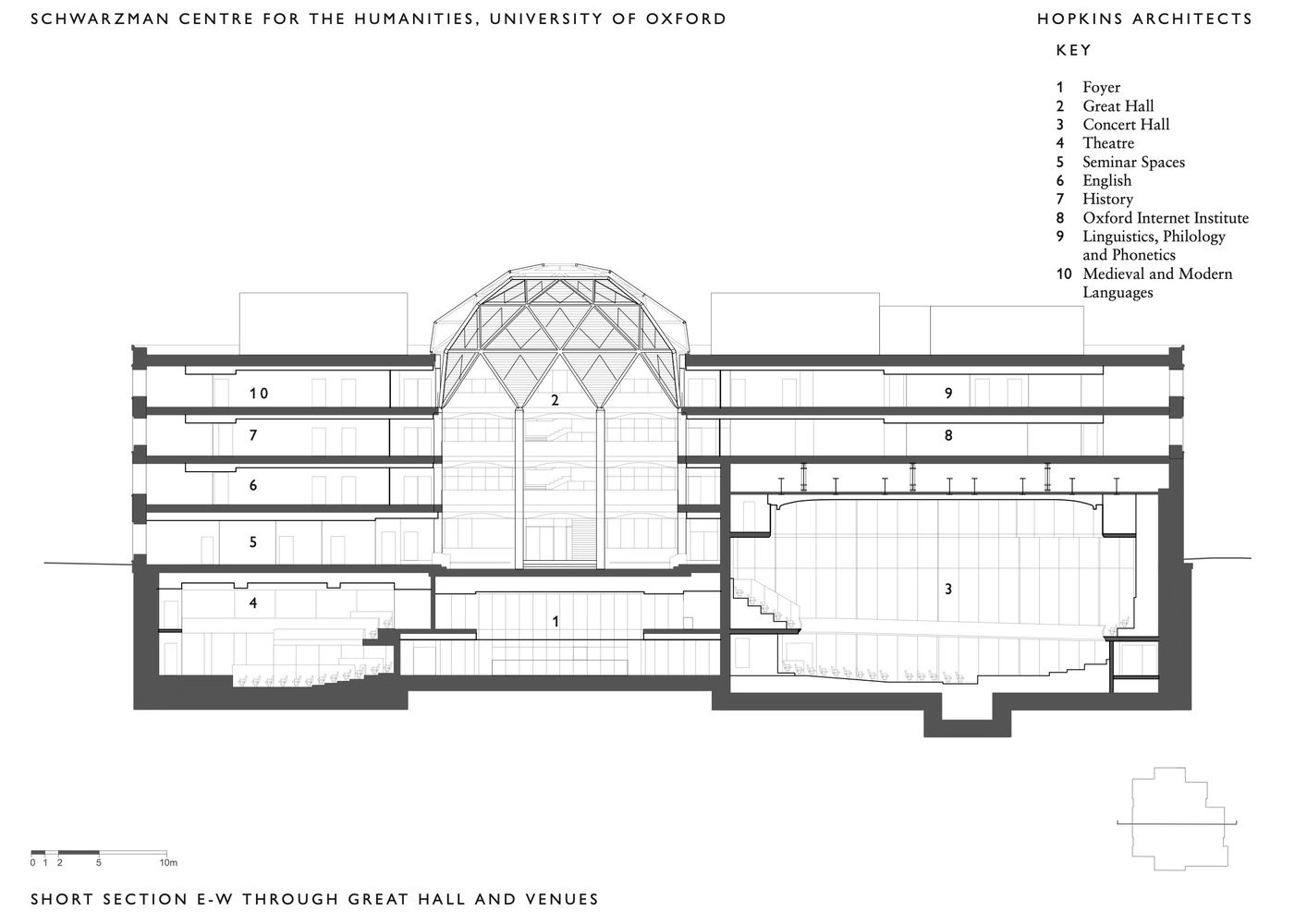
Short Section E-W Through the Great Hall and Venues
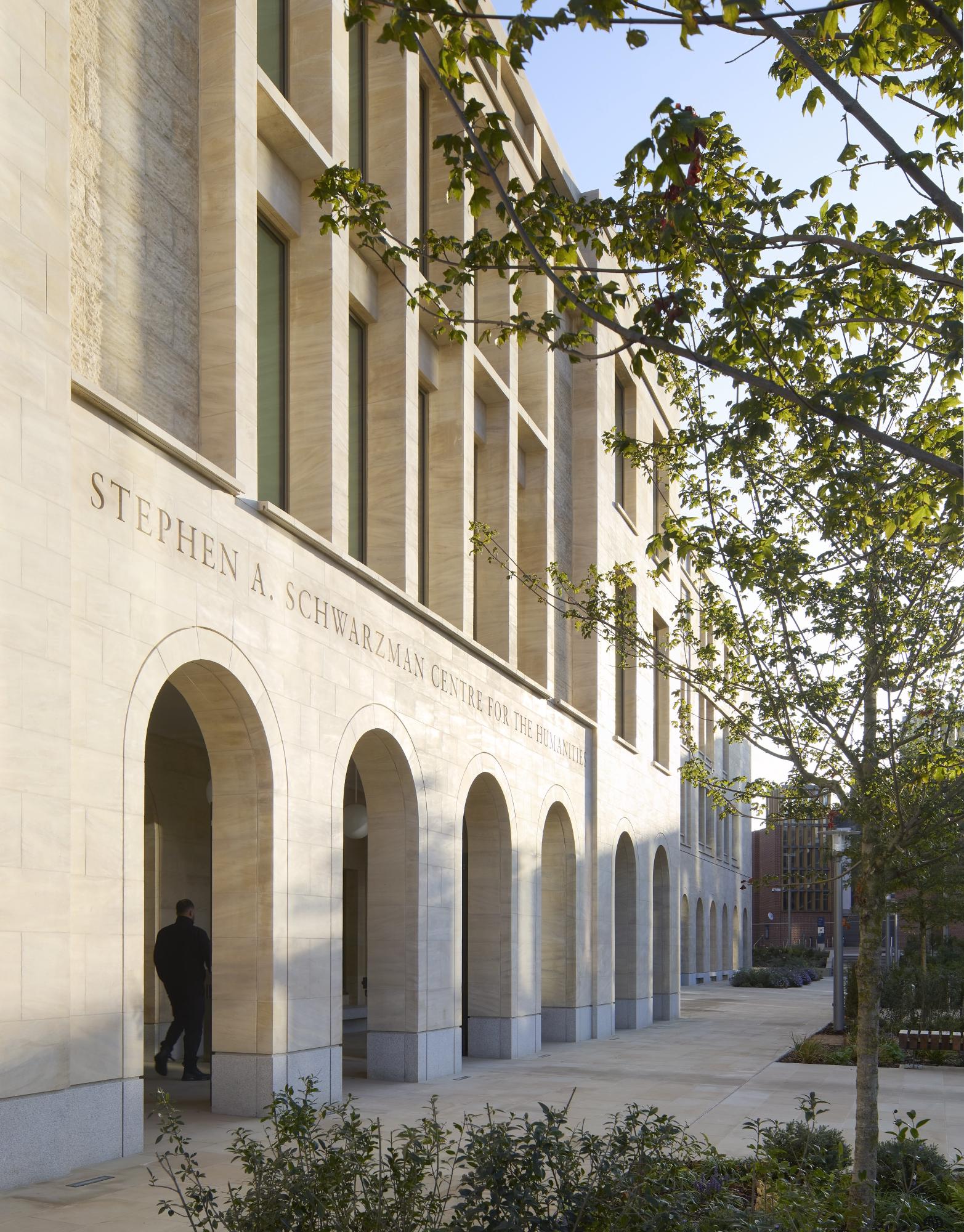
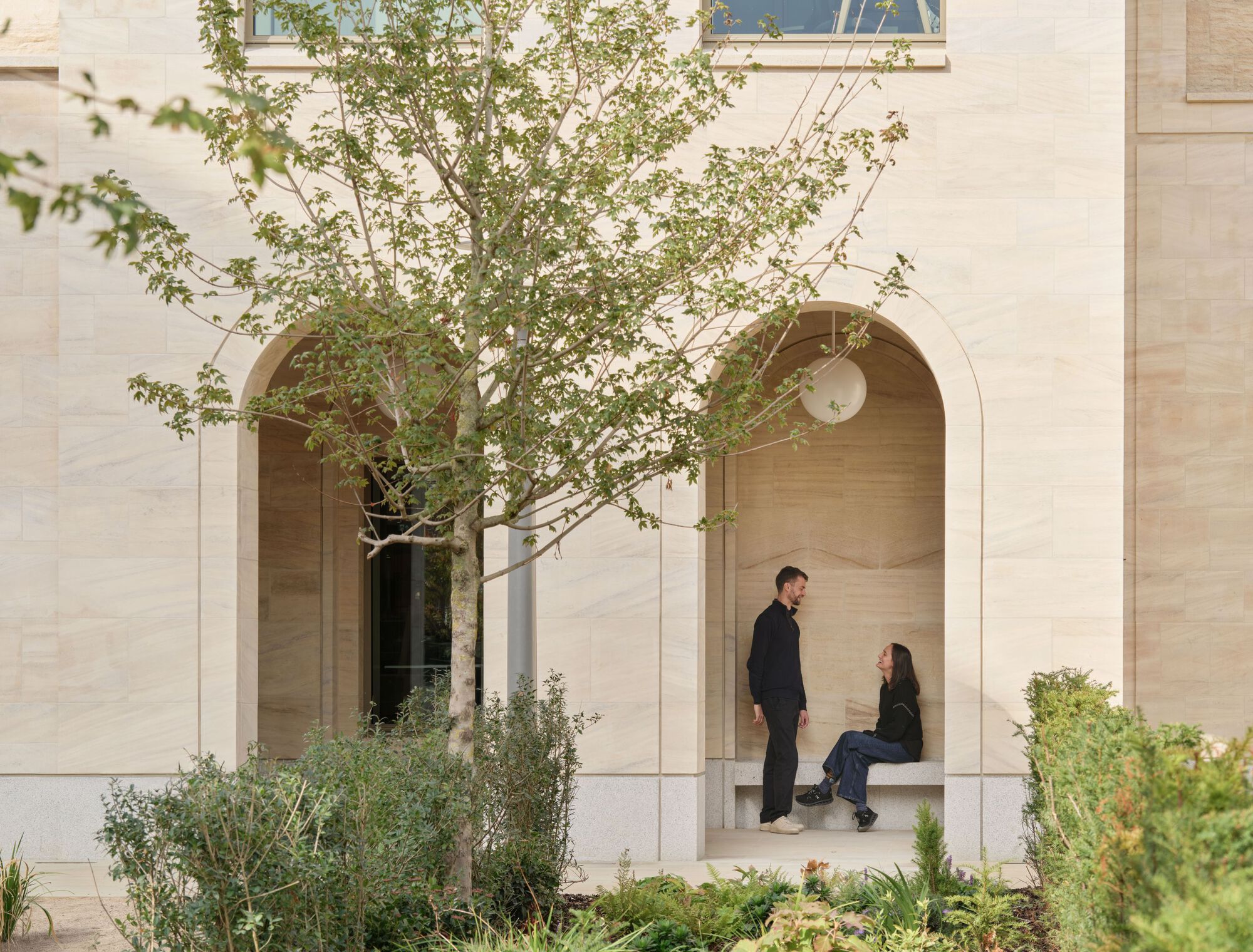
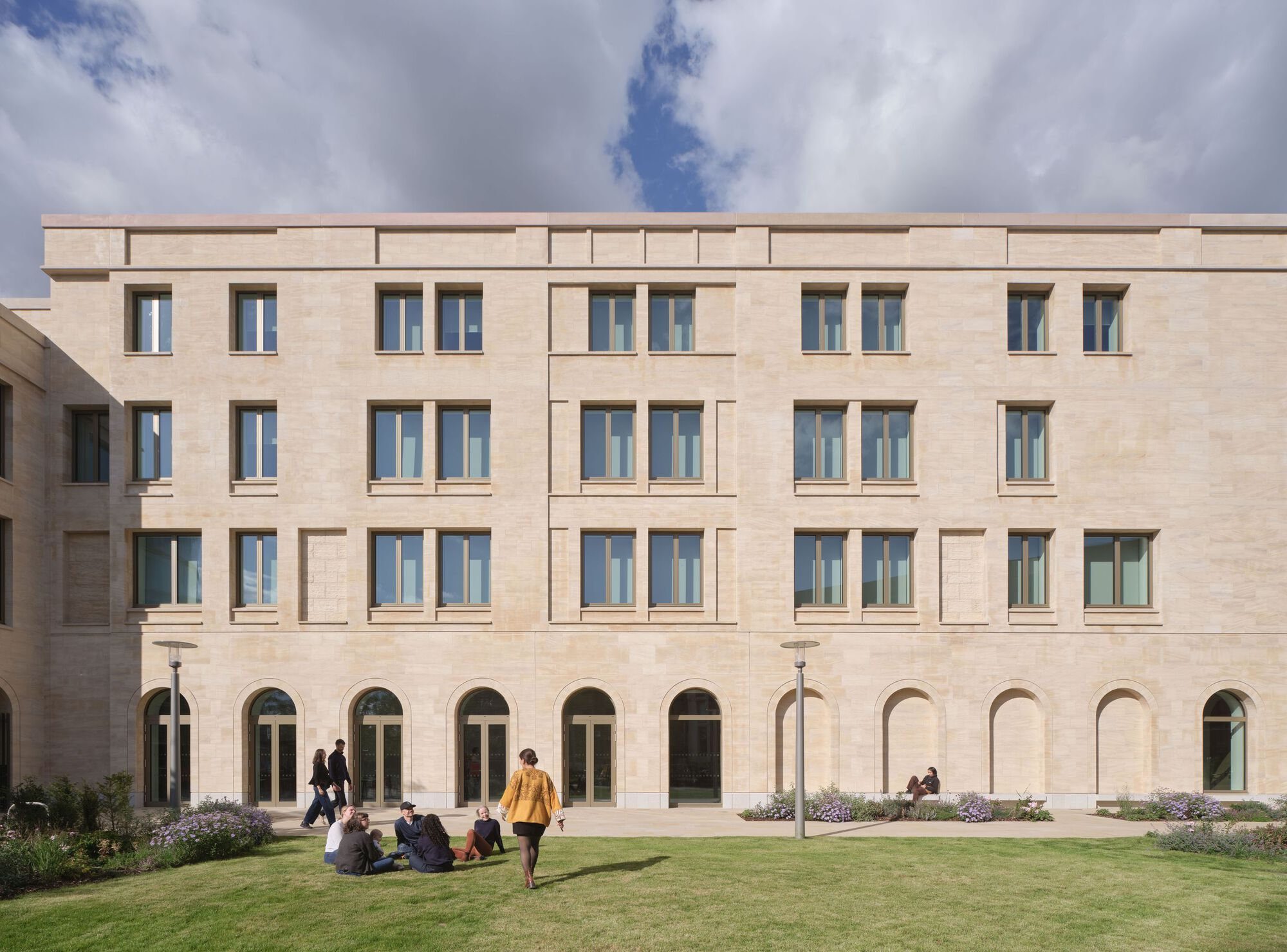
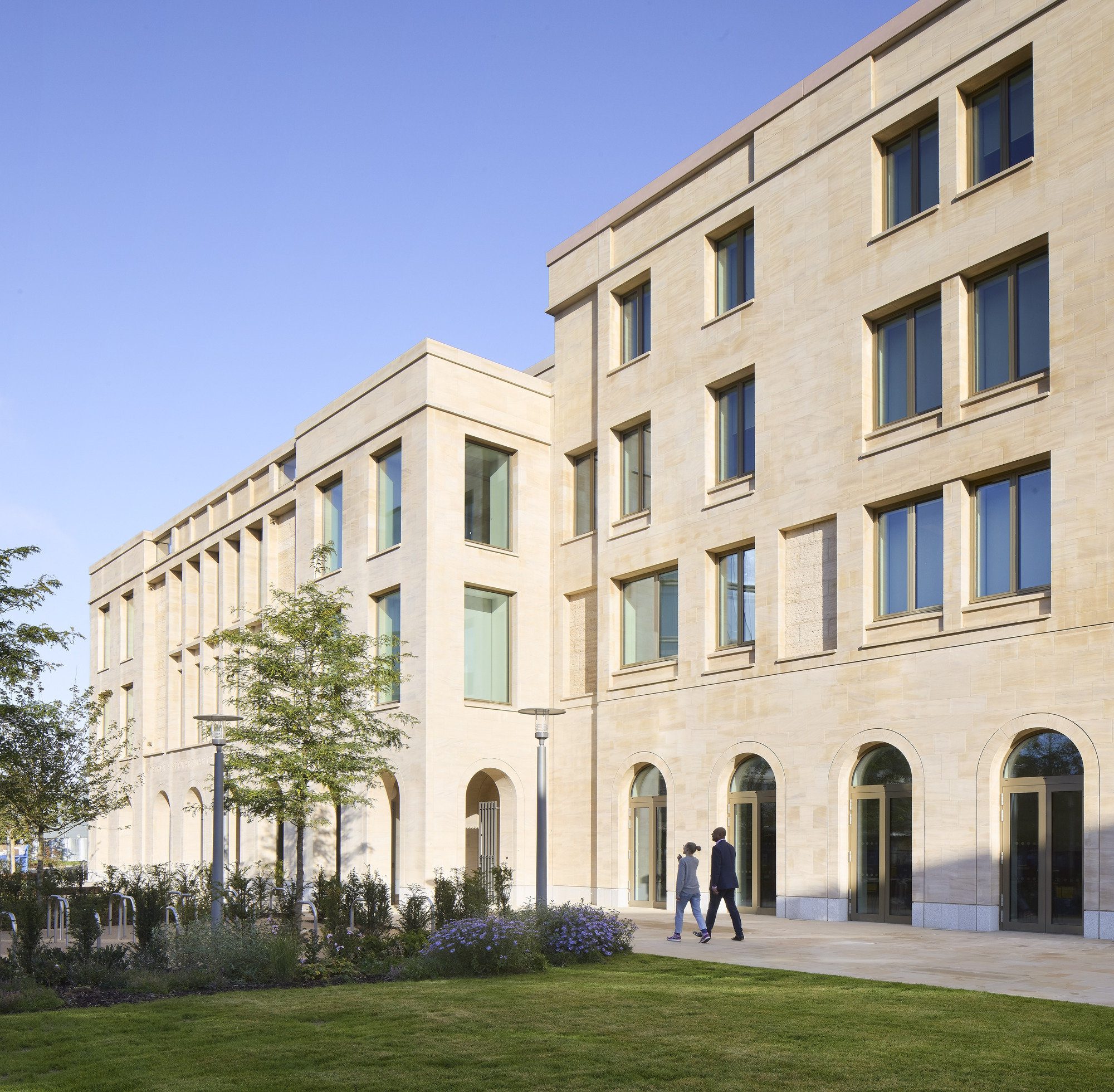
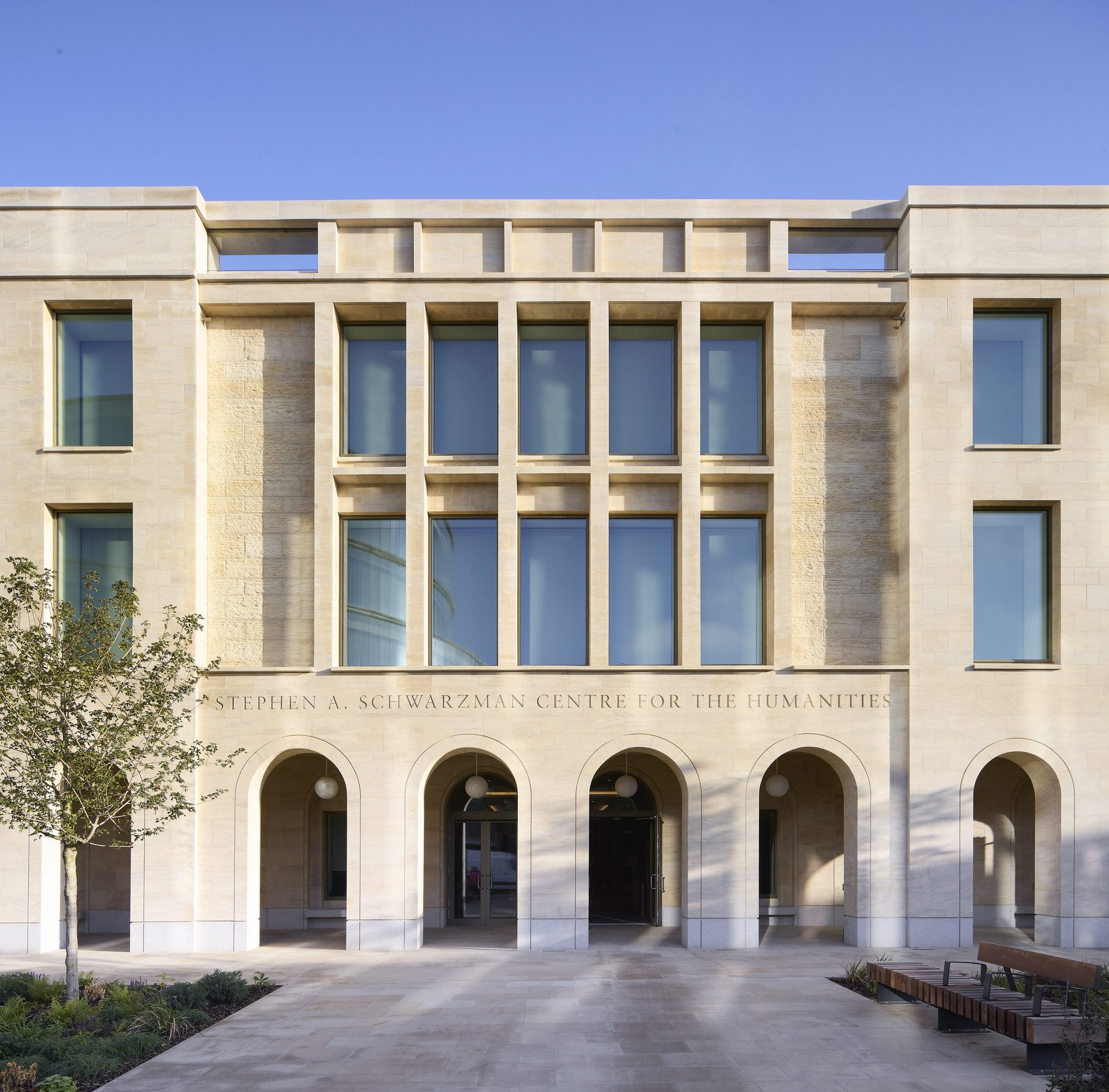
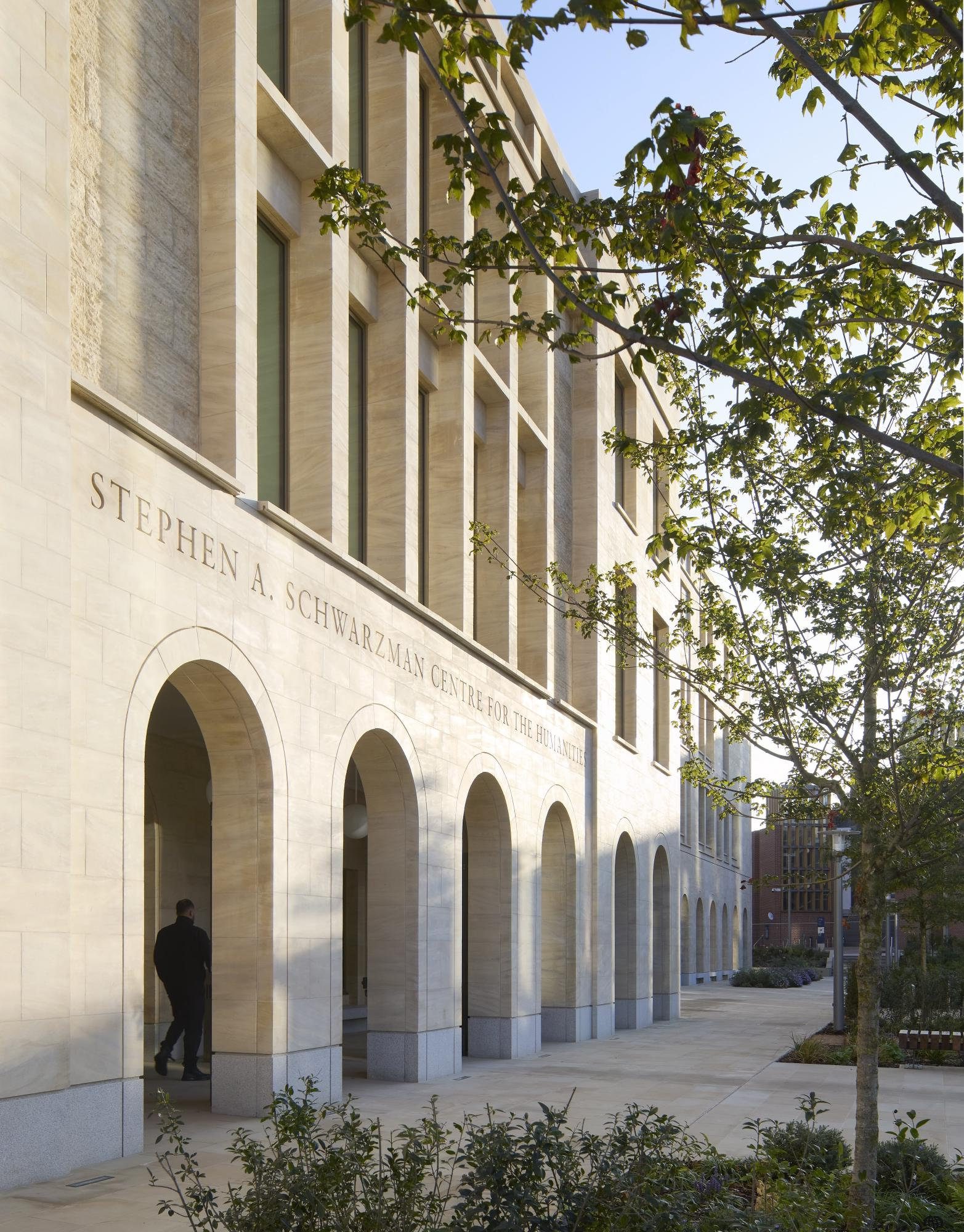
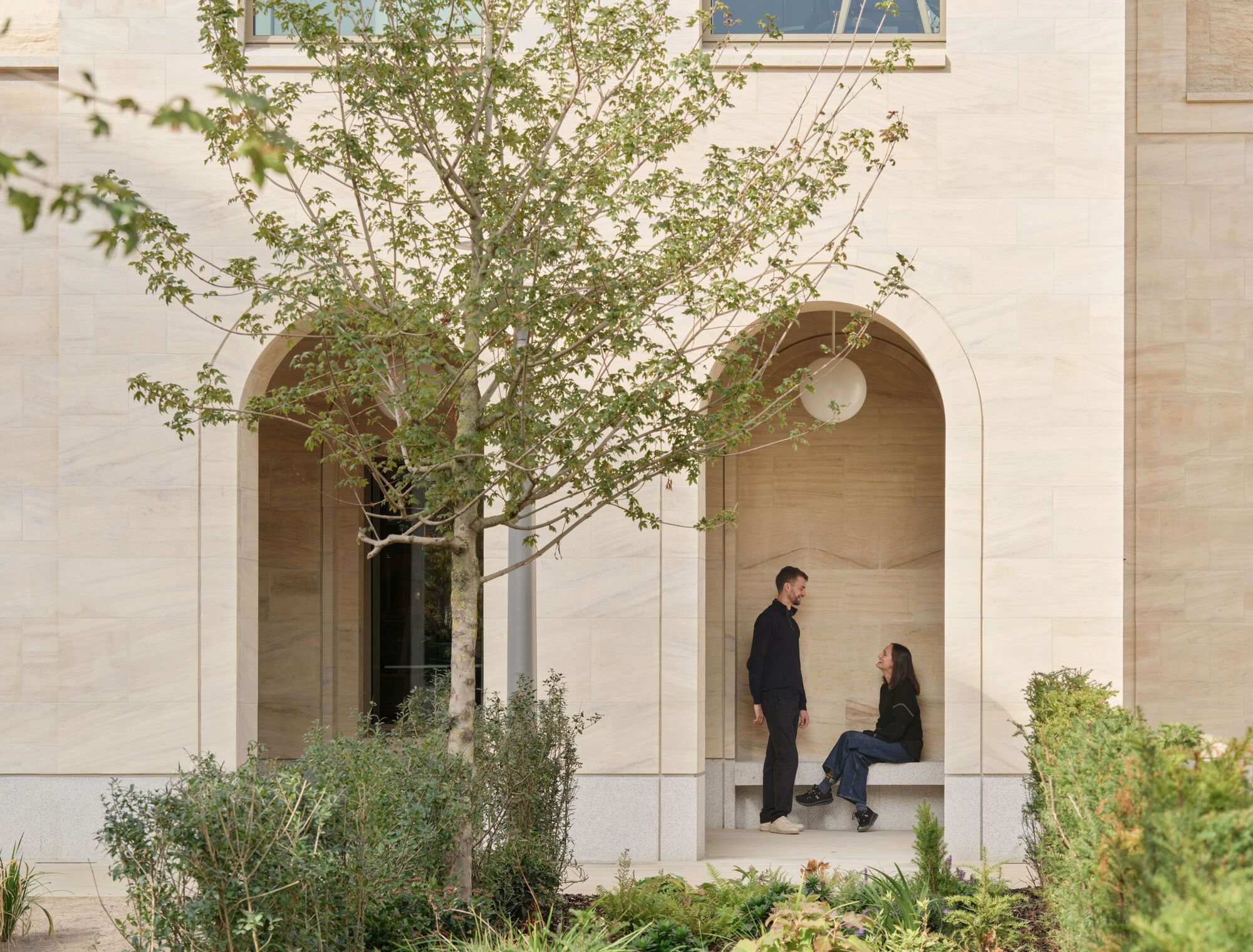
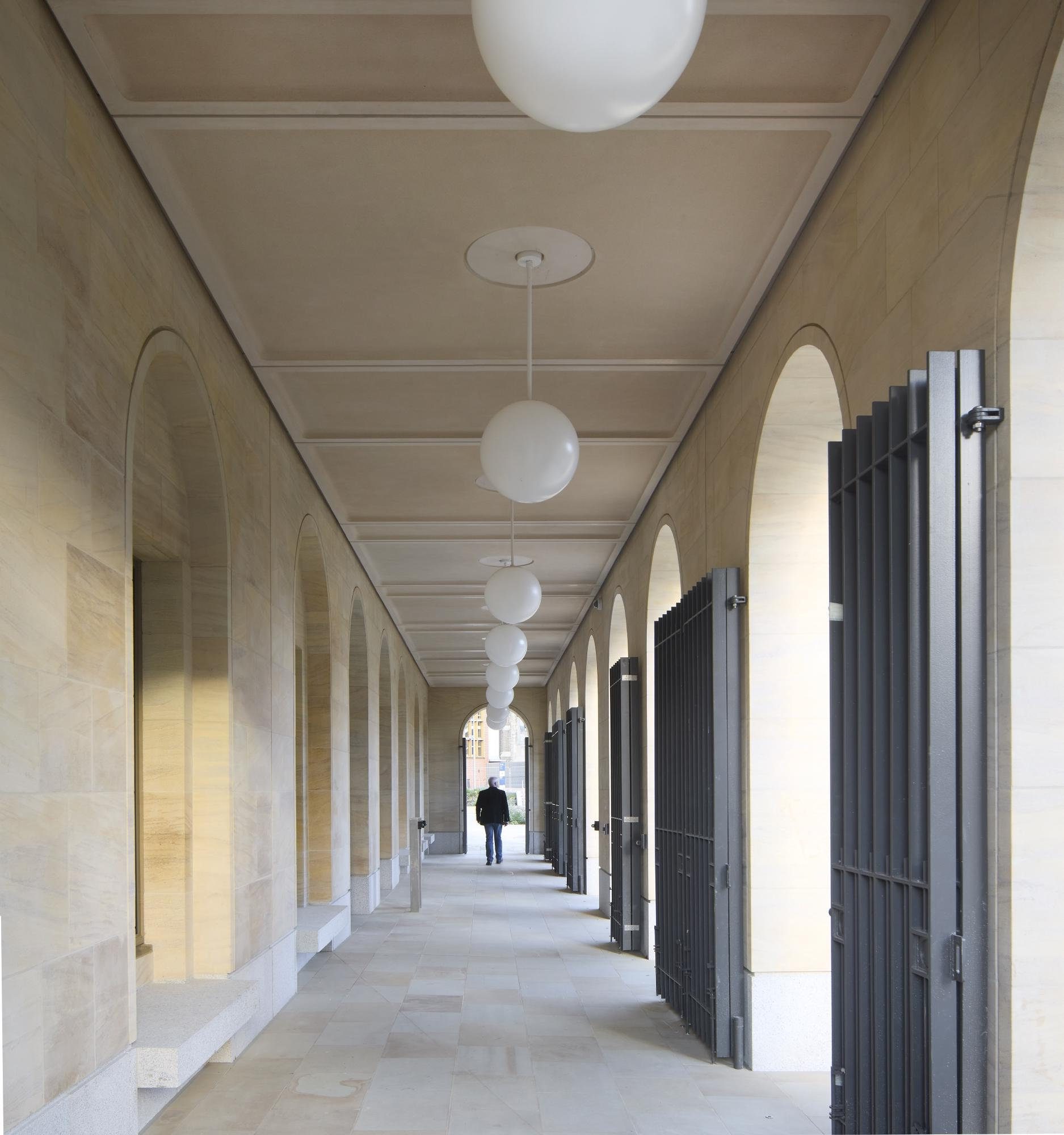
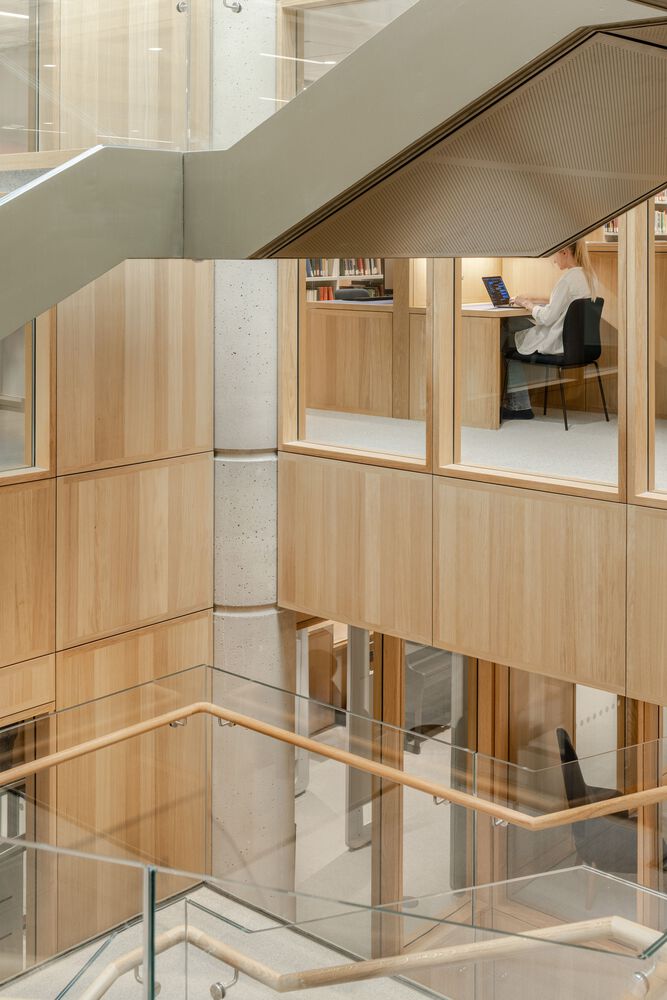
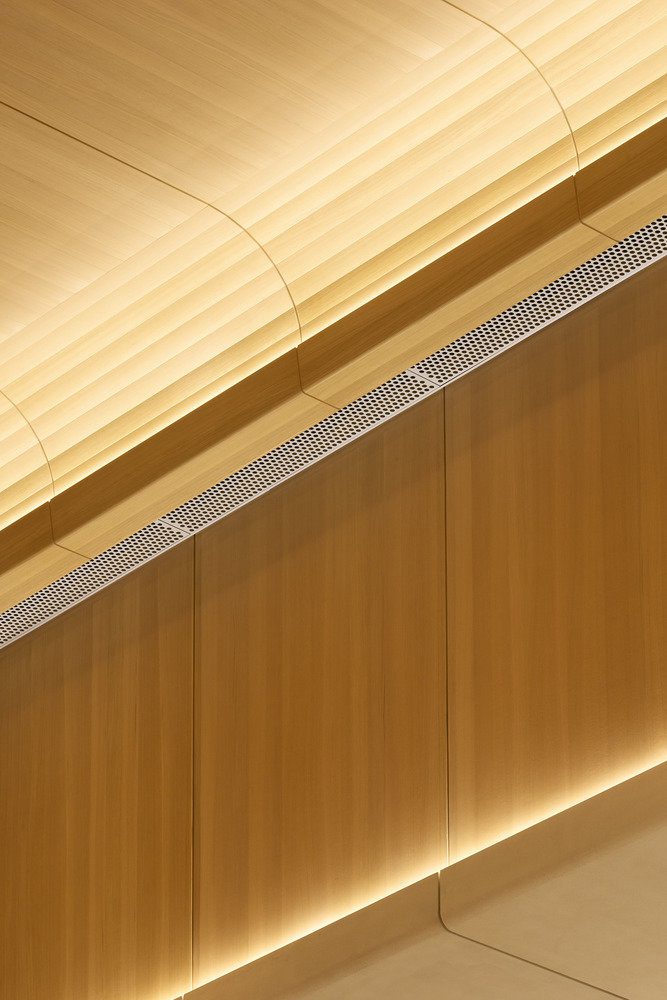
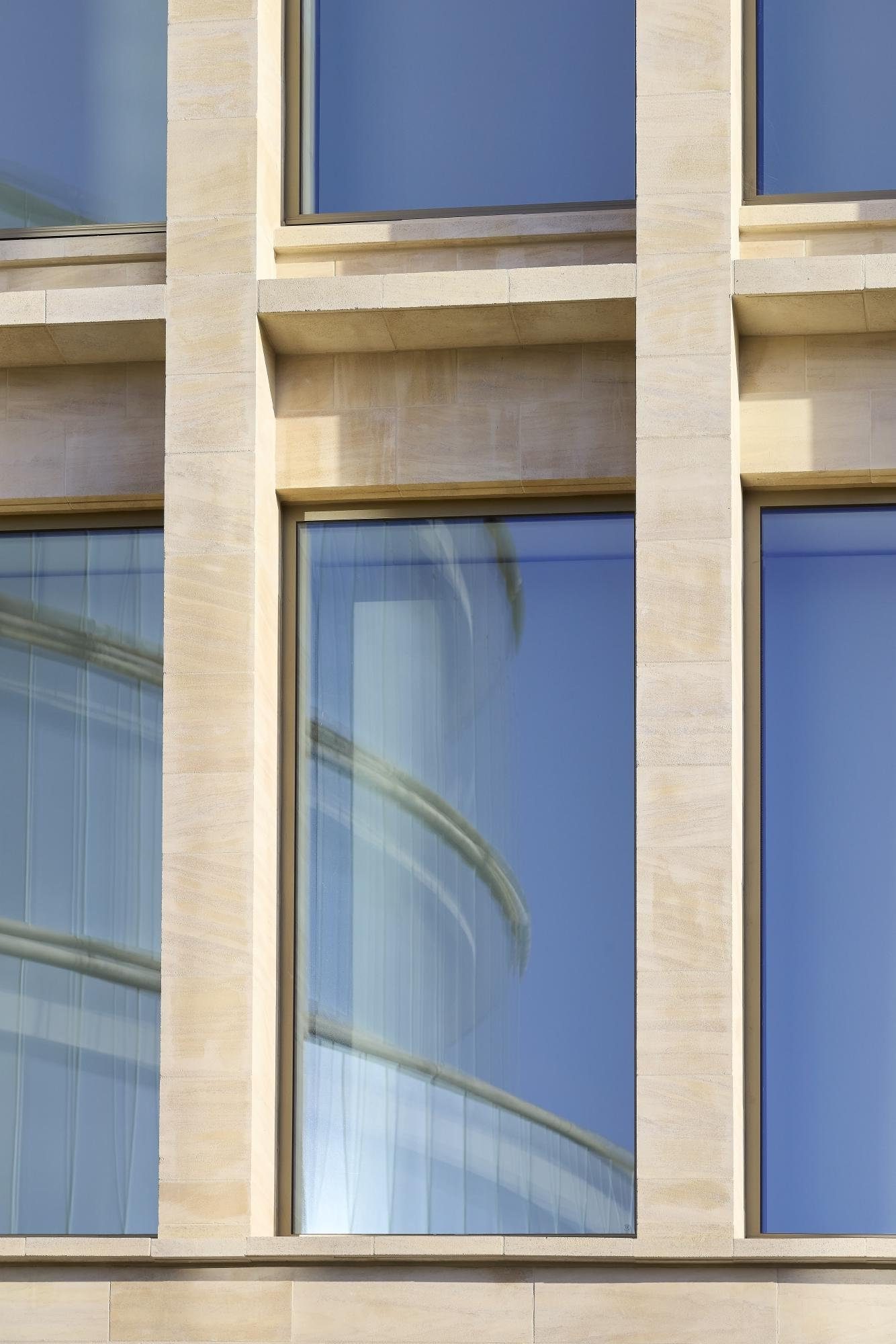
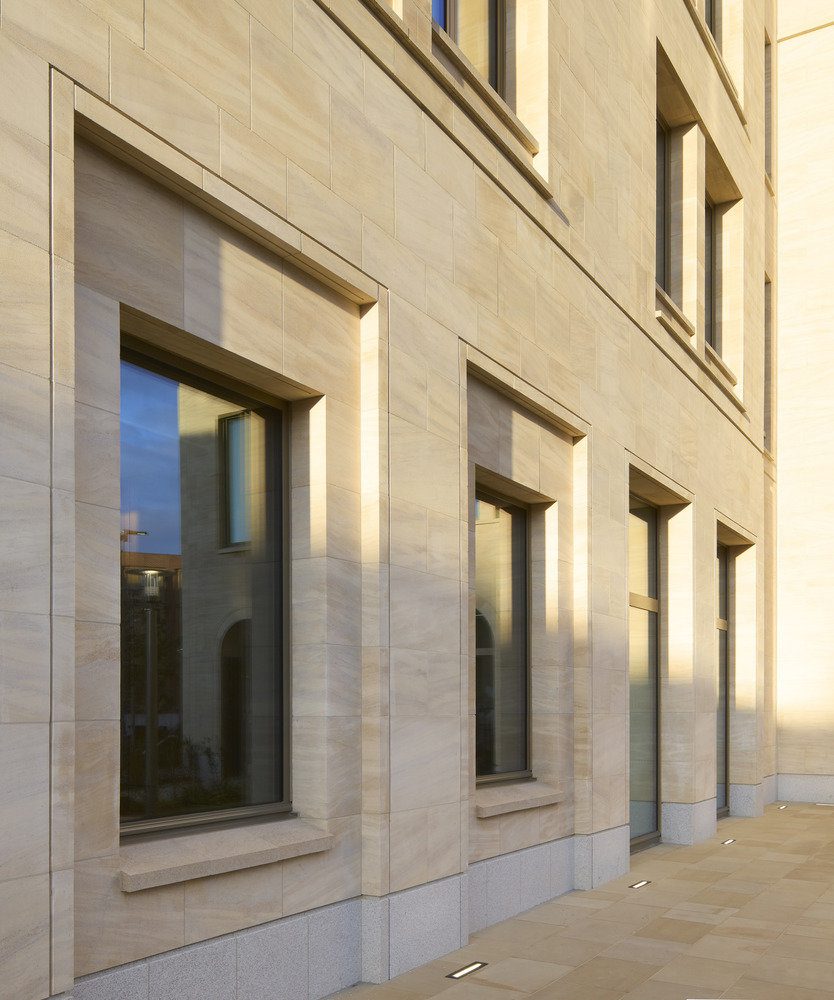
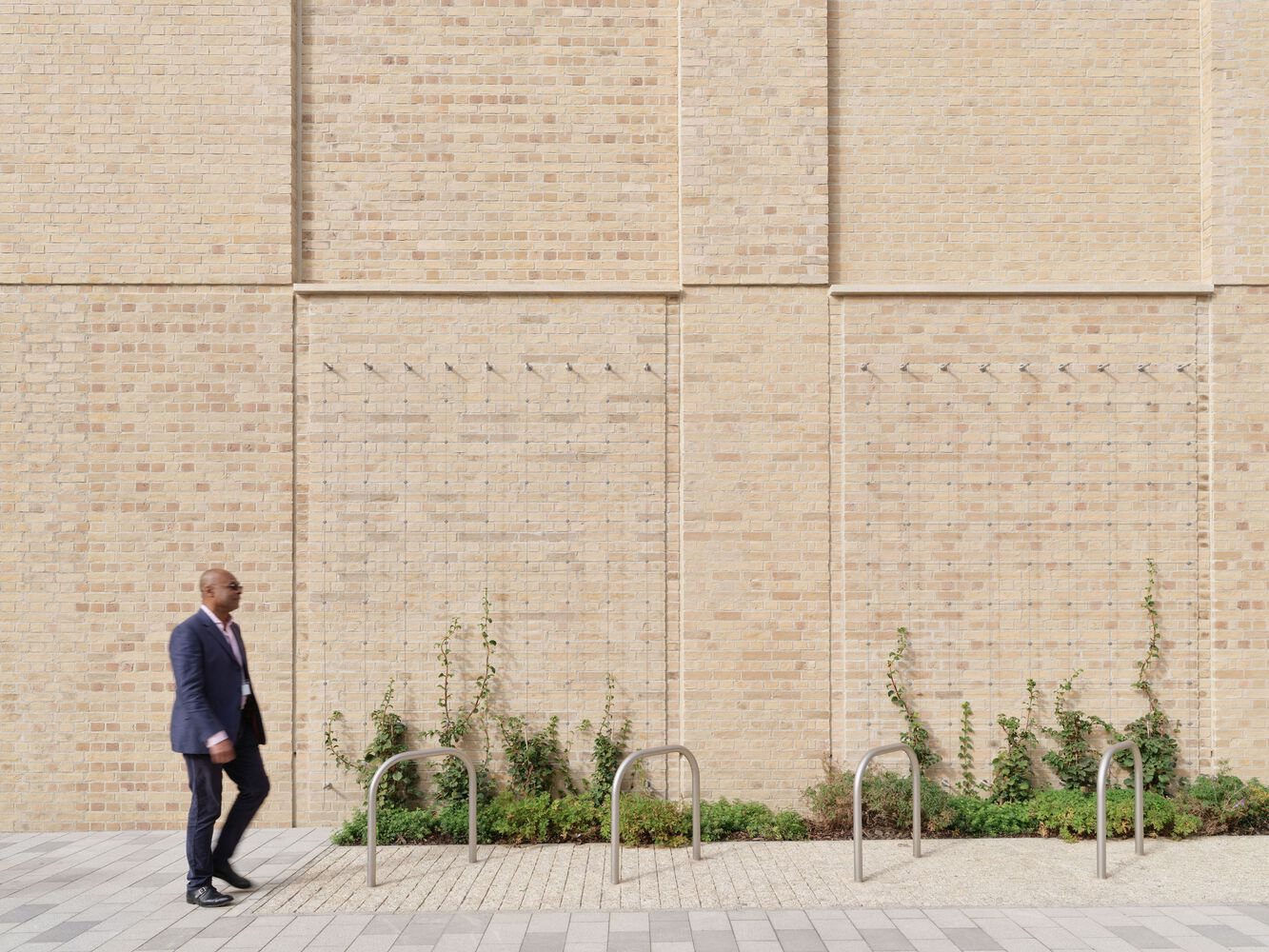
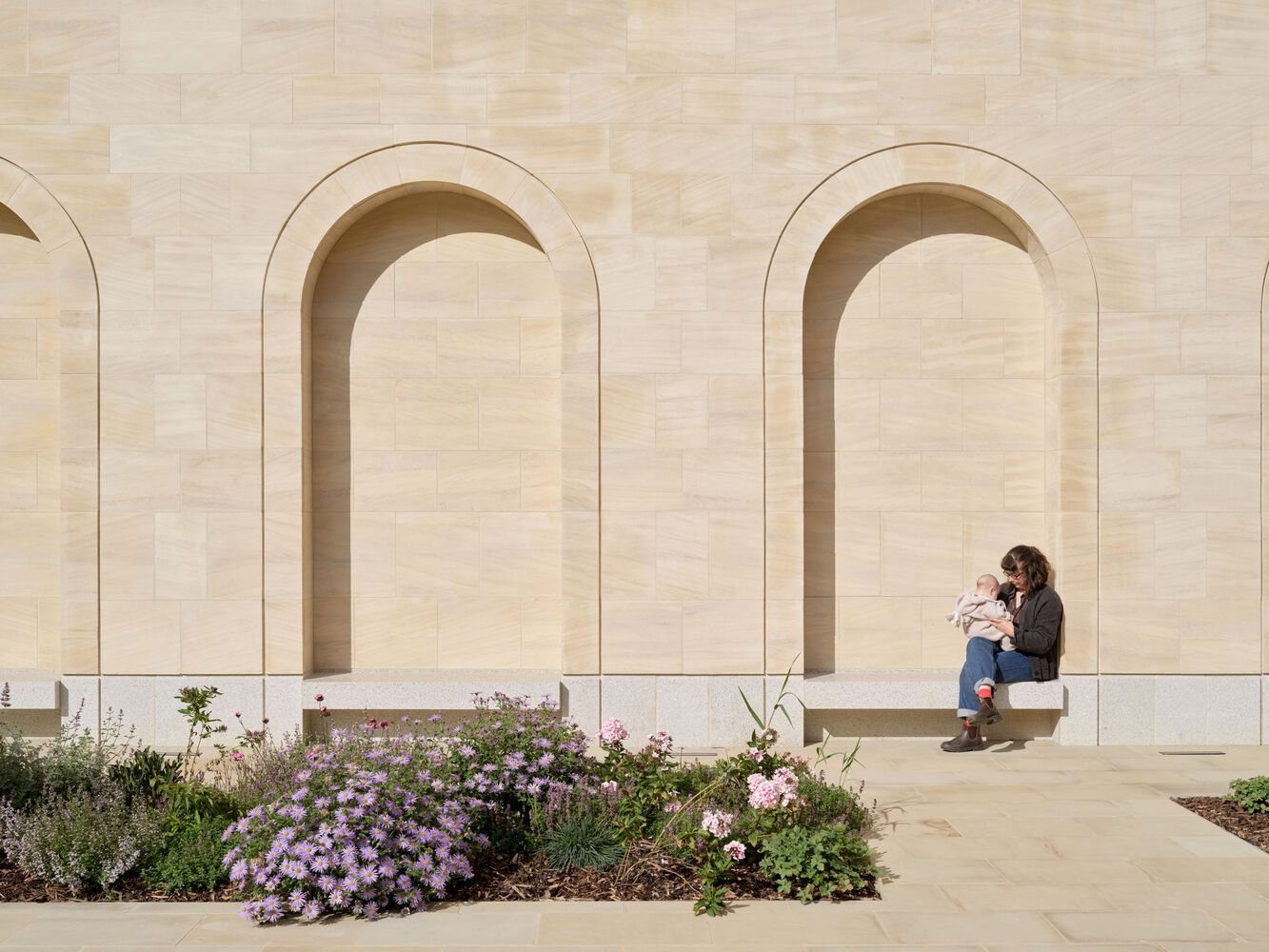
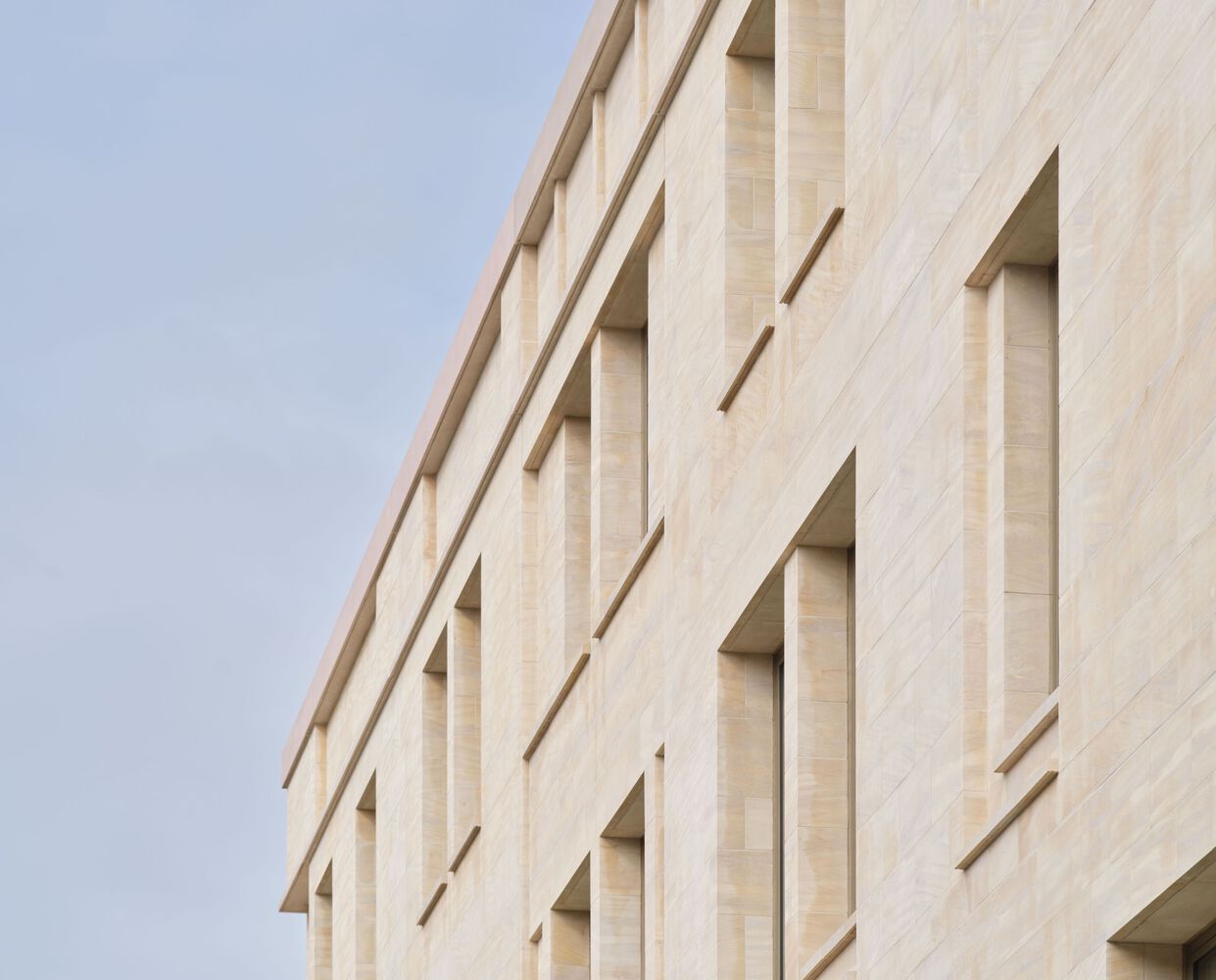
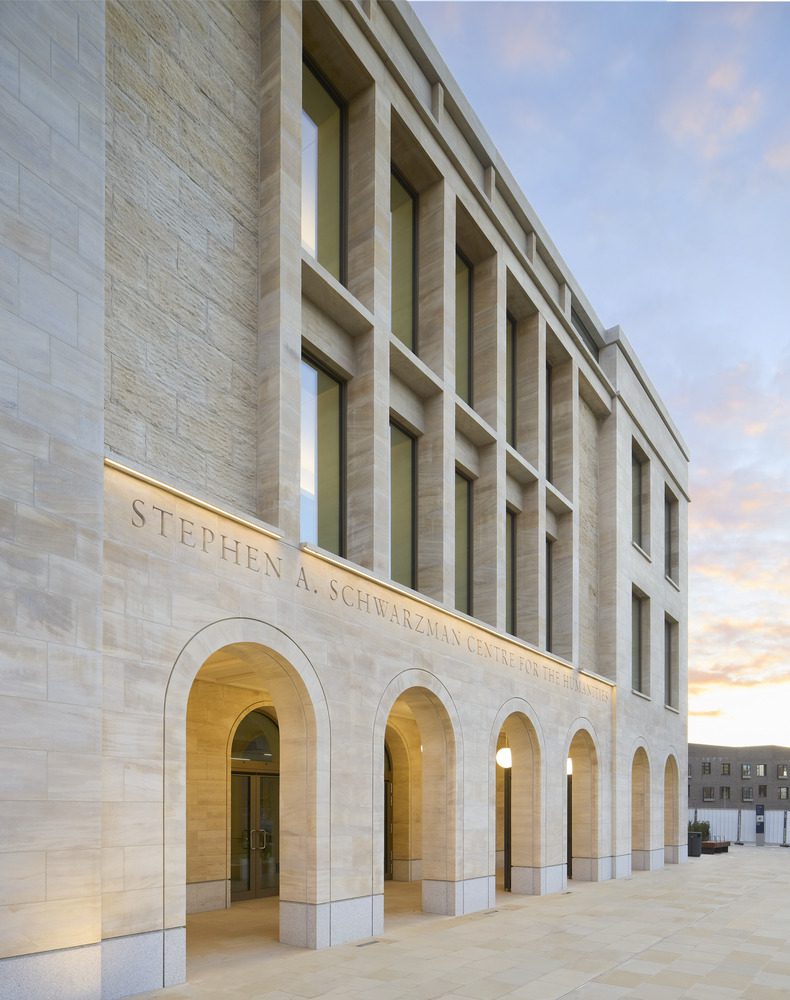
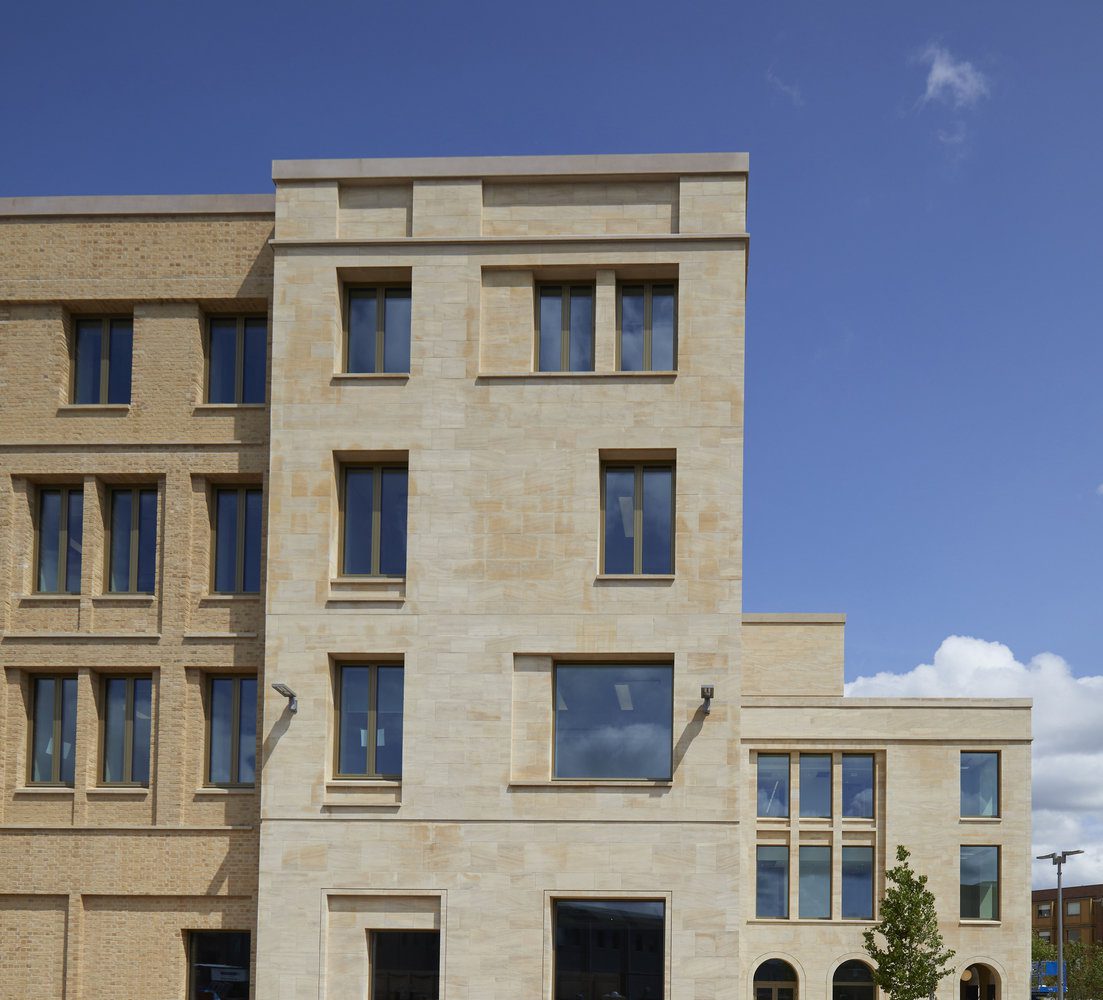
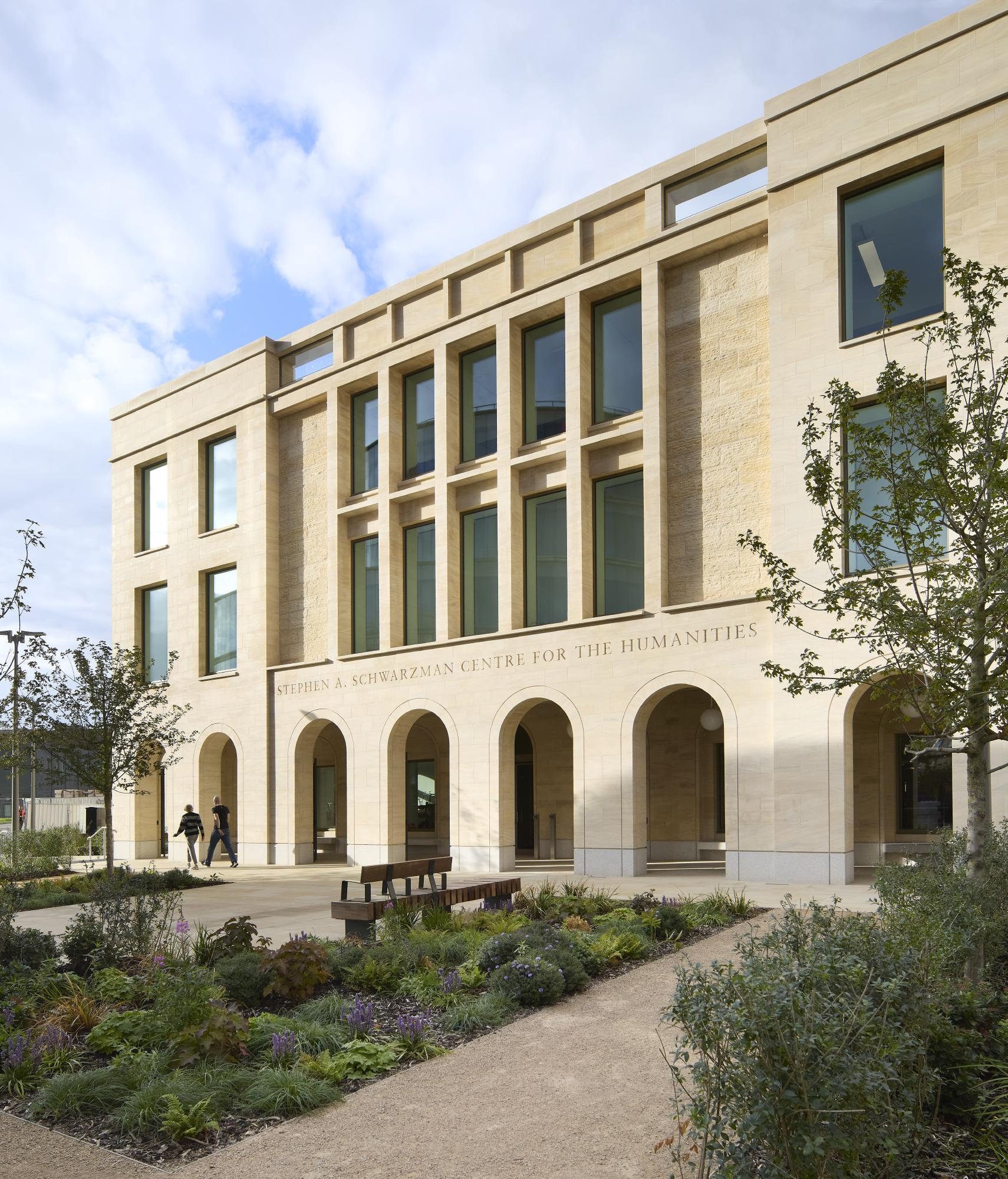
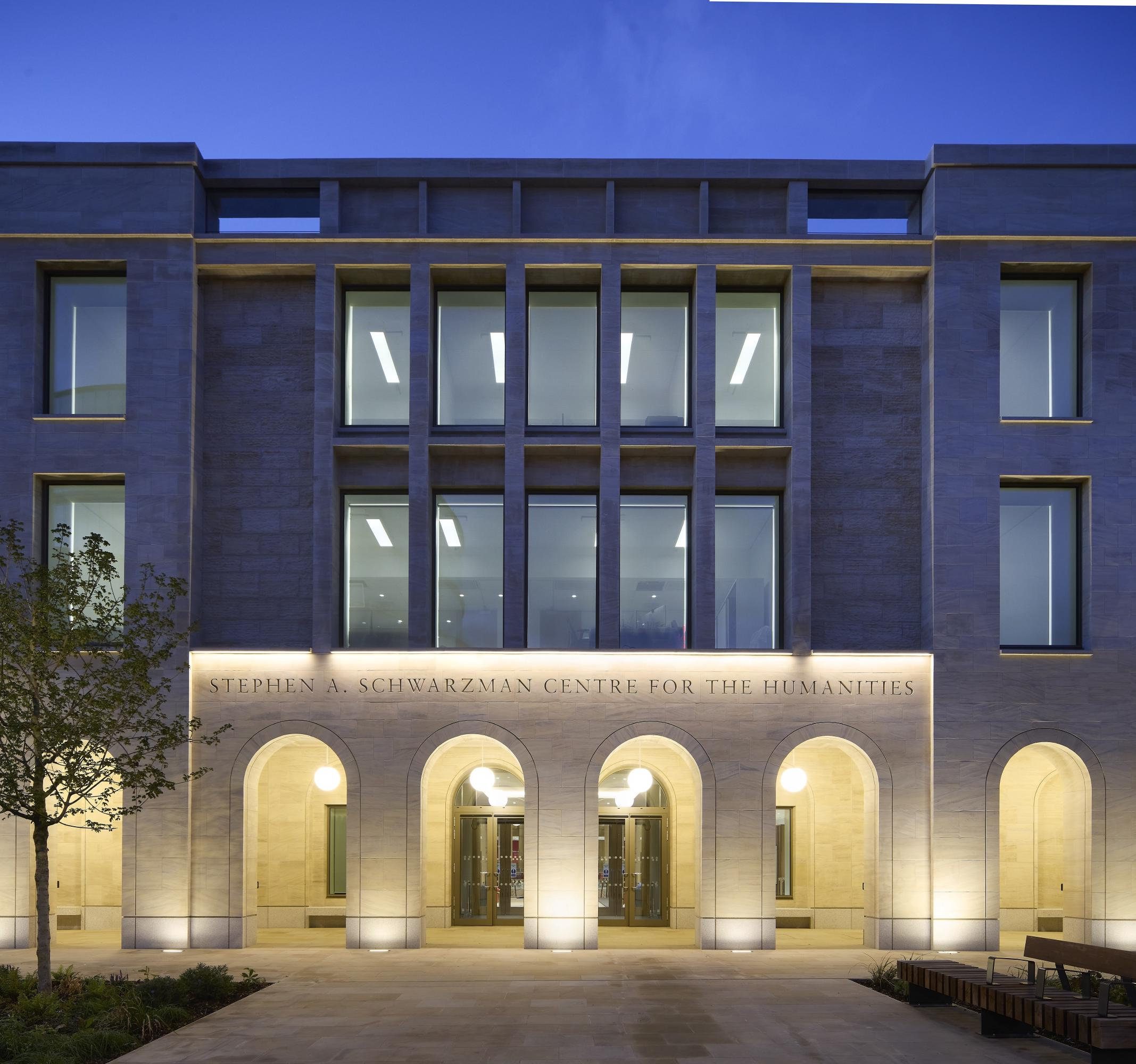
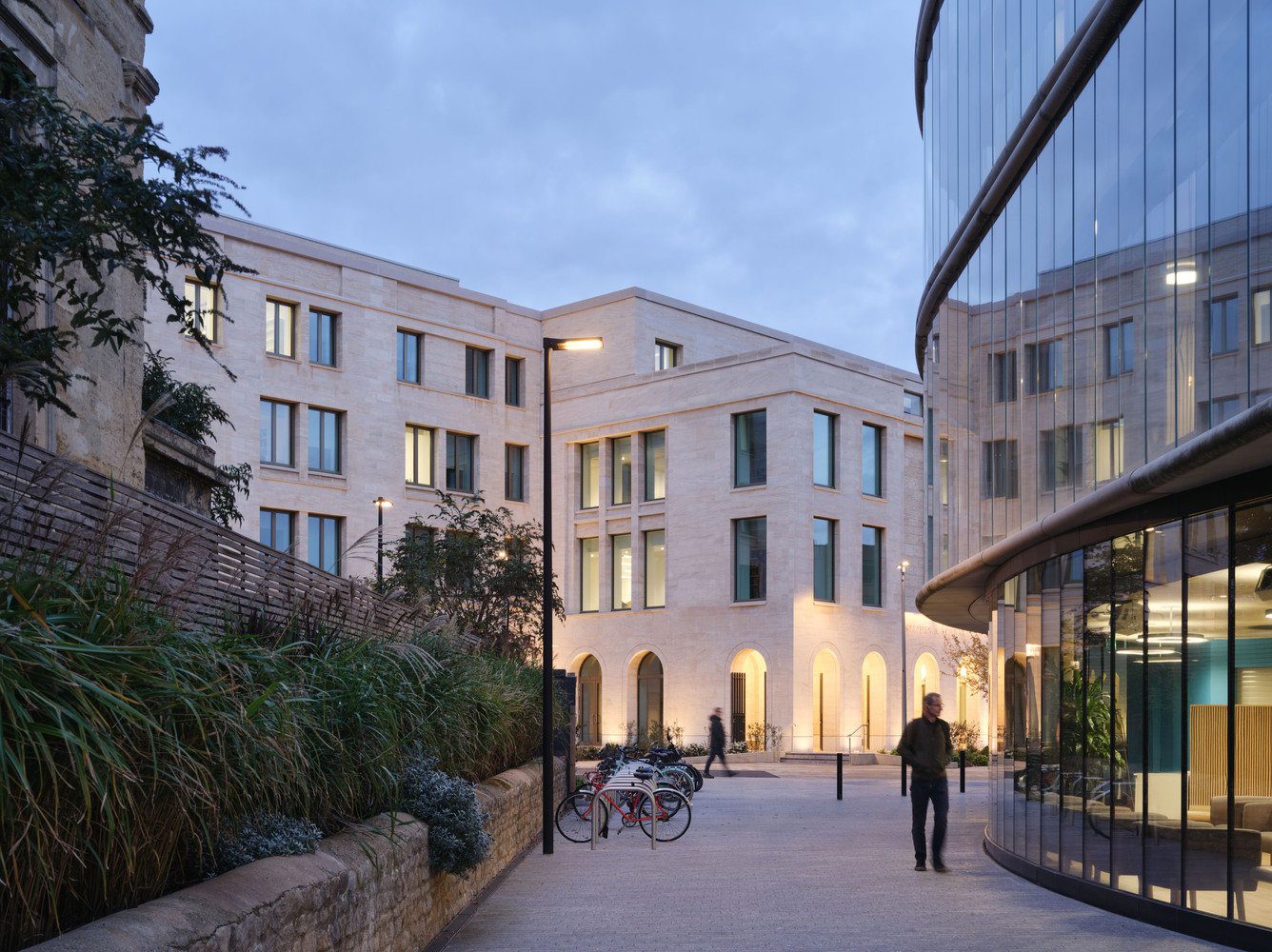
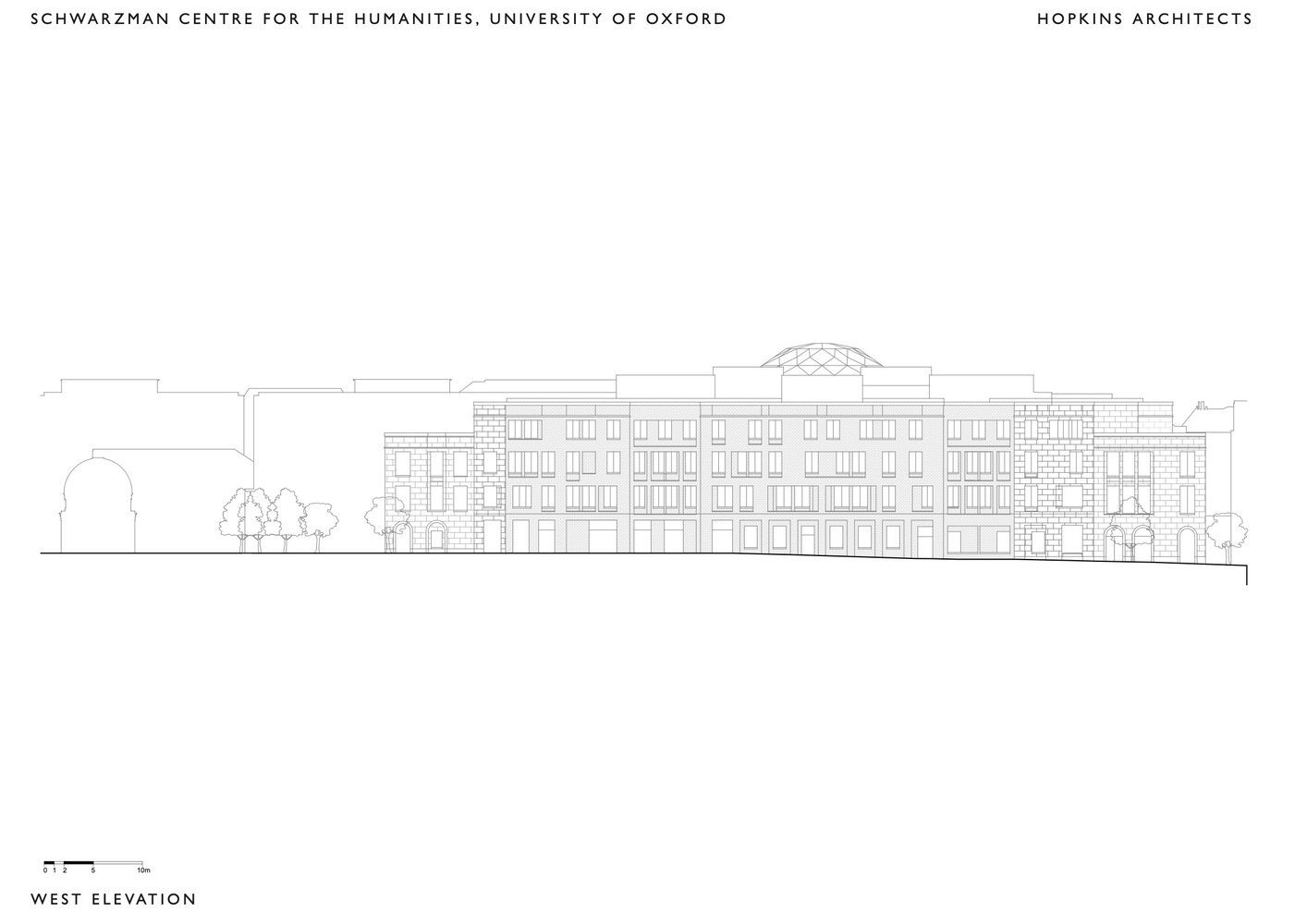
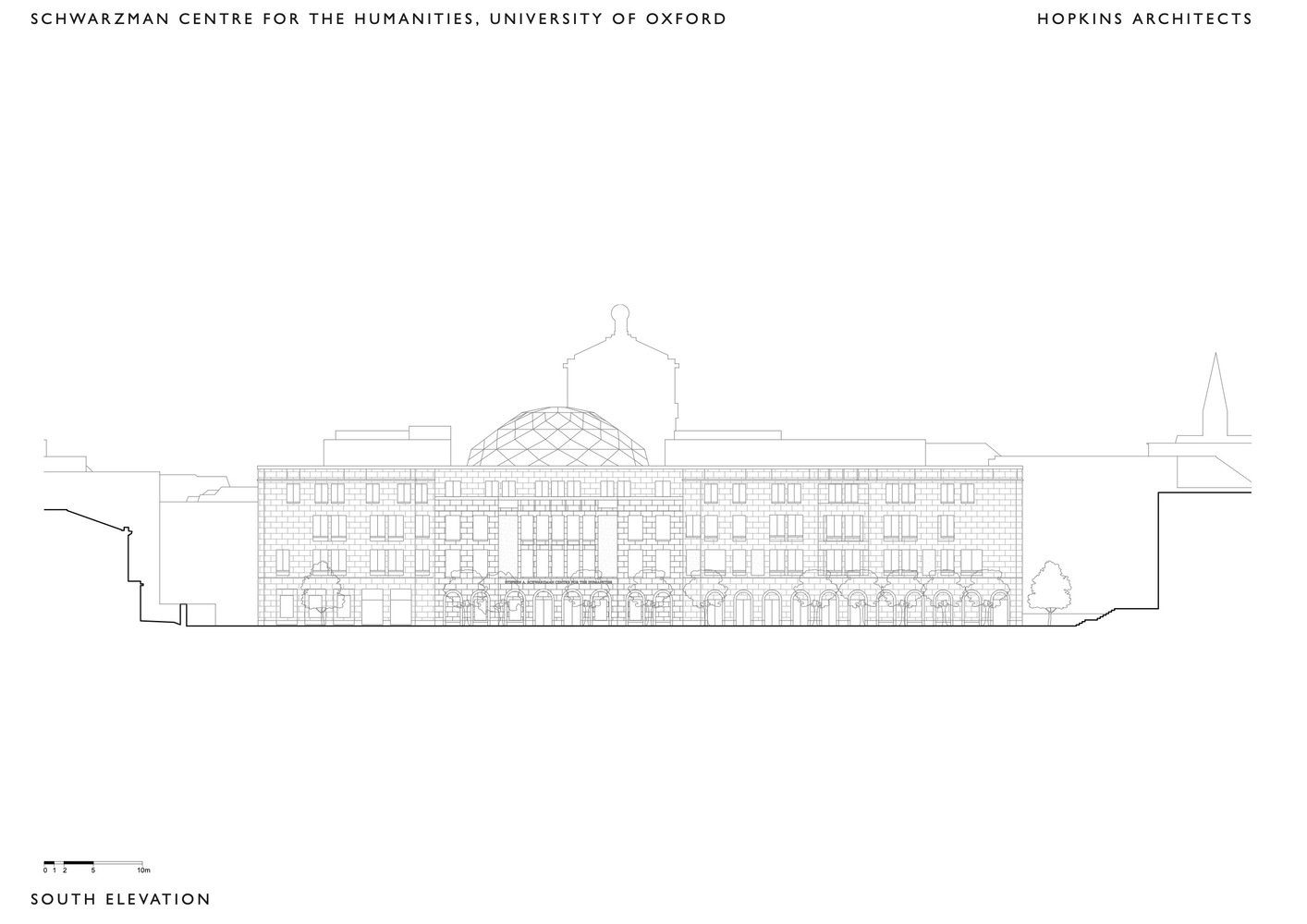
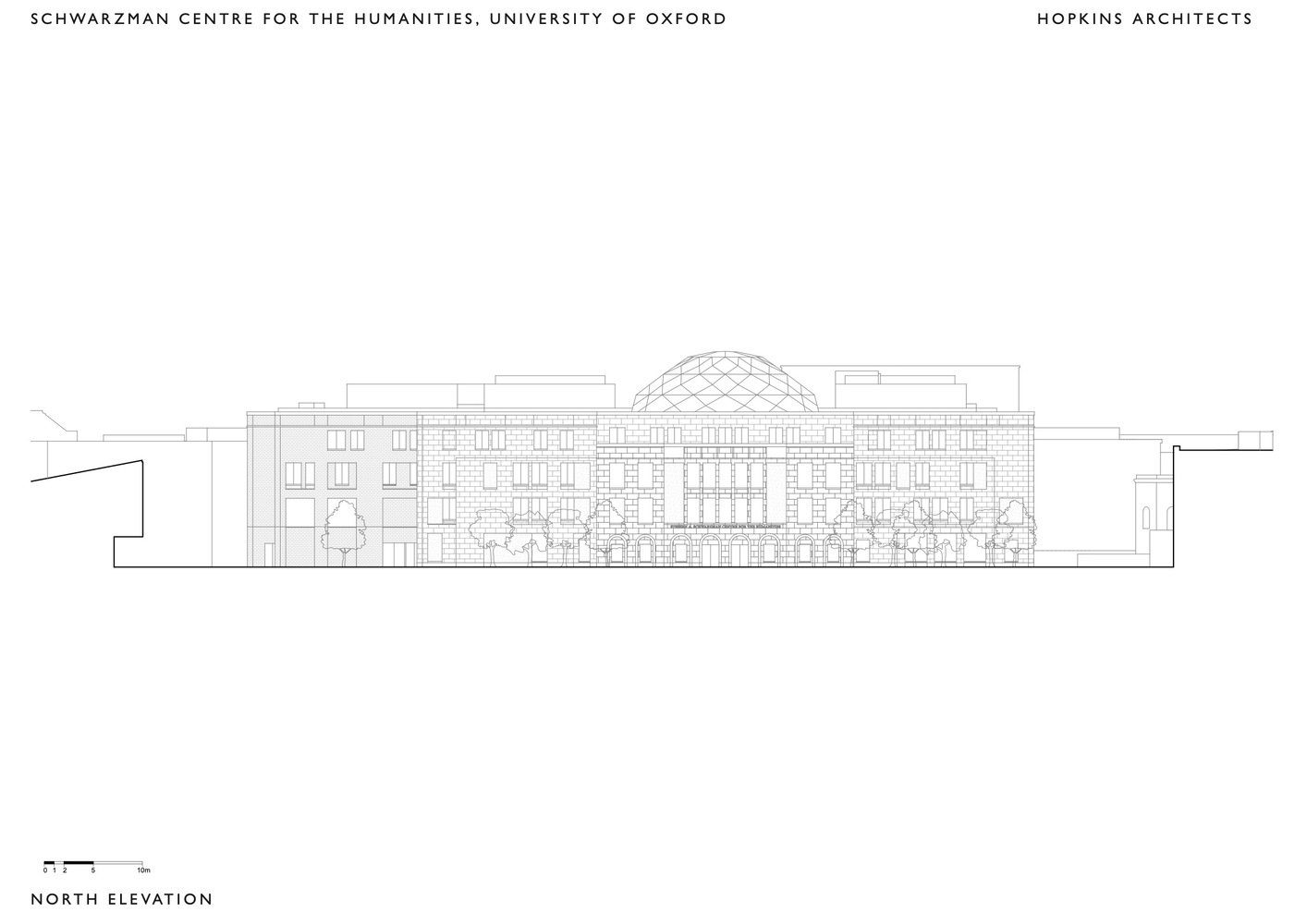
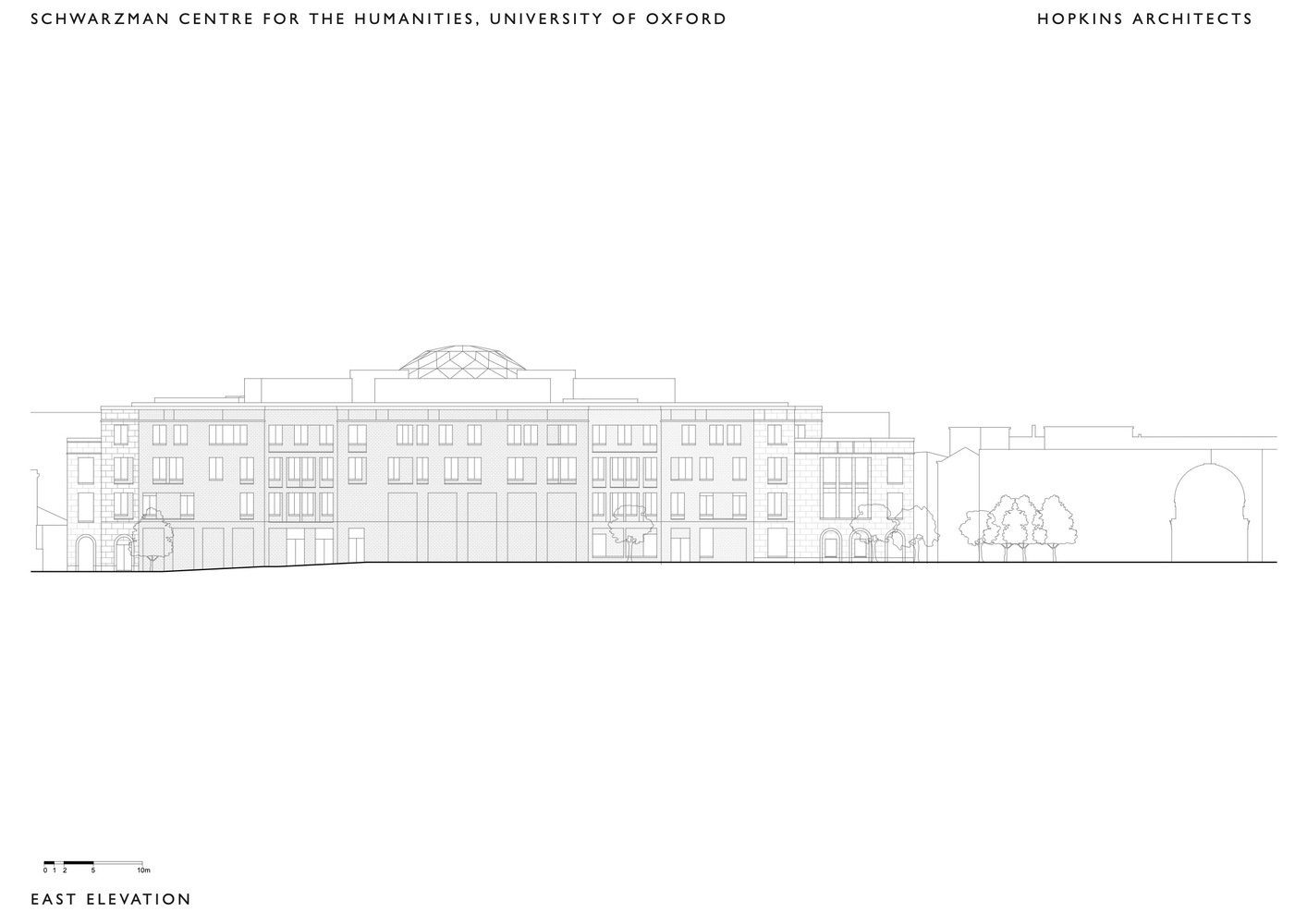
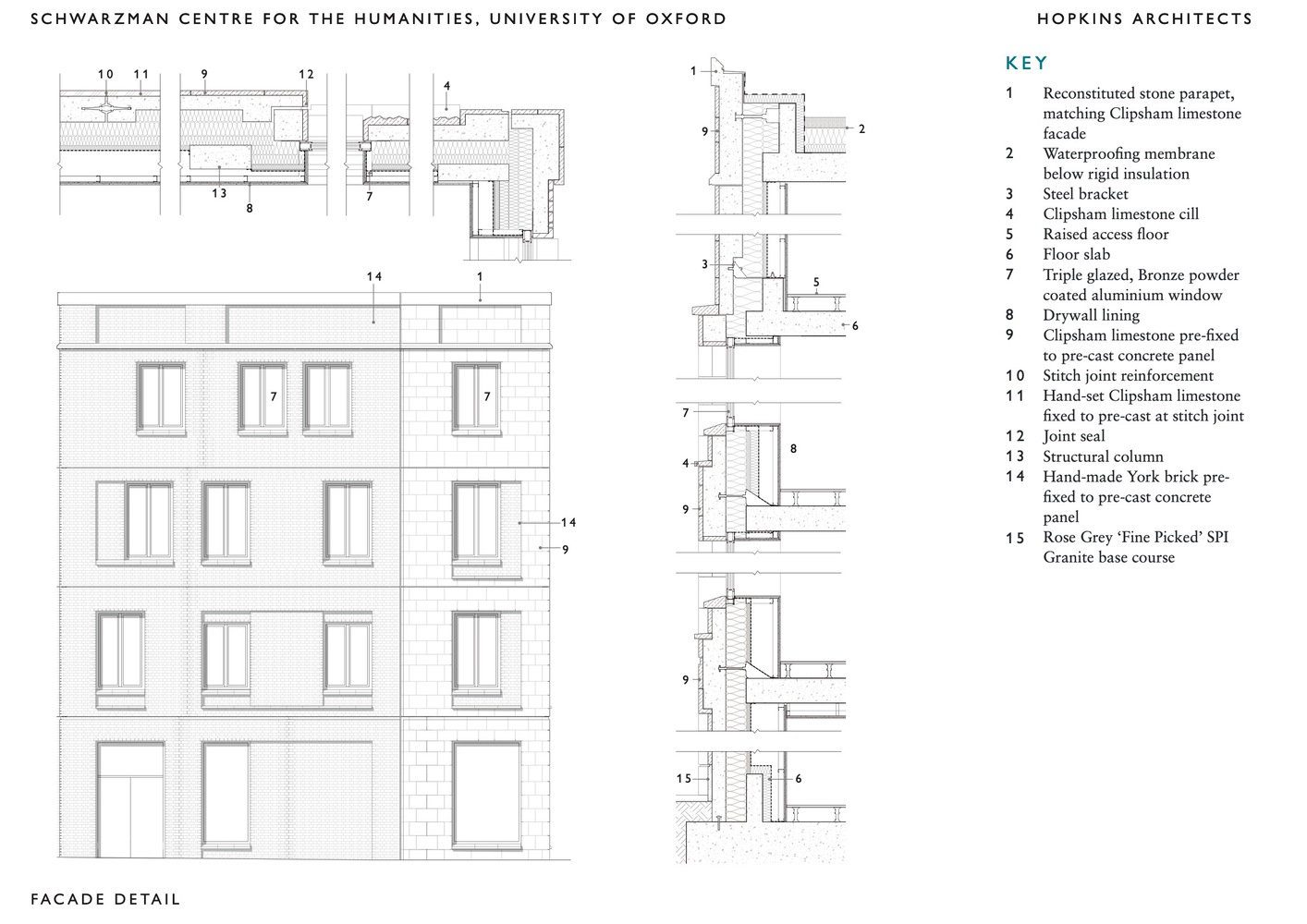
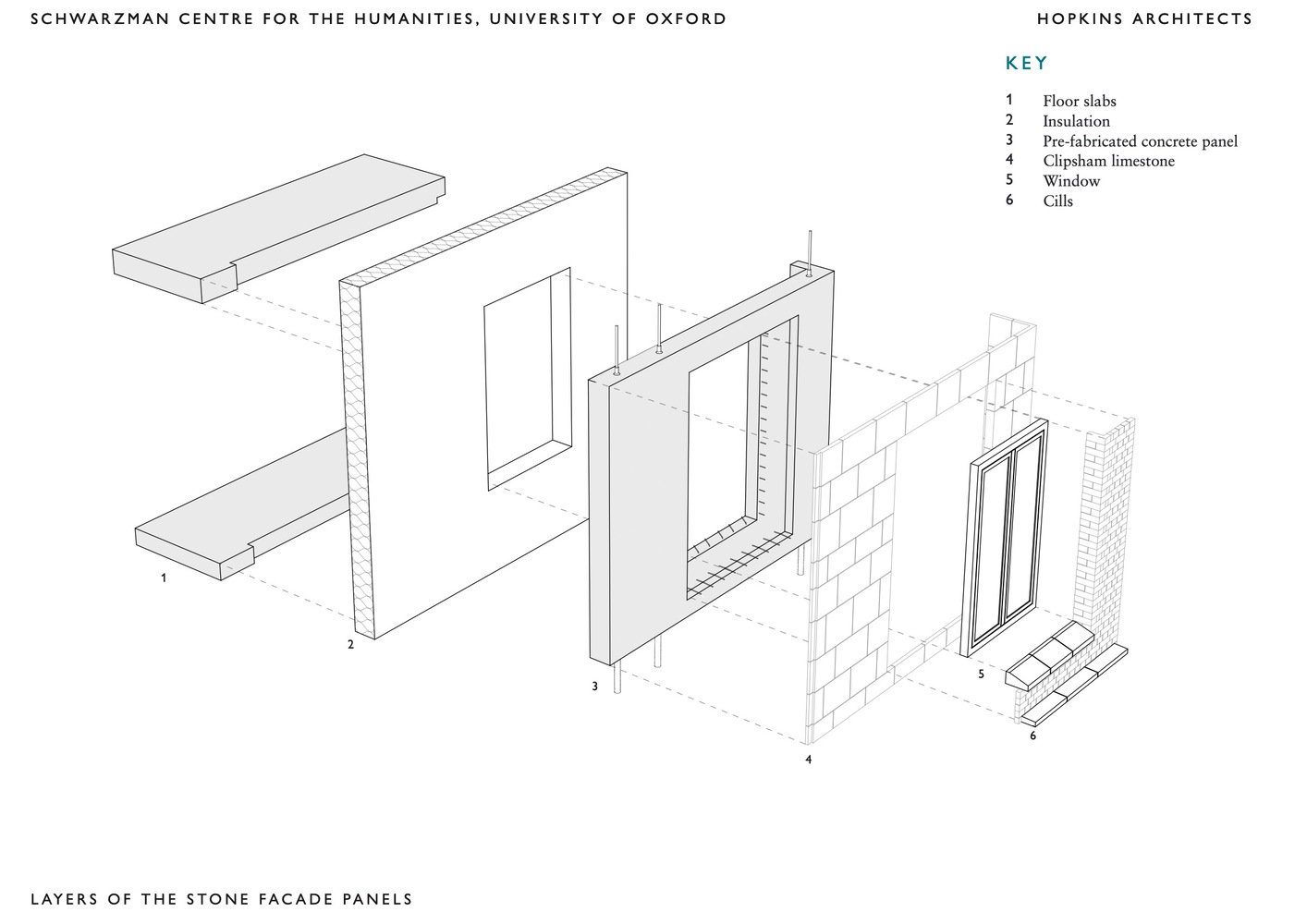
Architecturally, the 25,300m² building’s scale is modulated by a composition of smaller Clipsham stone and brick blocks, articulated to respond to the highly varied immediate context while still signaling formal entry points. Colonnades, landscaping, and external “rooms” blur the boundary between building and city. Internally, meticulously crafted details, recalling a contemporary response to historic collegiate materiality, balance modern prefabrication techniques with durability, tactility, and gravitas.
© Hufton+Crow
Project Info:
Architects: Hopkins Architects
Country: Oxford, United Kingdom
Area: 25300 m²
Year: 2025
Photography: Simon Kennedy, Hufton+Crow, French + Tye, Lily Fawcett
Design Team: Hopkins Architects



Sophie Tremblay is a Montreal-based architectural editor and designer with a focus on sustainable urban development. A McGill University architecture graduate, she began her career in adaptive reuse, blending modern design with historical structures. As a Project Editor at Arch2O, she curates stories that connect traditional practice with forward-thinking design. Her writing highlights architecture's role in community engagement and social impact. Sophie has contributed to Canadian Architect and continues to collaborate with local studios on community-driven projects throughout Quebec, maintaining a hands-on approach that informs both her design sensibility and editorial perspective.