

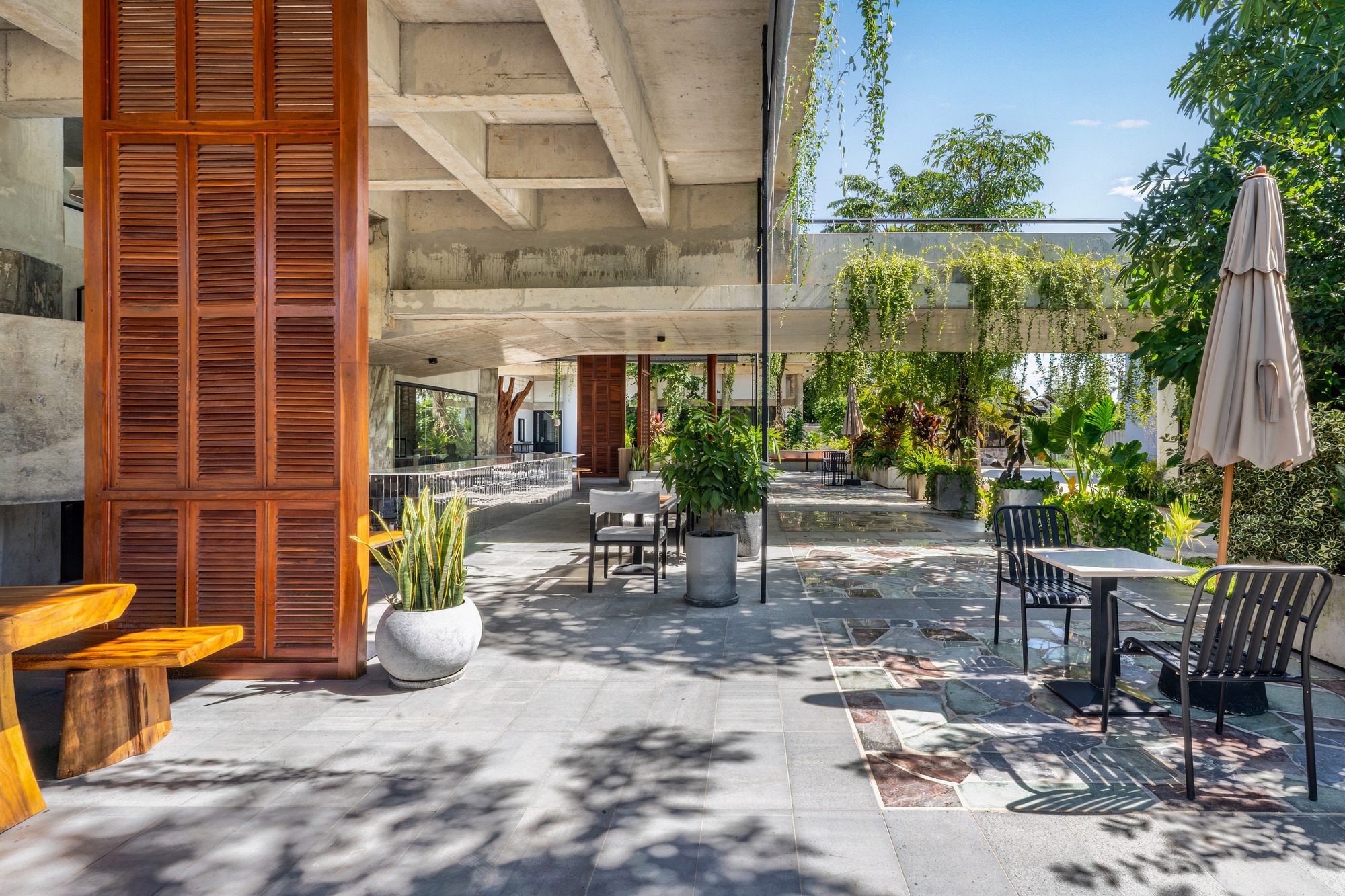
Phum Sambo Café & Eatery, Renovation with Reverence: Giving Life to Structure – When we first encountered the building, it was an unfinished concrete frame, purely utilitarian, with strong geometry and great potential, but cold and disconnected from its surroundings. This project represents a thoughtful renovation of an existing unfinished concrete structure, a bold but raw framework that once stood as a purely functional form. Rather than demolish or obscure what was already there, the architectural approach was rooted in respect: a design process centered on adaptation, enhancement, and restraint. The result is a carefully orchestrated transformation that brings the original structure into a new life, one that is deeply connected to nature, climate, and human comfort.
© Serey Soursdey
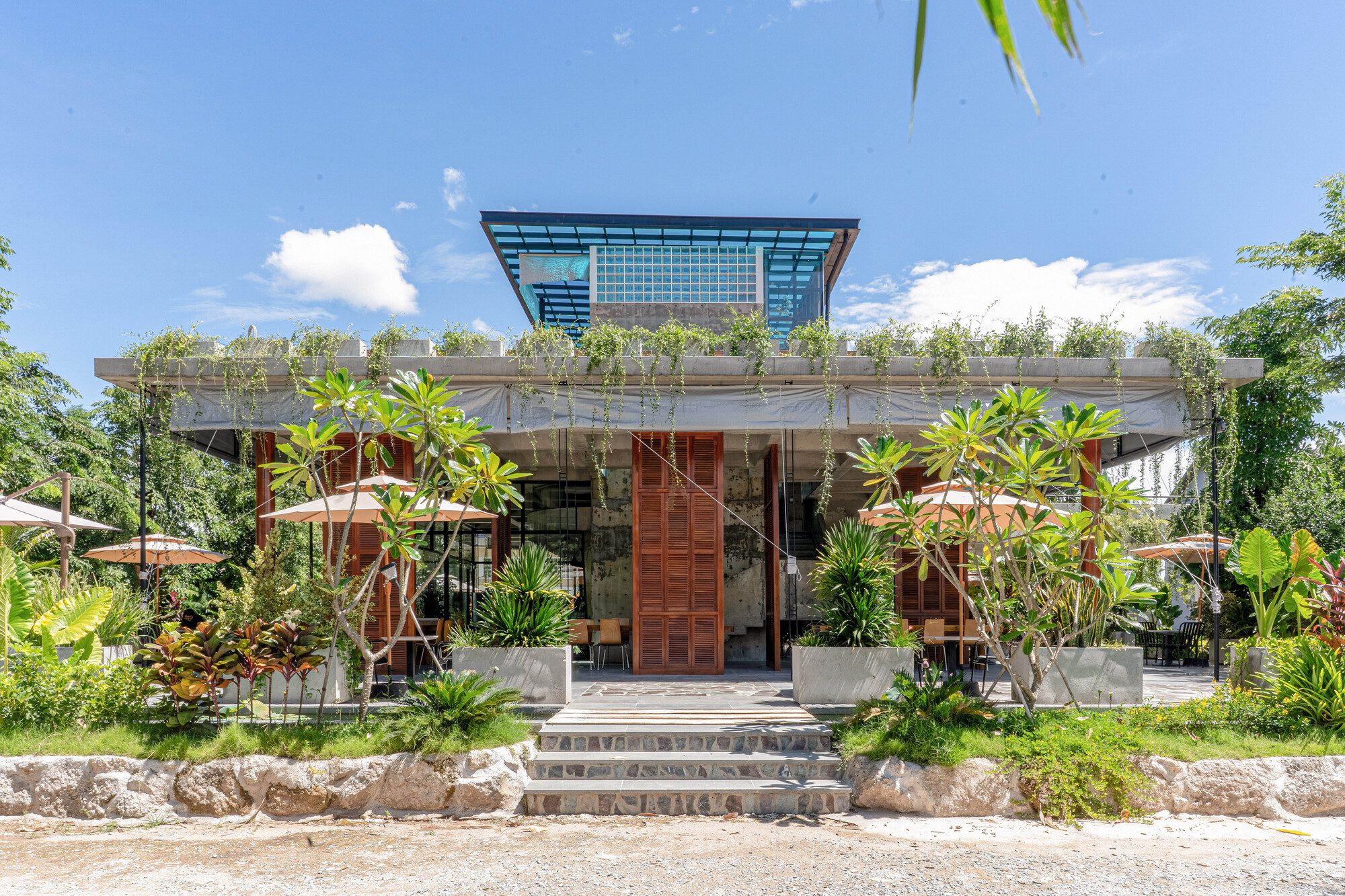
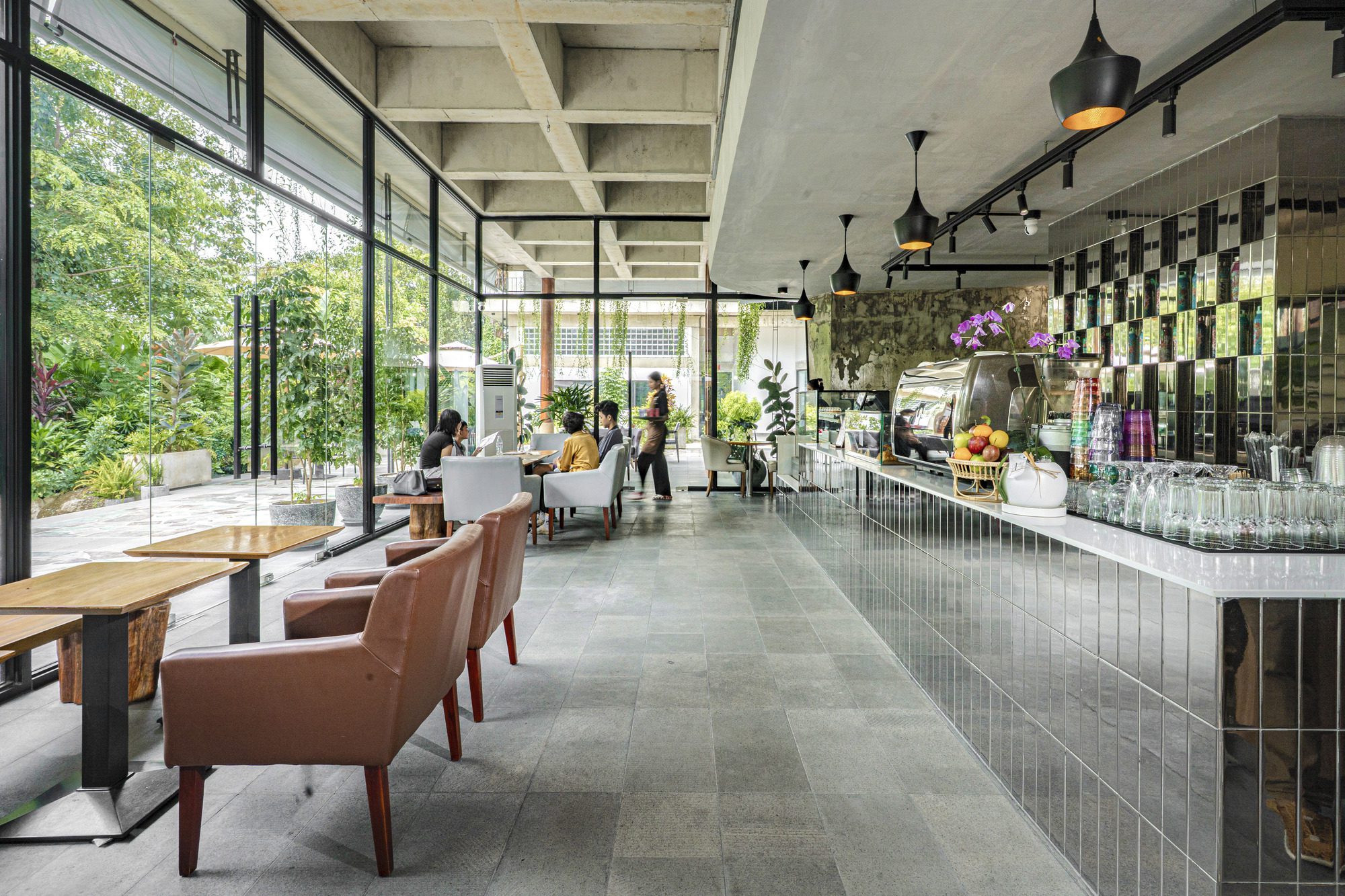
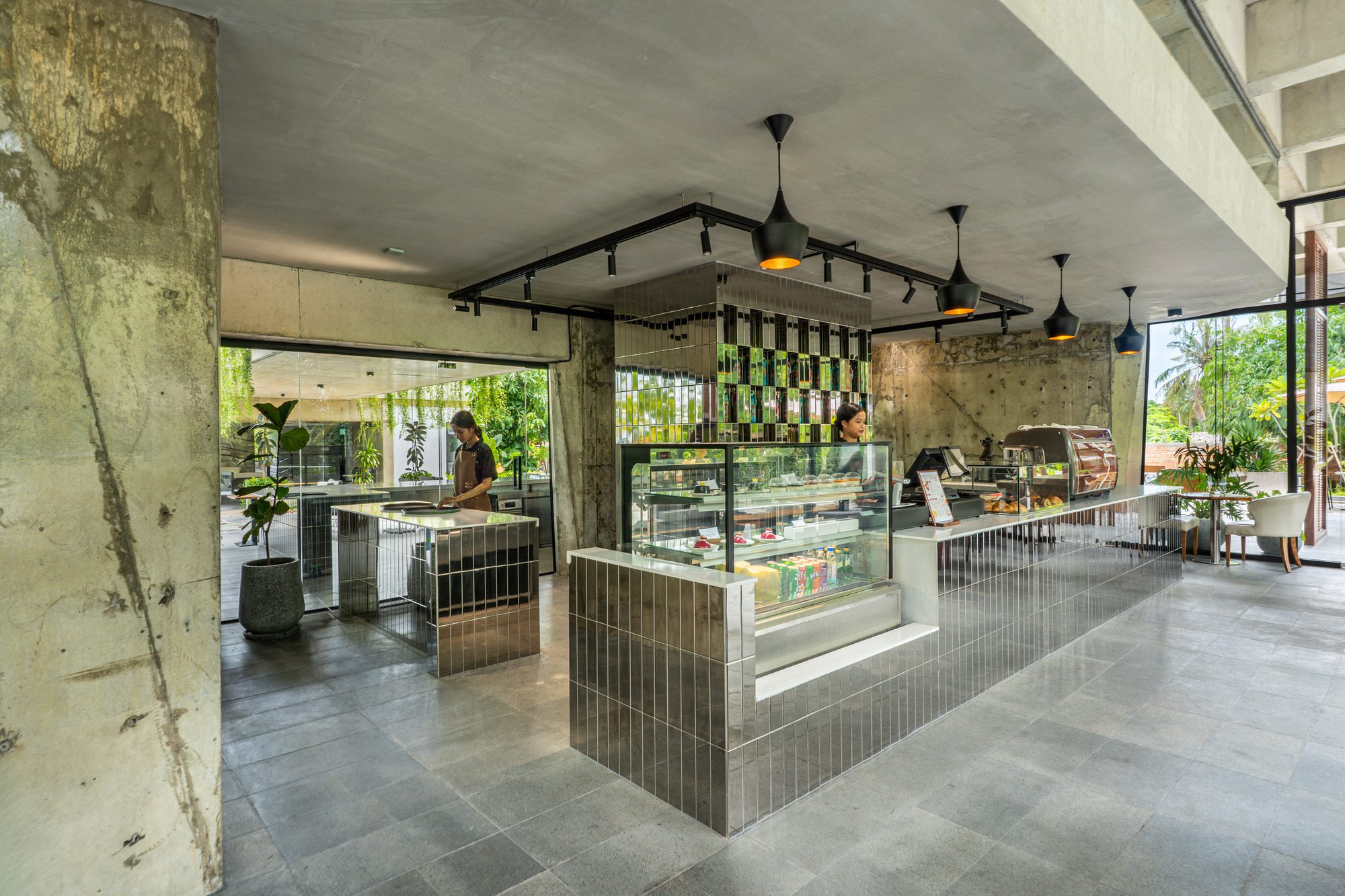
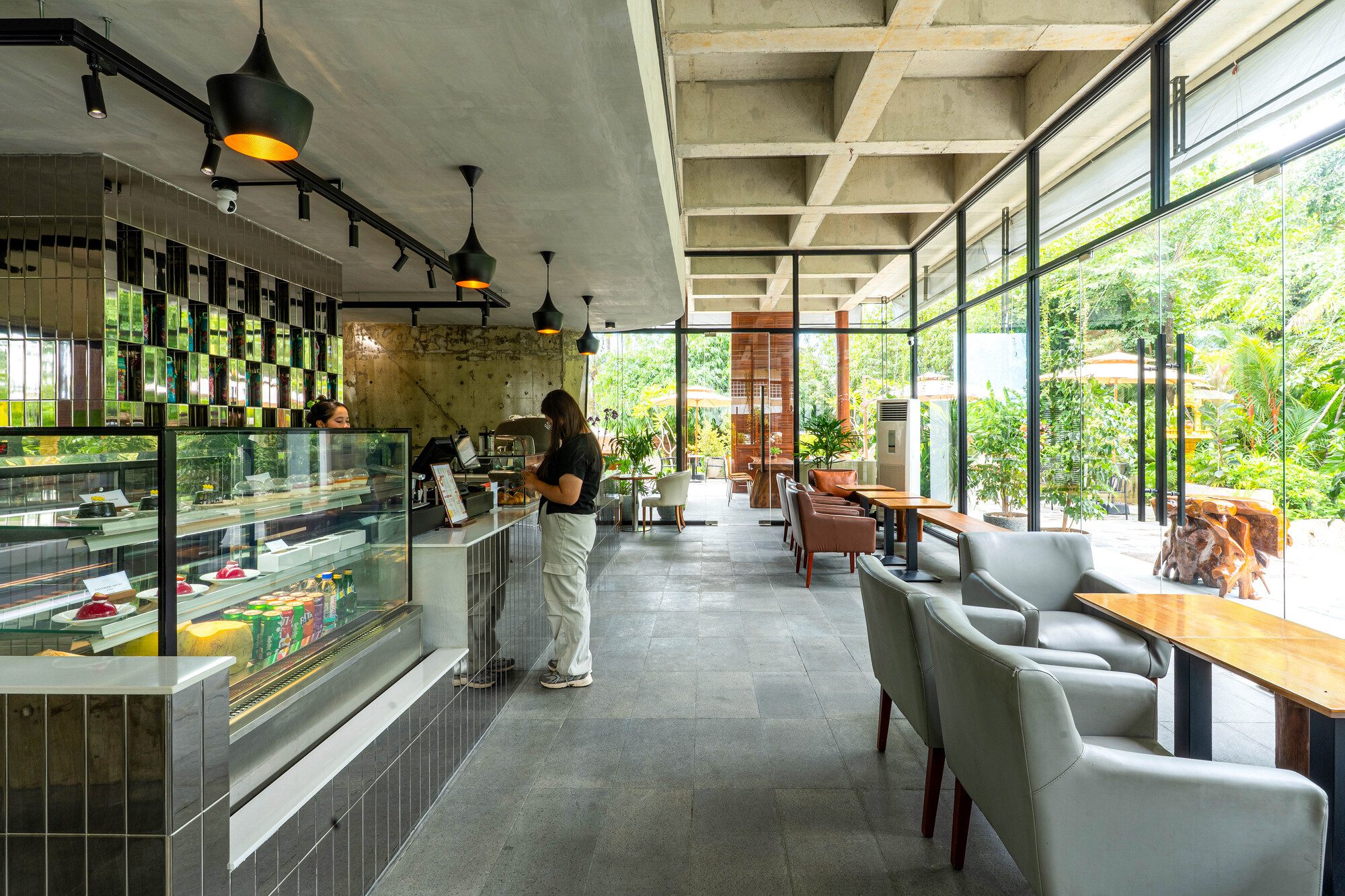
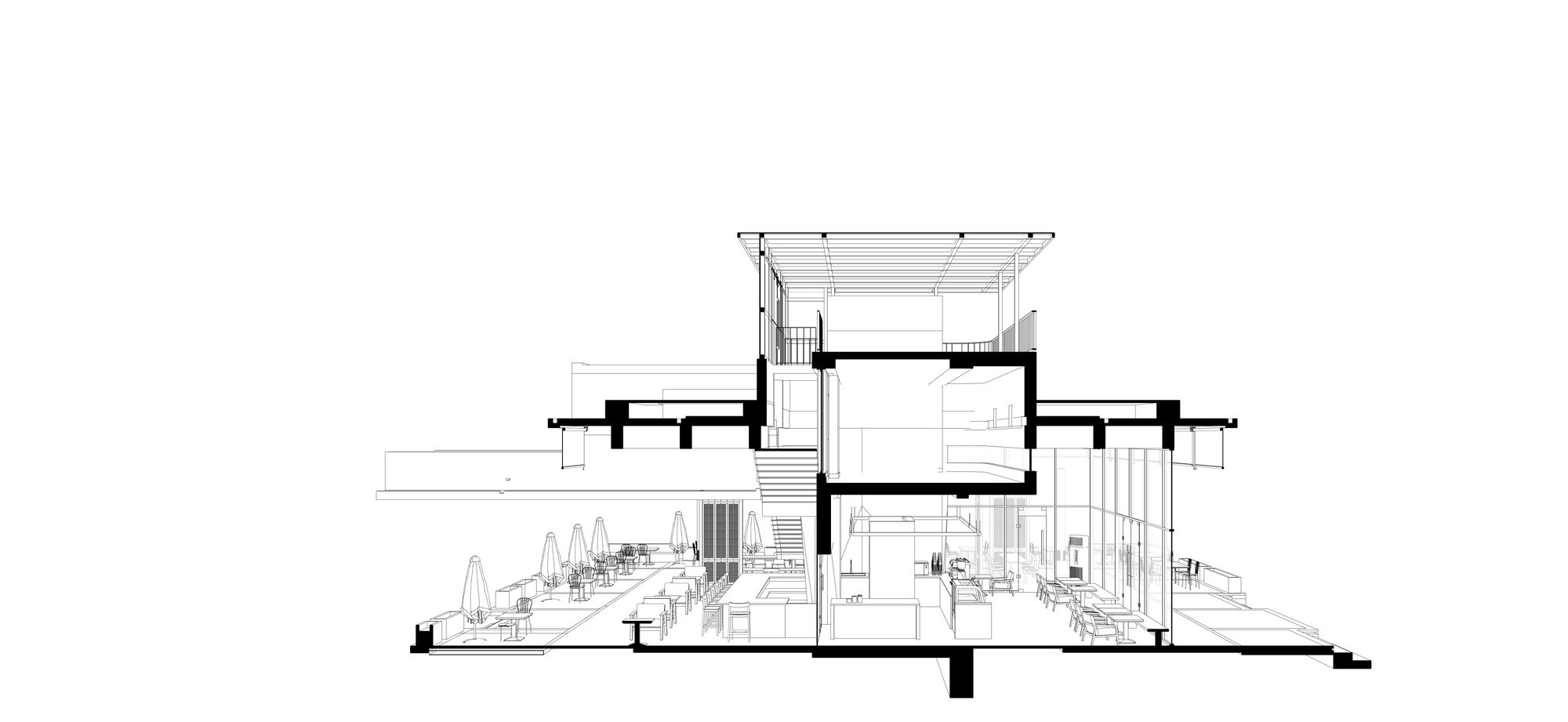
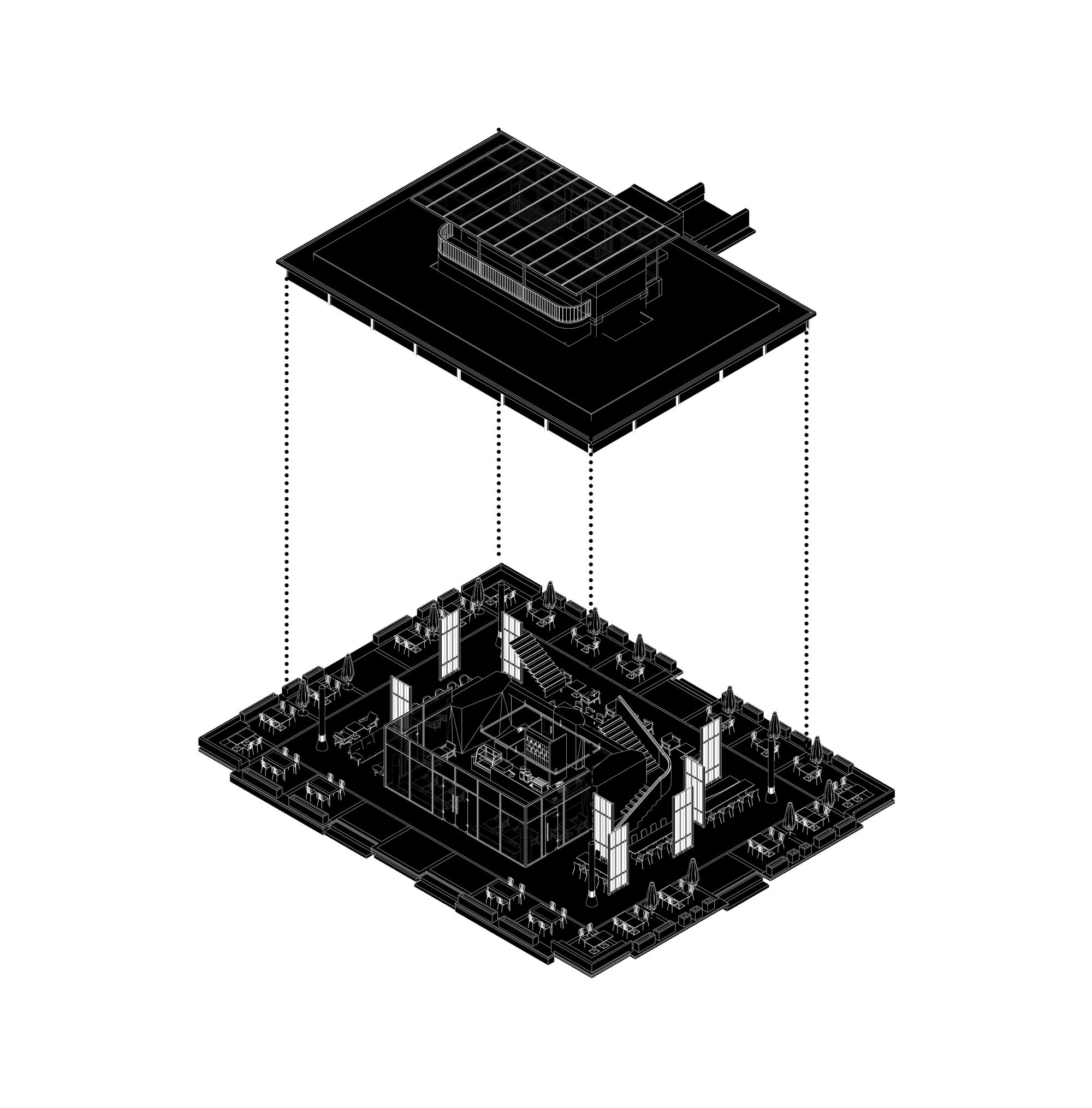
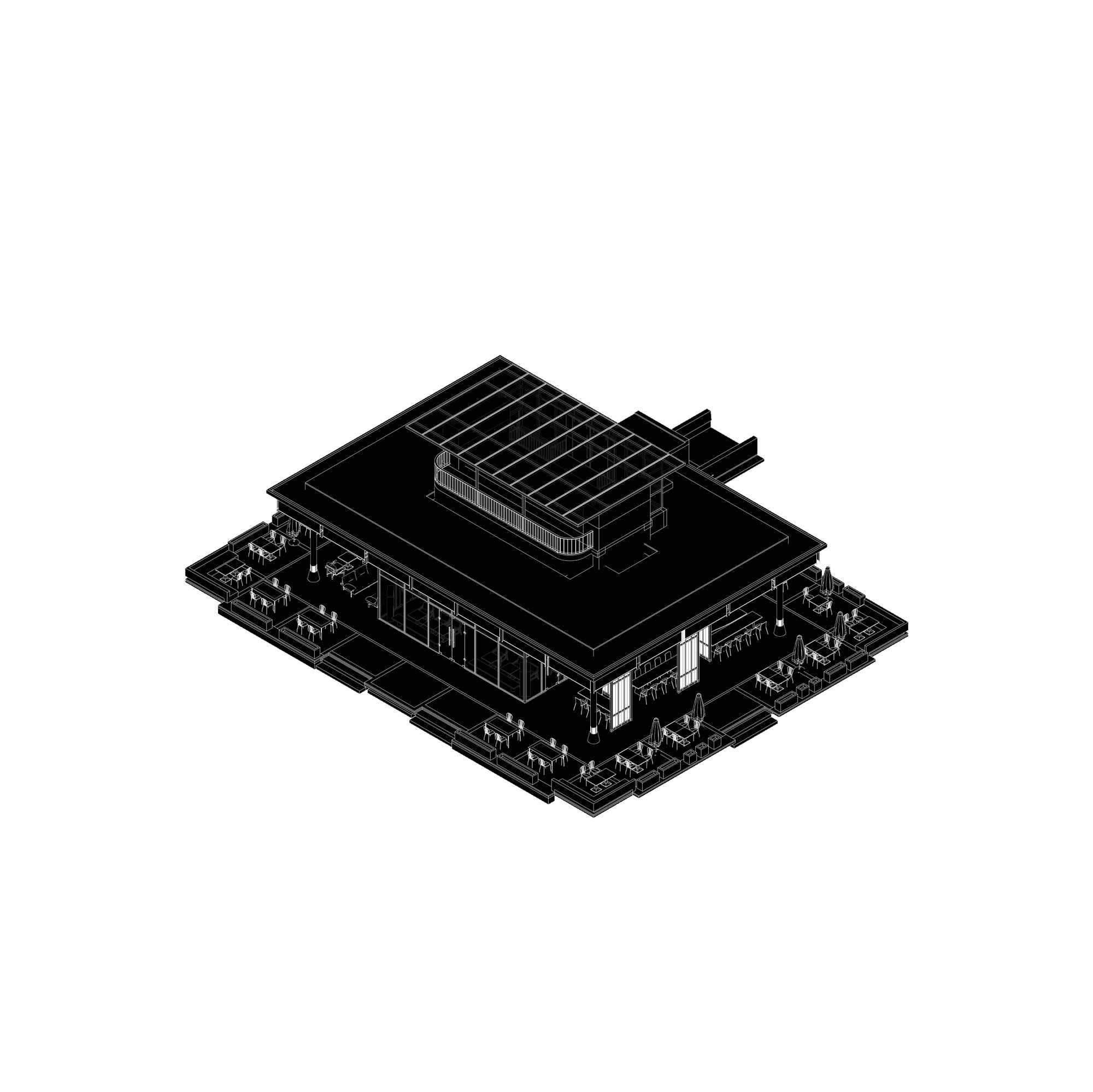
The existing building was a rigid concrete frame: exposed slabs, columns, and beams forming the structural grid. It had strength and clarity, but lacked warmth, purpose, and livability. We chose not to alter the bones of the building but to reframe them literally and metaphorically. The core strategy was to celebrate the integrity of the original frame while layering new elements that would soften its presence, improve its environmental performance, and create a more inviting spatial experience.
© Serey Soursdey
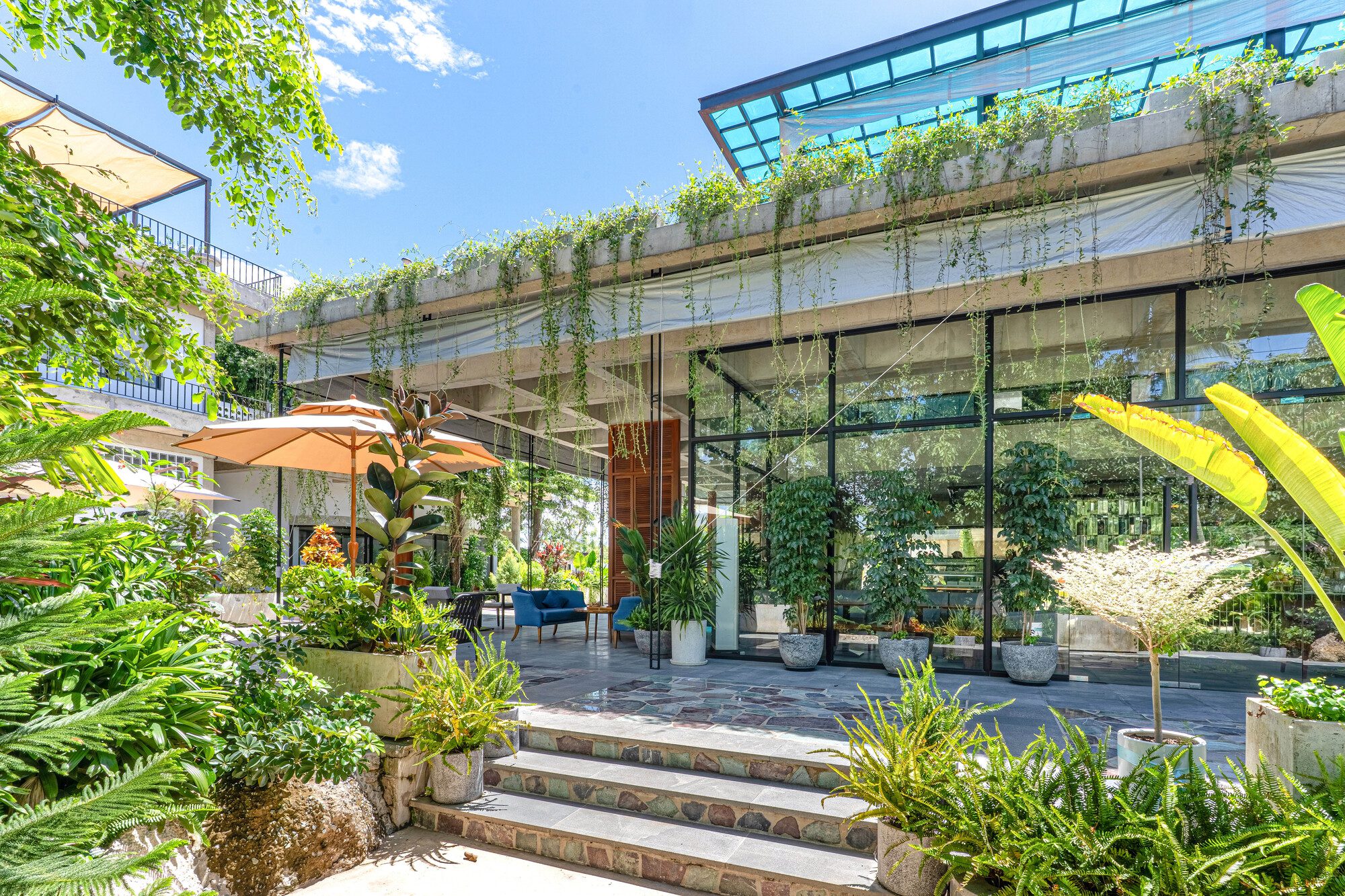
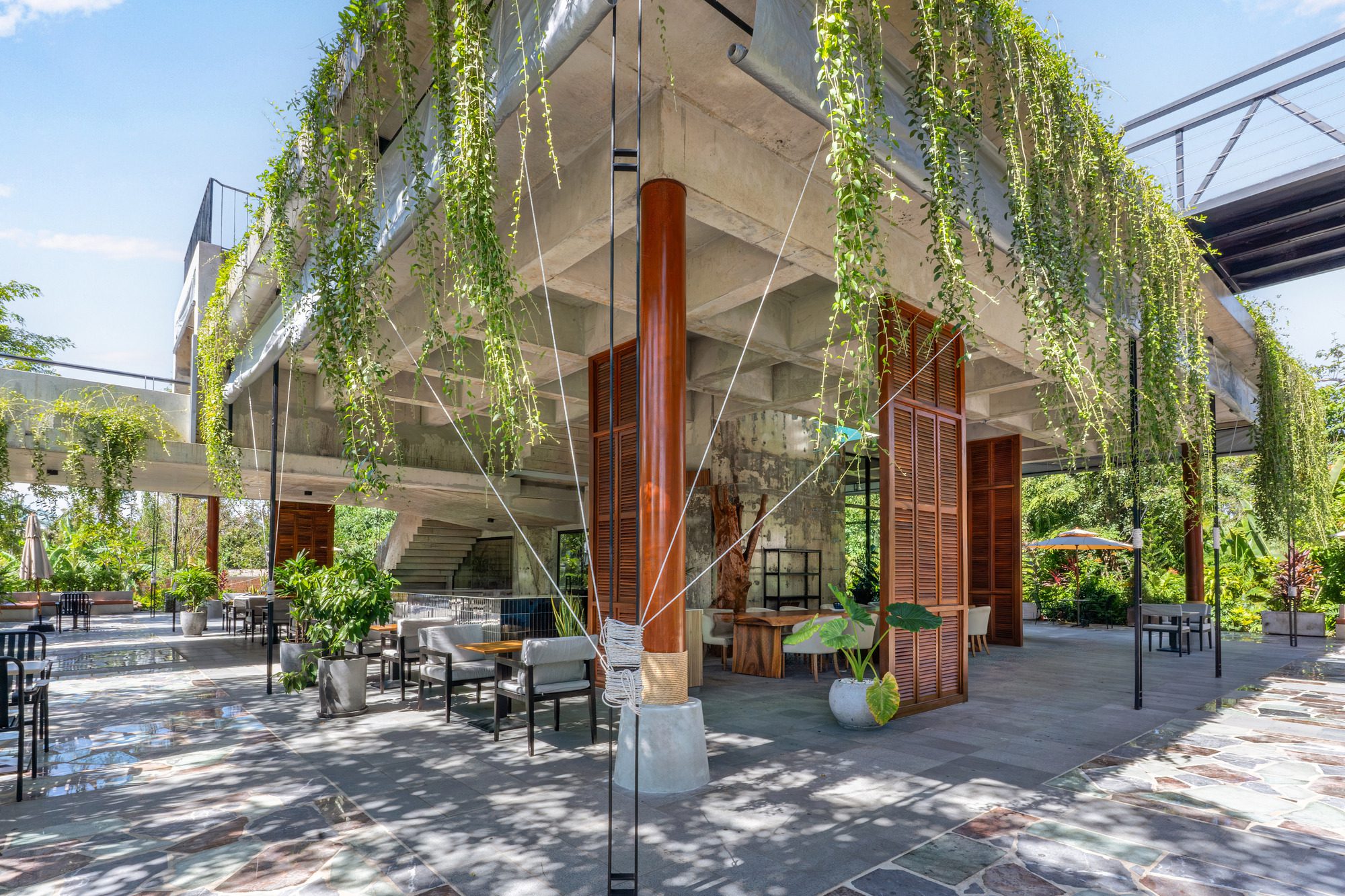
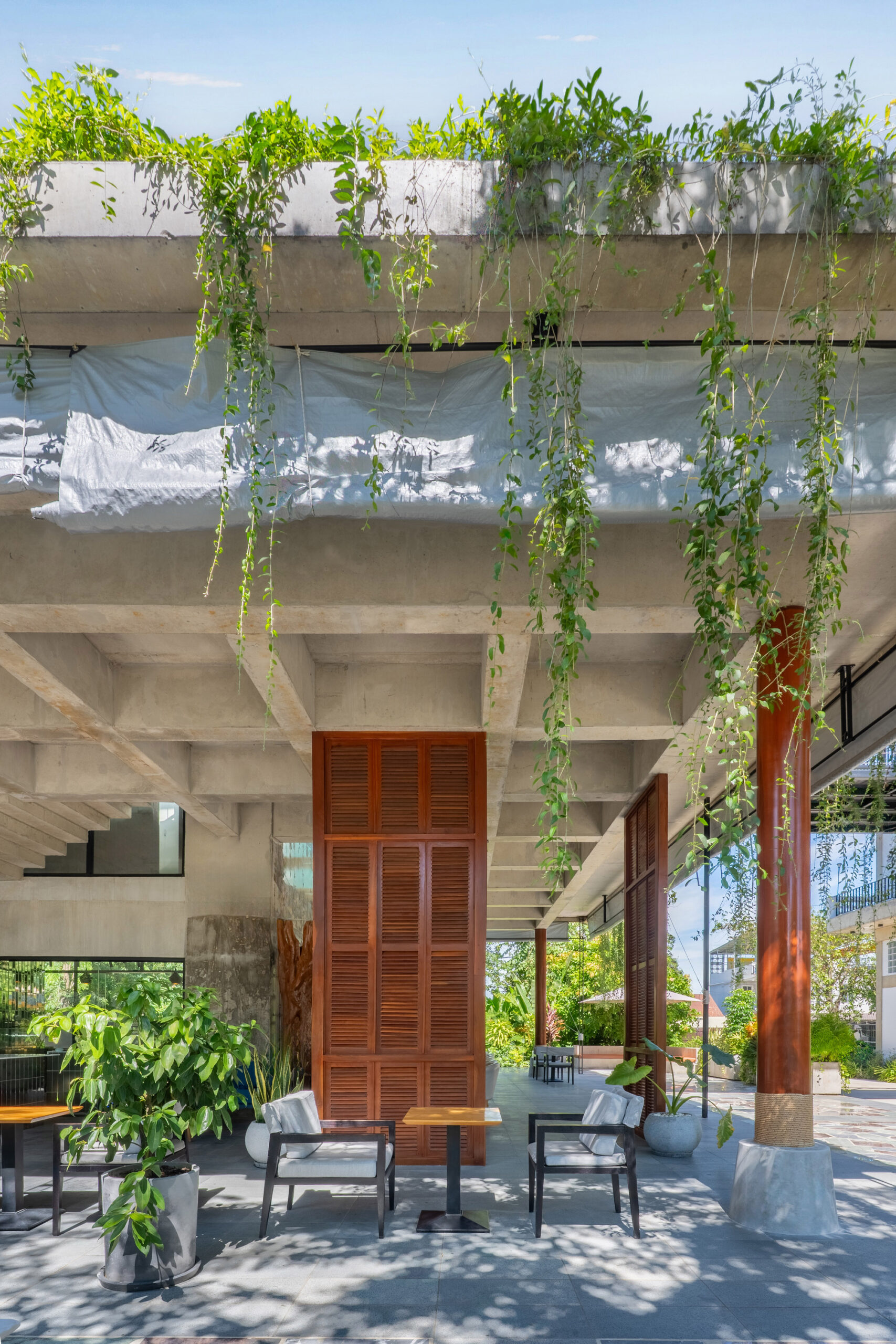
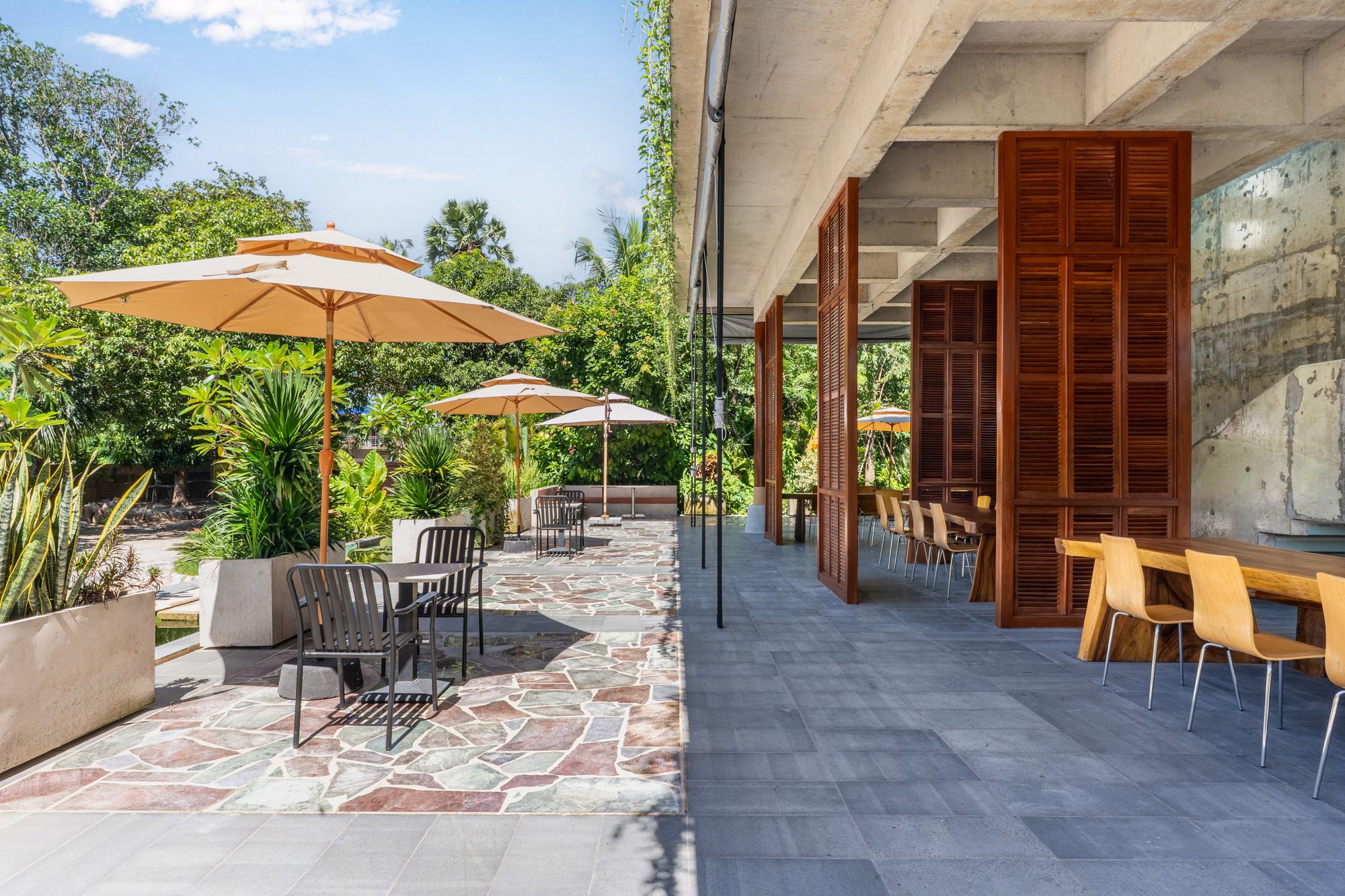
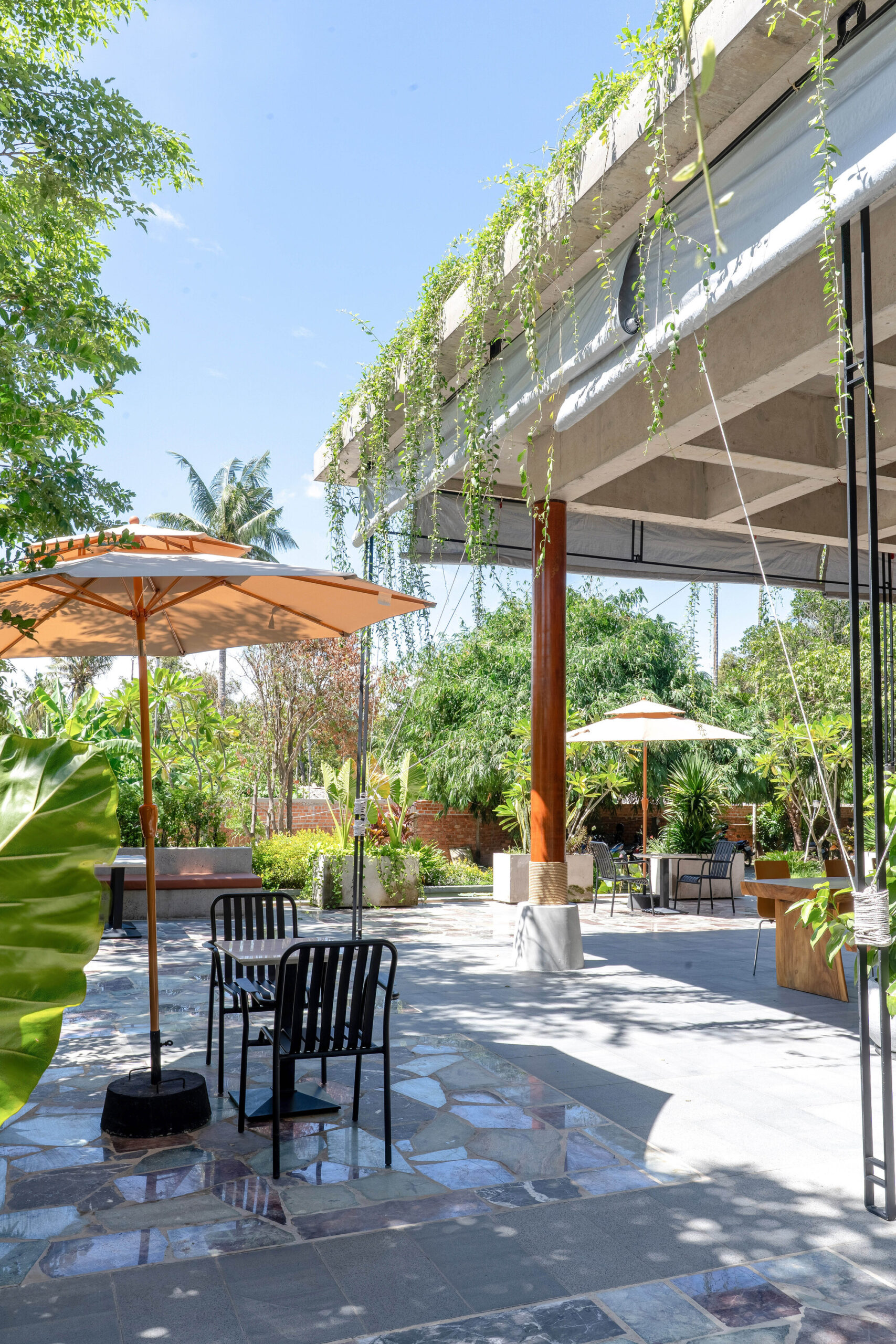
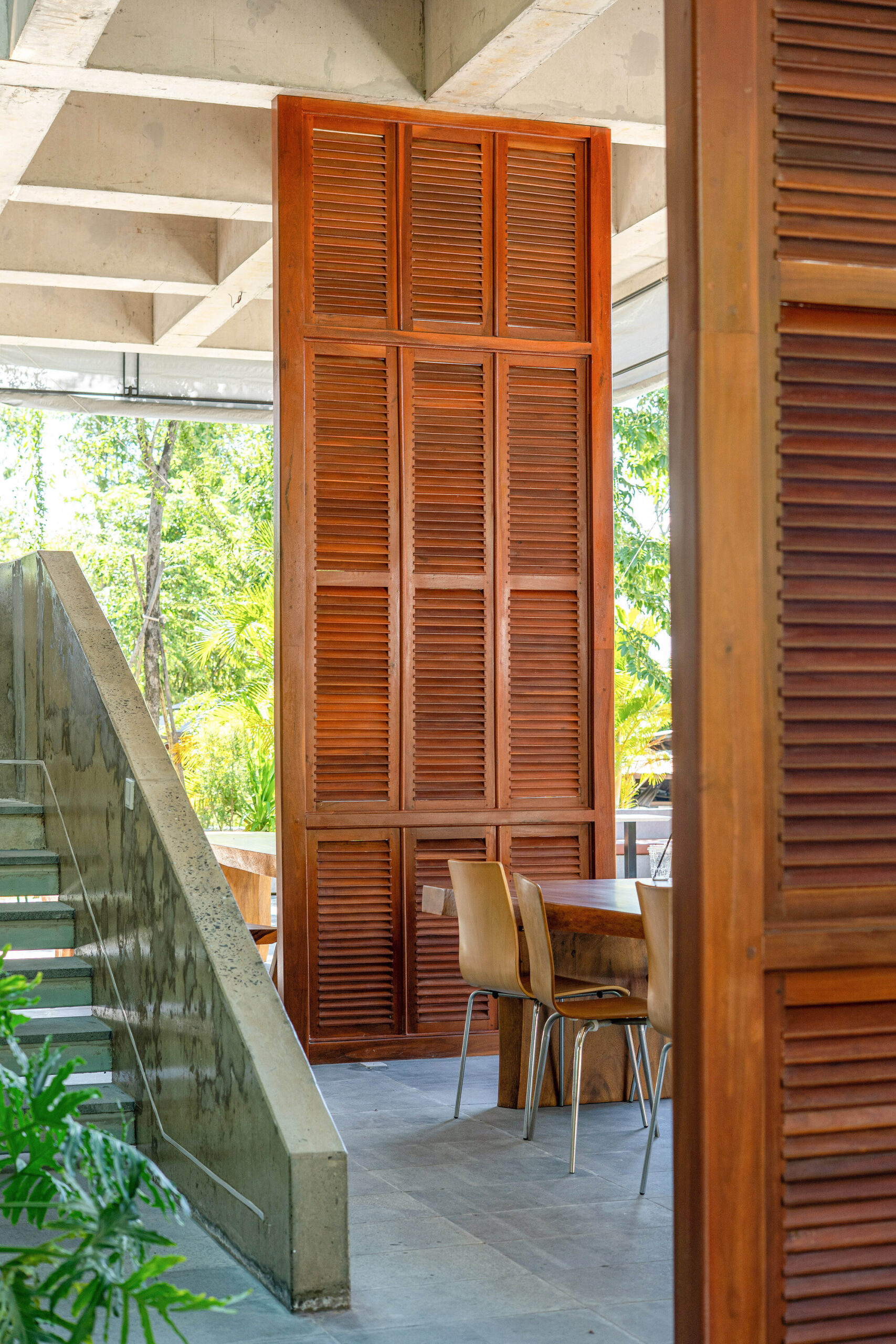
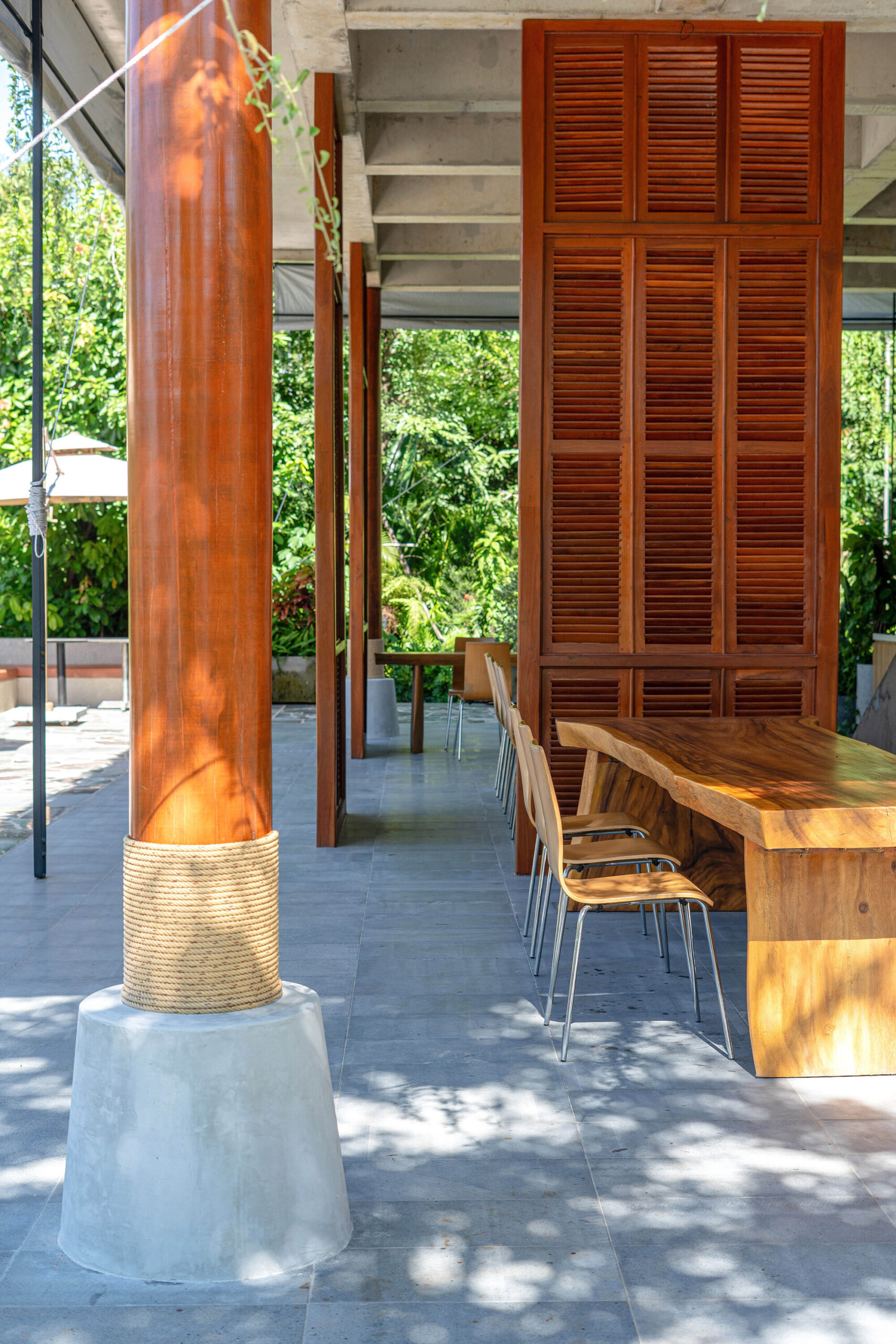
Timber was introduced as a counterpoint to concrete, light, warm, and tactile. Operable wooden louvers, railings, soffits, and cladding were integrated with care, giving rhythm and warmth to the rigid frame. These wooden additions are not merely decorative; they offer critical climatic function, providing shade and diffusing tropical sunlight throughout the day. The use of wood reintroduces a human scale to the building, encouraging interaction with its surfaces and thresholds.
© Serey Soursdey
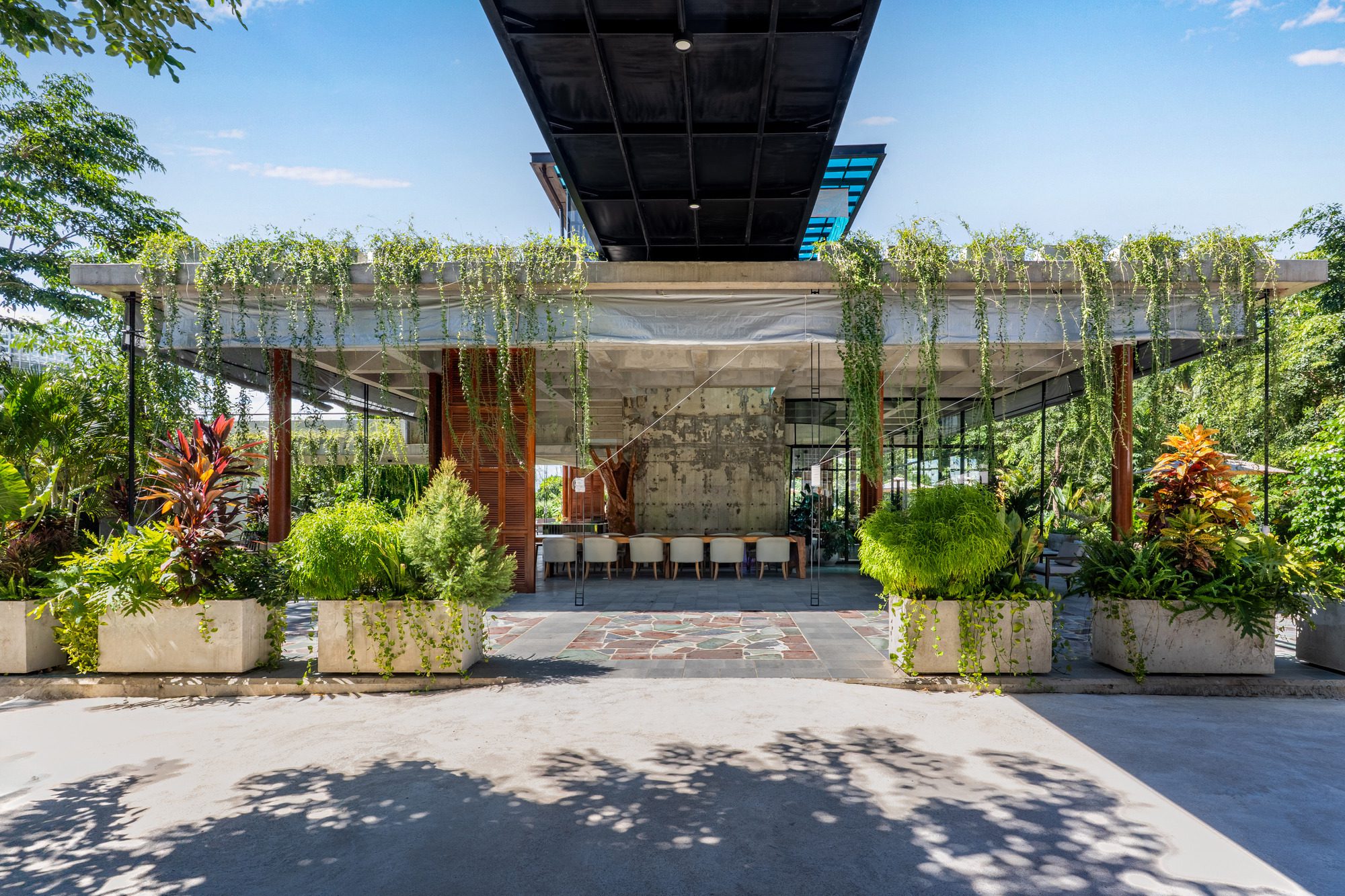
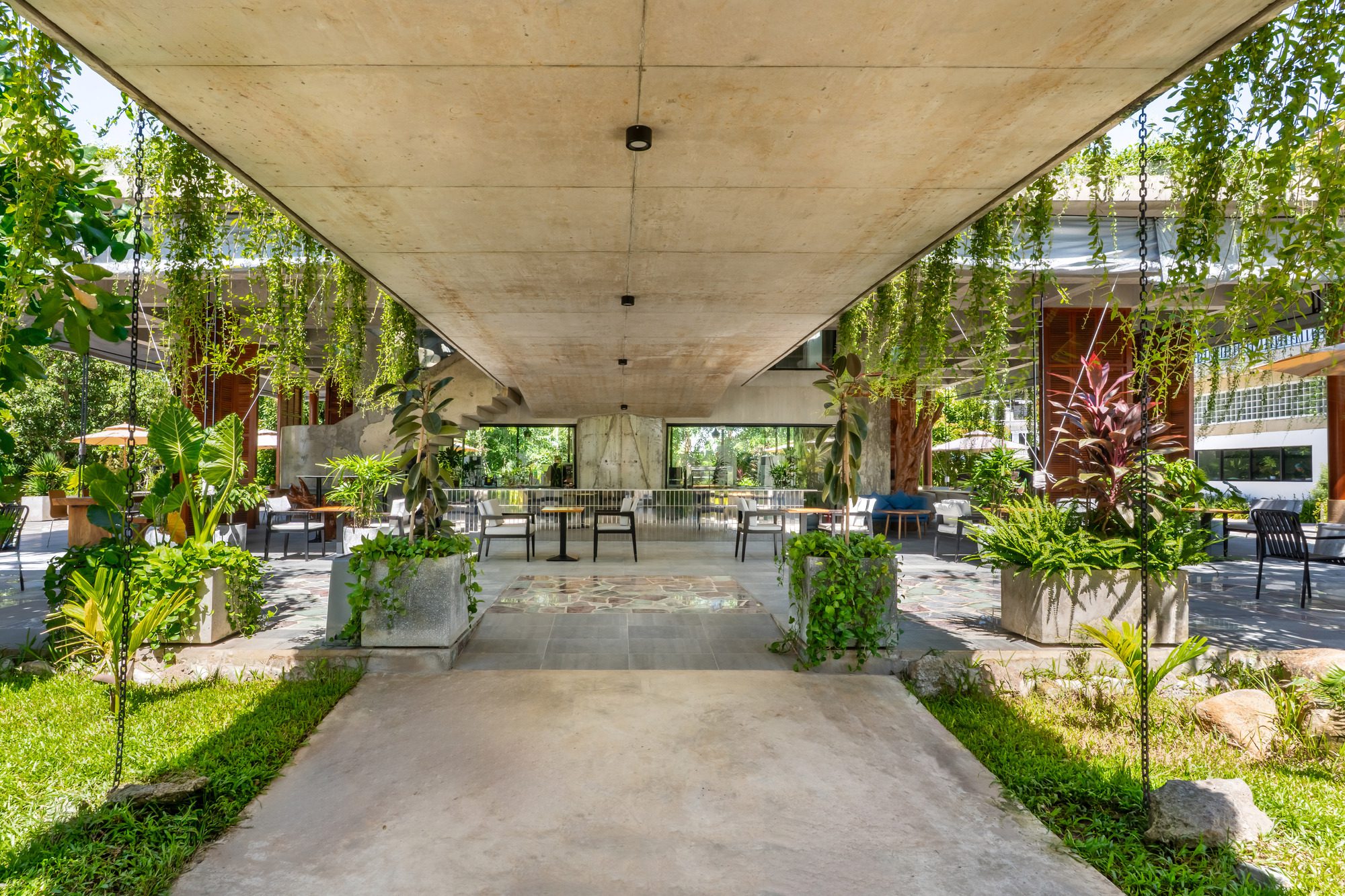
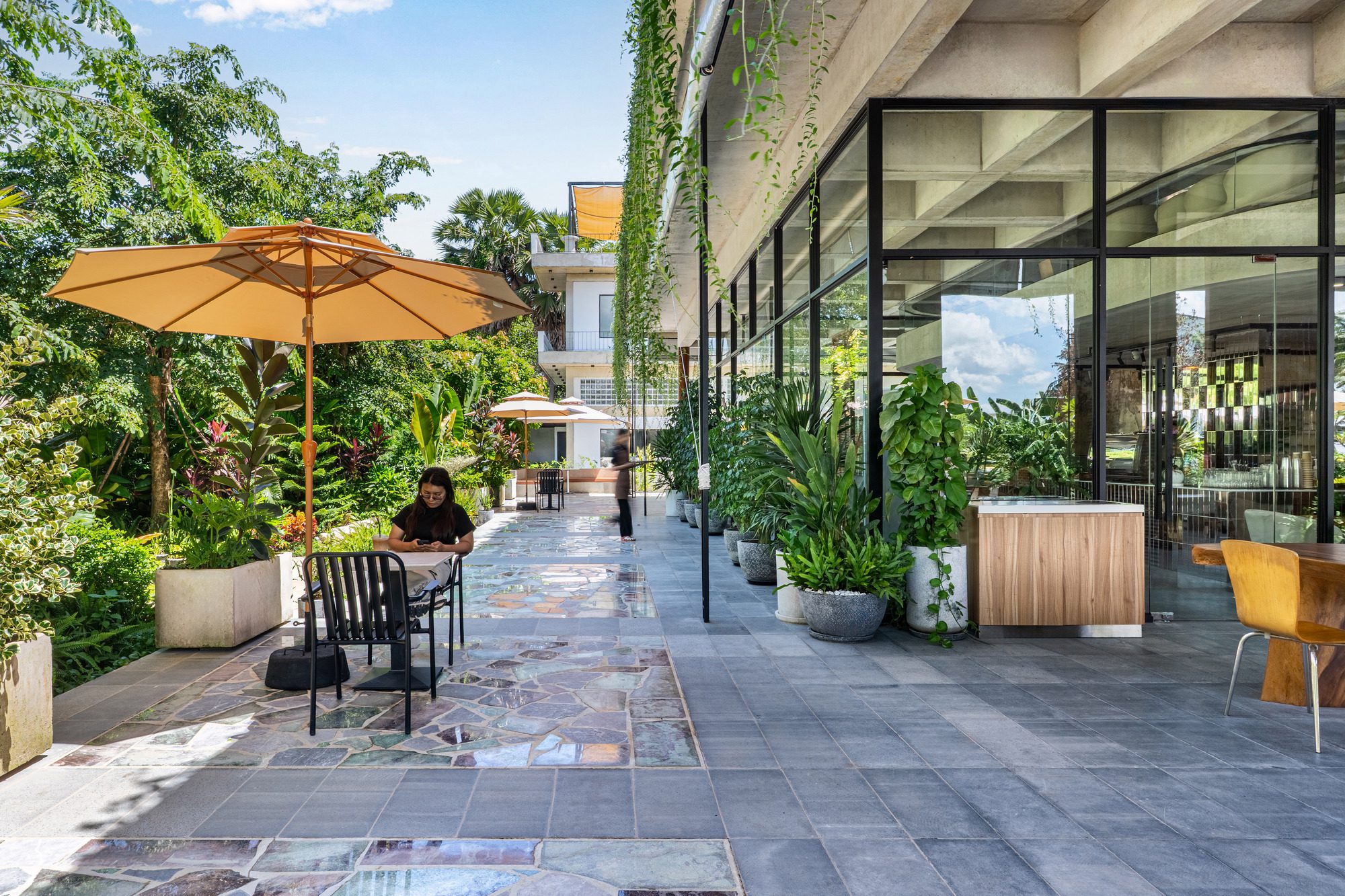
One of the most striking interventions is the use of greenery as a design material. Cascading vines and climbing plants are woven into the architectural composition, hanging from slab edges and wrapping around structural elements. These plants act as living filters, cooling the air, casting dynamic shadows, and blurring the boundaries between built and natural environments. The building becomes a frame for nature rather than a container resisting it.
© Serey Soursdey
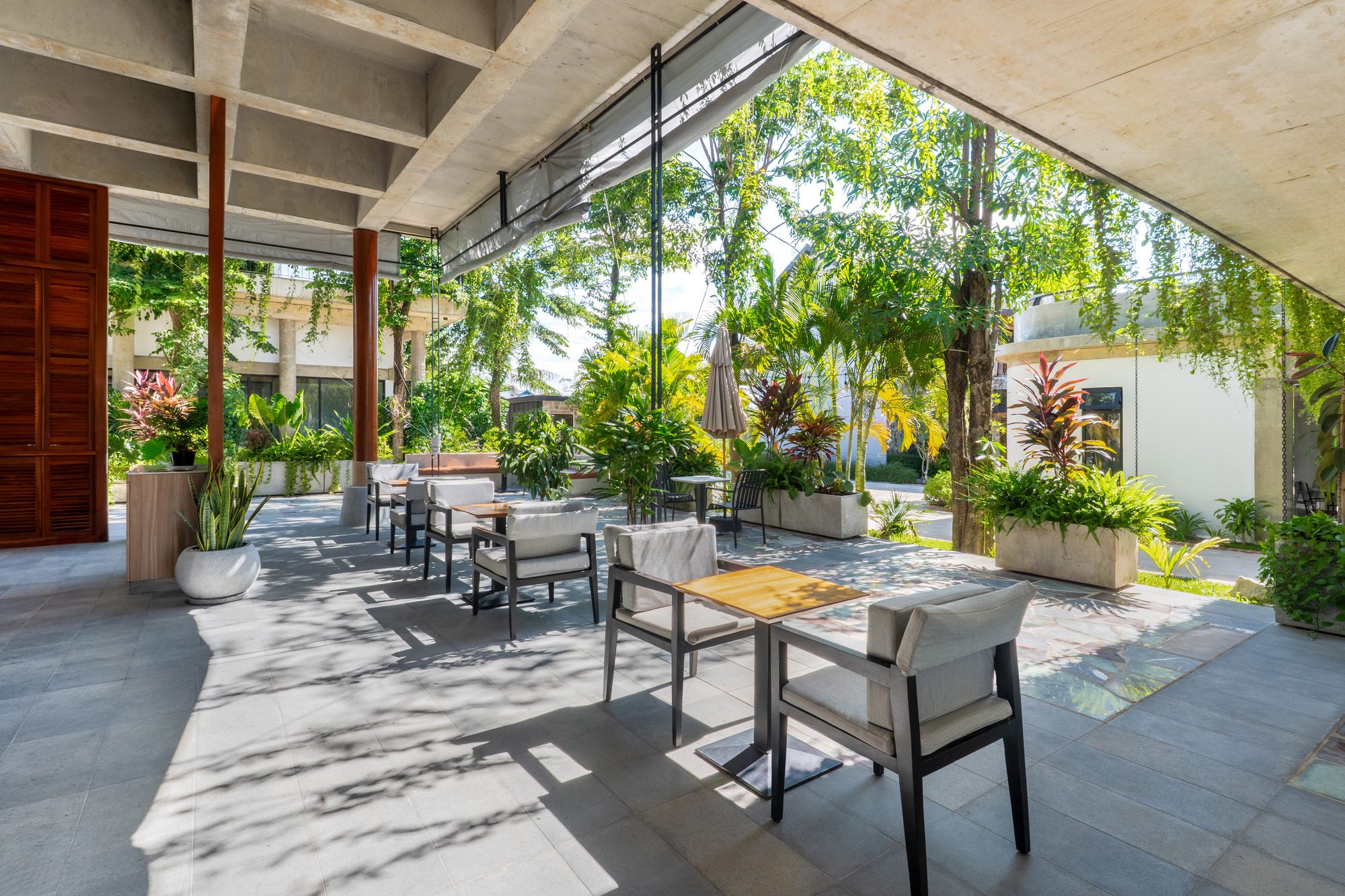
Spatially, the renovation favors openness and permeability. The ground floor is designed as a shaded, open-air space that flows seamlessly into the surrounding landscape. This layout takes advantage of natural cross-ventilation and reduces reliance on mechanical cooling systems. The upper level, meanwhile, benefits from passive shading strategies, green roof insulation, and filtered light, resulting in comfortable interior conditions despite the tropical climate.
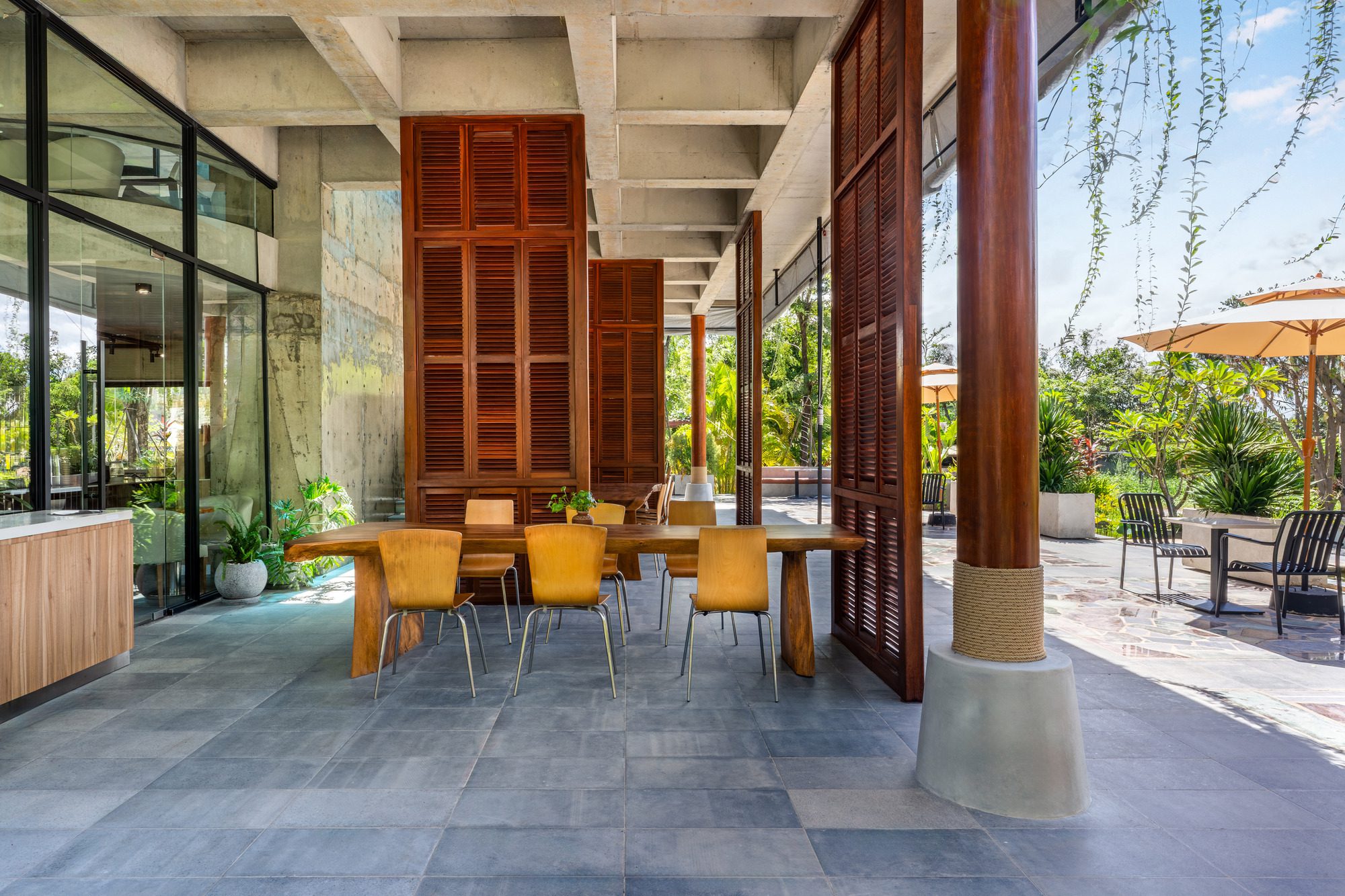
© Serey Soursdey
This project transforms an abandoned structure into a tranquil architectural pavilion, without erasing its past. It demonstrates that renovation, when done with intention and sensitivity, can create more meaningful, grounded spaces than starting from scratch. By working with what exists, the design honors the memory embedded in materials while allowing new life to grow through them. Ultimately, A Living Frame is a story of quiet transformation. It is a model of sustainable renovation rooted in context, climate, and character, where architecture listens before it speaks, and grows rather than replaces.
Project Info
Architects: Khoan + Partners
Country: Cambodia, Phnom Penh
Area: 680 m²
Year: 2025
Photographs: Serey Soursdey
Design Team: Huon Uyseng, Hok Rachana


Isabelle Laurent is a Built Projects Editor at Arch2O, recognized for her editorial insight and passion for contemporary architecture. She holds a Master’s in Architectural Theory from École Nationale Supérieure d’Architecture de Paris-Belleville. Before joining Arch2O in 2016, she worked in a Paris-based architectural office and taught as a faculty adjunct at the École Spéciale d’Architecture in Paris. Isabelle focuses on curating projects around sustainability, adaptive reuse, and urban resilience. With a background in design and communication, she brings clarity to complex ideas and plays a key role in shaping Arch2O’s editorial